Entry mode & Global
    Distribution

PROF. RAGHAVENDRAN VENUGOPAL
Entry mode

   Exporting
   Joint venture
   Acquisition
   Assembly operations
   Turnkey operations
   Wholly owned subsidiary
   Licensing
   Strategic alliances
   Franchising
   Management contracts
   Free Trade Zones
   Contract Manufacture
Strategic Alliance

 Types of SA:
   Technology based alliances

   Production based alliances

   Distribution based alliances

   R&D alliances
OEM

 Original Equipment manufacturing a company
 selling an unbranded product or component to
 another company in global market.
Problems solved through OEM:
    Branding
    Budget constraint
    Eliminate bottle necks & improve efficiency

Key Aspects of working with OEM:
    Quality
    Manufacturers with best practices
    Corrective action
    Want ISO vendors
    Competitive prices
Significance of OEM

 Low prototype costs
 Short lead time
 Min stock levels
 No need for costly post – cast machining
 Highly damped structure
 High dynamic
 Totally machine structure
 High dimensional accuracy
 Excellent supplier – customer relationship
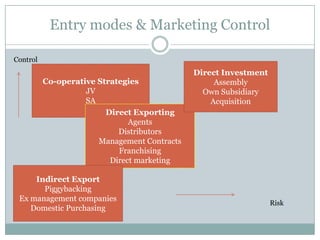
Entry modes & Marketing Control

Control
                                              Direct Investment
          Co-operative Strategies                  Assembly
                    JV                          Own Subsidiary
                    SA                            Acquisition
                         Direct Exporting
                               Agents
                            Distributors
                       Management Contracts
                            Franchising
                          Direct marketing

     Indirect Export
       Piggybacking
 Ex management companies
                                                                  Risk
    Domestic Purchasing
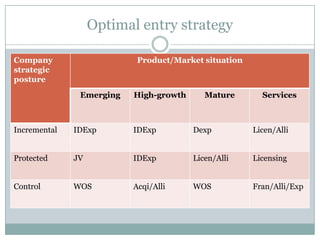
Optimal entry strategy

Company                    Product/Market situation
strategic
posture
               Emerging   High-growth      Mature       Services


Incremental   IDExp       IDExp         Dexp          Licen/Alli


Protected     JV          IDExp         Licen/Alli    Licensing


Control       WOS         Acqi/Alli     WOS           Fran/Alli/Exp
Global Distribution

 3 essential functions have to be performed
   Transfer of title

   The physical movement of the products

   Storage

 GD is complex, multimodal world of
 logistics, shipping, insurance, warehousing &
 documentation.
 Global Firms have 2 options when selecting
 distributing system
    Indigenous channels of distribution
    Develop a global distribution system
 Channel members in international distribution
   Types of intermediaries
      Indirect channel
      Direct channel
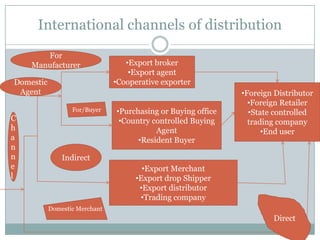
International channels of distribution
       For
    Manufacturer                  •Export broker
                                   •Export agent
Domestic                       •Cooperative exporter
 Agent                                                        •Foreign Distributor
                                                                •Foreign Retailer
                  For/Buyer    •Purchasing or Buying office     •State controlled
C                               •Country controlled Buying      trading company
h                                         Agent                     •End user
a                                    •Resident Buyer
n
n              Indirect
e                                      •Export Merchant
l                                    •Export drop Shipper
                                      •Export distributor
                                      •Trading company
           Domestic Merchant
                                                                      Direct
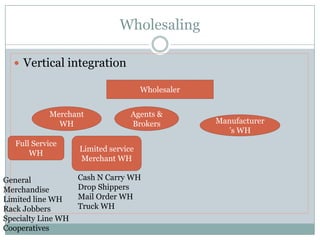
Wholesaling

   Vertical integration

                                      Wholesaler


            Merchant              Agents &
              WH                  Brokers          Manufacturer
                                                     ’s WH
   Full Service
                    Limited service
       WH
                    Merchant WH

General             Cash N Carry WH
Merchandise         Drop Shippers
Limited line WH     Mail Order WH
Rack Jobbers        Truck WH
Specialty Line WH
Cooperatives
Retailing

 Self study, as discussed in depth in SADMAN
Global Logistics

 Operational factors
   Warehouse management

   Packaging

   Inventory management

   Material handling

   Information systems

   Transportation

   Insurance

   Shipment packing
Transportation

 Roadways
 Railways
 Waterways
 Inland water
 Rope ways
 Airways
 Pipelines
 Package service
 Intermodal transport
Parallel distribution

 Few mechanism to avoid parallel distribution:
   Create different packaging for the different countries.
   Maintain the price differentials & minimize the gaps in such a
    way as to make it less appealing for the parallel distributor.
   Limit the quantity that distributors in lower priced markets
    can receive per order.
 Gray trade: it is known as parallel distribution.
   3 main factors are
     Price discrepancies between 2 national markets
     Limited availability of certain models or version in one market.
     Less logistics problem due to increased availability of global
      modes of transportation
Effects of gray trade

 Erosion of Brand equity
 Disturbed relationships with authorized channel
  members
 Legal liabilities
 Complicating international marketing strategies
Measures against gray trade ( Reactive)
 Strategic confrontation, Collaboration
 participation, Acquisition
 price cutting
 supply interference
 Promotion
Measures against gray trade ( Proactive)
Product Differentiation
Strategic pricing
Dealer development
MkIS
Long term Image reinforcement
Establishing Legal Procedures
Lobbying
Multiple Distribution Channel

 Internet Sales
 Catalogue Sales
 Sales Representative
 Multi-Level Marketing
 Infomercials
 Cross Consignment
Effective Global Distribution System

 Find out customers
    want, services, delivery, choice, technical help & so
    on.
   Find out about costs & feasibility for the
    company, Support systems & suppliers.
   Determine Management Objectives & Ideal global
    Distribution system.
   Compare given Options
   Evaluate assumptions by bringing present system.
   Develop plan to rectify the difference.
   Implement the plan.
International Retailing

 Home reading from SADMAN
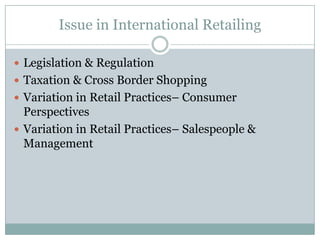
Issue in International Retailing

 Legislation & Regulation
 Taxation & Cross Border Shopping
 Variation in Retail Practices– Consumer
  Perspectives
 Variation in Retail Practices– Salespeople &
  Management
Thank you

International Marketing Management, VTU

  • 1.
    Entry mode &Global Distribution PROF. RAGHAVENDRAN VENUGOPAL
  • 2.
    Entry mode  Exporting  Joint venture  Acquisition  Assembly operations  Turnkey operations  Wholly owned subsidiary  Licensing  Strategic alliances  Franchising  Management contracts  Free Trade Zones  Contract Manufacture
  • 3.
    Strategic Alliance  Typesof SA:  Technology based alliances  Production based alliances  Distribution based alliances  R&D alliances
  • 4.
    OEM  Original Equipmentmanufacturing a company selling an unbranded product or component to another company in global market. Problems solved through OEM:  Branding  Budget constraint  Eliminate bottle necks & improve efficiency Key Aspects of working with OEM:  Quality  Manufacturers with best practices  Corrective action  Want ISO vendors  Competitive prices
  • 5.
    Significance of OEM Low prototype costs  Short lead time  Min stock levels  No need for costly post – cast machining  Highly damped structure  High dynamic  Totally machine structure  High dimensional accuracy  Excellent supplier – customer relationship
  • 6.
    Entry modes &Marketing Control Control Direct Investment Co-operative Strategies Assembly JV Own Subsidiary SA Acquisition Direct Exporting Agents Distributors Management Contracts Franchising Direct marketing Indirect Export Piggybacking Ex management companies Risk Domestic Purchasing
  • 7.
    Optimal entry strategy Company Product/Market situation strategic posture Emerging High-growth Mature Services Incremental IDExp IDExp Dexp Licen/Alli Protected JV IDExp Licen/Alli Licensing Control WOS Acqi/Alli WOS Fran/Alli/Exp
  • 8.
    Global Distribution  3essential functions have to be performed  Transfer of title  The physical movement of the products  Storage  GD is complex, multimodal world of logistics, shipping, insurance, warehousing & documentation.
  • 9.
     Global Firmshave 2 options when selecting distributing system  Indigenous channels of distribution  Develop a global distribution system  Channel members in international distribution  Types of intermediaries  Indirect channel  Direct channel
  • 10.
    International channels ofdistribution For Manufacturer •Export broker •Export agent Domestic •Cooperative exporter Agent •Foreign Distributor •Foreign Retailer For/Buyer •Purchasing or Buying office •State controlled C •Country controlled Buying trading company h Agent •End user a •Resident Buyer n n Indirect e •Export Merchant l •Export drop Shipper •Export distributor •Trading company Domestic Merchant Direct
  • 11.
    Wholesaling Vertical integration Wholesaler Merchant Agents & WH Brokers Manufacturer ’s WH Full Service Limited service WH Merchant WH General Cash N Carry WH Merchandise Drop Shippers Limited line WH Mail Order WH Rack Jobbers Truck WH Specialty Line WH Cooperatives
  • 12.
    Retailing  Self study,as discussed in depth in SADMAN
  • 13.
    Global Logistics  Operationalfactors  Warehouse management  Packaging  Inventory management  Material handling  Information systems  Transportation  Insurance  Shipment packing
  • 14.
    Transportation  Roadways  Railways Waterways  Inland water  Rope ways  Airways  Pipelines  Package service  Intermodal transport
  • 15.
    Parallel distribution  Fewmechanism to avoid parallel distribution:  Create different packaging for the different countries.  Maintain the price differentials & minimize the gaps in such a way as to make it less appealing for the parallel distributor.  Limit the quantity that distributors in lower priced markets can receive per order.  Gray trade: it is known as parallel distribution.  3 main factors are  Price discrepancies between 2 national markets  Limited availability of certain models or version in one market.  Less logistics problem due to increased availability of global modes of transportation
  • 16.
    Effects of graytrade  Erosion of Brand equity  Disturbed relationships with authorized channel members  Legal liabilities  Complicating international marketing strategies Measures against gray trade ( Reactive) Strategic confrontation, Collaboration participation, Acquisition price cutting supply interference Promotion
  • 17.
    Measures against graytrade ( Proactive) Product Differentiation Strategic pricing Dealer development MkIS Long term Image reinforcement Establishing Legal Procedures Lobbying
  • 18.
    Multiple Distribution Channel Internet Sales  Catalogue Sales  Sales Representative  Multi-Level Marketing  Infomercials  Cross Consignment
  • 19.
    Effective Global DistributionSystem  Find out customers want, services, delivery, choice, technical help & so on.  Find out about costs & feasibility for the company, Support systems & suppliers.  Determine Management Objectives & Ideal global Distribution system.  Compare given Options  Evaluate assumptions by bringing present system.  Develop plan to rectify the difference.  Implement the plan.
  • 20.
  • 21.
    Issue in InternationalRetailing  Legislation & Regulation  Taxation & Cross Border Shopping  Variation in Retail Practices– Consumer Perspectives  Variation in Retail Practices– Salespeople & Management
  • 22.