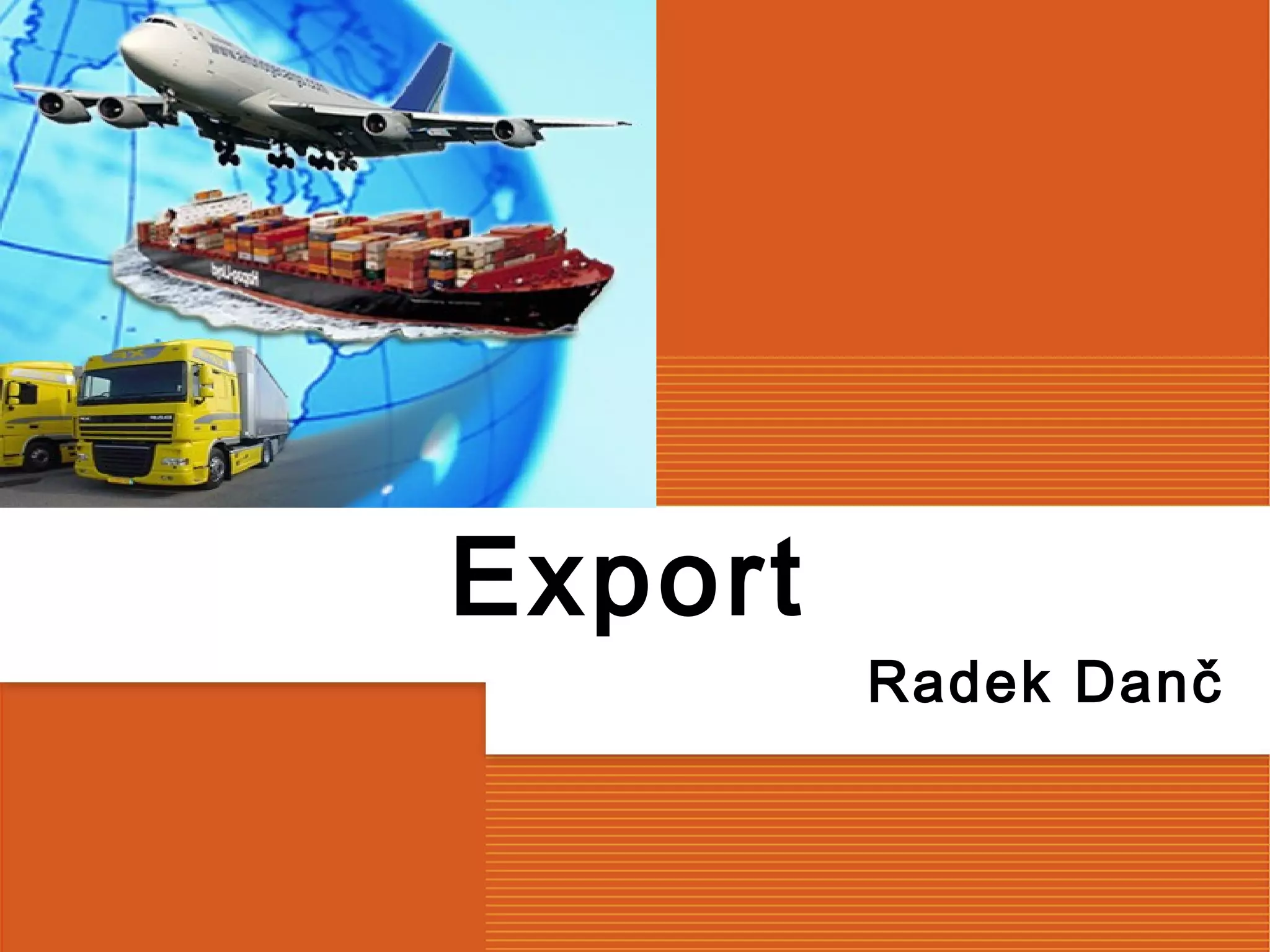
Export
         Radek Danč
Summary

 Introduction of export
 History
 Process and actors
 Why export?
 Advantages of exporting
 Disadvantages of exporting
 Ways of exporting
 Barriers
 Making decision
 Comparison of countries
What is export?


 Goods produced in one country are shipped to other
  markets
 Ship the goods and services out of the port of a
  country
 Foreign demand for goods produced by home country
Additional information


 Export vs. Import             Exporter X Importer
 For many industries of all sizes, small, medium and big

 Domestic producer            foreign consumers
 The most common way of serving international markets
History


 The oldest branches of economic thought

 Major component

 Regularly discussed and disputed two views of int. trade

    recognizes the benefits of international trade

    certain domestic industries (or laborers, or culture) could be
      harmed by foreign competition.
Process

 Methods of export include a product or good or
  information being

      mailed hand-delivered,
      shipped by air or vessel,
      uploaded to an internet site,
      downloaded from an internet site.

       Exports also include the distribution of information
       that can be sent in the form of an email, an email
       attachment, a fax or can be shared during a telephone
       conversation
Actors


 Exporter (individuals or businesses)

 Banks

 Ministry of Foreign Trade

 Customs Administration

 Customs Transport Agent
Why export?


 Increase Sales

    extend the market (increase in Global Competition)

    respond to overseas buyers

    lengthen a product´s life cycle

 Minimize competitive risks

 Diversify sources of sales and supplies

 Avoid changing domestic conditions

    turn to different markets
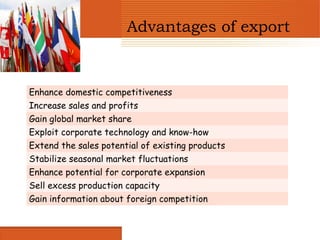
Advantages of export


Enhance domestic competitiveness
Increase sales and profits
Gain global market share
Exploit corporate technology and know-how
Extend the sales potential of existing products
Stabilize seasonal market fluctuations
Enhance potential for corporate expansion
Sell excess production capacity
Gain information about foreign competition
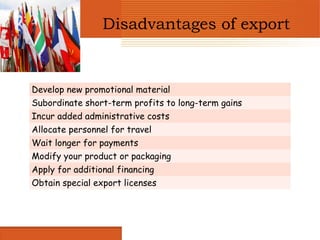
Disadvantages of export


Develop new promotional material
Subordinate short-term profits to long-term gains
Incur added administrative costs
Allocate personnel for travel
Wait longer for payments
Modify your product or packaging
Apply for additional financing
Obtain special export licenses
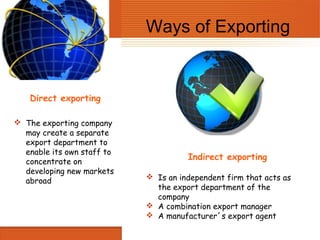
Ways of Exporting


    Direct exporting

 The exporting company
  may create a separate
  export department to
  enable its own staff to
  concentrate on
                                      Indirect exporting
  developing new markets
  abroad                     Is an independent firm that acts as
                              the export department of the
                              company
                             A combination export manager
                             A manufacturer´s export agent
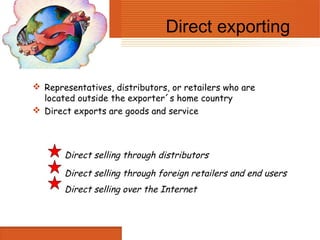
Direct exporting


 Representatives, distributors, or retailers who are
  located outside the exporter´s home country
 Direct exports are goods and service


       Direct selling through distributors
       Direct selling through foreign retailers and end users
       Direct selling over the Internet
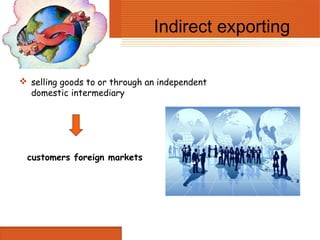
Indirect exporting

 selling goods to or through an independent
  domestic intermediary


 customers foreign markets
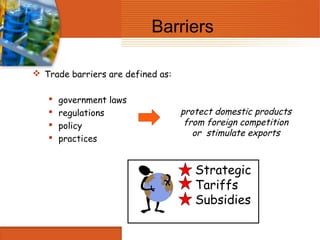
Barriers

 Trade barriers are defined as:

      government laws
      regulations                 protect domestic products
      policy                       from foreign competition
                                      or stimulate exports
      practices


                                      Strategic
                                      Tariffs
                                      Subsidies
Barriers

 Strategic
    international agreements limit trade in, and the
     transfer of, certain types of goods and
     information

 Tarrifs
    tax placed on a specific good or set of goods
     exported from or imported to a country

 Subsidies
    subsidize an industry or company from
     government
Making the export decision


 What does the company want to gain from exporting?

 Is exporting consistent with other company goals?

 What demands will exporting place on the company's key resources

     management and personnel

     production capacity

     Finance

 Are the expected benefits worth the costs, or would company
   resources be better used for developing new domestic business?
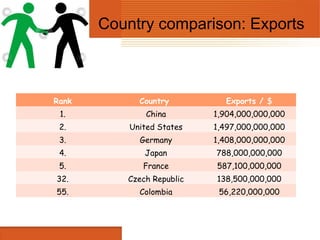
Country comparison: Exports


Rank         Country         Exports / $
 1.            China       1,904,000,000,000
 2.        United States   1,497,000,000,000
 3.          Germany       1,408,000,000,000
 4.           Japan        788,000,000,000
 5.           France       587,100,000,000
32.       Czech Republic   138,500,000,000
55.          Colombia       56,220,000,000
THANK YOU

     FOR

YOUR ATTENTION

Export

  • 1.
    Export Radek Danč
  • 2.
    Summary  Introduction ofexport  History  Process and actors  Why export?  Advantages of exporting  Disadvantages of exporting  Ways of exporting  Barriers  Making decision  Comparison of countries
  • 3.
    What is export? Goods produced in one country are shipped to other markets  Ship the goods and services out of the port of a country  Foreign demand for goods produced by home country
  • 4.
    Additional information  Exportvs. Import Exporter X Importer  For many industries of all sizes, small, medium and big  Domestic producer foreign consumers  The most common way of serving international markets
  • 5.
    History  The oldestbranches of economic thought  Major component  Regularly discussed and disputed two views of int. trade  recognizes the benefits of international trade  certain domestic industries (or laborers, or culture) could be harmed by foreign competition.
  • 6.
    Process  Methods ofexport include a product or good or information being  mailed hand-delivered,  shipped by air or vessel,  uploaded to an internet site,  downloaded from an internet site. Exports also include the distribution of information that can be sent in the form of an email, an email attachment, a fax or can be shared during a telephone conversation
  • 7.
    Actors  Exporter (individualsor businesses)  Banks  Ministry of Foreign Trade  Customs Administration  Customs Transport Agent
  • 8.
    Why export?  IncreaseSales  extend the market (increase in Global Competition)  respond to overseas buyers  lengthen a product´s life cycle  Minimize competitive risks  Diversify sources of sales and supplies  Avoid changing domestic conditions  turn to different markets
  • 9.
    Advantages of export Enhancedomestic competitiveness Increase sales and profits Gain global market share Exploit corporate technology and know-how Extend the sales potential of existing products Stabilize seasonal market fluctuations Enhance potential for corporate expansion Sell excess production capacity Gain information about foreign competition
  • 10.
    Disadvantages of export Developnew promotional material Subordinate short-term profits to long-term gains Incur added administrative costs Allocate personnel for travel Wait longer for payments Modify your product or packaging Apply for additional financing Obtain special export licenses
  • 11.
    Ways of Exporting Direct exporting  The exporting company may create a separate export department to enable its own staff to concentrate on Indirect exporting developing new markets abroad  Is an independent firm that acts as the export department of the company  A combination export manager  A manufacturer´s export agent
  • 12.
    Direct exporting  Representatives, distributors,or retailers who are located outside the exporter´s home country  Direct exports are goods and service Direct selling through distributors Direct selling through foreign retailers and end users Direct selling over the Internet
  • 13.
    Indirect exporting  sellinggoods to or through an independent domestic intermediary customers foreign markets
  • 14.
    Barriers  Trade barriersare defined as:  government laws  regulations protect domestic products  policy from foreign competition or stimulate exports  practices Strategic Tariffs Subsidies
  • 15.
    Barriers  Strategic  international agreements limit trade in, and the transfer of, certain types of goods and information  Tarrifs  tax placed on a specific good or set of goods exported from or imported to a country  Subsidies  subsidize an industry or company from government
  • 16.
    Making the exportdecision  What does the company want to gain from exporting?  Is exporting consistent with other company goals?  What demands will exporting place on the company's key resources  management and personnel  production capacity  Finance  Are the expected benefits worth the costs, or would company resources be better used for developing new domestic business?
  • 17.
    Country comparison: Exports Rank Country Exports / $ 1. China 1,904,000,000,000 2. United States 1,497,000,000,000 3. Germany 1,408,000,000,000 4. Japan 788,000,000,000 5. France 587,100,000,000 32. Czech Republic 138,500,000,000 55. Colombia 56,220,000,000
  • 18.
    THANK YOU FOR YOUR ATTENTION