HYPONATREMIA - GUIDELINES
Dr. Ratan Jha (consultant
nephrologist)
Dr. Mohd Viquasuddin (dnb resident)
introduction
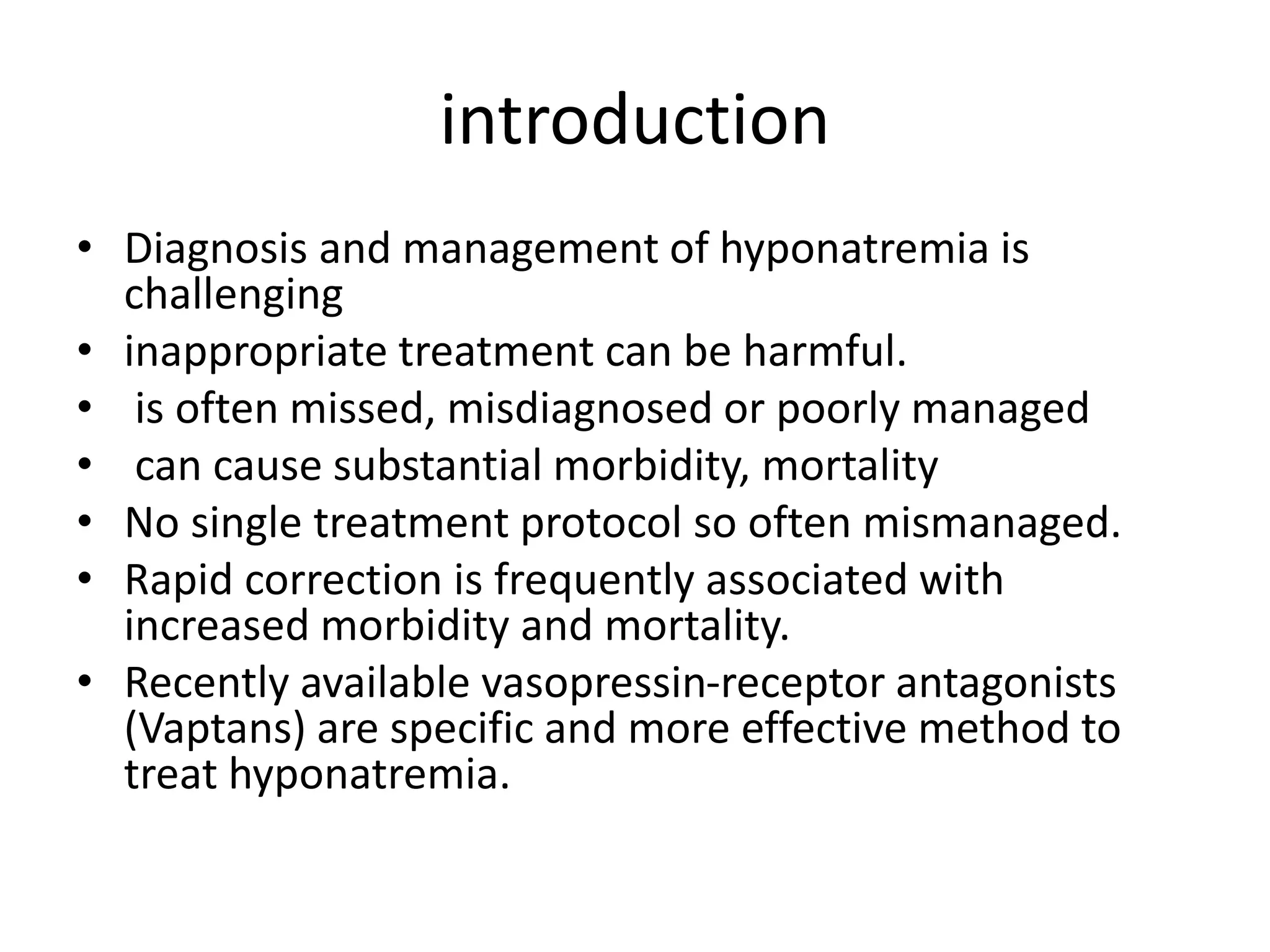
• Diagnosis and management of hyponatremia is
challenging
• inappropriate treatment can be harmful.
• is often missed, misdiagnosed or poorly managed
• can cause substantial morbidity, mortality
• No single treatment protocol so often mismanaged.
• Rapid correction is frequently associated with
increased morbidity and mortality.
• Recently available vasopressin-receptor antagonists
(Vaptans) are specific and more effective method to
treat hyponatremia.
Prevalence & epidemiology
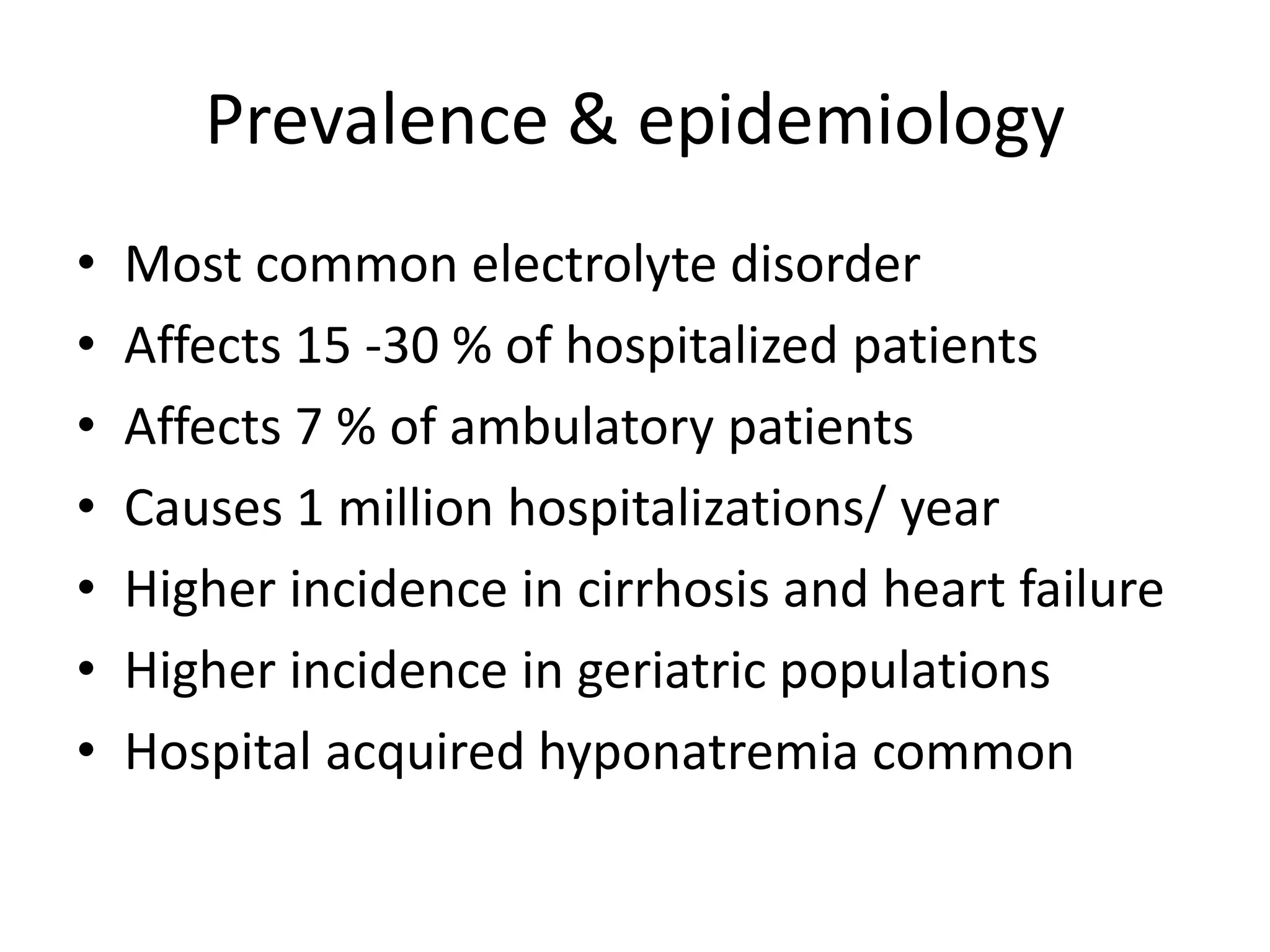
• Most common electrolyte disorder
• Affects 15 -30 % of hospitalized patients
• Affects 7 % of ambulatory patients
• Causes 1 million hospitalizations/ year
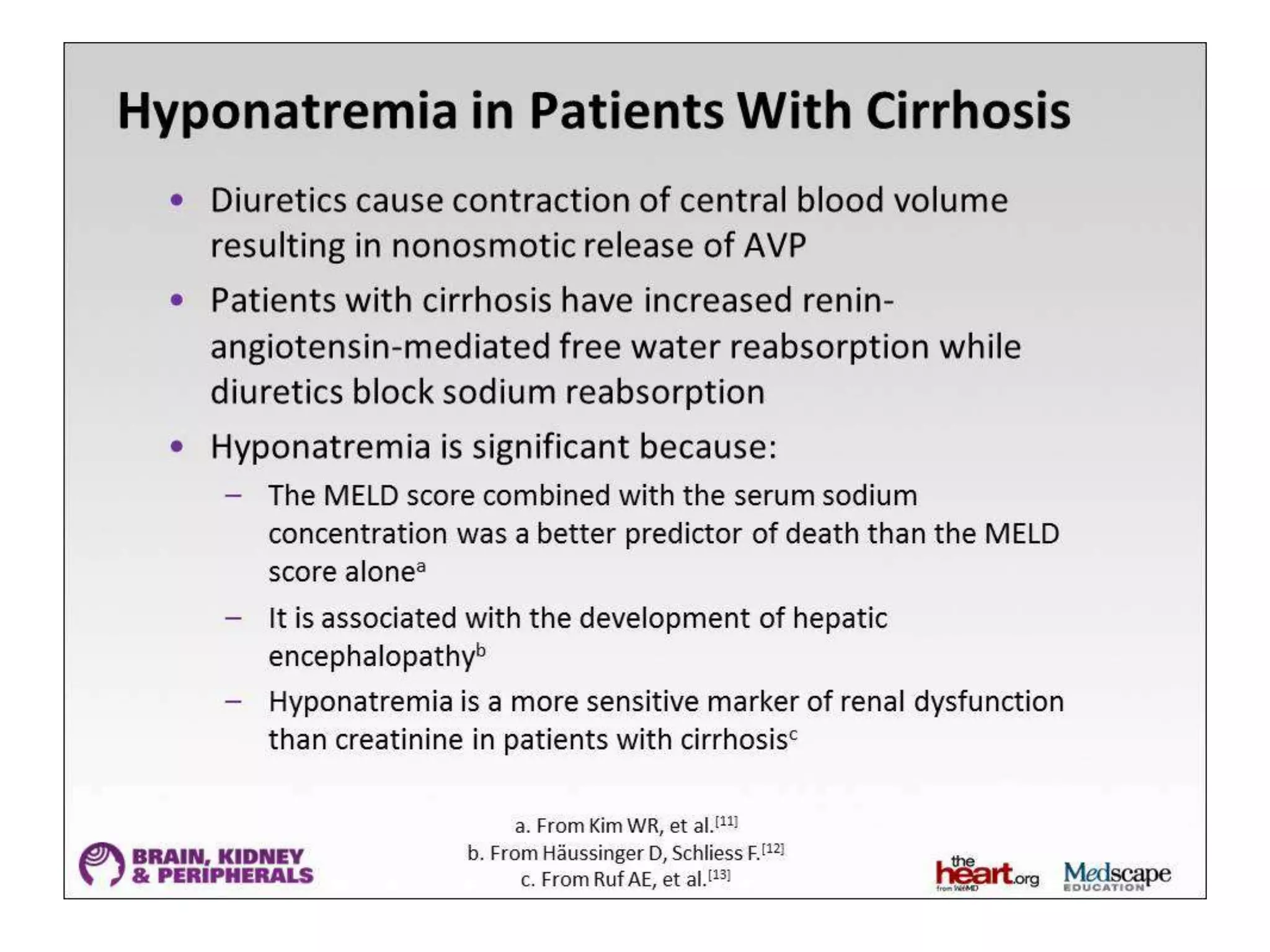
• Higher incidence in cirrhosis and heart failure
• Higher incidence in geriatric populations
• Hospital acquired hyponatremia common
Risk factors
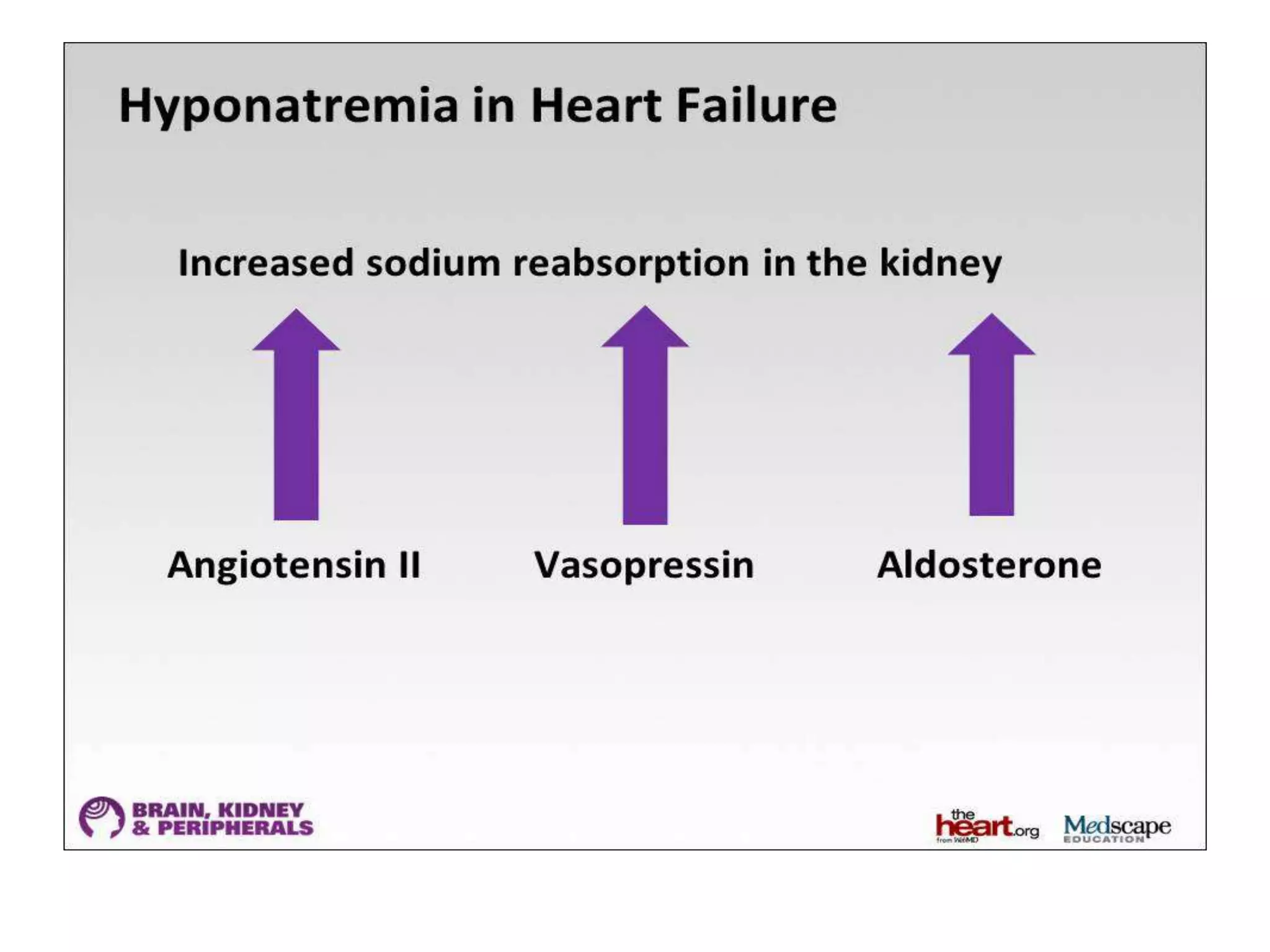
• Primarily due to elevated Vasopressin (ADH)
• ADH released due to elevated plasma
osmolality and hypovolemia / hypotension
• ADH cause excess water reabsorption
• Etiology based on classification
• 1. hypovolemic
• 2. euvolemic
• 3. hypervolemic
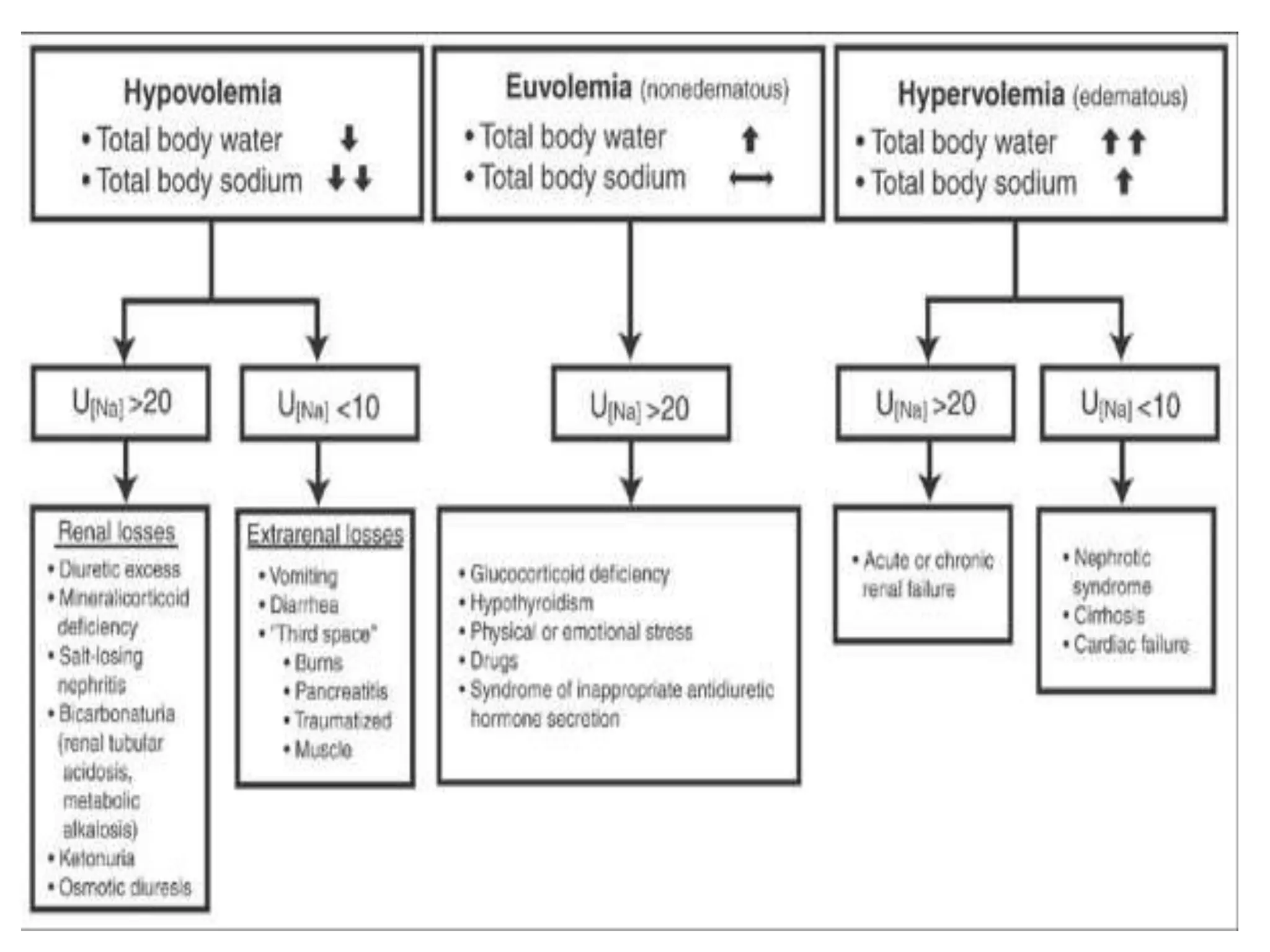
Hypovolemic hyponatremia
• Decreased Total body water and Na , greater decrease in Na
• Gastro-intestinal losses : diarrhea, vomiting
• 3rd space losses : burns, pancreatitis, peritonitis,
rhabdomyolysis
• Renal losses : diuretics, mineralocorticoid deficiency.
• osmotic diuresis : glucose, mannitol, urea
• Salt losing nephropathies : interstitial nephritis, medullay
cystic kidney disease, partial urinary tract obstruction,
polycystic kidney disease.
Euvolemic hyponatremia
• Increased Total body water with normal total
body Na
• Drugs : carbamazepine, clofibrate, opioids,
cyclophosphamide, NSAID’s, oxytocin.
• Disorders : addison’s disease,
hypothyroidism,SIADH
• Increased intake of fluids : primary polydipsia
• Non-osmotic release of ADH : nausea, pain,
emotional stress
Hypervolemic hyponatremia
• Increased Total body Na with a greater
increase in Total body water
• Extra-renal disorders : cirrhosis, heart failure
• Renal disorders : acute kidney injury, chronic
kidney disease, nephrotic syndrome
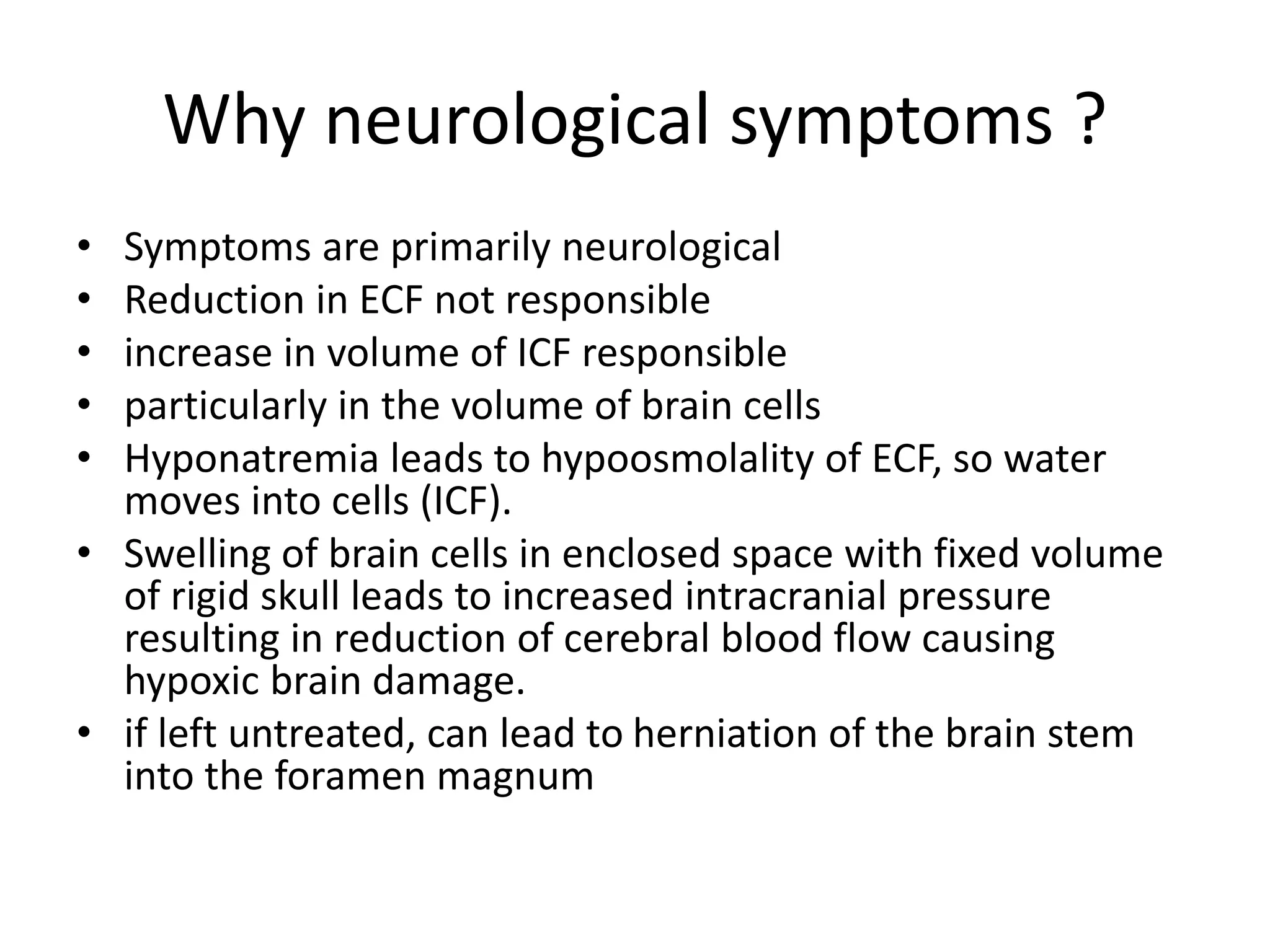
Why neurological symptoms ?
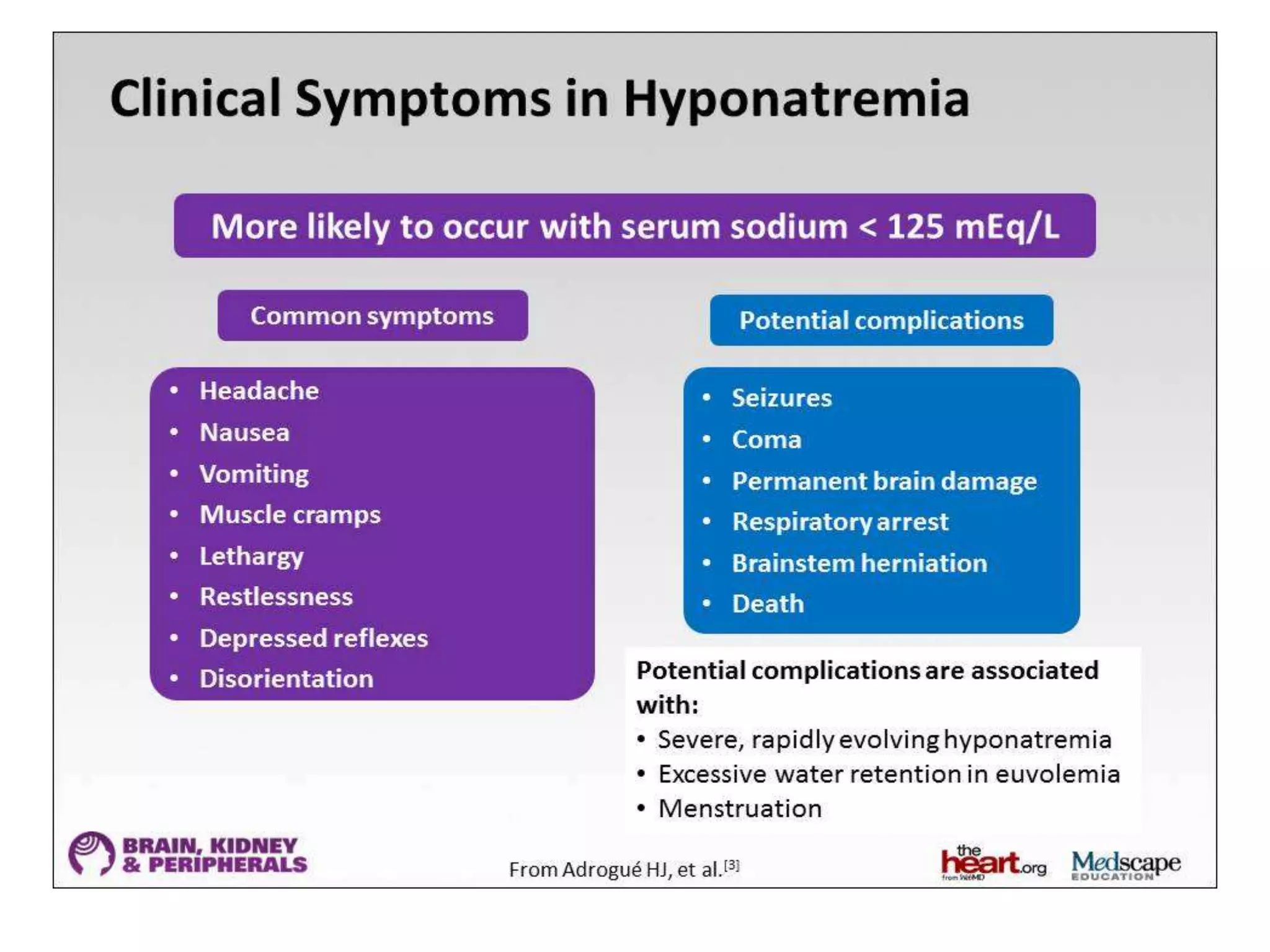
• Symptoms are primarily neurological
• Reduction in ECF not responsible
• increase in volume of ICF responsible
• particularly in the volume of brain cells
• Hyponatremia leads to hypoosmolality of ECF, so water
moves into cells (ICF).
• Swelling of brain cells in enclosed space with fixed volume
of rigid skull leads to increased intracranial pressure
resulting in reduction of cerebral blood flow causing
hypoxic brain damage.
• if left untreated, can lead to herniation of the brain stem
into the foramen magnum
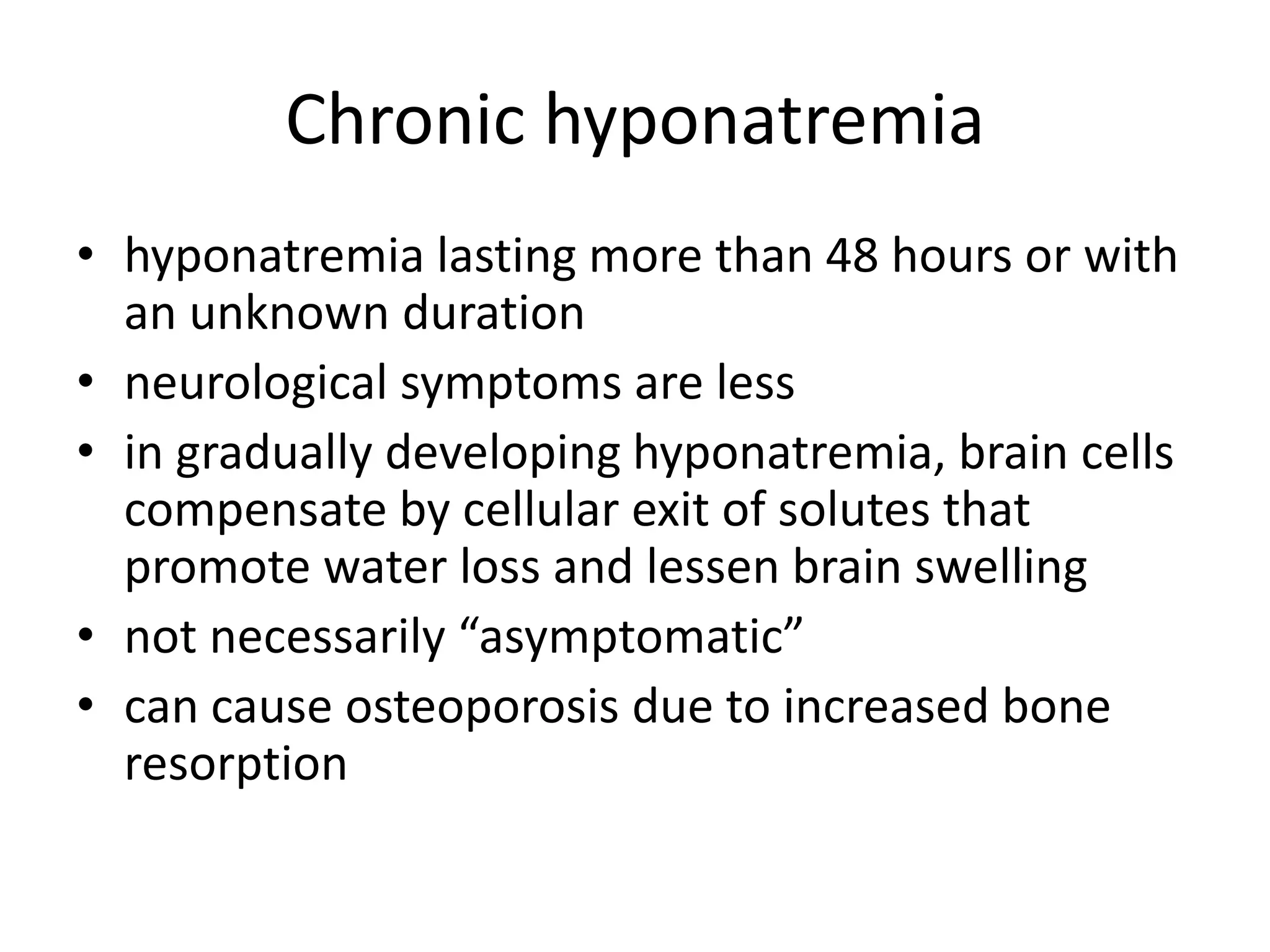
Chronic hyponatremia
• hyponatremia lasting more than 48 hours or with
an unknown duration
• neurological symptoms are less
• in gradually developing hyponatremia, brain cells
compensate by cellular exit of solutes that
promote water loss and lessen brain swelling
• not necessarily “asymptomatic”
• can cause osteoporosis due to increased bone
resorption
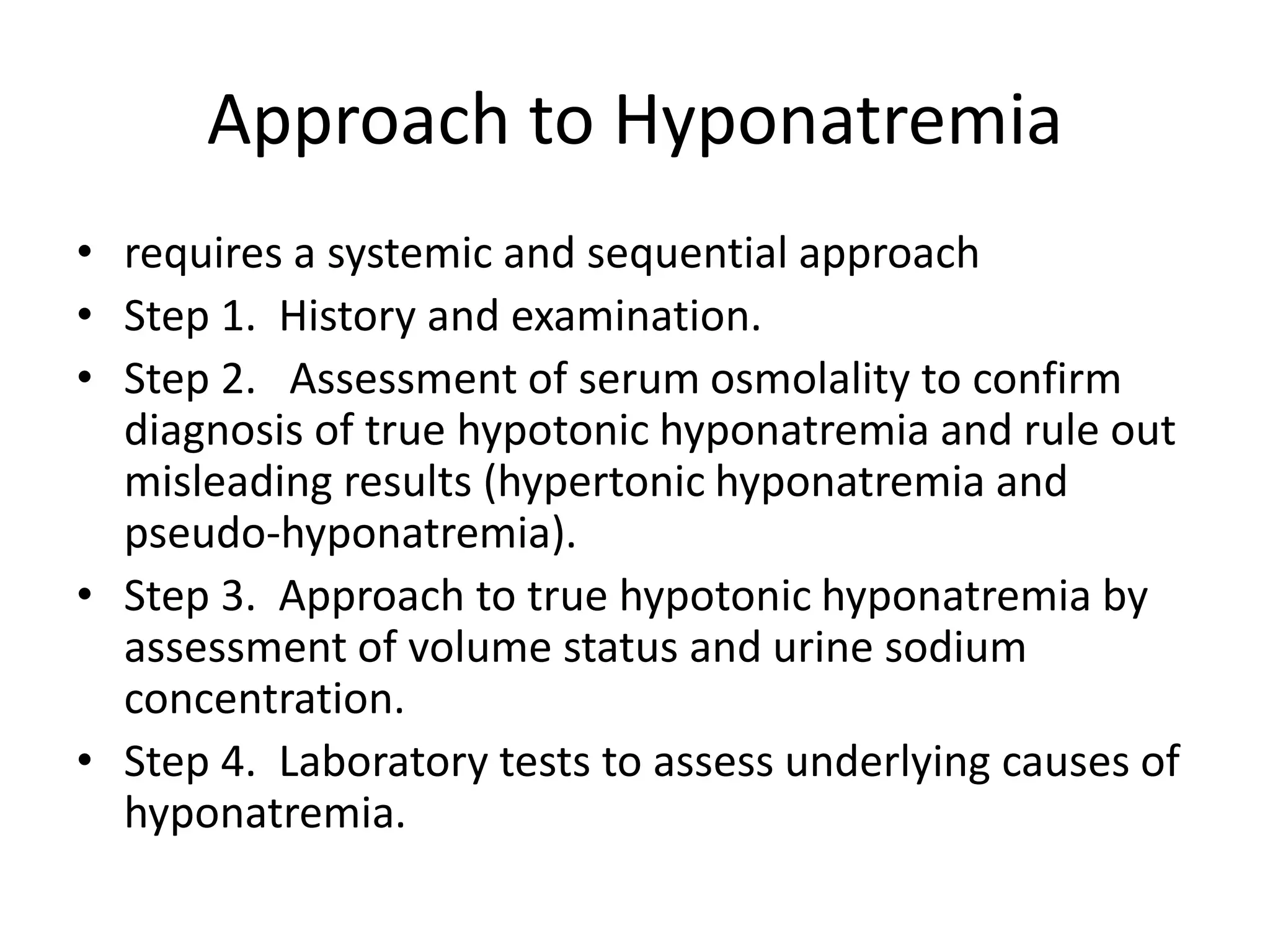
Approach to Hyponatremia
• requires a systemic and sequential approach
• Step 1. History and examination.
• Step 2. Assessment of serum osmolality to confirm
diagnosis of true hypotonic hyponatremia and rule out
misleading results (hypertonic hyponatremia and
pseudo-hyponatremia).
• Step 3. Approach to true hypotonic hyponatremia by
assessment of volume status and urine sodium
concentration.
• Step 4. Laboratory tests to assess underlying causes of
hyponatremia.
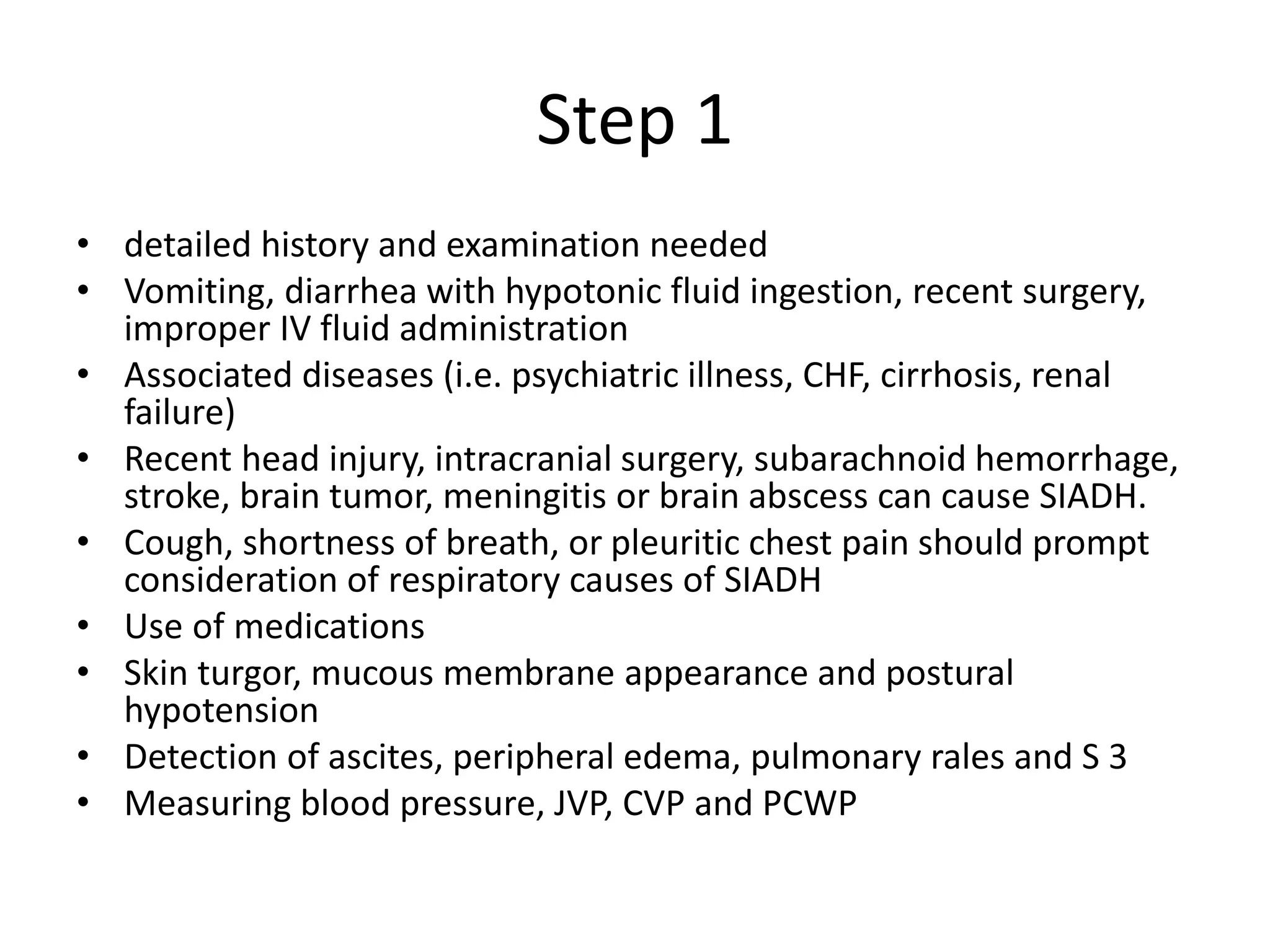
Step 1
• detailed history and examination needed
• Vomiting, diarrhea with hypotonic fluid ingestion, recent surgery,
improper IV fluid administration
• Associated diseases (i.e. psychiatric illness, CHF, cirrhosis, renal
failure)
• Recent head injury, intracranial surgery, subarachnoid hemorrhage,
stroke, brain tumor, meningitis or brain abscess can cause SIADH.
• Cough, shortness of breath, or pleuritic chest pain should prompt
consideration of respiratory causes of SIADH
• Use of medications
• Skin turgor, mucous membrane appearance and postural
hypotension
• Detection of ascites, peripheral edema, pulmonary rales and S 3
• Measuring blood pressure, JVP, CVP and PCWP
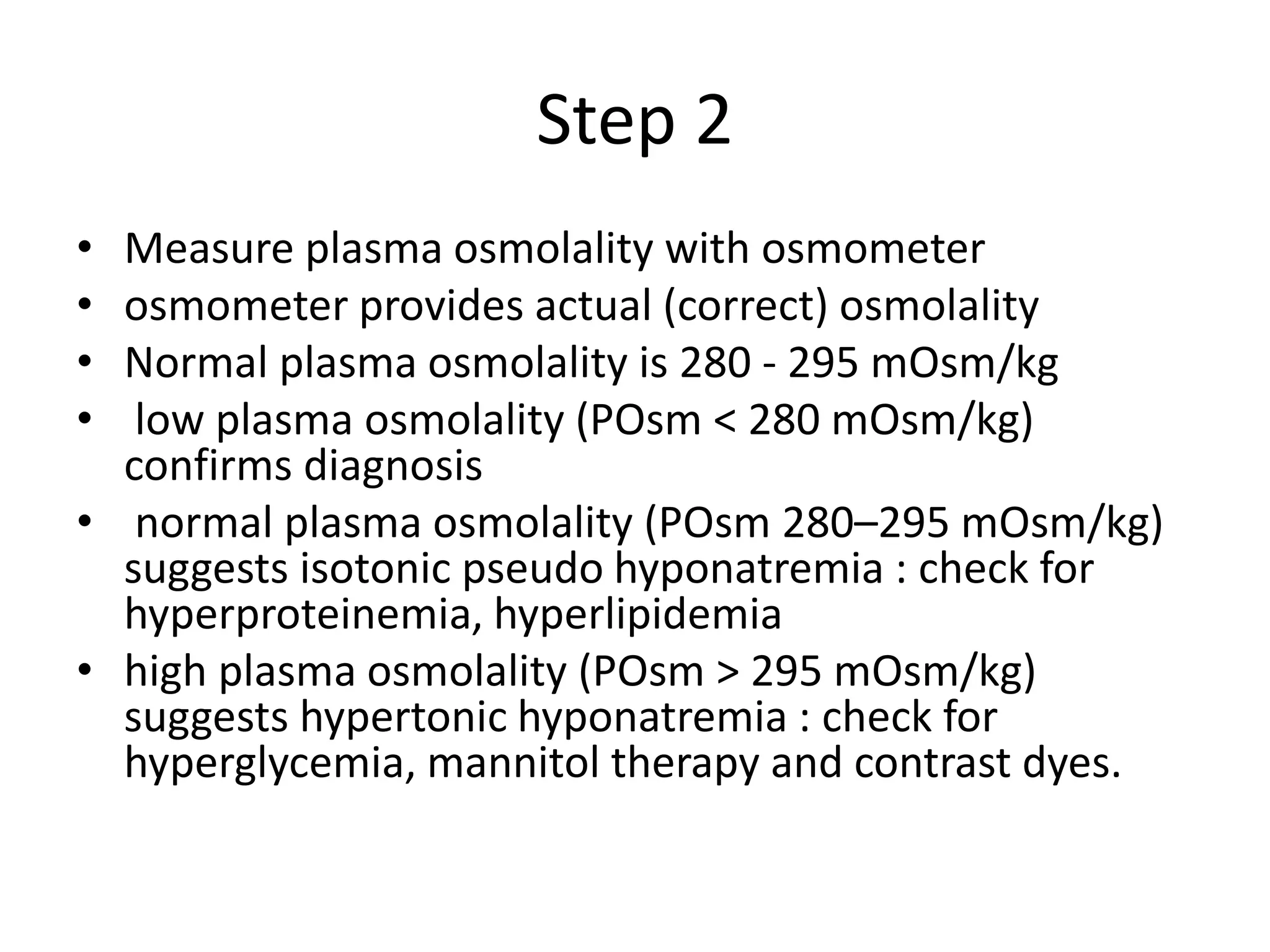
Step 2
• Measure plasma osmolality with osmometer
• osmometer provides actual (correct) osmolality
• Normal plasma osmolality is 280 - 295 mOsm/kg
• low plasma osmolality (POsm < 280 mOsm/kg)
confirms diagnosis
• normal plasma osmolality (POsm 280–295 mOsm/kg)
suggests isotonic pseudo hyponatremia : check for
hyperproteinemia, hyperlipidemia
• high plasma osmolality (POsm > 295 mOsm/kg)
suggests hypertonic hyponatremia : check for
hyperglycemia, mannitol therapy and contrast dyes.
Step 3
• classified into hypovolemic, hypervolemic and
euvolemic
• treatment protocols are absolutely different in
all three categories
• Volume status should be measured
• Urinary sodium should be measured
Diagnostic criteria for SIADH
• Essential diagnostic criteria for SIADH
• • Decreased measured serum osmolality (<275 mOsm/kg
H2O)
• • Clinical euvolaemia. Exclude hypovolemia and
hypervolemia
• • Urinary osmolality >100 mOsm/kg H2O during hypo-
osmolality
• • Urinary [Na+] >40 mmol/L with normal dietary sodium
intake
• • Normal thyroid and adrenal function. Exclude renal
failure and use of diuretic agents within the week prior to
evaluation
• • No hypokalemia, no acid base disorders
Diagnostic criteria for SIADH
• Supporting diagnostic criteria for SIADH
• • Serum uric acid <4 mg/dL
• • Blood urea nitrogen <10 mg/dL
• • Fractional sodium excretion >1%; fractional
urea excretion >55%c
• • Failure to improve or worsening of
hyponatremia after 0.9% saline infusion
• • Improvement of hyponatremia with fluid
restriction
Step 4
• Check urine Osmolality with osmometer.
• distinguishes between hyponatremia with normal
water excretion and hyponatremia due to
impaired water excretion
• Urine osmolality below 100 mOsm/kg indicates
that antidiuretic hormone (ADH) secretion is
completely and appropriately suppressed
• urine osmolality exceeding 100 mOsm/kg
indicates impaired water excretion which reflects
impaired renal diluting mechanism (SIADH)
Step 4
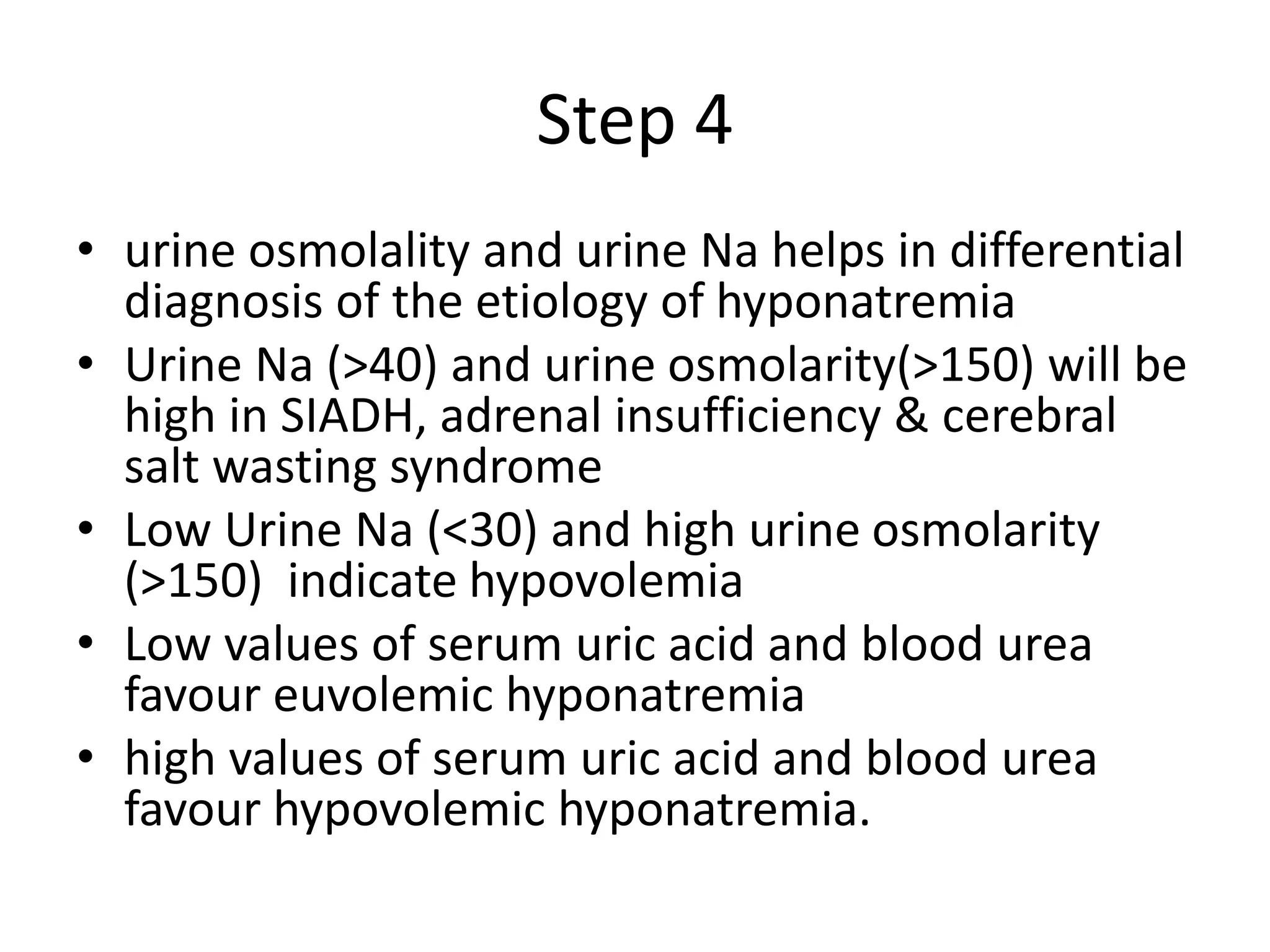
• urine osmolality and urine Na helps in differential
diagnosis of the etiology of hyponatremia
• Urine Na (>40) and urine osmolarity(>150) will be
high in SIADH, adrenal insufficiency & cerebral
salt wasting syndrome
• Low Urine Na (<30) and high urine osmolarity
(>150) indicate hypovolemia
• Low values of serum uric acid and blood urea
favour euvolemic hyponatremia
• high values of serum uric acid and blood urea
favour hypovolemic hyponatremia.
Step 4
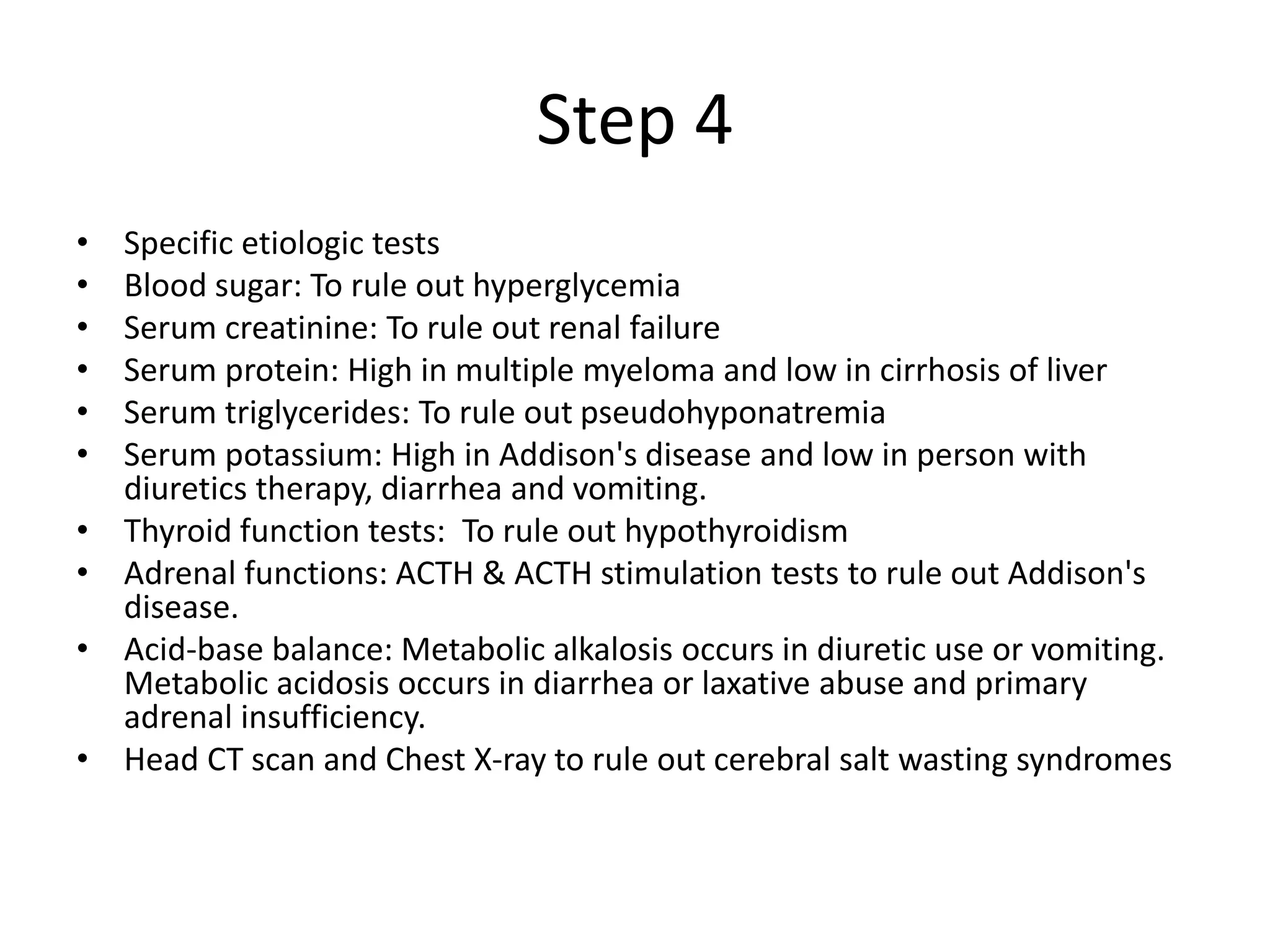
• Specific etiologic tests
• Blood sugar: To rule out hyperglycemia
• Serum creatinine: To rule out renal failure
• Serum protein: High in multiple myeloma and low in cirrhosis of liver
• Serum triglycerides: To rule out pseudohyponatremia
• Serum potassium: High in Addison's disease and low in person with
diuretics therapy, diarrhea and vomiting.
• Thyroid function tests: To rule out hypothyroidism
• Adrenal functions: ACTH & ACTH stimulation tests to rule out Addison's
disease.
• Acid-base balance: Metabolic alkalosis occurs in diuretic use or vomiting.
Metabolic acidosis occurs in diarrhea or laxative abuse and primary
adrenal insufficiency.
• Head CT scan and Chest X-ray to rule out cerebral salt wasting syndromes
management
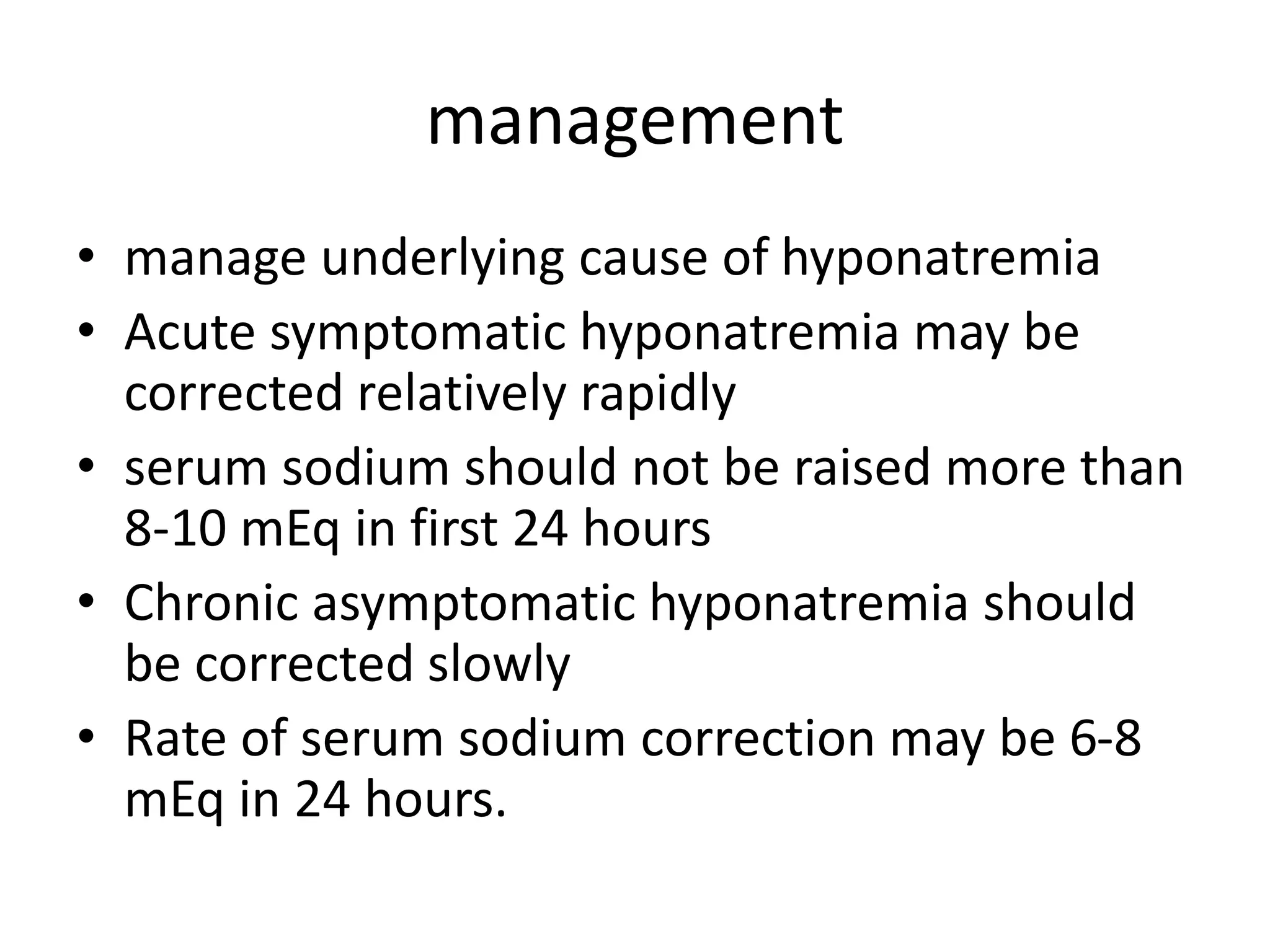
• manage underlying cause of hyponatremia
• Acute symptomatic hyponatremia may be
corrected relatively rapidly
• serum sodium should not be raised more than
8-10 mEq in first 24 hours
• Chronic asymptomatic hyponatremia should
be corrected slowly
• Rate of serum sodium correction may be 6-8
mEq in 24 hours.
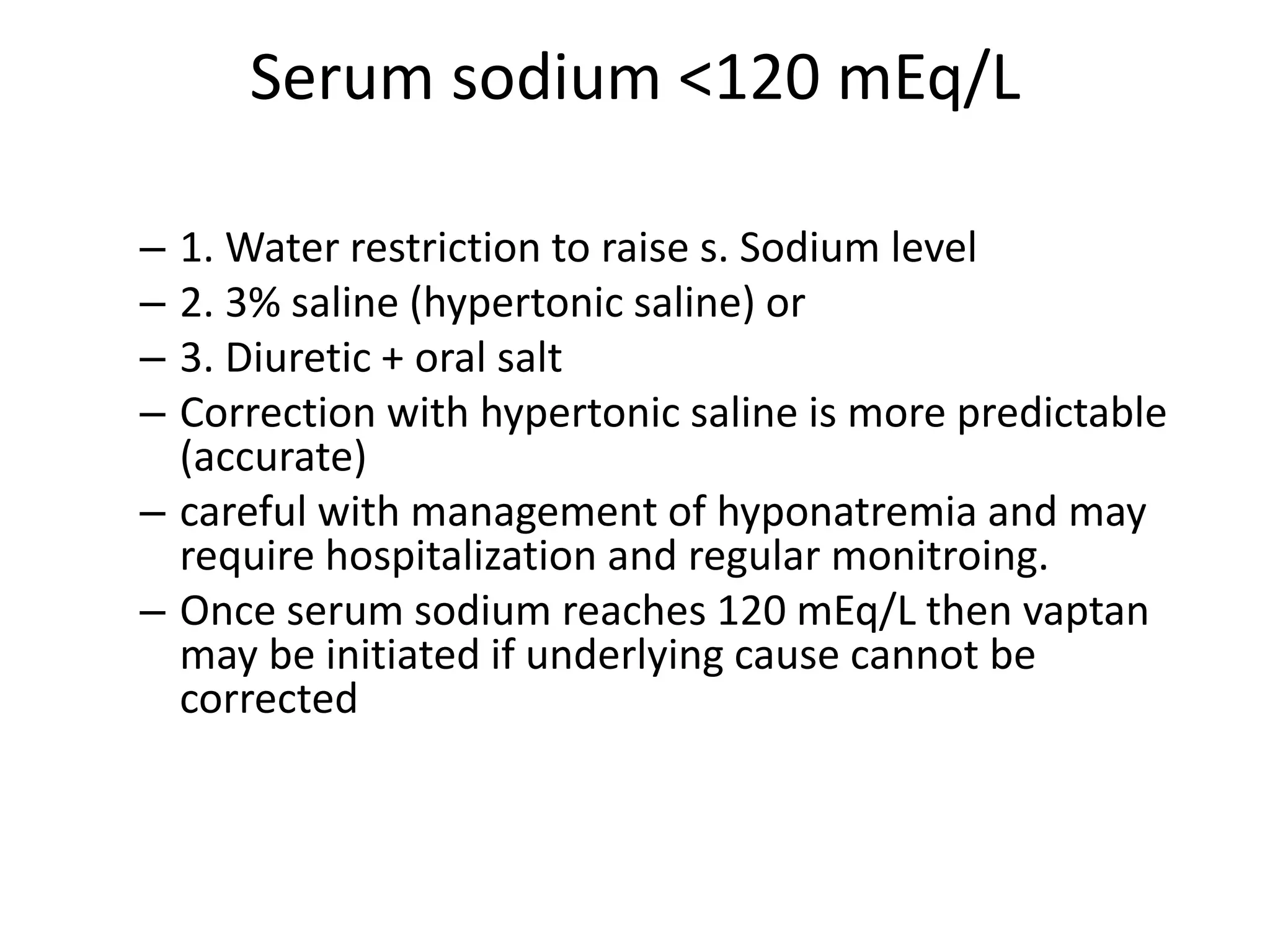
Serum sodium <120 mEq/L
– 1. Water restriction to raise s. Sodium level
– 2. 3% saline (hypertonic saline) or
– 3. Diuretic + oral salt
– Correction with hypertonic saline is more predictable
(accurate)
– careful with management of hyponatremia and may
require hospitalization and regular monitroing.
– Once serum sodium reaches 120 mEq/L then vaptan
may be initiated if underlying cause cannot be
corrected
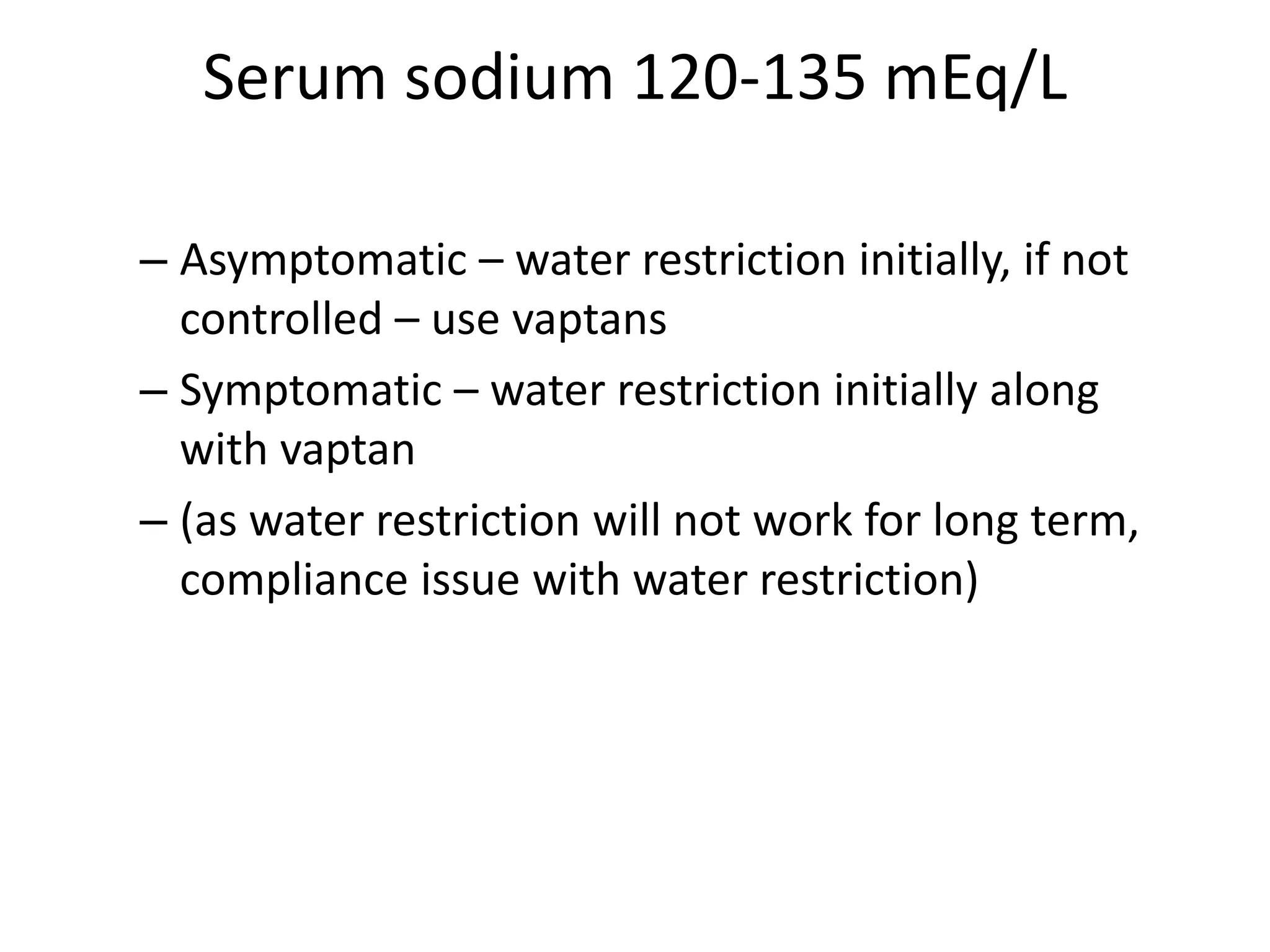
Serum sodium 120-135 mEq/L
– Asymptomatic – water restriction initially, if not
controlled – use vaptans
– Symptomatic – water restriction initially along
with vaptan
– (as water restriction will not work for long term,
compliance issue with water restriction)
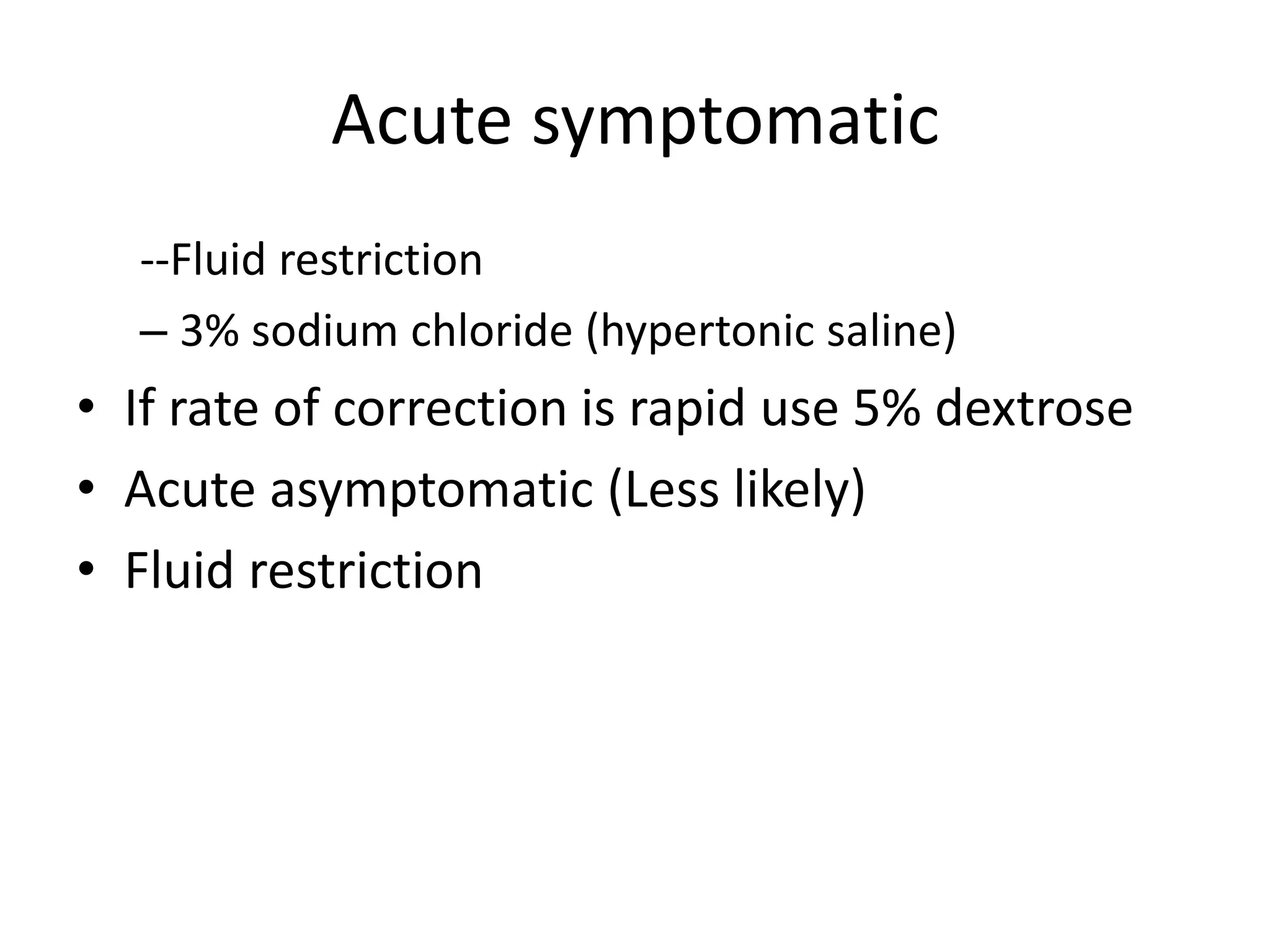
Acute symptomatic
--Fluid restriction
– 3% sodium chloride (hypertonic saline)
• If rate of correction is rapid use 5% dextrose
• Acute asymptomatic (Less likely)
• Fluid restriction
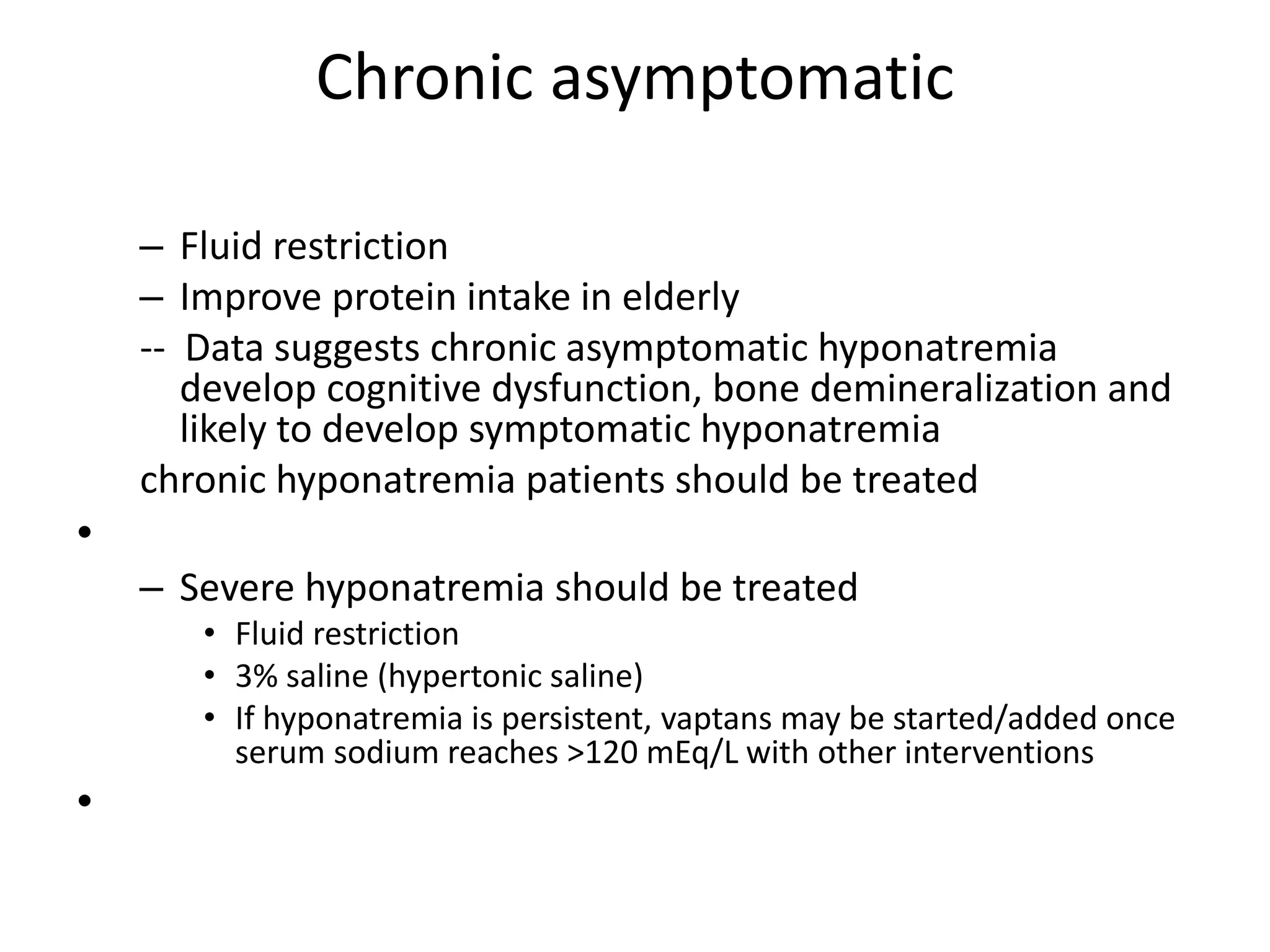
Chronic asymptomatic
– Fluid restriction
– Improve protein intake in elderly
-- Data suggests chronic asymptomatic hyponatremia
develop cognitive dysfunction, bone demineralization and
likely to develop symptomatic hyponatremia
chronic hyponatremia patients should be treated
•
– Severe hyponatremia should be treated
• Fluid restriction
• 3% saline (hypertonic saline)
• If hyponatremia is persistent, vaptans may be started/added once
serum sodium reaches >120 mEq/L with other interventions
•
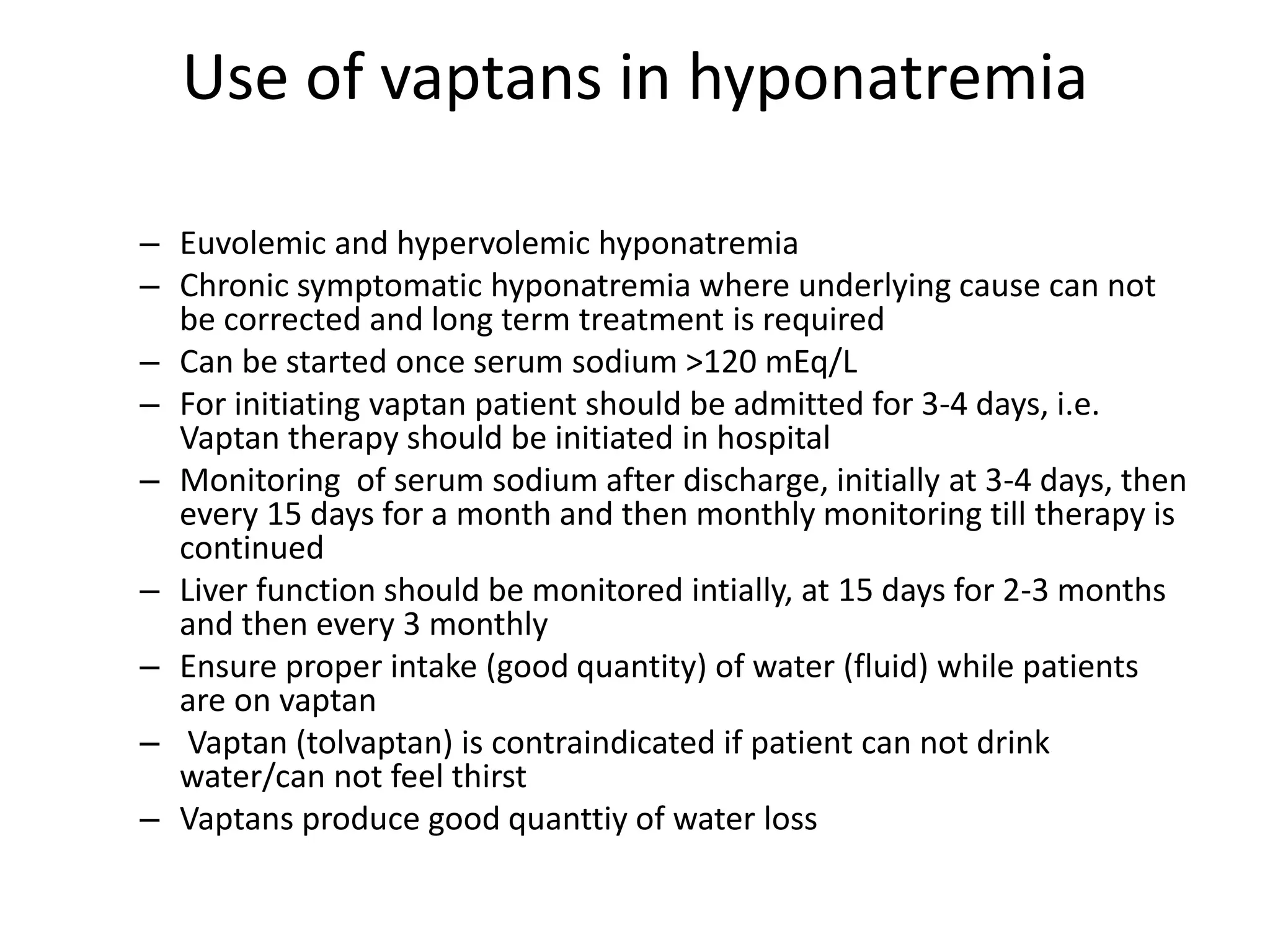
Use of vaptans in hyponatremia
– Euvolemic and hypervolemic hyponatremia
– Chronic symptomatic hyponatremia where underlying cause can not
be corrected and long term treatment is required
– Can be started once serum sodium >120 mEq/L
– For initiating vaptan patient should be admitted for 3-4 days, i.e.
Vaptan therapy should be initiated in hospital
– Monitoring of serum sodium after discharge, initially at 3-4 days, then
every 15 days for a month and then monthly monitoring till therapy is
continued
– Liver function should be monitored intially, at 15 days for 2-3 months
and then every 3 monthly
– Ensure proper intake (good quantity) of water (fluid) while patients
are on vaptan
– Vaptan (tolvaptan) is contraindicated if patient can not drink
water/can not feel thirst
– Vaptans produce good quanttiy of water loss
….
• thank you
• The end
Hyponatremia  gulidelines

Hyponatremia gulidelines

  • 1.
    HYPONATREMIA - GUIDELINES Dr.Ratan Jha (consultant nephrologist) Dr. Mohd Viquasuddin (dnb resident)
  • 2.
    introduction • Diagnosis andmanagement of hyponatremia is challenging • inappropriate treatment can be harmful. • is often missed, misdiagnosed or poorly managed • can cause substantial morbidity, mortality • No single treatment protocol so often mismanaged. • Rapid correction is frequently associated with increased morbidity and mortality. • Recently available vasopressin-receptor antagonists (Vaptans) are specific and more effective method to treat hyponatremia.
  • 3.
    Prevalence & epidemiology •Most common electrolyte disorder • Affects 15 -30 % of hospitalized patients • Affects 7 % of ambulatory patients • Causes 1 million hospitalizations/ year • Higher incidence in cirrhosis and heart failure • Higher incidence in geriatric populations • Hospital acquired hyponatremia common
  • 5.
    Risk factors • Primarilydue to elevated Vasopressin (ADH) • ADH released due to elevated plasma osmolality and hypovolemia / hypotension • ADH cause excess water reabsorption • Etiology based on classification • 1. hypovolemic • 2. euvolemic • 3. hypervolemic
  • 6.
    Hypovolemic hyponatremia • DecreasedTotal body water and Na , greater decrease in Na • Gastro-intestinal losses : diarrhea, vomiting • 3rd space losses : burns, pancreatitis, peritonitis, rhabdomyolysis • Renal losses : diuretics, mineralocorticoid deficiency. • osmotic diuresis : glucose, mannitol, urea • Salt losing nephropathies : interstitial nephritis, medullay cystic kidney disease, partial urinary tract obstruction, polycystic kidney disease.
  • 7.
    Euvolemic hyponatremia • IncreasedTotal body water with normal total body Na • Drugs : carbamazepine, clofibrate, opioids, cyclophosphamide, NSAID’s, oxytocin. • Disorders : addison’s disease, hypothyroidism,SIADH • Increased intake of fluids : primary polydipsia • Non-osmotic release of ADH : nausea, pain, emotional stress
  • 8.
    Hypervolemic hyponatremia • IncreasedTotal body Na with a greater increase in Total body water • Extra-renal disorders : cirrhosis, heart failure • Renal disorders : acute kidney injury, chronic kidney disease, nephrotic syndrome
  • 12.
    Why neurological symptoms? • Symptoms are primarily neurological • Reduction in ECF not responsible • increase in volume of ICF responsible • particularly in the volume of brain cells • Hyponatremia leads to hypoosmolality of ECF, so water moves into cells (ICF). • Swelling of brain cells in enclosed space with fixed volume of rigid skull leads to increased intracranial pressure resulting in reduction of cerebral blood flow causing hypoxic brain damage. • if left untreated, can lead to herniation of the brain stem into the foramen magnum
  • 13.
    Chronic hyponatremia • hyponatremialasting more than 48 hours or with an unknown duration • neurological symptoms are less • in gradually developing hyponatremia, brain cells compensate by cellular exit of solutes that promote water loss and lessen brain swelling • not necessarily “asymptomatic” • can cause osteoporosis due to increased bone resorption
  • 14.
    Approach to Hyponatremia •requires a systemic and sequential approach • Step 1. History and examination. • Step 2. Assessment of serum osmolality to confirm diagnosis of true hypotonic hyponatremia and rule out misleading results (hypertonic hyponatremia and pseudo-hyponatremia). • Step 3. Approach to true hypotonic hyponatremia by assessment of volume status and urine sodium concentration. • Step 4. Laboratory tests to assess underlying causes of hyponatremia.
  • 15.
    Step 1 • detailedhistory and examination needed • Vomiting, diarrhea with hypotonic fluid ingestion, recent surgery, improper IV fluid administration • Associated diseases (i.e. psychiatric illness, CHF, cirrhosis, renal failure) • Recent head injury, intracranial surgery, subarachnoid hemorrhage, stroke, brain tumor, meningitis or brain abscess can cause SIADH. • Cough, shortness of breath, or pleuritic chest pain should prompt consideration of respiratory causes of SIADH • Use of medications • Skin turgor, mucous membrane appearance and postural hypotension • Detection of ascites, peripheral edema, pulmonary rales and S 3 • Measuring blood pressure, JVP, CVP and PCWP
  • 16.
    Step 2 • Measureplasma osmolality with osmometer • osmometer provides actual (correct) osmolality • Normal plasma osmolality is 280 - 295 mOsm/kg • low plasma osmolality (POsm < 280 mOsm/kg) confirms diagnosis • normal plasma osmolality (POsm 280–295 mOsm/kg) suggests isotonic pseudo hyponatremia : check for hyperproteinemia, hyperlipidemia • high plasma osmolality (POsm > 295 mOsm/kg) suggests hypertonic hyponatremia : check for hyperglycemia, mannitol therapy and contrast dyes.
  • 17.
    Step 3 • classifiedinto hypovolemic, hypervolemic and euvolemic • treatment protocols are absolutely different in all three categories • Volume status should be measured • Urinary sodium should be measured
  • 19.
    Diagnostic criteria forSIADH • Essential diagnostic criteria for SIADH • • Decreased measured serum osmolality (<275 mOsm/kg H2O) • • Clinical euvolaemia. Exclude hypovolemia and hypervolemia • • Urinary osmolality >100 mOsm/kg H2O during hypo- osmolality • • Urinary [Na+] >40 mmol/L with normal dietary sodium intake • • Normal thyroid and adrenal function. Exclude renal failure and use of diuretic agents within the week prior to evaluation • • No hypokalemia, no acid base disorders
  • 20.
    Diagnostic criteria forSIADH • Supporting diagnostic criteria for SIADH • • Serum uric acid <4 mg/dL • • Blood urea nitrogen <10 mg/dL • • Fractional sodium excretion >1%; fractional urea excretion >55%c • • Failure to improve or worsening of hyponatremia after 0.9% saline infusion • • Improvement of hyponatremia with fluid restriction
  • 21.
    Step 4 • Checkurine Osmolality with osmometer. • distinguishes between hyponatremia with normal water excretion and hyponatremia due to impaired water excretion • Urine osmolality below 100 mOsm/kg indicates that antidiuretic hormone (ADH) secretion is completely and appropriately suppressed • urine osmolality exceeding 100 mOsm/kg indicates impaired water excretion which reflects impaired renal diluting mechanism (SIADH)
  • 22.
    Step 4 • urineosmolality and urine Na helps in differential diagnosis of the etiology of hyponatremia • Urine Na (>40) and urine osmolarity(>150) will be high in SIADH, adrenal insufficiency & cerebral salt wasting syndrome • Low Urine Na (<30) and high urine osmolarity (>150) indicate hypovolemia • Low values of serum uric acid and blood urea favour euvolemic hyponatremia • high values of serum uric acid and blood urea favour hypovolemic hyponatremia.
  • 23.
    Step 4 • Specificetiologic tests • Blood sugar: To rule out hyperglycemia • Serum creatinine: To rule out renal failure • Serum protein: High in multiple myeloma and low in cirrhosis of liver • Serum triglycerides: To rule out pseudohyponatremia • Serum potassium: High in Addison's disease and low in person with diuretics therapy, diarrhea and vomiting. • Thyroid function tests: To rule out hypothyroidism • Adrenal functions: ACTH & ACTH stimulation tests to rule out Addison's disease. • Acid-base balance: Metabolic alkalosis occurs in diuretic use or vomiting. Metabolic acidosis occurs in diarrhea or laxative abuse and primary adrenal insufficiency. • Head CT scan and Chest X-ray to rule out cerebral salt wasting syndromes
  • 24.
    management • manage underlyingcause of hyponatremia • Acute symptomatic hyponatremia may be corrected relatively rapidly • serum sodium should not be raised more than 8-10 mEq in first 24 hours • Chronic asymptomatic hyponatremia should be corrected slowly • Rate of serum sodium correction may be 6-8 mEq in 24 hours.
  • 25.
    Serum sodium <120mEq/L – 1. Water restriction to raise s. Sodium level – 2. 3% saline (hypertonic saline) or – 3. Diuretic + oral salt – Correction with hypertonic saline is more predictable (accurate) – careful with management of hyponatremia and may require hospitalization and regular monitroing. – Once serum sodium reaches 120 mEq/L then vaptan may be initiated if underlying cause cannot be corrected
  • 26.
    Serum sodium 120-135mEq/L – Asymptomatic – water restriction initially, if not controlled – use vaptans – Symptomatic – water restriction initially along with vaptan – (as water restriction will not work for long term, compliance issue with water restriction)
  • 27.
    Acute symptomatic --Fluid restriction –3% sodium chloride (hypertonic saline) • If rate of correction is rapid use 5% dextrose • Acute asymptomatic (Less likely) • Fluid restriction
  • 28.
    Chronic asymptomatic – Fluidrestriction – Improve protein intake in elderly -- Data suggests chronic asymptomatic hyponatremia develop cognitive dysfunction, bone demineralization and likely to develop symptomatic hyponatremia chronic hyponatremia patients should be treated • – Severe hyponatremia should be treated • Fluid restriction • 3% saline (hypertonic saline) • If hyponatremia is persistent, vaptans may be started/added once serum sodium reaches >120 mEq/L with other interventions •
  • 29.
    Use of vaptansin hyponatremia – Euvolemic and hypervolemic hyponatremia – Chronic symptomatic hyponatremia where underlying cause can not be corrected and long term treatment is required – Can be started once serum sodium >120 mEq/L – For initiating vaptan patient should be admitted for 3-4 days, i.e. Vaptan therapy should be initiated in hospital – Monitoring of serum sodium after discharge, initially at 3-4 days, then every 15 days for a month and then monthly monitoring till therapy is continued – Liver function should be monitored intially, at 15 days for 2-3 months and then every 3 monthly – Ensure proper intake (good quantity) of water (fluid) while patients are on vaptan – Vaptan (tolvaptan) is contraindicated if patient can not drink water/can not feel thirst – Vaptans produce good quanttiy of water loss
  • 30.