HYDROSPHERE
TOPIC INSTRUCTOR: SAMMAN TANVEER
Content:
• Introduction
• Origin of water on earth
• Theories
• Water cycle
• Water contents
• Role and importance
Hydrosphere
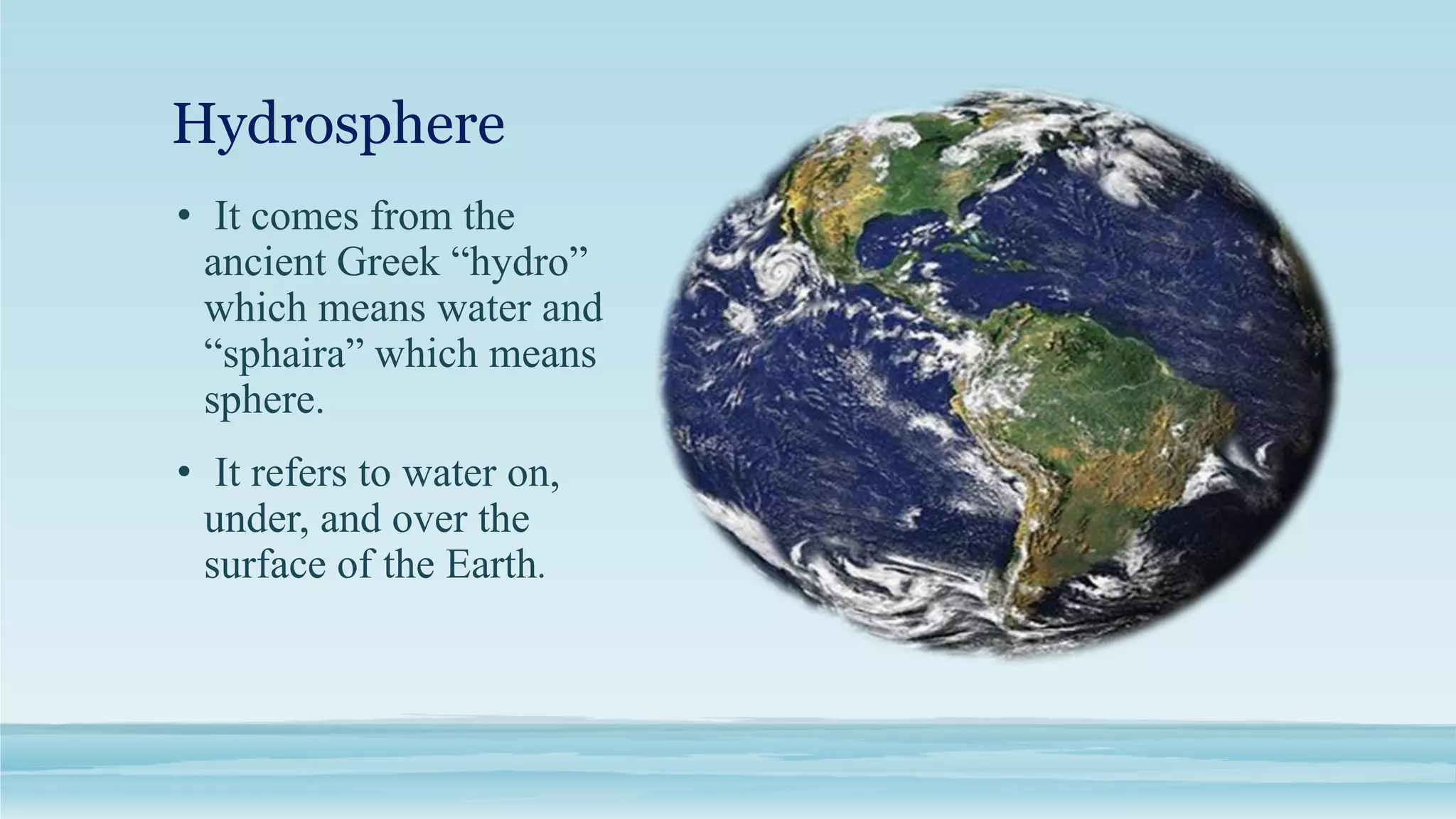
• It comes from the
ancient Greek “hydro”
which means water and
“sphaira” which means
sphere.
• It refers to water on,
under, and over the
surface of the Earth.
Origin of water on earth?
• When earth first formed it
was so hot that the original
water would be lost to
space.
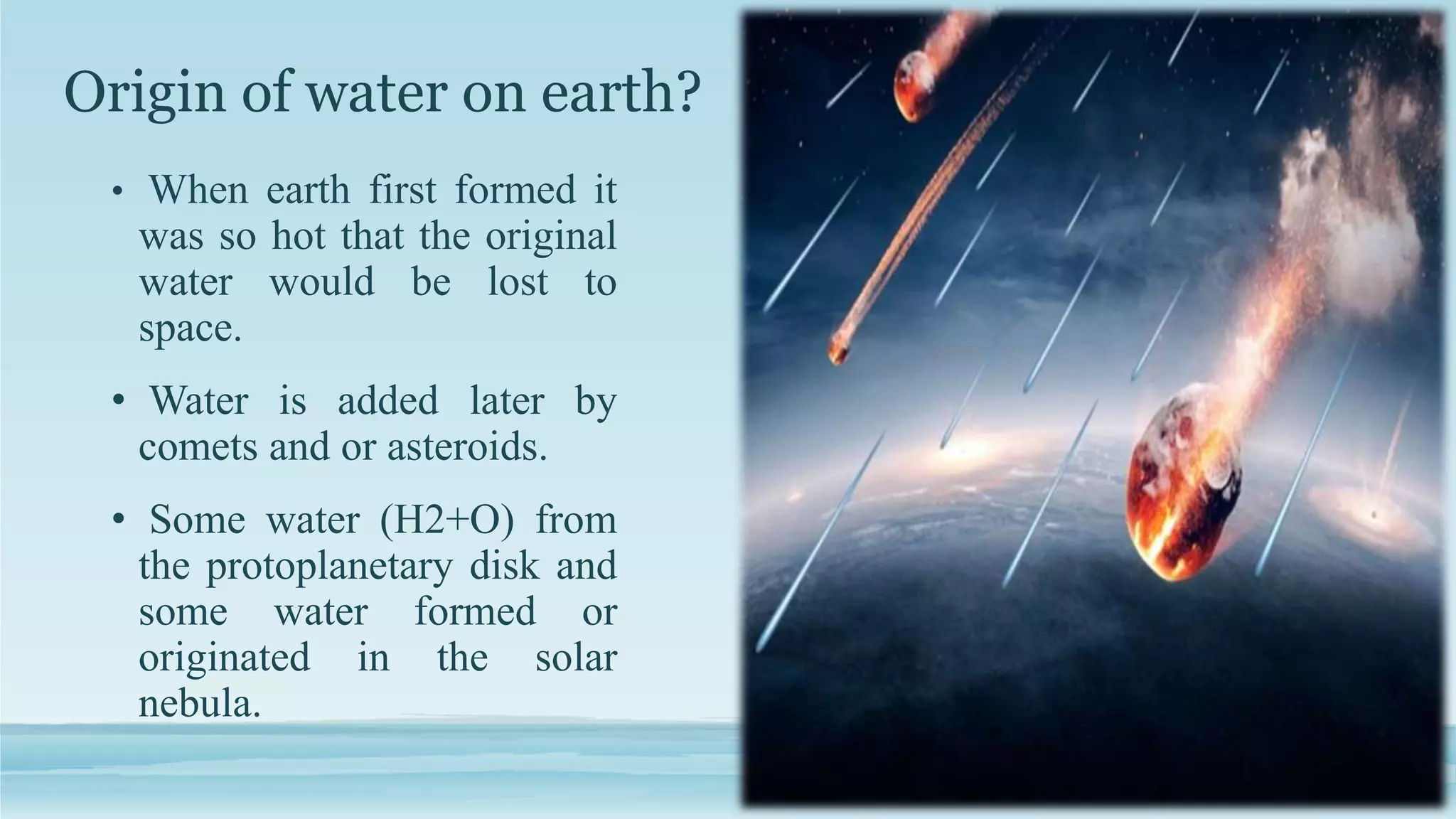
• Water is added later by
comets and or asteroids.
• Some water (H2+O) from
the protoplanetary disk and
some water formed or
originated in the solar
nebula.
Asteroids and Comets
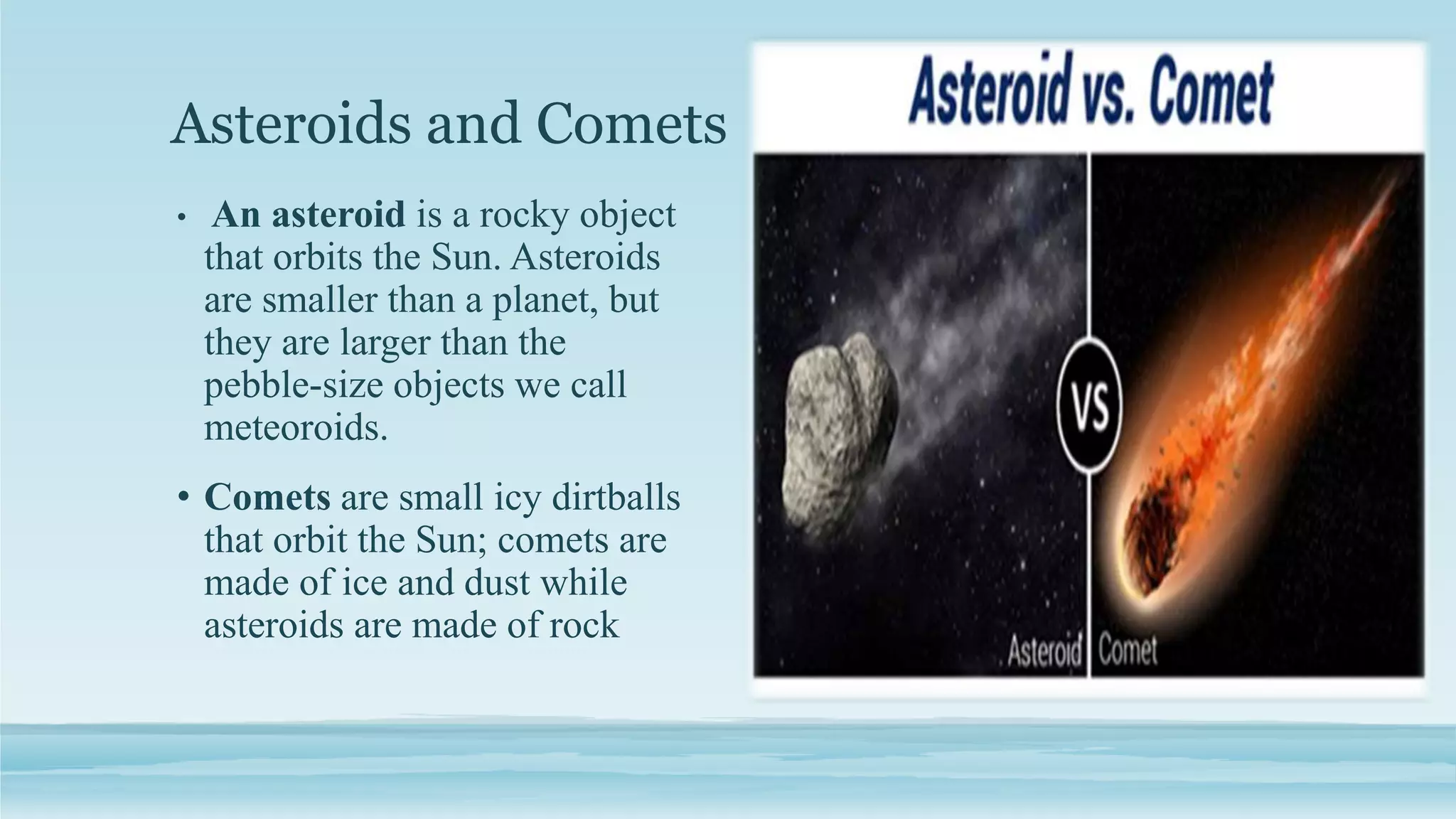
• An asteroid is a rocky object
that orbits the Sun. Asteroids
are smaller than a planet, but
they are larger than the
pebble-size objects we call
meteoroids.
• Comets are small icy dirtballs
that orbit the Sun; comets are
made of ice and dust while
asteroids are made of rock
Theories about origin of water
• Around 4.5 billion years ago, molten earth began to cool. Violent
collisions with comets and asteroids brought the fluid of life - water - and
the clouds and oceans began to take shape.
• It wasn't until a billion years later that the first life was brought forth,
filling the atmosphere with oxygen.
1. Degasification theory
• Water vapor, CO2, CO, CH, Ammonia, sulfur, HCl, argon, and Hydrogen
came to Earth during lava degasification resulting in Water.
• Acid rains to underlying water results to alkali Earth.
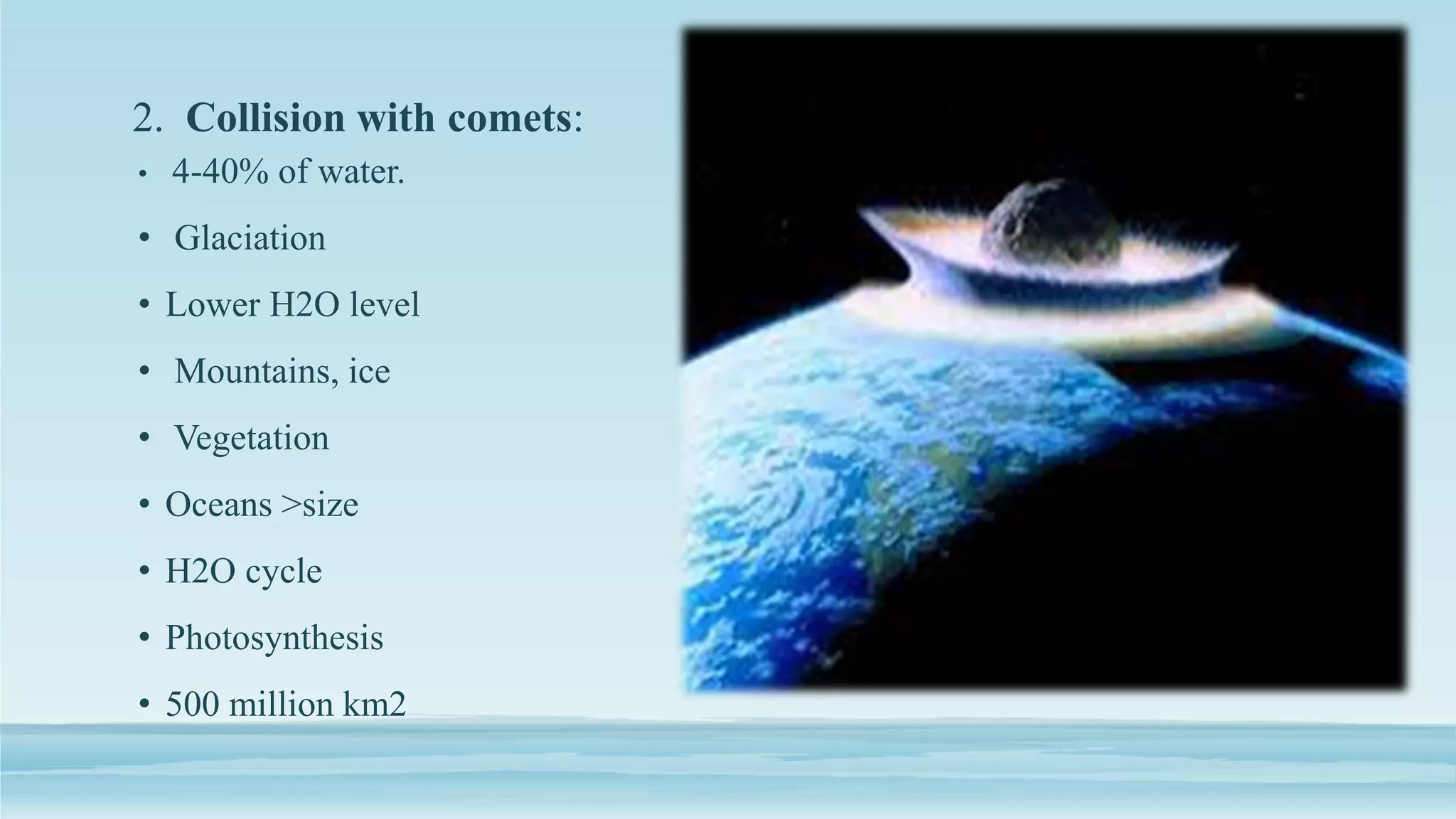
2. Collision with comets:
• 4-40% of water.
• Glaciation
• Lower H2O level
• Mountains, ice
• Vegetation
• Oceans >size
• H2O cycle
• Photosynthesis
• 500 million km2
Water cycle:
• There is always the same
amount of water on Earth.
• Water appears in different
states (liquid, gas, or solid
form).
• Water continually moves
between the atmosphere, the
oceans, and the continents.
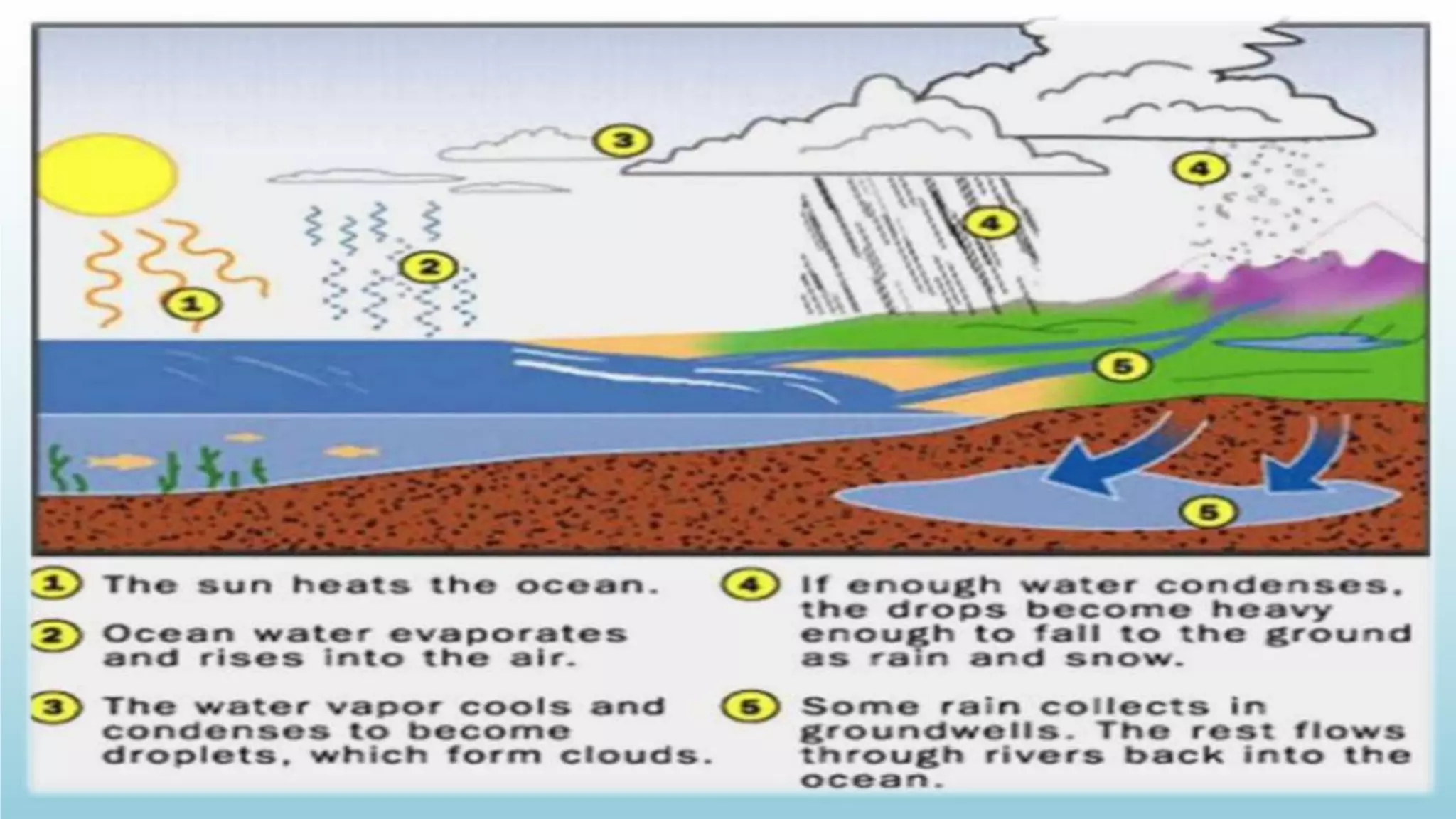
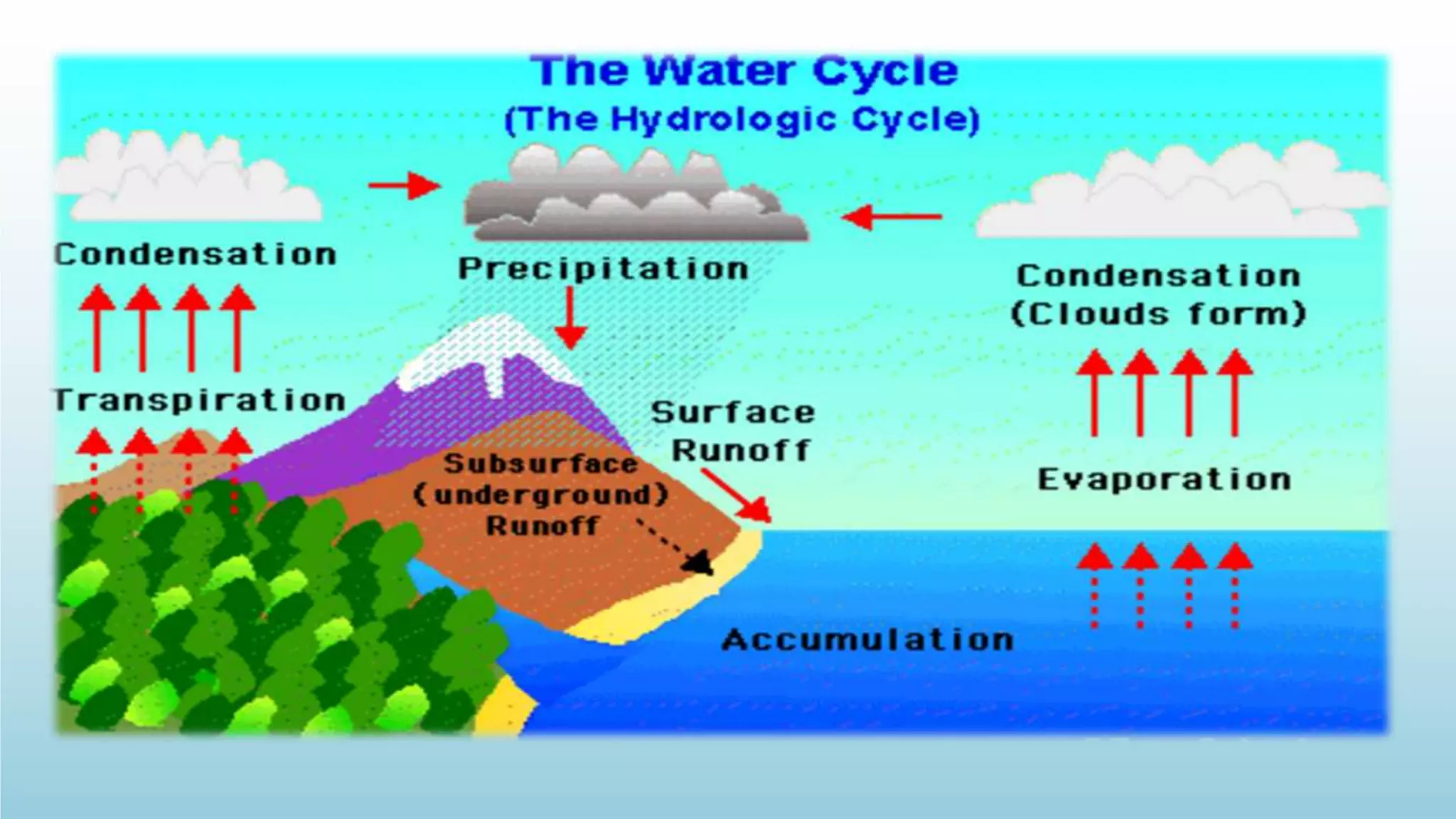
This continual movement is called the water cycle:
1. Evaporation:
Water evaporates into the atmosphere, where it cools.
2. Condensation:
As it gets cooler in the atmosphere, it condenses and forms clouds.
3. Precipitation:
When clouds cannot absorb any more water there is precipitation in the
form of rain, snow, or hail. Some precipitation falls on the land flowing
into lakes and rivers, and other water filters into the ground becoming
groundwater.
4. Transportation:
Water in rivers or groundwater is transported to the oceans and seas
again and the water cycle begins again.
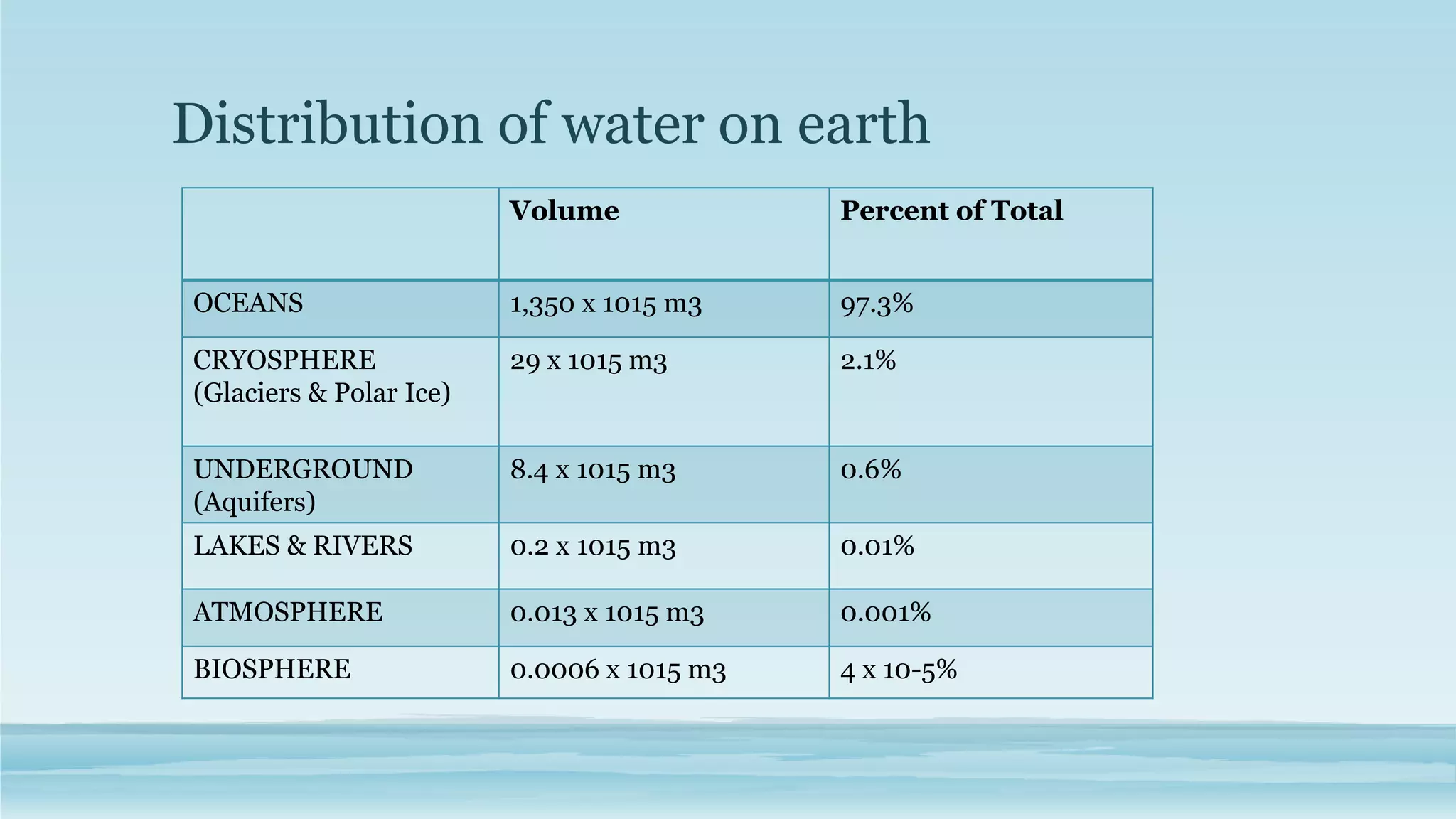
Distribution of water on earth
Volume Percent of Total
OCEANS 1,350 x 1015 m3 97.3%
CRYOSPHERE
(Glaciers & Polar Ice)
29 x 1015 m3 2.1%
UNDERGROUND
(Aquifers)
8.4 x 10¹⁵ m3 0.6%
LAKES & RIVERS 0.2 x 10¹⁵ m3 0.01%
ATMOSPHERE 0.013 x 10¹⁵ m3 0.001%
BIOSPHERE 0.0006 x 10¹⁵ m3 4 x 10⁻⁵%
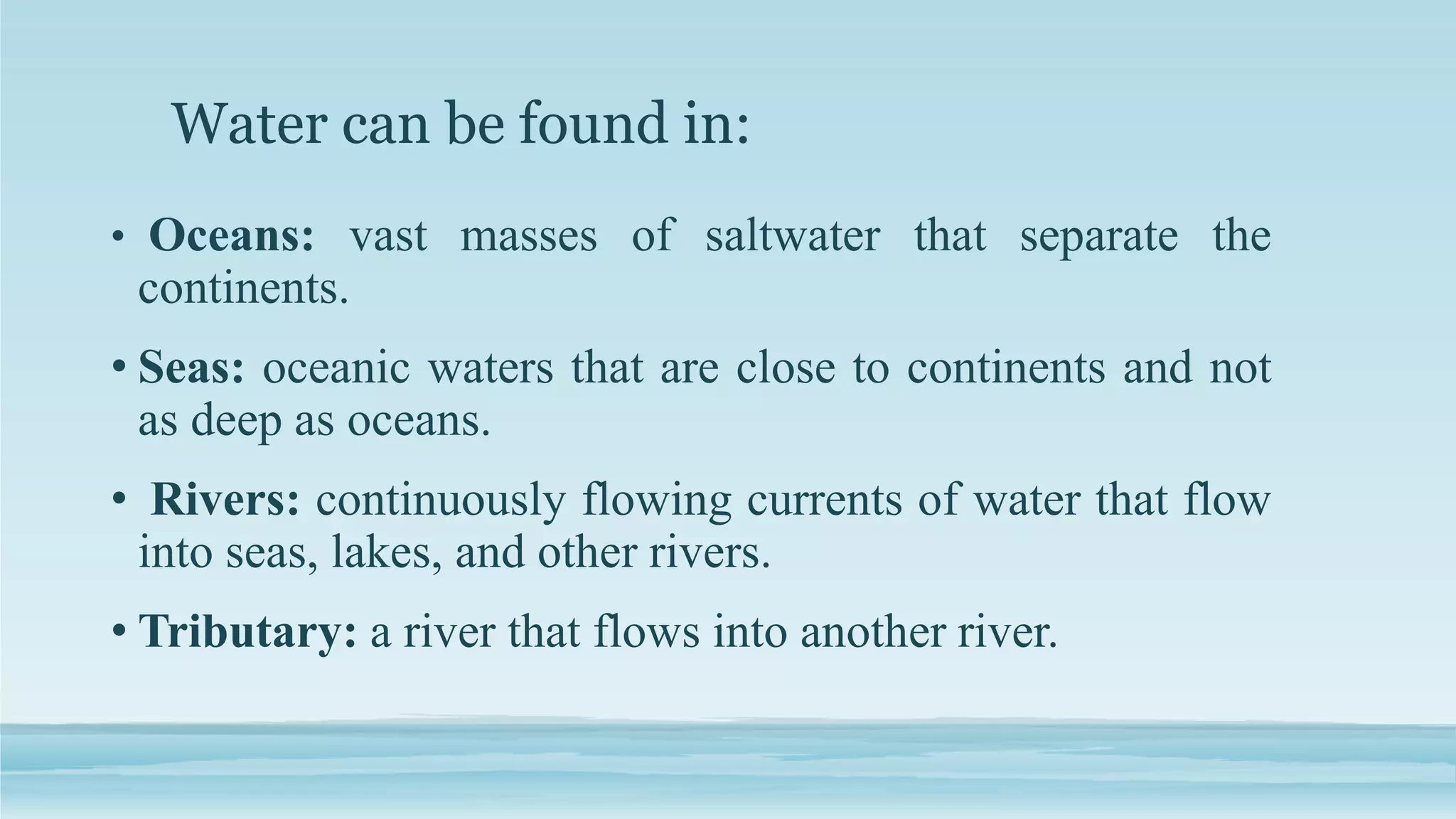
Water can be found in:
• Oceans: vast masses of saltwater that separate the
continents.
• Seas: oceanic waters that are close to continents and not
as deep as oceans.
• Rivers: continuously flowing currents of water that flow
into seas, lakes, and other rivers.
• Tributary: a river that flows into another river.
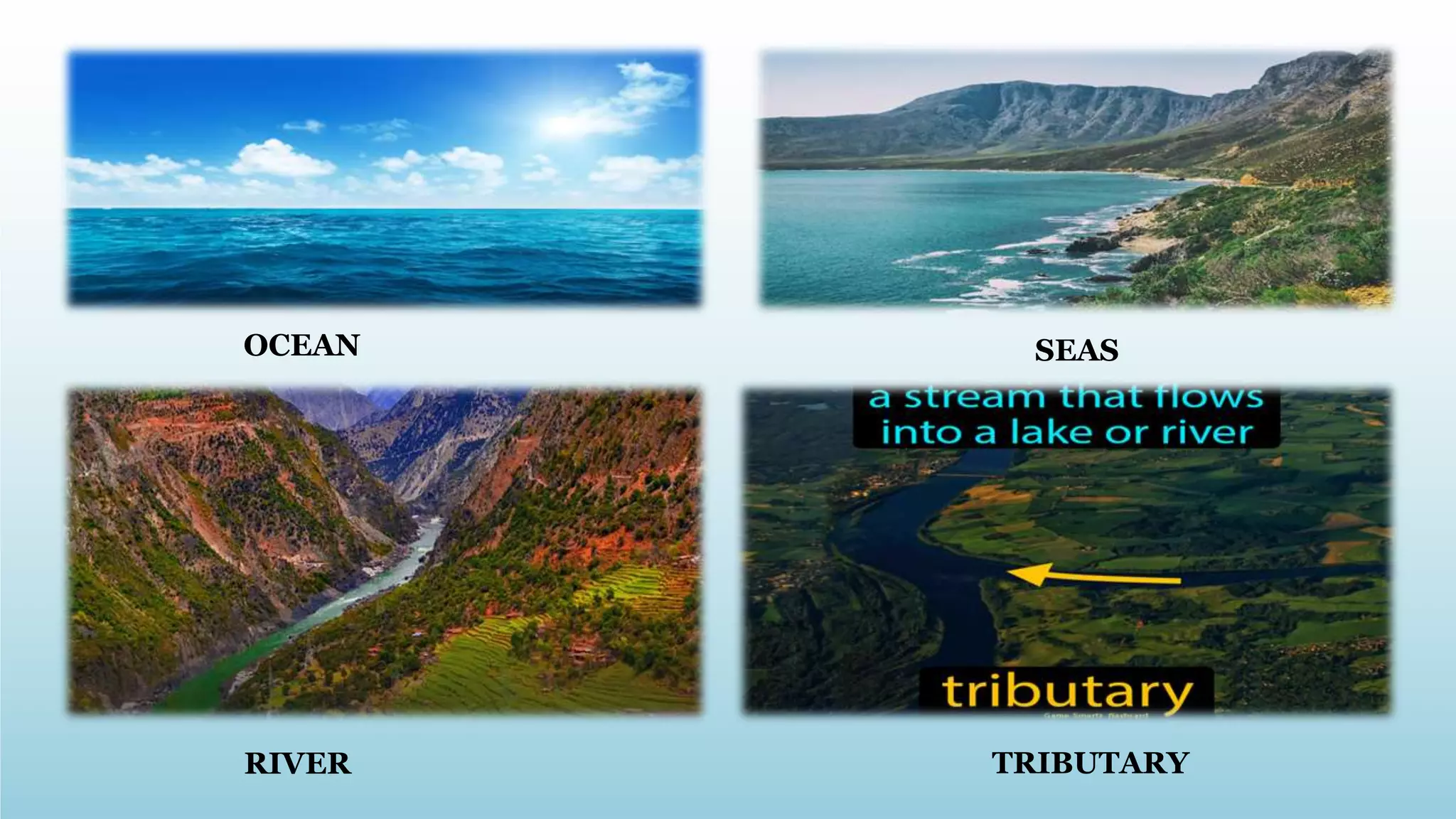
OCEAN SEAS
RIVER TRIBUTARY
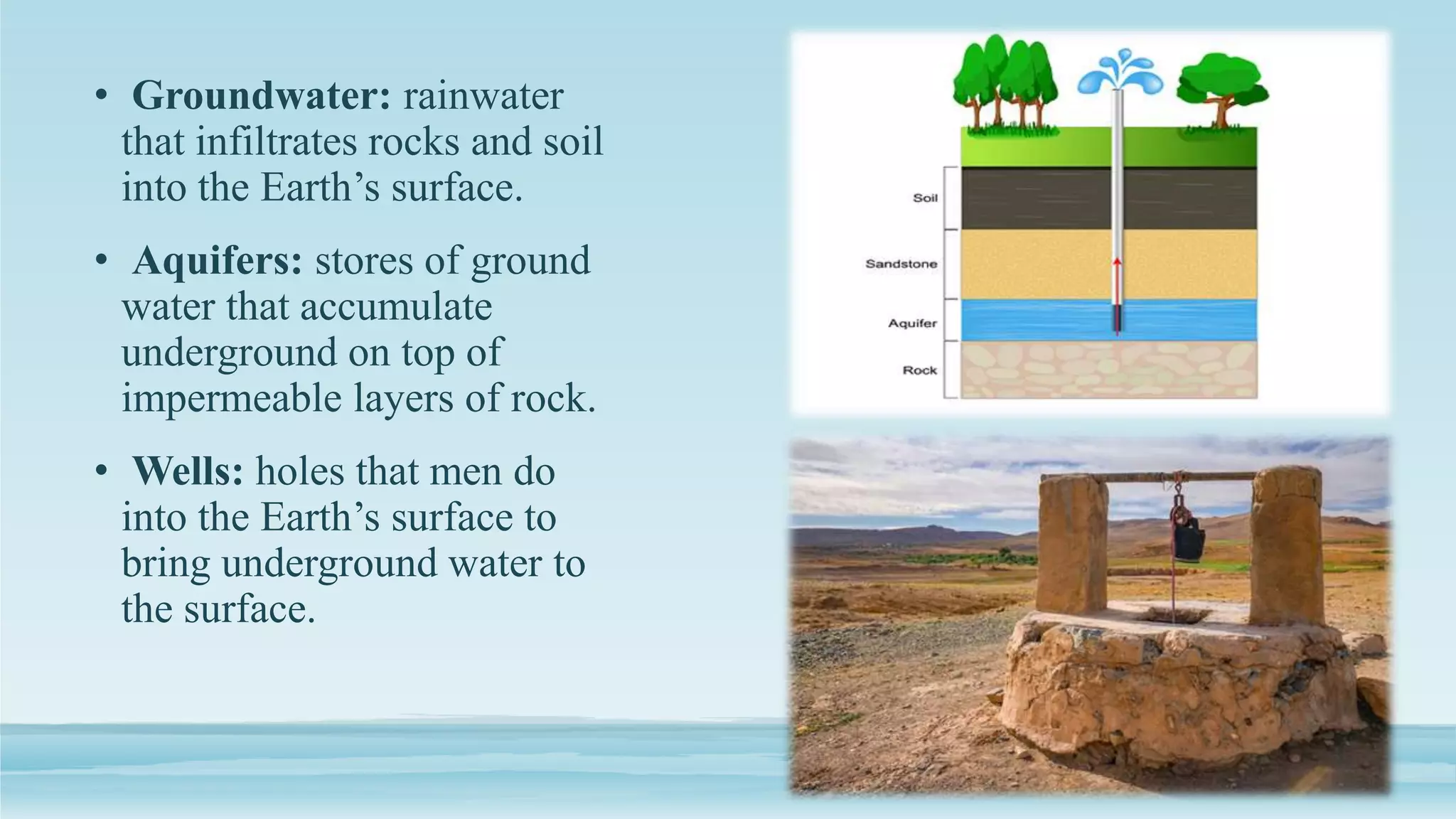
• Groundwater: rainwater
that infiltrates rocks and soil
into the Earth’s surface.
• Aquifers: stores of ground
water that accumulate
underground on top of
impermeable layers of rock.
• Wells: holes that men do
into the Earth’s surface to
bring underground water to
the surface.
• Glaciers: a huge mass of ice,
formed from compacted snow,
slowly flowing over a land
mass.
• Ice caps: a huge mass of ice
and snow that permanently
cover the poles of the Earth.
• Lakes: large bodies of water
that accumulate in inland
basins. They receive water
from rivers, precipitation and
groundwater
Role of Hydrosphere
• Significance of water in cells. Every cell in a living organism is
composed of around 75% of water, thus, it enables the cell for
functioning appropriately. ...
• Human needs water, Human beings make use of water in various
ways.
• Water offers habitat.
• Regulate climate.
The major importance of
the hydrosphere is that water
sustains various life forms
and plays an important role
in ecosystems and regulating
the atmosphere.
HYDROSPHERE.pptx

HYDROSPHERE.pptx

  • 1.
  • 2.
    Content: • Introduction • Originof water on earth • Theories • Water cycle • Water contents • Role and importance
  • 3.
    Hydrosphere • It comesfrom the ancient Greek “hydro” which means water and “sphaira” which means sphere. • It refers to water on, under, and over the surface of the Earth.
  • 4.
    Origin of wateron earth? • When earth first formed it was so hot that the original water would be lost to space. • Water is added later by comets and or asteroids. • Some water (H2+O) from the protoplanetary disk and some water formed or originated in the solar nebula.
  • 5.
    Asteroids and Comets •An asteroid is a rocky object that orbits the Sun. Asteroids are smaller than a planet, but they are larger than the pebble-size objects we call meteoroids. • Comets are small icy dirtballs that orbit the Sun; comets are made of ice and dust while asteroids are made of rock
  • 6.
    Theories about originof water • Around 4.5 billion years ago, molten earth began to cool. Violent collisions with comets and asteroids brought the fluid of life - water - and the clouds and oceans began to take shape. • It wasn't until a billion years later that the first life was brought forth, filling the atmosphere with oxygen. 1. Degasification theory • Water vapor, CO2, CO, CH, Ammonia, sulfur, HCl, argon, and Hydrogen came to Earth during lava degasification resulting in Water. • Acid rains to underlying water results to alkali Earth.
  • 7.
    2. Collision withcomets: • 4-40% of water. • Glaciation • Lower H2O level • Mountains, ice • Vegetation • Oceans >size • H2O cycle • Photosynthesis • 500 million km2
  • 8.
    Water cycle: • Thereis always the same amount of water on Earth. • Water appears in different states (liquid, gas, or solid form). • Water continually moves between the atmosphere, the oceans, and the continents.
  • 9.
    This continual movementis called the water cycle: 1. Evaporation: Water evaporates into the atmosphere, where it cools. 2. Condensation: As it gets cooler in the atmosphere, it condenses and forms clouds. 3. Precipitation: When clouds cannot absorb any more water there is precipitation in the form of rain, snow, or hail. Some precipitation falls on the land flowing into lakes and rivers, and other water filters into the ground becoming groundwater. 4. Transportation: Water in rivers or groundwater is transported to the oceans and seas again and the water cycle begins again.
  • 12.
    Distribution of wateron earth Volume Percent of Total OCEANS 1,350 x 1015 m3 97.3% CRYOSPHERE (Glaciers & Polar Ice) 29 x 1015 m3 2.1% UNDERGROUND (Aquifers) 8.4 x 10¹⁵ m3 0.6% LAKES & RIVERS 0.2 x 10¹⁵ m3 0.01% ATMOSPHERE 0.013 x 10¹⁵ m3 0.001% BIOSPHERE 0.0006 x 10¹⁵ m3 4 x 10⁻⁵%
  • 15.
    Water can befound in: • Oceans: vast masses of saltwater that separate the continents. • Seas: oceanic waters that are close to continents and not as deep as oceans. • Rivers: continuously flowing currents of water that flow into seas, lakes, and other rivers. • Tributary: a river that flows into another river.
  • 16.
  • 17.
    • Groundwater: rainwater thatinfiltrates rocks and soil into the Earth’s surface. • Aquifers: stores of ground water that accumulate underground on top of impermeable layers of rock. • Wells: holes that men do into the Earth’s surface to bring underground water to the surface.
  • 18.
    • Glaciers: ahuge mass of ice, formed from compacted snow, slowly flowing over a land mass. • Ice caps: a huge mass of ice and snow that permanently cover the poles of the Earth. • Lakes: large bodies of water that accumulate in inland basins. They receive water from rivers, precipitation and groundwater
  • 19.
    Role of Hydrosphere •Significance of water in cells. Every cell in a living organism is composed of around 75% of water, thus, it enables the cell for functioning appropriately. ... • Human needs water, Human beings make use of water in various ways. • Water offers habitat. • Regulate climate.
  • 20.
    The major importanceof the hydrosphere is that water sustains various life forms and plays an important role in ecosystems and regulating the atmosphere.