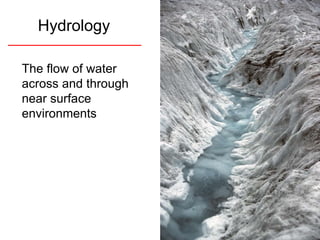
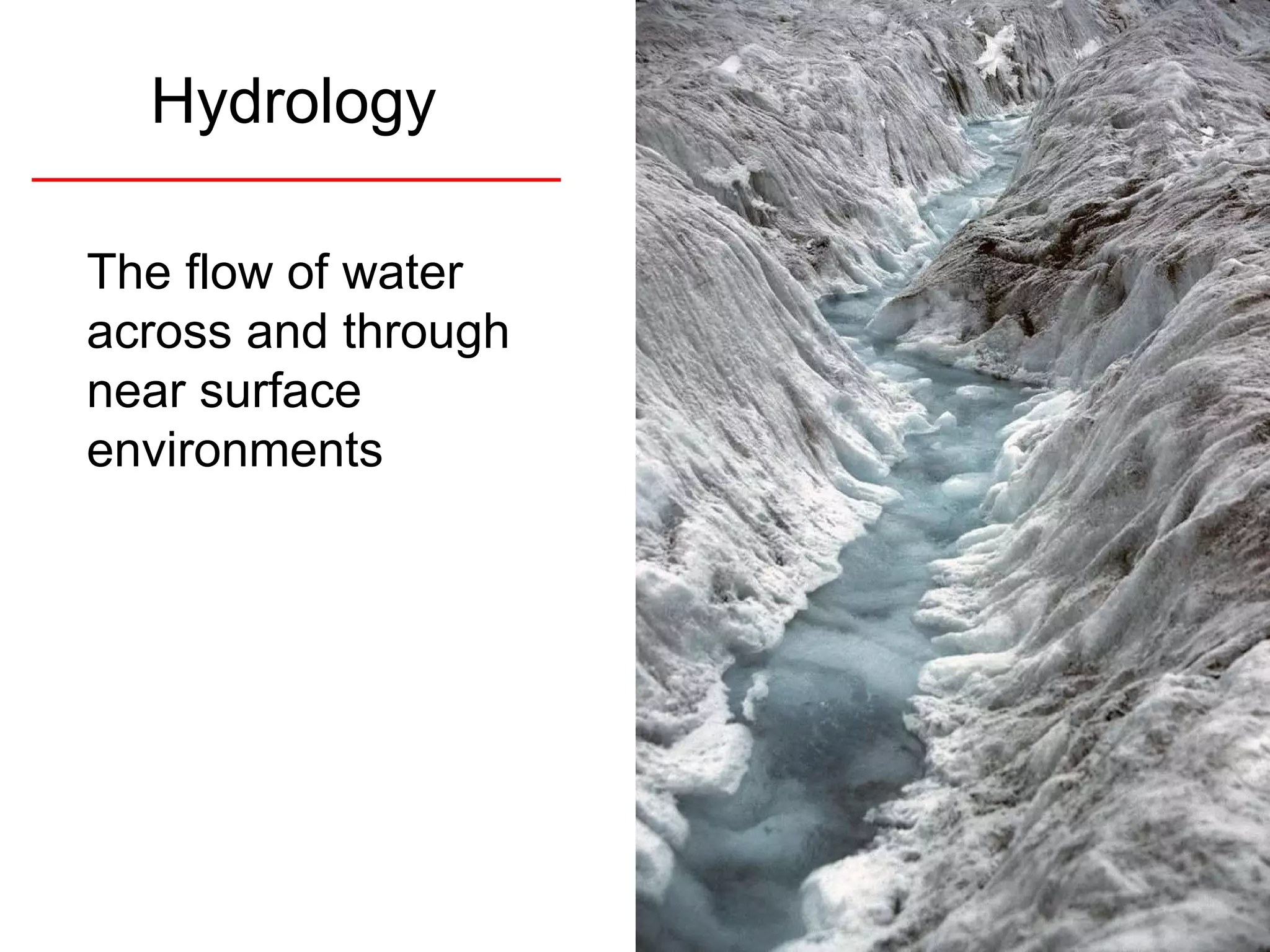
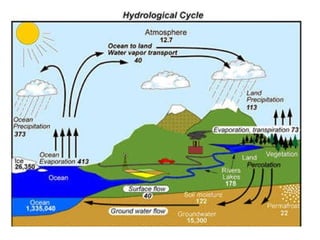
Hydrology The flow of water across and through near surface environments
 
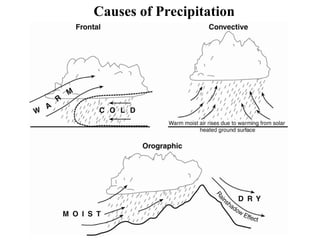
Precipitation Single strongest variable driving hydrologic processes Formed by water vapor in the atmosphere As air cools its ability to ‘hold’ water decreases and some turns to liquid or ice (snow)
Causes of Precipitation
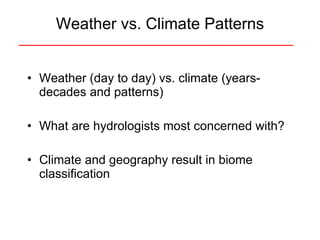
Weather (day to day) vs. climate (years-decades and patterns) What are hydrologists most concerned with? Climate and geography result in biome classification Weather vs. Climate Patterns
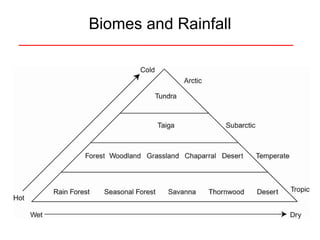
Biomes and Rainfall

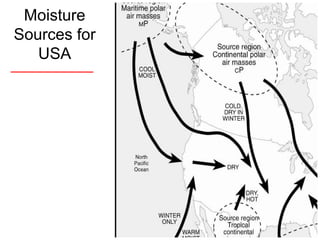
Moisture Sources for USA
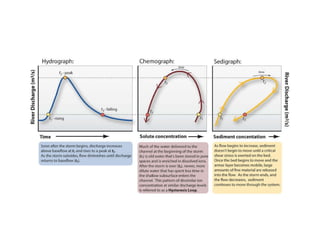
 
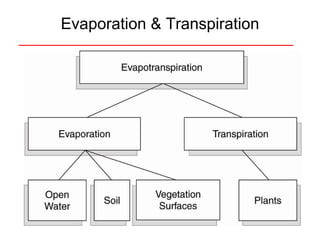
Fig. 4.1 Evaporation & Transpiration
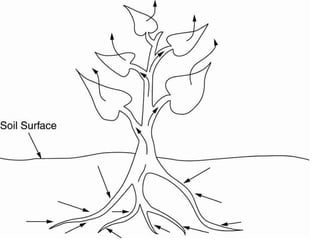
Fig. 4.4
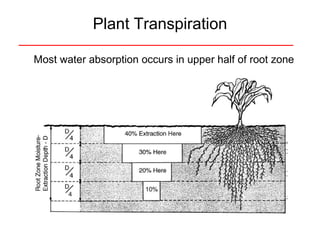
Plant Transpiration Most water absorption occurs in upper half of root zone
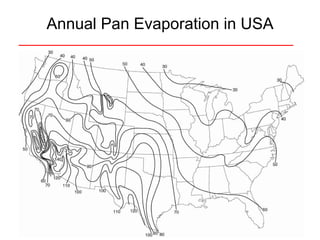
Annual Pan Evaporation in USA
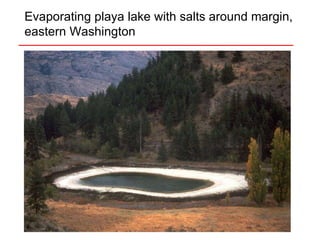
Evaporating playa lake with salts around margin, eastern Washington
 
 
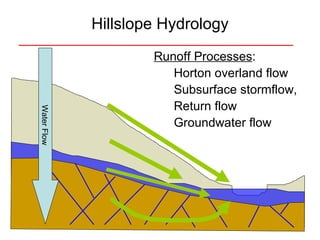
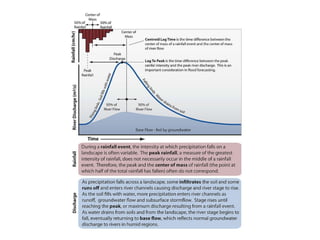
Water Flow Hillslope Hydrology Runoff Processes : Horton overland flow Subsurface stormflow, Return flow Groundwater flow
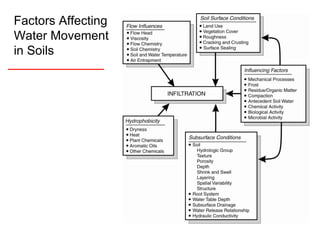
Factors Affecting Water Movement in Soils
As we discuss mechanisms, remember… Many processes occur simultaneously Shifts can occur between processes in space and time Antecedent wetness conditions are important Watershed characteristic play a central role Runoff Generation
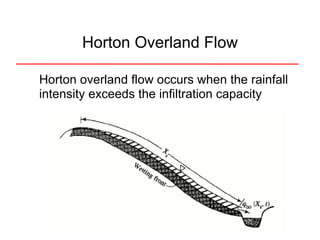
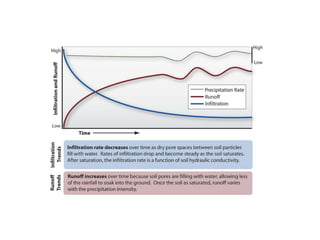
Horton overland flow occurs when the rainfall intensity exceeds the infiltration capacity Horton Overland Flow
 
Once thought to be the ONLY mechanism of runoff generation Became coded into hydrologic models still in use today Subsequent work showed role of partial source area where Saturation overland flow is produced Horton Overland Flow
If rainfall exceeds soil infiltration capacity: Water fills surface depression then Water spills over downslope as overland flow and Eventually to the stream Horton Overland Flow
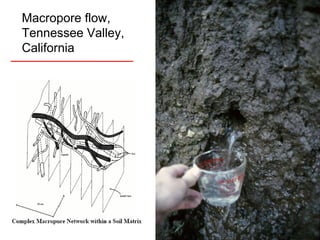
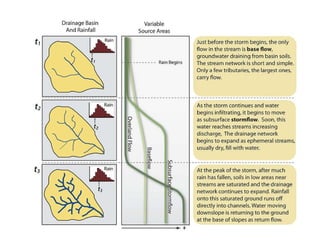
Subsurface Stormflow Lateral flow through soil above conductivity contrast.  Consists of both slower matrix flow and faster macropore flow
Macropore flow, Tennessee Valley, California
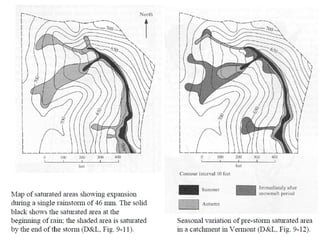
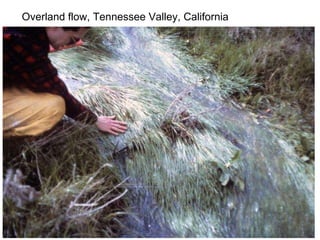
Saturation Overland Flow Direct rainfall onto saturated areas. Return flow from saturated soils in topographic lows and along valley bottoms where water table rises to intersect the surface.
 
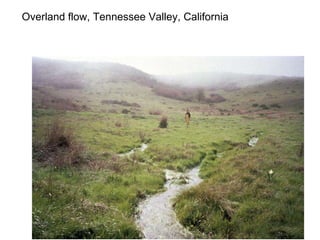
Overland flow, Tennessee Valley, California
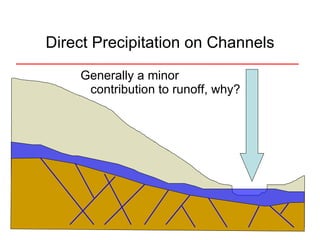
Generally a minor contribution to runoff, why? Direct Precipitation on Channels
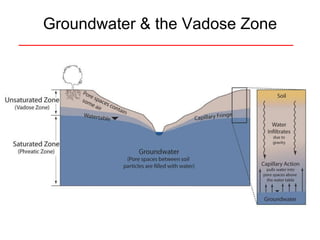
Groundwater & the Vadose Zone
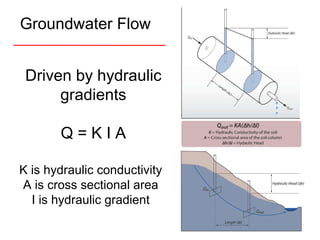
Groundwater Flow Driven by hydraulic gradients Q = K I A K is hydraulic conductivity A is cross sectional area I is hydraulic gradient
 
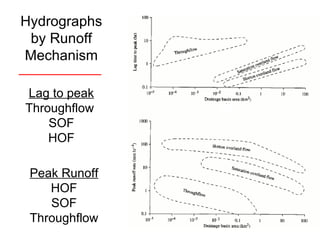
Hydrographs by Runoff Mechanism Lag to peak Throughflow  SOF HOF Peak Runoff HOF SOF Throughflow


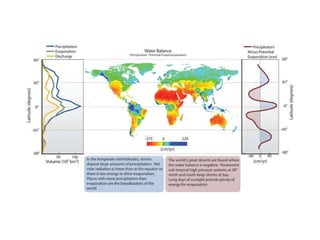
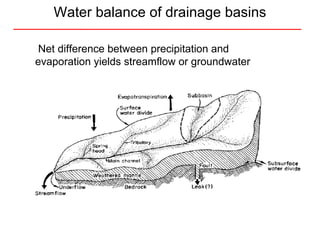
Water balance of drainage basins Net difference between precipitation and evaporation yields streamflow or groundwater recharge
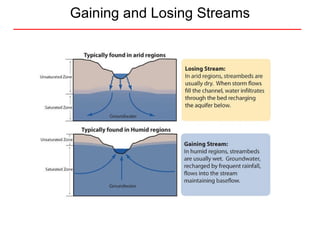
Gaining and Losing Streams
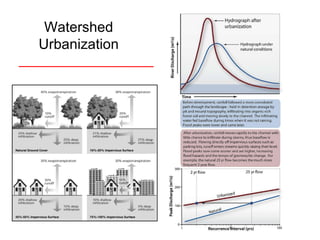
Watershed Urbanization
 

Hydrology

Editor's Notes

  • #8 Figure 2.4-where does the moisture come from Why does ohio get steady rainfall-fronts and convection Compare to other areas in US
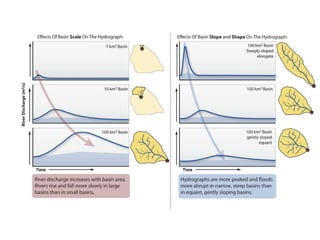
  • #39 The terms in the figure describe the hydrologic character of the basin. Hydrologic data collection best carried out at the basin scale.