CONTENTS
FOREWORD iii
UNIT I : GEOGRAPHY AS A DISCIPLINE 1-12
1. Geography as a Discipline 2
UNIT II : THE EARTH 13-38
2. The Origin and Evolution of the Earth 14
3. Interior of the Earth 21
4. Distribution of Oceans and Continents 30
UNIT III : LANDFORMS 39-74
5. Minerals and Rocks 40
6. Geomorphic Processes 45
7. Landforms and their Evolution 58
UNIT IV : CLIMATE 75-110
8. Composition and Structure of Atmosphere 76
9. Solar Radiation, Heat Balance and Temperature 79
10. Atmospheric Circulation and Weather Systems 88
11. Water in the Atmosphere 98
12. World Climate and Climate Change 103
UNIT V : WATER (OCEANS) 111-125
13. Water (Oceans) 112
14. Movements of Ocean Water 120
UNIT VI : LIFE ON THE EARTH 126-140
15. Life on the Earth 127
16. Biodiversity and Conservation 135
GLOSSARY 141-144
Download From: http://iasexamportal.com/
GEOGRAPHY AS A DISCIPLINE
This unit deals with
• Geography as an integrating discipline; as a science of spatial
attributes
• Branches of geography; importance of physical geography
UNIT
I
Download From: http://iasexamportal.com/
Y
ou have studied geography as one of the
components of your social studies course
upto the secondary stage. You are
already aware of some of the phenomena of
geographical nature in the world and its
different parts. Now, you will study ‘Geography’
as an independent subject and learn about the
physical environment of the earth, human
activities and their interactive relationships.
Therefore, a pertinent question you can ask at
this stage is — Why should we study
geography? We live on the surface of the earth.
Our lives are affected by our surroundings in
many ways. We depend on the resources to
sustain ourselves in the surrounding areas.
Primitive societies subsisted on ‘natural means
of subsistence’, i.e. edible plants and animals.
With the passage of time, we developed
technologies and started producing our food
using natural resources such as land, soil and
water. We adjusted our food habits and
clothing according to the prevailing weather
conditions. There are variations in the natural
resource base, technological development,
adaptation with and modification of physical
environment, social organisations and cultural
development. As a student of geography, you
should be curious to know about all the
phenomena which vary over space. You learn
about the diverse lands and people. You
should also be interested in understanding the
changes which have taken place over time.
Geography equips you to appreciate diversity
and investigate into the causes responsible for
creating such variations over time and space.
You will develop skills to understand the globe
converted into maps and have a visual sense
of the earth’s surface. The understanding and
the skills obtained in modern scientific
techniques such as GIS and computer
cartography equip you to meaningfully
contribute to the national endeavour for
development.
Now the next question which you may like
to ask is — What is geography? You know that
earth is our home. It is also the home of many
other creatures, big and small, which live on
the earth and sustain. The earth’s surface is
not uniform. It has variations in its physical
features. There are mountains, hills, valleys,
plains, plateaus, oceans, lakes, deserts and
wilderness. There are variations in its social
and cultural features too. There are villages,
cities, roads, railways, ports, markets and
many other elements created by human beings
across the entire period of their cultural
development.
This variation provides a clue to the
understanding of the relationship between the
physical environment and social/cultural
features. The physical environment has
provided the stage, on which human societies
enacted the drama of their creative skills with
the tools and techniques which they invented
and evolved in the process of their cultural
development. Now, you should be able to
attempt the answer of the question posed
earlier as to “What is geography”? In very
simple words, it can be said that geography
is the description of the earth. The term
geography was first coined by Eratosthenese,
a Greek scholar (276-194 BC.). The word has
been derived from two roots from Greek
language geo (earth) and graphos (description).
GEOGRAPHY AS A DISCIPLINE
C H A P T E R
Download From: http://iasexamportal.com/
GEOGRAPHY AS A DISCIPLINE 3
Put together, they mean description of the earth.
The earth has always been seen as the abode
of human beings and thus, scholars defined
geography as, “the description of the earth as
the abode of human beings”. You are aware of
the fact that reality is always multifaceted and
the ‘earth’ is also multi-dimensional, that is
why many disciplines from natural sciences
such as geology, pedology, oceanography,
botany, zoology and meteorology and a
number of sister disciplines in social sciences
such as economics, history, sociology, political
science, anthropology, etc. study different
aspects of the earth’s surface. Geography is
different from other sciences in its subject
matter and methodology but at the same time,
it is closely related to other disciplines.
Geography derives its data base from all the
natural and social sciences and attempts their
synthesis.
We have noted that there exist variations
over the surface of the earth in its physical as
well as cultural environment. A number of
phenomena are similar and many are dissimilar.
It was, therefore, logical to perceive geography
as the study of areal differentiation. Thus,
geography was perceived to study all those
phenomena which vary over space.
Geographers do not study only the variations
in the phenomena over the earth’s surface
(space) but also study the associations with
the other factors which cause these variations.
For example, cropping patterns differ from
region to region but this variation in cropping
pattern, as a phenomenon, is related to
variations in soils, climates, demands in the
market, capacity of the farmer to invest and
technological inputs available to her/him.
Thus, the concern of geography is to find out
the causal relationship between any two
phenomena or between more than one
phenomenon.
A geographer explains the phenomena in
a frame of cause and effect relationship, as it
does not only help in interpretation but also
foresees the phenomena in future.
The geographical phenomena, both the
physical and human, are not static but highly
dynamic. They change over time as a result of
the interactive processes between ever
changing earth and untiring and ever-active
human beings. Primitive human societies were
directly dependent on their immediate
environment. Geography, thus, is concerned
with the study of Nature and Human
interactions as an integrated whole. ‘Human’
is an integral part of ‘nature’ and ‘nature’ has
the imprints of ‘human’. ‘Nature’ has influenced
different aspects of human life. Its imprints can
be noticed on food, clothing, shelter and
occupation. Human beings have come to terms
with nature through adaptation and
modification. As you already know, the present
society has passed the stage of primitive
societies, which were directly dependent on
their immediate physical environment for
sustenance. Present societies have modified
their natural environment by inventing and
using technology and thus, have expanded the
horizon of their operation by appropriating and
utilising the resources provided by nature. With
the gradual development of technology, human
beings were able to loosen the shackles of their
physical environment. Technology helped in
reducing the harshness of labour, increased
labour efficiency and provided leisure to
human beings to attend to the higher needs of
life. It also increased the scale of production
and the mobility of labour.
The interaction between the physical
environment and human beings has been very
succinctly described by a poet in the following
dialogue between ‘human’ and ‘nature’ (God).
You created the soil, I created the cup, you
created night, I created the lamp. You created
wilderness, hilly terrains and deserts; I
created flower beds and gardens. Human
beings have claimed their contribution using
natural resources. With the help of technology,
human beings moved from the stage of
necessity to a stage of freedom. They have put
their imprints everywhere and created new
possibilities in collaboration with nature. Thus,
we now find humanised nature and
naturalised human beings and geography
studies this interactive relationship. The space
got organised with the help of the means of
transportation and communication network.
The links (routes) and nodes (settlements of all
types and hierarchies) integrated the space and
Download From: http://iasexamportal.com/
FUNDAMENTALS OF PHYSICAL GEOGRAPHY4
gradually, it got organised. As a social science
discipline, geography studies the ‘spatial
organisation’ and ‘spatial integration’.
Geography as a discipline is concerned with
three sets of questions:
(i) Some questions are related to the
identification of the patterns of natural
and cultural features as found over the
surface of the earth. These are the
questions about what?
(ii) Some questions are related to the
distribution of the natural and human/
cultural features over the surface of the
earth. These are the questions about
where?
Taken together, both these questions take
care of distributional and locational aspects of
the natural and cultural features. These
questions provided inventorised information of
what features and where located. It was a very
popular approach during the colonial period.
These two questions did not make geography
a scientific discipline till the third question was
added. The third question is related to the
explanation or the causal relationships
between features and the processes and
phenomena. This aspect of geography is related
to the question, why?
Geography as a discipline is related to
space and takes note of spatial characteristics
and attributes. It studies the patterns of
distribution, location and concentration of
phenomena over space and interprets them
providing explanations for these patterns. It
takes note of the associations and inter-
relationships between the phenomena over
space and interprets them providing
explanations for these patterns. It also takes
note of the associations and inter-relationships
between the phenomena resulting from the
dynamic interaction between human beings
and their physical environment.
GEOGRAPHY AS AN INTEGRATING DISCIPLINE
Geography is a discipline of synthesis. It
attempts spatial synthesis, and history
attempts temporal synthesis. Its approach is
holistic in nature. It recognises the fact that
the world is a system of interdependencies. The
present world is being perceived as a global
village. The distances have been reduced by
better means of transportation increasing
accessibility. The audio-visual media and
information technology have enriched the data
base. Technology has provided better chances
of monitoring natural phenomena as well as
the economic and social parameters.
Geography as an integrating discipline has
interface with numerous natural and social
sciences. All the sciences, whether natural or
social, have one basic objective, of
understanding the reality. Geography
attempts to comprehend the associations of
phenomena as related in sections of reality.
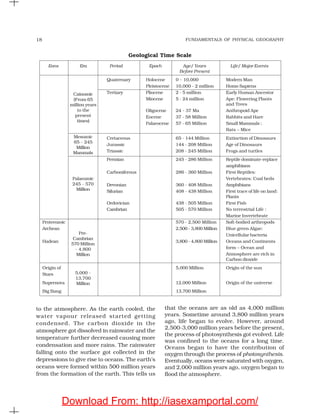
Figure 1.1 shows the relationship of geography
with other sciences. Every discipline, concerned
with scientific knowledge is linked with
geography as many of their elements vary over
space. Geography helps in understanding the
reality in totality in its spatial perspective.
Geography, thus, not only takes note of the
differences in the phenomena from place to
place but integrates them holistically which
may be different at other places. A geographer
is required to have a broad understanding of
all the related fields, to be able to logically
integrate them. This integration can be
understood with some examples. Geography
influences historical events. Spatial distance
itself has been a very potent factor to alter the
course of history of the world. Spatial depth
provided defence to many countries,
particularly in the last century. In traditional
warfare, countries with large size in area, gain
time at the cost of space. The defence provided
by oceanic expanse around the countries of
the new world has protected them from wars
being imposed on their soil. If we look at the
historical events world over, each one of them
can be interpreted geographically.
In India, Himalayas have acted as great
barriers and provided protection but the
passes provided routes to the migrants and
invaders from Central Asia. The sea coast has
encouraged contact with people from East and
Southeast Asia, Europe and Africa. Navigation
technology helped European countries to
colonise a number of countries of Asia and
Africa, including India as they got accessibility
Download From: http://iasexamportal.com/
GEOGRAPHY AS A DISCIPLINE 5
through oceans. The geographical factors have
modified the course of history in different parts
of the world.
Every geographical phenomenon undergoes
change through time and can be explained
temporally. The changes in landforms, climate,
vegetation, economic activities occupations and
cultural developments have followed a definite
historical course. Many geographical features
result from the decision making process by
different institutions at a particular point of
time. It is possible to convert time in terms of
space and space in terms of time. For example,
it can be said that place A is 1,500 km from
place B or alternately, it can also be said that
place A is two hours away (if one travels by
plane) or seventeen hours away (if one travels
by a fast moving train). It is for this reason,
time is an integral part of geographical studies
as the fourth dimension. Please mention other
three dimensions?
Figure1.1 amply depicts the linkages of
geography with different natural and social
sciences. This linkage can be put under two
segments.
Physical Geography and Natural Sciences
All the branches of physical geography, as
shown in Figure 1.1, have interface with natural
sciences. The traditional physical geography
is linked with geology, meteorology, hydrology
and pedology, and thus, geomorphology,
climatology, oceanography and soil geography
respectively have very close link with the
natural sciences as these derive their data from
these sciences. Bio-Geography is closely related
to botany, zoology as well as ecology as human
beings are located in different locational niche.
A geographer should have some proficiency
in mathematics and art, particularly in drawing
maps. Geography is very much linked with the
study of astronomical locations and deals with
latitudes and longitudes. The shape of the earth
is Geoid but the basic tool of a geographer is a
map which is two dimensional representation
of the earth. The problem of converting geoids
into two dimensions can be tackled by
projections constructed graphically or
mathematically. The cartographic and
quantitative techniques require sufficient
proficiency in mathematics, statistics and
econometrics. Maps are prepared through
artistic imagination. Making sketches, mental
maps and cartographic work require
proficiency in arts.
Geography and Social Sciences
Each social science sketched in Figure 1.1 has
interface with one branch of geography. The
relationships between geography and history
have already been outlined in detail. Every
discipline has a philosophy which is the raison
d’etre for that discipline. Philosophy provides
roots to a discipline and in the process of its
evolution, it also experiences distinct historical
processes. Thus, the history of geographical
thought as mother branch of geography is
included universally in its curricula. All the
social science disciplines, viz. sociology,
political science, economics and demography
study different aspects of social reality. The
branches of geography, viz. social, political,
economic and population and settlements are
closely linked with these disciplines as each
one of them has spatial attributes. The core
concern of political science is territory, people
and sovereignty while political geography is
also interested in the study of the state as a
spatial unit as well as people and their political
behaviour. Economics deals with basic
attributes of the economy such as production,
distribution, exchange and consumption. Each
of these attributes also has spatial aspects and
here comes the role of economic geography to
study the spatial aspects of production,
distribution, exchange and consumption.
Likewise, population geography is closely
linked with the discipline of demography.
The above discussion shows that
geography has strong interface with natural
and social sciences. It follows its own
methodology of study which makes it distinct
from others. It has osmotic relationship with
other disciplines. While all the disciplines have
their own individual scope, this individuality
does not obstruct the flow of information as in
case of all cells in the body that have individual
identity separated by membranes but the flow
of blood is not obstructed. Geographers use
data obtained from sister disciplines and
Download From: http://iasexamportal.com/
FUNDAMENTALS OF PHYSICAL GEOGRAPHY6
Figure1.1:Geographyanditsrelationwithothersubjects
Download From: http://iasexamportal.com/
GEOGRAPHY AS A DISCIPLINE 7
attempt synthesis over space. Maps are very
effective tools of geographers in which the
tabular data is converted into visual form to
bring out the spatial pattern.
BRANCHES OF GEOGRAPHY
Please study Figure 1.1 for recapitulation. It has
very clearly brought out that geography is an
interdisciplinary subject of study. The study of
every subject is done according to some
approach. The major approaches to study
geography have been (i) Systematic and
(ii) Regional. The systematic geography approach
is the same as that of general geography. This
approach was introduced by Alexander Von
Humboldt, a German geographer (1769-1859)
while regional geography approach was
developed by another German geographer and a
contemporary of Humboldt, Karl Ritter
(1779-1859).
In systematic approach (Figure 1.2), a
phenomenon is studied world over as a whole,
and then the identification of typologies or
spatial patterns is done. For example, if one is
interested in studying natural vegetation, the
study will be done at the world level as a first
step. The typologies such as equatorial rain
forests or softwood conical forests or monsoon
forests, etc. will be identified, discussed and
delimited. In the regional approach, the world
is divided into regions at different hierarchical
levels and then all the geographical phenomena
in a particular region are studied. These
regions may be natural, political or designated
region. The phenomena in a region are studied
in a holistic manner searching for unity in
diversity.
Dualism is one of the main characteristics
of geography which got introduced from the
very beginning. This dualism depended on the
aspect emphasised in the study. Earlier scholars
laid emphasis on physical geography. But
human beings are an integral part of the earth’s
surface. They are part and parcel of nature. They
also have contributed through their cultural
development. Thus developed human
geography with emphasis on human activities.
BRANCHES OF GEOGRAPHY (BASED ON
SYSTEMATIC APPROACH)
1. Physical Geography
(i) Geomorphology is devoted to the study
of landforms, their evolution and related
processes.
(ii) Climatology encompasses the study of
structure of atmosphere and elements
of weather and climates and climatic
types and regions.
(iii) Hydrology studies the realm of water
over the surface of the earth including
oceans, lakes, rivers and other water
bodies and its effect on different life
forms including human life and their
activities.
(iv) Soil Geography is devoted to study the
processes of soil formation, soil types,
their fertility status, distribution and
use.
2. Human Geography
(i) Social/Cultural Geography encom-
passes the study of society and its
spatial dynamics as well as the cultural
elements contributed by the society.
(ii) Population and Settlement Geography
(Rural and Urban). It studies population
growth, distribution, density, sex ratio,
migration and occupational structure
etc. Settlement geography studies the
characteristics of rural and urban
settlements.
(iii) Economic Geography studies economic
activities of the people including
agriculture, industry, tourism, trade,
and transport, infrastructure and
services, etc.
(iv) Historical Geography studies the
historical processes through which the
space gets organised. Every region has
undergone some historical experiences
before attaining the present day status.
The geographical features also
experience temporal changes and these
form the concerns of historical
geography.
Download From: http://iasexamportal.com/
FUNDAMENTALS OF PHYSICAL GEOGRAPHY8
Figure 1.2 : Branches of geography based on systematic approach
(v) Political Geography looks at the space
from the angle of political events and
studies boundaries, space relations
between neighbouring political units,
delimitation of constituencies, election
scenario and develops theoretical
framework to understand the political
behaviour of the population.
3. Biogeography
The interface between physical geography
and human geography has lead to the
development of Biogeography which
includes:
(i) Plant Geography which studies the
spatial pattern of natural vegetation in
their habitats.
Download From: http://iasexamportal.com/
GEOGRAPHY AS A DISCIPLINE 9
(ii) Zoo Geography which studies the
spatial patterns and geographic
characteristics of animals and their
habitats.
(iii) Ecology /Ecosystem deals with the
scientific study of the habitats
characteristic of species.
(iv) Environmental Geography concerns
world over leading to the realisation of
environmental problems such as land
gradation, pollution and concerns for
conservation has resulted in the
introduction of this new branch in
geography.
BRANCHES OF GEOGRAPHY BASED ON REGIONAL
APPROACH (FIGURE1.3)
1. Regional Studies/Area Studies
Comprising Macro, Meso and Micro
Regional Studies
2. Regional Planning
Comprising Country/Rural and Town/
Urban Planning
3. Regional Development
4. Regional Analysis
There are two aspects which are common
to every discipline, these are:
(i) Philosophy
(a) Geographical Thought
(b) Land and Human Interaction/
Human Ecology
(ii) Methods and Techniques
(a) Cartography including Computer
Cartography
(b) Quantitative Techniques/Statistical
Techniques
(c) Field Survey Methods
(d) Geo-informatics comprising
techniques such as Remote
Sensing, GIS, GPS, etc.
The above classification gives a
comprehensive format of the branches of
geography. Generally geography curricula is
taught and learnt in this format but this
format is not static. Any discipline is bound
to grow with new ideas, problems, methods
and techniques. For example, what was once
manual cartography has now been
transformed into computer cartography.
Technology has enabled scholars to handle
large quantum of data. The internet provides
extensive information. Thus, the capacity to
attempt analysis has increased tremendously.
GIS has further opened vistas of knowledge.
GPS has become a handy tool to find out exact
locations. Technologies have enhanced the
capacity of attempting synthesis with sound
theoretical understanding.
You will learn some preliminary aspects of
these techniques in your book, Practical work
in Geography – Part I (NCERT, 2006). You will
continue to improve upon your skills and
learn about their application.
PHYSICAL GEOGRAPHY AND ITS IMPORTANCE
This chapter appears in the book entitled
Fundamentals of Physical Geography. The
contents of the book clearly reflect its scope.
It is therefore, appropriate to know the
importance of this branch of geography.
Figure 1.3 : Branches of geography based on regional approach
Download From: http://iasexamportal.com/
FUNDAMENTALS OF PHYSICAL GEOGRAPHY10
Physical geography includes the study of
lithosphere (landforms, drainage, relief and
physiography), atmosphere (its composition,
structure, elements and controls of weather
and climate; temperature, pressure, winds,
precipitation, climatic types, etc.), hydrosphere
(oceans, seas, lakes and associated features
with water realm) and biosphere ( life forms
including human being and macro-organism
and their sustaining mechanism, viz. food
chain, ecological parameters and ecological
balance). Soils are formed through the process
of pedogenesis and depend upon the parent
rocks, climate, biological activity and time.
Time provides maturity to soils and helps in
the development of soil profiles. Each element
is important for human beings. Landforms
provide the base on which human activities are
located. The plains are utilised for agriculture.
Plateaus provide forests and minerals.
Mountains provide pastures, forests, tourist
spots and are sources of rivers providing water
to lowlands. Climate influences our house
types, clothing and food habits. The climate
has a profound effect on vegetation, cropping
pattern, livestock farming and some
industries, etc. Human beings have developed
technologies which modify climatic elements
in a restricted space such as air conditioners
and coolers. Temperature and precipitation
ensure the density of forests and quality of
grassland. In India, monsoonal rainfall sets the
agriculture rhythm in motion. Precipitation
recharges the ground water aquifers which
later provides water for agriculture and
domestic use. We study oceans which are the
store house of resources. Besides fish and other
sea-food, oceans are rich in mineral resources.
India has developed the technology for
collecting manganese nodules from oceanic
bed. Soils are renewable resources, which
influence a number of economic activities such
as agriculture. The fertility of the soil is both
naturally determined and culturally induced.
Soils also provide the basis for the biosphere
accommodating plants, animals and micro
organisms.
The study of physical geography is
emerging as a discipline of evaluating and
managing natural resources. In order to
achieve this objective, it is essential to
understand the intricate relationship between
physical environment and human beings.
Physical environment provides resources, and
human beings utilise these resources and
ensure their economic and cultural
development. Accelerated pace of resource
utilisation with the help of modern technology
has created ecological imbalance in the world.
Hence, a better understanding of physical
environment is absolutely essential for
sustainable development.
What is Geography?
Geography is concerned with the description
and explanation of the areal differentiation of
the earth’s surface.
Richard Hartshorne
Geography studies the differences of
phenomena usually related in different parts
of the earth’s surface.
Hettner
EXERCISES
1. Multiple choice questions.
(i) Which one of the following scholars coined the term ‘Geography’?
(a) Herodotus (c) Galileo
(b) Erathosthenese (d) Aristotle
(ii) Which one of the following features can be termed as ‘physical feature’?
(a) Port (c) Plain
(b) Road (d) Water park
Download From: http://iasexamportal.com/
GEOGRAPHY AS A DISCIPLINE 11
(iii) Make correct pairs from the following two columns and mark the correct
option.
1. Meteorology A. Population Geography
2. Demography B. Soil Geography
3. Sociology C. Climatology
4. Pedology D. Social Geography
(a) 1B,2C,3A,4D (c) 1D,2B,3C,4A
(b) 1A,2D,3B,4C (d) 1C,2A,3D,4B
(iv) Which one of the following questions is related to cause-effect relationship?
(a) Why (c) What
(b) Where (d) When
(v) Which one of the following disciplines attempts temporal synthesis?
(a) Sociology (c) Anthropology
(b) Geography (d) History
2. Answer the following questions in about 30 words.
(i) What important cultural features do you observe while going to school?
Are they similar or dissimilar? Should they be included in the study of
geography or not? If yes, why?
(ii) You have seen a tennis ball, a cricket ball, an orange and a pumpkin.
Which one amongst these resembles the shape of the earth? Why have
you chosen this particular item to describe the shape of the earth?
(iii) Do you celebrate Van Mahotsava in your school? Why do we plant so many
trees? How do the trees maintain ecological balance?
(iv) You have seen elephants, deer, earthworms, trees and grasses. Where do
they live or grow? What is the name given to this sphere? Can you describe
some of the important features of this sphere?
(v) How much time do you take to reach your school from your house? Had
the school been located across the road from your house, how much time
would you have taken to reach school? What is the effect of the distance
between your residence and the school on the time taken in commuting?
Can you convert time into space and vice versa?
3. Answer the following questions in about 150 words.
(i) You observe every day in your surroundings that there is variation in
natural as well as cultural phenomena. All the trees are not of the same
variety. All the birds and animals you see, are different. All these different
elements are found on the earth. Can you now argue that geography is
the study of “areal differentiation”?
(ii) You have already studied geography, history, civics and economics as
parts of social studies. Attempt an integration of these disciplines
highlighting their interface.
Download From: http://iasexamportal.com/
FUNDAMENTALS OF PHYSICAL GEOGRAPHY12
Project Work
Select forest as a natural resource.
(i) Prepare a map of India showing the distribution of different types of forests.
(ii) Write about the economic importance of forests for the country.
(iii) Prepare a historical account of conservation of forests in India with focus
on Chipko movements in Rajasthan and Uttaranchal.
Download From: http://iasexamportal.com/
THE EARTH
This unit deals with
• Origin and evolution of the earth; Interior of the earth; Wegener’s
continental drift theory and plate tectonics; earthquakes and
volcanoes
UNIT
II
Download From: http://iasexamportal.com/
D
o you remember the nursery rhyme
“…Twinkle, Twinkle little star…”?
Starry nights have always attracted us since
the childhood. You may also have thought of
these stars and had numerous questions in
your mind. Questions such as how many stars
are there in the sky? How did they come into
existence? Can one reach the end of the sky?
May be many more such questions are still
there in your mind. In this chapter, you will
learn how these “twinkling little stars” were
formed. With that you will eventually also read
the story of origin and evolution of the earth.
ORIGIN OF THE EARTH
Early Theories
A large number of hypotheses were put forth
by different philosophers and scientists
regarding the origin of the earth. One of the
earlier and popular arguments was by German
philosopher Immanuel Kant. Mathematician
Laplace revised it in 1796. It is known as
Nebular Hypothesis. The hypothesis considered
that the planets were formed out of a cloud of
material associated with a youthful sun, which
was slowly rotating. Later in 1900, Chamberlain
and Moulton considered that a wandering star
approached the sun. As a result, a cigar-shaped
extension of material was separated from the
solar surface. As the passing star moved away,
the material separated from the solar surface
continued to revolve around the sun and it
slowly condensed into planets. Sir James Jeans
and later Sir Harold Jeffrey supported this
THE ORIGIN AND EVOLUTION
OF THE EARTH
C H A P T E R
argument. At a later date, the arguments
considered of a companion to the sun to have
been coexisting. These arguments are called
binary theories. In 1950, Otto Schmidt in
Russia and Carl Weizascar in Germany
somewhat revised the ‘nebular hypothesis’,
though differing in details. They considered that
the sun was surrounded by solar nebula
containing mostly the hydrogen and helium
along with what may be termed as dust. The
friction and collision of particles led to
formation of a disk-shaped cloud and the
planets were formed through the process of
accretion.
Modern Theories
However, scientists in later period took up the
problems of origin of universe rather than that
of just the earth or the planets. The most
popular argument regarding the origin of the
universe is the Big Bang Theory. It is also called
expanding universe hypothesis. Edwin
Hubble, in 1920, provided evidence that the
universe is expanding. As time passes, galaxies
move further and further apart. You can
experiment and find what does the expanding
universe mean. Take a balloon and mark some
points on it to represent the galaxies. Now, if
you start inflating the balloon, the points
marked on the balloon will appear to be moving
away from each other as the balloon expands.
Similarly, the distance between the galaxies is
also found to be increasing and thereby, the
universe is considered to be expanding.
However, you will find that besides the increase
in the distances between the points on the
Download From: http://iasexamportal.com/
THE ORIGIN AND EVOLUTION OF THE EARTH 15
balloon, the points themselves are expanding.
This is not in accordance with the fact.
Scientists believe that though the space
between the galaxies is increasing, observations
do not support the expansion of galaxies. So,
the balloon example is only partially correct.
Figure 2.1 : The Big Bang
The Big Bang Theory considers the
following stages in the development of the
universe.
(i) In the beginning, all matter forming the
universe existed in one place in the form
of a “tiny ball” (singular atom) with an
unimaginably small volume, infinite
temperature and infinite density.
(ii) At the Big Bang the “tiny ball” exploded
violently. This led to a huge expansion.
It is now generally accepted that the
event of big bang took place 13.7 billion
years before the present. The expansion
continues even to the present day. As it
grew, some energy was converted into
matter. There was particularly rapid
expansion within fractions of a second
after the bang. Thereafter, the
expansion has slowed down. Within first
three minutes from the Big Bang event,
the first atom began to form.
(iii) Within 300,000 years from the Big
Bang, temperature dropped to 4,500K
and gave rise to atomic matter. The
universe became transparent.
The expansion of universe means increase
in space between the galaxies. An alternative
to this was Hoyle’s concept of steady state. It
considered the universe to be roughly the same
at any point of time. However, with greater
evidence becoming available about the
expanding universe, scientific community at
present favours argument of expanding
universe.
The Star Formation
The distribution of matter and energy was not
even in the early universe. These initial density
differences gave rise to differences in
gravitational forces and it caused the matter
to get drawn together. These formed the bases
for development of galaxies. A galaxy contains
a large number of stars. Galaxies spread over
vast distances that are measured in thousands
of light-years. The diameters of individual
galaxies range from 80,000-150,000 light
years. A galaxy starts to form by accumulation
of hydrogen gas in the form of a very large
cloud called nebula. Eventually, growing
nebula develops localised clumps of gas. These
clumps continue to grow into even denser
gaseous bodies, giving rise to formation of
stars. The formation of stars is believed to have
taken place some 5-6 billion years ago.
A light year is a measure of distance and
not of time. Light travels at a speed of
300,000 km/second. Considering this,
the distances the light will travel in one
year is taken to be one light year. This
equals to 9.461×10¹²
km. The mean
distance between the sun and the earth
is 149,598,000 km. In terms of light
years, it is 8.311 minutes of a year.
Formation of Planets
The following are considered to be the stages
in the development of planets :
(i) The stars are localised lumps of gas
within a nebula. The gravitational force
within the lumps leads to the formation
of a core to the gas cloud and a huge
rotating disc of gas and dust develops
around the gas core.
Download From: http://iasexamportal.com/
FUNDAMENTALS OF PHYSICAL GEOGRAPHY16
(ii) In the next stage, the gas cloud starts
getting condensed and the matter
around the core develops into small-
rounded objects. These small-rounded
objectsbytheprocessofcohesiondevelop
into what is called planetesimals.
Larger bodies start forming by collision,
and gravitational attraction causes the
material to stick together. Planetesimals
are a large number of smaller bodies.
(iii) In the final stage, these large number
of small planetesimals accrete to form
a fewer large bodies in the form of
planets.
OUR SOLAR SYSTEM
Our Solar system consists of nine planets. The
tenth planet 2003 UB313
has also been recently
sighted. The nebula from which our Solar
system is supposed to have been formed,
started its collapse and core formation some
time 5-5.6 billion years ago and the planets
were formed about 4.6 billion years ago. Our
solar system consists of the sun (the star), 9
planets, 63 moons, millions of smaller bodies
like asteroids and comets and huge quantity
of dust-grains and gases.
Out of the nine planets, mercury, venus,
earth and mars are called as the inner planets
as they lie between the sun and the belt of
asteroidstheotherfiveplanetsarecalledtheouter
planets. Alternatively, the first four are called
Terrestrial, meaning earth-like as they are made
up of rock and metals, and have relatively high
densities. The rest five are called Jovian or Gas
Giant planets. Jovian means jupiter-like. Most
of them are much larger than the terrestrial
planets and have thick atmosphere, mostly of
heliumandhydrogen.Alltheplanetswereformed
in the same period sometime about 4.6 billion
years ago. Some data regarding our solar system
are given in the box below.
Why are the inner planets rocky while
others are mostly in gaseous form?
The difference between terrestrial and jovian
planets can be attributed to the following
conditions:
(i) The terrestrial planets were formed in
the close vicinity of the parent star
where it was too warm for gases to
condense to solid particles. Jovian
planets were formed at quite a distant
location.
(ii) The solar wind was most intense nearer
the sun; so, it blew off lots of gas and
dust from the terrestrial planets. The
solar winds were not all that intense to
cause similar removal of gases from the
Jovian planets.
(iii) The terrestrial planets are smaller and
their lower gravity could not hold the
escaping gases.
The Moon
The moon is the only natural satellite of the
earth. Like the origin of the earth, there have
been attempts to explain how the moon was
formed. In 1838, Sir George Darwin suggested
that initially, the earth and the moon formed a
single rapidly rotating body. The whole mass
The Solar System
Mercury Venus Earth Mars Jupiter Saturn Uranus Neptune Pluto
Distance* 0.387 0.723 1.000 1.524 5.203 9.539 19.182 30.058 39.785
Density@ 5.44 5.245 5.517 3.945 1.33 0.70 1.17 1.66 0.5-0.9
Radius# 0.383 0.949 1.000 0.533 11.19 9.460 4.11 3.88 -0.3
Satellites 0 0 1 2 16 about 18 about 17 8 1
* Distance from the sun in astronomical unit i.e. average mean distance of the earth is 149,598,000 km = 1
@ Density in gm/cm3
# Radius: Equatorial radius 6378.137 km = 1
Download From: http://iasexamportal.com/
THE ORIGIN AND EVOLUTION OF THE EARTH 17
became a dumb-bell-shaped body and
eventually it broke. It was also suggested that
the material forming the moon was separated
from what we have at present the depression
occupied by the Pacific Ocean.
However, the present scientists do not
accept either of the explanations. It is now
generally believed that the formation of moon,
as a satellite of the earth, is an outcome of ‘giant
impact’ or what is described as “the big splat”.
A body of the size of one to three times that of
mars collided into the earth sometime shortly
after the earth was formed. It blasted a large
part of the earth into space. This portion of
blasted material then continued to orbit the
earth and eventually formed into the present
moon about 4.44 billion years ago.
EVOLUTION OF THE EARTH
Do you know that the planet earth initially was
a barren, rocky and hot object with a thin
atmosphere of hydrogen and helium. This is
far from the present day picture of the earth.
Hence, there must have been some events–
processes, which may have caused this change
from rocky, barren and hot earth to a beautiful
planet with ample amount of water and
conducive atmosphere favouring the existence
of life. In the following section, you will find
out how the period, between the 4,600 million
years and the present, led to the evolution of
life on the surface of the planet.
The earth has a layered structure. From
the outermost end of the atmosphere to the
centre of the earth, the material that exists is
not uniform. The atmospheric matter has the
least density. From the surface to deeper
depths, the earth’s interior has different zones
and each of these contains materials with
different characteristics.
How was the layered structure of the
earth developed?
Development of Lithosphere
The earth was mostly in a volatile state during
its primordial stage. Due to gradual increase
in density the temperature inside has
increased. As a result the material inside
started getting separated depending on their
densities. This allowed heavier materials (like
iron) to sink towards the centre of the earth
and the lighter ones to move towards the
surface. With passage of time it cooled further
and solidified and condensed into a smaller size.
This later led to the development of the outer
surface in the form of a crust. During the
formation of the moon, due to the giant impact,
the earth was further heated up. It is through
the process of differentiation that the earth
forming material got separated into different
layers. Starting from the surface to the central
parts, we have layers like the crust, mantle,
outer core and inner core. From the crust to the
core, the density of the material increases. We
shall discuss in detail the properties of each of
this layer in the next chapter.
Evolution of Atmosphere and Hydrosphere
The present composition of earth’s atmosphere
is chiefly contributed by nitrogen and oxygen.
You will be dealing with the composition and
structure of the earth’s atmosphere in Chapter 8.
There are three stages in the evolution of
the present atmosphere. The first stage is
marked by the loss of primordial atmosphere.
In the second stage, the hot interior of the earth
contributed to the evolution of the atmosphere.
Finally, the composition of the atmosphere was
modified by the living world through the
process of photosynthesis.
The early atmosphere, with hydrogen and
helium, is supposed to have been stripped off
as a result of the solar winds. This happened
not only in case of the earth, but also in all the
terrestrial planets, which were supposed to
have lost their primordial atmosphere through
the impact of solar winds.
During the cooling of the earth, gases and
water vapour were released from the interior
solid earth. This started the evolution of the
present atmosphere. The early atmosphere
largely contained water vapour, nitrogen,
carbon dioxide, methane, ammonia and very
little of free oxygen. The process through which
the gases were outpoured from the interior is
called degassing. Continuous volcanic
eruptions contributed water vapour and gases
Download From: http://iasexamportal.com/
FUNDAMENTALS OF PHYSICAL GEOGRAPHY18
to the atmosphere. As the earth cooled, the
water vapour released started getting
condensed. The carbon dioxide in the
atmosphere got dissolved in rainwater and the
temperature further decreased causing more
condensation and more rains. The rainwater
falling onto the surface got collected in the
depressions to give rise to oceans. The earth’s
oceans were formed within 500 million years
from the formation of the earth. This tells us
that the oceans are as old as 4,000 million
years. Sometime around 3,800 million years
ago, life began to evolve. However, around
2,500-3,000 million years before the present,
the process of photosynthesis got evolved. Life
was confined to the oceans for a long time.
Oceans began to have the contribution of
oxygen through the process of photosynthesis.
Eventually, oceans were saturated with oxygen,
and 2,000 million years ago, oxygen began to
flood the atmosphere.
Eons Era Period Epoch Age/ Years Life/ Major Events
Before Present
Quaternary Holocene 0 - 10,000 Modern Man
Pleistocene 10,000 - 2 million Homo Sapiens
Tertiary Pliocene 2 - 5 million Early Human Ancestor
Miocene 5 - 24 million Ape: Flowering Plants
and Trees
Oligocene 24 - 37 Ma Anthropoid Ape
Eocene 37 - 58 Million Rabbits and Hare
Palaeocene 57 - 65 Million Small Mammals :
Rats – Mice
Cretaceous 65 - 144 Million Extinction of Dinosaurs
Jurassic 144 - 208 Million Age of Dinosaurs
Triassic 208 - 245 Million Frogs and turtles
Permian 245 - 286 Million Reptile dominate-replace
amphibians
Carboniferous 286 - 360 Million First Reptiles:
Vertebrates: Coal beds
Devonian 360 - 408 Million Amphibians
Silurian 408 - 438 Million First trace of life on land:
Plants
Ordovician 438 - 505 Million First Fish
Cambrian 505 - 570 Million No terrestrial Life :
Marine Invertebrate
Proterozoic 570 - 2,500 Million Soft-bodied arthropods
Archean 2,500 - 3,800 Million Blue green Algae:
Unicellular bacteria
Hadean 3,800 - 4,800 Million Oceans and Continents
form – Ocean and
Atmosphere are rich in
Carbon dioxide
Origin of 5,000 Million Origin of the sun
Stars
Supernova 12,000 Million Origin of the universe
Big Bang 13,700 Million
Cainozoic
(From 65
million years
to the
present
times)
Mesozoic
65 - 245
Million
Mammals
Palaeozoic
245 - 570
Million
Pre-
Cambrian
570 Million
- 4,800
Million
5,000 -
13,700
Million
Geological Time Scale
Download From: http://iasexamportal.com/
THE ORIGIN AND EVOLUTION OF THE EARTH 19
Origin of Life
The last phase in the evolution of the earth
relates to the origin and evolution of life. It is
undoubtedly clear that the initial or even the
atmosphere of the earth was not conducive for
the development of life. Modern scientists refer
to the origin of life as a kind of chemical
reaction, which first generated complex organic
molecules and assembled them. This
assemblage was such that they could duplicate
themselves converting inanimate matter into
living substance. The record of life that existed
on this planet in different periods is found in
rocks in the form of fossils. The microscopic
structures closely related to the present form
of blue algae have been found in geological
formations that are much older than these were
some 3,000 million years ago. It can be
assumed that life began to evolve sometime
3,800 million years ago. The summary of
evolution of life from unicellular bacteria to the
modern man is given in the Geological Time
Scale on page 18.
EXERCISES
1. Multiple choice questions.
(i) Which one of the following figures represents the age of the earth?
(a) 4.6 million years (c) 4.6 billion years
(b) 13.7 billion years (d) 13.7 trillion years
(ii) Which one of the following has the longest duration?
(a) Eons (c) Era
(b) Period (d) Epoch
(iii) Which one of the following is not related to the formation or modification
of the present atmosphere?
(a) Solar winds (c) Degassing
(b) Differentiation (d) Photosynthesis
(iv) Which one of the following represents the inner planets?
(a) Planets between the sun and the earth
(b) Planets between the sun and the belt of asteroids
(c) Planets in gaseous state
(d) Planets without satellite(s)
(v) Life on the earth appeared around how many years before the present?
(a) 13.7 billion (c) 4.6 billion
(b) 3.8 million (d) 3.8 billion
2. Answer the following questions in about 30 words.
(i) Why are the terrestrial planets rocky?
(ii) What is the basic difference in the arguments related to the origin of the
earth given by :
(a) Kant and Laplace
(b) Chamberlain and Moulton
Download From: http://iasexamportal.com/
FUNDAMENTALS OF PHYSICAL GEOGRAPHY20
(iii) What is meant by the process of differentiation?
(iv) What was the nature of the earth surface initially?
(v) What were the gases which initially formed the earth’s atmosphere?
3. Answer the following questions in about 150 words.
(i) Write an explanatory note on the ‘Big Bang Theory’.
(ii) List the stages in the evolution of the earth and explain each stage in
brief.
Project Work
Collect information about the project “Stardust” (website: www.sci.edu/public.html
and www.nasm.edu) along the following lines.
(i) Which is the agency that has launched this project?
(ii) Why are scientists interested in collecting Stardust?
(iii) Where from has the Stardust been collected?
Download From: http://iasexamportal.com/
W
hat do you imagine about the nature
of the earth? Do you imagine it to be
a solid ball like cricket ball or a
hollow ball with a thick cover of rocks i.e.
lithosphere? Have you ever seen photographs
or images of a volcanic eruption on the
television screen? Can you recollect the
emergence of hot molten lava, dust, smoke, fire
and magma flowing out of the volcanic crater?
The interior of the earth can be understood only
by indirect evidences as neither any one has nor
any one can reach the interior of the earth.
The configuration of the surface of the earth
is largely a product of the processes operating
in the interior of the earth. Exogenic as well as
endogenic processes are constantly shaping
the landscape. A proper understanding of the
physiographic character of a region remains
incomplete if the effects of endogenic processes
are ignored. Human life is largely influenced
by the physiography of the region. Therefore,
it is necessary that one gets acquainted with
the forces that influence landscape
development. To understand why the earth
shakes or how a tsunami wave is generated, it
is necessary that we know certain details of the
interior of the earth. In the previous chapter,
you have noted that the earth-forming
materials have been distributed in the form of
layers from the crust to the core. It is interesting
to know how scientists have gathered
information about these layers and what are
the characteristics of each of these layers. This
is exactly what this chapter deals with.
INTERIOR OF THE EARTH
SOURCES OF INFORMATION ABOUT THE INTERIOR
The earth’s radius is 6,370 km. No one can
reach the centre of the earth and make
observations or collect samples of the material.
Under such conditions, you may wonder how
scientists tell us about the earth’s interior and
the type of materials that exist at such depths.
Most of our knowledge about the interior of
the earth is largely based on estimates and
inferences. Yet, a part of the information is
obtained through direct observations and
analysis of materials.
Direct Sources
The most easily available solid earth material
is surface rock or the rocks we get from mining
areas. Gold mines in South Africa are as deep
as 3 - 4 km. Going beyond this depth is not
possible as it is very hot at this depth. Besides
mining, scientists have taken up a number of
projects to penetrate deeper depths to explore
the conditions in the crustal portions. Scientists
world over are working on two major projects
such as “Deep Ocean Drilling Project” and
“Integrated Ocean Drilling Project”. The
deepest drill at Kola, in Arctic Ocean, has so
far reached a depth of 12 km. This and many
deep drilling projects have provided large
volume of information through the analysis of
materials collected at different depths.
Volcanic eruption forms another source of
obtaining direct information. As and when the
molten material (magma) is thrown onto the
surface of the earth, during volcanic eruption
it becomes available for laboratory analysis.
However, it is difficult to ascertain the depth of
the source of such magma.
C H A P T E R
Download From: http://iasexamportal.com/
FUNDAMENTALS OF PHYSICAL GEOGRAPHY22
Indirect Sources
Analysis of properties of matter indirectly
provides information about the interior. We
know through the mining activity that
temperature and pressure increase with the
increasing distance from the surface towards
the interior in deeper depths. Moreover, it is
also known that the density of the material also
increases with depth. It is possible to find the
rate of change of these characteristics. Knowing
the total thickness of the earth, scientists have
estimated the values of temperature, pressure
and the density of materials at different depths.
The details of these characteristics with
reference to each layer of the interior are
discussed later in this chapter.
Another source of information are the
meteors that at times reach the earth. However,
it may be noted that the material that becomes
available for analysis from meteors, is not from
the interior of the earth. The material and the
structure observed in the meteors are similar
to that of the earth. They are solid bodies
developed out of materials same as, or similar
to, our planet. Hence, this becomes yet another
source of information about the interior of the
earth.
The other indirect sources include
gravitation, magnetic field, and seismic activity.
The gravitation force (g) is not the same at
different latitudes on the surface. It is greater
near the poles and less at the equator. This is
because of the distance from the centre at the
equator being greater than that at the poles.
The gravity values also differ according to the
mass of material. The uneven distribution of
mass of material within the earth influences
this value. The reading of the gravity at different
places is influenced by many other factors.
These readings differ from the expected values.
Such a difference is called gravity anomaly.
Gravity anomalies give us information about
the distribution of mass of the material in the
crust of the earth. Magnetic surveys also
provide information about the distribution of
magnetic materials in the crustal portion, and
thus, provide information about the
distribution of materials in this part. Seismic
activity is one of the most important sources of
information about the interior of the earth.
Hence, we shall discuss it in some detail.
Earthquake
The study of seismic waves provides a complete
picture of the layered interior. An earthquake
in simple words is shaking of the earth. It is a
natural event. It is caused due to release of
energy, which generates waves that travel in
all directions.
Why does the earth shake?
The release of energy occurs along a fault. A
fault is a sharp break in the crustal rocks.
Rocks along a fault tend to move in opposite
directions. As the overlying rock strata press
them, the friction locks them together. However,
their tendency to move apart at some point of
time overcomes the friction. As a result, the
blocks get deformed and eventually, they slide
past one another abruptly. This causes a
release of energy, and the energy waves travel
in all directions. The point where the energy is
released is called the focus of an earthquake,
alternatively, it is called the hypocentre. The
energy waves travelling in different directions
reach the surface. The point on the surface,
nearest to the focus, is called epicentre. It is
the first one to experience the waves. It is a point
directly above the focus.
Earthquake Waves
All natural earthquakes take place in the
lithosphere. You will learn about different
layers of the earth later in this chapter. It is
sufficient to note here that the lithosphere refers
to the portion of depth up to 200 km from the
surface of the earth. An instrument called
‘seismograph’ records the waves reaching the
surface. A curve of earthquake waves recorded
on the seismograph is given in Figure 3.1. Note
that the curve shows three distinct sections
each representing different types of wave
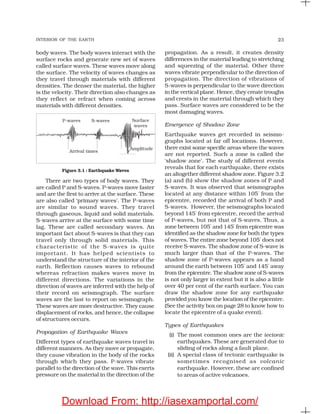
patterns. Earthquake waves are basically of two
types — body waves and surface waves. Body
waves are generated due to the release of energy
at the focus and move in all directions travelling
through the body of the earth. Hence, the name
Download From: http://iasexamportal.com/
INTERIOR OF THE EARTH 23
body waves. The body waves interact with the
surface rocks and generate new set of waves
called surface waves. These waves move along
the surface. The velocity of waves changes as
they travel through materials with different
densities. The denser the material, the higher
is the velocity. Their direction also changes as
they reflect or refract when coming across
materials with different densities.
propagation. As a result, it creates density
differences in the material leading to stretching
and squeezing of the material. Other three
waves vibrate perpendicular to the direction of
propagation. The direction of vibrations of
S-waves is perpendicular to the wave direction
in the vertical plane. Hence, they create troughs
and crests in the material through which they
pass. Surface waves are considered to be the
most damaging waves.
Emergence of Shadow Zone
Earthquake waves get recorded in seismo-
graphs located at far off locations. However,
there exist some specific areas where the waves
are not reported. Such a zone is called the
‘shadow zone’. The study of different events
reveals that for each earthquake, there exists
an altogether different shadow zone. Figure 3.2
(a) and (b) show the shadow zones of P and
S-waves. It was observed that seismographs
located at any distance within 105°
from the
epicentre, recorded the arrival of both P and
S-waves. However, the seismographs located
beyond 145°
from epicentre, record the arrival
of P-waves, but not that of S-waves. Thus, a
zone between 105°
and 145°
from epicentre was
identified as the shadow zone for both the types
of waves. The entire zone beyond 105°
does not
receive S-waves. The shadow zone of S-wave is
much larger than that of the P-waves. The
shadow zone of P-waves appears as a band
around the earth between 105°
and 145°
away
from the epicentre. The shadow zone of S-waves
is not only larger in extent but it is also a little
over 40 per cent of the earth surface. You can
draw the shadow zone for any earthquake
provided you know the location of the epicentre.
(See the activity box on page 28 to know how to
locate the epicentre of a quake event).
Types of Earthquakes
(i) The most common ones are the tectonic
earthquakes. These are generated due to
sliding of rocks along a fault plane.
(ii) A special class of tectonic earthquake is
sometimes recognised as volcanic
earthquake. However, these are confined
to areas of active volcanoes.
Figure 3.1 : Earthquake Waves
There are two types of body waves. They
are called P and S-waves. P-waves move faster
and are the first to arrive at the surface. These
are also called ‘primary waves’. The P-waves
are similar to sound waves. They travel
through gaseous, liquid and solid materials.
S-waves arrive at the surface with some time
lag. These are called secondary waves. An
important fact about S-waves is that they can
travel only through solid materials. This
characteristic of the S-waves is quite
important. It has helped scientists to
understand the structure of the interior of the
earth. Reflection causes waves to rebound
whereas refraction makes waves move in
different directions. The variations in the
direction of waves are inferred with the help of
their record on seismograph. The surface
waves are the last to report on seismograph.
These waves are more destructive. They cause
displacement of rocks, and hence, the collapse
of structures occurs.
Propagation of Earthquake Waves
Different types of earthquake waves travel in
different manners. As they move or propagate,
they cause vibration in the body of the rocks
through which they pass. P-waves vibrate
parallel to the direction of the wave. This exerts
pressure on the material in the direction of the
Download From: http://iasexamportal.com/
FUNDAMENTALS OF PHYSICAL GEOGRAPHY24
(v) The earthquakes that occur in the areas
of large reservoirs are referred to as
reservoir induced earthquakes.
Measuring Earthquakes
The earthquake events are scaled either
according to the magnitude or intensity of the
shock. The magnitude scale is known as the
Richter scale. The magnitude relates to the
energy released during the quake. The
magnitude is expressed in absolute numbers,
0-10. The intensity scale is named after
Mercalli, an Italian seismologist. The intensity
scale takes into account the visible damage
caused by the event. The range of intensity scale
is from 1-12.
EFFECTS OF EARTHQUAKE
Earthquake is a natural hazard. The following
are the immediate hazardous effects of
earthquake:
(i) Ground Shaking
(ii) Differential ground settlement
(iii) Land and mud slides
(iv) Soil liquefaction
(v) Ground lurching
(vi) Avalanches
(vii) Ground displacement
(viii) Floods from dam and levee failures
(ix) Fires
(x) Structural collapse
(xi) Falling objects
(xii) Tsunami
The first six listed above have some bearings
upon landforms, while others may be
considered the effects causing immediate
concern to the life and properties of people in
the region. The effect of tsunami would occur
only if the epicentre of the tremor is below
oceanic waters and the magnitude is
sufficiently high. Tsunamis are waves
generated by the tremors and not an
earthquake in itself. Though the actual quake
activity lasts for a few seconds, its effects are
devastating provided the magnitude of the
quake is more than 5 on the Richter scale.
Figure 3.2 (a) and (b) : Earthquake Shadow Zones
(iii) In the areas of intense mining activity,
sometimes the roofs of underground
mines collapse causing minor tremors.
These are called collapse earthquakes.
(iv) Ground shaking may also occur due to
the explosion of chemical or nuclear
devices. Such tremors are called explosion
earthquakes.
Download From: http://iasexamportal.com/
INTERIOR OF THE EARTH 25
Frequency of Earthquake Occurrences
The earthquake is a natural hazard. If a tremor
of high magnitude takes place, it can cause
heavy damage to the life and property of
people. However, not all the parts of the globe
necessarily experience major shocks. We shall
be discussing the distribution of earthquakes
and volcanoes with some details in the next
STRUCTURE OF THE EARTH
The Crust
It is the outermost solid part of the earth. It is
brittle in nature. The thickness of the crust
varies under the oceanic and continental areas.
Oceanic crust is thinner as compared to the
continental crust. The mean thickness of
oceanic crust is 5 km whereas that of the
continental is around 30 km. The continental
crust is thicker in the areas of major mountain
systems. It is as much as 70 km thick in the
Himalayan region.
It is made up of heavier rocks having
density of 3 g/cm3
. This type of rock found in
the oceanic crust is basalt. The mean density
of material in oceanic crust is 2.7 g/cm3
.
The Mantle
The portion of the interior beyond the crust is
called the mantle. The mantle extends from
Moho’s discontinuity to a depth of 2,900 km.
The upper portion of the mantle is called
asthenosphere. The word astheno means
weak. It is considered to be extending upto 400
km. It is the main source of magma that finds
chapter. Note that the quakes of high
magnitude, i.e. 8+ are quite rare; they occur
once in 1-2 years whereas those of ‘tiny’ types
occur almost every minute.
A view of the damaged Aman Setu at the LOC
in Uri, due to an earthquake
Download From: http://iasexamportal.com/
FUNDAMENTALS OF PHYSICAL GEOGRAPHY26
its way to the surface during volcanic
eruptions. It has a density higher than the
crust’s (3.4 g/cm3
). The crust and the
uppermost part of the mantle are called
lithosphere.Itsthicknessrangesfrom10-200km.
The lower mantle extends beyond the
asthenosphere. It is in solid state.
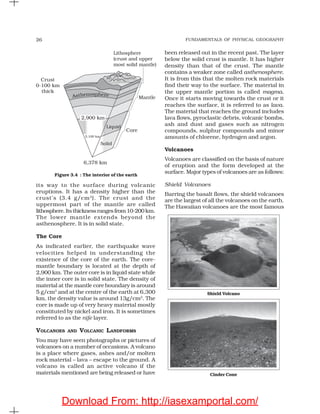
The Core
As indicated earlier, the earthquake wave
velocities helped in understanding the
existence of the core of the earth. The core-
mantle boundary is located at the depth of
2,900 km. The outer core is in liquid state while
the inner core is in solid state. The density of
material at the mantle core boundary is around
5 g/cm3
and at the centre of the earth at 6,300
km, the density value is around 13g/cm3
. The
core is made up of very heavy material mostly
constituted by nickel and iron. It is sometimes
referred to as the nife layer.
VOLCANOES AND VOLCANIC LANDFORMS
You may have seen photographs or pictures of
volcanoes on a number of occasions. A volcano
is a place where gases, ashes and/or molten
rock material – lava – escape to the ground. A
volcano is called an active volcano if the
materials mentioned are being released or have
been released out in the recent past. The layer
below the solid crust is mantle. It has higher
density than that of the crust. The mantle
contains a weaker zone called asthenosphere.
It is from this that the molten rock materials
find their way to the surface. The material in
the upper mantle portion is called magma.
Once it starts moving towards the crust or it
reaches the surface, it is referred to as lava.
The material that reaches the ground includes
lava flows, pyroclastic debris, volcanic bombs,
ash and dust and gases such as nitrogen
compounds, sulphur compounds and minor
amounts of chlorene, hydrogen and argon.
Volcanoes
Volcanoes are classified on the basis of nature
of eruption and the form developed at the
surface. Major types of volcanoes are as follows:
Shield Volcanoes
Barring the basalt flows, the shield volcanoes
are the largest of all the volcanoes on the earth.
The Hawaiian volcanoes are the most famous
Figure 3.4 : The interior of the earth
Shield Volcano
Cinder Cone
Download From: http://iasexamportal.com/
INTERIOR OF THE EARTH 27
examples. These volcanoes are mostly made
up of basalt, a type of lava that is very fluid
when erupted. For this reason, these volcanoes
are not steep. They become explosive if
somehow water gets into the vent; otherwise,
they are characterised by low-explosivity. The
upcoming lava moves in the form of a fountain
and throws out the cone at the top of the vent
and develops into cinder cone.
Composite Volcanoes
These volcanoes are characterised by
eruptions of cooler and more viscous lavas
than basalt. These volcanoes often result in
explosive eruptions. Along with lava, large
quantities of pyroclastic material and ashes
find their way to the ground. This material
accumulates in the vicinity of the vent openings
leading to formation of layers, and this makes
the mounts appear as composite volcanoes.
more than 50 m. Individual flows may extend
for hundreds of km. The Deccan Traps from
India, presently covering most of the
Maharashtra plateau, are a much larger flood
basalt province. It is believed that initially the
trap formations covered a much larger area
than the present.
Mid-Ocean Ridge Volcanoes
These volcanoes occur in the oceanic areas.
There is a system of mid-ocean ridges more
than 70,000 km long that stretches through
all the ocean basins. The central portion of this
ridge experiences frequent eruptions. We shall
be discussing this in detail in the next chapter.
VOLCANIC LANDFORMS
Intrusive Forms
The lava that is released during volcanic
eruptions on cooling develops into igneous
rocks. The cooling may take place either on
reaching the surface or also while the lava is
still in the crustal portion. Depending on the
location of the cooling of the lava, igneous rocks
are classified as volcanic rocks (cooling at the
surface) and plutonic rocks (cooling in the
crust). The lava that cools within the crustal
portions assumes different forms. These forms
are called intrusive forms. Some of the forms
are shown in Figure 3.5.Composite Volcano
Caldera
These are the most explosive of the earth’s
volcanoes. They are usually so explosive that
when they erupt they tend to collapse on
themselves rather than building any tall
structure. The collapsed depressions are called
calderas. Their explosiveness indicates that
the magma chamber supplying the lava is not
only huge but is also in close vicinity.
Flood Basalt Provinces
These volcanoes outpour highly fluid lava that
flows for long distances. Some parts of the
world are covered by thousands of sq. km of
thick basalt lava flows. There can be a series of
flows with some flows attaining thickness of Figure 3.5 : Volcanic Landforms
Download From: http://iasexamportal.com/
FUNDAMENTALS OF PHYSICAL GEOGRAPHY28
Activity : Locating an Epicentre
For this you will need
Data from 3 seismograph stations about the time of arrival of P-waves, S-waves.
Procedure
1. Find the time of arrival of P and S-waves of the given quake for the three stations for which
you have the data.
2. Compute the time lag between the arrival of P and S-waves for each station; it is called time
lag. (Note that it is directly related to the distance of the seismograph from the focus.)
A. Basic rule : For every second of time lag, the earthquake is roughly 8 km away from you.
3. Using the rule quoted above, convert the time lag into distance ( # seconds of time lag * 8)
for each station.
4. On a map locate the seismograph stations.
5. Draw circles, taking the seismograph stations as the centre, with the radius equal to the
distance you have calculated in the previous step. (Do not forget to convert distance as per
the map scale.)
6. These circles will intersect each other in a point. This point is the location of the epicentre.
In normal practice, the epicentres are located using computer models. They take into account
the structure of the earth’s crust. The locations with accuracy within a few hundred metres
can be achieved. The procedure outlined here is a much simplified version of what is normally
done, although the principle is the same.
In the following diagram, the epicentre is located using this procedure. It also contains a
table giving necessary data. Why don’t you try for yourself ?
Batholiths
A large body of magmatic material that cools
in the deeper depth of the crust develops in the
form of large domes. They appear on the surface
only after the denudational processes remove
the overlying materials. They cover large areas,
and at times, assume depth that may be several
km. These are granitic bodies. Batholiths are
the cooled portion of magma chambers.
Lacoliths
These are large dome-shaped intrusive bodies
with a level base and connected by a pipe-like
conduit from below. It resembles the surface
volcanic domes of composite volcano, only
these are located at deeper depths. It can be
regarded as the localised source of lava that
finds its way to the surface. The Karnataka
plateau is spotted with domal hills of granite
rocks. Most of these, now exfoliated, are
examples of lacoliths or batholiths.
Lapolith, Phacolith and Sills
As and when the lava moves upwards, a
portion of the same may tend to move in a
horizontal direction wherever it finds a weak
Data
Arrival time of
Station P-waves S-waves
Hour Min. Sec. Hour Min. Sec.
S1 03 23 20 03 24 45
S2 03 22 17 03 23 57
S3 03 22 00 03 23 55
Scale of the map 1cm = 40km
Download From: http://iasexamportal.com/
INTERIOR OF THE EARTH 29
EXERCISES
1. Multiple choice questions.
(i) Which one of the following earthquake waves is more destructive?
(a) P-waves (c) Surface waves
(b) S-waves (d) None of the above
(ii) Which one of the following is a direct source of information about the
interior of the earth?
(a) Earthquake waves (c) Gravitational force
(b) Volcanoes (d) Earth magnetism
(iii) Which type of volcanic eruptions have caused Deccan Trap formations?
(a) Shield (c) Composite
(b) Flood (d) Caldera
(iv) Which one of the following describes the lithosphere:
(a) upper and lower mantle (c) crust and core
(b) crust and upper mantle (d) mantle and core
2. Answer the following questions in about 30 words.
(i) What are body waves?
(ii) Name the direct sources of information about the interior of the earth.
(iii) Why do earthquake waves develop shadow zone?
(iv) Briefly explain the indirect sources of information of the interior of the
earth other than those of seismic activity.
3. Answer the following questions in about 150 words.
(i) What are the effects of propagation of earthquake waves on the rock mass
through which they travel?
(ii) What do you understand by intrusive forms? Briefly describe various
intrusive forms.
plane. It may get rested in different forms. In
case it develops into a saucer shape, concave
to the sky body, it is called lapolith. A wavy
mass of intrusive rocks, at times, is found at
the base of synclines or at the top of anticline
in folded igneous country. Such wavy materials
have a definite conduit to source beneath in
the form of magma chambers (subsequently
developed as batholiths). These are called the
phacoliths.
The near horizontal bodies of the
intrusive igneous rocks are called sill or
sheet, depending on the thickness of the
material. The thinner ones are called sheets
while the thick horizontal deposits are
called sills.
Dykes
When the lava makes its way through cracks
and the fissures developed in the land, it
solidifies almost perpendicular to the ground.
It gets cooled in the same position to develop a
wall-like structure. Such structures are called
dykes. These are the most commonly found
intrusive forms in the western Maharashtra area.
These are considered the feeders for the eruptions
that led to the development of the Deccan traps.
Download From: http://iasexamportal.com/
In the previous chapter, you have studied the
interior of the earth. You are already familiar
with the world map. You know that continents
cover 29 per cent of the surface of the earth
and the remainder is under oceanic waters.
The positions of the continents and the ocean
bodies, as we see them in the map, have not
been the same in the past. Moreover, it is now
a well-accepted fact that oceans and
continents will not continue to enjoy their
present positions in times to come. If this is
so, the question arises what were their positions
in the past? Why and how do they change their
positions? Even if it is true that the continents
and oceans have changed and are changing
their positions, you may wonder as to how
scientists know this. How have they determined
their earlier positions? You will find the answers
to some of these and related questions in this
chapter.
CONTINENTAL DRIFT
Observe the shape of the coastline of the Atlantic
Ocean. You will be surprised by the symmetry
of the coastlines on either side of the ocean. No
wonder, many scientists thought of this
similarity and considered the possibility of the
two Americas, Europe and Africa, to be once
joined together. From the known records of the
history of science, it was Abraham Ortelius, a
Dutch map maker, who first proposed such a
possibility as early as 1596. Antonio Pellegrini
drewamapshowingthethreecontinentstogether.
However, it was Alfred Wegener—a German
meteorologist who put forth a comprehensive
argument in the form of “the continental drift
DISTRIBUTION OF OCEANS
AND CONTINENTS
C H A P T E R
theory” in 1912. This was regarding the
distribution of the oceans and the continents.
According to Wegener, all the continents
formed a single continental mass, a mega ocean
surrounded by the same. The super continent
was named PANGAEA, which meant all earth.
The mega-ocean was called PANTHALASSA,
meaning all water. He argued that, around 200
million years ago, the super continent,
Pangaea, began to split. Pangaea first broke
into two large continental masses as Laurasia
and Gondwanaland forming the northern and
southern components respectively. Subse-
quently, Laurasia and Gondwanaland
continued to break into various smaller
continents that exist today. A variety of evidence
was offered in support of the continental drift.
Some of these are given below.
Evidence in Support of the Continental Drift
The Matching of Continents (Jig-Saw-Fit)
The shorelines of Africa and South America
facing each other have a remarkable and
unmistakable match. It may be noted that a
map produced using a computer programme
to find the best fit of the Atlantic margin was
presented by Bullard in 1964. It proved to be
quite perfect. The match was tried at 1,000-
fathom line instead of the present shoreline.
Rocks of Same Age Across the Oceans
The radiometric dating methods developed in
the recent period have facilitated correlating the
rock formation from different continents across
Download From: http://iasexamportal.com/
DISTRIBUTION OF OCEANS AND CONTINENTS 31
the vast ocean. The belt of ancient rocks of
2,000 million years from Brazil coast matches
with those from western Africa. The earliest
marine deposits along the coastline of South
America and Africa are of the Jurassic age.
This suggests that the ocean did not exist prior
to that time.
Tillite
It is the sedimentary rock formed out of
deposits of glaciers. The Gondawana system
of sediments from India is known to have its
counter parts in six different landmasses of the
Southern Hemisphere. At the base the system
has thick tillite indicating extensive and
prolonged glaciation. Counter parts of this
succession are found in Africa, Falkland Island,
Madagascar, Antarctica and Australia besides
India. Overall resemblance of the Gondawana
type sediments clearly demonstrates that these
landmasses had remarkably similar histories.
The glacial tillite provides unambiguous
evidence of palaeoclimates and also of drifting
of continents.
Placer Deposits
The occurrence of rich placer deposits of gold
in the Ghana coast and the absolute absence
of source rock in the region is an amazing fact.
The gold bearing veins are in Brazil and it is
obvious that the gold deposits of the Ghana
are derived from the Brazil plateau when the
two continents lay side by side.
Distribution of Fossils
When identical species of plants and animals
adapted to living on land or in fresh water are
found on either side of the marine barriers, a
problem arises regarding accounting for such
distribution. The observations that Lemurs
occur in India, Madagascar and Africa led some
to consider a contiguous landmass “Lemuria”
linking these three landmasses. Mesosaurus
was a small reptile adapted to shallow brackish
water. The skeletons of these are found only
in two localities : the Southern Cape province
of South Africa and Iraver formations of Brazil.
The two localities presently are 4,800 km apart
with an ocean in between them.
Force for Drifting
Wegener suggested that the movement
responsible for the drifting of the continents
was caused by pole-fleeing force and tidal force.
The polar-fleeing force relates to the rotation
of the earth. You are aware of the fact that the
earth is not a perfect sphere; it has a bulge at
the equator. This bulge is due to the rotation
of the earth. The second force that was
suggested by Wegener—the tidal force—is due
to the attraction of the moon and the sun that
develops tides in oceanic waters. Wegener
believed that these forces would become
effective when applied over many million years.
However, most of scholars considered these
forces to be totally inadequate.
Post-Drift Studies
It is interesting to note that for continental drift,
most of the evidence was collected from the
continental areas in the form of distribution of
flora and fauna or deposits like tillite. A number
of discoveries during the post-war period
added new information to geological literature.
Particularly, the information collected from the
ocean floor mapping provided new dimensions
for the study of distribution of oceans and
continents.
Convectional Current Theory
Arthur Holmes in 1930s discussed the
possibility of convection currents operating in
the mantle portion. These currents are
generated due to radioactive elements causing
thermal differences in the mantle portion.
Holmes argued that there exists a system of
such currents in the entire mantle portion. This
was an attempt to provide an explanation to
the issue of force, on the basis of which
contemporary scientists discarded the
continental drift theory.
Mapping of the Ocean Floor
Detailed research of the ocean configuration
revealed that the ocean floor is not just a vast
plain but it is full of relief. Expeditions to map
the oceanic floor in the post-war period
provided a detailed picture of the ocean relief
and indicated the existence of submerged
Download From: http://iasexamportal.com/
FUNDAMENTALS OF PHYSICAL GEOGRAPHY32
mountain ranges as well as deep trenches,
mostly located closer to the continent margins.
The mid-oceanic ridges were found to be most
active in terms of volcanic eruptions. The dating
of the rocks from the oceanic crust revealed
the fact that the latter is much younger than
the continental areas. Rocks on either side of
the crest of oceanic ridges and having equi-
distant locations from the crest were found to
have remarkable similarities both in terms of
their constituents and their age.
Ocean Floor Configuration
In this section we shall note a few things related
to the ocean floor configuration that help us in
the understanding of the distribution of
continents and oceans. You will be studying
the details of ocean floor relief in Chapter
13. The ocean floor may be segmented into
three major divisions based on the depth
as well as the forms of relief. These divisions
are continental margins, deep-sea basins and
mid-ocean ridges.
Abyssal Plains
These are extensive plains that lie between the
continental margins and mid-oceanic ridges.
The abyssal plains are the areas where the
continental sediments that move beyond the
margins get deposited.
Mid-Oceanic Ridges
This forms an interconnected chain of
mountain system within the ocean. It is the
longest mountain-chain on the surface of the
earth though submerged under the oceanic
waters. It is characterised by a central rift
system at the crest, a fractionated plateau and
flank zone all along its length. The rift system
at the crest is the zone of intense volcanic
activity. In the previous chapter, you have been
introduced to this type of volcanoes as mid-
oceanic volcanoes.
Distribution of Earthquakes and Volcanoes
Study the maps showing the distribution of
seismic activity and volcanoes given in Figure
4.2. You will notice a line of dots in the central
parts of the Atlantic Ocean almost parallel to
the coastlines. It further extends into the Indian
Ocean. It bifurcates a little south of the Indian
subcontinent with one branch moving into
East Africa and the other meeting a similar line
from Myanmar to New Guiana. You will notice
that this line of dots coincides with the mid-
oceanic ridges. The shaded belt showing
another area of concentration coincides with
the Alpine-Himalayan system and the rim of
the Pacific Ocean. In general, the foci of the
earthquake in the areas of mid-oceanic ridges
are at shallow depths whereas along the
Alpine-Himalayan belt as well as the rim of the
Pacific, the earthquakes are deep-seated ones.
The map of volcanoes also shows a similar
pattern. The rim of the Pacific is also called rim
of fire due to the existence of active volcanoes in
this area.
CONCEPT OF SEA FLOOR SPREADING
As mentioned above, the post-drift studies
provided considerable information that was not
Figure 4.1 : Ocean Floor
Continental Margins
These form the transition between continental
shores and deep-sea basins. They include
continental shelf, continental slope, continental
rise and deep-oceanic trenches. Of these, the
deep-sea trenches are the areas which are of
considerable interest in so far as the
distribution of oceans and continents is
concerned.
Download From: http://iasexamportal.com/
DISTRIBUTION OF OCEANS AND CONTINENTS 33
available at the time Wegener put forth his
concept of continental drift. Particularly, the
mapping of the ocean floor and palaeomagnetic
studies of rocks from oceanic regions revealed
the following facts :
(i) It was realised that all along the mid-
oceanic ridges, volcanic eruptions are
common and they bring huge amounts of
lava to the surface in this area.
(ii) The rocks equidistant on either sides of the
crest of mid-oceanic ridges show
remarkable similarities in terms of period
of formation, chemical compositions and
magnetic properties. Rocks closer to the
mid-oceanic ridges are normal polarity and
are the youngest. The age of the rocks
increases as one moves away from the
crest.
(iii) The ocean crust rocks are much younger
than the continental rocks. The age of rocks
in the oceanic crust is nowhere more than
200 million yearsold.Someofthecontinental
rock formations are as old as 3,200 million
years.
(iv) The sediments on the ocean floor are
unexpectedly very thin. Scientists were
expecting, if the ocean floors were as old
as the continent, to have a complete
sequence of sediments for a period of much
longer duration. However, nowhere was the
sediment column found to be older than
200 million years.
(v) The deep trenches have deep-seated
earthquake occurrences while in the mid-
oceanic ridge areas, the quake foci have
shallow depths.
These facts and a detailed analysis of magnetic
properties of the rocks on either sides of the
mid-oceanic ridge led Hess (1961) to propose
his hypothesis, known as the “sea floor
spreading”. Hess argued that constant
eruptions at the crest of oceanic ridges cause
the rupture of the oceanic crust and the new
lava wedges into it, pushing the oceanic crust
on either side. The ocean floor, thus spreads.
The younger age of the oceanic crust as well
as the fact that the spreading of one ocean does
not cause the shrinking of the other, made Hess
Figure 4. 2 : Distribution of earthquakes and volcanoes
Download From: http://iasexamportal.com/
FUNDAMENTALS OF PHYSICAL GEOGRAPHY34
think about the consumption of the oceanic
crust. He further maintained that the ocean
floor that gets pushed due to volcanic
eruptions at the crest, sinks down at the
oceanic trenches and gets consumed.
The basic concept of sea floor spreading has
been depicted in Figure 4.3.
PLATE TECTONICS
Since the advent of the concept of sea floor
spreading, the interest in the problem of
distribution of oceans and continents was
revived. It was in 1967, McKenzie and Parker
and also Morgan, independently collected the
available ideas and came out with another
Figure 4. 3 : Sea floor spreading
Figure 4.4 : Position of continents through geological past
The motions of the continents during the past 540
million years. 1. Africa; 2. South America;
3. Antarctica; 4. Australia; 5. India; 6. China; 7. North
America; 8. Europe; 9. and 10. Siberia (Emilani, 1992)
Download From: http://iasexamportal.com/
DISTRIBUTION OF OCEANS AND CONTINENTS 35
concept termed Plate Tectonics. A tectonic
plate (also called lithospheric plate) is a
massive, irregularly-shaped slab of solid rock,
generally composed of both continental and
oceanic lithosphere. Plates move horizontally
over the asthenosphere as rigid units. The
lithosphere includes the crust and top mantle
with its thickness range varying between 5-100
km in oceanic parts and about 200 km in the
continental areas. A plate may be referred to
as the continental plate or oceanic plate
depending on which of the two occupy a larger
portion of the plate. Pacific plate is largely an
oceanic plate whereas the Eurasian plate may be
called a continental plate. The theory of plate
tectonics proposes that the earth’s lithosphere is
divided into seven major and some minor plates.
Young Fold Mountain ridges, trenches, and/or
faults surround these major plates (Figure 4.5).
The major plates are as follows :
(i) Antarctica and the surrounding oceanic
plate
Figure 4.5 : Major and minor plates of the world
(ii) North American (with western Atlantic
floor separated from the South American
plate along the Caribbean islands) plate
(iii) South American (with western Atlantic
floor separated from the North American
plate along the Caribbean islands) plate
(iv) Pacific plate
(v) India-Australia-New Zealand plate
(vi) Africa with the eastern Atlantic floor plate
(vii) Eurasia and the adjacent oceanic plate.
Some important minor plates are listed
below:
(i) Cocos plate : Between Central America
and Pacific plate
(ii) Nazca plate : Between South America
and Pacific plate
(iii) Arabian plate : Mostly the Saudi Arabian
landmass
(iv) Philippine plate : Between the Asiatic and
Pacific plate
Download From: http://iasexamportal.com/
FUNDAMENTALS OF PHYSICAL GEOGRAPHY36
(v) Caroline plate : Between the Philippine
and Indian plate (North of New Guinea)
(vi) Fuji plate : North-east of Australia.
These plates have been constantly moving
over the globe throughout the history of the
earth. It is not the continent that moves as
believed by Wegener. Continents are part of a
plate and what moves is the plate. Moreover, it
may be noted that all the plates, without
exception, have moved in the geological past,
and shall continue to move in the future period
as well. Wegener had thought of all the
continents to have initially existed as a super
continent in the form of Pangaea. However,
later discoveries reveal that the continental
masses, resting on the plates, have been
wandering all through the geological period,
and Pangaea was a result of converging of
different continental masses that were parts
of one or the other plates. Scientists using the
palaeomagnetic data have determined the
positions held by each of the present continental
landmass in different geological periods.
Position of the Indian sub-continent (mostly
Peninsular India) is traced with the help of the
rocks analysed from the Nagpur area.
There are three types of plate boundaries:
Divergent Boundaries
Where new crust is generated as the plates pull
away from each other. The sites where the
plates move away from each other are called
spreading sites. The best-known example of
divergent boundaries is the Mid-Atlantic Ridge.
At this, the American Plate(s) is/are separated
from the Eurasian and African Plates.
Convergent Boundaries
Where the crust is destroyed as one plate dived
under another. The location where sinking of
a plate occurs is called a subduction zone.
There are three ways in which convergence can
occur. These are: (i) between an oceanic and
continental plate; (ii) between two oceanic
plates; and (iii) between two continental
plates.
Transform Boundaries
Where the crust is neither produced nor
destroyed as the plates slide horizontally past
each other. Transform faults are the planes of
separation generally perpendicular to the mid-
oceanic ridges. As the eruptions do not take
all along the entire crest at the same time, there
is a differential movement of a portion of the
plate away from the axis of the earth. Also, the
rotation of the earth has its effect on the
separated blocks of the plate portions.
How do you think the rate of plate
movement is determined?
Rates of Plate Movement
The strips of normal and reverse magnetic field
that parallel the mid-oceanic ridges help
scientists determine the rates of plate
movement. These rates vary considerably. The
Arctic Ridge has the slowest rate (less than 2.5
cm/yr), and the East Pacific Rise near Easter
Island, in the South Pacific about 3,400 km
west of Chile, has the fastest rate (more than
15 cm/yr).
Force for the Plate Movement
At the time that Wegener proposed his theory
of continental drift, most scientists believed
that the earth was a solid, motionless body.
However, concepts of sea floor spreading and
the unified theory of plate tectonics have
emphasised that both the surface of the earth
and the interior are not static and motionless
but are dynamic. The fact that the plates move
is now a well-accepted fact. The mobile rock
beneath the rigid plates is believed to be
moving in a circular manner. The heated
material rises to the surface, spreads and
begins to cool, and then sinks back into deeper
depths. This cycle is repeated over and over to
generate what scientists call a convection cell
or convective flow. Heat within the earth comes
from two main sources: radioactive decay and
residual heat. Arthur Holmes first considered
Download From: http://iasexamportal.com/
DISTRIBUTION OF OCEANS AND CONTINENTS 37
Figure 4.6 : Movement of the Indian plate
this idea in the 1930s, which later influenced
Harry Hess’ thinking about seafloor spreading.
The slow movement of hot, softened mantle
that lies below the rigid plates is the driving
force behind the plate movement.
MOVEMENT OF THE INDIAN PLATE
The Indian plate includes Peninsular India
and the Australian continental portions. The
subduction zone along the Himalayas forms
the northern plate boundary in the form of
continent— continent convergence. In the east,
it extends through Rakinyoma Mountains of
Myanmar towards the island arc along the
Java Trench. The eastern margin is a
spreading site lying to the east of Australia in
the form of an oceanic ridge in SW Pacific. The
Western margin follows Kirthar Mountain of
Pakistan. It further extends along the Makrana
coast and joins the spreading site from the
Red Sea rift southeastward along the Chagos
Archipelago. The boundary between India
and the Antarctic plate is also marked by
oceanic ridge (divergent boundary) running
in roughly W-E direction and merging into the
spreading site, a little south of New Zealand.
India was a large island situated off the
Australian coast, in a vast ocean. The Tethys
Sea separated it from the Asian continent till
about 225 million years ago. India is supposed
to have started her northward journey about
200 million years ago at the time when Pangaea
broke. India collided with Asia about 40-50
million years ago causing rapid uplift of the
Himalayas. The positions of India since about
71 million years till the present are shown in
the Figure 4.6. It also shows the position of
the Indian subcontinent and the Eurasian
plate. About 140 million years before the
present, the subcontinent was located as
south as 50o
S. latitude. The two major plates
were separated by the Tethys Sea and the
Tibetan block was closer to the Asiatic
landmass. During the movement of the Indian
plate towards the Asiatic plate, a major event
that occurred was the outpouring of lava and
formation of the Deccan Traps. This started
somewhere around 60 million years ago and
continued for a long period of time. Note that
the subcontinent was still close to the equator.
From 40 million years ago and thereafter, the
event of formation of the Himalayas took place.
Scientists believe that the process is still
continuing and the height of the Himalayas is
rising even to this date.
Download From: http://iasexamportal.com/
FUNDAMENTALS OF PHYSICAL GEOGRAPHY38
EXERCISES
1. Multiple choice questions.
(i) Who amongst the following was the first to consider the possibility of
Europe, Africa and America having been located side by side.
(a) Alfred Wegener (c) Abraham Ortelius
(b) Antonio Pellegrini (d) Edmond Hess
(ii) Polar fleeing force relates to:
(a) Revolution of the Earth (c) Rotation of the earth
(b) Gravitation (d) Tides
(iii) Which one of the following is not a minor plate?
(a) Nazca (c) Philippines
(b) Arabia (d) Antarctica
(iv) Which one of the following facts was not considered by those while
discussing the concept of sea floor spreading?
(a) Volcanic activity along the mid-oceanic ridges.
(b) Stripes of normal and reverse magnetic field observed in rocks of ocean
floor.
(c) Distribution of fossils in different continents.
(d) Age of rocks from the ocean floor.
(v) Which one of the following is the type of plate boundary of the Indian plate
along the Himalayan mountains?
(a) Ocean-continent convergence
(b) Divergent boundary
(c) Transform boundary
(d) Continent-continent convergence
2. Answer the following questions in about 30 words.
(i) What were the forces suggested by Wegener for the movement of the
continents?
(ii) How are the convectional currents in the mantle initiated and maintained?
(iii) What is the major difference between the transform boundary and the
convergent or divergent boundaries of plates?
(iv) What was the location of the Indian landmass during the formation of the
Deccan Traps?
3. Answer the following questions in about 150 words.
(i) What are the evidences in support of the continental drift theory?
(ii) Bring about the basic difference between the drift theory and Plate
tectonics.
(iii) What were the major post-drift discoveries that rejuvenated the interest
of scientists in the study of distribution of oceans and continents?
Project Work
Prepare a collage related to damages caused by an earthquake.
Download From: http://iasexamportal.com/
LANDFORMS
This unit deals with
• Rocks and minerals — major types of rocks and their
characteristics
• Landforms and their evolution
• Geomorphic processes — weathering, mass wasting, erosion
and deposition; soils — formation
UNIT
III
Download From: http://iasexamportal.com/
MINERALS AND ROCKS
C H A P T E R
T
he earth is composed of various kinds
of elements. These elements are in solid
form in the outer layer of the earth and
in hot and molten form in the interior.
About 98 per cent of the total crust of the
earth is composed of eight elements like
oxygen, silicon, aluminium, iron, calcium,
sodium, potassium and magnesium (Table 5.1),
and the rest is constituted by titanium,
hydrogen, phosphorous, manganese, sulphur,
carbon, nickel and other elements.
Table 5.1 : The Major Elements of the Earth’s Crust
Sl. No. Elements By Weight(%)
1. Oxygen 46.60
2. Silicon 27.72
3. Aluminium 8.13
4. Iron 5.00
5. Calcium 3.63
6. Sodium 2.83
7. Potassium 2.59
8. Magnesium 2.09
9. Others 1.41
The elements in the earth’s crust are rarely
found exclusively but are usually combined with
other elements to make various substances.
These substances are recognised as minerals.
Thus, a mineral is a naturally occurring
inorganic substance, having an orderly
atomic structure and a definite chemical
composition and physical properties. A
mineral is composed of two or more
elements. But, sometimes single element
minerals like sulphur, copper, silver, gold,
graphite etc. are found.
Though the number of elements making
up the lithosphere are limited they are
combined in many different ways to make up
many varieties of minerals. There are at least
2,000 minerals that have been named and
identified in the earth crust; but almost all the
commonly occurring ones are related to six
major mineral groups that are known as major
rock forming minerals.
The basic source of all minerals is the hot
magma in the interior of the earth. When
magma cools, crystals of minerals appear and
a systematic series of minerals are formed in
sequence to solidify so as to form rocks.
Minerals such as coal, petroleum and natural
gas are organic substances found in solid,
liquid and gaseous forms respectively.
A brief information about some important
minerals in terms of their nature and physical
characteristics is given below :
PHYSICAL CHARACTERISTICS
(i) External crystal form — deter-
mined by internal arrangement of
the molecules — cubes, octahe-
drons, hexagonal prisms, etc.
(ii) Cleavage — tendency to break in
given directions producing
relatively plane surfaces — result
of internal arrangement of the
molecules — may cleave in one or
more directions and at any angle
to each other.
Download From: http://iasexamportal.com/
MINERALS AND ROCKS 41
(iii) Fracture — internal molecular
arrangement so complex there are
no planes of molecules; the crystal
will break in an irregular manner,
not along planes of cleavage.
(iv) Lustre — appearance of a material
without regard to colour; each
mineral has a distinctive lustre like
metallic, silky, glossy etc.
(v) Colour — some minerals have
characteristic colour determined
by their molecular structure —
malachite, azurite, chalcopyrite etc.,
and some minerals are coloured by
impurities. For example, because
of impurities quartz may be white,
green, red, yellow etc.
(vi) Streak — colour of the ground powder
of any mineral. It may be of the
same colour as the mineral or may
differ — malachite is green and gives
green streak, fluorite is purple or
green but gives a white streak.
(vii) Transparency — transparent: light
rays pass through so that objects
can be seen plainly; translucent
— light rays pass through but will
get diffused so that objects cannot
be seen; opaque — light will not pass
at all.
(viii) Structure — particular arrange-
ment of the individual crystals;
fine, medium or coarse grained;
fibrous — separable, divergent,
radiating.
(ix) Hardness — relative resistance
being scratched; ten minerals are
selected to measure the degree of
hardness from 1-10. They are:
1. talc; 2. gypsum; 3. calcite;
4. fluorite; 5. apatite; 6. feldspar;
7. quartz; 8. topaz; 9. corundum;
10. diamond. Compared to this for
example, a fingernail is 2.5 and
glass or knife blade is 5.5.
(x) Specific gravity — the ratio between
the weight of a given object and
the weight of an equal volume of
water; object weighed in air and
then weighed in water and divide
weight in air by the difference of the
two weights.
SOME MAJOR MINERALS AND
THEIR CHARACTERISTICS
Feldspar
Silicon and oxygen are common elements in
all types of feldspar and sodium, potassium,
calcium, aluminium etc. are found in specific
feldspar variety. Half of the earth’s crust is
composed of feldspar. It has light cream to
salmon pink colour. It is used in ceramics and
glass making.
Quartz
It is one of the most important components of
sand and granite. It consists of silica. It is a
hard mineral virtually insoluble in water. It is
white or colourless and used in radio and radar.
It is one of the most important components of
granite.
Pyroxene
Pyroxene consists of calcium, aluminum,
magnesium, iron and silica. Pyroxene forms
10 per cent of the earth’s crust. It is commonly
found in meteorites. It is in green or black
colour.
Amphibole
Aluminium, calcium, silica, iron, magnesium
are the major elements of amphiboles. They
form 7 per cent of the earth’s crust. It is in
green or black colour and is used in asbestos
industry. Hornblende is another form of
amphiboles.
Mica
It comprises of potassium, aluminium,
magnesium, iron, silica etc. It forms 4 per cent
of the earth’s crust. It is commonly found in
igneous and metamorphic rocks. It is used in
electrical instruments.
Olivine
Magnesium, iron and silica are major elements
of olivine. It is used in jewellery. It is usually a
greenish crystal, often found in basaltic rocks.
Besides these main minerals, other minerals
like chlorite, calcite, magnetite, haematite,
bauxite and barite are also present in some
quantities in the rocks.
Download From: http://iasexamportal.com/
FUNDAMENTALS OF PHYSICAL GEOGRAPHY42
Metallic Minerals
These minerals contain metal content and can
be sub-divided into three types:
(i) Precious metals : gold, silver, platinum
etc.
(ii) Ferrous metals : iron and other metals
often mixed with iron to form various
kinds of steel.
(iii) Non-ferrous metals : include metals
like copper, lead, zinc, tin, aluminium
etc.
Non-Metallic Minerals
These minerals do not contain metal content.
Sulphur, phosphates and nitrates are examples
of non-metallic minerals. Cement is a mixture
of non-metallic minerals.
ROCKS
The earth’s crust is composed of rocks. A
rock is an aggregate of one or more minerals.
Rock may be hard or soft and in varied
colours. For example, granite is hard, soapstone
is soft. Gabbro is black and quartzite can be
milky white. Rocks do not have definite
composition of mineral constituents.
Feldspar and quartz are the most common
minerals found in rocks.
Petrology is science of rocks. A petrologist
studies rocks in all their aspects viz.,
mineral composition, texture, structure,
origin, occurrence, alteration and
relationship with other rocks.
As there is a close relation between rocks
and landforms, rocks and soils, a geographer
requires basic knowledge of rocks. There are
many different kinds of rocks which are
grouped under three families on the basis of
their mode of formation. They are: (i) Igneous
Rocks — solidified from magma and lava;
(ii) Sedimentary Rocks — the result of
deposition of fragments of rocks by exogenous
processes; (iii) Metamorphic Rocks — formed out
of existing rocks undergoing recrystallisation.
Igneous Rocks
As igneous rocks form out of magma and lava
from the interior of the earth, they are known
as primary rocks. The igneous rocks (Ignis –
in Latin means ‘Fire’) are formed when magma
cools and solidifies. You already know what
magma is. When magma in its upward
movement cools and turns into solid form it is
called igneous rock. The process of cooling and
solidification can happen in the earth’s crust
or on the surface of the earth.
Igneous rocks are classified based on
texture. Texture depends upon size and
arrangement of grains or other physical
conditions of the materials. If molten material
is cooled slowly at great depths, mineral grains
may be very large. Sudden cooling (at the
surface) results in small and smooth grains.
Intermediate conditions of cooling would result
in intermediate sizes of grains making up
igneous rocks. Granite, gabbro, pegmatite,
basalt, volcanic breccia and tuff are some of
the examples of igneous rocks.
Sedimentary Rocks
The word ‘sedimentary’ is derived from the Latin
word sedimentum, which means settling. Rocks
(igneous, sedimentary and metamorphic) of the
earth’s surface are exposed to denudational
agents, and are broken up into various sizes
of fragments. Such fragments are transported
by different exogenous agencies and
deposited. These deposits through compaction
turn into rocks. This process is called
lithification. In many sedimentary rocks, the
layers of deposits retain their characteristics
even after lithification. Hence, we see a number
of layers of varying thickness in sedimentary
rocks like sandstone, shale etc.
Depending upon the mode of formation,
sedimentary rocks are classified into three major
groups: (i) mechanically formed — sandstone,
conglomerate, limestone, shale, loess etc. are
examples; (ii) organically formed — geyserite,
chalk, limestone, coal etc. are some examples;
(iii)chemicallyformed— chert, limestone, halite,
potash etc. are some examples.
Download From: http://iasexamportal.com/
MINERALS AND ROCKS 43
Metamorphic Rocks
The word metamorphic means ‘change of form’.
These rocks form under the action of pressure,
volume and temperature (PVT) changes.
Metamorphism occurs when rocks are forced
down to lower levels by tectonic processes or
when molten magma rising through the crust
comes in contact with the crustal rocks or the
underlying rocks are subjected to great
amounts of pressure by overlying rocks.
Metamorphism is a process by which already
consolidated rocks undergo recrystallisation
and reorganisation of materials within original
rocks.
Mechanical disruption and reorganisation
of the original minerals within rocks due to
breaking and crushing without any
appreciable chemical changes is called dynamic
metamorphism. The materials of rocks
chemically alter and recrystallise due to
thermal metamorphism. There are two types
of thermal metamorphism — contact meta-
morphism and regional metamorphism. In
contact metamorphism the rocks come in
contact with hot intruding magma and lava
and the rock materials recrystallise under high
temperatures. Quite often new materials form
out of magma or lava are added to the rocks.
In regional metamorphism, rocks undergo
recrystallisation due to deformation caused by
tectonic shearing together with high
temperature or pressure or both. In the process
of metamorphism in some rocks grains or
minerals get arranged in layers or lines. Such
an arrangement of minerals or grains in
metamorphic rocks is called foliation or
lineation. Sometimes minerals or materials of
different groups are arranged into alternating
thin to thick layers appearing in light and dark
shades. Such a structure in metamorphic
rocks is called banding and rocks displaying
banding are called banded rocks. Types of
metamorphic rocks depend upon original
rocks that were subjected to metamorphism.
Metamorphic rocks are classified into two
major groups — foliated rocks and non-foliated
rocks. Gneissoid, granite, syenite, slate, schist,
marble, quartzite etc. are some examples of
metamorphic rocks.
ROCK CYCLE
Rocks do not remain in their original form for
long but may undergo transformation. Rock
cycle is a continuous process through which
old rocks are transformed into new ones.
Igneous rocks are primary rocks and other
rocks (sedimentary and metamorphic) form
from these primary rocks. Igneous rocks can
be changed into metamorphic rocks. The
fragments derived out of igneous and
metamorphic rocks form into sedimentary
rocks. Sedimentary rocks themselves can turn
into fragments and the fragments can be a
source for formation of sedimentary rocks. The
crustal rocks (igneous, metamorphic and
sedimentary) once formed may be carried
down into the mantle (interior of the earth)
through subduction process (parts or whole
of crustal plates going down under another
plate in zones of plate convergence) and the
same melt down due to increase in
temperature in the interior and turn into
molten magma, the original source for
igneous rocks (Figure 5.1).
Fig 5.1 : Rock Cycle
Download From: http://iasexamportal.com/
FUNDAMENTALS OF PHYSICAL GEOGRAPHY44
EXERCISES
1. Multiple choice questions.
(i) Which one of the following are the two main constituents of granite?
(a) Iron and nickel (c) Silica and aluminium
(b) Iron and silver (d) Iron Oxide and potassium
(ii) Which one of the following is the salient feature of metamorphic rocks?
(a) Changeable (c) Crystalline
(b) Quite (d) Foliation
(iii) Which one of the following is not a single element mineral?
(a) Gold (c) Mica
(b) Silver (d) Graphite
(iv) Which one of the following is the hardest mineral?
(a) Topaz (c) Quartz
(b) Diamond (d) Feldspar
(v) Which one of the following is not a sedimentary rock?
(a) Tillite (c) Breccia
(b) Borax (d) Marble
2. Answer the following questions in about 30 words.
(i) What do you mean by rocks? Name the three major classes of rocks.
(ii) What is an igneous rock? Describe the method of formation and
characteristics of igneous rock.
(iii) What is meant by sedimentary rock? Describe the mode of formation of
sedimentary rock.
(iv) What relationship explained by rock cycle between the major type of rock?
3. Answer the following questions in about 150 words.
(i) Define the term ‘mineral’ and name the major classes of minerals with
their physical characteristics.
(ii) Describe the nature and mode of origin of the chief types of rock at the
earth’s crust. How will you distinguish them?
(iii) What are metamorphic rocks? Describe the types of metamorphic rock
and how are they formed?
Project Work
Collect different rock samples and try to recognise them from their physical
characteristics and identify their family.
Download From: http://iasexamportal.com/
GEOMORPHIC PROCESSES
C H A P T E R
A
fter learning about how the earth was
born, how it evolved its crust and other
inner layers, how its crustal plates
moved and are moving, and other information
on earthquakes, the forms of volcanism and
about the rocks and minerals the crust is
composed of, it is time to know in detail about
the surface of the earth on which we live. Let
us start with this question.
Why is the surface of the earth uneven?
First of all, the earth’s crust is dynamic. You
are well aware that it has moved and moves
vertically and horizontally. Of course, it moved
a bit faster in the past than the rate at which it
is moving now. The differences in the internal
forces operating from within the earth which
built up the crust have been responsible for
the variations in the outer surface of the crust.
The earth’s surface is being continuously
subjected to external forces induced basically
by energy (sunlight). Of course, the internal
forces are still active though with different
intensities. That means, the earth’s surface is
being continuously subjected to by external
forces originating within the earth’s atmosphere
and by internal forces from within the earth.
The external forces are known as exogenic
forces and the internal forces are known as
endogenic forces. The actions of exogenic
forces result in wearing down (degradation) of
relief/elevations and filling up (aggradation) of
basins/depressions, on the earth’s surface. The
phenomenon of wearing down of relief
variations of the surface of the earth through
erosion is known as gradation. The endogenic
forces continuously elevate or build up parts
of the earth’s surface and hence the exogenic
processes fail to even out the relief variations
of the surface of the earth. So, variations remain
as long as the opposing actions of exogenic and
endogenic forces continue. In general terms,
the endogenic forces are mainly land building
forces and the exogenic processes are mainly
land wearing forces. The surface of the earth is
sensitive. Humans depend on it for their
sustenance and have been using it extensively
and intensively. So, it is essential to understand
its nature in order to use it effectively without
disturbing its balance and diminishing its
potential for the future. Almost all organisms
contribute to sustain the earth’s environment.
However, humans have caused over use of
resources. Use we must, but must also leave it
potential enough to sustain life through the
future. Most of the surface of the earth had and
has been shaped over very long periods of time
(hundreds and thousands of years) and
because of its use and misuse by humans its
potential is being diminished at a fast rate. If
the processes which shaped and are shaping
the surface of the earth into varieties of forms
(shapes) and the nature of materials of which
it is composed of, are understood, precautions
can be taken to minimise the detrimental effects
of human use and to preserve it for posterity.
GEOMORPHIC PROCESSES
You would like to know the meaning of
geomorphic processes. The endogenic and
exogenic forces causing physical stresses and
chemical actions on earth materials and
Download From: http://iasexamportal.com/
FUNDAMENTALS OF PHYSICAL GEOGRAPHY46
bringing about changes in the configuration
of the surface of the earth are known as
geomorphic processes. Diastrophism and
volcanism are endogenic geomorphic
processes. These have already been discussed
in brief in the preceding unit. Weathering, mass
wasting, erosion and deposition are exogenic
geomorphic processes. These exogenic
processes are dealt with in detail in this chapter.
Any exogenic element of nature (like water,
ice, wind, etc.,) capable of acquiring and
transporting earth materials can be called a
geomorphic agent. When these elements of
nature become mobile due to gradients, they
remove the materials and transport them over
slopes and deposit them at lower level.
Geomorphic processes and geomorphic agents
especially exogenic, unless stated separately,
are one and the same.
A process is a force applied on earth
materials affecting the same. An agent is a
mobile medium (like running water, moving ice
masses, wind, waves and currents etc.) which
removes, transports and deposits earth
materials. Running water, groundwater,
glaciers, wind, waves and currents, etc., can
be called geomorphic agents.
Do you think it is essential to distinguish
geomorphic agents and geomorphic
processes?
Gravity besides being a directional force
activating all downslope movements of matter
also causes stresses on the earth’s materials.
Indirect gravitational stresses activate wave and
tide induced currents and winds. Without
gravity and gradients there would be no
mobility and hence no erosion, transportation
and deposition are possible. So, gravitational
stresses are as important as the other
geomorphic processes. Gravity is the force that
is keeping us in contact with the surface and it
is the force that switches on the movement of
all surface material on earth. All the movements
either within the earth or on the surface of the
earth occur due to gradients — from higher
levels to lower levels, from high pressure to low
pressure areas etc.
ENDOGENIC PROCESSES
The energy emanating from within the earth is
the main force behind endogenic geomorphic
processes. This energy is mostly generated by
radioactivity, rotational and tidal friction and
primordial heat from the origin of the earth.
This energy due to geothermal gradients and
heat flow from within induces diastrophism
and volcanism in the lithosphere. Due to
variations in geothermal gradients and heat flow
from within, crustal thickness and strength,
the action of endogenic forces are not uniform
and hence the tectonically controlled original
crustal surface is uneven.
Diastrophism
All processes that move, elevate or build up
portions of the earth’s crust come under
diastrophism. They include: (i) orogenic
processes involving mountain building
through severe folding and affecting long and
narrow belts of the earth’s crust; (ii) epeirogenic
processes involving uplift or warping of large
parts of the earth’s crust; (iii) earthquakes
involving local relatively minor movements;
(iv) plate tectonics involving horizontal
movements of crustal plates.
In the process of orogeny, the crust is
severely deformed into folds. Due to epeirogeny,
there may be simple deformation. Orogeny is
a mountain building process whereas
epeirogeny is continental building process.
Through the processes of orogeny, epeirogeny,
earthquakes and plate tectonics, there can be
faulting and fracturing of the crust. All these
processes cause pressure, volume and
temperature (PVT) changes which in turn
induce metamorphism of rocks.
Epeirogeny and orogeny, cite the
differences.
Volcanism
Volcanism includes the movement of molten
rock (magma) onto or toward the earth’s
surface and also formation of many intrusive
and extrusive volcanic forms. Many aspects of
volcanism have already been dealt in detail
Download From: http://iasexamportal.com/
GEOMORPHIC PROCESSES 47
processes and their respective driving forces.
It should become clear from this chart that for
each process there exists a distinct driving force
or energy.
As there are different climatic regions on
the earth’s surface owing to thermal gradients
created by latitudinal, seasonal and land and
water spread variations, the exogenic
geomorphic processes vary from region to
region. The density, type and distribution of
vegetation which largely depend upon
under volcanoes in the Unit II and under
igneous rocks in the preceding chapter in this
unit.
What do the words volcanism and
volcanoes indicate?
EXOGENIC PROCESSES
The exogenic processes derive their energy
from atmosphere determined by the ultimate
energy from the sun and also the gradients
created by tectonic factors.
Why do you think that the slopes or
gradients are created by tectonic factors?
Gravitational force acts upon all earth
materials having a sloping surface and tend to
produce movement of matter in down slope
direction. Force applied per unit area is called
stress. Stress is produced in a solid by pushing
or pulling. This induces deformation. Forces
acting along the faces of earth materials are
shear stresses (separating forces). It is this
stress that breaks rocks and other earth
materials. The shear stresses result in angular
displacement or slippage. Besides the
gravitational stress earth materials become
subjected to molecular stresses that may be
caused by a number of factors amongst which
temperature changes, crystallisation and
melting are the most common. Chemical
processes normally lead to loosening of bonds
between grains, dissolving of soluble minerals
or cementing materials. Thus, the basic reason
that leads to weathering, mass movements,
erosion and deposition is development of
stresses in the body of the earth materials.
As there are different climatic regions on
the earth’s surface the exogenic geomorphic
processes vary from region to region.
Temperature and precipitation are the two
important climatic elements that control
various processes.
All the exogenic geomorphic processes are
covered under a general term, denudation. The
word ‘denude’ means to strip off or to uncover.
Weathering, mass wasting/movements, erosion
and transportation are included in denudation.
The flow chart (Figure 6.1) gives the denudation
precipitation and temperature exert influence
indirectly on exogenic geomorphic processes.
Within different climatic regions there may be
local variations of the effects of different climatic
elements due to altitudinal differences, aspect
variations and the variation in the amount of
insolation received by north and south facing
slopes as compared to east and west facing
slopes. Further, due to differences in wind
velocities and directions, amount and kind of
precipitation, its intensity, the relation between
precipitation and evaporation, daily range of
temperature, freezing and thawing frequency,
depth of frost penetration, the geomorphic
processes vary within any climatic region.
What is the sole driving force behind all
the exogenic processes?
Climatic factors being equal, the intensity
of action of exogenic geomorphic processes
depends upon type and structure of rocks. The
term structure includes such aspects of rocks
as folds, faults, orientation and inclination of
beds, presence or absence of joints, bedding
planes, hardness or softness of constituent
minerals, chemical susceptibility of mineral
constituents; the permeability or impermeability
Figure 6.1 : Denudational processes and their
driving forces
Download From: http://iasexamportal.com/
FUNDAMENTALS OF PHYSICAL GEOGRAPHY48
etc. Different types of rocks with differences in
their structure offer varying resistances to
various geomorphic processes. A particular
rock may be resistant to one process and non-
resistant to another. And, under varying
climatic conditions, particular rocks may
exhibit different degrees of resistance to
geomorphic processes and hence they operate
at differential rates and give rise to differences
in topography. The effects of most of the
exogenic geomorphic processes are small and
slow and may be imperceptible in a short time
span, but will in the long run affect the rocks
severely due to continued fatigue.
Finally, it boils down to one fact that the
differences on the surface of the earth though
originally related to the crustal evolution
continue to exist in some form or the other due
to differences in the type and structure of earth
materials, differences in geomorphic processes
and in their rates of operation.
Some of the exogenic geomorphic processes
have been dealt in detail here.
WEATHERING
Weathering is action of elements of weather and
climate over earth materials. There are a
number of processes within weathering which
act either individually or together to affect the
earth materials in order to reduce them to
fragmental state.
Weathering is defined as mechanical
disintegration and chemical decom-
position of rocks through the actions of
various elements of weather and climate.
As very little or no motion of materials
takes place in weathering, it is an in-situ or
on-site process.
Is this little motion which can occur
sometimes due to weathering synonymous
with transportation? If not, why?
Weathering processes are conditioned by
many complex geological, climatic, topographic
and vegetative factors. Climate is of particular
importance. Not only weathering processes
differ from climate to climate, but also the depth
of the weathering mantle (Figure 6.2).
Figure 6.2 : Climatic regimes and depth of weathering
mantles (adapted and modified from Strakhov, 1967)
Activity
Mark the latitude values of different
climatic regimes in Figure 6.2 and
compare the details.
There are three major groups of weathering
processes : (i) chemical; (ii) physical or
mechanical; (iii) biological weathering processes.
Very rarely does any one of these processes ever
operate completely by itself, but quite often a
dominance of one process can be seen.
Chemical Weathering Processes
A group of weathering processes viz; solution,
carbonation, hydration, oxidation and
reduction act on the rocks to decompose,
dissolve or reduce them to a fine clastic state
through chemical reactions by oxygen, surface
and/or soil water and other acids. Water and
air (oxygen and carbon dioxide) along with
heat must be present to speed up all chemical
reactions. Over and above the carbon dioxide
present in the air, decomposition of plants and
animals increases the quantity of carbon
dioxide underground. These chemical
reactions on various minerals are very much
similar to the chemical reactions in a laboratory.
Solution
When something is dissolved in water or acids,
the water or acid with dissolved contents is
Download From: http://iasexamportal.com/
GEOMORPHIC PROCESSES 49
called solution. This process involves removal
of solids in solution and depends upon
solubility of a mineral in water or weak acids.
On coming in contact with water many solids
disintegrate and mix up as suspension in
water. Soluble rock forming minerals like
nitrates, sulphates, and potassium etc. are
affected by this process. So, these minerals are
easily leached out without leaving any residue
in rainy climates and accumulate in dry
regions. Minerals like calcium carbonate and
calcium magnesium bicarbonate present in
limestones are soluble in water containing
carbonic acid (formed with the addition of
carbon dioxide in water), and are carried away
in water as solution. Carbon dioxide produced
by decaying organic matter along with soil
water greatly aids in this reaction. Common
salt (sodium chloride) is also a rock forming
mineral and is susceptible to this process of
solution.
Carbonation
Carbonation is the reaction of carbonate and
bicarbonate with minerals and is a common
process helping the breaking down of
feldspars and carbonate minerals. Carbon
dioxide from the atmosphere and soil air is
absorbed by water, to form carbonic acid that
acts as a weak acid. Calcium carbonates and
magnesium carbonates are dissolved in
carbonic acid and are removed in a solution
without leaving any residue resulting in cave
formation.
Why are clay minerals easily erodible?
Hydration
Hydration is the chemical addition of water.
Minerals take up water and expand; this
expansion causes an increase in the volume of
the material itself or rock. Calcium sulphate
takes in water and turns to gypsum, which is
more unstable than calcium sulphate. This
process is reversible and long, continued
repetition of this process causes fatigue in the
rocks and may lead to their disintegration.
Many clay minerals swell and contract during
wetting and drying and a repetition of this
process results in cracking of overlying
materials. Salts in pore spaces undergo rapid
and repeated hydration and help in rock
fracturing. The volume changes in minerals
due to hydration will also help in physical
weathering through exfoliation and granular
disintegration.
Oxidation and Reduction
In weathering, oxidation means a combination
of a mineral with oxygen to form oxides or
hydroxides. Oxidation occurs where there is
ready access to the atmosphere and
oxygenated waters. The minerals most
commonly involved in this process are iron,
manganese, sulphur etc. In the process of
oxidation rock breakdown occurs due to the
disturbance caused by addition of oxygen. Red
colour of iron upon oxidation turns to brown
or yellow. When oxidised minerals are placed
in an environment where oxygen is absent,
reduction takes place. Such conditions exist
usually below the water table, in areas of
stagnant water and waterlogged ground. Red
colour of iron upon reduction turns to greenish
or bluish grey.
These weathering processes are inter-
related. Hydration, carbonation and oxidation
go hand in hand and hasten the weathering
process.
Can we give iron rusting as an example
of oxidation? How essential is water in
chemical weathering processes? Can
chemical weathering processes dominate
in water scarce hot deserts?
Physical Weathering Processes
Physical or mechanical weathering processes
depend on some applied forces. The applied
forces could be: (i) gravitational forces such as
overburden pressure, load and shearing stress;
(ii) expansion forces due to temperature
changes, crystal growth or animal activity;
(iii) water pressures controlled by wetting and
Download From: http://iasexamportal.com/
FUNDAMENTALS OF PHYSICAL GEOGRAPHY50
drying cycles. Many of these forces are applied
both at the surface and within different earth
materials leading to rock fracture. Most of the
physical weathering processes are caused by
thermal expansion and pressure release. These
processes are small and slow but can cause
great damage to the rocks because of
continued fatigue the rocks suffer due to
repetition of contraction and expansion.
Unloading and Expansion
Removal of overlying rock load because of
continued erosion causes vertical pressure
release with the result that the upper layers of
the rock expand producing disintegration of
rock masses. Fractures will develop roughly
parallel to the ground surface. In areas of
curved ground surface, arched fractures tend
to produce massive sheets or exfoliation slabs
of rock. Exfoliation sheets resulting from
expansion due to unloading and pressure
release may measure hundreds or even
thousands of metres in horizontal extent. Large,
smooth rounded domes called exfoliation
domes (Figure 6.3) result due to this process.
temperatures, this internal movement among
the mineral grains of the superficial layers of
rocks takes place regularly. This process is
most effective in dry climates and high
elevations where diurnal temperature changes
are drastic. As has been mentioned earlier
though these movements are very small they
make the rocks weak due to continued fatigue.
The surface layers of the rocks tend to expand
more than the rock at depth and this leads to
the formation of stress within the rock resulting
in heaving and fracturing parallel to the
surface. Due to differential heating and
resulting expansion and contraction of surface
layers and their subsequent exfoliation from
the surface results in smooth rounded surfaces
in rocks. In rocks like granites, smooth
surfaced and rounded small to big boulders
called tors form due to such exfoliation.
What is the difference between exfoliation
domes and exfoliated tors?
Freezing, Thawing and Frost Wedging
Frost weathering occurs due to growth of ice
within pores and cracks of rocks during
repeated cycles of freezing and melting. This
process is most effective at high elevations in
mid-latitudes where freezing and melting is
often repeated. Glacial areas are subject to frost
wedging daily. In this process, the rate of
freezing is important. Rapid freezing of water
causes its sudden expansion and high pressure.
The resulting expansion affects joints, cracks
and small inter granular fractures to become
wider and wider till the rock breaks apart.
Salt Weathering
Salts in rocks expand due to thermal action,
hydration and crystallisation. Many salts like
calcium, sodium, magnesium, potassium and
barium have a tendency to expand. Expansion
of these salts depends on temperature and
their thermal properties. High temperature
ranges between 30 and 50o
C of surface
temperatures in deserts favour such salt
expansion. Salt crystals in near-surface pores
Figure 6.3 : A large exfoliation dome in granite rock
near bhongir (Bhuvanagiri) town in Andhra Pradesh
Temperature Changes and Expansion
Various minerals in rocks possess their own
limits of expansion and contraction. With rise
in temperature, every mineral expands and
pushes against its neighbour and as
temperature falls, a corresponding contraction
takes place. Because of diurnal changes in the
Download From: http://iasexamportal.com/
GEOMORPHIC PROCESSES 51
cause splitting of individual grains within
rocks, which eventually fall off. This process of
falling off of individual grains may result in
granular disintegration or granular foliation.
Salt crystallisation is most effective of all
salt-weathering processes. In areas with
alternating wetting and drying conditions salt
crystal growth is favoured and the neighbouring
grains are pushed aside. Sodium chloride and
gypsum crystals in desert areas heave up
overlying layers of materials and with the result
polygonal cracks develop all over the heaved
surface. With salt crystal growth, chalk breaks
down most readily, followed by limestone,
sandstone,shale,gneissandgraniteetc.
BIOLOGICAL ACTIVITY AND WEATHERING
Biological weathering is contribution to or
removal of minerals and ions from the
weathering environment and physical changes
due to growth or movement of organisms.
Burrowing and wedging by organisms like
earthworms, termites, rodents etc., help in
exposing the new surfaces to chemical attack
and assists in the penetration of moisture and
air. Human beings by disturbing vegetation,
ploughing and cultivating soils, also help in
mixing and creating new contacts between air,
water and minerals in the earth materials.
Decaying plant and animal matter help in the
production of humic, carbonic and other acids
which enhance decay and solubility of some
elements. Algae utilise mineral nutrients for
growth and help in concentration of iron and
manganese oxides. Plant roots exert a
tremendous pressure on the earth materials
mechanically breaking them apart.
SOME SPECIAL EFFECTS OF WEATHERING
This has already been explained under
physical weathering processes of unloading,
thermal contraction and expansion and salt
weathering. Exfoliation is a result but not a
process. Flaking off of more or less curved
sheets of shells from over rocks or bedrock
results in smooth and rounded surfaces
(Figure 6.4). Exfoliation can occur due to
expansion and contraction induced by
temperature changes. Exfoliation domes and
tors result due to unloading and thermal
expansion respectively.
SIGNIFICANCE OF WEATHERING
Weathering processes are responsible for
breaking down the rocks into smaller
fragments and preparing the way for formation
of not only regolith and soils, but also erosion
and mass movements. Biomes and bio-
diversity is basically a result of forests
(vegetation) and forests depend upon the depth
of weathering mantles. Erosion cannot be
significant if the rocks are not weathered. That
means, weathering aids mass wasting, erosion
and reduction of relief and changes in
landforms are a consequence of erosion.
Weathering of rocks and deposits helps in the
enrichment and concentrations of certain
valuable ores of iron, manganese, aluminium,
copper etc., which are of great importance for
the national economy. Weathering is an
important process in the formation of soils.
When rocks undergo weathering, some
materials are removed through chemical
or physical leaching by groundwater and
thereby the concentration of remaining
(valuable) materials increases. Without
such a weathering taking place, the
concentration of the same valuable
material may not be sufficient and
economically viable to exploit, process and
refine. This is what is called enrichment.
Fig.6.4 : Exfoliation (Flacking) and granular
disintegration
Download From: http://iasexamportal.com/
FUNDAMENTALS OF PHYSICAL GEOGRAPHY52
the three forms of movements. Figure 6.5 shows
the relationships among different types of mass
movements, their relative rates of movement
and moisture limits.
Figure 6.5 : Relationships among different types of
mass movements, their relative rates of movement
and moisture limits (after Whitehead, 2001)
MASS MOVEMENTS
These movements transfer the mass of rock
debris down the slopes under the direct
influence of gravity. That means, air, water or
ice do not carry debris with them from place to
place but on the other hand the debris may
carry with it air, water or ice. The movements
of mass may range from slow to rapid,
affecting shallow to deep columns of materials
and include creep, flow, slide and fall. Gravity
exerts its force on all matter, both bedrock and
the products of weathering. So, weathering is
not a pre-requisite for mass movement though
it aids mass movements. Mass movements are
very active over weathered slopes rather than
over unweathered materials.
Mass movements are aided by gravity and
no geomorphic agent like running water,
glaciers, wind, waves and currents participate
in the process of mass movements. That means
mass movements do not come under erosion
though there is a shift (aided by gravity) of
materials from one place to another. Materials
over the slopes have their own resistance to
disturbing forces and will yield only when force
is greater than the shearing resistance of the
materials. Weak unconsolidated materials,
thinly bedded rocks, faults, steeply dipping
beds, vertical cliffs or steep slopes, abundant
precipitation and torrential rains and scarcity
of vegetation etc., favour mass movements.
Several activating causes precede mass
movements. They are : (i) removal of support
from below to materials above through natural
or artificial means; (ii) increase in gradient and
height of slopes; (iii) overloading through
addition of materials naturally or by artificial
filling; (iv) overloading due to heavy rainfall,
saturation and lubrication of slope materials;
(v) removal of material or load from over the
original slope surfaces; (vi) occurrence of
earthquakes, explosions or machinery;
(vii) excessive natural seepage; (viii) heavy
drawdown of water from lakes, reservoirs and
rivers leading to slow outflow of water from
under the slopes or river banks; (ix) indis-
criminate removal of natural vegetation.
Heave (heaving up of soils due to frost
growth and other causes), flow and slide are
Mass movements can be grouped under
three major classes: (i) slow movements;
(ii) rapid movements; (iii) landslides.
Slow Movements
Creep is one type under this category which
can occur on moderately steep, soil covered
slopes. Movement of materials is extremely
slow and imperceptible except through
extended observation. Materials involved can
be soil or rock debris. Have you ever seen fence
posts, telephone poles lean downslope from
their vertical position and in their linear
alignment? If you have, that is due to the creep
effect. Depending upon the type of material
involved, several types of creep viz., soil creep,
talus creep, rock creep, rock-glacier creep etc.,
can be identified. Also included in this group
is solifluction which involves slow downslope
flowing soil mass or fine grained rock debris
saturated or lubricated with water. This process
is quite common in moist temperate areas
where surface melting of deeply frozen ground
and long continued rain respectively, occur
frequently. When the upper portions get
saturated and when the lower parts are
impervious to water percolation, flowing occurs
in the upper parts.
Download From: http://iasexamportal.com/
GEOMORPHIC PROCESSES 53
Rapid Movements
These movements are mostly prevalent in
humid climatic regions and occur over gentle
to steep slopes. Movement of water-saturated
clayey or silty earth materials down low-angle
terraces or hillsides is known as earthflow.
Quite often, the materials slump making step-
like terraces and leaving arcuate scarps at their
heads and an accumulation bulge at the toe.
When slopes are steeper, even the bedrock
especially of soft sedimentary rocks like shale
or deeply weathered igneous rock may slide
downslope.
Another type in this category is mudflow.
In the absence of vegetation cover and with
heavy rainfall, thick layers of weathered
materials get saturated with water and either
slowly or rapidly flow down along definite
channels. It looks like a stream of mud within
a valley. When the mudflows emerge out of
channels onto the piedmont or plains, they can
be very destructive engulfing roads, bridges
and houses. Mudflows occur frequently on the
slopes of erupting or recently erupted volcanoes.
Volcanic ash, dust and other fragments turn
into mud due to heavy rains and flow down as
tongues or streams of mud causing great
destruction to human habitations.
A third type is the debris avalanche, which
is more characteristic of humid regions with
or without vegetation cover and occurs in
narrow tracks on steep slopes. This debris
avalanche can be much faster than the
mudflow. Debris avalanche is similar to snow
avalanche.
In Andes mountains of South America
and the Rockies mountains of North
America, there are a few volcanoes which
erupted during the last decade and very
devastating mudflows occurred down
their slopes during eruption as well as
after eruption.
Landslides
These are known as relatively rapid and
perceptible movements. The materials involved
are relatively dry. The size and shape of the
detached mass depends on the nature of
discontinuities in the rock, the degree of
weathering and the steepness of the slope.
Depending upon the type of movement of
materials several types are identified in this
category.
Slump is slipping of one or several units of
rock debris with a backward rotation with
respect to the slope over which the movement
takes place (Figure 6.6). Rapid rolling or sliding
of earth debris without backward rotation of
mass is known as debris slide. Debris fall is
nearly a free fall of earth debris from a vertical
or overhanging face. Sliding of individual rock
masses down bedding, joint or fault surfaces
is rockslide. Over steep slopes, rock sliding is
very fast and destructive. Figure 6.7 shows
landslide scars over steep slopes. Slides occur
as planar failures along discontinuities like
bedding planes that dip steeply. Rock fall is
free falling of rock blocks over any steep slope
keeping itself away from the slope. Rock falls
occur from the superficial layers of the rock
Figure 6.6 : Slumping of debris with backward rotation
Figure 6.7 : Landslide scars inShiwalik Himalayanranges
near river Sarada at India-Nepal border, Uttar Pradesh
Download From: http://iasexamportal.com/
FUNDAMENTALS OF PHYSICAL GEOGRAPHY54
face, an occurrence that distinguishes it from
rockslide which affects materials up to a
substantial depth.
Between mass wasting and mass
movements, which term do you feel is
most appropriate? Why? Can solifluction
be included under rapid flow movements?
Why it can be and can’t be?
In our country, debris avalanche and
landslides occur very frequently in the
Himalayas. There are many reasons for
this. One, the Himalayas are tectonically
active. They are mostly made up of
sedimentary rocks and unconsolidated
and semi-consolidated deposits. The
slopes are very steep. Compared to the
Himalayas, the Nilgiris bordering
Tamilnadu, Karnataka, Kerala and the
Western Ghats along the west coast are
relatively tectonically stable and are
mostly made up of very hard rocks; but,
still, debris avalanches and landslides
occur though not as frequently as in the
Himalayas, in these hills. Why? Many
slopes are steeper with almost vertical
cliffs and escarpments in the Western
Ghats and Nilgiris. Mechanical weathering
due to temperature changes and ranges
is pronounced. They receive heavy
amounts of rainfall over short periods.
So, there is almost direct rock fall quite
frequently in these places along with
landslides and debris avalanches.
EROSION AND DEPOSITION
Erosion involves acquisition and transportation
of rock debris. When massive rocks break into
smaller fragments through weathering and
any other process, erosional geomorphic
agents like running water, groundwater,
glaciers, wind and waves remove and
transport it to other places depending upon
the dynamics of each of these agents. Abrasion
by rock debris carried by these geomorphic
agents also aids greatly in erosion. By erosion,
relief degrades, i.e., the landscape is worn
down. That means, though weathering aids
erosion it is not a pre-condition for erosion to
take place. Weathering, mass-wasting and
erosion are degradational processes. It is
erosion that is largely responsible for
continuous changes that the earth’s surface is
undergoing. As indicated in Figure 6.1,
denudational processes like erosion and
transportation are controlled by kinetic energy.
The erosion and transportation of earth
materials is brought about by wind, running
water, glaciers, waves and ground water. Of
these the first three agents are controlled by
climatic conditions.
Can you compare the three climatically
controlled agents?
They represent three states of matter —
gaseous (wind), liquid (running water) and
solid (glacier) respectively. The erosion can be
defined as “application of the kinetic energy
associated with the agent to the surface of the
land along which it moves”. Kinetic energy is
computed as KE = 1
/2
mv2
where ‘m’ is the mass
and ‘v’ is the velocity. Hence the energy
available to perform work will depend on the
mass of the material and the velocity with
which it is moving. Obviously then you will find
that though the glaciers move at very low
velocities due to tremendous mass are more
effective as the agents of erosion and wind,
being in gaseous state, are less effective.
The work of the other two agents of erosion-
waves and ground water is not controlled by
climate. In case of waves it is the location along
the interface of litho and hydro sphere —
coastal region — that will determine the work
of waves, whereas the work of ground water is
determined more by the lithological character
of the region. If the rocks are permeable and
soluble and water is available only then karst
topography develops. In the next chapter we
shall be dealing with the landforms produced
by each of the agents of erosion.
Deposition is a consequence of erosion. The
erosional agents loose their velocity and hence
energy on gentler slopes and the materials
carried by them start to settle themselves. In
other words, deposition is not actually the work
of any agent. The coarser materials get
Download From: http://iasexamportal.com/
GEOMORPHIC PROCESSES 55
deposited first and finer ones later. By
deposition depressions get filled up. The same
erosional agents viz., running water, glaciers,
wind, waves and groundwater act as
aggradational or depositional agents also.
What happens to the surface of the earth
due to erosion and deposition is elaborated in
the next chapter on landforms and their
evolution.
There is a shift of materials in mass
movements as well as in erosion from one
place to the other. So, why can’t both be
treated as one and the same? Can there
be appreciable erosion without rocks
undergoing weathering?
SOIL FORMATION
Soil and Soil Contents
You see plants growing in soils. You play in
the ground and come into contact with soil.
You touch and feel soil and soil your clothes
while playing. Can you describe it?
A pedologist who studies soils defines soil
as a collection of natural bodies on the earth’s
surface containing living matter and
supporting or capable of supporting plants.
Soil is a dynamic medium in which many
chemical, physical and biological activities go
on constantly. Soil is a result of decay, it is also
the medium for growth. It is a changing and
developing body. It has many characteristics
that fluctuate with the seasons. It may be
alternatively cold and warm or dry and moist.
Biological activity is slowed or stopped if the
soil becomes too cold or too dry. Organic matter
increases when leaves fall or grasses die. The
soil chemistry, the amount of organic matter,
the soil flora and fauna, the temperature and
the moisture, all change with the seasons as
well as with more extended periods of time.
That means, soil becomes adjusted to
conditions of climate, landform and vegetation
and will change internally when these
controlling conditions change.
Process of Soil Formation
Soil formation or pedogenesis depends first on
weathering. It is this weathering mantle (depth
of the weathered material) which is the basic
input for soil to form. First, the weathered
material or transported deposits are colonised
by bacteria and other inferior plant bodies like
mosses and lichens. Also, several minor
organisms may take shelter within the mantle
and deposits. The dead remains of organisms
and plants help in humus accumulation. Minor
grasses and ferns may grow; later, bushes and
trees will start growing through seeds brought
in by birds and wind. Plant roots penetrate
down, burrowing animals bring up particles,
mass of material becomes porous and sponge-
like with a capacity to retain water and to permit
the passage of air and finally a mature soil, a
complex mixture of mineral and organic
products forms.
Is weathering solely responsible for soil
formation? If not, why?
Pedology is soil science. A pedologist is a
soil-scientist.
Soil-forming Factors
Five basic factors control the formation of soils:
(i) parent material; (ii) topography; (iii) climate;
(iv) biological activity; (v) time. In fact soil
forming factors act in union and affect the
action of one another.
Parent Material
Parent material is a passive control factor in
soil formation. Parent materials can be any in-
situ or on-site weathered rock debris (residual
soils) or transported deposits (transported
soils). Soil formation depends upon the texture
(sizes of debris) and structure (disposition of
individual grains/particles of debris) as well
as the mineral and chemical composition of the
rock debris/deposits.
Nature and rate of weathering and depth of
weathering mantle are important consideration
under parent materials. There may be
differences in soil over similar bedrock and
dissimilar bedrocks may have similar soils
above them. But when soils are very young
and have not matured these show strong links
Download From: http://iasexamportal.com/
FUNDAMENTALS OF PHYSICAL GEOGRAPHY56
with the type of parent rock. Also, in case of
some limestone areas, where the weathering
processes are specific and peculiar, soils will
show clear relation with the parent rock.
Topography
Topography like parent materials is another
passive control factor. The influence of
topography is felt through the amount of
exposure of a surface covered by parent
materials to sunlight and the amount of
surface and sub-surface drainage over and
through the parent materials. Soils will be thin
on steep slopes and thick over flat upland
areas. Over gentle slopes where erosion is slow
and percolation of water is good, soil formation
is very favourable. Soils over flat areas may
develop a thick layer of clay with good
accumulation of organic matter giving the soil
dark colour. In middle latitudes, the south
facing slopes exposed to sunlight have different
conditions of vegetation and soils and the north
facing slopes with cool, moist conditions have
some other soils and vegetation.
Climate
Climate is an important active factor in soil
formation. The climatic elements involved in soil
development are : (i) moisture in terms of its
intensity, frequency and duration of
precipitation - evaporation and humidity;
(ii) temperature in terms of seasonal and
diurnal variations.
Precipitation gives soil its moisture content
which makes the chemical and biological
activities possible. Excess of water helps in the
downward transportation of soil components
through the soil (eluviation) and deposits the
same down below (illuviation). In climates like
wet equatorial rainy areas with high rainfall,
not only calcium, sodium, magnesium,
potassium etc. but also a major part of silica is
removed from the soil. Removal of silica from
the soil is known as desilication. In dry climates,
because of high temperature, evaporation
exceeds precipitation and hence ground water
is brought up to the surface by capillary action
and in the process the water evaporates leaving
behind salts in the soil. Such salts form into a
crust in the soil known as hardpans. In tropical
climates and in areas with intermediate
precipitation conditions, calcium carbonate
nodules (kanker) are formed.
Temperature acts in two ways — increasing
or reducing chemical and biological activity.
Chemical activity is increased in higher
temperatures, reduced in cooler temperatures
(with an exception of carbonation) and stops
in freezing conditions. That is why, tropical soils
with higher temperatures show deeper profiles
and in the frozen tundra regions soils contain
largely mechanically broken materials.
Biological Activity
The vegetative cover and organisms that occupy
the parent materials from the beginning and also
at later stages help in adding organic matter,
moisture retention, nitrogen etc. Dead plants
provide humus, the finely divided organic matter
of the soil. Some organic acids which form
during humification aid in decomposing the
minerals of the soil parent materials.
Intensity of bacterial activity shows up
differences between soils of cold and warm
climates. Humus accumulates in cold climates
as bacterial growth is slow. With undecomposed
organic matter because of low bacterial activity,
layers of peat develop in sub-arctic and tundra
climates. In humid tropical and equatorial
climates, bacterial growth and action is intense
and dead vegetation is rapidly oxidised leaving
very low humus content in the soil. Further,
bacteria and other soil organisms take gaseous
nitrogen from the air and convert it into a
chemical form that can be used by plants. This
process is known as nitrogen fixation.
Rhizobium, a type of bacteria, lives in the root
nodules of leguminous plants and fixes nitrogen
beneficial to the host plant. The influence of large
animals like ants, termites, earthworms, rodents
etc., is mechanical, but, it is nevertheless
important in soil formation as they rework the
soil up and down. In case of earthworms, as
they feed on soil, the texture and chemistry of
the soil that comes out of their body changes.
Time
Time is the third important controlling factor
in soil formation. The length of time the soil
forming processes operate, determines
Download From: http://iasexamportal.com/
GEOMORPHIC PROCESSES 57
maturation of soils and profile development. A
soil becomes mature when all soil-forming
processes act for a sufficiently long time
developing a profile. Soils developing from
recently deposited alluvium or glacial till are
considered young and they exhibit no horizons
or only poorly developed horizons. No specific
length of time in absolute terms can be fixed
for soils to develop and mature.
Is it necessary to separate the process of
soil formation and the soil forming control
factors?
Why are time, topography and parent
material considered as passive control
factors in soil formation?
EXERCISES
1. Multiple choice questions.
(i) Which one of the following processes is a gradational process?
(a) Deposition (c) Volcanism
(b) Diastrophism (d) Erosion
(ii) Which one of the following materials is affected by hydration process?
(a) Granite (c) Quartz
(b) Clay (d) Salts
(iii) Debris avalanche can be included in the category of:
(a) Landslides (c) Rapid flow mass movements
(b) Slow flow mass movements (d) Subsidence
2. Answer the following questions in about 30 words.
(i) It is weathering that is responsible for bio-diversity on the earth. How?
(ii) What are mass movements that are real rapid and perceptible? List.
(iii) What are the various mobile and mighty exogenic geomorphic agents and
what is the prime job they perform?
(iv) Is weathering essential as a pre-requisite in the formation of soils? Why?
3. Answer the following questions in about 150 words.
(i) “Our earth is a playfield for two opposing groups of geomorphic processes.”
Discuss.
(ii) Exogenic geomorphic processes derive their ultimate energy from the sun’s
heat. Explain.
(iii) Are physical and chemical weathering processes independent of each
other? If not, why? Explain with examples.
(iv) How do you distinguish between the process of soil formation and soil-
forming factors? What is the role of climate and biological activity as two
important control factors in the formation of soils?
Project Work
Depending upon the topography and materials around you, observe and record
climate, possible weathering process and soil contents and characteristics.
Download From: http://iasexamportal.com/
LANDFORMS AND THEIR
EVOLUTION
C H A P T E R
A
fter weathering processes have had
their actions on the earth materials
making up the surface of the earth, the
geomorphic agents like running water, ground
water, wind, glaciers, waves perform erosion.
It is already known to you that erosion causes
changes on the surface of the earth. Deposition
follows erosion and because of deposition too,
changes occur on the surface of the earth.
As this chapter deals with landforms and
their evolution first start with the question,
what is a landform? In simple words, small to
medium tracts or parcels of the earth’s surface
are called landforms.
If landform is a small to medium sized part
of the surface of the earth, what is a landscape?
Several related landforms together make
up landscapes, (large tracts of earth’s surface).
Each landform has its own physical shape, size,
materials and is a result of the action of certain
geomorphic processes and agent(s). Actions
of most of the geomorphic processes and
agents are slow, and hence the results take a
long time to take shape. Every landform has a
beginning. Landforms once formed may
change in their shape, size and nature slowly
or fast due to continued action of geomorphic
processes and agents.
Due to changes in climatic conditions and
vertical or horizontal movements of land-
masses, either the intensity of processes or the
processes themselves might change leading to
new modifications in the landforms. Evolution
here implies stages of transformation of either
a part of the earth’s surface from one landform
into another or transformation of individual
landforms after they are once formed. That
means, each and every landform has a history
of development and changes through time. A
landmass passes through stages of
development somewhat comparable to the
stages of life — youth, mature and old age.
What are the two important aspects of
the evolution of landforms?
The evolutionary history of the continually
changing surface of the earth is essential to be
understood in order to use it effectively without
disturbing its balance and diminishing its
potential for the future. Geomorphology deals
with the reconstruction of the history of the
surface of the earth through a study of its
forms, the materials of which it is made up of
and the processes that shape it.
Changes on the surface of the earth owe
mostly to erosion by various geomorphic
agents. Of course, the process of deposition too,
by covering the land surfaces and filling the
basins, valleys or depressions, brings changes
in the surface of the land. Deposition follows
erosion and the depositional surfaces too are
ultimately subjected to erosion. Running water,
ground-water, glaciers, wind and waves are
powerful erosional and depositional agents
shaping and changing the surface of the earth
aided by weathering and mass wasting
processes. These geomorphic agents acting
over long periods of time produce systematic
changes leading to sequential development of
landforms. Each geomorphic agent produces
its own assemblage of landforms. Not only this,
each geomorphic process and agent leave their
distinct imprints on the landforms they
Download From: http://iasexamportal.com/
LANDFORMS AND THEIR EVOLUTION 59
produce. You know that most of the
geomorphic processes are imperceptible
functions and can only be seen and measured
through their results. What are the results?
These results are nothing but landforms and
their characteristics. Hence, a study of
landforms, will reveal to us the process and
agent which has made or has been making
those landforms.
Most of the geomorphic processes are
imperceptible. Cite a few processes which
can be seen and a few which can’t be
seen.
As the geomorphic agents are capable of
erosion and deposition, two sets — erosional
or destructional and depositional or
constructional — of landforms are produced
by them. Many varieties of landforms develop
by the action of each of the geomorphic agents
depending upon especially the type and
structure i.e. folds, faults, joints, fractures,
hardness and softness, permeability and
impermeability, etc. come under structure of
rocks. There are some other independent
controls like (i) stability of sea level; (ii) tectonic
stability of landmasses; (iii) climate, which
influence the evolution of landforms. Any
disturbance in any of these three controlling
factors can upset the systematic and
sequential stages in the development and
evolution of landforms.
In the following pages, under each of the
geomorphic regimes i.e. running water;
groundwater, glaciers, waves, and winds, first
a brief discussion is presented as to how
landmasses are reduced in their relief through
erosion and then, development of some of the
erosional and depositional landforms is dealt
with.
RUNNING WATER
In humid regions, which receive heavy rainfall
running water is considered the most
important of the geomorphic agents in
bringing about the degradation of the land
surface. There are two components of running
water. One is overland flow on general land
surface as a sheet. Another is linear flow as
streams and rivers in valleys. Most of the
erosional landforms made by running water
are associated with vigorous and youthful
rivers flowing along gradients. With time,
stream channels over steep gradients turn
gentler due to continued erosion, and as a
consequence, lose their velocity, facilitating
active deposition. There may be depositional
forms associated with streams flowing over
steep slopes. But these phenomena will be on
a small scale compared to those associated
with rivers flowing over medium to gentle
slopes. The gentler the river channels in
gradient or slope, the greater is the deposition.
When the stream beds turn gentler due to
continued erosion, downward cutting becomes
less dominant and lateral erosion of banks
increases and as a consequence the hills and
valleys are reduced to plains.
Is complete reduction of relief of a high
land mass possible?
Overland flow causes sheet erosion.
Depending upon irregularities of the land
surface, the overland flow may concentrate into
narrow to wide paths. Because of the sheer
friction of the column of flowing water, minor
or major quantities of materials from the
surface of the land are removed in the direction
of flow and gradually small and narrow rills
will form. These rills will gradually develop into
long and wide gullies; the gullies will further
deepen, widen, lengthen and unite to give rise
to a network of valleys. In the early stages,
down-cutting dominates during which
irregularities such as waterfalls and cascades
will be removed. In the middle stages, streams
cut their beds slower, and lateral erosion of
valley sides becomes severe. Gradually, the
valley sides are reduced to lower and lower
slopes. The divides between drainage basins
are likewise lowered until they are almost
completely flattened leaving finally, a lowland
of faint relief with some low resistant remnants
called monadnocks standing out here and
there. This type of plain forming as a result of
stream erosion is called a peneplain (an almost
plain). The characteristics of each of the stages
of landscapes developing in running water
regimes may be summarised as follows:
Download From: http://iasexamportal.com/
FUNDAMENTALS OF PHYSICAL GEOGRAPHY60
Youth
Streams are few during this stage with poor
integration and flow over original slopes
showing shallow V-shaped valleys with no
floodplains or with very narrow floodplains
along trunk streams. Streams divides are broad
and flat with marshes, swamp and lakes.
Meanders if present develop over these broad
upland surfaces. These meanders may
eventually entrench themselves into the
uplands. Waterfalls and rapids may exist where
local hard rock bodies are exposed.
Mature
During this stage streams are plenty with good
integration. The valleys are still V-shaped but
deep; trunk streams are broad enough to have
wider floodplains within which streams may
flow in meanders confined within the valley.
The flat and broad inter stream areas and
swamps and marshes of youth disappear and
the stream divides turn sharp. Waterfalls and
rapids disappear.
Old
Smaller tributaries during old age are few with
gentle gradients. Streams meander freely over
vast floodplains showing natural levees, oxbow
lakes, etc. Divides are broad and flat with lakes,
swamps and marshes. Most of the landscape
is at or slightly above sea level.
EROSIONAL LANDFORMS
Valleys
Valleys start as small and narrow rills; the rills
will gradually develop into long and wide
gullies; the gullies will further deepen, widen
and lengthen to give rise to valleys. Depending
upon dimensions and shape, many types of
valleys like V-shaped valley, gorge, canyon,
etc. can be recognised. A gorge is a deep valley
with very steep to straight sides (Figure 7.1) and
a canyon is characterised by steep step-like
side slopes (Figure 7.2) and may be as deep as
a gorge. A gorge is almost equal in width at its
top as well as its bottom. In contrast, a canyon
is wider at its top than at its bottom. In fact, a
canyon is a variant of gorge. Valley types depend
upon the type and structure of rocks in which
they form. For example, canyons commonly
form in horizontal bedded sedimentary rocks
and gorges form in hard rocks.
Figure 7.1 : The Valley of Kaveri river near Hogenekal,
Dharmapuri district, Tamilnadu in the form of gorge
Figure7.2:Anentrenchedmeanderloopof river Colorado
in USA showing step-like side slopes of its valley
typical of a canyon
Download From: http://iasexamportal.com/
LANDFORMS AND THEIR EVOLUTION 61
Potholes and Plunge Pools
Over the rocky beds of hill-streams more or less
circular depressions called potholes form
because of stream erosion aided by the abrasion
of rock fragments. Once a small and shallow
depression forms, pebbles and boulders get
collected in those depressions and get rotated
by flowing water and consequently the
depressions grow in dimensions. A series of such
depressions eventually join and the stream
valley gets deepened. At the foot of waterfalls
also, large potholes, quite deep and wide, form
because of the sheer impact of water and
rotation of boulders. Such large and deep holes
at the base of waterfalls are called plunge pools.
These pools also help in the deepening of valleys.
Waterfalls are also transitory like any other
landform and will recede gradually and bring
the floor of the valley above waterfalls to the
level below.
INCISED OR ENTRENCHED MEANDERS
In streams that flow rapidly over steep
gradients, normally erosion is concentrated on
the bottom of the stream channel. Also, in the
case of steep gradient streams, lateral erosion
on the sides of the valleys is not much when
compared to the streams flowing on low and
gentle slopes. Because of active lateral erosion,
streams flowing over gentle slopes, develop
sinuous or meandering courses. It is common
to find meandering courses over floodplains
and delta plains where stream gradients are
very gentle. But very deep and wide meanders
can also be found cut in hard rocks. Such
meanders are called incised or entrenched
meanders (Figure 7.2). Meander loops develop
over original gentle surfaces in the initial stages
of development of streams and the same loops
get entrenched into the rocks normally due to
erosion or slow, continued uplift of the land
over which they start. They widen and deepen
over time and can be found as deep gorges and
canyons in hard rock areas. They give an
indication on the status of original land
surfaces over which streams have developed.
What are the differences between incised
meanders and meanders over flood and
delta plains?
River Terraces
River terraces are surfaces marking old valley
floor or floodplain levels. They may be bedrock
surfaces without any alluvial cover or alluvial
terraces consisting of stream deposits. River
terraces are basically products of erosion as
they result due to vertical erosion by the stream
into its own depositional floodplain. There can
be a number of such terraces at different
heights indicating former river bed levels. The
river terraces may occur at the same elevation
on either side of the rivers in which case they
are called paired terraces (Figure 7.3).
Figure 7.3 : Paired and unpaired river terraces
When a terrace is present only on one side
of the stream and with none on the other side
or one at quite a different elevation on the other
side, the terraces are called non-paired
terraces. Unpaired terraces are typical in areas
of slow uplift of land or where the water column
changes are not uniform along both the banks.
The terraces may result due to (i) receding water
after a peak flow; (ii) change in hydrological
regime due to climatic changes; (iii) tectonic
uplift of land; (iv) sea level changes in case of
rivers closer to the sea.
DEPOSITIONAL LANDFORMS
Alluvial Fans
Alluvial fans (Figure 7.4) are formed when
streams flowing from higher levels break into
foot slope plains of low gradient. Normally very
coarse load is carried by streams flowing over
mountain slopes. This load becomes too heavy
for the streams to be carried over gentler
Download From: http://iasexamportal.com/
FUNDAMENTALS OF PHYSICAL GEOGRAPHY62
gradients and gets dumped and spread as a
broad low to high cone shaped deposit called
alluvial fan. Usually, the streams which flow
over fans are not confined to their original
channels for long and shift their position across
the fan forming many channels called
distributaries. Alluvial fans in humid areas
show normally low cones with gentle slope from
as a low cone. Unlike in alluvial fans, the
deposits making up deltas are very well sorted
with clear stratification. The coarsest materials
settle out first and the finer fractions like silts
and clays are carried out into the sea. As the
delta grows, the river distributaries continue
to increase in length (Figure 7.5) and delta
continues to build up into the sea.
Floodplains, Natural Levees and Point Bars
Deposition develops a floodplain just as
erosion makes valleys. Floodplain is a major
landform of river deposition. Large sized
materials are deposited first when stream
channel breaks into a gentle slope. Thus,
normally, fine sized materials like sand, silt and
clay are carried by relatively slow moving
waters in gentler channels usually found in the
plains and deposited over the bed and when
the waters spill over the banks during flooding
above the bed. A river bed made of river
deposits is the active floodplain. The floodplain
above the bank is inactive floodplain. Inactive
floodplain above the banks basically contain
two types of deposits — flood deposits and
channel deposits. In plains, channels shift
laterally and change their courses occasionally
leaving cut-off courses which get filled up
gradually. Such areas over flood plains built
up by abandoned or cut-off channels contain
coarse deposits. The flood deposits of spilled
waters carry relatively finer materials like silt
and clay. The flood plains in a delta are called
delta plains.
Natural levees and point bars (Figure 7.6)
are some of the important landforms found
associated with floodplains. Natural levees are
found along the banks of large rivers. They are
low, linear and parallel ridges of coarse deposits
along the banks of rivers, quite often cut into
individual mounds. During flooding as the
water spills over the bank, the velocity of the
water comes down and large sized and high
specific gravity materials get dumped in the
immediate vicinity of the bank as ridges. They
are high nearer the banks and slope gently
away from the river. The levee deposits are
coarser than the deposits spread by flood
waters away from the river. When rivers shift
laterally, a series of natural levees can form.
Figure 7.4 : An alluvial fan deposited by a hill stream
on the way to Amarnath, Jammu and Kashmir
head to toe and they appear as high cones with
steep slope in arid and semi-arid climates.
Deltas
Deltas are like alluvial fans but develop at a
different location. The load carried by the rivers
is dumped and spread into the sea. If this load
is not carried away far into the sea or distributed
along the coast, it spreads and accumulates
Figure 7.5 : A satellite view of part of Krishna river
delta, Andhra Pradesh
Download From: http://iasexamportal.com/
LANDFORMS AND THEIR EVOLUTION 63
Point bars are also known as meander bars.
They are found on the convex side of meanders
of large rivers and are sediments deposited in
a linear fashion by flowing waters along the
bank. They are almost uniform in profile and in
width and contain mixed sizes of sediments. If
there more than one ridge, narrow and elongated
depressions are found in between the point bars.
Rivers build a series of them depending upon
the water flow and supply of sediment. As the
rivers build the point bars on the convex side,
the bank on the concave side will erode actively.
In what way do natural levees differ from
point bars?
Meanders
In large flood and delta plains, rivers rarely flow
in straight courses. Loop-like channel patterns
called meanders develop over flood and delta
plains (Figure 7.7).
Figure 7.7 : A satellite scene showing meandering
Burhi Gandak river near Muzaffarpur, Bihar, showing
a number of oxbow lakes and cut-offs
Meander is not a landform but is only a
type of channel pattern. This is because of
(i) propensity of water flowing over very gentle
gradients to work laterally on the banks;
(ii) unconsolidated nature of alluvial deposits
making up the banks with many irregularities
which can be used by water exerting pressure
laterally; (iii) coriolis force acting on the fluid
water deflecting it like it deflects the wind. When
the gradient of the channel becomes extremely
low, water flows leisurely and starts working
laterally. Slight irregularities along the banks
slowly get transformed into a small curvature
in the banks; the curvature deepens due to
deposition on the inside of the curve and
erosion along the bank on the outside. If there
is no deposition and no erosion or undercutting,
the tendency to meander is reduced. Normally,
in meanders of large rivers, there is active
deposition along the convex bank and
undercutting along the concave bank.
Figure 7.8 : Meander growth and cut-off loops and
slip-off and undercut banks
Figure 7.6 : Natural levee and point bars
Download From: http://iasexamportal.com/
FUNDAMENTALS OF PHYSICAL GEOGRAPHY64
The concave bank is known as cut-off bank
which shows up as a steep scarp and the
convex bank presents a long, gentle profile and
is known as slip-off bank (Figure 7.8). As
meanders grow into deep loops, the same may
get cut-off due to erosion at the inflection points
and are left as ox-bow lakes.
Braided Channels
When rivers carry coarse material, there can be
selective deposition of coarser materials causing
formation of a central bar which diverts the flow
towards the banks; and this flow increases
lateral erosion on the banks. As the valley
widens, the water column is reduced and more
and more materials get deposited as islands
and lateral bars developing a number of
separate channels of water flow. Deposition
and lateral erosion of banks are essential for
the formation of braided pattern. Or,
alternatively, when discharge is less and load
is more in the valley, channel bars and islands
of sand, gravel and pebbles develop on the floor
of the channel and the water flow is divided
into multiple threads. These thread-like streams
of water rejoin and subdivide repeatedly to give
a typical braided pattern (Figure 7.9).
Figure 7.9 : Satellite scenes showing braided channel
segments of Gandak (left) and Son (right) rivers
Arrows show the direction of flow
Figure 7.10 : Various karst features
Download From: http://iasexamportal.com/
LANDFORMS AND THEIR EVOLUTION 65
GROUNDWATER
Here the interest is not on groundwater as a
resource. Our focus is on the work of
groundwater in the erosion of landmasses and
evolution of landforms. The surface water
percolates well when the rocks are permeable,
thinly bedded and highly jointed and cracked.
After vertically going down to some depth, the
water under the ground flows horizontally
through the bedding planes, joints or through
the materials themselves. It is this downward
and horizontal movement of water which
causes the rocks to erode. Physical or
mechanical removal of materials by moving
groundwater is insignificant in developing
landforms. That is why, the results of the work
of groundwater cannot be seen in all types of
rocks. But in rocks like limestones or dolomites
rich in calcium carbonate, the surface water
as well as groundwater through the chemical
process of solution and precipitation
deposition develop varieties of landforms. These
two processes of solution and precipitation are
active in limestones or dolomites occurring
either exclusively or interbedded with other
rocks. Any limestone or dolomitic region
showing typical landforms produced by the
action of groundwater through the processes
of solution and deposition is called Karst
topography after the typical topography
developed in limestone rocks of Karst region
in the Balkans adjacent to Adriatic sea.
The karst topography is also characterised
by erosional and depositional landforms.
EROSIONAL LANDFORMS
Pools, Sinkholes, Lapies and
Limestone Pavements
Small to medium sized round to sub-rounded
shallow depressions called swallow holes form
on the surface of limestones through solution.
Sinkholes are very common in limestone/karst
areas. A sinkhole is an opening more or less
circular at the top and funnel-shapped towards
the bottom with sizes varying in area from a
few sq. m to a hectare and with depth from a
less than half a metre to thirty metres or more.
Some of these form solely through solution
action (solution sinks) and others might start
as solution forms first and if the bottom of a
sinkhole forms the roof of a void or cave
underground, it might collapse leaving a large
hole opening into a cave or a void below
(collapse sinks). Quite often, sinkholes are
covered up with soil mantle and appear as
shallow water pools. Anybody stepping over
such pools would go down like it happens in
quicksands in deserts. The term doline is
sometimes used to refer the collapse sinks.
Solution sinks are more common than collapse
sinks. Quite often the surface run-off simply
goes down swallow and sink holes and flow as
underground streams and re-emerge at a
distance downstream through a cave opening.
When sink holes and dolines join together
because of slumping of materials along their
margins or due to roof collapse of caves, long,
narrow to wide trenches called valley sinks or
Uvalas form. Gradually, most of the surface of
the limestone is eaten away by these pits and
trenches, leaving it extremely irregular with a
maze of points, grooves and ridges or lapies.
Especially, these ridges or lapies form due to
differential solution activity along parallel to
sub-parallel joints. The lapie field may
eventually turn into somewhat smooth
limestone pavements.
Caves
In areas where there are alternating beds of
rocks (shales, sandstones, quartzites) with
limestones or dolomites in between or in areas
where limestones are dense, massive and
occurring as thick beds, cave formation is
prominent. Water percolates down either
through the materials or through cracks and
joints and moves horizontally along bedding
planes. It is along these bedding planes that
the limestone dissolves and long and narrow
to wide gaps called caves result. There can be
a maze of caves at different elevations
depending upon the limestone beds and
intervening rocks. Caves normally have an
opening through which cave streams are
discharged. Caves having openings at both the
ends are called tunnels.
Depositional Landforms
Many depositional forms develop within the
limestone caves. The chief chemical in limestone
Download From: http://iasexamportal.com/
FUNDAMENTALS OF PHYSICAL GEOGRAPHY66
is calcium carbonate which is easily soluble in
carbonated water (carbon dioxide absorbed
rainwater). This calcium carbonate is deposited
when the water carrying it in solution
evaporates or loses its carbon dioxide as it
trickles over rough rock surfaces.
Stalactites, Stalagmites and Pillars
Stalactites hang as icicles of different
diameters. Normally they are broad at their
bases and taper towards the free ends showing
up in a variety of forms. Stalagmites rise up
from the floor of the caves. In fact, stalagmites
form due to dripping water from the surface or
through the thin pipe, of the stalactite,
immediately below it (Figure 7.11).
GLACIERS
Masses of ice moving as sheets over the land
(continental glacier or pidmont glacier if a vast
sheet of ice is spread over the plains at the foot
of mountains) or as linear flows down the
slopes of mountains in broad trough-like
valleys (mountain and valley glaciers) are called
glaciers (Figure 7.12). The movement of glaciers
Figure 7.12 : A glacier in its valley
is slow unlike water flow. The movement could
be a few centimetres to a few metres a day or
even less or more. Glaciers move basically
because of the force of gravity.
We have many glaciers in our country
moving down the slopes and valleys in
Himalayas. Higher reaches of Uttaranchal,
Himachal Pradesh and Jammu and
Kashmir, are places to see some of them.
Do you know where one can see river
Bhagirathi is basically fed by meltwaters
from under the snout (Gaumukh) of the
Gangotri glacier. In fact, Alkapuri glacier
feeds waters to Alakananda river. Rivers
Alkananda and Bhagirathi join to make
river Ganga near Deoprayag.
Erosion by glaciers is tremendous because
of friction caused by sheer weight of the ice.
The material plucked from the land by glaciers
(usually large-sized angular blocks and
fragments) get dragged along the floors or sides
of the valleys and cause great damage through
abrasion and plucking. Glaciers can cause
significant damage to even un-weathered rocks
and can reduce high mountains into low hills
and plains.
Figure7.11:Stalactitesandstalagmitesinalimestonecave
Stalagmites may take the shape of a
column, a disc, with either a smooth, rounded
bulging end or a miniature crater like
depression. The stalagmite and stalactites
eventually fuse to give rise to columns and
pillars of different diameters.
Download From: http://iasexamportal.com/
LANDFORMS AND THEIR EVOLUTION 67
As glaciers continue to move, debris gets
removed, divides get lowered and eventually
the slope is reduced to such an extent that
glaciers will stop moving leaving only a mass
of low hills and vast outwash plains along with
other depositional features. Figures 7.13 and
7.14 show various glacial erosional and
depositional forms described in the text.
EROSIONAL LANDFORMS
Cirque
Cirques are the most common of landforms in
glaciated mountains. The cirques quite often
are found at the heads of glacial valleys. The
accumulated ice cuts these cirques while
moving down the mountain tops. They are
deep, long and wide troughs or basins with
very steep concave to vertically dropping high
walls at its head as well as sides. A lake of water
can be seen quite often within the cirques after
the glacier disappears. Such lakes are called
cirque or tarn lakes. There can be two or more
cirques one leading into another down below
in a stepped sequence.
Horns and Serrated Ridges
Horns form through head ward erosion of the
cirque walls. If three or more radiating glaciers
cut headward until their cirques meet, high,
sharp pointed and steep sided peaks called
horns form. The divides between cirque side
walls or head walls get narrow because of
progressive erosion and turn into serrated or
saw-toothed ridges sometimes referred to as
arêtes with very sharp crest and a zig-zag
outline.
The highest peak in the Alps, Matterhorn
and the highest peak in the Himalayas,
Everest are in fact horns formed through
headward erosion of radiating cirques.
Figure 7.13 : Some glacial erosional and depositional forms (adapted and modified from Spencer, 1962)
Download From: http://iasexamportal.com/
FUNDAMENTALS OF PHYSICAL GEOGRAPHY68
Glacial Valleys/Troughs
Glaciated valleys are trough-like and U-shaped
with broad floors and relatively smooth, and
steep sides. The valleys may contain littered
debris or debris shaped as moraines with
swampy appearance. There may be lakes
gouged out of rocky floor or formed by debris
within the valleys. There can be hanging valleys
at an elevation on one or both sides of the main
glacial valley. The faces of divides or spurs of
such hanging valleys opening into main glacial
valleys are quite often truncated to give them
an appearance like triangular facets. Very deep
glacial troughs filled with sea water and
making up shorelines (in high latitudes) are
called fjords/fiords.
What are the basic differences between
glacial valleys and river valleys?
Depositional Landforms
The unassorted coarse and fine debris dropped
by the melting glaciers is called glacial till. Most
of the rock fragments in till are angular to sub-
angular in form. Streams form by melting ice
at the bottom, sides or lower ends of glaciers.
Some amount of rock debris small enough to
be carried by such melt-water streams is
washed down and deposited. Such glacio-
fluvial deposits are called outwash deposits.
Unlike till deposits, the outwash deposits are
roughly stratified and assorted. The rock
fragments in outwash deposits are somewhat
rounded at their edges. Figure 7.14 shows a
few depositional landforms commonly found
in glaciated areas.
Moraines
They are long ridges of deposits of glacial till.
Terminal moraines are long ridges of debris
deposited at the end (toe) of the glaciers. Lateral
moraines form along the sides parallel to the
glacial valleys. The lateral moraines may join a
terminal moraine forming a horse-shoe shaped
ridge. There can be many lateral moraines on
either side in a glacial valley. These moraines
partly or fully owe their origin to glacio-fluvial
waters pushing up materials to the sides of
glaciers. Many valley glaciers retreating rapidly
leave an irregular sheet of till over their valley
floors. Such deposits varying greatly inthickness
and in surface topography are called ground
moraines. The moraine in the centre of the
Figure 7.14 : A panoramic diagram of glacial landscape with various depositional landforms
(adapted and modified from Spencer, 1962)
Download From: http://iasexamportal.com/
LANDFORMS AND THEIR EVOLUTION 69
glacial valley flanked by lateral moraines is
called medial moraine. They are imperfectly
formed as compared to lateral moraines.
Sometimesmedialmorainesareindistinguishable
from ground moraines.
Eskers
When glaciers melt in summer, the water flows
on the surface of the ice or seeps down along
the margins or even moves through holes in
the ice. These waters accumulate beneath the
glacier and flow like streams in a channel
beneath the ice. Such streams flow over the
ground (not in a valley cut in the ground) with
ice forming its banks. Very coarse materials like
boulders and blocks along with some minor
fractions of rock debris carried into this stream
settle in the valley of ice beneath the glacier
and after the ice melts can be found as a
sinuous ridge called esker.
Outwash Plains
The plains at the foot of the glacial mountains
or beyond the limits of continental ice sheets
are covered with glacio-fluvial deposits in the
form of broad flat alluvial fans which may join
to form outwash plains of gravel, silt, sand and
clay.
Distinguish between river alluvial plains
and glacial outwash plains.
Drumlins
Drumlins are smooth oval shaped ridge-like
features composed mainly of glacial till with
some masses of gravel and sand. The long axes
of drumlins are parallel to the direction of ice
movement. They may measure up to 1 km in
length and 30 m or so in height. One end of
the drumlins facing the glacier called the stoss
end is blunter and steeper than the other end
called tail. The drumlins form due to dumping
of rock debris beneath heavily loaded ice
through fissures in the glacier. The stoss end
gets blunted due to pushing by moving ice.
Drumlins give an indication of direction of
glacier movement.
What is the difference between till and
alluvium?
WAVES AND CURRENTS
Coastal processes are the most dynamic and
hence most destructive. So, don’t you think it
is important to know about the coastal
processes and forms?
Some of the changes along the coasts take
place very fast. At one place, there can be
erosion in one season and deposition in
another. Most of the changes along the coasts
are accomplished by waves. When waves break,
the water is thrown with great force onto the
shore, and simultaneously, there is a great
churning of sediments on the sea bottom.
Constant impact of breaking waves drastically
affects the coasts. Storm waves and tsunami
waves can cause far-reaching changes in a
short period of time than normal breaking
waves. As wave environment changes, the
intensity of the force of breaking waves changes.
Do you know about the generating forces
behind waves and currents? If not, refer
to the chapter on movements in ocean
waters.
Other than the action of waves, the coastal
landforms depend upon (i) the configuration
of land and sea floor; (ii) whether the coast is
advancing (emerging) seaward or retreating
(submerging) landward. Assuming sea level to
be constant, two types of coasts are considered
to explain the concept of evolution of coastal
landforms: (i) high, rocky coasts (submerged
coasts); (ii) low, smooth and gently sloping
sedimentary coasts (emerged coasts).
HIGH ROCKY COASTS
Along the high rocky coasts, the rivers appear
to have been drowned with highly irregular
coastline. The coastline appears highly
indented with extension of water into the land
where glacial valleys (fjords) are present. The
hill sides drop off sharply into the water. Shores
do not show any depositional landforms
initially. Erosion features dominate.
Download From: http://iasexamportal.com/
FUNDAMENTALS OF PHYSICAL GEOGRAPHY70
Along high rocky coasts, waves break with
great force against the land shaping the hill
sides into cliffs. With constant pounding by
waves, the cliffs recede leaving a wave-cut
platform in front of the sea cliff. Waves
gradually minimise the irregularities along the
shore.
The materials which fall off, and removed
from the sea cliffs, gradually break into smaller
fragments and roll to roundness, will get
deposited in the offshore. After a considerable
period of cliff development and retreat when
coastline turns somewhat smooth, with the
addition of some more material to this deposit
in the offshore, a wave-built terrace would
develop in front of wave-cut terrace. As the
erosion along the coast takes place a good
supply material becomes available to longshore
currents and waves to deposit them as beaches
along the shore and as bars (long ridges of sand
and/or shingle parallel to the coast) in the
nearshore zone. Bars are submerged features
and when bars show up above water, they are
called barrier bars. Barrier bar which get keyed
up to the headland of a bay is called a spit.
When barrier bars and spits form at the mouth
of a bay and block it, a lagoon forms. The
lagoons would gradually get filled up by
sediments from the land giving rise to a coastal
plain.
LOW SEDIMENTARY COASTS
Along low sedimentary coasts the rivers appear
to extend their length by building coastal
plains and deltas. The coastline appears
smooth with occasional incursions of water in
the form of lagoons and tidal creeks. The land
slopes gently into the water. Marshes and
swamps may abound along the coasts.
Depositional features dominate.
When waves break over a gently sloping
sedimentary coast, the bottom sediments get
churned and move readily building bars,
barrier bars, spits and lagoons. Lagoons
would eventually turn into a swamp which
would subsequently turn into a coastal plain.
The maintenance of these depositional features
depends upon the steady supply of materials.
Storm and tsunami waves cause drastic
changes irrespective of supply of sediments.
Large rivers which bring lots of sediments build
deltas along low sedimentary coasts.
The west coast of our country is a high
rocky retreating coast. Erosional forms
dominate in the west coast. The east
coast of India is a low sedimentary coast.
Depositional forms dominate in the east
coast.
What are the various differences between
a high rocky coast and a low sedimentary
coast in terms of processes and
landforms?
EROSIONAL LANDFORMS
Cliffs, Terraces, Caves and Stacks
Wave-cut cliffs and terraces are two forms
usually found where erosion is the dominant
shore process. Almost all sea cliffs are steep
and may range from a few m to 30 m or even
more. At the foot of such cliffs there may be a
flat or gently sloping platform covered by rock
debris derived from the sea cliff behind. Such
platforms occurring at elevations above the
average height of waves is called a wave-cut
terrace. The lashing of waves against the base
of the cliff and the rock debris that gets
smashed against the cliff along with lashing
waves create hollows and these hollows get
widened and deepened to form sea caves. The
roofs of caves collapse and the sea cliffs recede
further inland. Retreat of the cliff may leave
some remnants of rock standing isolated as
small islands just off the shore. Such resistant
masses of rock, originally parts of a cliff or hill
are called sea stacks. Like all other features,
sea stacks are also temporary and eventually
coastal hills and cliffs will disappear because
of wave erosion giving rise to narrow coastal
plains, and with onrush of deposits from over
the land behind may get covered up by
alluvium or may get covered up by shingle or
sand to form a wide beach.
Download From: http://iasexamportal.com/
LANDFORMS AND THEIR EVOLUTION 71
DEPOSITIONAL LANDFORMS
Beaches and Dunes
Beaches are characteristic of shorelines that are
dominated by deposition, but may occur as
patches along even the rugged shores. Most of
the sediment making up the beaches comes
from land carried by the streams and rivers or
from wave erosion. Beaches are temporary
features. The sandy beach which appears so
permanent may be reduced to a very narrow
strip of coarse pebbles in some other season.
Most of the beaches are made up of sand sized
materials. Beaches called shingle beaches
contain excessively small pebbles and even
cobbles.
Just behind the beach, the sands lifted and
winnowed from over the beach surfaces will be
deposited as sand dunes. Sand dunes forming
long ridges parallel to the coastline are very
common along low sedimentary coasts.
Bars, Barriers and Spits
A ridge of sand and shingle formed in the sea
in the off-shore zone (from the position of low
tide waterline to seaward) lying approximately
parallel to the coast is called an off-shore bar.
An off-shore bar which is exposed due to
further addition of sand is termed a barrier
bar. The off-shore bars and barriers commonly
form across the mouth of a river or at the
entrance of a bay. Sometimes such barrier bars
get keyed up to one end of the bay when they
are called spits (Figure 7.15). Spits may also
develop attached to headlands/hills. The
barriers, bars and spits at the mouth of the
bay gradually extend leaving only a small
opening of the bay into the sea and the bay
will eventually develop into a lagoon. The
lagoons get filled up gradually by sediment
coming from the land or from the beach itself
(aided by wind) and a broad and wide coastal
plain may develop replacing a lagoon.
Do you know, the coastal off-shore bars
offer the first buffer or defence against
storm or tsunami by absorbing most of
their destructive force. Then come the
barriers, beaches, beach dunes and
mangroves, if any, to absorb the
destructive force of storm and tsunami
waves. So, if we do anything which
disturbs the ‘sediment budget’ and the
mangroves along the coast, these coastal
forms will get eroded away leaving human
habitations to bear first strike of storm
and tsunami waves.
WINDS
Wind is one of the two dominant agents in hot
deserts. The desert floors get heated up too
much and too quickly because of being dry
and barren. The heated floors heat up the air
directly above them and result in upward
movements in the hot lighter air with
turbulence, and any obstructions in its path
sets up eddies, whirlwinds, updrafts and
downdrafts. Winds also move along the desert
floors with great speed and the obstructions
in their path create turbulence. Of course, there
are storm winds which are very destructive.
Winds cause deflation, abrasion and impact.
Deflation includes lifting and removal of dust
and smaller particles from the surface of rocks.
In the transportation process sand and silt act
as effective tools to abrade the land surface.
The impact is simply sheer force of momentum
which occurs when sand is blown into or
against a rock surface. It is similar to sand-
blasting operation. The wind action creates a
number of interesting erosional and
depositional features in the deserts.
In fact, many features of deserts owe their
Figure 7.15 : A satellite picture of a part of Godavari
river delta showing a spit
Download From: http://iasexamportal.com/
FUNDAMENTALS OF PHYSICAL GEOGRAPHY72
formation to mass wasting and running water
as sheet floods. Though rain is scarce in deserts,
it comes down torrentially in a short period of
time. The desert rocks devoid of vegetation,
exposed to mechanical and chemical
weathering processes due to drastic diurnal
temperature changes, decay faster and the
torrential rains help in removing the weathered
materials easily. That means, the weathered
debris in deserts is moved by not only wind
but also by rain/sheet wash. The wind moves
fine materials and general mass erosion is
accomplished mainly through sheet floods or
sheet wash. Stream channels in desert areas
are broad, smooth and indefinite and flow for
a brief time after rains.
EROSIONAL LANDFORMS
Pediments and Pediplains
Landscape evolution in deserts is primarily
concerned with the formation and extension of
pediments. Gently inclined rocky floors close
to the mountains at their foot with or without
a thin cover of debris, are called pediments.
Such rocky floors form through the erosion of
mountain front through a combination of
lateral erosion by streams and sheet flooding.
Erosion starts along the steep margins of
the landmass or the steep sides of the
tectonically controlled steep incision features
over the landmass. Once, pediments are formed
with a steep wash slope followed by cliff or free
face above it, the steep wash slope and free face
retreat backwards. This method of erosion is
termed as parallel retreat of slopes through
backwasting. So, through parallel retreat of
slopes, the pediments extend backwards at the
expense of mountain front, and gradually, the
mountain gets reduced leaving an inselberg
which is a remnant of the mountain. That’s how
the high relief in desert areas is reduced to low
featureless plains called pediplains.
Playas
Plains are by far the most prominent landforms
in the deserts. In basins with mountains and
hills around and along, the drainage is towards
the centre of the basin and due to gradual
deposition of sediment from basin margins, a
nearly level plain forms at the centre of the
basin. In times of sufficient water, this plain is
covered up by a shallow water body. Such
types of shallow lakes are called as playas
where water is retained only for short duration
due to evaporation and quite often the playas
contain good deposition of salts. The playa
plain covered up by salts is called alkali flats.
Deflation Hollows and Caves
Weathered mantle from over the rocks or bare
soil, gets blown out by persistent movement
of wind currents in one direction. This process
may create shallow depressions called
deflation hollows. Deflation also creates
numerous small pits or cavities over rock
surfaces. The rock faces suffer impact and
abrasion of wind-borne sand and first shallow
depressions called blow outs are created, and
some of the blow outs become deeper and
wider fit to be called caves.
Mushroom, Table and Pedestal Rocks
Many rock-outcrops in the deserts easily
susceptible to wind deflation and abrasion are
worn out quickly leaving some remnants of
resistant rocks polished beautifully in the
shape of mushroom with a slender stalk and a
broad and rounded pear shaped cap above.
Sometimes, the top surface is broad like a table
top and quite often, the remnants stand out
like pedestals.
List the erosional features carved out by
wind action and action of sheet floods.
Depositional Landforms
Wind is a good sorting agent. Depending upon
the velocity of wind, different sizes of grains are
moved along the floors by rolling or saltation
and carried in suspension and in this process
of transportation itself, the materials get sorted.
When the wind slows or begins to die down,
depending upon sizes of grains and their
critical velocities, the grains will begin to settle.
So, in depositional landforms made by wind,
good sorting of grains can be found. Since
Download From: http://iasexamportal.com/
LANDFORMS AND THEIR EVOLUTION 73
wind is there everywhere and wherever there
is good source of sand and with constant wind
directions, depositional features in arid regions
can develop anywhere.
Sand Dunes
Dry hot deserts are good places for sand dune
formation. Obstacles to initiate dune formation
are equally important. There can be a great
variety of dune forms (Figure 7.16).
Barchans
Crescent shaped dunes called barchans with
the points or wings directed away from wind
direction i.e., downwind, form where the wind
direction is constant and moderate and where
the original surface over which sand is moving
is almost uniform. Parabolic dunes form when
sandy surfaces are partially covered with
vegetation. That means parabolic dunes are
reversed barchans with wind direction being
the same. Seif is similar to barchan with a small
difference. Seif has only one wing or point. This
happens when there is shift in wind conditions.
The lone wings of seifs can grow very long and
high. Longitudinal dunes form when supply
of sand is poor and wind direction is constant.
They appear as long ridges of considerable
length but low in height. Transverse dunes
are aligned perpendicular to wind direction.
These dunes form when the wind direction is
constant and the source of sand is an
elongated feature at right angles to the wind
direction. They may be very long and low in
height. When sand is plenty, quite often, the
regular shaped dunes coalesce and lose their
individual characteristics. Most of the dunes
in the deserts shift and a few of them will get
stabilised especially near human habitations.
Figure 7.16 : Various types of sand dunes
Arrows indicate wind direction
EXERCISES
1. Multiple choice questions.
(i) In which of the following stages of landform development, downward cutting
is dominated?
(a) Youth stage (c) Early mature stage
(b) Late mature stage (d) Old stage
(ii) A deep valley characterised by steep step-like side slopes is known as
(a) U-shaped valley (c) Blind valley
(b) Gorge (d) Canyon
(iii) In which one of the following regions the chemical weathering process is
more dominant than the mechanical process?
(a) Humid region (c) Arid region
(b) Limestone region (d) Glacier region
Download From: http://iasexamportal.com/
FUNDAMENTALS OF PHYSICAL GEOGRAPHY74
(iv) Which one of the following sentences best defines the term ‘Lapies’ ?
(a) A small to medium sized shallow depression
(b) A landform whose opening is more or less circular at the top and
funnel shaped towards bottom
(c) A landform forms due to dripping water from surface
(d) An irregular surface with sharp pinnacles, grooves and ridges
(v) A deep, long and wide trough or basin with very steep concave high walls
at its head as well as in sides is known as:
(a) Cirque (c) Lateral Moraine
(b) Glacial valley (d) Esker
2. Answer the following questions in about 30 words.
(i) What do incised meanders in rocks and meanders in plains of alluvium
indicate?
(ii) Explain the evolution of valley sinks or uvalas.
(iii) Underground flow of water is more common than surface run-off in
limestone areas. Why?
(iv) Glacial valleys show up many linear depositional forms. Give their
locations and names.
(v) How does wind perform its task in desert areas? Is it the only agent
responsible for the erosional features in the deserts?
3. Answer the following questions in about 150 words.
(i) Running water is by far the most dominating geomorphic agent in shaping
the earth’s surface in humid as well as in arid climates. Explain.
(ii) Limestones behave differently in humid and arid climates. Why? What is
the dominant and almost exclusive geomorphic process in limestone areas
and what are its results?
(iii) How do glaciers accomplish the work of reducing high mountains into low
hills and plains?
Project Work
Identify the landforms, materials and processes around your area.
Download From: http://iasexamportal.com/
CLIMATE
This unit deals with
• Atmosphere — compositions and structure; elements of weather
and climate
• Insolation — angle of incidence and distribution; heat budget
of the earth — heating and cooling of atmosphere (conduction,
convection, terrestrial radiation, advection); temperature — factors
controlling temperature; distribution of temperature — horizontal
and vertical; inversion of temperature
• Pressure — pressure belts; winds-planetary seasonal and local,
air masses and fronts; tropical and extra tropical cyclones
• Precipitation — evaporation; condensation — dew, frost, fog,
mist and cloud; rainfall — types and world distributon
• World climates — classification (Koeppen), greenhouse effect,
global warming and climatic changes
UNIT
IV
Download From: http://iasexamportal.com/
COMPOSITION AND STRUCTURE
OF ATMOSPHERE
C
an a person live without air? We eat
food two - three times a day and drink
water more frequently but breathe
every few seconds. Air is essential to the
survival of all organisms. Some organisms like
humans may survive for some time without
food and water but can’t survive even a few
minutes without breathing air. That shows the
reason why we should understand the
atmosphere in greater detail. Atmosphere is a
mixture of different gases and it envelopes the
earth all round. It contains life-giving gases like
oxygen for humans and animals and carbon
dioxide for plants. The air is an integral part of
the earth’s mass and 99 per cent of the total
mass of the atmosphere is confined to the
height of 32 km from the earth’s surface. The
air is colourless and odourless and can be felt
only when it blows as wind.
Can you imagine what will happen
to us in the absence of ozone in the
atmosphere?
COMPOSITION OF THE ATMOSPHERE
The atmosphere is composed of gases, water
vapour and dust particles. Table 8.1 shows
details of various gases in the air, particularly
in the lower atmosphere. The proportion of
gases changes in the higher layers of the
atmosphere in such a way that oxygen will be
almost in negligible quantity at the height of
120 km. Similarly, carbon dioxide and water
vapour are found only up to 90 km from the
surface of the earth.
Table 8.1 : Permanent Gases of the Atmosphere
Constituent Formula Percentage by Volume
Nitrogen N2
78.08
Oxygen O2
20.95
Argon Ar 0.93
Carbon dioxide CO2
0.036
Neon Ne 0.002
Helium He 0.0005
Krypto Kr 0.001
Xenon Xe 0.00009
Hydrogen H2
0.00005
Gases
Carbon dioxide is meteorologically a very
important gas as it is transparent to the
incoming solar radiation but opaque to the
outgoing terrestrial radiation. It absorbs a part
of terrestrial radiation and reflects back some
part of it towards the earth’s surface. It is
largely responsible for the green house effect.
The volume of other gases is constant but the
volume of carbon dioxide has been rising in
the past few decades mainly because of the
burning of fossil fuels. This has also increased
the temperature of the air. Ozone is another
important component of the atmosphere found
between 10 and 50 km above the earth’s
surface and acts as a filter and absorbs the
ultra-violet rays radiating from the sun and
prevents them from reaching the surface of the
earth.
Water Vapour
Water vapour is also a variable gas in the
atmosphere, which decreases with altitude. In
the warm and wet tropics, it may account for
C H A P T E R
Download From: http://iasexamportal.com/
COMPOSITION AND STRUCTURE OF ATMOSPHERE 77
four per cent of the air by volume, while in the
dry and cold areas of desert and polar regions,
it may be less than one per cent of the air. Water
vapour also decreases from the equator
towards the poles. It also absorbs parts of the
insolation from the sun and preserves the
earth’s radiated heat. It thus, acts like a blanket
allowing the earth neither to become too cold
nor too hot. Water vapour also contributes to
the stability and instability in the air.
Dust Particles
Atmosphere has a sufficient capacity to keep
small solid particles, which may originate from
different sources and include sea salts, fine soil,
smoke-soot, ash, pollen, dust and disintegrated
particles of meteors. Dust particles are
generally concentrated in the lower layers of
the atmosphere; yet, convectional air currents
may transport them to great heights. The
higher concentration of dust particles is found
in subtropical and temperate regions due to
dry winds in comparison to equatorial and
polar regions. Dust and salt particles act as
hygroscopic nuclei around which water vapour
condenses to produce clouds.
STRUCTURE OF THE ATMOSPHERE
The atmosphere consists of different layers with
varying density and temperature. Density is
highest near the surface of the earth and
decreases with increasing altitude. The column
of atmosphere is divided into five different
layers depending upon the temperature
condition. They are: troposphere, stratosphere,
mesosphere, ionosphere and exosphere.
The troposphere is the lowermost layer of
the atmosphere. Its average height is 13 km
and extends roughly to a height of 8 km near
the poles and about 18 km at the equator.
Thickness of the troposphere is greatest at the
equator because heat is transported to great
heights by strong convectional currents. This
layer contains dust particles and water vapour.
All changes in climate and weather take place
in this layer. The temperature in this layer
decreases at the rate of 1°
C for every 165m of
height. This is the most important layer for all
biological activity.
The zone separating the tropsophere from
stratosphere is known as the tropopause. The
air temperature at the tropopause is about
minus 800
C over the equator and about minus
45o
C over the poles. The temperature here is
nearly constant, and hence, it is called the
tropopause. The stratosphere is found above
the tropopause and extends up to a height of
50 km. One important feature of the
stratosphere is that it contains the ozone layer.
This layer absorbs ultra-violet radiation and
shields life on the earth from intense, harmful
form of energy.
The mesosphere lies above the stratosphere,
which extends up to a height of 80 km. In this
layer, once again, temperature starts
decreasing with the increase in altitude and
reaches up to minus 100°
C at the height of 80
km. The upper limit of mesosphere is known
as the mesopause. The ionosphere is located
between 80 and 400 km above the mesopause.
It contains electrically charged particles known
as ions, and hence, it is known as ionosphere.
Radio waves transmitted from the earth are
reflected back to the earth by this layer.
Temperature here starts increasing with height.
The uppermost layer of the atmosphere above
Figure 8.1 : Structure of atmosphere
Download From: http://iasexamportal.com/
FUNDAMENTALS OF PHYSICAL GEOGRAPHY78
the ionosphere is known as the exosphere. This
is the highest layer but very little is known about
it. Whatever contents are there, these are
extremely rarefied in this layer, and it gradually
merges with the outer space. Although all
layers of the atmosphere must be exercising
influence on us, geographers are concerned
with the first two layers of the atmosphere.
Elements of Weather and Climate
The main elements of atmosphere which are
subject to change and which influence human
life on earth are temperature, pressure, winds,
humidity, clouds and precipitation. These
elements have been dealt in detail in Chapters
9, 10 and 11.
EXERCISES
1. Multiple choice questions.
(i) Which one of the following gases constitutes the major portion of the
atmosphere?
(a) Oxygen (c) Argon
(b) Nitrogen (d) Carbon dioxide
(ii) Atmospheric layer important for human beings is:
(a) Stratosphere (c) Troposphere
(b) Mesosphere (d) Ionosphere
(iii) Sea salt, pollen, ash, smoke soot, fine soil — these are associated with:
(a) Gases (c) Water vapour
(b) Dust particles (d) Meteors
(iv) Oxygen gas is in negligible quantity at the height of atmosphere:
(a) 90 km (c) 100 km
(b) 120 km (d) 150 km
(v) Which one of the following gases is transparent to incoming solar radiation
and opaque to outgoing terrestrial radiation?
(a) Oxygen (c) Helium
(b) Nitrogen (d) Carbon dioxide
2. Answer the following questions in about 30 words.
(i) What do you understand by atmosphere?
(ii) What are the elements of weather and climate?
(iii) Describe the composition of atmosphere.
(iv) Why is troposphere the most important of all the layers of the atmosphere?
3. Answer the following questions in about 150 words.
(i) Describe the composition of the atmosphere.
(ii) Draw a suitable diagram for the structure of the atmosphere and label it
and describe it.
Download From: http://iasexamportal.com/
SOLAR RADIATION, HEAT BALANCE
AND TEMPERATURE
D
o you feel air around you? Do you
know that we live at the bottom of a
huge pile of air? We inhale and exhale
but we feel the air when it is in motion. It means
air in motion is wind. You have already learnt
about the fact that earth is surrounded by air
all around. This envelop of air is atmosphere
which is composed of numerous gases. These
gases support life over the earth’s surface.
The earth receives almost all of its energy
from the sun. The earth in turn radiates back
to space the energy received from the sun. As
a result, the earth neither warms up nor does
it get cooled over a period of time. Thus, the
amount of heat received by different parts of
the earth is not the same. This variation causes
pressure differences in the atmosphere. This
leads to transfer of heat from one region to the
other by winds. This chapter explains the
process of heating and cooling of the
atmosphere and the resultant temperature
distribution over the earth’s surface.
SOLAR RADIATION
The earth’s surface receives most of its energy
in short wavelengths. The energy received by
the earth is known as incoming solar radiation
which in short is termed as insolation.
As the earth is a geoid resembling a sphere,
the sun’s rays fall obliquely at the top of the
atmosphere and the earth intercepts a very
small portion of the sun’s energy. On an
average the earth receives 1.94 calories per sq.
cm per minute at the top of its atmosphere.
The solar output received at the top of the
atmosphere varies slightly in a year due to the
variations in the distance between the earth and
the sun. During its revolution around the sun,
the earth is farthest from the sun (152 million
km on 4th July). This position of the earth is
called aphelion. On 3rd January, the earth is
the nearest to the sun (147 million km). This
position is called perihelion. Therefore, the
annual insolation received by the earth on 3rd
January is slightly more than the amount
received on 4th July. However, the effect of this
variation in the solar output is masked by
other factors like the distribution of land and
sea and the atmospheric circulation. Hence, this
variation in the solar output does not have
great effect on daily weather changes on the
surface of the earth.
Variability of Insolation at
the Surface of the Earth
The amount and the intensity of insolation vary
duringaday,inaseasonandinayear. Thefactors
that cause these variations in insolation are : (i)
the rotation of earth on its axis; (ii) the angle of
inclination of the sun’s rays; (iii) the length of the
day; (iv) the transparency of the atmosphere; (v)
the configuration of land in terms of its aspect.
The last two however, have less influence.
The fact that the earth’s axis makes an angle
of 66½ with the plane of its orbit round the sun
has a greater influence on the amount of
insolation received at different latitudes. Note the
variations in the duration of the day at different
latitudes on solstices given in Table 9.1.
C H A P T E R
Download From: http://iasexamportal.com/
FUNDAMENTALS OF PHYSICAL GEOGRAPHY80
The second factor that determines the
amount of insolation received is the angle of
inclination of the rays. This depends on the
latitude of a place. The higher the latitude the
less is the angle they make with the surface of
the earth resulting in slant sun rays. The area
covered by vertical rays is always less than the
slant rays. If more area is covered, the energy
gets distributed and the net energy received
per unit area decreases. Moreover, the slant rays
are required to pass through greater depth of
the atmosphere resulting in more absorption,
scattering and diffusion.
Figure 9.1 : SummerSolstice
Latitude 0° 20° 40° 60° 90°
December 22 12h 00m 10h 48m 9h 8m 5h 33m 0
June 21 12 h 13h 12m 14h 52m 18h 27m 6 months
Table 9.1 : Length of the Day in Hours and Minutes on Winter and Summer Solstices in the Northern Hemisphere
colour of the sky are the result of scattering of
light within the atmosphere.
The Passage of Solar Radiation
through the Atmosphere
The atmosphere is largely transparent to short
wave solar radiation. The incoming solar
radiation passes through the atmosphere
before striking the earth’s surface. Within the
troposphere water vapour, ozone and other
gases absorb much of the near infrared
radiation.
Very small-suspended particles in the
troposphere scatter visible spectrum both to
the space and towards the earth surface. This
process adds colour to the sky. The red colour
of the rising and the setting sun and the blue
Spatial Distribution of Insolation
at the Earth’s Surface
The insolation received at the surface varies
from about 320 Watt/m2
in the tropics to about
70 Watt/m2
in the poles. Maximum insolation
is received over the subtropical deserts, where
the cloudiness is the least. Equator receives
comparatively less insolation than the tropics.
Generally, at the same latitude the insolation
is more over the continent than over the oceans.
In winter, the middle and higher latitudes
receive less radiation than in summer.
HEATING AND COOLING OF ATMOSPHERE
There are different ways of heating and cooling
of the atmosphere.
The earth after being heated by insolation
transmits the heat to the atmospheric layers near
to the earth in long wave form. The air in contact
with the land gets heated slowly and the upper
layers in contact with the lower layers also get
heated. This process is called conduction.
Conduction takes place when two bodies of
unequal temperature are in contact with one
another, there is a flow of energy from the warmer
tocoolerbody.Thetransferofheatcontinuesuntil
both the bodies attain the same temperature or
the contact is broken. Conduction is important
in heating the lower layers of the atmosphere.
The air in contact with the earth rises
vertically on heating in the form of currents
and further transmits the heat of the
atmsphere. This process of vertical heating of
the atmosphere is known as convection. The
convective transfer of energy is confined only
to the troposphere.
The transfer of heat through horizontal
movement of air is called advection. Horizontal
movement of the air is relatively more important
Download From: http://iasexamportal.com/
SOLAR RADIATION, HEAT BALANCE AND TEMPERATURE 81
accumulate or loose heat. It maintains its
temperature. This can happen only if the
amount of heat received in the form of insolation
equals the amount lost by the earth through
terrestrial radiation.
Consider that the insolation received at the
top of the atmosphere is 100 per cent. While
passing through the atmosphere some amount
of energy is reflected, scattered and absorbed.
Only the remaining part reaches the earth
surface. Roughly 35 units are reflected back
to space even before reaching the earth’s
surface. Of these, 27 units are reflected back
from the top of the clouds and 2 units from the
snow and ice-covered areas of the earth. The
reflected amount of radiation is called the
albedo of the earth.
The remaining 65 units are absorbed, 14
units within the atmosphere and 51 units by
the earth’s surface. The earth radiates back
51 units in the form of terrestrial radiation.
Of these, 17 units are radiated to space
directly and the remaining 34 units are
absorbed by the atmosphere (6 units
absorbed directly by the atmosphere, 9 units
through convection and turbulence and 19
units through latent heat of condensation).
48 units absorbed by the atmosphere
(14 units from insolation +34 units from
than the vertical movement. In middle latitudes,
most of dirunal (day and night) variation in
daily weather are caused by advection alone.
In tropical regions particularly in northern
India during summer season local winds called
‘loo’ is the outcome of advection process.
Terrestrial Radiation
The insolation received by the earth is in short
waves forms and heats up its surface. The earth
after being heated itself becomes a radiating
body and it radiates energy to the atmosphere
in long wave form. This energy heats up the
atmosphere from below. This process is known
as terrestrial radiation.
The long wave radiation is absorbed by the
atmospheric gases particularly by carbon
dioxide and the other green house gases. Thus,
the atmosphere is indirectly heated by the
earth’s radiation.
The atmosphere in turn radiates and
transmits heat to the space. Finally the amount
of heat received from the sun is returned to
space, thereby maintaining constant temperature
at the earth’s surface and in the atmosphere.
Heat Budget of the Planet Earth
Figure 9.2 depicts the heat budget of the planet
earth. The earth as a whole does not
Figure 9.2 : Heat budget of the earth
Download From: http://iasexamportal.com/
FUNDAMENTALS OF PHYSICAL GEOGRAPHY82
terrestrial radiation) are also radiated back
into space. Thus, the total radiation
returning from the earth and the atmosphere
respectively is 17+48=65 units which
balance the total of 65 units received from
the sun. This is termed the heat budget or
heat balance of the earth.
This explains, why the earth neither warms
up nor cools down despite the huge transfer of
heat that takes place.
Variation in the Net Heat Budget at the
Earth’s Surface
As explained earlier, there are variations in the
amount of radiation received at the earth’s
surface. Some part of the earth has surplus
radiation balance while the other part has
deficit.
Figure 9.3 depicts the latitudinal variation
in the net radiation balance of the earth — the
atmosphere system. The figure shows that
there is a surplus of net radiation balance
between 40 degrees north and south and the
regions near the poles have a deficit. The
surplus heat energy from the tropics is
redistributed pole wards and as a result the
tropics do not get progressively heated up due
to the accumulation of excess heat or the high
latitudes get permanently frozen due to excess
deficit.
Figure 9.3 : Latitudinal variation in net
radiation balance
heat which is measured in terms of
temperature. While heat represents the
molecular movement of particles comprising a
substance, the temperature is the measurement
in degrees of how hot (or cold) a thing (or a
place) is.
Factors Controlling Temperature Distribution
The temperature of air at any place is influenced
by (i) the latitude of the place; (ii) the altitude
of the place; (iii) distance from the sea, the air-
mass circulation; (iv) the presence of warm and
cold ocean currents; (v) local aspects.
The latitude : The temperature of a place
depends on the insolation received. It has been
explained earlier that the insolation varies
according to the latitude hence the
temperature also varies accordingly.
The altitude : The atmosphere is indirectly
heated by terrestrial radiation from below.
Therefore, the places near the sea-level record
higher temperature than the places situated
at higher elevations. In other words, the
temperature generally decreases with
increasing height. The rate of decrease of
temperature with height is termed as the
normal lapse rate. It is 6.5°C per 1,000 m.
Distance from the sea : Another factor that
influences the temperature is the location of a
place with respect to the sea. Compared to land,
the sea gets heated slowly and loses heat
slowly. Land heats up and cools down quickly.
Therefore, the variation in temperature over the
sea is less compared to land. The places
situated near the sea come under the
moderating influence of the sea and land
breezes which moderate the temperature.
Air-mass and Ocean currents : Like the land
and sea breezes, the passage of air masses also
affects the temperature. The places, which
come under the influence of warm air-masses
experience higher temperature and the places
that come under the influence of cold air-
masses experience low temperature. Similarly,
Temperature
The interaction of insolation with the
atmosphere and the earth’s surface creates
Download From: http://iasexamportal.com/
SOLAR RADIATION, HEAT BALANCE AND TEMPERATURE 83
the places located on the coast where the warm
ocean currents flow record higher temperature
than the places located on the coast where the
cold currents flow.
Distribution of Temperature
The global distribution of temperature can well
be understood by studying the temperature
distribution in January and July. The
temperature distribution is generally shown
on the map with the help of isotherms. The
Isotherms are lines joining places having equal
temperature. Figure 9.4 (a) and (b) show the
distribution of surface air temperature in the
month of January and July.
In general the effect of the latitude on
temperature is well pronounced on the map,
as the isotherms are generally parallel to the
latitude. The deviation from this general trend
is more pronounced in January than in July,
especially in the northern hemisphere. In the
northern hemisphere the land surface area is
much larger than in the southern hemisphere.
Hence, the effects of land mass and the ocean
currents are well pronounced. In January the
isotherms deviate to the north over the ocean
and to the south over the continent. This can
be seen on the North Atlantic Ocean. The
presence of warm ocean currents, Gulf Stream
and North Atlantic drift, make the Northern
Atlantic Ocean warmer and the isotherms bend
towards the north. Over the land the
temperature decreases sharply and the
isotherms bend towards south in Europe.
It is much pronounced in the Siberian
plain. The mean January temperature along
60° E longitude is minus 20° C both at 80° N
and 50° N latitudes. The mean monthly
temperature for January is over 27° C, in
equatorial oceans over 24° C in the tropics
and 2° C - 0° C in the middle latitudes
and –18° C to –48° C in the Eurasian
continental interior.
Figure 9.4 (a) : The distribution of surface air temperature in the month of January
Download From: http://iasexamportal.com/
FUNDAMENTALS OF PHYSICAL GEOGRAPHY84
Figure 9.5 : The range of temperature between January and July
Figure 9.4 (b) : The distribution of surface air temperature in the month of July
Download From: http://iasexamportal.com/
SOLAR RADIATION, HEAT BALANCE AND TEMPERATURE 85
EXERCISES
1. Multiple choice questions.
(i) The sun is directly overhead at noon on 21st June at:
(a) The equator (c) 23.5° N
(b) 23.5° S (d) 66.5° N
(ii) In which one of the following cities, are the days the longest?
(a) Tiruvanantpuram (c) Hyderabad
(b) Chandigarh (d) Nagpur
(iii) The atmosphere is mainly heated by the:
(a) Short wave solar radiation (c) Long wave terrestrial radiation
(b) Reflected solar radiation (d) Scattered solar radiation
(iv) Make correct pairs from the following two columns.
(i) Insolation (a)The difference between the mean
temperature of the warmest and the coldest
months
(ii) Albedo (b) The lines joining the places of equal
temperature
(iii) Isotherm (c) The incoming solar radiation
(iv) Annual range (d) The percentage of visible light reflected by
an object
(v) The main reason that the earth experiences highest temperatures in the
subtropics in the northern hemisphere rather than at the equator is :
(a) Subtropical areas tend to have less cloud cover than equatorial
areas.
(b) Subtropical areas have longer day hours in the summer than the
equatorial.
(c) Subtropical areas have an enhanced “green house effect” compared
to equatorial areas.
(d) Subtropical areas are nearer to the oceanic areas than the equatorial
locations.
The effect of the ocean is well pronounced
in the southern hemisphere. Here the isotherms
are more or less parallel to the latitudes and
the variation in temperature is more gradual
than in the northern hemisphere. The isotherm
of 20° C, 10° C, and 0° C runs parallel to 35° S,
45° S and 60° S latitudes respectively.
In July the isotherms generally run
parallel to the latitude. The equatorial oceans
record warmer temperature, more than 27°C.
Over the land more than 30°C is noticed in
the subtropical continental region of Asia,
along the 30° N latitude. Along the 40° N runs
the isotherm of 10° C and along the 40° S the
temperature is 10° C.
Figure 9.5 shows the range of
temperature between January and July. The
highest range of temperature is more than 60°
C over the north-eastern part of Eurasian
continent. This is due to continentality. The
least range of temperature, 3°C, is found
between 20° S and 15° N.
Download From: http://iasexamportal.com/
FUNDAMENTALS OF PHYSICAL GEOGRAPHY86
2. Answer the following questions in about 30 words.
(i) How does the unequal distribution of heat over the planet earth in space
and time cause variations in weather and climate?
(ii) What are the factors that control temperature distribution on the surface
of the earth?
(iii) In India, why is the day temperature maximum in May and why not after
the summer solstice?
(iv) Why is the annual range of temperature high in the Siberian plains?
3. Answer the following questions in about 150 words.
(i) How do the latitude and the tilt in the axis of rotation of the earth affect
the amount of radiation received at the earth’s surface?
(ii) Discuss the processes through which the earth-atmosphere system
maintains heat balance.
(iii) Compare the global distribution of temperature in January over the
northern and the southern hemisphere of the earth.
Project Work
Select a meteorological observatory located in your city or near your town. Tabulate
the temperature data as given in the climatological table of observatories :
(i) Note the altitude, latitude of the observatory and the period for which the
mean is calculated.
(ii) Define the terms related to temperature as given in the table.
(iii) Calculate the daily mean monthly temperature.
(iv) Draw a graph to show the daily mean maximum, the daily mean minimum
and the mean temperature.
(v) Calculate the annual range of temperature.
(vi) Find out in which months the daily range of temperature is the highest
and the lowest.
(vii) List out the factors that determine the temperature of the place and
explain the possible causes for temperature variation in the months of
January, May, July and October.
Example
Observatory : New Delhi (Safdarjung)
Latitude : 28°35°’ N
Based on observations : 1951 - 1980
Altitude above mean sea level : 216 m
Month Mean of Mean of Highest Lowest
Daily Daily Recorded Recorded
Max.(°C) Min.(°C) (°C) (°C)
January 21.1 7.3 29.3 0.6
May 39.6 25.9 47.2 17.5
Download From: http://iasexamportal.com/
SOLAR RADIATION, HEAT BALANCE AND TEMPERATURE 87
Daily mean monthly temperature
January
O21.1+7.3
= 14.2 C
2
May
O39.6+25.9
= 32.75 C
2
Annual range of temperature
Mean Max. Temperature in May - Mean Temperature in January
Annual range of temperature = 32.75°C – 14.2°C = 18.55°C
Download From: http://iasexamportal.com/
ATMOSPHERIC CIRCULATION
AND WEATHER SYSTEMS
E
arlier Chapter 9 described the uneven
distribution of temperature over the
surface of the earth. Air expands when
heated and gets compressed when cooled. This
results in variations in the atmospheric
pressure. The result is that it causes the
movement of air from high pressure to low
pressure, setting the air in motion. You already
know that air in horizontal motion is wind.
Atmospheric pressure also determines when
the air will rise or sink. The wind redistributes
the heat and moisture across the planet,
thereby, maintaining a constant temperature
for the planet as a whole. The vertical rising of
moist air cools it down to form the clouds and
bring precipitation. This chapter has been
devoted to explain the causes of pressure
differences, the forces that control the
atmospheric circulation, the turbulent pattern
of wind, the formation of air masses, the
disturbed weather when air masses interact
with each other and the phenomenon of violent
tropical storms.
ATMOSPHERIC PRESSURE
Do you realise that our body is subjected to a
lot of air pressure. As one moves up the air
gets varified and one feels breathless.
The weight of a column of air contained in
a unit area from the mean sea level to the top
of the atmosphere is called the atmospheric
pressure. The atmospheric pressure is
expressed in units of mb and Pascals. The
widely used unit is kilo Pascal written as hPa.
At sea level the average atmospheric pressure
is 1,013.2 mb or 1,013.2 hPa. Due to gravity
the air at the surface is denser and hence has
higher pressure. Air pressure is measured with
the help of a mercury barometer or the aneroid
barometer. Consult your book, Practical Work
in Geography — Part I (NCERT, 2006) and
learn about these instruments. The pressure
decreases with height. At any elevation it varies
from place to place and its variation is the
primary cause of air motion, i.e. wind which
moves from high pressure areas to low
pressure areas.
Vertical Variation of Pressure
In the lower atmosphere the pressure
decreases rapidly with height. The decrease
amounts to about 1 mb for each 10 m increase
in elevation. It does not always decrease at the
same rate. Table 10.1 gives the average
pressure and temperature at selected levels of
elevation for a standard atmosphere.
Table 10.1 : Standard Pressure and Temperature at
Selected Levels
Level Pressure in mb Temperature °C
Sea Level 1,013.25 15.2
1 km 898.76 8.7
5 km 540.48 –17. 3
10 km 265.00 – 49.7
The vertical pressure gradient force is much
larger than that of the horizontal pressure
gradient. But, it is generally balanced by a
nearly equal but opposite gravitational force.
Hence, we do not experience strong upward
winds.
C H A P T E R
Download From: http://iasexamportal.com/
ATMOSPHERIC CIRCULATION AND WEATHER SYSTEMS 89
Horizontal Distribution of Pressure
Small differences in pressure are highly
significant in terms of the wind direction and
purposes of comparison. The sea level pressure
distribution is shown on weather maps.
Figure 10.1 shows the patterns of isobars
corresponding to pressure systems. Low-
pressure system is enclosed by one or more
isobars with the lowest pressure in the centre.
High-pressure system is also enclosed by one
or more isobars with the highest pressure in
the centre.
World Distribution of Sea Level Pressure
The world distribution of sea level pressure in
January and July has been shown in Figures
10.2 and 10.3. Near the equator the sea level
pressure is low and the area is known as
equatorial low. Along 30° N and 30o
S are
found the high-pressure areas known as the
subtropical highs. Further pole wards along
60o
N and 60o
S, the low-pressure belts are
termed as the sub polar lows. Near the poles
the pressure is high and it is known as the polar
high. These pressure belts are not permanent
Figure 10.2 : Distribution of pressure (in millibars) — January
Figure 10.1 : Isobars, pressure and wind systems in
Northern Hemisphere
velocity. Horizontal distribution of pressure is
studied by drawing isobars at constant levels.
Isobars are lines connecting places having
equal pressure. In order to eliminate the effect
of altitude on pressure, it is measured at any
station after being reduced to sea level for
Download From: http://iasexamportal.com/
FUNDAMENTALS OF PHYSICAL GEOGRAPHY90
Pressure Gradient Force
The differences in atmospheric pressure
produces a force. The rate of change of pressure
with respect to distance is the pressure
gradient. The pressure gradient is strong where
the isobars are close to each other and is weak
where the isobars are apart.
Frictional Force
It affects the speed of the wind. It is greatest at
the surface and its influence generally extends
upto an elevation of 1 - 3 km. Over the sea
surface the friction is minimal.
Coriolis Force
The rotation of the earth about its axis affects
the direction of the wind. This force is called
the Coriolis force after the French physicist who
described it in 1844. It deflects the wind to the
right direction in the northern hemisphere and
in nature. They oscillate with the apparent
movement of the sun. In the northern
hemisphere in winter they move southwards
and in the summer northwards.
Forces Affecting the Velocity
and Direction of Wind
You already know that the air is set in motion
due to the differences in atmospheric pressure.
The air in motion is called wind. The wind
blows from high pressure to low pressure. The
wind at the surface experiences friction. In
addition, rotation of the earth also affects the
wind movement. The force exerted by the
rotation of the earth is known as the Coriolis
force. Thus, the horizontal winds near the
earth surface respond to the combined effect
of three forces – the pressure gradient force,
the frictional force and the Coriolis force. In
addition, the gravitational force acts
downward.
Figure 10.3 : Distribution of pressure (in millibars) — July
Download From: http://iasexamportal.com/
ATMOSPHERIC CIRCULATION AND WEATHER SYSTEMS 91
to the left in the southern hemisphere. The
deflection is more when the wind velocity is
high. The Coriolis force is directly proportional
to the angle of latitude. It is maximum at the
poles and is absent at the equator.
The Coriolis force acts perpendicular to the
pressure gradient force. The pressure gradient
force is perpendicular to an isobar. The higher
the pressure gradient force, the more is the
velocity of the wind and the larger is the
deflection in the direction of wind. As a result of
these two forces operating perpendicular to each
other, in the low-pressure areas the wind blows
around it. At the equator, the Coriolis force is
zero and the wind blows perpendicular to the
isobars. The low pressure gets filled instead of
getting intensified. That is the reason why tropical
cyclones are not formed near the equator.
Pressure and Wind
The velocity and direction of the wind are the
net result of the wind generating forces. The
winds in the upper atmosphere, 2 - 3 km above
the surface, are free from frictional effect of the
surface and are controlled by the pressure
gradient and the Coriolis force. When isobars
are straight and when there is no friction, the
pressure gradient force is balanced by the
Coriolis force and the resultant wind blows
parallel to the isobar. This wind is known as
the geostrophic wind (Figure 10.4).
Table 10.2 : Pattern of Wind Direction in Cyclones and Anticyclones
Pressure System Pressure Condition Pattern of Wind Direction
at the Centre Northern Hemisphere Southern Hemisphere
Cyclone Low Anticlockwise Clockwise
Anticyclone High Clockwise Anticlockwise
The wind circulation around a low is
called cyclonic circulation. Around a high
it is called anti cyclonic circulation. The
direction of winds around such systems
changes according to their location in
different hemispheres (Table 10.2).
The wind circulation at the earth’s surface
around low and high on many occasions is
closely related to the wind circulation at higher
level. Generally, over low pressure area the air
will converge and rise. Over high pressure area
the air will subside from above and diverge at
the surface (Figure10.5). Apart from
convergence, some eddies, convection
currents, orographic uplift and uplift along
fronts cause the rising of air, which is essential
for the formation of clouds and precipitation.
Figure 10.4 : Geostropic Wind
General circulation of the atmosphere
The pattern of planetary winds largely depends
on : (i) latitudinal variation of atmospheric
heating; (ii) emergence of pressure belts; (iii)
the migration of belts following apparent path
of the sun; (iv) the distribution of continents
and oceans; (v) the rotation of earth. The pattern
of the movement of the planetary winds is
called the general circulation of the
atmosphere. The general circulation of the
atmosphere also sets in motion the ocean water
circulation which influences the earth’s
Figure 10.5 : Convergence and divergence of winds
Download From: http://iasexamportal.com/
FUNDAMENTALS OF PHYSICAL GEOGRAPHY92
climate. A schematic description of the general
circulation is shown in Figure 10.6.
The general circulation of the atmosphere
also affects the oceans. The large-scale winds
of the atmosphere initiate large and slow
moving currents of the ocean. Oceans in turn
provide input of energy and water vapour into
the air. These interactions take place rather
slowly over a large part of the ocean.
General Atmospheric Circulation and
its Effects on Oceans
Warming and cooling of the Pacific Ocean
is most important in terms of general
atmospheric circulation. The warm water
of the central Pacific Ocean slowly drifts
towards South American coast and
replaces the cool Peruvian current. Such
appearance of warm water off the coast
of Peru is known as the El Nino. The El
Nino event is closely associated with the
pressure changes in the Central Pacific
and Australia. This change in pressure
condition over Pacific is known as the
southern oscillation. The combined
phenomenon of southern oscillation and
El Nino is known as ENSO. In the years
when the ENSO is strong, large-scale
variations in weather occur over the
world. The arid west coast of South
America receives heavy rainfall, drought
occurs in Australia and sometimes in
India and floods in China. This
phenomenon is closely monitored and is
used for long range forecasting in major
parts of the world.
Seasonal Wind
The pattern of wind circulation is modified in
different seasons due to the shifting of regions
of maximum heating, pressure and wind belts.
The most pronounced effect of such a shift is
noticed in the monsoons, especially over
southeast Asia. You would be studying the
details of monsoon in the book India : Physical
Environment (NCERT, 2006). The other local
deviations from the general circulation system
are as follows.
Local Winds
Differences in the heating and cooling of earth
surfaces and the cycles those develop daily or
annually can create several common, local or
regional winds.
Figure 10. 6 : Simplified general circulation
of the atmosphere
The air at the Inter Tropical Convergence
Zone (ITCZ) rises because of convection caused
by high insolation and a low pressure is
created. The winds from the tropics converge
at this low pressure zone. The converged air
rises along with the convective cell. It reaches
the top of the troposphere up to an altitude of
14 km. and moves towards the poles. This
causes accumulation of air at about 30o
N and
S. Part of the accumulated air sinks to the
ground and forms a subtropical high. Another
reason for sinking is the cooling of air when it
reaches 30o
N and S latitudes. Down below
near the land surface the air flows towards the
equator as the easterlies. The easterlies from
either side of the equator converge in the Inter
Tropical Convergence Zone (ITCZ). Such
circulations from the surface upwards and
vice-versa are called cells. Such a cell in the
tropics is called Hadley Cell. In the middle
latitudes the circulation is that of sinking cold
air that comes from the poles and the rising
warm air that blows from the subtropical high.
At the surface these winds are called westerlies
and the cell is known as the Ferrel cell. At polar
latitudes the cold dense air subsides near the
poles and blows towards middle latitudes as
the polar easterlies. This cell is called the polar
cell. These three cells set the pattern for the
general circulation of the atmosphere. The
transfer of heat energy from lower latitudes to
higher latitudes maintains the general
circulation.
Download From: http://iasexamportal.com/
ATMOSPHERIC CIRCULATION AND WEATHER SYSTEMS 93
Land and Sea Breezes
As explained earlier, the land and sea absorb
and transfer heat differently. During the day the
land heats up faster and becomes warmer than
the sea. Therefore, over the land the air rises
giving rise to a low pressure area, whereas the
sea is relatively cool and the pressure over sea
is relatively high. Thus, pressure gradient from
sea to land is created and the wind blows from
the sea to the land as the sea breeze. In the night
the reversal of condition takes place. The land
loses heat faster and is cooler than the sea. The
pressure gradient is from the land to the sea
and hence land breeze results (Figure 10.7).
Figure 10.7 : Land and sea breezes
Mountain and Valley Winds
In mountainous regions, during the day the
slopes get heated up and air moves upslope
and to fill the resulting gap the air from the
valley blows up the valley. This wind is known
as the valley breeze. During the night the
slopes get cooled and the dense air descends
into the valley as the mountain wind. The cool
air, of the high plateaus and ice fields draining
into the valley is called katabatic wind. Another
type of warm wind occurs on the leeward side
of the mountain ranges. The moisture in these
winds, while crossing the mountain ranges
condense and precipitate. When it descends
down the leeward side of the slope the dry air
gets warmed up by adiabatic process. This dry
air may melt the snow in a short time.
Air Masses
When the air remains over a homogenous area
for a sufficiently longer time, it acquires the
characteristics of the area. The homogenous
regions can be the vast ocean surface or vast
plains. The air with distinctive characteristics
in terms of temperature and humidity is called
an airmass. It is defined as a large body of air
having little horizontal variation in temperature
and moisture. The homogenous surfaces, over
which air masses form, are called the source
regions.
The air masses are classified according to
the source regions. There are five major source
regions. These are: (i) Warm tropical and
subtropical oceans; (ii) The subtropical hot
deserts; (iii) The relatively cold high latitude
oceans; (iv) The very cold snow covered
continents in high latitudes; (v) Permanently
ice covered continents in the Arctic and
Antarctica. Accordingly, following types of air-
masses are recognised: (i) Maritime tropical
(mT); (ii) Continental tropical (cT); (iii) Maritime
polar (mP); (iv) Continental polar (cP);
(v) Continental arctic (cA). Tropical air masses
are warm and polar air masses are cold.
Fronts
When two different air masses meet, the
boundary zone between them is called a front.
The process of formation of the fronts is known
as frontogenesis. There are four types of
fronts: (a) Cold; (b) Warm; (c) Stationary;
(d) Occluded [(Figure10.8 (a), (b), (c)]. When the
front remains stationary, it is called a
stationary front. When the cold air moves
Download From: http://iasexamportal.com/
FUNDAMENTALS OF PHYSICAL GEOGRAPHY94
towards the warm air mass, its contact zone is
called the cold front, whereas if the warm air
mass moves towards the cold air mass, the
contact zone is a warm front. If an air mass is
fully lifted above the land surface, it is called
the occluded front. The fronts occur in middle
latitudes and are characterised by steep gradient
in temperature and pressure. They bring
abrupt changes in temperature and cause the
air to rise to form clouds and cause precipitation.
Extra Tropical Cyclones
The systems developing in the mid and high
latitude, beyond the tropics are called the
middle latitude or extra tropical cyclones. The
passage of front causes abrupt changes in the
weather conditions over the area in the middle
and high latitudes.
Extra tropical cyclones form along the polar
front. Initially, the front is stationary. In the
northern hemisphere, warm air blows from the
south and cold air from the north of the front.
When the pressure drops along the front, the
warm air moves northwards and the cold air
move towards, south setting in motion an
anticlockwise cyclonic circulation. The cyclonic
circulation leads to a well developed extra
tropical cyclone, with a warm front and a cold
front. The plan and cross section of a well
developed cyclone is given in Figure 10.9.
There are pockets of warm air or warm sector
wedged between the forward and the rear cold
air or cold sector. The warm air glides over the
cold air and a sequence of clouds appear over
the sky ahead of the warm front and cause
precipitation. The cold front approaches the
warm air from behind and pushes the warm
air up. As a result, cumulus clouds develop
along the cold front. The cold front moves faster
than the warm front ultimately overtaking the
warm front. The warm air is completely lifted
up and the front is occluded and the cyclone
dissipates.
The processes of wind circulation both at
the surface and aloft are closely interlinked.
The extra tropical cyclone differs from the
tropical cyclone in number of ways. The extra
tropical cyclones have a clear frontal system
Figure 10.8 : Vertical Sections of : (a) Warm Front;
(b) Cold Front; (c) Occluded Front
Figure 10. 9 : Extra tropical cyclones
Download From: http://iasexamportal.com/
ATMOSPHERIC CIRCULATION AND WEATHER SYSTEMS 95
which is not present in the tropical cyclones.
They cover a larger area and can originate over
the land and sea. Whereas the tropical cyclones
originate only over the seas and on reaching
the land they dissipate. The extra tropical
cyclone affects a much larger area as
compared to the tropical cyclone. The wind
velocity in a tropical cyclone is much higher
and it is more destructive. The extra tropical
cyclones move from west to east but tropical
cyclones, move from east to west.
Tropical Cyclones
Tropical cyclones are violent storms that
originate over oceans in tropical areas and
move over to the coastal areas bringing about
large scale destruction caused by violent
winds, very heavy rainfall and storm surges.
This is one of the most devastating natural
calamities. They are known as Cyclones in the
Indian Ocean, Hurricanes in the Atlantic,
Typhoons in the Western Pacific and South
China Sea, and Willy-willies in the Western
Australia.
Tropical cyclones originate and intensify
over warm tropical oceans. The conditions
favourable for the formation and intensification
of tropical storms are: (i) Large sea surface with
temperature higher than 27° C; (ii) Presence
of the Coriolis force; (iii) Small variations in the
vertical wind speed; (iv) A pre-existing weak-
low-pressure area or low-level-cyclonic
circulation; (v) Upper divergence above the sea
level system.
The energy that intensifies the storm, comes
from the condensation process in the towering
cumulonimbus clouds, surrounding the
centre of the storm. With continuous supply
of moisture from the sea, the storm is further
strengthened. On reaching the land the
moisture supply is cut off and the storm
dissipates. The place where a tropical cyclone
crosses the coast is called the landfall of the
cyclone. The cyclones, which cross 20o
N
latitude generally, recurve and they are more
destructive.
A schematic representation of the vertical
structure of a mature tropical cyclonic storm
is shown in Figure 10.10.
A mature tropical cyclone is characterised
by the strong spirally circulating wind around
the centre, called the eye. The diameter of the
circulating system can vary between 150 and
250 km.
The eye is a region of calm with subsiding
air. Around the eye is the eye wall, where there
is a strong spiralling ascent of air to greater
height reaching the tropopause. The wind
reaches maximum velocity in this region,
reaching as high as 250 km per hour.
Torrential rain occurs here. From the eye wall
rain bands may radiate and trains of cumulus
and cumulonimbus clouds may drift into the
outer region. The diameter of the storm over
the Bay of Bengal, Arabian sea and Indian
ocean is between 600 - 1200 km. The system
moves slowly about 300 - 500 km per day.
The cyclone creates storm surges and they
inundate the coastal low lands. The storm
peters out on the land.
Figure 10.10 : Vertical section of the tropical cyclone
(after Rama Sastry)
Download From: http://iasexamportal.com/
FUNDAMENTALS OF PHYSICAL GEOGRAPHY96
EXERCISES
1. Multiple choice questions.
(i) If the surface air pressure is 1,000 mb, the air pressure at 1 km above the
surface will be:
(a) 700 mb (c) 900 mb
(b) 1,100 mb (d) 1,300 mb
(ii) The Inter Tropical Convergence Zone normally occurs:
(a) near the Equator (b) near the Tropic of Cancer
(c) near the Tropic of Capricorn (d) near the Arctic Circle
(iii) The direction of wind around a low pressure in northern hemisphere is:
(a) clockwise (c) anti-clock wise
(b) perpendicular to isobars (d) parallel to isobars
(iv) Which one of the following is the source region for the formation of air
masses?
(a) the Equatorial forest (c) the Siberian Plain
(b) the Himalayas (d) the Deccan Plateau
2. Answer the following questions in about 30 words.
(i) What is the unit used in measuring pressure? Why is the pressure measured
at station level reduced to the sea level in preparation of weather maps?
(ii) While the pressure gradient force is from north to south, i.e. from the
subtropical high pressure to the equator in the northern hemisphere,
why are the winds north easterlies in the tropics.
(iii) What are the geotrophic winds?
(iv) Explain the land and sea breezes.
Thunderstorms and Tornadoes
Other severe local storms are thunderstorms
and tornadoes. They are of short duration,
occurring over a small area but are violent.
Thunderstorms are caused by intense
convection on moist hot days. A thunderstorm
is a well-grown cumulonimbus cloud
producing thunder and lightening. When the
clouds extend to heights where sub-zero
temperature prevails, hails are formed and they
come down as hailstorm. If there is insufficient
moisture, a thunderstorm can generate dust-
storms. A thunderstorm is characterised by
intense updraft of rising warm air, which
causes the clouds to grow bigger and rise to
greater height. This causes precipitation. Later,
downdraft brings down to earth the cool air
and the rain. From severe thunderstorms
sometimes spiralling wind descends like a
trunk of an elephant with great force, with very
low pressure at the centre, causing massive
destruction on its way. Such a phenomenon is
called a tornado. Tornadoes generally occur
in middle latitudes. The tornado over the sea
is called water sprouts.
These violent storms are the manifestation
of the atmosphere’s adjustments to varying
energy distribution. The potential and heat
energies are converted into kinetic energy in
these storms and the restless atmosphere again
returns to its stable state.
Download From: http://iasexamportal.com/
ATMOSPHERIC CIRCULATION AND WEATHER SYSTEMS 97
3. Answer the following questions in about 150 words.
(i) Discuss the factors affecting the speed and direction of wind.
(ii) Draw a simplified diagram to show the general circulation of the
atmosphere over the globe. What are the possible reasons for the formation
of subtropical high pressure over 30o
N and S latitudes?
(iii) Why does tropical cyclone originate over the seas? In which part of the
tropical cyclone do torrential rains and high velocity winds blow and why?
Project Work
(i) Collect weather information over media such as newspaper, TV and radio
for understanding the weather systems.
(ii) Read the section on weather in any newspaper, preferably, one having a
map showing a satellite picture. Mark the area of cloudiness. Attempt to
infer the atmospheric circulation from the distribution of clouds. Compare
the forecast given in the newspaper with the TV coverage, if you have
access to TV. Estimate, how many days in a week was the forecast were
accurate.
Download From: http://iasexamportal.com/
WATER IN THE ATMOSPHERE
Y
ou have already learnt that the air
contains water vapour. It varies from
zero to four per cent by volume of the
atmosphere and plays an important role in the
weather phenomena. Water is present in the
atmosphere in three forms namely – gaseous,
liquid and solid. The moisture in the
atmosphere is derived from water bodies
through evaporation and from plants through
transpiration. Thus, there is a continuous
exchange of water between the atmosphere, the
oceans and the continents through the
processes of evaporation, transpiration,
condensation and precipitation.
Water vapour present in the air is known
as humidity. It is expressed quantitatively in
different ways. The actual amount of the water
vapour present in the atmosphere is known as
the absolute humidity. It is the weight of water
vapour per unit volume of air and is expressed
in terms of grams per cubic metre. The ability
of the air to hold water vapour depends entirely
on its temperature. The absolute humidity
differs from place to place on the surface of the
earth. The percentage of moisture present in
the atmosphere as compared to its full capacity
at a given temperature is known as the relative
humidity. With the change of air temperature,
the capacity to retain moisture increases or
decreases and the relative humidity is also
affected. It is greater over the oceans and least
over the continents.
The air containing moisture to its full
capacity at a given temperature is said to be
saturated. It means that the air at the given
temperature is incapable of holding any
additional amount of moisture at that stage.
The temperature at which saturation occurs
in a given sample of air is known as dew point.
EVAPORATION AND CONDENSATION
The amount of water vapour in the atmosphere
is added or withdrawn due to evaporation and
condensation respectively. Evaporation is a
process by which water is transformed from
liquid to gaseous state. Heat is the main cause
for evaporation. The temperature at which the
water starts evaporating is referred to as the
latent heat of vapourisation.
Increase in temperature increases water
absorption and retention capacity of the given
parcel of air. Similarly, if the moisture content
is low, air has a potentiality of absorbing and
retaining moisture. Movement of air replaces
the saturated layer with the unsaturated layer.
Hence, the greater the movement of air, the
greater is the evaporation.
The transformation of water vapour into
water is called condensation. Condensation is
caused by the loss of heat. When moist air is
cooled, it may reach a level when its capacity
to hold water vapour ceases. Then, the excess
water vapour condenses into liquid form. If it
directly condenses into solid form, it is known
as sublimation. In free air, condensation results
from cooling around very small particles
termed as hygroscopic condensation nuclei.
Particles of dust, smoke and salt from the ocean
are particularly good nuclei because they
absorb water. Condensation also takes place
when the moist air comes in contact with some
colder object and it may also take place when
the temperature is close to the dew point.
Condensation, therefore, depends upon the
amount of cooling and the relative humidity of
the air. Condensation is influenced by the
volume of air, temperature, pressure and
humidity. Condensation takes place: (i) when
C H A P T E R
Download From: http://iasexamportal.com/
WATER IN THE ATMOSPHERE 99
the temperature of the air is reduced to dew
point with its volume remaining constant; (ii)
when both the volume and the temperature are
reduced; (iv) when moisture is added to the air
through evaporation. However, the most
favourable condition for condensation is the
decrease in air temperature.
After condensation the water vapour or the
moisture in the atmosphere takes one of the
following forms — dew, frost, fog and clouds.
Forms of condensation can be classified on the
basis of temperature and location.
Condensation takes place when the dew point
is lower than the freezing point as well as
higher than the freezing point.
Dew
When the moisture is deposited in the form of
water droplets on cooler surfaces of solid
objects (rather than nuclei in air above the
surface) such as stones, grass blades and plant
leaves, it is known as dew. The ideal conditions
for its formation are clear sky, calm air, high
relative humidity, and cold and long nights.
For the formation of dew, it is necessary that
the dew point is above the freezing point.
Frost
Frost forms on cold surfaces when
condensation takes place below freezing point
(00
C), i.e. the dew point is at or below the
freezing point. The excess moisture is deposited
in the form of minute ice crystals instead of
water droplets. The ideal conditions for the
formation of white frost are the same as those
for the formation of dew, except that the air
temperature must be at or below the freezing
point.
Fog and Mist
When the temperature of an air mass
containing a large quantity of water vapour falls
all of a sudden, condensation takes place within
itself on fine dust particles. So, the fog is a cloud
with its base at or very near to the ground.
Because of the fog and mist, the visibility
becomes poor to zero. In urban and industrial
centres smoke provides plenty of nuclei which
help the formation of fog and mist. Such a
condition when fog is mixed with smoke, is
described as smog. The only difference between
the mist and fog is that mist contains more
moisture than the fog. In mist each nuceli
contains a thicker layer of moisture. Mists are
frequent over mountains as the rising warm
air up the slopes meets a cold surface. Fogs
are drier than mist and they are prevalent where
warm currents of air come in contact with cold
currents. Fogs are mini clouds in which
condensation takes place around nuclei
provided by the dust, smoke, and the salt
particles.
Clouds
Cloud is a mass of minute water droplets or
tiny crystals of ice formed by the condensation
of the water vapour in free air at considerable
elevations. As the clouds are formed at some
height over the surface of the earth, they take
various shapes. According to their height,
expanse, density and transparency or
opaqueness clouds are grouped under four
types : (i) cirrus; (ii) cumulus; (iii) stratus;
(iv) nimbus.
Cirrus
Cirrus clouds are formed at high altitudes
(8,000 - 12,000m). They are thin and detatched
clouds having a feathery appearance. They are
always white in colour.
Cumulus
Cumulus clouds look like cotton wool. They
are generally formed at a height of 4,000 -
7,000 m. They exist in patches and can be seen
scattered here and there. They have a flat base.
Stratus
As their name implies, these are layered clouds
covering large portions of the sky. These clouds
are generally formed either due to loss of heat
or the mixing of air masses with different
temperatures.
Nimbus
Nimbus clouds are black or dark gray. They
form at middle levels or very near to the surface
Download From: http://iasexamportal.com/
FUNDAMENTALS OF PHYSICAL GEOGRAPHY100
of the earth. These are extremely dense and
opaque to the rays of the sun. Sometimes, the
clouds are so low that they seem to touch the
ground. Nimbus clouds are shapeless masses
of thick vapour.
Precipitation
The process of continuous condensation in free
air helps the condensed particles to grow in
size. When the resistance of the air fails to hold
them against the force of gravity, they fall on to
the earth’s surface. So after the condensation
of water vapour, the release of moisture is
known as precipitation. This may take place
in liquid or solid form. The precipitation in the
form of water is called rainfall, when the
temperature is lower than the 00
C, precipitation
takes place in the form of fine flakes of snow
and is called snowfall. Moisture is released in
the form of hexagonal crystals. These crystals
form flakes of snow. Besides rain and snow,
other forms of precipitation are sleet and hail,
though the latter are limited in occurrence and
are sporadic in both time and space.
Sleet is frozen raindrops and refrozen
melted snow-water. When a layer of air with
the temperature above freezing point overlies
a subfreezing layer near the ground,
precipitation takes place in the form of sleet.
Raindrops, which leave the warmer air,
encounter the colder air below. As a result, they
solidify and reach the ground as small pellets
of ice not bigger than the raindrops from which
they are formed.
Sometimes, drops of rain after being
released by the clouds become solidified into
small rounded solid pieces of ice and which
reach the surface of the earth are called
hailstones. These are formed by the rainwater
passing through the colder layers. Hailstones
have several concentric layers of ice one over
the other.
Types of Rainfall
On the basis of origin, rainfall may be classified
into three main types – the convectional,
orographic or relief and the cyclonic or frontal.
Conventional Rain
The, air on being heated, becomes light and
rises up in convection currents. As it rises, it
expands and loses heat and consequently,
condensation takes place and cumulous
clouds are formed. With thunder and lightening,
heavy rainfall takes place but this does not last
A combination of these four basic types can
give rise to the following types of clouds: high
clouds – cirrus, cirrostratus, cirrocumulus;
middle clouds – altostratus and altocumulus;
low clouds – stratocumulus and nimbostratus
and clouds with extensive vertical
development – cumulus and cumulonimbus.
Identify these cloud types which are
shown in Figure 11.1 and 11.2.
Figure11.1
Figure11.2
Download From: http://iasexamportal.com/
WATER IN THE ATMOSPHERE 101
long. Such rain is common in the summer or
in the hotter part of the day. It is very common
in the equatorial regions and interior parts of
the continents, particularly in the northern
hemisphere.
Orographic Rain
When the saturated air mass comes across a
mountain, it is forced to ascend and as it rises,
it expands; the temperature falls, and the
moisture is condensed. The chief characteristic
of this sort of rain is that the windward slopes
receive greater rainfall. After giving rain on the
windward side, when these winds reach the
other slope, they descend, and their
temperature rises. Then their capacity to take
in moisture increases and hence, these leeward
slopes remain rainless and dry. The area
situated on the leeward side, which gets less
rainfall is known as the rain-shadow area. It
is also known as the relief rain.
Cyclonic Rain
You have already read about extra tropical
cyclones and cyclonic rain in Chapter 10.
Please consult Chapter 10 to understand
cyclonic rainfall.
World Distribution of Rainfall
Different places on the earth’s surface receive
different amounts of rainfall in a year and that
too in different seasons.
In general, as we proceed from the equator
towards the poles, rainfall goes on decreasing
steadily. The coastal areas of the world receive
greater amounts of rainfall than the interior of
the continents. The rainfall is more over the
oceans than on the landmasses of the world
because of being great sources of water.
Between the latitudes 350
and 400
N and S of
the equator, the rain is heavier on the eastern
coasts and goes on decreasing towards the
west. But, between 450
and 650
N and S of
equator, due to the westerlies, the rainfall is
first received on the western margins of the
continents and it goes on decreasing towards
the east. Wherever mountains run parallel to
the coast, the rain is greater on the coastal
plain, on the windward side and it decreases
towards the leeward side.
On the basis of the total amount of annual
precipitation, major precipitation regimes of the
world are identified as follows.
The equatorial belt, the windward slopes
of the mountains along the western coasts in
the cool temperate zone and the coastal areas
of the monsoon land receive heavy rainfall of
over 200 cm per annum. Interior continental
areas receive moderate rainfall varying from
100 - 200 cm per annum. The coastal areas of
the continents receive moderate amount of
rainfall. The central parts of the tropical land
and the eastern and interior parts of the
temperate lands receive rainfall varying
between 50 - 100 cm per annum. Areas lying
in the rain shadow zone of the interior of the
continents and high latitudes receive very low
rainfall-less than 50 cm per annum. Seasonal
distribution of rainfall provides an important
aspect to judge its effectiveness. In some
regions rainfall is distributed evenly
throughout the year such as in the equatorial
belt and in the western parts of cool temperate
regions.
EXERCISES
1. Multiple choice questions.
(i) Which one of the following is the most important constituent of the
atmosphere for human beings?
(a) Water vapour (c) Dust particle
(b) Nitrogen (d) Oxygen
Download From: http://iasexamportal.com/
FUNDAMENTALS OF PHYSICAL GEOGRAPHY102
(ii) Which one of the following process is responsible for transforming liquid
into vapour?
(a) Condensation (c) Evaporation
(b) Transpiration (d) Precipitation
(iii) The air that contains moisture to its full capacity :
(a) Relative humidity (c) Absolute humidity
(b) Specific humidity (d) Saturated air
(iv) Which one of the following is the highest cloud in the sky?
(a) Cirrus (c) Nimbus
(b) Stratus (d) Cumulus
2. Answer the following questions in about 30 words.
(i) Name the three types of precipitation.
(ii) Explain relative humidity.
(iii) Why does the amount of water vapour decreases rapidly with altitude?
(iv) How are clouds formed? Classify them.
3. Answer the following questions in about 150 words.
(i) Discuss the salient features of the world distribution of precipitation.
(ii) What are forms of condensation? Describe the process of dew and frost
formation.
Project Work
Browse through the newspaper from 1st June to 31st December and note the news
about extreme rainfall in different parts of the country.
Download From: http://iasexamportal.com/
WORLD CLIMATE AND
CLIMATE CHANGE
T
he world climate can be studied by
organising information and data on
climate and synthesising them in
smaller units for easy understanding,
description and analysis. Three broad
approaches have been adopted for classifying
climate. They are empirical, genetic and
applied. Empirical classification is based on
observed data, particularly on temperature
and precipitation. Genetic classification
attempts to organise climates according to their
causes. Applied classification is for specific
purpose.
KOEPPE N’S SCHEME OF CLASSIFICATION
OF CLIMATE
The most widely used classification of climate
is the empirical climate classification scheme
developed by V. Koeppen. Koeppen identified
a close relationship between the distribution
of vegetation and climate. He selected certain
values of temperature and precipitation and
related them to the distribution of vegetation
and used these values for classifying the
climates. It is an empirical classification based
on mean annual and mean monthly
temperature and precipitation data. He
introduced the use of capital and small letters
to designate climatic groups and types.
Although developed in 1918 and modified over
a period of time, Koeppen’s scheme is still
popular and in use.
Koeppen recognised five major climatic
groups, four of them are based on temperature
and one on precipitation. Table 12.1 lists the
climatic groups and their characteristics
according to Koeppen. The capital letters : A,C,
D and E delineate humid climates and B dry
climates.
The climatic groups are subdivided into
types, designated by small letters, based on
seasonality of precipitation and temperature
characteristics. The seasons of dryness are
indicated by the small letters : f, m, w and s,
where f corresponds to no dry season,
Table 12.1 : Climatic Groups According to Koeppen
Group Characteristics
A - Tropical Average temperature of the coldest month is 18° C or higher
B - Dry Climates Potential evaporation exceeds precipitation
C - Warm Temperate The average temperature of the coldest month of the (Mid-latitude) climates
years is higher than minus 3°C but below 18°C
D - Cold Snow Forest Climates The average temperature of the coldest month is minus 3° C or below
E - Cold Climates Average temperature for all months is below 10° C
H - High Land Cold due to elevation
C H A P T E R
Download From: http://iasexamportal.com/
FUNDAMENTALS OF PHYSICAL GEOGRAPHY104
m - monsoon climate, w- winter dry season and
s - summer dry season. The small letters a, b,
c and d refer to the degree of severity of
temperature. The B- Dry Climates are
subdivided using the capital letters S for steppe
or semi-arid and W for deserts. The climatic
types are listed in Table 12.2. The distribution
of climatic groups and types is shown in
Table 12.1.
Group A : Tropical Humid Climates
Tropical humid climates exist between Tropic
of Cancer and Tropic of Capricorn. The sun
being overhead throughout the year and the
presence of Inter Tropical Convergence Zone
(INTCZ) make the climate hot and humid.
Annual range of temperature is very low and
annual rainfall is high. The tropical group is
divided into three types, namely (i) Af- Tropical
wet climate; (ii) Am - Tropical monsoon climate;
(iii) Aw- Tropical wet and dry climate.
Tropical Wet Climate (Af)
Tropical wet climate is found near the equator.
The major areas are the Amazon Basin in South
America, western equatorial Africa and the
islands of East Indies. Significant amount of
rainfall occurs in every month of the year as
thunder showers in the afternoon. The
temperature is uniformly high and the annual
range of temperature is negligible. The
maximum temperature on any day is around
30°C while the minimum temperature is
around 20°C. Tropical evergreen forests with
dense canopy cover and large biodiversity are
found in this climate.
Tropical Monsoon Climate (Am)
Tropical monsoon climate (Am) is found over
the Indian sub-continent, North Eastern part
of South America and Northern Australia.
Heavy rainfall occurs mostly in summer. Winter
is dry. The detailed climatic account of this
climatic type is given in the book on India:
Physical Environment.
Tropical Wet and Dry Climate (Aw)
Tropical wet and dry climate occurs north and
south of Af type climate regions. It borders with
dry climate on the western part of the continent
and Cf or Cw on the eastern part. Extensive
Aw climate is found to the north and south of
the Amazon forest in Brazil and adjoining parts
Table 12.2 : Climatic Types According to Koeppen
Group Type Letter Code Characteristics
Tropical wet Af No dry season
Tropical monsoon Am Monsoonal, short dry season
Tropical wet and dry Aw Winter dry season
Subtropical steppe BSh Low-latitude semi arid or dry
Subtropical desert BWh Low-latitude arid or dry
Mid-latitude steppe BSk Mid-latitude semi arid or dry
Mid-latitude desert BWk Mid-latitude arid or dry
Humid subtropical Cfa No dry season, warm summer
Mediterranean Cs Dry hot summer
Marine west coast Cfb No dry season, warm and cool summer
Humid continental Df No dry season, severe winter
Subarctic Dw Winter dry and very severe
Tundra ET No true summer
Polar ice cap EF Perennial ice
Highland H Highland with snow cover
A-Tropical Humid
Climate
B-Dry Climate
C-Warm
temperate (Mid-
latitude) Climates
D-Cold Snow-
forest Climates
E-Cold Climates
H-Highland
Download From: http://iasexamportal.com/
WORLD CLIMATE AND CLIMATE CHANGE 105
of Bolivia and Paraguay in South America,
Sudan and south of Central Africa. The annual
rainfall in this climate is considerably less than
that in Af and Am climate types and is variable
also. The wet season is shorter and the dry
season is longer with the drought being more
severe. Temperature is high throughout the
year and diurnal ranges of temperature are the
greatest in the dry season. Deciduous forest and
tree-shredded grasslands occur in this climate.
Dry Climates : B
Dry climates are characterised by very low
rainfall that is not adequate for the growth of
plants. These climates cover a very large area
of the planet extending over large latitudes from
15° - 60° north and south of the equator. At
low latitudes, from 15° - 30°, they occur in the
area of subtropical high where subsidence and
inversion of temperature do not produce
rainfall. On the western margin of the
continents, adjoining the cold current,
particularly over the west coast of South
America, they extend more equatorwards and
occur on the coast land. In middle latitudes,
from 35° - 60° north and south of equator, they
are confined to the interior of continents where
maritime-humid winds do not reach and to
areas often surrounded by mountains.
Dry climates are divided into steppe or
semi-arid climate (BS) and desert climate (BW).
They are further subdivided as subtropical
steppe (BSh) and subtropical desert (BWh) at
latitudes from 15° - 35° and mid-latitude
steppe (BSk) and mid-latitude desert (BWk) at
latitudes between 35° - 60°.
Subtropical Steppe (BSh) and Subtropical
Desert (BWh) Climates
Subtropical steppe (BSh) and subtropical
desert (BWh) have common precipitation and
temperature characteristics. Located in the
transition zone between humid and dry
climates, subtropical steppe receives slightly
more rainfall than the desert, adequate enough
for the growth of sparse grasslands. The rainfall
in both the climates is highly variable. The
variability in the rainfall affects the life in the
steppe much more than in the desert, more
often causing famine. Rain occurs in short
intense thundershowers in deserts and is
ineffective in building soil moisture. Fog is
common in coastal deserts bordering cold
currents. Maximum temperature in the summer
is very high. The highest shade temperature of
58° C was recorded at Al Aziziyah, Libya on
13 September 1922. The annual and diurnal
ranges of temperature are also high.
Warm Temperate (Mid-Latitude) Climates-C
Warm temperate (mid-latitude) climates extend
from 30° - 50° of latitude mainly on the eastern
and western margins of continents. These
climates generally have warm summers with
mild winters. They are grouped into four types:
(i) Humid subtropical, i.e. dry in winter and
hot in summer (Cwa); (ii) Mediterranean (Cs);
(iii) Humid subtropical, i.e. no dry season and
mild winter (Cfa); (iv) Marine west coast climate
(Cfb).
Humid Subtropical Climate (Cwa)
Humid subtropical climate occurs poleward of
Tropic of Cancer and Capricorn, mainly in
North Indian plains and South China interior
plains. The climate is similar to Aw climate
except that the temperature in winter is warm.
Mediterranean Climate (Cs)
As the name suggests, Mediterranean climate
occurs around Mediterranean sea, along the
west coast of continents in subtropical latitudes
between 30° - 40° latitudes e.g. — Central
California, Central Chile, along the coast in
south eastern and south western Australia.
These areas come under the influence of sub
tropical high in summer and westerly wind in
winter. Hence, the climate is characterised by
hot, dry summer and mild, rainy winter. Monthly
average temperature in summer is around
25° C and in winter below 10°C. The annual
precipitation ranges between 35 - 90 cm.
Humid Subtropical (Cfa) Climate
Humid subtropical climate lies on the eastern
parts of the continent in subtropical latitudes.
In this region the air masses are generally
Download From: http://iasexamportal.com/
FUNDAMENTALS OF PHYSICAL GEOGRAPHY106
unstable and cause rainfall throughout the
year. They occur in eastern United States of
America, southern and eastern China,
southern Japan, northeastern Argentina,
coastal south Africa and eastern coast of
Australia. The annual averages of precipitation
vary from 75-150 cm. Thunderstorms in
summer and frontal precipitation in winter are
common. Mean monthly temperature in
summer is around 27°C, and in winter it varies
from 5°-12° C. The daily range of temperature
is small.
Marine West Coast Climate (Cfb)
Marine west coast climate is located poleward
from the Mediterranean climate on the west
coast of the continents. The main areas are:
Northwestern Europe, west coast of North
America, north of California, southern Chile,
southeastern Australia and New Zealand. Due
to marine influence, the temperature is
moderate and in winter, it is warmer than for
its latitude. The mean temperature in summer
months ranges from 15°-20°C and in winter
4°-10°C. The annual and daily ranges of
temperature are small. Precipitation occurs
throughout the year. Precipitation varies
greatly from 50-250cm.
Cold Snow Forest Climates (D)
Cold snow forest climates occur in the large
continental area in the northern hemisphere
between 40°-70° north latitudes in Europe,
Asia and North America. Cold snow forest
climates are divided into two types: (i) Df- cold
climate with humid winter; (ii) Dw- cold climate
with dry winter. The severity of winter is more
pronounced in higher latitudes.
Cold Climate with Humid Winters (Df)
Cold climate with humid winter occurs
poleward of marine west coast climate and mid
latitude steppe. The winters are cold and
snowy. The frost free season is short. The
annual ranges of temperature are large. The
weather changes are abrupt and short.
Poleward, the winters are more severe.
Cold Climate with Dry Winters (Dw)
Cold climate with dry winter occurs mainly
over Northeastern Asia. The development of
pronounced winter anti cyclone and its
weakening in summer sets in monsoon like
reversal of wind in this region. Poleward
summer temperatures are lower and winter
temperatures are extremely low with many
locations experiencing below freezing point
temperatures for up to seven months in a year.
Precipitation occurs in summer. The annual
precipitation is low from 12-15 cm.
Polar Climates (E)
Polar climates exist poleward beyond 70°
latitude. Polar climates consist of two types:
(i) Tundra (ET); (ii) Ice Cap (EF).
Tundra Climate (ET)
The tundra climate (ET) is so called after the
types of vegetation, like low growing mosses,
lichens and flowering plants. This is the region
of permafrost where the sub soil is permanently
frozen. The short growing season and water
logging support only low growing plants.
During summer, the tundra regions have very
long duration of day light.
Ice Cap Climate (EF)
The ice cap climate (EF) occurs over interior
Greenland and Antartica. Even in summer, the
temperature is below freezing point. This area
receives very little precipitation. The snow and
ice get accumulated and the mounting pressure
causes the deformation of the ice sheets and
they break. They move as icebergs that float in
the Arctic and Antarctic waters. Plateau Station
, Antarctica ,79°S, portray this climate.
Highland Climates (H)
Highland climates are governed by topography.
In high mountains, large changes in mean
temperature occur over short distances.
Precipitation types and intensity also vary
spatially across high lands. There is vertical
zonation of layering of climatic types with
elevation in the mountain environment.
Download From: http://iasexamportal.com/
WORLD CLIMATE AND CLIMATE CHANGE 107
CLIMATE CHANGE
The earlier chapters on climate summarised
our understanding of climate as it prevails now.
The type of climate we experience now might
be prevailing over the last 10,000 years with
minor and occasionally wide fluctuations. The
planet earth has witnessed many variations in
climate since the beginning. Geological records
show alteration of glacial and inter-glacial
periods. The geomorphological features,
especially in high altitudes and high latitudes,
exhibit traces of advances and retreats of
glaciers. The sediment deposits in glacial lakes
also reveal the occurrence of warm and cold
periods. The rings in the trees provide clues
about wet and dry periods. Historical records
describe the vagaries in climate. All these
evidences indicate that change in climate is a
natural and continuous process.
India also witnessed alternate wet and dry
periods. Archaeological findings show that the
Rajasthan desert experienced wet and cool
climate around 8,000 B.C. The period 3,000-
1,700 B.C. had higher rainfall. From about
2,000-1,700 B.C., this region was the centre
of the Harappan civilisation. Dry conditions
accentuated since then.
In the geological past, the earth was warm
some 500-300 million years ago, through the
Cambrian, Ordovician and Silurian periods.
During the Pleistocene epoch, glacial and
inter-glacial periods occurred, the last major
peak glacial period was about 18,000 years
ago. The present inter-glacial period started
10,000 years ago.
Climate in the recent past
Variability in climate occurs all the time. The
nineties decade of the last century witnessed
extreme weather events. The 1990s recorded
the warmest temperature of the century and
some of the worst floods around the world. The
worst devastating drought in the Sahel region,
south of the Sahara desert, from 1967-1977
is one such variability. During the 1930s,
severe drought occurred in southwestern Great
Plains of the United States, described as the
dust bowl. Historical records of crop yield or
crop failures, of floods and migration of people
tell about the effects of changing climate. A
number of times Europe witnessed warm, wet,
cold and dry periods, the significant episodes
were the warm and dry conditions in the tenth
and eleventh centuries, when the Vikings
settled in Greenland. Europe witnessed “Little
Ice Age” from 1550 to about 1850. From about
1885-1940 world temperature showed an
upward trend. After 1940, the rate of increase
in temperature slowed down.
Causes of Climate Change
The causes for climate change are many. They
can be grouped into astronomical and
terrestrial causes. The astronomical causes are
the changes in solar output associated with
sunspot activities. Sunspots are dark and
cooler patches on the sun which increase and
decrease in a cyclical manner. According to
some meteorologists, when the number of
sunspots increase, cooler and wetter weather
and greater storminess occur. A decrease in
sunspot numbers is associated with warm and
drier conditions. Yet, these findings are not
statistically significant.
An another astronomical theory is
Millankovitch oscillations, which infer cycles
in the variations in the earth’s orbital
characteristics around the sun, the wobbling
of the earth and the changes in the earth’s axial
tilt. All these alter the amount of insolation
received from the sun, which in turn, might
have a bearing on the climate.
Volcanism is considered as another cause
for climate change. Volcanic eruption throws
up lots of aerosols into the atmosphere. These
aerosols remain in the atmosphere for a
considerable period of time reducing the sun’s
radiation reaching the Earth’s surface. After the
recent Pinatoba and El Cion volcanic
eruptions, the average temperature of the earth
fell to some extent for some years.
The most important anthropogenic effect
on the climate is the increasing trend in the
concentration of greenhouse gases in the
atmosphere which is likely to cause global
warming.
Download From: http://iasexamportal.com/
FUNDAMENTALS OF PHYSICAL GEOGRAPHY108
Global Warming
Due to the presence of greenhouse gases, the
atmosphere is behaving like a greenhouse. The
atmosphere also transmits the incoming solar
radiation but absorbs the vast majority of long
wave radiation emitted upwards by the earth’s
surface. The gases that absorb long wave
radiation are called greenhouse gases. The
processes that warm the atmosphere are often
collectively referred to as the greenhouse effect.
The term greenhouse is derived from the
analogy to a greenhouse used in cold
areas for preserving heat. A greenhouse
is made up of glass. The glass which is
transparent to incoming short wave solar
radiation is opaque to outgoing long wave
radiation. The glass, therefore, allows in
more radiation and prevents the long
wave radiation going outside the glass
house, causing the temperature inside
the glasshouse structure warmer than
outside. When you enter a car or a bus,
during summers, where windows are
closed, you feel more heat than outside.
Likewise during winter the vehicles with
closed doors and windows remain warmer
than the temperature outside. This is
another example of the greenhouse effect.
Greenhouse Gases(GHGs)
The primary GHGs of concern today are carbon
dioxide (CO2
), Chlorofluorocarbons (CFCs),
methane (CH4
), nitrous oxide (N2
O) and ozone
(O3
). Some other gases such as nitric oxide (NO)
and carbon monoxide (CO) easily react with
GHGs and affect their concentration in the
atmosphere.
The effectiveness of any given GHG
molecule will depend on the magnitude of the
increase in its concentration, its life time in the
atmosphere and the wavelength of radiation
that it absorbs. The chlorofluorocarbons
(CFCs) are highly effective. Ozone which
absorbs ultra violet radiation in the
stratosphere is very effective in absorbing
terrestrial radiation when it is present in the
lower troposphere. Another important point to
be noted is that the more time the GHG
molecule remains in the atmosphere, the longer
it will take for earth’s atmospheric system to
recover from any change brought about by the
latter.
The largest concentration of GHGs in the
atmosphere is carbon dioxide. The emission
of CO2
comes mainly from fossil fuel
combustion (oil, gas and coal). Forests and
oceans are the sinks for the carbon dioxide.
Forests use CO2
in their growth. So,
deforestation due to changes in land use, also
increases the concentration of Co2
. The time
taken for atmospheric CO2
to adjust to changes
in sources to sinks is 20-50 years. It is rising
at about 0.5 per cent annually. Doubling of
concentration of CO2
over pre-industrial level
is used as an index for estimating the changes
in climate in climatic models.
Chlorofluorocarbons (CFCs) are products
of human activity. Ozone occurs in the
stratosphere where ultra-violet rays convert
oxygen into ozone. Thus, ultra violet rays do
not reach the earth’s surface. The CFCs which
drift into the stratosphere destroy the ozone.
Large depletion of ozone occurs over Antarctica.
The depletion of ozone concentration in the
stratosphere is called the ozone hole. This
allows the ultra violet rays to pass through the
troposphere.
International efforts have been initiated for
reducing the emission of GHGs into the
atmosphere. The most important one is the
Kyoto protocol proclaimed in 1997. This
protocol went into effect in 2005, ratified by
141 nations. Kyoto protocol bounds the 35
industrialised countries to reduce their
emissions by the year 2012 to 5 per cent less
than the levels prevalent in the year 1990.
The increasing trend in the concentration
of GHGs in the atmosphere may, in the long
run, warm up the earth. Once the global
warming sets in, it will be difficult to reverse it.
The effect of global warming may not be
uniform everywhere. Nevertheless, the adverse
effect due to global warming will adversely affect
the life supporting system. Rise in the sea level
due to melting of glaciers and ice-caps and
thermal expansion of the sea may inundate
large parts of the coastal area and islands,
leading to social problems. This is another
cause for serious concern for the world
Download From: http://iasexamportal.com/
WORLD CLIMATE AND CLIMATE CHANGE 109
community. Efforts have already been initiated
to control the emission of GHGs and to arrest
the trend towards global warming. Let us hope
the world community responds to this challenge
and adopts a lifestyle that leaves behind a
livable world for the generations to come.
One of the major concerns of the world
today is global warming. Let us look at how
much the planet has warmed up from the
temperature records.
Temperature data are available from the
middle of the 19th century mostly for western
Europe. The reference period for this study is
1961-90. The temperature anomalies for the
earlier and later periods are estimated from the
average temperature for the period 1961-90.
The annual average near -surface air
temperature of the world is approximately
14°C. The time series show anomalies of
annual near surface temperature over land
from 1856-2000, relative to the period
1961-90 as normal for the globe.
An increasing trend in temperature was
discernible in the 20th century. The greatest
warming of the 20th century was during the
two periods, 1901-44 and 1977-99. Over each
of these two periods, global temperatures rose
by about 0.4°C. In between, there was a slight
cooling, which was more marked in the
Northern Hemisphere.
The globally averaged annual mean
temperature at the end of the 20th century was
about 0.6°C above that recorded at the end of
the 19th century. The seven warmest years
during the 1856-2000 were recorded in the
last decade. The year 1998 was the warmest
year, probably not only for the 20th century
but also for the whole millennium.
Write an explanatory note
on “global warming”.
Download From: http://iasexamportal.com/
FUNDAMENTALS OF PHYSICAL GEOGRAPHY110
EXERCISES
1. Multiple choice questions.
(i) Which one of the following is suitable for Koeppen’s “A” type of climate?
(a) High rainfall in all the months
(b) Mean monthly temperature of the coldest month more than freezing
point
(c) Mean monthly temperature of all the months more than 18o
C
(d) Average temperature for all the months below 10° C
(ii) Koeppen’s system of classification of climates can be termed as :
(a) Applied (b) Systematic (c) Genetic (d) Empirical
(iii) Most of the Indian Peninsula will be grouped according to Koeppen’s system
under:
(a) “Af” (b) “BSh” (c) “Cfb” (d) “Am”
(iv) Which one of the following years is supposed to have recorded the warmest
temperature the world over?
(a) 1990 (b) 1998 (c) 1885 (d) 1950
(v) Which one of the following groups of four climates represents humid
conditions?
(a) A—B—C—E
(b) A—C—D—E
(c) B—C—D—E
(d) A—C—D—F
2. Answer the following questions in about 30 words.
(i) Which two climatic variables are used by Koeppen for classification of the
climate?
(ii) How is the “genetic” system of classification different from the “empirical
one”?
(iii) Which types of climates have very low range of temperature?
(iv) What type of climatic conditions would prevail if the sun spots increase?
3. Answer the following questions in about 150 words.
(i) Make a comparison of the climatic conditions between the “A” and “B”
types of climate.
(ii) What type of vegetation would you find in the “C” and “A” type(s) of climate?
(iii) What do you understand by the term “Greenhouse Gases”? Make a list of
greenhouse gases.
Project Work
Collect information about Kyoto declaration related to global climate changes.
Download From: http://iasexamportal.com/
WATER (OCEANS)
This unit deals with
• Hydrological Cycle
• Oceans — submarine relief; distribution of temperature and
salinity; movements of ocean water-waves, tides and currents
UNIT
V
Download From: http://iasexamportal.com/
WATER (OCEANS)
the ocean to land and land to ocean. The
hydrological cycle describes the movement of
water on, in, and above the earth. The water
cycle has been working for billions of years
and all the life on earth depends on it. Next to
air, water is the most important element
required for the existence of life on earth. The
distribution of water on earth is quite uneven.
Many locations have plenty of water while
others have very limited quantity. The
hydrological cycle, is the circulation of water
within the earth’s hydrosphere in different
forms i.e. the liquid, solid and the gaseous
phases. It also refers to the continuous
exchange of water between the oceans,
C H A P T E R
Figure 13.1 : Hydrological Cycle
C
an we think of life without water? It is
said that the water is life. Water is an
essential component of all life forms that
exist over the surface of the earth. The creatures
on the earth are lucky that it is a water planet,
otherwise we all would have no existence. Water
is a rare commodity in our solar system. There
is no water on the sun or anywhere else in the
solar system. The earth, fortunately has an
abundant supply of water on its surface. Hence,
our planet is called the ‘Blue Planet’.
HYDROLOGICAL CYCLE
Water is a cyclic resource. It can be used and
re-used. Water also undergoes a cycle from
Download From: http://iasexamportal.com/
WATER (OCEANS) 113
atmosphere, landsurface and subsurface and
the organisms.
Table 13.1 shows distribution of water on
the surface of the earth. About 71 per cent of
the planetary water is found in the oceans. The
remaining is held as freshwater in glaciers and
icecaps, groundwater sources, lakes, soil
moisture, atmosphere, streams and within life.
Nearly 59 per cent of the water that falls on
land returns to the atmosphere through
evaporation from over the oceans as well as
from other places. The remainder runs-off on
the surface, infiltrates into the ground or a part
of it becomes glacier (Figure 13.1).
It is to be noted that the renewable water
on the earth is constant while the demand is
increasing tremendously. This leads to water
crisis in different parts of the world — spatially
and temporally. The pollution of river waters
has further aggravated the crisis. How can you
intervene in improving the water quality and
augmenting the available quantity of water?
RELIEF OF THE OCEAN FLOOR
The oceans are confined to the great
depressions of the earth’s outer layer. In this
section, we shall see the nature of the ocean
basins of the earth and their topography. The
oceans, unlike the continents, merge so
naturally into one another that it is hard to
demarcate them. The geographers have divided
the oceanic part of the earth into four oceans,
namely the Pacific, the Atlantic, the Indian and
the Arctic. The various seas, bays, gulfs and
other inlets are parts of these four large oceans.
A major portion of the ocean floor is found
between 3-6 km below the sea level. The ‘land’
under the waters of the oceans, that is, the
ocean floor exhibits complex and varied
features as those observed over the land
(Figure 13.2). The floors of the oceans are
rugged with the world’s largest mountain
ranges, deepest trenches and the largest plains.
These features are formed, like those of the
continents, by the factors of tectonic, volcanic
and depositional processes.
Divisions of the Ocean Floors
The ocean floors can be divided into four major
divisions: (i) the Continental Shelf; (ii) the
Continental Slope; (iii) the Deep Sea Plain;
(iv) the Oceanic Deeps. Besides, these divisions
there are also major and minor relief features
in the ocean floors like ridges, hills, sea
mounts, guyots, trenches, canyons, etc.
Continental Shelf
The continental shelf is the extended margin
of each continent occupied by relatively
shallow seas and gulfs. It is the shallowest part
of the ocean showing an average gradient of
1° or even less. The shelf typically ends at a
very steep slope, called the shelf break.
The width of the continental shelves vary
from one ocean to another. The average width
Table 13.1 : Water on the Earth’s surface
Reservoir Volume Percentage
(Million of the Total
Cubic km )
Oceans 1,370 97.25
Ice Caps 29 2.05
and Glaciers
Groundwater 9.5 0.68
Lakes 0.125 0.01
Soil Moisture 0.065 0.005
Atmosphere 0.013 0.001
Streams 0.0017 0.0001
and Rivers
Biosphere 0.0006 0.00004
Table 13.2 : Components and Processes
of the Water Cycle
Components Processes
Water storage Evaporation
in oceans Evapotranspiration
Sublimation
Water in the Condensation
atmosphere Precipitation
Water storage in Snowmelt runoff
ice and snow to streams
Surface runoff Stream flow freshwater
storage infiltration
Groundwater storage Groundwater
discharge springs
Download From: http://iasexamportal.com/
FUNDAMENTALS OF PHYSICAL GEOGRAPHY114
of continental shelves is about 80 km. The
shelves are almost absent or very narrow along
some of the margins like the coasts of Chile,
the west coast of Sumatra, etc. On the contrary,
the Siberian shelf in the Arctic Ocean, the
largest in the world, stretches to 1,500 km in
width. The depth of the shelves also varies. It
may be as shallow as 30 m in some areas while
in some areas it is as deep as 600 m.
The continental shelves are covered with
variable thicknesses of sediments brought
down by rivers, glaciers, wind, from the land
and distributed by waves and currents. Massive
sedimentary deposits received over a long time
by the continental shelves, become the source
of fossil fuels.
Continental Slope
The continental slope connects the continental
shelf and the ocean basins. It begins where the
bottom of the continental shelf sharply drops
off into a steep slope. The gradient of the slope
region varies between 2-5°. The depth of the
slope region varies between 200 and 3,000 m.
The slope boundary indicates the end of the
continents. Canyons and trenches are observed
in this region.
Deep Sea Plain
Deep sea plains are gently sloping areas of the
ocean basins. These are the flattest and
smoothest regions of the world. The depths
vary between 3,000 and 6,000m. These plains
are covered with fine-grained sediments like
clay and silt.
Oceanic Deeps or Trenches
These areas are the deepest parts of the oceans.
The trenches are relatively steep sided, narrow
basins. They are some 3-5 km deeper than
the surrounding ocean floor. They occur at the
bases of continental slopes and along island
arcs and are associated with active volcanoes
and strong earthquakes. That is why they are
very significant in the study of plate
movements. As many as 57 deeps have been
explored so far; of which 32 are in the Pacific
Ocean; 19 in the Atlantic Ocean and 6 in the
Indian Ocean.
Minor Relief Features
Apart from the above mentioned major relief
features of the ocean floor, some minor but
significant features predominate in different
parts of the oceans.
Mid-Oceanic Ridges
A mid-oceanic ridge is composed of two chains
of mountains separated by a large depression.
The mountain ranges can have peaks as high
as 2,500 m and some even reach above the
ocean’s surface. Iceland, a part of the mid-
Atlantic Ridge, is an example.Figure 13.2 : Relief features of ocean floors
Download From: http://iasexamportal.com/
WATER (OCEANS) 115
Seamount
It is a mountain with pointed summits, rising
from the seafloor that does not reach the surface
of the ocean. Seamounts are volcanic in origin.
These can be 3,000-4,500 m tall. The Emperor
seamount, an extension of the Hawaiian Islands
in the Pacific Ocean, is a good example.
Submarine Canyons
These are deep valleys, some comparable to
the Grand Canyon of the Colorado river. They
are sometimes found cutting across the
continental shelves and slopes, often extending
from the mouths of large rivers. The Hudson
Canyon is the best known canyon in the world.
Guyots
It is a flat topped seamount. They show
evidences of gradual subsidence through
stages to become flat topped submerged
mountains. It is estimated that more than
10,000 seamounts and guyots exist in the
Pacific Ocean alone.
Atoll
These are low islands found in the tropical
oceans consisting of coral reefs surrounding
a central depression. It may be a part of the
sea (lagoon), or sometimes form enclosing a
body of fresh, brackish, or highly saline water.
TEMPERATURE OF OCEAN WATERS
This section deals with the spatial and vertical
variations of temperature in various oceans.
Ocean waters get heated up by the solar energy
just as land. The process of heating and cooling
of the oceanic water is slower than land.
Factors Affecting Temperature Distribution
The factors which affect the distribution of
temperature of ocean water are :
(i) Latitude : the temperature of surface water
decreases from the equator towards the
poles because the amount of insolation
decreases poleward.
(ii) Unequal distribution of land and water :
the oceans in the northern hemisphere
receive more heat due to their contact with
larger extent of land than the oceans in
the southern hemisphere.
(iii) Prevailing wind : the winds blowing from
the land towards the oceans drive warm
surface water away form the coast
resulting in the upwelling of cold water
from below. It results into the longitudinal
variation in the temperature. Contrary to
this, the onshore winds pile up warm
water near the coast and this raises the
temperature.
(iv) Ocean currents : warm ocean currents
raise the temperature in cold areas while
the cold currents decrease the
temperature in warm ocean areas. Gulf
stream (warm current) raises the
temperature near the eastern coast of
North America and the West Coast of
Europe while the Labrador current (cold
current) lowers the temperature near the
north-east coast of North America.
All these factors influence the temperature
of the ocean currents locally. The enclosed seas
in the low latitudes record relatively higher
temperature than the open seas; whereas the
enclosed seas in the high latitudes have lower
temperature than the open seas.
Horizontal and Vertical Distribution
of Temperature
The temperature-depth profile for the ocean
water shows how the temperature decreases
with the increasing depth. The profile shows a
boundary region between the surface waters
of the ocean and the deeper layers. The
boundary usually begins around 100 - 400 m
below the sea surface and extends several
hundred of m downward (Figure 13.3). This
boundary region, from where there is a rapid
decrease of temperature, is called the
thermocline. About 90 per cent of the total
volume of water is found below the thermocline
in the deep ocean. In this zone, temperatures
approach 0° C.
The temperature structure of oceans over
middle and low latitudes can be described as
a three-layer system from surface to the bottom.
The first layer represents the top layer of
Download From: http://iasexamportal.com/
FUNDAMENTALS OF PHYSICAL GEOGRAPHY116
The third layer is very cold and extends
upto the deep ocean floor. In the Arctic and
Antartic circles, the surface water temperatures
are close to 0° C and so the temperature change
with the depth is very slight. Here, only one
layer of cold water exists, which extends from
surface to deep ocean floor.
The average temperature of surface water
of the oceans is about 27°C and it gradually
decreases from the equator towards the poles.
The rate of decrease of temperature with
increasing latitude is generally 0.5°C per
latitude. The average temperature is around
22°C at 20° latitudes, 14° C at 40° latitudes
and 0° C near poles. The oceans in the northern
hemisphere record relatively higher temperature
than in the southern hemisphere. The highest
temperature is not recorded at the equator but
slightly towards north of it. The average annual
temperatures for the northern and southern
hemisphere are around 19° C and 16° C
respectively. This variation is due to the
unequal distribution of land and water in the
northern and southern hemispheres. Figure
13.4 shows the spatial pattern of surface
temperature of the oceans.
It is a well known fact that the maximum
temperature of the oceans is always at their
surfaces because they directly receive the heat
from the sun and the heat is transmitted to
the lower sections of the oceans through the
process of conduction. It results into decrease
of temperature with the increasing depth, but
the rate of decrease is not uniform throughout.
The temperature falls very rapidly up to the
depth of 200 m and thereafter, the rate of
decrease of temperature is slowed down.
SALINITY OF OCEAN WATERS
All waters in nature, whether rain water or
ocean water, contain dissolved mineral salts.
Salinity is the term used to define the total
content of dissolved salts in sea water
(Table 13.4). It is calculated as the amount of
salt (in gm) dissolved in 1,000 gm (1 kg) of
seawater. It is usually expressed as parts per
thousand (o
/oo
) or ppt. Salinity is an important
property of sea water. Salinity of 24.7 o
/oo
has
been considered as the upper limit to
demarcate ‘brackish water’.
Factors affecting ocean salinity are
mentioned below:
(i) The salinity of water in the surface layer
of oceans depend mainly on evaporation
and precipitation.
(ii) Surface salinity is greatly influenced in
coastal regions by the fresh water flow
from rivers, and in polar regions by the
processes of freezing and thawing of ice.
(iii) Wind, also influences salinity of an area
by transferring water to other areas.
(iv) The ocean currents contribute to the
salinity variations. Salinity, temperature
and density of water are interrelated.
Hence, any change in the temperature or
density influences the salinity of an area.
Figure 13.3 : Thermocline
warm oceanic water and it is about 500m thick
with temperatures ranging between 20° and
25° C. This layer, within the tropical region, is
present throughout the year but in mid
latitudes it develops only during summer.
The second layer called the thermocline
layerliesbelowthefirstlayerandischaracterised
by rapid decrease in temperature with increasing
depth. The thermocline is 500 -1,000 m thick.
Download From: http://iasexamportal.com/
WATER (OCEANS) 117
Red Sea, it is as high as 41o
/oo
, while in the
estuaries and the Arctic, the salinity fluctuates
from 0 - 35 o
/oo
, seasonally. In hot and dry
regions, where evaporation is high, the salinity
sometimes reaches to 70 o
/oo
.
The salinity variation in the Pacific Ocean
is mainly due to its shape and larger areal
extent. Salinity decreases from 35 o
/oo
- 31 o
/oo
on the western parts of the northern
hemisphere because of the influx of melted
water from the Arctic region. In the same way,
after 15° - 20° south, it decreases to 33 o
/oo
.
The average salinity of the Atlantic Ocean
is around 36 o
/oo.
The highest salinity is
recorded between 15° and 20° latitudes.
Maximum salinity (37o
/oo
) is observed between
20° N and 30° N and 20° W - 60° W. It gradually
decreases towards the north. The North Sea,
in spite of its location in higher latitudes,
records higher salinity due to more saline water
brought by the North Atlantic Drift. Baltic Sea
records low salinity due to influx of river waters
in large quantity. The Mediterranean Sea
Figure 13.4 : Spatial pattern of surface temperature (°C) of the oceans
Table 13.4 : Dissolved Salts in Sea Water
(gm of Salt per kg of Water)
Chlorine 18.97
Sodium 10.47
Sulphate 2.65
Magnesium 1.28
Calcium 0.41
Potassium 0.38
Bicarbonate 0.14
Bromine 0.06
Borate 0.02
Strontium 0.01
Highest salinity in water bodies
Lake Van in Turkey (330 o
/oo
),
Dead Sea (238o
/oo
),
Great Salt Lake (220o
/oo
)
HORIZONTAL DISTRIBUTION OF SALINITY
The salinity for normal open ocean ranges
between 33o
/oo
and 37 o
/oo
. In the land locked
Download From: http://iasexamportal.com/
FUNDAMENTALS OF PHYSICAL GEOGRAPHY118
records higher salinity due to high evaporation.
Salinity is, however, very low in Black Sea due
to enormous fresh water influx by rivers. See
the atlas to find out the rivers joining Black Sea.
The average salinity of the Indian Ocean is
35 o
/oo.
The low salinity trend is observed in
the Bay of Bengal due to influx of river water
by the river Ganga. On the contrary, the
Arabian Sea shows higher salinity due to high
evaporation and low influx of fresh water. Figure
13.5 shows the salinity of the World’s oceans.
Vertical Distribution of Salinity
Salinity changes with depth, but the way it
changes depends upon the location of the sea.
Salinity at the surface increases by the loss of
Figure13.5 : Surface salinity of the World’s Oceans
water to ice or evaporation, or decreased by
the input of fresh waters, such as from the
rivers. Salinity at depth is very much fixed,
because there is no way that water is ‘lost’, or
the salt is ‘added.’ There is a marked difference
in the salinity between the surface zones and
the deep zones of the oceans. The lower salinity
water rests above the higher salinity dense
water. Salinity, generally, increases with depth
and there is a distinct zone called the halocline,
where salinity increases sharply. Other factors
being constant, increasing salinity of seawater
causes its density to increase. High salinity
seawater, generally, sinks below the lower
salinity water. This leads to stratification by
salinity.
EXERCISES
1. Multiple choice questions.
(i) Identify the element which is not a part of the hydrological cycle
(a) Evaporation (c) Precipitation
(b) Hydration (d) Condensation
Download From: http://iasexamportal.com/
WATER (OCEANS) 119
(ii) The average depth of continental slope varies between
(a) 2-20m (c) 20-200m
(b) 200-2,000m (d) 2,000-20,000m
(iii) Which one of the following is not a minor relief feature in the oceans:
(a) Seamount (c) Oceanic Deep
(b) Atoll (d) Guyot
(iv) Salinity is expressed as the amount of salt in grams dissolved in sea
water per
(a) 10 gm (c) 100 gm
(b) 1,000 gm (d) 10,000 gm
(v) Which one of the following is the smallest ocean:
(a) Indian Ocean (c) Atlantic Ocean
(b) Arctic Ocean (d) Pacific Ocean
2. Answer the following questions in about 30 words.
(i) Why do we call the earth a Blue Planet?
(ii) What is a continental margin?
(iii) List out the deepest trenches of various oceans.
(iv) What is a thermocline?
(v) When you move into the ocean what thermal layers would you encounter?
Why the temperature varies with depth?
(vi) What is salinity of sea water?
3. Answer the following questions in about 150 words.
(i) How are various elements of the hydrological cycle interrelated?
(ii) Examine the factors that influence the temperature distribution of the
oceans.
Project Work
(i) Consult the atlas and show ocean floor relief on the outline of the world
map.
(ii) Identify the areas of mid oceanic ridges from the Indian Ocean.
Download From: http://iasexamportal.com/
MOVEMENTS OF OCEAN WATER
T
he ocean water is dynamic. Its physical
characteristics like temperature,
salinity, density and the external
forces like of the sun, moon and the winds
influence the movement of ocean water. The
horizontal and vertical motions are common
in ocean water bodies. The horizontal motion
refers to the ocean currents and waves. The
vertical motion refers to tides. Ocean currents
are the continuous flow of huge amount of
water in a definite direction while the waves
are the horizontal motion of water. Water moves
ahead from one place to another through ocean
currents while the water in the waves does not
move, but the wave trains move ahead. The
vertical motion refers to the rise and fall of water
in the oceans and seas. Due to attraction of
the sun and the moon, the ocean water is raised
up and falls down twice a day. The upwelling
of cold water from subsurface and the sinking
of surface water are also forms of vertical
motion of ocean water.
WAVES
Waves are actually the energy, not the water
as such, which moves across the ocean surface.
Water particles only travel in a small circle as a
wave passes. Wind provides energy to the
waves. Wind causes waves to travel in the ocean
and the energy is released on shorelines. The
motion of the surface water seldom affects the
stagnant deep bottom water of the oceans. As
a wave approaches the beach, it slows down.
This is due to the friction occurring between
the dynamic water and the sea floor. And, when
the depth of water is less than half the
wavelength of the wave, the wave breaks. The
largest waves are found in the open oceans.
Waves continue to grow larger as they move
and absorb energy from the wind.
Most of the waves are caused by the wind
driving against water. When a breeze of two
knots or less blows over calm water, small
ripples form and grow as the wind speed
increases until white caps appear in the
breaking waves. Waves may travel thousands
of km before rolling ashore, breaking and
dissolving as surf.
A wave’s size and shape reveal its origin.
Steep waves are fairly young ones and are
probably formed by local wind. Slow and
steady waves originate from far away places,
possibly from another hemisphere. The
maximum wave height is determined by the
strength of the wind, i.e. how long it blows and
the area over which it blows in a single direction.
Waves travel because wind pushes the
water body in its course while gravity pulls the
crests of the waves downward. The falling water
pushes the former troughs upward, and the
Figure14.1 : Motion of waves and water molecules
C H A P T E R
Download From: http://iasexamportal.com/
MOVEMENTS OF OCEAN WATER 121
wave moves to a new position (Figure 14.1).
The actual motion of the water beneath the
waves is circular. It indicates that things are
carried up and forward as the wave
approaches, and down and back as it passes.
Characteristics of Waves
Wave crest and trough : The highest and
lowest points of a wave are called the crest
and trough respectively.
Wave height : It is the vertical distance
from the bottom of a trough to the top of
a crest of a wave.
Wave amplitude : It is one-half of the wave
height.
Wave period : It is merely the time interval
between two successive wave crests or
troughs as they pass a fixed point.
Wavelength : It is the horizontal distance
between two successive crests.
Wave speed : It is the rate at which the
wave moves through the water, and is
measured in knots.
Wave frequency : It is the number of waves
passing a given point during a one-
second time interval.
TIDES
The periodical rise and fall of the sea level, once
or twice a day, mainly due to the attraction of
the sun and the moon, is called a tide.
Movement of water caused by meteorological
effects (winds and atmospheric pressure
changes) are called surges. Surges are not
regular like tides. The study of tides is very
complex, spatially and temporally, as it has great
variations in frequency, magnitude and height.
The moon’s gravitational pull to a great
extent and to a lesser extent the sun’s
gravitational pull, are the major causes for the
occurrence of tides. Another factor is centrifugal
force, which is the force that acts to counter
the balance the gravity. Together, the
gravitational pull and the centrifugal force are
responsible for creating the two major tidal
bulges on the earth. On the side of the earth
facing the moon, a tidal bulge occurs while on
the opposite side though the gravitational
attraction of the moon is less as it is farther
away, the centrifugal force causes tidal bulge
on the other side (Figure 14.2).
The ‘tide-generating’ force is the difference
between these two forces; i.e. the gravitational
attraction of the moon and the centrifugal force.
On the surface of the earth, nearest the moon,
pull or the attractive force of the moon is greater
than the centrifugal force, and so there is a net
force causing a bulge towards the moon. On
the opposite side of the earth, the attractive
force is less, as it is farther away from the moon,
the centrifugal force is dominant. Hence, there
is a net force away from the moon. It creates
the second bulge away from the moon. On the
surface of the earth, the horizontal tide
generating forces are more important than the
vertical forces in generating the tidal bulges.
Figure14.2 : Relation between gravitational
forces and tides
The tidal bulges on wide continental
shelves, have greater height. When tidal bulges
hit the mid-oceanic islands they become low.
The shape of bays and estuaries along a
coastline can also magnify the intensity of tides.
Funnel-shaped bays greatly change tidal
magnitudes. When the tide is channelled
between islands or into bays and estuaries
they are called tidal currents.
Download From: http://iasexamportal.com/
FUNDAMENTALS OF PHYSICAL GEOGRAPHY122
Tides of Bay of Fundy, Canada
The highest tides in the world occur in
the Bay of Fundy in Nova Scotia, Canada.
The tidal bulge is 15 - 16 m. Because
there are two high tides and two low tides
every day (roughly a 24 hour period); then
a tide must come in within about a six
hour period. As a rough estimate, the tide
rises about 240 cm an hour (1,440 cm
divided by 6 hours). If you have walked
down a beach with a steep cliff alongside
(which is common there), make sure you
watch the tides. If you walk for about an
hour and then notice that the tide is
coming in, the water will be over your
head before you get back to where you
started!
Types of Tides
Tides vary in their frequency, direction and
movement from place to place and also from
time to time. Tides may be grouped into various
types based on their frequency of occurrence
in one day or 24 hours or based on their height.
Tides based on Frequency
Semi-diurnal tide : The most common tidal
pattern, featuring two high tides and two low
tides each day. The successive high or low tides
are approximately of the same height.
Diurnal tide : There is only one high tide and
one low tide during each day. The successive
high and low tides are approximately of the
same height.
Mixed tide : Tides having variations in height
are known as mixed tides. These tides generally
occur along the west coast of North America
and on many islands of the Pacific Ocean.
Tides based on the Sun, Moon and the Earth
Positions
The height of rising water (high tide) varies
appreciably depending upon the position of
sun and moon with respect to the earth.
Spring tides and neap tides come under this
category.
Spring tides : The position of both the sun and
the moon in relation to the earth has direct
bearing on tide height. When the sun, the moon
and the earth are in a straight line, the height
of the tide will be higher. These are called spring
tides and they occur twice a month, one on
full moon period and another during new moon
period.
Neap tides : Normally, there is a seven day
interval between the spring tides and neap
tides. At this time the sun and moon are at
right angles to each other and the forces of the
sun and moon tend to counteract one another.
The Moon’s attraction, though more than twice
as strong as the sun’s, is diminished by the
counteracting force of the sun’s gravitational
pull.
Once in a month, when the moon’s orbit is
closest to the earth (perigee), unusually high
and low tides occur. During this time the tidal
range is greater than normal. Two weeks later,
when the moon is farthest from earth (apogee),
the moon’s gravitational force is limited and
the tidal ranges are less than their average
heights.
When the earth is closest to the sun
(perihelion), around 3rd January each year,
tidal ranges are also much greater, with
unusually high and unusually low tides. When
the earth is farthest from the sun (aphelion),
around 4th July each year, tidal ranges are
much less than average.
The time between the high tide and low tide,
when the water level is falling, is called the ebb.
The time between the low tide and high tide,
when the tide is rising, is called the flow or flood.
Importance of Tides
Since tides are caused by the earth-moon-sun
positions which are known accurately, the
tides can be predicted well in advance. This
helps the navigators and fishermen plan their
activities. Tidal flows are of great importance
in navigation. Tidal heights are very important,
especially harbours near rivers and within
estuaries having shallow ‘bars’ at the entrance,
which prevent ships and boats from entering
into the harbour. Tides are also helpful in
Download From: http://iasexamportal.com/
MOVEMENTS OF OCEAN WATER 123
desilting the sediments and in removing
polluted water from river estuaries. Tides are
used to generate electrical power (in Canada,
France, Russia, and China). A 3 MW tidal
power project at Durgaduani in Sunderbans
of West Bengal is under way.
OCEAN CURRENTS
Ocean currents are like river flow in oceans.
They represent a regular volume of water in a
definite path and direction. Ocean currents are
influenced by two types of forces namely :
(i) primary forces that initiate the movement of
water; (ii) secondary forces that influence the
currents to flow.
The primary forces that influence the
currents are: (i) heating by solar energy;
(ii) wind; (iii) gravity; (iv) coriolis force. Heating
by solar energy causes the water to expand.
That is why, near the equator the ocean water
is about 8 cm higher in level than in the middle
latitudes. This causes a very slight gradient
and water tends to flow down the slope. Wind
blowing on the surface of the ocean pushes the
water to move. Friction between the wind and
the water surface affects the movement of the
water body in its course. Gravity tends to pull
the water down to pile and create gradient
variation. The Coriolis force intervenes and
causes the water to move to the right in the
northern hemisphere and to the left in the
southernhemisphere.Theselargeaccumulations
of water and the flow around them are called
Gyres. These produce large circular currents
in all the ocean basins.
Differences in water density affect vertical
mobility of ocean currents. Water with high
salinity is denser than water with low salinity
and in the same way cold water is denser than
warm water. Denser water tends to sink, while
relatively lighter water tends to rise. Cold-water
ocean currents occur when the cold water at
the poles sinks and slowly moves towards the
equator. Warm-water currents travel out from
the equator along the surface, flowing towards
the poles to replace the sinking cold water.
Types of Ocean Currents
The ocean currents may be classified based on
their depth as surface currents and deep water
currents : (i) surface currents constitute about
10 per cent of all the water in the ocean, these
waters are the upper 400 m of the ocean;
(ii) deep water currents make up the other 90
per cent of the ocean water. These waters move
around the ocean basins due to variations in
the density and gravity. Deep waters sink into
the deep ocean basins at high latitudes, where
the temperatures are cold enough to cause the
density to increase.
Ocean currents can also be classified
based on temperature : as cold currents and
warm currents: (i) cold currents bring cold
water into warm water areas. These currents
are usually found on the west coast of the
continents in the low and middle latitudes
(true in both hemispheres) and on the east
coast in the higher latitudes in the Northern
Hemisphere; (ii) warm currents bring warm
water into cold water areas and are usually
observed on the east coast of continents in the
low and middle latitudes (true in both
hemispheres). In the northern hemisphere
they are found on the west coasts of continents
in high latitudes.
Major Ocean Currents
Major ocean currents are greatly influenced by
the stresses exerted by the prevailing winds and
coriolis force. The oceanic circulation pattern
roughly corresponds to the earth’s atmospheric
circulation pattern. The air circulation over the
oceans in the middle latitudes is mainly
anticyclonic (more pronounced in the southern
hemisphere than in the northern hemisphere).
The oceanic circulation pattern also
corresponds with the same. At higher latitudes,
Characteristics of Ocean Currents
Currents are referred to by their “drift”.
Usually, the currents are strongest near
the surface and may attain speeds over
five knots. At depths, currents are
generally slow with speeds less than 0.5
knots. We refer to the speed of a current
as its “drift.” Drift is measured in terms
of knots. The strength of a current refers
to the speed of the current. A fast current
is considered strong. A current is usually
strongest at the surface and decreases
in strength (speed) with depth. Most
currents have speeds less than or equal
to 5 knots.
Download From: http://iasexamportal.com/
FUNDAMENTALS OF PHYSICAL GEOGRAPHY124
where the wind flow is mostly cyclonic, the
oceanic circulation follows this pattern. In
regions of pronounced monsoonal flow, the
monsoon winds influence the current
movements. Due to the coriolis force, the warm
currents from low latitudes tend to move to the
right in the northern hemisphere and to their
left in the southern hemisphere.
The oceanic circulation transports heat
from one latitude belt to another in a manner
similar to the heat transported by the general
circulation of the atmosphere. The cold waters
of the Arctic and Antarctic circles move towards
warmer water in tropical and equatorial
regions, while the warm waters of the lower
latitudes move polewards. The major currents
in the different oceans are shown in Figure14.3.
Prepare a list of currents which are
found in Pacific, Atlantic and Indian
Oceans.
How is the movement of currents is
influenced by prevailing winds? Give
some examples from Figure14.3.
Effects of Ocean Currents
Ocean currents have a number of direct and
indirect influences on human activities. West
coasts of the continents in tropical and
subtropical latitudes (except close to the
equator) are bordered by cool waters. Their
average temperatures are relatively low with a
narrow diurnal and annual ranges. There is
fog, but generally the areas are arid. West coasts
of the continents in the middle and higher
latitudes are bordered by warm waters which
cause a distinct marine climate. They are
characterised by cool summers and relatively
mild winters with a narrow annual range of
temperatures. Warm currents flow parallel to
the east coasts of the continents in tropical and
subtropical latitudes. This results in warm and
rainy climates. These areas lie in the western
margins of the subtropical anti-cyclones. The
mixing of warm and cold currents help to
replenish the oxygen and favour the growth of
planktons, the primary food for fish population.
The best fishing grounds of the world exist
mainly in these mixing zones.
Fig.14.3 : Major currents in the Pacific, Atlantic and Indian oceans
Download From: http://iasexamportal.com/
MOVEMENTS OF OCEAN WATER 125
EXERCISES
1. Multiple choice questions.
(i) Upward and downward movement of ocean water is known as the :
(a) tide (c) wave
(b) current (d) none of the above
(ii) Spring tides are caused :
(a) As result of the moon and the sun pulling the earth gravitationally
in the same direction.
(b) As result of the moon and the sun pulling the earth gravitationally
in the opposite direction.
(c) Indention in the coast line.
(d) None of the above.
(iii) The distance between the earth and the moon is minimum when the moon
is in :
(a) Aphelion (c) Perihelion
(b) Perigee (d) Apogee
(iv) The earth reaches its perihelion in:
(a) October (c) July
(b) September (d) January
2. Answer the following questions in about 30 words.
(i) What are waves?
(ii) Where do waves in the ocean get their energy from?
(iii) What are tides?
(iv) How are tides caused?
(v) How are tides related to navigation?
3. Answer the following questions in about 150 words.
(i) How do currents affect the temperature? How does it affect the temperature
of coastal areas in the N. W. Europe?
(ii) What are the causes of currents?
Project Work
(i) Visit a lake or a pond and observe the movement of waves. Throw a stone
and notice how waves are generated. Draw the diagram of a wave and
measure its length, distance and amplitude and record them in your note.
(ii) Take a globe and a map showing the currents of the oceans. Discuss why
certain currents are warm or cold and why they deflect in certain places
and examine the reasons.
Download From: http://iasexamportal.com/
LIFE ON THE EARTH
This unit deals with
• Biosphere — importance of plants and other organisms;
ecosystems, bio-geo chemical cycle and ecological balance;
biodiversity and conservation
UNIT
VI
Download From: http://iasexamportal.com/
LIFE ON THE EARTH
B
y now you might have realised that all
units of this book have acquainted you
with the three major realms of the
environment, that is, the lithosphere, the
atmosphere and the hydrosphere. You know
that living organisms of the earth, constituting
the biosphere, interact with other environmental
realms. The biosphere includes all the living
components of the earth. It consists of all plants
and animals, including all the micro-
ECOLOGY
You have been reading about ecological and
environmental problems in newspapers and
magazines. Have you ever thought what
ecology is? The environment as you know, is
made up of abiotic and biotic components. It
would be interesting to understand how the
diversity of life-forms is maintained to bring a
kind of balance. This balance is maintained in
a particular proportion so that a healthy
interaction between the biotic and the abiotic
components goes on.
The interactions of a particular group of
organisms with abiotic factors within a
particular habitat resulting in clearly defined
energy flows and material cycles on land, water
and air, are called ecological systems.
C H A P T E R
Life on the earth is found almost
everywhere. Living organisms are found
from the poles to the equator, from the
bottom of the sea to several km in the
air, from freezing waters to dry valleys,
from under the sea to underground water
lying below the earth’s surface.
organisms that live on the planet earth and their
interactions with the surrounding environment.
Most of the organisms exist on the lithosphere
and/or the hydrosphere as well as in the
atmosphere. There are also many organisms
that move freely from one realm to the other.
The biosphere and its components are very
significant elements of the environment. These
elements interact with other components of the
natural landscape such as land, water and
soil. They are also influenced by the
atmospheric elements such as the temperature,
rainfall, moisture and sunlight. The
interactions of biosphere with land, air and
water are important to the growth,
development and evolution of the organism.
The term ecology is derived from the Greek
word ‘oikos’ meaning ‘house’, combined
with the word ‘logy’ meaning the ‘science
of’ or ‘the study of ’. Literally, ecology is
the study of the earth as a ‘household’,
of plants, human beings, animals and
micro-organisms. They all live together
as interdependent components. A
German zoologist Ernst Haeckel, who
used the term as ‘oekologie’ in 1869,
became the first person to use the term
‘ecology’. The study of interactions
between life forms (biotic) and the
physical environment (abiotic) is the
science of ecology. Hence, ecology can be
defined as a scientific study of the
interactions of organisms with their
physical environment and with each other.
Download From: http://iasexamportal.com/
FUNDAMENTALS OF PHYSICAL GEOGRAPHY128
A habitat in the ecological sense is the totality
of the physical and chemical factors that
constitute the general environment. A system
consisting of biotic and abiotic components is
known as ecosystem. All these components in
ecosystem are inter related and interact with
each other. Different types of ecosystems exist
with varying ranges of environmental
conditions where various plants and animal
species have got adapted through evolution.
This phenomenon is known as ecological
adaptation.
Types of Ecosystems
Ecosystems are of two major types: terrestrial
and aquatic. Terrestrial ecosystem can be
further be classified into ‘biomes’. A biome is a
plant and animal community that covers a
large geographical area. The boundaries of
different biomes on land are determined mainly
by climate. Therefore, a biome can be defined
as the total assemblage of plant and animal
species interacting within specific conditions.
These include rainfall, temperature, humidity
and soil conditions. Some of the major biomes
of the world are: forest, grassland, desert and
tundra biomes. Aquatic ecosystems can be
classed as marine and freshwater ecosystems.
Marine ecosystem includes the oceans, coastal
estuaries and coral reefs. Freshwater
Figure 15.1 : Structure and functions of ecosystems
ecosystem includes lakes, ponds, streams,
marshes and bogs.
Structure and Functions of Ecosystems
The structure of an ecosystem involves a
description of the available plant and animal
species. From a structural point of view, all
ecosystems consist of abiotic and biotic factors.
Abiotic factors include rainfall, temperature,
sunlight, atmospheric humidity, soil
conditions, inorganic substances (carbon
dioxide, water, nitrogen, calcium, phosphorus,
potassium, etc.). Biotic factors include the
producers, (primary, secondary, tertiary) the
consumers and the decomposers. The
producers include all the green plants, which
manufacture their own food through
photosynthesis. The primary consumers
include herbivorous animals like deer, goats,
mice and all plant-eating animals. The
carnivores include all the flesh-eating animals
like snakes, tigers and lions. Certain carnivores
that feed also on carnivores are known as top
carnivores like hawks and mongooses.
Decomposers are those that feed on dead
organisms (for example, scavengers like
vultures and crows), and further breaking
down of the dead matter by other decomposing
agents like bacteria and various micro-
organisms.
Download From: http://iasexamportal.com/
LIFE ON THE EARTH 129
The producers are consumed by the
primary consumers whereas the primary
consumers are, in turn, being eaten by the
secondary consumers. Further, the secondary
consumers are consumed by the tertiary
consumers. The decomposers feed on the dead
at each and every level. They change them into
various substances such as nutrients, organic
and inorganic salts essential for soil fertility.
Organisms of an ecosystem are linked together
through a foodchain (Figure 15.1). For
example, a plant eating beetle feeding on a
paddy stalk is eaten by a frog, which is, in turn,
eaten by a snake, which is then consumed by
a hawk. This sequence of eating and being
eaten and the resultant transfer of energy from
one level to another is known as the food-chain.
Transfer of energy that occurs during the
process of a foodchain from one level to
another is known as flow of energy. However,
food-chains are not isolated from one another.
For example, a mouse feeding on grain may
be eaten by different secondary consumers
(carnivores) and these carnivores may be eaten
by other different tertiary consumers (top
carnivores). In such situations, each of the
carnivores may consume more than one type
of prey. As a result, the food- chains get
interlocked with one another. This inter-
connecting network of species is known as food
web. Generally, two types of food-chains are
recognised: grazing food-chain and detritus
food-chain. In a grazing food-chain, the first
level starts with plants as producers and ends
with carnivores as consumers as the last level,
with the herbivores being at the intermediate
level. There is a loss of energy at each level
which may be through respiration, excretion
or decomposition. The levels involved in a food-
chain range between three to five and energy
is lost at each level. A detritus food-chain is
based on autotrophs energy capture initiated
by grazing animals and involves the
decomposition or breaking down of organic
wastes and dead matter derived from the
grazing food-chain.
Types of Biomes
In the earlier paragraphs, you have learnt the
meaning of the term ‘biome’. Let us now try to
identify the major biomes of the world. There
arefivemajorbiomes — forest,desert,grassland,
aquatic and altitudinal biomes. Some features
of these biomes are given in Table 15.1.
Biogeochemical Cycles
The sun is the basic source of energy on which
all life depends. This energy initiates life
processes in the biosphere through
photosynthesis, the main source of food and
energy for green plants. During photosynthesis,
carbon dioxide is converted into organic
compounds and oxygen. Out of the total solar
insolation that reaches the earth’s surface, only
a very small fraction (0.1 per cent) is fixed in
photosynthesis. More than half is used for plant
respiration and the remaining part is
temporarily stored or is shifted to other
portions of the plant.
Life on earth consists of a great variety of
living organisms. These living organisms exist
and survive in a diversity of associations. Such
survival involves the presence of systemic flows
such as flows of energy, water and nutrients.
These flows show variations in different parts
of the world, in different seasons of the year
and under varying local circumstances. Studies
have shown that for the last one billion years,
the atmosphere and hydrosphere have been
composed of approximately the same balance
of chemical components. This balance of the
chemical elements is maintained by a cyclic
passage through the tissues of plants and
animals. The cycle starts by absorbing the
chemical elements by the organism and is
returned to the air, water and soil through
decomposition. These cycles are largely
energised by solar insolation. These cyclic
movements of chemical elements of the
biosphere between the organism and the
environment are referred to as biogeochemical
cycles. Bio refers to living organisms and geo
to rocks, soil, air and water of the earth.
There are two types of biogeochemical
cycles : the gaseous and the sedimentary cycle.
In the gaseous cycle, the main reservoir of
nutrients is the atmosphere and the ocean. In
the sedimentary cycle, the main reservoir is the
soil and the sedimentary and other rocks of
the earth’s crust.
The Water Cycle
All living organisms, the atmosphere and the
lithosphere maintain between them a
Download From: http://iasexamportal.com/
FUNDAMENTALS OF PHYSICAL GEOGRAPHY130
Table 15.1 : World Biomes
Biomes
Forest
Subtypes Regions
Climatic
Characteristics
Soil Flora and Fauna
A. Tropical
1. Equitorial
2. Deciduous
B. Temperate
C. Boreal
Desert A. Hot and Dry
desert
B. Semi arid
desert
C. Coastal
desert
D. Cold desert
Grassland A. Tropical
Savannah
B. Temperate
Steppe
A1. 10° N-S
A2. 10°-25° N-S
B. Eastern North
America, N.E.
Asia, Western
and Central
Europe
C. Broad belt of
Eurasia and
North America,
parts of
Siberia,
Alaska,
Canada and
Scandinavia
A. S a h a r a ,
K a l a h a r i ,
Marusthali,
Rub-el-Khali
B. Marginal areas
of hot deserts
C. Atacama
D. Tundraclimatic
regions
A. Large areas
of A f r i c a ,
Australia,
South
America and
India
B. Parts of
Eurasia and
North America
A1. Temp. 20-25°C,
evenly distributed
A2. Temp. 25-30°C,
Rainfall, ave. ann.
1,000mm, seasonal
B. Temp. 20-30° C,
Rainfall evenly
distributed 750-
1,500mm, Well-
defined seasons
and distinct winter.
C. Short moist moder-
ately warm
summers and long
cold dry winter;
very low
temperatures.
Precipitation mostly
snowfall
400 -1,000mm
A. Temp. 20 - 45°C.
B. 21 - 38°C.
C. 15 - 35°C.
D. 2 - 25°C
A-D Rainfall is less than
50 mm
A. Warm hot
climates, Rainfall
500-1,250 mm
B. Hot summers and
cold winter.
Rainfall 500 -
900 mm
A1. Acidic,
poor in
nutrients
A2. Rich in
nutrients
B. Fertile,
en-riched
with
decaying
litter
C. Acidic and
poor in
nutrients,
thin soil
cover
Rich in
nutrients with
little or no
organic matter
A. Porous with
thin layer of
humus.
B. Thin floccu-
lated soil,
rich in bases
A1. Multi-layered
canopy tall and
large trees
A2. Less dense, trees
of medium height;
many varieties co-
exist. Insects,
bats, birds and
mammals are
common species
in both
B. Moderately dense
broadleavedtrees.
With less diversity
of plant species.
Oack, Beach,
Maple etc. are
some common
species. Squirrels,
rabbits, skunks,
birds, black bears,
mountainlionsetc.
C. Evergreenconifers
like pine, fur and
spruce etc. Wood
peckers, hawks,
bears, wolves,
deer, hares and
bats are common
animals
A-C. Scanty vege-
tation; few large
m a m m a l s ,
insects, reptiles
and birds
D. Rabbits, rats,
antelopes
and ground
squirrels
A. Grasses; trees
andlargeshrubs
absent; giraffes
zebras, buffalos,
leopards,hyenas,
elephants, mice,
moles, snakes
and worms etc.,
are common
animals
B. Grasses; occ-
asional trees
such as cotton-
woods,oaksand
willows;gazelles,
zebras, rhin-
Download From: http://iasexamportal.com/
LIFE ON THE EARTH 131
Figure 15.2 : Carbon Cycle
circulation of water in solid, liquid or gaseous
form referred to as the water or hydrologic cycle
(Chapter 13 of this book).
The Carbon Cycle
Carbon is one of the basic elements of all living
organisms. It forms the basic constituent of
all the organic compounds. The biosphere
contains over half a million carbon compounds
in them. The carbon cycle is mainly the
conversion of carbon dioxide. This conversion
is initiated by the fixation of carbon dioxide
from the atmosphere through photosynthesis.
Such conversion results in the production of
carbohydrate, glucose that may be converted
to other organic compounds such as sucrose,
starch, cellulose, etc. Here, some of the
carbohydrates are utilised directly by the plant
itself. During this process, more carbon dioxide
is generated and is released through its leaves
or roots during the day. The remaining
carbohydrates not being utilised by the plant
become part of the plant tissue. Plant tissues
are either being eaten by the herbivorous
animals or get decomposed by the micro-
organisms. The herbivores convert some of the
consumed carbohydrates into carbon dioxide
for release into the air through respiration. The
micro-organisms decompose the remaining
carbohydrates after the animal dies. The
carbohydrates that are decomposed by the
micro-organisms then get oxidised into carbon
dioxide and are returned to the atmosphere
(Figure 15.2).
Aquatic A. Freshwater
B. Marine
Altitudinal ———
A. Lakes, streams,
rivers and
wetlands
B. Oceans, coral
reefs, lagoons
and estuaries
Slopes of high
mountain ranges
like the Himalayas,
the Andes and the
Rockies
A-B Temperatures vary
widely with cooler air
temperatures and
high humidity
A. Water, swamps
and marshes
B.Water, tidal
swamps and
marshes
Algal and other aquatic
and marine plant
communities with
varieties of water
dwelling animals
oceros, wild
horses, lions,
varieties of birds,
worms, snakes
etc., are common
animals
Temperature and
precipitation vary
depending upon
latitudinal zone
Regolith over
slopes
Deciduous to tundra
vegetation varying
according to altitude
The Oxygen Cycle
Oxygen is the main by-product of
photosynthesis. It is involved in the oxidation
of carbohydrates with the release of energy,
carbon dioxide and water. The cycling of
oxygen is a highly complex process. Oxygen
occurs in a number of chemical forms and
combinations. It combines with nitrogen to
form nitrates and with many other minerals
and elements to form various oxides such as
the iron oxide, aluminium oxide and others.
Much of oxygen is produced from the
decomposition of water molecules by sunlight
Download From: http://iasexamportal.com/
FUNDAMENTALS OF PHYSICAL GEOGRAPHY132
during photosynthesis and is released in the
atmosphere through transpiration and
respiration processes of plants.
The Nitrogen Cycle
Nitrogen is a major constituent of the
atmosphere comprising about seventy-nine
per cent of the atmospheric gases. It is also an
essential constituent of different organic
compounds such as the amino acids, nucleic
acids, proteins, vitamins and pigments. Only
a few types of organisms like certain species of
soil bacteria and blue green algae are capable
of utilising it directly in its gaseous form.
Generally, nitrogen is usable only after it is
fixed. Ninety per cent of fixed nitrogen is
biological. The principal source of free nitrogen
is the action of soil micro-organisms and
associated plant roots on atmospheric nitrogen
found in pore spaces of the soil. Nitrogen can
also be fixed in the atmosphere by lightning and
cosmic radiation. In the oceans, some marine
animals can fix it. After atmospheric nitrogen
has been fixed into an available form, green
plants can assimilate it. Herbivorous animals
feeding on plants, in turn, consume some of it.
Dead plants and animals, excretion of
nitrogenous wastes are converted into nitrites
by the action of bacteria present in the soil.
Some bacteria can even convert nitrites into
nitrates that can be used again by green plants.
There are still other types of bacteria capable
of converting nitrates into free nitrogen, a
process known as denitrification (Figure 15.3).
Other Mineral Cycles
Other than carbon, oxygen, nitrogen and
hydrogen being the principal geochemical
components of the biosphere, many other
minerals also occur as critical nutrients for
plant and animal life. These mineral elements
required by living organisms are obtained
initially from inorganic sources such as
phosphorus, sulphur, calcium and potassium.
They usually occur as salts dissolved in soil
water or lakes, streams and seas. Mineral salts
come directly from the earth’s crust by
weathering where the soluble salts enter the
water cycle, eventually reaching the sea. Other
salts are returned to the earth’s surface through
sedimentation, and after weathering, they again
enter the cycle. All living organisms fulfill their
mineral requirements from mineral solutions
in their environments. Other animals receive
their mineral needs from the plants and animals
they consume. After the death of living
organisms, the minerals are returned to the soil
and water through decomposition and flow.
Ecological Balance
Ecological balance is a state of dynamic
equilibrium within a community of organisms
in a habitat or ecosystem. It can happen when
the diversity of the living organisms remains
relatively stable. Gradual changes do take
place but that happens only through natural
succession. It can also be explained as a stable
balance in the numbers of each species in an
ecosystem. This occurs through competition
and cooperation between different organisms
where population remains stable. This balance
is brought about by the fact that certain species
compete with one another determined by the
environment in which they grow. This balance
is also attained by the fact that some species
depend on others for their food and
sustenance. Such accounts are encountered
in vast grasslands where the herbivorous
animals (deer, zebras, buffaloes, etc.) are found
in plenty. On the other hand, the carnivorous
animals (tigers, lions, etc.) that are not usually
in large numbers, hunt and feed on the
herbivores, thereby controlling their
population. In the plants, any disturbance in
the native forests such as clearing the forest
for shifting cultivation usually brings about aFigure 15.3 : Nitrogen Cycle
Download From: http://iasexamportal.com/
LIFE ON THE EARTH 133
change in the species distribution. This change
is due to competition where the secondary
forest species such as grasses, bamboos or
pines overtakes the native species changing
the original forest structure. This is called
succession.
Ecological balance may be disturbed due
to the introduction of new species, natural
hazards or human causes. Human interference
has affected the balance of plant communities
leading to disturbances in the ecosystems.
Such disturbances bring about numerous
secondary successions. Human pressure on
the earth’s resources has put a heavy toll on
EXERCISES
1. Multiple choice questions.
(i) Which one of the following is included in biosphere?
(a) only plants (c) only animals
(b) all living and non-living organisms (d) all living organisms
(ii) Tropical grasslands are also known as :
(a) the prairies (c) the steppes
(b) the savannas (d) none of the above
(iii) Oxygen combines with iron found in the rocks to form :
(a) iron carbonate (c) iron oxides
(b) iron nitrites (d) iron sulphate
(iv) During photosynthesis, carbon dioxide combines with water in the
presence of sunlight to form :
(a) proteins (c) carbohydrates
(b) amino acids (d) vitamins
2. Answer the following questions in about 30 words.
(i) What do you understand by the term ‘ecology’?
(ii) What is an ecological system? Identify the major types of ecosystems in
the world.
(iii) What is a food-chain? Give one example of a grazing food-chain identifying
the various levels.
(iv) What do you understand by the term ‘food web’? Give examples.
(v) What is a biome?
the ecosystem. This has destroyed its originality
and has caused adverse effects to the general
environment. Ecological imbalances have
brought many natural calamities like
floods, landslides, diseases, erratic climatic
occurrences, etc.
There is a very close relationship between
the plant and animal communities within
particular habitats. Diversity of life in a
particular area can be employed as an
indicator of the habitat factor. Proper
knowledge and understanding of such factors
provide a strong base for protecting and
conserving the ecosystems.
Download From: http://iasexamportal.com/
FUNDAMENTALS OF PHYSICAL GEOGRAPHY134
3. Answer the following questions in about 150 words.
(i) What are bio-geochemical cycles? Explain how nitrogen is fixed in the
atmosphere.
(ii) What is an ecological balance? Discuss the important measures needed
to prevent ecological imbalances.
Project Work
(i) Show the distribution of the different biomes on the outline map of the
world with a note highlighting the important characteristics of each biome.
(ii) Make a note of trees, shrubs and perennial plants in your school campus
and devote half a day to observe the types of birds which come to the
garden. Can you describe the diversity of birds?
Download From: http://iasexamportal.com/
BIODIVERSITY AND CONSERVATION
Y
ou have already learnt about the
geomorphic processes particularly
weathering and depth of weathering
mantle in different climatic zones. See the
Figure 6.2 in Chapter 6 in order to recapitulate.
You should know that this weathering mantle
is the basis for the diversity of vegetation and
hence, the biodiversity. The basic cause for
such weathering variations and resultant
biodiversity is the input of solar energy and
water. No wonder that the areas that are rich
in these inputs are the areas of wide spectrum
of biodiversity.
Biodiversity as we have today is the result
of 2.5-3.5 billion years of evolution. Before
the advent of humans, our earth
supported more biodiversity than in any
other period. Since, the emergence of
humans, however, biodiversity has begun
a rapid decline, with one species after
another bearing the brunt of extinction
due to overuse. The number of species
globally vary from 2 million to 100 million,
with 10 million being the best estimate.
New species are regularly discovered
most of which are yet to be classified (an
estimate states that about 40 per cent of
fresh water fishes from South America
are not classified yet). Tropical forests are
very rich in bio-diversity.
Biodiversity is a system in constant
evolution, from a view point of species, as well
as from view point of an individual organism.
The average half-life of a species is estimated
at between one and four million years, and 99
per cent of the species that have ever lived on
the earth are today extinct. Biodiversity is not
found evenly on the earth. It is consistently
richer in the tropics. As one approaches the
polar regions, one finds larger and larger
populations of fewer and fewer species.
Biodiversity itself is a combination of two
words, Bio (life) and diversity (variety). In
simple terms, biodiversity is the number and
variety of organisms found within a specified
geographic region. It refers to the varieties of
plants, animals and micro-organisms, the
genes they contain and the ecosystems they
form. It relates to the variability among living
organisms on the earth, including the
variability within and between the species and
that within and between the ecosystems.
Biodiversity is our living wealth. It is a result
of hundreds of millions of years of evolutionary
history.
Biodiversity can be discussed at three
levels : (i) Genetic diversity; (ii) Species diversity;
(iii) Ecosystem diversity.
Genetic Diversity
Genes are the basic building blocks of various
life forms. Genetic biodiversity refers to the
variation of genes within species. Groups of
individual organisms having certain
similarities in their physical characteristics are
called species. Human beings genetically
belong to the homo sapiens group and also
differ in their characteristics such as height,
colour, physical appearance, etc., considerably.
This is due to genetic diversity. This genetic
diversity is essential for a healthy breeding of
population of species.
C H A P T E R
Download From: http://iasexamportal.com/
FUNDAMENTALS OF PHYSICAL GEOGRAPHY136
Species Diversity
This refers to the variety of species. It relates to
the number of species in a defined area. The
diversity of species can be measured through
its richness, abundance and types. Some areas
are more rich in species than others. Areas rich
in species diversity are called hotspots of
diversity (Figure 16.5).
Ecosystem Diversity
You have studied about the ecosystem in the
earlier chapter. The broad differences between
ecosystem types and the diversity of habitats
and ecological processes occurring within each
ecosystem type constitute the ecosystem
diversity. The ‘boundaries’ of communities
(associations of species) and ecosystems are not
very rigidly defined. Thus, the demarcation of
ecosystem boundaries is difficult and complex.
ecosystem evolves and sustains without any
reason. That means, every organism, besides
extracting its needs, also contributes something
of useful to other organisms. Can you think of
the way we, humans contribute to the
sustenance of ecosystems. Species capture
and store energy, produce and decompose
organic materials, help to cycle water and
nutrients throughout the ecosystem, fix
atmospheric gases and help regulate the
climate. These functions are important for
ecosystem function and human survival. The
more diverse an ecosystem, better are the
chances for the species to survive through
adversities and attacks, and consequently, is
more productive. Hence, the loss of species
would decrease the ability of the system to
maintain itself. Just like a species with a high
genetic diversity, an ecosystem with high
biodiversity may have a greater chance of
adapting to environmental change. In other
words, the more the variety of species in an
ecosystem, the more stable the ecosystem is
likely to be.
Economic Role of Biodiversity
For all humans, biodiversity is an important
resource in their day-to-day life. One important
part of biodiversity is ‘crop diversity’, which is
also called agro-biodiversity. Biodiversity is
seen as a reservoir of resources to be drawn
upon for the manufacture of food,
pharmaceutical, and cosmetic products. This
concept of biological resources is responsible
for the deterioration of biodiversity. At the same
time, it is also the origin of new conflicts dealing
with rules of division and appropriation of
natural resources. Some of the important
economic commodities that biodiversity
supplies to humankind are: food crops,
livestock, forestry, fish, medicinal resources,
etc.
Scientific Role of Biodiversity
Biodiversity is important because each species
can give us some clue as to how life evolved
and will continue to evolve. Biodiversity also
helps in understanding how life functions and
the role of each species in sustaining
Importance of Biodiversity
Biodiversity has contributed in many ways to
the development of human culture and, in
turn, human communities have played a major
role in shaping the diversity of nature at the
genetic, species and ecological levels.
Biodiversity plays the following roles:
ecological, economic and scientific.
Ecological Role of Biodiversity
Species of many kinds perform some function
or the other in an ecosystem. Nothing in an
Figure 16.1 : Grasslands and sholas in Indira Gandhi
National Park, Annamalai, Western Ghats — an
example of ecosystem diversity
Download From: http://iasexamportal.com/
BIODIVERSITY AND CONSERVATION 137
ecosystems of which we are also a species. This
fact must be drawn upon every one of us so
that we live and let other species also live their
lives.
It is our ethical responsibility to consider
that each and every species along with us have
an intrinsic right to exist. Hence, it is morally
wrong to voluntarily cause the extinction of any
species. The level of biodiversity is a good
indicator of the state of our relationships with
other living species. In fact, the concept of
biodiversity is an integral part of many human
cultures.
LOSS OF BIODIVERSITY
Since the last few decades, growth in human
population has increased the rate of
consumption of natural resources. It has
accelerated the loss of species and habitation
in different parts of the world. Tropical regions
which occupy only about one-fourth of the
total area of the world, contain about three-
fourth of the world human population. Over-
exploitation of resources and deforestation
have become rampant to fulfil the needs of large
population. As these tropical rain forests
contain 50 per cent of the species on the earth,
destruction of natural habitats have proved
disastrous for the entire biosphere.
Natural calamities such as earthquakes,
floods, volcanic eruptions, forest fires,
droughts, etc. cause damage to the flora and
fauna of the earth, bringing change the
biodiversity of respective affected regions.
Pesticides and other pollutants such as
hydrocarbons and toxic heavy metals destroy
the weak and sensitive species. Species which
are not the natural inhabitants of the local
habitat but are introduced into the system, are
called exotic species. There are many
examples when a natural biotic community of
the ecosystem suffered extensive damage
because of the introduction of exotic species.
During the last few decades, some animals like
tigers, elephants, rhinoceros, crocodiles, minks
and birds were hunted mercilessly by poachers
for their horn, tusks, hides, etc. It has resulted
in the rendering of certain types of organisms
as endangered category.
The International Union of Conservation of
Nature and Natural Resources (IUCN) has
classified the threatened species of plants and
animals into three categories for the purpose
of their conservation.
Endangered Species
It includes those species which are in danger
of extinction. The IUCN publishes information
about endangered species world-wide as the
Red List of threatened species.
Vulnerable Species
This includes the species which are likely to
be in danger of extinction in near future if the
factors threatening to their extinction continue.
Survival of these species is not assured as their
population has reduced greatly.
Figure 16.3 : Zenkeria Sebastinei — a critically
endangered grass in Agasthiyamalai peak (India)
Figure 16.2 : Red Panda — an endangered species
Download From: http://iasexamportal.com/
FUNDAMENTALS OF PHYSICAL GEOGRAPHY138
Rare Species
Population of these species is very small in the
world; they are confined to limited areas or
thinly scattered over a wider area.
(i) Efforts should be made to preserve the
species that are endangered.
(ii) Prevention of extinction requires proper
planning and management.
(iii) Varieties of food crops, forage plants,
timber trees, livestock, animals and
their wild relatives should be preserved;
(iv) Each country should identify habitats
of wild relatives and ensure their
protection.
(v) Habitats where species feed, breed, rest
and nurse their young should be
safeguarded and protected.
(vi) International trade in wild plants and
animals be regulated.
To protect, preserve and propagate the
variety of species within natural boundaries,
the Government of India passed the Wild Life
(Protection) Act, 1972, under which national
parks and sanctuaries were established and
biosphere reserves declared. Details of these
biosphere reserves are given in the book India:
Physical Environment (NCERT, 2006).
There are some countries which are
situated in the tropical region; they possess a
large number of the world’s species diversity.
They are called mega diversity centres. There
are 12 such countries, namely Mexico,
Columbia, Ecuador, Peru, Brazil, Zaire,
Madagascar, China, India, Malaysia,
Indonesia and Australia in which these centres
are located (Figure 16.5). In order to
concentrate resources on those areas that are
most vulnerable, the International Union for
the Conservation of Nature and Natural
Resources (IUCN) has identified certain areas
as biodiversity hotspots. Hotspots are defined
according to their vegetation. Plants are
important because these determine the
primary productivity of an ecosystem. Most,
but not all, of the hotspots rely on species-
rich ecosystems for food, firewood, cropland,
and income from timber. In Madagascar, for
example, about 85 per cent of the plants and
animals are not only found nowhere else in
the world, but its people are also among the
world’s poorest and rely on slash and burn
agriculture for subsistence farming. Other
hotspots in wealthy countries are facing
CONSERVATION OF BIODIVERSITY
Biodiversity is important for human existence.
All forms of life are so closely interlinked that
disturbance in one gives rise to imbalance in
the others. If species of plants and animals
become endangered, they cause degradation
in the environment, which may threaten
human being’s own existence.
There is an urgent need to educate people to
adopt environment-friendly practices and
reorient their activities in such a way that our
development is harmonious with other life forms
and is sustainable. There is an increasing
consciousness of the fact that such conservation
with sustainable use is possible only with the
involvement and cooperation of local
communities and individuals. For this, the
development of institutional structures at local
levels is necessary. The critical problem is not
merelytheconservationofspeciesnorthehabitat
but the continuation of process of conservation.
The Government of India along with 155
other nations have signed the Convention of
Biodiversity at the Earth Summit held at Riode
Janeiro, Brazil in June 1992. The world
conservation strategy has suggested the
following steps for biodiversity conservation:
Figure 16.4 : Humbodtia decurrens Bedd — highly rare
endemic tree of Southern Western Ghats (India)
Download From: http://iasexamportal.com/
BIODIVERSITY AND CONSERVATION 139
EXERCISES
1. Multiple choice questions.
(i) Conservation of biodiversity is important for :
(a) Animals (c) Plants
(b) Animals and plants (d) All organisms
(ii) Threatened species are those which :
(a) threaten others
(b) Lion and tiger
(c) are abundant in number
(d) are suffering from the danger of extinction
(iii) National parks and sanctuaries are established for the purpose of :
(a) Recreation (c) Pets
(b) Hunting (d) Conservation
Figure 16.5 : Ecological ‘hotspots’ in the world
different types of pressures. The islands of
Hawaii have many unique plants and animals
that are threatened by introduced species and
land development.
Download From: http://iasexamportal.com/
FUNDAMENTALS OF PHYSICAL GEOGRAPHY140
(iv) Biodiversity is richer in :
(a) Tropical Regions (c) Temperate Regions
(b) Polar Regions (d) Oceans
(v) In which one of the following countries, the ‘Earth Summit’ was held?
(a) the UK (c) Brazil
(b) Mexico (d) China
2. Answer the following questions in about 30 words.
(i) What is biodiversity?
(ii) What are the different levels of biodiversity?
(iii) What do you understand by ‘hotspots’?
(iv) Discuss briefly the importance of animals to human kind.
(v) What do you understand by ‘exotic species’?
3. Answer the following questions in about 150 words.
(i) What are the roles played by biodiversity in the shaping of nature?
(ii) What are the major factors that are responsible for the loss of biodiversity?
What steps are needed to prevent them?
Project Work
Collect the names of national parks, sanctuaries and biosphere reserves of the
state where your school is located and show their location on the map of India.
Download From: http://iasexamportal.com/
Abiotic : Non-living thing. Usually refers to the physical and chemical components
of an organism’s environment.
Adiabatic Lapse Rate : The rate of change of temperature by an ascending or
descending airmass. If no other non-adiabatic processes (i.e. no heat enters or
leaves the system) occur (like condensation, evaporation and radiation), expansion
causes the parcel of air to cool at a set rate of 0.98° per 100 m. The opposite occurs
when a parcel of air descends in the atmosphere. The air in a descending parcel
becomes compressed. Compression causes the temperature within the parcel to
increase at a rate of 0.98° per 100 m.
Air Mass : A body of air whose temperature and humidity characteristics, acquired
in source region, remain relatively constant over a horizontal distance of hundreds
to thousands of km. Air masses develop their climatic characteristics by remaining
stationary over a source region for a number of days. Air masses are classified
according to their temperature and humidity characteristics.
Aphelion : It is the point in the Earth’s orbit when it is farthest from the sun (152.5
million km). Aphelion occurs on the 3rd or 4th of July.
Asthenosphere : Zone in the Earth’s mantle that exhibits plastic properties. Located
below the lithosphere at between 100 and 200 km.
Atmospheric Pressure : Weight of the atmosphere on a surface. At sea-level, the
average atmospheric pressure is 1013.25 mb. Pressure is measured by a device
called a barometer.
Aurora : Multicoloured lights that appear in the upper atmosphere (ionosphere)
over the polar regions and visible from locations in the middle and high latitudes.
Caused by the interaction of solar wind with oxygen and nitrogen gas in the
atmosphere. Aurora in the Northern Hemisphere are called aurora borealis and
aurora australis in the Southern Hemisphere.
Bajada : Consecutive series of alluvial fans forming along the edge of a linear mountain
range. Surface of this feature undulates in a rolling fashion as one moves from the
centre of one alluvial fan to another. Normally occur in arid climates.
Batholith : A large mass of subsurface intrusive igneous rock that has its origins
from mantle magma.
Big Bang : Theory about the origin of universe. It suggests that about 15 billion
years ago all of the matter and energy in the Universe was concentrated into an
area smaller than an atom. At this instant, matter, energy, space and time were
not existant. Then suddenly with a bang, the Universe began to expand at an
incredible rate and matter, energy, space and time came into being. As the Universe
expanded, matter began to coalesce into gas clouds, and then stars and planets.
Some scientists believe that this expansion is finite and will one day cease. After
this point in time, the Universe will begin to collapse until a Big Crunch occurs.
Biodiversity : The diversity of different species (species diversity), genetic variability
among individuals within each species (genetic diversity), and variety of ecosystems
(ecosystem diversity).
Biomass : The weight of living tissues usually measured per unit area over a
GLOSSARY
Download From: http://iasexamportal.com/
FUNDAMENTALS OF PHYSICAL GEOGRAPHY142
particular time interval. Can include the dead parts of organisms like bark, hair,
and nails.
Biome : Largest recognisable assemblage of animals and plants on the Earth. The
distribution of the biomes is controlled mainly by climate.
Calcification : A dry environment soil-forming process that results in the
accumulation of calcium carbonate in surface soil layers.
Caldera Volcano : Explosive type of volcano that leaves a large circular depression.
Some of these depressions can be as large as 40 km in diameter. These volcanoes
form when wet granitic magma quickly rises to the surface of the Earth.
Chlorofluorocarbons (CFCs) : Is an artificially created gas that has become
concentrated in the Earth’s atmosphere. This very strong greenhouse gas is released
from aerosol sprays, refrigerants, and the production of fumes.
Cirrocumulus Clouds : Patchy white high altitude cloud composed of ice crystals.
Found in an altitude range from 5,000 - 18,000 m.
Cirrostratus Clouds : High altitude sheet like clouds composed of ice crystals.
These thin clouds often cover the entire sky. Found in an altitude range from
5,000 - 18,000 m.
Cold Front : A transition zone in the atmosphere where an advancing cold air mass
displaces a warm air mass.
Continental Crust : Granitic portion of the Earth’s crust that makes up the
continents. Thickness of the continental crust varies between 20 - 75 km. See sial
layer.
Coriolis Force : An apparent force due to the Earth’s rotation. Causes moving
objects to be deflected to the right in the Northern Hemisphere and to the left in
the Southern hemisphere. Coriolis force does not exist on the equator. This force is
responsible for the direction of flow in meteorological phenomena like mid-latitude
cyclones, hurricanes, and anticyclones.
Cumulus Cloud : Large clouds with relatively flat bases. These are found in an
altitude range from 300 - 2,000 m.
Cumulonimbus Cloud : A well developed vertical cloud that often has top shaped
like an anvil. These clouds can extend in altitude from a few hundred m above
the surface to more than 12,000 m.
Desert Pavement : A veneer of coarse particles left on the ground after the erosion
of finer particles by wind.
Earthquake : A sudden motion or shaking in the Earth. The motion is caused by
the quick release of slowly accumulated energy in the form of seismic waves.
Earthquake Focus : Point of stress release in an earthquake (also known as
hypocentre).
Ebb Tide : Time during the tidal period when the water level in the sea is falling.
Ecosystem : A system consisting of biotic and abiotic components. Both these
groups are interrelated and interacting.
El Nino : The name given to the occasional development of warm ocean surface waters
along the coast of Ecuador and Peru. Recently this phenomenon has been used for
forecasting of climatic conditions in different parts of the world. The El Nino normally
occurs around Christmas and lasts usually for a few weeks to a few months.
Download From: http://iasexamportal.com/
GLOSSARY 143
Epicentre : A place on the surface of the earth located at the shortest distance
from the focus of the earthquake, the point at which the seismic energy gets
released.
Global Warming : Warming of the Earth’s average global temperature because of an
increase in the concentration of greenhouse gases.
Geomagnetism : A property of magnetically susceptible minerals to get aligned to
the earth’s magnetic field during the period of rock formation.
Geostrophic Wind : Horizontal wind in the upper atmosphere that moves parallel
to isobars. Results from a balance between pressure gradient force and Coriolis
force.
Greenhouse Effect : The greenhouse effect causes the atmosphere to trap more
heat energy at the Earth’s surface and within the atmosphere by absorbing and
re-emitting longwave energy.
Greenhouse Gases : Gases responsible for the greenhouse effect. These gases
include: carbon dioxide (CO2
); methane (CH4
); nitrous oxide (N2
O); chlorofluorocarbons
(CFC); and tropospheric ozone (O3
).
Habitat : Location where a plant or animal lives.
Hail : It is a type of precipitation received in the form of ice pellets or hail stones.
The size of hailstones can be between 5 and 190 mm in diameter.
Halocline : The dinstinct zone in the ocean below which the salinity increases
sharply.
Hydration : A form of chemical weathering that involves the rigid attachment of H+
and OH- ions to the atoms and molecules of a mineral.
Hydrolysis : Chemical weathering process that involves the reaction between mineral
ions and the ions of water (OH- and H+), and results in the decomposition of the
rock surface by forming new compounds.
Infiltration : A portion of the precipitation which reaches the earth surface seeps
into the ground in the permeable strata. This process is known as infiltration.
Insolation : Incoming solar radiation in short wave form.
Inter Tropical Convergence Zone (ITCZ) : Zone of low atmospheric pressure and
ascending air located at or near the equator. Rising air currents are due to global
wind convergence and convection from thermal heating.
Katabatic Wind : Any wind blowing down the slope of a mountain.
Land Breeze : Local thermal circulation pattern found at the interface between land
and water. In this circulation system, surface winds blow from land to water during
the night.
La Nina : Condition opposite of an El Nino. In a La Nina, the tropical Pacific trade
winds become very strong and an abnormal accumulation of cold water occurs in
the central and eastern Pacific Ocean.
Latent Heat : It is the energy required to change a substance to a higher state of
matter (solid > liquid > gas). This same energy is released from the substance
when the change of state is reversed (gas > liquid > solid).
Neap Tide : Tide that occurs every 14 - 15 days and coincides with the first and
last quarter of the moon. This tide has a small tidal range because the gravitational
forces of the moon and sun are perpendicular to each other.
Download From: http://iasexamportal.com/
FUNDAMENTALS OF PHYSICAL GEOGRAPHY144
Nimbostratus Clouds : Dark, gray low altitude cloud that produces continuous
precipitation in the form of rain or snow. Found in an altitude range from the surface
to 3,000 m.
Occluded Front : A transition zone in the atmosphere where an advancing cold air
mass sandwiches a warm air mass between another cold air mass pushing the
warm air into the upper atmosphere.
Ozone : Tri-atomic oxygen that exists in the earth’s atmosphere as a gas. Ozone is
highest in concentration in the stratosphere (10-50 km above the earth’s surface)
where it absorbs the sun’s ultraviolet radiation. Stratospheric ozone is produced
naturally and helps to protect life from the harmful effects of solar ultraviolet
radiation.
Ozone Hole : It is a sharp seasonal decrease in stratospheric ozone concentration
that occurs over Antarctica in the spring. First detected in the late 1970s, the
ozone hole continues to appear as a result of complex chemical reaction in the
atmosphere that involves CFCs.
Palaeomagnetism : The alignment in terms of inclination from horizon acquired
by magnetically susceptible minerals in the rock during the period of their formation.
Photosynthesis : It is the chemical process where plants and some bacteria can
capture and organically fix the energy of the sun.
Plate Tectonics : Theory suggesting that the earth’s surface is composed of a
number of oceanic and continental plates. Driven by convection currents in the
mantle, these plates have the ability to slowly move across the earth’s plastic
asthenosphere.
Precipitation : Showering of the raindrops, snow or hailstones from the clouds
onto the surface of the earth. Rainfall, snowfall, cloud burst and hailstones are
forms of precipitation.
Runoff : It is the flow of water over land through different channels.
Solar Wind : Mass of ionised gas emitted to space by the sun. Plays a role in the
formation of auroras.
Subsurface flow : It is the movement of water below the surface of the earth. After
infiltration, the subsurface water returns to the surface through seepage into the
streams or eventually goes into the ocean. The subsurface water flow is influenced
by land slope, rainfall, intensity of groundwater extraction, etc.
Thermocline : Boundary in a body of water where the greatest vertical change in
temperature occurs. This boundary is usually the transition zone between the layer
of warm water near the surface that is mixed and the cold deep water layer.
Download From: http://iasexamportal.com/

Geography 11th-ncert

  • 1.
    CONTENTS FOREWORD iii UNIT I: GEOGRAPHY AS A DISCIPLINE 1-12 1. Geography as a Discipline 2 UNIT II : THE EARTH 13-38 2. The Origin and Evolution of the Earth 14 3. Interior of the Earth 21 4. Distribution of Oceans and Continents 30 UNIT III : LANDFORMS 39-74 5. Minerals and Rocks 40 6. Geomorphic Processes 45 7. Landforms and their Evolution 58 UNIT IV : CLIMATE 75-110 8. Composition and Structure of Atmosphere 76 9. Solar Radiation, Heat Balance and Temperature 79 10. Atmospheric Circulation and Weather Systems 88 11. Water in the Atmosphere 98 12. World Climate and Climate Change 103 UNIT V : WATER (OCEANS) 111-125 13. Water (Oceans) 112 14. Movements of Ocean Water 120 UNIT VI : LIFE ON THE EARTH 126-140 15. Life on the Earth 127 16. Biodiversity and Conservation 135 GLOSSARY 141-144 Download From: http://iasexamportal.com/
  • 2.
    GEOGRAPHY AS ADISCIPLINE This unit deals with • Geography as an integrating discipline; as a science of spatial attributes • Branches of geography; importance of physical geography UNIT I Download From: http://iasexamportal.com/
  • 3.
    Y ou have studiedgeography as one of the components of your social studies course upto the secondary stage. You are already aware of some of the phenomena of geographical nature in the world and its different parts. Now, you will study ‘Geography’ as an independent subject and learn about the physical environment of the earth, human activities and their interactive relationships. Therefore, a pertinent question you can ask at this stage is — Why should we study geography? We live on the surface of the earth. Our lives are affected by our surroundings in many ways. We depend on the resources to sustain ourselves in the surrounding areas. Primitive societies subsisted on ‘natural means of subsistence’, i.e. edible plants and animals. With the passage of time, we developed technologies and started producing our food using natural resources such as land, soil and water. We adjusted our food habits and clothing according to the prevailing weather conditions. There are variations in the natural resource base, technological development, adaptation with and modification of physical environment, social organisations and cultural development. As a student of geography, you should be curious to know about all the phenomena which vary over space. You learn about the diverse lands and people. You should also be interested in understanding the changes which have taken place over time. Geography equips you to appreciate diversity and investigate into the causes responsible for creating such variations over time and space. You will develop skills to understand the globe converted into maps and have a visual sense of the earth’s surface. The understanding and the skills obtained in modern scientific techniques such as GIS and computer cartography equip you to meaningfully contribute to the national endeavour for development. Now the next question which you may like to ask is — What is geography? You know that earth is our home. It is also the home of many other creatures, big and small, which live on the earth and sustain. The earth’s surface is not uniform. It has variations in its physical features. There are mountains, hills, valleys, plains, plateaus, oceans, lakes, deserts and wilderness. There are variations in its social and cultural features too. There are villages, cities, roads, railways, ports, markets and many other elements created by human beings across the entire period of their cultural development. This variation provides a clue to the understanding of the relationship between the physical environment and social/cultural features. The physical environment has provided the stage, on which human societies enacted the drama of their creative skills with the tools and techniques which they invented and evolved in the process of their cultural development. Now, you should be able to attempt the answer of the question posed earlier as to “What is geography”? In very simple words, it can be said that geography is the description of the earth. The term geography was first coined by Eratosthenese, a Greek scholar (276-194 BC.). The word has been derived from two roots from Greek language geo (earth) and graphos (description). GEOGRAPHY AS A DISCIPLINE C H A P T E R Download From: http://iasexamportal.com/
  • 4.
    GEOGRAPHY AS ADISCIPLINE 3 Put together, they mean description of the earth. The earth has always been seen as the abode of human beings and thus, scholars defined geography as, “the description of the earth as the abode of human beings”. You are aware of the fact that reality is always multifaceted and the ‘earth’ is also multi-dimensional, that is why many disciplines from natural sciences such as geology, pedology, oceanography, botany, zoology and meteorology and a number of sister disciplines in social sciences such as economics, history, sociology, political science, anthropology, etc. study different aspects of the earth’s surface. Geography is different from other sciences in its subject matter and methodology but at the same time, it is closely related to other disciplines. Geography derives its data base from all the natural and social sciences and attempts their synthesis. We have noted that there exist variations over the surface of the earth in its physical as well as cultural environment. A number of phenomena are similar and many are dissimilar. It was, therefore, logical to perceive geography as the study of areal differentiation. Thus, geography was perceived to study all those phenomena which vary over space. Geographers do not study only the variations in the phenomena over the earth’s surface (space) but also study the associations with the other factors which cause these variations. For example, cropping patterns differ from region to region but this variation in cropping pattern, as a phenomenon, is related to variations in soils, climates, demands in the market, capacity of the farmer to invest and technological inputs available to her/him. Thus, the concern of geography is to find out the causal relationship between any two phenomena or between more than one phenomenon. A geographer explains the phenomena in a frame of cause and effect relationship, as it does not only help in interpretation but also foresees the phenomena in future. The geographical phenomena, both the physical and human, are not static but highly dynamic. They change over time as a result of the interactive processes between ever changing earth and untiring and ever-active human beings. Primitive human societies were directly dependent on their immediate environment. Geography, thus, is concerned with the study of Nature and Human interactions as an integrated whole. ‘Human’ is an integral part of ‘nature’ and ‘nature’ has the imprints of ‘human’. ‘Nature’ has influenced different aspects of human life. Its imprints can be noticed on food, clothing, shelter and occupation. Human beings have come to terms with nature through adaptation and modification. As you already know, the present society has passed the stage of primitive societies, which were directly dependent on their immediate physical environment for sustenance. Present societies have modified their natural environment by inventing and using technology and thus, have expanded the horizon of their operation by appropriating and utilising the resources provided by nature. With the gradual development of technology, human beings were able to loosen the shackles of their physical environment. Technology helped in reducing the harshness of labour, increased labour efficiency and provided leisure to human beings to attend to the higher needs of life. It also increased the scale of production and the mobility of labour. The interaction between the physical environment and human beings has been very succinctly described by a poet in the following dialogue between ‘human’ and ‘nature’ (God). You created the soil, I created the cup, you created night, I created the lamp. You created wilderness, hilly terrains and deserts; I created flower beds and gardens. Human beings have claimed their contribution using natural resources. With the help of technology, human beings moved from the stage of necessity to a stage of freedom. They have put their imprints everywhere and created new possibilities in collaboration with nature. Thus, we now find humanised nature and naturalised human beings and geography studies this interactive relationship. The space got organised with the help of the means of transportation and communication network. The links (routes) and nodes (settlements of all types and hierarchies) integrated the space and Download From: http://iasexamportal.com/
  • 5.
    FUNDAMENTALS OF PHYSICALGEOGRAPHY4 gradually, it got organised. As a social science discipline, geography studies the ‘spatial organisation’ and ‘spatial integration’. Geography as a discipline is concerned with three sets of questions: (i) Some questions are related to the identification of the patterns of natural and cultural features as found over the surface of the earth. These are the questions about what? (ii) Some questions are related to the distribution of the natural and human/ cultural features over the surface of the earth. These are the questions about where? Taken together, both these questions take care of distributional and locational aspects of the natural and cultural features. These questions provided inventorised information of what features and where located. It was a very popular approach during the colonial period. These two questions did not make geography a scientific discipline till the third question was added. The third question is related to the explanation or the causal relationships between features and the processes and phenomena. This aspect of geography is related to the question, why? Geography as a discipline is related to space and takes note of spatial characteristics and attributes. It studies the patterns of distribution, location and concentration of phenomena over space and interprets them providing explanations for these patterns. It takes note of the associations and inter- relationships between the phenomena over space and interprets them providing explanations for these patterns. It also takes note of the associations and inter-relationships between the phenomena resulting from the dynamic interaction between human beings and their physical environment. GEOGRAPHY AS AN INTEGRATING DISCIPLINE Geography is a discipline of synthesis. It attempts spatial synthesis, and history attempts temporal synthesis. Its approach is holistic in nature. It recognises the fact that the world is a system of interdependencies. The present world is being perceived as a global village. The distances have been reduced by better means of transportation increasing accessibility. The audio-visual media and information technology have enriched the data base. Technology has provided better chances of monitoring natural phenomena as well as the economic and social parameters. Geography as an integrating discipline has interface with numerous natural and social sciences. All the sciences, whether natural or social, have one basic objective, of understanding the reality. Geography attempts to comprehend the associations of phenomena as related in sections of reality. Figure 1.1 shows the relationship of geography with other sciences. Every discipline, concerned with scientific knowledge is linked with geography as many of their elements vary over space. Geography helps in understanding the reality in totality in its spatial perspective. Geography, thus, not only takes note of the differences in the phenomena from place to place but integrates them holistically which may be different at other places. A geographer is required to have a broad understanding of all the related fields, to be able to logically integrate them. This integration can be understood with some examples. Geography influences historical events. Spatial distance itself has been a very potent factor to alter the course of history of the world. Spatial depth provided defence to many countries, particularly in the last century. In traditional warfare, countries with large size in area, gain time at the cost of space. The defence provided by oceanic expanse around the countries of the new world has protected them from wars being imposed on their soil. If we look at the historical events world over, each one of them can be interpreted geographically. In India, Himalayas have acted as great barriers and provided protection but the passes provided routes to the migrants and invaders from Central Asia. The sea coast has encouraged contact with people from East and Southeast Asia, Europe and Africa. Navigation technology helped European countries to colonise a number of countries of Asia and Africa, including India as they got accessibility Download From: http://iasexamportal.com/
  • 6.
    GEOGRAPHY AS ADISCIPLINE 5 through oceans. The geographical factors have modified the course of history in different parts of the world. Every geographical phenomenon undergoes change through time and can be explained temporally. The changes in landforms, climate, vegetation, economic activities occupations and cultural developments have followed a definite historical course. Many geographical features result from the decision making process by different institutions at a particular point of time. It is possible to convert time in terms of space and space in terms of time. For example, it can be said that place A is 1,500 km from place B or alternately, it can also be said that place A is two hours away (if one travels by plane) or seventeen hours away (if one travels by a fast moving train). It is for this reason, time is an integral part of geographical studies as the fourth dimension. Please mention other three dimensions? Figure1.1 amply depicts the linkages of geography with different natural and social sciences. This linkage can be put under two segments. Physical Geography and Natural Sciences All the branches of physical geography, as shown in Figure 1.1, have interface with natural sciences. The traditional physical geography is linked with geology, meteorology, hydrology and pedology, and thus, geomorphology, climatology, oceanography and soil geography respectively have very close link with the natural sciences as these derive their data from these sciences. Bio-Geography is closely related to botany, zoology as well as ecology as human beings are located in different locational niche. A geographer should have some proficiency in mathematics and art, particularly in drawing maps. Geography is very much linked with the study of astronomical locations and deals with latitudes and longitudes. The shape of the earth is Geoid but the basic tool of a geographer is a map which is two dimensional representation of the earth. The problem of converting geoids into two dimensions can be tackled by projections constructed graphically or mathematically. The cartographic and quantitative techniques require sufficient proficiency in mathematics, statistics and econometrics. Maps are prepared through artistic imagination. Making sketches, mental maps and cartographic work require proficiency in arts. Geography and Social Sciences Each social science sketched in Figure 1.1 has interface with one branch of geography. The relationships between geography and history have already been outlined in detail. Every discipline has a philosophy which is the raison d’etre for that discipline. Philosophy provides roots to a discipline and in the process of its evolution, it also experiences distinct historical processes. Thus, the history of geographical thought as mother branch of geography is included universally in its curricula. All the social science disciplines, viz. sociology, political science, economics and demography study different aspects of social reality. The branches of geography, viz. social, political, economic and population and settlements are closely linked with these disciplines as each one of them has spatial attributes. The core concern of political science is territory, people and sovereignty while political geography is also interested in the study of the state as a spatial unit as well as people and their political behaviour. Economics deals with basic attributes of the economy such as production, distribution, exchange and consumption. Each of these attributes also has spatial aspects and here comes the role of economic geography to study the spatial aspects of production, distribution, exchange and consumption. Likewise, population geography is closely linked with the discipline of demography. The above discussion shows that geography has strong interface with natural and social sciences. It follows its own methodology of study which makes it distinct from others. It has osmotic relationship with other disciplines. While all the disciplines have their own individual scope, this individuality does not obstruct the flow of information as in case of all cells in the body that have individual identity separated by membranes but the flow of blood is not obstructed. Geographers use data obtained from sister disciplines and Download From: http://iasexamportal.com/
  • 7.
    FUNDAMENTALS OF PHYSICALGEOGRAPHY6 Figure1.1:Geographyanditsrelationwithothersubjects Download From: http://iasexamportal.com/
  • 8.
    GEOGRAPHY AS ADISCIPLINE 7 attempt synthesis over space. Maps are very effective tools of geographers in which the tabular data is converted into visual form to bring out the spatial pattern. BRANCHES OF GEOGRAPHY Please study Figure 1.1 for recapitulation. It has very clearly brought out that geography is an interdisciplinary subject of study. The study of every subject is done according to some approach. The major approaches to study geography have been (i) Systematic and (ii) Regional. The systematic geography approach is the same as that of general geography. This approach was introduced by Alexander Von Humboldt, a German geographer (1769-1859) while regional geography approach was developed by another German geographer and a contemporary of Humboldt, Karl Ritter (1779-1859). In systematic approach (Figure 1.2), a phenomenon is studied world over as a whole, and then the identification of typologies or spatial patterns is done. For example, if one is interested in studying natural vegetation, the study will be done at the world level as a first step. The typologies such as equatorial rain forests or softwood conical forests or monsoon forests, etc. will be identified, discussed and delimited. In the regional approach, the world is divided into regions at different hierarchical levels and then all the geographical phenomena in a particular region are studied. These regions may be natural, political or designated region. The phenomena in a region are studied in a holistic manner searching for unity in diversity. Dualism is one of the main characteristics of geography which got introduced from the very beginning. This dualism depended on the aspect emphasised in the study. Earlier scholars laid emphasis on physical geography. But human beings are an integral part of the earth’s surface. They are part and parcel of nature. They also have contributed through their cultural development. Thus developed human geography with emphasis on human activities. BRANCHES OF GEOGRAPHY (BASED ON SYSTEMATIC APPROACH) 1. Physical Geography (i) Geomorphology is devoted to the study of landforms, their evolution and related processes. (ii) Climatology encompasses the study of structure of atmosphere and elements of weather and climates and climatic types and regions. (iii) Hydrology studies the realm of water over the surface of the earth including oceans, lakes, rivers and other water bodies and its effect on different life forms including human life and their activities. (iv) Soil Geography is devoted to study the processes of soil formation, soil types, their fertility status, distribution and use. 2. Human Geography (i) Social/Cultural Geography encom- passes the study of society and its spatial dynamics as well as the cultural elements contributed by the society. (ii) Population and Settlement Geography (Rural and Urban). It studies population growth, distribution, density, sex ratio, migration and occupational structure etc. Settlement geography studies the characteristics of rural and urban settlements. (iii) Economic Geography studies economic activities of the people including agriculture, industry, tourism, trade, and transport, infrastructure and services, etc. (iv) Historical Geography studies the historical processes through which the space gets organised. Every region has undergone some historical experiences before attaining the present day status. The geographical features also experience temporal changes and these form the concerns of historical geography. Download From: http://iasexamportal.com/
  • 9.
    FUNDAMENTALS OF PHYSICALGEOGRAPHY8 Figure 1.2 : Branches of geography based on systematic approach (v) Political Geography looks at the space from the angle of political events and studies boundaries, space relations between neighbouring political units, delimitation of constituencies, election scenario and develops theoretical framework to understand the political behaviour of the population. 3. Biogeography The interface between physical geography and human geography has lead to the development of Biogeography which includes: (i) Plant Geography which studies the spatial pattern of natural vegetation in their habitats. Download From: http://iasexamportal.com/
  • 10.
    GEOGRAPHY AS ADISCIPLINE 9 (ii) Zoo Geography which studies the spatial patterns and geographic characteristics of animals and their habitats. (iii) Ecology /Ecosystem deals with the scientific study of the habitats characteristic of species. (iv) Environmental Geography concerns world over leading to the realisation of environmental problems such as land gradation, pollution and concerns for conservation has resulted in the introduction of this new branch in geography. BRANCHES OF GEOGRAPHY BASED ON REGIONAL APPROACH (FIGURE1.3) 1. Regional Studies/Area Studies Comprising Macro, Meso and Micro Regional Studies 2. Regional Planning Comprising Country/Rural and Town/ Urban Planning 3. Regional Development 4. Regional Analysis There are two aspects which are common to every discipline, these are: (i) Philosophy (a) Geographical Thought (b) Land and Human Interaction/ Human Ecology (ii) Methods and Techniques (a) Cartography including Computer Cartography (b) Quantitative Techniques/Statistical Techniques (c) Field Survey Methods (d) Geo-informatics comprising techniques such as Remote Sensing, GIS, GPS, etc. The above classification gives a comprehensive format of the branches of geography. Generally geography curricula is taught and learnt in this format but this format is not static. Any discipline is bound to grow with new ideas, problems, methods and techniques. For example, what was once manual cartography has now been transformed into computer cartography. Technology has enabled scholars to handle large quantum of data. The internet provides extensive information. Thus, the capacity to attempt analysis has increased tremendously. GIS has further opened vistas of knowledge. GPS has become a handy tool to find out exact locations. Technologies have enhanced the capacity of attempting synthesis with sound theoretical understanding. You will learn some preliminary aspects of these techniques in your book, Practical work in Geography – Part I (NCERT, 2006). You will continue to improve upon your skills and learn about their application. PHYSICAL GEOGRAPHY AND ITS IMPORTANCE This chapter appears in the book entitled Fundamentals of Physical Geography. The contents of the book clearly reflect its scope. It is therefore, appropriate to know the importance of this branch of geography. Figure 1.3 : Branches of geography based on regional approach Download From: http://iasexamportal.com/
  • 11.
    FUNDAMENTALS OF PHYSICALGEOGRAPHY10 Physical geography includes the study of lithosphere (landforms, drainage, relief and physiography), atmosphere (its composition, structure, elements and controls of weather and climate; temperature, pressure, winds, precipitation, climatic types, etc.), hydrosphere (oceans, seas, lakes and associated features with water realm) and biosphere ( life forms including human being and macro-organism and their sustaining mechanism, viz. food chain, ecological parameters and ecological balance). Soils are formed through the process of pedogenesis and depend upon the parent rocks, climate, biological activity and time. Time provides maturity to soils and helps in the development of soil profiles. Each element is important for human beings. Landforms provide the base on which human activities are located. The plains are utilised for agriculture. Plateaus provide forests and minerals. Mountains provide pastures, forests, tourist spots and are sources of rivers providing water to lowlands. Climate influences our house types, clothing and food habits. The climate has a profound effect on vegetation, cropping pattern, livestock farming and some industries, etc. Human beings have developed technologies which modify climatic elements in a restricted space such as air conditioners and coolers. Temperature and precipitation ensure the density of forests and quality of grassland. In India, monsoonal rainfall sets the agriculture rhythm in motion. Precipitation recharges the ground water aquifers which later provides water for agriculture and domestic use. We study oceans which are the store house of resources. Besides fish and other sea-food, oceans are rich in mineral resources. India has developed the technology for collecting manganese nodules from oceanic bed. Soils are renewable resources, which influence a number of economic activities such as agriculture. The fertility of the soil is both naturally determined and culturally induced. Soils also provide the basis for the biosphere accommodating plants, animals and micro organisms. The study of physical geography is emerging as a discipline of evaluating and managing natural resources. In order to achieve this objective, it is essential to understand the intricate relationship between physical environment and human beings. Physical environment provides resources, and human beings utilise these resources and ensure their economic and cultural development. Accelerated pace of resource utilisation with the help of modern technology has created ecological imbalance in the world. Hence, a better understanding of physical environment is absolutely essential for sustainable development. What is Geography? Geography is concerned with the description and explanation of the areal differentiation of the earth’s surface. Richard Hartshorne Geography studies the differences of phenomena usually related in different parts of the earth’s surface. Hettner EXERCISES 1. Multiple choice questions. (i) Which one of the following scholars coined the term ‘Geography’? (a) Herodotus (c) Galileo (b) Erathosthenese (d) Aristotle (ii) Which one of the following features can be termed as ‘physical feature’? (a) Port (c) Plain (b) Road (d) Water park Download From: http://iasexamportal.com/
  • 12.
    GEOGRAPHY AS ADISCIPLINE 11 (iii) Make correct pairs from the following two columns and mark the correct option. 1. Meteorology A. Population Geography 2. Demography B. Soil Geography 3. Sociology C. Climatology 4. Pedology D. Social Geography (a) 1B,2C,3A,4D (c) 1D,2B,3C,4A (b) 1A,2D,3B,4C (d) 1C,2A,3D,4B (iv) Which one of the following questions is related to cause-effect relationship? (a) Why (c) What (b) Where (d) When (v) Which one of the following disciplines attempts temporal synthesis? (a) Sociology (c) Anthropology (b) Geography (d) History 2. Answer the following questions in about 30 words. (i) What important cultural features do you observe while going to school? Are they similar or dissimilar? Should they be included in the study of geography or not? If yes, why? (ii) You have seen a tennis ball, a cricket ball, an orange and a pumpkin. Which one amongst these resembles the shape of the earth? Why have you chosen this particular item to describe the shape of the earth? (iii) Do you celebrate Van Mahotsava in your school? Why do we plant so many trees? How do the trees maintain ecological balance? (iv) You have seen elephants, deer, earthworms, trees and grasses. Where do they live or grow? What is the name given to this sphere? Can you describe some of the important features of this sphere? (v) How much time do you take to reach your school from your house? Had the school been located across the road from your house, how much time would you have taken to reach school? What is the effect of the distance between your residence and the school on the time taken in commuting? Can you convert time into space and vice versa? 3. Answer the following questions in about 150 words. (i) You observe every day in your surroundings that there is variation in natural as well as cultural phenomena. All the trees are not of the same variety. All the birds and animals you see, are different. All these different elements are found on the earth. Can you now argue that geography is the study of “areal differentiation”? (ii) You have already studied geography, history, civics and economics as parts of social studies. Attempt an integration of these disciplines highlighting their interface. Download From: http://iasexamportal.com/
  • 13.
    FUNDAMENTALS OF PHYSICALGEOGRAPHY12 Project Work Select forest as a natural resource. (i) Prepare a map of India showing the distribution of different types of forests. (ii) Write about the economic importance of forests for the country. (iii) Prepare a historical account of conservation of forests in India with focus on Chipko movements in Rajasthan and Uttaranchal. Download From: http://iasexamportal.com/
  • 14.
    THE EARTH This unitdeals with • Origin and evolution of the earth; Interior of the earth; Wegener’s continental drift theory and plate tectonics; earthquakes and volcanoes UNIT II Download From: http://iasexamportal.com/
  • 15.
    D o you rememberthe nursery rhyme “…Twinkle, Twinkle little star…”? Starry nights have always attracted us since the childhood. You may also have thought of these stars and had numerous questions in your mind. Questions such as how many stars are there in the sky? How did they come into existence? Can one reach the end of the sky? May be many more such questions are still there in your mind. In this chapter, you will learn how these “twinkling little stars” were formed. With that you will eventually also read the story of origin and evolution of the earth. ORIGIN OF THE EARTH Early Theories A large number of hypotheses were put forth by different philosophers and scientists regarding the origin of the earth. One of the earlier and popular arguments was by German philosopher Immanuel Kant. Mathematician Laplace revised it in 1796. It is known as Nebular Hypothesis. The hypothesis considered that the planets were formed out of a cloud of material associated with a youthful sun, which was slowly rotating. Later in 1900, Chamberlain and Moulton considered that a wandering star approached the sun. As a result, a cigar-shaped extension of material was separated from the solar surface. As the passing star moved away, the material separated from the solar surface continued to revolve around the sun and it slowly condensed into planets. Sir James Jeans and later Sir Harold Jeffrey supported this THE ORIGIN AND EVOLUTION OF THE EARTH C H A P T E R argument. At a later date, the arguments considered of a companion to the sun to have been coexisting. These arguments are called binary theories. In 1950, Otto Schmidt in Russia and Carl Weizascar in Germany somewhat revised the ‘nebular hypothesis’, though differing in details. They considered that the sun was surrounded by solar nebula containing mostly the hydrogen and helium along with what may be termed as dust. The friction and collision of particles led to formation of a disk-shaped cloud and the planets were formed through the process of accretion. Modern Theories However, scientists in later period took up the problems of origin of universe rather than that of just the earth or the planets. The most popular argument regarding the origin of the universe is the Big Bang Theory. It is also called expanding universe hypothesis. Edwin Hubble, in 1920, provided evidence that the universe is expanding. As time passes, galaxies move further and further apart. You can experiment and find what does the expanding universe mean. Take a balloon and mark some points on it to represent the galaxies. Now, if you start inflating the balloon, the points marked on the balloon will appear to be moving away from each other as the balloon expands. Similarly, the distance between the galaxies is also found to be increasing and thereby, the universe is considered to be expanding. However, you will find that besides the increase in the distances between the points on the Download From: http://iasexamportal.com/
  • 16.
    THE ORIGIN ANDEVOLUTION OF THE EARTH 15 balloon, the points themselves are expanding. This is not in accordance with the fact. Scientists believe that though the space between the galaxies is increasing, observations do not support the expansion of galaxies. So, the balloon example is only partially correct. Figure 2.1 : The Big Bang The Big Bang Theory considers the following stages in the development of the universe. (i) In the beginning, all matter forming the universe existed in one place in the form of a “tiny ball” (singular atom) with an unimaginably small volume, infinite temperature and infinite density. (ii) At the Big Bang the “tiny ball” exploded violently. This led to a huge expansion. It is now generally accepted that the event of big bang took place 13.7 billion years before the present. The expansion continues even to the present day. As it grew, some energy was converted into matter. There was particularly rapid expansion within fractions of a second after the bang. Thereafter, the expansion has slowed down. Within first three minutes from the Big Bang event, the first atom began to form. (iii) Within 300,000 years from the Big Bang, temperature dropped to 4,500K and gave rise to atomic matter. The universe became transparent. The expansion of universe means increase in space between the galaxies. An alternative to this was Hoyle’s concept of steady state. It considered the universe to be roughly the same at any point of time. However, with greater evidence becoming available about the expanding universe, scientific community at present favours argument of expanding universe. The Star Formation The distribution of matter and energy was not even in the early universe. These initial density differences gave rise to differences in gravitational forces and it caused the matter to get drawn together. These formed the bases for development of galaxies. A galaxy contains a large number of stars. Galaxies spread over vast distances that are measured in thousands of light-years. The diameters of individual galaxies range from 80,000-150,000 light years. A galaxy starts to form by accumulation of hydrogen gas in the form of a very large cloud called nebula. Eventually, growing nebula develops localised clumps of gas. These clumps continue to grow into even denser gaseous bodies, giving rise to formation of stars. The formation of stars is believed to have taken place some 5-6 billion years ago. A light year is a measure of distance and not of time. Light travels at a speed of 300,000 km/second. Considering this, the distances the light will travel in one year is taken to be one light year. This equals to 9.461×10¹² km. The mean distance between the sun and the earth is 149,598,000 km. In terms of light years, it is 8.311 minutes of a year. Formation of Planets The following are considered to be the stages in the development of planets : (i) The stars are localised lumps of gas within a nebula. The gravitational force within the lumps leads to the formation of a core to the gas cloud and a huge rotating disc of gas and dust develops around the gas core. Download From: http://iasexamportal.com/
  • 17.
    FUNDAMENTALS OF PHYSICALGEOGRAPHY16 (ii) In the next stage, the gas cloud starts getting condensed and the matter around the core develops into small- rounded objects. These small-rounded objectsbytheprocessofcohesiondevelop into what is called planetesimals. Larger bodies start forming by collision, and gravitational attraction causes the material to stick together. Planetesimals are a large number of smaller bodies. (iii) In the final stage, these large number of small planetesimals accrete to form a fewer large bodies in the form of planets. OUR SOLAR SYSTEM Our Solar system consists of nine planets. The tenth planet 2003 UB313 has also been recently sighted. The nebula from which our Solar system is supposed to have been formed, started its collapse and core formation some time 5-5.6 billion years ago and the planets were formed about 4.6 billion years ago. Our solar system consists of the sun (the star), 9 planets, 63 moons, millions of smaller bodies like asteroids and comets and huge quantity of dust-grains and gases. Out of the nine planets, mercury, venus, earth and mars are called as the inner planets as they lie between the sun and the belt of asteroidstheotherfiveplanetsarecalledtheouter planets. Alternatively, the first four are called Terrestrial, meaning earth-like as they are made up of rock and metals, and have relatively high densities. The rest five are called Jovian or Gas Giant planets. Jovian means jupiter-like. Most of them are much larger than the terrestrial planets and have thick atmosphere, mostly of heliumandhydrogen.Alltheplanetswereformed in the same period sometime about 4.6 billion years ago. Some data regarding our solar system are given in the box below. Why are the inner planets rocky while others are mostly in gaseous form? The difference between terrestrial and jovian planets can be attributed to the following conditions: (i) The terrestrial planets were formed in the close vicinity of the parent star where it was too warm for gases to condense to solid particles. Jovian planets were formed at quite a distant location. (ii) The solar wind was most intense nearer the sun; so, it blew off lots of gas and dust from the terrestrial planets. The solar winds were not all that intense to cause similar removal of gases from the Jovian planets. (iii) The terrestrial planets are smaller and their lower gravity could not hold the escaping gases. The Moon The moon is the only natural satellite of the earth. Like the origin of the earth, there have been attempts to explain how the moon was formed. In 1838, Sir George Darwin suggested that initially, the earth and the moon formed a single rapidly rotating body. The whole mass The Solar System Mercury Venus Earth Mars Jupiter Saturn Uranus Neptune Pluto Distance* 0.387 0.723 1.000 1.524 5.203 9.539 19.182 30.058 39.785 Density@ 5.44 5.245 5.517 3.945 1.33 0.70 1.17 1.66 0.5-0.9 Radius# 0.383 0.949 1.000 0.533 11.19 9.460 4.11 3.88 -0.3 Satellites 0 0 1 2 16 about 18 about 17 8 1 * Distance from the sun in astronomical unit i.e. average mean distance of the earth is 149,598,000 km = 1 @ Density in gm/cm3 # Radius: Equatorial radius 6378.137 km = 1 Download From: http://iasexamportal.com/
  • 18.
    THE ORIGIN ANDEVOLUTION OF THE EARTH 17 became a dumb-bell-shaped body and eventually it broke. It was also suggested that the material forming the moon was separated from what we have at present the depression occupied by the Pacific Ocean. However, the present scientists do not accept either of the explanations. It is now generally believed that the formation of moon, as a satellite of the earth, is an outcome of ‘giant impact’ or what is described as “the big splat”. A body of the size of one to three times that of mars collided into the earth sometime shortly after the earth was formed. It blasted a large part of the earth into space. This portion of blasted material then continued to orbit the earth and eventually formed into the present moon about 4.44 billion years ago. EVOLUTION OF THE EARTH Do you know that the planet earth initially was a barren, rocky and hot object with a thin atmosphere of hydrogen and helium. This is far from the present day picture of the earth. Hence, there must have been some events– processes, which may have caused this change from rocky, barren and hot earth to a beautiful planet with ample amount of water and conducive atmosphere favouring the existence of life. In the following section, you will find out how the period, between the 4,600 million years and the present, led to the evolution of life on the surface of the planet. The earth has a layered structure. From the outermost end of the atmosphere to the centre of the earth, the material that exists is not uniform. The atmospheric matter has the least density. From the surface to deeper depths, the earth’s interior has different zones and each of these contains materials with different characteristics. How was the layered structure of the earth developed? Development of Lithosphere The earth was mostly in a volatile state during its primordial stage. Due to gradual increase in density the temperature inside has increased. As a result the material inside started getting separated depending on their densities. This allowed heavier materials (like iron) to sink towards the centre of the earth and the lighter ones to move towards the surface. With passage of time it cooled further and solidified and condensed into a smaller size. This later led to the development of the outer surface in the form of a crust. During the formation of the moon, due to the giant impact, the earth was further heated up. It is through the process of differentiation that the earth forming material got separated into different layers. Starting from the surface to the central parts, we have layers like the crust, mantle, outer core and inner core. From the crust to the core, the density of the material increases. We shall discuss in detail the properties of each of this layer in the next chapter. Evolution of Atmosphere and Hydrosphere The present composition of earth’s atmosphere is chiefly contributed by nitrogen and oxygen. You will be dealing with the composition and structure of the earth’s atmosphere in Chapter 8. There are three stages in the evolution of the present atmosphere. The first stage is marked by the loss of primordial atmosphere. In the second stage, the hot interior of the earth contributed to the evolution of the atmosphere. Finally, the composition of the atmosphere was modified by the living world through the process of photosynthesis. The early atmosphere, with hydrogen and helium, is supposed to have been stripped off as a result of the solar winds. This happened not only in case of the earth, but also in all the terrestrial planets, which were supposed to have lost their primordial atmosphere through the impact of solar winds. During the cooling of the earth, gases and water vapour were released from the interior solid earth. This started the evolution of the present atmosphere. The early atmosphere largely contained water vapour, nitrogen, carbon dioxide, methane, ammonia and very little of free oxygen. The process through which the gases were outpoured from the interior is called degassing. Continuous volcanic eruptions contributed water vapour and gases Download From: http://iasexamportal.com/
  • 19.
    FUNDAMENTALS OF PHYSICALGEOGRAPHY18 to the atmosphere. As the earth cooled, the water vapour released started getting condensed. The carbon dioxide in the atmosphere got dissolved in rainwater and the temperature further decreased causing more condensation and more rains. The rainwater falling onto the surface got collected in the depressions to give rise to oceans. The earth’s oceans were formed within 500 million years from the formation of the earth. This tells us that the oceans are as old as 4,000 million years. Sometime around 3,800 million years ago, life began to evolve. However, around 2,500-3,000 million years before the present, the process of photosynthesis got evolved. Life was confined to the oceans for a long time. Oceans began to have the contribution of oxygen through the process of photosynthesis. Eventually, oceans were saturated with oxygen, and 2,000 million years ago, oxygen began to flood the atmosphere. Eons Era Period Epoch Age/ Years Life/ Major Events Before Present Quaternary Holocene 0 - 10,000 Modern Man Pleistocene 10,000 - 2 million Homo Sapiens Tertiary Pliocene 2 - 5 million Early Human Ancestor Miocene 5 - 24 million Ape: Flowering Plants and Trees Oligocene 24 - 37 Ma Anthropoid Ape Eocene 37 - 58 Million Rabbits and Hare Palaeocene 57 - 65 Million Small Mammals : Rats – Mice Cretaceous 65 - 144 Million Extinction of Dinosaurs Jurassic 144 - 208 Million Age of Dinosaurs Triassic 208 - 245 Million Frogs and turtles Permian 245 - 286 Million Reptile dominate-replace amphibians Carboniferous 286 - 360 Million First Reptiles: Vertebrates: Coal beds Devonian 360 - 408 Million Amphibians Silurian 408 - 438 Million First trace of life on land: Plants Ordovician 438 - 505 Million First Fish Cambrian 505 - 570 Million No terrestrial Life : Marine Invertebrate Proterozoic 570 - 2,500 Million Soft-bodied arthropods Archean 2,500 - 3,800 Million Blue green Algae: Unicellular bacteria Hadean 3,800 - 4,800 Million Oceans and Continents form – Ocean and Atmosphere are rich in Carbon dioxide Origin of 5,000 Million Origin of the sun Stars Supernova 12,000 Million Origin of the universe Big Bang 13,700 Million Cainozoic (From 65 million years to the present times) Mesozoic 65 - 245 Million Mammals Palaeozoic 245 - 570 Million Pre- Cambrian 570 Million - 4,800 Million 5,000 - 13,700 Million Geological Time Scale Download From: http://iasexamportal.com/
  • 20.
    THE ORIGIN ANDEVOLUTION OF THE EARTH 19 Origin of Life The last phase in the evolution of the earth relates to the origin and evolution of life. It is undoubtedly clear that the initial or even the atmosphere of the earth was not conducive for the development of life. Modern scientists refer to the origin of life as a kind of chemical reaction, which first generated complex organic molecules and assembled them. This assemblage was such that they could duplicate themselves converting inanimate matter into living substance. The record of life that existed on this planet in different periods is found in rocks in the form of fossils. The microscopic structures closely related to the present form of blue algae have been found in geological formations that are much older than these were some 3,000 million years ago. It can be assumed that life began to evolve sometime 3,800 million years ago. The summary of evolution of life from unicellular bacteria to the modern man is given in the Geological Time Scale on page 18. EXERCISES 1. Multiple choice questions. (i) Which one of the following figures represents the age of the earth? (a) 4.6 million years (c) 4.6 billion years (b) 13.7 billion years (d) 13.7 trillion years (ii) Which one of the following has the longest duration? (a) Eons (c) Era (b) Period (d) Epoch (iii) Which one of the following is not related to the formation or modification of the present atmosphere? (a) Solar winds (c) Degassing (b) Differentiation (d) Photosynthesis (iv) Which one of the following represents the inner planets? (a) Planets between the sun and the earth (b) Planets between the sun and the belt of asteroids (c) Planets in gaseous state (d) Planets without satellite(s) (v) Life on the earth appeared around how many years before the present? (a) 13.7 billion (c) 4.6 billion (b) 3.8 million (d) 3.8 billion 2. Answer the following questions in about 30 words. (i) Why are the terrestrial planets rocky? (ii) What is the basic difference in the arguments related to the origin of the earth given by : (a) Kant and Laplace (b) Chamberlain and Moulton Download From: http://iasexamportal.com/
  • 21.
    FUNDAMENTALS OF PHYSICALGEOGRAPHY20 (iii) What is meant by the process of differentiation? (iv) What was the nature of the earth surface initially? (v) What were the gases which initially formed the earth’s atmosphere? 3. Answer the following questions in about 150 words. (i) Write an explanatory note on the ‘Big Bang Theory’. (ii) List the stages in the evolution of the earth and explain each stage in brief. Project Work Collect information about the project “Stardust” (website: www.sci.edu/public.html and www.nasm.edu) along the following lines. (i) Which is the agency that has launched this project? (ii) Why are scientists interested in collecting Stardust? (iii) Where from has the Stardust been collected? Download From: http://iasexamportal.com/
  • 22.
    W hat do youimagine about the nature of the earth? Do you imagine it to be a solid ball like cricket ball or a hollow ball with a thick cover of rocks i.e. lithosphere? Have you ever seen photographs or images of a volcanic eruption on the television screen? Can you recollect the emergence of hot molten lava, dust, smoke, fire and magma flowing out of the volcanic crater? The interior of the earth can be understood only by indirect evidences as neither any one has nor any one can reach the interior of the earth. The configuration of the surface of the earth is largely a product of the processes operating in the interior of the earth. Exogenic as well as endogenic processes are constantly shaping the landscape. A proper understanding of the physiographic character of a region remains incomplete if the effects of endogenic processes are ignored. Human life is largely influenced by the physiography of the region. Therefore, it is necessary that one gets acquainted with the forces that influence landscape development. To understand why the earth shakes or how a tsunami wave is generated, it is necessary that we know certain details of the interior of the earth. In the previous chapter, you have noted that the earth-forming materials have been distributed in the form of layers from the crust to the core. It is interesting to know how scientists have gathered information about these layers and what are the characteristics of each of these layers. This is exactly what this chapter deals with. INTERIOR OF THE EARTH SOURCES OF INFORMATION ABOUT THE INTERIOR The earth’s radius is 6,370 km. No one can reach the centre of the earth and make observations or collect samples of the material. Under such conditions, you may wonder how scientists tell us about the earth’s interior and the type of materials that exist at such depths. Most of our knowledge about the interior of the earth is largely based on estimates and inferences. Yet, a part of the information is obtained through direct observations and analysis of materials. Direct Sources The most easily available solid earth material is surface rock or the rocks we get from mining areas. Gold mines in South Africa are as deep as 3 - 4 km. Going beyond this depth is not possible as it is very hot at this depth. Besides mining, scientists have taken up a number of projects to penetrate deeper depths to explore the conditions in the crustal portions. Scientists world over are working on two major projects such as “Deep Ocean Drilling Project” and “Integrated Ocean Drilling Project”. The deepest drill at Kola, in Arctic Ocean, has so far reached a depth of 12 km. This and many deep drilling projects have provided large volume of information through the analysis of materials collected at different depths. Volcanic eruption forms another source of obtaining direct information. As and when the molten material (magma) is thrown onto the surface of the earth, during volcanic eruption it becomes available for laboratory analysis. However, it is difficult to ascertain the depth of the source of such magma. C H A P T E R Download From: http://iasexamportal.com/
  • 23.
    FUNDAMENTALS OF PHYSICALGEOGRAPHY22 Indirect Sources Analysis of properties of matter indirectly provides information about the interior. We know through the mining activity that temperature and pressure increase with the increasing distance from the surface towards the interior in deeper depths. Moreover, it is also known that the density of the material also increases with depth. It is possible to find the rate of change of these characteristics. Knowing the total thickness of the earth, scientists have estimated the values of temperature, pressure and the density of materials at different depths. The details of these characteristics with reference to each layer of the interior are discussed later in this chapter. Another source of information are the meteors that at times reach the earth. However, it may be noted that the material that becomes available for analysis from meteors, is not from the interior of the earth. The material and the structure observed in the meteors are similar to that of the earth. They are solid bodies developed out of materials same as, or similar to, our planet. Hence, this becomes yet another source of information about the interior of the earth. The other indirect sources include gravitation, magnetic field, and seismic activity. The gravitation force (g) is not the same at different latitudes on the surface. It is greater near the poles and less at the equator. This is because of the distance from the centre at the equator being greater than that at the poles. The gravity values also differ according to the mass of material. The uneven distribution of mass of material within the earth influences this value. The reading of the gravity at different places is influenced by many other factors. These readings differ from the expected values. Such a difference is called gravity anomaly. Gravity anomalies give us information about the distribution of mass of the material in the crust of the earth. Magnetic surveys also provide information about the distribution of magnetic materials in the crustal portion, and thus, provide information about the distribution of materials in this part. Seismic activity is one of the most important sources of information about the interior of the earth. Hence, we shall discuss it in some detail. Earthquake The study of seismic waves provides a complete picture of the layered interior. An earthquake in simple words is shaking of the earth. It is a natural event. It is caused due to release of energy, which generates waves that travel in all directions. Why does the earth shake? The release of energy occurs along a fault. A fault is a sharp break in the crustal rocks. Rocks along a fault tend to move in opposite directions. As the overlying rock strata press them, the friction locks them together. However, their tendency to move apart at some point of time overcomes the friction. As a result, the blocks get deformed and eventually, they slide past one another abruptly. This causes a release of energy, and the energy waves travel in all directions. The point where the energy is released is called the focus of an earthquake, alternatively, it is called the hypocentre. The energy waves travelling in different directions reach the surface. The point on the surface, nearest to the focus, is called epicentre. It is the first one to experience the waves. It is a point directly above the focus. Earthquake Waves All natural earthquakes take place in the lithosphere. You will learn about different layers of the earth later in this chapter. It is sufficient to note here that the lithosphere refers to the portion of depth up to 200 km from the surface of the earth. An instrument called ‘seismograph’ records the waves reaching the surface. A curve of earthquake waves recorded on the seismograph is given in Figure 3.1. Note that the curve shows three distinct sections each representing different types of wave patterns. Earthquake waves are basically of two types — body waves and surface waves. Body waves are generated due to the release of energy at the focus and move in all directions travelling through the body of the earth. Hence, the name Download From: http://iasexamportal.com/
  • 24.
    INTERIOR OF THEEARTH 23 body waves. The body waves interact with the surface rocks and generate new set of waves called surface waves. These waves move along the surface. The velocity of waves changes as they travel through materials with different densities. The denser the material, the higher is the velocity. Their direction also changes as they reflect or refract when coming across materials with different densities. propagation. As a result, it creates density differences in the material leading to stretching and squeezing of the material. Other three waves vibrate perpendicular to the direction of propagation. The direction of vibrations of S-waves is perpendicular to the wave direction in the vertical plane. Hence, they create troughs and crests in the material through which they pass. Surface waves are considered to be the most damaging waves. Emergence of Shadow Zone Earthquake waves get recorded in seismo- graphs located at far off locations. However, there exist some specific areas where the waves are not reported. Such a zone is called the ‘shadow zone’. The study of different events reveals that for each earthquake, there exists an altogether different shadow zone. Figure 3.2 (a) and (b) show the shadow zones of P and S-waves. It was observed that seismographs located at any distance within 105° from the epicentre, recorded the arrival of both P and S-waves. However, the seismographs located beyond 145° from epicentre, record the arrival of P-waves, but not that of S-waves. Thus, a zone between 105° and 145° from epicentre was identified as the shadow zone for both the types of waves. The entire zone beyond 105° does not receive S-waves. The shadow zone of S-wave is much larger than that of the P-waves. The shadow zone of P-waves appears as a band around the earth between 105° and 145° away from the epicentre. The shadow zone of S-waves is not only larger in extent but it is also a little over 40 per cent of the earth surface. You can draw the shadow zone for any earthquake provided you know the location of the epicentre. (See the activity box on page 28 to know how to locate the epicentre of a quake event). Types of Earthquakes (i) The most common ones are the tectonic earthquakes. These are generated due to sliding of rocks along a fault plane. (ii) A special class of tectonic earthquake is sometimes recognised as volcanic earthquake. However, these are confined to areas of active volcanoes. Figure 3.1 : Earthquake Waves There are two types of body waves. They are called P and S-waves. P-waves move faster and are the first to arrive at the surface. These are also called ‘primary waves’. The P-waves are similar to sound waves. They travel through gaseous, liquid and solid materials. S-waves arrive at the surface with some time lag. These are called secondary waves. An important fact about S-waves is that they can travel only through solid materials. This characteristic of the S-waves is quite important. It has helped scientists to understand the structure of the interior of the earth. Reflection causes waves to rebound whereas refraction makes waves move in different directions. The variations in the direction of waves are inferred with the help of their record on seismograph. The surface waves are the last to report on seismograph. These waves are more destructive. They cause displacement of rocks, and hence, the collapse of structures occurs. Propagation of Earthquake Waves Different types of earthquake waves travel in different manners. As they move or propagate, they cause vibration in the body of the rocks through which they pass. P-waves vibrate parallel to the direction of the wave. This exerts pressure on the material in the direction of the Download From: http://iasexamportal.com/
  • 25.
    FUNDAMENTALS OF PHYSICALGEOGRAPHY24 (v) The earthquakes that occur in the areas of large reservoirs are referred to as reservoir induced earthquakes. Measuring Earthquakes The earthquake events are scaled either according to the magnitude or intensity of the shock. The magnitude scale is known as the Richter scale. The magnitude relates to the energy released during the quake. The magnitude is expressed in absolute numbers, 0-10. The intensity scale is named after Mercalli, an Italian seismologist. The intensity scale takes into account the visible damage caused by the event. The range of intensity scale is from 1-12. EFFECTS OF EARTHQUAKE Earthquake is a natural hazard. The following are the immediate hazardous effects of earthquake: (i) Ground Shaking (ii) Differential ground settlement (iii) Land and mud slides (iv) Soil liquefaction (v) Ground lurching (vi) Avalanches (vii) Ground displacement (viii) Floods from dam and levee failures (ix) Fires (x) Structural collapse (xi) Falling objects (xii) Tsunami The first six listed above have some bearings upon landforms, while others may be considered the effects causing immediate concern to the life and properties of people in the region. The effect of tsunami would occur only if the epicentre of the tremor is below oceanic waters and the magnitude is sufficiently high. Tsunamis are waves generated by the tremors and not an earthquake in itself. Though the actual quake activity lasts for a few seconds, its effects are devastating provided the magnitude of the quake is more than 5 on the Richter scale. Figure 3.2 (a) and (b) : Earthquake Shadow Zones (iii) In the areas of intense mining activity, sometimes the roofs of underground mines collapse causing minor tremors. These are called collapse earthquakes. (iv) Ground shaking may also occur due to the explosion of chemical or nuclear devices. Such tremors are called explosion earthquakes. Download From: http://iasexamportal.com/
  • 26.
    INTERIOR OF THEEARTH 25 Frequency of Earthquake Occurrences The earthquake is a natural hazard. If a tremor of high magnitude takes place, it can cause heavy damage to the life and property of people. However, not all the parts of the globe necessarily experience major shocks. We shall be discussing the distribution of earthquakes and volcanoes with some details in the next STRUCTURE OF THE EARTH The Crust It is the outermost solid part of the earth. It is brittle in nature. The thickness of the crust varies under the oceanic and continental areas. Oceanic crust is thinner as compared to the continental crust. The mean thickness of oceanic crust is 5 km whereas that of the continental is around 30 km. The continental crust is thicker in the areas of major mountain systems. It is as much as 70 km thick in the Himalayan region. It is made up of heavier rocks having density of 3 g/cm3 . This type of rock found in the oceanic crust is basalt. The mean density of material in oceanic crust is 2.7 g/cm3 . The Mantle The portion of the interior beyond the crust is called the mantle. The mantle extends from Moho’s discontinuity to a depth of 2,900 km. The upper portion of the mantle is called asthenosphere. The word astheno means weak. It is considered to be extending upto 400 km. It is the main source of magma that finds chapter. Note that the quakes of high magnitude, i.e. 8+ are quite rare; they occur once in 1-2 years whereas those of ‘tiny’ types occur almost every minute. A view of the damaged Aman Setu at the LOC in Uri, due to an earthquake Download From: http://iasexamportal.com/
  • 27.
    FUNDAMENTALS OF PHYSICALGEOGRAPHY26 its way to the surface during volcanic eruptions. It has a density higher than the crust’s (3.4 g/cm3 ). The crust and the uppermost part of the mantle are called lithosphere.Itsthicknessrangesfrom10-200km. The lower mantle extends beyond the asthenosphere. It is in solid state. The Core As indicated earlier, the earthquake wave velocities helped in understanding the existence of the core of the earth. The core- mantle boundary is located at the depth of 2,900 km. The outer core is in liquid state while the inner core is in solid state. The density of material at the mantle core boundary is around 5 g/cm3 and at the centre of the earth at 6,300 km, the density value is around 13g/cm3 . The core is made up of very heavy material mostly constituted by nickel and iron. It is sometimes referred to as the nife layer. VOLCANOES AND VOLCANIC LANDFORMS You may have seen photographs or pictures of volcanoes on a number of occasions. A volcano is a place where gases, ashes and/or molten rock material – lava – escape to the ground. A volcano is called an active volcano if the materials mentioned are being released or have been released out in the recent past. The layer below the solid crust is mantle. It has higher density than that of the crust. The mantle contains a weaker zone called asthenosphere. It is from this that the molten rock materials find their way to the surface. The material in the upper mantle portion is called magma. Once it starts moving towards the crust or it reaches the surface, it is referred to as lava. The material that reaches the ground includes lava flows, pyroclastic debris, volcanic bombs, ash and dust and gases such as nitrogen compounds, sulphur compounds and minor amounts of chlorene, hydrogen and argon. Volcanoes Volcanoes are classified on the basis of nature of eruption and the form developed at the surface. Major types of volcanoes are as follows: Shield Volcanoes Barring the basalt flows, the shield volcanoes are the largest of all the volcanoes on the earth. The Hawaiian volcanoes are the most famous Figure 3.4 : The interior of the earth Shield Volcano Cinder Cone Download From: http://iasexamportal.com/
  • 28.
    INTERIOR OF THEEARTH 27 examples. These volcanoes are mostly made up of basalt, a type of lava that is very fluid when erupted. For this reason, these volcanoes are not steep. They become explosive if somehow water gets into the vent; otherwise, they are characterised by low-explosivity. The upcoming lava moves in the form of a fountain and throws out the cone at the top of the vent and develops into cinder cone. Composite Volcanoes These volcanoes are characterised by eruptions of cooler and more viscous lavas than basalt. These volcanoes often result in explosive eruptions. Along with lava, large quantities of pyroclastic material and ashes find their way to the ground. This material accumulates in the vicinity of the vent openings leading to formation of layers, and this makes the mounts appear as composite volcanoes. more than 50 m. Individual flows may extend for hundreds of km. The Deccan Traps from India, presently covering most of the Maharashtra plateau, are a much larger flood basalt province. It is believed that initially the trap formations covered a much larger area than the present. Mid-Ocean Ridge Volcanoes These volcanoes occur in the oceanic areas. There is a system of mid-ocean ridges more than 70,000 km long that stretches through all the ocean basins. The central portion of this ridge experiences frequent eruptions. We shall be discussing this in detail in the next chapter. VOLCANIC LANDFORMS Intrusive Forms The lava that is released during volcanic eruptions on cooling develops into igneous rocks. The cooling may take place either on reaching the surface or also while the lava is still in the crustal portion. Depending on the location of the cooling of the lava, igneous rocks are classified as volcanic rocks (cooling at the surface) and plutonic rocks (cooling in the crust). The lava that cools within the crustal portions assumes different forms. These forms are called intrusive forms. Some of the forms are shown in Figure 3.5.Composite Volcano Caldera These are the most explosive of the earth’s volcanoes. They are usually so explosive that when they erupt they tend to collapse on themselves rather than building any tall structure. The collapsed depressions are called calderas. Their explosiveness indicates that the magma chamber supplying the lava is not only huge but is also in close vicinity. Flood Basalt Provinces These volcanoes outpour highly fluid lava that flows for long distances. Some parts of the world are covered by thousands of sq. km of thick basalt lava flows. There can be a series of flows with some flows attaining thickness of Figure 3.5 : Volcanic Landforms Download From: http://iasexamportal.com/
  • 29.
    FUNDAMENTALS OF PHYSICALGEOGRAPHY28 Activity : Locating an Epicentre For this you will need Data from 3 seismograph stations about the time of arrival of P-waves, S-waves. Procedure 1. Find the time of arrival of P and S-waves of the given quake for the three stations for which you have the data. 2. Compute the time lag between the arrival of P and S-waves for each station; it is called time lag. (Note that it is directly related to the distance of the seismograph from the focus.) A. Basic rule : For every second of time lag, the earthquake is roughly 8 km away from you. 3. Using the rule quoted above, convert the time lag into distance ( # seconds of time lag * 8) for each station. 4. On a map locate the seismograph stations. 5. Draw circles, taking the seismograph stations as the centre, with the radius equal to the distance you have calculated in the previous step. (Do not forget to convert distance as per the map scale.) 6. These circles will intersect each other in a point. This point is the location of the epicentre. In normal practice, the epicentres are located using computer models. They take into account the structure of the earth’s crust. The locations with accuracy within a few hundred metres can be achieved. The procedure outlined here is a much simplified version of what is normally done, although the principle is the same. In the following diagram, the epicentre is located using this procedure. It also contains a table giving necessary data. Why don’t you try for yourself ? Batholiths A large body of magmatic material that cools in the deeper depth of the crust develops in the form of large domes. They appear on the surface only after the denudational processes remove the overlying materials. They cover large areas, and at times, assume depth that may be several km. These are granitic bodies. Batholiths are the cooled portion of magma chambers. Lacoliths These are large dome-shaped intrusive bodies with a level base and connected by a pipe-like conduit from below. It resembles the surface volcanic domes of composite volcano, only these are located at deeper depths. It can be regarded as the localised source of lava that finds its way to the surface. The Karnataka plateau is spotted with domal hills of granite rocks. Most of these, now exfoliated, are examples of lacoliths or batholiths. Lapolith, Phacolith and Sills As and when the lava moves upwards, a portion of the same may tend to move in a horizontal direction wherever it finds a weak Data Arrival time of Station P-waves S-waves Hour Min. Sec. Hour Min. Sec. S1 03 23 20 03 24 45 S2 03 22 17 03 23 57 S3 03 22 00 03 23 55 Scale of the map 1cm = 40km Download From: http://iasexamportal.com/
  • 30.
    INTERIOR OF THEEARTH 29 EXERCISES 1. Multiple choice questions. (i) Which one of the following earthquake waves is more destructive? (a) P-waves (c) Surface waves (b) S-waves (d) None of the above (ii) Which one of the following is a direct source of information about the interior of the earth? (a) Earthquake waves (c) Gravitational force (b) Volcanoes (d) Earth magnetism (iii) Which type of volcanic eruptions have caused Deccan Trap formations? (a) Shield (c) Composite (b) Flood (d) Caldera (iv) Which one of the following describes the lithosphere: (a) upper and lower mantle (c) crust and core (b) crust and upper mantle (d) mantle and core 2. Answer the following questions in about 30 words. (i) What are body waves? (ii) Name the direct sources of information about the interior of the earth. (iii) Why do earthquake waves develop shadow zone? (iv) Briefly explain the indirect sources of information of the interior of the earth other than those of seismic activity. 3. Answer the following questions in about 150 words. (i) What are the effects of propagation of earthquake waves on the rock mass through which they travel? (ii) What do you understand by intrusive forms? Briefly describe various intrusive forms. plane. It may get rested in different forms. In case it develops into a saucer shape, concave to the sky body, it is called lapolith. A wavy mass of intrusive rocks, at times, is found at the base of synclines or at the top of anticline in folded igneous country. Such wavy materials have a definite conduit to source beneath in the form of magma chambers (subsequently developed as batholiths). These are called the phacoliths. The near horizontal bodies of the intrusive igneous rocks are called sill or sheet, depending on the thickness of the material. The thinner ones are called sheets while the thick horizontal deposits are called sills. Dykes When the lava makes its way through cracks and the fissures developed in the land, it solidifies almost perpendicular to the ground. It gets cooled in the same position to develop a wall-like structure. Such structures are called dykes. These are the most commonly found intrusive forms in the western Maharashtra area. These are considered the feeders for the eruptions that led to the development of the Deccan traps. Download From: http://iasexamportal.com/
  • 31.
    In the previouschapter, you have studied the interior of the earth. You are already familiar with the world map. You know that continents cover 29 per cent of the surface of the earth and the remainder is under oceanic waters. The positions of the continents and the ocean bodies, as we see them in the map, have not been the same in the past. Moreover, it is now a well-accepted fact that oceans and continents will not continue to enjoy their present positions in times to come. If this is so, the question arises what were their positions in the past? Why and how do they change their positions? Even if it is true that the continents and oceans have changed and are changing their positions, you may wonder as to how scientists know this. How have they determined their earlier positions? You will find the answers to some of these and related questions in this chapter. CONTINENTAL DRIFT Observe the shape of the coastline of the Atlantic Ocean. You will be surprised by the symmetry of the coastlines on either side of the ocean. No wonder, many scientists thought of this similarity and considered the possibility of the two Americas, Europe and Africa, to be once joined together. From the known records of the history of science, it was Abraham Ortelius, a Dutch map maker, who first proposed such a possibility as early as 1596. Antonio Pellegrini drewamapshowingthethreecontinentstogether. However, it was Alfred Wegener—a German meteorologist who put forth a comprehensive argument in the form of “the continental drift DISTRIBUTION OF OCEANS AND CONTINENTS C H A P T E R theory” in 1912. This was regarding the distribution of the oceans and the continents. According to Wegener, all the continents formed a single continental mass, a mega ocean surrounded by the same. The super continent was named PANGAEA, which meant all earth. The mega-ocean was called PANTHALASSA, meaning all water. He argued that, around 200 million years ago, the super continent, Pangaea, began to split. Pangaea first broke into two large continental masses as Laurasia and Gondwanaland forming the northern and southern components respectively. Subse- quently, Laurasia and Gondwanaland continued to break into various smaller continents that exist today. A variety of evidence was offered in support of the continental drift. Some of these are given below. Evidence in Support of the Continental Drift The Matching of Continents (Jig-Saw-Fit) The shorelines of Africa and South America facing each other have a remarkable and unmistakable match. It may be noted that a map produced using a computer programme to find the best fit of the Atlantic margin was presented by Bullard in 1964. It proved to be quite perfect. The match was tried at 1,000- fathom line instead of the present shoreline. Rocks of Same Age Across the Oceans The radiometric dating methods developed in the recent period have facilitated correlating the rock formation from different continents across Download From: http://iasexamportal.com/
  • 32.
    DISTRIBUTION OF OCEANSAND CONTINENTS 31 the vast ocean. The belt of ancient rocks of 2,000 million years from Brazil coast matches with those from western Africa. The earliest marine deposits along the coastline of South America and Africa are of the Jurassic age. This suggests that the ocean did not exist prior to that time. Tillite It is the sedimentary rock formed out of deposits of glaciers. The Gondawana system of sediments from India is known to have its counter parts in six different landmasses of the Southern Hemisphere. At the base the system has thick tillite indicating extensive and prolonged glaciation. Counter parts of this succession are found in Africa, Falkland Island, Madagascar, Antarctica and Australia besides India. Overall resemblance of the Gondawana type sediments clearly demonstrates that these landmasses had remarkably similar histories. The glacial tillite provides unambiguous evidence of palaeoclimates and also of drifting of continents. Placer Deposits The occurrence of rich placer deposits of gold in the Ghana coast and the absolute absence of source rock in the region is an amazing fact. The gold bearing veins are in Brazil and it is obvious that the gold deposits of the Ghana are derived from the Brazil plateau when the two continents lay side by side. Distribution of Fossils When identical species of plants and animals adapted to living on land or in fresh water are found on either side of the marine barriers, a problem arises regarding accounting for such distribution. The observations that Lemurs occur in India, Madagascar and Africa led some to consider a contiguous landmass “Lemuria” linking these three landmasses. Mesosaurus was a small reptile adapted to shallow brackish water. The skeletons of these are found only in two localities : the Southern Cape province of South Africa and Iraver formations of Brazil. The two localities presently are 4,800 km apart with an ocean in between them. Force for Drifting Wegener suggested that the movement responsible for the drifting of the continents was caused by pole-fleeing force and tidal force. The polar-fleeing force relates to the rotation of the earth. You are aware of the fact that the earth is not a perfect sphere; it has a bulge at the equator. This bulge is due to the rotation of the earth. The second force that was suggested by Wegener—the tidal force—is due to the attraction of the moon and the sun that develops tides in oceanic waters. Wegener believed that these forces would become effective when applied over many million years. However, most of scholars considered these forces to be totally inadequate. Post-Drift Studies It is interesting to note that for continental drift, most of the evidence was collected from the continental areas in the form of distribution of flora and fauna or deposits like tillite. A number of discoveries during the post-war period added new information to geological literature. Particularly, the information collected from the ocean floor mapping provided new dimensions for the study of distribution of oceans and continents. Convectional Current Theory Arthur Holmes in 1930s discussed the possibility of convection currents operating in the mantle portion. These currents are generated due to radioactive elements causing thermal differences in the mantle portion. Holmes argued that there exists a system of such currents in the entire mantle portion. This was an attempt to provide an explanation to the issue of force, on the basis of which contemporary scientists discarded the continental drift theory. Mapping of the Ocean Floor Detailed research of the ocean configuration revealed that the ocean floor is not just a vast plain but it is full of relief. Expeditions to map the oceanic floor in the post-war period provided a detailed picture of the ocean relief and indicated the existence of submerged Download From: http://iasexamportal.com/
  • 33.
    FUNDAMENTALS OF PHYSICALGEOGRAPHY32 mountain ranges as well as deep trenches, mostly located closer to the continent margins. The mid-oceanic ridges were found to be most active in terms of volcanic eruptions. The dating of the rocks from the oceanic crust revealed the fact that the latter is much younger than the continental areas. Rocks on either side of the crest of oceanic ridges and having equi- distant locations from the crest were found to have remarkable similarities both in terms of their constituents and their age. Ocean Floor Configuration In this section we shall note a few things related to the ocean floor configuration that help us in the understanding of the distribution of continents and oceans. You will be studying the details of ocean floor relief in Chapter 13. The ocean floor may be segmented into three major divisions based on the depth as well as the forms of relief. These divisions are continental margins, deep-sea basins and mid-ocean ridges. Abyssal Plains These are extensive plains that lie between the continental margins and mid-oceanic ridges. The abyssal plains are the areas where the continental sediments that move beyond the margins get deposited. Mid-Oceanic Ridges This forms an interconnected chain of mountain system within the ocean. It is the longest mountain-chain on the surface of the earth though submerged under the oceanic waters. It is characterised by a central rift system at the crest, a fractionated plateau and flank zone all along its length. The rift system at the crest is the zone of intense volcanic activity. In the previous chapter, you have been introduced to this type of volcanoes as mid- oceanic volcanoes. Distribution of Earthquakes and Volcanoes Study the maps showing the distribution of seismic activity and volcanoes given in Figure 4.2. You will notice a line of dots in the central parts of the Atlantic Ocean almost parallel to the coastlines. It further extends into the Indian Ocean. It bifurcates a little south of the Indian subcontinent with one branch moving into East Africa and the other meeting a similar line from Myanmar to New Guiana. You will notice that this line of dots coincides with the mid- oceanic ridges. The shaded belt showing another area of concentration coincides with the Alpine-Himalayan system and the rim of the Pacific Ocean. In general, the foci of the earthquake in the areas of mid-oceanic ridges are at shallow depths whereas along the Alpine-Himalayan belt as well as the rim of the Pacific, the earthquakes are deep-seated ones. The map of volcanoes also shows a similar pattern. The rim of the Pacific is also called rim of fire due to the existence of active volcanoes in this area. CONCEPT OF SEA FLOOR SPREADING As mentioned above, the post-drift studies provided considerable information that was not Figure 4.1 : Ocean Floor Continental Margins These form the transition between continental shores and deep-sea basins. They include continental shelf, continental slope, continental rise and deep-oceanic trenches. Of these, the deep-sea trenches are the areas which are of considerable interest in so far as the distribution of oceans and continents is concerned. Download From: http://iasexamportal.com/
  • 34.
    DISTRIBUTION OF OCEANSAND CONTINENTS 33 available at the time Wegener put forth his concept of continental drift. Particularly, the mapping of the ocean floor and palaeomagnetic studies of rocks from oceanic regions revealed the following facts : (i) It was realised that all along the mid- oceanic ridges, volcanic eruptions are common and they bring huge amounts of lava to the surface in this area. (ii) The rocks equidistant on either sides of the crest of mid-oceanic ridges show remarkable similarities in terms of period of formation, chemical compositions and magnetic properties. Rocks closer to the mid-oceanic ridges are normal polarity and are the youngest. The age of the rocks increases as one moves away from the crest. (iii) The ocean crust rocks are much younger than the continental rocks. The age of rocks in the oceanic crust is nowhere more than 200 million yearsold.Someofthecontinental rock formations are as old as 3,200 million years. (iv) The sediments on the ocean floor are unexpectedly very thin. Scientists were expecting, if the ocean floors were as old as the continent, to have a complete sequence of sediments for a period of much longer duration. However, nowhere was the sediment column found to be older than 200 million years. (v) The deep trenches have deep-seated earthquake occurrences while in the mid- oceanic ridge areas, the quake foci have shallow depths. These facts and a detailed analysis of magnetic properties of the rocks on either sides of the mid-oceanic ridge led Hess (1961) to propose his hypothesis, known as the “sea floor spreading”. Hess argued that constant eruptions at the crest of oceanic ridges cause the rupture of the oceanic crust and the new lava wedges into it, pushing the oceanic crust on either side. The ocean floor, thus spreads. The younger age of the oceanic crust as well as the fact that the spreading of one ocean does not cause the shrinking of the other, made Hess Figure 4. 2 : Distribution of earthquakes and volcanoes Download From: http://iasexamportal.com/
  • 35.
    FUNDAMENTALS OF PHYSICALGEOGRAPHY34 think about the consumption of the oceanic crust. He further maintained that the ocean floor that gets pushed due to volcanic eruptions at the crest, sinks down at the oceanic trenches and gets consumed. The basic concept of sea floor spreading has been depicted in Figure 4.3. PLATE TECTONICS Since the advent of the concept of sea floor spreading, the interest in the problem of distribution of oceans and continents was revived. It was in 1967, McKenzie and Parker and also Morgan, independently collected the available ideas and came out with another Figure 4. 3 : Sea floor spreading Figure 4.4 : Position of continents through geological past The motions of the continents during the past 540 million years. 1. Africa; 2. South America; 3. Antarctica; 4. Australia; 5. India; 6. China; 7. North America; 8. Europe; 9. and 10. Siberia (Emilani, 1992) Download From: http://iasexamportal.com/
  • 36.
    DISTRIBUTION OF OCEANSAND CONTINENTS 35 concept termed Plate Tectonics. A tectonic plate (also called lithospheric plate) is a massive, irregularly-shaped slab of solid rock, generally composed of both continental and oceanic lithosphere. Plates move horizontally over the asthenosphere as rigid units. The lithosphere includes the crust and top mantle with its thickness range varying between 5-100 km in oceanic parts and about 200 km in the continental areas. A plate may be referred to as the continental plate or oceanic plate depending on which of the two occupy a larger portion of the plate. Pacific plate is largely an oceanic plate whereas the Eurasian plate may be called a continental plate. The theory of plate tectonics proposes that the earth’s lithosphere is divided into seven major and some minor plates. Young Fold Mountain ridges, trenches, and/or faults surround these major plates (Figure 4.5). The major plates are as follows : (i) Antarctica and the surrounding oceanic plate Figure 4.5 : Major and minor plates of the world (ii) North American (with western Atlantic floor separated from the South American plate along the Caribbean islands) plate (iii) South American (with western Atlantic floor separated from the North American plate along the Caribbean islands) plate (iv) Pacific plate (v) India-Australia-New Zealand plate (vi) Africa with the eastern Atlantic floor plate (vii) Eurasia and the adjacent oceanic plate. Some important minor plates are listed below: (i) Cocos plate : Between Central America and Pacific plate (ii) Nazca plate : Between South America and Pacific plate (iii) Arabian plate : Mostly the Saudi Arabian landmass (iv) Philippine plate : Between the Asiatic and Pacific plate Download From: http://iasexamportal.com/
  • 37.
    FUNDAMENTALS OF PHYSICALGEOGRAPHY36 (v) Caroline plate : Between the Philippine and Indian plate (North of New Guinea) (vi) Fuji plate : North-east of Australia. These plates have been constantly moving over the globe throughout the history of the earth. It is not the continent that moves as believed by Wegener. Continents are part of a plate and what moves is the plate. Moreover, it may be noted that all the plates, without exception, have moved in the geological past, and shall continue to move in the future period as well. Wegener had thought of all the continents to have initially existed as a super continent in the form of Pangaea. However, later discoveries reveal that the continental masses, resting on the plates, have been wandering all through the geological period, and Pangaea was a result of converging of different continental masses that were parts of one or the other plates. Scientists using the palaeomagnetic data have determined the positions held by each of the present continental landmass in different geological periods. Position of the Indian sub-continent (mostly Peninsular India) is traced with the help of the rocks analysed from the Nagpur area. There are three types of plate boundaries: Divergent Boundaries Where new crust is generated as the plates pull away from each other. The sites where the plates move away from each other are called spreading sites. The best-known example of divergent boundaries is the Mid-Atlantic Ridge. At this, the American Plate(s) is/are separated from the Eurasian and African Plates. Convergent Boundaries Where the crust is destroyed as one plate dived under another. The location where sinking of a plate occurs is called a subduction zone. There are three ways in which convergence can occur. These are: (i) between an oceanic and continental plate; (ii) between two oceanic plates; and (iii) between two continental plates. Transform Boundaries Where the crust is neither produced nor destroyed as the plates slide horizontally past each other. Transform faults are the planes of separation generally perpendicular to the mid- oceanic ridges. As the eruptions do not take all along the entire crest at the same time, there is a differential movement of a portion of the plate away from the axis of the earth. Also, the rotation of the earth has its effect on the separated blocks of the plate portions. How do you think the rate of plate movement is determined? Rates of Plate Movement The strips of normal and reverse magnetic field that parallel the mid-oceanic ridges help scientists determine the rates of plate movement. These rates vary considerably. The Arctic Ridge has the slowest rate (less than 2.5 cm/yr), and the East Pacific Rise near Easter Island, in the South Pacific about 3,400 km west of Chile, has the fastest rate (more than 15 cm/yr). Force for the Plate Movement At the time that Wegener proposed his theory of continental drift, most scientists believed that the earth was a solid, motionless body. However, concepts of sea floor spreading and the unified theory of plate tectonics have emphasised that both the surface of the earth and the interior are not static and motionless but are dynamic. The fact that the plates move is now a well-accepted fact. The mobile rock beneath the rigid plates is believed to be moving in a circular manner. The heated material rises to the surface, spreads and begins to cool, and then sinks back into deeper depths. This cycle is repeated over and over to generate what scientists call a convection cell or convective flow. Heat within the earth comes from two main sources: radioactive decay and residual heat. Arthur Holmes first considered Download From: http://iasexamportal.com/
  • 38.
    DISTRIBUTION OF OCEANSAND CONTINENTS 37 Figure 4.6 : Movement of the Indian plate this idea in the 1930s, which later influenced Harry Hess’ thinking about seafloor spreading. The slow movement of hot, softened mantle that lies below the rigid plates is the driving force behind the plate movement. MOVEMENT OF THE INDIAN PLATE The Indian plate includes Peninsular India and the Australian continental portions. The subduction zone along the Himalayas forms the northern plate boundary in the form of continent— continent convergence. In the east, it extends through Rakinyoma Mountains of Myanmar towards the island arc along the Java Trench. The eastern margin is a spreading site lying to the east of Australia in the form of an oceanic ridge in SW Pacific. The Western margin follows Kirthar Mountain of Pakistan. It further extends along the Makrana coast and joins the spreading site from the Red Sea rift southeastward along the Chagos Archipelago. The boundary between India and the Antarctic plate is also marked by oceanic ridge (divergent boundary) running in roughly W-E direction and merging into the spreading site, a little south of New Zealand. India was a large island situated off the Australian coast, in a vast ocean. The Tethys Sea separated it from the Asian continent till about 225 million years ago. India is supposed to have started her northward journey about 200 million years ago at the time when Pangaea broke. India collided with Asia about 40-50 million years ago causing rapid uplift of the Himalayas. The positions of India since about 71 million years till the present are shown in the Figure 4.6. It also shows the position of the Indian subcontinent and the Eurasian plate. About 140 million years before the present, the subcontinent was located as south as 50o S. latitude. The two major plates were separated by the Tethys Sea and the Tibetan block was closer to the Asiatic landmass. During the movement of the Indian plate towards the Asiatic plate, a major event that occurred was the outpouring of lava and formation of the Deccan Traps. This started somewhere around 60 million years ago and continued for a long period of time. Note that the subcontinent was still close to the equator. From 40 million years ago and thereafter, the event of formation of the Himalayas took place. Scientists believe that the process is still continuing and the height of the Himalayas is rising even to this date. Download From: http://iasexamportal.com/
  • 39.
    FUNDAMENTALS OF PHYSICALGEOGRAPHY38 EXERCISES 1. Multiple choice questions. (i) Who amongst the following was the first to consider the possibility of Europe, Africa and America having been located side by side. (a) Alfred Wegener (c) Abraham Ortelius (b) Antonio Pellegrini (d) Edmond Hess (ii) Polar fleeing force relates to: (a) Revolution of the Earth (c) Rotation of the earth (b) Gravitation (d) Tides (iii) Which one of the following is not a minor plate? (a) Nazca (c) Philippines (b) Arabia (d) Antarctica (iv) Which one of the following facts was not considered by those while discussing the concept of sea floor spreading? (a) Volcanic activity along the mid-oceanic ridges. (b) Stripes of normal and reverse magnetic field observed in rocks of ocean floor. (c) Distribution of fossils in different continents. (d) Age of rocks from the ocean floor. (v) Which one of the following is the type of plate boundary of the Indian plate along the Himalayan mountains? (a) Ocean-continent convergence (b) Divergent boundary (c) Transform boundary (d) Continent-continent convergence 2. Answer the following questions in about 30 words. (i) What were the forces suggested by Wegener for the movement of the continents? (ii) How are the convectional currents in the mantle initiated and maintained? (iii) What is the major difference between the transform boundary and the convergent or divergent boundaries of plates? (iv) What was the location of the Indian landmass during the formation of the Deccan Traps? 3. Answer the following questions in about 150 words. (i) What are the evidences in support of the continental drift theory? (ii) Bring about the basic difference between the drift theory and Plate tectonics. (iii) What were the major post-drift discoveries that rejuvenated the interest of scientists in the study of distribution of oceans and continents? Project Work Prepare a collage related to damages caused by an earthquake. Download From: http://iasexamportal.com/
  • 40.
    LANDFORMS This unit dealswith • Rocks and minerals — major types of rocks and their characteristics • Landforms and their evolution • Geomorphic processes — weathering, mass wasting, erosion and deposition; soils — formation UNIT III Download From: http://iasexamportal.com/
  • 41.
    MINERALS AND ROCKS CH A P T E R T he earth is composed of various kinds of elements. These elements are in solid form in the outer layer of the earth and in hot and molten form in the interior. About 98 per cent of the total crust of the earth is composed of eight elements like oxygen, silicon, aluminium, iron, calcium, sodium, potassium and magnesium (Table 5.1), and the rest is constituted by titanium, hydrogen, phosphorous, manganese, sulphur, carbon, nickel and other elements. Table 5.1 : The Major Elements of the Earth’s Crust Sl. No. Elements By Weight(%) 1. Oxygen 46.60 2. Silicon 27.72 3. Aluminium 8.13 4. Iron 5.00 5. Calcium 3.63 6. Sodium 2.83 7. Potassium 2.59 8. Magnesium 2.09 9. Others 1.41 The elements in the earth’s crust are rarely found exclusively but are usually combined with other elements to make various substances. These substances are recognised as minerals. Thus, a mineral is a naturally occurring inorganic substance, having an orderly atomic structure and a definite chemical composition and physical properties. A mineral is composed of two or more elements. But, sometimes single element minerals like sulphur, copper, silver, gold, graphite etc. are found. Though the number of elements making up the lithosphere are limited they are combined in many different ways to make up many varieties of minerals. There are at least 2,000 minerals that have been named and identified in the earth crust; but almost all the commonly occurring ones are related to six major mineral groups that are known as major rock forming minerals. The basic source of all minerals is the hot magma in the interior of the earth. When magma cools, crystals of minerals appear and a systematic series of minerals are formed in sequence to solidify so as to form rocks. Minerals such as coal, petroleum and natural gas are organic substances found in solid, liquid and gaseous forms respectively. A brief information about some important minerals in terms of their nature and physical characteristics is given below : PHYSICAL CHARACTERISTICS (i) External crystal form — deter- mined by internal arrangement of the molecules — cubes, octahe- drons, hexagonal prisms, etc. (ii) Cleavage — tendency to break in given directions producing relatively plane surfaces — result of internal arrangement of the molecules — may cleave in one or more directions and at any angle to each other. Download From: http://iasexamportal.com/
  • 42.
    MINERALS AND ROCKS41 (iii) Fracture — internal molecular arrangement so complex there are no planes of molecules; the crystal will break in an irregular manner, not along planes of cleavage. (iv) Lustre — appearance of a material without regard to colour; each mineral has a distinctive lustre like metallic, silky, glossy etc. (v) Colour — some minerals have characteristic colour determined by their molecular structure — malachite, azurite, chalcopyrite etc., and some minerals are coloured by impurities. For example, because of impurities quartz may be white, green, red, yellow etc. (vi) Streak — colour of the ground powder of any mineral. It may be of the same colour as the mineral or may differ — malachite is green and gives green streak, fluorite is purple or green but gives a white streak. (vii) Transparency — transparent: light rays pass through so that objects can be seen plainly; translucent — light rays pass through but will get diffused so that objects cannot be seen; opaque — light will not pass at all. (viii) Structure — particular arrange- ment of the individual crystals; fine, medium or coarse grained; fibrous — separable, divergent, radiating. (ix) Hardness — relative resistance being scratched; ten minerals are selected to measure the degree of hardness from 1-10. They are: 1. talc; 2. gypsum; 3. calcite; 4. fluorite; 5. apatite; 6. feldspar; 7. quartz; 8. topaz; 9. corundum; 10. diamond. Compared to this for example, a fingernail is 2.5 and glass or knife blade is 5.5. (x) Specific gravity — the ratio between the weight of a given object and the weight of an equal volume of water; object weighed in air and then weighed in water and divide weight in air by the difference of the two weights. SOME MAJOR MINERALS AND THEIR CHARACTERISTICS Feldspar Silicon and oxygen are common elements in all types of feldspar and sodium, potassium, calcium, aluminium etc. are found in specific feldspar variety. Half of the earth’s crust is composed of feldspar. It has light cream to salmon pink colour. It is used in ceramics and glass making. Quartz It is one of the most important components of sand and granite. It consists of silica. It is a hard mineral virtually insoluble in water. It is white or colourless and used in radio and radar. It is one of the most important components of granite. Pyroxene Pyroxene consists of calcium, aluminum, magnesium, iron and silica. Pyroxene forms 10 per cent of the earth’s crust. It is commonly found in meteorites. It is in green or black colour. Amphibole Aluminium, calcium, silica, iron, magnesium are the major elements of amphiboles. They form 7 per cent of the earth’s crust. It is in green or black colour and is used in asbestos industry. Hornblende is another form of amphiboles. Mica It comprises of potassium, aluminium, magnesium, iron, silica etc. It forms 4 per cent of the earth’s crust. It is commonly found in igneous and metamorphic rocks. It is used in electrical instruments. Olivine Magnesium, iron and silica are major elements of olivine. It is used in jewellery. It is usually a greenish crystal, often found in basaltic rocks. Besides these main minerals, other minerals like chlorite, calcite, magnetite, haematite, bauxite and barite are also present in some quantities in the rocks. Download From: http://iasexamportal.com/
  • 43.
    FUNDAMENTALS OF PHYSICALGEOGRAPHY42 Metallic Minerals These minerals contain metal content and can be sub-divided into three types: (i) Precious metals : gold, silver, platinum etc. (ii) Ferrous metals : iron and other metals often mixed with iron to form various kinds of steel. (iii) Non-ferrous metals : include metals like copper, lead, zinc, tin, aluminium etc. Non-Metallic Minerals These minerals do not contain metal content. Sulphur, phosphates and nitrates are examples of non-metallic minerals. Cement is a mixture of non-metallic minerals. ROCKS The earth’s crust is composed of rocks. A rock is an aggregate of one or more minerals. Rock may be hard or soft and in varied colours. For example, granite is hard, soapstone is soft. Gabbro is black and quartzite can be milky white. Rocks do not have definite composition of mineral constituents. Feldspar and quartz are the most common minerals found in rocks. Petrology is science of rocks. A petrologist studies rocks in all their aspects viz., mineral composition, texture, structure, origin, occurrence, alteration and relationship with other rocks. As there is a close relation between rocks and landforms, rocks and soils, a geographer requires basic knowledge of rocks. There are many different kinds of rocks which are grouped under three families on the basis of their mode of formation. They are: (i) Igneous Rocks — solidified from magma and lava; (ii) Sedimentary Rocks — the result of deposition of fragments of rocks by exogenous processes; (iii) Metamorphic Rocks — formed out of existing rocks undergoing recrystallisation. Igneous Rocks As igneous rocks form out of magma and lava from the interior of the earth, they are known as primary rocks. The igneous rocks (Ignis – in Latin means ‘Fire’) are formed when magma cools and solidifies. You already know what magma is. When magma in its upward movement cools and turns into solid form it is called igneous rock. The process of cooling and solidification can happen in the earth’s crust or on the surface of the earth. Igneous rocks are classified based on texture. Texture depends upon size and arrangement of grains or other physical conditions of the materials. If molten material is cooled slowly at great depths, mineral grains may be very large. Sudden cooling (at the surface) results in small and smooth grains. Intermediate conditions of cooling would result in intermediate sizes of grains making up igneous rocks. Granite, gabbro, pegmatite, basalt, volcanic breccia and tuff are some of the examples of igneous rocks. Sedimentary Rocks The word ‘sedimentary’ is derived from the Latin word sedimentum, which means settling. Rocks (igneous, sedimentary and metamorphic) of the earth’s surface are exposed to denudational agents, and are broken up into various sizes of fragments. Such fragments are transported by different exogenous agencies and deposited. These deposits through compaction turn into rocks. This process is called lithification. In many sedimentary rocks, the layers of deposits retain their characteristics even after lithification. Hence, we see a number of layers of varying thickness in sedimentary rocks like sandstone, shale etc. Depending upon the mode of formation, sedimentary rocks are classified into three major groups: (i) mechanically formed — sandstone, conglomerate, limestone, shale, loess etc. are examples; (ii) organically formed — geyserite, chalk, limestone, coal etc. are some examples; (iii)chemicallyformed— chert, limestone, halite, potash etc. are some examples. Download From: http://iasexamportal.com/
  • 44.
    MINERALS AND ROCKS43 Metamorphic Rocks The word metamorphic means ‘change of form’. These rocks form under the action of pressure, volume and temperature (PVT) changes. Metamorphism occurs when rocks are forced down to lower levels by tectonic processes or when molten magma rising through the crust comes in contact with the crustal rocks or the underlying rocks are subjected to great amounts of pressure by overlying rocks. Metamorphism is a process by which already consolidated rocks undergo recrystallisation and reorganisation of materials within original rocks. Mechanical disruption and reorganisation of the original minerals within rocks due to breaking and crushing without any appreciable chemical changes is called dynamic metamorphism. The materials of rocks chemically alter and recrystallise due to thermal metamorphism. There are two types of thermal metamorphism — contact meta- morphism and regional metamorphism. In contact metamorphism the rocks come in contact with hot intruding magma and lava and the rock materials recrystallise under high temperatures. Quite often new materials form out of magma or lava are added to the rocks. In regional metamorphism, rocks undergo recrystallisation due to deformation caused by tectonic shearing together with high temperature or pressure or both. In the process of metamorphism in some rocks grains or minerals get arranged in layers or lines. Such an arrangement of minerals or grains in metamorphic rocks is called foliation or lineation. Sometimes minerals or materials of different groups are arranged into alternating thin to thick layers appearing in light and dark shades. Such a structure in metamorphic rocks is called banding and rocks displaying banding are called banded rocks. Types of metamorphic rocks depend upon original rocks that were subjected to metamorphism. Metamorphic rocks are classified into two major groups — foliated rocks and non-foliated rocks. Gneissoid, granite, syenite, slate, schist, marble, quartzite etc. are some examples of metamorphic rocks. ROCK CYCLE Rocks do not remain in their original form for long but may undergo transformation. Rock cycle is a continuous process through which old rocks are transformed into new ones. Igneous rocks are primary rocks and other rocks (sedimentary and metamorphic) form from these primary rocks. Igneous rocks can be changed into metamorphic rocks. The fragments derived out of igneous and metamorphic rocks form into sedimentary rocks. Sedimentary rocks themselves can turn into fragments and the fragments can be a source for formation of sedimentary rocks. The crustal rocks (igneous, metamorphic and sedimentary) once formed may be carried down into the mantle (interior of the earth) through subduction process (parts or whole of crustal plates going down under another plate in zones of plate convergence) and the same melt down due to increase in temperature in the interior and turn into molten magma, the original source for igneous rocks (Figure 5.1). Fig 5.1 : Rock Cycle Download From: http://iasexamportal.com/
  • 45.
    FUNDAMENTALS OF PHYSICALGEOGRAPHY44 EXERCISES 1. Multiple choice questions. (i) Which one of the following are the two main constituents of granite? (a) Iron and nickel (c) Silica and aluminium (b) Iron and silver (d) Iron Oxide and potassium (ii) Which one of the following is the salient feature of metamorphic rocks? (a) Changeable (c) Crystalline (b) Quite (d) Foliation (iii) Which one of the following is not a single element mineral? (a) Gold (c) Mica (b) Silver (d) Graphite (iv) Which one of the following is the hardest mineral? (a) Topaz (c) Quartz (b) Diamond (d) Feldspar (v) Which one of the following is not a sedimentary rock? (a) Tillite (c) Breccia (b) Borax (d) Marble 2. Answer the following questions in about 30 words. (i) What do you mean by rocks? Name the three major classes of rocks. (ii) What is an igneous rock? Describe the method of formation and characteristics of igneous rock. (iii) What is meant by sedimentary rock? Describe the mode of formation of sedimentary rock. (iv) What relationship explained by rock cycle between the major type of rock? 3. Answer the following questions in about 150 words. (i) Define the term ‘mineral’ and name the major classes of minerals with their physical characteristics. (ii) Describe the nature and mode of origin of the chief types of rock at the earth’s crust. How will you distinguish them? (iii) What are metamorphic rocks? Describe the types of metamorphic rock and how are they formed? Project Work Collect different rock samples and try to recognise them from their physical characteristics and identify their family. Download From: http://iasexamportal.com/
  • 46.
    GEOMORPHIC PROCESSES C HA P T E R A fter learning about how the earth was born, how it evolved its crust and other inner layers, how its crustal plates moved and are moving, and other information on earthquakes, the forms of volcanism and about the rocks and minerals the crust is composed of, it is time to know in detail about the surface of the earth on which we live. Let us start with this question. Why is the surface of the earth uneven? First of all, the earth’s crust is dynamic. You are well aware that it has moved and moves vertically and horizontally. Of course, it moved a bit faster in the past than the rate at which it is moving now. The differences in the internal forces operating from within the earth which built up the crust have been responsible for the variations in the outer surface of the crust. The earth’s surface is being continuously subjected to external forces induced basically by energy (sunlight). Of course, the internal forces are still active though with different intensities. That means, the earth’s surface is being continuously subjected to by external forces originating within the earth’s atmosphere and by internal forces from within the earth. The external forces are known as exogenic forces and the internal forces are known as endogenic forces. The actions of exogenic forces result in wearing down (degradation) of relief/elevations and filling up (aggradation) of basins/depressions, on the earth’s surface. The phenomenon of wearing down of relief variations of the surface of the earth through erosion is known as gradation. The endogenic forces continuously elevate or build up parts of the earth’s surface and hence the exogenic processes fail to even out the relief variations of the surface of the earth. So, variations remain as long as the opposing actions of exogenic and endogenic forces continue. In general terms, the endogenic forces are mainly land building forces and the exogenic processes are mainly land wearing forces. The surface of the earth is sensitive. Humans depend on it for their sustenance and have been using it extensively and intensively. So, it is essential to understand its nature in order to use it effectively without disturbing its balance and diminishing its potential for the future. Almost all organisms contribute to sustain the earth’s environment. However, humans have caused over use of resources. Use we must, but must also leave it potential enough to sustain life through the future. Most of the surface of the earth had and has been shaped over very long periods of time (hundreds and thousands of years) and because of its use and misuse by humans its potential is being diminished at a fast rate. If the processes which shaped and are shaping the surface of the earth into varieties of forms (shapes) and the nature of materials of which it is composed of, are understood, precautions can be taken to minimise the detrimental effects of human use and to preserve it for posterity. GEOMORPHIC PROCESSES You would like to know the meaning of geomorphic processes. The endogenic and exogenic forces causing physical stresses and chemical actions on earth materials and Download From: http://iasexamportal.com/
  • 47.
    FUNDAMENTALS OF PHYSICALGEOGRAPHY46 bringing about changes in the configuration of the surface of the earth are known as geomorphic processes. Diastrophism and volcanism are endogenic geomorphic processes. These have already been discussed in brief in the preceding unit. Weathering, mass wasting, erosion and deposition are exogenic geomorphic processes. These exogenic processes are dealt with in detail in this chapter. Any exogenic element of nature (like water, ice, wind, etc.,) capable of acquiring and transporting earth materials can be called a geomorphic agent. When these elements of nature become mobile due to gradients, they remove the materials and transport them over slopes and deposit them at lower level. Geomorphic processes and geomorphic agents especially exogenic, unless stated separately, are one and the same. A process is a force applied on earth materials affecting the same. An agent is a mobile medium (like running water, moving ice masses, wind, waves and currents etc.) which removes, transports and deposits earth materials. Running water, groundwater, glaciers, wind, waves and currents, etc., can be called geomorphic agents. Do you think it is essential to distinguish geomorphic agents and geomorphic processes? Gravity besides being a directional force activating all downslope movements of matter also causes stresses on the earth’s materials. Indirect gravitational stresses activate wave and tide induced currents and winds. Without gravity and gradients there would be no mobility and hence no erosion, transportation and deposition are possible. So, gravitational stresses are as important as the other geomorphic processes. Gravity is the force that is keeping us in contact with the surface and it is the force that switches on the movement of all surface material on earth. All the movements either within the earth or on the surface of the earth occur due to gradients — from higher levels to lower levels, from high pressure to low pressure areas etc. ENDOGENIC PROCESSES The energy emanating from within the earth is the main force behind endogenic geomorphic processes. This energy is mostly generated by radioactivity, rotational and tidal friction and primordial heat from the origin of the earth. This energy due to geothermal gradients and heat flow from within induces diastrophism and volcanism in the lithosphere. Due to variations in geothermal gradients and heat flow from within, crustal thickness and strength, the action of endogenic forces are not uniform and hence the tectonically controlled original crustal surface is uneven. Diastrophism All processes that move, elevate or build up portions of the earth’s crust come under diastrophism. They include: (i) orogenic processes involving mountain building through severe folding and affecting long and narrow belts of the earth’s crust; (ii) epeirogenic processes involving uplift or warping of large parts of the earth’s crust; (iii) earthquakes involving local relatively minor movements; (iv) plate tectonics involving horizontal movements of crustal plates. In the process of orogeny, the crust is severely deformed into folds. Due to epeirogeny, there may be simple deformation. Orogeny is a mountain building process whereas epeirogeny is continental building process. Through the processes of orogeny, epeirogeny, earthquakes and plate tectonics, there can be faulting and fracturing of the crust. All these processes cause pressure, volume and temperature (PVT) changes which in turn induce metamorphism of rocks. Epeirogeny and orogeny, cite the differences. Volcanism Volcanism includes the movement of molten rock (magma) onto or toward the earth’s surface and also formation of many intrusive and extrusive volcanic forms. Many aspects of volcanism have already been dealt in detail Download From: http://iasexamportal.com/
  • 48.
    GEOMORPHIC PROCESSES 47 processesand their respective driving forces. It should become clear from this chart that for each process there exists a distinct driving force or energy. As there are different climatic regions on the earth’s surface owing to thermal gradients created by latitudinal, seasonal and land and water spread variations, the exogenic geomorphic processes vary from region to region. The density, type and distribution of vegetation which largely depend upon under volcanoes in the Unit II and under igneous rocks in the preceding chapter in this unit. What do the words volcanism and volcanoes indicate? EXOGENIC PROCESSES The exogenic processes derive their energy from atmosphere determined by the ultimate energy from the sun and also the gradients created by tectonic factors. Why do you think that the slopes or gradients are created by tectonic factors? Gravitational force acts upon all earth materials having a sloping surface and tend to produce movement of matter in down slope direction. Force applied per unit area is called stress. Stress is produced in a solid by pushing or pulling. This induces deformation. Forces acting along the faces of earth materials are shear stresses (separating forces). It is this stress that breaks rocks and other earth materials. The shear stresses result in angular displacement or slippage. Besides the gravitational stress earth materials become subjected to molecular stresses that may be caused by a number of factors amongst which temperature changes, crystallisation and melting are the most common. Chemical processes normally lead to loosening of bonds between grains, dissolving of soluble minerals or cementing materials. Thus, the basic reason that leads to weathering, mass movements, erosion and deposition is development of stresses in the body of the earth materials. As there are different climatic regions on the earth’s surface the exogenic geomorphic processes vary from region to region. Temperature and precipitation are the two important climatic elements that control various processes. All the exogenic geomorphic processes are covered under a general term, denudation. The word ‘denude’ means to strip off or to uncover. Weathering, mass wasting/movements, erosion and transportation are included in denudation. The flow chart (Figure 6.1) gives the denudation precipitation and temperature exert influence indirectly on exogenic geomorphic processes. Within different climatic regions there may be local variations of the effects of different climatic elements due to altitudinal differences, aspect variations and the variation in the amount of insolation received by north and south facing slopes as compared to east and west facing slopes. Further, due to differences in wind velocities and directions, amount and kind of precipitation, its intensity, the relation between precipitation and evaporation, daily range of temperature, freezing and thawing frequency, depth of frost penetration, the geomorphic processes vary within any climatic region. What is the sole driving force behind all the exogenic processes? Climatic factors being equal, the intensity of action of exogenic geomorphic processes depends upon type and structure of rocks. The term structure includes such aspects of rocks as folds, faults, orientation and inclination of beds, presence or absence of joints, bedding planes, hardness or softness of constituent minerals, chemical susceptibility of mineral constituents; the permeability or impermeability Figure 6.1 : Denudational processes and their driving forces Download From: http://iasexamportal.com/
  • 49.
    FUNDAMENTALS OF PHYSICALGEOGRAPHY48 etc. Different types of rocks with differences in their structure offer varying resistances to various geomorphic processes. A particular rock may be resistant to one process and non- resistant to another. And, under varying climatic conditions, particular rocks may exhibit different degrees of resistance to geomorphic processes and hence they operate at differential rates and give rise to differences in topography. The effects of most of the exogenic geomorphic processes are small and slow and may be imperceptible in a short time span, but will in the long run affect the rocks severely due to continued fatigue. Finally, it boils down to one fact that the differences on the surface of the earth though originally related to the crustal evolution continue to exist in some form or the other due to differences in the type and structure of earth materials, differences in geomorphic processes and in their rates of operation. Some of the exogenic geomorphic processes have been dealt in detail here. WEATHERING Weathering is action of elements of weather and climate over earth materials. There are a number of processes within weathering which act either individually or together to affect the earth materials in order to reduce them to fragmental state. Weathering is defined as mechanical disintegration and chemical decom- position of rocks through the actions of various elements of weather and climate. As very little or no motion of materials takes place in weathering, it is an in-situ or on-site process. Is this little motion which can occur sometimes due to weathering synonymous with transportation? If not, why? Weathering processes are conditioned by many complex geological, climatic, topographic and vegetative factors. Climate is of particular importance. Not only weathering processes differ from climate to climate, but also the depth of the weathering mantle (Figure 6.2). Figure 6.2 : Climatic regimes and depth of weathering mantles (adapted and modified from Strakhov, 1967) Activity Mark the latitude values of different climatic regimes in Figure 6.2 and compare the details. There are three major groups of weathering processes : (i) chemical; (ii) physical or mechanical; (iii) biological weathering processes. Very rarely does any one of these processes ever operate completely by itself, but quite often a dominance of one process can be seen. Chemical Weathering Processes A group of weathering processes viz; solution, carbonation, hydration, oxidation and reduction act on the rocks to decompose, dissolve or reduce them to a fine clastic state through chemical reactions by oxygen, surface and/or soil water and other acids. Water and air (oxygen and carbon dioxide) along with heat must be present to speed up all chemical reactions. Over and above the carbon dioxide present in the air, decomposition of plants and animals increases the quantity of carbon dioxide underground. These chemical reactions on various minerals are very much similar to the chemical reactions in a laboratory. Solution When something is dissolved in water or acids, the water or acid with dissolved contents is Download From: http://iasexamportal.com/
  • 50.
    GEOMORPHIC PROCESSES 49 calledsolution. This process involves removal of solids in solution and depends upon solubility of a mineral in water or weak acids. On coming in contact with water many solids disintegrate and mix up as suspension in water. Soluble rock forming minerals like nitrates, sulphates, and potassium etc. are affected by this process. So, these minerals are easily leached out without leaving any residue in rainy climates and accumulate in dry regions. Minerals like calcium carbonate and calcium magnesium bicarbonate present in limestones are soluble in water containing carbonic acid (formed with the addition of carbon dioxide in water), and are carried away in water as solution. Carbon dioxide produced by decaying organic matter along with soil water greatly aids in this reaction. Common salt (sodium chloride) is also a rock forming mineral and is susceptible to this process of solution. Carbonation Carbonation is the reaction of carbonate and bicarbonate with minerals and is a common process helping the breaking down of feldspars and carbonate minerals. Carbon dioxide from the atmosphere and soil air is absorbed by water, to form carbonic acid that acts as a weak acid. Calcium carbonates and magnesium carbonates are dissolved in carbonic acid and are removed in a solution without leaving any residue resulting in cave formation. Why are clay minerals easily erodible? Hydration Hydration is the chemical addition of water. Minerals take up water and expand; this expansion causes an increase in the volume of the material itself or rock. Calcium sulphate takes in water and turns to gypsum, which is more unstable than calcium sulphate. This process is reversible and long, continued repetition of this process causes fatigue in the rocks and may lead to their disintegration. Many clay minerals swell and contract during wetting and drying and a repetition of this process results in cracking of overlying materials. Salts in pore spaces undergo rapid and repeated hydration and help in rock fracturing. The volume changes in minerals due to hydration will also help in physical weathering through exfoliation and granular disintegration. Oxidation and Reduction In weathering, oxidation means a combination of a mineral with oxygen to form oxides or hydroxides. Oxidation occurs where there is ready access to the atmosphere and oxygenated waters. The minerals most commonly involved in this process are iron, manganese, sulphur etc. In the process of oxidation rock breakdown occurs due to the disturbance caused by addition of oxygen. Red colour of iron upon oxidation turns to brown or yellow. When oxidised minerals are placed in an environment where oxygen is absent, reduction takes place. Such conditions exist usually below the water table, in areas of stagnant water and waterlogged ground. Red colour of iron upon reduction turns to greenish or bluish grey. These weathering processes are inter- related. Hydration, carbonation and oxidation go hand in hand and hasten the weathering process. Can we give iron rusting as an example of oxidation? How essential is water in chemical weathering processes? Can chemical weathering processes dominate in water scarce hot deserts? Physical Weathering Processes Physical or mechanical weathering processes depend on some applied forces. The applied forces could be: (i) gravitational forces such as overburden pressure, load and shearing stress; (ii) expansion forces due to temperature changes, crystal growth or animal activity; (iii) water pressures controlled by wetting and Download From: http://iasexamportal.com/
  • 51.
    FUNDAMENTALS OF PHYSICALGEOGRAPHY50 drying cycles. Many of these forces are applied both at the surface and within different earth materials leading to rock fracture. Most of the physical weathering processes are caused by thermal expansion and pressure release. These processes are small and slow but can cause great damage to the rocks because of continued fatigue the rocks suffer due to repetition of contraction and expansion. Unloading and Expansion Removal of overlying rock load because of continued erosion causes vertical pressure release with the result that the upper layers of the rock expand producing disintegration of rock masses. Fractures will develop roughly parallel to the ground surface. In areas of curved ground surface, arched fractures tend to produce massive sheets or exfoliation slabs of rock. Exfoliation sheets resulting from expansion due to unloading and pressure release may measure hundreds or even thousands of metres in horizontal extent. Large, smooth rounded domes called exfoliation domes (Figure 6.3) result due to this process. temperatures, this internal movement among the mineral grains of the superficial layers of rocks takes place regularly. This process is most effective in dry climates and high elevations where diurnal temperature changes are drastic. As has been mentioned earlier though these movements are very small they make the rocks weak due to continued fatigue. The surface layers of the rocks tend to expand more than the rock at depth and this leads to the formation of stress within the rock resulting in heaving and fracturing parallel to the surface. Due to differential heating and resulting expansion and contraction of surface layers and their subsequent exfoliation from the surface results in smooth rounded surfaces in rocks. In rocks like granites, smooth surfaced and rounded small to big boulders called tors form due to such exfoliation. What is the difference between exfoliation domes and exfoliated tors? Freezing, Thawing and Frost Wedging Frost weathering occurs due to growth of ice within pores and cracks of rocks during repeated cycles of freezing and melting. This process is most effective at high elevations in mid-latitudes where freezing and melting is often repeated. Glacial areas are subject to frost wedging daily. In this process, the rate of freezing is important. Rapid freezing of water causes its sudden expansion and high pressure. The resulting expansion affects joints, cracks and small inter granular fractures to become wider and wider till the rock breaks apart. Salt Weathering Salts in rocks expand due to thermal action, hydration and crystallisation. Many salts like calcium, sodium, magnesium, potassium and barium have a tendency to expand. Expansion of these salts depends on temperature and their thermal properties. High temperature ranges between 30 and 50o C of surface temperatures in deserts favour such salt expansion. Salt crystals in near-surface pores Figure 6.3 : A large exfoliation dome in granite rock near bhongir (Bhuvanagiri) town in Andhra Pradesh Temperature Changes and Expansion Various minerals in rocks possess their own limits of expansion and contraction. With rise in temperature, every mineral expands and pushes against its neighbour and as temperature falls, a corresponding contraction takes place. Because of diurnal changes in the Download From: http://iasexamportal.com/
  • 52.
    GEOMORPHIC PROCESSES 51 causesplitting of individual grains within rocks, which eventually fall off. This process of falling off of individual grains may result in granular disintegration or granular foliation. Salt crystallisation is most effective of all salt-weathering processes. In areas with alternating wetting and drying conditions salt crystal growth is favoured and the neighbouring grains are pushed aside. Sodium chloride and gypsum crystals in desert areas heave up overlying layers of materials and with the result polygonal cracks develop all over the heaved surface. With salt crystal growth, chalk breaks down most readily, followed by limestone, sandstone,shale,gneissandgraniteetc. BIOLOGICAL ACTIVITY AND WEATHERING Biological weathering is contribution to or removal of minerals and ions from the weathering environment and physical changes due to growth or movement of organisms. Burrowing and wedging by organisms like earthworms, termites, rodents etc., help in exposing the new surfaces to chemical attack and assists in the penetration of moisture and air. Human beings by disturbing vegetation, ploughing and cultivating soils, also help in mixing and creating new contacts between air, water and minerals in the earth materials. Decaying plant and animal matter help in the production of humic, carbonic and other acids which enhance decay and solubility of some elements. Algae utilise mineral nutrients for growth and help in concentration of iron and manganese oxides. Plant roots exert a tremendous pressure on the earth materials mechanically breaking them apart. SOME SPECIAL EFFECTS OF WEATHERING This has already been explained under physical weathering processes of unloading, thermal contraction and expansion and salt weathering. Exfoliation is a result but not a process. Flaking off of more or less curved sheets of shells from over rocks or bedrock results in smooth and rounded surfaces (Figure 6.4). Exfoliation can occur due to expansion and contraction induced by temperature changes. Exfoliation domes and tors result due to unloading and thermal expansion respectively. SIGNIFICANCE OF WEATHERING Weathering processes are responsible for breaking down the rocks into smaller fragments and preparing the way for formation of not only regolith and soils, but also erosion and mass movements. Biomes and bio- diversity is basically a result of forests (vegetation) and forests depend upon the depth of weathering mantles. Erosion cannot be significant if the rocks are not weathered. That means, weathering aids mass wasting, erosion and reduction of relief and changes in landforms are a consequence of erosion. Weathering of rocks and deposits helps in the enrichment and concentrations of certain valuable ores of iron, manganese, aluminium, copper etc., which are of great importance for the national economy. Weathering is an important process in the formation of soils. When rocks undergo weathering, some materials are removed through chemical or physical leaching by groundwater and thereby the concentration of remaining (valuable) materials increases. Without such a weathering taking place, the concentration of the same valuable material may not be sufficient and economically viable to exploit, process and refine. This is what is called enrichment. Fig.6.4 : Exfoliation (Flacking) and granular disintegration Download From: http://iasexamportal.com/
  • 53.
    FUNDAMENTALS OF PHYSICALGEOGRAPHY52 the three forms of movements. Figure 6.5 shows the relationships among different types of mass movements, their relative rates of movement and moisture limits. Figure 6.5 : Relationships among different types of mass movements, their relative rates of movement and moisture limits (after Whitehead, 2001) MASS MOVEMENTS These movements transfer the mass of rock debris down the slopes under the direct influence of gravity. That means, air, water or ice do not carry debris with them from place to place but on the other hand the debris may carry with it air, water or ice. The movements of mass may range from slow to rapid, affecting shallow to deep columns of materials and include creep, flow, slide and fall. Gravity exerts its force on all matter, both bedrock and the products of weathering. So, weathering is not a pre-requisite for mass movement though it aids mass movements. Mass movements are very active over weathered slopes rather than over unweathered materials. Mass movements are aided by gravity and no geomorphic agent like running water, glaciers, wind, waves and currents participate in the process of mass movements. That means mass movements do not come under erosion though there is a shift (aided by gravity) of materials from one place to another. Materials over the slopes have their own resistance to disturbing forces and will yield only when force is greater than the shearing resistance of the materials. Weak unconsolidated materials, thinly bedded rocks, faults, steeply dipping beds, vertical cliffs or steep slopes, abundant precipitation and torrential rains and scarcity of vegetation etc., favour mass movements. Several activating causes precede mass movements. They are : (i) removal of support from below to materials above through natural or artificial means; (ii) increase in gradient and height of slopes; (iii) overloading through addition of materials naturally or by artificial filling; (iv) overloading due to heavy rainfall, saturation and lubrication of slope materials; (v) removal of material or load from over the original slope surfaces; (vi) occurrence of earthquakes, explosions or machinery; (vii) excessive natural seepage; (viii) heavy drawdown of water from lakes, reservoirs and rivers leading to slow outflow of water from under the slopes or river banks; (ix) indis- criminate removal of natural vegetation. Heave (heaving up of soils due to frost growth and other causes), flow and slide are Mass movements can be grouped under three major classes: (i) slow movements; (ii) rapid movements; (iii) landslides. Slow Movements Creep is one type under this category which can occur on moderately steep, soil covered slopes. Movement of materials is extremely slow and imperceptible except through extended observation. Materials involved can be soil or rock debris. Have you ever seen fence posts, telephone poles lean downslope from their vertical position and in their linear alignment? If you have, that is due to the creep effect. Depending upon the type of material involved, several types of creep viz., soil creep, talus creep, rock creep, rock-glacier creep etc., can be identified. Also included in this group is solifluction which involves slow downslope flowing soil mass or fine grained rock debris saturated or lubricated with water. This process is quite common in moist temperate areas where surface melting of deeply frozen ground and long continued rain respectively, occur frequently. When the upper portions get saturated and when the lower parts are impervious to water percolation, flowing occurs in the upper parts. Download From: http://iasexamportal.com/
  • 54.
    GEOMORPHIC PROCESSES 53 RapidMovements These movements are mostly prevalent in humid climatic regions and occur over gentle to steep slopes. Movement of water-saturated clayey or silty earth materials down low-angle terraces or hillsides is known as earthflow. Quite often, the materials slump making step- like terraces and leaving arcuate scarps at their heads and an accumulation bulge at the toe. When slopes are steeper, even the bedrock especially of soft sedimentary rocks like shale or deeply weathered igneous rock may slide downslope. Another type in this category is mudflow. In the absence of vegetation cover and with heavy rainfall, thick layers of weathered materials get saturated with water and either slowly or rapidly flow down along definite channels. It looks like a stream of mud within a valley. When the mudflows emerge out of channels onto the piedmont or plains, they can be very destructive engulfing roads, bridges and houses. Mudflows occur frequently on the slopes of erupting or recently erupted volcanoes. Volcanic ash, dust and other fragments turn into mud due to heavy rains and flow down as tongues or streams of mud causing great destruction to human habitations. A third type is the debris avalanche, which is more characteristic of humid regions with or without vegetation cover and occurs in narrow tracks on steep slopes. This debris avalanche can be much faster than the mudflow. Debris avalanche is similar to snow avalanche. In Andes mountains of South America and the Rockies mountains of North America, there are a few volcanoes which erupted during the last decade and very devastating mudflows occurred down their slopes during eruption as well as after eruption. Landslides These are known as relatively rapid and perceptible movements. The materials involved are relatively dry. The size and shape of the detached mass depends on the nature of discontinuities in the rock, the degree of weathering and the steepness of the slope. Depending upon the type of movement of materials several types are identified in this category. Slump is slipping of one or several units of rock debris with a backward rotation with respect to the slope over which the movement takes place (Figure 6.6). Rapid rolling or sliding of earth debris without backward rotation of mass is known as debris slide. Debris fall is nearly a free fall of earth debris from a vertical or overhanging face. Sliding of individual rock masses down bedding, joint or fault surfaces is rockslide. Over steep slopes, rock sliding is very fast and destructive. Figure 6.7 shows landslide scars over steep slopes. Slides occur as planar failures along discontinuities like bedding planes that dip steeply. Rock fall is free falling of rock blocks over any steep slope keeping itself away from the slope. Rock falls occur from the superficial layers of the rock Figure 6.6 : Slumping of debris with backward rotation Figure 6.7 : Landslide scars inShiwalik Himalayanranges near river Sarada at India-Nepal border, Uttar Pradesh Download From: http://iasexamportal.com/
  • 55.
    FUNDAMENTALS OF PHYSICALGEOGRAPHY54 face, an occurrence that distinguishes it from rockslide which affects materials up to a substantial depth. Between mass wasting and mass movements, which term do you feel is most appropriate? Why? Can solifluction be included under rapid flow movements? Why it can be and can’t be? In our country, debris avalanche and landslides occur very frequently in the Himalayas. There are many reasons for this. One, the Himalayas are tectonically active. They are mostly made up of sedimentary rocks and unconsolidated and semi-consolidated deposits. The slopes are very steep. Compared to the Himalayas, the Nilgiris bordering Tamilnadu, Karnataka, Kerala and the Western Ghats along the west coast are relatively tectonically stable and are mostly made up of very hard rocks; but, still, debris avalanches and landslides occur though not as frequently as in the Himalayas, in these hills. Why? Many slopes are steeper with almost vertical cliffs and escarpments in the Western Ghats and Nilgiris. Mechanical weathering due to temperature changes and ranges is pronounced. They receive heavy amounts of rainfall over short periods. So, there is almost direct rock fall quite frequently in these places along with landslides and debris avalanches. EROSION AND DEPOSITION Erosion involves acquisition and transportation of rock debris. When massive rocks break into smaller fragments through weathering and any other process, erosional geomorphic agents like running water, groundwater, glaciers, wind and waves remove and transport it to other places depending upon the dynamics of each of these agents. Abrasion by rock debris carried by these geomorphic agents also aids greatly in erosion. By erosion, relief degrades, i.e., the landscape is worn down. That means, though weathering aids erosion it is not a pre-condition for erosion to take place. Weathering, mass-wasting and erosion are degradational processes. It is erosion that is largely responsible for continuous changes that the earth’s surface is undergoing. As indicated in Figure 6.1, denudational processes like erosion and transportation are controlled by kinetic energy. The erosion and transportation of earth materials is brought about by wind, running water, glaciers, waves and ground water. Of these the first three agents are controlled by climatic conditions. Can you compare the three climatically controlled agents? They represent three states of matter — gaseous (wind), liquid (running water) and solid (glacier) respectively. The erosion can be defined as “application of the kinetic energy associated with the agent to the surface of the land along which it moves”. Kinetic energy is computed as KE = 1 /2 mv2 where ‘m’ is the mass and ‘v’ is the velocity. Hence the energy available to perform work will depend on the mass of the material and the velocity with which it is moving. Obviously then you will find that though the glaciers move at very low velocities due to tremendous mass are more effective as the agents of erosion and wind, being in gaseous state, are less effective. The work of the other two agents of erosion- waves and ground water is not controlled by climate. In case of waves it is the location along the interface of litho and hydro sphere — coastal region — that will determine the work of waves, whereas the work of ground water is determined more by the lithological character of the region. If the rocks are permeable and soluble and water is available only then karst topography develops. In the next chapter we shall be dealing with the landforms produced by each of the agents of erosion. Deposition is a consequence of erosion. The erosional agents loose their velocity and hence energy on gentler slopes and the materials carried by them start to settle themselves. In other words, deposition is not actually the work of any agent. The coarser materials get Download From: http://iasexamportal.com/
  • 56.
    GEOMORPHIC PROCESSES 55 depositedfirst and finer ones later. By deposition depressions get filled up. The same erosional agents viz., running water, glaciers, wind, waves and groundwater act as aggradational or depositional agents also. What happens to the surface of the earth due to erosion and deposition is elaborated in the next chapter on landforms and their evolution. There is a shift of materials in mass movements as well as in erosion from one place to the other. So, why can’t both be treated as one and the same? Can there be appreciable erosion without rocks undergoing weathering? SOIL FORMATION Soil and Soil Contents You see plants growing in soils. You play in the ground and come into contact with soil. You touch and feel soil and soil your clothes while playing. Can you describe it? A pedologist who studies soils defines soil as a collection of natural bodies on the earth’s surface containing living matter and supporting or capable of supporting plants. Soil is a dynamic medium in which many chemical, physical and biological activities go on constantly. Soil is a result of decay, it is also the medium for growth. It is a changing and developing body. It has many characteristics that fluctuate with the seasons. It may be alternatively cold and warm or dry and moist. Biological activity is slowed or stopped if the soil becomes too cold or too dry. Organic matter increases when leaves fall or grasses die. The soil chemistry, the amount of organic matter, the soil flora and fauna, the temperature and the moisture, all change with the seasons as well as with more extended periods of time. That means, soil becomes adjusted to conditions of climate, landform and vegetation and will change internally when these controlling conditions change. Process of Soil Formation Soil formation or pedogenesis depends first on weathering. It is this weathering mantle (depth of the weathered material) which is the basic input for soil to form. First, the weathered material or transported deposits are colonised by bacteria and other inferior plant bodies like mosses and lichens. Also, several minor organisms may take shelter within the mantle and deposits. The dead remains of organisms and plants help in humus accumulation. Minor grasses and ferns may grow; later, bushes and trees will start growing through seeds brought in by birds and wind. Plant roots penetrate down, burrowing animals bring up particles, mass of material becomes porous and sponge- like with a capacity to retain water and to permit the passage of air and finally a mature soil, a complex mixture of mineral and organic products forms. Is weathering solely responsible for soil formation? If not, why? Pedology is soil science. A pedologist is a soil-scientist. Soil-forming Factors Five basic factors control the formation of soils: (i) parent material; (ii) topography; (iii) climate; (iv) biological activity; (v) time. In fact soil forming factors act in union and affect the action of one another. Parent Material Parent material is a passive control factor in soil formation. Parent materials can be any in- situ or on-site weathered rock debris (residual soils) or transported deposits (transported soils). Soil formation depends upon the texture (sizes of debris) and structure (disposition of individual grains/particles of debris) as well as the mineral and chemical composition of the rock debris/deposits. Nature and rate of weathering and depth of weathering mantle are important consideration under parent materials. There may be differences in soil over similar bedrock and dissimilar bedrocks may have similar soils above them. But when soils are very young and have not matured these show strong links Download From: http://iasexamportal.com/
  • 57.
    FUNDAMENTALS OF PHYSICALGEOGRAPHY56 with the type of parent rock. Also, in case of some limestone areas, where the weathering processes are specific and peculiar, soils will show clear relation with the parent rock. Topography Topography like parent materials is another passive control factor. The influence of topography is felt through the amount of exposure of a surface covered by parent materials to sunlight and the amount of surface and sub-surface drainage over and through the parent materials. Soils will be thin on steep slopes and thick over flat upland areas. Over gentle slopes where erosion is slow and percolation of water is good, soil formation is very favourable. Soils over flat areas may develop a thick layer of clay with good accumulation of organic matter giving the soil dark colour. In middle latitudes, the south facing slopes exposed to sunlight have different conditions of vegetation and soils and the north facing slopes with cool, moist conditions have some other soils and vegetation. Climate Climate is an important active factor in soil formation. The climatic elements involved in soil development are : (i) moisture in terms of its intensity, frequency and duration of precipitation - evaporation and humidity; (ii) temperature in terms of seasonal and diurnal variations. Precipitation gives soil its moisture content which makes the chemical and biological activities possible. Excess of water helps in the downward transportation of soil components through the soil (eluviation) and deposits the same down below (illuviation). In climates like wet equatorial rainy areas with high rainfall, not only calcium, sodium, magnesium, potassium etc. but also a major part of silica is removed from the soil. Removal of silica from the soil is known as desilication. In dry climates, because of high temperature, evaporation exceeds precipitation and hence ground water is brought up to the surface by capillary action and in the process the water evaporates leaving behind salts in the soil. Such salts form into a crust in the soil known as hardpans. In tropical climates and in areas with intermediate precipitation conditions, calcium carbonate nodules (kanker) are formed. Temperature acts in two ways — increasing or reducing chemical and biological activity. Chemical activity is increased in higher temperatures, reduced in cooler temperatures (with an exception of carbonation) and stops in freezing conditions. That is why, tropical soils with higher temperatures show deeper profiles and in the frozen tundra regions soils contain largely mechanically broken materials. Biological Activity The vegetative cover and organisms that occupy the parent materials from the beginning and also at later stages help in adding organic matter, moisture retention, nitrogen etc. Dead plants provide humus, the finely divided organic matter of the soil. Some organic acids which form during humification aid in decomposing the minerals of the soil parent materials. Intensity of bacterial activity shows up differences between soils of cold and warm climates. Humus accumulates in cold climates as bacterial growth is slow. With undecomposed organic matter because of low bacterial activity, layers of peat develop in sub-arctic and tundra climates. In humid tropical and equatorial climates, bacterial growth and action is intense and dead vegetation is rapidly oxidised leaving very low humus content in the soil. Further, bacteria and other soil organisms take gaseous nitrogen from the air and convert it into a chemical form that can be used by plants. This process is known as nitrogen fixation. Rhizobium, a type of bacteria, lives in the root nodules of leguminous plants and fixes nitrogen beneficial to the host plant. The influence of large animals like ants, termites, earthworms, rodents etc., is mechanical, but, it is nevertheless important in soil formation as they rework the soil up and down. In case of earthworms, as they feed on soil, the texture and chemistry of the soil that comes out of their body changes. Time Time is the third important controlling factor in soil formation. The length of time the soil forming processes operate, determines Download From: http://iasexamportal.com/
  • 58.
    GEOMORPHIC PROCESSES 57 maturationof soils and profile development. A soil becomes mature when all soil-forming processes act for a sufficiently long time developing a profile. Soils developing from recently deposited alluvium or glacial till are considered young and they exhibit no horizons or only poorly developed horizons. No specific length of time in absolute terms can be fixed for soils to develop and mature. Is it necessary to separate the process of soil formation and the soil forming control factors? Why are time, topography and parent material considered as passive control factors in soil formation? EXERCISES 1. Multiple choice questions. (i) Which one of the following processes is a gradational process? (a) Deposition (c) Volcanism (b) Diastrophism (d) Erosion (ii) Which one of the following materials is affected by hydration process? (a) Granite (c) Quartz (b) Clay (d) Salts (iii) Debris avalanche can be included in the category of: (a) Landslides (c) Rapid flow mass movements (b) Slow flow mass movements (d) Subsidence 2. Answer the following questions in about 30 words. (i) It is weathering that is responsible for bio-diversity on the earth. How? (ii) What are mass movements that are real rapid and perceptible? List. (iii) What are the various mobile and mighty exogenic geomorphic agents and what is the prime job they perform? (iv) Is weathering essential as a pre-requisite in the formation of soils? Why? 3. Answer the following questions in about 150 words. (i) “Our earth is a playfield for two opposing groups of geomorphic processes.” Discuss. (ii) Exogenic geomorphic processes derive their ultimate energy from the sun’s heat. Explain. (iii) Are physical and chemical weathering processes independent of each other? If not, why? Explain with examples. (iv) How do you distinguish between the process of soil formation and soil- forming factors? What is the role of climate and biological activity as two important control factors in the formation of soils? Project Work Depending upon the topography and materials around you, observe and record climate, possible weathering process and soil contents and characteristics. Download From: http://iasexamportal.com/
  • 59.
    LANDFORMS AND THEIR EVOLUTION CH A P T E R A fter weathering processes have had their actions on the earth materials making up the surface of the earth, the geomorphic agents like running water, ground water, wind, glaciers, waves perform erosion. It is already known to you that erosion causes changes on the surface of the earth. Deposition follows erosion and because of deposition too, changes occur on the surface of the earth. As this chapter deals with landforms and their evolution first start with the question, what is a landform? In simple words, small to medium tracts or parcels of the earth’s surface are called landforms. If landform is a small to medium sized part of the surface of the earth, what is a landscape? Several related landforms together make up landscapes, (large tracts of earth’s surface). Each landform has its own physical shape, size, materials and is a result of the action of certain geomorphic processes and agent(s). Actions of most of the geomorphic processes and agents are slow, and hence the results take a long time to take shape. Every landform has a beginning. Landforms once formed may change in their shape, size and nature slowly or fast due to continued action of geomorphic processes and agents. Due to changes in climatic conditions and vertical or horizontal movements of land- masses, either the intensity of processes or the processes themselves might change leading to new modifications in the landforms. Evolution here implies stages of transformation of either a part of the earth’s surface from one landform into another or transformation of individual landforms after they are once formed. That means, each and every landform has a history of development and changes through time. A landmass passes through stages of development somewhat comparable to the stages of life — youth, mature and old age. What are the two important aspects of the evolution of landforms? The evolutionary history of the continually changing surface of the earth is essential to be understood in order to use it effectively without disturbing its balance and diminishing its potential for the future. Geomorphology deals with the reconstruction of the history of the surface of the earth through a study of its forms, the materials of which it is made up of and the processes that shape it. Changes on the surface of the earth owe mostly to erosion by various geomorphic agents. Of course, the process of deposition too, by covering the land surfaces and filling the basins, valleys or depressions, brings changes in the surface of the land. Deposition follows erosion and the depositional surfaces too are ultimately subjected to erosion. Running water, ground-water, glaciers, wind and waves are powerful erosional and depositional agents shaping and changing the surface of the earth aided by weathering and mass wasting processes. These geomorphic agents acting over long periods of time produce systematic changes leading to sequential development of landforms. Each geomorphic agent produces its own assemblage of landforms. Not only this, each geomorphic process and agent leave their distinct imprints on the landforms they Download From: http://iasexamportal.com/
  • 60.
    LANDFORMS AND THEIREVOLUTION 59 produce. You know that most of the geomorphic processes are imperceptible functions and can only be seen and measured through their results. What are the results? These results are nothing but landforms and their characteristics. Hence, a study of landforms, will reveal to us the process and agent which has made or has been making those landforms. Most of the geomorphic processes are imperceptible. Cite a few processes which can be seen and a few which can’t be seen. As the geomorphic agents are capable of erosion and deposition, two sets — erosional or destructional and depositional or constructional — of landforms are produced by them. Many varieties of landforms develop by the action of each of the geomorphic agents depending upon especially the type and structure i.e. folds, faults, joints, fractures, hardness and softness, permeability and impermeability, etc. come under structure of rocks. There are some other independent controls like (i) stability of sea level; (ii) tectonic stability of landmasses; (iii) climate, which influence the evolution of landforms. Any disturbance in any of these three controlling factors can upset the systematic and sequential stages in the development and evolution of landforms. In the following pages, under each of the geomorphic regimes i.e. running water; groundwater, glaciers, waves, and winds, first a brief discussion is presented as to how landmasses are reduced in their relief through erosion and then, development of some of the erosional and depositional landforms is dealt with. RUNNING WATER In humid regions, which receive heavy rainfall running water is considered the most important of the geomorphic agents in bringing about the degradation of the land surface. There are two components of running water. One is overland flow on general land surface as a sheet. Another is linear flow as streams and rivers in valleys. Most of the erosional landforms made by running water are associated with vigorous and youthful rivers flowing along gradients. With time, stream channels over steep gradients turn gentler due to continued erosion, and as a consequence, lose their velocity, facilitating active deposition. There may be depositional forms associated with streams flowing over steep slopes. But these phenomena will be on a small scale compared to those associated with rivers flowing over medium to gentle slopes. The gentler the river channels in gradient or slope, the greater is the deposition. When the stream beds turn gentler due to continued erosion, downward cutting becomes less dominant and lateral erosion of banks increases and as a consequence the hills and valleys are reduced to plains. Is complete reduction of relief of a high land mass possible? Overland flow causes sheet erosion. Depending upon irregularities of the land surface, the overland flow may concentrate into narrow to wide paths. Because of the sheer friction of the column of flowing water, minor or major quantities of materials from the surface of the land are removed in the direction of flow and gradually small and narrow rills will form. These rills will gradually develop into long and wide gullies; the gullies will further deepen, widen, lengthen and unite to give rise to a network of valleys. In the early stages, down-cutting dominates during which irregularities such as waterfalls and cascades will be removed. In the middle stages, streams cut their beds slower, and lateral erosion of valley sides becomes severe. Gradually, the valley sides are reduced to lower and lower slopes. The divides between drainage basins are likewise lowered until they are almost completely flattened leaving finally, a lowland of faint relief with some low resistant remnants called monadnocks standing out here and there. This type of plain forming as a result of stream erosion is called a peneplain (an almost plain). The characteristics of each of the stages of landscapes developing in running water regimes may be summarised as follows: Download From: http://iasexamportal.com/
  • 61.
    FUNDAMENTALS OF PHYSICALGEOGRAPHY60 Youth Streams are few during this stage with poor integration and flow over original slopes showing shallow V-shaped valleys with no floodplains or with very narrow floodplains along trunk streams. Streams divides are broad and flat with marshes, swamp and lakes. Meanders if present develop over these broad upland surfaces. These meanders may eventually entrench themselves into the uplands. Waterfalls and rapids may exist where local hard rock bodies are exposed. Mature During this stage streams are plenty with good integration. The valleys are still V-shaped but deep; trunk streams are broad enough to have wider floodplains within which streams may flow in meanders confined within the valley. The flat and broad inter stream areas and swamps and marshes of youth disappear and the stream divides turn sharp. Waterfalls and rapids disappear. Old Smaller tributaries during old age are few with gentle gradients. Streams meander freely over vast floodplains showing natural levees, oxbow lakes, etc. Divides are broad and flat with lakes, swamps and marshes. Most of the landscape is at or slightly above sea level. EROSIONAL LANDFORMS Valleys Valleys start as small and narrow rills; the rills will gradually develop into long and wide gullies; the gullies will further deepen, widen and lengthen to give rise to valleys. Depending upon dimensions and shape, many types of valleys like V-shaped valley, gorge, canyon, etc. can be recognised. A gorge is a deep valley with very steep to straight sides (Figure 7.1) and a canyon is characterised by steep step-like side slopes (Figure 7.2) and may be as deep as a gorge. A gorge is almost equal in width at its top as well as its bottom. In contrast, a canyon is wider at its top than at its bottom. In fact, a canyon is a variant of gorge. Valley types depend upon the type and structure of rocks in which they form. For example, canyons commonly form in horizontal bedded sedimentary rocks and gorges form in hard rocks. Figure 7.1 : The Valley of Kaveri river near Hogenekal, Dharmapuri district, Tamilnadu in the form of gorge Figure7.2:Anentrenchedmeanderloopof river Colorado in USA showing step-like side slopes of its valley typical of a canyon Download From: http://iasexamportal.com/
  • 62.
    LANDFORMS AND THEIREVOLUTION 61 Potholes and Plunge Pools Over the rocky beds of hill-streams more or less circular depressions called potholes form because of stream erosion aided by the abrasion of rock fragments. Once a small and shallow depression forms, pebbles and boulders get collected in those depressions and get rotated by flowing water and consequently the depressions grow in dimensions. A series of such depressions eventually join and the stream valley gets deepened. At the foot of waterfalls also, large potholes, quite deep and wide, form because of the sheer impact of water and rotation of boulders. Such large and deep holes at the base of waterfalls are called plunge pools. These pools also help in the deepening of valleys. Waterfalls are also transitory like any other landform and will recede gradually and bring the floor of the valley above waterfalls to the level below. INCISED OR ENTRENCHED MEANDERS In streams that flow rapidly over steep gradients, normally erosion is concentrated on the bottom of the stream channel. Also, in the case of steep gradient streams, lateral erosion on the sides of the valleys is not much when compared to the streams flowing on low and gentle slopes. Because of active lateral erosion, streams flowing over gentle slopes, develop sinuous or meandering courses. It is common to find meandering courses over floodplains and delta plains where stream gradients are very gentle. But very deep and wide meanders can also be found cut in hard rocks. Such meanders are called incised or entrenched meanders (Figure 7.2). Meander loops develop over original gentle surfaces in the initial stages of development of streams and the same loops get entrenched into the rocks normally due to erosion or slow, continued uplift of the land over which they start. They widen and deepen over time and can be found as deep gorges and canyons in hard rock areas. They give an indication on the status of original land surfaces over which streams have developed. What are the differences between incised meanders and meanders over flood and delta plains? River Terraces River terraces are surfaces marking old valley floor or floodplain levels. They may be bedrock surfaces without any alluvial cover or alluvial terraces consisting of stream deposits. River terraces are basically products of erosion as they result due to vertical erosion by the stream into its own depositional floodplain. There can be a number of such terraces at different heights indicating former river bed levels. The river terraces may occur at the same elevation on either side of the rivers in which case they are called paired terraces (Figure 7.3). Figure 7.3 : Paired and unpaired river terraces When a terrace is present only on one side of the stream and with none on the other side or one at quite a different elevation on the other side, the terraces are called non-paired terraces. Unpaired terraces are typical in areas of slow uplift of land or where the water column changes are not uniform along both the banks. The terraces may result due to (i) receding water after a peak flow; (ii) change in hydrological regime due to climatic changes; (iii) tectonic uplift of land; (iv) sea level changes in case of rivers closer to the sea. DEPOSITIONAL LANDFORMS Alluvial Fans Alluvial fans (Figure 7.4) are formed when streams flowing from higher levels break into foot slope plains of low gradient. Normally very coarse load is carried by streams flowing over mountain slopes. This load becomes too heavy for the streams to be carried over gentler Download From: http://iasexamportal.com/
  • 63.
    FUNDAMENTALS OF PHYSICALGEOGRAPHY62 gradients and gets dumped and spread as a broad low to high cone shaped deposit called alluvial fan. Usually, the streams which flow over fans are not confined to their original channels for long and shift their position across the fan forming many channels called distributaries. Alluvial fans in humid areas show normally low cones with gentle slope from as a low cone. Unlike in alluvial fans, the deposits making up deltas are very well sorted with clear stratification. The coarsest materials settle out first and the finer fractions like silts and clays are carried out into the sea. As the delta grows, the river distributaries continue to increase in length (Figure 7.5) and delta continues to build up into the sea. Floodplains, Natural Levees and Point Bars Deposition develops a floodplain just as erosion makes valleys. Floodplain is a major landform of river deposition. Large sized materials are deposited first when stream channel breaks into a gentle slope. Thus, normally, fine sized materials like sand, silt and clay are carried by relatively slow moving waters in gentler channels usually found in the plains and deposited over the bed and when the waters spill over the banks during flooding above the bed. A river bed made of river deposits is the active floodplain. The floodplain above the bank is inactive floodplain. Inactive floodplain above the banks basically contain two types of deposits — flood deposits and channel deposits. In plains, channels shift laterally and change their courses occasionally leaving cut-off courses which get filled up gradually. Such areas over flood plains built up by abandoned or cut-off channels contain coarse deposits. The flood deposits of spilled waters carry relatively finer materials like silt and clay. The flood plains in a delta are called delta plains. Natural levees and point bars (Figure 7.6) are some of the important landforms found associated with floodplains. Natural levees are found along the banks of large rivers. They are low, linear and parallel ridges of coarse deposits along the banks of rivers, quite often cut into individual mounds. During flooding as the water spills over the bank, the velocity of the water comes down and large sized and high specific gravity materials get dumped in the immediate vicinity of the bank as ridges. They are high nearer the banks and slope gently away from the river. The levee deposits are coarser than the deposits spread by flood waters away from the river. When rivers shift laterally, a series of natural levees can form. Figure 7.4 : An alluvial fan deposited by a hill stream on the way to Amarnath, Jammu and Kashmir head to toe and they appear as high cones with steep slope in arid and semi-arid climates. Deltas Deltas are like alluvial fans but develop at a different location. The load carried by the rivers is dumped and spread into the sea. If this load is not carried away far into the sea or distributed along the coast, it spreads and accumulates Figure 7.5 : A satellite view of part of Krishna river delta, Andhra Pradesh Download From: http://iasexamportal.com/
  • 64.
    LANDFORMS AND THEIREVOLUTION 63 Point bars are also known as meander bars. They are found on the convex side of meanders of large rivers and are sediments deposited in a linear fashion by flowing waters along the bank. They are almost uniform in profile and in width and contain mixed sizes of sediments. If there more than one ridge, narrow and elongated depressions are found in between the point bars. Rivers build a series of them depending upon the water flow and supply of sediment. As the rivers build the point bars on the convex side, the bank on the concave side will erode actively. In what way do natural levees differ from point bars? Meanders In large flood and delta plains, rivers rarely flow in straight courses. Loop-like channel patterns called meanders develop over flood and delta plains (Figure 7.7). Figure 7.7 : A satellite scene showing meandering Burhi Gandak river near Muzaffarpur, Bihar, showing a number of oxbow lakes and cut-offs Meander is not a landform but is only a type of channel pattern. This is because of (i) propensity of water flowing over very gentle gradients to work laterally on the banks; (ii) unconsolidated nature of alluvial deposits making up the banks with many irregularities which can be used by water exerting pressure laterally; (iii) coriolis force acting on the fluid water deflecting it like it deflects the wind. When the gradient of the channel becomes extremely low, water flows leisurely and starts working laterally. Slight irregularities along the banks slowly get transformed into a small curvature in the banks; the curvature deepens due to deposition on the inside of the curve and erosion along the bank on the outside. If there is no deposition and no erosion or undercutting, the tendency to meander is reduced. Normally, in meanders of large rivers, there is active deposition along the convex bank and undercutting along the concave bank. Figure 7.8 : Meander growth and cut-off loops and slip-off and undercut banks Figure 7.6 : Natural levee and point bars Download From: http://iasexamportal.com/
  • 65.
    FUNDAMENTALS OF PHYSICALGEOGRAPHY64 The concave bank is known as cut-off bank which shows up as a steep scarp and the convex bank presents a long, gentle profile and is known as slip-off bank (Figure 7.8). As meanders grow into deep loops, the same may get cut-off due to erosion at the inflection points and are left as ox-bow lakes. Braided Channels When rivers carry coarse material, there can be selective deposition of coarser materials causing formation of a central bar which diverts the flow towards the banks; and this flow increases lateral erosion on the banks. As the valley widens, the water column is reduced and more and more materials get deposited as islands and lateral bars developing a number of separate channels of water flow. Deposition and lateral erosion of banks are essential for the formation of braided pattern. Or, alternatively, when discharge is less and load is more in the valley, channel bars and islands of sand, gravel and pebbles develop on the floor of the channel and the water flow is divided into multiple threads. These thread-like streams of water rejoin and subdivide repeatedly to give a typical braided pattern (Figure 7.9). Figure 7.9 : Satellite scenes showing braided channel segments of Gandak (left) and Son (right) rivers Arrows show the direction of flow Figure 7.10 : Various karst features Download From: http://iasexamportal.com/
  • 66.
    LANDFORMS AND THEIREVOLUTION 65 GROUNDWATER Here the interest is not on groundwater as a resource. Our focus is on the work of groundwater in the erosion of landmasses and evolution of landforms. The surface water percolates well when the rocks are permeable, thinly bedded and highly jointed and cracked. After vertically going down to some depth, the water under the ground flows horizontally through the bedding planes, joints or through the materials themselves. It is this downward and horizontal movement of water which causes the rocks to erode. Physical or mechanical removal of materials by moving groundwater is insignificant in developing landforms. That is why, the results of the work of groundwater cannot be seen in all types of rocks. But in rocks like limestones or dolomites rich in calcium carbonate, the surface water as well as groundwater through the chemical process of solution and precipitation deposition develop varieties of landforms. These two processes of solution and precipitation are active in limestones or dolomites occurring either exclusively or interbedded with other rocks. Any limestone or dolomitic region showing typical landforms produced by the action of groundwater through the processes of solution and deposition is called Karst topography after the typical topography developed in limestone rocks of Karst region in the Balkans adjacent to Adriatic sea. The karst topography is also characterised by erosional and depositional landforms. EROSIONAL LANDFORMS Pools, Sinkholes, Lapies and Limestone Pavements Small to medium sized round to sub-rounded shallow depressions called swallow holes form on the surface of limestones through solution. Sinkholes are very common in limestone/karst areas. A sinkhole is an opening more or less circular at the top and funnel-shapped towards the bottom with sizes varying in area from a few sq. m to a hectare and with depth from a less than half a metre to thirty metres or more. Some of these form solely through solution action (solution sinks) and others might start as solution forms first and if the bottom of a sinkhole forms the roof of a void or cave underground, it might collapse leaving a large hole opening into a cave or a void below (collapse sinks). Quite often, sinkholes are covered up with soil mantle and appear as shallow water pools. Anybody stepping over such pools would go down like it happens in quicksands in deserts. The term doline is sometimes used to refer the collapse sinks. Solution sinks are more common than collapse sinks. Quite often the surface run-off simply goes down swallow and sink holes and flow as underground streams and re-emerge at a distance downstream through a cave opening. When sink holes and dolines join together because of slumping of materials along their margins or due to roof collapse of caves, long, narrow to wide trenches called valley sinks or Uvalas form. Gradually, most of the surface of the limestone is eaten away by these pits and trenches, leaving it extremely irregular with a maze of points, grooves and ridges or lapies. Especially, these ridges or lapies form due to differential solution activity along parallel to sub-parallel joints. The lapie field may eventually turn into somewhat smooth limestone pavements. Caves In areas where there are alternating beds of rocks (shales, sandstones, quartzites) with limestones or dolomites in between or in areas where limestones are dense, massive and occurring as thick beds, cave formation is prominent. Water percolates down either through the materials or through cracks and joints and moves horizontally along bedding planes. It is along these bedding planes that the limestone dissolves and long and narrow to wide gaps called caves result. There can be a maze of caves at different elevations depending upon the limestone beds and intervening rocks. Caves normally have an opening through which cave streams are discharged. Caves having openings at both the ends are called tunnels. Depositional Landforms Many depositional forms develop within the limestone caves. The chief chemical in limestone Download From: http://iasexamportal.com/
  • 67.
    FUNDAMENTALS OF PHYSICALGEOGRAPHY66 is calcium carbonate which is easily soluble in carbonated water (carbon dioxide absorbed rainwater). This calcium carbonate is deposited when the water carrying it in solution evaporates or loses its carbon dioxide as it trickles over rough rock surfaces. Stalactites, Stalagmites and Pillars Stalactites hang as icicles of different diameters. Normally they are broad at their bases and taper towards the free ends showing up in a variety of forms. Stalagmites rise up from the floor of the caves. In fact, stalagmites form due to dripping water from the surface or through the thin pipe, of the stalactite, immediately below it (Figure 7.11). GLACIERS Masses of ice moving as sheets over the land (continental glacier or pidmont glacier if a vast sheet of ice is spread over the plains at the foot of mountains) or as linear flows down the slopes of mountains in broad trough-like valleys (mountain and valley glaciers) are called glaciers (Figure 7.12). The movement of glaciers Figure 7.12 : A glacier in its valley is slow unlike water flow. The movement could be a few centimetres to a few metres a day or even less or more. Glaciers move basically because of the force of gravity. We have many glaciers in our country moving down the slopes and valleys in Himalayas. Higher reaches of Uttaranchal, Himachal Pradesh and Jammu and Kashmir, are places to see some of them. Do you know where one can see river Bhagirathi is basically fed by meltwaters from under the snout (Gaumukh) of the Gangotri glacier. In fact, Alkapuri glacier feeds waters to Alakananda river. Rivers Alkananda and Bhagirathi join to make river Ganga near Deoprayag. Erosion by glaciers is tremendous because of friction caused by sheer weight of the ice. The material plucked from the land by glaciers (usually large-sized angular blocks and fragments) get dragged along the floors or sides of the valleys and cause great damage through abrasion and plucking. Glaciers can cause significant damage to even un-weathered rocks and can reduce high mountains into low hills and plains. Figure7.11:Stalactitesandstalagmitesinalimestonecave Stalagmites may take the shape of a column, a disc, with either a smooth, rounded bulging end or a miniature crater like depression. The stalagmite and stalactites eventually fuse to give rise to columns and pillars of different diameters. Download From: http://iasexamportal.com/
  • 68.
    LANDFORMS AND THEIREVOLUTION 67 As glaciers continue to move, debris gets removed, divides get lowered and eventually the slope is reduced to such an extent that glaciers will stop moving leaving only a mass of low hills and vast outwash plains along with other depositional features. Figures 7.13 and 7.14 show various glacial erosional and depositional forms described in the text. EROSIONAL LANDFORMS Cirque Cirques are the most common of landforms in glaciated mountains. The cirques quite often are found at the heads of glacial valleys. The accumulated ice cuts these cirques while moving down the mountain tops. They are deep, long and wide troughs or basins with very steep concave to vertically dropping high walls at its head as well as sides. A lake of water can be seen quite often within the cirques after the glacier disappears. Such lakes are called cirque or tarn lakes. There can be two or more cirques one leading into another down below in a stepped sequence. Horns and Serrated Ridges Horns form through head ward erosion of the cirque walls. If three or more radiating glaciers cut headward until their cirques meet, high, sharp pointed and steep sided peaks called horns form. The divides between cirque side walls or head walls get narrow because of progressive erosion and turn into serrated or saw-toothed ridges sometimes referred to as arêtes with very sharp crest and a zig-zag outline. The highest peak in the Alps, Matterhorn and the highest peak in the Himalayas, Everest are in fact horns formed through headward erosion of radiating cirques. Figure 7.13 : Some glacial erosional and depositional forms (adapted and modified from Spencer, 1962) Download From: http://iasexamportal.com/
  • 69.
    FUNDAMENTALS OF PHYSICALGEOGRAPHY68 Glacial Valleys/Troughs Glaciated valleys are trough-like and U-shaped with broad floors and relatively smooth, and steep sides. The valleys may contain littered debris or debris shaped as moraines with swampy appearance. There may be lakes gouged out of rocky floor or formed by debris within the valleys. There can be hanging valleys at an elevation on one or both sides of the main glacial valley. The faces of divides or spurs of such hanging valleys opening into main glacial valleys are quite often truncated to give them an appearance like triangular facets. Very deep glacial troughs filled with sea water and making up shorelines (in high latitudes) are called fjords/fiords. What are the basic differences between glacial valleys and river valleys? Depositional Landforms The unassorted coarse and fine debris dropped by the melting glaciers is called glacial till. Most of the rock fragments in till are angular to sub- angular in form. Streams form by melting ice at the bottom, sides or lower ends of glaciers. Some amount of rock debris small enough to be carried by such melt-water streams is washed down and deposited. Such glacio- fluvial deposits are called outwash deposits. Unlike till deposits, the outwash deposits are roughly stratified and assorted. The rock fragments in outwash deposits are somewhat rounded at their edges. Figure 7.14 shows a few depositional landforms commonly found in glaciated areas. Moraines They are long ridges of deposits of glacial till. Terminal moraines are long ridges of debris deposited at the end (toe) of the glaciers. Lateral moraines form along the sides parallel to the glacial valleys. The lateral moraines may join a terminal moraine forming a horse-shoe shaped ridge. There can be many lateral moraines on either side in a glacial valley. These moraines partly or fully owe their origin to glacio-fluvial waters pushing up materials to the sides of glaciers. Many valley glaciers retreating rapidly leave an irregular sheet of till over their valley floors. Such deposits varying greatly inthickness and in surface topography are called ground moraines. The moraine in the centre of the Figure 7.14 : A panoramic diagram of glacial landscape with various depositional landforms (adapted and modified from Spencer, 1962) Download From: http://iasexamportal.com/
  • 70.
    LANDFORMS AND THEIREVOLUTION 69 glacial valley flanked by lateral moraines is called medial moraine. They are imperfectly formed as compared to lateral moraines. Sometimesmedialmorainesareindistinguishable from ground moraines. Eskers When glaciers melt in summer, the water flows on the surface of the ice or seeps down along the margins or even moves through holes in the ice. These waters accumulate beneath the glacier and flow like streams in a channel beneath the ice. Such streams flow over the ground (not in a valley cut in the ground) with ice forming its banks. Very coarse materials like boulders and blocks along with some minor fractions of rock debris carried into this stream settle in the valley of ice beneath the glacier and after the ice melts can be found as a sinuous ridge called esker. Outwash Plains The plains at the foot of the glacial mountains or beyond the limits of continental ice sheets are covered with glacio-fluvial deposits in the form of broad flat alluvial fans which may join to form outwash plains of gravel, silt, sand and clay. Distinguish between river alluvial plains and glacial outwash plains. Drumlins Drumlins are smooth oval shaped ridge-like features composed mainly of glacial till with some masses of gravel and sand. The long axes of drumlins are parallel to the direction of ice movement. They may measure up to 1 km in length and 30 m or so in height. One end of the drumlins facing the glacier called the stoss end is blunter and steeper than the other end called tail. The drumlins form due to dumping of rock debris beneath heavily loaded ice through fissures in the glacier. The stoss end gets blunted due to pushing by moving ice. Drumlins give an indication of direction of glacier movement. What is the difference between till and alluvium? WAVES AND CURRENTS Coastal processes are the most dynamic and hence most destructive. So, don’t you think it is important to know about the coastal processes and forms? Some of the changes along the coasts take place very fast. At one place, there can be erosion in one season and deposition in another. Most of the changes along the coasts are accomplished by waves. When waves break, the water is thrown with great force onto the shore, and simultaneously, there is a great churning of sediments on the sea bottom. Constant impact of breaking waves drastically affects the coasts. Storm waves and tsunami waves can cause far-reaching changes in a short period of time than normal breaking waves. As wave environment changes, the intensity of the force of breaking waves changes. Do you know about the generating forces behind waves and currents? If not, refer to the chapter on movements in ocean waters. Other than the action of waves, the coastal landforms depend upon (i) the configuration of land and sea floor; (ii) whether the coast is advancing (emerging) seaward or retreating (submerging) landward. Assuming sea level to be constant, two types of coasts are considered to explain the concept of evolution of coastal landforms: (i) high, rocky coasts (submerged coasts); (ii) low, smooth and gently sloping sedimentary coasts (emerged coasts). HIGH ROCKY COASTS Along the high rocky coasts, the rivers appear to have been drowned with highly irregular coastline. The coastline appears highly indented with extension of water into the land where glacial valleys (fjords) are present. The hill sides drop off sharply into the water. Shores do not show any depositional landforms initially. Erosion features dominate. Download From: http://iasexamportal.com/
  • 71.
    FUNDAMENTALS OF PHYSICALGEOGRAPHY70 Along high rocky coasts, waves break with great force against the land shaping the hill sides into cliffs. With constant pounding by waves, the cliffs recede leaving a wave-cut platform in front of the sea cliff. Waves gradually minimise the irregularities along the shore. The materials which fall off, and removed from the sea cliffs, gradually break into smaller fragments and roll to roundness, will get deposited in the offshore. After a considerable period of cliff development and retreat when coastline turns somewhat smooth, with the addition of some more material to this deposit in the offshore, a wave-built terrace would develop in front of wave-cut terrace. As the erosion along the coast takes place a good supply material becomes available to longshore currents and waves to deposit them as beaches along the shore and as bars (long ridges of sand and/or shingle parallel to the coast) in the nearshore zone. Bars are submerged features and when bars show up above water, they are called barrier bars. Barrier bar which get keyed up to the headland of a bay is called a spit. When barrier bars and spits form at the mouth of a bay and block it, a lagoon forms. The lagoons would gradually get filled up by sediments from the land giving rise to a coastal plain. LOW SEDIMENTARY COASTS Along low sedimentary coasts the rivers appear to extend their length by building coastal plains and deltas. The coastline appears smooth with occasional incursions of water in the form of lagoons and tidal creeks. The land slopes gently into the water. Marshes and swamps may abound along the coasts. Depositional features dominate. When waves break over a gently sloping sedimentary coast, the bottom sediments get churned and move readily building bars, barrier bars, spits and lagoons. Lagoons would eventually turn into a swamp which would subsequently turn into a coastal plain. The maintenance of these depositional features depends upon the steady supply of materials. Storm and tsunami waves cause drastic changes irrespective of supply of sediments. Large rivers which bring lots of sediments build deltas along low sedimentary coasts. The west coast of our country is a high rocky retreating coast. Erosional forms dominate in the west coast. The east coast of India is a low sedimentary coast. Depositional forms dominate in the east coast. What are the various differences between a high rocky coast and a low sedimentary coast in terms of processes and landforms? EROSIONAL LANDFORMS Cliffs, Terraces, Caves and Stacks Wave-cut cliffs and terraces are two forms usually found where erosion is the dominant shore process. Almost all sea cliffs are steep and may range from a few m to 30 m or even more. At the foot of such cliffs there may be a flat or gently sloping platform covered by rock debris derived from the sea cliff behind. Such platforms occurring at elevations above the average height of waves is called a wave-cut terrace. The lashing of waves against the base of the cliff and the rock debris that gets smashed against the cliff along with lashing waves create hollows and these hollows get widened and deepened to form sea caves. The roofs of caves collapse and the sea cliffs recede further inland. Retreat of the cliff may leave some remnants of rock standing isolated as small islands just off the shore. Such resistant masses of rock, originally parts of a cliff or hill are called sea stacks. Like all other features, sea stacks are also temporary and eventually coastal hills and cliffs will disappear because of wave erosion giving rise to narrow coastal plains, and with onrush of deposits from over the land behind may get covered up by alluvium or may get covered up by shingle or sand to form a wide beach. Download From: http://iasexamportal.com/
  • 72.
    LANDFORMS AND THEIREVOLUTION 71 DEPOSITIONAL LANDFORMS Beaches and Dunes Beaches are characteristic of shorelines that are dominated by deposition, but may occur as patches along even the rugged shores. Most of the sediment making up the beaches comes from land carried by the streams and rivers or from wave erosion. Beaches are temporary features. The sandy beach which appears so permanent may be reduced to a very narrow strip of coarse pebbles in some other season. Most of the beaches are made up of sand sized materials. Beaches called shingle beaches contain excessively small pebbles and even cobbles. Just behind the beach, the sands lifted and winnowed from over the beach surfaces will be deposited as sand dunes. Sand dunes forming long ridges parallel to the coastline are very common along low sedimentary coasts. Bars, Barriers and Spits A ridge of sand and shingle formed in the sea in the off-shore zone (from the position of low tide waterline to seaward) lying approximately parallel to the coast is called an off-shore bar. An off-shore bar which is exposed due to further addition of sand is termed a barrier bar. The off-shore bars and barriers commonly form across the mouth of a river or at the entrance of a bay. Sometimes such barrier bars get keyed up to one end of the bay when they are called spits (Figure 7.15). Spits may also develop attached to headlands/hills. The barriers, bars and spits at the mouth of the bay gradually extend leaving only a small opening of the bay into the sea and the bay will eventually develop into a lagoon. The lagoons get filled up gradually by sediment coming from the land or from the beach itself (aided by wind) and a broad and wide coastal plain may develop replacing a lagoon. Do you know, the coastal off-shore bars offer the first buffer or defence against storm or tsunami by absorbing most of their destructive force. Then come the barriers, beaches, beach dunes and mangroves, if any, to absorb the destructive force of storm and tsunami waves. So, if we do anything which disturbs the ‘sediment budget’ and the mangroves along the coast, these coastal forms will get eroded away leaving human habitations to bear first strike of storm and tsunami waves. WINDS Wind is one of the two dominant agents in hot deserts. The desert floors get heated up too much and too quickly because of being dry and barren. The heated floors heat up the air directly above them and result in upward movements in the hot lighter air with turbulence, and any obstructions in its path sets up eddies, whirlwinds, updrafts and downdrafts. Winds also move along the desert floors with great speed and the obstructions in their path create turbulence. Of course, there are storm winds which are very destructive. Winds cause deflation, abrasion and impact. Deflation includes lifting and removal of dust and smaller particles from the surface of rocks. In the transportation process sand and silt act as effective tools to abrade the land surface. The impact is simply sheer force of momentum which occurs when sand is blown into or against a rock surface. It is similar to sand- blasting operation. The wind action creates a number of interesting erosional and depositional features in the deserts. In fact, many features of deserts owe their Figure 7.15 : A satellite picture of a part of Godavari river delta showing a spit Download From: http://iasexamportal.com/
  • 73.
    FUNDAMENTALS OF PHYSICALGEOGRAPHY72 formation to mass wasting and running water as sheet floods. Though rain is scarce in deserts, it comes down torrentially in a short period of time. The desert rocks devoid of vegetation, exposed to mechanical and chemical weathering processes due to drastic diurnal temperature changes, decay faster and the torrential rains help in removing the weathered materials easily. That means, the weathered debris in deserts is moved by not only wind but also by rain/sheet wash. The wind moves fine materials and general mass erosion is accomplished mainly through sheet floods or sheet wash. Stream channels in desert areas are broad, smooth and indefinite and flow for a brief time after rains. EROSIONAL LANDFORMS Pediments and Pediplains Landscape evolution in deserts is primarily concerned with the formation and extension of pediments. Gently inclined rocky floors close to the mountains at their foot with or without a thin cover of debris, are called pediments. Such rocky floors form through the erosion of mountain front through a combination of lateral erosion by streams and sheet flooding. Erosion starts along the steep margins of the landmass or the steep sides of the tectonically controlled steep incision features over the landmass. Once, pediments are formed with a steep wash slope followed by cliff or free face above it, the steep wash slope and free face retreat backwards. This method of erosion is termed as parallel retreat of slopes through backwasting. So, through parallel retreat of slopes, the pediments extend backwards at the expense of mountain front, and gradually, the mountain gets reduced leaving an inselberg which is a remnant of the mountain. That’s how the high relief in desert areas is reduced to low featureless plains called pediplains. Playas Plains are by far the most prominent landforms in the deserts. In basins with mountains and hills around and along, the drainage is towards the centre of the basin and due to gradual deposition of sediment from basin margins, a nearly level plain forms at the centre of the basin. In times of sufficient water, this plain is covered up by a shallow water body. Such types of shallow lakes are called as playas where water is retained only for short duration due to evaporation and quite often the playas contain good deposition of salts. The playa plain covered up by salts is called alkali flats. Deflation Hollows and Caves Weathered mantle from over the rocks or bare soil, gets blown out by persistent movement of wind currents in one direction. This process may create shallow depressions called deflation hollows. Deflation also creates numerous small pits or cavities over rock surfaces. The rock faces suffer impact and abrasion of wind-borne sand and first shallow depressions called blow outs are created, and some of the blow outs become deeper and wider fit to be called caves. Mushroom, Table and Pedestal Rocks Many rock-outcrops in the deserts easily susceptible to wind deflation and abrasion are worn out quickly leaving some remnants of resistant rocks polished beautifully in the shape of mushroom with a slender stalk and a broad and rounded pear shaped cap above. Sometimes, the top surface is broad like a table top and quite often, the remnants stand out like pedestals. List the erosional features carved out by wind action and action of sheet floods. Depositional Landforms Wind is a good sorting agent. Depending upon the velocity of wind, different sizes of grains are moved along the floors by rolling or saltation and carried in suspension and in this process of transportation itself, the materials get sorted. When the wind slows or begins to die down, depending upon sizes of grains and their critical velocities, the grains will begin to settle. So, in depositional landforms made by wind, good sorting of grains can be found. Since Download From: http://iasexamportal.com/
  • 74.
    LANDFORMS AND THEIREVOLUTION 73 wind is there everywhere and wherever there is good source of sand and with constant wind directions, depositional features in arid regions can develop anywhere. Sand Dunes Dry hot deserts are good places for sand dune formation. Obstacles to initiate dune formation are equally important. There can be a great variety of dune forms (Figure 7.16). Barchans Crescent shaped dunes called barchans with the points or wings directed away from wind direction i.e., downwind, form where the wind direction is constant and moderate and where the original surface over which sand is moving is almost uniform. Parabolic dunes form when sandy surfaces are partially covered with vegetation. That means parabolic dunes are reversed barchans with wind direction being the same. Seif is similar to barchan with a small difference. Seif has only one wing or point. This happens when there is shift in wind conditions. The lone wings of seifs can grow very long and high. Longitudinal dunes form when supply of sand is poor and wind direction is constant. They appear as long ridges of considerable length but low in height. Transverse dunes are aligned perpendicular to wind direction. These dunes form when the wind direction is constant and the source of sand is an elongated feature at right angles to the wind direction. They may be very long and low in height. When sand is plenty, quite often, the regular shaped dunes coalesce and lose their individual characteristics. Most of the dunes in the deserts shift and a few of them will get stabilised especially near human habitations. Figure 7.16 : Various types of sand dunes Arrows indicate wind direction EXERCISES 1. Multiple choice questions. (i) In which of the following stages of landform development, downward cutting is dominated? (a) Youth stage (c) Early mature stage (b) Late mature stage (d) Old stage (ii) A deep valley characterised by steep step-like side slopes is known as (a) U-shaped valley (c) Blind valley (b) Gorge (d) Canyon (iii) In which one of the following regions the chemical weathering process is more dominant than the mechanical process? (a) Humid region (c) Arid region (b) Limestone region (d) Glacier region Download From: http://iasexamportal.com/
  • 75.
    FUNDAMENTALS OF PHYSICALGEOGRAPHY74 (iv) Which one of the following sentences best defines the term ‘Lapies’ ? (a) A small to medium sized shallow depression (b) A landform whose opening is more or less circular at the top and funnel shaped towards bottom (c) A landform forms due to dripping water from surface (d) An irregular surface with sharp pinnacles, grooves and ridges (v) A deep, long and wide trough or basin with very steep concave high walls at its head as well as in sides is known as: (a) Cirque (c) Lateral Moraine (b) Glacial valley (d) Esker 2. Answer the following questions in about 30 words. (i) What do incised meanders in rocks and meanders in plains of alluvium indicate? (ii) Explain the evolution of valley sinks or uvalas. (iii) Underground flow of water is more common than surface run-off in limestone areas. Why? (iv) Glacial valleys show up many linear depositional forms. Give their locations and names. (v) How does wind perform its task in desert areas? Is it the only agent responsible for the erosional features in the deserts? 3. Answer the following questions in about 150 words. (i) Running water is by far the most dominating geomorphic agent in shaping the earth’s surface in humid as well as in arid climates. Explain. (ii) Limestones behave differently in humid and arid climates. Why? What is the dominant and almost exclusive geomorphic process in limestone areas and what are its results? (iii) How do glaciers accomplish the work of reducing high mountains into low hills and plains? Project Work Identify the landforms, materials and processes around your area. Download From: http://iasexamportal.com/
  • 76.
    CLIMATE This unit dealswith • Atmosphere — compositions and structure; elements of weather and climate • Insolation — angle of incidence and distribution; heat budget of the earth — heating and cooling of atmosphere (conduction, convection, terrestrial radiation, advection); temperature — factors controlling temperature; distribution of temperature — horizontal and vertical; inversion of temperature • Pressure — pressure belts; winds-planetary seasonal and local, air masses and fronts; tropical and extra tropical cyclones • Precipitation — evaporation; condensation — dew, frost, fog, mist and cloud; rainfall — types and world distributon • World climates — classification (Koeppen), greenhouse effect, global warming and climatic changes UNIT IV Download From: http://iasexamportal.com/
  • 77.
    COMPOSITION AND STRUCTURE OFATMOSPHERE C an a person live without air? We eat food two - three times a day and drink water more frequently but breathe every few seconds. Air is essential to the survival of all organisms. Some organisms like humans may survive for some time without food and water but can’t survive even a few minutes without breathing air. That shows the reason why we should understand the atmosphere in greater detail. Atmosphere is a mixture of different gases and it envelopes the earth all round. It contains life-giving gases like oxygen for humans and animals and carbon dioxide for plants. The air is an integral part of the earth’s mass and 99 per cent of the total mass of the atmosphere is confined to the height of 32 km from the earth’s surface. The air is colourless and odourless and can be felt only when it blows as wind. Can you imagine what will happen to us in the absence of ozone in the atmosphere? COMPOSITION OF THE ATMOSPHERE The atmosphere is composed of gases, water vapour and dust particles. Table 8.1 shows details of various gases in the air, particularly in the lower atmosphere. The proportion of gases changes in the higher layers of the atmosphere in such a way that oxygen will be almost in negligible quantity at the height of 120 km. Similarly, carbon dioxide and water vapour are found only up to 90 km from the surface of the earth. Table 8.1 : Permanent Gases of the Atmosphere Constituent Formula Percentage by Volume Nitrogen N2 78.08 Oxygen O2 20.95 Argon Ar 0.93 Carbon dioxide CO2 0.036 Neon Ne 0.002 Helium He 0.0005 Krypto Kr 0.001 Xenon Xe 0.00009 Hydrogen H2 0.00005 Gases Carbon dioxide is meteorologically a very important gas as it is transparent to the incoming solar radiation but opaque to the outgoing terrestrial radiation. It absorbs a part of terrestrial radiation and reflects back some part of it towards the earth’s surface. It is largely responsible for the green house effect. The volume of other gases is constant but the volume of carbon dioxide has been rising in the past few decades mainly because of the burning of fossil fuels. This has also increased the temperature of the air. Ozone is another important component of the atmosphere found between 10 and 50 km above the earth’s surface and acts as a filter and absorbs the ultra-violet rays radiating from the sun and prevents them from reaching the surface of the earth. Water Vapour Water vapour is also a variable gas in the atmosphere, which decreases with altitude. In the warm and wet tropics, it may account for C H A P T E R Download From: http://iasexamportal.com/
  • 78.
    COMPOSITION AND STRUCTUREOF ATMOSPHERE 77 four per cent of the air by volume, while in the dry and cold areas of desert and polar regions, it may be less than one per cent of the air. Water vapour also decreases from the equator towards the poles. It also absorbs parts of the insolation from the sun and preserves the earth’s radiated heat. It thus, acts like a blanket allowing the earth neither to become too cold nor too hot. Water vapour also contributes to the stability and instability in the air. Dust Particles Atmosphere has a sufficient capacity to keep small solid particles, which may originate from different sources and include sea salts, fine soil, smoke-soot, ash, pollen, dust and disintegrated particles of meteors. Dust particles are generally concentrated in the lower layers of the atmosphere; yet, convectional air currents may transport them to great heights. The higher concentration of dust particles is found in subtropical and temperate regions due to dry winds in comparison to equatorial and polar regions. Dust and salt particles act as hygroscopic nuclei around which water vapour condenses to produce clouds. STRUCTURE OF THE ATMOSPHERE The atmosphere consists of different layers with varying density and temperature. Density is highest near the surface of the earth and decreases with increasing altitude. The column of atmosphere is divided into five different layers depending upon the temperature condition. They are: troposphere, stratosphere, mesosphere, ionosphere and exosphere. The troposphere is the lowermost layer of the atmosphere. Its average height is 13 km and extends roughly to a height of 8 km near the poles and about 18 km at the equator. Thickness of the troposphere is greatest at the equator because heat is transported to great heights by strong convectional currents. This layer contains dust particles and water vapour. All changes in climate and weather take place in this layer. The temperature in this layer decreases at the rate of 1° C for every 165m of height. This is the most important layer for all biological activity. The zone separating the tropsophere from stratosphere is known as the tropopause. The air temperature at the tropopause is about minus 800 C over the equator and about minus 45o C over the poles. The temperature here is nearly constant, and hence, it is called the tropopause. The stratosphere is found above the tropopause and extends up to a height of 50 km. One important feature of the stratosphere is that it contains the ozone layer. This layer absorbs ultra-violet radiation and shields life on the earth from intense, harmful form of energy. The mesosphere lies above the stratosphere, which extends up to a height of 80 km. In this layer, once again, temperature starts decreasing with the increase in altitude and reaches up to minus 100° C at the height of 80 km. The upper limit of mesosphere is known as the mesopause. The ionosphere is located between 80 and 400 km above the mesopause. It contains electrically charged particles known as ions, and hence, it is known as ionosphere. Radio waves transmitted from the earth are reflected back to the earth by this layer. Temperature here starts increasing with height. The uppermost layer of the atmosphere above Figure 8.1 : Structure of atmosphere Download From: http://iasexamportal.com/
  • 79.
    FUNDAMENTALS OF PHYSICALGEOGRAPHY78 the ionosphere is known as the exosphere. This is the highest layer but very little is known about it. Whatever contents are there, these are extremely rarefied in this layer, and it gradually merges with the outer space. Although all layers of the atmosphere must be exercising influence on us, geographers are concerned with the first two layers of the atmosphere. Elements of Weather and Climate The main elements of atmosphere which are subject to change and which influence human life on earth are temperature, pressure, winds, humidity, clouds and precipitation. These elements have been dealt in detail in Chapters 9, 10 and 11. EXERCISES 1. Multiple choice questions. (i) Which one of the following gases constitutes the major portion of the atmosphere? (a) Oxygen (c) Argon (b) Nitrogen (d) Carbon dioxide (ii) Atmospheric layer important for human beings is: (a) Stratosphere (c) Troposphere (b) Mesosphere (d) Ionosphere (iii) Sea salt, pollen, ash, smoke soot, fine soil — these are associated with: (a) Gases (c) Water vapour (b) Dust particles (d) Meteors (iv) Oxygen gas is in negligible quantity at the height of atmosphere: (a) 90 km (c) 100 km (b) 120 km (d) 150 km (v) Which one of the following gases is transparent to incoming solar radiation and opaque to outgoing terrestrial radiation? (a) Oxygen (c) Helium (b) Nitrogen (d) Carbon dioxide 2. Answer the following questions in about 30 words. (i) What do you understand by atmosphere? (ii) What are the elements of weather and climate? (iii) Describe the composition of atmosphere. (iv) Why is troposphere the most important of all the layers of the atmosphere? 3. Answer the following questions in about 150 words. (i) Describe the composition of the atmosphere. (ii) Draw a suitable diagram for the structure of the atmosphere and label it and describe it. Download From: http://iasexamportal.com/
  • 80.
    SOLAR RADIATION, HEATBALANCE AND TEMPERATURE D o you feel air around you? Do you know that we live at the bottom of a huge pile of air? We inhale and exhale but we feel the air when it is in motion. It means air in motion is wind. You have already learnt about the fact that earth is surrounded by air all around. This envelop of air is atmosphere which is composed of numerous gases. These gases support life over the earth’s surface. The earth receives almost all of its energy from the sun. The earth in turn radiates back to space the energy received from the sun. As a result, the earth neither warms up nor does it get cooled over a period of time. Thus, the amount of heat received by different parts of the earth is not the same. This variation causes pressure differences in the atmosphere. This leads to transfer of heat from one region to the other by winds. This chapter explains the process of heating and cooling of the atmosphere and the resultant temperature distribution over the earth’s surface. SOLAR RADIATION The earth’s surface receives most of its energy in short wavelengths. The energy received by the earth is known as incoming solar radiation which in short is termed as insolation. As the earth is a geoid resembling a sphere, the sun’s rays fall obliquely at the top of the atmosphere and the earth intercepts a very small portion of the sun’s energy. On an average the earth receives 1.94 calories per sq. cm per minute at the top of its atmosphere. The solar output received at the top of the atmosphere varies slightly in a year due to the variations in the distance between the earth and the sun. During its revolution around the sun, the earth is farthest from the sun (152 million km on 4th July). This position of the earth is called aphelion. On 3rd January, the earth is the nearest to the sun (147 million km). This position is called perihelion. Therefore, the annual insolation received by the earth on 3rd January is slightly more than the amount received on 4th July. However, the effect of this variation in the solar output is masked by other factors like the distribution of land and sea and the atmospheric circulation. Hence, this variation in the solar output does not have great effect on daily weather changes on the surface of the earth. Variability of Insolation at the Surface of the Earth The amount and the intensity of insolation vary duringaday,inaseasonandinayear. Thefactors that cause these variations in insolation are : (i) the rotation of earth on its axis; (ii) the angle of inclination of the sun’s rays; (iii) the length of the day; (iv) the transparency of the atmosphere; (v) the configuration of land in terms of its aspect. The last two however, have less influence. The fact that the earth’s axis makes an angle of 66½ with the plane of its orbit round the sun has a greater influence on the amount of insolation received at different latitudes. Note the variations in the duration of the day at different latitudes on solstices given in Table 9.1. C H A P T E R Download From: http://iasexamportal.com/
  • 81.
    FUNDAMENTALS OF PHYSICALGEOGRAPHY80 The second factor that determines the amount of insolation received is the angle of inclination of the rays. This depends on the latitude of a place. The higher the latitude the less is the angle they make with the surface of the earth resulting in slant sun rays. The area covered by vertical rays is always less than the slant rays. If more area is covered, the energy gets distributed and the net energy received per unit area decreases. Moreover, the slant rays are required to pass through greater depth of the atmosphere resulting in more absorption, scattering and diffusion. Figure 9.1 : SummerSolstice Latitude 0° 20° 40° 60° 90° December 22 12h 00m 10h 48m 9h 8m 5h 33m 0 June 21 12 h 13h 12m 14h 52m 18h 27m 6 months Table 9.1 : Length of the Day in Hours and Minutes on Winter and Summer Solstices in the Northern Hemisphere colour of the sky are the result of scattering of light within the atmosphere. The Passage of Solar Radiation through the Atmosphere The atmosphere is largely transparent to short wave solar radiation. The incoming solar radiation passes through the atmosphere before striking the earth’s surface. Within the troposphere water vapour, ozone and other gases absorb much of the near infrared radiation. Very small-suspended particles in the troposphere scatter visible spectrum both to the space and towards the earth surface. This process adds colour to the sky. The red colour of the rising and the setting sun and the blue Spatial Distribution of Insolation at the Earth’s Surface The insolation received at the surface varies from about 320 Watt/m2 in the tropics to about 70 Watt/m2 in the poles. Maximum insolation is received over the subtropical deserts, where the cloudiness is the least. Equator receives comparatively less insolation than the tropics. Generally, at the same latitude the insolation is more over the continent than over the oceans. In winter, the middle and higher latitudes receive less radiation than in summer. HEATING AND COOLING OF ATMOSPHERE There are different ways of heating and cooling of the atmosphere. The earth after being heated by insolation transmits the heat to the atmospheric layers near to the earth in long wave form. The air in contact with the land gets heated slowly and the upper layers in contact with the lower layers also get heated. This process is called conduction. Conduction takes place when two bodies of unequal temperature are in contact with one another, there is a flow of energy from the warmer tocoolerbody.Thetransferofheatcontinuesuntil both the bodies attain the same temperature or the contact is broken. Conduction is important in heating the lower layers of the atmosphere. The air in contact with the earth rises vertically on heating in the form of currents and further transmits the heat of the atmsphere. This process of vertical heating of the atmosphere is known as convection. The convective transfer of energy is confined only to the troposphere. The transfer of heat through horizontal movement of air is called advection. Horizontal movement of the air is relatively more important Download From: http://iasexamportal.com/
  • 82.
    SOLAR RADIATION, HEATBALANCE AND TEMPERATURE 81 accumulate or loose heat. It maintains its temperature. This can happen only if the amount of heat received in the form of insolation equals the amount lost by the earth through terrestrial radiation. Consider that the insolation received at the top of the atmosphere is 100 per cent. While passing through the atmosphere some amount of energy is reflected, scattered and absorbed. Only the remaining part reaches the earth surface. Roughly 35 units are reflected back to space even before reaching the earth’s surface. Of these, 27 units are reflected back from the top of the clouds and 2 units from the snow and ice-covered areas of the earth. The reflected amount of radiation is called the albedo of the earth. The remaining 65 units are absorbed, 14 units within the atmosphere and 51 units by the earth’s surface. The earth radiates back 51 units in the form of terrestrial radiation. Of these, 17 units are radiated to space directly and the remaining 34 units are absorbed by the atmosphere (6 units absorbed directly by the atmosphere, 9 units through convection and turbulence and 19 units through latent heat of condensation). 48 units absorbed by the atmosphere (14 units from insolation +34 units from than the vertical movement. In middle latitudes, most of dirunal (day and night) variation in daily weather are caused by advection alone. In tropical regions particularly in northern India during summer season local winds called ‘loo’ is the outcome of advection process. Terrestrial Radiation The insolation received by the earth is in short waves forms and heats up its surface. The earth after being heated itself becomes a radiating body and it radiates energy to the atmosphere in long wave form. This energy heats up the atmosphere from below. This process is known as terrestrial radiation. The long wave radiation is absorbed by the atmospheric gases particularly by carbon dioxide and the other green house gases. Thus, the atmosphere is indirectly heated by the earth’s radiation. The atmosphere in turn radiates and transmits heat to the space. Finally the amount of heat received from the sun is returned to space, thereby maintaining constant temperature at the earth’s surface and in the atmosphere. Heat Budget of the Planet Earth Figure 9.2 depicts the heat budget of the planet earth. The earth as a whole does not Figure 9.2 : Heat budget of the earth Download From: http://iasexamportal.com/
  • 83.
    FUNDAMENTALS OF PHYSICALGEOGRAPHY82 terrestrial radiation) are also radiated back into space. Thus, the total radiation returning from the earth and the atmosphere respectively is 17+48=65 units which balance the total of 65 units received from the sun. This is termed the heat budget or heat balance of the earth. This explains, why the earth neither warms up nor cools down despite the huge transfer of heat that takes place. Variation in the Net Heat Budget at the Earth’s Surface As explained earlier, there are variations in the amount of radiation received at the earth’s surface. Some part of the earth has surplus radiation balance while the other part has deficit. Figure 9.3 depicts the latitudinal variation in the net radiation balance of the earth — the atmosphere system. The figure shows that there is a surplus of net radiation balance between 40 degrees north and south and the regions near the poles have a deficit. The surplus heat energy from the tropics is redistributed pole wards and as a result the tropics do not get progressively heated up due to the accumulation of excess heat or the high latitudes get permanently frozen due to excess deficit. Figure 9.3 : Latitudinal variation in net radiation balance heat which is measured in terms of temperature. While heat represents the molecular movement of particles comprising a substance, the temperature is the measurement in degrees of how hot (or cold) a thing (or a place) is. Factors Controlling Temperature Distribution The temperature of air at any place is influenced by (i) the latitude of the place; (ii) the altitude of the place; (iii) distance from the sea, the air- mass circulation; (iv) the presence of warm and cold ocean currents; (v) local aspects. The latitude : The temperature of a place depends on the insolation received. It has been explained earlier that the insolation varies according to the latitude hence the temperature also varies accordingly. The altitude : The atmosphere is indirectly heated by terrestrial radiation from below. Therefore, the places near the sea-level record higher temperature than the places situated at higher elevations. In other words, the temperature generally decreases with increasing height. The rate of decrease of temperature with height is termed as the normal lapse rate. It is 6.5°C per 1,000 m. Distance from the sea : Another factor that influences the temperature is the location of a place with respect to the sea. Compared to land, the sea gets heated slowly and loses heat slowly. Land heats up and cools down quickly. Therefore, the variation in temperature over the sea is less compared to land. The places situated near the sea come under the moderating influence of the sea and land breezes which moderate the temperature. Air-mass and Ocean currents : Like the land and sea breezes, the passage of air masses also affects the temperature. The places, which come under the influence of warm air-masses experience higher temperature and the places that come under the influence of cold air- masses experience low temperature. Similarly, Temperature The interaction of insolation with the atmosphere and the earth’s surface creates Download From: http://iasexamportal.com/
  • 84.
    SOLAR RADIATION, HEATBALANCE AND TEMPERATURE 83 the places located on the coast where the warm ocean currents flow record higher temperature than the places located on the coast where the cold currents flow. Distribution of Temperature The global distribution of temperature can well be understood by studying the temperature distribution in January and July. The temperature distribution is generally shown on the map with the help of isotherms. The Isotherms are lines joining places having equal temperature. Figure 9.4 (a) and (b) show the distribution of surface air temperature in the month of January and July. In general the effect of the latitude on temperature is well pronounced on the map, as the isotherms are generally parallel to the latitude. The deviation from this general trend is more pronounced in January than in July, especially in the northern hemisphere. In the northern hemisphere the land surface area is much larger than in the southern hemisphere. Hence, the effects of land mass and the ocean currents are well pronounced. In January the isotherms deviate to the north over the ocean and to the south over the continent. This can be seen on the North Atlantic Ocean. The presence of warm ocean currents, Gulf Stream and North Atlantic drift, make the Northern Atlantic Ocean warmer and the isotherms bend towards the north. Over the land the temperature decreases sharply and the isotherms bend towards south in Europe. It is much pronounced in the Siberian plain. The mean January temperature along 60° E longitude is minus 20° C both at 80° N and 50° N latitudes. The mean monthly temperature for January is over 27° C, in equatorial oceans over 24° C in the tropics and 2° C - 0° C in the middle latitudes and –18° C to –48° C in the Eurasian continental interior. Figure 9.4 (a) : The distribution of surface air temperature in the month of January Download From: http://iasexamportal.com/
  • 85.
    FUNDAMENTALS OF PHYSICALGEOGRAPHY84 Figure 9.5 : The range of temperature between January and July Figure 9.4 (b) : The distribution of surface air temperature in the month of July Download From: http://iasexamportal.com/
  • 86.
    SOLAR RADIATION, HEATBALANCE AND TEMPERATURE 85 EXERCISES 1. Multiple choice questions. (i) The sun is directly overhead at noon on 21st June at: (a) The equator (c) 23.5° N (b) 23.5° S (d) 66.5° N (ii) In which one of the following cities, are the days the longest? (a) Tiruvanantpuram (c) Hyderabad (b) Chandigarh (d) Nagpur (iii) The atmosphere is mainly heated by the: (a) Short wave solar radiation (c) Long wave terrestrial radiation (b) Reflected solar radiation (d) Scattered solar radiation (iv) Make correct pairs from the following two columns. (i) Insolation (a)The difference between the mean temperature of the warmest and the coldest months (ii) Albedo (b) The lines joining the places of equal temperature (iii) Isotherm (c) The incoming solar radiation (iv) Annual range (d) The percentage of visible light reflected by an object (v) The main reason that the earth experiences highest temperatures in the subtropics in the northern hemisphere rather than at the equator is : (a) Subtropical areas tend to have less cloud cover than equatorial areas. (b) Subtropical areas have longer day hours in the summer than the equatorial. (c) Subtropical areas have an enhanced “green house effect” compared to equatorial areas. (d) Subtropical areas are nearer to the oceanic areas than the equatorial locations. The effect of the ocean is well pronounced in the southern hemisphere. Here the isotherms are more or less parallel to the latitudes and the variation in temperature is more gradual than in the northern hemisphere. The isotherm of 20° C, 10° C, and 0° C runs parallel to 35° S, 45° S and 60° S latitudes respectively. In July the isotherms generally run parallel to the latitude. The equatorial oceans record warmer temperature, more than 27°C. Over the land more than 30°C is noticed in the subtropical continental region of Asia, along the 30° N latitude. Along the 40° N runs the isotherm of 10° C and along the 40° S the temperature is 10° C. Figure 9.5 shows the range of temperature between January and July. The highest range of temperature is more than 60° C over the north-eastern part of Eurasian continent. This is due to continentality. The least range of temperature, 3°C, is found between 20° S and 15° N. Download From: http://iasexamportal.com/
  • 87.
    FUNDAMENTALS OF PHYSICALGEOGRAPHY86 2. Answer the following questions in about 30 words. (i) How does the unequal distribution of heat over the planet earth in space and time cause variations in weather and climate? (ii) What are the factors that control temperature distribution on the surface of the earth? (iii) In India, why is the day temperature maximum in May and why not after the summer solstice? (iv) Why is the annual range of temperature high in the Siberian plains? 3. Answer the following questions in about 150 words. (i) How do the latitude and the tilt in the axis of rotation of the earth affect the amount of radiation received at the earth’s surface? (ii) Discuss the processes through which the earth-atmosphere system maintains heat balance. (iii) Compare the global distribution of temperature in January over the northern and the southern hemisphere of the earth. Project Work Select a meteorological observatory located in your city or near your town. Tabulate the temperature data as given in the climatological table of observatories : (i) Note the altitude, latitude of the observatory and the period for which the mean is calculated. (ii) Define the terms related to temperature as given in the table. (iii) Calculate the daily mean monthly temperature. (iv) Draw a graph to show the daily mean maximum, the daily mean minimum and the mean temperature. (v) Calculate the annual range of temperature. (vi) Find out in which months the daily range of temperature is the highest and the lowest. (vii) List out the factors that determine the temperature of the place and explain the possible causes for temperature variation in the months of January, May, July and October. Example Observatory : New Delhi (Safdarjung) Latitude : 28°35°’ N Based on observations : 1951 - 1980 Altitude above mean sea level : 216 m Month Mean of Mean of Highest Lowest Daily Daily Recorded Recorded Max.(°C) Min.(°C) (°C) (°C) January 21.1 7.3 29.3 0.6 May 39.6 25.9 47.2 17.5 Download From: http://iasexamportal.com/
  • 88.
    SOLAR RADIATION, HEATBALANCE AND TEMPERATURE 87 Daily mean monthly temperature January O21.1+7.3 = 14.2 C 2 May O39.6+25.9 = 32.75 C 2 Annual range of temperature Mean Max. Temperature in May - Mean Temperature in January Annual range of temperature = 32.75°C – 14.2°C = 18.55°C Download From: http://iasexamportal.com/
  • 89.
    ATMOSPHERIC CIRCULATION AND WEATHERSYSTEMS E arlier Chapter 9 described the uneven distribution of temperature over the surface of the earth. Air expands when heated and gets compressed when cooled. This results in variations in the atmospheric pressure. The result is that it causes the movement of air from high pressure to low pressure, setting the air in motion. You already know that air in horizontal motion is wind. Atmospheric pressure also determines when the air will rise or sink. The wind redistributes the heat and moisture across the planet, thereby, maintaining a constant temperature for the planet as a whole. The vertical rising of moist air cools it down to form the clouds and bring precipitation. This chapter has been devoted to explain the causes of pressure differences, the forces that control the atmospheric circulation, the turbulent pattern of wind, the formation of air masses, the disturbed weather when air masses interact with each other and the phenomenon of violent tropical storms. ATMOSPHERIC PRESSURE Do you realise that our body is subjected to a lot of air pressure. As one moves up the air gets varified and one feels breathless. The weight of a column of air contained in a unit area from the mean sea level to the top of the atmosphere is called the atmospheric pressure. The atmospheric pressure is expressed in units of mb and Pascals. The widely used unit is kilo Pascal written as hPa. At sea level the average atmospheric pressure is 1,013.2 mb or 1,013.2 hPa. Due to gravity the air at the surface is denser and hence has higher pressure. Air pressure is measured with the help of a mercury barometer or the aneroid barometer. Consult your book, Practical Work in Geography — Part I (NCERT, 2006) and learn about these instruments. The pressure decreases with height. At any elevation it varies from place to place and its variation is the primary cause of air motion, i.e. wind which moves from high pressure areas to low pressure areas. Vertical Variation of Pressure In the lower atmosphere the pressure decreases rapidly with height. The decrease amounts to about 1 mb for each 10 m increase in elevation. It does not always decrease at the same rate. Table 10.1 gives the average pressure and temperature at selected levels of elevation for a standard atmosphere. Table 10.1 : Standard Pressure and Temperature at Selected Levels Level Pressure in mb Temperature °C Sea Level 1,013.25 15.2 1 km 898.76 8.7 5 km 540.48 –17. 3 10 km 265.00 – 49.7 The vertical pressure gradient force is much larger than that of the horizontal pressure gradient. But, it is generally balanced by a nearly equal but opposite gravitational force. Hence, we do not experience strong upward winds. C H A P T E R Download From: http://iasexamportal.com/
  • 90.
    ATMOSPHERIC CIRCULATION ANDWEATHER SYSTEMS 89 Horizontal Distribution of Pressure Small differences in pressure are highly significant in terms of the wind direction and purposes of comparison. The sea level pressure distribution is shown on weather maps. Figure 10.1 shows the patterns of isobars corresponding to pressure systems. Low- pressure system is enclosed by one or more isobars with the lowest pressure in the centre. High-pressure system is also enclosed by one or more isobars with the highest pressure in the centre. World Distribution of Sea Level Pressure The world distribution of sea level pressure in January and July has been shown in Figures 10.2 and 10.3. Near the equator the sea level pressure is low and the area is known as equatorial low. Along 30° N and 30o S are found the high-pressure areas known as the subtropical highs. Further pole wards along 60o N and 60o S, the low-pressure belts are termed as the sub polar lows. Near the poles the pressure is high and it is known as the polar high. These pressure belts are not permanent Figure 10.2 : Distribution of pressure (in millibars) — January Figure 10.1 : Isobars, pressure and wind systems in Northern Hemisphere velocity. Horizontal distribution of pressure is studied by drawing isobars at constant levels. Isobars are lines connecting places having equal pressure. In order to eliminate the effect of altitude on pressure, it is measured at any station after being reduced to sea level for Download From: http://iasexamportal.com/
  • 91.
    FUNDAMENTALS OF PHYSICALGEOGRAPHY90 Pressure Gradient Force The differences in atmospheric pressure produces a force. The rate of change of pressure with respect to distance is the pressure gradient. The pressure gradient is strong where the isobars are close to each other and is weak where the isobars are apart. Frictional Force It affects the speed of the wind. It is greatest at the surface and its influence generally extends upto an elevation of 1 - 3 km. Over the sea surface the friction is minimal. Coriolis Force The rotation of the earth about its axis affects the direction of the wind. This force is called the Coriolis force after the French physicist who described it in 1844. It deflects the wind to the right direction in the northern hemisphere and in nature. They oscillate with the apparent movement of the sun. In the northern hemisphere in winter they move southwards and in the summer northwards. Forces Affecting the Velocity and Direction of Wind You already know that the air is set in motion due to the differences in atmospheric pressure. The air in motion is called wind. The wind blows from high pressure to low pressure. The wind at the surface experiences friction. In addition, rotation of the earth also affects the wind movement. The force exerted by the rotation of the earth is known as the Coriolis force. Thus, the horizontal winds near the earth surface respond to the combined effect of three forces – the pressure gradient force, the frictional force and the Coriolis force. In addition, the gravitational force acts downward. Figure 10.3 : Distribution of pressure (in millibars) — July Download From: http://iasexamportal.com/
  • 92.
    ATMOSPHERIC CIRCULATION ANDWEATHER SYSTEMS 91 to the left in the southern hemisphere. The deflection is more when the wind velocity is high. The Coriolis force is directly proportional to the angle of latitude. It is maximum at the poles and is absent at the equator. The Coriolis force acts perpendicular to the pressure gradient force. The pressure gradient force is perpendicular to an isobar. The higher the pressure gradient force, the more is the velocity of the wind and the larger is the deflection in the direction of wind. As a result of these two forces operating perpendicular to each other, in the low-pressure areas the wind blows around it. At the equator, the Coriolis force is zero and the wind blows perpendicular to the isobars. The low pressure gets filled instead of getting intensified. That is the reason why tropical cyclones are not formed near the equator. Pressure and Wind The velocity and direction of the wind are the net result of the wind generating forces. The winds in the upper atmosphere, 2 - 3 km above the surface, are free from frictional effect of the surface and are controlled by the pressure gradient and the Coriolis force. When isobars are straight and when there is no friction, the pressure gradient force is balanced by the Coriolis force and the resultant wind blows parallel to the isobar. This wind is known as the geostrophic wind (Figure 10.4). Table 10.2 : Pattern of Wind Direction in Cyclones and Anticyclones Pressure System Pressure Condition Pattern of Wind Direction at the Centre Northern Hemisphere Southern Hemisphere Cyclone Low Anticlockwise Clockwise Anticyclone High Clockwise Anticlockwise The wind circulation around a low is called cyclonic circulation. Around a high it is called anti cyclonic circulation. The direction of winds around such systems changes according to their location in different hemispheres (Table 10.2). The wind circulation at the earth’s surface around low and high on many occasions is closely related to the wind circulation at higher level. Generally, over low pressure area the air will converge and rise. Over high pressure area the air will subside from above and diverge at the surface (Figure10.5). Apart from convergence, some eddies, convection currents, orographic uplift and uplift along fronts cause the rising of air, which is essential for the formation of clouds and precipitation. Figure 10.4 : Geostropic Wind General circulation of the atmosphere The pattern of planetary winds largely depends on : (i) latitudinal variation of atmospheric heating; (ii) emergence of pressure belts; (iii) the migration of belts following apparent path of the sun; (iv) the distribution of continents and oceans; (v) the rotation of earth. The pattern of the movement of the planetary winds is called the general circulation of the atmosphere. The general circulation of the atmosphere also sets in motion the ocean water circulation which influences the earth’s Figure 10.5 : Convergence and divergence of winds Download From: http://iasexamportal.com/
  • 93.
    FUNDAMENTALS OF PHYSICALGEOGRAPHY92 climate. A schematic description of the general circulation is shown in Figure 10.6. The general circulation of the atmosphere also affects the oceans. The large-scale winds of the atmosphere initiate large and slow moving currents of the ocean. Oceans in turn provide input of energy and water vapour into the air. These interactions take place rather slowly over a large part of the ocean. General Atmospheric Circulation and its Effects on Oceans Warming and cooling of the Pacific Ocean is most important in terms of general atmospheric circulation. The warm water of the central Pacific Ocean slowly drifts towards South American coast and replaces the cool Peruvian current. Such appearance of warm water off the coast of Peru is known as the El Nino. The El Nino event is closely associated with the pressure changes in the Central Pacific and Australia. This change in pressure condition over Pacific is known as the southern oscillation. The combined phenomenon of southern oscillation and El Nino is known as ENSO. In the years when the ENSO is strong, large-scale variations in weather occur over the world. The arid west coast of South America receives heavy rainfall, drought occurs in Australia and sometimes in India and floods in China. This phenomenon is closely monitored and is used for long range forecasting in major parts of the world. Seasonal Wind The pattern of wind circulation is modified in different seasons due to the shifting of regions of maximum heating, pressure and wind belts. The most pronounced effect of such a shift is noticed in the monsoons, especially over southeast Asia. You would be studying the details of monsoon in the book India : Physical Environment (NCERT, 2006). The other local deviations from the general circulation system are as follows. Local Winds Differences in the heating and cooling of earth surfaces and the cycles those develop daily or annually can create several common, local or regional winds. Figure 10. 6 : Simplified general circulation of the atmosphere The air at the Inter Tropical Convergence Zone (ITCZ) rises because of convection caused by high insolation and a low pressure is created. The winds from the tropics converge at this low pressure zone. The converged air rises along with the convective cell. It reaches the top of the troposphere up to an altitude of 14 km. and moves towards the poles. This causes accumulation of air at about 30o N and S. Part of the accumulated air sinks to the ground and forms a subtropical high. Another reason for sinking is the cooling of air when it reaches 30o N and S latitudes. Down below near the land surface the air flows towards the equator as the easterlies. The easterlies from either side of the equator converge in the Inter Tropical Convergence Zone (ITCZ). Such circulations from the surface upwards and vice-versa are called cells. Such a cell in the tropics is called Hadley Cell. In the middle latitudes the circulation is that of sinking cold air that comes from the poles and the rising warm air that blows from the subtropical high. At the surface these winds are called westerlies and the cell is known as the Ferrel cell. At polar latitudes the cold dense air subsides near the poles and blows towards middle latitudes as the polar easterlies. This cell is called the polar cell. These three cells set the pattern for the general circulation of the atmosphere. The transfer of heat energy from lower latitudes to higher latitudes maintains the general circulation. Download From: http://iasexamportal.com/
  • 94.
    ATMOSPHERIC CIRCULATION ANDWEATHER SYSTEMS 93 Land and Sea Breezes As explained earlier, the land and sea absorb and transfer heat differently. During the day the land heats up faster and becomes warmer than the sea. Therefore, over the land the air rises giving rise to a low pressure area, whereas the sea is relatively cool and the pressure over sea is relatively high. Thus, pressure gradient from sea to land is created and the wind blows from the sea to the land as the sea breeze. In the night the reversal of condition takes place. The land loses heat faster and is cooler than the sea. The pressure gradient is from the land to the sea and hence land breeze results (Figure 10.7). Figure 10.7 : Land and sea breezes Mountain and Valley Winds In mountainous regions, during the day the slopes get heated up and air moves upslope and to fill the resulting gap the air from the valley blows up the valley. This wind is known as the valley breeze. During the night the slopes get cooled and the dense air descends into the valley as the mountain wind. The cool air, of the high plateaus and ice fields draining into the valley is called katabatic wind. Another type of warm wind occurs on the leeward side of the mountain ranges. The moisture in these winds, while crossing the mountain ranges condense and precipitate. When it descends down the leeward side of the slope the dry air gets warmed up by adiabatic process. This dry air may melt the snow in a short time. Air Masses When the air remains over a homogenous area for a sufficiently longer time, it acquires the characteristics of the area. The homogenous regions can be the vast ocean surface or vast plains. The air with distinctive characteristics in terms of temperature and humidity is called an airmass. It is defined as a large body of air having little horizontal variation in temperature and moisture. The homogenous surfaces, over which air masses form, are called the source regions. The air masses are classified according to the source regions. There are five major source regions. These are: (i) Warm tropical and subtropical oceans; (ii) The subtropical hot deserts; (iii) The relatively cold high latitude oceans; (iv) The very cold snow covered continents in high latitudes; (v) Permanently ice covered continents in the Arctic and Antarctica. Accordingly, following types of air- masses are recognised: (i) Maritime tropical (mT); (ii) Continental tropical (cT); (iii) Maritime polar (mP); (iv) Continental polar (cP); (v) Continental arctic (cA). Tropical air masses are warm and polar air masses are cold. Fronts When two different air masses meet, the boundary zone between them is called a front. The process of formation of the fronts is known as frontogenesis. There are four types of fronts: (a) Cold; (b) Warm; (c) Stationary; (d) Occluded [(Figure10.8 (a), (b), (c)]. When the front remains stationary, it is called a stationary front. When the cold air moves Download From: http://iasexamportal.com/
  • 95.
    FUNDAMENTALS OF PHYSICALGEOGRAPHY94 towards the warm air mass, its contact zone is called the cold front, whereas if the warm air mass moves towards the cold air mass, the contact zone is a warm front. If an air mass is fully lifted above the land surface, it is called the occluded front. The fronts occur in middle latitudes and are characterised by steep gradient in temperature and pressure. They bring abrupt changes in temperature and cause the air to rise to form clouds and cause precipitation. Extra Tropical Cyclones The systems developing in the mid and high latitude, beyond the tropics are called the middle latitude or extra tropical cyclones. The passage of front causes abrupt changes in the weather conditions over the area in the middle and high latitudes. Extra tropical cyclones form along the polar front. Initially, the front is stationary. In the northern hemisphere, warm air blows from the south and cold air from the north of the front. When the pressure drops along the front, the warm air moves northwards and the cold air move towards, south setting in motion an anticlockwise cyclonic circulation. The cyclonic circulation leads to a well developed extra tropical cyclone, with a warm front and a cold front. The plan and cross section of a well developed cyclone is given in Figure 10.9. There are pockets of warm air or warm sector wedged between the forward and the rear cold air or cold sector. The warm air glides over the cold air and a sequence of clouds appear over the sky ahead of the warm front and cause precipitation. The cold front approaches the warm air from behind and pushes the warm air up. As a result, cumulus clouds develop along the cold front. The cold front moves faster than the warm front ultimately overtaking the warm front. The warm air is completely lifted up and the front is occluded and the cyclone dissipates. The processes of wind circulation both at the surface and aloft are closely interlinked. The extra tropical cyclone differs from the tropical cyclone in number of ways. The extra tropical cyclones have a clear frontal system Figure 10.8 : Vertical Sections of : (a) Warm Front; (b) Cold Front; (c) Occluded Front Figure 10. 9 : Extra tropical cyclones Download From: http://iasexamportal.com/
  • 96.
    ATMOSPHERIC CIRCULATION ANDWEATHER SYSTEMS 95 which is not present in the tropical cyclones. They cover a larger area and can originate over the land and sea. Whereas the tropical cyclones originate only over the seas and on reaching the land they dissipate. The extra tropical cyclone affects a much larger area as compared to the tropical cyclone. The wind velocity in a tropical cyclone is much higher and it is more destructive. The extra tropical cyclones move from west to east but tropical cyclones, move from east to west. Tropical Cyclones Tropical cyclones are violent storms that originate over oceans in tropical areas and move over to the coastal areas bringing about large scale destruction caused by violent winds, very heavy rainfall and storm surges. This is one of the most devastating natural calamities. They are known as Cyclones in the Indian Ocean, Hurricanes in the Atlantic, Typhoons in the Western Pacific and South China Sea, and Willy-willies in the Western Australia. Tropical cyclones originate and intensify over warm tropical oceans. The conditions favourable for the formation and intensification of tropical storms are: (i) Large sea surface with temperature higher than 27° C; (ii) Presence of the Coriolis force; (iii) Small variations in the vertical wind speed; (iv) A pre-existing weak- low-pressure area or low-level-cyclonic circulation; (v) Upper divergence above the sea level system. The energy that intensifies the storm, comes from the condensation process in the towering cumulonimbus clouds, surrounding the centre of the storm. With continuous supply of moisture from the sea, the storm is further strengthened. On reaching the land the moisture supply is cut off and the storm dissipates. The place where a tropical cyclone crosses the coast is called the landfall of the cyclone. The cyclones, which cross 20o N latitude generally, recurve and they are more destructive. A schematic representation of the vertical structure of a mature tropical cyclonic storm is shown in Figure 10.10. A mature tropical cyclone is characterised by the strong spirally circulating wind around the centre, called the eye. The diameter of the circulating system can vary between 150 and 250 km. The eye is a region of calm with subsiding air. Around the eye is the eye wall, where there is a strong spiralling ascent of air to greater height reaching the tropopause. The wind reaches maximum velocity in this region, reaching as high as 250 km per hour. Torrential rain occurs here. From the eye wall rain bands may radiate and trains of cumulus and cumulonimbus clouds may drift into the outer region. The diameter of the storm over the Bay of Bengal, Arabian sea and Indian ocean is between 600 - 1200 km. The system moves slowly about 300 - 500 km per day. The cyclone creates storm surges and they inundate the coastal low lands. The storm peters out on the land. Figure 10.10 : Vertical section of the tropical cyclone (after Rama Sastry) Download From: http://iasexamportal.com/
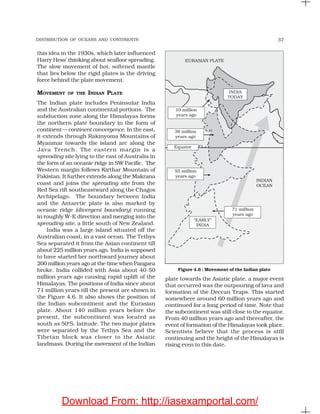
  • 97.
    FUNDAMENTALS OF PHYSICALGEOGRAPHY96 EXERCISES 1. Multiple choice questions. (i) If the surface air pressure is 1,000 mb, the air pressure at 1 km above the surface will be: (a) 700 mb (c) 900 mb (b) 1,100 mb (d) 1,300 mb (ii) The Inter Tropical Convergence Zone normally occurs: (a) near the Equator (b) near the Tropic of Cancer (c) near the Tropic of Capricorn (d) near the Arctic Circle (iii) The direction of wind around a low pressure in northern hemisphere is: (a) clockwise (c) anti-clock wise (b) perpendicular to isobars (d) parallel to isobars (iv) Which one of the following is the source region for the formation of air masses? (a) the Equatorial forest (c) the Siberian Plain (b) the Himalayas (d) the Deccan Plateau 2. Answer the following questions in about 30 words. (i) What is the unit used in measuring pressure? Why is the pressure measured at station level reduced to the sea level in preparation of weather maps? (ii) While the pressure gradient force is from north to south, i.e. from the subtropical high pressure to the equator in the northern hemisphere, why are the winds north easterlies in the tropics. (iii) What are the geotrophic winds? (iv) Explain the land and sea breezes. Thunderstorms and Tornadoes Other severe local storms are thunderstorms and tornadoes. They are of short duration, occurring over a small area but are violent. Thunderstorms are caused by intense convection on moist hot days. A thunderstorm is a well-grown cumulonimbus cloud producing thunder and lightening. When the clouds extend to heights where sub-zero temperature prevails, hails are formed and they come down as hailstorm. If there is insufficient moisture, a thunderstorm can generate dust- storms. A thunderstorm is characterised by intense updraft of rising warm air, which causes the clouds to grow bigger and rise to greater height. This causes precipitation. Later, downdraft brings down to earth the cool air and the rain. From severe thunderstorms sometimes spiralling wind descends like a trunk of an elephant with great force, with very low pressure at the centre, causing massive destruction on its way. Such a phenomenon is called a tornado. Tornadoes generally occur in middle latitudes. The tornado over the sea is called water sprouts. These violent storms are the manifestation of the atmosphere’s adjustments to varying energy distribution. The potential and heat energies are converted into kinetic energy in these storms and the restless atmosphere again returns to its stable state. Download From: http://iasexamportal.com/
  • 98.
    ATMOSPHERIC CIRCULATION ANDWEATHER SYSTEMS 97 3. Answer the following questions in about 150 words. (i) Discuss the factors affecting the speed and direction of wind. (ii) Draw a simplified diagram to show the general circulation of the atmosphere over the globe. What are the possible reasons for the formation of subtropical high pressure over 30o N and S latitudes? (iii) Why does tropical cyclone originate over the seas? In which part of the tropical cyclone do torrential rains and high velocity winds blow and why? Project Work (i) Collect weather information over media such as newspaper, TV and radio for understanding the weather systems. (ii) Read the section on weather in any newspaper, preferably, one having a map showing a satellite picture. Mark the area of cloudiness. Attempt to infer the atmospheric circulation from the distribution of clouds. Compare the forecast given in the newspaper with the TV coverage, if you have access to TV. Estimate, how many days in a week was the forecast were accurate. Download From: http://iasexamportal.com/
  • 99.
    WATER IN THEATMOSPHERE Y ou have already learnt that the air contains water vapour. It varies from zero to four per cent by volume of the atmosphere and plays an important role in the weather phenomena. Water is present in the atmosphere in three forms namely – gaseous, liquid and solid. The moisture in the atmosphere is derived from water bodies through evaporation and from plants through transpiration. Thus, there is a continuous exchange of water between the atmosphere, the oceans and the continents through the processes of evaporation, transpiration, condensation and precipitation. Water vapour present in the air is known as humidity. It is expressed quantitatively in different ways. The actual amount of the water vapour present in the atmosphere is known as the absolute humidity. It is the weight of water vapour per unit volume of air and is expressed in terms of grams per cubic metre. The ability of the air to hold water vapour depends entirely on its temperature. The absolute humidity differs from place to place on the surface of the earth. The percentage of moisture present in the atmosphere as compared to its full capacity at a given temperature is known as the relative humidity. With the change of air temperature, the capacity to retain moisture increases or decreases and the relative humidity is also affected. It is greater over the oceans and least over the continents. The air containing moisture to its full capacity at a given temperature is said to be saturated. It means that the air at the given temperature is incapable of holding any additional amount of moisture at that stage. The temperature at which saturation occurs in a given sample of air is known as dew point. EVAPORATION AND CONDENSATION The amount of water vapour in the atmosphere is added or withdrawn due to evaporation and condensation respectively. Evaporation is a process by which water is transformed from liquid to gaseous state. Heat is the main cause for evaporation. The temperature at which the water starts evaporating is referred to as the latent heat of vapourisation. Increase in temperature increases water absorption and retention capacity of the given parcel of air. Similarly, if the moisture content is low, air has a potentiality of absorbing and retaining moisture. Movement of air replaces the saturated layer with the unsaturated layer. Hence, the greater the movement of air, the greater is the evaporation. The transformation of water vapour into water is called condensation. Condensation is caused by the loss of heat. When moist air is cooled, it may reach a level when its capacity to hold water vapour ceases. Then, the excess water vapour condenses into liquid form. If it directly condenses into solid form, it is known as sublimation. In free air, condensation results from cooling around very small particles termed as hygroscopic condensation nuclei. Particles of dust, smoke and salt from the ocean are particularly good nuclei because they absorb water. Condensation also takes place when the moist air comes in contact with some colder object and it may also take place when the temperature is close to the dew point. Condensation, therefore, depends upon the amount of cooling and the relative humidity of the air. Condensation is influenced by the volume of air, temperature, pressure and humidity. Condensation takes place: (i) when C H A P T E R Download From: http://iasexamportal.com/
  • 100.
    WATER IN THEATMOSPHERE 99 the temperature of the air is reduced to dew point with its volume remaining constant; (ii) when both the volume and the temperature are reduced; (iv) when moisture is added to the air through evaporation. However, the most favourable condition for condensation is the decrease in air temperature. After condensation the water vapour or the moisture in the atmosphere takes one of the following forms — dew, frost, fog and clouds. Forms of condensation can be classified on the basis of temperature and location. Condensation takes place when the dew point is lower than the freezing point as well as higher than the freezing point. Dew When the moisture is deposited in the form of water droplets on cooler surfaces of solid objects (rather than nuclei in air above the surface) such as stones, grass blades and plant leaves, it is known as dew. The ideal conditions for its formation are clear sky, calm air, high relative humidity, and cold and long nights. For the formation of dew, it is necessary that the dew point is above the freezing point. Frost Frost forms on cold surfaces when condensation takes place below freezing point (00 C), i.e. the dew point is at or below the freezing point. The excess moisture is deposited in the form of minute ice crystals instead of water droplets. The ideal conditions for the formation of white frost are the same as those for the formation of dew, except that the air temperature must be at or below the freezing point. Fog and Mist When the temperature of an air mass containing a large quantity of water vapour falls all of a sudden, condensation takes place within itself on fine dust particles. So, the fog is a cloud with its base at or very near to the ground. Because of the fog and mist, the visibility becomes poor to zero. In urban and industrial centres smoke provides plenty of nuclei which help the formation of fog and mist. Such a condition when fog is mixed with smoke, is described as smog. The only difference between the mist and fog is that mist contains more moisture than the fog. In mist each nuceli contains a thicker layer of moisture. Mists are frequent over mountains as the rising warm air up the slopes meets a cold surface. Fogs are drier than mist and they are prevalent where warm currents of air come in contact with cold currents. Fogs are mini clouds in which condensation takes place around nuclei provided by the dust, smoke, and the salt particles. Clouds Cloud is a mass of minute water droplets or tiny crystals of ice formed by the condensation of the water vapour in free air at considerable elevations. As the clouds are formed at some height over the surface of the earth, they take various shapes. According to their height, expanse, density and transparency or opaqueness clouds are grouped under four types : (i) cirrus; (ii) cumulus; (iii) stratus; (iv) nimbus. Cirrus Cirrus clouds are formed at high altitudes (8,000 - 12,000m). They are thin and detatched clouds having a feathery appearance. They are always white in colour. Cumulus Cumulus clouds look like cotton wool. They are generally formed at a height of 4,000 - 7,000 m. They exist in patches and can be seen scattered here and there. They have a flat base. Stratus As their name implies, these are layered clouds covering large portions of the sky. These clouds are generally formed either due to loss of heat or the mixing of air masses with different temperatures. Nimbus Nimbus clouds are black or dark gray. They form at middle levels or very near to the surface Download From: http://iasexamportal.com/
  • 101.
    FUNDAMENTALS OF PHYSICALGEOGRAPHY100 of the earth. These are extremely dense and opaque to the rays of the sun. Sometimes, the clouds are so low that they seem to touch the ground. Nimbus clouds are shapeless masses of thick vapour. Precipitation The process of continuous condensation in free air helps the condensed particles to grow in size. When the resistance of the air fails to hold them against the force of gravity, they fall on to the earth’s surface. So after the condensation of water vapour, the release of moisture is known as precipitation. This may take place in liquid or solid form. The precipitation in the form of water is called rainfall, when the temperature is lower than the 00 C, precipitation takes place in the form of fine flakes of snow and is called snowfall. Moisture is released in the form of hexagonal crystals. These crystals form flakes of snow. Besides rain and snow, other forms of precipitation are sleet and hail, though the latter are limited in occurrence and are sporadic in both time and space. Sleet is frozen raindrops and refrozen melted snow-water. When a layer of air with the temperature above freezing point overlies a subfreezing layer near the ground, precipitation takes place in the form of sleet. Raindrops, which leave the warmer air, encounter the colder air below. As a result, they solidify and reach the ground as small pellets of ice not bigger than the raindrops from which they are formed. Sometimes, drops of rain after being released by the clouds become solidified into small rounded solid pieces of ice and which reach the surface of the earth are called hailstones. These are formed by the rainwater passing through the colder layers. Hailstones have several concentric layers of ice one over the other. Types of Rainfall On the basis of origin, rainfall may be classified into three main types – the convectional, orographic or relief and the cyclonic or frontal. Conventional Rain The, air on being heated, becomes light and rises up in convection currents. As it rises, it expands and loses heat and consequently, condensation takes place and cumulous clouds are formed. With thunder and lightening, heavy rainfall takes place but this does not last A combination of these four basic types can give rise to the following types of clouds: high clouds – cirrus, cirrostratus, cirrocumulus; middle clouds – altostratus and altocumulus; low clouds – stratocumulus and nimbostratus and clouds with extensive vertical development – cumulus and cumulonimbus. Identify these cloud types which are shown in Figure 11.1 and 11.2. Figure11.1 Figure11.2 Download From: http://iasexamportal.com/
  • 102.
    WATER IN THEATMOSPHERE 101 long. Such rain is common in the summer or in the hotter part of the day. It is very common in the equatorial regions and interior parts of the continents, particularly in the northern hemisphere. Orographic Rain When the saturated air mass comes across a mountain, it is forced to ascend and as it rises, it expands; the temperature falls, and the moisture is condensed. The chief characteristic of this sort of rain is that the windward slopes receive greater rainfall. After giving rain on the windward side, when these winds reach the other slope, they descend, and their temperature rises. Then their capacity to take in moisture increases and hence, these leeward slopes remain rainless and dry. The area situated on the leeward side, which gets less rainfall is known as the rain-shadow area. It is also known as the relief rain. Cyclonic Rain You have already read about extra tropical cyclones and cyclonic rain in Chapter 10. Please consult Chapter 10 to understand cyclonic rainfall. World Distribution of Rainfall Different places on the earth’s surface receive different amounts of rainfall in a year and that too in different seasons. In general, as we proceed from the equator towards the poles, rainfall goes on decreasing steadily. The coastal areas of the world receive greater amounts of rainfall than the interior of the continents. The rainfall is more over the oceans than on the landmasses of the world because of being great sources of water. Between the latitudes 350 and 400 N and S of the equator, the rain is heavier on the eastern coasts and goes on decreasing towards the west. But, between 450 and 650 N and S of equator, due to the westerlies, the rainfall is first received on the western margins of the continents and it goes on decreasing towards the east. Wherever mountains run parallel to the coast, the rain is greater on the coastal plain, on the windward side and it decreases towards the leeward side. On the basis of the total amount of annual precipitation, major precipitation regimes of the world are identified as follows. The equatorial belt, the windward slopes of the mountains along the western coasts in the cool temperate zone and the coastal areas of the monsoon land receive heavy rainfall of over 200 cm per annum. Interior continental areas receive moderate rainfall varying from 100 - 200 cm per annum. The coastal areas of the continents receive moderate amount of rainfall. The central parts of the tropical land and the eastern and interior parts of the temperate lands receive rainfall varying between 50 - 100 cm per annum. Areas lying in the rain shadow zone of the interior of the continents and high latitudes receive very low rainfall-less than 50 cm per annum. Seasonal distribution of rainfall provides an important aspect to judge its effectiveness. In some regions rainfall is distributed evenly throughout the year such as in the equatorial belt and in the western parts of cool temperate regions. EXERCISES 1. Multiple choice questions. (i) Which one of the following is the most important constituent of the atmosphere for human beings? (a) Water vapour (c) Dust particle (b) Nitrogen (d) Oxygen Download From: http://iasexamportal.com/
  • 103.
    FUNDAMENTALS OF PHYSICALGEOGRAPHY102 (ii) Which one of the following process is responsible for transforming liquid into vapour? (a) Condensation (c) Evaporation (b) Transpiration (d) Precipitation (iii) The air that contains moisture to its full capacity : (a) Relative humidity (c) Absolute humidity (b) Specific humidity (d) Saturated air (iv) Which one of the following is the highest cloud in the sky? (a) Cirrus (c) Nimbus (b) Stratus (d) Cumulus 2. Answer the following questions in about 30 words. (i) Name the three types of precipitation. (ii) Explain relative humidity. (iii) Why does the amount of water vapour decreases rapidly with altitude? (iv) How are clouds formed? Classify them. 3. Answer the following questions in about 150 words. (i) Discuss the salient features of the world distribution of precipitation. (ii) What are forms of condensation? Describe the process of dew and frost formation. Project Work Browse through the newspaper from 1st June to 31st December and note the news about extreme rainfall in different parts of the country. Download From: http://iasexamportal.com/
  • 104.
    WORLD CLIMATE AND CLIMATECHANGE T he world climate can be studied by organising information and data on climate and synthesising them in smaller units for easy understanding, description and analysis. Three broad approaches have been adopted for classifying climate. They are empirical, genetic and applied. Empirical classification is based on observed data, particularly on temperature and precipitation. Genetic classification attempts to organise climates according to their causes. Applied classification is for specific purpose. KOEPPE N’S SCHEME OF CLASSIFICATION OF CLIMATE The most widely used classification of climate is the empirical climate classification scheme developed by V. Koeppen. Koeppen identified a close relationship between the distribution of vegetation and climate. He selected certain values of temperature and precipitation and related them to the distribution of vegetation and used these values for classifying the climates. It is an empirical classification based on mean annual and mean monthly temperature and precipitation data. He introduced the use of capital and small letters to designate climatic groups and types. Although developed in 1918 and modified over a period of time, Koeppen’s scheme is still popular and in use. Koeppen recognised five major climatic groups, four of them are based on temperature and one on precipitation. Table 12.1 lists the climatic groups and their characteristics according to Koeppen. The capital letters : A,C, D and E delineate humid climates and B dry climates. The climatic groups are subdivided into types, designated by small letters, based on seasonality of precipitation and temperature characteristics. The seasons of dryness are indicated by the small letters : f, m, w and s, where f corresponds to no dry season, Table 12.1 : Climatic Groups According to Koeppen Group Characteristics A - Tropical Average temperature of the coldest month is 18° C or higher B - Dry Climates Potential evaporation exceeds precipitation C - Warm Temperate The average temperature of the coldest month of the (Mid-latitude) climates years is higher than minus 3°C but below 18°C D - Cold Snow Forest Climates The average temperature of the coldest month is minus 3° C or below E - Cold Climates Average temperature for all months is below 10° C H - High Land Cold due to elevation C H A P T E R Download From: http://iasexamportal.com/
  • 105.
    FUNDAMENTALS OF PHYSICALGEOGRAPHY104 m - monsoon climate, w- winter dry season and s - summer dry season. The small letters a, b, c and d refer to the degree of severity of temperature. The B- Dry Climates are subdivided using the capital letters S for steppe or semi-arid and W for deserts. The climatic types are listed in Table 12.2. The distribution of climatic groups and types is shown in Table 12.1. Group A : Tropical Humid Climates Tropical humid climates exist between Tropic of Cancer and Tropic of Capricorn. The sun being overhead throughout the year and the presence of Inter Tropical Convergence Zone (INTCZ) make the climate hot and humid. Annual range of temperature is very low and annual rainfall is high. The tropical group is divided into three types, namely (i) Af- Tropical wet climate; (ii) Am - Tropical monsoon climate; (iii) Aw- Tropical wet and dry climate. Tropical Wet Climate (Af) Tropical wet climate is found near the equator. The major areas are the Amazon Basin in South America, western equatorial Africa and the islands of East Indies. Significant amount of rainfall occurs in every month of the year as thunder showers in the afternoon. The temperature is uniformly high and the annual range of temperature is negligible. The maximum temperature on any day is around 30°C while the minimum temperature is around 20°C. Tropical evergreen forests with dense canopy cover and large biodiversity are found in this climate. Tropical Monsoon Climate (Am) Tropical monsoon climate (Am) is found over the Indian sub-continent, North Eastern part of South America and Northern Australia. Heavy rainfall occurs mostly in summer. Winter is dry. The detailed climatic account of this climatic type is given in the book on India: Physical Environment. Tropical Wet and Dry Climate (Aw) Tropical wet and dry climate occurs north and south of Af type climate regions. It borders with dry climate on the western part of the continent and Cf or Cw on the eastern part. Extensive Aw climate is found to the north and south of the Amazon forest in Brazil and adjoining parts Table 12.2 : Climatic Types According to Koeppen Group Type Letter Code Characteristics Tropical wet Af No dry season Tropical monsoon Am Monsoonal, short dry season Tropical wet and dry Aw Winter dry season Subtropical steppe BSh Low-latitude semi arid or dry Subtropical desert BWh Low-latitude arid or dry Mid-latitude steppe BSk Mid-latitude semi arid or dry Mid-latitude desert BWk Mid-latitude arid or dry Humid subtropical Cfa No dry season, warm summer Mediterranean Cs Dry hot summer Marine west coast Cfb No dry season, warm and cool summer Humid continental Df No dry season, severe winter Subarctic Dw Winter dry and very severe Tundra ET No true summer Polar ice cap EF Perennial ice Highland H Highland with snow cover A-Tropical Humid Climate B-Dry Climate C-Warm temperate (Mid- latitude) Climates D-Cold Snow- forest Climates E-Cold Climates H-Highland Download From: http://iasexamportal.com/
  • 106.
    WORLD CLIMATE ANDCLIMATE CHANGE 105 of Bolivia and Paraguay in South America, Sudan and south of Central Africa. The annual rainfall in this climate is considerably less than that in Af and Am climate types and is variable also. The wet season is shorter and the dry season is longer with the drought being more severe. Temperature is high throughout the year and diurnal ranges of temperature are the greatest in the dry season. Deciduous forest and tree-shredded grasslands occur in this climate. Dry Climates : B Dry climates are characterised by very low rainfall that is not adequate for the growth of plants. These climates cover a very large area of the planet extending over large latitudes from 15° - 60° north and south of the equator. At low latitudes, from 15° - 30°, they occur in the area of subtropical high where subsidence and inversion of temperature do not produce rainfall. On the western margin of the continents, adjoining the cold current, particularly over the west coast of South America, they extend more equatorwards and occur on the coast land. In middle latitudes, from 35° - 60° north and south of equator, they are confined to the interior of continents where maritime-humid winds do not reach and to areas often surrounded by mountains. Dry climates are divided into steppe or semi-arid climate (BS) and desert climate (BW). They are further subdivided as subtropical steppe (BSh) and subtropical desert (BWh) at latitudes from 15° - 35° and mid-latitude steppe (BSk) and mid-latitude desert (BWk) at latitudes between 35° - 60°. Subtropical Steppe (BSh) and Subtropical Desert (BWh) Climates Subtropical steppe (BSh) and subtropical desert (BWh) have common precipitation and temperature characteristics. Located in the transition zone between humid and dry climates, subtropical steppe receives slightly more rainfall than the desert, adequate enough for the growth of sparse grasslands. The rainfall in both the climates is highly variable. The variability in the rainfall affects the life in the steppe much more than in the desert, more often causing famine. Rain occurs in short intense thundershowers in deserts and is ineffective in building soil moisture. Fog is common in coastal deserts bordering cold currents. Maximum temperature in the summer is very high. The highest shade temperature of 58° C was recorded at Al Aziziyah, Libya on 13 September 1922. The annual and diurnal ranges of temperature are also high. Warm Temperate (Mid-Latitude) Climates-C Warm temperate (mid-latitude) climates extend from 30° - 50° of latitude mainly on the eastern and western margins of continents. These climates generally have warm summers with mild winters. They are grouped into four types: (i) Humid subtropical, i.e. dry in winter and hot in summer (Cwa); (ii) Mediterranean (Cs); (iii) Humid subtropical, i.e. no dry season and mild winter (Cfa); (iv) Marine west coast climate (Cfb). Humid Subtropical Climate (Cwa) Humid subtropical climate occurs poleward of Tropic of Cancer and Capricorn, mainly in North Indian plains and South China interior plains. The climate is similar to Aw climate except that the temperature in winter is warm. Mediterranean Climate (Cs) As the name suggests, Mediterranean climate occurs around Mediterranean sea, along the west coast of continents in subtropical latitudes between 30° - 40° latitudes e.g. — Central California, Central Chile, along the coast in south eastern and south western Australia. These areas come under the influence of sub tropical high in summer and westerly wind in winter. Hence, the climate is characterised by hot, dry summer and mild, rainy winter. Monthly average temperature in summer is around 25° C and in winter below 10°C. The annual precipitation ranges between 35 - 90 cm. Humid Subtropical (Cfa) Climate Humid subtropical climate lies on the eastern parts of the continent in subtropical latitudes. In this region the air masses are generally Download From: http://iasexamportal.com/
  • 107.
    FUNDAMENTALS OF PHYSICALGEOGRAPHY106 unstable and cause rainfall throughout the year. They occur in eastern United States of America, southern and eastern China, southern Japan, northeastern Argentina, coastal south Africa and eastern coast of Australia. The annual averages of precipitation vary from 75-150 cm. Thunderstorms in summer and frontal precipitation in winter are common. Mean monthly temperature in summer is around 27°C, and in winter it varies from 5°-12° C. The daily range of temperature is small. Marine West Coast Climate (Cfb) Marine west coast climate is located poleward from the Mediterranean climate on the west coast of the continents. The main areas are: Northwestern Europe, west coast of North America, north of California, southern Chile, southeastern Australia and New Zealand. Due to marine influence, the temperature is moderate and in winter, it is warmer than for its latitude. The mean temperature in summer months ranges from 15°-20°C and in winter 4°-10°C. The annual and daily ranges of temperature are small. Precipitation occurs throughout the year. Precipitation varies greatly from 50-250cm. Cold Snow Forest Climates (D) Cold snow forest climates occur in the large continental area in the northern hemisphere between 40°-70° north latitudes in Europe, Asia and North America. Cold snow forest climates are divided into two types: (i) Df- cold climate with humid winter; (ii) Dw- cold climate with dry winter. The severity of winter is more pronounced in higher latitudes. Cold Climate with Humid Winters (Df) Cold climate with humid winter occurs poleward of marine west coast climate and mid latitude steppe. The winters are cold and snowy. The frost free season is short. The annual ranges of temperature are large. The weather changes are abrupt and short. Poleward, the winters are more severe. Cold Climate with Dry Winters (Dw) Cold climate with dry winter occurs mainly over Northeastern Asia. The development of pronounced winter anti cyclone and its weakening in summer sets in monsoon like reversal of wind in this region. Poleward summer temperatures are lower and winter temperatures are extremely low with many locations experiencing below freezing point temperatures for up to seven months in a year. Precipitation occurs in summer. The annual precipitation is low from 12-15 cm. Polar Climates (E) Polar climates exist poleward beyond 70° latitude. Polar climates consist of two types: (i) Tundra (ET); (ii) Ice Cap (EF). Tundra Climate (ET) The tundra climate (ET) is so called after the types of vegetation, like low growing mosses, lichens and flowering plants. This is the region of permafrost where the sub soil is permanently frozen. The short growing season and water logging support only low growing plants. During summer, the tundra regions have very long duration of day light. Ice Cap Climate (EF) The ice cap climate (EF) occurs over interior Greenland and Antartica. Even in summer, the temperature is below freezing point. This area receives very little precipitation. The snow and ice get accumulated and the mounting pressure causes the deformation of the ice sheets and they break. They move as icebergs that float in the Arctic and Antarctic waters. Plateau Station , Antarctica ,79°S, portray this climate. Highland Climates (H) Highland climates are governed by topography. In high mountains, large changes in mean temperature occur over short distances. Precipitation types and intensity also vary spatially across high lands. There is vertical zonation of layering of climatic types with elevation in the mountain environment. Download From: http://iasexamportal.com/
  • 108.
    WORLD CLIMATE ANDCLIMATE CHANGE 107 CLIMATE CHANGE The earlier chapters on climate summarised our understanding of climate as it prevails now. The type of climate we experience now might be prevailing over the last 10,000 years with minor and occasionally wide fluctuations. The planet earth has witnessed many variations in climate since the beginning. Geological records show alteration of glacial and inter-glacial periods. The geomorphological features, especially in high altitudes and high latitudes, exhibit traces of advances and retreats of glaciers. The sediment deposits in glacial lakes also reveal the occurrence of warm and cold periods. The rings in the trees provide clues about wet and dry periods. Historical records describe the vagaries in climate. All these evidences indicate that change in climate is a natural and continuous process. India also witnessed alternate wet and dry periods. Archaeological findings show that the Rajasthan desert experienced wet and cool climate around 8,000 B.C. The period 3,000- 1,700 B.C. had higher rainfall. From about 2,000-1,700 B.C., this region was the centre of the Harappan civilisation. Dry conditions accentuated since then. In the geological past, the earth was warm some 500-300 million years ago, through the Cambrian, Ordovician and Silurian periods. During the Pleistocene epoch, glacial and inter-glacial periods occurred, the last major peak glacial period was about 18,000 years ago. The present inter-glacial period started 10,000 years ago. Climate in the recent past Variability in climate occurs all the time. The nineties decade of the last century witnessed extreme weather events. The 1990s recorded the warmest temperature of the century and some of the worst floods around the world. The worst devastating drought in the Sahel region, south of the Sahara desert, from 1967-1977 is one such variability. During the 1930s, severe drought occurred in southwestern Great Plains of the United States, described as the dust bowl. Historical records of crop yield or crop failures, of floods and migration of people tell about the effects of changing climate. A number of times Europe witnessed warm, wet, cold and dry periods, the significant episodes were the warm and dry conditions in the tenth and eleventh centuries, when the Vikings settled in Greenland. Europe witnessed “Little Ice Age” from 1550 to about 1850. From about 1885-1940 world temperature showed an upward trend. After 1940, the rate of increase in temperature slowed down. Causes of Climate Change The causes for climate change are many. They can be grouped into astronomical and terrestrial causes. The astronomical causes are the changes in solar output associated with sunspot activities. Sunspots are dark and cooler patches on the sun which increase and decrease in a cyclical manner. According to some meteorologists, when the number of sunspots increase, cooler and wetter weather and greater storminess occur. A decrease in sunspot numbers is associated with warm and drier conditions. Yet, these findings are not statistically significant. An another astronomical theory is Millankovitch oscillations, which infer cycles in the variations in the earth’s orbital characteristics around the sun, the wobbling of the earth and the changes in the earth’s axial tilt. All these alter the amount of insolation received from the sun, which in turn, might have a bearing on the climate. Volcanism is considered as another cause for climate change. Volcanic eruption throws up lots of aerosols into the atmosphere. These aerosols remain in the atmosphere for a considerable period of time reducing the sun’s radiation reaching the Earth’s surface. After the recent Pinatoba and El Cion volcanic eruptions, the average temperature of the earth fell to some extent for some years. The most important anthropogenic effect on the climate is the increasing trend in the concentration of greenhouse gases in the atmosphere which is likely to cause global warming. Download From: http://iasexamportal.com/
  • 109.
    FUNDAMENTALS OF PHYSICALGEOGRAPHY108 Global Warming Due to the presence of greenhouse gases, the atmosphere is behaving like a greenhouse. The atmosphere also transmits the incoming solar radiation but absorbs the vast majority of long wave radiation emitted upwards by the earth’s surface. The gases that absorb long wave radiation are called greenhouse gases. The processes that warm the atmosphere are often collectively referred to as the greenhouse effect. The term greenhouse is derived from the analogy to a greenhouse used in cold areas for preserving heat. A greenhouse is made up of glass. The glass which is transparent to incoming short wave solar radiation is opaque to outgoing long wave radiation. The glass, therefore, allows in more radiation and prevents the long wave radiation going outside the glass house, causing the temperature inside the glasshouse structure warmer than outside. When you enter a car or a bus, during summers, where windows are closed, you feel more heat than outside. Likewise during winter the vehicles with closed doors and windows remain warmer than the temperature outside. This is another example of the greenhouse effect. Greenhouse Gases(GHGs) The primary GHGs of concern today are carbon dioxide (CO2 ), Chlorofluorocarbons (CFCs), methane (CH4 ), nitrous oxide (N2 O) and ozone (O3 ). Some other gases such as nitric oxide (NO) and carbon monoxide (CO) easily react with GHGs and affect their concentration in the atmosphere. The effectiveness of any given GHG molecule will depend on the magnitude of the increase in its concentration, its life time in the atmosphere and the wavelength of radiation that it absorbs. The chlorofluorocarbons (CFCs) are highly effective. Ozone which absorbs ultra violet radiation in the stratosphere is very effective in absorbing terrestrial radiation when it is present in the lower troposphere. Another important point to be noted is that the more time the GHG molecule remains in the atmosphere, the longer it will take for earth’s atmospheric system to recover from any change brought about by the latter. The largest concentration of GHGs in the atmosphere is carbon dioxide. The emission of CO2 comes mainly from fossil fuel combustion (oil, gas and coal). Forests and oceans are the sinks for the carbon dioxide. Forests use CO2 in their growth. So, deforestation due to changes in land use, also increases the concentration of Co2 . The time taken for atmospheric CO2 to adjust to changes in sources to sinks is 20-50 years. It is rising at about 0.5 per cent annually. Doubling of concentration of CO2 over pre-industrial level is used as an index for estimating the changes in climate in climatic models. Chlorofluorocarbons (CFCs) are products of human activity. Ozone occurs in the stratosphere where ultra-violet rays convert oxygen into ozone. Thus, ultra violet rays do not reach the earth’s surface. The CFCs which drift into the stratosphere destroy the ozone. Large depletion of ozone occurs over Antarctica. The depletion of ozone concentration in the stratosphere is called the ozone hole. This allows the ultra violet rays to pass through the troposphere. International efforts have been initiated for reducing the emission of GHGs into the atmosphere. The most important one is the Kyoto protocol proclaimed in 1997. This protocol went into effect in 2005, ratified by 141 nations. Kyoto protocol bounds the 35 industrialised countries to reduce their emissions by the year 2012 to 5 per cent less than the levels prevalent in the year 1990. The increasing trend in the concentration of GHGs in the atmosphere may, in the long run, warm up the earth. Once the global warming sets in, it will be difficult to reverse it. The effect of global warming may not be uniform everywhere. Nevertheless, the adverse effect due to global warming will adversely affect the life supporting system. Rise in the sea level due to melting of glaciers and ice-caps and thermal expansion of the sea may inundate large parts of the coastal area and islands, leading to social problems. This is another cause for serious concern for the world Download From: http://iasexamportal.com/
  • 110.
    WORLD CLIMATE ANDCLIMATE CHANGE 109 community. Efforts have already been initiated to control the emission of GHGs and to arrest the trend towards global warming. Let us hope the world community responds to this challenge and adopts a lifestyle that leaves behind a livable world for the generations to come. One of the major concerns of the world today is global warming. Let us look at how much the planet has warmed up from the temperature records. Temperature data are available from the middle of the 19th century mostly for western Europe. The reference period for this study is 1961-90. The temperature anomalies for the earlier and later periods are estimated from the average temperature for the period 1961-90. The annual average near -surface air temperature of the world is approximately 14°C. The time series show anomalies of annual near surface temperature over land from 1856-2000, relative to the period 1961-90 as normal for the globe. An increasing trend in temperature was discernible in the 20th century. The greatest warming of the 20th century was during the two periods, 1901-44 and 1977-99. Over each of these two periods, global temperatures rose by about 0.4°C. In between, there was a slight cooling, which was more marked in the Northern Hemisphere. The globally averaged annual mean temperature at the end of the 20th century was about 0.6°C above that recorded at the end of the 19th century. The seven warmest years during the 1856-2000 were recorded in the last decade. The year 1998 was the warmest year, probably not only for the 20th century but also for the whole millennium. Write an explanatory note on “global warming”. Download From: http://iasexamportal.com/
  • 111.
    FUNDAMENTALS OF PHYSICALGEOGRAPHY110 EXERCISES 1. Multiple choice questions. (i) Which one of the following is suitable for Koeppen’s “A” type of climate? (a) High rainfall in all the months (b) Mean monthly temperature of the coldest month more than freezing point (c) Mean monthly temperature of all the months more than 18o C (d) Average temperature for all the months below 10° C (ii) Koeppen’s system of classification of climates can be termed as : (a) Applied (b) Systematic (c) Genetic (d) Empirical (iii) Most of the Indian Peninsula will be grouped according to Koeppen’s system under: (a) “Af” (b) “BSh” (c) “Cfb” (d) “Am” (iv) Which one of the following years is supposed to have recorded the warmest temperature the world over? (a) 1990 (b) 1998 (c) 1885 (d) 1950 (v) Which one of the following groups of four climates represents humid conditions? (a) A—B—C—E (b) A—C—D—E (c) B—C—D—E (d) A—C—D—F 2. Answer the following questions in about 30 words. (i) Which two climatic variables are used by Koeppen for classification of the climate? (ii) How is the “genetic” system of classification different from the “empirical one”? (iii) Which types of climates have very low range of temperature? (iv) What type of climatic conditions would prevail if the sun spots increase? 3. Answer the following questions in about 150 words. (i) Make a comparison of the climatic conditions between the “A” and “B” types of climate. (ii) What type of vegetation would you find in the “C” and “A” type(s) of climate? (iii) What do you understand by the term “Greenhouse Gases”? Make a list of greenhouse gases. Project Work Collect information about Kyoto declaration related to global climate changes. Download From: http://iasexamportal.com/
  • 112.
    WATER (OCEANS) This unitdeals with • Hydrological Cycle • Oceans — submarine relief; distribution of temperature and salinity; movements of ocean water-waves, tides and currents UNIT V Download From: http://iasexamportal.com/
  • 113.
    WATER (OCEANS) the oceanto land and land to ocean. The hydrological cycle describes the movement of water on, in, and above the earth. The water cycle has been working for billions of years and all the life on earth depends on it. Next to air, water is the most important element required for the existence of life on earth. The distribution of water on earth is quite uneven. Many locations have plenty of water while others have very limited quantity. The hydrological cycle, is the circulation of water within the earth’s hydrosphere in different forms i.e. the liquid, solid and the gaseous phases. It also refers to the continuous exchange of water between the oceans, C H A P T E R Figure 13.1 : Hydrological Cycle C an we think of life without water? It is said that the water is life. Water is an essential component of all life forms that exist over the surface of the earth. The creatures on the earth are lucky that it is a water planet, otherwise we all would have no existence. Water is a rare commodity in our solar system. There is no water on the sun or anywhere else in the solar system. The earth, fortunately has an abundant supply of water on its surface. Hence, our planet is called the ‘Blue Planet’. HYDROLOGICAL CYCLE Water is a cyclic resource. It can be used and re-used. Water also undergoes a cycle from Download From: http://iasexamportal.com/
  • 114.
    WATER (OCEANS) 113 atmosphere,landsurface and subsurface and the organisms. Table 13.1 shows distribution of water on the surface of the earth. About 71 per cent of the planetary water is found in the oceans. The remaining is held as freshwater in glaciers and icecaps, groundwater sources, lakes, soil moisture, atmosphere, streams and within life. Nearly 59 per cent of the water that falls on land returns to the atmosphere through evaporation from over the oceans as well as from other places. The remainder runs-off on the surface, infiltrates into the ground or a part of it becomes glacier (Figure 13.1). It is to be noted that the renewable water on the earth is constant while the demand is increasing tremendously. This leads to water crisis in different parts of the world — spatially and temporally. The pollution of river waters has further aggravated the crisis. How can you intervene in improving the water quality and augmenting the available quantity of water? RELIEF OF THE OCEAN FLOOR The oceans are confined to the great depressions of the earth’s outer layer. In this section, we shall see the nature of the ocean basins of the earth and their topography. The oceans, unlike the continents, merge so naturally into one another that it is hard to demarcate them. The geographers have divided the oceanic part of the earth into four oceans, namely the Pacific, the Atlantic, the Indian and the Arctic. The various seas, bays, gulfs and other inlets are parts of these four large oceans. A major portion of the ocean floor is found between 3-6 km below the sea level. The ‘land’ under the waters of the oceans, that is, the ocean floor exhibits complex and varied features as those observed over the land (Figure 13.2). The floors of the oceans are rugged with the world’s largest mountain ranges, deepest trenches and the largest plains. These features are formed, like those of the continents, by the factors of tectonic, volcanic and depositional processes. Divisions of the Ocean Floors The ocean floors can be divided into four major divisions: (i) the Continental Shelf; (ii) the Continental Slope; (iii) the Deep Sea Plain; (iv) the Oceanic Deeps. Besides, these divisions there are also major and minor relief features in the ocean floors like ridges, hills, sea mounts, guyots, trenches, canyons, etc. Continental Shelf The continental shelf is the extended margin of each continent occupied by relatively shallow seas and gulfs. It is the shallowest part of the ocean showing an average gradient of 1° or even less. The shelf typically ends at a very steep slope, called the shelf break. The width of the continental shelves vary from one ocean to another. The average width Table 13.1 : Water on the Earth’s surface Reservoir Volume Percentage (Million of the Total Cubic km ) Oceans 1,370 97.25 Ice Caps 29 2.05 and Glaciers Groundwater 9.5 0.68 Lakes 0.125 0.01 Soil Moisture 0.065 0.005 Atmosphere 0.013 0.001 Streams 0.0017 0.0001 and Rivers Biosphere 0.0006 0.00004 Table 13.2 : Components and Processes of the Water Cycle Components Processes Water storage Evaporation in oceans Evapotranspiration Sublimation Water in the Condensation atmosphere Precipitation Water storage in Snowmelt runoff ice and snow to streams Surface runoff Stream flow freshwater storage infiltration Groundwater storage Groundwater discharge springs Download From: http://iasexamportal.com/
  • 115.
    FUNDAMENTALS OF PHYSICALGEOGRAPHY114 of continental shelves is about 80 km. The shelves are almost absent or very narrow along some of the margins like the coasts of Chile, the west coast of Sumatra, etc. On the contrary, the Siberian shelf in the Arctic Ocean, the largest in the world, stretches to 1,500 km in width. The depth of the shelves also varies. It may be as shallow as 30 m in some areas while in some areas it is as deep as 600 m. The continental shelves are covered with variable thicknesses of sediments brought down by rivers, glaciers, wind, from the land and distributed by waves and currents. Massive sedimentary deposits received over a long time by the continental shelves, become the source of fossil fuels. Continental Slope The continental slope connects the continental shelf and the ocean basins. It begins where the bottom of the continental shelf sharply drops off into a steep slope. The gradient of the slope region varies between 2-5°. The depth of the slope region varies between 200 and 3,000 m. The slope boundary indicates the end of the continents. Canyons and trenches are observed in this region. Deep Sea Plain Deep sea plains are gently sloping areas of the ocean basins. These are the flattest and smoothest regions of the world. The depths vary between 3,000 and 6,000m. These plains are covered with fine-grained sediments like clay and silt. Oceanic Deeps or Trenches These areas are the deepest parts of the oceans. The trenches are relatively steep sided, narrow basins. They are some 3-5 km deeper than the surrounding ocean floor. They occur at the bases of continental slopes and along island arcs and are associated with active volcanoes and strong earthquakes. That is why they are very significant in the study of plate movements. As many as 57 deeps have been explored so far; of which 32 are in the Pacific Ocean; 19 in the Atlantic Ocean and 6 in the Indian Ocean. Minor Relief Features Apart from the above mentioned major relief features of the ocean floor, some minor but significant features predominate in different parts of the oceans. Mid-Oceanic Ridges A mid-oceanic ridge is composed of two chains of mountains separated by a large depression. The mountain ranges can have peaks as high as 2,500 m and some even reach above the ocean’s surface. Iceland, a part of the mid- Atlantic Ridge, is an example.Figure 13.2 : Relief features of ocean floors Download From: http://iasexamportal.com/
  • 116.
    WATER (OCEANS) 115 Seamount Itis a mountain with pointed summits, rising from the seafloor that does not reach the surface of the ocean. Seamounts are volcanic in origin. These can be 3,000-4,500 m tall. The Emperor seamount, an extension of the Hawaiian Islands in the Pacific Ocean, is a good example. Submarine Canyons These are deep valleys, some comparable to the Grand Canyon of the Colorado river. They are sometimes found cutting across the continental shelves and slopes, often extending from the mouths of large rivers. The Hudson Canyon is the best known canyon in the world. Guyots It is a flat topped seamount. They show evidences of gradual subsidence through stages to become flat topped submerged mountains. It is estimated that more than 10,000 seamounts and guyots exist in the Pacific Ocean alone. Atoll These are low islands found in the tropical oceans consisting of coral reefs surrounding a central depression. It may be a part of the sea (lagoon), or sometimes form enclosing a body of fresh, brackish, or highly saline water. TEMPERATURE OF OCEAN WATERS This section deals with the spatial and vertical variations of temperature in various oceans. Ocean waters get heated up by the solar energy just as land. The process of heating and cooling of the oceanic water is slower than land. Factors Affecting Temperature Distribution The factors which affect the distribution of temperature of ocean water are : (i) Latitude : the temperature of surface water decreases from the equator towards the poles because the amount of insolation decreases poleward. (ii) Unequal distribution of land and water : the oceans in the northern hemisphere receive more heat due to their contact with larger extent of land than the oceans in the southern hemisphere. (iii) Prevailing wind : the winds blowing from the land towards the oceans drive warm surface water away form the coast resulting in the upwelling of cold water from below. It results into the longitudinal variation in the temperature. Contrary to this, the onshore winds pile up warm water near the coast and this raises the temperature. (iv) Ocean currents : warm ocean currents raise the temperature in cold areas while the cold currents decrease the temperature in warm ocean areas. Gulf stream (warm current) raises the temperature near the eastern coast of North America and the West Coast of Europe while the Labrador current (cold current) lowers the temperature near the north-east coast of North America. All these factors influence the temperature of the ocean currents locally. The enclosed seas in the low latitudes record relatively higher temperature than the open seas; whereas the enclosed seas in the high latitudes have lower temperature than the open seas. Horizontal and Vertical Distribution of Temperature The temperature-depth profile for the ocean water shows how the temperature decreases with the increasing depth. The profile shows a boundary region between the surface waters of the ocean and the deeper layers. The boundary usually begins around 100 - 400 m below the sea surface and extends several hundred of m downward (Figure 13.3). This boundary region, from where there is a rapid decrease of temperature, is called the thermocline. About 90 per cent of the total volume of water is found below the thermocline in the deep ocean. In this zone, temperatures approach 0° C. The temperature structure of oceans over middle and low latitudes can be described as a three-layer system from surface to the bottom. The first layer represents the top layer of Download From: http://iasexamportal.com/
  • 117.
    FUNDAMENTALS OF PHYSICALGEOGRAPHY116 The third layer is very cold and extends upto the deep ocean floor. In the Arctic and Antartic circles, the surface water temperatures are close to 0° C and so the temperature change with the depth is very slight. Here, only one layer of cold water exists, which extends from surface to deep ocean floor. The average temperature of surface water of the oceans is about 27°C and it gradually decreases from the equator towards the poles. The rate of decrease of temperature with increasing latitude is generally 0.5°C per latitude. The average temperature is around 22°C at 20° latitudes, 14° C at 40° latitudes and 0° C near poles. The oceans in the northern hemisphere record relatively higher temperature than in the southern hemisphere. The highest temperature is not recorded at the equator but slightly towards north of it. The average annual temperatures for the northern and southern hemisphere are around 19° C and 16° C respectively. This variation is due to the unequal distribution of land and water in the northern and southern hemispheres. Figure 13.4 shows the spatial pattern of surface temperature of the oceans. It is a well known fact that the maximum temperature of the oceans is always at their surfaces because they directly receive the heat from the sun and the heat is transmitted to the lower sections of the oceans through the process of conduction. It results into decrease of temperature with the increasing depth, but the rate of decrease is not uniform throughout. The temperature falls very rapidly up to the depth of 200 m and thereafter, the rate of decrease of temperature is slowed down. SALINITY OF OCEAN WATERS All waters in nature, whether rain water or ocean water, contain dissolved mineral salts. Salinity is the term used to define the total content of dissolved salts in sea water (Table 13.4). It is calculated as the amount of salt (in gm) dissolved in 1,000 gm (1 kg) of seawater. It is usually expressed as parts per thousand (o /oo ) or ppt. Salinity is an important property of sea water. Salinity of 24.7 o /oo has been considered as the upper limit to demarcate ‘brackish water’. Factors affecting ocean salinity are mentioned below: (i) The salinity of water in the surface layer of oceans depend mainly on evaporation and precipitation. (ii) Surface salinity is greatly influenced in coastal regions by the fresh water flow from rivers, and in polar regions by the processes of freezing and thawing of ice. (iii) Wind, also influences salinity of an area by transferring water to other areas. (iv) The ocean currents contribute to the salinity variations. Salinity, temperature and density of water are interrelated. Hence, any change in the temperature or density influences the salinity of an area. Figure 13.3 : Thermocline warm oceanic water and it is about 500m thick with temperatures ranging between 20° and 25° C. This layer, within the tropical region, is present throughout the year but in mid latitudes it develops only during summer. The second layer called the thermocline layerliesbelowthefirstlayerandischaracterised by rapid decrease in temperature with increasing depth. The thermocline is 500 -1,000 m thick. Download From: http://iasexamportal.com/
  • 118.
    WATER (OCEANS) 117 RedSea, it is as high as 41o /oo , while in the estuaries and the Arctic, the salinity fluctuates from 0 - 35 o /oo , seasonally. In hot and dry regions, where evaporation is high, the salinity sometimes reaches to 70 o /oo . The salinity variation in the Pacific Ocean is mainly due to its shape and larger areal extent. Salinity decreases from 35 o /oo - 31 o /oo on the western parts of the northern hemisphere because of the influx of melted water from the Arctic region. In the same way, after 15° - 20° south, it decreases to 33 o /oo . The average salinity of the Atlantic Ocean is around 36 o /oo. The highest salinity is recorded between 15° and 20° latitudes. Maximum salinity (37o /oo ) is observed between 20° N and 30° N and 20° W - 60° W. It gradually decreases towards the north. The North Sea, in spite of its location in higher latitudes, records higher salinity due to more saline water brought by the North Atlantic Drift. Baltic Sea records low salinity due to influx of river waters in large quantity. The Mediterranean Sea Figure 13.4 : Spatial pattern of surface temperature (°C) of the oceans Table 13.4 : Dissolved Salts in Sea Water (gm of Salt per kg of Water) Chlorine 18.97 Sodium 10.47 Sulphate 2.65 Magnesium 1.28 Calcium 0.41 Potassium 0.38 Bicarbonate 0.14 Bromine 0.06 Borate 0.02 Strontium 0.01 Highest salinity in water bodies Lake Van in Turkey (330 o /oo ), Dead Sea (238o /oo ), Great Salt Lake (220o /oo ) HORIZONTAL DISTRIBUTION OF SALINITY The salinity for normal open ocean ranges between 33o /oo and 37 o /oo . In the land locked Download From: http://iasexamportal.com/
  • 119.
    FUNDAMENTALS OF PHYSICALGEOGRAPHY118 records higher salinity due to high evaporation. Salinity is, however, very low in Black Sea due to enormous fresh water influx by rivers. See the atlas to find out the rivers joining Black Sea. The average salinity of the Indian Ocean is 35 o /oo. The low salinity trend is observed in the Bay of Bengal due to influx of river water by the river Ganga. On the contrary, the Arabian Sea shows higher salinity due to high evaporation and low influx of fresh water. Figure 13.5 shows the salinity of the World’s oceans. Vertical Distribution of Salinity Salinity changes with depth, but the way it changes depends upon the location of the sea. Salinity at the surface increases by the loss of Figure13.5 : Surface salinity of the World’s Oceans water to ice or evaporation, or decreased by the input of fresh waters, such as from the rivers. Salinity at depth is very much fixed, because there is no way that water is ‘lost’, or the salt is ‘added.’ There is a marked difference in the salinity between the surface zones and the deep zones of the oceans. The lower salinity water rests above the higher salinity dense water. Salinity, generally, increases with depth and there is a distinct zone called the halocline, where salinity increases sharply. Other factors being constant, increasing salinity of seawater causes its density to increase. High salinity seawater, generally, sinks below the lower salinity water. This leads to stratification by salinity. EXERCISES 1. Multiple choice questions. (i) Identify the element which is not a part of the hydrological cycle (a) Evaporation (c) Precipitation (b) Hydration (d) Condensation Download From: http://iasexamportal.com/
  • 120.
    WATER (OCEANS) 119 (ii)The average depth of continental slope varies between (a) 2-20m (c) 20-200m (b) 200-2,000m (d) 2,000-20,000m (iii) Which one of the following is not a minor relief feature in the oceans: (a) Seamount (c) Oceanic Deep (b) Atoll (d) Guyot (iv) Salinity is expressed as the amount of salt in grams dissolved in sea water per (a) 10 gm (c) 100 gm (b) 1,000 gm (d) 10,000 gm (v) Which one of the following is the smallest ocean: (a) Indian Ocean (c) Atlantic Ocean (b) Arctic Ocean (d) Pacific Ocean 2. Answer the following questions in about 30 words. (i) Why do we call the earth a Blue Planet? (ii) What is a continental margin? (iii) List out the deepest trenches of various oceans. (iv) What is a thermocline? (v) When you move into the ocean what thermal layers would you encounter? Why the temperature varies with depth? (vi) What is salinity of sea water? 3. Answer the following questions in about 150 words. (i) How are various elements of the hydrological cycle interrelated? (ii) Examine the factors that influence the temperature distribution of the oceans. Project Work (i) Consult the atlas and show ocean floor relief on the outline of the world map. (ii) Identify the areas of mid oceanic ridges from the Indian Ocean. Download From: http://iasexamportal.com/
  • 121.
    MOVEMENTS OF OCEANWATER T he ocean water is dynamic. Its physical characteristics like temperature, salinity, density and the external forces like of the sun, moon and the winds influence the movement of ocean water. The horizontal and vertical motions are common in ocean water bodies. The horizontal motion refers to the ocean currents and waves. The vertical motion refers to tides. Ocean currents are the continuous flow of huge amount of water in a definite direction while the waves are the horizontal motion of water. Water moves ahead from one place to another through ocean currents while the water in the waves does not move, but the wave trains move ahead. The vertical motion refers to the rise and fall of water in the oceans and seas. Due to attraction of the sun and the moon, the ocean water is raised up and falls down twice a day. The upwelling of cold water from subsurface and the sinking of surface water are also forms of vertical motion of ocean water. WAVES Waves are actually the energy, not the water as such, which moves across the ocean surface. Water particles only travel in a small circle as a wave passes. Wind provides energy to the waves. Wind causes waves to travel in the ocean and the energy is released on shorelines. The motion of the surface water seldom affects the stagnant deep bottom water of the oceans. As a wave approaches the beach, it slows down. This is due to the friction occurring between the dynamic water and the sea floor. And, when the depth of water is less than half the wavelength of the wave, the wave breaks. The largest waves are found in the open oceans. Waves continue to grow larger as they move and absorb energy from the wind. Most of the waves are caused by the wind driving against water. When a breeze of two knots or less blows over calm water, small ripples form and grow as the wind speed increases until white caps appear in the breaking waves. Waves may travel thousands of km before rolling ashore, breaking and dissolving as surf. A wave’s size and shape reveal its origin. Steep waves are fairly young ones and are probably formed by local wind. Slow and steady waves originate from far away places, possibly from another hemisphere. The maximum wave height is determined by the strength of the wind, i.e. how long it blows and the area over which it blows in a single direction. Waves travel because wind pushes the water body in its course while gravity pulls the crests of the waves downward. The falling water pushes the former troughs upward, and the Figure14.1 : Motion of waves and water molecules C H A P T E R Download From: http://iasexamportal.com/
  • 122.
    MOVEMENTS OF OCEANWATER 121 wave moves to a new position (Figure 14.1). The actual motion of the water beneath the waves is circular. It indicates that things are carried up and forward as the wave approaches, and down and back as it passes. Characteristics of Waves Wave crest and trough : The highest and lowest points of a wave are called the crest and trough respectively. Wave height : It is the vertical distance from the bottom of a trough to the top of a crest of a wave. Wave amplitude : It is one-half of the wave height. Wave period : It is merely the time interval between two successive wave crests or troughs as they pass a fixed point. Wavelength : It is the horizontal distance between two successive crests. Wave speed : It is the rate at which the wave moves through the water, and is measured in knots. Wave frequency : It is the number of waves passing a given point during a one- second time interval. TIDES The periodical rise and fall of the sea level, once or twice a day, mainly due to the attraction of the sun and the moon, is called a tide. Movement of water caused by meteorological effects (winds and atmospheric pressure changes) are called surges. Surges are not regular like tides. The study of tides is very complex, spatially and temporally, as it has great variations in frequency, magnitude and height. The moon’s gravitational pull to a great extent and to a lesser extent the sun’s gravitational pull, are the major causes for the occurrence of tides. Another factor is centrifugal force, which is the force that acts to counter the balance the gravity. Together, the gravitational pull and the centrifugal force are responsible for creating the two major tidal bulges on the earth. On the side of the earth facing the moon, a tidal bulge occurs while on the opposite side though the gravitational attraction of the moon is less as it is farther away, the centrifugal force causes tidal bulge on the other side (Figure 14.2). The ‘tide-generating’ force is the difference between these two forces; i.e. the gravitational attraction of the moon and the centrifugal force. On the surface of the earth, nearest the moon, pull or the attractive force of the moon is greater than the centrifugal force, and so there is a net force causing a bulge towards the moon. On the opposite side of the earth, the attractive force is less, as it is farther away from the moon, the centrifugal force is dominant. Hence, there is a net force away from the moon. It creates the second bulge away from the moon. On the surface of the earth, the horizontal tide generating forces are more important than the vertical forces in generating the tidal bulges. Figure14.2 : Relation between gravitational forces and tides The tidal bulges on wide continental shelves, have greater height. When tidal bulges hit the mid-oceanic islands they become low. The shape of bays and estuaries along a coastline can also magnify the intensity of tides. Funnel-shaped bays greatly change tidal magnitudes. When the tide is channelled between islands or into bays and estuaries they are called tidal currents. Download From: http://iasexamportal.com/
  • 123.
    FUNDAMENTALS OF PHYSICALGEOGRAPHY122 Tides of Bay of Fundy, Canada The highest tides in the world occur in the Bay of Fundy in Nova Scotia, Canada. The tidal bulge is 15 - 16 m. Because there are two high tides and two low tides every day (roughly a 24 hour period); then a tide must come in within about a six hour period. As a rough estimate, the tide rises about 240 cm an hour (1,440 cm divided by 6 hours). If you have walked down a beach with a steep cliff alongside (which is common there), make sure you watch the tides. If you walk for about an hour and then notice that the tide is coming in, the water will be over your head before you get back to where you started! Types of Tides Tides vary in their frequency, direction and movement from place to place and also from time to time. Tides may be grouped into various types based on their frequency of occurrence in one day or 24 hours or based on their height. Tides based on Frequency Semi-diurnal tide : The most common tidal pattern, featuring two high tides and two low tides each day. The successive high or low tides are approximately of the same height. Diurnal tide : There is only one high tide and one low tide during each day. The successive high and low tides are approximately of the same height. Mixed tide : Tides having variations in height are known as mixed tides. These tides generally occur along the west coast of North America and on many islands of the Pacific Ocean. Tides based on the Sun, Moon and the Earth Positions The height of rising water (high tide) varies appreciably depending upon the position of sun and moon with respect to the earth. Spring tides and neap tides come under this category. Spring tides : The position of both the sun and the moon in relation to the earth has direct bearing on tide height. When the sun, the moon and the earth are in a straight line, the height of the tide will be higher. These are called spring tides and they occur twice a month, one on full moon period and another during new moon period. Neap tides : Normally, there is a seven day interval between the spring tides and neap tides. At this time the sun and moon are at right angles to each other and the forces of the sun and moon tend to counteract one another. The Moon’s attraction, though more than twice as strong as the sun’s, is diminished by the counteracting force of the sun’s gravitational pull. Once in a month, when the moon’s orbit is closest to the earth (perigee), unusually high and low tides occur. During this time the tidal range is greater than normal. Two weeks later, when the moon is farthest from earth (apogee), the moon’s gravitational force is limited and the tidal ranges are less than their average heights. When the earth is closest to the sun (perihelion), around 3rd January each year, tidal ranges are also much greater, with unusually high and unusually low tides. When the earth is farthest from the sun (aphelion), around 4th July each year, tidal ranges are much less than average. The time between the high tide and low tide, when the water level is falling, is called the ebb. The time between the low tide and high tide, when the tide is rising, is called the flow or flood. Importance of Tides Since tides are caused by the earth-moon-sun positions which are known accurately, the tides can be predicted well in advance. This helps the navigators and fishermen plan their activities. Tidal flows are of great importance in navigation. Tidal heights are very important, especially harbours near rivers and within estuaries having shallow ‘bars’ at the entrance, which prevent ships and boats from entering into the harbour. Tides are also helpful in Download From: http://iasexamportal.com/
  • 124.
    MOVEMENTS OF OCEANWATER 123 desilting the sediments and in removing polluted water from river estuaries. Tides are used to generate electrical power (in Canada, France, Russia, and China). A 3 MW tidal power project at Durgaduani in Sunderbans of West Bengal is under way. OCEAN CURRENTS Ocean currents are like river flow in oceans. They represent a regular volume of water in a definite path and direction. Ocean currents are influenced by two types of forces namely : (i) primary forces that initiate the movement of water; (ii) secondary forces that influence the currents to flow. The primary forces that influence the currents are: (i) heating by solar energy; (ii) wind; (iii) gravity; (iv) coriolis force. Heating by solar energy causes the water to expand. That is why, near the equator the ocean water is about 8 cm higher in level than in the middle latitudes. This causes a very slight gradient and water tends to flow down the slope. Wind blowing on the surface of the ocean pushes the water to move. Friction between the wind and the water surface affects the movement of the water body in its course. Gravity tends to pull the water down to pile and create gradient variation. The Coriolis force intervenes and causes the water to move to the right in the northern hemisphere and to the left in the southernhemisphere.Theselargeaccumulations of water and the flow around them are called Gyres. These produce large circular currents in all the ocean basins. Differences in water density affect vertical mobility of ocean currents. Water with high salinity is denser than water with low salinity and in the same way cold water is denser than warm water. Denser water tends to sink, while relatively lighter water tends to rise. Cold-water ocean currents occur when the cold water at the poles sinks and slowly moves towards the equator. Warm-water currents travel out from the equator along the surface, flowing towards the poles to replace the sinking cold water. Types of Ocean Currents The ocean currents may be classified based on their depth as surface currents and deep water currents : (i) surface currents constitute about 10 per cent of all the water in the ocean, these waters are the upper 400 m of the ocean; (ii) deep water currents make up the other 90 per cent of the ocean water. These waters move around the ocean basins due to variations in the density and gravity. Deep waters sink into the deep ocean basins at high latitudes, where the temperatures are cold enough to cause the density to increase. Ocean currents can also be classified based on temperature : as cold currents and warm currents: (i) cold currents bring cold water into warm water areas. These currents are usually found on the west coast of the continents in the low and middle latitudes (true in both hemispheres) and on the east coast in the higher latitudes in the Northern Hemisphere; (ii) warm currents bring warm water into cold water areas and are usually observed on the east coast of continents in the low and middle latitudes (true in both hemispheres). In the northern hemisphere they are found on the west coasts of continents in high latitudes. Major Ocean Currents Major ocean currents are greatly influenced by the stresses exerted by the prevailing winds and coriolis force. The oceanic circulation pattern roughly corresponds to the earth’s atmospheric circulation pattern. The air circulation over the oceans in the middle latitudes is mainly anticyclonic (more pronounced in the southern hemisphere than in the northern hemisphere). The oceanic circulation pattern also corresponds with the same. At higher latitudes, Characteristics of Ocean Currents Currents are referred to by their “drift”. Usually, the currents are strongest near the surface and may attain speeds over five knots. At depths, currents are generally slow with speeds less than 0.5 knots. We refer to the speed of a current as its “drift.” Drift is measured in terms of knots. The strength of a current refers to the speed of the current. A fast current is considered strong. A current is usually strongest at the surface and decreases in strength (speed) with depth. Most currents have speeds less than or equal to 5 knots. Download From: http://iasexamportal.com/
  • 125.
    FUNDAMENTALS OF PHYSICALGEOGRAPHY124 where the wind flow is mostly cyclonic, the oceanic circulation follows this pattern. In regions of pronounced monsoonal flow, the monsoon winds influence the current movements. Due to the coriolis force, the warm currents from low latitudes tend to move to the right in the northern hemisphere and to their left in the southern hemisphere. The oceanic circulation transports heat from one latitude belt to another in a manner similar to the heat transported by the general circulation of the atmosphere. The cold waters of the Arctic and Antarctic circles move towards warmer water in tropical and equatorial regions, while the warm waters of the lower latitudes move polewards. The major currents in the different oceans are shown in Figure14.3. Prepare a list of currents which are found in Pacific, Atlantic and Indian Oceans. How is the movement of currents is influenced by prevailing winds? Give some examples from Figure14.3. Effects of Ocean Currents Ocean currents have a number of direct and indirect influences on human activities. West coasts of the continents in tropical and subtropical latitudes (except close to the equator) are bordered by cool waters. Their average temperatures are relatively low with a narrow diurnal and annual ranges. There is fog, but generally the areas are arid. West coasts of the continents in the middle and higher latitudes are bordered by warm waters which cause a distinct marine climate. They are characterised by cool summers and relatively mild winters with a narrow annual range of temperatures. Warm currents flow parallel to the east coasts of the continents in tropical and subtropical latitudes. This results in warm and rainy climates. These areas lie in the western margins of the subtropical anti-cyclones. The mixing of warm and cold currents help to replenish the oxygen and favour the growth of planktons, the primary food for fish population. The best fishing grounds of the world exist mainly in these mixing zones. Fig.14.3 : Major currents in the Pacific, Atlantic and Indian oceans Download From: http://iasexamportal.com/
  • 126.
    MOVEMENTS OF OCEANWATER 125 EXERCISES 1. Multiple choice questions. (i) Upward and downward movement of ocean water is known as the : (a) tide (c) wave (b) current (d) none of the above (ii) Spring tides are caused : (a) As result of the moon and the sun pulling the earth gravitationally in the same direction. (b) As result of the moon and the sun pulling the earth gravitationally in the opposite direction. (c) Indention in the coast line. (d) None of the above. (iii) The distance between the earth and the moon is minimum when the moon is in : (a) Aphelion (c) Perihelion (b) Perigee (d) Apogee (iv) The earth reaches its perihelion in: (a) October (c) July (b) September (d) January 2. Answer the following questions in about 30 words. (i) What are waves? (ii) Where do waves in the ocean get their energy from? (iii) What are tides? (iv) How are tides caused? (v) How are tides related to navigation? 3. Answer the following questions in about 150 words. (i) How do currents affect the temperature? How does it affect the temperature of coastal areas in the N. W. Europe? (ii) What are the causes of currents? Project Work (i) Visit a lake or a pond and observe the movement of waves. Throw a stone and notice how waves are generated. Draw the diagram of a wave and measure its length, distance and amplitude and record them in your note. (ii) Take a globe and a map showing the currents of the oceans. Discuss why certain currents are warm or cold and why they deflect in certain places and examine the reasons. Download From: http://iasexamportal.com/
  • 127.
    LIFE ON THEEARTH This unit deals with • Biosphere — importance of plants and other organisms; ecosystems, bio-geo chemical cycle and ecological balance; biodiversity and conservation UNIT VI Download From: http://iasexamportal.com/
  • 128.
    LIFE ON THEEARTH B y now you might have realised that all units of this book have acquainted you with the three major realms of the environment, that is, the lithosphere, the atmosphere and the hydrosphere. You know that living organisms of the earth, constituting the biosphere, interact with other environmental realms. The biosphere includes all the living components of the earth. It consists of all plants and animals, including all the micro- ECOLOGY You have been reading about ecological and environmental problems in newspapers and magazines. Have you ever thought what ecology is? The environment as you know, is made up of abiotic and biotic components. It would be interesting to understand how the diversity of life-forms is maintained to bring a kind of balance. This balance is maintained in a particular proportion so that a healthy interaction between the biotic and the abiotic components goes on. The interactions of a particular group of organisms with abiotic factors within a particular habitat resulting in clearly defined energy flows and material cycles on land, water and air, are called ecological systems. C H A P T E R Life on the earth is found almost everywhere. Living organisms are found from the poles to the equator, from the bottom of the sea to several km in the air, from freezing waters to dry valleys, from under the sea to underground water lying below the earth’s surface. organisms that live on the planet earth and their interactions with the surrounding environment. Most of the organisms exist on the lithosphere and/or the hydrosphere as well as in the atmosphere. There are also many organisms that move freely from one realm to the other. The biosphere and its components are very significant elements of the environment. These elements interact with other components of the natural landscape such as land, water and soil. They are also influenced by the atmospheric elements such as the temperature, rainfall, moisture and sunlight. The interactions of biosphere with land, air and water are important to the growth, development and evolution of the organism. The term ecology is derived from the Greek word ‘oikos’ meaning ‘house’, combined with the word ‘logy’ meaning the ‘science of’ or ‘the study of ’. Literally, ecology is the study of the earth as a ‘household’, of plants, human beings, animals and micro-organisms. They all live together as interdependent components. A German zoologist Ernst Haeckel, who used the term as ‘oekologie’ in 1869, became the first person to use the term ‘ecology’. The study of interactions between life forms (biotic) and the physical environment (abiotic) is the science of ecology. Hence, ecology can be defined as a scientific study of the interactions of organisms with their physical environment and with each other. Download From: http://iasexamportal.com/
  • 129.
    FUNDAMENTALS OF PHYSICALGEOGRAPHY128 A habitat in the ecological sense is the totality of the physical and chemical factors that constitute the general environment. A system consisting of biotic and abiotic components is known as ecosystem. All these components in ecosystem are inter related and interact with each other. Different types of ecosystems exist with varying ranges of environmental conditions where various plants and animal species have got adapted through evolution. This phenomenon is known as ecological adaptation. Types of Ecosystems Ecosystems are of two major types: terrestrial and aquatic. Terrestrial ecosystem can be further be classified into ‘biomes’. A biome is a plant and animal community that covers a large geographical area. The boundaries of different biomes on land are determined mainly by climate. Therefore, a biome can be defined as the total assemblage of plant and animal species interacting within specific conditions. These include rainfall, temperature, humidity and soil conditions. Some of the major biomes of the world are: forest, grassland, desert and tundra biomes. Aquatic ecosystems can be classed as marine and freshwater ecosystems. Marine ecosystem includes the oceans, coastal estuaries and coral reefs. Freshwater Figure 15.1 : Structure and functions of ecosystems ecosystem includes lakes, ponds, streams, marshes and bogs. Structure and Functions of Ecosystems The structure of an ecosystem involves a description of the available plant and animal species. From a structural point of view, all ecosystems consist of abiotic and biotic factors. Abiotic factors include rainfall, temperature, sunlight, atmospheric humidity, soil conditions, inorganic substances (carbon dioxide, water, nitrogen, calcium, phosphorus, potassium, etc.). Biotic factors include the producers, (primary, secondary, tertiary) the consumers and the decomposers. The producers include all the green plants, which manufacture their own food through photosynthesis. The primary consumers include herbivorous animals like deer, goats, mice and all plant-eating animals. The carnivores include all the flesh-eating animals like snakes, tigers and lions. Certain carnivores that feed also on carnivores are known as top carnivores like hawks and mongooses. Decomposers are those that feed on dead organisms (for example, scavengers like vultures and crows), and further breaking down of the dead matter by other decomposing agents like bacteria and various micro- organisms. Download From: http://iasexamportal.com/
  • 130.
    LIFE ON THEEARTH 129 The producers are consumed by the primary consumers whereas the primary consumers are, in turn, being eaten by the secondary consumers. Further, the secondary consumers are consumed by the tertiary consumers. The decomposers feed on the dead at each and every level. They change them into various substances such as nutrients, organic and inorganic salts essential for soil fertility. Organisms of an ecosystem are linked together through a foodchain (Figure 15.1). For example, a plant eating beetle feeding on a paddy stalk is eaten by a frog, which is, in turn, eaten by a snake, which is then consumed by a hawk. This sequence of eating and being eaten and the resultant transfer of energy from one level to another is known as the food-chain. Transfer of energy that occurs during the process of a foodchain from one level to another is known as flow of energy. However, food-chains are not isolated from one another. For example, a mouse feeding on grain may be eaten by different secondary consumers (carnivores) and these carnivores may be eaten by other different tertiary consumers (top carnivores). In such situations, each of the carnivores may consume more than one type of prey. As a result, the food- chains get interlocked with one another. This inter- connecting network of species is known as food web. Generally, two types of food-chains are recognised: grazing food-chain and detritus food-chain. In a grazing food-chain, the first level starts with plants as producers and ends with carnivores as consumers as the last level, with the herbivores being at the intermediate level. There is a loss of energy at each level which may be through respiration, excretion or decomposition. The levels involved in a food- chain range between three to five and energy is lost at each level. A detritus food-chain is based on autotrophs energy capture initiated by grazing animals and involves the decomposition or breaking down of organic wastes and dead matter derived from the grazing food-chain. Types of Biomes In the earlier paragraphs, you have learnt the meaning of the term ‘biome’. Let us now try to identify the major biomes of the world. There arefivemajorbiomes — forest,desert,grassland, aquatic and altitudinal biomes. Some features of these biomes are given in Table 15.1. Biogeochemical Cycles The sun is the basic source of energy on which all life depends. This energy initiates life processes in the biosphere through photosynthesis, the main source of food and energy for green plants. During photosynthesis, carbon dioxide is converted into organic compounds and oxygen. Out of the total solar insolation that reaches the earth’s surface, only a very small fraction (0.1 per cent) is fixed in photosynthesis. More than half is used for plant respiration and the remaining part is temporarily stored or is shifted to other portions of the plant. Life on earth consists of a great variety of living organisms. These living organisms exist and survive in a diversity of associations. Such survival involves the presence of systemic flows such as flows of energy, water and nutrients. These flows show variations in different parts of the world, in different seasons of the year and under varying local circumstances. Studies have shown that for the last one billion years, the atmosphere and hydrosphere have been composed of approximately the same balance of chemical components. This balance of the chemical elements is maintained by a cyclic passage through the tissues of plants and animals. The cycle starts by absorbing the chemical elements by the organism and is returned to the air, water and soil through decomposition. These cycles are largely energised by solar insolation. These cyclic movements of chemical elements of the biosphere between the organism and the environment are referred to as biogeochemical cycles. Bio refers to living organisms and geo to rocks, soil, air and water of the earth. There are two types of biogeochemical cycles : the gaseous and the sedimentary cycle. In the gaseous cycle, the main reservoir of nutrients is the atmosphere and the ocean. In the sedimentary cycle, the main reservoir is the soil and the sedimentary and other rocks of the earth’s crust. The Water Cycle All living organisms, the atmosphere and the lithosphere maintain between them a Download From: http://iasexamportal.com/
  • 131.
    FUNDAMENTALS OF PHYSICALGEOGRAPHY130 Table 15.1 : World Biomes Biomes Forest Subtypes Regions Climatic Characteristics Soil Flora and Fauna A. Tropical 1. Equitorial 2. Deciduous B. Temperate C. Boreal Desert A. Hot and Dry desert B. Semi arid desert C. Coastal desert D. Cold desert Grassland A. Tropical Savannah B. Temperate Steppe A1. 10° N-S A2. 10°-25° N-S B. Eastern North America, N.E. Asia, Western and Central Europe C. Broad belt of Eurasia and North America, parts of Siberia, Alaska, Canada and Scandinavia A. S a h a r a , K a l a h a r i , Marusthali, Rub-el-Khali B. Marginal areas of hot deserts C. Atacama D. Tundraclimatic regions A. Large areas of A f r i c a , Australia, South America and India B. Parts of Eurasia and North America A1. Temp. 20-25°C, evenly distributed A2. Temp. 25-30°C, Rainfall, ave. ann. 1,000mm, seasonal B. Temp. 20-30° C, Rainfall evenly distributed 750- 1,500mm, Well- defined seasons and distinct winter. C. Short moist moder- ately warm summers and long cold dry winter; very low temperatures. Precipitation mostly snowfall 400 -1,000mm A. Temp. 20 - 45°C. B. 21 - 38°C. C. 15 - 35°C. D. 2 - 25°C A-D Rainfall is less than 50 mm A. Warm hot climates, Rainfall 500-1,250 mm B. Hot summers and cold winter. Rainfall 500 - 900 mm A1. Acidic, poor in nutrients A2. Rich in nutrients B. Fertile, en-riched with decaying litter C. Acidic and poor in nutrients, thin soil cover Rich in nutrients with little or no organic matter A. Porous with thin layer of humus. B. Thin floccu- lated soil, rich in bases A1. Multi-layered canopy tall and large trees A2. Less dense, trees of medium height; many varieties co- exist. Insects, bats, birds and mammals are common species in both B. Moderately dense broadleavedtrees. With less diversity of plant species. Oack, Beach, Maple etc. are some common species. Squirrels, rabbits, skunks, birds, black bears, mountainlionsetc. C. Evergreenconifers like pine, fur and spruce etc. Wood peckers, hawks, bears, wolves, deer, hares and bats are common animals A-C. Scanty vege- tation; few large m a m m a l s , insects, reptiles and birds D. Rabbits, rats, antelopes and ground squirrels A. Grasses; trees andlargeshrubs absent; giraffes zebras, buffalos, leopards,hyenas, elephants, mice, moles, snakes and worms etc., are common animals B. Grasses; occ- asional trees such as cotton- woods,oaksand willows;gazelles, zebras, rhin- Download From: http://iasexamportal.com/
  • 132.
    LIFE ON THEEARTH 131 Figure 15.2 : Carbon Cycle circulation of water in solid, liquid or gaseous form referred to as the water or hydrologic cycle (Chapter 13 of this book). The Carbon Cycle Carbon is one of the basic elements of all living organisms. It forms the basic constituent of all the organic compounds. The biosphere contains over half a million carbon compounds in them. The carbon cycle is mainly the conversion of carbon dioxide. This conversion is initiated by the fixation of carbon dioxide from the atmosphere through photosynthesis. Such conversion results in the production of carbohydrate, glucose that may be converted to other organic compounds such as sucrose, starch, cellulose, etc. Here, some of the carbohydrates are utilised directly by the plant itself. During this process, more carbon dioxide is generated and is released through its leaves or roots during the day. The remaining carbohydrates not being utilised by the plant become part of the plant tissue. Plant tissues are either being eaten by the herbivorous animals or get decomposed by the micro- organisms. The herbivores convert some of the consumed carbohydrates into carbon dioxide for release into the air through respiration. The micro-organisms decompose the remaining carbohydrates after the animal dies. The carbohydrates that are decomposed by the micro-organisms then get oxidised into carbon dioxide and are returned to the atmosphere (Figure 15.2). Aquatic A. Freshwater B. Marine Altitudinal ——— A. Lakes, streams, rivers and wetlands B. Oceans, coral reefs, lagoons and estuaries Slopes of high mountain ranges like the Himalayas, the Andes and the Rockies A-B Temperatures vary widely with cooler air temperatures and high humidity A. Water, swamps and marshes B.Water, tidal swamps and marshes Algal and other aquatic and marine plant communities with varieties of water dwelling animals oceros, wild horses, lions, varieties of birds, worms, snakes etc., are common animals Temperature and precipitation vary depending upon latitudinal zone Regolith over slopes Deciduous to tundra vegetation varying according to altitude The Oxygen Cycle Oxygen is the main by-product of photosynthesis. It is involved in the oxidation of carbohydrates with the release of energy, carbon dioxide and water. The cycling of oxygen is a highly complex process. Oxygen occurs in a number of chemical forms and combinations. It combines with nitrogen to form nitrates and with many other minerals and elements to form various oxides such as the iron oxide, aluminium oxide and others. Much of oxygen is produced from the decomposition of water molecules by sunlight Download From: http://iasexamportal.com/
  • 133.
    FUNDAMENTALS OF PHYSICALGEOGRAPHY132 during photosynthesis and is released in the atmosphere through transpiration and respiration processes of plants. The Nitrogen Cycle Nitrogen is a major constituent of the atmosphere comprising about seventy-nine per cent of the atmospheric gases. It is also an essential constituent of different organic compounds such as the amino acids, nucleic acids, proteins, vitamins and pigments. Only a few types of organisms like certain species of soil bacteria and blue green algae are capable of utilising it directly in its gaseous form. Generally, nitrogen is usable only after it is fixed. Ninety per cent of fixed nitrogen is biological. The principal source of free nitrogen is the action of soil micro-organisms and associated plant roots on atmospheric nitrogen found in pore spaces of the soil. Nitrogen can also be fixed in the atmosphere by lightning and cosmic radiation. In the oceans, some marine animals can fix it. After atmospheric nitrogen has been fixed into an available form, green plants can assimilate it. Herbivorous animals feeding on plants, in turn, consume some of it. Dead plants and animals, excretion of nitrogenous wastes are converted into nitrites by the action of bacteria present in the soil. Some bacteria can even convert nitrites into nitrates that can be used again by green plants. There are still other types of bacteria capable of converting nitrates into free nitrogen, a process known as denitrification (Figure 15.3). Other Mineral Cycles Other than carbon, oxygen, nitrogen and hydrogen being the principal geochemical components of the biosphere, many other minerals also occur as critical nutrients for plant and animal life. These mineral elements required by living organisms are obtained initially from inorganic sources such as phosphorus, sulphur, calcium and potassium. They usually occur as salts dissolved in soil water or lakes, streams and seas. Mineral salts come directly from the earth’s crust by weathering where the soluble salts enter the water cycle, eventually reaching the sea. Other salts are returned to the earth’s surface through sedimentation, and after weathering, they again enter the cycle. All living organisms fulfill their mineral requirements from mineral solutions in their environments. Other animals receive their mineral needs from the plants and animals they consume. After the death of living organisms, the minerals are returned to the soil and water through decomposition and flow. Ecological Balance Ecological balance is a state of dynamic equilibrium within a community of organisms in a habitat or ecosystem. It can happen when the diversity of the living organisms remains relatively stable. Gradual changes do take place but that happens only through natural succession. It can also be explained as a stable balance in the numbers of each species in an ecosystem. This occurs through competition and cooperation between different organisms where population remains stable. This balance is brought about by the fact that certain species compete with one another determined by the environment in which they grow. This balance is also attained by the fact that some species depend on others for their food and sustenance. Such accounts are encountered in vast grasslands where the herbivorous animals (deer, zebras, buffaloes, etc.) are found in plenty. On the other hand, the carnivorous animals (tigers, lions, etc.) that are not usually in large numbers, hunt and feed on the herbivores, thereby controlling their population. In the plants, any disturbance in the native forests such as clearing the forest for shifting cultivation usually brings about aFigure 15.3 : Nitrogen Cycle Download From: http://iasexamportal.com/
  • 134.
    LIFE ON THEEARTH 133 change in the species distribution. This change is due to competition where the secondary forest species such as grasses, bamboos or pines overtakes the native species changing the original forest structure. This is called succession. Ecological balance may be disturbed due to the introduction of new species, natural hazards or human causes. Human interference has affected the balance of plant communities leading to disturbances in the ecosystems. Such disturbances bring about numerous secondary successions. Human pressure on the earth’s resources has put a heavy toll on EXERCISES 1. Multiple choice questions. (i) Which one of the following is included in biosphere? (a) only plants (c) only animals (b) all living and non-living organisms (d) all living organisms (ii) Tropical grasslands are also known as : (a) the prairies (c) the steppes (b) the savannas (d) none of the above (iii) Oxygen combines with iron found in the rocks to form : (a) iron carbonate (c) iron oxides (b) iron nitrites (d) iron sulphate (iv) During photosynthesis, carbon dioxide combines with water in the presence of sunlight to form : (a) proteins (c) carbohydrates (b) amino acids (d) vitamins 2. Answer the following questions in about 30 words. (i) What do you understand by the term ‘ecology’? (ii) What is an ecological system? Identify the major types of ecosystems in the world. (iii) What is a food-chain? Give one example of a grazing food-chain identifying the various levels. (iv) What do you understand by the term ‘food web’? Give examples. (v) What is a biome? the ecosystem. This has destroyed its originality and has caused adverse effects to the general environment. Ecological imbalances have brought many natural calamities like floods, landslides, diseases, erratic climatic occurrences, etc. There is a very close relationship between the plant and animal communities within particular habitats. Diversity of life in a particular area can be employed as an indicator of the habitat factor. Proper knowledge and understanding of such factors provide a strong base for protecting and conserving the ecosystems. Download From: http://iasexamportal.com/
  • 135.
    FUNDAMENTALS OF PHYSICALGEOGRAPHY134 3. Answer the following questions in about 150 words. (i) What are bio-geochemical cycles? Explain how nitrogen is fixed in the atmosphere. (ii) What is an ecological balance? Discuss the important measures needed to prevent ecological imbalances. Project Work (i) Show the distribution of the different biomes on the outline map of the world with a note highlighting the important characteristics of each biome. (ii) Make a note of trees, shrubs and perennial plants in your school campus and devote half a day to observe the types of birds which come to the garden. Can you describe the diversity of birds? Download From: http://iasexamportal.com/
  • 136.
    BIODIVERSITY AND CONSERVATION Y ouhave already learnt about the geomorphic processes particularly weathering and depth of weathering mantle in different climatic zones. See the Figure 6.2 in Chapter 6 in order to recapitulate. You should know that this weathering mantle is the basis for the diversity of vegetation and hence, the biodiversity. The basic cause for such weathering variations and resultant biodiversity is the input of solar energy and water. No wonder that the areas that are rich in these inputs are the areas of wide spectrum of biodiversity. Biodiversity as we have today is the result of 2.5-3.5 billion years of evolution. Before the advent of humans, our earth supported more biodiversity than in any other period. Since, the emergence of humans, however, biodiversity has begun a rapid decline, with one species after another bearing the brunt of extinction due to overuse. The number of species globally vary from 2 million to 100 million, with 10 million being the best estimate. New species are regularly discovered most of which are yet to be classified (an estimate states that about 40 per cent of fresh water fishes from South America are not classified yet). Tropical forests are very rich in bio-diversity. Biodiversity is a system in constant evolution, from a view point of species, as well as from view point of an individual organism. The average half-life of a species is estimated at between one and four million years, and 99 per cent of the species that have ever lived on the earth are today extinct. Biodiversity is not found evenly on the earth. It is consistently richer in the tropics. As one approaches the polar regions, one finds larger and larger populations of fewer and fewer species. Biodiversity itself is a combination of two words, Bio (life) and diversity (variety). In simple terms, biodiversity is the number and variety of organisms found within a specified geographic region. It refers to the varieties of plants, animals and micro-organisms, the genes they contain and the ecosystems they form. It relates to the variability among living organisms on the earth, including the variability within and between the species and that within and between the ecosystems. Biodiversity is our living wealth. It is a result of hundreds of millions of years of evolutionary history. Biodiversity can be discussed at three levels : (i) Genetic diversity; (ii) Species diversity; (iii) Ecosystem diversity. Genetic Diversity Genes are the basic building blocks of various life forms. Genetic biodiversity refers to the variation of genes within species. Groups of individual organisms having certain similarities in their physical characteristics are called species. Human beings genetically belong to the homo sapiens group and also differ in their characteristics such as height, colour, physical appearance, etc., considerably. This is due to genetic diversity. This genetic diversity is essential for a healthy breeding of population of species. C H A P T E R Download From: http://iasexamportal.com/
  • 137.
    FUNDAMENTALS OF PHYSICALGEOGRAPHY136 Species Diversity This refers to the variety of species. It relates to the number of species in a defined area. The diversity of species can be measured through its richness, abundance and types. Some areas are more rich in species than others. Areas rich in species diversity are called hotspots of diversity (Figure 16.5). Ecosystem Diversity You have studied about the ecosystem in the earlier chapter. The broad differences between ecosystem types and the diversity of habitats and ecological processes occurring within each ecosystem type constitute the ecosystem diversity. The ‘boundaries’ of communities (associations of species) and ecosystems are not very rigidly defined. Thus, the demarcation of ecosystem boundaries is difficult and complex. ecosystem evolves and sustains without any reason. That means, every organism, besides extracting its needs, also contributes something of useful to other organisms. Can you think of the way we, humans contribute to the sustenance of ecosystems. Species capture and store energy, produce and decompose organic materials, help to cycle water and nutrients throughout the ecosystem, fix atmospheric gases and help regulate the climate. These functions are important for ecosystem function and human survival. The more diverse an ecosystem, better are the chances for the species to survive through adversities and attacks, and consequently, is more productive. Hence, the loss of species would decrease the ability of the system to maintain itself. Just like a species with a high genetic diversity, an ecosystem with high biodiversity may have a greater chance of adapting to environmental change. In other words, the more the variety of species in an ecosystem, the more stable the ecosystem is likely to be. Economic Role of Biodiversity For all humans, biodiversity is an important resource in their day-to-day life. One important part of biodiversity is ‘crop diversity’, which is also called agro-biodiversity. Biodiversity is seen as a reservoir of resources to be drawn upon for the manufacture of food, pharmaceutical, and cosmetic products. This concept of biological resources is responsible for the deterioration of biodiversity. At the same time, it is also the origin of new conflicts dealing with rules of division and appropriation of natural resources. Some of the important economic commodities that biodiversity supplies to humankind are: food crops, livestock, forestry, fish, medicinal resources, etc. Scientific Role of Biodiversity Biodiversity is important because each species can give us some clue as to how life evolved and will continue to evolve. Biodiversity also helps in understanding how life functions and the role of each species in sustaining Importance of Biodiversity Biodiversity has contributed in many ways to the development of human culture and, in turn, human communities have played a major role in shaping the diversity of nature at the genetic, species and ecological levels. Biodiversity plays the following roles: ecological, economic and scientific. Ecological Role of Biodiversity Species of many kinds perform some function or the other in an ecosystem. Nothing in an Figure 16.1 : Grasslands and sholas in Indira Gandhi National Park, Annamalai, Western Ghats — an example of ecosystem diversity Download From: http://iasexamportal.com/
  • 138.
    BIODIVERSITY AND CONSERVATION137 ecosystems of which we are also a species. This fact must be drawn upon every one of us so that we live and let other species also live their lives. It is our ethical responsibility to consider that each and every species along with us have an intrinsic right to exist. Hence, it is morally wrong to voluntarily cause the extinction of any species. The level of biodiversity is a good indicator of the state of our relationships with other living species. In fact, the concept of biodiversity is an integral part of many human cultures. LOSS OF BIODIVERSITY Since the last few decades, growth in human population has increased the rate of consumption of natural resources. It has accelerated the loss of species and habitation in different parts of the world. Tropical regions which occupy only about one-fourth of the total area of the world, contain about three- fourth of the world human population. Over- exploitation of resources and deforestation have become rampant to fulfil the needs of large population. As these tropical rain forests contain 50 per cent of the species on the earth, destruction of natural habitats have proved disastrous for the entire biosphere. Natural calamities such as earthquakes, floods, volcanic eruptions, forest fires, droughts, etc. cause damage to the flora and fauna of the earth, bringing change the biodiversity of respective affected regions. Pesticides and other pollutants such as hydrocarbons and toxic heavy metals destroy the weak and sensitive species. Species which are not the natural inhabitants of the local habitat but are introduced into the system, are called exotic species. There are many examples when a natural biotic community of the ecosystem suffered extensive damage because of the introduction of exotic species. During the last few decades, some animals like tigers, elephants, rhinoceros, crocodiles, minks and birds were hunted mercilessly by poachers for their horn, tusks, hides, etc. It has resulted in the rendering of certain types of organisms as endangered category. The International Union of Conservation of Nature and Natural Resources (IUCN) has classified the threatened species of plants and animals into three categories for the purpose of their conservation. Endangered Species It includes those species which are in danger of extinction. The IUCN publishes information about endangered species world-wide as the Red List of threatened species. Vulnerable Species This includes the species which are likely to be in danger of extinction in near future if the factors threatening to their extinction continue. Survival of these species is not assured as their population has reduced greatly. Figure 16.3 : Zenkeria Sebastinei — a critically endangered grass in Agasthiyamalai peak (India) Figure 16.2 : Red Panda — an endangered species Download From: http://iasexamportal.com/
  • 139.
    FUNDAMENTALS OF PHYSICALGEOGRAPHY138 Rare Species Population of these species is very small in the world; they are confined to limited areas or thinly scattered over a wider area. (i) Efforts should be made to preserve the species that are endangered. (ii) Prevention of extinction requires proper planning and management. (iii) Varieties of food crops, forage plants, timber trees, livestock, animals and their wild relatives should be preserved; (iv) Each country should identify habitats of wild relatives and ensure their protection. (v) Habitats where species feed, breed, rest and nurse their young should be safeguarded and protected. (vi) International trade in wild plants and animals be regulated. To protect, preserve and propagate the variety of species within natural boundaries, the Government of India passed the Wild Life (Protection) Act, 1972, under which national parks and sanctuaries were established and biosphere reserves declared. Details of these biosphere reserves are given in the book India: Physical Environment (NCERT, 2006). There are some countries which are situated in the tropical region; they possess a large number of the world’s species diversity. They are called mega diversity centres. There are 12 such countries, namely Mexico, Columbia, Ecuador, Peru, Brazil, Zaire, Madagascar, China, India, Malaysia, Indonesia and Australia in which these centres are located (Figure 16.5). In order to concentrate resources on those areas that are most vulnerable, the International Union for the Conservation of Nature and Natural Resources (IUCN) has identified certain areas as biodiversity hotspots. Hotspots are defined according to their vegetation. Plants are important because these determine the primary productivity of an ecosystem. Most, but not all, of the hotspots rely on species- rich ecosystems for food, firewood, cropland, and income from timber. In Madagascar, for example, about 85 per cent of the plants and animals are not only found nowhere else in the world, but its people are also among the world’s poorest and rely on slash and burn agriculture for subsistence farming. Other hotspots in wealthy countries are facing CONSERVATION OF BIODIVERSITY Biodiversity is important for human existence. All forms of life are so closely interlinked that disturbance in one gives rise to imbalance in the others. If species of plants and animals become endangered, they cause degradation in the environment, which may threaten human being’s own existence. There is an urgent need to educate people to adopt environment-friendly practices and reorient their activities in such a way that our development is harmonious with other life forms and is sustainable. There is an increasing consciousness of the fact that such conservation with sustainable use is possible only with the involvement and cooperation of local communities and individuals. For this, the development of institutional structures at local levels is necessary. The critical problem is not merelytheconservationofspeciesnorthehabitat but the continuation of process of conservation. The Government of India along with 155 other nations have signed the Convention of Biodiversity at the Earth Summit held at Riode Janeiro, Brazil in June 1992. The world conservation strategy has suggested the following steps for biodiversity conservation: Figure 16.4 : Humbodtia decurrens Bedd — highly rare endemic tree of Southern Western Ghats (India) Download From: http://iasexamportal.com/
  • 140.
    BIODIVERSITY AND CONSERVATION139 EXERCISES 1. Multiple choice questions. (i) Conservation of biodiversity is important for : (a) Animals (c) Plants (b) Animals and plants (d) All organisms (ii) Threatened species are those which : (a) threaten others (b) Lion and tiger (c) are abundant in number (d) are suffering from the danger of extinction (iii) National parks and sanctuaries are established for the purpose of : (a) Recreation (c) Pets (b) Hunting (d) Conservation Figure 16.5 : Ecological ‘hotspots’ in the world different types of pressures. The islands of Hawaii have many unique plants and animals that are threatened by introduced species and land development. Download From: http://iasexamportal.com/
  • 141.
    FUNDAMENTALS OF PHYSICALGEOGRAPHY140 (iv) Biodiversity is richer in : (a) Tropical Regions (c) Temperate Regions (b) Polar Regions (d) Oceans (v) In which one of the following countries, the ‘Earth Summit’ was held? (a) the UK (c) Brazil (b) Mexico (d) China 2. Answer the following questions in about 30 words. (i) What is biodiversity? (ii) What are the different levels of biodiversity? (iii) What do you understand by ‘hotspots’? (iv) Discuss briefly the importance of animals to human kind. (v) What do you understand by ‘exotic species’? 3. Answer the following questions in about 150 words. (i) What are the roles played by biodiversity in the shaping of nature? (ii) What are the major factors that are responsible for the loss of biodiversity? What steps are needed to prevent them? Project Work Collect the names of national parks, sanctuaries and biosphere reserves of the state where your school is located and show their location on the map of India. Download From: http://iasexamportal.com/
  • 142.
    Abiotic : Non-livingthing. Usually refers to the physical and chemical components of an organism’s environment. Adiabatic Lapse Rate : The rate of change of temperature by an ascending or descending airmass. If no other non-adiabatic processes (i.e. no heat enters or leaves the system) occur (like condensation, evaporation and radiation), expansion causes the parcel of air to cool at a set rate of 0.98° per 100 m. The opposite occurs when a parcel of air descends in the atmosphere. The air in a descending parcel becomes compressed. Compression causes the temperature within the parcel to increase at a rate of 0.98° per 100 m. Air Mass : A body of air whose temperature and humidity characteristics, acquired in source region, remain relatively constant over a horizontal distance of hundreds to thousands of km. Air masses develop their climatic characteristics by remaining stationary over a source region for a number of days. Air masses are classified according to their temperature and humidity characteristics. Aphelion : It is the point in the Earth’s orbit when it is farthest from the sun (152.5 million km). Aphelion occurs on the 3rd or 4th of July. Asthenosphere : Zone in the Earth’s mantle that exhibits plastic properties. Located below the lithosphere at between 100 and 200 km. Atmospheric Pressure : Weight of the atmosphere on a surface. At sea-level, the average atmospheric pressure is 1013.25 mb. Pressure is measured by a device called a barometer. Aurora : Multicoloured lights that appear in the upper atmosphere (ionosphere) over the polar regions and visible from locations in the middle and high latitudes. Caused by the interaction of solar wind with oxygen and nitrogen gas in the atmosphere. Aurora in the Northern Hemisphere are called aurora borealis and aurora australis in the Southern Hemisphere. Bajada : Consecutive series of alluvial fans forming along the edge of a linear mountain range. Surface of this feature undulates in a rolling fashion as one moves from the centre of one alluvial fan to another. Normally occur in arid climates. Batholith : A large mass of subsurface intrusive igneous rock that has its origins from mantle magma. Big Bang : Theory about the origin of universe. It suggests that about 15 billion years ago all of the matter and energy in the Universe was concentrated into an area smaller than an atom. At this instant, matter, energy, space and time were not existant. Then suddenly with a bang, the Universe began to expand at an incredible rate and matter, energy, space and time came into being. As the Universe expanded, matter began to coalesce into gas clouds, and then stars and planets. Some scientists believe that this expansion is finite and will one day cease. After this point in time, the Universe will begin to collapse until a Big Crunch occurs. Biodiversity : The diversity of different species (species diversity), genetic variability among individuals within each species (genetic diversity), and variety of ecosystems (ecosystem diversity). Biomass : The weight of living tissues usually measured per unit area over a GLOSSARY Download From: http://iasexamportal.com/
  • 143.
    FUNDAMENTALS OF PHYSICALGEOGRAPHY142 particular time interval. Can include the dead parts of organisms like bark, hair, and nails. Biome : Largest recognisable assemblage of animals and plants on the Earth. The distribution of the biomes is controlled mainly by climate. Calcification : A dry environment soil-forming process that results in the accumulation of calcium carbonate in surface soil layers. Caldera Volcano : Explosive type of volcano that leaves a large circular depression. Some of these depressions can be as large as 40 km in diameter. These volcanoes form when wet granitic magma quickly rises to the surface of the Earth. Chlorofluorocarbons (CFCs) : Is an artificially created gas that has become concentrated in the Earth’s atmosphere. This very strong greenhouse gas is released from aerosol sprays, refrigerants, and the production of fumes. Cirrocumulus Clouds : Patchy white high altitude cloud composed of ice crystals. Found in an altitude range from 5,000 - 18,000 m. Cirrostratus Clouds : High altitude sheet like clouds composed of ice crystals. These thin clouds often cover the entire sky. Found in an altitude range from 5,000 - 18,000 m. Cold Front : A transition zone in the atmosphere where an advancing cold air mass displaces a warm air mass. Continental Crust : Granitic portion of the Earth’s crust that makes up the continents. Thickness of the continental crust varies between 20 - 75 km. See sial layer. Coriolis Force : An apparent force due to the Earth’s rotation. Causes moving objects to be deflected to the right in the Northern Hemisphere and to the left in the Southern hemisphere. Coriolis force does not exist on the equator. This force is responsible for the direction of flow in meteorological phenomena like mid-latitude cyclones, hurricanes, and anticyclones. Cumulus Cloud : Large clouds with relatively flat bases. These are found in an altitude range from 300 - 2,000 m. Cumulonimbus Cloud : A well developed vertical cloud that often has top shaped like an anvil. These clouds can extend in altitude from a few hundred m above the surface to more than 12,000 m. Desert Pavement : A veneer of coarse particles left on the ground after the erosion of finer particles by wind. Earthquake : A sudden motion or shaking in the Earth. The motion is caused by the quick release of slowly accumulated energy in the form of seismic waves. Earthquake Focus : Point of stress release in an earthquake (also known as hypocentre). Ebb Tide : Time during the tidal period when the water level in the sea is falling. Ecosystem : A system consisting of biotic and abiotic components. Both these groups are interrelated and interacting. El Nino : The name given to the occasional development of warm ocean surface waters along the coast of Ecuador and Peru. Recently this phenomenon has been used for forecasting of climatic conditions in different parts of the world. The El Nino normally occurs around Christmas and lasts usually for a few weeks to a few months. Download From: http://iasexamportal.com/
  • 144.
    GLOSSARY 143 Epicentre :A place on the surface of the earth located at the shortest distance from the focus of the earthquake, the point at which the seismic energy gets released. Global Warming : Warming of the Earth’s average global temperature because of an increase in the concentration of greenhouse gases. Geomagnetism : A property of magnetically susceptible minerals to get aligned to the earth’s magnetic field during the period of rock formation. Geostrophic Wind : Horizontal wind in the upper atmosphere that moves parallel to isobars. Results from a balance between pressure gradient force and Coriolis force. Greenhouse Effect : The greenhouse effect causes the atmosphere to trap more heat energy at the Earth’s surface and within the atmosphere by absorbing and re-emitting longwave energy. Greenhouse Gases : Gases responsible for the greenhouse effect. These gases include: carbon dioxide (CO2 ); methane (CH4 ); nitrous oxide (N2 O); chlorofluorocarbons (CFC); and tropospheric ozone (O3 ). Habitat : Location where a plant or animal lives. Hail : It is a type of precipitation received in the form of ice pellets or hail stones. The size of hailstones can be between 5 and 190 mm in diameter. Halocline : The dinstinct zone in the ocean below which the salinity increases sharply. Hydration : A form of chemical weathering that involves the rigid attachment of H+ and OH- ions to the atoms and molecules of a mineral. Hydrolysis : Chemical weathering process that involves the reaction between mineral ions and the ions of water (OH- and H+), and results in the decomposition of the rock surface by forming new compounds. Infiltration : A portion of the precipitation which reaches the earth surface seeps into the ground in the permeable strata. This process is known as infiltration. Insolation : Incoming solar radiation in short wave form. Inter Tropical Convergence Zone (ITCZ) : Zone of low atmospheric pressure and ascending air located at or near the equator. Rising air currents are due to global wind convergence and convection from thermal heating. Katabatic Wind : Any wind blowing down the slope of a mountain. Land Breeze : Local thermal circulation pattern found at the interface between land and water. In this circulation system, surface winds blow from land to water during the night. La Nina : Condition opposite of an El Nino. In a La Nina, the tropical Pacific trade winds become very strong and an abnormal accumulation of cold water occurs in the central and eastern Pacific Ocean. Latent Heat : It is the energy required to change a substance to a higher state of matter (solid > liquid > gas). This same energy is released from the substance when the change of state is reversed (gas > liquid > solid). Neap Tide : Tide that occurs every 14 - 15 days and coincides with the first and last quarter of the moon. This tide has a small tidal range because the gravitational forces of the moon and sun are perpendicular to each other. Download From: http://iasexamportal.com/
  • 145.
    FUNDAMENTALS OF PHYSICALGEOGRAPHY144 Nimbostratus Clouds : Dark, gray low altitude cloud that produces continuous precipitation in the form of rain or snow. Found in an altitude range from the surface to 3,000 m. Occluded Front : A transition zone in the atmosphere where an advancing cold air mass sandwiches a warm air mass between another cold air mass pushing the warm air into the upper atmosphere. Ozone : Tri-atomic oxygen that exists in the earth’s atmosphere as a gas. Ozone is highest in concentration in the stratosphere (10-50 km above the earth’s surface) where it absorbs the sun’s ultraviolet radiation. Stratospheric ozone is produced naturally and helps to protect life from the harmful effects of solar ultraviolet radiation. Ozone Hole : It is a sharp seasonal decrease in stratospheric ozone concentration that occurs over Antarctica in the spring. First detected in the late 1970s, the ozone hole continues to appear as a result of complex chemical reaction in the atmosphere that involves CFCs. Palaeomagnetism : The alignment in terms of inclination from horizon acquired by magnetically susceptible minerals in the rock during the period of their formation. Photosynthesis : It is the chemical process where plants and some bacteria can capture and organically fix the energy of the sun. Plate Tectonics : Theory suggesting that the earth’s surface is composed of a number of oceanic and continental plates. Driven by convection currents in the mantle, these plates have the ability to slowly move across the earth’s plastic asthenosphere. Precipitation : Showering of the raindrops, snow or hailstones from the clouds onto the surface of the earth. Rainfall, snowfall, cloud burst and hailstones are forms of precipitation. Runoff : It is the flow of water over land through different channels. Solar Wind : Mass of ionised gas emitted to space by the sun. Plays a role in the formation of auroras. Subsurface flow : It is the movement of water below the surface of the earth. After infiltration, the subsurface water returns to the surface through seepage into the streams or eventually goes into the ocean. The subsurface water flow is influenced by land slope, rainfall, intensity of groundwater extraction, etc. Thermocline : Boundary in a body of water where the greatest vertical change in temperature occurs. This boundary is usually the transition zone between the layer of warm water near the surface that is mixed and the cold deep water layer. Download From: http://iasexamportal.com/