Presented By : 
Digvijay Singh
Hydropower energy is ultimately derived 
from the sun, which drives the water cycle. In 
the water cycle, rivers are recharged in a 
continuous cycle. Because of the force of 
gravity, water flows from high points to low 
points. There is kinetic energy embodied in 
the flow of water.
Flowing water is directed 
at a turbine (remember 
turbines are just advanced 
waterwheels). The flowing 
water causes the turbine to 
rotate, converting the 
water’s kinetic energy into 
mechanical energy.
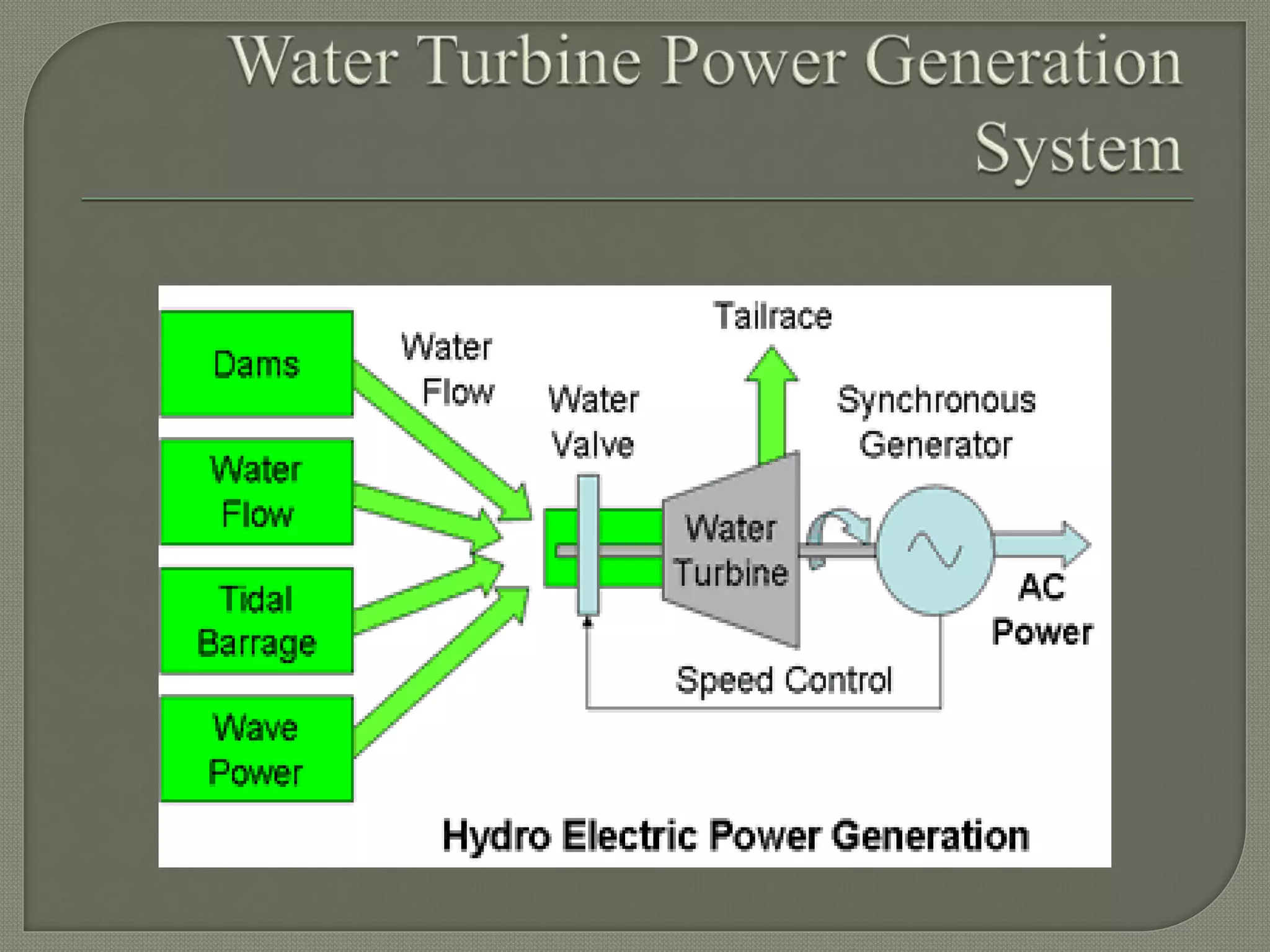
How a Hydroelectric Power System Works
It consists of the following : 
1. Nozzle : Nozzle is required for high velocity 
of water. 
2. Turbine : Generally, Kaplan and Francis 
turbines are used . 
3. Rectifier : Converts AC to DC. 
4. Transformer : Used to vary voltage supplied.
It works on the principle that when the high velocity of 
water is applied with a force on the blades of turbine it will 
rotate along with the main shaft. An alternator is mounted on 
the main shaft which used to converts rotary motion to 
electrical energy. 
A rectifier is connected to it which helps to convert AC 
supply to DC supply. 
Thus , electricity is generated with the help of water 
turbine.
1. Once a dam is constructed, electricity can be produced 
at a constant rate. 
2. If electricity is not needed, the sluice gates can be 
shut, stopping electricity generation. The water can be 
saved for use another time when electricity demand is 
high. 
3. The lake's water can be used for irrigation purposes. 
4. When in use, electricity produced by dam systems do 
not produce green house gases. They do not pollute the 
atmosphere.
1. Dams are extremely expensive to build and must be built to a very 
high standard. 
2. The high cost of dam construction means that they must operate 
for many decades to become profitable. 
3. The flooding of large areas of land means that the natural 
environment is destroyed. 
4. The building of large dams can cause serious geological damage. 
For example, the building of the Hoover Dam in the USA triggered a 
number of earth quakes and has depressed the earth’s surface at its 
location.
Thank You

Hydroelectric power generation

  • 1.
    Presented By : Digvijay Singh
  • 2.
    Hydropower energy isultimately derived from the sun, which drives the water cycle. In the water cycle, rivers are recharged in a continuous cycle. Because of the force of gravity, water flows from high points to low points. There is kinetic energy embodied in the flow of water.
  • 3.
    Flowing water isdirected at a turbine (remember turbines are just advanced waterwheels). The flowing water causes the turbine to rotate, converting the water’s kinetic energy into mechanical energy.
  • 4.
    How a HydroelectricPower System Works
  • 6.
    It consists ofthe following : 1. Nozzle : Nozzle is required for high velocity of water. 2. Turbine : Generally, Kaplan and Francis turbines are used . 3. Rectifier : Converts AC to DC. 4. Transformer : Used to vary voltage supplied.
  • 7.
    It works onthe principle that when the high velocity of water is applied with a force on the blades of turbine it will rotate along with the main shaft. An alternator is mounted on the main shaft which used to converts rotary motion to electrical energy. A rectifier is connected to it which helps to convert AC supply to DC supply. Thus , electricity is generated with the help of water turbine.
  • 8.
    1. Once adam is constructed, electricity can be produced at a constant rate. 2. If electricity is not needed, the sluice gates can be shut, stopping electricity generation. The water can be saved for use another time when electricity demand is high. 3. The lake's water can be used for irrigation purposes. 4. When in use, electricity produced by dam systems do not produce green house gases. They do not pollute the atmosphere.
  • 9.
    1. Dams areextremely expensive to build and must be built to a very high standard. 2. The high cost of dam construction means that they must operate for many decades to become profitable. 3. The flooding of large areas of land means that the natural environment is destroyed. 4. The building of large dams can cause serious geological damage. For example, the building of the Hoover Dam in the USA triggered a number of earth quakes and has depressed the earth’s surface at its location.
  • 10.