1
Introduction
1.1. Introduction
Hazardous waste management is an international problem and is one of the deleterious
by-products of the Industrial Revolution of a developed country. It is a multidisciplinary
field which deals with water pollution, air pollution, solid waste and ground water
pollution aspects that affect the environment and human health. The world is under threat
due to hazardous waste and its improper disposal, the problem being further compounded
by technical obstacles, financial constraints and lack of adequate public awareness in this
regard. In this new century, there is a general trend for waste reduction per unit of product
produced due to a very high remediation and disposal cost, stringent regulatory
enforcement, legal liability, public scrutiny and the need to project an environment-
friendly corporate image. There is an overall tendency of corporations towards source
reduction, embracing smarter production methods, material substitution and reuse etc., for
a greener and a healthier world by means of technical and managerial innovation to
achieve a higher net yield at a lower environment cost. The management of hazardous
wastes has changed drastically since the 1960s and is still evolving with time and need.
1.2. Objective
This manual will provide a brief overview of how to approach hazardous waste problems
e.g. potential sources of pollution in and around the plant, the latest technologies and
techniques for preventing contamination / pollution of the environment and the methods
of handling hazardous waste materials and detection and measurement of the incidence of
contamination as well as contingency plans for handling of emergencies.
1.3. Definition
The word ‘hazardous waste’ was first introduced during 1970 with the first national study
and during mid-1970, the US legislature took the initiative to regulate it. The US
Environmental Protection Agency (EPA) introduced the first hazardous waste law in
1976.
2 Hazardous Waste Management and Pollution Prevention
The definition of the word ‘waste’ is as follows:
“A waste is a movable object which has no direct use and is discarded permanently.”
Here the term waste indicates the solid waste and the entire regulation of hazardous
waste. The term solid waste covers only solids, sludges, tars, etc. Many concentrated
liquids are also considered hazardous waste as they are a mixture of hazardous waste with
water. It is, thus, the characteristics of the waste that is important in defining it to be
hazardous, not the form.
A waste can be hazardous if it exhibits any of the following characteristics:
• Ignitable
• Flammable
• Reactive
• Explosive
• Corrosive
• Radioactive
• Infectious
• Irritating
• Sensitizing
• Bioaccumulative.
The United Nations Environment Program prepared a working definition of hazardous
waste in December 1985.
Hazardous wastes mean wastes (solids, sludges, liquids, and containerized gases) other
than radioactive (and infectious) wastes which, by reason of their chemical activity or
toxic, explosive, corrosive, or other characteristics, cause danger or likely will cause
danger to health or the environment, whether alone or when coming into contact with
other waste.
1.4. Background
Toxicity due to several human activities is observed in air, water and soil. Hazardous
waste is one of the several causes for toxic contamination of the environment.
Mismanaged hazardous waste storage, treatment and disposal facilities have an adverse
effect on the health of living beings. The development of advanced analytical chemistry
and its subsequent application to the environmental field yielded a new ability to detect
contamination or toxicity at ‘part per billion’ levels or at levels still lower.
During the early 1980s, hazardous waste became the most important environmental issue.
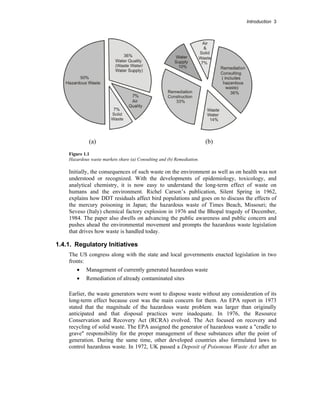
Hazardous waste accounted for about 50% of the $8.2 billion environmental consulting
market in 1991 (See Fig. 1.1(a)) and remediation technology, including hazardous waste
management, in 1998 accounted for 36% of the $11.1 billion environmental consulting
and remediation market (See Fig. 1.1(b)).
Introduction 3
(a) (b)
Figure 1.1
Hazardous waste markets share (a) Consulting and (b) Remediation.
Initially, the consequences of such waste on the environment as well as on health was not
understood or recognized. With the developments of epidemiology, toxicology, and
analytical chemistry, it is now easy to understand the long-term effect of waste on
humans and the environment. Richel Carson’s publication, Silent Spring in 1962,
explains how DDT residuals affect bird populations and goes on to discuss the effects of
the mercury poisoning in Japan; the hazardous waste of Times Beach, Missouri; the
Seveso (Italy) chemical factory explosion in 1976 and the Bhopal tragedy of December,
1984. The paper also dwells on advancing the public awareness and public concern and
pushes ahead the environmental movement and prompts the hazardous waste legislation
that drives how waste is handled today.
1.4.1. Regulatory Initiatives
The US congress along with the state and local governments enacted legislation in two
fronts:
• Management of currently generated hazardous waste
• Remediation of already contaminated sites
Earlier, the waste generators were wont to dispose waste without any consideration of its
long-term effect because cost was the main concern for them. An EPA report in 1973
stated that the magnitude of the hazardous waste problem was larger than originally
anticipated and that disposal practices were inadequate. In 1976, the Resource
Conservation and Recovery Act (RCRA) evolved. The Act focused on recovery and
recycling of solid waste. The EPA assigned the generator of hazardous waste a "cradle to
grave" responsibility for the proper management of these substances after the point of
generation. During the same time, other developed countries also formulated laws to
control hazardous waste. In 1972, UK passed a Deposit of Poisonous Waste Act after an
4 Hazardous Waste Management and Pollution Prevention
incident of cyanide waste disposal in a children’s playground. Similar legislation was
introduced in the European Union on managing Toxic and Dangerous Waste in 1978.
Factors that were taken into consideration for developing the legislations are as follows:
• How do we define soil pollution?
• What are the acceptable risk levels and how do we confine contamination within
those limits?
• Should we draft generic cleanup criteria or introduce site-specific waste disposal
approaches?
• Should we draft generic soil quality criteria or introduce site-specific quality
criteria?
• How do we formulate the priority list and what is the objective of remediation?
The RCRA did not have the mechanisms to address these issues related to past practices.
The US congress formulated an act in 1980, the Comprehensive Environment Response,
Compensation, and Liability Act (CERCLA), commonly known as the “Superfund.”
The RCRA and the CERCLA regulatory programmes are operated separately. Currently,
generated waste (RCRA waste) is generally a residue of an industrial operation and is
more in concentration when compared to contamination of soil and ground water due to
past practices (CERCLA waste) but both are equally threatening for the environment and
health.
The EPA conducted a technical ranking (1987) of the relative risks posed by different
environmental threats based on comparative evaluations. This is given in the following
table.
Table 1.1
Ranking of environmental threats
Problem Relative Risk
Consumer exposure to chemicals High
Indoor air pollutants High
Pesticide residue on foods High
Hazardous waste sites (active/inactive) Low - Medium
1.4.2. Classification of Hazardous Waste
Whether a waste is hazardous can be identified in the following ways:
• Laboratory Test
• Inclusion in the list of specific waste compiled by the government.
Testing
Waste, which exhibits any of the following characteristics, is considered as hazardous:
• Corrosive waste that is highly acidic or alkaline
• Ignitable waste being ignited easily and causing a fire hazard while handling
• Potentially harmful reactive waste which may cause sudden explosions after
reactions
Introduction 5
• Toxic waste releasing specified substances in water beyond certain
concentrations.
Lists
In 1980, the EPA formulated a separate designation for hazardous waste, called “listed”
waste, though their test results were below the characteristically hazardous levels. The
four criteria that had been identified for a waste to be so listed are as follows:
• The waste is toxic inasmuch as it contains a constituent that exhibits toxic,
carcinogenic or mutagenic effect on humans or other life forms.
• The waste contains hazardous constituents, which can be fatal for humans and all
living life.
• It exhibits one of the hazardous characteristics.
• The waste fits the definition of hazardous waste prompted by the US congress as a
part of RCRA.
The codification of hazardous waste is done based on test results viz.,
T - Toxic
H - Highly hazardous
I – Ignitable
R - Reactivity
C – Corrosivity
The following four lists of hazardous waste have been identified by the EPA:
F List –Wastes resulting from chemicals generally used in chemical plant for their
intended purpose and subsequently becoming waste. The initial chemicals generally
contain at least 10% solvent (v/v).
K List –Wastes that are generated from the following industries from specially
designated processes, some of these industries being wood preservation, inorganic
pigment manufacturing, organic and inorganic chemical manufacturing, pesticide
manufacturing, explosive manufacturing, petroleum refinery, iron and steel production,
primary copper, lead, zinc and aluminum production, ferroalloys production, ink
formulation, veterinary pharmaceuticals etc.
P List –Commercial chemicals which are unused and discarded are designated as acutely
toxic waste. These chemicals are of 100% purity (or close to 100%) and the sole active
ingredient.
U List –Waste falling under the category “P List” and exhibiting one or more hazardous
waste characteristics. These chemicals are of 100% purity (or close to 100%) and the sole
active ingredient.
In 1989, 116 countries had participated in the first global treaty on hazardous waste in
Basel, Switzerland, known as The Basel Convention. The UNEP document, “Basel
Convention for the Council of Transboundary Movements of Hazardous Wastes and
Their Disposal,” puts a limited ban on the transboundary movement of hazardous waste
to countries that are producers of the hazardous waste but do not have the capacity to
dispose the waste of within their own borders.
6 Hazardous Waste Management and Pollution Prevention
The degree of hazard of a waste considers individual constituents and characteristics such
as their concentration, mobility, dosages, etc. Hazardous wastes are also classified as per
the following criteria:
• Form or phase distribution
• Organic or inorganic
• Chemical class
• Hazardous waste constituent, as it affects treatability.
1.5. Generation of Hazardous Wastes
Hazardous wastes are generated from different industrial, agricultural, commercial and
household activities. All facilities or persons that produce hazardous waste are considered
generators. Waste managed within the site is called on-site waste and that managed
outside the site is called off-site waste.
In the manufacturing sector wastes are primarily generated from four sources:
• Spent Material
• Byproducts
• Treatment
• Commercial chemical products (e.g. spills or leaks, outdated product, cleaning of
process equipments, etc.)
There are three categories of hazardous waste generators. These categories are
determined by the amount of hazardous wastes or acutely toxic hazardous wastes they
generate monthly and/or on the amount of such wastes they accumulate on site at any
given time. There is an established specific hazardous waste regulation for large quantity
generators and small quantity generators. Waste oil generators are assigned a separate
status.
Small Quantity Generators (SQG): Those facilities or individuals who generate more
than 220 pounds, but less than 2200 pounds, of hazardous waste during any month of the
previous year, or who accumulate (store temporarily) onsite at any one time a total of less
than 13,227 pounds of hazardous waste, are considered Small Quantity Generators.
Large Quantity Generators (LQG): Those facilities or individuals who generate 2.2
pounds, or more, of acutely toxic hazardous waste in any month, or who accumulate on-
site at any time 2.2 pounds, or more, of acutely toxic hazardous waste, regardless of the
rate of generation, automatically is subject to all the requirements applicable to a Large
Quantity Generator of hazardous waste.
1.6. Management of Hazardous Waste
All generators of hazardous waste are responsible for identifying their hazardous wastes
and ensuring that their hazardous waste is properly handled on-site. They have to ensure
that wastes are only sent to an authorized facility for further treatment, storing or
disposal.
A hazardous waste generator may temporarily store hazardous wastes on-site without a
permit for limited period, depending on whether the generator is classified as a large or
Introduction 7
small quantity generator. LQGs may only accumulate hazardous waste on-site for 90
days. SQGs may accumulate hazardous waste on-site for 180 days before it is properly
shipped off-site to a licensed hazardous wastes treatment, storage, or disposal facility.
SQGs that ship wastes to facilities more than 200 miles away may accumulate their
hazardous waste on-site for up to 270 days.
General overviews of regulatory requirements applicable to most generators of hazardous
waste are given below.
Waste Identification: Hazardous waste includes substances that are solids, liquids and
gases. The EPA definition of hazardous waste includes substances that possess a
hazardous characteristic (e.g. toxic, ignitable, corrosive or reactive with other
substances), or substances that are listed as hazardous waste by the EPA on the basis of
their usage or chemical constituents.
Labeling: Containers which store hazardous waste must be properly and clearly labeled.
This includes:
• The words "Hazardous Waste";
• The container contents in words (e.g., "WASTE OIL");
• The hazards associated with the waste in words (e.g., "TOXIC"); and
• The accumulation starts date.
Once a satellite accumulation becomes filled, the accumulation start date must be written
on the label.
Accumulation and Storage: Hazardous waste regulations established a two- tiered waste
accumulation and storage system: satellite accumulation and main accumulation.
Satellite Accumulation: Hazardous waste accumulation and storage, which is at the point
of generation and under the control of the person generating the waste is called satellite
accumulation. Regulations allow a maximum of 55 gallons of hazardous waste or 1 quart
of acutely hazardous waste at each satellite accumulation area. Satellite accumulation
containers must be closed unless waste is being added or removed from the container.
Full containers of hazardous waste may be stored at the point of generation for a
maximum of 3 days before being transferred to a designated, main accumulation area
having certain design and monitoring requirements. Hazardous waste should be stored in
leak proof tubs or another type of containment device within satellite storage areas. All
containers must be kept closed unless adding or removing waste material.
Main Accumulation: Main accumulation and storage of hazardous waste is subject to
strict time limitations. LQGs of hazardous waste are allowed to store hazardous waste on-
site for a maximum of 90 days.
Manifesting: Hazardous waste must be shipped with a special shipping paper called a
hazardous waste manifest. Each location has a unique EPA Generator ID number that
must appear on the manifest.
Transportation and Disposal: Hazardous waste may be transported only by a licensed
hazardous waste transporter and may be sent only to a licensed treatment, storage and
disposal facility.
Emergency Preparedness and Prevention: A Hazardous Waste Management
Contingency Plan is designed to prevent and to minimize hazards to the public or to the
environment from fires, explosions, spills or other unplanned releases of hazardous waste.
Hazardous waste regulations also require generators to comply with emergency
8 Hazardous Waste Management and Pollution Prevention
preparedness and prevention requirements. These requirements include a testing and
maintenance program for various emergency equipments (e.g., fire and spill equipment,
emergency alarms and communication systems).
Waste Minimization: Generators of hazardous waste are required by the EPA to
minimize the volume and toxicity of the hazardous waste they generate.
Recycling: Hazardous waste recycling activities require a permit.
1.7. Training
Persons involved in the management of hazardous waste must complete a training
program, which teaches them how to perform their duties in compliance with applicable
hazardous waste regulations. Generators are required to maintain a written program
which describes training program contents, who is trained and why and record keeping
procedures.
Reporting
Generators are required to submit a biennial hazardous waste report, which summarizes
hazardous waste generation and management activity for the previous year. Hazardous
waste manifests generally must be submitted immediately to the authority. Any change in
generation status or types of hazardous waste generated requires prompt notification to
the authority.
Inspections
Regulations require that hazardous waste areas (main accumulation areas) be inspected
on a weekly basis. Satellite accumulation areas should also be inspected weekly.
Record keeping
Hazardous waste regulations require that the following records be maintained for a
minimum of 3 years:
• Waste analysis / determination records
• Manifests
• Biennial reports and
• Exception report.
Land Disposal Restriction (LDR) notifications/certifications, which typically accompany
hazardous waste manifests, are required to be maintained for a minimum of 5 years.
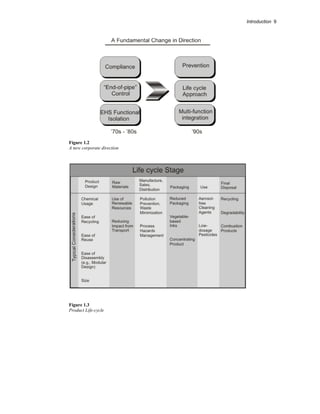
1.8. Present trend
With the increasing awareness of the long-term adverse effects of hazardous wastes on
life forms, the prime generators are changing their approach to the entire problem. The
focus today is shifting from just ‘compliance’ to a more futuristic ‘prevention’. (See Fig.
1.2). Today’s corporations are modifying and monitoring their product life-cycles to
achieve this end. A systematic and holistic approach towards environment and health are
of prime interest instead of just managing the hazardous waste (as shown in Fig. 1.3).
Introduction 9
Figure 1.2
A new corporate direction
Figure 1.3
Product Life-cycle
10 Hazardous Waste Management and Pollution Prevention

Hazardous Waste Management & Pollution Prevention

  • 1.
    1 Introduction 1.1. Introduction Hazardous wastemanagement is an international problem and is one of the deleterious by-products of the Industrial Revolution of a developed country. It is a multidisciplinary field which deals with water pollution, air pollution, solid waste and ground water pollution aspects that affect the environment and human health. The world is under threat due to hazardous waste and its improper disposal, the problem being further compounded by technical obstacles, financial constraints and lack of adequate public awareness in this regard. In this new century, there is a general trend for waste reduction per unit of product produced due to a very high remediation and disposal cost, stringent regulatory enforcement, legal liability, public scrutiny and the need to project an environment- friendly corporate image. There is an overall tendency of corporations towards source reduction, embracing smarter production methods, material substitution and reuse etc., for a greener and a healthier world by means of technical and managerial innovation to achieve a higher net yield at a lower environment cost. The management of hazardous wastes has changed drastically since the 1960s and is still evolving with time and need. 1.2. Objective This manual will provide a brief overview of how to approach hazardous waste problems e.g. potential sources of pollution in and around the plant, the latest technologies and techniques for preventing contamination / pollution of the environment and the methods of handling hazardous waste materials and detection and measurement of the incidence of contamination as well as contingency plans for handling of emergencies. 1.3. Definition The word ‘hazardous waste’ was first introduced during 1970 with the first national study and during mid-1970, the US legislature took the initiative to regulate it. The US Environmental Protection Agency (EPA) introduced the first hazardous waste law in 1976.
  • 2.
    2 Hazardous WasteManagement and Pollution Prevention The definition of the word ‘waste’ is as follows: “A waste is a movable object which has no direct use and is discarded permanently.” Here the term waste indicates the solid waste and the entire regulation of hazardous waste. The term solid waste covers only solids, sludges, tars, etc. Many concentrated liquids are also considered hazardous waste as they are a mixture of hazardous waste with water. It is, thus, the characteristics of the waste that is important in defining it to be hazardous, not the form. A waste can be hazardous if it exhibits any of the following characteristics: • Ignitable • Flammable • Reactive • Explosive • Corrosive • Radioactive • Infectious • Irritating • Sensitizing • Bioaccumulative. The United Nations Environment Program prepared a working definition of hazardous waste in December 1985. Hazardous wastes mean wastes (solids, sludges, liquids, and containerized gases) other than radioactive (and infectious) wastes which, by reason of their chemical activity or toxic, explosive, corrosive, or other characteristics, cause danger or likely will cause danger to health or the environment, whether alone or when coming into contact with other waste. 1.4. Background Toxicity due to several human activities is observed in air, water and soil. Hazardous waste is one of the several causes for toxic contamination of the environment. Mismanaged hazardous waste storage, treatment and disposal facilities have an adverse effect on the health of living beings. The development of advanced analytical chemistry and its subsequent application to the environmental field yielded a new ability to detect contamination or toxicity at ‘part per billion’ levels or at levels still lower. During the early 1980s, hazardous waste became the most important environmental issue. Hazardous waste accounted for about 50% of the $8.2 billion environmental consulting market in 1991 (See Fig. 1.1(a)) and remediation technology, including hazardous waste management, in 1998 accounted for 36% of the $11.1 billion environmental consulting and remediation market (See Fig. 1.1(b)).
  • 3.
    Introduction 3 (a) (b) Figure1.1 Hazardous waste markets share (a) Consulting and (b) Remediation. Initially, the consequences of such waste on the environment as well as on health was not understood or recognized. With the developments of epidemiology, toxicology, and analytical chemistry, it is now easy to understand the long-term effect of waste on humans and the environment. Richel Carson’s publication, Silent Spring in 1962, explains how DDT residuals affect bird populations and goes on to discuss the effects of the mercury poisoning in Japan; the hazardous waste of Times Beach, Missouri; the Seveso (Italy) chemical factory explosion in 1976 and the Bhopal tragedy of December, 1984. The paper also dwells on advancing the public awareness and public concern and pushes ahead the environmental movement and prompts the hazardous waste legislation that drives how waste is handled today. 1.4.1. Regulatory Initiatives The US congress along with the state and local governments enacted legislation in two fronts: • Management of currently generated hazardous waste • Remediation of already contaminated sites Earlier, the waste generators were wont to dispose waste without any consideration of its long-term effect because cost was the main concern for them. An EPA report in 1973 stated that the magnitude of the hazardous waste problem was larger than originally anticipated and that disposal practices were inadequate. In 1976, the Resource Conservation and Recovery Act (RCRA) evolved. The Act focused on recovery and recycling of solid waste. The EPA assigned the generator of hazardous waste a "cradle to grave" responsibility for the proper management of these substances after the point of generation. During the same time, other developed countries also formulated laws to control hazardous waste. In 1972, UK passed a Deposit of Poisonous Waste Act after an
  • 4.
    4 Hazardous WasteManagement and Pollution Prevention incident of cyanide waste disposal in a children’s playground. Similar legislation was introduced in the European Union on managing Toxic and Dangerous Waste in 1978. Factors that were taken into consideration for developing the legislations are as follows: • How do we define soil pollution? • What are the acceptable risk levels and how do we confine contamination within those limits? • Should we draft generic cleanup criteria or introduce site-specific waste disposal approaches? • Should we draft generic soil quality criteria or introduce site-specific quality criteria? • How do we formulate the priority list and what is the objective of remediation? The RCRA did not have the mechanisms to address these issues related to past practices. The US congress formulated an act in 1980, the Comprehensive Environment Response, Compensation, and Liability Act (CERCLA), commonly known as the “Superfund.” The RCRA and the CERCLA regulatory programmes are operated separately. Currently, generated waste (RCRA waste) is generally a residue of an industrial operation and is more in concentration when compared to contamination of soil and ground water due to past practices (CERCLA waste) but both are equally threatening for the environment and health. The EPA conducted a technical ranking (1987) of the relative risks posed by different environmental threats based on comparative evaluations. This is given in the following table. Table 1.1 Ranking of environmental threats Problem Relative Risk Consumer exposure to chemicals High Indoor air pollutants High Pesticide residue on foods High Hazardous waste sites (active/inactive) Low - Medium 1.4.2. Classification of Hazardous Waste Whether a waste is hazardous can be identified in the following ways: • Laboratory Test • Inclusion in the list of specific waste compiled by the government. Testing Waste, which exhibits any of the following characteristics, is considered as hazardous: • Corrosive waste that is highly acidic or alkaline • Ignitable waste being ignited easily and causing a fire hazard while handling • Potentially harmful reactive waste which may cause sudden explosions after reactions
  • 5.
    Introduction 5 • Toxicwaste releasing specified substances in water beyond certain concentrations. Lists In 1980, the EPA formulated a separate designation for hazardous waste, called “listed” waste, though their test results were below the characteristically hazardous levels. The four criteria that had been identified for a waste to be so listed are as follows: • The waste is toxic inasmuch as it contains a constituent that exhibits toxic, carcinogenic or mutagenic effect on humans or other life forms. • The waste contains hazardous constituents, which can be fatal for humans and all living life. • It exhibits one of the hazardous characteristics. • The waste fits the definition of hazardous waste prompted by the US congress as a part of RCRA. The codification of hazardous waste is done based on test results viz., T - Toxic H - Highly hazardous I – Ignitable R - Reactivity C – Corrosivity The following four lists of hazardous waste have been identified by the EPA: F List –Wastes resulting from chemicals generally used in chemical plant for their intended purpose and subsequently becoming waste. The initial chemicals generally contain at least 10% solvent (v/v). K List –Wastes that are generated from the following industries from specially designated processes, some of these industries being wood preservation, inorganic pigment manufacturing, organic and inorganic chemical manufacturing, pesticide manufacturing, explosive manufacturing, petroleum refinery, iron and steel production, primary copper, lead, zinc and aluminum production, ferroalloys production, ink formulation, veterinary pharmaceuticals etc. P List –Commercial chemicals which are unused and discarded are designated as acutely toxic waste. These chemicals are of 100% purity (or close to 100%) and the sole active ingredient. U List –Waste falling under the category “P List” and exhibiting one or more hazardous waste characteristics. These chemicals are of 100% purity (or close to 100%) and the sole active ingredient. In 1989, 116 countries had participated in the first global treaty on hazardous waste in Basel, Switzerland, known as The Basel Convention. The UNEP document, “Basel Convention for the Council of Transboundary Movements of Hazardous Wastes and Their Disposal,” puts a limited ban on the transboundary movement of hazardous waste to countries that are producers of the hazardous waste but do not have the capacity to dispose the waste of within their own borders.
  • 6.
    6 Hazardous WasteManagement and Pollution Prevention The degree of hazard of a waste considers individual constituents and characteristics such as their concentration, mobility, dosages, etc. Hazardous wastes are also classified as per the following criteria: • Form or phase distribution • Organic or inorganic • Chemical class • Hazardous waste constituent, as it affects treatability. 1.5. Generation of Hazardous Wastes Hazardous wastes are generated from different industrial, agricultural, commercial and household activities. All facilities or persons that produce hazardous waste are considered generators. Waste managed within the site is called on-site waste and that managed outside the site is called off-site waste. In the manufacturing sector wastes are primarily generated from four sources: • Spent Material • Byproducts • Treatment • Commercial chemical products (e.g. spills or leaks, outdated product, cleaning of process equipments, etc.) There are three categories of hazardous waste generators. These categories are determined by the amount of hazardous wastes or acutely toxic hazardous wastes they generate monthly and/or on the amount of such wastes they accumulate on site at any given time. There is an established specific hazardous waste regulation for large quantity generators and small quantity generators. Waste oil generators are assigned a separate status. Small Quantity Generators (SQG): Those facilities or individuals who generate more than 220 pounds, but less than 2200 pounds, of hazardous waste during any month of the previous year, or who accumulate (store temporarily) onsite at any one time a total of less than 13,227 pounds of hazardous waste, are considered Small Quantity Generators. Large Quantity Generators (LQG): Those facilities or individuals who generate 2.2 pounds, or more, of acutely toxic hazardous waste in any month, or who accumulate on- site at any time 2.2 pounds, or more, of acutely toxic hazardous waste, regardless of the rate of generation, automatically is subject to all the requirements applicable to a Large Quantity Generator of hazardous waste. 1.6. Management of Hazardous Waste All generators of hazardous waste are responsible for identifying their hazardous wastes and ensuring that their hazardous waste is properly handled on-site. They have to ensure that wastes are only sent to an authorized facility for further treatment, storing or disposal. A hazardous waste generator may temporarily store hazardous wastes on-site without a permit for limited period, depending on whether the generator is classified as a large or
  • 7.
    Introduction 7 small quantitygenerator. LQGs may only accumulate hazardous waste on-site for 90 days. SQGs may accumulate hazardous waste on-site for 180 days before it is properly shipped off-site to a licensed hazardous wastes treatment, storage, or disposal facility. SQGs that ship wastes to facilities more than 200 miles away may accumulate their hazardous waste on-site for up to 270 days. General overviews of regulatory requirements applicable to most generators of hazardous waste are given below. Waste Identification: Hazardous waste includes substances that are solids, liquids and gases. The EPA definition of hazardous waste includes substances that possess a hazardous characteristic (e.g. toxic, ignitable, corrosive or reactive with other substances), or substances that are listed as hazardous waste by the EPA on the basis of their usage or chemical constituents. Labeling: Containers which store hazardous waste must be properly and clearly labeled. This includes: • The words "Hazardous Waste"; • The container contents in words (e.g., "WASTE OIL"); • The hazards associated with the waste in words (e.g., "TOXIC"); and • The accumulation starts date. Once a satellite accumulation becomes filled, the accumulation start date must be written on the label. Accumulation and Storage: Hazardous waste regulations established a two- tiered waste accumulation and storage system: satellite accumulation and main accumulation. Satellite Accumulation: Hazardous waste accumulation and storage, which is at the point of generation and under the control of the person generating the waste is called satellite accumulation. Regulations allow a maximum of 55 gallons of hazardous waste or 1 quart of acutely hazardous waste at each satellite accumulation area. Satellite accumulation containers must be closed unless waste is being added or removed from the container. Full containers of hazardous waste may be stored at the point of generation for a maximum of 3 days before being transferred to a designated, main accumulation area having certain design and monitoring requirements. Hazardous waste should be stored in leak proof tubs or another type of containment device within satellite storage areas. All containers must be kept closed unless adding or removing waste material. Main Accumulation: Main accumulation and storage of hazardous waste is subject to strict time limitations. LQGs of hazardous waste are allowed to store hazardous waste on- site for a maximum of 90 days. Manifesting: Hazardous waste must be shipped with a special shipping paper called a hazardous waste manifest. Each location has a unique EPA Generator ID number that must appear on the manifest. Transportation and Disposal: Hazardous waste may be transported only by a licensed hazardous waste transporter and may be sent only to a licensed treatment, storage and disposal facility. Emergency Preparedness and Prevention: A Hazardous Waste Management Contingency Plan is designed to prevent and to minimize hazards to the public or to the environment from fires, explosions, spills or other unplanned releases of hazardous waste. Hazardous waste regulations also require generators to comply with emergency
  • 8.
    8 Hazardous WasteManagement and Pollution Prevention preparedness and prevention requirements. These requirements include a testing and maintenance program for various emergency equipments (e.g., fire and spill equipment, emergency alarms and communication systems). Waste Minimization: Generators of hazardous waste are required by the EPA to minimize the volume and toxicity of the hazardous waste they generate. Recycling: Hazardous waste recycling activities require a permit. 1.7. Training Persons involved in the management of hazardous waste must complete a training program, which teaches them how to perform their duties in compliance with applicable hazardous waste regulations. Generators are required to maintain a written program which describes training program contents, who is trained and why and record keeping procedures. Reporting Generators are required to submit a biennial hazardous waste report, which summarizes hazardous waste generation and management activity for the previous year. Hazardous waste manifests generally must be submitted immediately to the authority. Any change in generation status or types of hazardous waste generated requires prompt notification to the authority. Inspections Regulations require that hazardous waste areas (main accumulation areas) be inspected on a weekly basis. Satellite accumulation areas should also be inspected weekly. Record keeping Hazardous waste regulations require that the following records be maintained for a minimum of 3 years: • Waste analysis / determination records • Manifests • Biennial reports and • Exception report. Land Disposal Restriction (LDR) notifications/certifications, which typically accompany hazardous waste manifests, are required to be maintained for a minimum of 5 years. 1.8. Present trend With the increasing awareness of the long-term adverse effects of hazardous wastes on life forms, the prime generators are changing their approach to the entire problem. The focus today is shifting from just ‘compliance’ to a more futuristic ‘prevention’. (See Fig. 1.2). Today’s corporations are modifying and monitoring their product life-cycles to achieve this end. A systematic and holistic approach towards environment and health are of prime interest instead of just managing the hazardous waste (as shown in Fig. 1.3).
  • 9.
    Introduction 9 Figure 1.2 Anew corporate direction Figure 1.3 Product Life-cycle
  • 10.
    10 Hazardous WasteManagement and Pollution Prevention