17
OVERVIEW ON HAZARDOUS WASTES
AND ITS MANAGEMENT
Dr. I.D. Mall
Professor, Department of Chemical Engineering, Indian Institute of Technology- Roorkee,
Roorkee-247667(UA), India
INTRODUCTION
While there is little doubt that humankind’s increasing of natural law has
brought us increased life expectancy and higher quality of life for more people
than ever known before.
This has brought the risk of global calamity and impairment of human health.
Hazardous waste management has become an international problem
The environmental and Human Health consequences of the residuals and
wastes: not understood and recognised
Developments in science, epidemiology, toxicology and analytical chemistry
enabled to recognise
LAND Mark Episodes
DDT : Residues in deep sea liquid, Antarctic penguins, and the fatty tissues of
Homo sapiens. High levels of DDT in aquatic birds
Mercury : As liquid mercury to cure constipation.
Mercury salts: results in neurological disorder Dutch Hat industry
Organic form Methyl Mercury: More Pernicious Minamata Japan episode
paralysis and sensory loss recently in coal fire boilers
Polychlorinated biphenyls (PCB’s): transformer coolants, plasticisers,
carbonless paper: Japan and Taiwan Miscarriages and birth defects
Poly brominated biphenyls: Michigan mothers milk
Dioxins and Furan from pulp and paper mill effluent
Hazardous waste doses pose a real risk to human health and The
environment
But to what magnitude of risk?
Relative Risk
Problem EPA experts Public
Opinion
Hazardous waste sites Low-Medium High
Pesticide residue on foods High Medium
Indoor air pollutants High Low
Consumer Exposure High Low
to chemicals
18
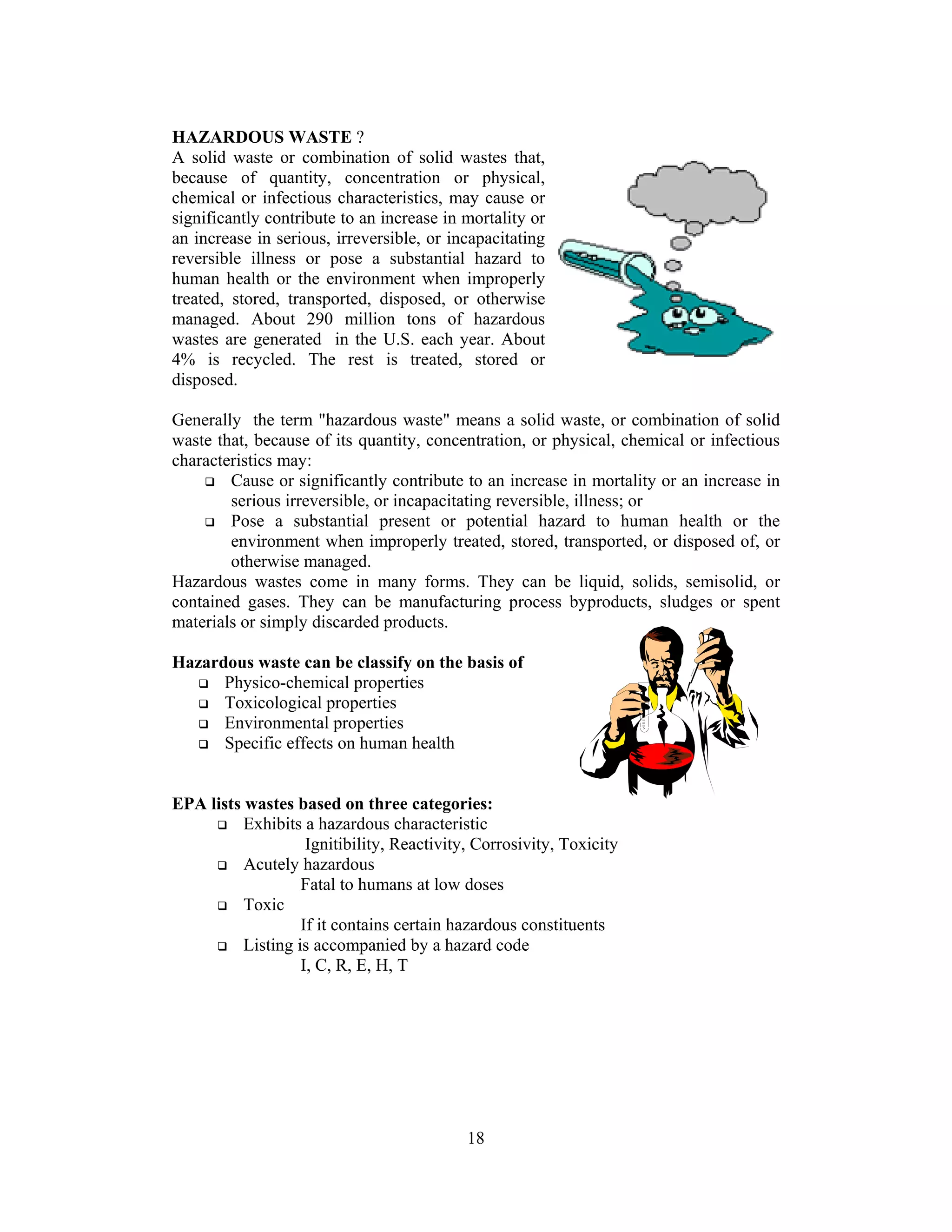
HAZARDOUS WASTE ?
A solid waste or combination of solid wastes that,
because of quantity, concentration or physical,
chemical or infectious characteristics, may cause or
significantly contribute to an increase in mortality or
an increase in serious, irreversible, or incapacitating
reversible illness or pose a substantial hazard to
human health or the environment when improperly
treated, stored, transported, disposed, or otherwise
managed. About 290 million tons of hazardous
wastes are generated in the U.S. each year. About
4% is recycled. The rest is treated, stored or
disposed.
Generally the term "hazardous waste" means a solid waste, or combination of solid
waste that, because of its quantity, concentration, or physical, chemical or infectious
characteristics may:
Cause or significantly contribute to an increase in mortality or an increase in
serious irreversible, or incapacitating reversible, illness; or
Pose a substantial present or potential hazard to human health or the
environment when improperly treated, stored, transported, or disposed of, or
otherwise managed.
Hazardous wastes come in many forms. They can be liquid, solids, semisolid, or
contained gases. They can be manufacturing process byproducts, sludges or spent
materials or simply discarded products.
Hazardous waste can be classify on the basis of
Physico-chemical properties
Toxicological properties
Environmental properties
Specific effects on human health
EPA lists wastes based on three categories:
Exhibits a hazardous characteristic
Ignitibility, Reactivity, Corrosivity, Toxicity
Acutely hazardous
Fatal to humans at low doses
Toxic
If it contains certain hazardous constituents
Listing is accompanied by a hazard code
I, C, R, E, H, T
19
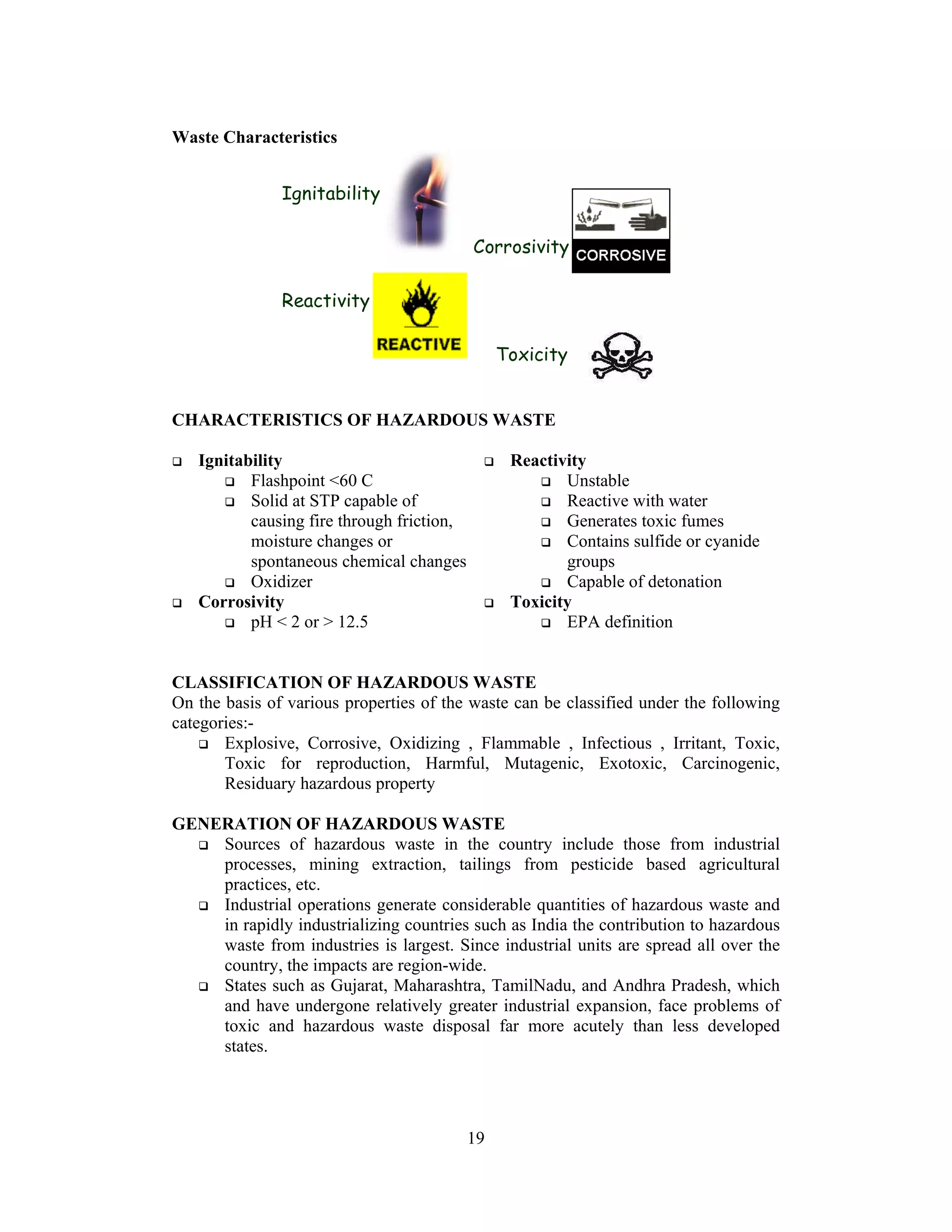
Waste Characteristics
CHARACTERISTICS OF HAZARDOUS WASTE
Ignitability
Flashpoint <60 C
Solid at STP capable of
causing fire through friction,
moisture changes or
spontaneous chemical changes
Oxidizer
Corrosivity
pH < 2 or > 12.5
Reactivity
Unstable
Reactive with water
Generates toxic fumes
Contains sulfide or cyanide
groups
Capable of detonation
Toxicity
EPA definition
CLASSIFICATION OF HAZARDOUS WASTE
On the basis of various properties of the waste can be classified under the following
categories:-
Explosive, Corrosive, Oxidizing , Flammable , Infectious , Irritant, Toxic,
Toxic for reproduction, Harmful, Mutagenic, Exotoxic, Carcinogenic,
Residuary hazardous property
GENERATION OF HAZARDOUS WASTE
Sources of hazardous waste in the country include those from industrial
processes, mining extraction, tailings from pesticide based agricultural
practices, etc.
Industrial operations generate considerable quantities of hazardous waste and
in rapidly industrializing countries such as India the contribution to hazardous
waste from industries is largest. Since industrial units are spread all over the
country, the impacts are region-wide.
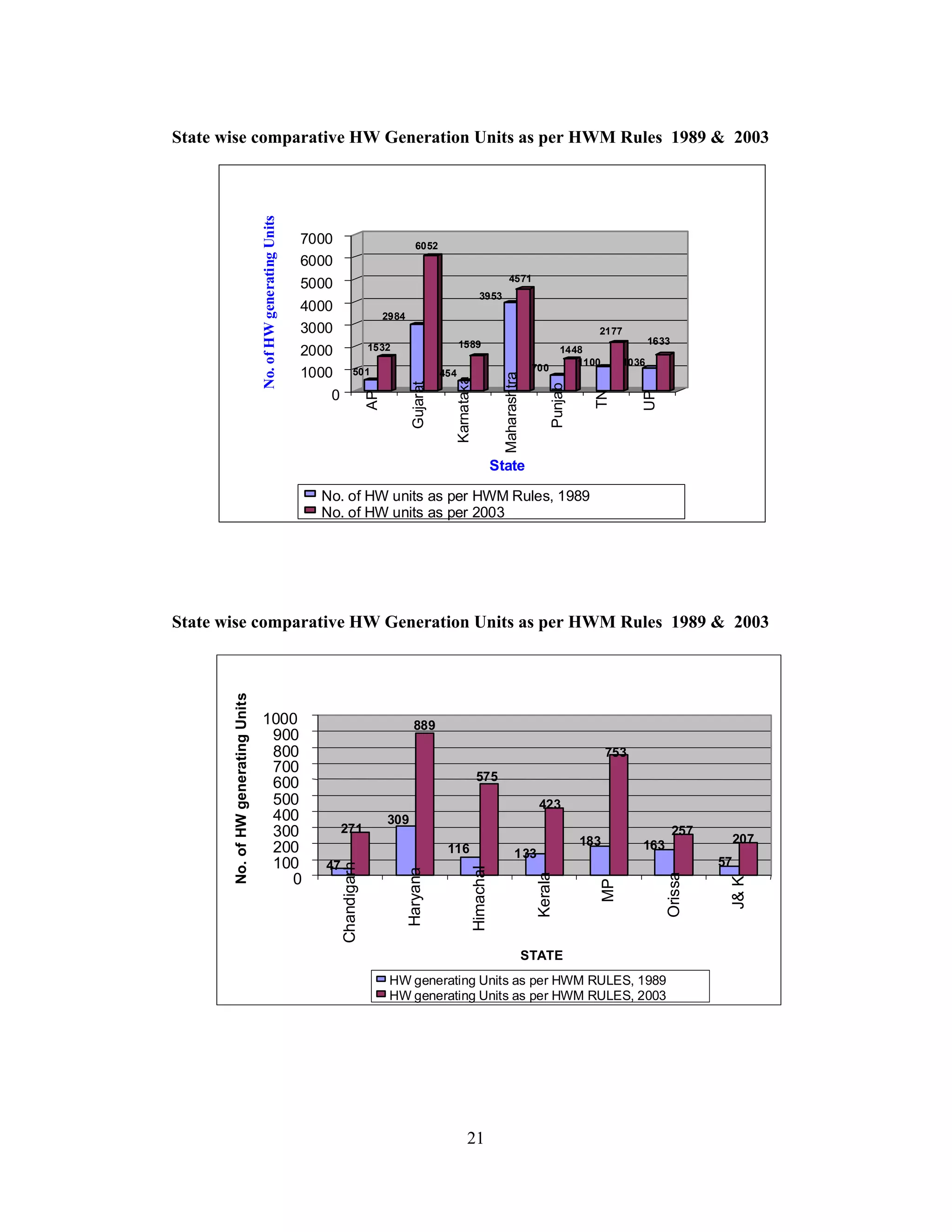
States such as Gujarat, Maharashtra, TamilNadu, and Andhra Pradesh, which
and have undergone relatively greater industrial expansion, face problems of
toxic and hazardous waste disposal far more acutely than less developed
states.
Characteristics of waste:
Ignitability
Corrosivity
Reactivity
Toxicity
20
INDUSTRIAL HAZARDOUS WASTE GENERATION
Timber product processing
Leather tanning and finishing
Iron and steel manufacturing
Petroleum refining
Inorganic chemicals
Textile mills
Organic chemical manufacturing
Adhesives
Gum and wood chemicals
Pharmaceuticals
Explosives
Pesticides
Pharmaceuticals
Non-ferrous metal manufacturing
Paint and ink formulation and printing
Soap and detergent manufacturing
Auto and other laundries
Plastic and synthetic materials
Pulp mills, paper products
Rubber processing
Machinery & mechanical products manufacturing
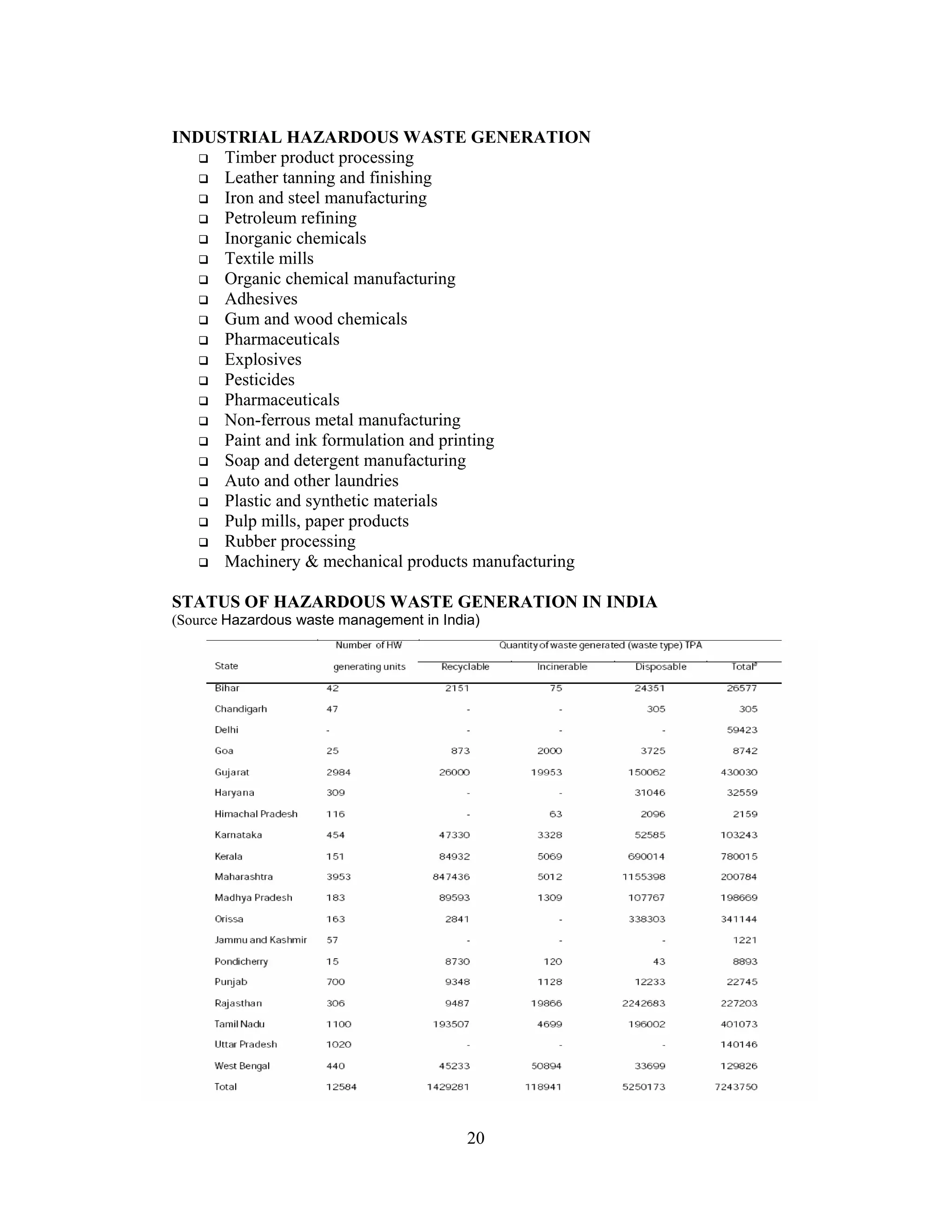
STATUS OF HAZARDOUS WASTE GENERATION IN INDIA
(Source Hazardous waste management in India)
21
State wise comparative HW Generation Units as per HWM Rules 1989 & 2003
501
1532
2984
6052
454
1589
3953
4571
700
1448
1100
2177
1036
1633
0
1000
2000
3000
4000
5000
6000
7000
AP
Gujarat
Karnataka
Maharashtra
Punjab
TN
UP
State
No. of HW units as per HWM Rules, 1989
No. of HW units as per 2003
No.ofHWgeneratingUnits
309
47
116 133
183 163
57
271
889
575
423
753
257
207
0
100
200
300
400
500
600
700
800
900
1000
Chandigarh
Haryana
Himachal
Kerala
MP
Orissa
J&K
STATE
No.ofHWgeneratingUnits
HW generating Units as per HWM RULES, 1989
HW generating Units as per HWM RULES, 2003
22
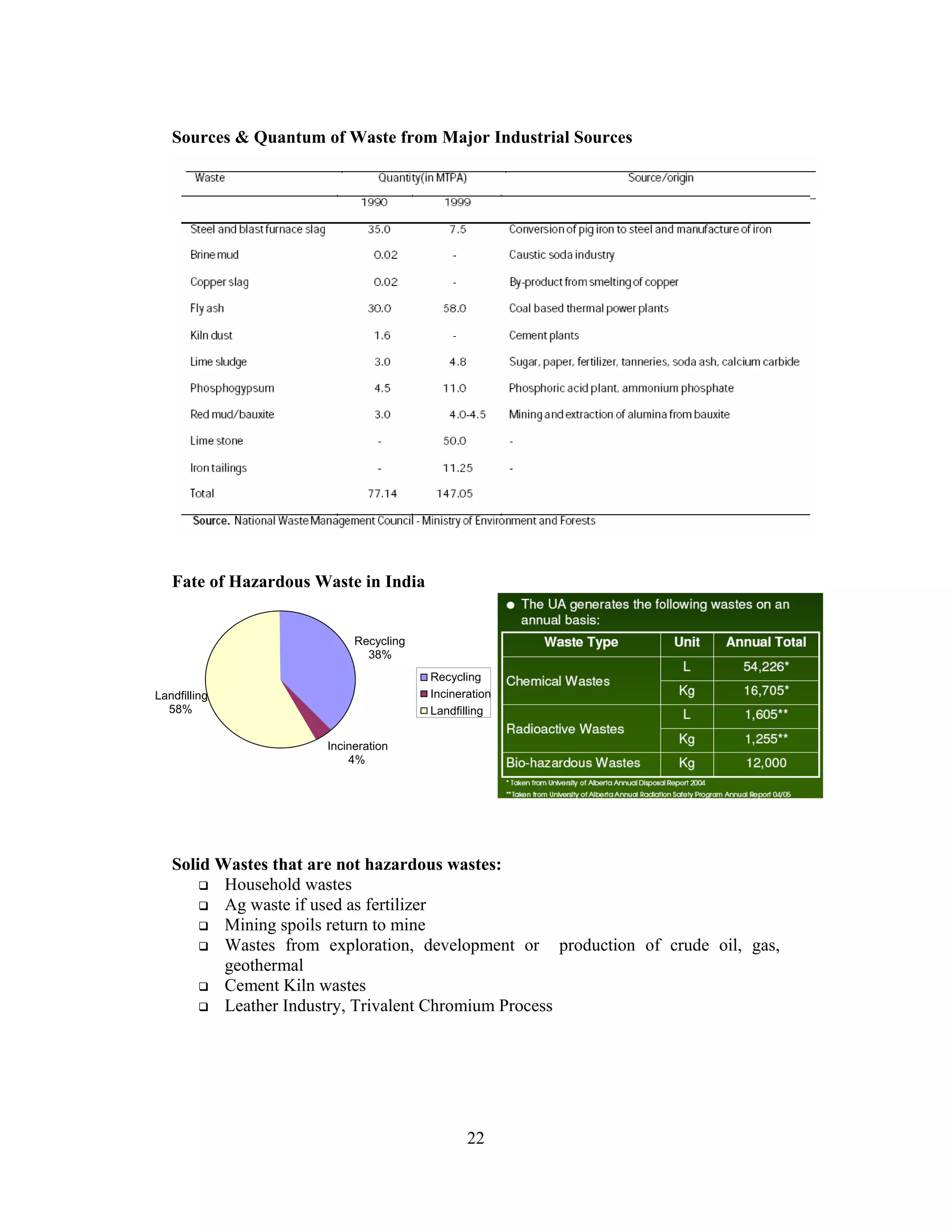
Sources & Quantum of Waste from Major Industrial Sources
Fate of Hazardous Waste in India
Solid Wastes that are not hazardous wastes:
Household wastes
Ag waste if used as fertilizer
Mining spoils return to mine
Wastes from exploration, development or production of crude oil, gas,
geothermal
Cement Kiln wastes
Leather Industry, Trivalent Chromium Process
Landfilling
58%
Incineration
4%
Recycling
38%
Recycling
Incineration
Landfilling
23
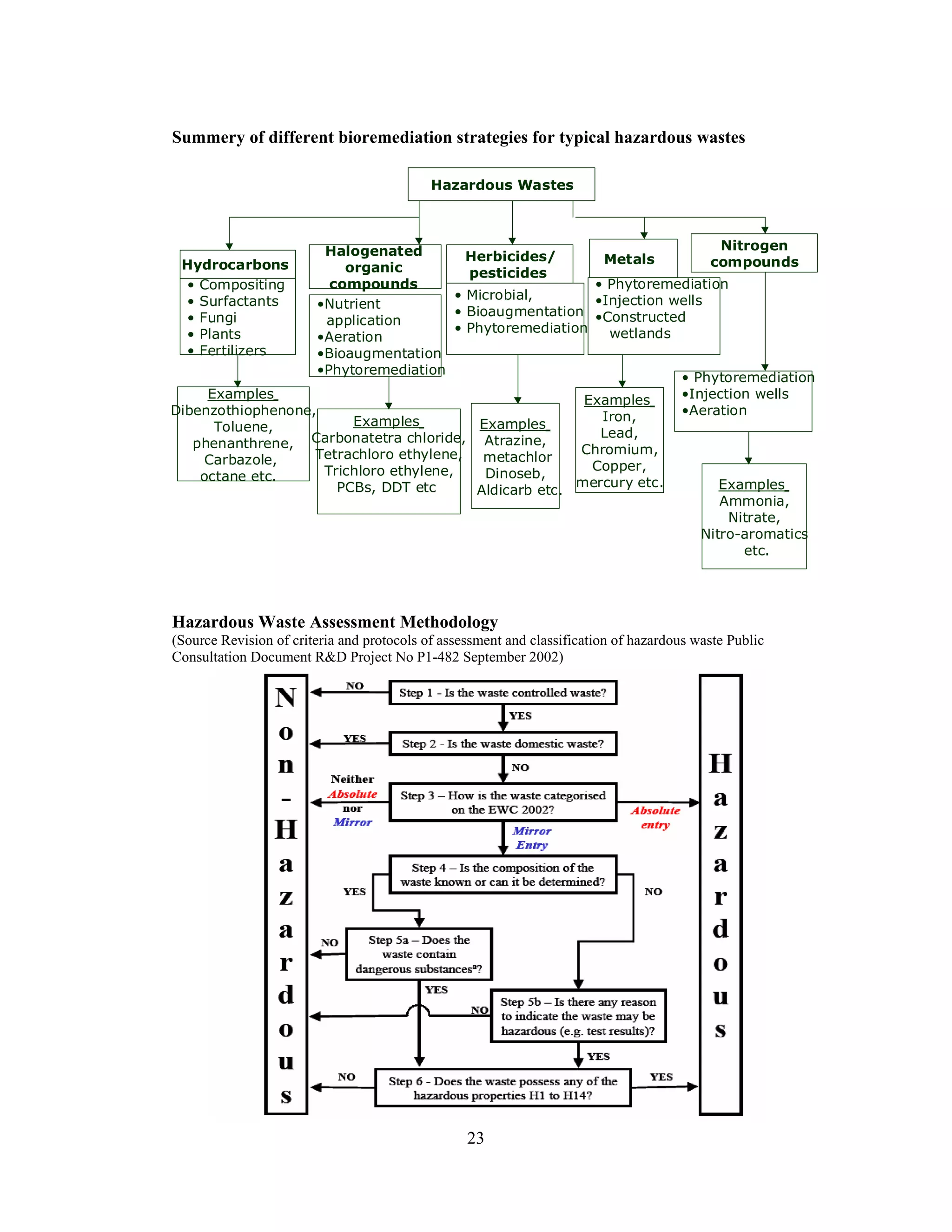
Summery of different bioremediation strategies for typical hazardous wastes
Hazardous Waste Assessment Methodology
(Source Revision of criteria and protocols of assessment and classification of hazardous waste Public
Consultation Document R&D Project No P1-482 September 2002)
Nitrogen
compounds
Examples
Ammonia,
Nitrate,
Nitro-aromatics
etc.
• Phytoremediation
•Injection wells
•Aeration
Hydrocarbons
• Compositing
• Surfactants
• Fungi
• Plants
• Fertilizers
Examples
Dibenzothiophenone,
Toluene,
phenanthrene,
Carbazole,
octane etc.
Hazardous Wastes
Halogenated
organic
compounds
•Nutrient
application
•Aeration
•Bioaugmentation
•Phytoremediation
Examples
Carbonatetra chloride,
Tetrachloro ethylene,
Trichloro ethylene,
PCBs, DDT etc
Herbicides/
pesticides
• Microbial,
• Bioaugmentation
• Phytoremediation
Examples
Atrazine,
metachlor
Dinoseb,
Aldicarb etc.
Metals
• Phytoremediation
•Injection wells
•Constructed
wetlands
Examples
Iron,
Lead,
Chromium,
Copper,
mercury etc.
24
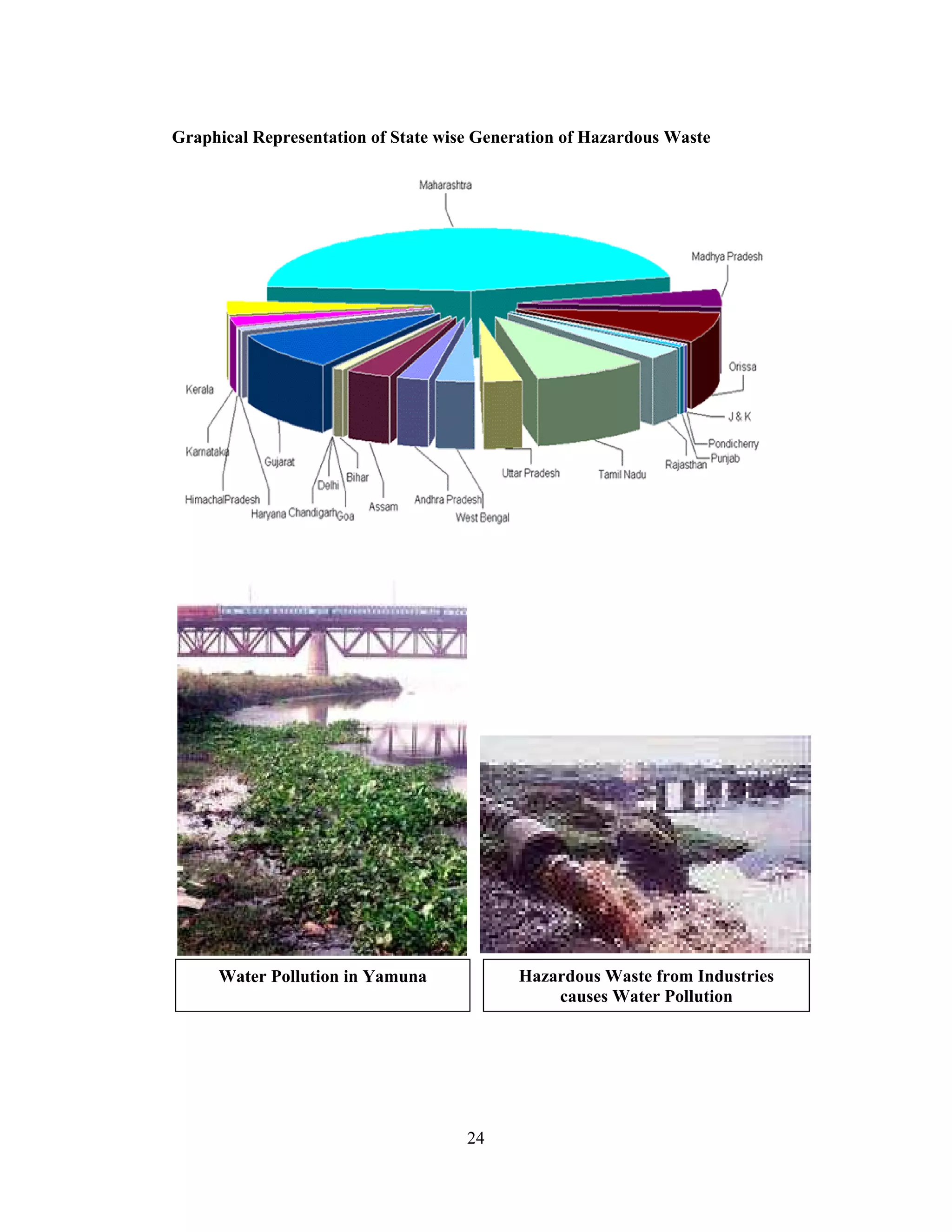
Graphical Representation of State wise Generation of Hazardous Waste
Water Pollution in Yamuna Hazardous Waste from Industries
causes Water Pollution
25
DIFFERENT INDUSTRIAL HAZARDOUS WASTE
And Many More….And Many More….And Many More….And Many More….
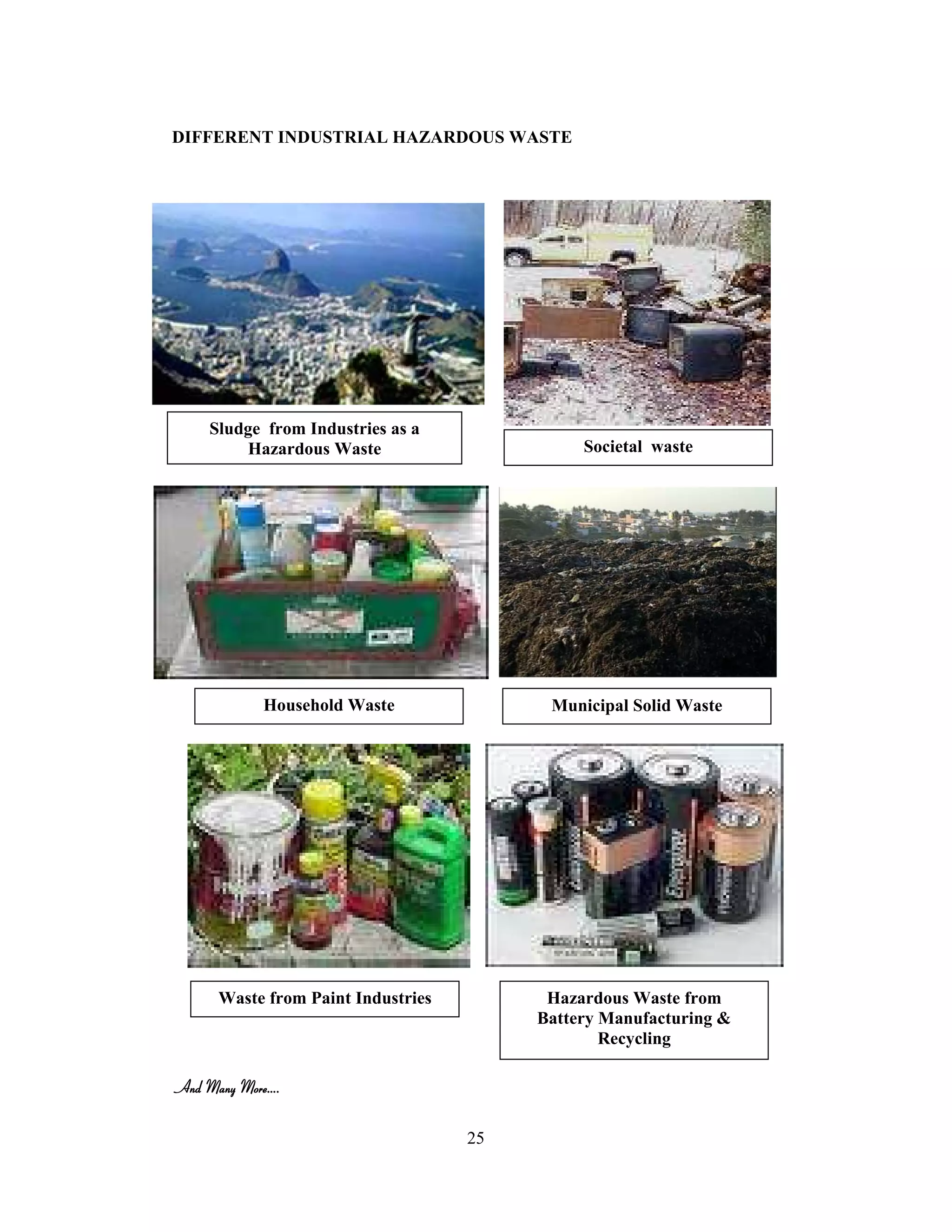
Sludge from Industries as a
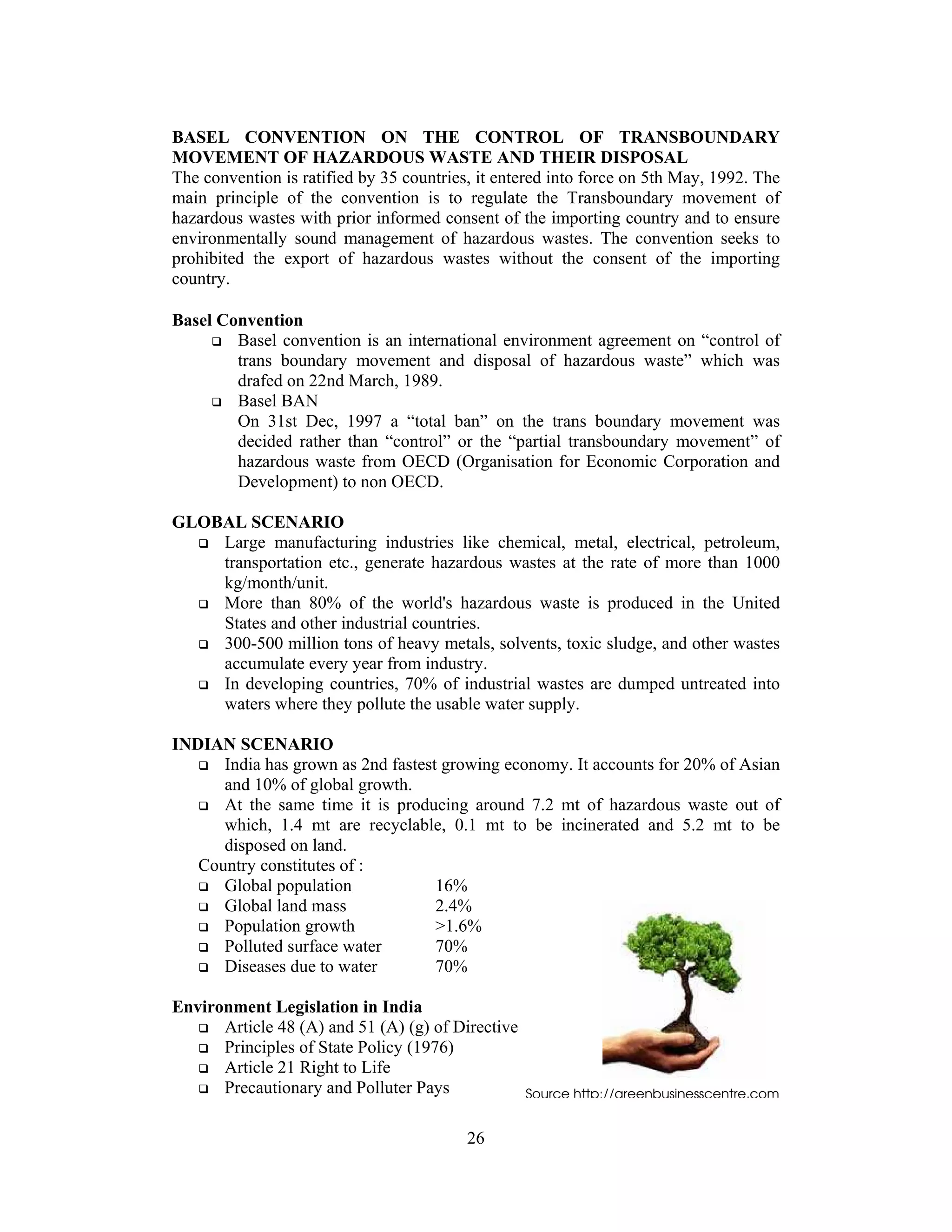
Hazardous Waste Societal waste
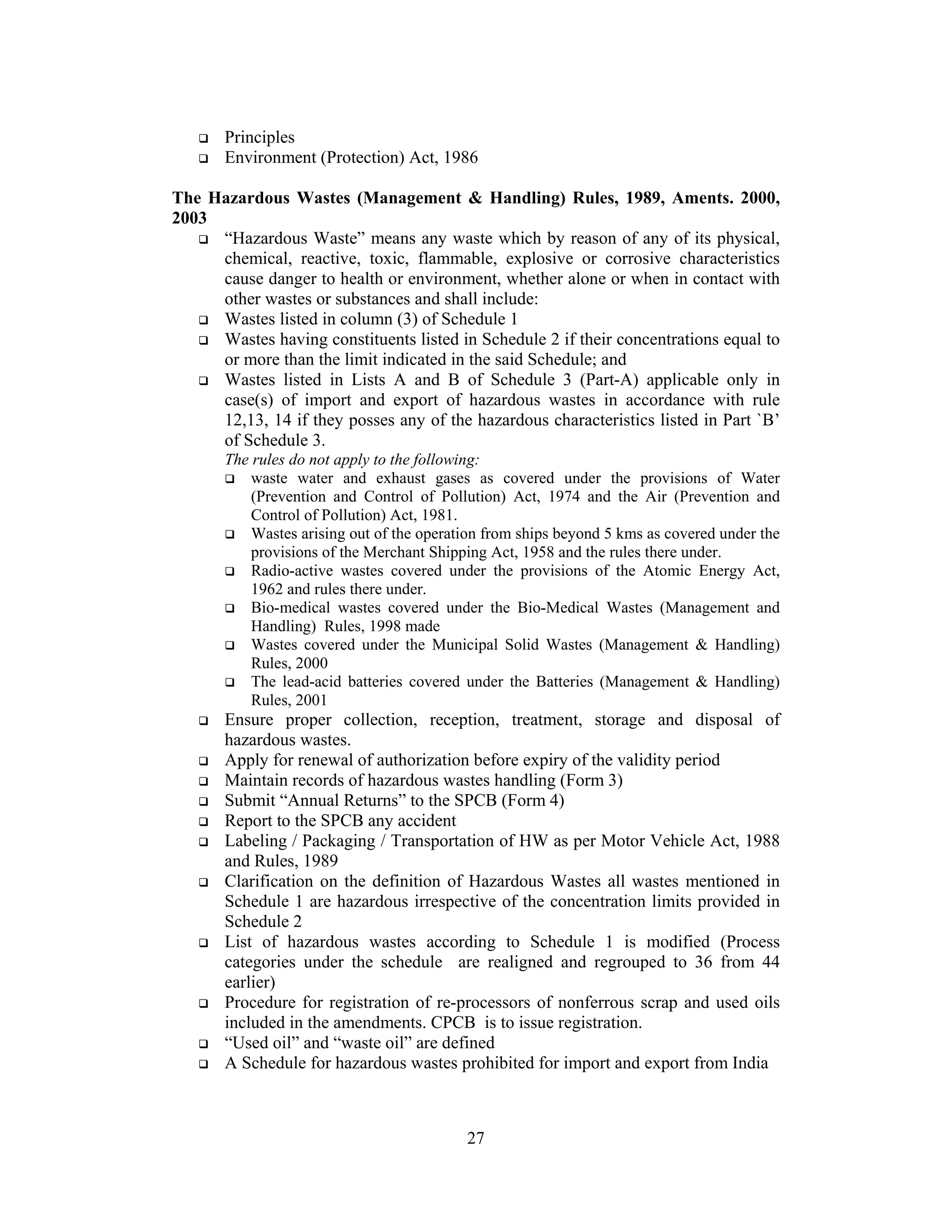
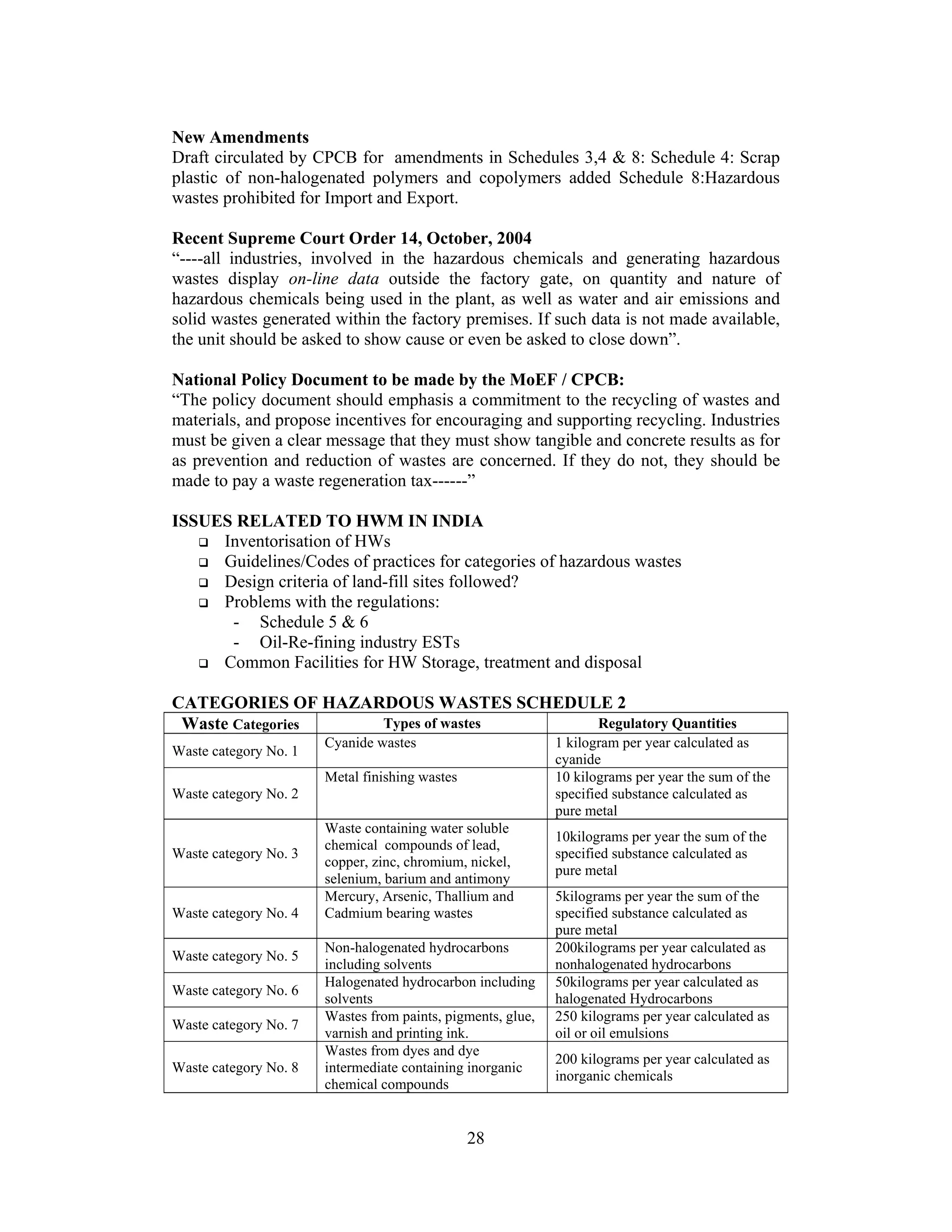
Household Waste Municipal Solid Waste
Waste from Paint Industries Hazardous Waste from
Battery Manufacturing &
Recycling
26
BASEL CONVENTION ON THE CONTROL OF TRANSBOUNDARY
MOVEMENT OF HAZARDOUS WASTE AND THEIR DISPOSAL
The convention is ratified by 35 countries, it entered into force on 5th May, 1992. The
main principle of the convention is to regulate the Transboundary movement of
hazardous wastes with prior informed consent of the importing country and to ensure
environmentally sound management of hazardous wastes. The convention seeks to
prohibited the export of hazardous wastes without the consent of the importing
country.
Basel Convention
Basel convention is an international environment agreement on “control of
trans boundary movement and disposal of hazardous waste” which was
drafed on 22nd March, 1989.
Basel BAN
On 31st Dec, 1997 a “total ban” on the trans boundary movement was
decided rather than “control” or the “partial transboundary movement” of
hazardous waste from OECD (Organisation for Economic Corporation and
Development) to non OECD.
GLOBAL SCENARIO
Large manufacturing industries like chemical, metal, electrical, petroleum,
transportation etc., generate hazardous wastes at the rate of more than 1000
kg/month/unit.
More than 80% of the world's hazardous waste is produced in the United
States and other industrial countries.
300-500 million tons of heavy metals, solvents, toxic sludge, and other wastes
accumulate every year from industry.
In developing countries, 70% of industrial wastes are dumped untreated into
waters where they pollute the usable water supply.
INDIAN SCENARIO
India has grown as 2nd fastest growing economy. It accounts for 20% of Asian
and 10% of global growth.
At the same time it is producing around 7.2 mt of hazardous waste out of
which, 1.4 mt are recyclable, 0.1 mt to be incinerated and 5.2 mt to be
disposed on land.
Country constitutes of :
Global population 16%
Global land mass 2.4%
Population growth >1.6%
Polluted surface water 70%
Diseases due to water 70%
Environment Legislation in India
Article 48 (A) and 51 (A) (g) of Directive
Principles of State Policy (1976)
Article 21 Right to Life
Precautionary and Polluter Pays Source http://greenbusinesscentre.com
27
Principles
Environment (Protection) Act, 1986
The Hazardous Wastes (Management & Handling) Rules, 1989, Aments. 2000,
2003
“Hazardous Waste” means any waste which by reason of any of its physical,
chemical, reactive, toxic, flammable, explosive or corrosive characteristics
cause danger to health or environment, whether alone or when in contact with
other wastes or substances and shall include:
Wastes listed in column (3) of Schedule 1
Wastes having constituents listed in Schedule 2 if their concentrations equal to
or more than the limit indicated in the said Schedule; and
Wastes listed in Lists A and B of Schedule 3 (Part-A) applicable only in
case(s) of import and export of hazardous wastes in accordance with rule
12,13, 14 if they posses any of the hazardous characteristics listed in Part `B’
of Schedule 3.
The rules do not apply to the following:
waste water and exhaust gases as covered under the provisions of Water
(Prevention and Control of Pollution) Act, 1974 and the Air (Prevention and
Control of Pollution) Act, 1981.
Wastes arising out of the operation from ships beyond 5 kms as covered under the
provisions of the Merchant Shipping Act, 1958 and the rules there under.
Radio-active wastes covered under the provisions of the Atomic Energy Act,
1962 and rules there under.
Bio-medical wastes covered under the Bio-Medical Wastes (Management and
Handling) Rules, 1998 made
Wastes covered under the Municipal Solid Wastes (Management & Handling)
Rules, 2000
The lead-acid batteries covered under the Batteries (Management & Handling)
Rules, 2001
Ensure proper collection, reception, treatment, storage and disposal of
hazardous wastes.
Apply for renewal of authorization before expiry of the validity period
Maintain records of hazardous wastes handling (Form 3)
Submit “Annual Returns” to the SPCB (Form 4)
Report to the SPCB any accident
Labeling / Packaging / Transportation of HW as per Motor Vehicle Act, 1988
and Rules, 1989
Clarification on the definition of Hazardous Wastes all wastes mentioned in
Schedule 1 are hazardous irrespective of the concentration limits provided in
Schedule 2
List of hazardous wastes according to Schedule 1 is modified (Process
categories under the schedule are realigned and regrouped to 36 from 44
earlier)
Procedure for registration of re-processors of nonferrous scrap and used oils
included in the amendments. CPCB is to issue registration.
“Used oil” and “waste oil” are defined
A Schedule for hazardous wastes prohibited for import and export from India
28
New Amendments
Draft circulated by CPCB for amendments in Schedules 3,4 & 8: Schedule 4: Scrap
plastic of non-halogenated polymers and copolymers added Schedule 8:Hazardous
wastes prohibited for Import and Export.
Recent Supreme Court Order 14, October, 2004
“----all industries, involved in the hazardous chemicals and generating hazardous
wastes display on-line data outside the factory gate, on quantity and nature of
hazardous chemicals being used in the plant, as well as water and air emissions and
solid wastes generated within the factory premises. If such data is not made available,
the unit should be asked to show cause or even be asked to close down”.
National Policy Document to be made by the MoEF / CPCB:
“The policy document should emphasis a commitment to the recycling of wastes and
materials, and propose incentives for encouraging and supporting recycling. Industries
must be given a clear message that they must show tangible and concrete results as for
as prevention and reduction of wastes are concerned. If they do not, they should be
made to pay a waste regeneration tax------”
ISSUES RELATED TO HWM IN INDIA
Inventorisation of HWs
Guidelines/Codes of practices for categories of hazardous wastes
Design criteria of land-fill sites followed?
Problems with the regulations:
- Schedule 5 & 6
- Oil-Re-fining industry ESTs
Common Facilities for HW Storage, treatment and disposal
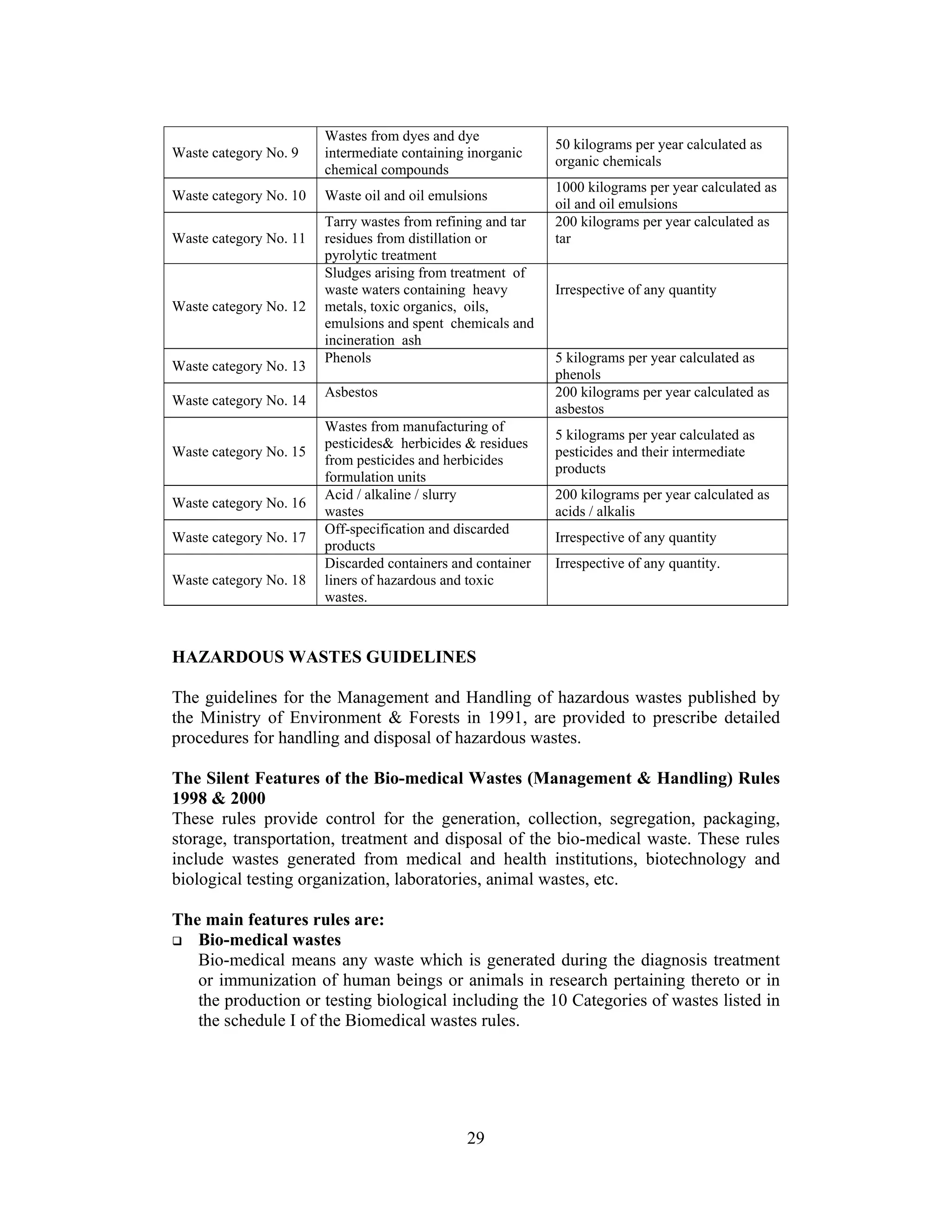
CATEGORIES OF HAZARDOUS WASTES SCHEDULE 2
Waste Categories Types of wastes Regulatory Quantities
Waste category No. 1
Cyanide wastes 1 kilogram per year calculated as
cyanide
Waste category No. 2
Metal finishing wastes 10 kilograms per year the sum of the
specified substance calculated as
pure metal
Waste category No. 3
Waste containing water soluble
chemical compounds of lead,
copper, zinc, chromium, nickel,
selenium, barium and antimony
10kilograms per year the sum of the
specified substance calculated as
pure metal
Waste category No. 4
Mercury, Arsenic, Thallium and
Cadmium bearing wastes
5kilograms per year the sum of the
specified substance calculated as
pure metal
Waste category No. 5
Non-halogenated hydrocarbons
including solvents
200kilograms per year calculated as
nonhalogenated hydrocarbons
Waste category No. 6
Halogenated hydrocarbon including
solvents
50kilograms per year calculated as
halogenated Hydrocarbons
Waste category No. 7
Wastes from paints, pigments, glue,
varnish and printing ink.
250 kilograms per year calculated as
oil or oil emulsions
Waste category No. 8
Wastes from dyes and dye
intermediate containing inorganic
chemical compounds
200 kilograms per year calculated as
inorganic chemicals
29
Waste category No. 9
Wastes from dyes and dye
intermediate containing inorganic
chemical compounds
50 kilograms per year calculated as
organic chemicals
Waste category No. 10 Waste oil and oil emulsions
1000 kilograms per year calculated as
oil and oil emulsions
Waste category No. 11
Tarry wastes from refining and tar
residues from distillation or
pyrolytic treatment
200 kilograms per year calculated as
tar
Waste category No. 12
Sludges arising from treatment of
waste waters containing heavy
metals, toxic organics, oils,
emulsions and spent chemicals and
incineration ash
Irrespective of any quantity
Waste category No. 13
Phenols 5 kilograms per year calculated as
phenols
Waste category No. 14
Asbestos 200 kilograms per year calculated as
asbestos
Waste category No. 15
Wastes from manufacturing of
pesticides& herbicides & residues
from pesticides and herbicides
formulation units
5 kilograms per year calculated as
pesticides and their intermediate
products
Waste category No. 16
Acid / alkaline / slurry
wastes
200 kilograms per year calculated as
acids / alkalis
Waste category No. 17
Off-specification and discarded
products
Irrespective of any quantity
Waste category No. 18
Discarded containers and container
liners of hazardous and toxic
wastes.
Irrespective of any quantity.
HAZARDOUS WASTES GUIDELINES
The guidelines for the Management and Handling of hazardous wastes published by
the Ministry of Environment & Forests in 1991, are provided to prescribe detailed
procedures for handling and disposal of hazardous wastes.
The Silent Features of the Bio-medical Wastes (Management & Handling) Rules
1998 & 2000
These rules provide control for the generation, collection, segregation, packaging,
storage, transportation, treatment and disposal of the bio-medical waste. These rules
include wastes generated from medical and health institutions, biotechnology and
biological testing organization, laboratories, animal wastes, etc.
The main features rules are:
Bio-medical wastes
Bio-medical means any waste which is generated during the diagnosis treatment
or immunization of human beings or animals in research pertaining thereto or in
the production or testing biological including the 10 Categories of wastes listed in
the schedule I of the Biomedical wastes rules.
30
Authorization
Every occupier of institution generating medical waste is to ensure
handling of such wastes without any adverse effect on human health and
environment.
Every occupier of institution/operator of facility to make application for
grant of authorization in form 1 to prescribed authority. Application for
authorization to accompany with an authorization fee as prescribed by
state Government.
Prescribed authority appointed in every State and union territory are
required to grant authorization within ninety days from the date of
applications and to be valid for three years.
Segregation, packaging & labeling
Unique feature is it prescribes requirements for segregation of wastes at
sources along with appropriate packaging and labelling details.
Transportation in accordance with the Motor Vehicles Act 1988 and the
rules there under.
Treatment & Disposal
Treatment and disposal to be in accordance with those given in schedule I
and in compliance with standards prescribed in schedule V.
The specific standards required for various treatment disposal techniques
are given within these rules.
Records & Reporting
Records of generation, collection, reception, storage, transportation,
treatment, disposal, handling ton be maintained of prescribed authority.
Any accident in the institution or facility to be reported in Form III.
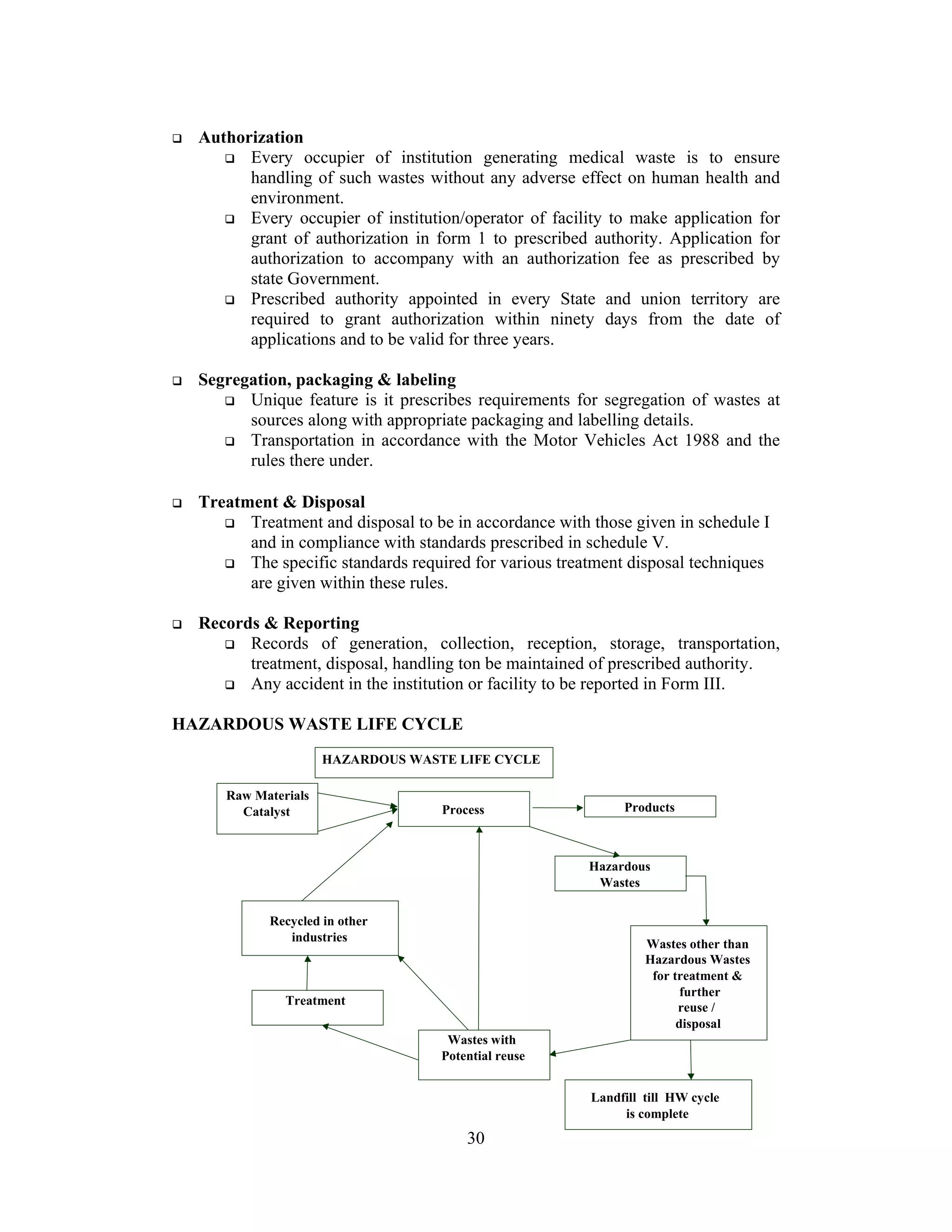
HAZARDOUS WASTE LIFE CYCLE
Process
Raw Materials
Catalyst Products
Hazardous
Wastes
Wastes other than
Hazardous Wastes
for treatment &
further
reuse /
disposal
Recycled in other
industries
Treatment
Wastes with
Potential reuse
Landfill till HW cycle
is complete
31
CONCULSIONS
The very real problem that hazardous waste has created and is creating is
compounded by the commingling of technological obstacles; limited financial
resources, a general with an inadequate understanding of basic scientific concepts
including risk analysis.
However, there has been continuous reduction in hazardous waste generation due to
regulatory enforcement, legal liability, exposure to public scrutiny, reputation and
image impacts
With Source reduction cleaner and greener production, material substitution a, reuse,
etc we can have sustainable development and we can all look forward to leaving a
smaller footprint for future generations.
While we are still in the process of effective implementation of the regulations
through creating awareness among the people especially among the waste generators
a move towards “Prevention is better than cure” by adopting waste minimization
technologies and management of the unavoidable waste in the environmentally sound
manner is the NEED OF THE HOUR
“Nature is essence of civilisation, to preserve it in its pristine glory
and magnificence becomes our priority”

overview on hazardous wastes and its management

  • 1.
    17 OVERVIEW ON HAZARDOUSWASTES AND ITS MANAGEMENT Dr. I.D. Mall Professor, Department of Chemical Engineering, Indian Institute of Technology- Roorkee, Roorkee-247667(UA), India INTRODUCTION While there is little doubt that humankind’s increasing of natural law has brought us increased life expectancy and higher quality of life for more people than ever known before. This has brought the risk of global calamity and impairment of human health. Hazardous waste management has become an international problem The environmental and Human Health consequences of the residuals and wastes: not understood and recognised Developments in science, epidemiology, toxicology and analytical chemistry enabled to recognise LAND Mark Episodes DDT : Residues in deep sea liquid, Antarctic penguins, and the fatty tissues of Homo sapiens. High levels of DDT in aquatic birds Mercury : As liquid mercury to cure constipation. Mercury salts: results in neurological disorder Dutch Hat industry Organic form Methyl Mercury: More Pernicious Minamata Japan episode paralysis and sensory loss recently in coal fire boilers Polychlorinated biphenyls (PCB’s): transformer coolants, plasticisers, carbonless paper: Japan and Taiwan Miscarriages and birth defects Poly brominated biphenyls: Michigan mothers milk Dioxins and Furan from pulp and paper mill effluent Hazardous waste doses pose a real risk to human health and The environment But to what magnitude of risk? Relative Risk Problem EPA experts Public Opinion Hazardous waste sites Low-Medium High Pesticide residue on foods High Medium Indoor air pollutants High Low Consumer Exposure High Low to chemicals
  • 2.
    18 HAZARDOUS WASTE ? Asolid waste or combination of solid wastes that, because of quantity, concentration or physical, chemical or infectious characteristics, may cause or significantly contribute to an increase in mortality or an increase in serious, irreversible, or incapacitating reversible illness or pose a substantial hazard to human health or the environment when improperly treated, stored, transported, disposed, or otherwise managed. About 290 million tons of hazardous wastes are generated in the U.S. each year. About 4% is recycled. The rest is treated, stored or disposed. Generally the term "hazardous waste" means a solid waste, or combination of solid waste that, because of its quantity, concentration, or physical, chemical or infectious characteristics may: Cause or significantly contribute to an increase in mortality or an increase in serious irreversible, or incapacitating reversible, illness; or Pose a substantial present or potential hazard to human health or the environment when improperly treated, stored, transported, or disposed of, or otherwise managed. Hazardous wastes come in many forms. They can be liquid, solids, semisolid, or contained gases. They can be manufacturing process byproducts, sludges or spent materials or simply discarded products. Hazardous waste can be classify on the basis of Physico-chemical properties Toxicological properties Environmental properties Specific effects on human health EPA lists wastes based on three categories: Exhibits a hazardous characteristic Ignitibility, Reactivity, Corrosivity, Toxicity Acutely hazardous Fatal to humans at low doses Toxic If it contains certain hazardous constituents Listing is accompanied by a hazard code I, C, R, E, H, T
  • 3.
    19 Waste Characteristics CHARACTERISTICS OFHAZARDOUS WASTE Ignitability Flashpoint <60 C Solid at STP capable of causing fire through friction, moisture changes or spontaneous chemical changes Oxidizer Corrosivity pH < 2 or > 12.5 Reactivity Unstable Reactive with water Generates toxic fumes Contains sulfide or cyanide groups Capable of detonation Toxicity EPA definition CLASSIFICATION OF HAZARDOUS WASTE On the basis of various properties of the waste can be classified under the following categories:- Explosive, Corrosive, Oxidizing , Flammable , Infectious , Irritant, Toxic, Toxic for reproduction, Harmful, Mutagenic, Exotoxic, Carcinogenic, Residuary hazardous property GENERATION OF HAZARDOUS WASTE Sources of hazardous waste in the country include those from industrial processes, mining extraction, tailings from pesticide based agricultural practices, etc. Industrial operations generate considerable quantities of hazardous waste and in rapidly industrializing countries such as India the contribution to hazardous waste from industries is largest. Since industrial units are spread all over the country, the impacts are region-wide. States such as Gujarat, Maharashtra, TamilNadu, and Andhra Pradesh, which and have undergone relatively greater industrial expansion, face problems of toxic and hazardous waste disposal far more acutely than less developed states. Characteristics of waste: Ignitability Corrosivity Reactivity Toxicity
  • 4.
    20 INDUSTRIAL HAZARDOUS WASTEGENERATION Timber product processing Leather tanning and finishing Iron and steel manufacturing Petroleum refining Inorganic chemicals Textile mills Organic chemical manufacturing Adhesives Gum and wood chemicals Pharmaceuticals Explosives Pesticides Pharmaceuticals Non-ferrous metal manufacturing Paint and ink formulation and printing Soap and detergent manufacturing Auto and other laundries Plastic and synthetic materials Pulp mills, paper products Rubber processing Machinery & mechanical products manufacturing STATUS OF HAZARDOUS WASTE GENERATION IN INDIA (Source Hazardous waste management in India)
  • 5.
    21 State wise comparativeHW Generation Units as per HWM Rules 1989 & 2003 State wise comparative HW Generation Units as per HWM Rules 1989 & 2003 501 1532 2984 6052 454 1589 3953 4571 700 1448 1100 2177 1036 1633 0 1000 2000 3000 4000 5000 6000 7000 AP Gujarat Karnataka Maharashtra Punjab TN UP State No. of HW units as per HWM Rules, 1989 No. of HW units as per 2003 No.ofHWgeneratingUnits 309 47 116 133 183 163 57 271 889 575 423 753 257 207 0 100 200 300 400 500 600 700 800 900 1000 Chandigarh Haryana Himachal Kerala MP Orissa J&K STATE No.ofHWgeneratingUnits HW generating Units as per HWM RULES, 1989 HW generating Units as per HWM RULES, 2003
  • 6.
    22 Sources & Quantumof Waste from Major Industrial Sources Fate of Hazardous Waste in India Solid Wastes that are not hazardous wastes: Household wastes Ag waste if used as fertilizer Mining spoils return to mine Wastes from exploration, development or production of crude oil, gas, geothermal Cement Kiln wastes Leather Industry, Trivalent Chromium Process Landfilling 58% Incineration 4% Recycling 38% Recycling Incineration Landfilling
  • 7.
    23 Summery of differentbioremediation strategies for typical hazardous wastes Hazardous Waste Assessment Methodology (Source Revision of criteria and protocols of assessment and classification of hazardous waste Public Consultation Document R&D Project No P1-482 September 2002) Nitrogen compounds Examples Ammonia, Nitrate, Nitro-aromatics etc. • Phytoremediation •Injection wells •Aeration Hydrocarbons • Compositing • Surfactants • Fungi • Plants • Fertilizers Examples Dibenzothiophenone, Toluene, phenanthrene, Carbazole, octane etc. Hazardous Wastes Halogenated organic compounds •Nutrient application •Aeration •Bioaugmentation •Phytoremediation Examples Carbonatetra chloride, Tetrachloro ethylene, Trichloro ethylene, PCBs, DDT etc Herbicides/ pesticides • Microbial, • Bioaugmentation • Phytoremediation Examples Atrazine, metachlor Dinoseb, Aldicarb etc. Metals • Phytoremediation •Injection wells •Constructed wetlands Examples Iron, Lead, Chromium, Copper, mercury etc.
  • 8.
    24 Graphical Representation ofState wise Generation of Hazardous Waste Water Pollution in Yamuna Hazardous Waste from Industries causes Water Pollution
  • 9.
    25 DIFFERENT INDUSTRIAL HAZARDOUSWASTE And Many More….And Many More….And Many More….And Many More…. Sludge from Industries as a Hazardous Waste Societal waste Household Waste Municipal Solid Waste Waste from Paint Industries Hazardous Waste from Battery Manufacturing & Recycling
  • 10.
    26 BASEL CONVENTION ONTHE CONTROL OF TRANSBOUNDARY MOVEMENT OF HAZARDOUS WASTE AND THEIR DISPOSAL The convention is ratified by 35 countries, it entered into force on 5th May, 1992. The main principle of the convention is to regulate the Transboundary movement of hazardous wastes with prior informed consent of the importing country and to ensure environmentally sound management of hazardous wastes. The convention seeks to prohibited the export of hazardous wastes without the consent of the importing country. Basel Convention Basel convention is an international environment agreement on “control of trans boundary movement and disposal of hazardous waste” which was drafed on 22nd March, 1989. Basel BAN On 31st Dec, 1997 a “total ban” on the trans boundary movement was decided rather than “control” or the “partial transboundary movement” of hazardous waste from OECD (Organisation for Economic Corporation and Development) to non OECD. GLOBAL SCENARIO Large manufacturing industries like chemical, metal, electrical, petroleum, transportation etc., generate hazardous wastes at the rate of more than 1000 kg/month/unit. More than 80% of the world's hazardous waste is produced in the United States and other industrial countries. 300-500 million tons of heavy metals, solvents, toxic sludge, and other wastes accumulate every year from industry. In developing countries, 70% of industrial wastes are dumped untreated into waters where they pollute the usable water supply. INDIAN SCENARIO India has grown as 2nd fastest growing economy. It accounts for 20% of Asian and 10% of global growth. At the same time it is producing around 7.2 mt of hazardous waste out of which, 1.4 mt are recyclable, 0.1 mt to be incinerated and 5.2 mt to be disposed on land. Country constitutes of : Global population 16% Global land mass 2.4% Population growth >1.6% Polluted surface water 70% Diseases due to water 70% Environment Legislation in India Article 48 (A) and 51 (A) (g) of Directive Principles of State Policy (1976) Article 21 Right to Life Precautionary and Polluter Pays Source http://greenbusinesscentre.com
  • 11.
    27 Principles Environment (Protection) Act,1986 The Hazardous Wastes (Management & Handling) Rules, 1989, Aments. 2000, 2003 “Hazardous Waste” means any waste which by reason of any of its physical, chemical, reactive, toxic, flammable, explosive or corrosive characteristics cause danger to health or environment, whether alone or when in contact with other wastes or substances and shall include: Wastes listed in column (3) of Schedule 1 Wastes having constituents listed in Schedule 2 if their concentrations equal to or more than the limit indicated in the said Schedule; and Wastes listed in Lists A and B of Schedule 3 (Part-A) applicable only in case(s) of import and export of hazardous wastes in accordance with rule 12,13, 14 if they posses any of the hazardous characteristics listed in Part `B’ of Schedule 3. The rules do not apply to the following: waste water and exhaust gases as covered under the provisions of Water (Prevention and Control of Pollution) Act, 1974 and the Air (Prevention and Control of Pollution) Act, 1981. Wastes arising out of the operation from ships beyond 5 kms as covered under the provisions of the Merchant Shipping Act, 1958 and the rules there under. Radio-active wastes covered under the provisions of the Atomic Energy Act, 1962 and rules there under. Bio-medical wastes covered under the Bio-Medical Wastes (Management and Handling) Rules, 1998 made Wastes covered under the Municipal Solid Wastes (Management & Handling) Rules, 2000 The lead-acid batteries covered under the Batteries (Management & Handling) Rules, 2001 Ensure proper collection, reception, treatment, storage and disposal of hazardous wastes. Apply for renewal of authorization before expiry of the validity period Maintain records of hazardous wastes handling (Form 3) Submit “Annual Returns” to the SPCB (Form 4) Report to the SPCB any accident Labeling / Packaging / Transportation of HW as per Motor Vehicle Act, 1988 and Rules, 1989 Clarification on the definition of Hazardous Wastes all wastes mentioned in Schedule 1 are hazardous irrespective of the concentration limits provided in Schedule 2 List of hazardous wastes according to Schedule 1 is modified (Process categories under the schedule are realigned and regrouped to 36 from 44 earlier) Procedure for registration of re-processors of nonferrous scrap and used oils included in the amendments. CPCB is to issue registration. “Used oil” and “waste oil” are defined A Schedule for hazardous wastes prohibited for import and export from India
  • 12.
    28 New Amendments Draft circulatedby CPCB for amendments in Schedules 3,4 & 8: Schedule 4: Scrap plastic of non-halogenated polymers and copolymers added Schedule 8:Hazardous wastes prohibited for Import and Export. Recent Supreme Court Order 14, October, 2004 “----all industries, involved in the hazardous chemicals and generating hazardous wastes display on-line data outside the factory gate, on quantity and nature of hazardous chemicals being used in the plant, as well as water and air emissions and solid wastes generated within the factory premises. If such data is not made available, the unit should be asked to show cause or even be asked to close down”. National Policy Document to be made by the MoEF / CPCB: “The policy document should emphasis a commitment to the recycling of wastes and materials, and propose incentives for encouraging and supporting recycling. Industries must be given a clear message that they must show tangible and concrete results as for as prevention and reduction of wastes are concerned. If they do not, they should be made to pay a waste regeneration tax------” ISSUES RELATED TO HWM IN INDIA Inventorisation of HWs Guidelines/Codes of practices for categories of hazardous wastes Design criteria of land-fill sites followed? Problems with the regulations: - Schedule 5 & 6 - Oil-Re-fining industry ESTs Common Facilities for HW Storage, treatment and disposal CATEGORIES OF HAZARDOUS WASTES SCHEDULE 2 Waste Categories Types of wastes Regulatory Quantities Waste category No. 1 Cyanide wastes 1 kilogram per year calculated as cyanide Waste category No. 2 Metal finishing wastes 10 kilograms per year the sum of the specified substance calculated as pure metal Waste category No. 3 Waste containing water soluble chemical compounds of lead, copper, zinc, chromium, nickel, selenium, barium and antimony 10kilograms per year the sum of the specified substance calculated as pure metal Waste category No. 4 Mercury, Arsenic, Thallium and Cadmium bearing wastes 5kilograms per year the sum of the specified substance calculated as pure metal Waste category No. 5 Non-halogenated hydrocarbons including solvents 200kilograms per year calculated as nonhalogenated hydrocarbons Waste category No. 6 Halogenated hydrocarbon including solvents 50kilograms per year calculated as halogenated Hydrocarbons Waste category No. 7 Wastes from paints, pigments, glue, varnish and printing ink. 250 kilograms per year calculated as oil or oil emulsions Waste category No. 8 Wastes from dyes and dye intermediate containing inorganic chemical compounds 200 kilograms per year calculated as inorganic chemicals
  • 13.
    29 Waste category No.9 Wastes from dyes and dye intermediate containing inorganic chemical compounds 50 kilograms per year calculated as organic chemicals Waste category No. 10 Waste oil and oil emulsions 1000 kilograms per year calculated as oil and oil emulsions Waste category No. 11 Tarry wastes from refining and tar residues from distillation or pyrolytic treatment 200 kilograms per year calculated as tar Waste category No. 12 Sludges arising from treatment of waste waters containing heavy metals, toxic organics, oils, emulsions and spent chemicals and incineration ash Irrespective of any quantity Waste category No. 13 Phenols 5 kilograms per year calculated as phenols Waste category No. 14 Asbestos 200 kilograms per year calculated as asbestos Waste category No. 15 Wastes from manufacturing of pesticides& herbicides & residues from pesticides and herbicides formulation units 5 kilograms per year calculated as pesticides and their intermediate products Waste category No. 16 Acid / alkaline / slurry wastes 200 kilograms per year calculated as acids / alkalis Waste category No. 17 Off-specification and discarded products Irrespective of any quantity Waste category No. 18 Discarded containers and container liners of hazardous and toxic wastes. Irrespective of any quantity. HAZARDOUS WASTES GUIDELINES The guidelines for the Management and Handling of hazardous wastes published by the Ministry of Environment & Forests in 1991, are provided to prescribe detailed procedures for handling and disposal of hazardous wastes. The Silent Features of the Bio-medical Wastes (Management & Handling) Rules 1998 & 2000 These rules provide control for the generation, collection, segregation, packaging, storage, transportation, treatment and disposal of the bio-medical waste. These rules include wastes generated from medical and health institutions, biotechnology and biological testing organization, laboratories, animal wastes, etc. The main features rules are: Bio-medical wastes Bio-medical means any waste which is generated during the diagnosis treatment or immunization of human beings or animals in research pertaining thereto or in the production or testing biological including the 10 Categories of wastes listed in the schedule I of the Biomedical wastes rules.
  • 14.
    30 Authorization Every occupier ofinstitution generating medical waste is to ensure handling of such wastes without any adverse effect on human health and environment. Every occupier of institution/operator of facility to make application for grant of authorization in form 1 to prescribed authority. Application for authorization to accompany with an authorization fee as prescribed by state Government. Prescribed authority appointed in every State and union territory are required to grant authorization within ninety days from the date of applications and to be valid for three years. Segregation, packaging & labeling Unique feature is it prescribes requirements for segregation of wastes at sources along with appropriate packaging and labelling details. Transportation in accordance with the Motor Vehicles Act 1988 and the rules there under. Treatment & Disposal Treatment and disposal to be in accordance with those given in schedule I and in compliance with standards prescribed in schedule V. The specific standards required for various treatment disposal techniques are given within these rules. Records & Reporting Records of generation, collection, reception, storage, transportation, treatment, disposal, handling ton be maintained of prescribed authority. Any accident in the institution or facility to be reported in Form III. HAZARDOUS WASTE LIFE CYCLE HAZARDOUS WASTE LIFE CYCLE Process Raw Materials Catalyst Products Hazardous Wastes Wastes other than Hazardous Wastes for treatment & further reuse / disposal Recycled in other industries Treatment Wastes with Potential reuse Landfill till HW cycle is complete
  • 15.
    31 CONCULSIONS The very realproblem that hazardous waste has created and is creating is compounded by the commingling of technological obstacles; limited financial resources, a general with an inadequate understanding of basic scientific concepts including risk analysis. However, there has been continuous reduction in hazardous waste generation due to regulatory enforcement, legal liability, exposure to public scrutiny, reputation and image impacts With Source reduction cleaner and greener production, material substitution a, reuse, etc we can have sustainable development and we can all look forward to leaving a smaller footprint for future generations. While we are still in the process of effective implementation of the regulations through creating awareness among the people especially among the waste generators a move towards “Prevention is better than cure” by adopting waste minimization technologies and management of the unavoidable waste in the environmentally sound manner is the NEED OF THE HOUR “Nature is essence of civilisation, to preserve it in its pristine glory and magnificence becomes our priority”