HUMAN REPRODUCTION
BY:CARMEN AND CLAUDIA
Sex characteristics
Primary characteristics
• Are physical differences
between male and female
reproductive organs .
Secondary characteristics
• Are physical differences that
aren’t directly related to
reproduction.These
characteristics start
appearing during puberty.
Human reproductive cells
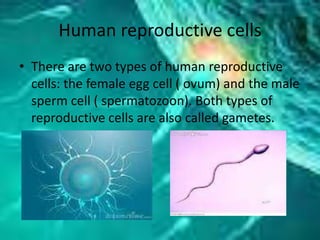
• There are two types of human reproductive
cells: the female egg cell ( ovum) and the male
sperm cell ( spermatozoon). Both types of
reproductive cells are also called gametes.
The female reproductive system.
• The female reproductive system produces
female gametes, called egg cells. It is also
where a fertilised egg cell develops into a
fetus.
External and internal sex organs of
the female reproductive systems
External sex organs
• The labia majora and the
labia minora, skin that
protects the rest of the
vulva.
• The vaginal orifice.
• The clitoris.
Internal sex organs
• The ovaries.
• The fallopian tube.
• The uterus.
• The vagina.
The menstrual cycle
• An egg cell starts to
mature inside one of the
ovaries . On of the 14th
day the egg cell leaves the
ovary. This process is
called ovulation.
• The walls of the uterus
become thicker with extra
tissue and blood. This
change prepares the
uterus for a fertilisied egg
cell ,the extra tissue and
blood come away from
the walls of the uterus
and leave the body
through the vagina. This
process is called
menstruation.
The male reproductive system
• The male reproductive system produces male
gametes ,called sperm cells. It also transports the
sperm cells out of a man’s body and into a
woman’s reproductive system.
• Penis
• Testicles
• Vas deferences
• Seminal vesicles and the prostate
• The urethra
The parts
• The penis , which deposits sperm cells in the
vagina.
• The testicles produce millions of sperm cells.
• The vas deferens carry the sperm cells to the
urethra.
• The seminal vesicles and the prostate produce
semen.
• The urethra, wich carries the semen and the
sperm cells out of the body ,through the penis.
The male reproductive system becomes
mature during puberty. Then the testicles
start to produce millions of sperm cells.
Fertilisation
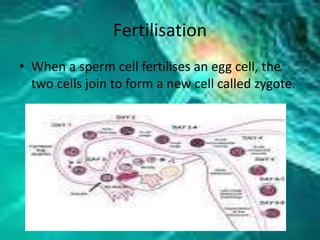
• When a sperm cell fertilises an egg cell, the
two cells join to form a new cell called zygote.
Pregnancy
• Pregnancy is the time between the
fertilisation of an egg cell and the birth of a
baby.
Birth
• Birth is when the baby leaves the uterus
through the vagina. Three stages: the dilation
of the cervix, the expulsion of the baby and
the expulsion of the afterbirth(the placenta,
the amniotic sac and the rest of the umbilical
cord).
THE END !

Human reproduction

  • 1.
  • 2.
    Sex characteristics Primary characteristics •Are physical differences between male and female reproductive organs . Secondary characteristics • Are physical differences that aren’t directly related to reproduction.These characteristics start appearing during puberty.
  • 3.
    Human reproductive cells •There are two types of human reproductive cells: the female egg cell ( ovum) and the male sperm cell ( spermatozoon). Both types of reproductive cells are also called gametes.
  • 4.
    The female reproductivesystem. • The female reproductive system produces female gametes, called egg cells. It is also where a fertilised egg cell develops into a fetus.
  • 5.
    External and internalsex organs of the female reproductive systems External sex organs • The labia majora and the labia minora, skin that protects the rest of the vulva. • The vaginal orifice. • The clitoris. Internal sex organs • The ovaries. • The fallopian tube. • The uterus. • The vagina.
  • 6.
    The menstrual cycle •An egg cell starts to mature inside one of the ovaries . On of the 14th day the egg cell leaves the ovary. This process is called ovulation. • The walls of the uterus become thicker with extra tissue and blood. This change prepares the uterus for a fertilisied egg cell ,the extra tissue and blood come away from the walls of the uterus and leave the body through the vagina. This process is called menstruation.
  • 7.
    The male reproductivesystem • The male reproductive system produces male gametes ,called sperm cells. It also transports the sperm cells out of a man’s body and into a woman’s reproductive system. • Penis • Testicles • Vas deferences • Seminal vesicles and the prostate • The urethra
  • 8.
    The parts • Thepenis , which deposits sperm cells in the vagina. • The testicles produce millions of sperm cells. • The vas deferens carry the sperm cells to the urethra. • The seminal vesicles and the prostate produce semen. • The urethra, wich carries the semen and the sperm cells out of the body ,through the penis.
  • 9.
    The male reproductivesystem becomes mature during puberty. Then the testicles start to produce millions of sperm cells.
  • 10.
    Fertilisation • When asperm cell fertilises an egg cell, the two cells join to form a new cell called zygote.
  • 11.
    Pregnancy • Pregnancy isthe time between the fertilisation of an egg cell and the birth of a baby.
  • 12.
    Birth • Birth iswhen the baby leaves the uterus through the vagina. Three stages: the dilation of the cervix, the expulsion of the baby and the expulsion of the afterbirth(the placenta, the amniotic sac and the rest of the umbilical cord).
  • 13.