.
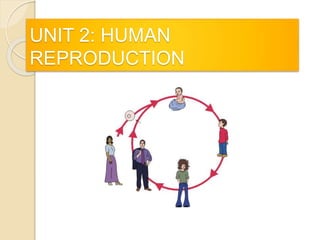
UNIT 2: HUMAN 
REPRODUCTION
INDEX: 
* Reading Comprehension. 
* Written Essay. 
1.- Sexual Characteristics. 
1.1. Primary Characteristics. 
1.2. Puberty. 
1.3. Secondary 
Characteristics
2. The Human Reproductive 
System. 
2.1. The Female Reproductive 
System 
2.2. The Male Reproductive 
System
3. Processes in Human Reproduction. 
3.1. Production of gametes 
3.1.1. The female gamete: the 
ovum 
3.1.2. The male gamete: the 
spermatozoid. 
3.2.- Fertilization 
3.3.- Pregnancy 
3.4.- Childbirth.
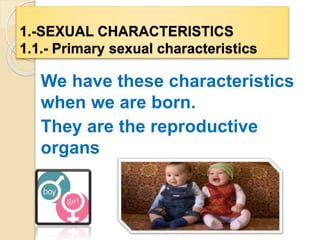
1.-SEXUAL CHARACTERISTICS 
1.1.- Primary sexual characteristics 
We have these characteristics 
when we are born. 
They are the reproductive 
organs
1.2.- Puberty and 
Adolescence. 
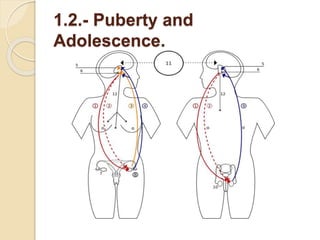
Puberty is the time when the 
reproductive system matures and 
secondary characteristics appear. 
It starts when the pituitary gland 
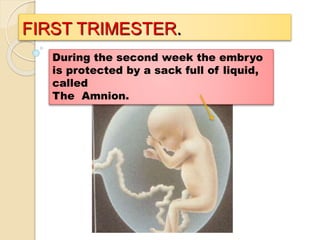
sends hormones to the genital 
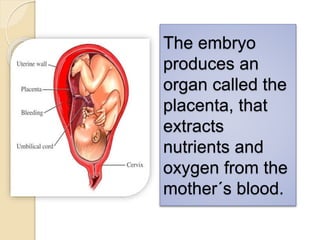
organs. 
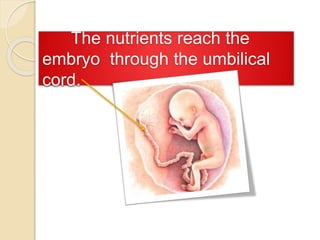
Adolescence is the period of 
mental transition from childhood 
to adulthood.
1.2.- Puberty and 
Adolescence.
1.3.- Secondary sexual 
characteristics 
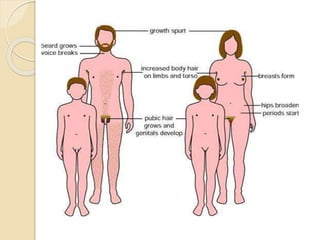
*GIRLS reach puberty between 
11 and 14 years and the 
secondary characteristics are: 

1.3.- Secondary sexual 
characteristics 
BOYS reach puberty between 13 
and 15 years and the secondary 
characteristics are: 
 Lower voices 
 More developed muscles 
 Lot of facial and body hair.
2.- THE HUMAN 
REPRODUCTIVE 
SYSTEM
2.1.- The Female 
Reproductive 
System
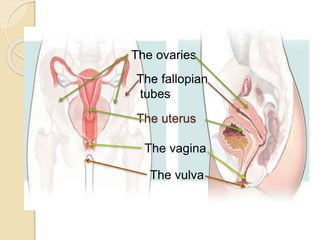
The ovaries 
The fallopian 
tubes 
The uterus 
The vagina 
The vulva
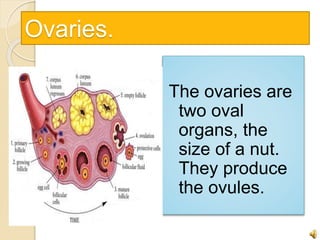
Ovaries. 
The ovaries are 
two oval 
organs, the 
size of a nut. 
They produce 
the ovules.
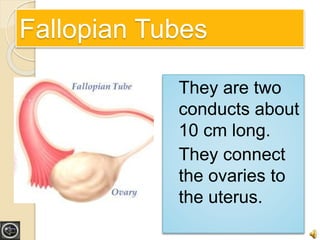
Fallopian Tubes 
They are two 
conducts about 
10 cm long. 
They connect 
the ovaries to 
the uterus.
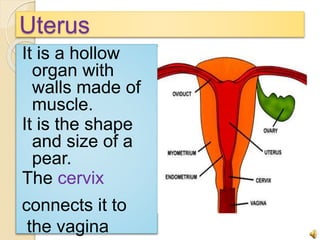
Uterus 
It is a hollow 
organ with 
walls made of 
muscle. 
It is the shape 
and size of a 
pear. 
The cervix 
connects it to 
the vagina
Vagina 
It is a conduct 
about 15 cm 
long. 
The walls are 
made of muscle 
and it connects 
the uterus with 
the exterior. 
Vulva 
It is formed by 
folds of skin, called 
labia. 
They cover and 
protect the 
orificies of 
the vagina and 
urethra.
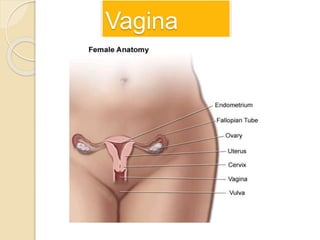
Vagina
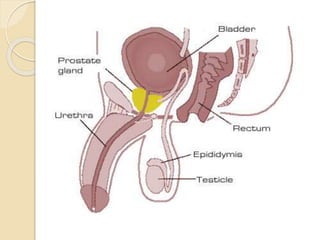
2.2.- The Male 
Reproductive System
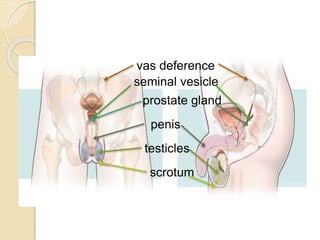
vas deference 
seminal vesicle 
prostate gland 
penis 
testicles 
scrotum
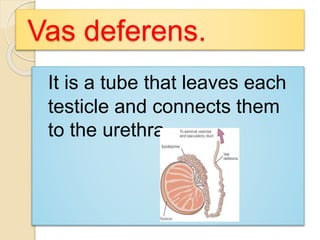
Vas deferens. 
It is a tube that leaves each 
testicle and connects them 
to the urethra.
Glands: 
Prostate & 
Seminal Vesicles 
They produce 
liquids that mix 
with the sperm 
and form semen.
Penis 
It is a long cylindrical organ, 
covered in skin. Inside runs 
a tube called the urethra, 
which is part of both the 
reproductive system and the 
urinary system.
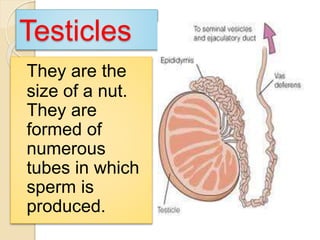
Testicles 
They are the 
size of a nut. 
They are 
formed of 
numerous 
tubes in which 
sperm is 
produced.
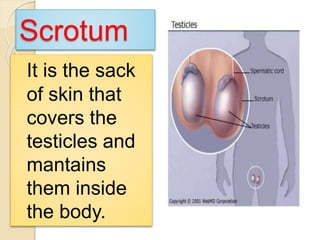
Scrotum 
It is the sack 
of skin that 
covers the 
testicles and 
mantains 
them inside 
the body.
3.- PROCESSES IN HUMAN 
REPRODUCTION 
3.1.- Production of gametes
3.1.1.-The female gamete: the 
ovule 
Ovules are large and round. 
From puberty on, one ovule matures 
and passes through a fallopian tube 
aproximately every 28 days. 
If it is not fertilized, it leaves the body 
through the vagina with a small 
amount of blood called menstruation 
or period.
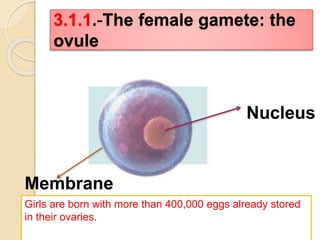
3.1.1.-The female gamete: the 
ovule 
Nucleus 
Membrane 
Girls are born with more than 400,000 eggs already stored 
in their ovaries.
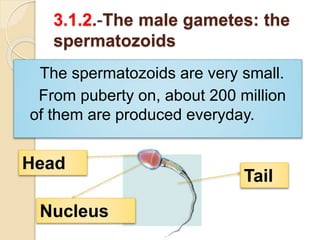
3.1.2.-The male gametes: the 
spermatozoids 
The spermatozoids are very small. 
From puberty on, about 200 million 
of them are produced everyday. 
Tail 
Head 
Nucleus
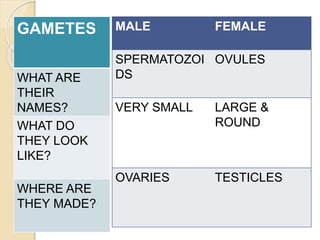
GAMETES 
WHAT ARE 
THEIR 
NAMES? 
WHAT DO 
THEY LOOK 
LIKE? 
WHERE ARE 
THEY MADE? 
MALE FEMALE 
SPERMATOZOI 
DS 
OVULES 
VERY SMALL LARGE & 
ROUND 
OVARIES TESTICLES
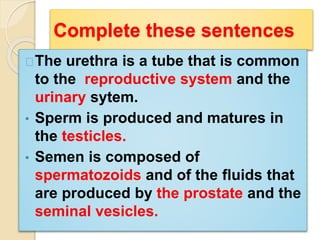
Complete these sentences 
The urethra is a tube that is common 
to the reproductive system and the 
urinary sytem. 
• Sperm is produced and matures in 
the testicles. 
• Semen is composed of 
spermatozoids and of the fluids that 
are produced by the prostate and the 
seminal vesicles.
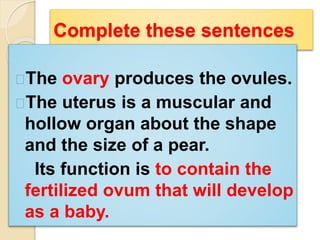
Complete these sentences 
The ovary produces the ovules. 
The uterus is a muscular and 
hollow organ about the shape 
and the size of a pear. 
Its function is to contain the 
fertilized ovum that will develop 
as a baby.
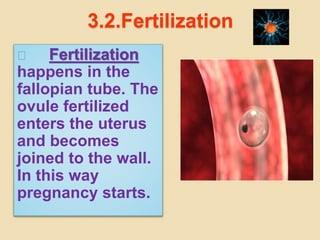
3.2.Fertilization 
Fertilization 
happens in the 
fallopian tube. The 
ovule fertilized 
enters the uterus 
and becomes 
joined to the wall. 
In this way 
pregnancy starts.
3.3 Pregnancy 
It takes place in the uterus. 
It last about nine months. It 
is divided into three phases: 
FIRST TRIMESTER 
SECOND TRIMESTER 
THIRD TRIMESTER
FIRST TRIMESTER. 
During the second week the embryo 
is protected by a sack full of liquid, 
called 
The Amnion.
The embryo 
produces an 
organ called the 
placenta, that 
extracts 
nutrients and 
oxygen from the 
mother´s blood.
The nutrients reach the 
embryo through the umbilical 
cord.
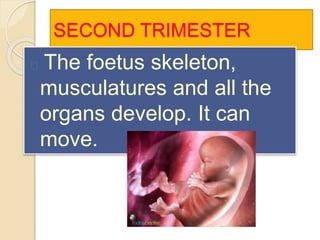
SECOND TRIMESTER 
The foetus skeleton, 
musculatures and all the 
organs develop. It can 
move.
THIRD TRIMESTER 
At the end of the seventh month 
the foetus could survive outside 
the mother. 
It fits its head into the neck of the 
uterus and it is ready to be born.
3.4 CHILDBIRTH
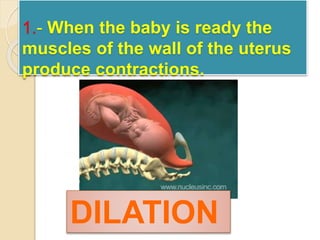
1.- When the baby is ready the 
muscles of the wall of the uterus 
produce contractions. 
DILATION
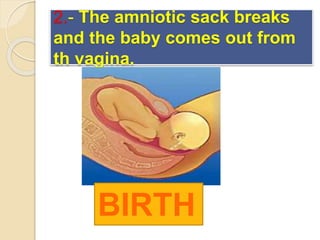
2.- The amniotic sack breaks 
and the baby comes out from 
th vagina. 
BIRTH
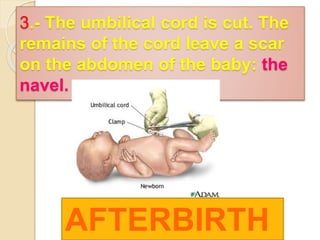
3.- The umbilical cord is cut. The 
remains of the cord leave a scar 
on the abdomen of the baby: the 
navel. 
AFTERBIRTH

Unit 2 . Human reproduction.

  • 1.
  • 3.
    UNIT 2: HUMAN REPRODUCTION
  • 4.
    INDEX: * ReadingComprehension. * Written Essay. 1.- Sexual Characteristics. 1.1. Primary Characteristics. 1.2. Puberty. 1.3. Secondary Characteristics
  • 5.
    2. The HumanReproductive System. 2.1. The Female Reproductive System 2.2. The Male Reproductive System
  • 6.
    3. Processes inHuman Reproduction. 3.1. Production of gametes 3.1.1. The female gamete: the ovum 3.1.2. The male gamete: the spermatozoid. 3.2.- Fertilization 3.3.- Pregnancy 3.4.- Childbirth.
  • 7.
    1.-SEXUAL CHARACTERISTICS 1.1.-Primary sexual characteristics We have these characteristics when we are born. They are the reproductive organs
  • 8.
    1.2.- Puberty and Adolescence. Puberty is the time when the reproductive system matures and secondary characteristics appear. It starts when the pituitary gland sends hormones to the genital organs. Adolescence is the period of mental transition from childhood to adulthood.
  • 9.
    1.2.- Puberty and Adolescence.
  • 10.
    1.3.- Secondary sexual characteristics *GIRLS reach puberty between 11 and 14 years and the secondary characteristics are: 
  • 11.
    1.3.- Secondary sexual characteristics BOYS reach puberty between 13 and 15 years and the secondary characteristics are:  Lower voices  More developed muscles  Lot of facial and body hair.
  • 13.
    2.- THE HUMAN REPRODUCTIVE SYSTEM
  • 14.
    2.1.- The Female Reproductive System
  • 15.
    The ovaries Thefallopian tubes The uterus The vagina The vulva
  • 16.
    Ovaries. The ovariesare two oval organs, the size of a nut. They produce the ovules.
  • 17.
    Fallopian Tubes Theyare two conducts about 10 cm long. They connect the ovaries to the uterus.
  • 18.
    Uterus It isa hollow organ with walls made of muscle. It is the shape and size of a pear. The cervix connects it to the vagina
  • 19.
    Vagina It isa conduct about 15 cm long. The walls are made of muscle and it connects the uterus with the exterior. Vulva It is formed by folds of skin, called labia. They cover and protect the orificies of the vagina and urethra.
  • 20.
  • 21.
    2.2.- The Male Reproductive System
  • 22.
    vas deference seminalvesicle prostate gland penis testicles scrotum
  • 23.
    Vas deferens. Itis a tube that leaves each testicle and connects them to the urethra.
  • 24.
    Glands: Prostate & Seminal Vesicles They produce liquids that mix with the sperm and form semen.
  • 25.
    Penis It isa long cylindrical organ, covered in skin. Inside runs a tube called the urethra, which is part of both the reproductive system and the urinary system.
  • 27.
    Testicles They arethe size of a nut. They are formed of numerous tubes in which sperm is produced.
  • 28.
    Scrotum It isthe sack of skin that covers the testicles and mantains them inside the body.
  • 29.
    3.- PROCESSES INHUMAN REPRODUCTION 3.1.- Production of gametes
  • 30.
    3.1.1.-The female gamete:the ovule Ovules are large and round. From puberty on, one ovule matures and passes through a fallopian tube aproximately every 28 days. If it is not fertilized, it leaves the body through the vagina with a small amount of blood called menstruation or period.
  • 31.
    3.1.1.-The female gamete:the ovule Nucleus Membrane Girls are born with more than 400,000 eggs already stored in their ovaries.
  • 32.
    3.1.2.-The male gametes:the spermatozoids The spermatozoids are very small. From puberty on, about 200 million of them are produced everyday. Tail Head Nucleus
  • 33.
    GAMETES WHAT ARE THEIR NAMES? WHAT DO THEY LOOK LIKE? WHERE ARE THEY MADE? MALE FEMALE SPERMATOZOI DS OVULES VERY SMALL LARGE & ROUND OVARIES TESTICLES
  • 34.
    Complete these sentences The urethra is a tube that is common to the reproductive system and the urinary sytem. • Sperm is produced and matures in the testicles. • Semen is composed of spermatozoids and of the fluids that are produced by the prostate and the seminal vesicles.
  • 35.
    Complete these sentences The ovary produces the ovules. The uterus is a muscular and hollow organ about the shape and the size of a pear. Its function is to contain the fertilized ovum that will develop as a baby.
  • 36.
    3.2.Fertilization Fertilization happensin the fallopian tube. The ovule fertilized enters the uterus and becomes joined to the wall. In this way pregnancy starts.
  • 37.
    3.3 Pregnancy Ittakes place in the uterus. It last about nine months. It is divided into three phases: FIRST TRIMESTER SECOND TRIMESTER THIRD TRIMESTER
  • 38.
    FIRST TRIMESTER. Duringthe second week the embryo is protected by a sack full of liquid, called The Amnion.
  • 39.
    The embryo producesan organ called the placenta, that extracts nutrients and oxygen from the mother´s blood.
  • 40.
    The nutrients reachthe embryo through the umbilical cord.
  • 41.
    SECOND TRIMESTER Thefoetus skeleton, musculatures and all the organs develop. It can move.
  • 42.
    THIRD TRIMESTER Atthe end of the seventh month the foetus could survive outside the mother. It fits its head into the neck of the uterus and it is ready to be born.
  • 43.
  • 44.
    1.- When thebaby is ready the muscles of the wall of the uterus produce contractions. DILATION
  • 45.
    2.- The amnioticsack breaks and the baby comes out from th vagina. BIRTH
  • 46.
    3.- The umbilicalcord is cut. The remains of the cord leave a scar on the abdomen of the baby: the navel. AFTERBIRTH