Unit 4 human
reproduction

   María Boizas Crespo
Human reproduction

   Living things create other
    living things in the process of
    reproduction.
   Human beings reproduce
    through sexual reproduction ,
    bringing male and female sex
    cells together.
Primary sexual
          characteristis
   The reproductive systems are
    the primary sexual
    characteristics.We already
    have them when we are born
    and they are different for male
    and female.
Secondary sexual
         characteristics
   The external characteristics
    wich differentiate men from
    women are called secondary
    sexual characteristics.
   During puberty,between the
    ages of eleven and fifteen,the
    reproductive system matures.
Changes during puberty
   Some changes are the same
    for both sexes like:
     Growing  taller.
     Hair growing in the armpit.

   Other changes are specific to
    each sex:
     Girlsdevelop breasts and their
      hips get wider.
     Boys get deeper voices.
The reproductive
           cells:sperm
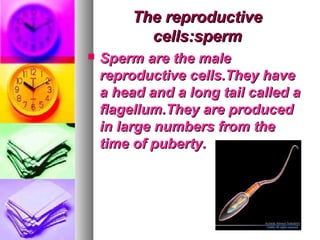
   Sperm are the male
    reproductive cells.They have
    a head and a long tail called a
    flagellum.They are produced
    in large numbers from the
    time of puberty.
The reproductive cells:ova

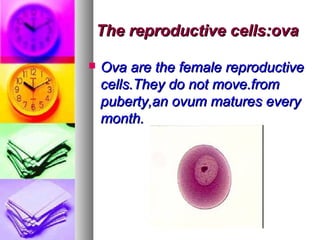
   Ova are the female reproductive
    cells.They do not move.from
    puberty,an ovum matures every
    month.
The female reproductive
           system
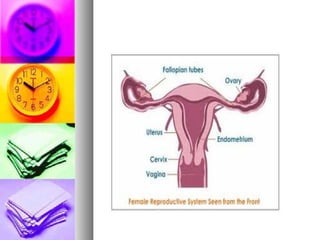
   The female reproductive
    system is made up of these
    organs:
     The  ovaries produce the ova.
     The uterus is where the baby
      develops.
     The fallopian tubes conects the
      ovaries to the uterus.
     The vagina conects the uterus
      to the outside of the body.
     The vulva is the external part of
      the female reproductive system.
The male reproductive system
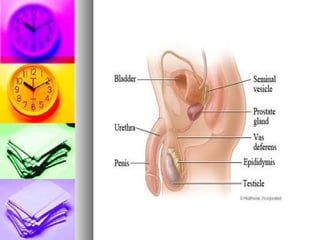
   The male reproductive system is
    made up of these organs:
     The testicles are outside the
      body.They produce sperm.They are
      covered by a bag of skin called
      scrotum.
     The vas deferens take the sperm
      from the testicles to the urethra.
     The urethra takes the sperm outside
      the body.
     The seminal vesicles and prostate
      produce seminal fluid and send it to
      the urethra.
     The penis is outside the male
      reproductive system.
Pregnancy (I)
   Pregnancy lasts about 9
    months and ends in a birth.
   During the early stage
    different structures are
    created to protect the
    embryo:
     The placenta takes nutrients
      from the mothers blood to the
      embryo.
     The umbilical cord connects the
      placenta to the embryo.
     The amniotic sac protects the
Pregnancy (II)
   The baby develops step by
    step:
     After  3 months: The embryo has
      all its organs.It becomes a
      foetus.
     After 5 months: The baby’s
      body develops and it starts
      moving and the mother feels it.
     After 5 months: The baby is
      ready to be born and it weighs
      around 3 kilos.
Labour
   The process of giving birth is
    called labour.
   Labour takes place in three
    phases:
     Dilation:rhytmic  contractions
      make the opening of the vagina
      and vulva big enough for the
      baby to come out.
     Expulsion:the baby is born and
      the doctor cuts the umbilical
      cord.
     After birth:the placenta comes
      out of the mother’s body.
The end

Human reproduction maria

  • 1.
    Unit 4 human reproduction María Boizas Crespo
  • 2.
    Human reproduction  Living things create other living things in the process of reproduction.  Human beings reproduce through sexual reproduction , bringing male and female sex cells together.
  • 3.
    Primary sexual characteristis  The reproductive systems are the primary sexual characteristics.We already have them when we are born and they are different for male and female.
  • 4.
    Secondary sexual characteristics  The external characteristics wich differentiate men from women are called secondary sexual characteristics.  During puberty,between the ages of eleven and fifteen,the reproductive system matures.
  • 5.
    Changes during puberty  Some changes are the same for both sexes like:  Growing taller.  Hair growing in the armpit.  Other changes are specific to each sex:  Girlsdevelop breasts and their hips get wider.  Boys get deeper voices.
  • 6.
    The reproductive cells:sperm  Sperm are the male reproductive cells.They have a head and a long tail called a flagellum.They are produced in large numbers from the time of puberty.
  • 7.
    The reproductive cells:ova  Ova are the female reproductive cells.They do not move.from puberty,an ovum matures every month.
  • 8.
    The female reproductive system  The female reproductive system is made up of these organs:  The ovaries produce the ova.  The uterus is where the baby develops.  The fallopian tubes conects the ovaries to the uterus.  The vagina conects the uterus to the outside of the body.  The vulva is the external part of the female reproductive system.
  • 10.
    The male reproductivesystem  The male reproductive system is made up of these organs:  The testicles are outside the body.They produce sperm.They are covered by a bag of skin called scrotum.  The vas deferens take the sperm from the testicles to the urethra.  The urethra takes the sperm outside the body.  The seminal vesicles and prostate produce seminal fluid and send it to the urethra.  The penis is outside the male reproductive system.
  • 12.
    Pregnancy (I)  Pregnancy lasts about 9 months and ends in a birth.  During the early stage different structures are created to protect the embryo:  The placenta takes nutrients from the mothers blood to the embryo.  The umbilical cord connects the placenta to the embryo.  The amniotic sac protects the
  • 13.
    Pregnancy (II)  The baby develops step by step:  After 3 months: The embryo has all its organs.It becomes a foetus.  After 5 months: The baby’s body develops and it starts moving and the mother feels it.  After 5 months: The baby is ready to be born and it weighs around 3 kilos.
  • 14.
    Labour  The process of giving birth is called labour.  Labour takes place in three phases:  Dilation:rhytmic contractions make the opening of the vagina and vulva big enough for the baby to come out.  Expulsion:the baby is born and the doctor cuts the umbilical cord.  After birth:the placenta comes out of the mother’s body.
  • 15.