HUMAN REPRODUCTION By Javier Díaz, Guillermo García and Pepe Calvo February 2012
REPRODUCTION Reproduction is a life process that lets living things create other living things that are similar to them. Primary sexual features : The male and female  reproductive cells are  made in the male and  female reproductive  systems.
Secondary sexual features
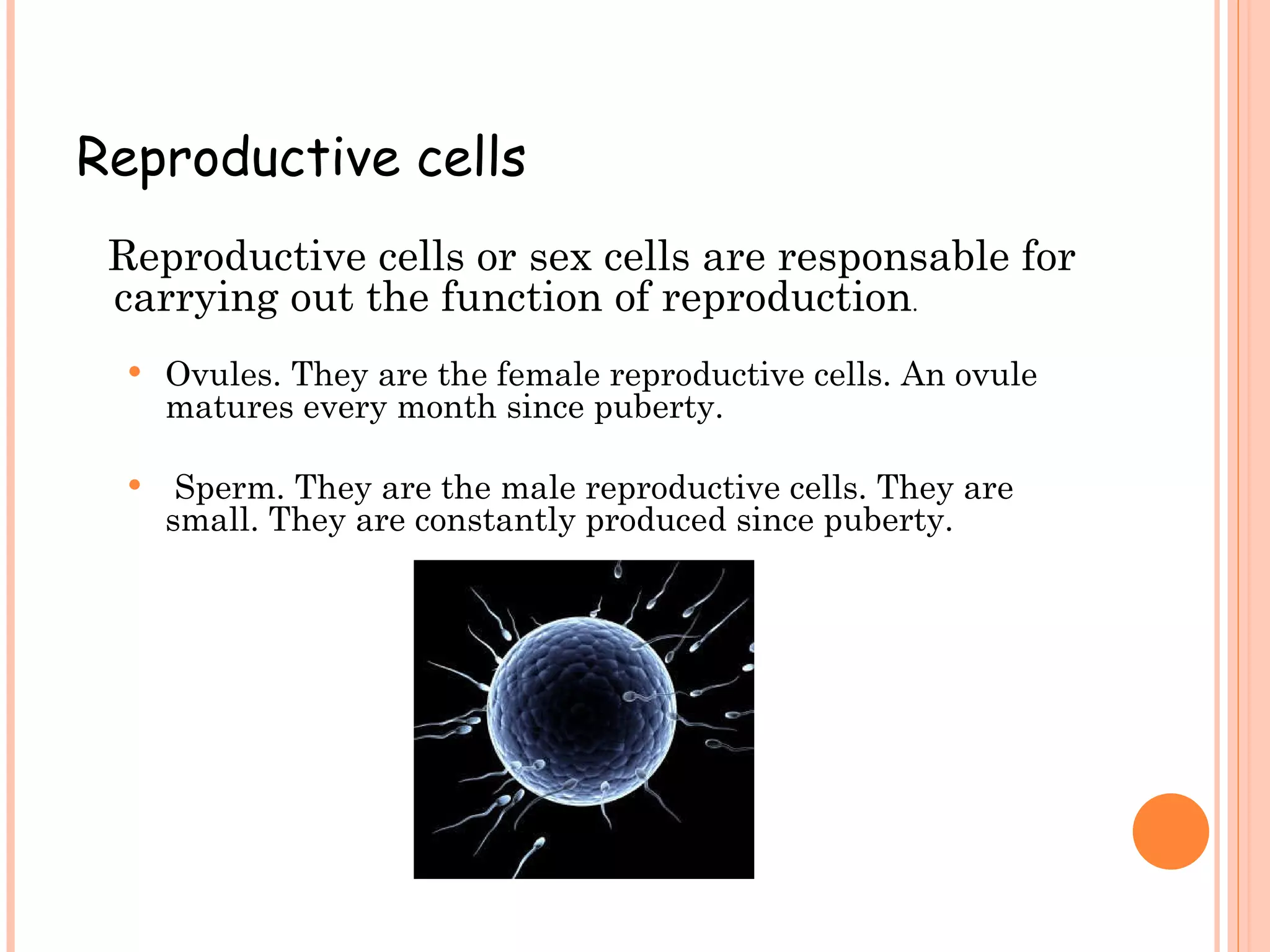
Reproductive cells Reproductive cells or sex cells are responsable for carrying out the function of reproduction . Ovules. They are the female reproductive cells. An ovule matures every month since puberty. Sperm. They are the male reproductive cells. They are small. They are constantly produced since puberty.
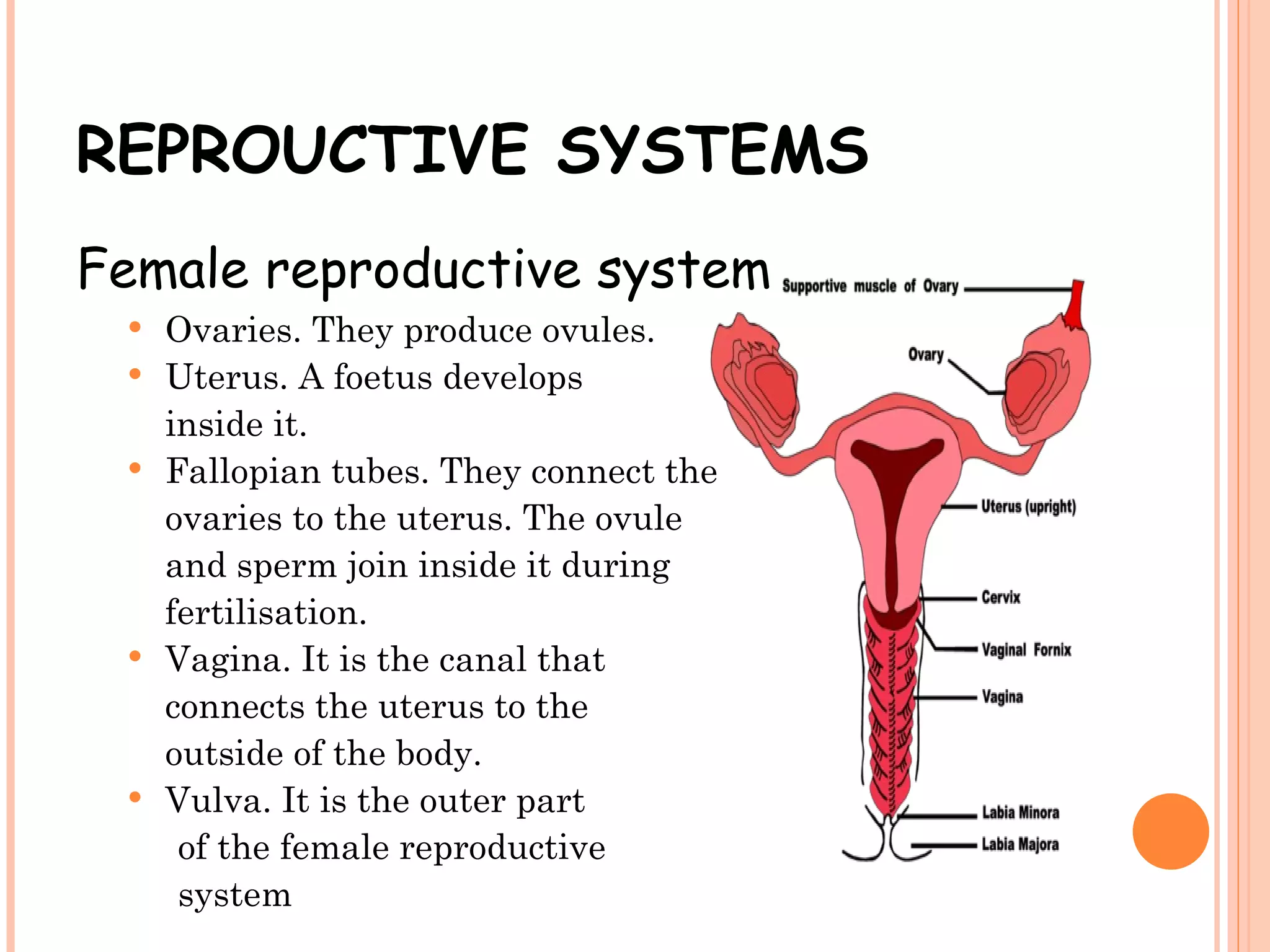
REPROUCTIVE SYSTEMS Female reproductive system Ovaries. They produce ovules. Uterus. A foetus develops  inside it. Fallopian tubes. They connect the  ovaries to the uterus. The ovule  and sperm join inside it during  fertilisation. Vagina. It is the canal that  connects the uterus to the  outside of the body. Vulva. It is the outer part  of the female reproductive  system
Male reproductive system Testicles.  They produce sperm. Vas deferens.  They are two thin tubes that take the sperm from the testicles to the urethra. Urethra.  It is the tube that takes urine or sperm outside the body. Seminal vesicles and prostate.  They are glands that produce seminal fluid and send it to the urethra. Penis.  It is outside the male reproductive system.
Fertilisation Fertilisation is the union of a sperm and an ovule in one of the Fallopian tubes. Menstruation occurs if the ovule is not fertilised.
PREGNANCY AND BIRTH The development of an embryo Pregnancy lasts about nine months and ends in a birth. The placenta.  It takes nutrients  and oxygen from the mother´s  blood and gives it to the baby The umbilical cord.  Connects  the embryo to the placenta. The amniotic sac.  It is a  membrane filled with fluid  that protects the embryo.
The development of a foetus The embryo has all its  organs formed after  the first three months. By the fifth month, the  mother can feel  the baby´s movements. After nine months, the  baby is ready to born.
Childbirth Childbird is when a baby leaves its mother´s womb. Childbirth takes place in three stages: Labour. Birth. Afterbirth
 

Human Reproduction by Pepe Calvo

  • 1.
    HUMAN REPRODUCTION ByJavier Díaz, Guillermo García and Pepe Calvo February 2012
  • 2.
    REPRODUCTION Reproduction isa life process that lets living things create other living things that are similar to them. Primary sexual features : The male and female reproductive cells are made in the male and female reproductive systems.
  • 3.
  • 4.
    Reproductive cells Reproductivecells or sex cells are responsable for carrying out the function of reproduction . Ovules. They are the female reproductive cells. An ovule matures every month since puberty. Sperm. They are the male reproductive cells. They are small. They are constantly produced since puberty.
  • 5.
    REPROUCTIVE SYSTEMS Femalereproductive system Ovaries. They produce ovules. Uterus. A foetus develops inside it. Fallopian tubes. They connect the ovaries to the uterus. The ovule and sperm join inside it during fertilisation. Vagina. It is the canal that connects the uterus to the outside of the body. Vulva. It is the outer part of the female reproductive system
  • 6.
    Male reproductive systemTesticles. They produce sperm. Vas deferens. They are two thin tubes that take the sperm from the testicles to the urethra. Urethra. It is the tube that takes urine or sperm outside the body. Seminal vesicles and prostate. They are glands that produce seminal fluid and send it to the urethra. Penis. It is outside the male reproductive system.
  • 7.
    Fertilisation Fertilisation isthe union of a sperm and an ovule in one of the Fallopian tubes. Menstruation occurs if the ovule is not fertilised.
  • 8.
    PREGNANCY AND BIRTHThe development of an embryo Pregnancy lasts about nine months and ends in a birth. The placenta. It takes nutrients and oxygen from the mother´s blood and gives it to the baby The umbilical cord. Connects the embryo to the placenta. The amniotic sac. It is a membrane filled with fluid that protects the embryo.
  • 9.
    The development ofa foetus The embryo has all its organs formed after the first three months. By the fifth month, the mother can feel the baby´s movements. After nine months, the baby is ready to born.
  • 10.
    Childbirth Childbird iswhen a baby leaves its mother´s womb. Childbirth takes place in three stages: Labour. Birth. Afterbirth
  • 11.