
Human development refers to the physical, cognitive, and
psychosocial development of humans throughout the lifespan.
•Physical development involves growth and changes in the body
and brain, the senses, motor skills, and health and wellness.
•Cognitive development involves learning, attention, memory,
language, thinking, reasoning, and creativity.
•Psychosocial development involves emotions, personality, and
social relationships.
Developmental psychology is a scientific approach which aims to
explain growth, change and consistency though the lifespan.
Developmental psychology looks at how thinking, feeling, and
behavior change throughout a person’s life.
The three goals of developmental psychology are to describe,
explain, and to optimize development (Baltes, Reese, & Lipsitt, 1980).
To describe development it is necessary to focus both on typical
patterns of change (normative development) and individual
variations in patterns of change (i.e. idiographic development).
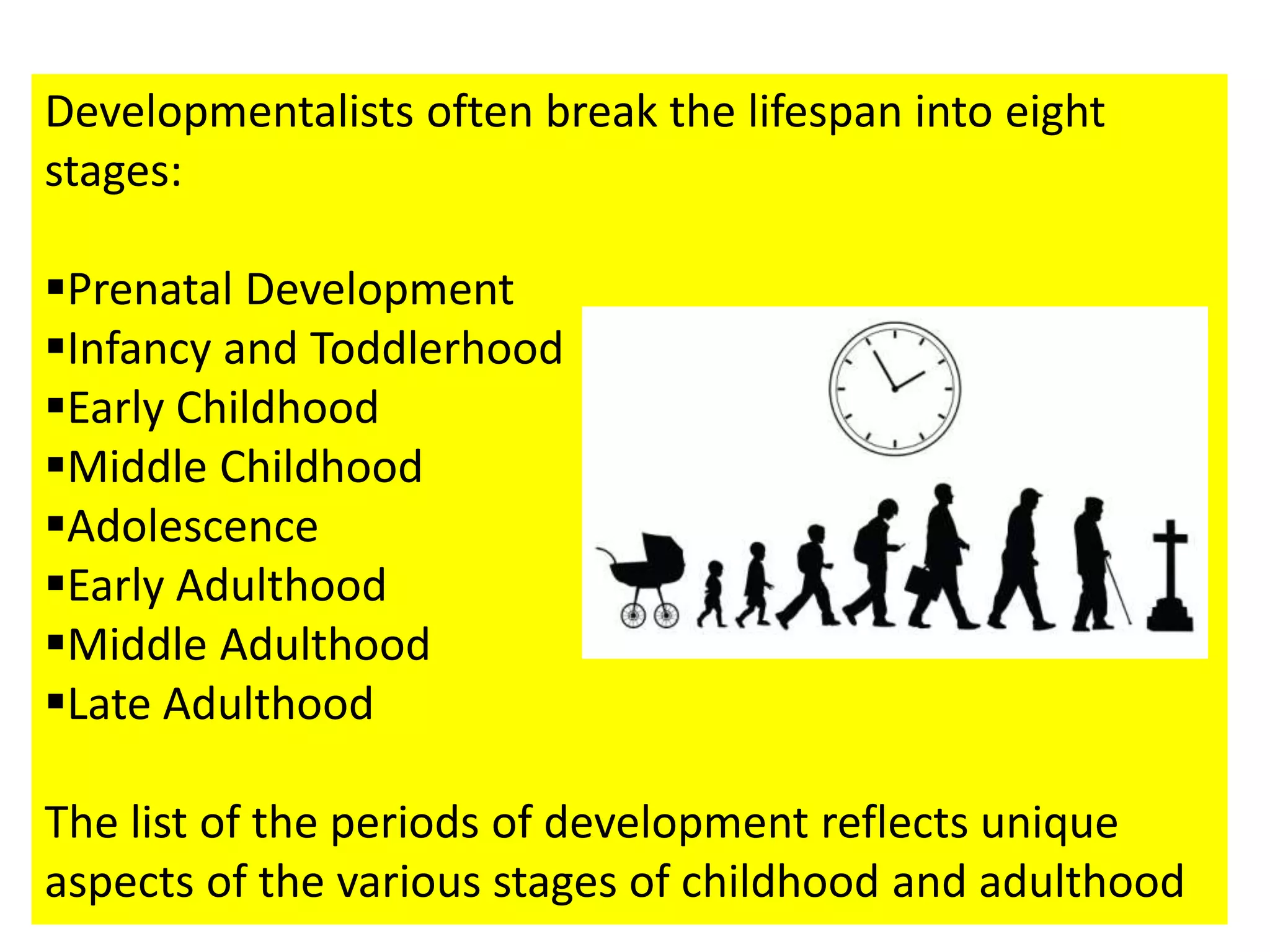
Developmentalists often break the lifespan into eight
stages:
Prenatal Development
Infancy and Toddlerhood
Early Childhood
Middle Childhood
Adolescence
Early Adulthood
Middle Adulthood
Late Adulthood
The list of the periods of development reflects unique
aspects of the various stages of childhood and adulthood
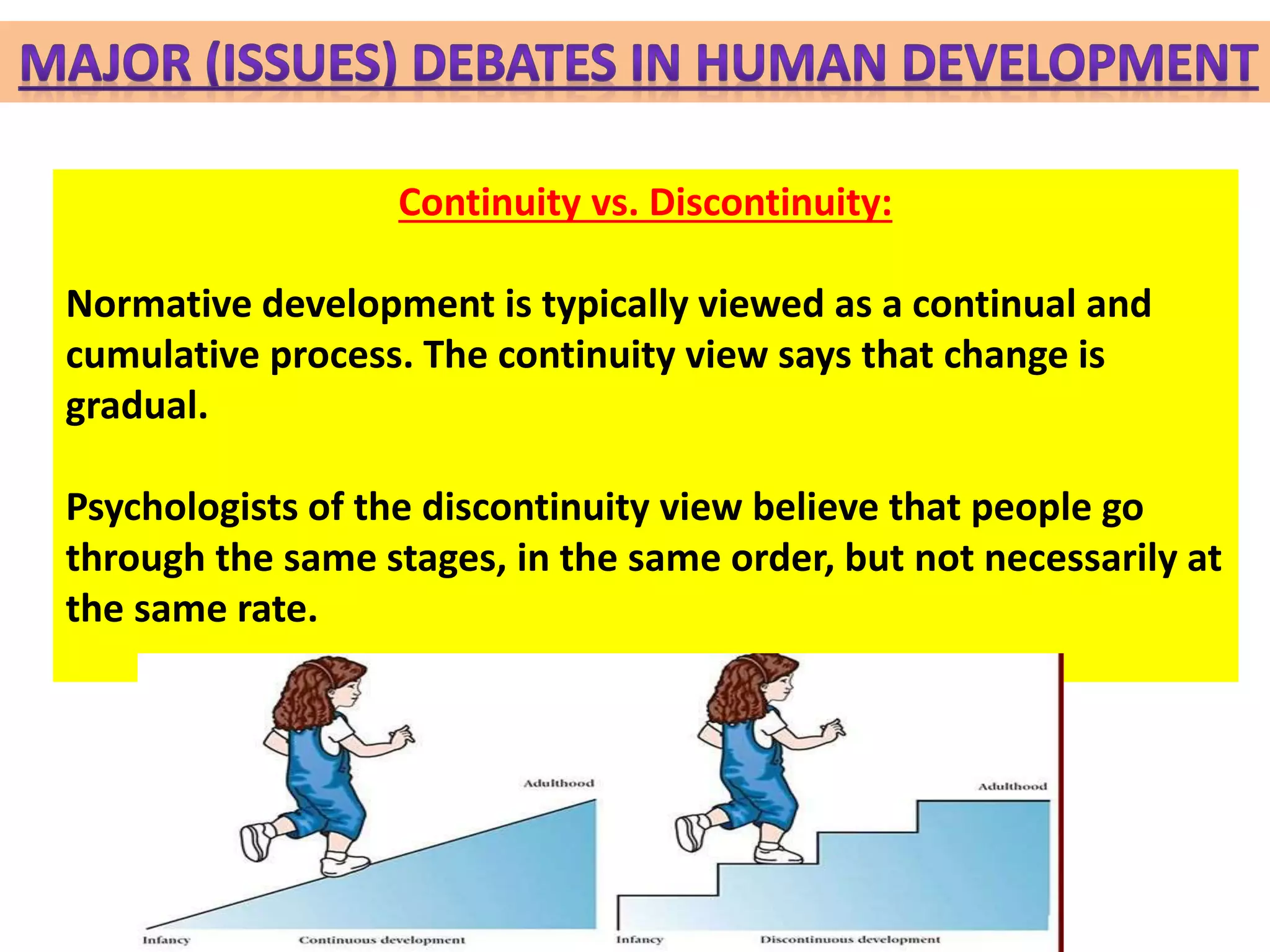
Continuity vs. Discontinuity:
Normative development is typically viewed as a continual and
cumulative process. The continuity view says that change is
gradual.
Psychologists of the discontinuity view believe that people go
through the same stages, in the same order, but not necessarily at
the same rate.
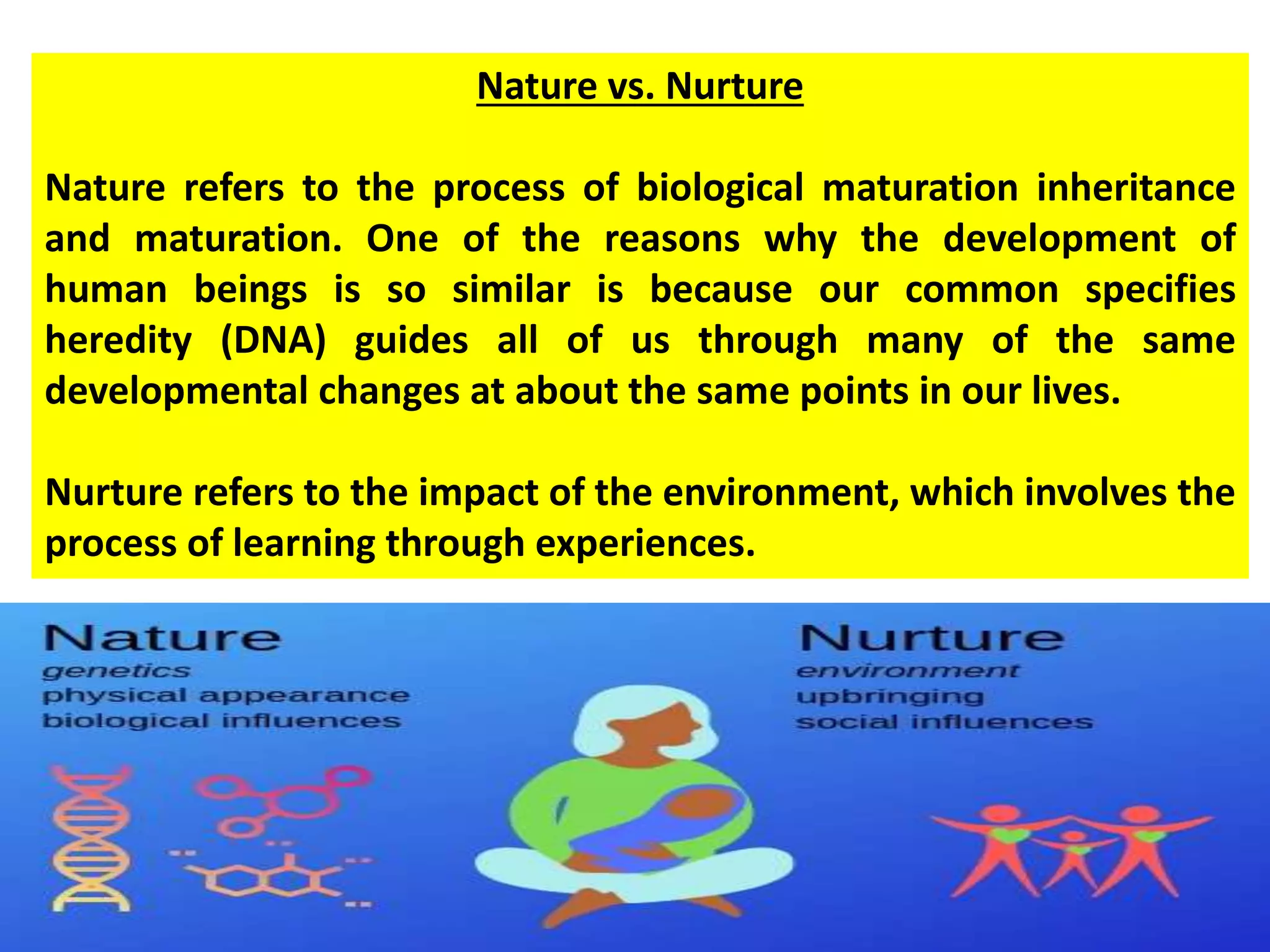
Nature vs. Nurture
Nature refers to the process of biological maturation inheritance
and maturation. One of the reasons why the development of
human beings is so similar is because our common specifies
heredity (DNA) guides all of us through many of the same
developmental changes at about the same points in our lives.
Nurture refers to the impact of the environment, which involves the
process of learning through experiences.
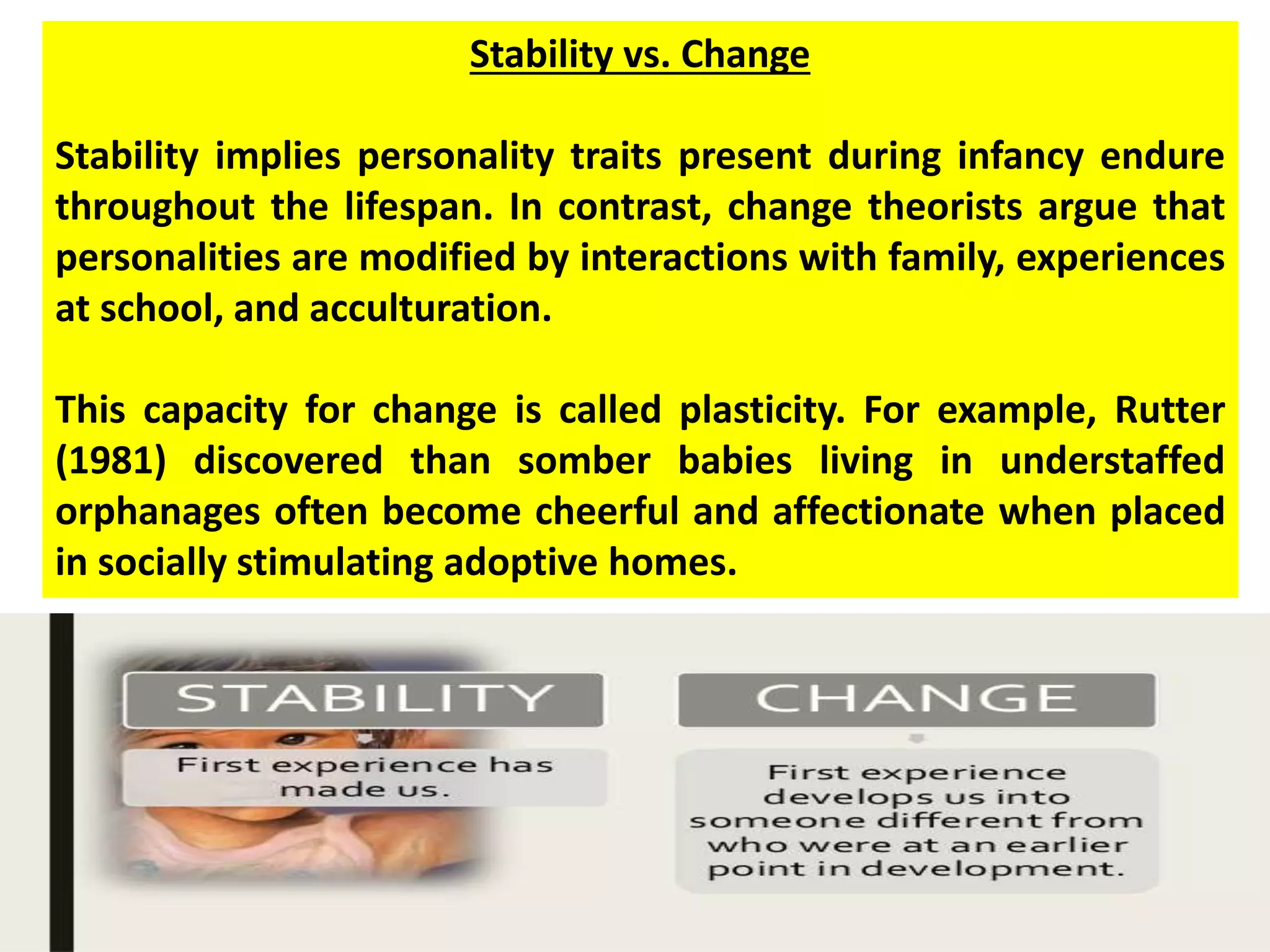
Stability vs. Change
Stability implies personality traits present during infancy endure
throughout the lifespan. In contrast, change theorists argue that
personalities are modified by interactions with family, experiences
at school, and acculturation.
This capacity for change is called plasticity. For example, Rutter
(1981) discovered than somber babies living in understaffed
orphanages often become cheerful and affectionate when placed
in socially stimulating adoptive homes.
• Physical Development
• Motor Development
• Sensory and Perceptual Development
• Speech / Language Development
• Emotional Development
• Social Development
• Moral Development
• Cognitive Development
• Development of Creativity
• Development of Memory, Imagination and Thinking
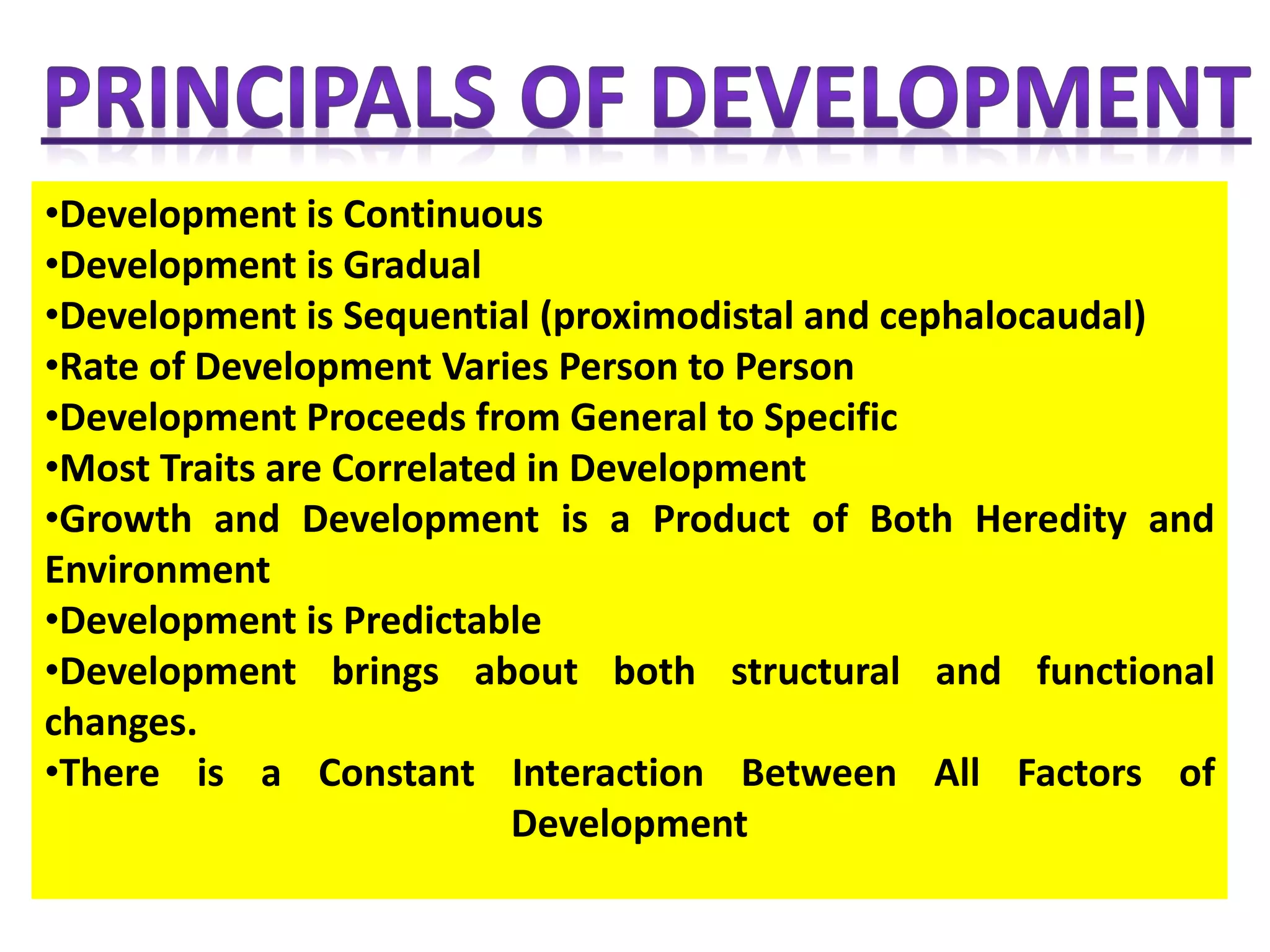
•Development is Continuous
•Development is Gradual
•Development is Sequential (proximodistal and cephalocaudal)
•Rate of Development Varies Person to Person
•Development Proceeds from General to Specific
•Most Traits are Correlated in Development
•Growth and Development is a Product of Both Heredity and
Environment
•Development is Predictable
•Development brings about both structural and functional
changes.
•There is a Constant Interaction Between All Factors of
Development
Human development basics

Human development basics

  • 2.
    Human development refersto the physical, cognitive, and psychosocial development of humans throughout the lifespan. •Physical development involves growth and changes in the body and brain, the senses, motor skills, and health and wellness. •Cognitive development involves learning, attention, memory, language, thinking, reasoning, and creativity. •Psychosocial development involves emotions, personality, and social relationships.
  • 3.
    Developmental psychology isa scientific approach which aims to explain growth, change and consistency though the lifespan. Developmental psychology looks at how thinking, feeling, and behavior change throughout a person’s life. The three goals of developmental psychology are to describe, explain, and to optimize development (Baltes, Reese, & Lipsitt, 1980). To describe development it is necessary to focus both on typical patterns of change (normative development) and individual variations in patterns of change (i.e. idiographic development).
  • 4.
    Developmentalists often breakthe lifespan into eight stages: Prenatal Development Infancy and Toddlerhood Early Childhood Middle Childhood Adolescence Early Adulthood Middle Adulthood Late Adulthood The list of the periods of development reflects unique aspects of the various stages of childhood and adulthood
  • 5.
    Continuity vs. Discontinuity: Normativedevelopment is typically viewed as a continual and cumulative process. The continuity view says that change is gradual. Psychologists of the discontinuity view believe that people go through the same stages, in the same order, but not necessarily at the same rate.
  • 6.
    Nature vs. Nurture Naturerefers to the process of biological maturation inheritance and maturation. One of the reasons why the development of human beings is so similar is because our common specifies heredity (DNA) guides all of us through many of the same developmental changes at about the same points in our lives. Nurture refers to the impact of the environment, which involves the process of learning through experiences.
  • 7.
    Stability vs. Change Stabilityimplies personality traits present during infancy endure throughout the lifespan. In contrast, change theorists argue that personalities are modified by interactions with family, experiences at school, and acculturation. This capacity for change is called plasticity. For example, Rutter (1981) discovered than somber babies living in understaffed orphanages often become cheerful and affectionate when placed in socially stimulating adoptive homes.
  • 8.
    • Physical Development •Motor Development • Sensory and Perceptual Development • Speech / Language Development • Emotional Development • Social Development • Moral Development • Cognitive Development • Development of Creativity • Development of Memory, Imagination and Thinking
  • 9.
    •Development is Continuous •Developmentis Gradual •Development is Sequential (proximodistal and cephalocaudal) •Rate of Development Varies Person to Person •Development Proceeds from General to Specific •Most Traits are Correlated in Development •Growth and Development is a Product of Both Heredity and Environment •Development is Predictable •Development brings about both structural and functional changes. •There is a Constant Interaction Between All Factors of Development