Chapter 28
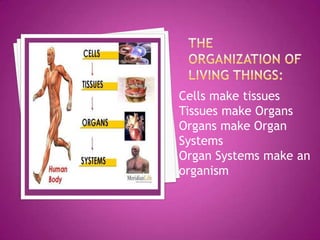
Cells make tissues
Tissues make Organs
Organs make Organ
Systems
Organ Systems make an
organism
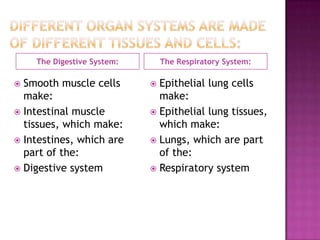
The Digestive System:       The Respiratory System:

 Smooth muscle cells        Epithelial lung cells
  make:                       make:
 Intestinal muscle          Epithelial lung tissues,
  tissues, which make:        which make:
 Intestines, which are      Lungs, which are part
  part of the:                of the:
 Digestive system           Respiratory system
 Epithelial   tissue– tightly packed cells that line
 organs and make the skin

 Connective    Tissue—support, bind together, and
 protect tissues and organs. Tendons, ligaments,
 bone and cartilage are connective tissues

 Muscle   Tissue—produces movement. Skeletal,
 cardiac, and smooth muscle

 Nervous   Tissue—transmits and receives impulses
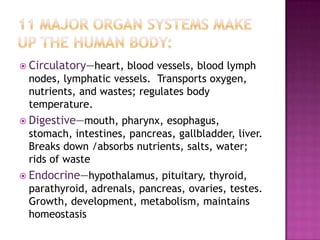
 Circulatory—heart, blood vessels, blood lymph
 nodes, lymphatic vessels. Transports oxygen,
 nutrients, and wastes; regulates body
 temperature.
 Digestive—mouth,  pharynx, esophagus,
 stomach, intestines, pancreas, gallbladder, liver.
 Breaks down /absorbs nutrients, salts, water;
 rids of waste
 Endocrine—hypothalamus,   pituitary, thyroid,
 parathyroid, adrenals, pancreas, ovaries, testes.
 Growth, development, metabolism, maintains
 homeostasis
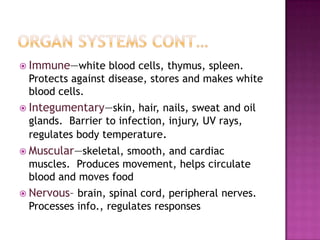
 Immune—white    blood cells, thymus, spleen.
 Protects against disease, stores and makes white
 blood cells.
 Integumentary—skin,   hair, nails, sweat and oil
 glands. Barrier to infection, injury, UV rays,
 regulates body temperature.
 Muscular—skeletal,smooth, and cardiac
 muscles. Produces movement, helps circulate
 blood and moves food
 Nervous– brain, spinal cord, peripheral nerves.
 Processes info., regulates responses
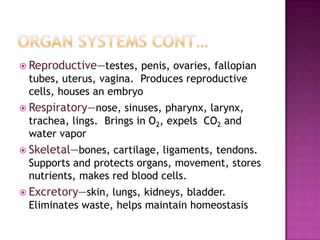
 Reproductive—testes,  penis, ovaries, fallopian
 tubes, uterus, vagina. Produces reproductive
 cells, houses an embryo
 Respiratory—nose,  sinuses, pharynx, larynx,
 trachea, lings. Brings in O2, expels CO2 and
 water vapor
 Skeletal—bones, cartilage, ligaments, tendons.
 Supports and protects organs, movement, stores
 nutrients, makes red blood cells.
 Excretory—skin, lungs, kidneys, bladder.
 Eliminates waste, helps maintain homeostasis
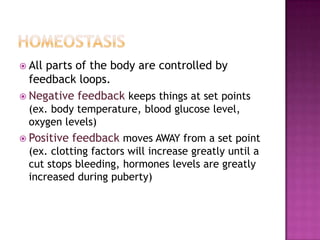
 Allparts of the body are controlled by
  feedback loops.
 Negative feedback keeps things at set points
  (ex. body temperature, blood glucose level,
  oxygen levels)
 Positive   feedback moves AWAY from a set point
  (ex. clotting factors will increase greatly until a
  cut stops bleeding, hormones levels are greatly
  increased during puberty)

Human body systems

  • 1.
  • 2.
    Cells make tissues Tissuesmake Organs Organs make Organ Systems Organ Systems make an organism
  • 3.
    The Digestive System: The Respiratory System:  Smooth muscle cells  Epithelial lung cells make: make:  Intestinal muscle  Epithelial lung tissues, tissues, which make: which make:  Intestines, which are  Lungs, which are part part of the: of the:  Digestive system  Respiratory system
  • 4.
     Epithelial tissue– tightly packed cells that line organs and make the skin  Connective Tissue—support, bind together, and protect tissues and organs. Tendons, ligaments, bone and cartilage are connective tissues  Muscle Tissue—produces movement. Skeletal, cardiac, and smooth muscle  Nervous Tissue—transmits and receives impulses
  • 5.
     Circulatory—heart, bloodvessels, blood lymph nodes, lymphatic vessels. Transports oxygen, nutrients, and wastes; regulates body temperature.  Digestive—mouth, pharynx, esophagus, stomach, intestines, pancreas, gallbladder, liver. Breaks down /absorbs nutrients, salts, water; rids of waste  Endocrine—hypothalamus, pituitary, thyroid, parathyroid, adrenals, pancreas, ovaries, testes. Growth, development, metabolism, maintains homeostasis
  • 6.
     Immune—white blood cells, thymus, spleen. Protects against disease, stores and makes white blood cells.  Integumentary—skin, hair, nails, sweat and oil glands. Barrier to infection, injury, UV rays, regulates body temperature.  Muscular—skeletal,smooth, and cardiac muscles. Produces movement, helps circulate blood and moves food  Nervous– brain, spinal cord, peripheral nerves. Processes info., regulates responses
  • 7.
     Reproductive—testes, penis, ovaries, fallopian tubes, uterus, vagina. Produces reproductive cells, houses an embryo  Respiratory—nose, sinuses, pharynx, larynx, trachea, lings. Brings in O2, expels CO2 and water vapor  Skeletal—bones, cartilage, ligaments, tendons. Supports and protects organs, movement, stores nutrients, makes red blood cells.  Excretory—skin, lungs, kidneys, bladder. Eliminates waste, helps maintain homeostasis
  • 8.
     Allparts ofthe body are controlled by feedback loops.  Negative feedback keeps things at set points (ex. body temperature, blood glucose level, oxygen levels)  Positive feedback moves AWAY from a set point (ex. clotting factors will increase greatly until a cut stops bleeding, hormones levels are greatly increased during puberty)