1
2CHECK MARK= SLIDES TO WRITE IN NOTES
6th Grade Science1\30\10The Body System3
Goals To learn how all the systems of our bodies work. = pink To figure out why we have these systems in our body. = yellowTo figure out what would happen if we didn’t have each system. = blue4
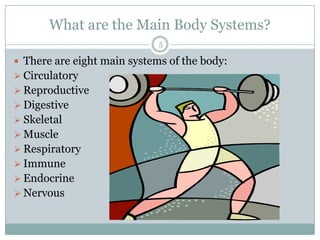
What are the Main Body Systems?There are eight main systems of the body:Circulatory
Reproductive
Digestive
Skeletal
Muscle
Respiratory
Immune
Endocrine
Nervous5
CirculatoryThe circulatory system is the body's transport system. It is made up of a group of organs that transport blood throughout the body. The heart pumps the blood and the arteries and veins transport it. Oxygen-rich blood leaves the left side of the heart and enters the biggest artery, called the aorta. The aorta branches into smaller arteries, which then branch into even smaller vessels that travel all over the body. When blood enters the smallest blood vessels, which are called capillaries, and are found in body tissue, it gives nutrients and oxygen to the cells and takes in carbon dioxide, water, and waste. The blood, which no longer contains oxygen and nutrients, then goes back to the heart through veins. Veins carry waste products away from cells and bring blood back to the heart , which pumps it to the lungs to pick up oxygen and eliminate waste carbon dioxide.6
ReproductionThe reproductive system allows humans to produce children. Sperm from the male fertilizes the female's egg, or ovum, in the fallopian tube. The fertilized egg travels from the fallopian tube to the uterus, where the fetus develops over a period of nine months7
DigestiveThe digestive system is made up of organs that break down food into protein, vitamins, minerals, carbohydrates, and fats, which the body needs for energy, growth, and repair. After food is chewed and swallowed, it goes down the esophagus and enters the stomach, where it is further broken down by powerful stomach acids. From the stomach the food travels into the small intestine. This is where your food is broken down into nutrients that can enter the bloodstream through tiny hair-like projections. The excess food that the body doesn't need or can't digest is turned into waste and is eliminated from the body8
SkeletalThe skeletal system is made up of bones, ligaments and tendons. It shapes the body and protects organs. The skeletal system works with the muscular system to help the body move. Marrow, which is soft, fatty tissue that produces red blood cells, many white blood cells, and other immune system cells, is found inside bones. 9
MuscularThe muscular system is made up of tissues that work with the skeletal system to control movement of the body. Some muscles—like the ones in your arms and legs—are voluntary, meaning that you decide when to move them. Other muscles, like the ones in your stomach, heart, intestines and other organs, are involuntary. This means that they are controlled automatically by the nervous system and hormones—you often don't even realize they're at work.
The body is made up of three types of muscle tissue: skeletal, smooth and cardiac. Each of these has the ability to contract and expand, which allows the body to move and function. .
Skeletal muscles help the body move.
Smooth muscles, which are involuntary, are located inside organs, such as the stomach and intestines.
Cardiac muscle is found only in the heart. Its motion is involuntary10

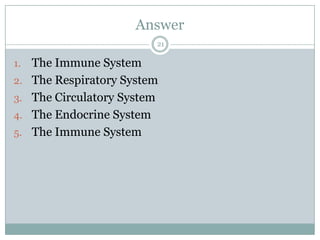
The body system

  • 1.
  • 2.
    2CHECK MARK= SLIDESTO WRITE IN NOTES
  • 3.
  • 4.
    Goals To learnhow all the systems of our bodies work. = pink To figure out why we have these systems in our body. = yellowTo figure out what would happen if we didn’t have each system. = blue4
  • 5.
    What are theMain Body Systems?There are eight main systems of the body:Circulatory
  • 6.
  • 7.
  • 8.
  • 9.
  • 10.
  • 11.
  • 12.
  • 13.
  • 14.
    CirculatoryThe circulatory systemis the body's transport system. It is made up of a group of organs that transport blood throughout the body. The heart pumps the blood and the arteries and veins transport it. Oxygen-rich blood leaves the left side of the heart and enters the biggest artery, called the aorta. The aorta branches into smaller arteries, which then branch into even smaller vessels that travel all over the body. When blood enters the smallest blood vessels, which are called capillaries, and are found in body tissue, it gives nutrients and oxygen to the cells and takes in carbon dioxide, water, and waste. The blood, which no longer contains oxygen and nutrients, then goes back to the heart through veins. Veins carry waste products away from cells and bring blood back to the heart , which pumps it to the lungs to pick up oxygen and eliminate waste carbon dioxide.6
  • 15.
    ReproductionThe reproductive systemallows humans to produce children. Sperm from the male fertilizes the female's egg, or ovum, in the fallopian tube. The fertilized egg travels from the fallopian tube to the uterus, where the fetus develops over a period of nine months7
  • 16.
    DigestiveThe digestive systemis made up of organs that break down food into protein, vitamins, minerals, carbohydrates, and fats, which the body needs for energy, growth, and repair. After food is chewed and swallowed, it goes down the esophagus and enters the stomach, where it is further broken down by powerful stomach acids. From the stomach the food travels into the small intestine. This is where your food is broken down into nutrients that can enter the bloodstream through tiny hair-like projections. The excess food that the body doesn't need or can't digest is turned into waste and is eliminated from the body8
  • 17.
    SkeletalThe skeletal systemis made up of bones, ligaments and tendons. It shapes the body and protects organs. The skeletal system works with the muscular system to help the body move. Marrow, which is soft, fatty tissue that produces red blood cells, many white blood cells, and other immune system cells, is found inside bones. 9
  • 18.
    MuscularThe muscular systemis made up of tissues that work with the skeletal system to control movement of the body. Some muscles—like the ones in your arms and legs—are voluntary, meaning that you decide when to move them. Other muscles, like the ones in your stomach, heart, intestines and other organs, are involuntary. This means that they are controlled automatically by the nervous system and hormones—you often don't even realize they're at work.
  • 19.
    The body ismade up of three types of muscle tissue: skeletal, smooth and cardiac. Each of these has the ability to contract and expand, which allows the body to move and function. .
  • 20.
    Skeletal muscles helpthe body move.
  • 21.
    Smooth muscles, whichare involuntary, are located inside organs, such as the stomach and intestines.
  • 22.
    Cardiac muscle isfound only in the heart. Its motion is involuntary10