How to make
an effective presentation
Present By:
Jai Bhimani
Guided By:
Prof.Dr.Deepak Mashru
How to make
an effective presentation
Introduction
“speech is a silver, but silence is a
gold.”
Knowing how to use power point and
work within it quickly is helpful, but
more important is making a good
presentation that hits your goal.
What is presentation?
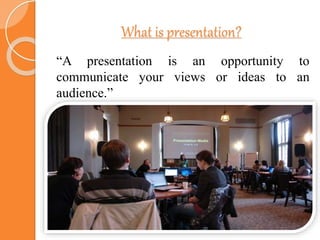
“A presentation is an opportunity to
communicate your views or ideas to an
audience.”
Presentation is also the practice of
showing and explaining the content of
topic to an audience.
Besides taking care of stage fright, it is
also important for a professional to plan
their presentation properly.
What do you want to achieve?
Inform and educate
Inspire and persuade
Entertain
Must grab and hold
attention
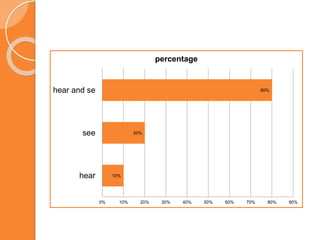
Audience retain more if they hear and
see simultaneously.
They absorb information by 10%
hearing, 20% by see and 80% by hear
and see both.
10%
20%
80%
0% 10% 20% 30% 40% 50% 60% 70% 80% 90%
hear
see
hear and se
percentage
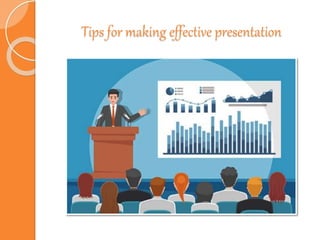
Tips for making effective presentation
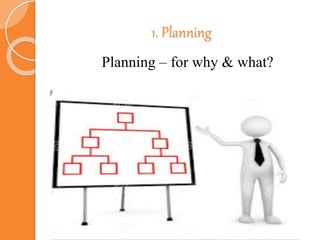
1. Planning – for why and what?
2. Know audience & Prepare speech
3. Structure of presentation
4. Use stories and anecdotes
5. Keep it short and simple
6. Support your presentation with visual
aids
7. Talk, don’t read
8. Be interactive
9. don’t lose audience
10.Always finish with summary
1. Planning
Planning – for why & what?
Know your subject
Develop a theme
List the key concept and points to convey
Begin to think about ways of illustrating
the key points
Max of 1 slide per minute, 4 key points in
minute presentation.
2. Know audience & prepare speech
Audience – who and where?
A good speaker is the one who knows
her listeners the best.
Delivering a speech without knowing
the audience is like hitting a target
blindfolded.
After understanding the audience you
need to write a script of ideas you
wants to present.
If the ideas presented are too difficult or
too simple than the presentation will
fail.
The ideas, explanation and examples
should be different for different
audience.
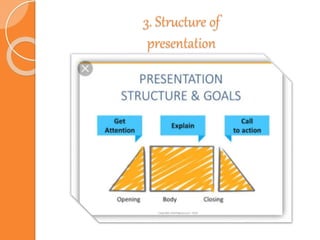
3. Structure of
presentation
Parts of structure
1. Opening –
Tell them what you are going to tell
them.
2. Body –
Tell them about presentation.
3. Summary –
Tell them what you told them.
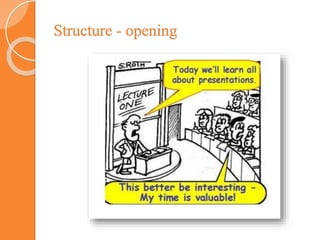
Structure - opening
Need a strong beginning
Few seconds to convince audience.
State purpose, scope and main message
Give outline of presentation.
Structure – main body
Make a story board.
Break up with each section making a
key point.
Present incrementally, concisely and in
logical order.
Illustrate with clear examples and
values aids.
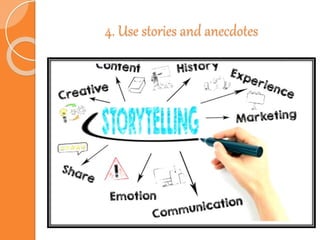
4. Use stories and anecdotes
Stories constitute the single most
powerful weapon in a leader’s arsenal.
A speaker may be in love with his data
he has collected, not the audience.
A speaker can take an ordinary
presentation to a standing-ovation
speech by including stories and
anecdotes.
5. Keep it short and stupid
Must have a clear end to talk.
short and simple summary of main
points.
You shouldn’t boar your listeners with
long presentation.
Visualise the main message.

6. Support your presentation with visual aids
Spoken words have a very short life in
the audience mind, so you need to
clothe your idea in visuals if you want
to extend their life in the listeners’
minds.
Illustrate with images and animations to
explain difficult points and generate
interest.
7. Talk, don’t read
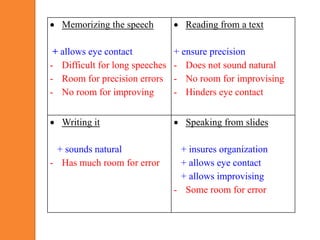
 Memorizing the speech
+ allows eye contact
- Difficult for long speeches
- Room for precision errors
- No room for improving
 Reading from a text
+ ensure precision
- Does not sound natural
- No room for improvising
- Hinders eye contact
 Writing it
+ sounds natural
- Has much room for error
 Speaking from slides
+ insures organization
+ allows eye contact
+ allows improvising
- Some room for error
8. Be interactive
The effectiveness of delivery depends a
lot on the interaction with the audience.
Relate to the recent event.
Ask questions during the presentation so
that the interaction can be maintained.
9. don’t lose audience
Keep audience informed about what you
are doing and why?
Be on time while your presentation
because if you are not on time your
audience or listener may be get boar and
you lose your audience.
Always grab and hold your audience’s
attention
10. Always finish with summary
For effective presentation make sure
that you always finish your presentation
with summary.
Ask questions to audience, What they
learn form your presentation.
Summary
How to make an effective presentation

How to make an effective presentation

  • 1.
    How to make aneffective presentation Present By: Jai Bhimani Guided By: Prof.Dr.Deepak Mashru
  • 2.
    How to make aneffective presentation
  • 3.
    Introduction “speech is asilver, but silence is a gold.” Knowing how to use power point and work within it quickly is helpful, but more important is making a good presentation that hits your goal.
  • 4.
    What is presentation? “Apresentation is an opportunity to communicate your views or ideas to an audience.”
  • 5.
    Presentation is alsothe practice of showing and explaining the content of topic to an audience. Besides taking care of stage fright, it is also important for a professional to plan their presentation properly.
  • 6.
    What do youwant to achieve? Inform and educate Inspire and persuade Entertain Must grab and hold attention
  • 7.
    Audience retain moreif they hear and see simultaneously. They absorb information by 10% hearing, 20% by see and 80% by hear and see both.
  • 8.
    10% 20% 80% 0% 10% 20%30% 40% 50% 60% 70% 80% 90% hear see hear and se percentage
  • 9.
    Tips for makingeffective presentation
  • 10.
    1. Planning –for why and what? 2. Know audience & Prepare speech 3. Structure of presentation 4. Use stories and anecdotes 5. Keep it short and simple
  • 11.
    6. Support yourpresentation with visual aids 7. Talk, don’t read 8. Be interactive 9. don’t lose audience 10.Always finish with summary
  • 12.
    1. Planning Planning –for why & what?
  • 13.
    Know your subject Developa theme List the key concept and points to convey Begin to think about ways of illustrating the key points Max of 1 slide per minute, 4 key points in minute presentation.
  • 14.
    2. Know audience& prepare speech
  • 15.
    Audience – whoand where? A good speaker is the one who knows her listeners the best. Delivering a speech without knowing the audience is like hitting a target blindfolded.
  • 16.
    After understanding theaudience you need to write a script of ideas you wants to present. If the ideas presented are too difficult or too simple than the presentation will fail. The ideas, explanation and examples should be different for different audience.
  • 17.
  • 18.
    Parts of structure 1.Opening – Tell them what you are going to tell them. 2. Body – Tell them about presentation. 3. Summary – Tell them what you told them.
  • 19.
  • 20.
    Need a strongbeginning Few seconds to convince audience. State purpose, scope and main message Give outline of presentation.
  • 21.
    Structure – mainbody Make a story board. Break up with each section making a key point. Present incrementally, concisely and in logical order. Illustrate with clear examples and values aids.
  • 22.
    4. Use storiesand anecdotes
  • 23.
    Stories constitute thesingle most powerful weapon in a leader’s arsenal. A speaker may be in love with his data he has collected, not the audience. A speaker can take an ordinary presentation to a standing-ovation speech by including stories and anecdotes.
  • 24.
    5. Keep itshort and stupid
  • 25.
    Must have aclear end to talk. short and simple summary of main points. You shouldn’t boar your listeners with long presentation. Visualise the main message.
  • 26.
    6. Support yourpresentation with visual aids
  • 27.
    Spoken words havea very short life in the audience mind, so you need to clothe your idea in visuals if you want to extend their life in the listeners’ minds. Illustrate with images and animations to explain difficult points and generate interest.
  • 28.
  • 29.
     Memorizing thespeech + allows eye contact - Difficult for long speeches - Room for precision errors - No room for improving  Reading from a text + ensure precision - Does not sound natural - No room for improvising - Hinders eye contact  Writing it + sounds natural - Has much room for error  Speaking from slides + insures organization + allows eye contact + allows improvising - Some room for error
  • 30.
  • 31.
    The effectiveness ofdelivery depends a lot on the interaction with the audience. Relate to the recent event. Ask questions during the presentation so that the interaction can be maintained.

  • 32.
  • 33.
    Keep audience informedabout what you are doing and why? Be on time while your presentation because if you are not on time your audience or listener may be get boar and you lose your audience. Always grab and hold your audience’s attention
  • 34.
    10. Always finishwith summary
  • 35.
    For effective presentationmake sure that you always finish your presentation with summary. Ask questions to audience, What they learn form your presentation.
  • 36.