How to keep an
accurate medicines list:
an organisational
approach
Chris Braithwaite
Clinical Consultant Pharmacist
Galambila Aboriginal Health Service
Acknowledgement of Country
Galambila AHS
• Located on Gumbaynggirr
land in Coffs Harbour, NSW
• ~3000 active clients
• 6.4 FTE General Practitioners
• Full-time clinical pharmacist
• 2 RN’s, 8 clinical AHWs, 3
mental health AHWs
• Support, admin and project
staff
A vehicle for improvement
• Accreditation standards!
– QI2.2D: Safe and quality use of
medicines
• Our clinical team ensures that patients
and other health providers to whom we
refer receive an accurate and current
medicines list1.
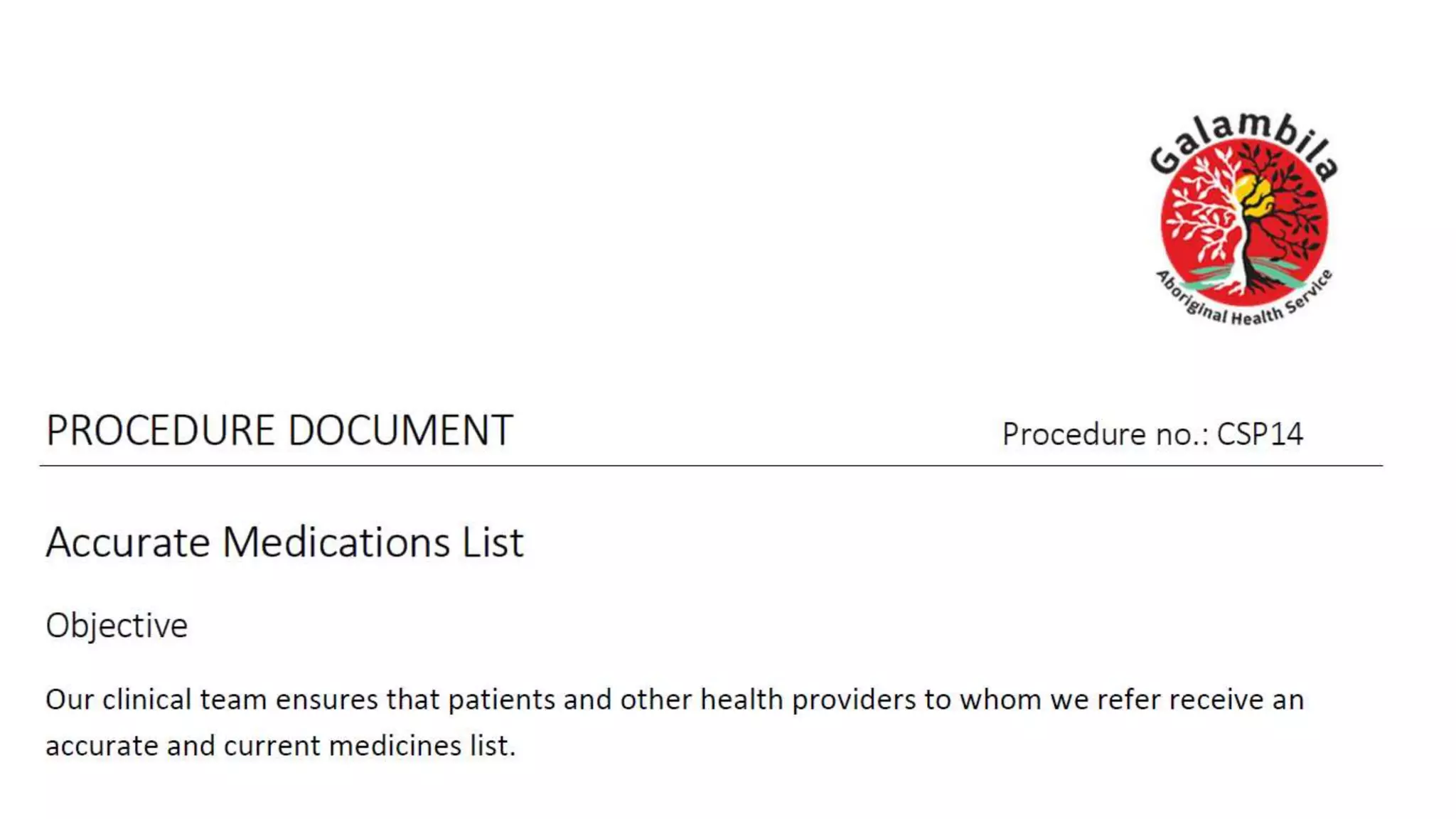
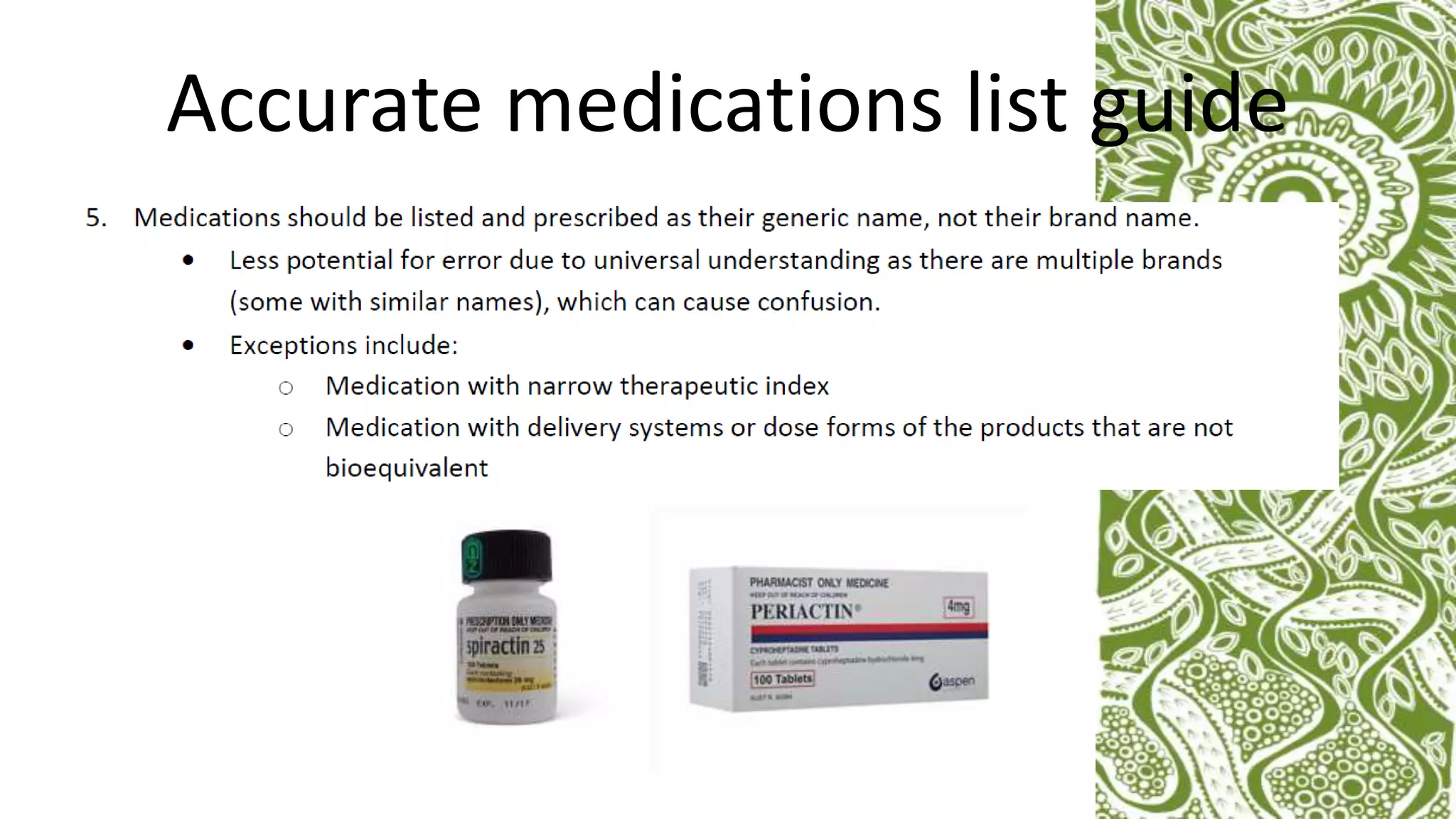
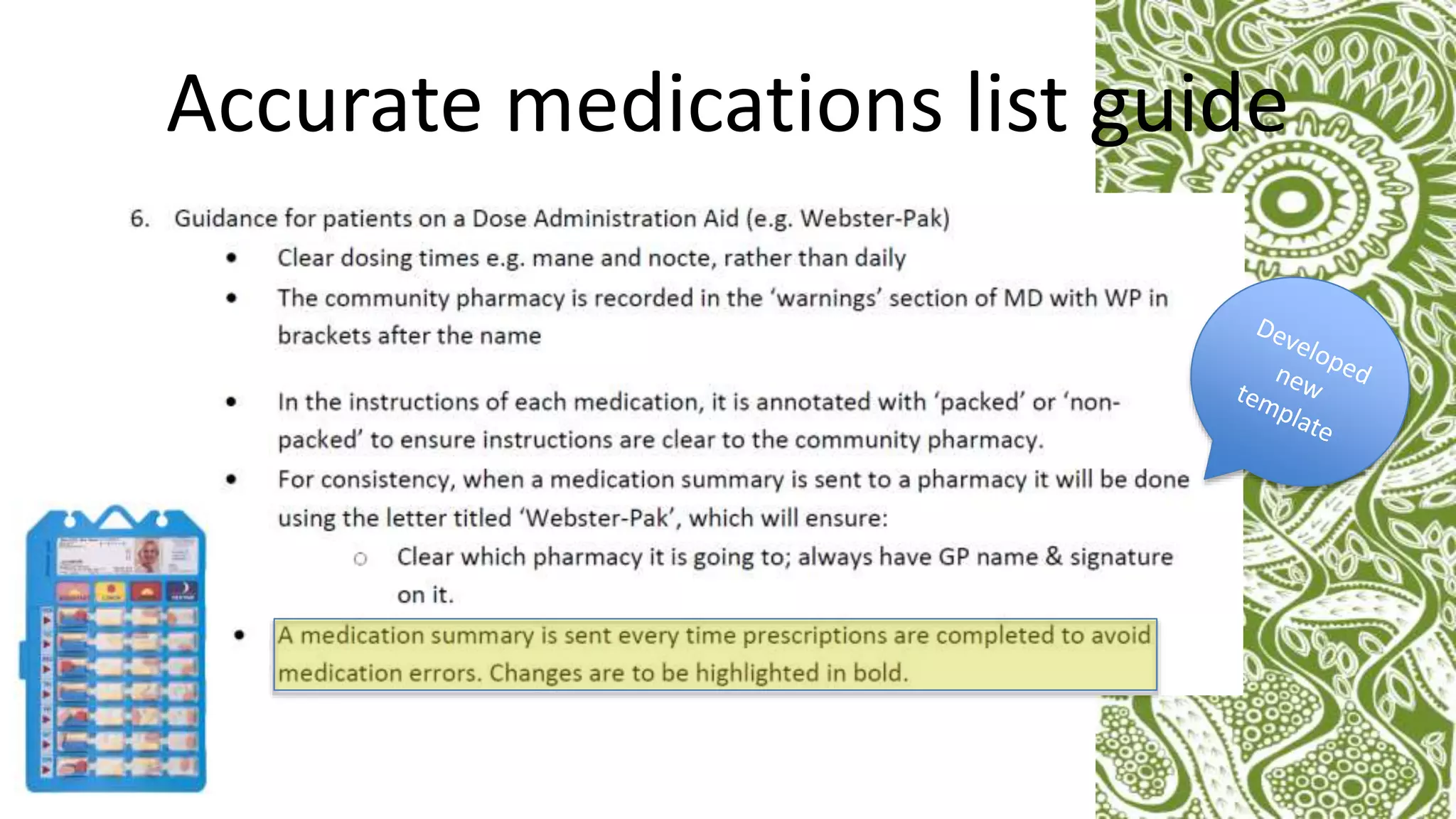
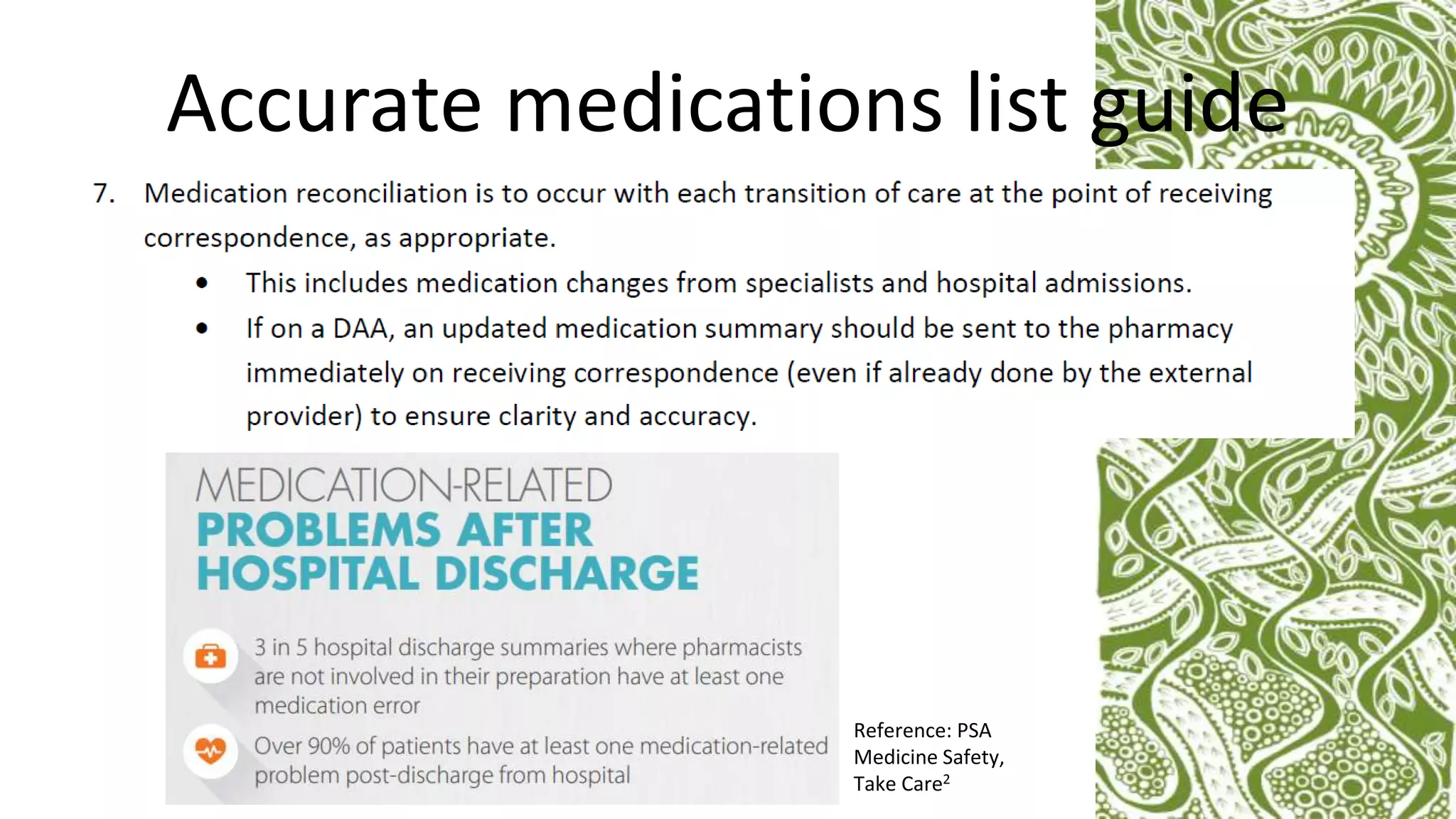
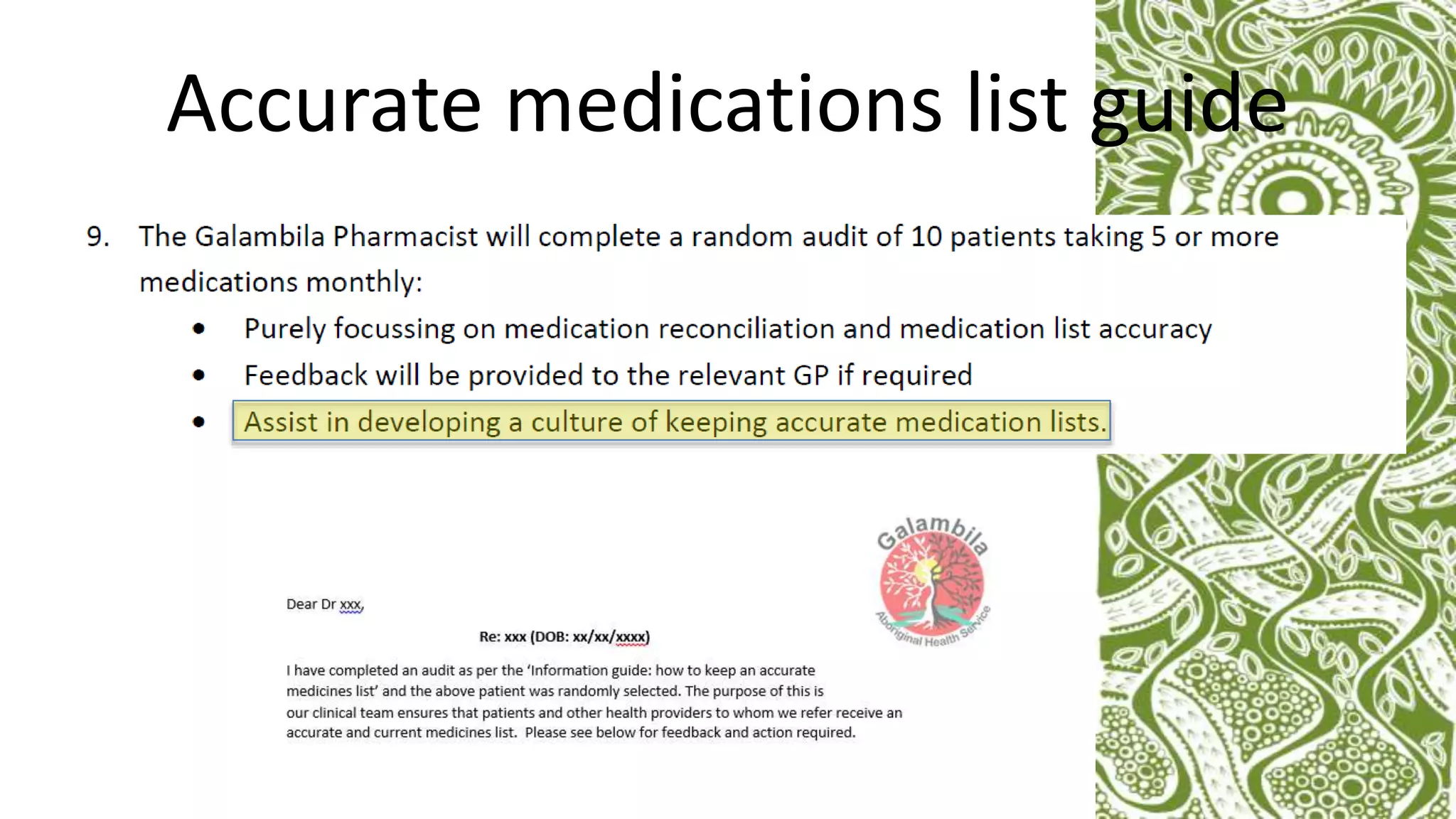
Accurate medications list guide
Reference: PSA
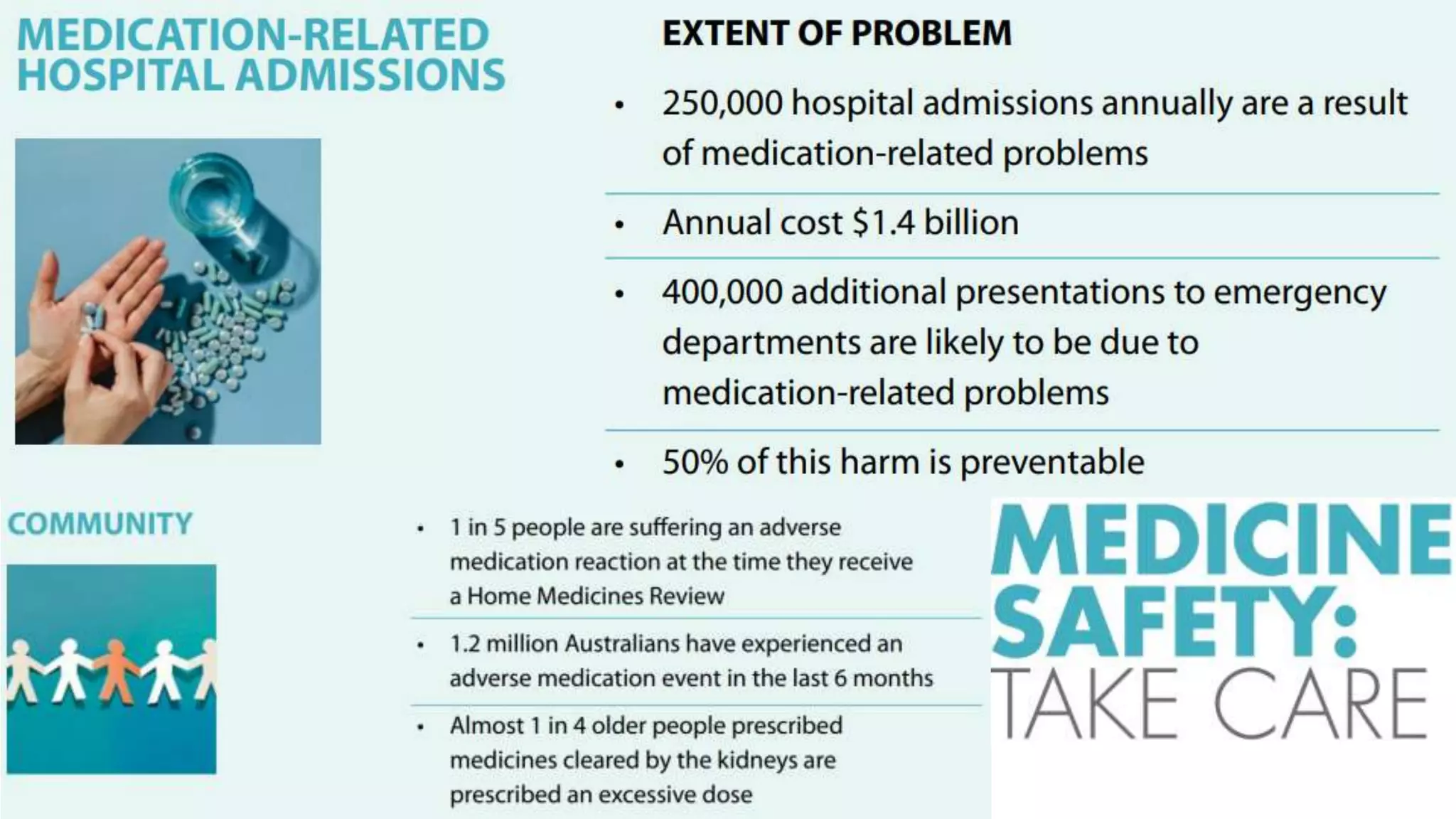
Medicine Safety,
Take Care2
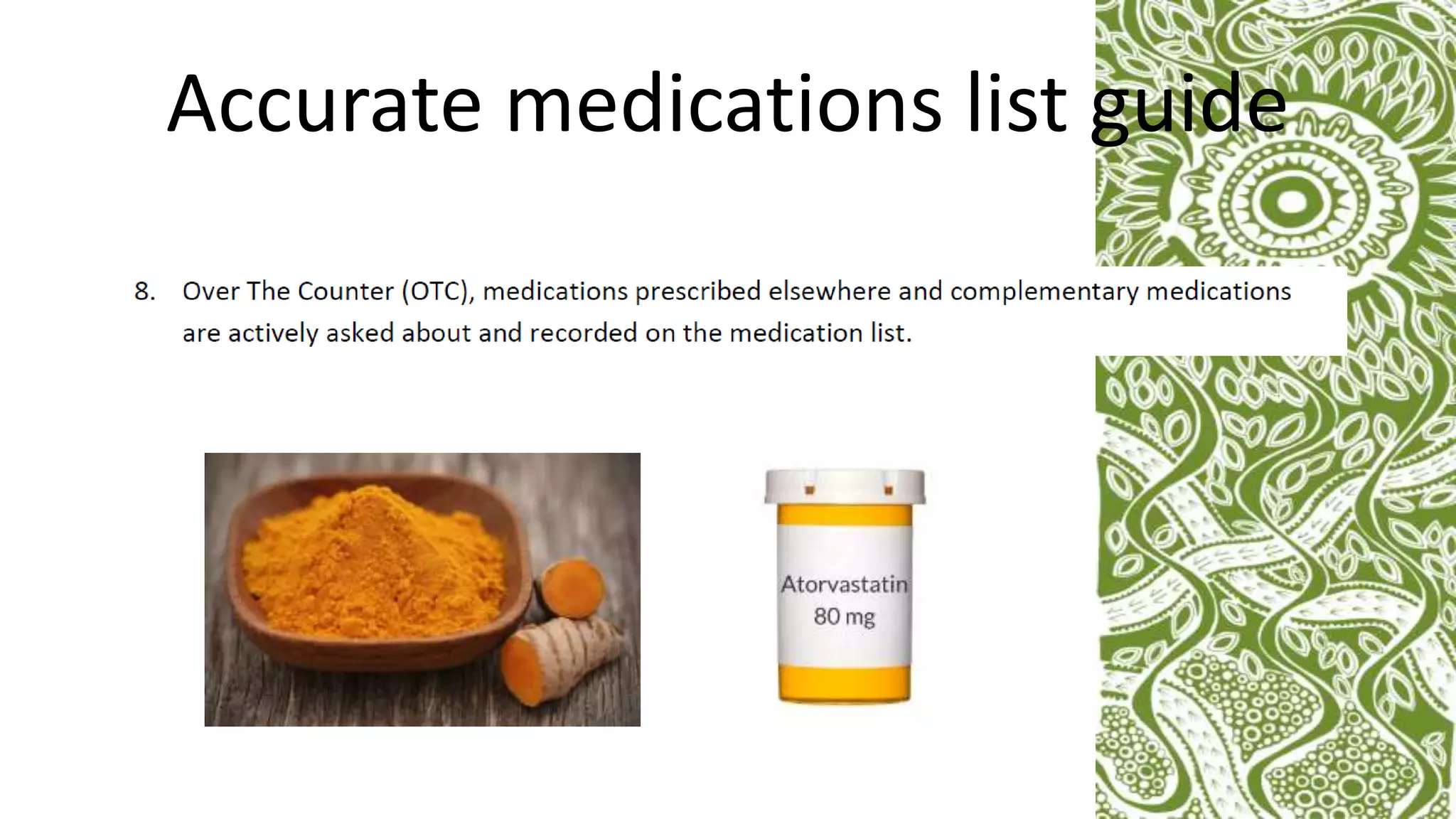
Accurate medications list guide
Lessons
• Change is slow, but gradual with differing levels of
uptake
• Regular audits provide a platform for sustainable
change
• Critical to have GP champions
• Important to understand and utilise clinical
software as efficiently as possible
• Beneficial for patient, AHS and community
pharmacy
• Anecdotally beneficial so far, measurables to be
developed through the audit process
Questions?
• Contact:
– chris.braithwaite@galambila.org.au
• Happy to provide copies of:
– Procedure document
– ‘Webster-Pak’ template letter in MD
– Template for GP feedback
References
1. The Royal Australian College of General
Practitioners. Standards for general practices.
5th edn. East Melbourne, Vic: RACGP, 2017.
2. Pharmaceutical Society of Australia 2019.
Medicine Safety: Take Care. Canberra: PSA.

How to keep an accurate medicines list | Chris Braithwaite

Editor's Notes

  • #2 ACKNOWLEDGE THE TRADITIONAL OWNERS!
  • #6 Also a really important clinical marker due to the extent of medication misadventure in Australia
  • #7 Part of our procedure list now, which means: It is included as part of an induction for our new GPs and GP registrars Official documentation means it provides structure for ongoing feedback and improvement for our GPs
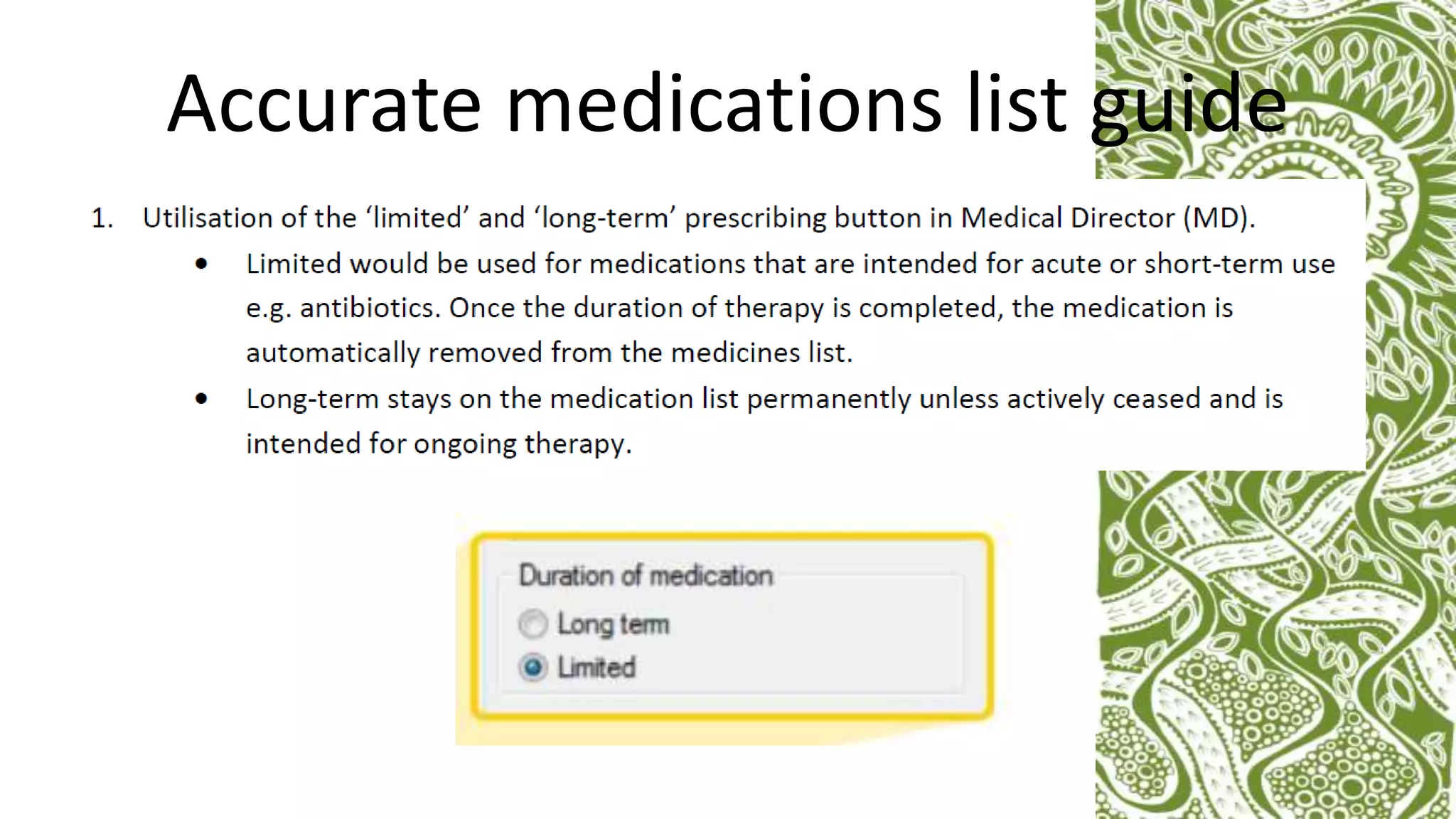
  • #8 To counter the following issues: Short-term medications staying on the medication list when no longer relevant Also changed the default options as part of the IT induction, automatically defaulting to limited which meant risk of long-term meds falling off list
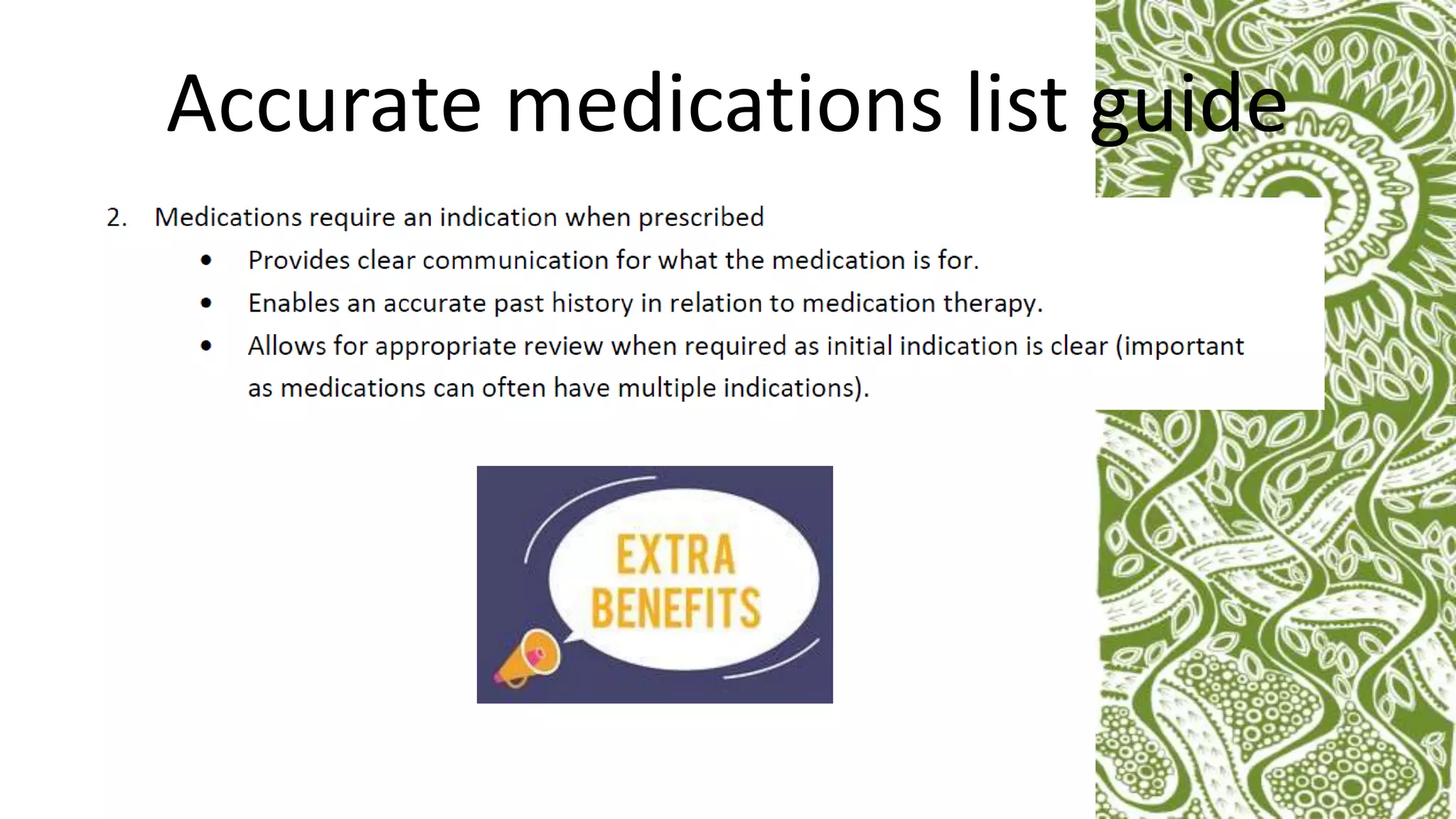
  • #9 Requirement in hospital inpatient charts. Why not in primary care? Extra benefits! Has flowed on to GP review of ‘Past History’ as sometimes there is no corresponding indication e.g. PPI and GORD. The other side of this is ensuring the correct reason for cessation is noted when ceasing a medication. You can choose ‘completed without problems’ but this often doesn’t reveal the true story for a chronic disease medication.
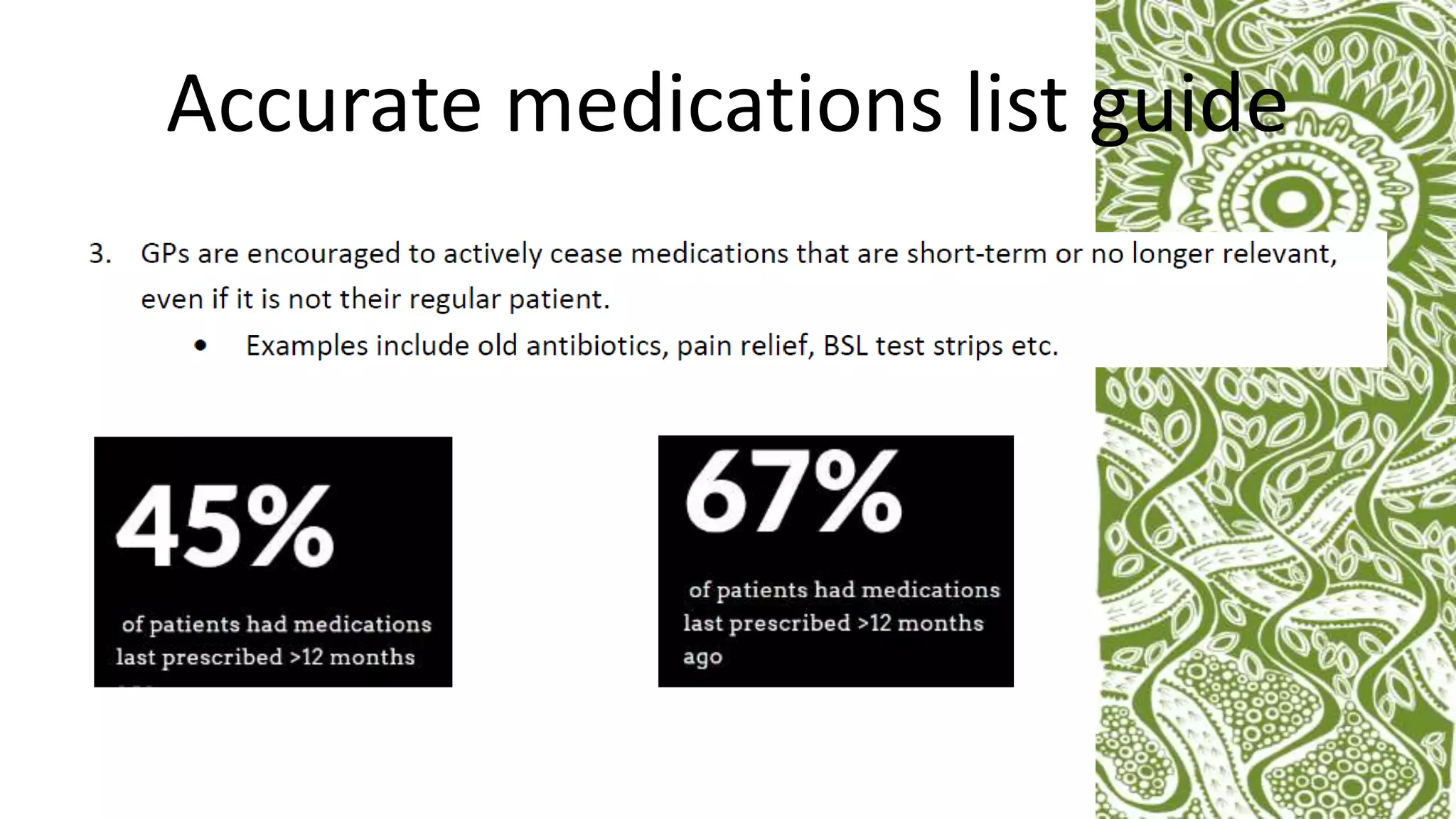
  • #10 45% of 5-55 when audited during the health assessment appointment in 2018 67% of 55+
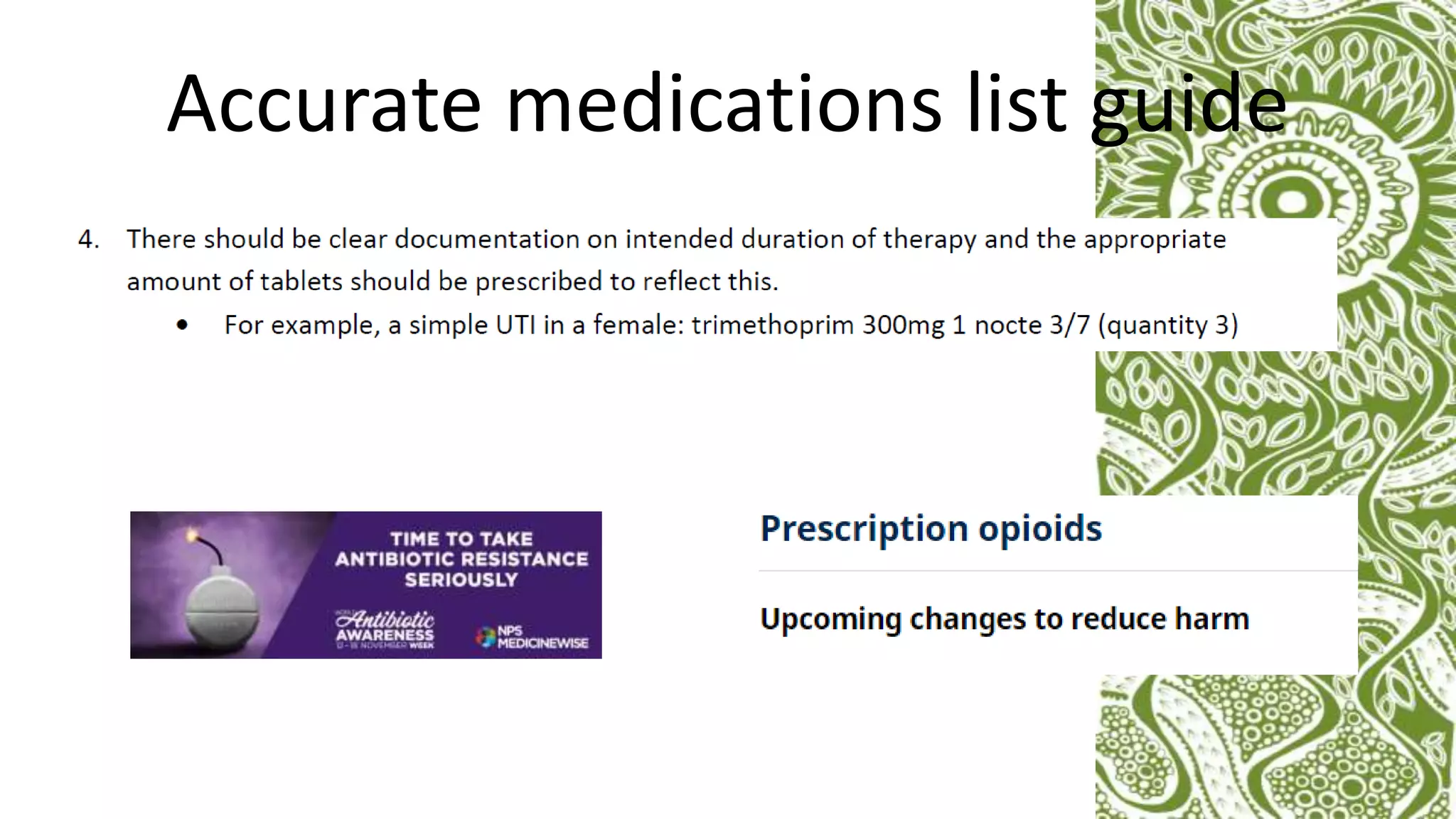
  • #11 Smaller pack sizes will be available for immediate-release prescription opioid products
  • #16 Put in GP holding file, then patient file to ensure the GP is accountable to the feedback.
  • #17 One example of a measurable outcome is a reduction in patients on opioids by ~30%