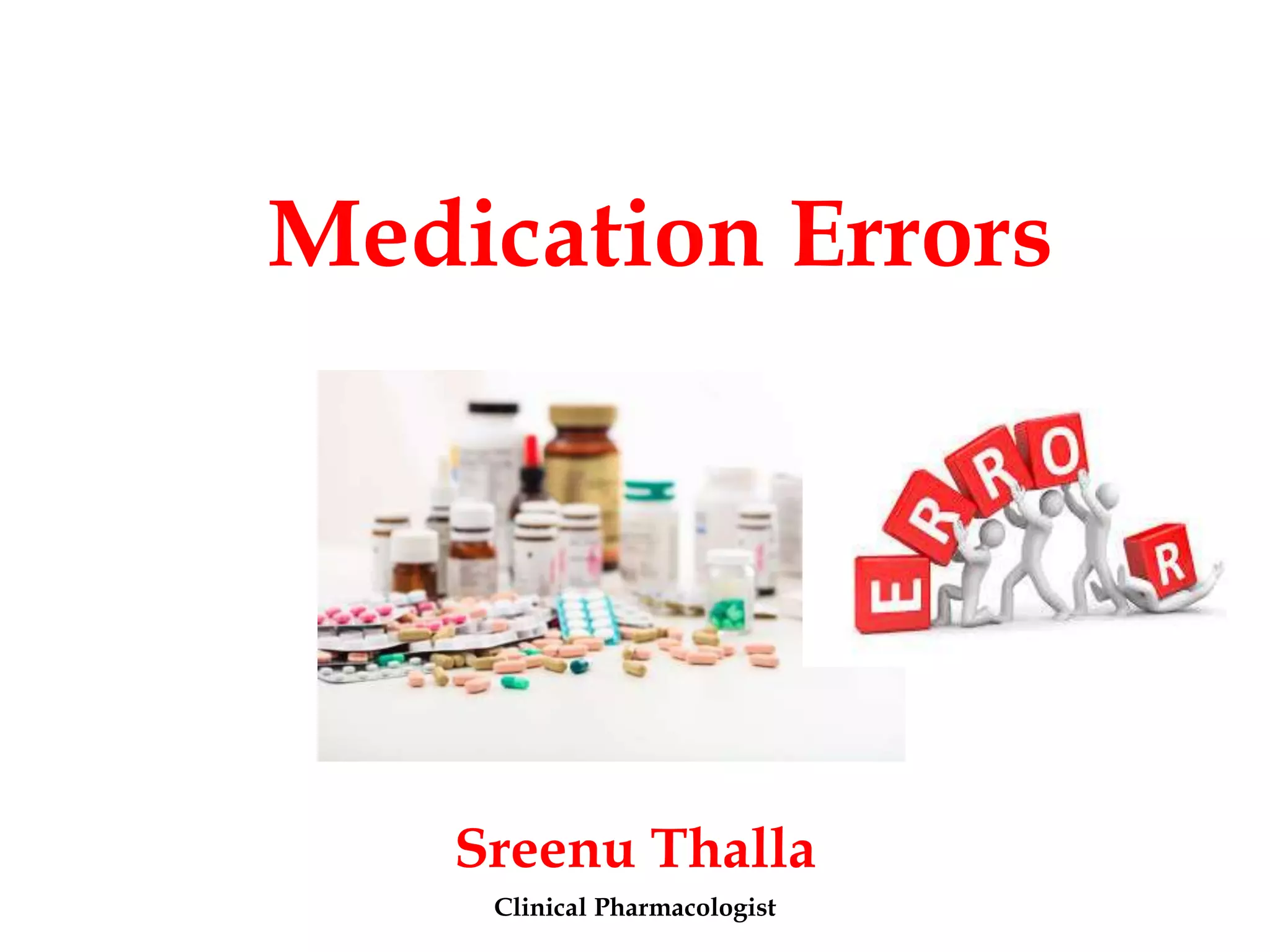
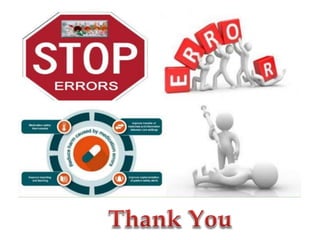
Medication Errors
Sreenu Thalla
Clinical Pharmacologist
WHY FOCUS ON MEDICATIONS?
• The success of treating illness and to prevent disease have
resulted in dramatic increase in medication use which lead
to medication errors.
• Different routes of administration
• Multiple drugs usage
• Multiple prescribers
• Multiple pharmacological effects of a drug
What student needs to know?
Knowledge requirements
• To understand scale of medication error and associated risks of
medication usage
• Common sources of error
• To understand where in the process errors can occur
• Understand a doctors responsibilities while prescribing and
administering medication
• To recognize common hazardous situations
• To learn safe medication usage
• To understand benefits of multidisciplinary approach to medication
safety.
• Medication Errors are defined as any preventable
event that may cause or lead to inappropriate
medication use or patient harm while the medication is
in the control of the health care professional, patient, or
consumer.
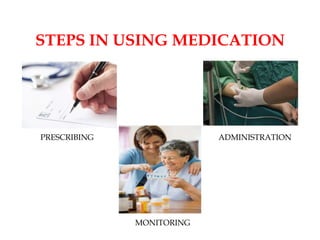
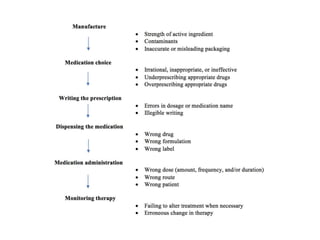
STEPS IN USING MEDICATION
PRESCRIBING ADMINISTRATION
MONITORING
Where Do They Occur?
 Prescribing
 Transcription
 Administering
 Dispensing
 Packaging
 Monitoring
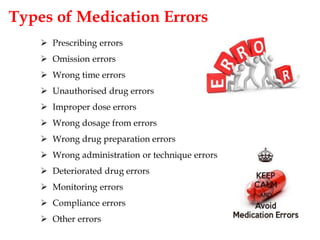
Types of Medication Errors
 Prescribing errors
 Omission errors
 Wrong time errors
 Unauthorised drug errors
 Improper dose errors
 Wrong dosage from errors
 Wrong drug preparation errors
 Wrong administration or technique errors
 Deteriorated drug errors
 Monitoring errors
 Compliance errors
 Other errors
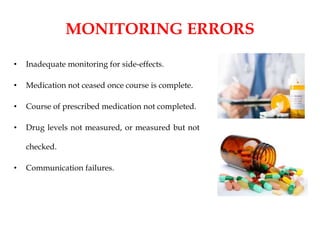
MONITORING ERRORS
• Inadequate monitoring for side-effects.
• Medication not ceased once course is complete.
• Course of prescribed medication not completed.
• Drug levels not measured, or measured but not
checked.
• Communication failures.
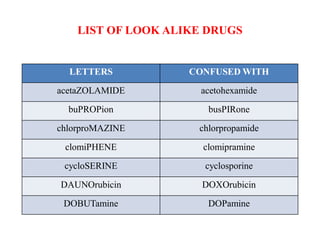
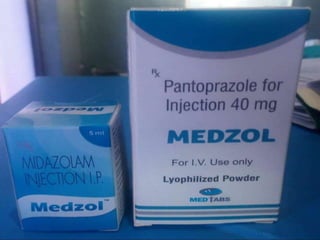
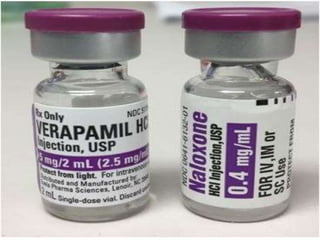
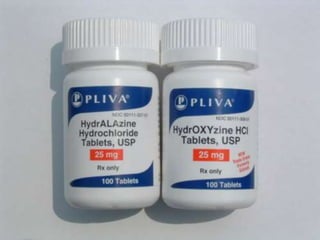
LIST OF LOOK ALIKE DRUGS
LETTERS CONFUSED WITH
acetaZOLAMIDE acetohexamide
buPROPion busPIRone
chlorproMAZINE chlorpropamide
clomiPHENE clomipramine
cycloSERINE cyclosporine
DAUNOrubicin DOXOrubicin
DOBUTamine DOPamine
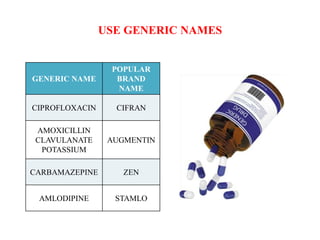
USE GENERIC NAMES
GENERIC NAME
POPULAR
BRAND
NAME
CIPROFLOXACIN CIFRAN
AMOXICILLIN
CLAVULANATE
POTASSIUM
AUGMENTIN
CARBAMAZEPINE ZEN
AMLODIPINE STAMLO
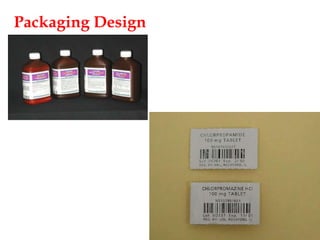
Packaging Design
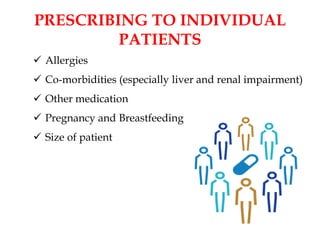
PRESCRIBING TO INDIVIDUAL
PATIENTS
 Allergies
 Co-morbidities (especially liver and renal impairment)
 Other medication
 Pregnancy and Breastfeeding
 Size of patient
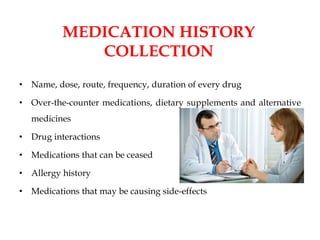
MEDICATION HISTORY
COLLECTION
• Name, dose, route, frequency, duration of every drug
• Over-the-counter medications, dietary supplements and alternative
medicines
• Drug interactions
• Medications that can be ceased
• Allergy history
• Medications that may be causing side-effects
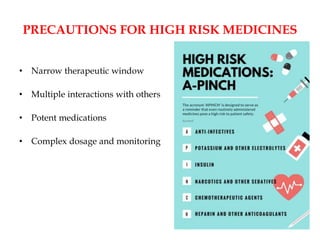
PRECAUTIONS FOR HIGH RISK MEDICINES
• Narrow therapeutic window
• Multiple interactions with others
• Potent medications
• Complex dosage and monitoring
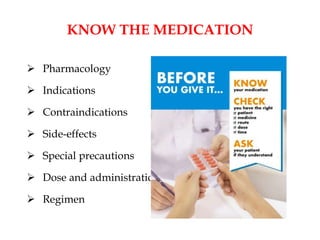
KNOW THE MEDICATION
 Pharmacology
 Indications
 Contraindications
 Side-effects
 Special precautions
 Dose and administration
 Regimen
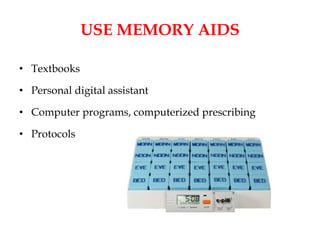
USE MEMORY AIDS
• Textbooks
• Personal digital assistant
• Computer programs, computerized prescribing
• Protocols
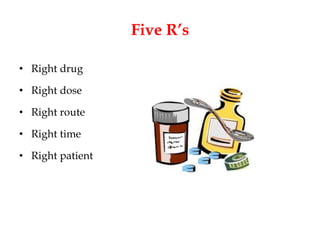
Five R’s
• Right drug
• Right dose
• Right route
• Right time
• Right patient
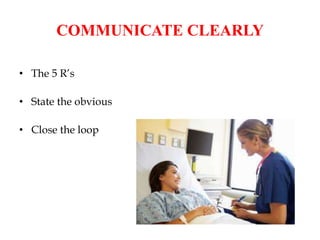
COMMUNICATE CLEARLY
• The 5 R’s
• State the obvious
• Close the loop
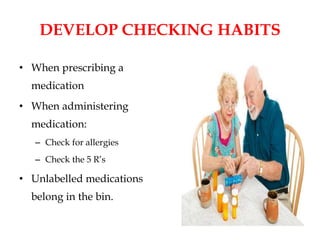
DEVELOP CHECKING HABITS
• When prescribing a
medication
• When administering
medication:
– Check for allergies
– Check the 5 R’s
• Unlabelled medications
belong in the bin.
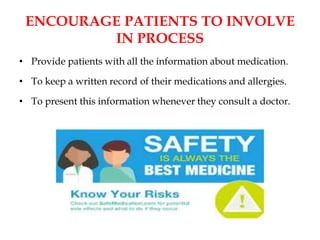
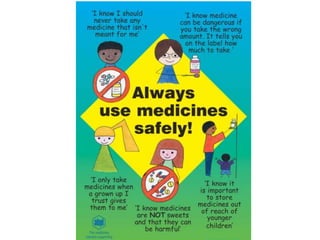
ENCOURAGE PATIENTS TO INVOLVE
IN PROCESS
• Provide patients with all the information about medication.
• To keep a written record of their medications and allergies.
• To present this information whenever they consult a doctor.
REPORT & LEARN FROM MEDICATION
ERRORS
• Why?
• When?
• How?
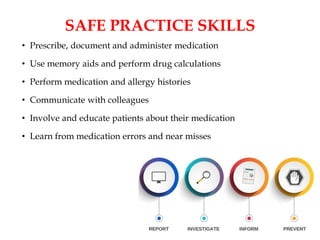
SAFE PRACTICE SKILLS
• Prescribe, document and administer medication
• Use memory aids and perform drug calculations
• Perform medication and allergy histories
• Communicate with colleagues
• Involve and educate patients about their medication
• Learn from medication errors and near misses
STRATEGIES FOR IMPROVING
MEDICATION SAFETY
• Maintain up to date references.
• Understand patient’s condition, diagnosis and indications for
medication considered.
• Conditions that may effect the efficacy of medication (dosages,
routes of administration, weight, renal and hepatic functioning).
• Understand potential interactions for new and old medication.
• Recognize potential of risk of high alert mediation.
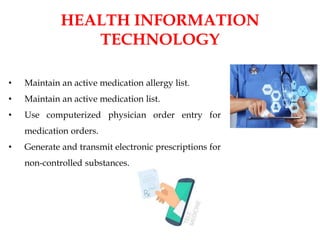
HEALTH INFORMATION
TECHNOLOGY
• Maintain an active medication allergy list.
• Maintain an active medication list.
• Use computerized physician order entry for
medication orders.
• Generate and transmit electronic prescriptions for
non-controlled substances.
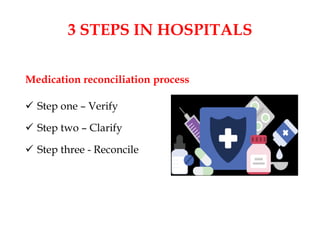
3 STEPS IN HOSPITALS
Medication reconciliation process
 Step one – Verify
 Step two – Clarify
 Step three - Reconcile
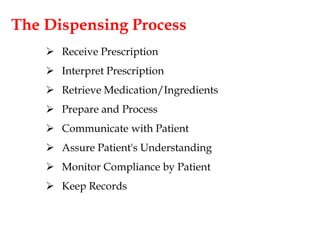
The Dispensing Process
 Receive Prescription
 Interpret Prescription
 Retrieve Medication/Ingredients
 Prepare and Process
 Communicate with Patient
 Assure Patient's Understanding
 Monitor Compliance by Patient
 Keep Records
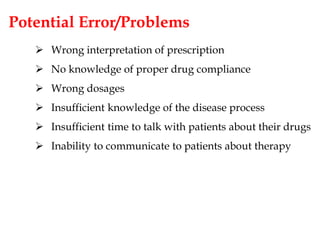
Potential Error/Problems
 Wrong interpretation of prescription
 No knowledge of proper drug compliance
 Wrong dosages
 Insufficient knowledge of the disease process
 Insufficient time to talk with patients about their drugs
 Inability to communicate to patients about therapy
Why are MEs a problem?
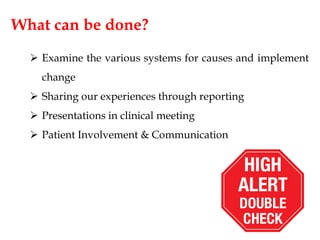
What can be done?
 Examine the various systems for causes and implement
change
 Sharing our experiences through reporting
 Presentations in clinical meeting
 Patient Involvement & Communication
Responsibilities
 Voluntary self reporting
 Provide assistance for health care professionals for the
right dispensing and safe administration of drugs.
 Observation based studies
 Criteria based audit
 Report Errors to Local authorities
Role of Pharmacist
 Unit dose distribution system
 Intravenous admixture system
 Computer prescription order entry system
 Bar code systems
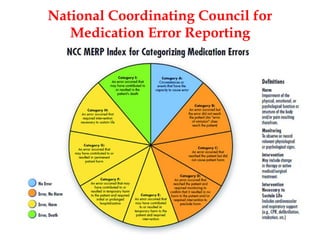
National Coordinating Council for
Medication Error Reporting
Medication errors

Medication errors

  • 1.
  • 3.
    WHY FOCUS ONMEDICATIONS? • The success of treating illness and to prevent disease have resulted in dramatic increase in medication use which lead to medication errors. • Different routes of administration • Multiple drugs usage • Multiple prescribers • Multiple pharmacological effects of a drug
  • 4.
    What student needsto know? Knowledge requirements • To understand scale of medication error and associated risks of medication usage • Common sources of error • To understand where in the process errors can occur • Understand a doctors responsibilities while prescribing and administering medication • To recognize common hazardous situations • To learn safe medication usage • To understand benefits of multidisciplinary approach to medication safety.
  • 6.
    • Medication Errorsare defined as any preventable event that may cause or lead to inappropriate medication use or patient harm while the medication is in the control of the health care professional, patient, or consumer.
  • 7.
    STEPS IN USINGMEDICATION PRESCRIBING ADMINISTRATION MONITORING
  • 8.
    Where Do TheyOccur?  Prescribing  Transcription  Administering  Dispensing  Packaging  Monitoring
  • 11.
    Types of MedicationErrors  Prescribing errors  Omission errors  Wrong time errors  Unauthorised drug errors  Improper dose errors  Wrong dosage from errors  Wrong drug preparation errors  Wrong administration or technique errors  Deteriorated drug errors  Monitoring errors  Compliance errors  Other errors
  • 13.
    MONITORING ERRORS • Inadequatemonitoring for side-effects. • Medication not ceased once course is complete. • Course of prescribed medication not completed. • Drug levels not measured, or measured but not checked. • Communication failures.
  • 15.
    LIST OF LOOKALIKE DRUGS LETTERS CONFUSED WITH acetaZOLAMIDE acetohexamide buPROPion busPIRone chlorproMAZINE chlorpropamide clomiPHENE clomipramine cycloSERINE cyclosporine DAUNOrubicin DOXOrubicin DOBUTamine DOPamine
  • 16.
    USE GENERIC NAMES GENERICNAME POPULAR BRAND NAME CIPROFLOXACIN CIFRAN AMOXICILLIN CLAVULANATE POTASSIUM AUGMENTIN CARBAMAZEPINE ZEN AMLODIPINE STAMLO
  • 20.
  • 21.
    PRESCRIBING TO INDIVIDUAL PATIENTS Allergies  Co-morbidities (especially liver and renal impairment)  Other medication  Pregnancy and Breastfeeding  Size of patient
  • 22.
    MEDICATION HISTORY COLLECTION • Name,dose, route, frequency, duration of every drug • Over-the-counter medications, dietary supplements and alternative medicines • Drug interactions • Medications that can be ceased • Allergy history • Medications that may be causing side-effects
  • 23.
    PRECAUTIONS FOR HIGHRISK MEDICINES • Narrow therapeutic window • Multiple interactions with others • Potent medications • Complex dosage and monitoring
  • 24.
    KNOW THE MEDICATION Pharmacology  Indications  Contraindications  Side-effects  Special precautions  Dose and administration  Regimen
  • 25.
    USE MEMORY AIDS •Textbooks • Personal digital assistant • Computer programs, computerized prescribing • Protocols
  • 26.
    Five R’s • Rightdrug • Right dose • Right route • Right time • Right patient
  • 27.
    COMMUNICATE CLEARLY • The5 R’s • State the obvious • Close the loop
  • 28.
    DEVELOP CHECKING HABITS •When prescribing a medication • When administering medication: – Check for allergies – Check the 5 R’s • Unlabelled medications belong in the bin.
  • 29.
    ENCOURAGE PATIENTS TOINVOLVE IN PROCESS • Provide patients with all the information about medication. • To keep a written record of their medications and allergies. • To present this information whenever they consult a doctor.
  • 30.
    REPORT & LEARNFROM MEDICATION ERRORS • Why? • When? • How?
  • 31.
    SAFE PRACTICE SKILLS •Prescribe, document and administer medication • Use memory aids and perform drug calculations • Perform medication and allergy histories • Communicate with colleagues • Involve and educate patients about their medication • Learn from medication errors and near misses
  • 32.
    STRATEGIES FOR IMPROVING MEDICATIONSAFETY • Maintain up to date references. • Understand patient’s condition, diagnosis and indications for medication considered. • Conditions that may effect the efficacy of medication (dosages, routes of administration, weight, renal and hepatic functioning). • Understand potential interactions for new and old medication. • Recognize potential of risk of high alert mediation.
  • 33.
    HEALTH INFORMATION TECHNOLOGY • Maintainan active medication allergy list. • Maintain an active medication list. • Use computerized physician order entry for medication orders. • Generate and transmit electronic prescriptions for non-controlled substances.
  • 34.
    3 STEPS INHOSPITALS Medication reconciliation process  Step one – Verify  Step two – Clarify  Step three - Reconcile
  • 38.
    The Dispensing Process Receive Prescription  Interpret Prescription  Retrieve Medication/Ingredients  Prepare and Process  Communicate with Patient  Assure Patient's Understanding  Monitor Compliance by Patient  Keep Records
  • 39.
    Potential Error/Problems  Wronginterpretation of prescription  No knowledge of proper drug compliance  Wrong dosages  Insufficient knowledge of the disease process  Insufficient time to talk with patients about their drugs  Inability to communicate to patients about therapy
  • 40.
    Why are MEsa problem?
  • 41.
    What can bedone?  Examine the various systems for causes and implement change  Sharing our experiences through reporting  Presentations in clinical meeting  Patient Involvement & Communication
  • 42.
    Responsibilities  Voluntary selfreporting  Provide assistance for health care professionals for the right dispensing and safe administration of drugs.  Observation based studies  Criteria based audit  Report Errors to Local authorities
  • 43.
    Role of Pharmacist Unit dose distribution system  Intravenous admixture system  Computer prescription order entry system  Bar code systems
  • 44.
    National Coordinating Councilfor Medication Error Reporting