Plagiarism
What You Need to Know About
APA Format to Avoid Plagiarism
Definition


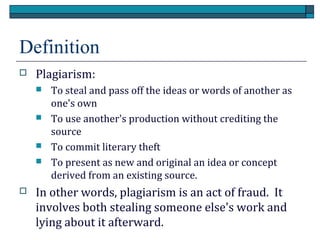
Plagiarism:









To steal and pass off the ideas or words of another as
one's own
To use another's production without crediting the
source
To commit literary theft
To present as new and original an idea or concept
derived from an existing source.

In other words, plagiarism is an act of fraud. It
involves both stealing someone else's work and
lying about it afterward.
Penalties for Plagiarism






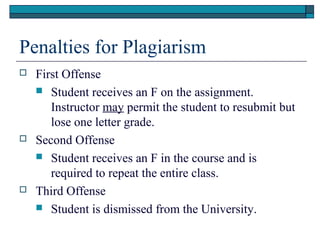
First Offense
 Student receives an F on the assignment.
Instructor may permit the student to resubmit but
lose one letter grade.
Second Offense
 Student receives an F in the course and is
required to repeat the entire class.
Third Offense
 Student is dismissed from the University.
Three Types of Plagiarism






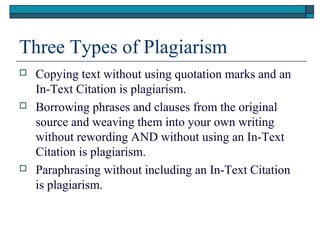
Copying text without using quotation marks and an
In-Text Citation is plagiarism.
Borrowing phrases and clauses from the original
source and weaving them into your own writing
without rewording AND without using an In-Text
Citation is plagiarism.
Paraphrasing without including an In-Text Citation
is plagiarism.
More about Paraphrasing


Paraphrasing is using someone else’s ideas and
presenting them in your paper as reworded
information.






Paraphrasing is an excellent method to use when
using your words to express other people’s ideas.
Paraphrase when you wish to simplify complex
source information.
Always cite paraphrased material or you will be
guilty of plagiarism.
General Rules for In-Text Citations








Every paragraph in your paper should probably have at least
ONE In-Text Citation.
Exceptions might be your Abstract, Introduction, and
Conclusion.
Ensure that your In-Text Citations are formatted correctly by
using the APA Publication Manual, 6th Edition.
The typical format for in-text citations (but check, because it
may vary based on your source) is (Author’s last name,
year).
References








The last page of your assignment is typically your
References page (unless you have appendices).
Every source you cite in your paper must have an
entry on your References page.
Every citation must have a corresponding reference
on the reference page, and vice versa. There is no
one without the other!
Follow the strict formatting rules for your
References page by using the APA Publication Manual,
6th Edition or the APA Help information in the OWL.

How to Avoid Plagiarism

  • 1.
    Plagiarism What You Needto Know About APA Format to Avoid Plagiarism
  • 2.
    Definition  Plagiarism:      To steal andpass off the ideas or words of another as one's own To use another's production without crediting the source To commit literary theft To present as new and original an idea or concept derived from an existing source. In other words, plagiarism is an act of fraud. It involves both stealing someone else's work and lying about it afterward.
  • 3.
    Penalties for Plagiarism    FirstOffense  Student receives an F on the assignment. Instructor may permit the student to resubmit but lose one letter grade. Second Offense  Student receives an F in the course and is required to repeat the entire class. Third Offense  Student is dismissed from the University.
  • 4.
    Three Types ofPlagiarism    Copying text without using quotation marks and an In-Text Citation is plagiarism. Borrowing phrases and clauses from the original source and weaving them into your own writing without rewording AND without using an In-Text Citation is plagiarism. Paraphrasing without including an In-Text Citation is plagiarism.
  • 5.
    More about Paraphrasing  Paraphrasingis using someone else’s ideas and presenting them in your paper as reworded information.    Paraphrasing is an excellent method to use when using your words to express other people’s ideas. Paraphrase when you wish to simplify complex source information. Always cite paraphrased material or you will be guilty of plagiarism.
  • 6.
    General Rules forIn-Text Citations     Every paragraph in your paper should probably have at least ONE In-Text Citation. Exceptions might be your Abstract, Introduction, and Conclusion. Ensure that your In-Text Citations are formatted correctly by using the APA Publication Manual, 6th Edition. The typical format for in-text citations (but check, because it may vary based on your source) is (Author’s last name, year).
  • 7.
    References     The last pageof your assignment is typically your References page (unless you have appendices). Every source you cite in your paper must have an entry on your References page. Every citation must have a corresponding reference on the reference page, and vice versa. There is no one without the other! Follow the strict formatting rules for your References page by using the APA Publication Manual, 6th Edition or the APA Help information in the OWL.