Total Duration: 30 minutes
Presentation: 25 minutes
Question & Answer session: 5 minutes


            Dr. Salma Azeez
To provide a multi-
disciplinary forum and
framework which
identifies and manages
environment of care
issues, thus promoting a
safety environment for
our patients, visitors and
staff.
1. To oversee, guide and ensure     towards incidences reported.
     the following aspects of       4. Appropriate storage and
     safety in the hospital:             safety practices with regard
    Patient safety                      to all Hazardous materials
                                         including waste
    Employee safety                     management.
    Radiation safety
    Environment /Facility safety   5. Analyze the staff injuries
                                         reported and other illness
    Disaster Management                 caused at work.
2. To promote a culture of ‘ Do
     not harm’ and report any       6. Teaching and training
     ‘Near Misses”                       programs conducted for all
                                         levels of staff for safety of
3. To review the incident report         patients and personnel.
     analysis & action taken
A Risk management
program in hospitals is
imperative because:

•To treat patients in a
safe environment.
•We are constantly
exposed to external
and internal risks.
•To reduce errors that
are costly in terms of
damage.
Patient  Safety
  SET THE SAFETY               Employee
CULTURE……                         Safety
                               Laboratory
•Non punitive                     Safety
•Transparent
                             Emergency &
• Need to know
•Speak out                       Disaster
  • If we don't know, how     Preparedness
      can we correct it?       Hazardous
• It can happen to anyone       Materials
             of us!             Surgical
       •Involvement of            Safety
   Clinicians for clinical
                             Facility safety
         safety issues
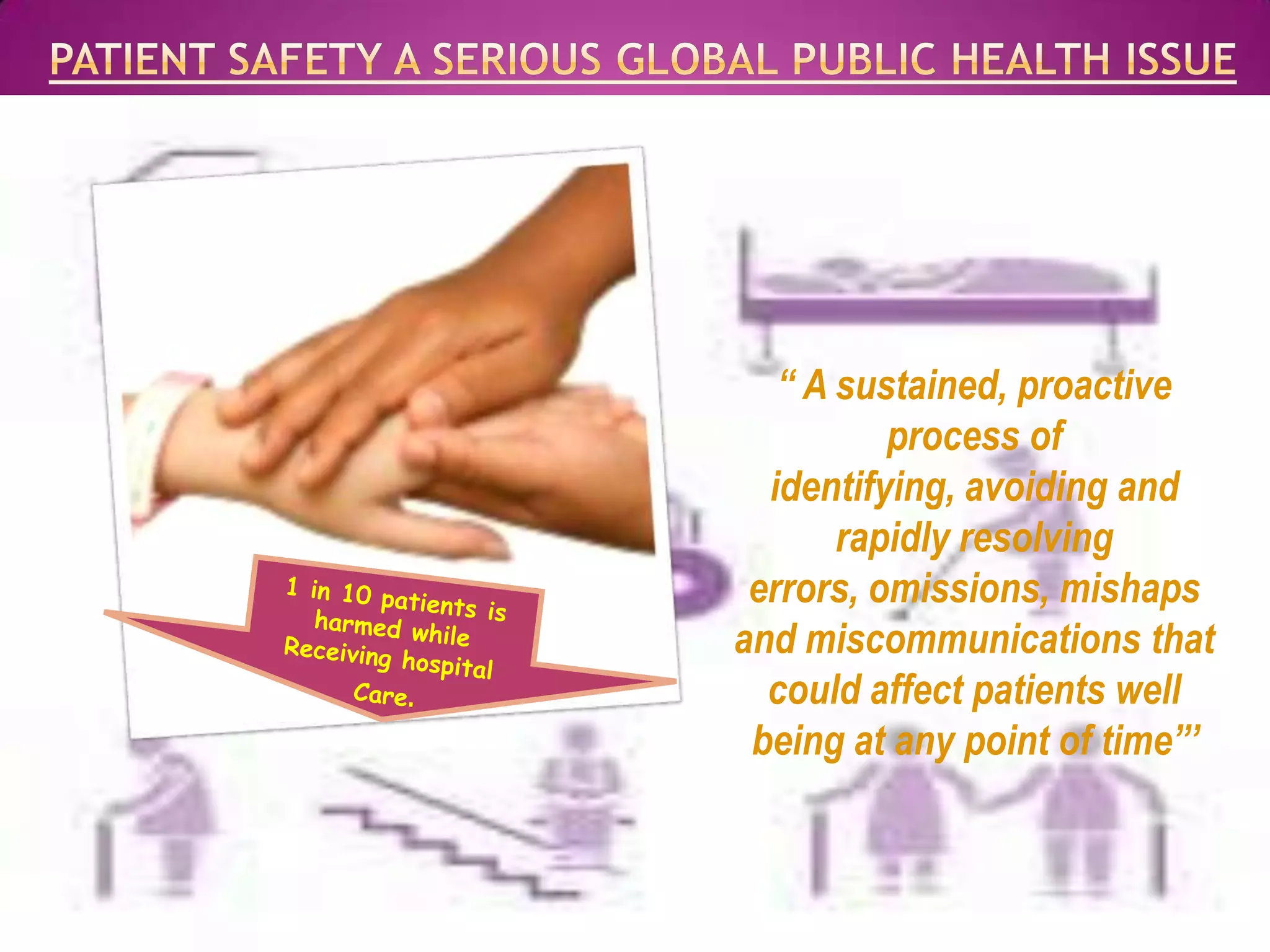
“ A sustained, proactive
          process of
  identifying, avoiding and
       rapidly resolving
 errors, omissions, mishaps
and miscommunications that
  could affect patients well
 being at any point of time”’
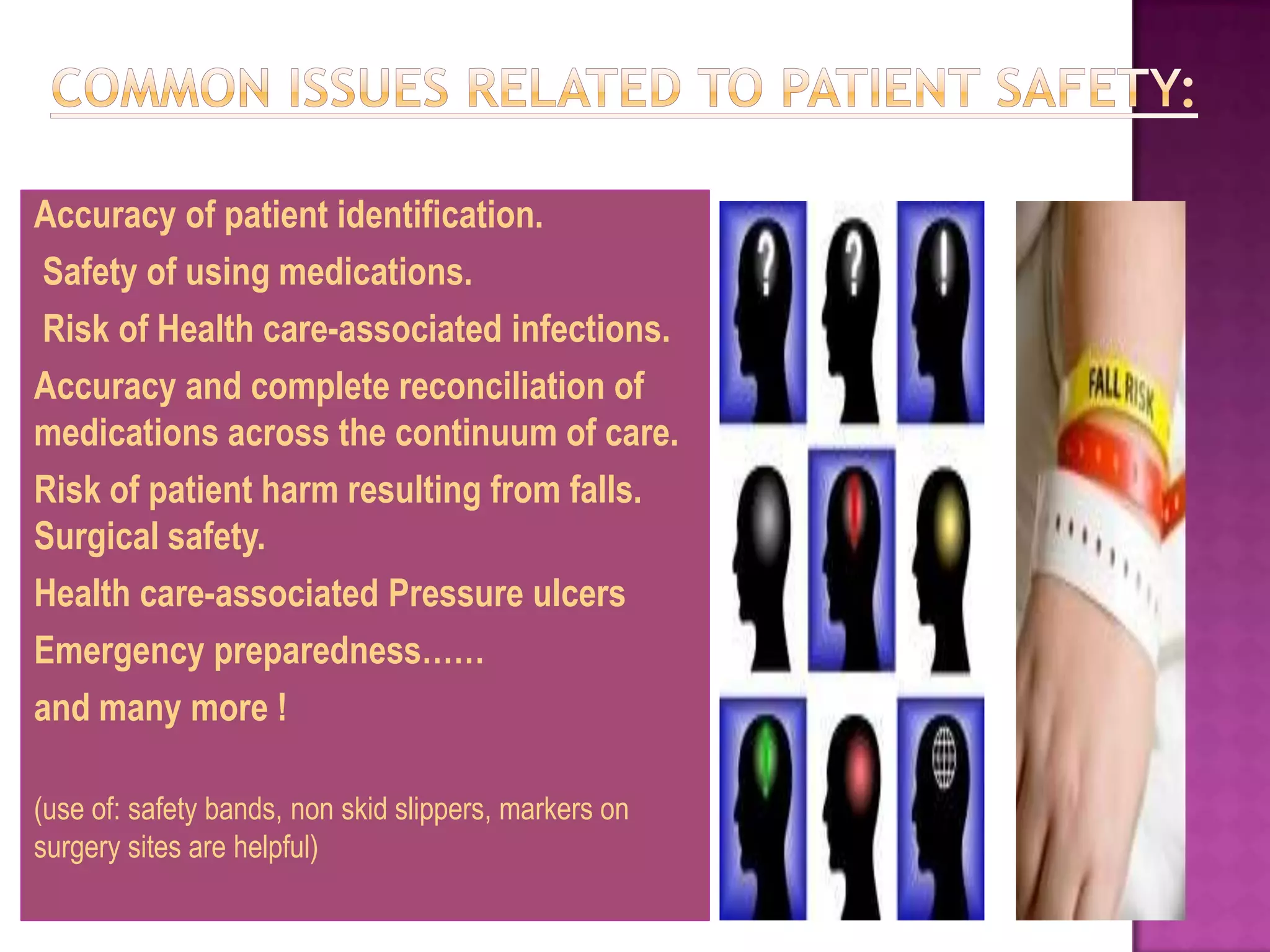
Accuracy of patient identification.
Safety of using medications.
Risk of Health care-associated infections.
Accuracy and complete reconciliation of
medications across the continuum of care.
Risk of patient harm resulting from falls.
Surgical safety.
Health care-associated Pressure ulcers
Emergency preparedness……
and many more !

(use of: safety bands, non skid slippers, markers on
surgery sites are helpful)
VERBAL ORDERS: ERROR                               IDENTIFY PATIENTS
PREVENTION:                                              CORRECTLY
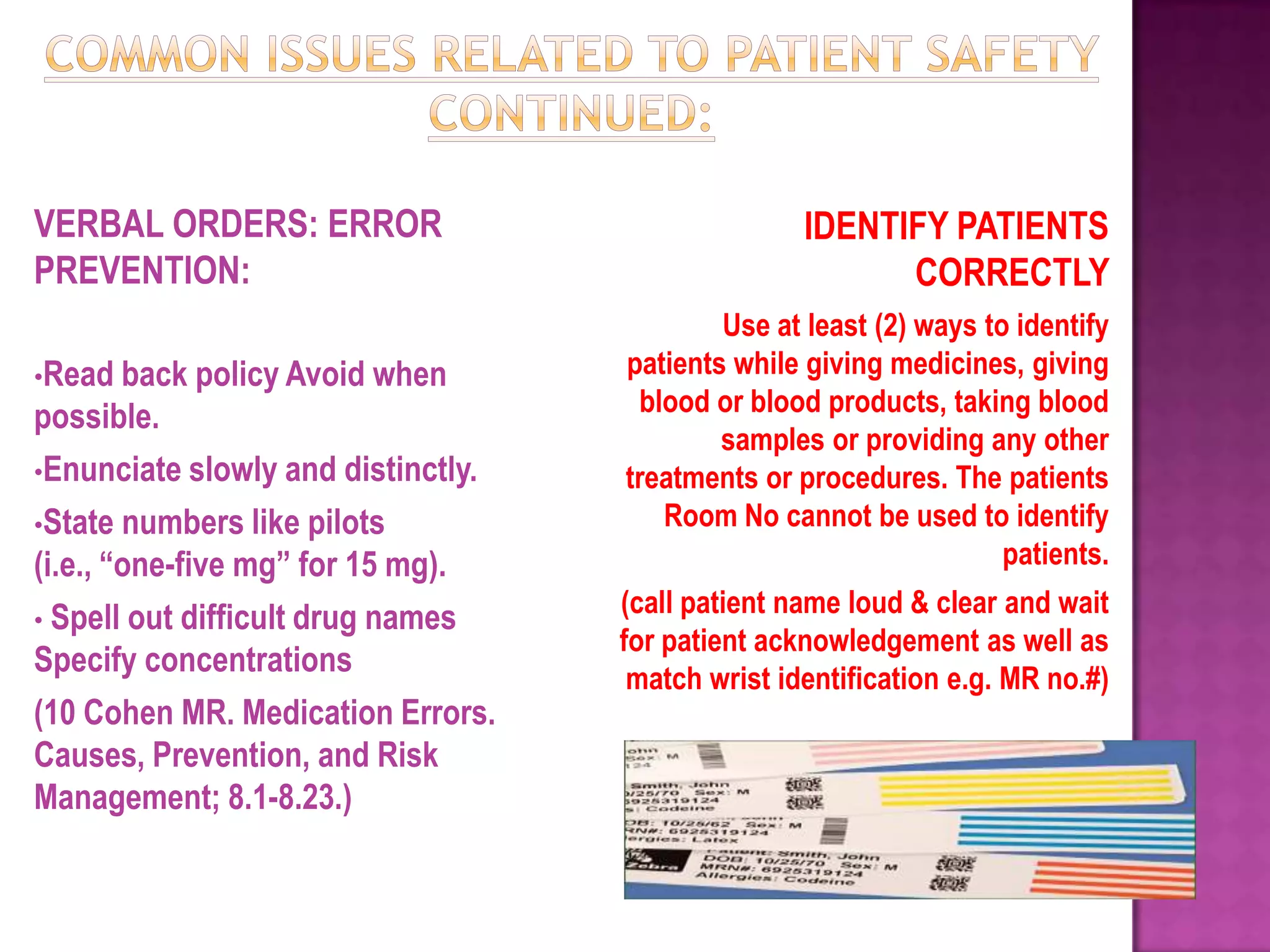
                                            Use at least (2) ways to identify
•Read back   policy Avoid when      patients while giving medicines, giving
                                     blood or blood products, taking blood
possible.
                                            samples or providing any other
•Enunciate slowly and distinctly.   treatments or procedures. The patients
•State numbers like pilots             Room No cannot be used to identify
(i.e., “one-five mg” for 15 mg).                                    patients.
                                    (call patient name loud & clear and wait
• Spell out difficult drug names
                                    for patient acknowledgement as well as
Specify concentrations
                                     match wrist identification e.g. MR no.#)
(10 Cohen MR. Medication Errors.
Causes, Prevention, and Risk
Management; 8.1-8.23.)
 Language should be simple and understood. A read
  back or narrate can help Increase health literacy of
  patients.
 Standardize the handover process and allot sufficient
  time
 Relevant information should be available to every one
  concerned.
 Patients should be aware of the medicines, dosages
  and intervals of administration
 Patient and families should be involved in the decision
  making.

(Comments: educate patient about: name of drug, dose, how-to-
  take, written instructions, & known side effects. Patient and relatives
  should sign consent for control drug therapies/surgeries)
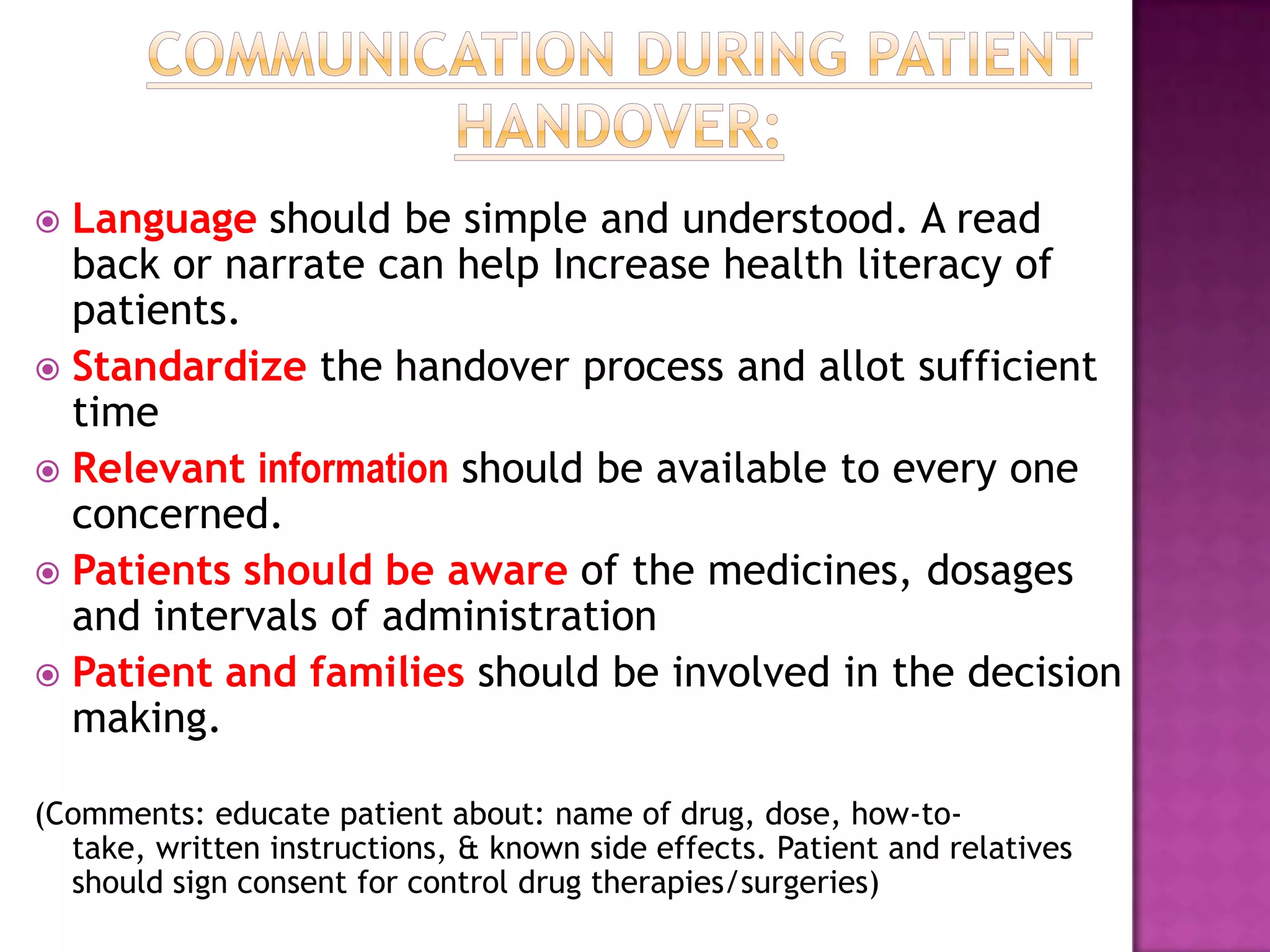
 Implementation of strategies that make
  alcohol-based hand-rubs readily available at
  points of patient care.
 Access to a safe, continuous water supply at
  all taps/faucets.
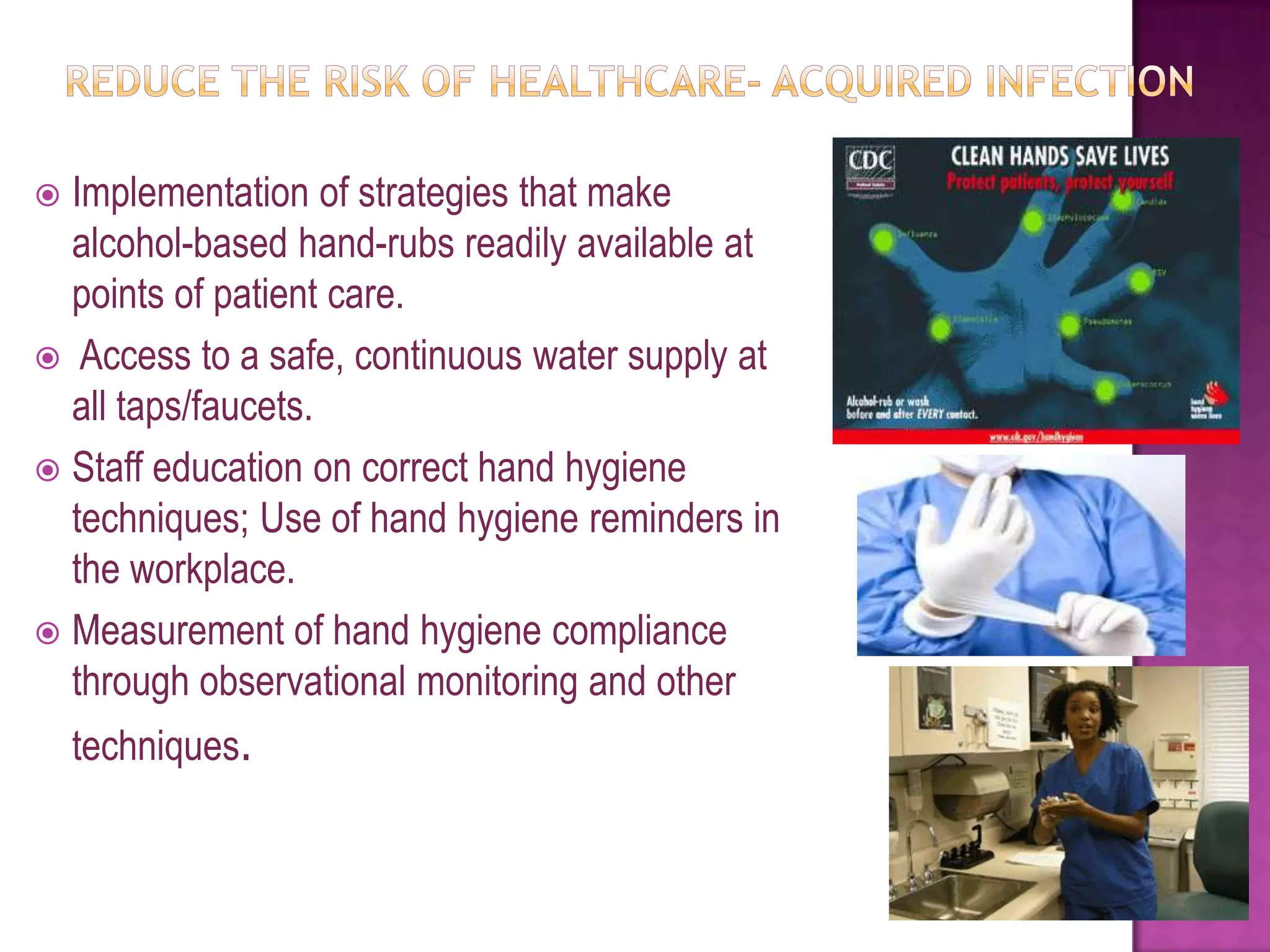
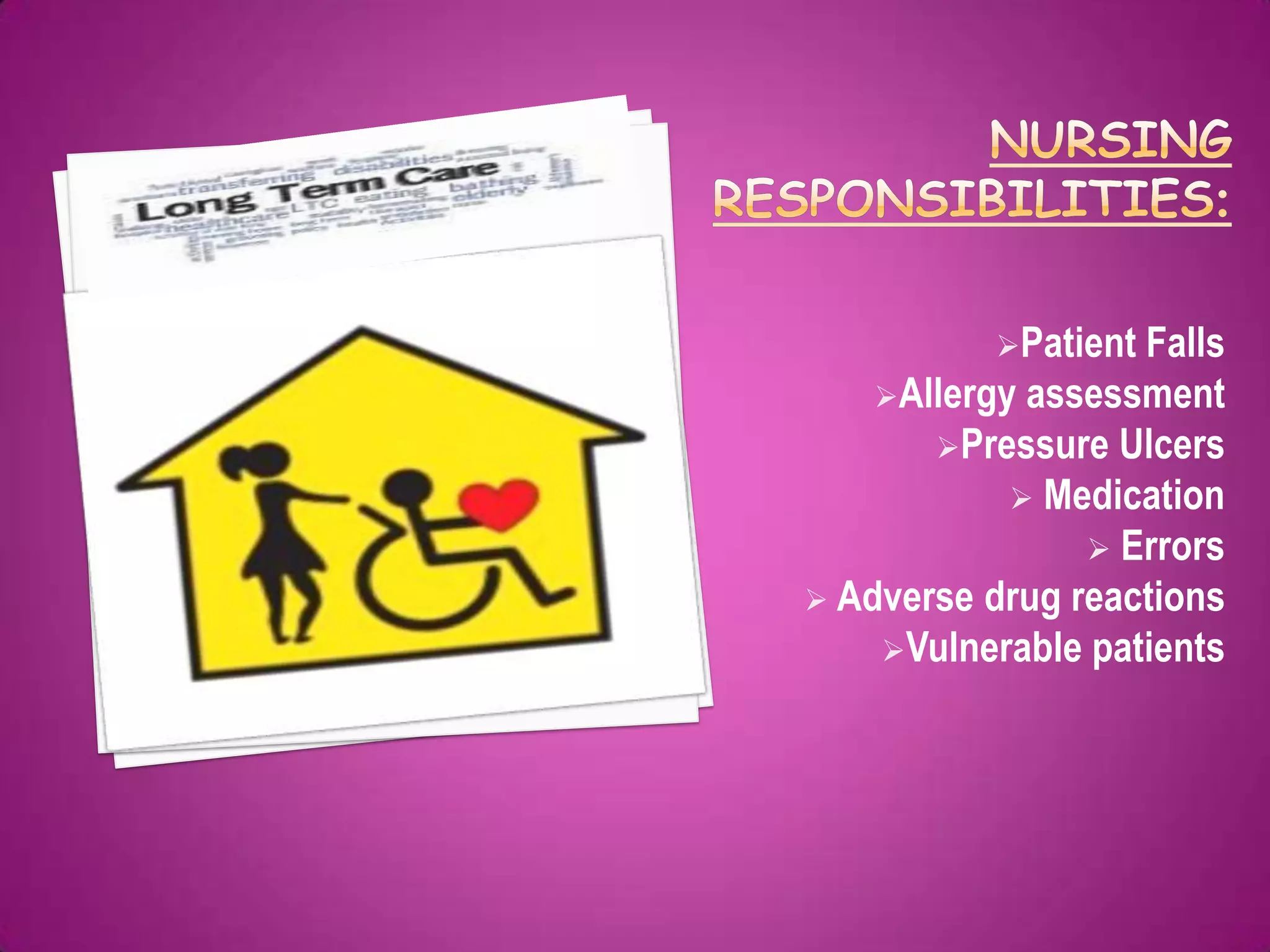
 Staff education on correct hand hygiene
  techniques; Use of hand hygiene reminders in
  the workplace.
 Measurement of hand hygiene compliance
  through observational monitoring and other
    techniques.
Patient Falls
    Allergy assessment
       Pressure Ulcers
             Medication
                 Errors
 Adverse drug reactions
    Vulnerable patients
 Risk assessment in different groups
  of employees .
 Pre Joining formalities: Medical
  fitness
 Periodic health check up policy
  („Periodicity‟ differs in different
  groups of employees).
 Medical Benefits
 Post exposure prophylaxis… needs
  to be streamlined.
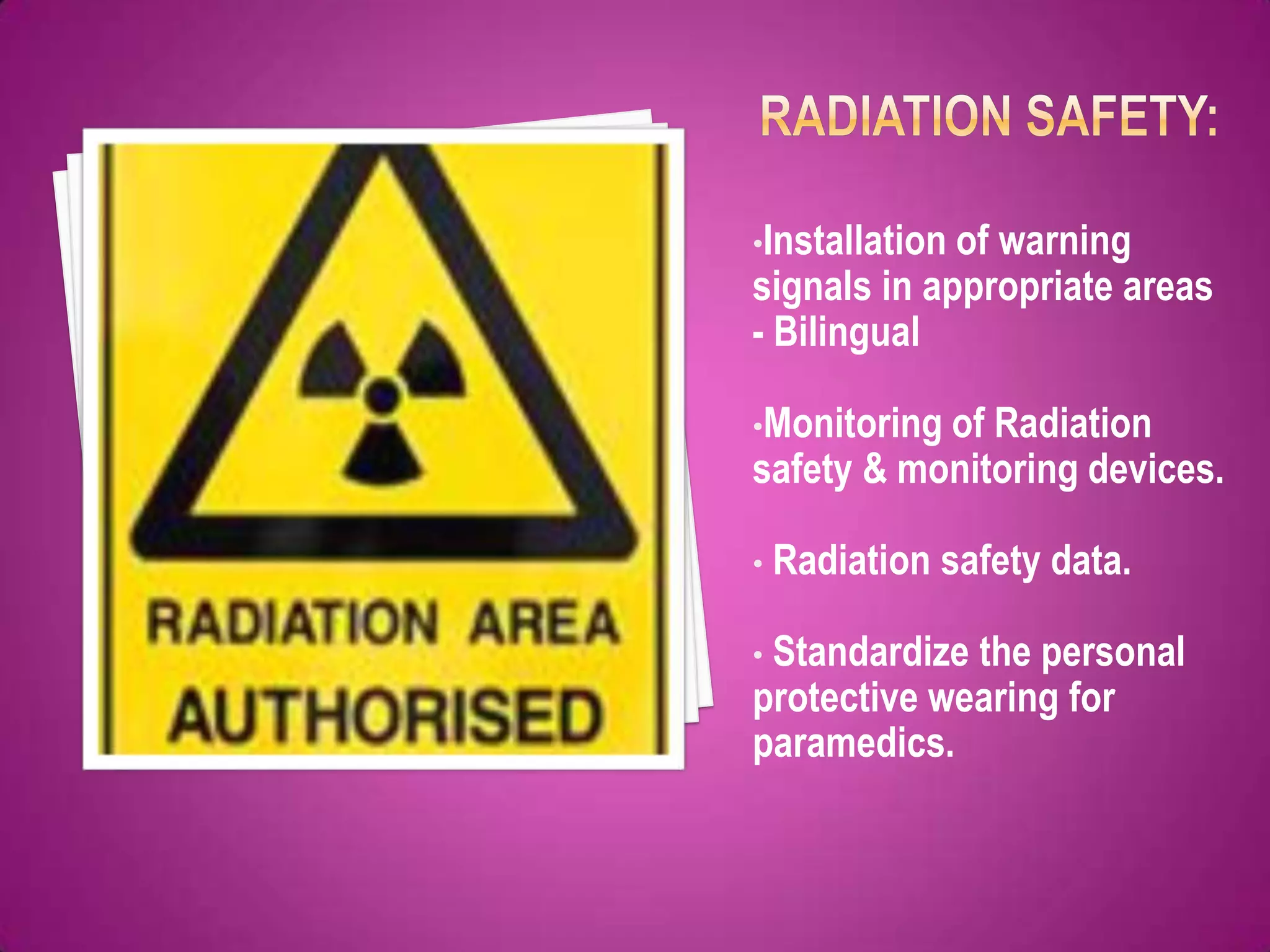
•Installation of
               warning
signals in appropriate areas
- Bilingual

•Monitoring ofRadiation
safety & monitoring devices.

•   Radiation safety data.

•Standardize the personal
protective wearing for
paramedics.
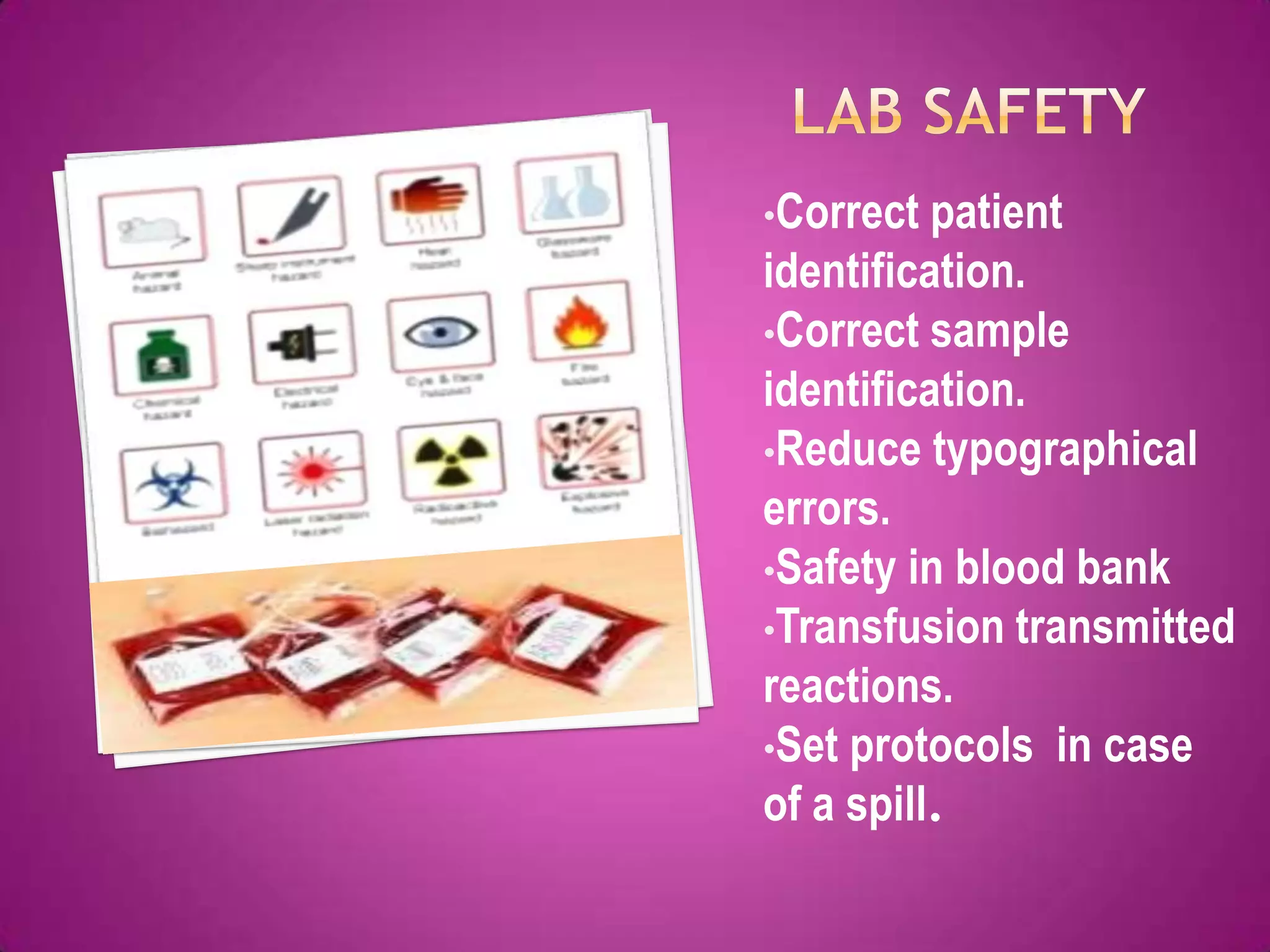
•Correct  patient
identification.
•Correct sample
identification.
•Reduce typographical
errors.
•Safety in blood bank
•Transfusion transmitted
reactions.
•Set protocols in case
of a spill.
 Know the   emergencies/disasters relevant to
  your institute/workplace.
 Code system
 Location of ramps, fire
  extinguisher, evacuation plan etc.
 Appropriate personal protective measures to
  be procured for emergencies.
 Training,   training, training…
   Do mock drills
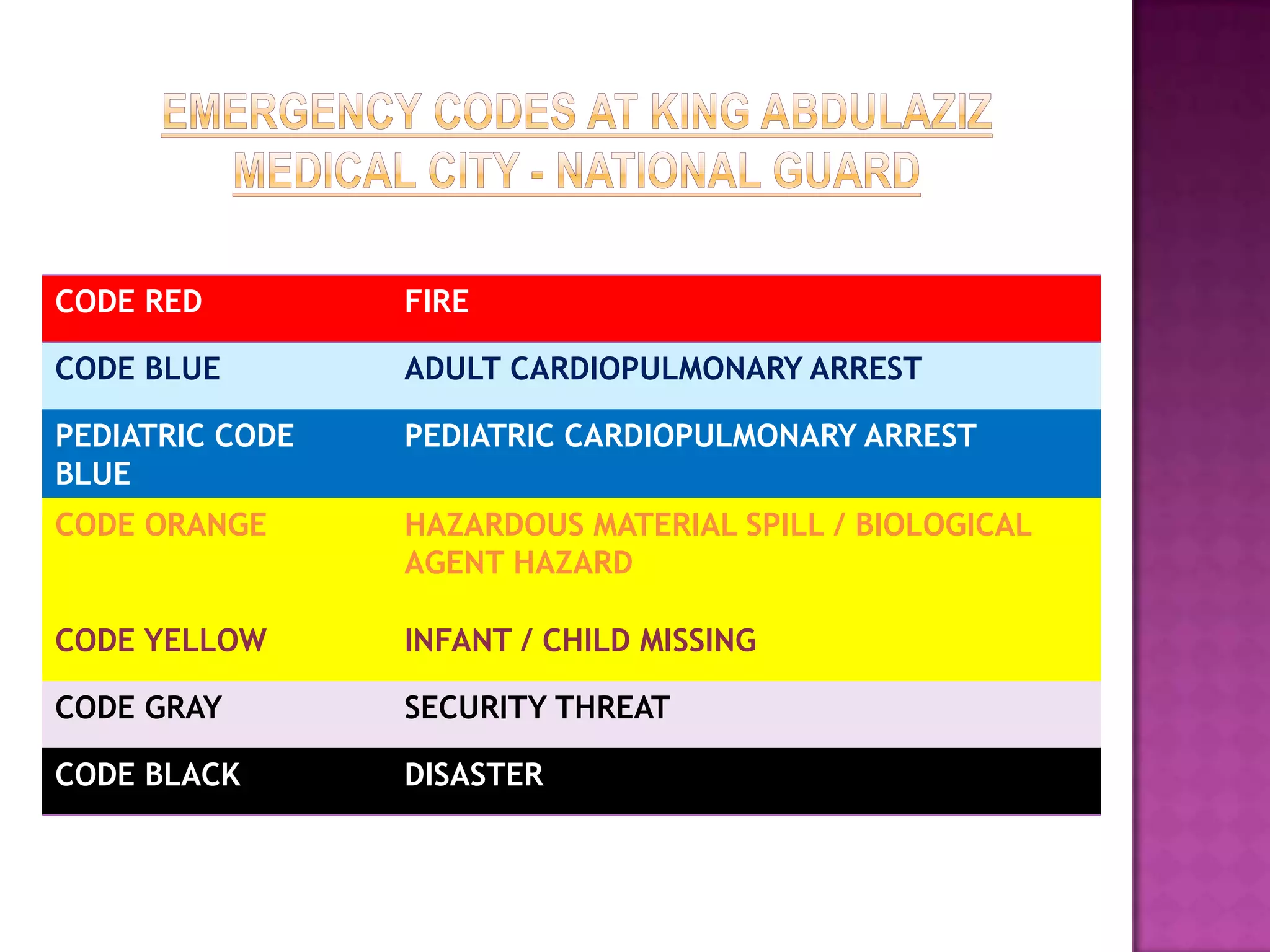
CODE RED         FIRE

CODE BLUE        ADULT CARDIOPULMONARY ARREST

PEDIATRIC CODE   PEDIATRIC CARDIOPULMONARY ARREST
BLUE
CODE ORANGE      HAZARDOUS MATERIAL SPILL / BIOLOGICAL
                 AGENT HAZARD

CODE YELLOW      INFANT / CHILD MISSING

CODE GRAY        SECURITY THREAT

CODE BLACK       DISASTER
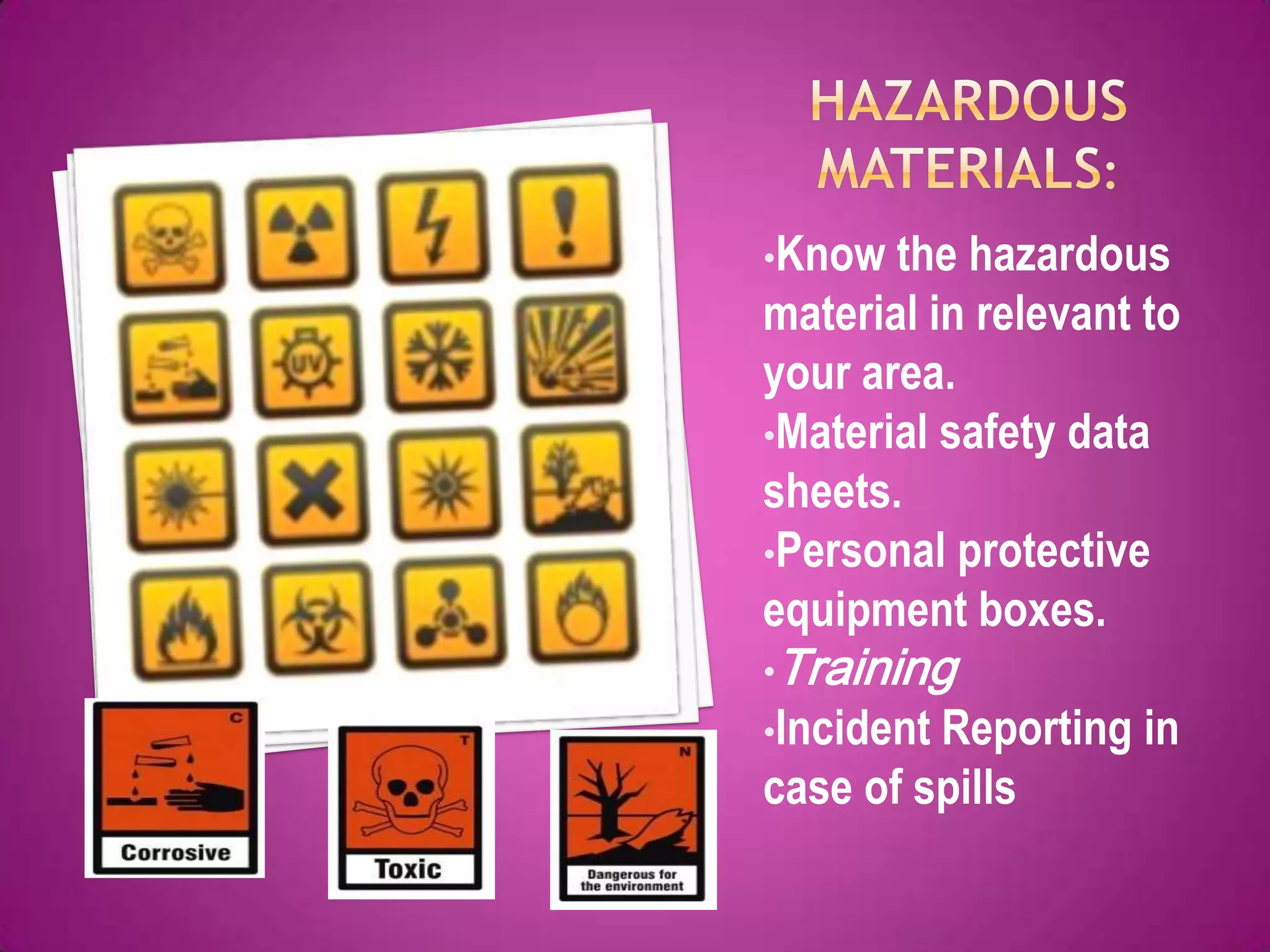
•Know  the hazardous
material in relevant to
your area.
•Material safety data
sheets.
•Personal protective
equipment boxes.
•Training
•IncidentReporting in
case of spills
•Incomplete   Consent
forms.
•Marking of site pre
operatively.
• Pre anesthetic review
•Operative notes (to be
authenticated)
Nursing call   bells

 Checking and maintenance Safety
       belts in stretchers/wheel chairs

           Signage –   danger/warning

   Regular checking of    alternative
                     sources of supply

        CORDON off renovation sites


 No   lose wires/open electric circuits

        Disabled friendly washrooms


        Reactivation offire detection
              systems in new building

       Emergency lights in staircases
To  develop a culture of
patient safety
To describe approach for
measurement and reporting
on patient safety
To find out frequent
problems that our Institute
encounters .
Identify accountabilities

To  develop the solutions for
patient safety
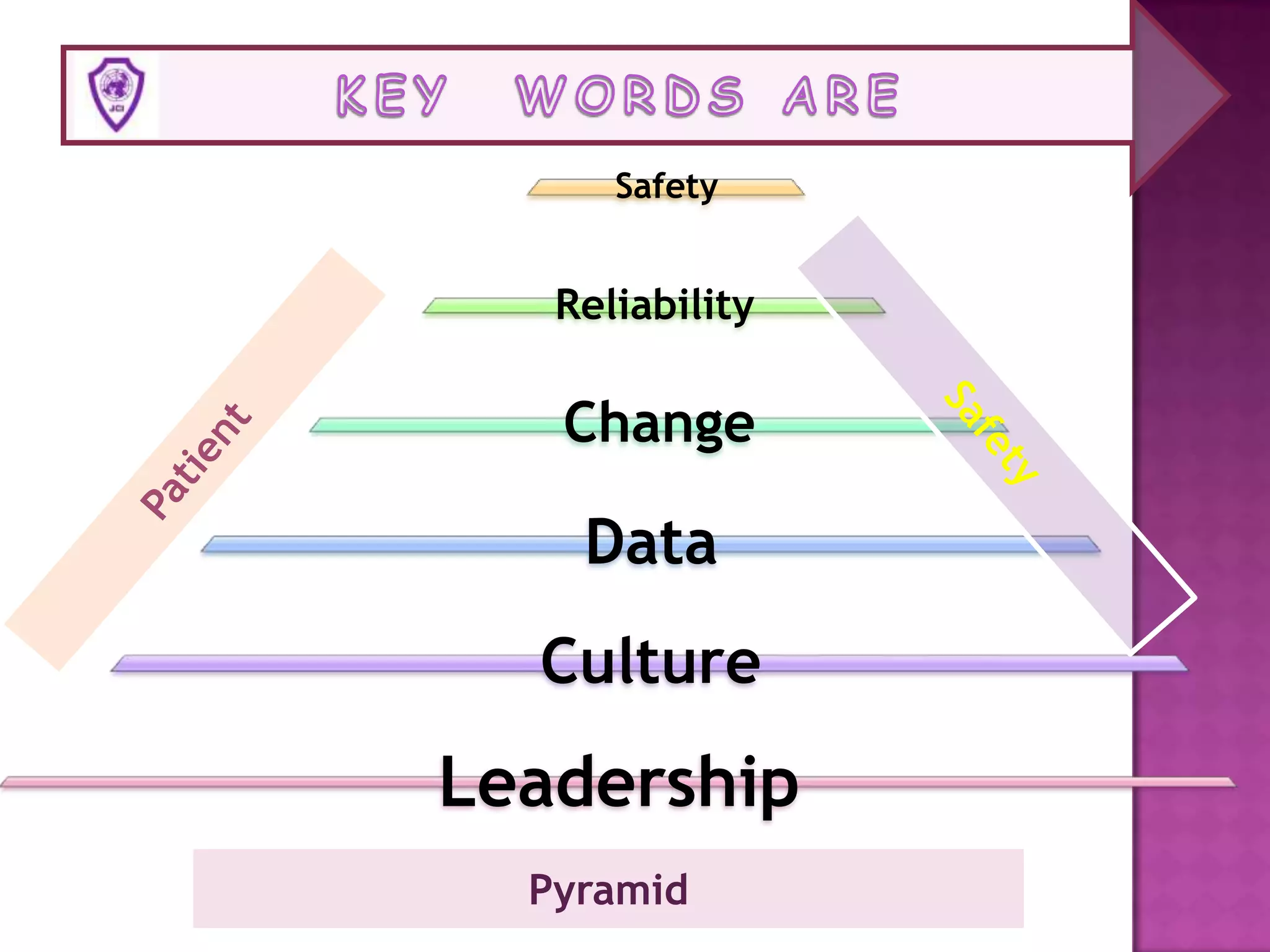
Safety


   Reliability

   Change

    Data
  Culture
Leadership
  Pyramid
THANK YOU

Hospital safety committee ptlls assignment 1

  • 1.
    Total Duration: 30minutes Presentation: 25 minutes Question & Answer session: 5 minutes Dr. Salma Azeez
  • 2.
    To provide amulti- disciplinary forum and framework which identifies and manages environment of care issues, thus promoting a safety environment for our patients, visitors and staff.
  • 3.
    1. To oversee,guide and ensure towards incidences reported. the following aspects of 4. Appropriate storage and safety in the hospital: safety practices with regard  Patient safety to all Hazardous materials including waste  Employee safety management.  Radiation safety  Environment /Facility safety 5. Analyze the staff injuries reported and other illness  Disaster Management caused at work. 2. To promote a culture of ‘ Do not harm’ and report any 6. Teaching and training ‘Near Misses” programs conducted for all levels of staff for safety of 3. To review the incident report patients and personnel. analysis & action taken
  • 4.
    A Risk management programin hospitals is imperative because: •To treat patients in a safe environment. •We are constantly exposed to external and internal risks. •To reduce errors that are costly in terms of damage.
  • 5.
    Patient Safety SET THE SAFETY Employee CULTURE…… Safety Laboratory •Non punitive Safety •Transparent Emergency & • Need to know •Speak out Disaster • If we don't know, how Preparedness can we correct it? Hazardous • It can happen to anyone Materials of us! Surgical •Involvement of Safety Clinicians for clinical Facility safety safety issues
  • 6.
    “ A sustained,proactive process of identifying, avoiding and rapidly resolving errors, omissions, mishaps and miscommunications that could affect patients well being at any point of time”’
  • 7.
    Accuracy of patientidentification. Safety of using medications. Risk of Health care-associated infections. Accuracy and complete reconciliation of medications across the continuum of care. Risk of patient harm resulting from falls. Surgical safety. Health care-associated Pressure ulcers Emergency preparedness…… and many more ! (use of: safety bands, non skid slippers, markers on surgery sites are helpful)
  • 8.
    VERBAL ORDERS: ERROR IDENTIFY PATIENTS PREVENTION: CORRECTLY Use at least (2) ways to identify •Read back policy Avoid when patients while giving medicines, giving blood or blood products, taking blood possible. samples or providing any other •Enunciate slowly and distinctly. treatments or procedures. The patients •State numbers like pilots Room No cannot be used to identify (i.e., “one-five mg” for 15 mg). patients. (call patient name loud & clear and wait • Spell out difficult drug names for patient acknowledgement as well as Specify concentrations match wrist identification e.g. MR no.#) (10 Cohen MR. Medication Errors. Causes, Prevention, and Risk Management; 8.1-8.23.)
  • 9.
     Language shouldbe simple and understood. A read back or narrate can help Increase health literacy of patients.  Standardize the handover process and allot sufficient time  Relevant information should be available to every one concerned.  Patients should be aware of the medicines, dosages and intervals of administration  Patient and families should be involved in the decision making. (Comments: educate patient about: name of drug, dose, how-to- take, written instructions, & known side effects. Patient and relatives should sign consent for control drug therapies/surgeries)
  • 10.
     Implementation ofstrategies that make alcohol-based hand-rubs readily available at points of patient care.  Access to a safe, continuous water supply at all taps/faucets.  Staff education on correct hand hygiene techniques; Use of hand hygiene reminders in the workplace.  Measurement of hand hygiene compliance through observational monitoring and other techniques.
  • 11.
    Patient Falls Allergy assessment Pressure Ulcers  Medication  Errors  Adverse drug reactions Vulnerable patients
  • 12.
     Risk assessmentin different groups of employees .  Pre Joining formalities: Medical fitness  Periodic health check up policy („Periodicity‟ differs in different groups of employees).  Medical Benefits  Post exposure prophylaxis… needs to be streamlined.
  • 13.
    •Installation of warning signals in appropriate areas - Bilingual •Monitoring ofRadiation safety & monitoring devices. • Radiation safety data. •Standardize the personal protective wearing for paramedics.
  • 14.
    •Correct patient identification. •Correctsample identification. •Reduce typographical errors. •Safety in blood bank •Transfusion transmitted reactions. •Set protocols in case of a spill.
  • 15.
     Know the emergencies/disasters relevant to your institute/workplace.  Code system  Location of ramps, fire extinguisher, evacuation plan etc.  Appropriate personal protective measures to be procured for emergencies.  Training, training, training…  Do mock drills
  • 16.
    CODE RED FIRE CODE BLUE ADULT CARDIOPULMONARY ARREST PEDIATRIC CODE PEDIATRIC CARDIOPULMONARY ARREST BLUE CODE ORANGE HAZARDOUS MATERIAL SPILL / BIOLOGICAL AGENT HAZARD CODE YELLOW INFANT / CHILD MISSING CODE GRAY SECURITY THREAT CODE BLACK DISASTER
  • 17.
    •Know thehazardous material in relevant to your area. •Material safety data sheets. •Personal protective equipment boxes. •Training •IncidentReporting in case of spills
  • 18.
    •Incomplete Consent forms. •Marking of site pre operatively. • Pre anesthetic review •Operative notes (to be authenticated)
  • 19.
    Nursing call bells Checking and maintenance Safety belts in stretchers/wheel chairs Signage – danger/warning Regular checking of alternative sources of supply CORDON off renovation sites  No lose wires/open electric circuits Disabled friendly washrooms Reactivation offire detection systems in new building Emergency lights in staircases
  • 20.
    To developa culture of patient safety To describe approach for measurement and reporting on patient safety To find out frequent problems that our Institute encounters . Identify accountabilities To develop the solutions for patient safety
  • 21.
    Safety Reliability Change Data Culture Leadership Pyramid
  • 23.