Sustainable procurement:  Making it happen Dr Gordon Murray Programme Manager  www.idea.gov.uk
 
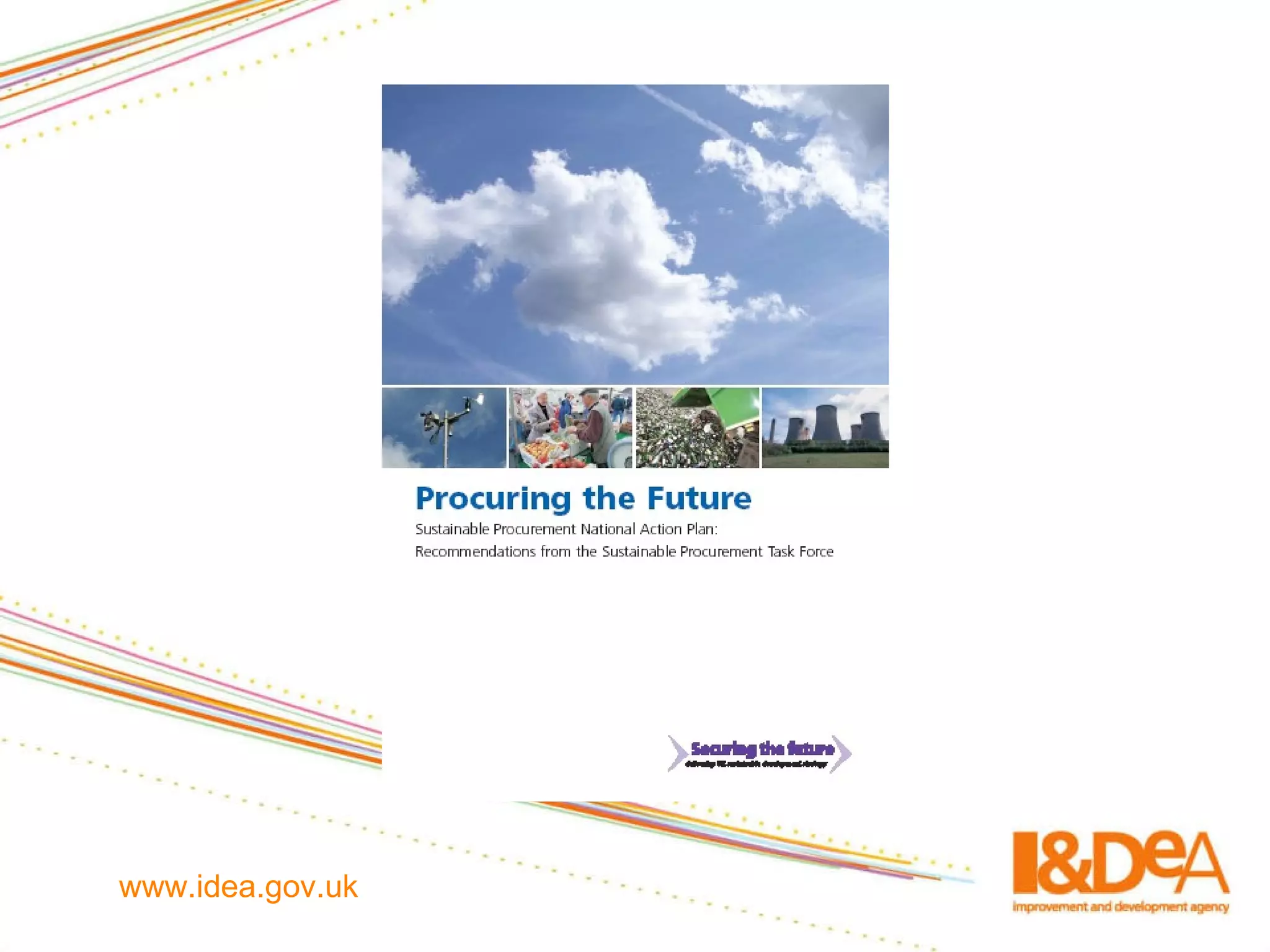
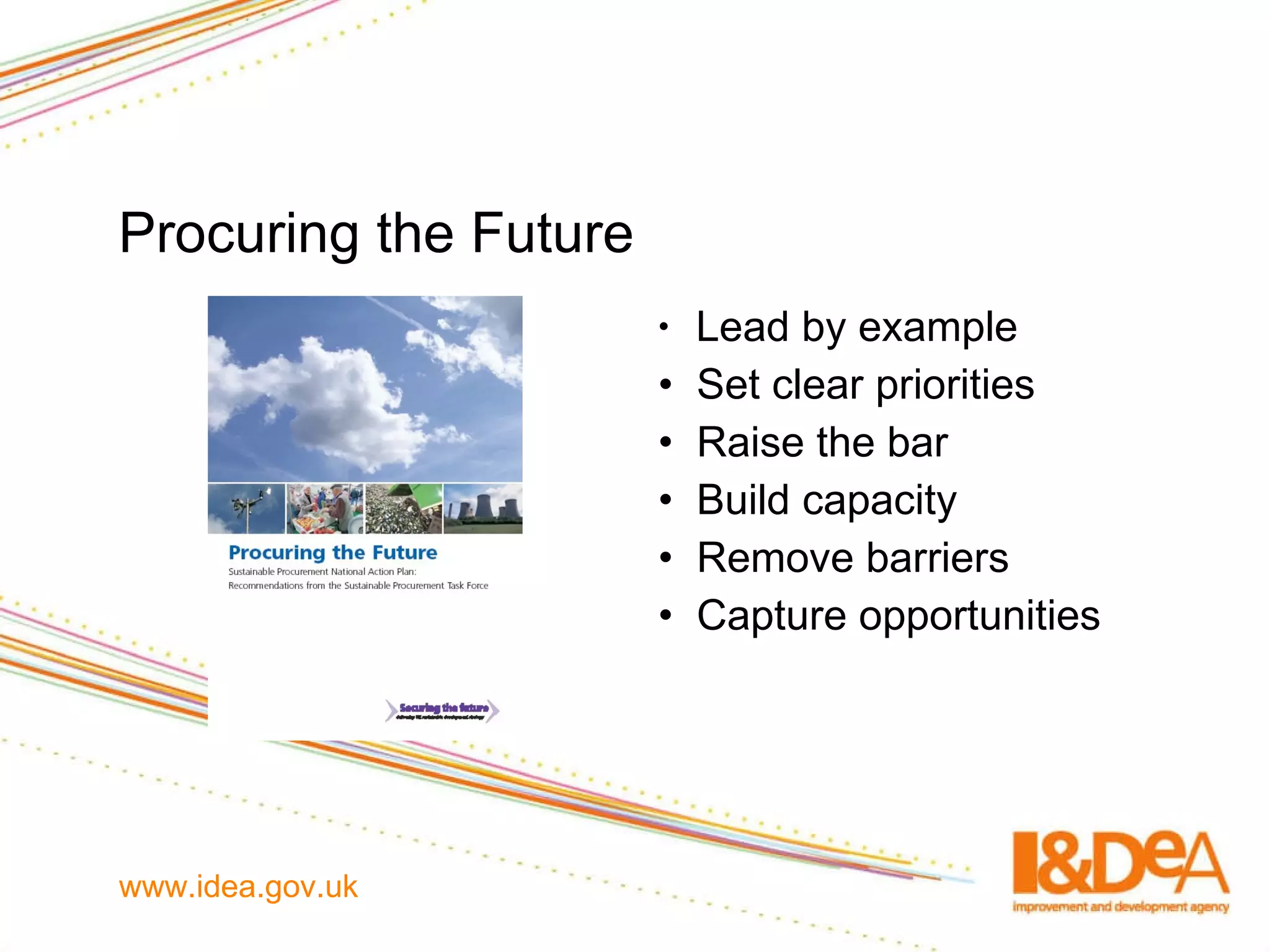
Procuring the Future Lead by example Set clear priorities Raise the bar Build capacity Remove barriers Capture opportunities
Sustainable procurement policy & management www.idea.gov.uk
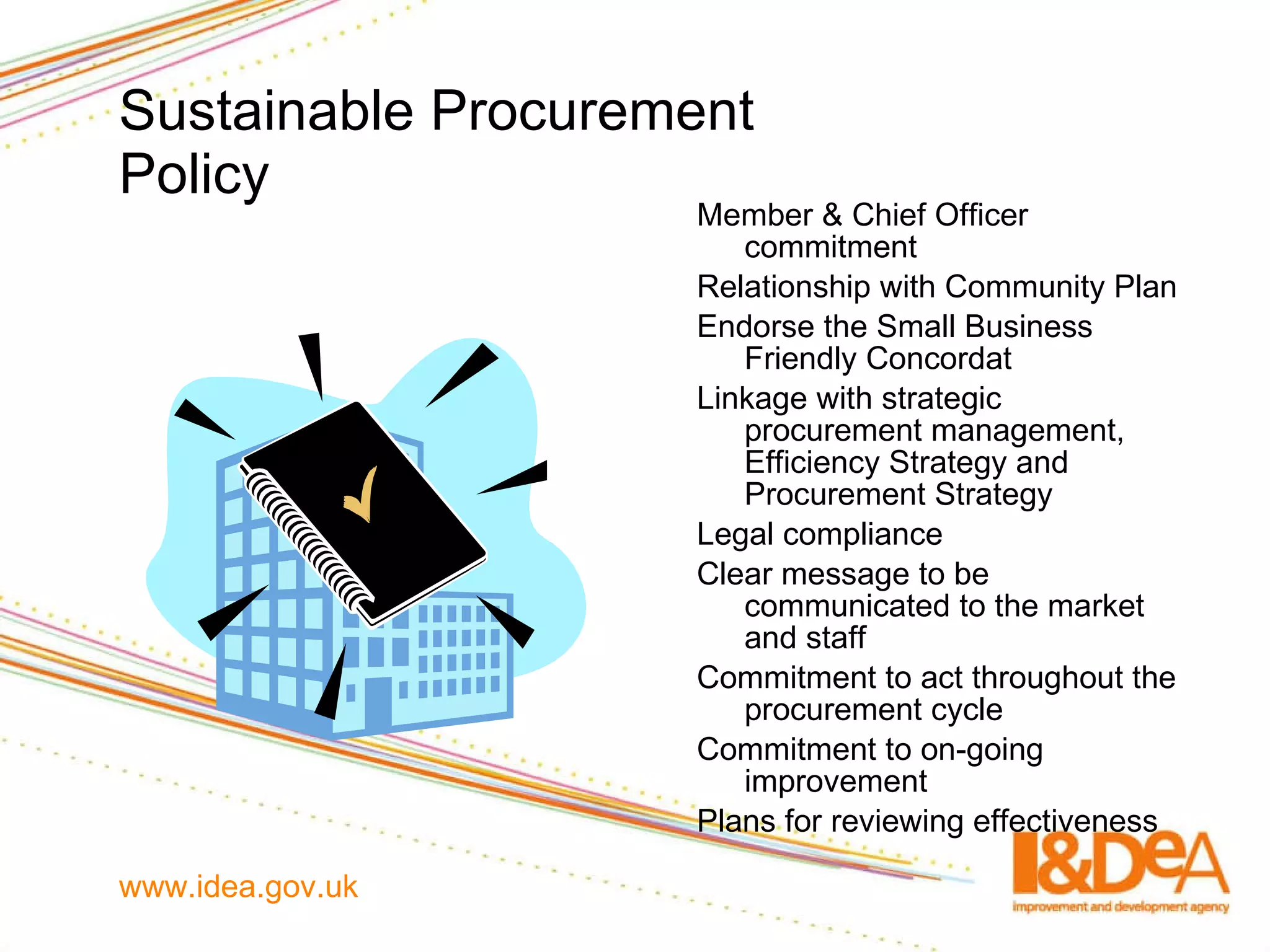
Sustainable   Procurement   Policy Member & Chief Officer commitment Relationship with Community Plan Endorse the Small Business Friendly Concordat Linkage with strategic procurement management, Efficiency Strategy and Procurement Strategy Legal compliance Clear message to be communicated to the market and staff Commitment to act throughout the procurement cycle Commitment to on-going improvement Plans for reviewing effectiveness
Strategic procurement management: What’s that all about?   www.idea.gov.uk
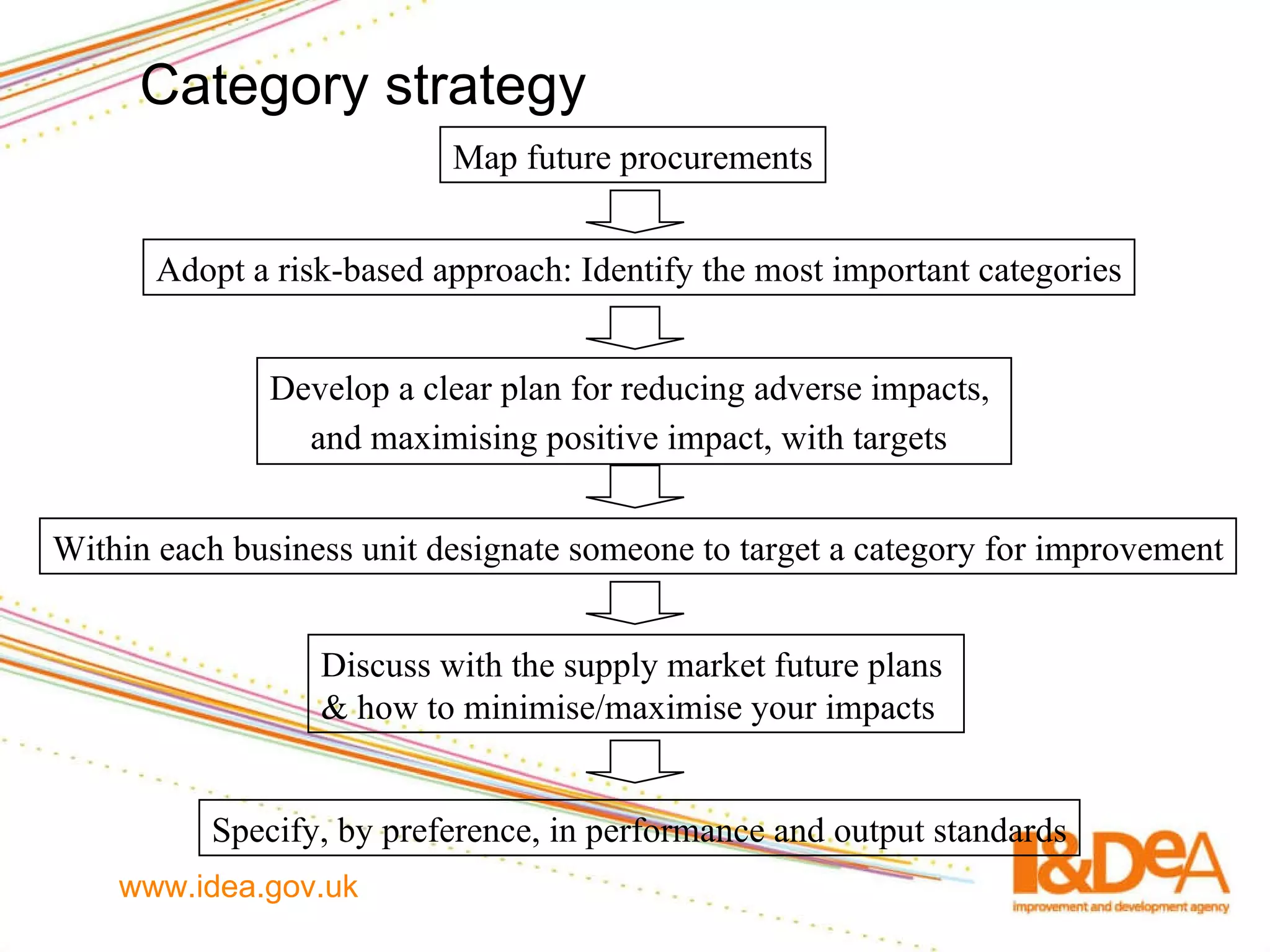
Category strategy Map future procurements Adopt a risk-based approach: Identify the most important categories Develop a clear plan for reducing adverse impacts,  and maximising positive impact, with targets   Within each business unit designate someone to target a category for improvement Discuss with the supply market future plans  & how to minimise/maximise your impacts Specify, by preference, in performance and output standards
Constructive dialogue with the market Develop procurement plans and publish a ‘buyer profile’  Future, current and past contracts? When? Who to contact? Enter into dialogue with the market on how opportunities can best encourage  innovation Enter into dialogue with the market on how opportunities can best be opened  to: SMEs EMBs 3 rd  Sector Promote equalities
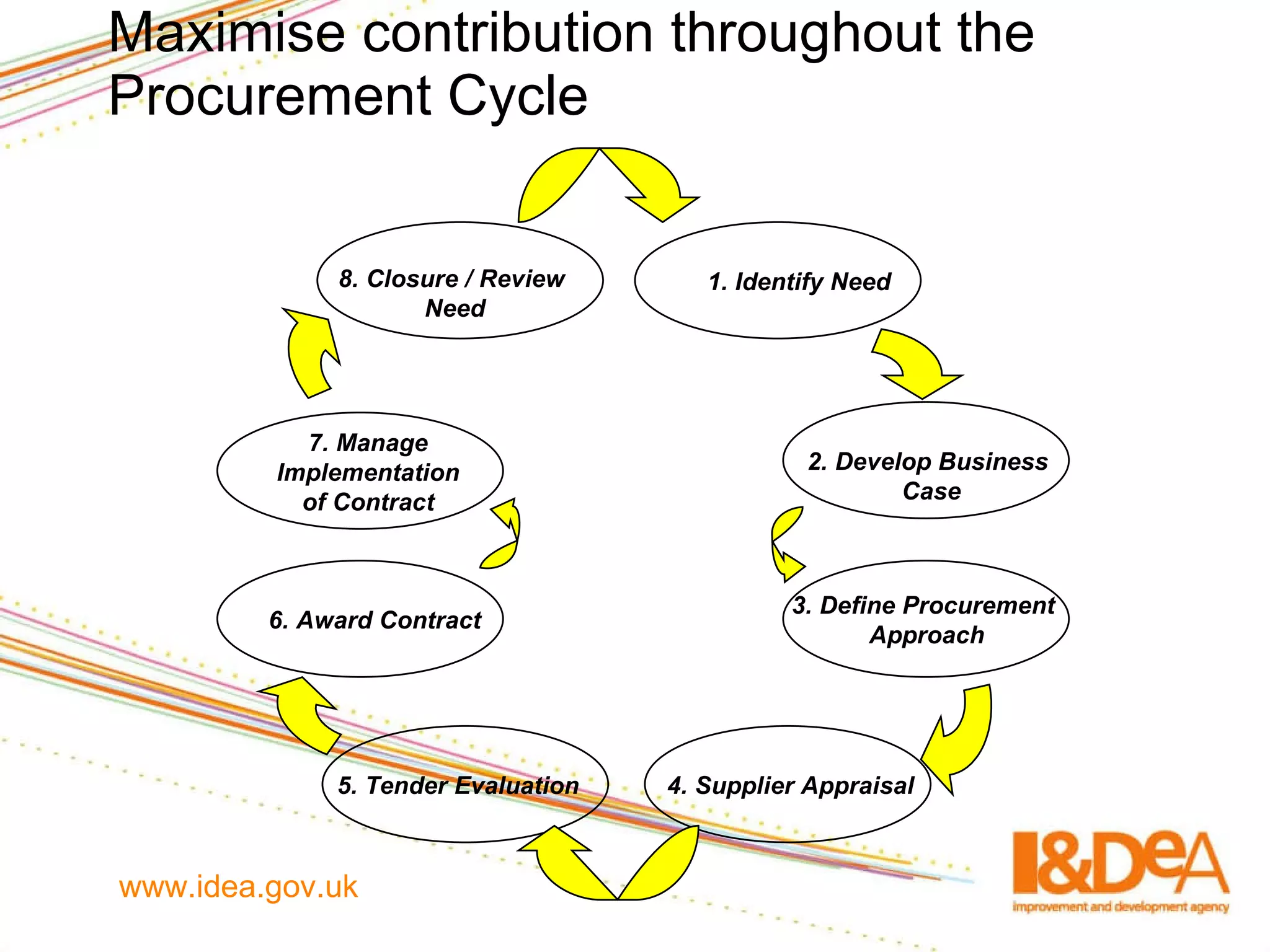
Maximise contribution throughout the Procurement Cycle  8. Closure / Review  Need 1. Identify Need 2. Develop Business  Case 3. Define Procurement  Approach 4. Supplier Appraisal 5. Tender Evaluation 6. Award Contract 7. Manage Implementation of Contract
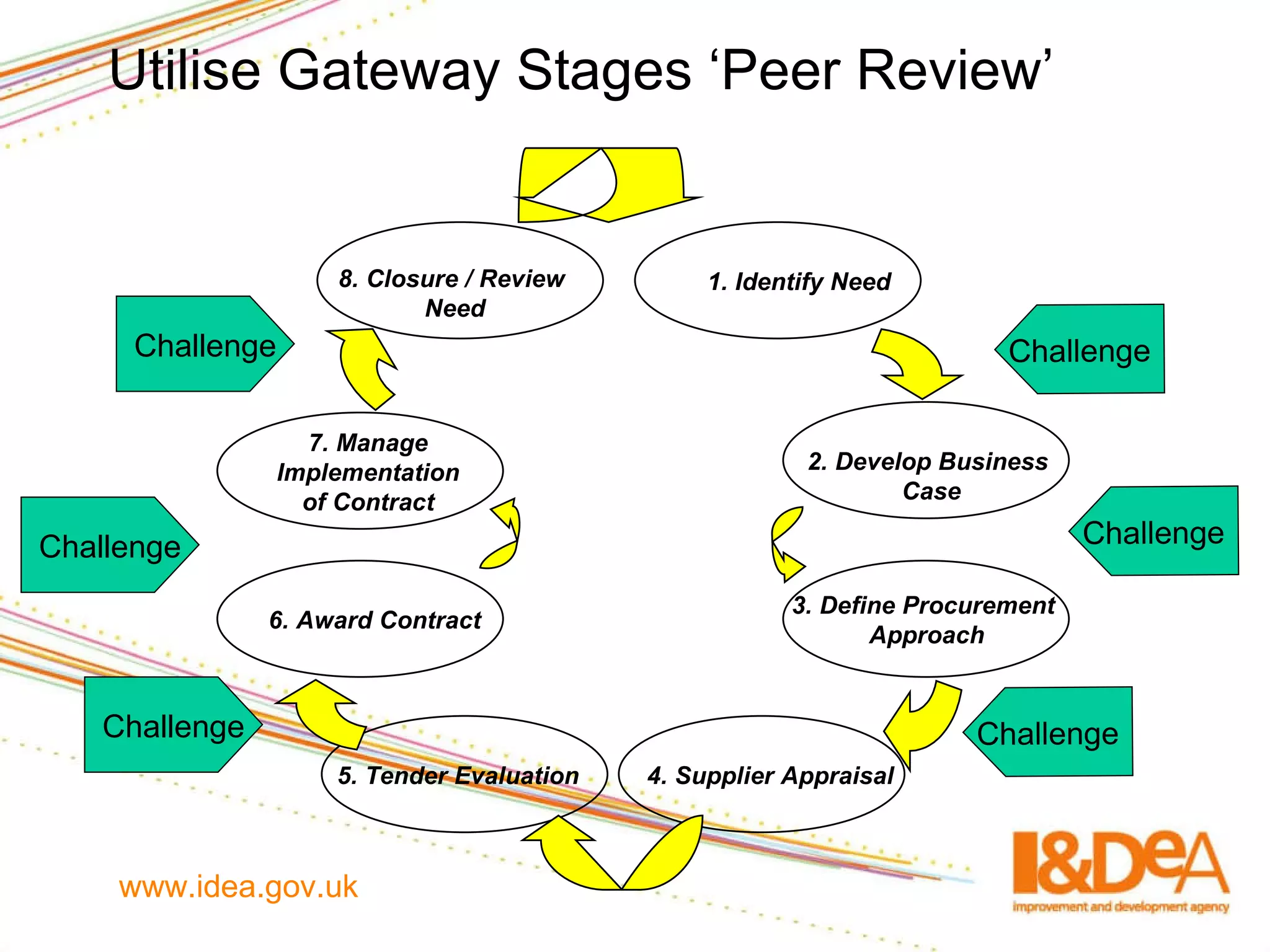
Utilise Gateway Stages ‘Peer Review’ 4. Supplier Appraisal 5. Tender Evaluation Challenge Challenge Challenge Challenge Challenge Challenge 8. Closure / Review  Need 1. Identify Need 2. Develop Business  Case 3. Define Procurement  Approach 6. Award Contract 7. Manage Implementation of Contract
Performance manage www.idea.gov.uk
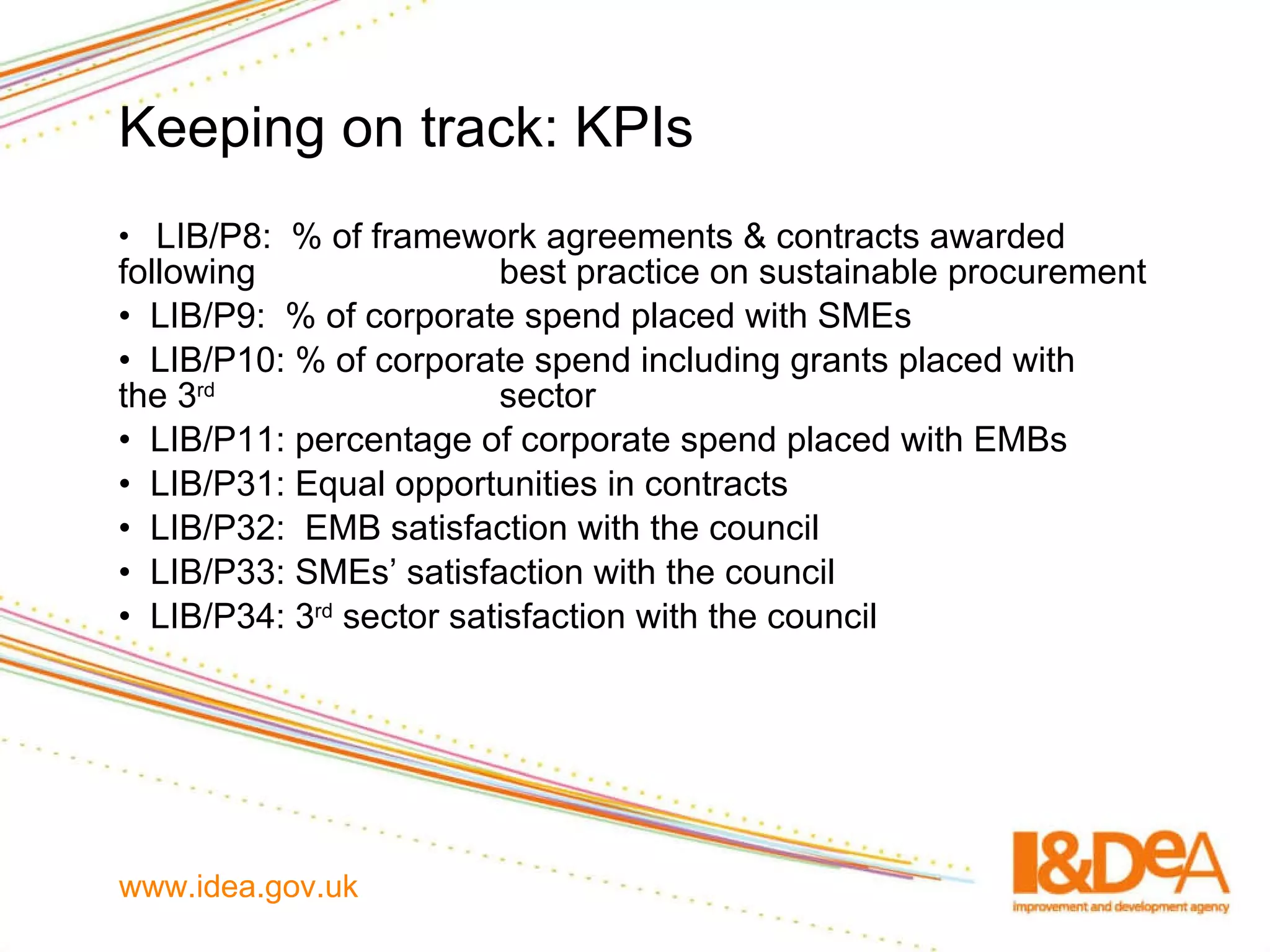
Keeping on track: KPIs LIB/P8:  % of framework agreements & contracts awarded following  best practice on sustainable procurement LIB/P9:  % of corporate spend placed with SMEs LIB/P10: % of corporate spend including grants placed with  the 3 rd   sector LIB/P11: percentage of corporate spend placed with EMBs  LIB/P31: Equal opportunities in contracts LIB/P32:  EMB satisfaction with the council LIB/P33: SMEs’ satisfaction with the council LIB/P34: 3 rd  sector satisfaction with the council
Sustainable procurement:  Making it happen Dr Gordon Murray Programme Manager - Procurement www.idea.gov.uk

Sustainable Proc

  • 1.
    Sustainable procurement: Making it happen Dr Gordon Murray Programme Manager www.idea.gov.uk
  • 2.
  • 3.
    Procuring the FutureLead by example Set clear priorities Raise the bar Build capacity Remove barriers Capture opportunities
  • 4.
    Sustainable procurement policy& management www.idea.gov.uk
  • 5.
    Sustainable Procurement Policy Member & Chief Officer commitment Relationship with Community Plan Endorse the Small Business Friendly Concordat Linkage with strategic procurement management, Efficiency Strategy and Procurement Strategy Legal compliance Clear message to be communicated to the market and staff Commitment to act throughout the procurement cycle Commitment to on-going improvement Plans for reviewing effectiveness
  • 6.
    Strategic procurement management:What’s that all about? www.idea.gov.uk
  • 7.
    Category strategy Mapfuture procurements Adopt a risk-based approach: Identify the most important categories Develop a clear plan for reducing adverse impacts, and maximising positive impact, with targets Within each business unit designate someone to target a category for improvement Discuss with the supply market future plans & how to minimise/maximise your impacts Specify, by preference, in performance and output standards
  • 8.
    Constructive dialogue withthe market Develop procurement plans and publish a ‘buyer profile’ Future, current and past contracts? When? Who to contact? Enter into dialogue with the market on how opportunities can best encourage innovation Enter into dialogue with the market on how opportunities can best be opened to: SMEs EMBs 3 rd Sector Promote equalities
  • 9.
    Maximise contribution throughoutthe Procurement Cycle 8. Closure / Review Need 1. Identify Need 2. Develop Business Case 3. Define Procurement Approach 4. Supplier Appraisal 5. Tender Evaluation 6. Award Contract 7. Manage Implementation of Contract
  • 10.
    Utilise Gateway Stages‘Peer Review’ 4. Supplier Appraisal 5. Tender Evaluation Challenge Challenge Challenge Challenge Challenge Challenge 8. Closure / Review Need 1. Identify Need 2. Develop Business Case 3. Define Procurement Approach 6. Award Contract 7. Manage Implementation of Contract
  • 11.
  • 12.
    Keeping on track:KPIs LIB/P8: % of framework agreements & contracts awarded following best practice on sustainable procurement LIB/P9: % of corporate spend placed with SMEs LIB/P10: % of corporate spend including grants placed with the 3 rd sector LIB/P11: percentage of corporate spend placed with EMBs LIB/P31: Equal opportunities in contracts LIB/P32: EMB satisfaction with the council LIB/P33: SMEs’ satisfaction with the council LIB/P34: 3 rd sector satisfaction with the council
  • 13.
    Sustainable procurement: Making it happen Dr Gordon Murray Programme Manager - Procurement www.idea.gov.uk

Editor's Notes

  • #6 This slide details the necessary content (in bold) of the Policy in line with the requirements of ISO14001. While not all Trusts may aspire to achieving ISO14001 there are clear benefits in utilising the ISO14001 template and in only having to agree a Policy once. The Policy should be viewed as something which will have longevity and out of which the strategies of the organisation will flow. The headings in this slide include the specific purchasing options which could be addressed (non bold). Each organisation will need to develop its own Policy. Each attribute of the Policy should be talked through and the sample in the IEMA Guide referred to. The critical issue for delegates to be aware of is, that in the absence of an existing Policy, delegates should be catalysts in drafting a Policy for their organisation. It is recommended that in drafting a Policy that it should be pragmatic and fit for the particular culture of the organsiation.