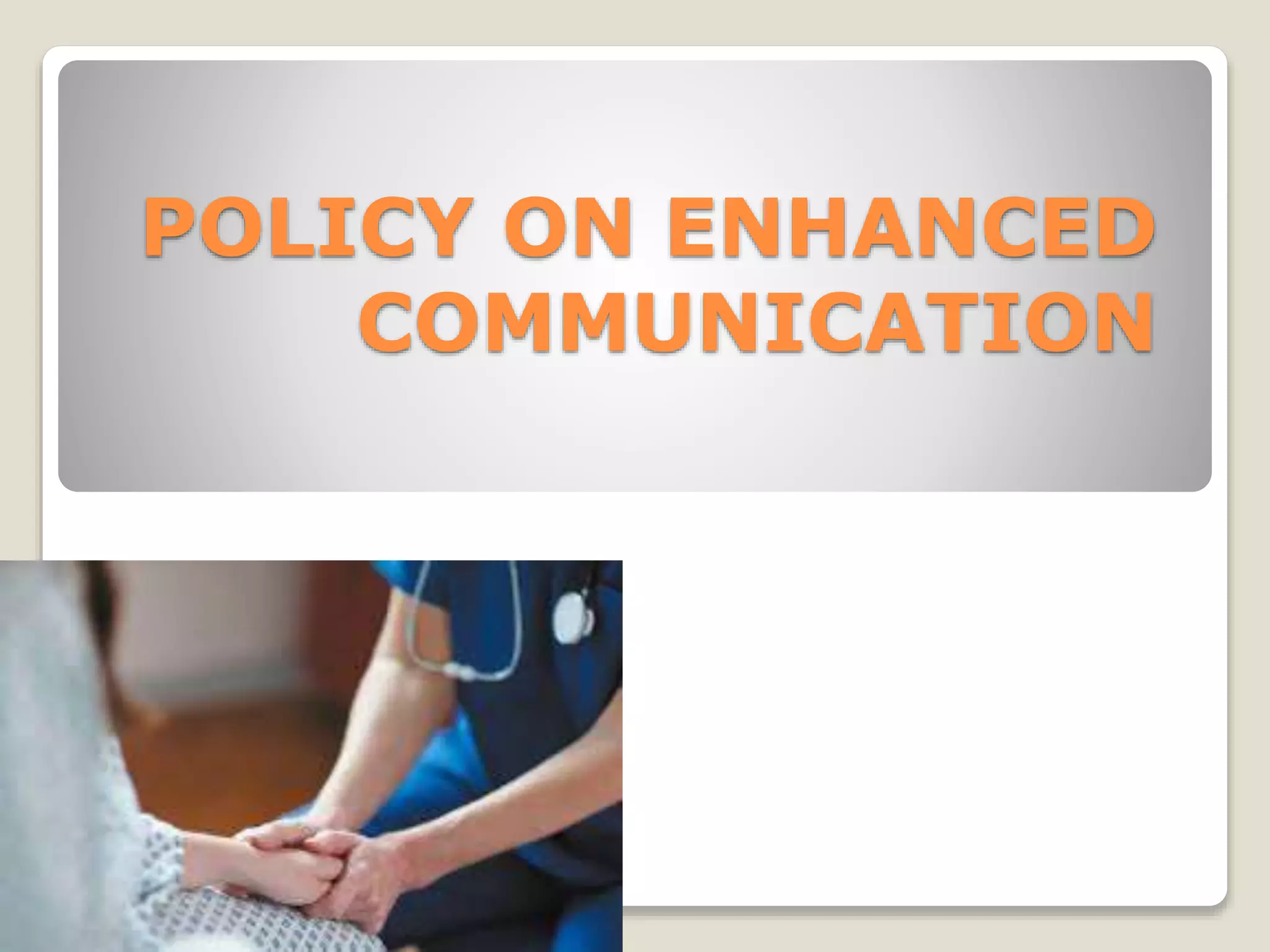
POLICY ON ENHANCED
COMMUNICATION
POLICY:
The organisation shall identify special
situations where enhanced communication
would be required.
PURPOSE:
The purpose of this procedure is to
communicate during challenging situations
like :
 breaking news
 handling adverse events
 handling an aggressive patient/family
 talking to a family of a patient who has
expired
 counseling for a complicated intervention etc.
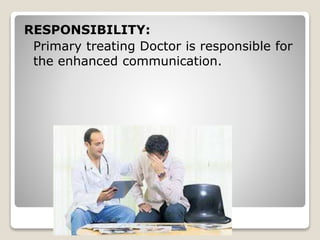
RESPONSIBILITY:
Primary treating Doctor is responsible for
the enhanced communication.
Communication during special Situations:
 In case of any adverse events or any other
breaking bad news, the hospital staffs
(treating clinicians/ in charges) explained to
the patient/ family about the situation
through counseling, to handle the aggressive
behaviors from the patient/ family.
 And finally, if the resuscitation is not
successful, the senior consultant, who is
responsible for the patient, should sit with
the relatives and break the bad news.
 Again, as earlier, try to engage only one or two
members of the family. Friends and others
should be asked to wait outside the room. Prefer
talking to the same person who has been briefed
about the patient's critical illness earlier. It is
always easier to converse and convince a familiar
person than a stranger. Moreover, it will be lot
easier to break the sad news to the person who
is quite aware of the ongoing treatment and
patient's problem rather than to a totally new
person.
 The Doctors are trained on these communication
procedures and techniques.
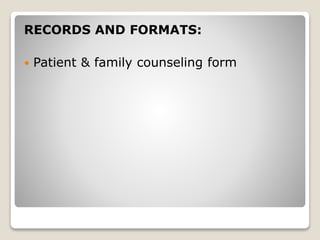
RECORDS AND FORMATS:
 Patient & family counseling form
POLICY ON
UNACCEPTABLE
COMMUNICATION
PURPOSE:
 To establish guidelines for personal and
professional standards of conduct and
acceptable behavior for all Patients,
employees, vendors, physicians, agency
employees, contracted employees, and
volunteers.
• “Inappropriate behavior” means conduct that
is unwarranted and is reasonably interpreted to
be demeaning or offensive. Persistent, repeated
inappropriate behavior can become a form of
harassment and thereby become disruptive, and
subject to treatment as “disruptive behavior.”
• Disruptive behavior” means any abusive
conduct including sexual or other forms of
harassment, or other forms of verbal or non-
verbal conduct that harms or intimidates others
to the extent that quality of care or patient
safety could be compromised.
• Sexual harassment” means unwelcome sexual
advances, requests for sexual favors, or verbal
or physical activity through which submission to
sexual advances is made an explicit or implicit
condition of employment or future employment-
related decisions; unwelcome conduct of a
sexual nature which has the purpose or effect of
unreasonably interfering with a person’s work
performance or which creates an offensive
intimidating or otherwise work environment.
This policy applies to behavior directed toward
any individual who is associated with Hospital
including employees, colleagues, patients,
families, visitors, vendors and other associates.
The policy may also apply to behavior which
occurs outside of Hospital physical boundaries, if
it is directed toward any of the above persons.
STANDARDS of BEHAVIOR:
The following behaviors are expected:
 Communication will take place in a timely fashion,
involving the appropriate person(s), in an appropriate
setting.
 Communication, including spoken remarks, written
documents, and emails, will be honest and direct and
conducted in a professional, constructive, respectful
and efficient manner.
 Telephone communications will be respectful and
professional.
 Cooperation and availability are expected of
physicians, and staff on call. When individuals are
paged, they will respond promptly and appropriately.
 Tolerance for those who are new to the organization
or new in their jobs and are still learning and/or in
orientation.
Inappropriate Behavior
 Inappropriate behavior by Medical Staff members is strongly
discouraged. Persistent inappropriate behavior can become a form
of harassment and thereby become disruptive, and subject to
treatment as “disruptive behavior.” Examples of inappropriate
behavior include, but are not limited to, the following:
◦ Belittling or berating statements;
◦ Name calling;
◦ Use of profanity or disrespectful language;
◦ Inappropriate comments written in the medical record;
◦ Blatant failure to respond to patient care needs or staff requests;
◦ Personal sarcasm or cynicism;
◦ Lack of cooperation without good cause;
◦ Refusal to return phone calls, pages, or other messages concerning patient
care
◦ Condescending language; and degrading or demeaning comments regarding
patients and their families; nurses, physicians, hospital personnel and/or the
hospital.
◦ Inappropriate comments or behaviors in meetings
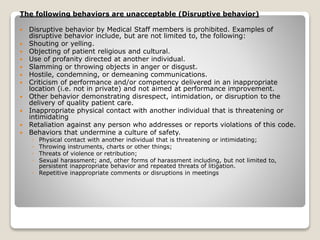
The following behaviors are unacceptable (Disruptive behavior)
 Disruptive behavior by Medical Staff members is prohibited. Examples of
disruptive behavior include, but are not limited to, the following:
 Shouting or yelling.
 Objecting of patient religious and cultural.
 Use of profanity directed at another individual.
 Slamming or throwing objects in anger or disgust.
 Hostile, condemning, or demeaning communications.
 Criticism of performance and/or competency delivered in an inappropriate
location (i.e. not in private) and not aimed at performance improvement.
 Other behavior demonstrating disrespect, intimidation, or disruption to the
delivery of quality patient care.
 Inappropriate physical contact with another individual that is threatening or
intimidating
 Retaliation against any person who addresses or reports violations of this code.
 Behaviors that undermine a culture of safety.
◦ Physical contact with another individual that is threatening or intimidating;
◦ Throwing instruments, charts or other things;
◦ Threats of violence or retribution;
◦ Sexual harassment; and, other forms of harassment including, but not limited to,
persistent inappropriate behavior and repeated threats of litigation.
◦ Repetitive inappropriate comments or disruptions in meetings
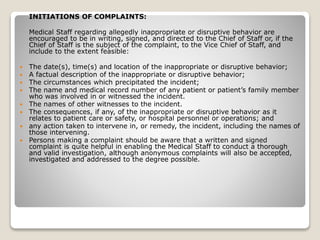
INITIATIONS OF COMPLAINTS:
Medical Staff regarding allegedly inappropriate or disruptive behavior are
encouraged to be in writing, signed, and directed to the Chief of Staff or, if the
Chief of Staff is the subject of the complaint, to the Vice Chief of Staff, and
include to the extent feasible:
 The date(s), time(s) and location of the inappropriate or disruptive behavior;
 A factual description of the inappropriate or disruptive behavior;
 The circumstances which precipitated the incident;
 The name and medical record number of any patient or patient’s family member
who was involved in or witnessed the incident.
 The names of other witnesses to the incident.
 The consequences, if any, of the inappropriate or disruptive behavior as it
relates to patient care or safety, or hospital personnel or operations; and
 any action taken to intervene in, or remedy, the incident, including the names of
those intervening.
 Persons making a complaint should be aware that a written and signed
complaint is quite helpful in enabling the Medical Staff to conduct a thorough
and valid investigation, although anonymous complaints will also be accepted,
investigated and addressed to the degree possible.
THANK
YOU

Enhanced & unacceptable communication policy

  • 1.
  • 2.
    POLICY: The organisation shallidentify special situations where enhanced communication would be required.
  • 3.
    PURPOSE: The purpose ofthis procedure is to communicate during challenging situations like :  breaking news  handling adverse events  handling an aggressive patient/family  talking to a family of a patient who has expired  counseling for a complicated intervention etc.
  • 4.
    RESPONSIBILITY: Primary treating Doctoris responsible for the enhanced communication.
  • 5.
    Communication during specialSituations:  In case of any adverse events or any other breaking bad news, the hospital staffs (treating clinicians/ in charges) explained to the patient/ family about the situation through counseling, to handle the aggressive behaviors from the patient/ family.  And finally, if the resuscitation is not successful, the senior consultant, who is responsible for the patient, should sit with the relatives and break the bad news.
  • 6.
     Again, asearlier, try to engage only one or two members of the family. Friends and others should be asked to wait outside the room. Prefer talking to the same person who has been briefed about the patient's critical illness earlier. It is always easier to converse and convince a familiar person than a stranger. Moreover, it will be lot easier to break the sad news to the person who is quite aware of the ongoing treatment and patient's problem rather than to a totally new person.  The Doctors are trained on these communication procedures and techniques.
  • 10.
    RECORDS AND FORMATS: Patient & family counseling form
  • 11.
  • 14.
    PURPOSE:  To establishguidelines for personal and professional standards of conduct and acceptable behavior for all Patients, employees, vendors, physicians, agency employees, contracted employees, and volunteers.
  • 15.
    • “Inappropriate behavior”means conduct that is unwarranted and is reasonably interpreted to be demeaning or offensive. Persistent, repeated inappropriate behavior can become a form of harassment and thereby become disruptive, and subject to treatment as “disruptive behavior.”
  • 16.
    • Disruptive behavior”means any abusive conduct including sexual or other forms of harassment, or other forms of verbal or non- verbal conduct that harms or intimidates others to the extent that quality of care or patient safety could be compromised.
  • 17.
    • Sexual harassment”means unwelcome sexual advances, requests for sexual favors, or verbal or physical activity through which submission to sexual advances is made an explicit or implicit condition of employment or future employment- related decisions; unwelcome conduct of a sexual nature which has the purpose or effect of unreasonably interfering with a person’s work performance or which creates an offensive intimidating or otherwise work environment.
  • 18.
    This policy appliesto behavior directed toward any individual who is associated with Hospital including employees, colleagues, patients, families, visitors, vendors and other associates. The policy may also apply to behavior which occurs outside of Hospital physical boundaries, if it is directed toward any of the above persons.
  • 19.
    STANDARDS of BEHAVIOR: Thefollowing behaviors are expected:  Communication will take place in a timely fashion, involving the appropriate person(s), in an appropriate setting.  Communication, including spoken remarks, written documents, and emails, will be honest and direct and conducted in a professional, constructive, respectful and efficient manner.  Telephone communications will be respectful and professional.  Cooperation and availability are expected of physicians, and staff on call. When individuals are paged, they will respond promptly and appropriately.  Tolerance for those who are new to the organization or new in their jobs and are still learning and/or in orientation.
  • 20.
    Inappropriate Behavior  Inappropriatebehavior by Medical Staff members is strongly discouraged. Persistent inappropriate behavior can become a form of harassment and thereby become disruptive, and subject to treatment as “disruptive behavior.” Examples of inappropriate behavior include, but are not limited to, the following: ◦ Belittling or berating statements; ◦ Name calling; ◦ Use of profanity or disrespectful language; ◦ Inappropriate comments written in the medical record; ◦ Blatant failure to respond to patient care needs or staff requests; ◦ Personal sarcasm or cynicism; ◦ Lack of cooperation without good cause; ◦ Refusal to return phone calls, pages, or other messages concerning patient care ◦ Condescending language; and degrading or demeaning comments regarding patients and their families; nurses, physicians, hospital personnel and/or the hospital. ◦ Inappropriate comments or behaviors in meetings
  • 21.
    The following behaviorsare unacceptable (Disruptive behavior)  Disruptive behavior by Medical Staff members is prohibited. Examples of disruptive behavior include, but are not limited to, the following:  Shouting or yelling.  Objecting of patient religious and cultural.  Use of profanity directed at another individual.  Slamming or throwing objects in anger or disgust.  Hostile, condemning, or demeaning communications.  Criticism of performance and/or competency delivered in an inappropriate location (i.e. not in private) and not aimed at performance improvement.  Other behavior demonstrating disrespect, intimidation, or disruption to the delivery of quality patient care.  Inappropriate physical contact with another individual that is threatening or intimidating  Retaliation against any person who addresses or reports violations of this code.  Behaviors that undermine a culture of safety. ◦ Physical contact with another individual that is threatening or intimidating; ◦ Throwing instruments, charts or other things; ◦ Threats of violence or retribution; ◦ Sexual harassment; and, other forms of harassment including, but not limited to, persistent inappropriate behavior and repeated threats of litigation. ◦ Repetitive inappropriate comments or disruptions in meetings
  • 22.
    INITIATIONS OF COMPLAINTS: MedicalStaff regarding allegedly inappropriate or disruptive behavior are encouraged to be in writing, signed, and directed to the Chief of Staff or, if the Chief of Staff is the subject of the complaint, to the Vice Chief of Staff, and include to the extent feasible:  The date(s), time(s) and location of the inappropriate or disruptive behavior;  A factual description of the inappropriate or disruptive behavior;  The circumstances which precipitated the incident;  The name and medical record number of any patient or patient’s family member who was involved in or witnessed the incident.  The names of other witnesses to the incident.  The consequences, if any, of the inappropriate or disruptive behavior as it relates to patient care or safety, or hospital personnel or operations; and  any action taken to intervene in, or remedy, the incident, including the names of those intervening.  Persons making a complaint should be aware that a written and signed complaint is quite helpful in enabling the Medical Staff to conduct a thorough and valid investigation, although anonymous complaints will also be accepted, investigated and addressed to the degree possible.
  • 23.