Downloaded 635 times

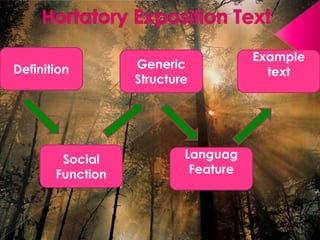
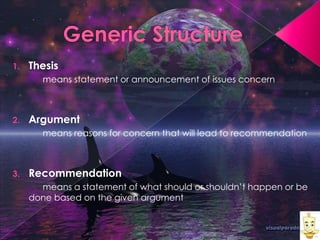
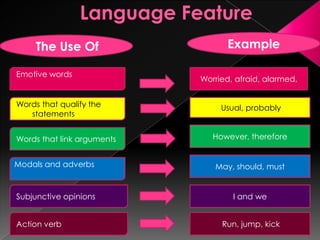
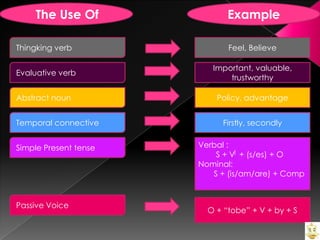


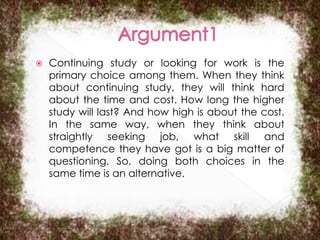


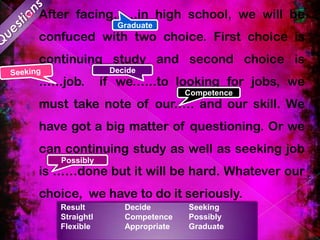


This document discusses the structure and features of persuasive texts. It provides definitions, social functions, generic structures, and language features of persuasion. It also provides an example persuasive text about the benefits of distance learning for high school graduates facing the choice between further study and work. The key points are: 1. Persuasive texts attempt to convince readers to do or think something through arguments and recommendations. 2. They have a thesis statement, arguments to support the position, and a recommendation. 3. Language features include emotive words, qualifiers, linking words, modals, action verbs, thinking verbs, and evaluative language. 4. The example text persuades readers that distance learning provides a


