Homocystinuria
Homocystinuria or cystathionine beta synthase
deficiency is an autosomal recessive inherited
disorder of methionine metabolism. Methionine
is an essential, non-polar α-amino acid. Under
normal conditions methionine undergoes
conversion to homocysteine. This in turn
undergoes trans- sulfuration to ultimately yield
cysteine. This step is catalyzed by the enzyme
Cystathionine beta synthase (CBS). People
suffering from this disease are unable to
synthesize CBS, hence leading to an inability to
metabolize methionine.
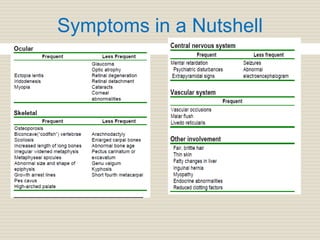
Symptoms
Homocystinuria is accompanied by a variety of clinical
and pathological abnormalities, which show major
involvement in four organ systems:- the eye, skeletal,
central nervous system, and vascular system. Ectopia
lentis and high myopia are the major ocular
manifestation of classical homocystinuria. The most
striking changes however is that of skeleton. As
puberty nears the limbs grow out of proportion to the
trunk, anterior chest wall deformities may occur. The
facial appearance may be altered by prominence and
protrusion of upper teeth due to overcrowding . One of
the distinguishing features of classical homocystinuria
patients is the presence of osteoporosis, especially
spinal osteoporosis.
Other Symptoms
Another well known symptom of homocystinuria is
thromboembolism, affecting both large and small
arteries and veins. It is also the most striking
cause of serious complications and mortality in the
disease.
Mental Retardation is the most frequent Central
Nervous System abnormality and Is often the first
recognizable sign of homocystinuria. These
patients show a wide variation in their IQ levels
with a median IQ of 64. Episodic depression,
behavioral disorders, OCD, schizophrenia, etc.
are some of the most common mental disorders
appearing in these patients
Symptoms in a Nutshell
Incidence
According to the data collected from countries
that have screened over 2,00,000 newborns, the
current cumulative detection rate of
homocystinuria is 1 in 3,44,000. However this
figure is considered by many as an
underestimation of the true rate of occurrence.
This is mainly due to the fact that in pyridoxine-
responsive cases, the most readily treatable form
is preferentially missed by newborn screening
methods. The true rate of incidence is
considered by many to be as high as 1 in 45,000,
based on the mutation rate formula.
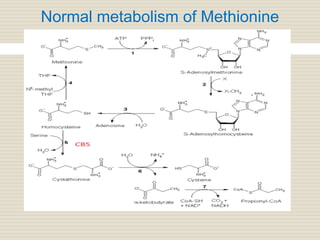
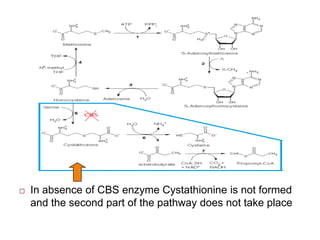
Normal metabolism of Methionine
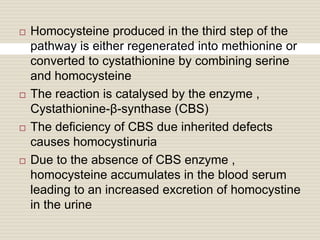
 Homocysteine produced in the third step of the
pathway is either regenerated into methionine or
converted to cystathionine by combining serine
and homocysteine
 The reaction is catalysed by the enzyme ,
Cystathionine-β-synthase (CBS)
 The deficiency of CBS due inherited defects
causes homocystinuria
 Due to the absence of CBS enzyme ,
homocysteine accumulates in the blood serum
leading to an increased excretion of homocystine
in the urine
 In absence of CBS enzyme Cystathionine is not formed
and the second part of the pathway does not take place
DIAGNOSIS
• Newborns are tested for homocystinuria before they leave the
hospital. The test usually looks for high levels of MET. If the
test is positive, blood or urine tests can be done to confirm the
diagnosis. These tests can detect high levels of MET,
homocystine, and other sulphur-containing amino acids. Tests
to detect an enzyme deficiency (such as cystathionine
synthetase) can be done as well.
• If a child is not tested at birth, a doctor may later discover the
disorder based on symptoms. At that point, the following may
be done:
• Blood tests to confirm the diagnosis
• X-rays to look for bone problems
• An eye exam to look for eye problems
TREATMENT
 No specific cure has been discovered for homocystinuria; however,
many people are treated using high doses of vitamin B6 i.e.
pyridoxine. Slightly less than 50% respond to this treatment and
need to intake supplemental vitamin B6 for the rest of their lives.
Those who do not respond require a low methionine diet, and most
will need treatment with trimethylglycine. A normal dose of folic
acid supplement and occasionally adding cysteine to the diet.
 Betaine (N,N,N-trimethylglycine) is used to reduce concentrations of
homocysteine by promoting the conversion of homocysteine back to
methionine. The re-formed methionine is then gradually removed by
incorporation into body protein. The methionine that is not converted
into protein is converted to S-adenosyl-methionine which goes on to
form homocysteine again.
 Betaine is, therefore, only effective if the
quantity of methionine to be removed is small.
Hence treatment includes both betaine and a
diet low in methionine. In classical
homocystinuria (CBS, or cystathione beta
synthase deficiency) the plasma methionine
usually increases above the normal range of 30
micromoles/L and the concentrations should be
monitored as potentially toxic levels (more than
400 micromole/l) may be reached.
Prevention is better than cure
 Genetic counseling is recommended for prospective parents with a
family history of homocystinuria.
 Prenatal diagnosis of homocystinuria is available and is made by
culturing amniotic cells or chorionic villi to test for the presence or
absence of cystathionine synthase (the enzyme that is missing in
homocystinuria).
 If the diagnosis is made while a patient is young, a low methionine
diet started promptly and strictly adhered to can spare some mental
retardation and other complications of the disease. For this reason,
some states screen for homocystinuria in all newborns
Homocystinuria

Homocystinuria

  • 2.
    Homocystinuria Homocystinuria or cystathioninebeta synthase deficiency is an autosomal recessive inherited disorder of methionine metabolism. Methionine is an essential, non-polar α-amino acid. Under normal conditions methionine undergoes conversion to homocysteine. This in turn undergoes trans- sulfuration to ultimately yield cysteine. This step is catalyzed by the enzyme Cystathionine beta synthase (CBS). People suffering from this disease are unable to synthesize CBS, hence leading to an inability to metabolize methionine.
  • 3.
    Symptoms Homocystinuria is accompaniedby a variety of clinical and pathological abnormalities, which show major involvement in four organ systems:- the eye, skeletal, central nervous system, and vascular system. Ectopia lentis and high myopia are the major ocular manifestation of classical homocystinuria. The most striking changes however is that of skeleton. As puberty nears the limbs grow out of proportion to the trunk, anterior chest wall deformities may occur. The facial appearance may be altered by prominence and protrusion of upper teeth due to overcrowding . One of the distinguishing features of classical homocystinuria patients is the presence of osteoporosis, especially spinal osteoporosis.
  • 4.
    Other Symptoms Another wellknown symptom of homocystinuria is thromboembolism, affecting both large and small arteries and veins. It is also the most striking cause of serious complications and mortality in the disease. Mental Retardation is the most frequent Central Nervous System abnormality and Is often the first recognizable sign of homocystinuria. These patients show a wide variation in their IQ levels with a median IQ of 64. Episodic depression, behavioral disorders, OCD, schizophrenia, etc. are some of the most common mental disorders appearing in these patients
  • 5.
    Symptoms in aNutshell
  • 6.
    Incidence According to thedata collected from countries that have screened over 2,00,000 newborns, the current cumulative detection rate of homocystinuria is 1 in 3,44,000. However this figure is considered by many as an underestimation of the true rate of occurrence. This is mainly due to the fact that in pyridoxine- responsive cases, the most readily treatable form is preferentially missed by newborn screening methods. The true rate of incidence is considered by many to be as high as 1 in 45,000, based on the mutation rate formula.
  • 8.
  • 9.
     Homocysteine producedin the third step of the pathway is either regenerated into methionine or converted to cystathionine by combining serine and homocysteine  The reaction is catalysed by the enzyme , Cystathionine-β-synthase (CBS)  The deficiency of CBS due inherited defects causes homocystinuria  Due to the absence of CBS enzyme , homocysteine accumulates in the blood serum leading to an increased excretion of homocystine in the urine
  • 10.
     In absenceof CBS enzyme Cystathionine is not formed and the second part of the pathway does not take place
  • 11.
    DIAGNOSIS • Newborns aretested for homocystinuria before they leave the hospital. The test usually looks for high levels of MET. If the test is positive, blood or urine tests can be done to confirm the diagnosis. These tests can detect high levels of MET, homocystine, and other sulphur-containing amino acids. Tests to detect an enzyme deficiency (such as cystathionine synthetase) can be done as well. • If a child is not tested at birth, a doctor may later discover the disorder based on symptoms. At that point, the following may be done: • Blood tests to confirm the diagnosis • X-rays to look for bone problems • An eye exam to look for eye problems
  • 12.
    TREATMENT  No specificcure has been discovered for homocystinuria; however, many people are treated using high doses of vitamin B6 i.e. pyridoxine. Slightly less than 50% respond to this treatment and need to intake supplemental vitamin B6 for the rest of their lives. Those who do not respond require a low methionine diet, and most will need treatment with trimethylglycine. A normal dose of folic acid supplement and occasionally adding cysteine to the diet.  Betaine (N,N,N-trimethylglycine) is used to reduce concentrations of homocysteine by promoting the conversion of homocysteine back to methionine. The re-formed methionine is then gradually removed by incorporation into body protein. The methionine that is not converted into protein is converted to S-adenosyl-methionine which goes on to form homocysteine again.
  • 13.
     Betaine is,therefore, only effective if the quantity of methionine to be removed is small. Hence treatment includes both betaine and a diet low in methionine. In classical homocystinuria (CBS, or cystathione beta synthase deficiency) the plasma methionine usually increases above the normal range of 30 micromoles/L and the concentrations should be monitored as potentially toxic levels (more than 400 micromole/l) may be reached.
  • 14.
    Prevention is betterthan cure  Genetic counseling is recommended for prospective parents with a family history of homocystinuria.  Prenatal diagnosis of homocystinuria is available and is made by culturing amniotic cells or chorionic villi to test for the presence or absence of cystathionine synthase (the enzyme that is missing in homocystinuria).  If the diagnosis is made while a patient is young, a low methionine diet started promptly and strictly adhered to can spare some mental retardation and other complications of the disease. For this reason, some states screen for homocystinuria in all newborns