HOMOCYSTINURIA
( AN INBORN METABOLIC
DISORDER)
SYEDDA FATIMA ABID SHAH
“Homocystinuria is an inherited disorder of
metabolism, leading to an abnormal
accumulation of homocysteine and its
metabolites in blood and urine.”
(wikipedia.org)
 Homocystinuria is an autosomal recessive inherited
disorder of methionine metabolism.
 Methionine is an essential, non-polar amino acid.
 Under normal conditions methionine undergoes
conversion to homocysteine.
 This in turn undergoes transsulfuration to ultimately yield
amino acid cysteine.
 This step is catalyzed by enzyme Cystathionine Beta
Synthase (CBS).
 People suffering from this disease are unable to synthesize
CBS, hence leading to an inability to metabolize
methionine.
 In re-methylation MTRF and vitamin B12 are not present.
 Worldwide, only 1 in 344,000 people have
homocystinuria, making the condition
extremely rare.
 The disorder is more common in Ireland (1 in
65,000), Germany (1 in 17,800), Norway (1 in
6,400), and Qatar (1 in 1,800).
 In Asia it is reported that only 3% cases of
homocystinuria are reported. (NIH 2013).
 It is more prevalent in men than in women.
METABOLIC PATHWAY
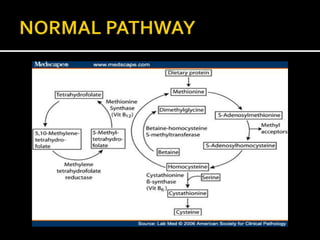
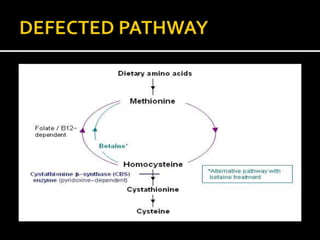
 Homocysteine produced in this pathway is either
regenerated into methionine or converted to
Cysteine.
 The reaction is catalyzed by the enzyme,
Cystathionine beta synthase (CBS).
 The deficiency of CBS due to inherited defects causes
homocystinuria.
 Due to absence of CBS enzyme, homocysteine
accumulates in the blood serum leading to an
increased excretion of homocysteine in the urine.
 In process of re-methylation lack of vitamin B12 and
MTRF occurs.
 In the absence of enzyme Cystathionine beta
synthase amino acid cysteine is not produced
and the amount of homocysteine starts to raise
in blood plasma and urine. (TRANS-
SULFURATION).
 In the absence of enzyme MethyleneTetra
hydrofolate reductase(MTHFR) and vitamin B12
the amino acid homocysteine is not converted
into methionine and thus levels of homocysteine
starts to raise in blood and in urine. (RE-
METHYLATION).
 Homocystinuria is accompanied by a variety
of clinical and pathological abnormalities
which show major involvment in four organ
systems.They are
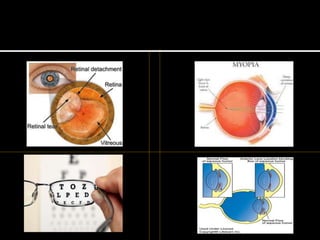
 The eye
 Skeletal
 Central nervous system and
 Vascular system.
 Ectopia lentis
 Luxation of lens
 Myopia
 Glaucoma
 Optic atrophy
 Retinal detachment
 Loss of vision
 Limbs grow out of proportion.
 Anterior chest deformities.
 Most distinguishing feature of
homocystinuria is osteoporosis specially
spinal osteoporosis.
 Long spindly arms and legs.
 Thromboembolism
 Abnormal blood clots
 Intravascular thrombosis
 Heart strokes
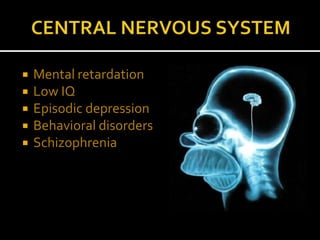
 Mental retardation
 Low IQ
 Episodic depression
 Behavioral disorders
 Schizophrenia
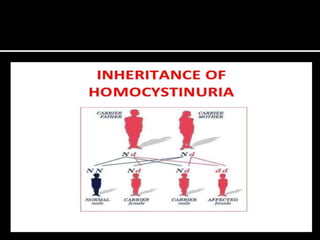
 If both parents carry the faulty gene, for each
child, there is a:
 25% chance the child will be born with the
disorder
 50% chance the child will be a carrier of the
faulty gene
 25% chance the child will neither have
disorder nor would be the carrier.
 It is present at the time of birth but its
symptoms are often remain un noticed in
new born babies.
 New born babies are tested for
homocystinuria before they leave the
hospital.
 if a child is not tested at the time of birth, a
doctor may later discover the disorder based
on symptoms. At that point the following be
done:
 Blood tests to confirm the diagnosis
 x-rays to look for bone problems
 An eye exam to look for eye problems
 No specific cure has been discovered for
homocystinuria; however many people are
treated using high doses of vitamin B6 ie.
Pyridoxine.
 Slightly less than 50% respond to this treatment
and need to intake supplemental vitamin B6 and
for the rest of their lives.
 Those who do not respond require a low
methionine diet .
 Most will need treatment with trimethylglycine.
 A normal dose of folic acid supplement and
occasionally adding cysteine to the diet.
 It is used to reduce the concentration of
homocysteine by promoting the conversion
of homocysteine back to methionine.
 The re-formed methionine is then gradually
removed by incorporation into body protein.
 The methionine that is not converted into
protein is converted to S-
adenosylmethionine which goes on to form
homocysteine again.
 Betaine is therefore only effective if the
quantity of methionine to be removed is
small. Hence treatment includes both betaine
and a diet low in methionine.
 In classical homocystinuria (CBS deficiency)
the plasma methionine usually increases
above the normal and the concentration
should be monitored as potentially toxic
levels may be reached.
 Genetic counseling is recommended for prospective
parents with a family history of homocystinuria
 Prenatal diagnosis of homocystinuria is available and
is made by culturing amniotic cells or chronic villi to
test for the presence or absence of Cystathionine
synthase ( the enzyme that is missing in
homocystinuria).
 If the diagnosis is made while a patient is young, a low
methionine diet started promptly and strictly adhered
to can spare some mental retardation and other
complications of this disease.
 Blood clot
 Damaged vision
 Intellectual disability.
 Coronary artery disease - e.g., myocardial
infarction
 osteoporosis
 Fatty infiltration of liver
 Blood clotting which could lead to heart
strokes.
Homocystinuria   copy

Homocystinuria copy

  • 1.
    HOMOCYSTINURIA ( AN INBORNMETABOLIC DISORDER) SYEDDA FATIMA ABID SHAH
  • 2.
    “Homocystinuria is aninherited disorder of metabolism, leading to an abnormal accumulation of homocysteine and its metabolites in blood and urine.” (wikipedia.org)
  • 3.
     Homocystinuria isan autosomal recessive inherited disorder of methionine metabolism.  Methionine is an essential, non-polar amino acid.  Under normal conditions methionine undergoes conversion to homocysteine.  This in turn undergoes transsulfuration to ultimately yield amino acid cysteine.  This step is catalyzed by enzyme Cystathionine Beta Synthase (CBS).  People suffering from this disease are unable to synthesize CBS, hence leading to an inability to metabolize methionine.  In re-methylation MTRF and vitamin B12 are not present.
  • 4.
     Worldwide, only1 in 344,000 people have homocystinuria, making the condition extremely rare.  The disorder is more common in Ireland (1 in 65,000), Germany (1 in 17,800), Norway (1 in 6,400), and Qatar (1 in 1,800).  In Asia it is reported that only 3% cases of homocystinuria are reported. (NIH 2013).  It is more prevalent in men than in women.
  • 5.
  • 7.
     Homocysteine producedin this pathway is either regenerated into methionine or converted to Cysteine.  The reaction is catalyzed by the enzyme, Cystathionine beta synthase (CBS).  The deficiency of CBS due to inherited defects causes homocystinuria.  Due to absence of CBS enzyme, homocysteine accumulates in the blood serum leading to an increased excretion of homocysteine in the urine.  In process of re-methylation lack of vitamin B12 and MTRF occurs.
  • 9.
     In theabsence of enzyme Cystathionine beta synthase amino acid cysteine is not produced and the amount of homocysteine starts to raise in blood plasma and urine. (TRANS- SULFURATION).  In the absence of enzyme MethyleneTetra hydrofolate reductase(MTHFR) and vitamin B12 the amino acid homocysteine is not converted into methionine and thus levels of homocysteine starts to raise in blood and in urine. (RE- METHYLATION).
  • 11.
     Homocystinuria isaccompanied by a variety of clinical and pathological abnormalities which show major involvment in four organ systems.They are  The eye  Skeletal  Central nervous system and  Vascular system.
  • 12.
     Ectopia lentis Luxation of lens  Myopia  Glaucoma  Optic atrophy  Retinal detachment  Loss of vision
  • 14.
     Limbs growout of proportion.  Anterior chest deformities.  Most distinguishing feature of homocystinuria is osteoporosis specially spinal osteoporosis.  Long spindly arms and legs.
  • 15.
     Thromboembolism  Abnormalblood clots  Intravascular thrombosis  Heart strokes
  • 16.
     Mental retardation Low IQ  Episodic depression  Behavioral disorders  Schizophrenia
  • 18.
     If bothparents carry the faulty gene, for each child, there is a:  25% chance the child will be born with the disorder  50% chance the child will be a carrier of the faulty gene  25% chance the child will neither have disorder nor would be the carrier.
  • 19.
     It ispresent at the time of birth but its symptoms are often remain un noticed in new born babies.  New born babies are tested for homocystinuria before they leave the hospital.
  • 20.
     if achild is not tested at the time of birth, a doctor may later discover the disorder based on symptoms. At that point the following be done:  Blood tests to confirm the diagnosis  x-rays to look for bone problems  An eye exam to look for eye problems
  • 21.
     No specificcure has been discovered for homocystinuria; however many people are treated using high doses of vitamin B6 ie. Pyridoxine.  Slightly less than 50% respond to this treatment and need to intake supplemental vitamin B6 and for the rest of their lives.  Those who do not respond require a low methionine diet .  Most will need treatment with trimethylglycine.  A normal dose of folic acid supplement and occasionally adding cysteine to the diet.
  • 23.
     It isused to reduce the concentration of homocysteine by promoting the conversion of homocysteine back to methionine.  The re-formed methionine is then gradually removed by incorporation into body protein.  The methionine that is not converted into protein is converted to S- adenosylmethionine which goes on to form homocysteine again.
  • 24.
     Betaine istherefore only effective if the quantity of methionine to be removed is small. Hence treatment includes both betaine and a diet low in methionine.  In classical homocystinuria (CBS deficiency) the plasma methionine usually increases above the normal and the concentration should be monitored as potentially toxic levels may be reached.
  • 25.
     Genetic counselingis recommended for prospective parents with a family history of homocystinuria  Prenatal diagnosis of homocystinuria is available and is made by culturing amniotic cells or chronic villi to test for the presence or absence of Cystathionine synthase ( the enzyme that is missing in homocystinuria).  If the diagnosis is made while a patient is young, a low methionine diet started promptly and strictly adhered to can spare some mental retardation and other complications of this disease.
  • 26.
     Blood clot Damaged vision  Intellectual disability.  Coronary artery disease - e.g., myocardial infarction  osteoporosis  Fatty infiltration of liver  Blood clotting which could lead to heart strokes.