Temperature Regulation
 By the end of the lesson you should
know
 How the body corrects overheating
 How the body corrects overcooling
 What thermocreceptors do?
 What volutary responses are carried out
to control temperature
 To provide the optimum conditions for
enzyme-catalysed reactions to be
carried out.
Why do we need to regulate:
Internal body temperature
Body Temperature
Body Temperature
 Normal internal body temperature is
370
C.
 Temperatures above this:
denature enzymes and block
metabolic pathways
 Temperatures below this:
slow down metabolism and affect
the brain.
Water Bath
Temperature set on thermostat
Too cool? Heater kicks on and temperature goes up
Too warm? Heater stays off until bath cools down
Constant checking and turning on and off
Control of homeostasis through
feedback
feedback
 Feedback system- cycle of events in which the
status of a body condition is continually
monitored, evaluated, changed, re-monitored,
re-evaluated, etc.
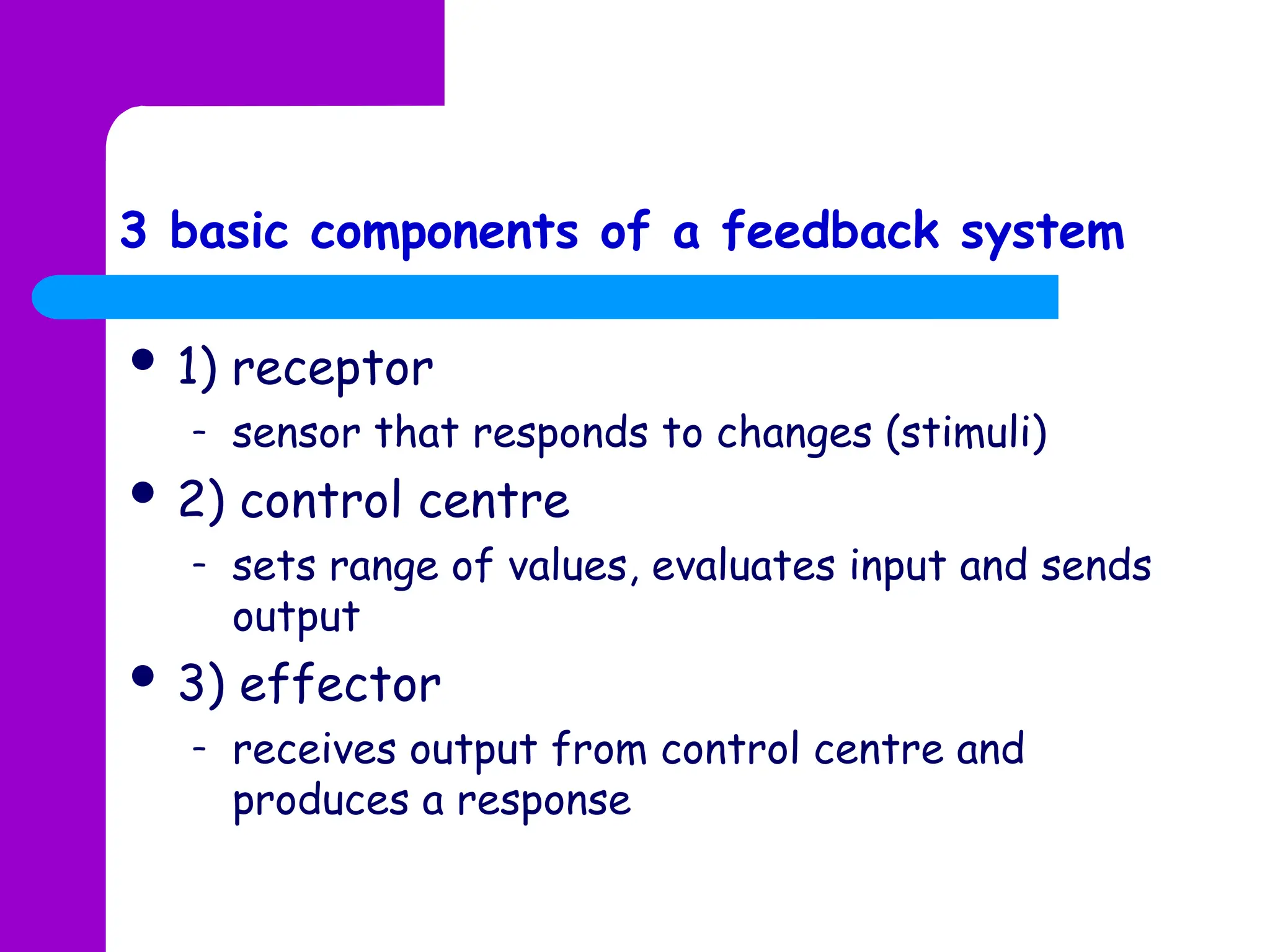
 1) receptor
– sensor that responds to changes (stimuli)
 2) control centre
– sets range of values, evaluates input and sends
output
 3) effector
– receives output from control centre and
produces a response
3 basic components of a feedback system
Body Temperature Control
 The hypothalamus
acts as a thermostat
and receives nerve
impulses from heat
and cold
thermoreceptors in
the skin.
 There are also
receptors in the
hypothalamus- called
central
thermoreceptors.
These detect changes in
blood temperature.
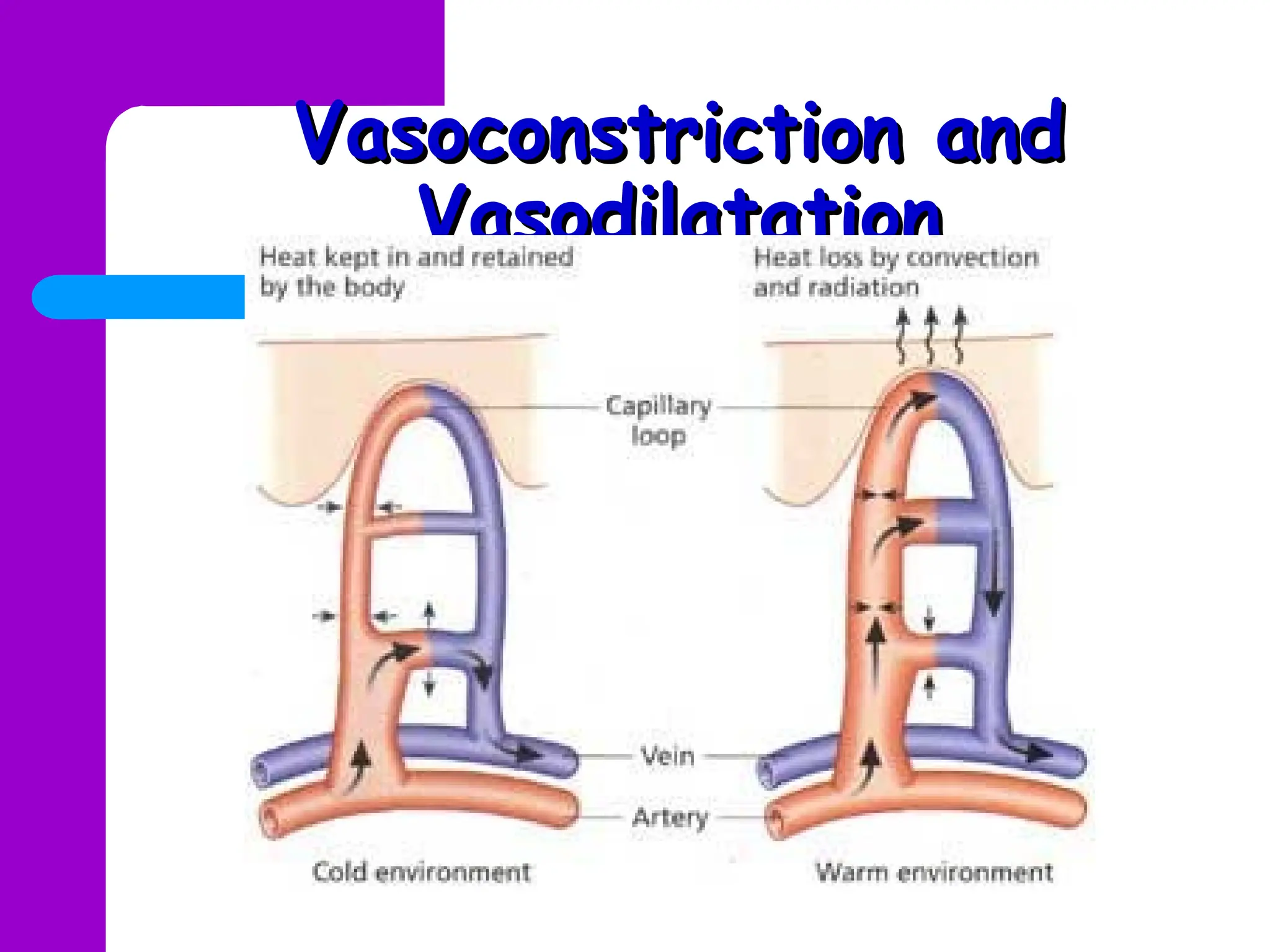
Vasoconstriction and
Vasodilatation
Vasodilatation
Correction of overheating
1. Detected by thermoreceptors in the
hypothalamus.
2. Causes vasodilation.
3. Sweating
Cooling down
Cooling down
 When it's hot and you
need to cool down,
muscles at each hair
relax.
 Hairs lie close to the
skin.
 Air does not act as an
insulating layer.
Sweating
Sweating
How does it work?
Heat energy in the
body is used to
convert the water
in sweat to vapour
cooling down the
body.
Correction of overcooling
1. Detected by thermoreceptors in the
hypothalamus.
2. Causes vasoconstriction.
3. Decreased sweating
4. Shivering
Keeping warm
Keeping warm
 When it's cold, the
muscle contracts
pulls the hair up.
 A layer of warm air
accumulates around
the hair and insulates
the organism.
 Heat retained
Shivering
How does it
work?
Voluntary responses
Voluntary responses
 In humans the cerebrum “makes”
people feel cold or hot.
 They can then e.g. put on more
clothes, eat a hot meal, exercise etc
as appropriate.
This powerpoint was kindly donated to
www.worldofteaching.com
http://www.worldofteaching.com is home to over a
thousand powerpoints submitted by teachers. This is a
completely free site and requires no registration. Please
visit and I hope it will help in your teaching.

nnnnnnnnnnnnnnnnnnnn.temperature regulation.ppt

  • 1.
    Temperature Regulation Temperature Regulation By the end of the lesson you should know  How the body corrects overheating  How the body corrects overcooling  What thermocreceptors do?  What volutary responses are carried out to control temperature
  • 4.
     To providethe optimum conditions for enzyme-catalysed reactions to be carried out. Why do we need to regulate: Why do we need to regulate: Internal body temperature Internal body temperature
  • 5.
    Body Temperature Body Temperature Normal internal body temperature is 370 C.  Temperatures above this: denature enzymes and block metabolic pathways  Temperatures below this: slow down metabolism and affect the brain.
  • 6.
    Water Bath Temperature seton thermostat Too cool? Heater kicks on and temperature goes up Too warm? Heater stays off until bath cools down Constant checking and turning on and off
  • 7.
    Control of homeostasisthrough Control of homeostasis through feedback feedback  Feedback system- cycle of events in which the status of a body condition is continually monitored, evaluated, changed, re-monitored, re-evaluated, etc.
  • 8.
     1) receptor –sensor that responds to changes (stimuli)  2) control centre – sets range of values, evaluates input and sends output  3) effector – receives output from control centre and produces a response 3 basic components of a feedback system
  • 9.
    Body Temperature Control The hypothalamus acts as a thermostat and receives nerve impulses from heat and cold thermoreceptors in the skin.  There are also receptors in the hypothalamus- called central thermoreceptors. These detect changes in blood temperature.
  • 10.
  • 11.
    Correction of overheating Correctionof overheating 1. Detected by thermoreceptors in the hypothalamus. 2. Causes vasodilation. 3. Sweating
  • 12.
    Cooling down Cooling down When it's hot and you need to cool down, muscles at each hair relax.  Hairs lie close to the skin.  Air does not act as an insulating layer.
  • 13.
    Sweating Sweating How does itwork? Heat energy in the body is used to convert the water in sweat to vapour cooling down the body.
  • 14.
    Correction of overcooling 1.Detected by thermoreceptors in the hypothalamus. 2. Causes vasoconstriction. 3. Decreased sweating 4. Shivering
  • 15.
    Keeping warm Keeping warm When it's cold, the muscle contracts pulls the hair up.  A layer of warm air accumulates around the hair and insulates the organism.  Heat retained
  • 16.
  • 17.
    Voluntary responses Voluntary responses In humans the cerebrum “makes” people feel cold or hot.  They can then e.g. put on more clothes, eat a hot meal, exercise etc as appropriate.
  • 18.
    This powerpoint waskindly donated to www.worldofteaching.com http://www.worldofteaching.com is home to over a thousand powerpoints submitted by teachers. This is a completely free site and requires no registration. Please visit and I hope it will help in your teaching.