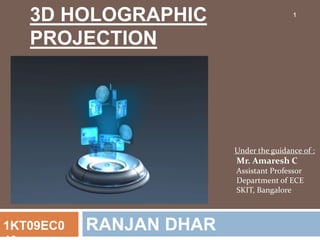
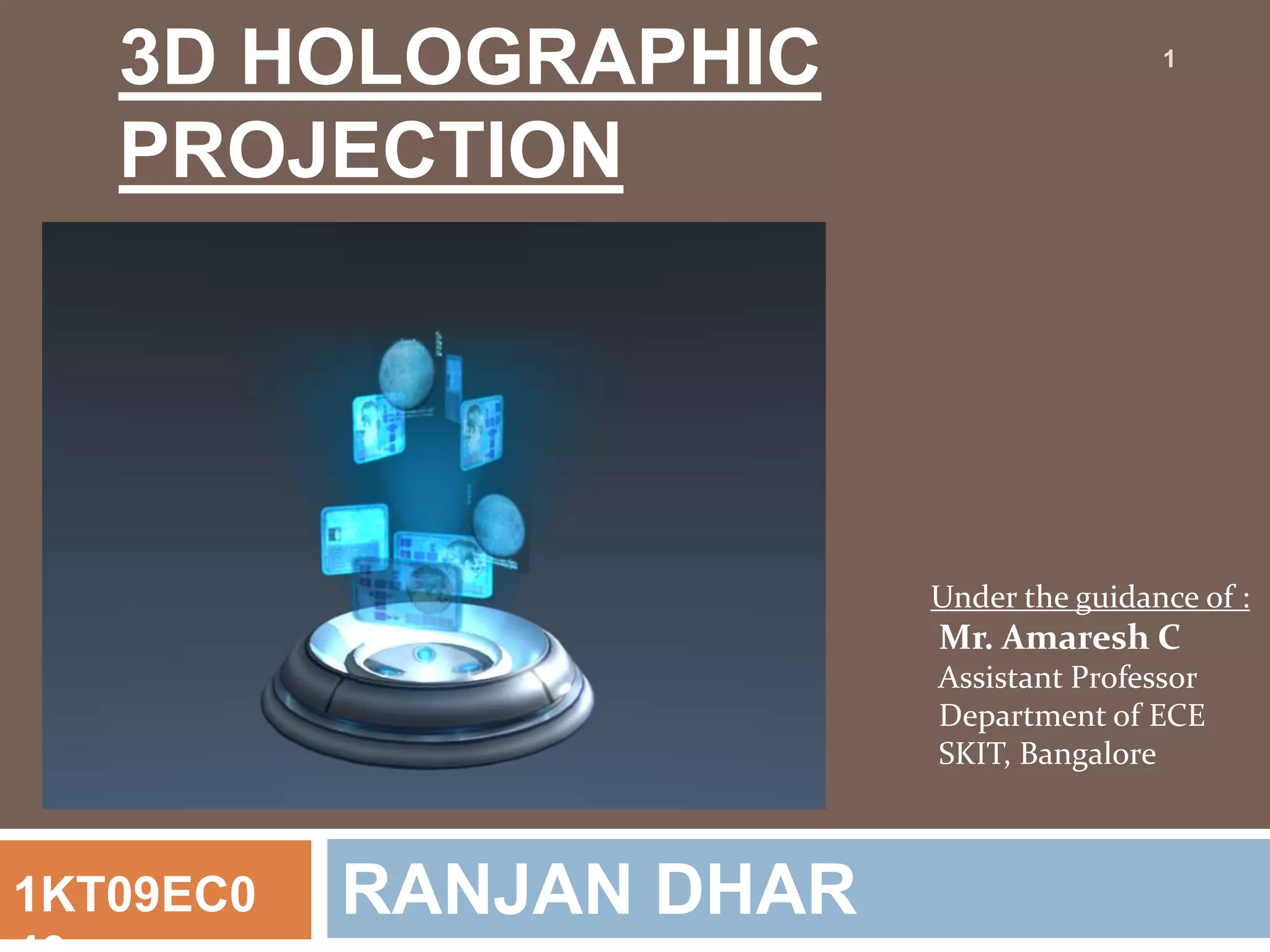
3D HOLOGRAPHIC
PROJECTION
RANJAN DHAR1KT09EC0
Under the guidance of :
Mr. Amaresh C
Assistant Professor
Department of ECE
SKIT, Bangalore
1
Introduction
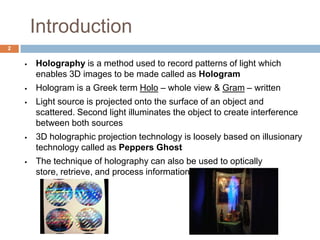
 Holography is a method used to record patterns of light which
enables 3D images to be made called as Hologram
 Hologram is a Greek term Holo – whole view & Gram – written
 Light source is projected onto the surface of an object and
scattered. Second light illuminates the object to create interference
between both sources
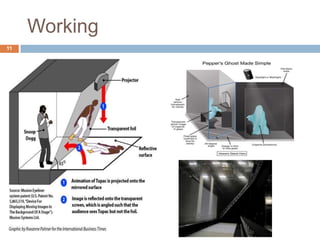
 3D holographic projection technology is loosely based on illusionary
technology called as Peppers Ghost
 The technique of holography can also be used to optically
store, retrieve, and process information.
2
Agenda
• Timeline and Evolution
• Holographic System
• Governing Principles
• Working
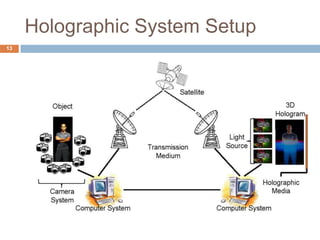
• Holographic System Setup
• Technology Types
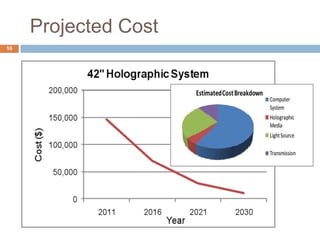
• Projected Cost
• Importance and Applications
• Future Scope and Conclusion
3
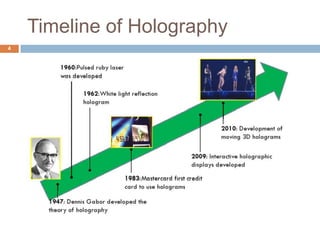
Timeline of Holography
4
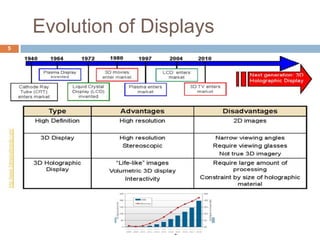
Evolution of Displays
5
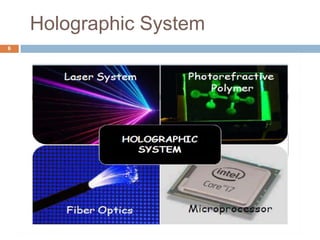
Holographic System
6
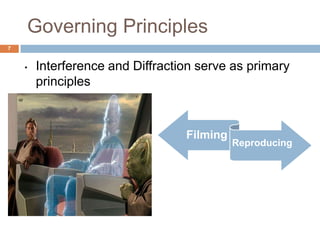
Governing Principles
• Interference and Diffraction serve as primary
principles
Filming
Reproducing
7
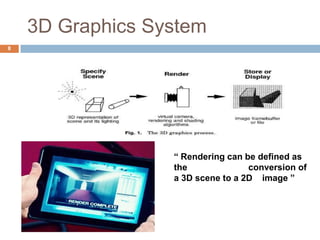
3D Graphics System
“ Rendering can be defined as
the conversion of
a 3D scene to a 2D image ”
8
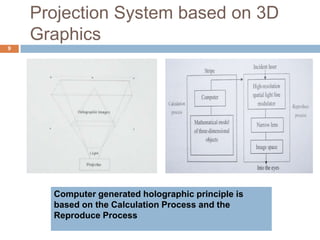
Projection System based on 3D
Graphics
Computer generated holographic principle is
based on the Calculation Process and the
Reproduce Process
9
Derivatives
• 360 degree Phantom Imaging System – based
on spectroscopy
• Holographic interactive display systems
10
Working
11
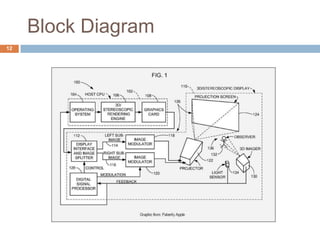
Block Diagram
12
Holographic System Setup
13
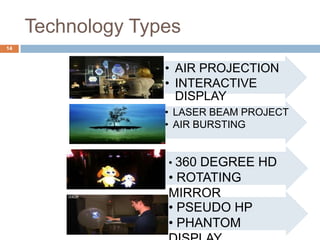
Technology Types
• AIR PROJECTION
• INTERACTIVE
DISPLAY
• LASER BEAM PROJECT
• AIR BURSTING
• 360 DEGREE HD
• ROTATING
MIRROR
• PSEUDO HP
• PHANTOM
14
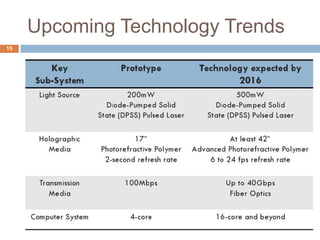
Upcoming Technology Trends
15
Projected Cost
16
Importance
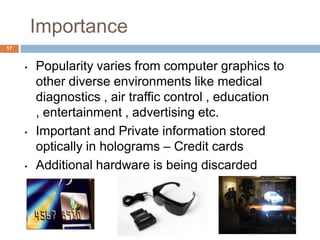
• Popularity varies from computer graphics to
other diverse environments like medical
diagnostics , air traffic control , education
, entertainment , advertising etc.
• Important and Private information stored
optically in holograms – Credit cards
• Additional hardware is being discarded
17
Applications
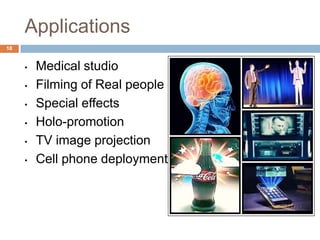
• Medical studio
• Filming of Real people
• Special effects
• Holo-promotion
• TV image projection
• Cell phone deployment
18
Future Scope
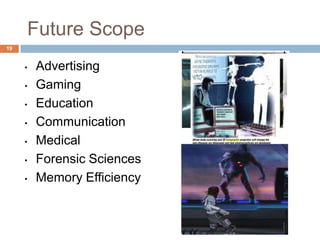
• Advertising
• Gaming
• Education
• Communication
• Medical
• Forensic Sciences
• Memory Efficiency
19
Conclusion
• With a trend of moving towards 3D and Virtual
Reality, Holographic System will dominate the
display, advertising and entertainment
industries
• This is largely attributed to :
 Lowering of cost of Key Components
 Advancement in Holographic Technology
 Advancement in Technology of Key
Components
20
21
22

3 d holographic projection

  • 1.
    3D HOLOGRAPHIC PROJECTION RANJAN DHAR1KT09EC0 Underthe guidance of : Mr. Amaresh C Assistant Professor Department of ECE SKIT, Bangalore 1
  • 2.
    Introduction  Holography isa method used to record patterns of light which enables 3D images to be made called as Hologram  Hologram is a Greek term Holo – whole view & Gram – written  Light source is projected onto the surface of an object and scattered. Second light illuminates the object to create interference between both sources  3D holographic projection technology is loosely based on illusionary technology called as Peppers Ghost  The technique of holography can also be used to optically store, retrieve, and process information. 2
  • 3.
    Agenda • Timeline andEvolution • Holographic System • Governing Principles • Working • Holographic System Setup • Technology Types • Projected Cost • Importance and Applications • Future Scope and Conclusion 3
  • 4.
  • 5.
  • 6.
  • 7.
    Governing Principles • Interferenceand Diffraction serve as primary principles Filming Reproducing 7
  • 8.
    3D Graphics System “Rendering can be defined as the conversion of a 3D scene to a 2D image ” 8
  • 9.
    Projection System basedon 3D Graphics Computer generated holographic principle is based on the Calculation Process and the Reproduce Process 9
  • 10.
    Derivatives • 360 degreePhantom Imaging System – based on spectroscopy • Holographic interactive display systems 10
  • 11.
  • 12.
  • 13.
  • 14.
    Technology Types • AIRPROJECTION • INTERACTIVE DISPLAY • LASER BEAM PROJECT • AIR BURSTING • 360 DEGREE HD • ROTATING MIRROR • PSEUDO HP • PHANTOM 14
  • 15.
  • 16.
  • 17.
    Importance • Popularity variesfrom computer graphics to other diverse environments like medical diagnostics , air traffic control , education , entertainment , advertising etc. • Important and Private information stored optically in holograms – Credit cards • Additional hardware is being discarded 17
  • 18.
    Applications • Medical studio •Filming of Real people • Special effects • Holo-promotion • TV image projection • Cell phone deployment 18
  • 19.
    Future Scope • Advertising •Gaming • Education • Communication • Medical • Forensic Sciences • Memory Efficiency 19
  • 20.
    Conclusion • With atrend of moving towards 3D and Virtual Reality, Holographic System will dominate the display, advertising and entertainment industries • This is largely attributed to :  Lowering of cost of Key Components  Advancement in Holographic Technology  Advancement in Technology of Key Components 20
  • 21.
  • 22.