HOLOGRAPHY AND ITS
APPLICATIONS IN
DEFENCE
SIDDHANT S SHIRGUPPE
CSE K3 64
What is holography?
 Holography is a technique that allows the light scattered from an object to be
recorded and later reconstructed.
 This technique is used to optically store,retrieve and process information.
 It preserves the 3D information of the object.
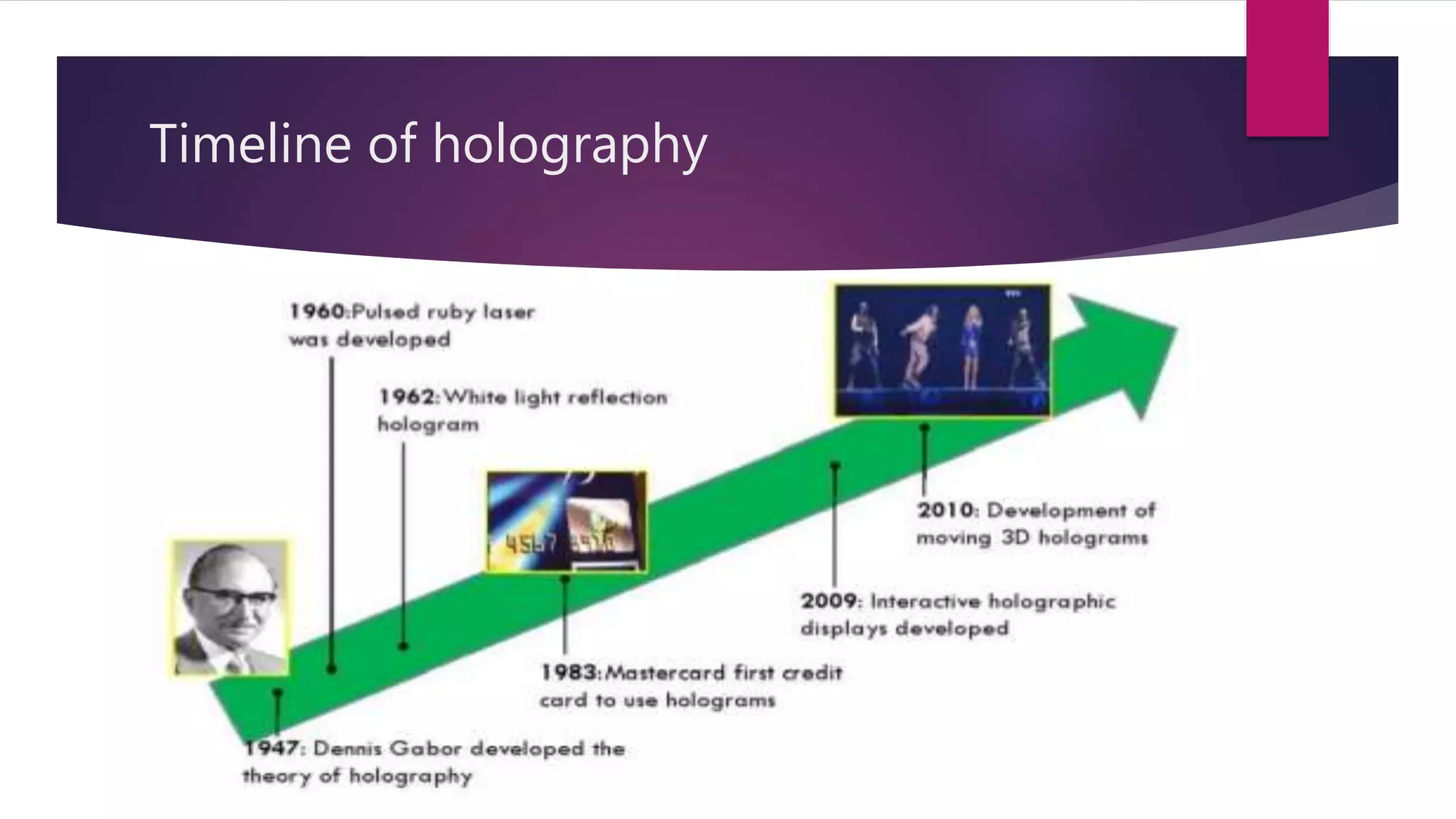
Timeline of holography
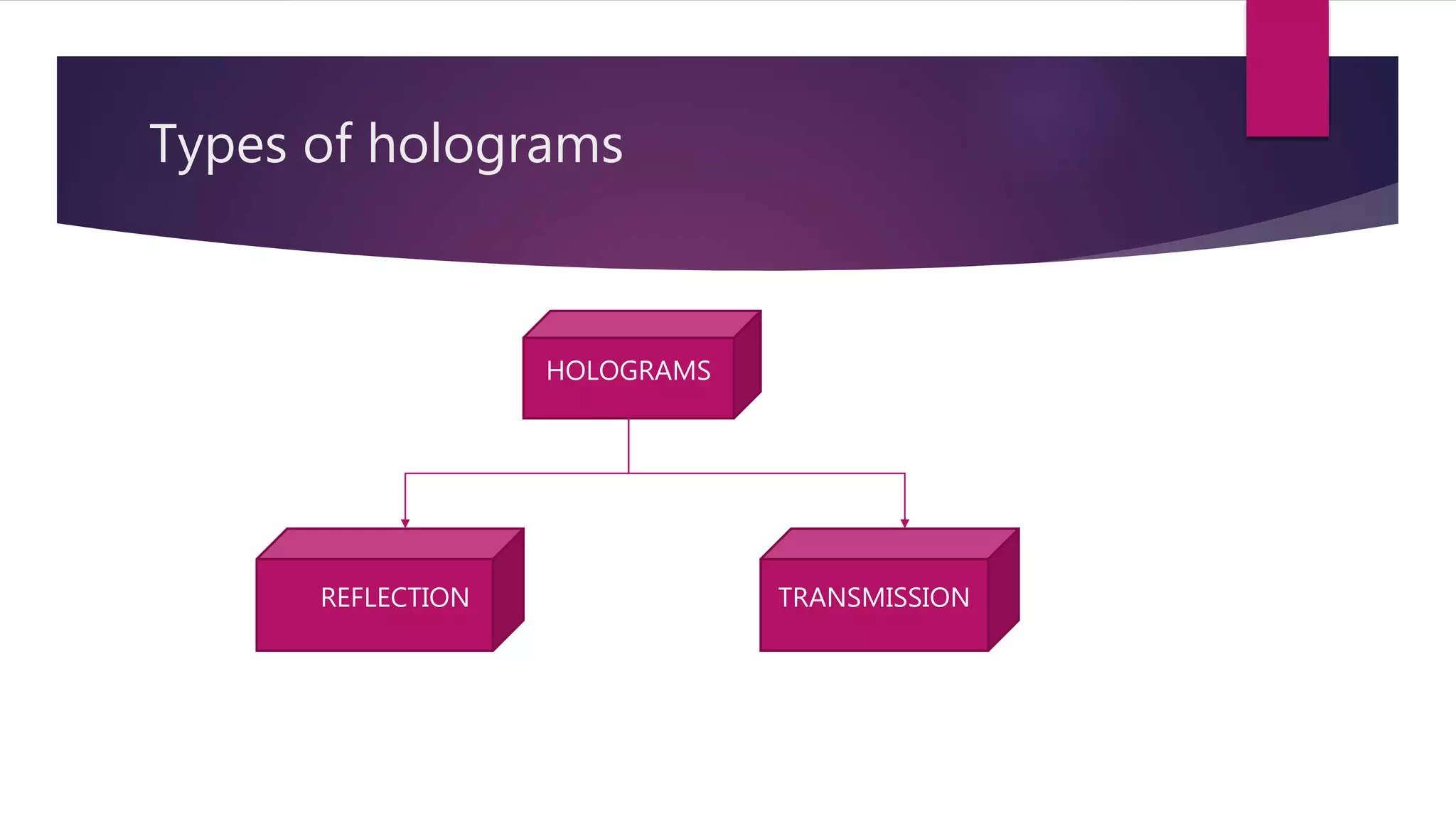
Types of holograms
HOLOGRAMS
 REFLECTION TRANSMISSION
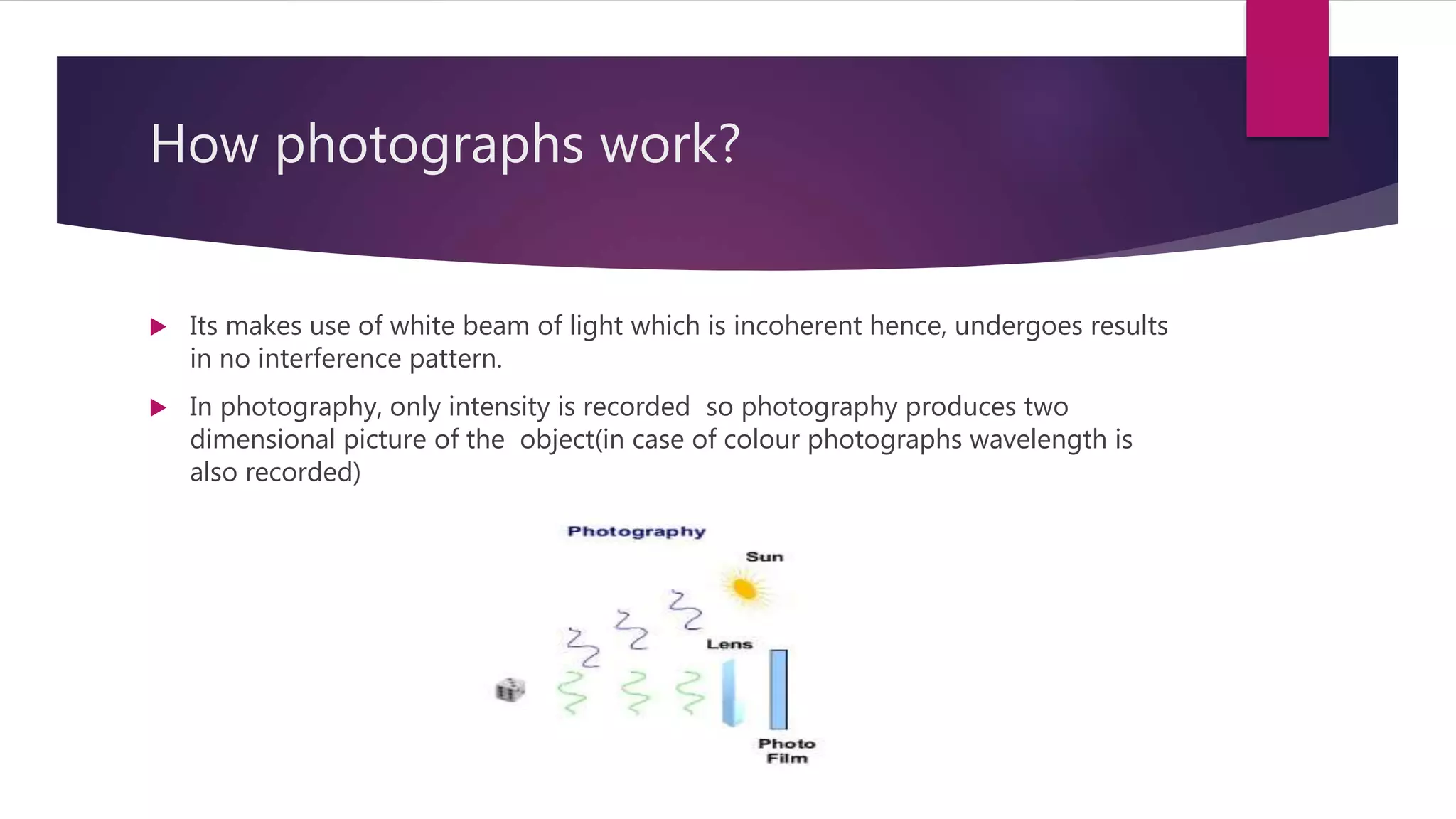
How photographs work?
 Its makes use of white beam of light which is incoherent hence, undergoes results
in no interference pattern.
 In photography, only intensity is recorded so photography produces two
dimensional picture of the object(in case of colour photographs wavelength is
also recorded)
How holograms work?
 The working of the holograms is divided into two phase :
 1.recording
 2.reconstruction
Recording
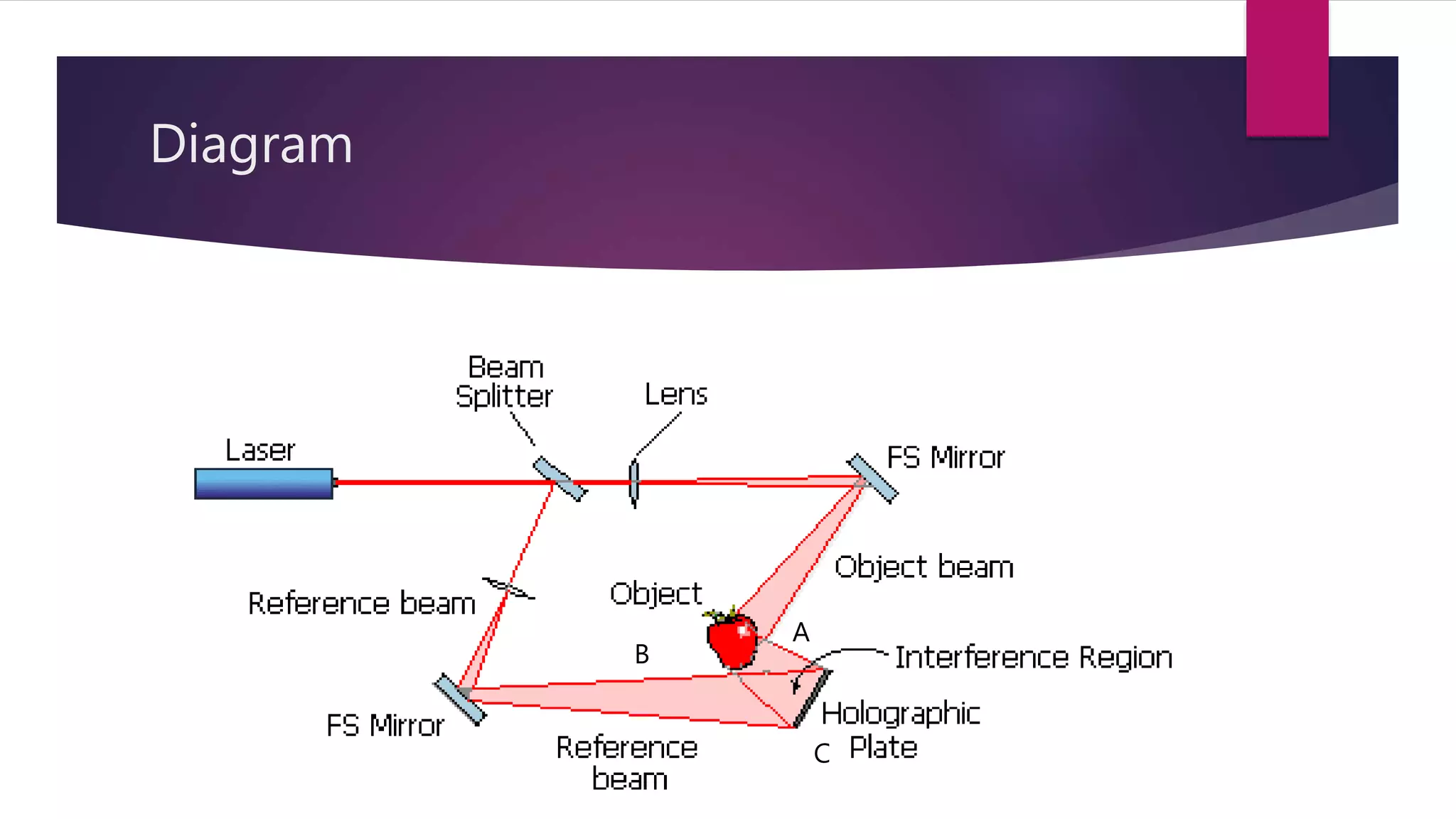
 It consists of two beams: reference beam[A] and object beam[].
 The object beam is the scattered beam which is incoherent.
 The reference beam is coherent beam.
 However when they are both incident on the holographic plate, they create an
interference pattern which stores the optical data of the object.
 Thus the pattern on the plate can be considered as C
A + B = C
Diagram
A
B
C
Why laser?
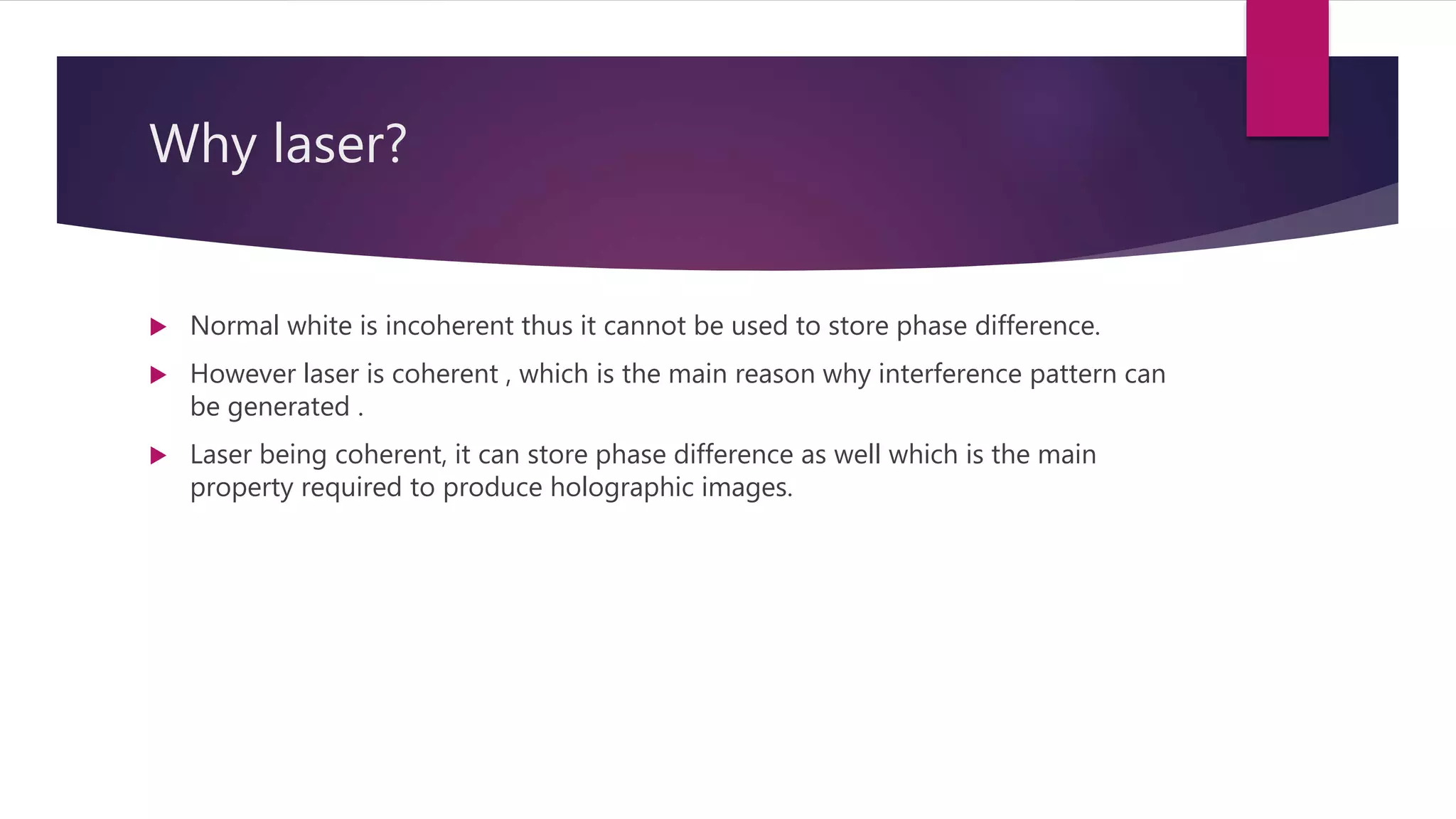
 Normal white is incoherent thus it cannot be used to store phase difference.
 However laser is coherent , which is the main reason why interference pattern can
be generated .
 Laser being coherent, it can store phase difference as well which is the main
property required to produce holographic images.
Reconstruction
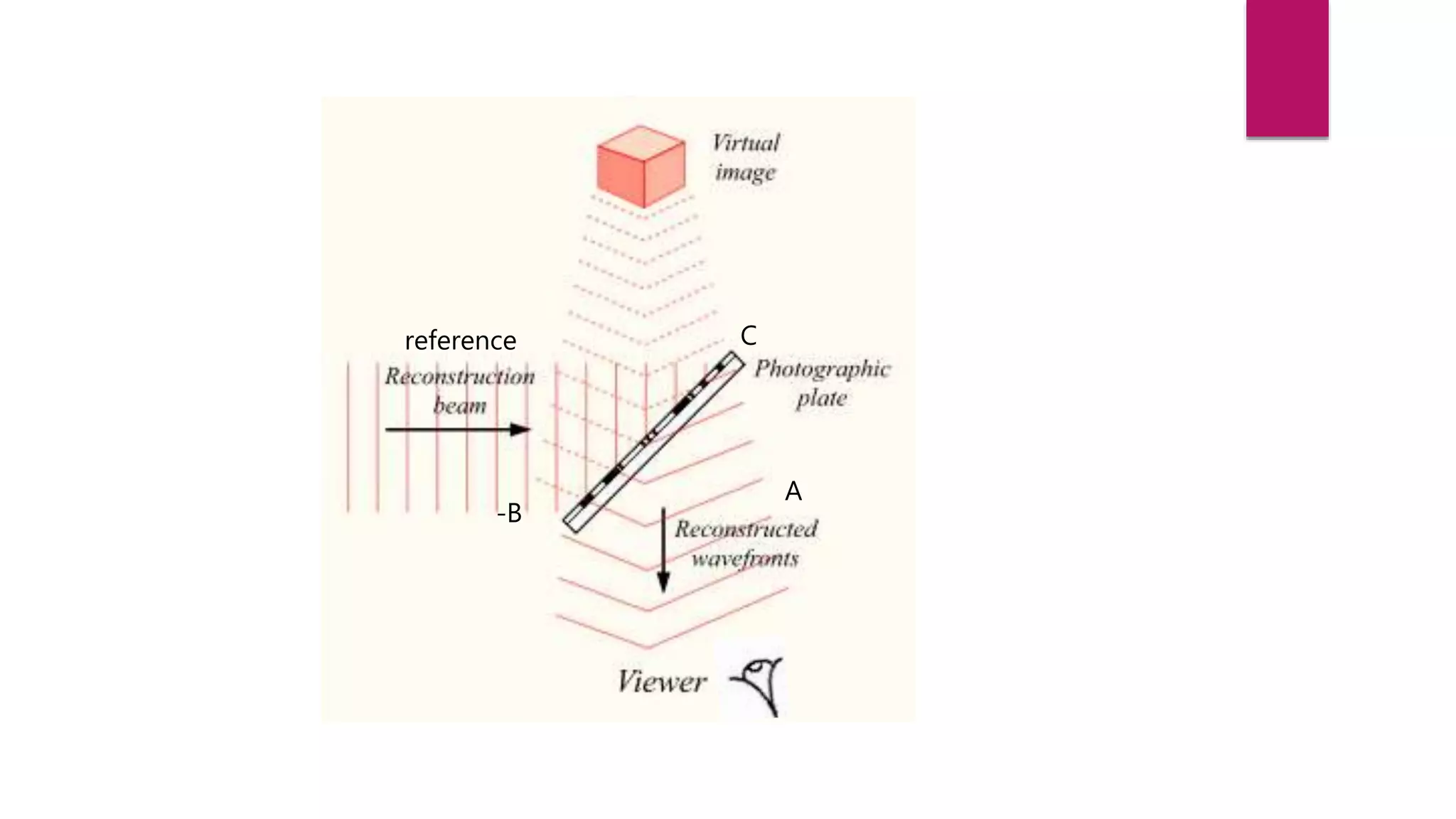
 In order to produce the hologram, the reference laser beam is passed through the
holographic plate in the opposite direction.
 This can be seen as a reverse process of recording.
 It can be represented as:
C – B = A
reference
A
C
-B
Millitary applications
 New optical laser discs which can handle holographic data, hence a substantial
increase in the storage capacity.
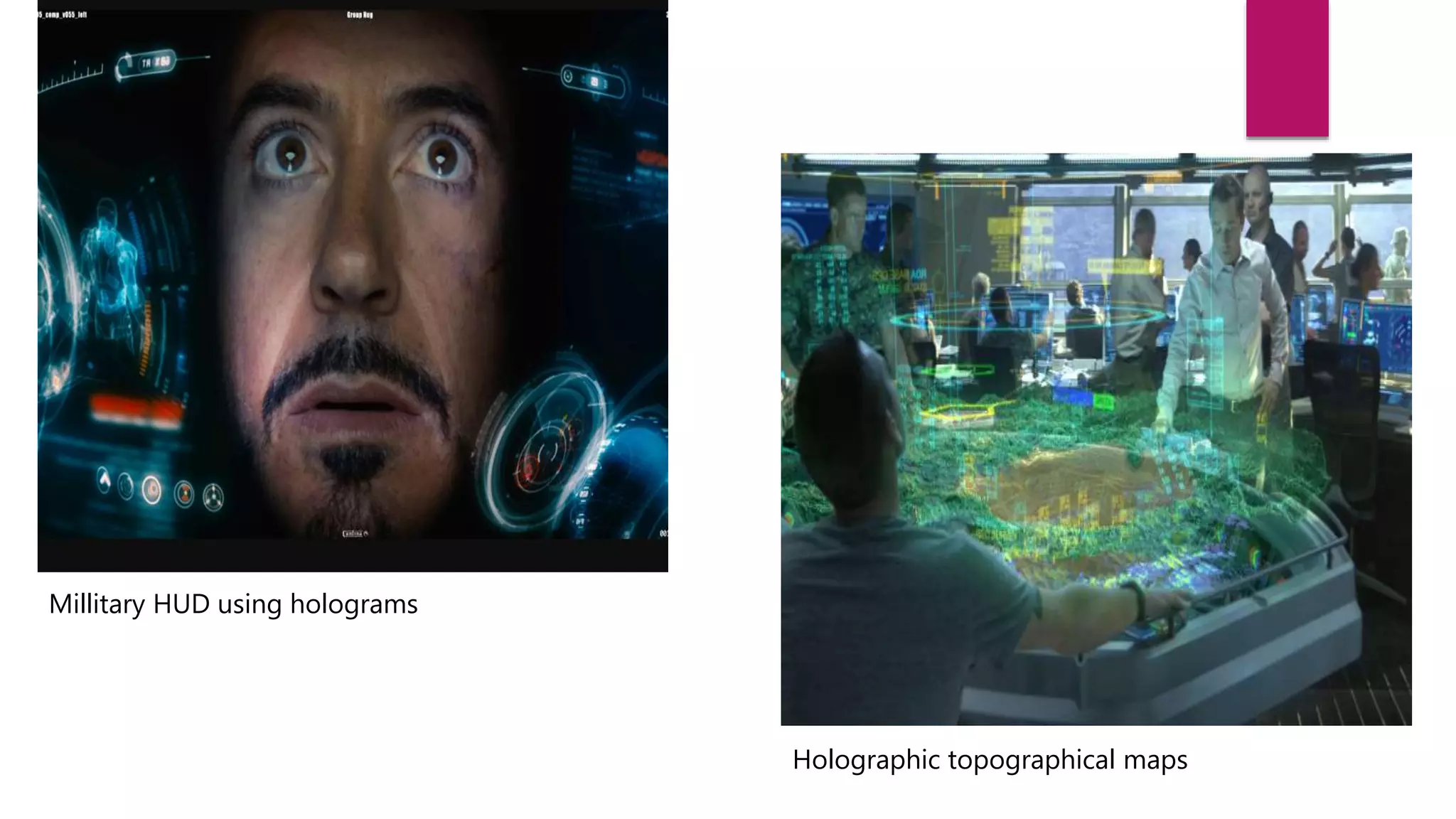
 Development of the holographic HUD(heads up display)
 Holographic maps resulting in a clearer understanding of the topography of the
hostile territory, hence producing more strategic combat plans
 Used to produce holographic buildings and utilities which act as decoy to the
hostile forces, which results in less collateral damage.
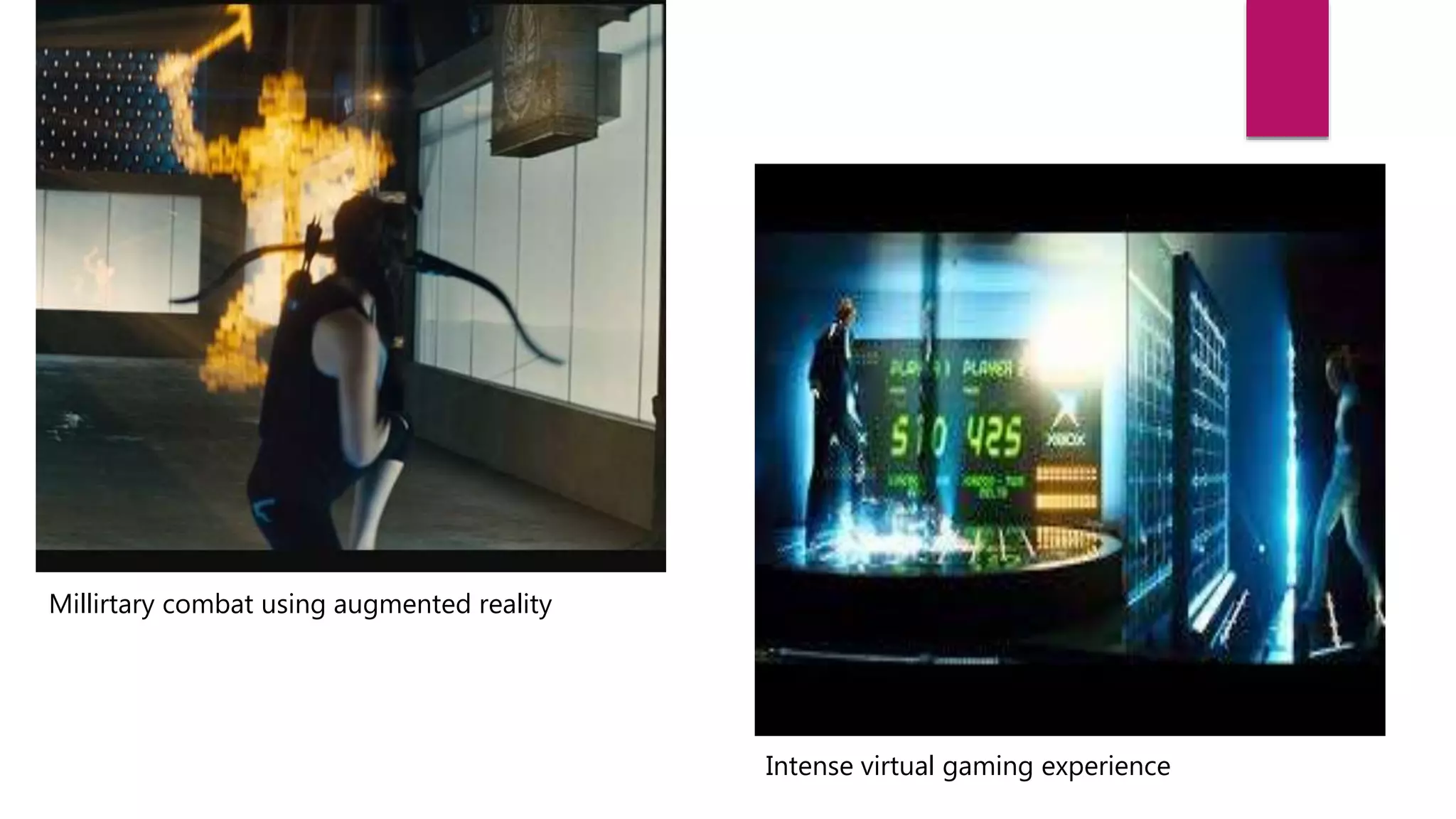
 Improved virtual reality and augmented reality for hand to hand combat training
of the soldiers
Other uses:
 Anti-counterfeiting in credit card is now a common practice.
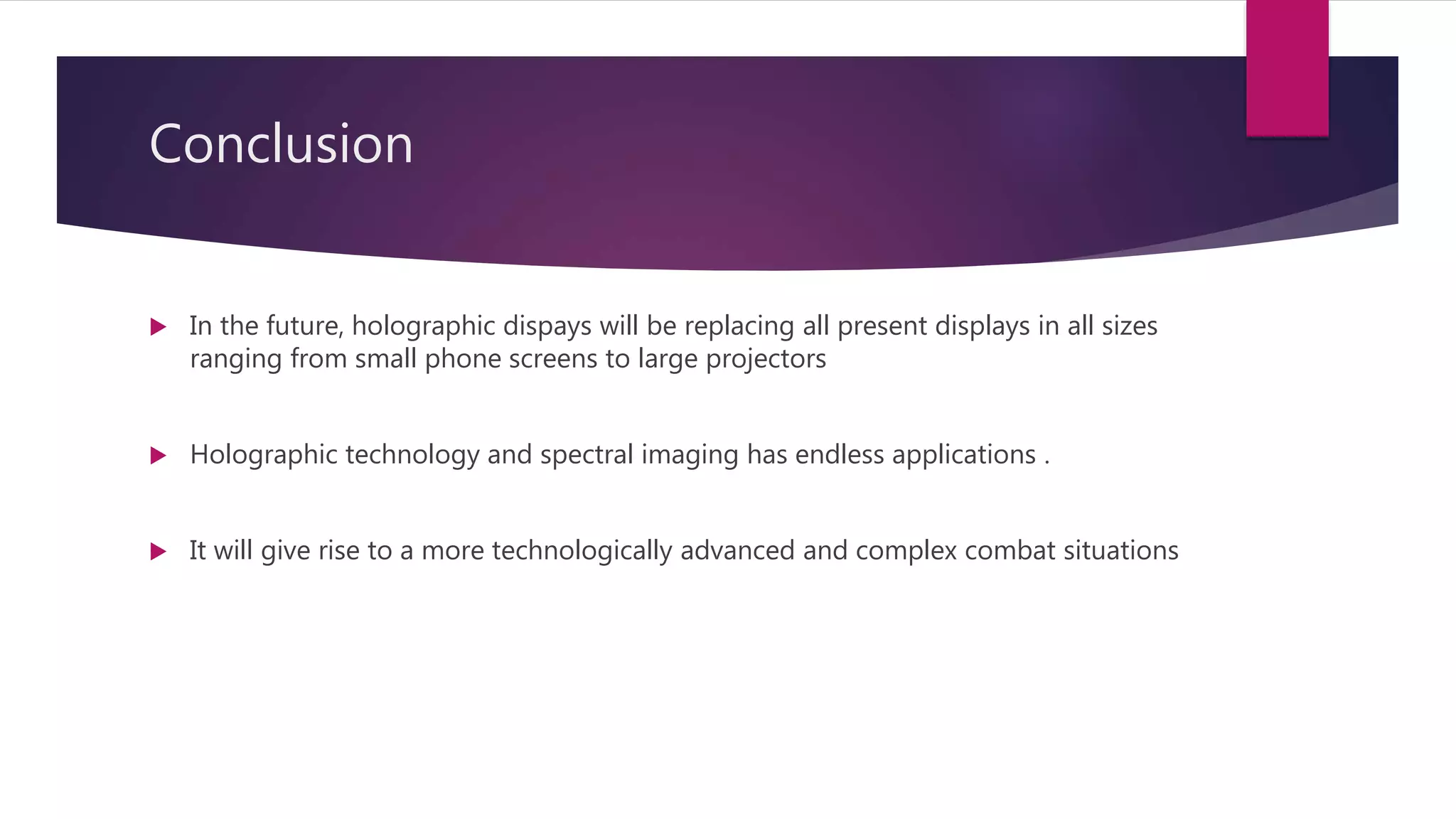
 Intense real room gaming etc.
Millitary HUD using holograms
Holographic topographical maps
Millirtary combat using augmented reality
Intense virtual gaming experience
Conclusion
 In the future, holographic dispays will be replacing all present displays in all sizes
ranging from small phone screens to large projectors
 Holographic technology and spectral imaging has endless applications .
 It will give rise to a more technologically advanced and complex combat situations
References
 “Holographic projection technology :world is changing”
- Ahmed Elmorshidy(ph.d)
 “Touchable holography” – Takayuki Hoshi.
 “Holographic 3D displays within the grasp of commercialization”
– Stephen Reichelt.
 “How holograms work?” - William Tracy.
 “Working of hologarms”- physicsgirl (youtube channel).
 “Technical applications of hologarphs” – Integraf.
THANK YOU

Holography and its applications in defence

  • 1.
    HOLOGRAPHY AND ITS APPLICATIONSIN DEFENCE SIDDHANT S SHIRGUPPE CSE K3 64
  • 2.
    What is holography? Holography is a technique that allows the light scattered from an object to be recorded and later reconstructed.  This technique is used to optically store,retrieve and process information.  It preserves the 3D information of the object.
  • 3.
  • 4.
    Types of holograms HOLOGRAMS REFLECTION TRANSMISSION
  • 5.
    How photographs work? Its makes use of white beam of light which is incoherent hence, undergoes results in no interference pattern.  In photography, only intensity is recorded so photography produces two dimensional picture of the object(in case of colour photographs wavelength is also recorded)
  • 6.
    How holograms work? The working of the holograms is divided into two phase :  1.recording  2.reconstruction
  • 7.
    Recording  It consistsof two beams: reference beam[A] and object beam[].  The object beam is the scattered beam which is incoherent.  The reference beam is coherent beam.  However when they are both incident on the holographic plate, they create an interference pattern which stores the optical data of the object.  Thus the pattern on the plate can be considered as C A + B = C
  • 8.
  • 9.
    Why laser?  Normalwhite is incoherent thus it cannot be used to store phase difference.  However laser is coherent , which is the main reason why interference pattern can be generated .  Laser being coherent, it can store phase difference as well which is the main property required to produce holographic images.
  • 10.
    Reconstruction  In orderto produce the hologram, the reference laser beam is passed through the holographic plate in the opposite direction.  This can be seen as a reverse process of recording.  It can be represented as: C – B = A
  • 11.
  • 12.
    Millitary applications  Newoptical laser discs which can handle holographic data, hence a substantial increase in the storage capacity.  Development of the holographic HUD(heads up display)  Holographic maps resulting in a clearer understanding of the topography of the hostile territory, hence producing more strategic combat plans  Used to produce holographic buildings and utilities which act as decoy to the hostile forces, which results in less collateral damage.  Improved virtual reality and augmented reality for hand to hand combat training of the soldiers Other uses:  Anti-counterfeiting in credit card is now a common practice.  Intense real room gaming etc.
  • 13.
    Millitary HUD usingholograms Holographic topographical maps
  • 14.
    Millirtary combat usingaugmented reality Intense virtual gaming experience
  • 15.
    Conclusion  In thefuture, holographic dispays will be replacing all present displays in all sizes ranging from small phone screens to large projectors  Holographic technology and spectral imaging has endless applications .  It will give rise to a more technologically advanced and complex combat situations
  • 16.
    References  “Holographic projectiontechnology :world is changing” - Ahmed Elmorshidy(ph.d)  “Touchable holography” – Takayuki Hoshi.  “Holographic 3D displays within the grasp of commercialization” – Stephen Reichelt.  “How holograms work?” - William Tracy.  “Working of hologarms”- physicsgirl (youtube channel).  “Technical applications of hologarphs” – Integraf.
  • 17.