HMP
• Rapidly dividing cells, such as those of bone marrow, skin,
and intestinal mucosa, use the pentoses to make RNA,
DNA, and such coenzymes as ATP,NADH, FADH2, and
coenzyme A.
• The sequence of reactions of the pathway may be divided
into two phases: an oxidative nonreversible phase and a
non oxidative reversible phase.
CONT’D
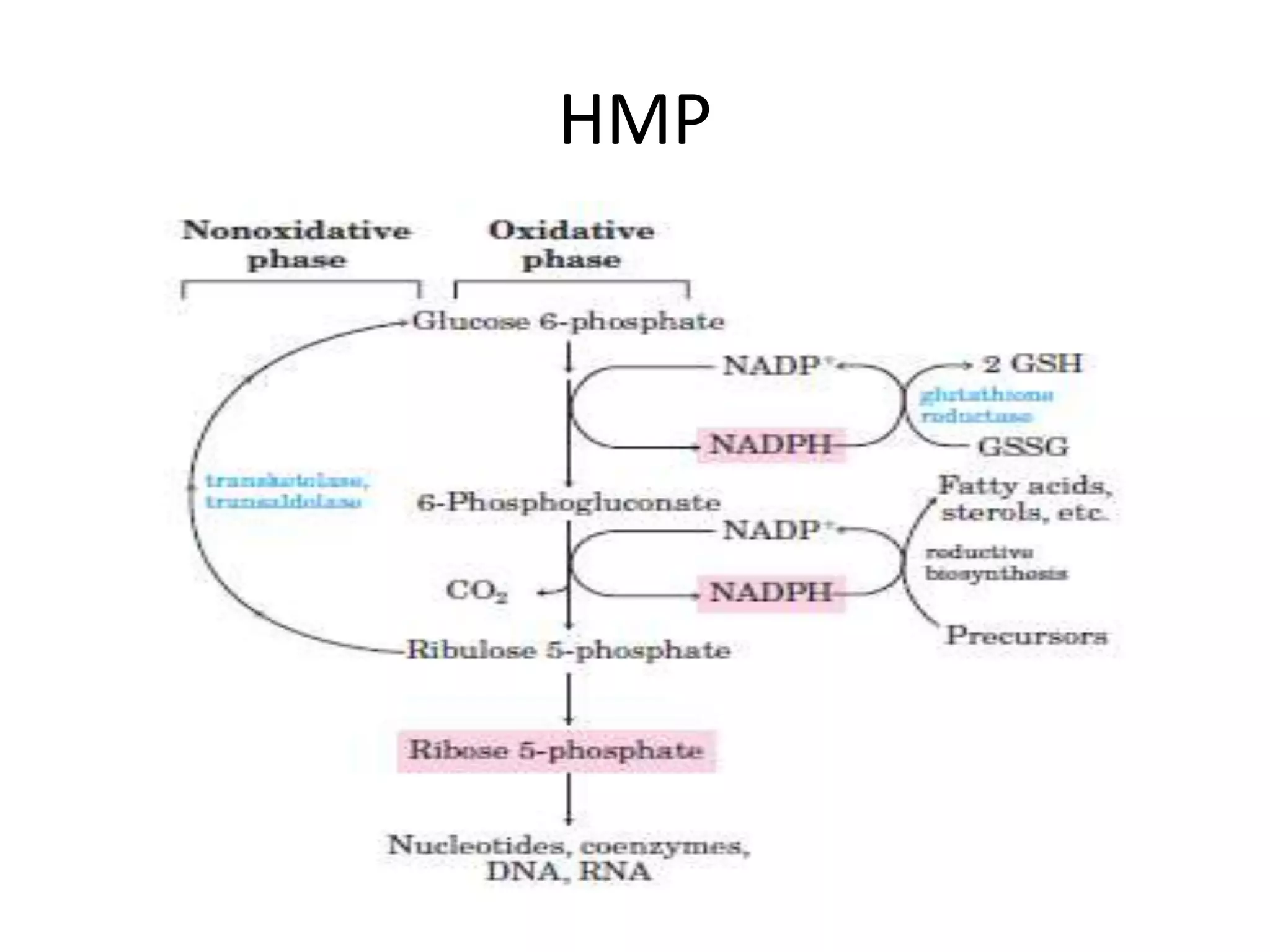
• In the first phase(Oxidative), glucose 6-
phosphate undergoes dehydrogenation and
decarboxylation to yield a pentose, ribulose
5-phosphate.
• In the second phase, ribulose 5-phosphate is
converted back to glucose 6-phosphate by a
series of reactions involving mainly two
enzymes:transketolase and transaldolase
HMP
OXIDATIVE PHASE
EXPLANATION
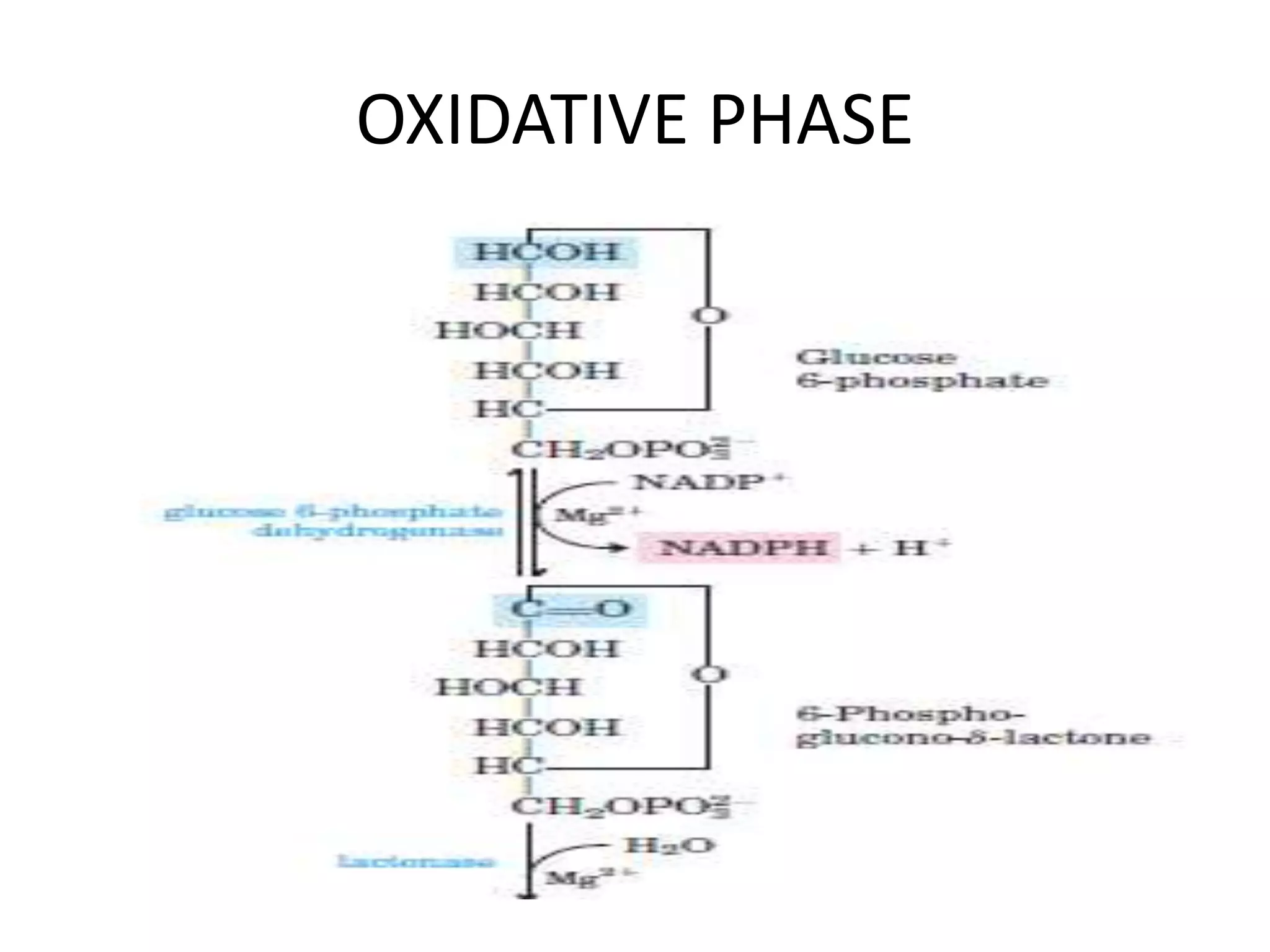
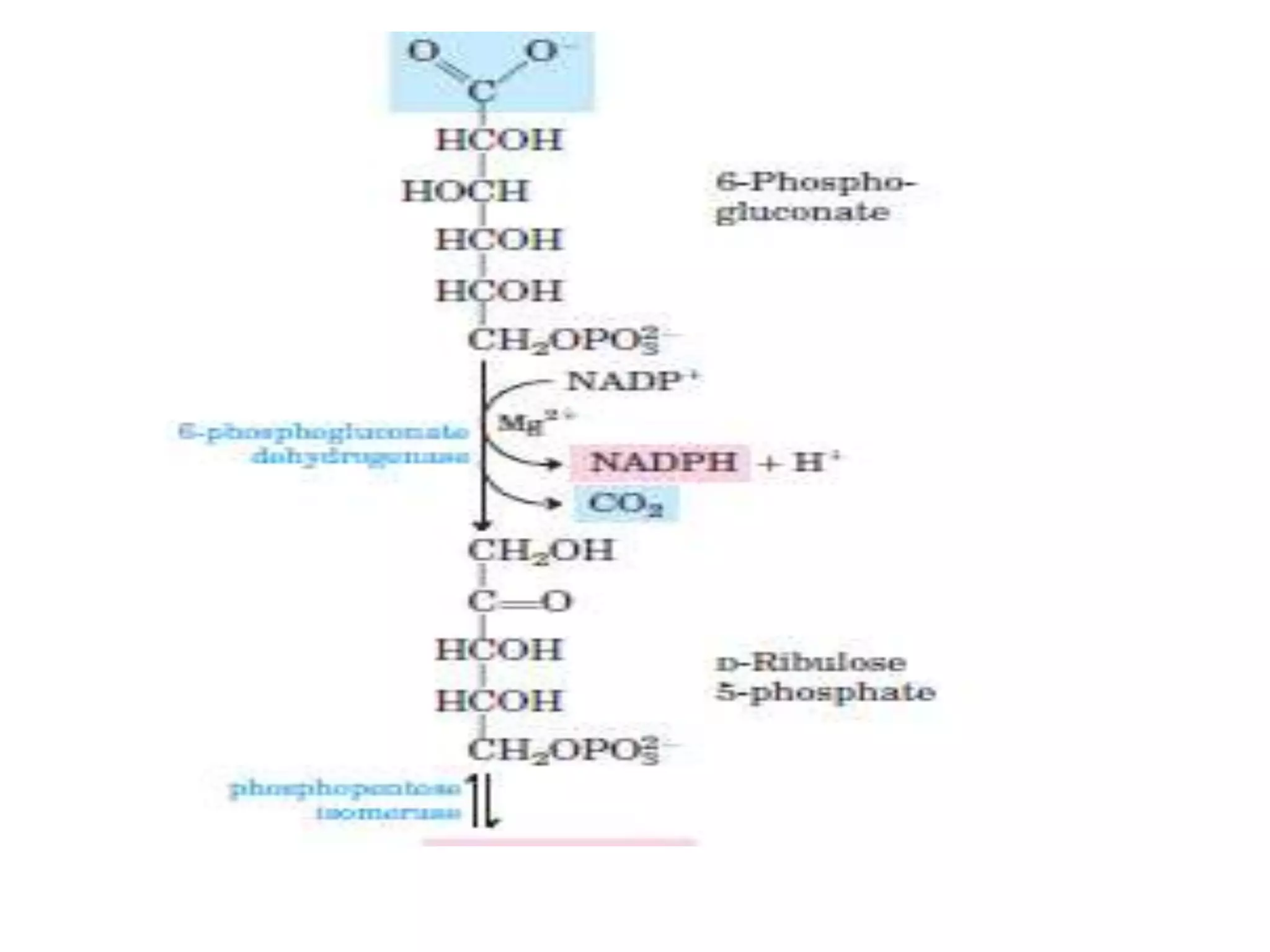
• The first reaction of the pentose phosphate pathway is the
oxidation of glucose 6-phosphate by glucose 6-phosphate
dehydrogenase (G6PD) to form 6-phosphoglucono--lactone,
an intramolecular
• The lactone is hydrolyzed to the free acid 6-phosphogluconate
by a specific lactonase, then 6-phosphogluconate undergoes
oxidation and decarboxylation by 6-phosphogluconate
dehydrogenase to form the ketopentose ribulose 5-
phosphate.
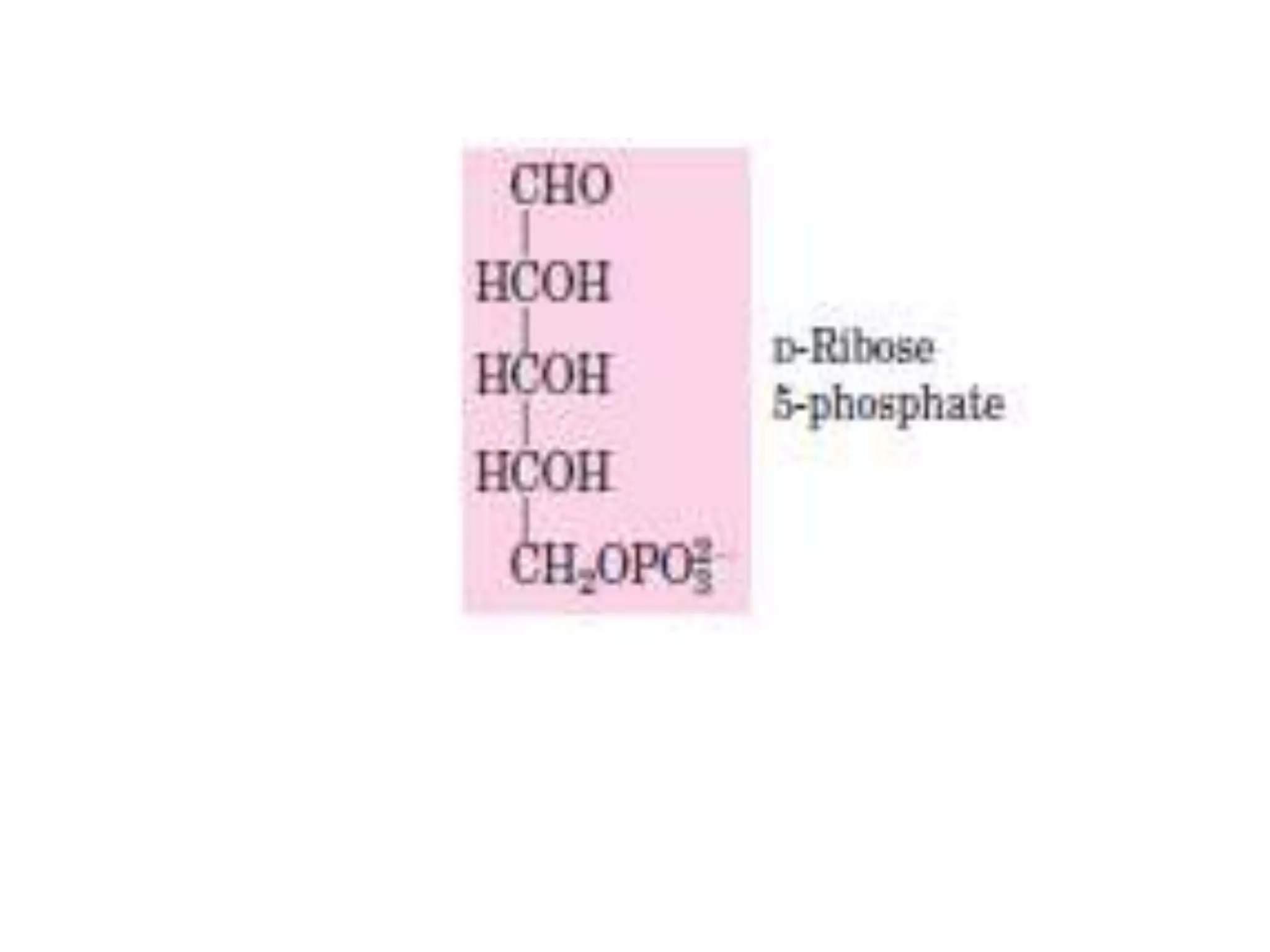
• Phosphopentose isomerase converts ribulose 5-phosphate to
its aldose isomer, ribose 5-phosphate.
NON-OXIDATIVE PHASE
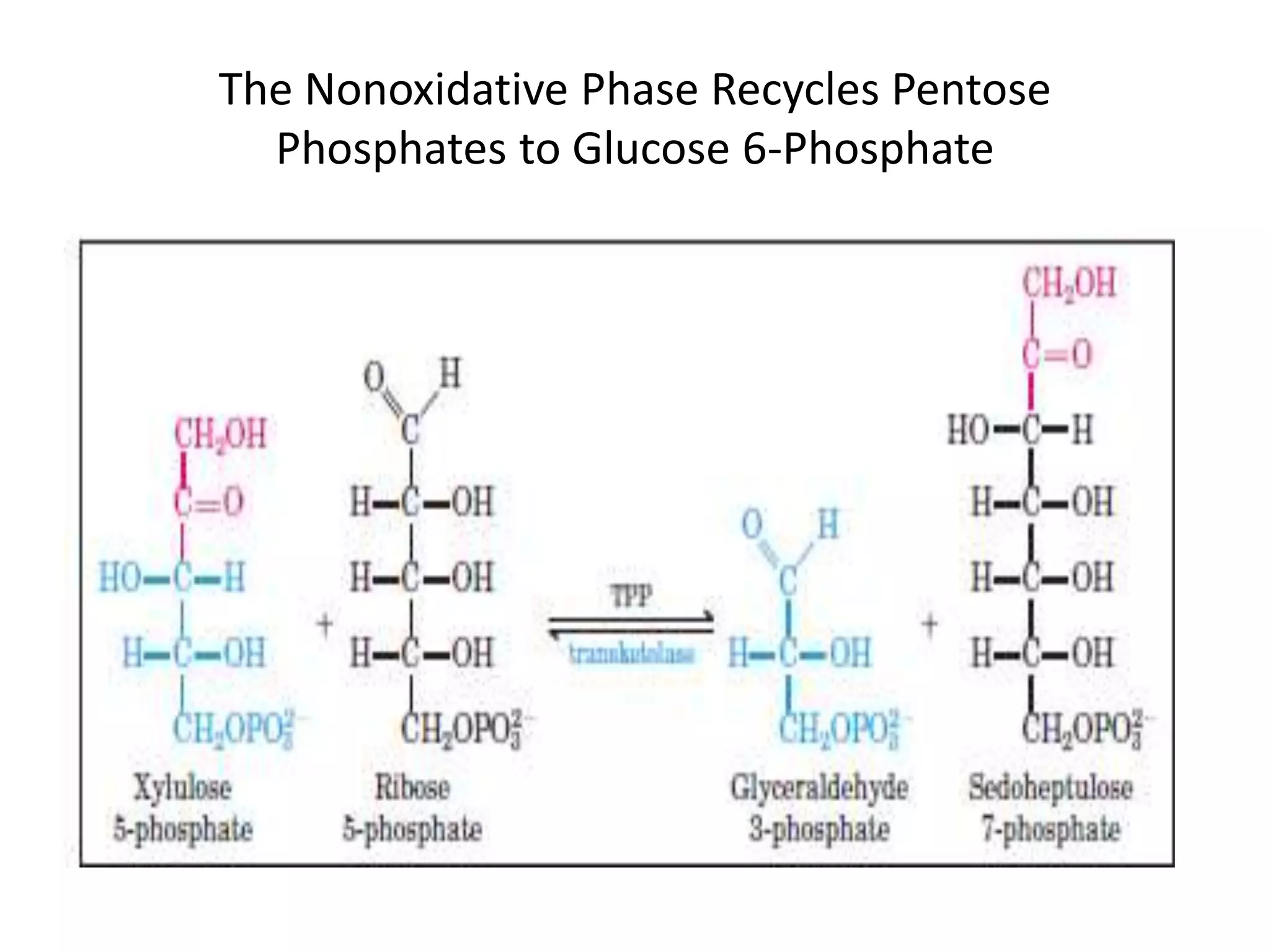
The Nonoxidative Phase Recycles Pentose
Phosphates to Glucose 6-Phosphate
Explanation
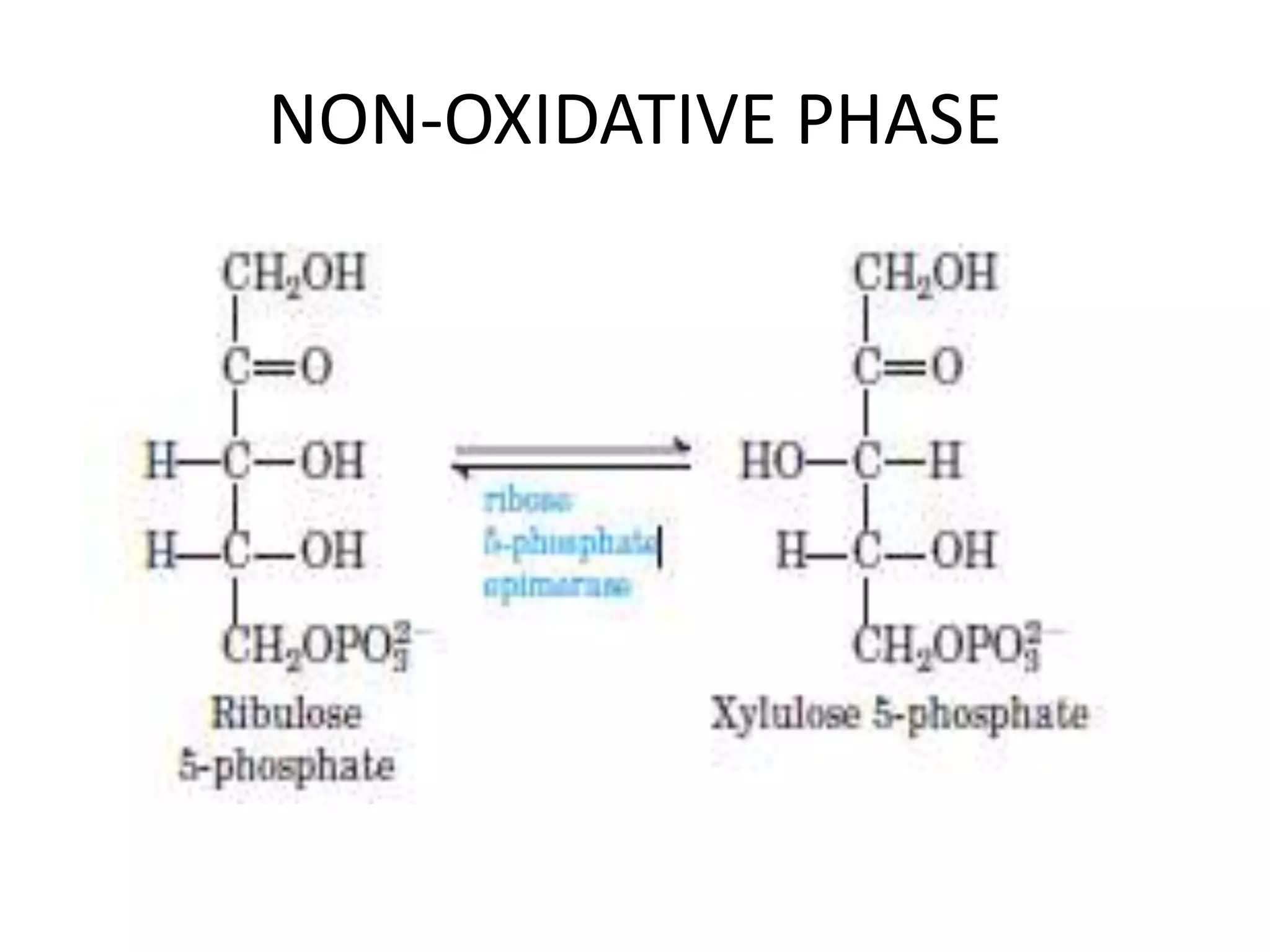
• In this nonoxidative phase, ribulose 5-phosphate
is first epimerized to xylulose 5-phosphate
• Two enzymes unique to the pentose phosphate
pathway act in these interconversions of
sugars:Transketolase and transaldolase.
• Transketolase catalyzes the transfer of a two-
carbon fragment from a ketose donor to an
aldose acceptor
Cont’d
• Transketolase transfers C-1 and C-2 of xylulose 5-phosphate
to ribose 5-phosphate,forming the seven-carbon product
sedoheptulose 7-phosphate
• The remaining three-carbon fragment from xylulose is
glyceraldehyde 3-phosphate.
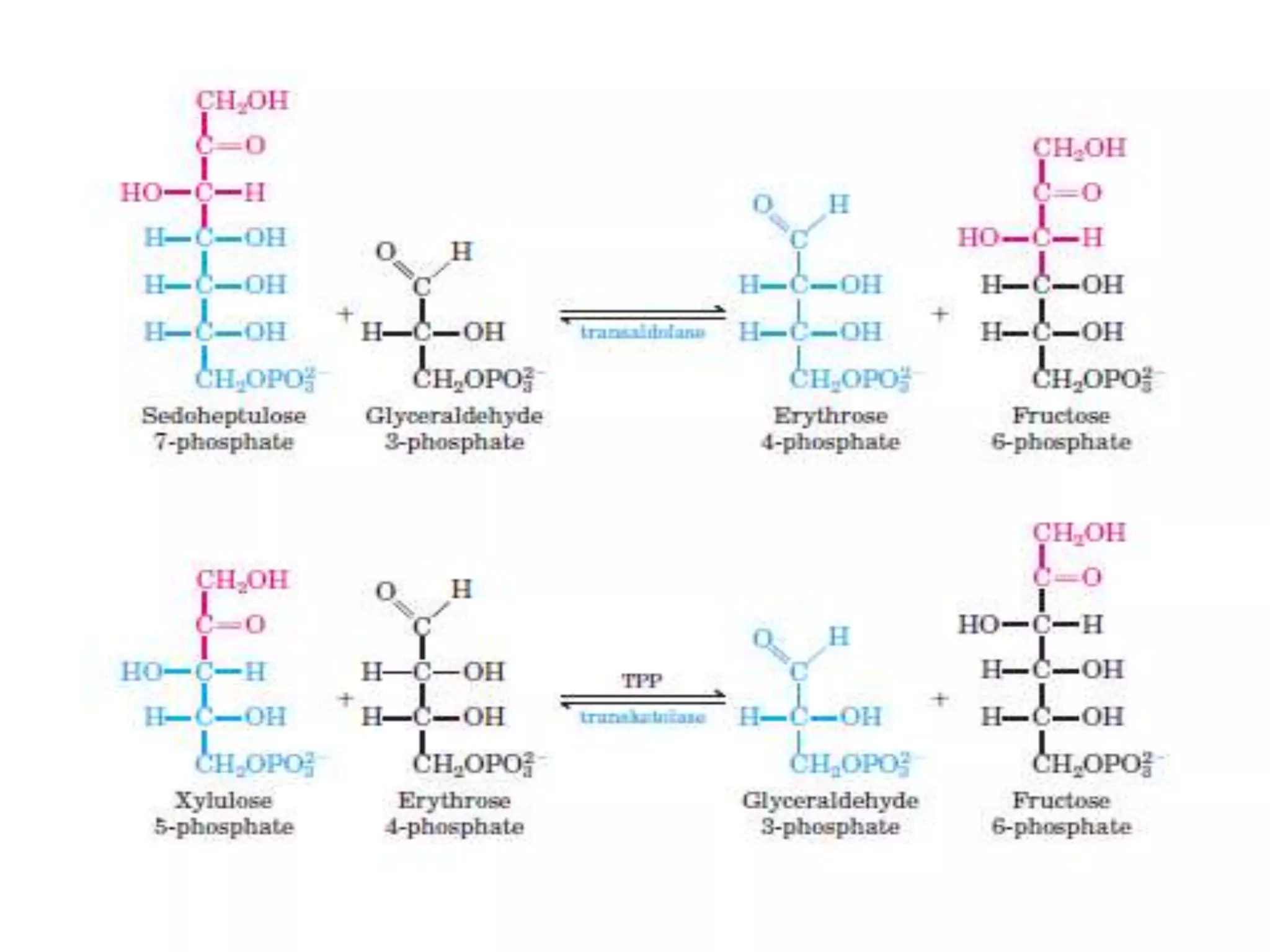
• Next, transaldolase catalyzes a reaction similar to the
aldolase reaction of glycolysis: a three-carbon fragment is
removed from sedoheptulose 7-phosphate and condensed
with glyceraldehyde 3-phosphate, forming fructose 6-
phosphate and the tetrose erythrose 4-phosphate
Cont’d
• Now transketolase acts again, forming
fructose 6-phosphate and glyceraldehyde 3-
phosphate from erythrose 4-phosphate and
xylulose 5-phosphate
• Two molecules of glyceraldehyde 3-phosphate
formed by two iterations of these reactions
can be converted to a molecule of fructose
1,6-bisphosphate as in gluconeogenesis
Glucose 6-Phosphate Is Partitioned between
Glycolysis and the Pentose Phosphate Pathway
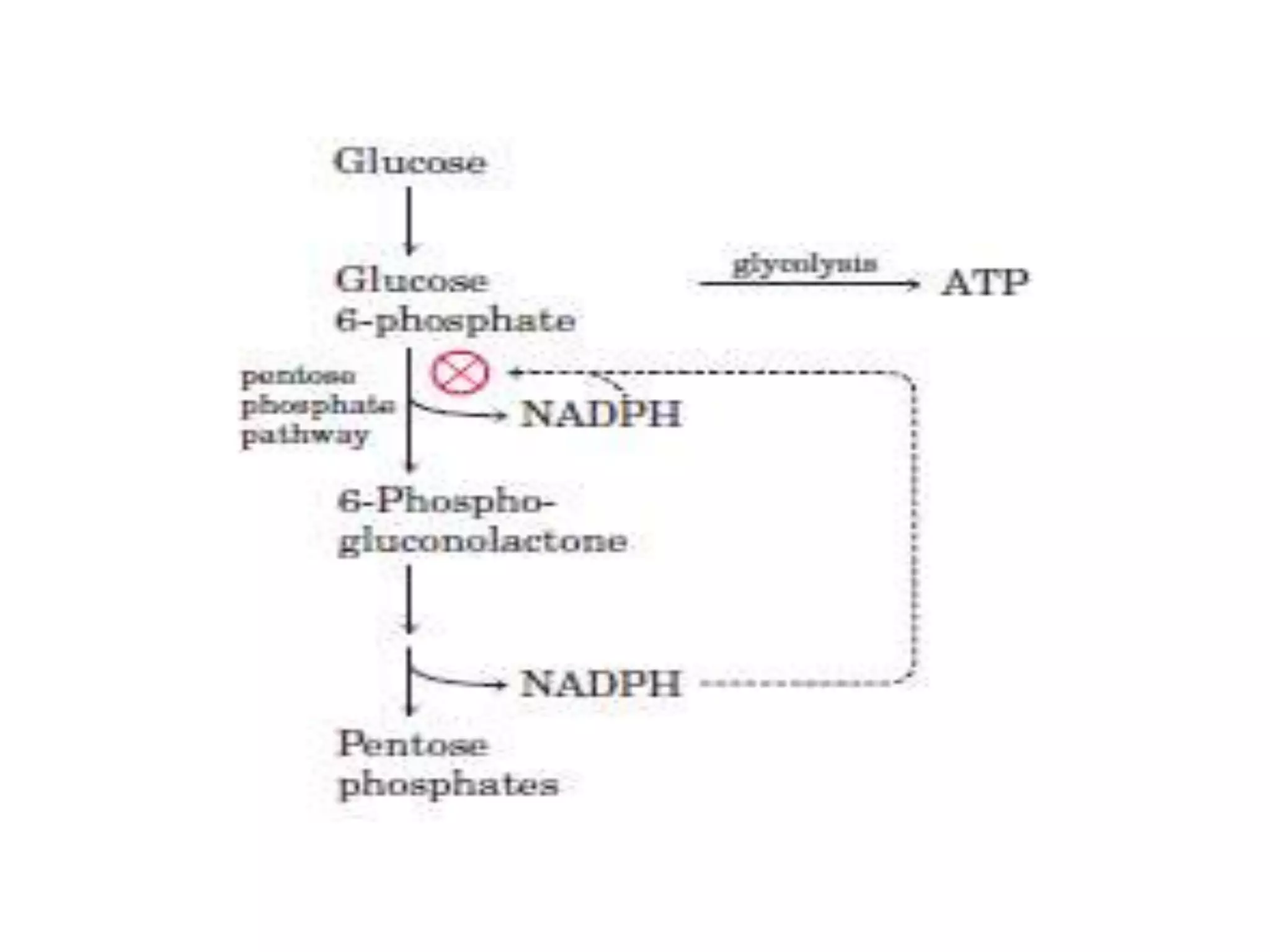
• Whether glucose 6-phosphate enters glycolysis or the pentose
phosphate pathway depends on the current needs of the cell
and on the concentration of NADP+ in the cytosol.
• Without this electron acceptor, the first reaction of the
pentose phosphate pathway (catalyzed by G6PD) cannot
proceed.
• When a cell is rapidly converting NADPH to NADP+ in
biosynthetic reductions,the level of NADP+ rises,
allosterically stimulating G6PD and thereby increasing the flux
of glucose 6-phosphate through the pentose phosphate
pathway
Cont’d
• When the demand for NADPH slows, the level
of NADP+ drops, the pentose phosphate
pathway slows, and glucose 6-phosphate is
instead used to fuel glycolysis.

PPT4 Hexose monophoshate pathway.ppt

  • 1.
    HMP • Rapidly dividingcells, such as those of bone marrow, skin, and intestinal mucosa, use the pentoses to make RNA, DNA, and such coenzymes as ATP,NADH, FADH2, and coenzyme A. • The sequence of reactions of the pathway may be divided into two phases: an oxidative nonreversible phase and a non oxidative reversible phase.
  • 2.
    CONT’D • In thefirst phase(Oxidative), glucose 6- phosphate undergoes dehydrogenation and decarboxylation to yield a pentose, ribulose 5-phosphate. • In the second phase, ribulose 5-phosphate is converted back to glucose 6-phosphate by a series of reactions involving mainly two enzymes:transketolase and transaldolase
  • 3.
  • 4.
  • 7.
    EXPLANATION • The firstreaction of the pentose phosphate pathway is the oxidation of glucose 6-phosphate by glucose 6-phosphate dehydrogenase (G6PD) to form 6-phosphoglucono--lactone, an intramolecular • The lactone is hydrolyzed to the free acid 6-phosphogluconate by a specific lactonase, then 6-phosphogluconate undergoes oxidation and decarboxylation by 6-phosphogluconate dehydrogenase to form the ketopentose ribulose 5- phosphate. • Phosphopentose isomerase converts ribulose 5-phosphate to its aldose isomer, ribose 5-phosphate.
  • 8.
  • 9.
    The Nonoxidative PhaseRecycles Pentose Phosphates to Glucose 6-Phosphate
  • 11.
    Explanation • In thisnonoxidative phase, ribulose 5-phosphate is first epimerized to xylulose 5-phosphate • Two enzymes unique to the pentose phosphate pathway act in these interconversions of sugars:Transketolase and transaldolase. • Transketolase catalyzes the transfer of a two- carbon fragment from a ketose donor to an aldose acceptor
  • 12.
    Cont’d • Transketolase transfersC-1 and C-2 of xylulose 5-phosphate to ribose 5-phosphate,forming the seven-carbon product sedoheptulose 7-phosphate • The remaining three-carbon fragment from xylulose is glyceraldehyde 3-phosphate. • Next, transaldolase catalyzes a reaction similar to the aldolase reaction of glycolysis: a three-carbon fragment is removed from sedoheptulose 7-phosphate and condensed with glyceraldehyde 3-phosphate, forming fructose 6- phosphate and the tetrose erythrose 4-phosphate
  • 13.
    Cont’d • Now transketolaseacts again, forming fructose 6-phosphate and glyceraldehyde 3- phosphate from erythrose 4-phosphate and xylulose 5-phosphate • Two molecules of glyceraldehyde 3-phosphate formed by two iterations of these reactions can be converted to a molecule of fructose 1,6-bisphosphate as in gluconeogenesis
  • 14.
    Glucose 6-Phosphate IsPartitioned between Glycolysis and the Pentose Phosphate Pathway • Whether glucose 6-phosphate enters glycolysis or the pentose phosphate pathway depends on the current needs of the cell and on the concentration of NADP+ in the cytosol. • Without this electron acceptor, the first reaction of the pentose phosphate pathway (catalyzed by G6PD) cannot proceed. • When a cell is rapidly converting NADPH to NADP+ in biosynthetic reductions,the level of NADP+ rises, allosterically stimulating G6PD and thereby increasing the flux of glucose 6-phosphate through the pentose phosphate pathway
  • 16.
    Cont’d • When thedemand for NADPH slows, the level of NADP+ drops, the pentose phosphate pathway slows, and glucose 6-phosphate is instead used to fuel glycolysis.