Fermentation
 Fermentation is a metabolic process that
produces chemical changes in
organic substrates through the action
of enzymes. In biochemistry, it is narrowly
defined as the extraction of energy
from carbohydrates in the absence of oxygen.
 In the context of food production, it may more
broadly refer to any process in which the
activity of microorganisms brings about a
desirable change to a foodstuff or beverage.
 Fermentation is used for preservation in a process
that produces lactic acid found in such
sour foods as pickled cucumbers, kombucha, kimchi,
and yogurt, as well as for producing alcoholic
beverages such as wine and beer. Fermentation also
occurs within the gastrointestinal tracts of all animals,
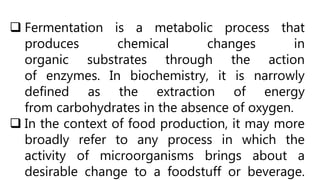
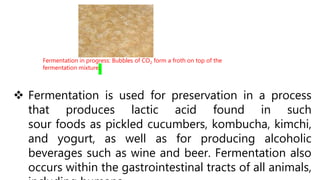
Fermentation in progress: Bubbles of CO2 form a froth on top of the
fermentation mixture.
Biological role
Along with photosynthesis and aerobic respiration,
fermentation is a way of extracting energy from
molecules, but it is the only one common to all
bacteria and eukaryotes. It is therefore considered
the oldest metabolic pathway, suitable for an
environment that did not yet have oxygen Yeast, a
form of fungus, occurs in almost any environment
capable of supporting microbes, from the skins of
fruits to the guts of insects and mammals and the
Biochemical overview
 Fermentation reacts NADH with
an endogenous, organic electron acceptor.
Usually this is pyruvate formed from sugar
through glycolysis.
 The reaction produces NAD+ and an organic
product, typical examples being ethanol, lactic
acid, and hydrogen gas (H2), and often
also carbon dioxide.
 Fermentation normally occurs in an anaerobic
environment. In the presence of O2, NADH, and
pyruvate are used to generate ATP in respiration.
This is called oxidative phosphorylation, and it
generates much more ATP than glycolysis alone
since it releases the chemical energy of O2.
 Although yeast carries out the fermentation in the
production of ethanol in beers, wines, and other
alcoholic drinks, this is not the only possible
agent: bacteria carry out the fermentation in the
production of xanthan gum.
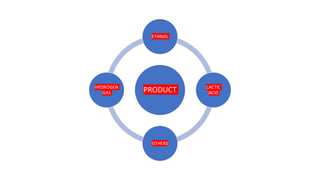
PRODUCT
ETHNOL
LACTIC
ACID
OTHERS
HYDROGEN
GAS
Ethanol
 In ethanol fermentation, one glucose molecule is
converted into two ethanol molecules and two carbon
dioxide molecules .
 It is used to make bread dough rise: the carbon dioxide
forms bubbles, expanding the dough into a foam.
 The ethanol is the intoxicating agent in alcoholic
beverages such as wine, beer and liquor.
 Fermentation of feedstocks, including sugarcane, corn,
and sugar beets, produces ethanol that is added
to gasoline.
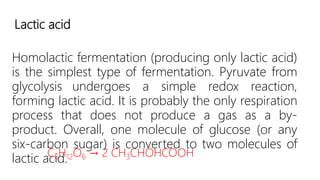
Lactic acid
Homolactic fermentation (producing only lactic acid)
is the simplest type of fermentation. Pyruvate from
glycolysis undergoes a simple redox reaction,
forming lactic acid. It is probably the only respiration
process that does not produce a gas as a by-
product. Overall, one molecule of glucose (or any
six-carbon sugar) is converted to two molecules of
lactic acid.C6H12O6 → 2 CH3CHOHCOOH
HYDROGEN GAS
Hydrogen gas is produced in many types of
fermentation as a way to regenerate NAD+ from
NADH. Electrons are transferred to ferredoxin,
which in turn is oxidized by hydrogenase,
producing H2.Hydrogen gas is
a substrate for methanogens and sulfate reducers,
which keep the concentration of hydrogen low and
favor the production of such an energy-rich
compound, but hydrogen gas at a fairly high
Other
Other types of fermentation include mixed acid
fermentation, butanediol fermentation, butyrate
fermentation, caproate fermentation, acetone butanol
ethanol fermentation, and glyoxylate fermentation.

Fermentation

  • 1.
  • 2.
     Fermentation isa metabolic process that produces chemical changes in organic substrates through the action of enzymes. In biochemistry, it is narrowly defined as the extraction of energy from carbohydrates in the absence of oxygen.  In the context of food production, it may more broadly refer to any process in which the activity of microorganisms brings about a desirable change to a foodstuff or beverage.
  • 3.
     Fermentation isused for preservation in a process that produces lactic acid found in such sour foods as pickled cucumbers, kombucha, kimchi, and yogurt, as well as for producing alcoholic beverages such as wine and beer. Fermentation also occurs within the gastrointestinal tracts of all animals, Fermentation in progress: Bubbles of CO2 form a froth on top of the fermentation mixture.
  • 4.
    Biological role Along withphotosynthesis and aerobic respiration, fermentation is a way of extracting energy from molecules, but it is the only one common to all bacteria and eukaryotes. It is therefore considered the oldest metabolic pathway, suitable for an environment that did not yet have oxygen Yeast, a form of fungus, occurs in almost any environment capable of supporting microbes, from the skins of fruits to the guts of insects and mammals and the
  • 5.
    Biochemical overview  Fermentationreacts NADH with an endogenous, organic electron acceptor. Usually this is pyruvate formed from sugar through glycolysis.  The reaction produces NAD+ and an organic product, typical examples being ethanol, lactic acid, and hydrogen gas (H2), and often also carbon dioxide.
  • 6.
     Fermentation normallyoccurs in an anaerobic environment. In the presence of O2, NADH, and pyruvate are used to generate ATP in respiration. This is called oxidative phosphorylation, and it generates much more ATP than glycolysis alone since it releases the chemical energy of O2.  Although yeast carries out the fermentation in the production of ethanol in beers, wines, and other alcoholic drinks, this is not the only possible agent: bacteria carry out the fermentation in the production of xanthan gum.
  • 7.
  • 8.
    Ethanol  In ethanolfermentation, one glucose molecule is converted into two ethanol molecules and two carbon dioxide molecules .  It is used to make bread dough rise: the carbon dioxide forms bubbles, expanding the dough into a foam.  The ethanol is the intoxicating agent in alcoholic beverages such as wine, beer and liquor.  Fermentation of feedstocks, including sugarcane, corn, and sugar beets, produces ethanol that is added to gasoline.
  • 9.
    Lactic acid Homolactic fermentation(producing only lactic acid) is the simplest type of fermentation. Pyruvate from glycolysis undergoes a simple redox reaction, forming lactic acid. It is probably the only respiration process that does not produce a gas as a by- product. Overall, one molecule of glucose (or any six-carbon sugar) is converted to two molecules of lactic acid.C6H12O6 → 2 CH3CHOHCOOH
  • 10.
    HYDROGEN GAS Hydrogen gasis produced in many types of fermentation as a way to regenerate NAD+ from NADH. Electrons are transferred to ferredoxin, which in turn is oxidized by hydrogenase, producing H2.Hydrogen gas is a substrate for methanogens and sulfate reducers, which keep the concentration of hydrogen low and favor the production of such an energy-rich compound, but hydrogen gas at a fairly high
  • 11.
    Other Other types offermentation include mixed acid fermentation, butanediol fermentation, butyrate fermentation, caproate fermentation, acetone butanol ethanol fermentation, and glyoxylate fermentation.