HISTORY OF
COMPUTER
ELECTROMECHANICAL AGE
1840-1940
ELECTROMECHANICAL AGE
-The discovery of ways to harness
electricity was the key advance made
during this period. Knowledge and
information could now be converted into
electrical impulses.
The beginning of telecommunication
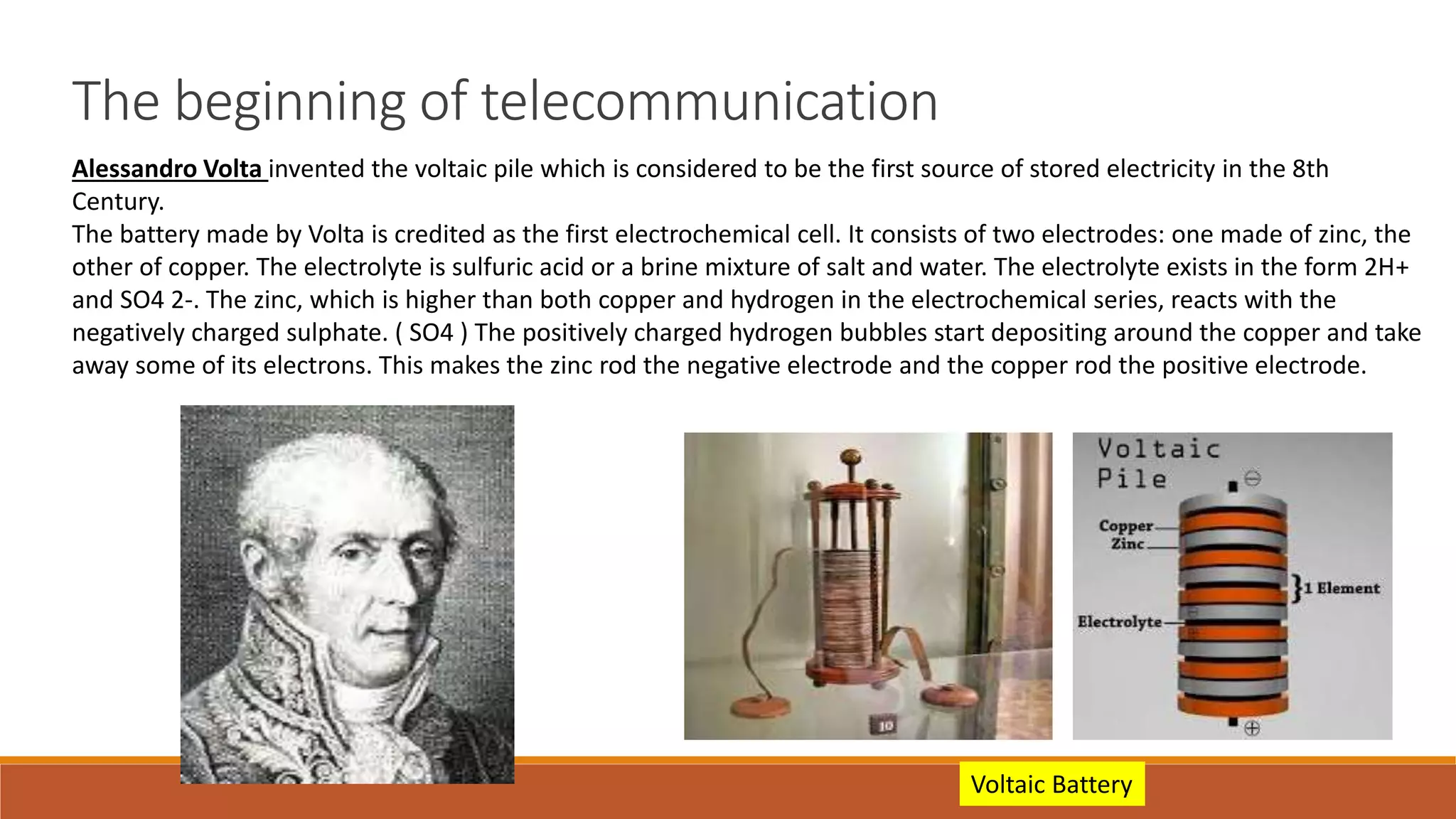
Alessandro Volta invented the voltaic pile which is considered to be the first source of stored electricity in the 8th
Century.
The battery made by Volta is credited as the first electrochemical cell. It consists of two electrodes: one made of zinc, the
other of copper. The electrolyte is sulfuric acid or a brine mixture of salt and water. The electrolyte exists in the form 2H+
and SO4 2-. The zinc, which is higher than both copper and hydrogen in the electrochemical series, reacts with the
negatively charged sulphate. ( SO4 ) The positively charged hydrogen bubbles start depositing around the copper and take
away some of its electrons. This makes the zinc rod the negative electrode and the copper rod the positive electrode.
Voltaic Battery
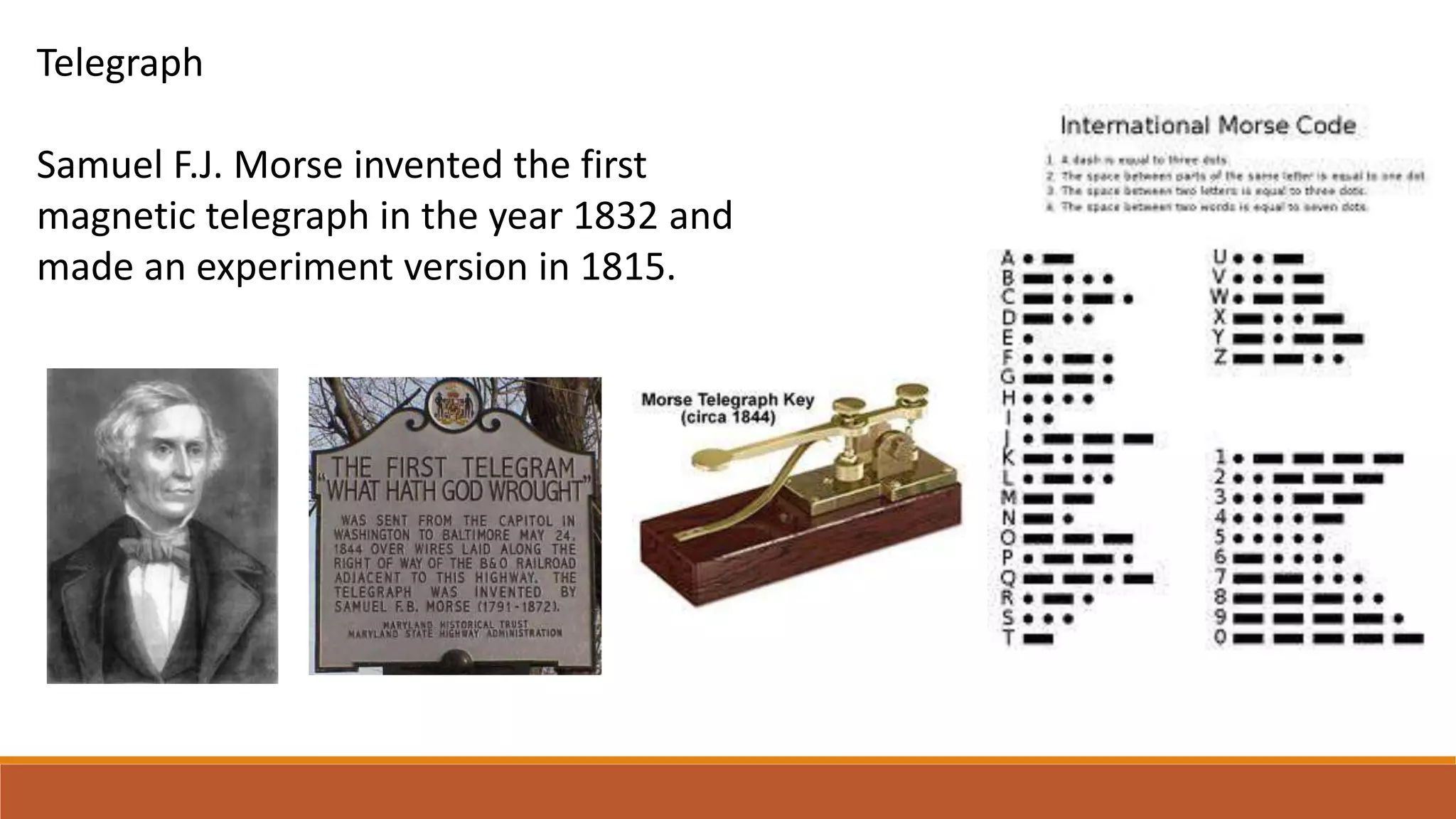
Telegraph
Samuel F.J. Morse invented the first
magnetic telegraph in the year 1832 and
made an experiment version in 1815.
Telephone
The first successful bi-directional
transmission of clear speech by Bell and
Watson was made on 10 March 1876
when Bell spoke into his device, “Mr.
Watson, come here, I want to see you.”
and Watson answered. Bell used Gray's
liquid transmitter design[9] in his
famous 10 March 1876 experiment, but
avoided describing the liquid transmitter
in his public demonstrations. The liquid
transmitter had the problem that waves
formed on the surface of the liquid,
resulting in interference.
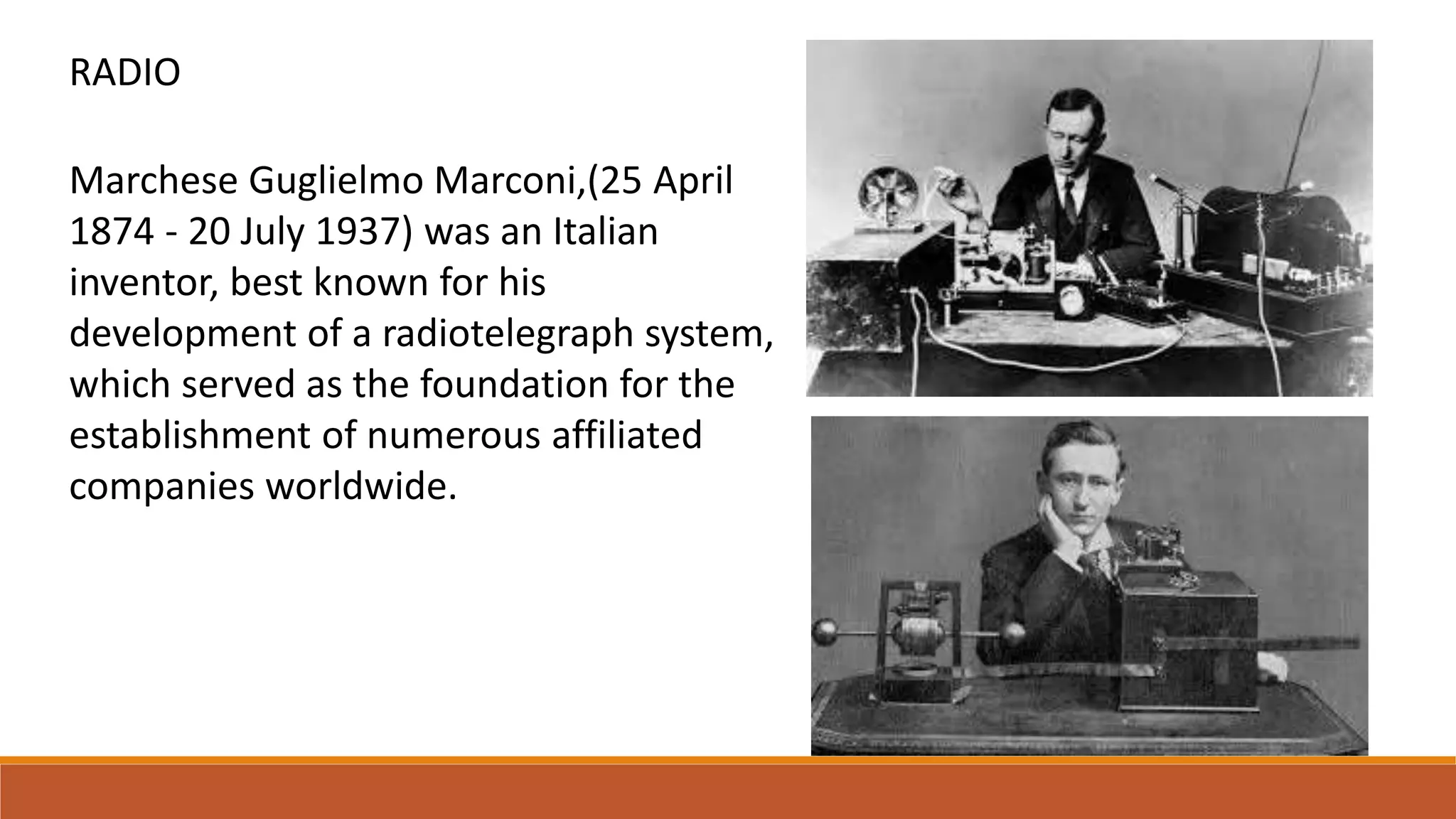
Marchese Guglielmo Marconi,(25 April
1874 - 20 July 1937) was an Italian
inventor, best known for his
development of a radiotelegraph system,
which served as the foundation for the
establishment of numerous affiliated
companies worldwide.
RADIO
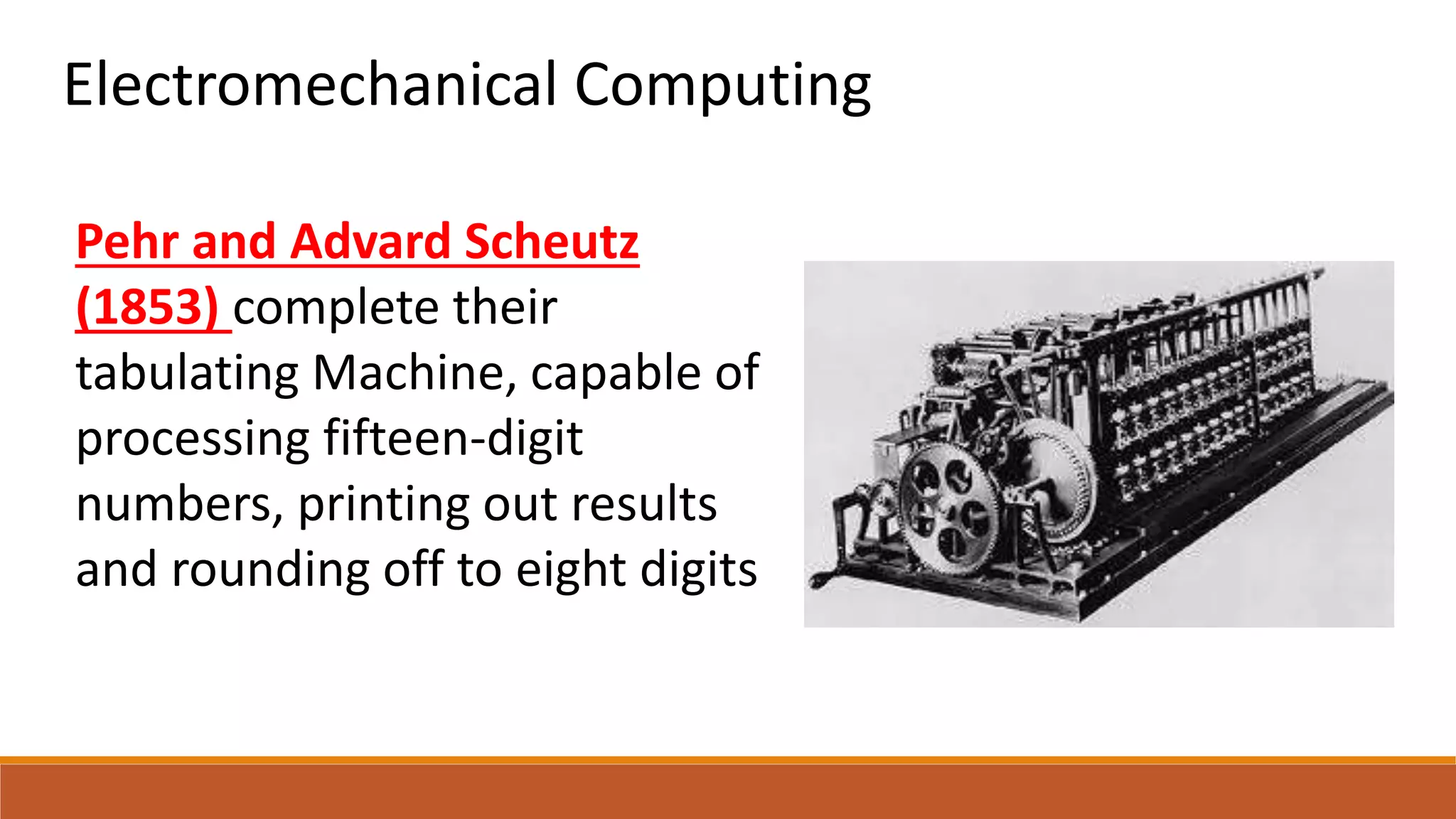
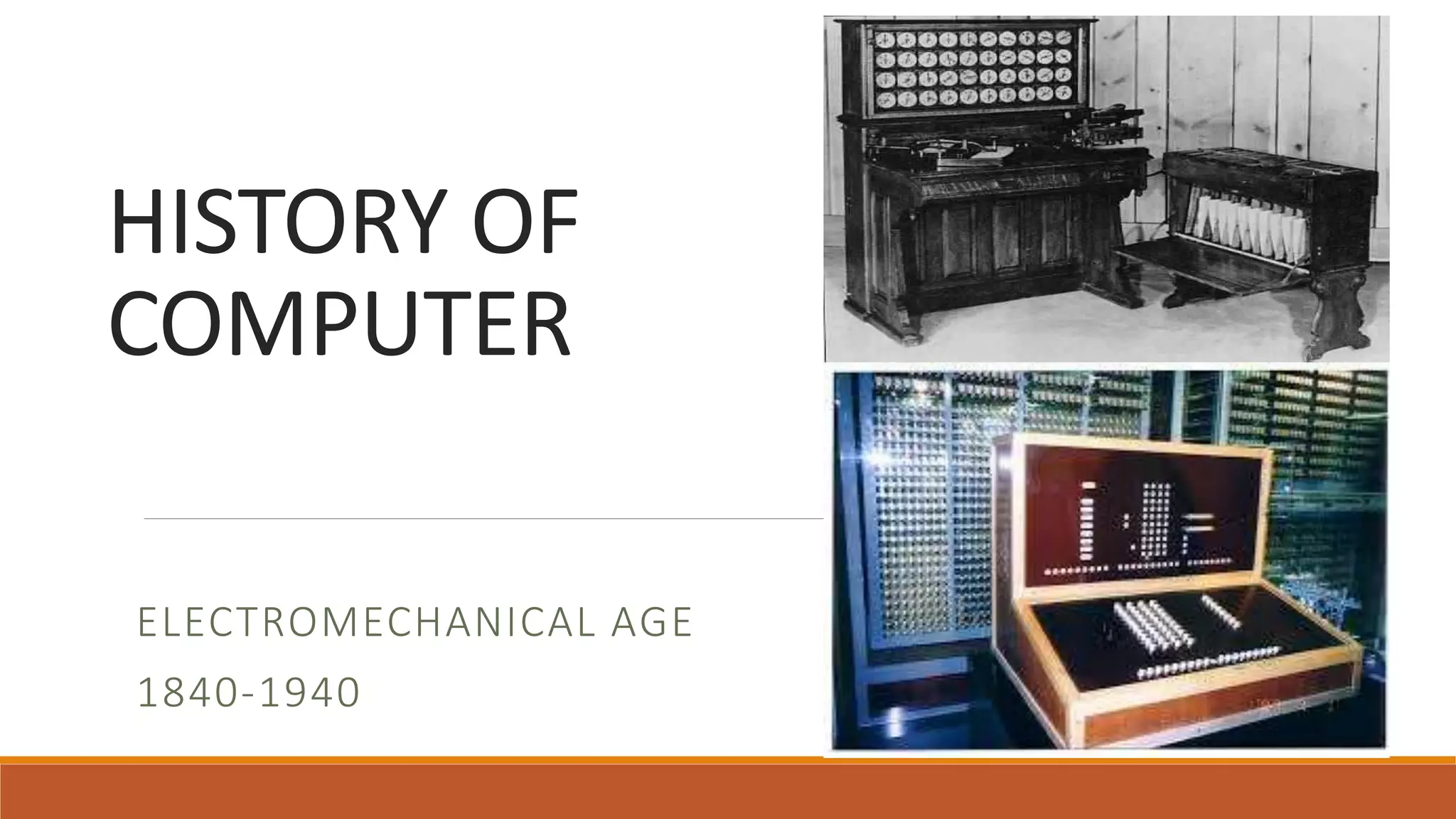
Electromechanical Computing
Pehr and Advard Scheutz
(1853) complete their
tabulating Machine, capable of
processing fifteen-digit
numbers, printing out results
and rounding off to eight digits
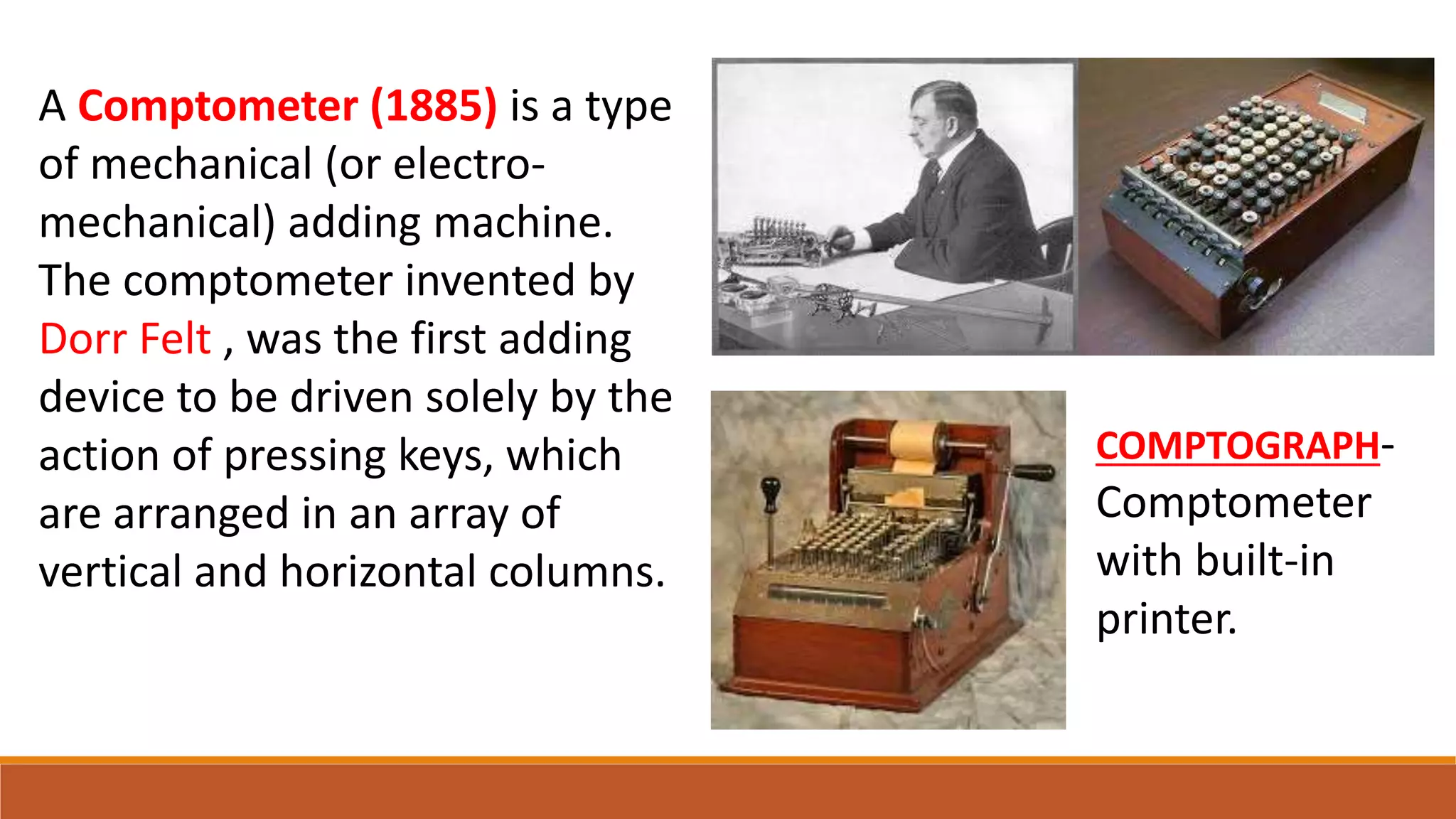
A Comptometer (1885) is a type
of mechanical (or electro-
mechanical) adding machine.
The comptometer invented by
Dorr Felt , was the first adding
device to be driven solely by the
action of pressing keys, which
are arranged in an array of
vertical and horizontal columns.
COMPTOGRAPH-
Comptometer
with built-in
printer.
Punched Cards
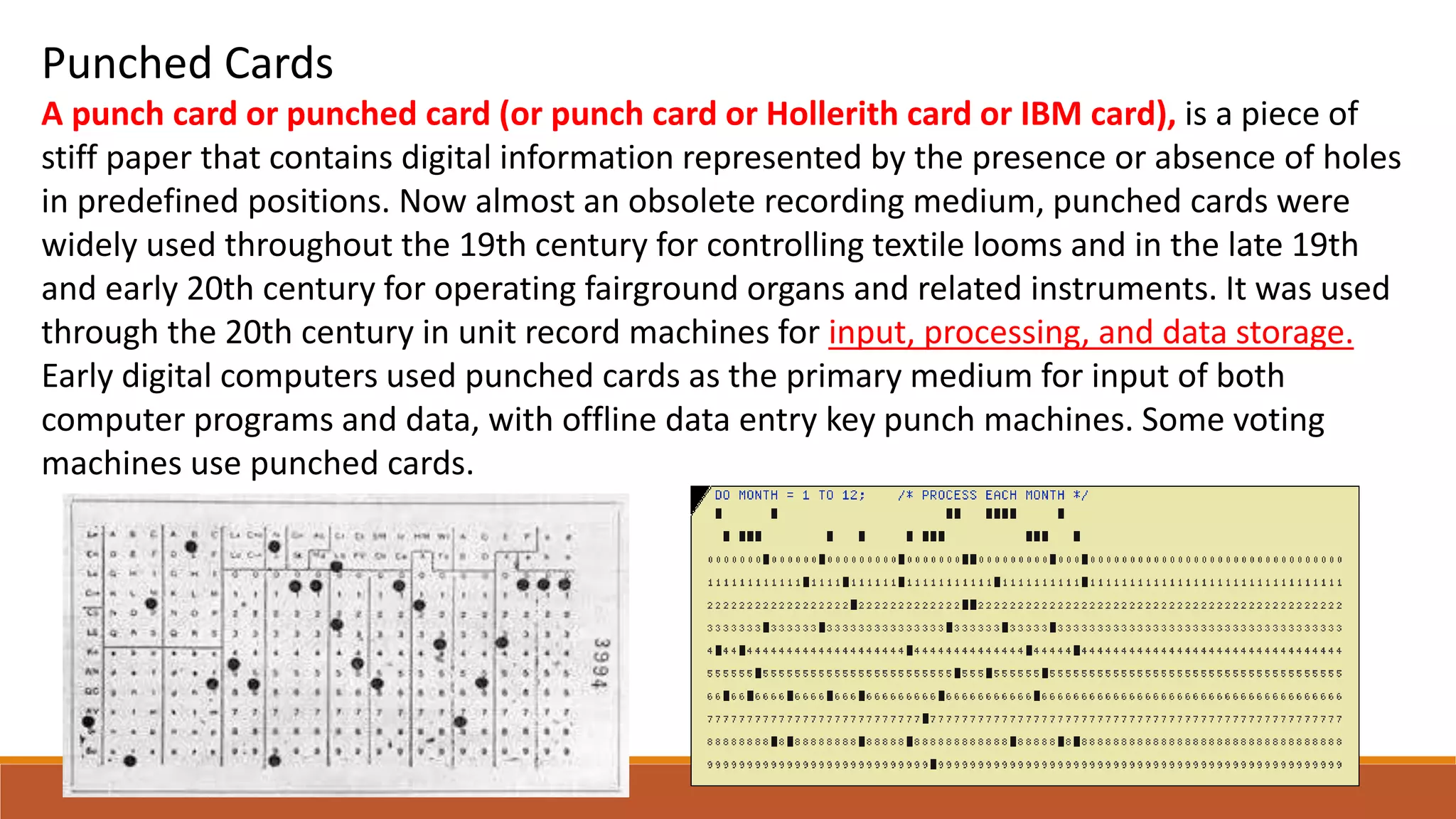
A punch card or punched card (or punch card or Hollerith card or IBM card), is a piece of
stiff paper that contains digital information represented by the presence or absence of holes
in predefined positions. Now almost an obsolete recording medium, punched cards were
widely used throughout the 19th century for controlling textile looms and in the late 19th
and early 20th century for operating fairground organs and related instruments. It was used
through the 20th century in unit record machines for input, processing, and data storage.
Early digital computers used punched cards as the primary medium for input of both
computer programs and data, with offline data entry key punch machines. Some voting
machines use punched cards.
The company which became IBM was
founded in 1896 as the Tabulating
Machine Company[6] by Herman
Hollerith, in Broome County, New York
(Endicott, New York, Where it still
maintains very limited operations). It
was incorporated as Computing
Tabulating Recording Corporation (CTR)
on June 16, 1911, and was listed on the
New York Stock Exchange in 1916. IBM
adopted its current name in 1924, when
it became a Fortune 500 company.
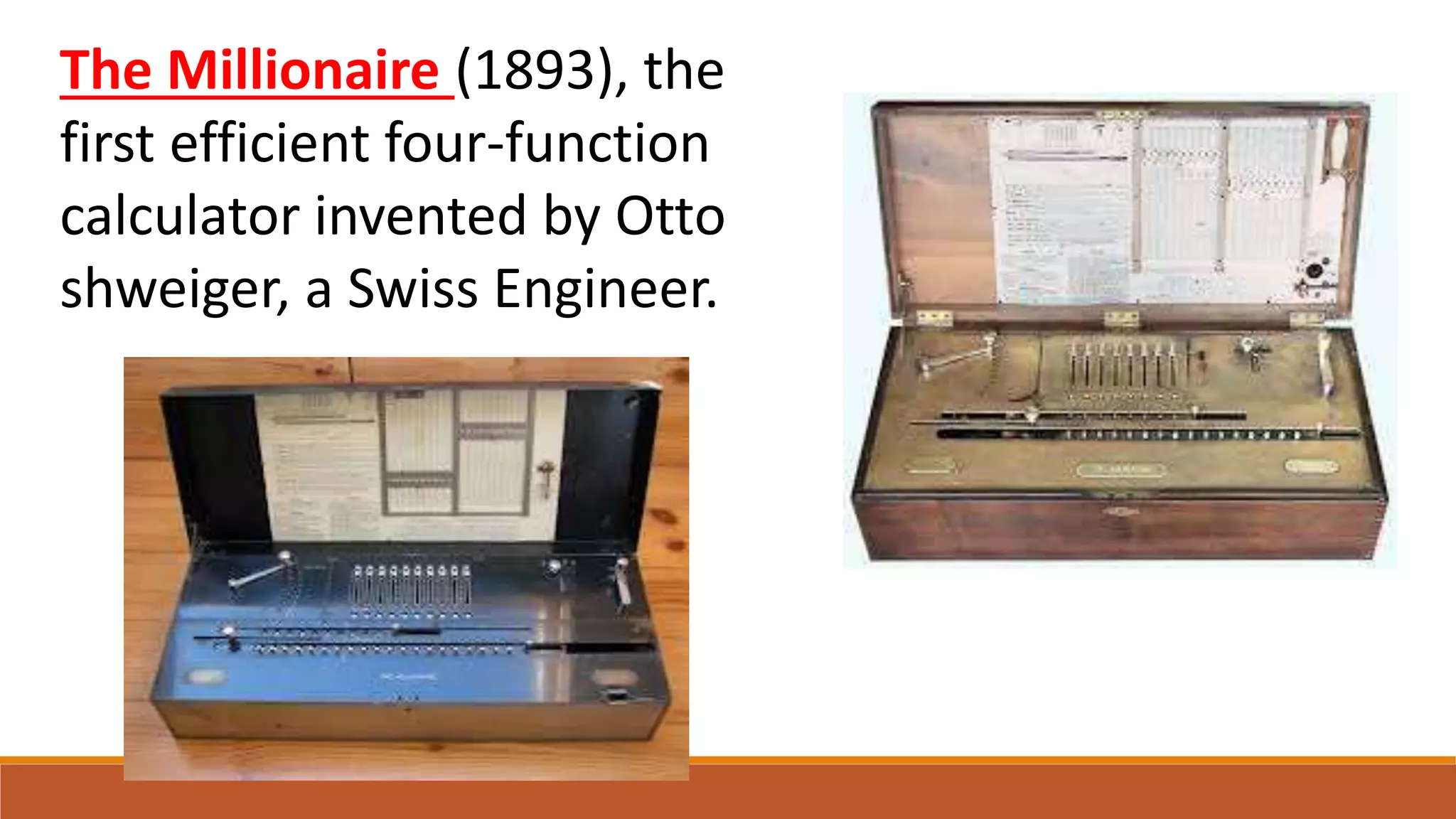
The Millionaire (1893), the
first efficient four-function
calculator invented by Otto
shweiger, a Swiss Engineer.

History of computer electromechanical age

  • 1.
  • 2.
    ELECTROMECHANICAL AGE -The discoveryof ways to harness electricity was the key advance made during this period. Knowledge and information could now be converted into electrical impulses.
  • 3.
    The beginning oftelecommunication Alessandro Volta invented the voltaic pile which is considered to be the first source of stored electricity in the 8th Century. The battery made by Volta is credited as the first electrochemical cell. It consists of two electrodes: one made of zinc, the other of copper. The electrolyte is sulfuric acid or a brine mixture of salt and water. The electrolyte exists in the form 2H+ and SO4 2-. The zinc, which is higher than both copper and hydrogen in the electrochemical series, reacts with the negatively charged sulphate. ( SO4 ) The positively charged hydrogen bubbles start depositing around the copper and take away some of its electrons. This makes the zinc rod the negative electrode and the copper rod the positive electrode. Voltaic Battery
  • 4.
    Telegraph Samuel F.J. Morseinvented the first magnetic telegraph in the year 1832 and made an experiment version in 1815.
  • 5.
    Telephone The first successfulbi-directional transmission of clear speech by Bell and Watson was made on 10 March 1876 when Bell spoke into his device, “Mr. Watson, come here, I want to see you.” and Watson answered. Bell used Gray's liquid transmitter design[9] in his famous 10 March 1876 experiment, but avoided describing the liquid transmitter in his public demonstrations. The liquid transmitter had the problem that waves formed on the surface of the liquid, resulting in interference.
  • 6.
    Marchese Guglielmo Marconi,(25April 1874 - 20 July 1937) was an Italian inventor, best known for his development of a radiotelegraph system, which served as the foundation for the establishment of numerous affiliated companies worldwide. RADIO
  • 7.
    Electromechanical Computing Pehr andAdvard Scheutz (1853) complete their tabulating Machine, capable of processing fifteen-digit numbers, printing out results and rounding off to eight digits
  • 8.
    A Comptometer (1885)is a type of mechanical (or electro- mechanical) adding machine. The comptometer invented by Dorr Felt , was the first adding device to be driven solely by the action of pressing keys, which are arranged in an array of vertical and horizontal columns. COMPTOGRAPH- Comptometer with built-in printer.
  • 9.
    Punched Cards A punchcard or punched card (or punch card or Hollerith card or IBM card), is a piece of stiff paper that contains digital information represented by the presence or absence of holes in predefined positions. Now almost an obsolete recording medium, punched cards were widely used throughout the 19th century for controlling textile looms and in the late 19th and early 20th century for operating fairground organs and related instruments. It was used through the 20th century in unit record machines for input, processing, and data storage. Early digital computers used punched cards as the primary medium for input of both computer programs and data, with offline data entry key punch machines. Some voting machines use punched cards.
  • 10.
    The company whichbecame IBM was founded in 1896 as the Tabulating Machine Company[6] by Herman Hollerith, in Broome County, New York (Endicott, New York, Where it still maintains very limited operations). It was incorporated as Computing Tabulating Recording Corporation (CTR) on June 16, 1911, and was listed on the New York Stock Exchange in 1916. IBM adopted its current name in 1924, when it became a Fortune 500 company.
  • 11.
    The Millionaire (1893),the first efficient four-function calculator invented by Otto shweiger, a Swiss Engineer.