HETEROPOLYSACCHARIDES
By
KAUSHAL KUMAR SAHU
Assistant Professor (Ad Hoc)
Department of Biotechnology
Govt. Digvijay Autonomous P. G. College
Raj-Nandgaon ( C. G. )
Synopsis
Introduction
Definition
Classification of polysaccharides
1- Homopolysaccharides
2-Heteropolysaccharides
What is heteropolysaccarides?
Type of heteropolysaccharides
Function of heteropolysaccharides
Conclusion
References
Introduction
Polysaccharides are carbohydrates formed by
more than 10 monosaccharides.
Heteropolysaccharide is a type of polysaccharide.
Heteropolysaccharides contain two or more different
monosaccharide units.
Definition
 Polysaccharides are complex of carbohydrates.
 Polysaccharides consisting of molecules of more
than one sugar or sugar derivative are called
heteropolysaccharide(heteroglycans).
Classification of polysaccharides.
1. Homopolysaccharides –
Homo = same
2. Heteropolysaccharides –
Hetero = different
Homopolysaccharides
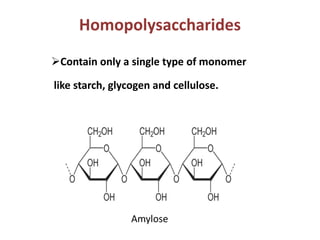
Contain only a single type of monomer
like starch, glycogen and cellulose.
Amylose
Heteropolysaccharides.
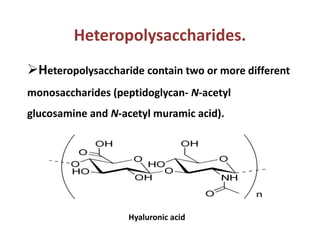
Heteropolysaccharide contain two or more different
monosaccharides (peptidoglycan- N-acetyl
glucosamine and N-acetyl muramic acid).
Hyaluronic acid
What is Heteropolysaccharide?
Heteropolysaccharides is a types of polysaccharide
In heteropolysaccharide- molecules are formed by
different kinds of monosaccharides.
Exa- D-glucuronic acid and N-acetyl glucosamine.
Type of Heterpolysaccharide
PEPTIDOGLYCAN
AGAR
GLYCOSAMINOGLYCANS
• Hyaluronan
• Chondroitin4-sulfate
• Keratan
• Heparin
• Dermatan sulfate
PEPTIDOGLYCAN
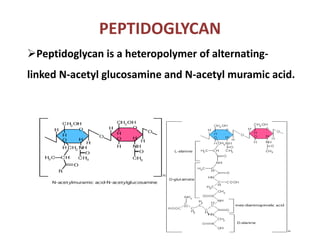
Peptidoglycan is a heteropolymer of alternating-
linked N-acetyl glucosamine and N-acetyl muramic acid.
Function of Peptidoglycan
 A strong sheath that envelops the entire cell and
prevents cellular swelling.
The bacterial cell wall differs from that of all other
organisms by the presence of peptidoglycan.
AGAR
Agar made up of D- galactose and an l-
galactose derivative ether-linked between C-3
and C-6.
Agarose
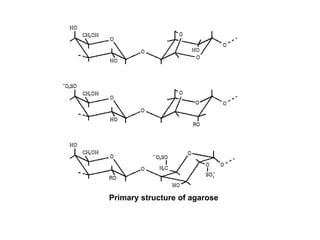
Agarose is the agar component with the fewest
charged groups (sulfates,pyruvates).
The agarose forms a double helix.
Two molecules in parallel orientation, twist together with
a helix repeat of three residues.
water molecules are trapped in the central cavity. These
structures in turn associate with each other to form a gel.
Primary structure of agarose
Function of Agarose
 Useful in the biochemistry laboratory.
Agar is also used to form a surface for the growth of
bacterial colonies.
Agarose gels are used as inert(inactive) supports for the
electrophoretic separation of nucleic acids, an important
part of the DNA sequencing process.
GLYCOSAMINOGLYCANS
Dissect the name- glycos - amino- glycans .
This large molecule starts with a sugar, glucose.
This glucose has an amino group (NH2) attached to it.
So that's where the aminoglycan part of the name
comes from.
this amino containing glucose is another glucose-like
sugar, So there is the final name of this molecule, ‘glycos
amino glycan'.
1-Hyaluronan
Hyaluronic acid contains alternating residues of
D- glucuronic acid and N-acetyl glucosamine.
With up to 50,000 repeats of the basic disaccharide
units.
Function of (Hyaluronate)
It is a lubricant in the synovial fluid of joints.
Give vitreous humor of the vertebrate eye its jelly like
consistency.
 contributes to tensile strength and elasticity of cartilages
and tendons.
2-Chondroitin4-sulfate
It contains D- glucuronate and N-Acetylgalactosamine-4- or
6-sulfate.Chondroitin sulfate (The Greek chondros, means
"cartilage”).
20-60 disaccharides in per chain.
Function of Chondroitin Sulfates
 Contributes to tensile strength and elasticity of
cartilages, tendons, ligaments and walls of aorta.
3-Keratan
Keratan contains D-galactose and N acetyl D-
glucosamine 6 sulfate,25 disaccharides in per chain.
Keratan sulfates (Greek keras, “horn”) have no uronic
acid and their sulfate content is changeable. They are
present in cornea.
Function of Keratan sulfate
 Present in cornea, cartilage bone and a variety of
other structures as nails and hair.
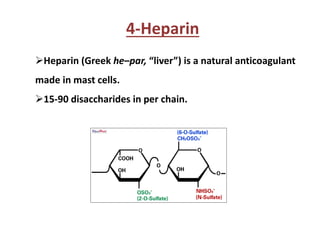
4-Heparin
Heparin (Greek he–par, “liver”) is a natural anticoagulant
made in mast cells.
15-90 disaccharides in per chain.
Function of Heparin
 It is a potent natural anticoagulant produced in the Mast
Cells that causes antithrombin bind to thrombin and
produce inhibition of blood coagulation.
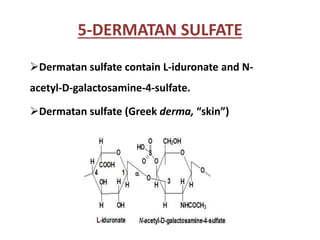
5-DERMATAN SULFATE
Dermatan sulfate contain L-iduronate and N-
acetyl-D-galactosamine-4-sulfate.
Dermatan sulfate (Greek derma, “skin”)
Function of Dermatan sulfate
Found mainly in skin, but also is in vessels, heart,
lungs. It may be related to coagulation and vascular
diseases and other conditions
Heteropolysaccharides in Chair
Conformations
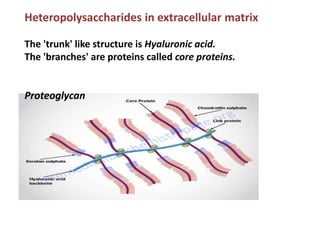
Heteropolysaccharides in extracellular matrix
The 'trunk' like structure is Hyaluronic acid.
The 'branches' are proteins called core proteins.
Proteoglycan
Proteoglycans in exatracellular matrix
 Heter0polysaccharide made of different monosaccharides.
 They provide extracellular support for organisms of all
kingdoms.
 In animal tissues provides protection, shape and support to
cells, tissues and organs.
 structural, cellular cement, biological sieve.
 Bacterial and algal cell wall are strenthened by heteropoly
saccharides –peptidoglycan in bacteria, agar in red algae.
Conclusion
• PRINCIPLES OF BIOCHEMISTRY(Fifth
edition)-David L. Nelson & Michael M. Cox .
• WWW.BritannicaS.com(at 8 pm on 3rd sep)
• En.wikipedia.org(at 9pm on 1st sep)
References

Heteropolysaccharide

  • 1.
    HETEROPOLYSACCHARIDES By KAUSHAL KUMAR SAHU AssistantProfessor (Ad Hoc) Department of Biotechnology Govt. Digvijay Autonomous P. G. College Raj-Nandgaon ( C. G. )
  • 2.
    Synopsis Introduction Definition Classification of polysaccharides 1-Homopolysaccharides 2-Heteropolysaccharides What is heteropolysaccarides? Type of heteropolysaccharides Function of heteropolysaccharides Conclusion References
  • 3.
    Introduction Polysaccharides are carbohydratesformed by more than 10 monosaccharides. Heteropolysaccharide is a type of polysaccharide. Heteropolysaccharides contain two or more different monosaccharide units.
  • 4.
    Definition  Polysaccharides arecomplex of carbohydrates.  Polysaccharides consisting of molecules of more than one sugar or sugar derivative are called heteropolysaccharide(heteroglycans).
  • 5.
    Classification of polysaccharides. 1.Homopolysaccharides – Homo = same 2. Heteropolysaccharides – Hetero = different
  • 6.
    Homopolysaccharides Contain only asingle type of monomer like starch, glycogen and cellulose. Amylose
  • 7.
    Heteropolysaccharides. Heteropolysaccharide contain twoor more different monosaccharides (peptidoglycan- N-acetyl glucosamine and N-acetyl muramic acid). Hyaluronic acid
  • 9.
    What is Heteropolysaccharide? Heteropolysaccharidesis a types of polysaccharide In heteropolysaccharide- molecules are formed by different kinds of monosaccharides. Exa- D-glucuronic acid and N-acetyl glucosamine.
  • 10.
    Type of Heterpolysaccharide PEPTIDOGLYCAN AGAR GLYCOSAMINOGLYCANS •Hyaluronan • Chondroitin4-sulfate • Keratan • Heparin • Dermatan sulfate
  • 11.
    PEPTIDOGLYCAN Peptidoglycan is aheteropolymer of alternating- linked N-acetyl glucosamine and N-acetyl muramic acid.
  • 12.
    Function of Peptidoglycan A strong sheath that envelops the entire cell and prevents cellular swelling. The bacterial cell wall differs from that of all other organisms by the presence of peptidoglycan.
  • 13.
    AGAR Agar made upof D- galactose and an l- galactose derivative ether-linked between C-3 and C-6.
  • 14.
    Agarose Agarose is theagar component with the fewest charged groups (sulfates,pyruvates). The agarose forms a double helix. Two molecules in parallel orientation, twist together with a helix repeat of three residues. water molecules are trapped in the central cavity. These structures in turn associate with each other to form a gel.
  • 15.
  • 16.
    Function of Agarose Useful in the biochemistry laboratory. Agar is also used to form a surface for the growth of bacterial colonies. Agarose gels are used as inert(inactive) supports for the electrophoretic separation of nucleic acids, an important part of the DNA sequencing process.
  • 17.
    GLYCOSAMINOGLYCANS Dissect the name-glycos - amino- glycans . This large molecule starts with a sugar, glucose. This glucose has an amino group (NH2) attached to it. So that's where the aminoglycan part of the name comes from. this amino containing glucose is another glucose-like sugar, So there is the final name of this molecule, ‘glycos amino glycan'.
  • 18.
    1-Hyaluronan Hyaluronic acid containsalternating residues of D- glucuronic acid and N-acetyl glucosamine. With up to 50,000 repeats of the basic disaccharide units.
  • 19.
    Function of (Hyaluronate) Itis a lubricant in the synovial fluid of joints. Give vitreous humor of the vertebrate eye its jelly like consistency.  contributes to tensile strength and elasticity of cartilages and tendons.
  • 20.
    2-Chondroitin4-sulfate It contains D-glucuronate and N-Acetylgalactosamine-4- or 6-sulfate.Chondroitin sulfate (The Greek chondros, means "cartilage”). 20-60 disaccharides in per chain.
  • 21.
    Function of ChondroitinSulfates  Contributes to tensile strength and elasticity of cartilages, tendons, ligaments and walls of aorta.
  • 22.
    3-Keratan Keratan contains D-galactoseand N acetyl D- glucosamine 6 sulfate,25 disaccharides in per chain. Keratan sulfates (Greek keras, “horn”) have no uronic acid and their sulfate content is changeable. They are present in cornea.
  • 23.
    Function of Keratansulfate  Present in cornea, cartilage bone and a variety of other structures as nails and hair.
  • 24.
    4-Heparin Heparin (Greek he–par,“liver”) is a natural anticoagulant made in mast cells. 15-90 disaccharides in per chain.
  • 25.
    Function of Heparin It is a potent natural anticoagulant produced in the Mast Cells that causes antithrombin bind to thrombin and produce inhibition of blood coagulation.
  • 26.
    5-DERMATAN SULFATE Dermatan sulfatecontain L-iduronate and N- acetyl-D-galactosamine-4-sulfate. Dermatan sulfate (Greek derma, “skin”)
  • 27.
    Function of Dermatansulfate Found mainly in skin, but also is in vessels, heart, lungs. It may be related to coagulation and vascular diseases and other conditions
  • 28.
  • 29.
    Heteropolysaccharides in extracellularmatrix The 'trunk' like structure is Hyaluronic acid. The 'branches' are proteins called core proteins. Proteoglycan
  • 30.
  • 31.
     Heter0polysaccharide madeof different monosaccharides.  They provide extracellular support for organisms of all kingdoms.  In animal tissues provides protection, shape and support to cells, tissues and organs.  structural, cellular cement, biological sieve.  Bacterial and algal cell wall are strenthened by heteropoly saccharides –peptidoglycan in bacteria, agar in red algae. Conclusion
  • 32.
    • PRINCIPLES OFBIOCHEMISTRY(Fifth edition)-David L. Nelson & Michael M. Cox . • WWW.BritannicaS.com(at 8 pm on 3rd sep) • En.wikipedia.org(at 9pm on 1st sep) References