POLYSACCHARIDES
Notes prepared by
Keven Liam William
209701
1st Msc Zoology
St. Albert’s College(Autonomous), Ernakulam1
Introduction
• They are repeating units of monosaccharides or their
derivatives held together by glycosidic bonds.
• They are simply known as glycans.
• They can be straight chain of monosaccharides known as
linear polysaccharides or it can be branched known as
branched polysaccharide.
• They are not sweet in taste
• They do not form crystals.
• They are carbohydrates with high molecular weight.
2
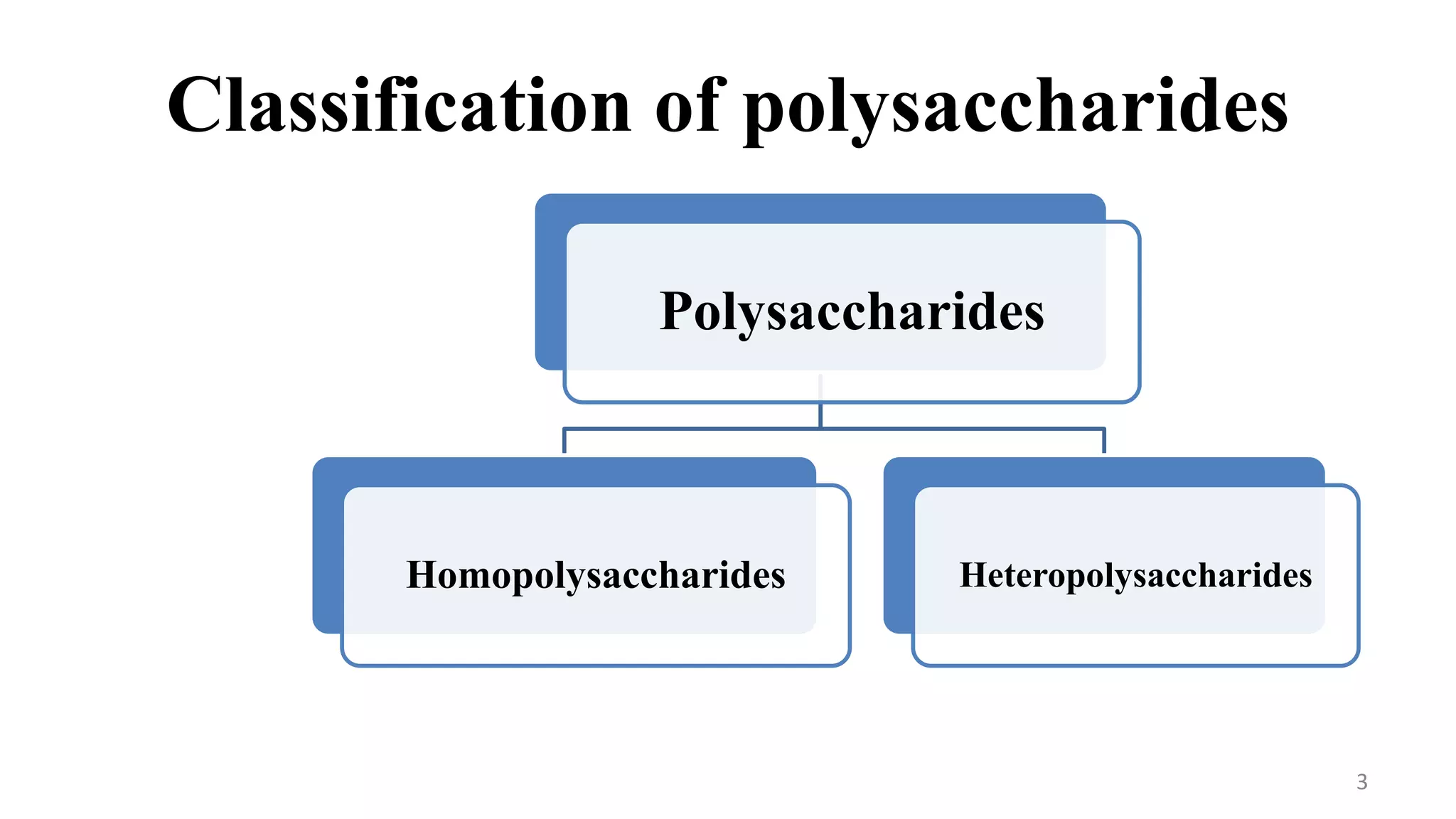
Classification of polysaccharides
Polysaccharides
Homopolysaccharides Heteropolysaccharides
3
4
Homopolysaccharides
• Polysaccharides that contains the same type of monosaccharide units
are known as homopolysaccharides.
• Glucans are polymers of glucose and fructosans are polymers of
fructose.
• Examples :
– Glucosan – Starch, Glycogen, cellulose
– Fructosan – Insulin
– Galactosan - Agar
5
GLUCOSANS/GLUCAN
1. STARCH
• It is a storage polysaccharide and the most common
polysaccharide seen in plants
• It is a homopolymer composed of D – glucose units held
by alpha – glycosidic linkage.
• Composed of 10 – 30% Amylose and 70 – 90%
Amylopectin depending on the source.
• They can be hydrolysed into simpler carbohydrates by
acids, various enzymes or a combination of the two. The
resulting fragments are known as dextrin.
6
a) AMYLOSE
• It is a straight long unbranched chain polymer composed of 250 –
300 D – glucose units held by α (1-4) glycosidic linkage.
• It is less soluble in water
• Gives a dark blue/black colour when iodine solution is added
7
b) AMYLOPECTIN
8
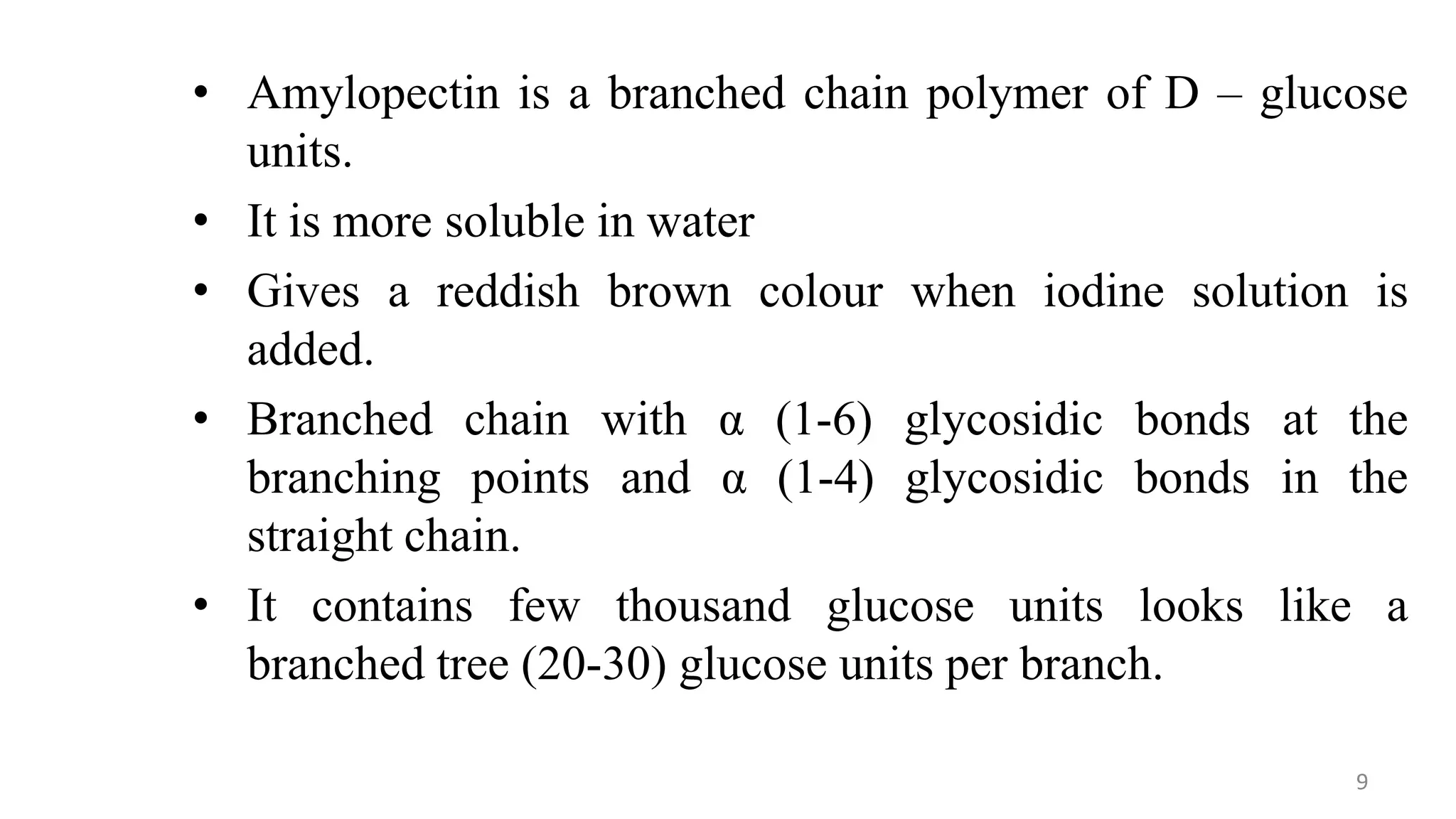
• Amylopectin is a branched chain polymer of D – glucose
units.
• It is more soluble in water
• Gives a reddish brown colour when iodine solution is
added.
• Branched chain with α (1-6) glycosidic bonds at the
branching points and α (1-4) glycosidic bonds in the
straight chain.
• It contains few thousand glucose units looks like a
branched tree (20-30) glucose units per branch.
9
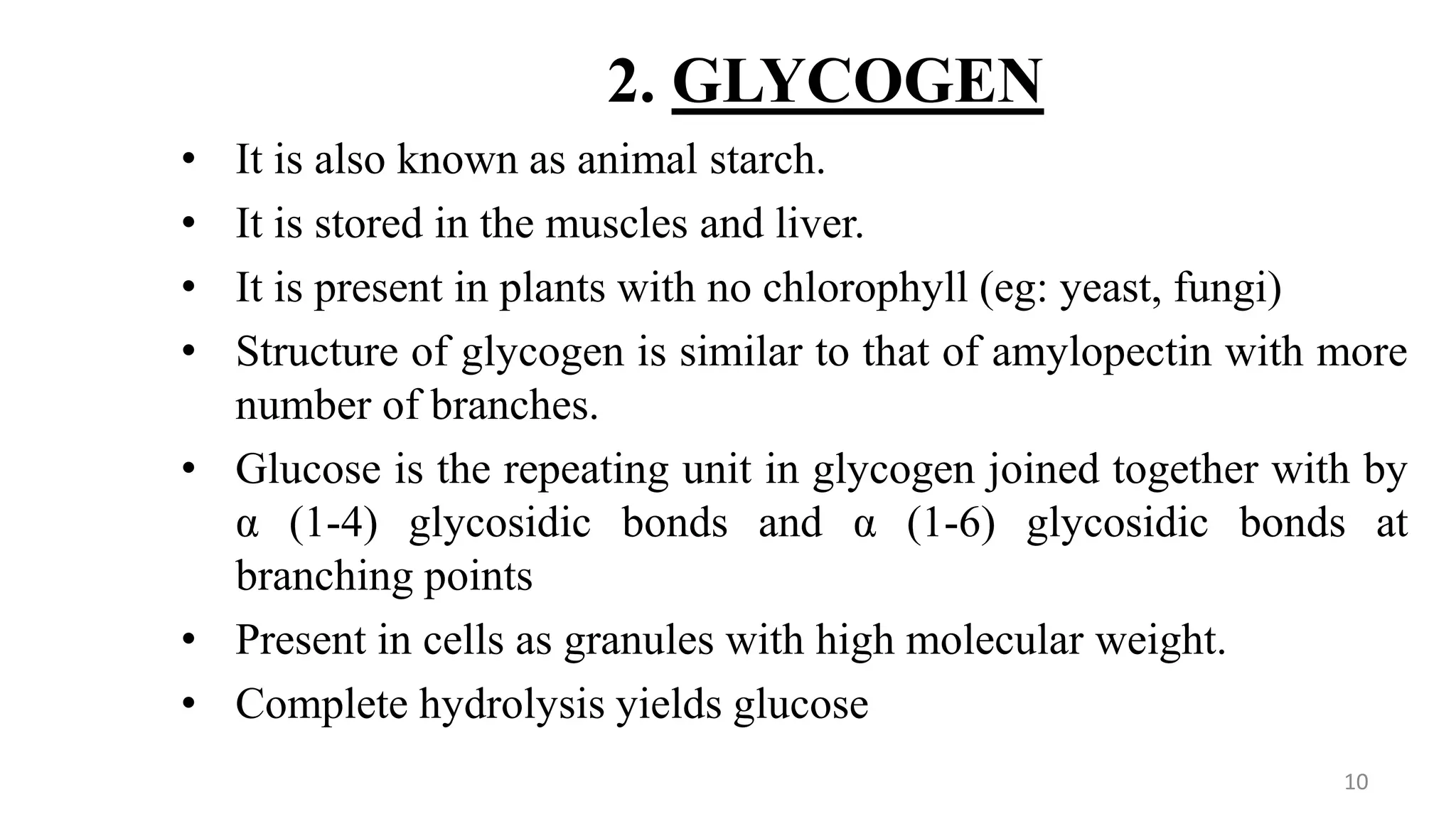
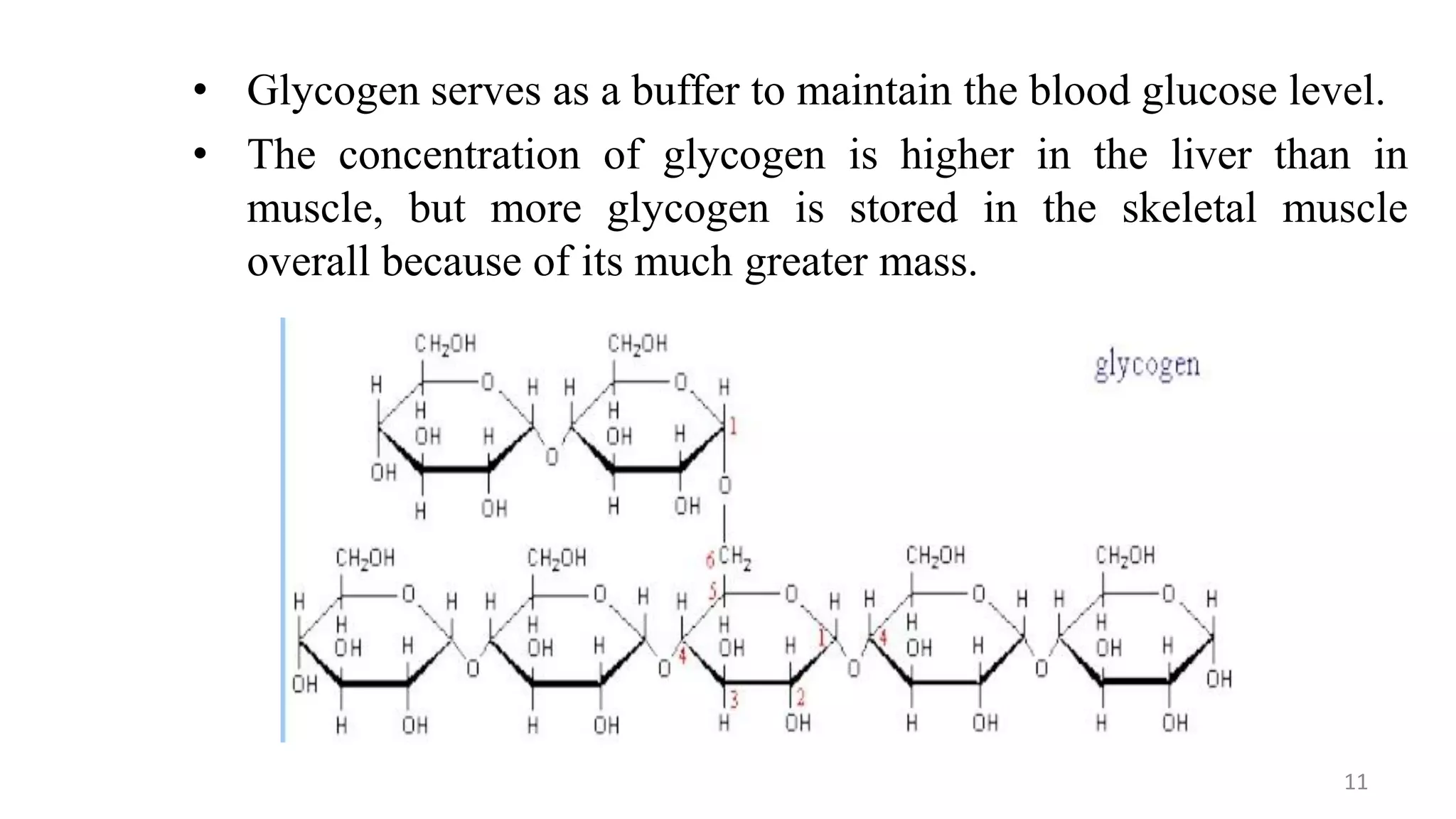
2. GLYCOGEN
• It is also known as animal starch.
• It is stored in the muscles and liver.
• It is present in plants with no chlorophyll (eg: yeast, fungi)
• Structure of glycogen is similar to that of amylopectin with more
number of branches.
• Glucose is the repeating unit in glycogen joined together with by
α (1-4) glycosidic bonds and α (1-6) glycosidic bonds at
branching points
• Present in cells as granules with high molecular weight.
• Complete hydrolysis yields glucose
10
• Glycogen serves as a buffer to maintain the blood glucose level.
• The concentration of glycogen is higher in the liver than in
muscle, but more glycogen is stored in the skeletal muscle
overall because of its much greater mass.
11
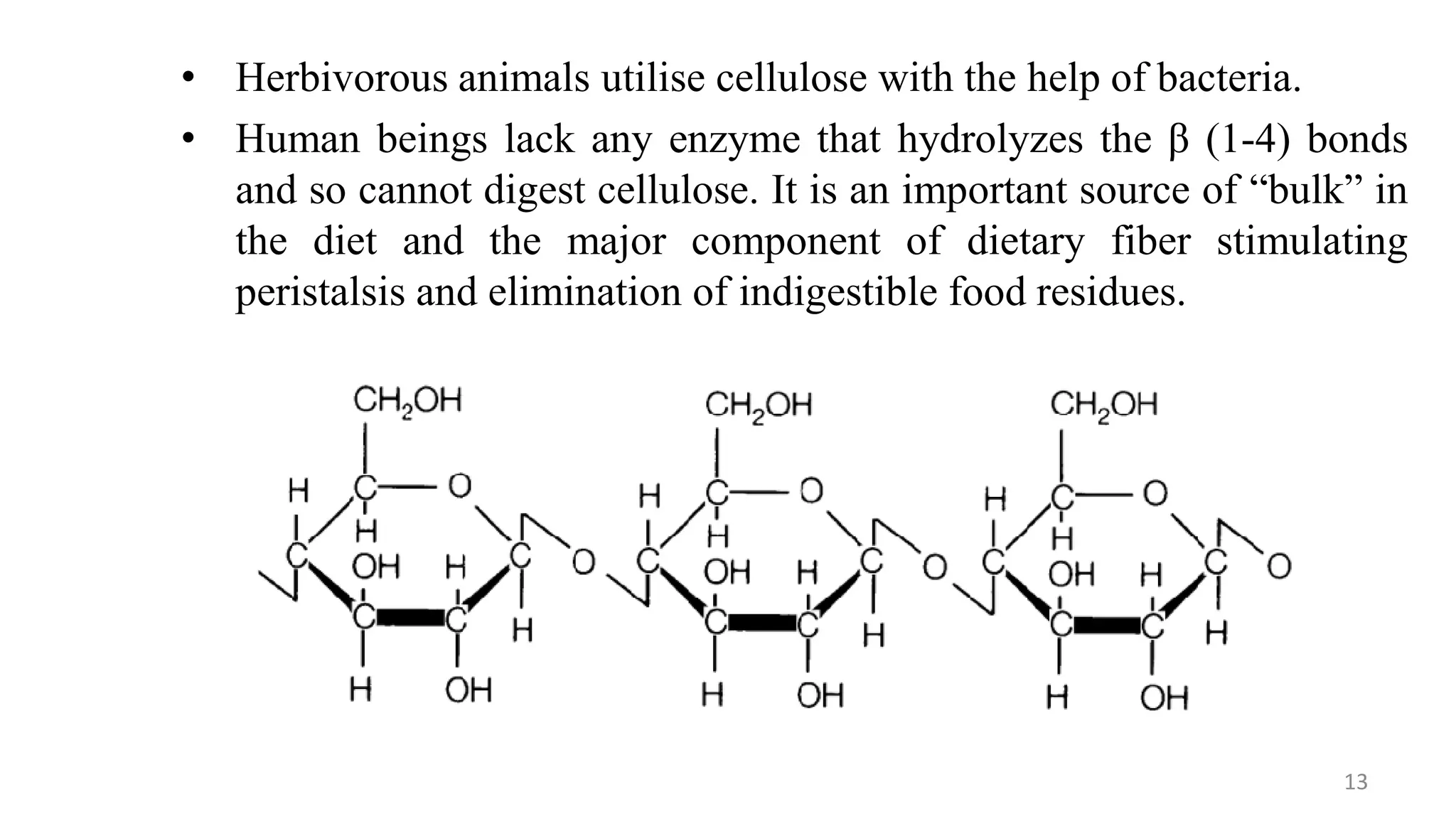
3. CELLULOSE
• Polymer of β – D – Glucose linked by β (1-4) linkages.
• Complete hydrolysis yields glucose and partial hydrolysis yields
cellobiose.
• Cellobiose is made up of two molecules of D – glucose linked by
β – glucosidic linkages between C1 and C4 of adjacent glucose
units.
• It is the most abundant of all carbohydrates.
• Gives no colour with iodine.
• It is tasteless, odourless and insoluble in water and most organic
solvents.
12
• Herbivorous animals utilise cellulose with the help of bacteria.
• Human beings lack any enzyme that hydrolyzes the β (1-4) bonds
and so cannot digest cellulose. It is an important source of “bulk” in
the diet and the major component of dietary fiber stimulating
peristalsis and elimination of indigestible food residues.
13
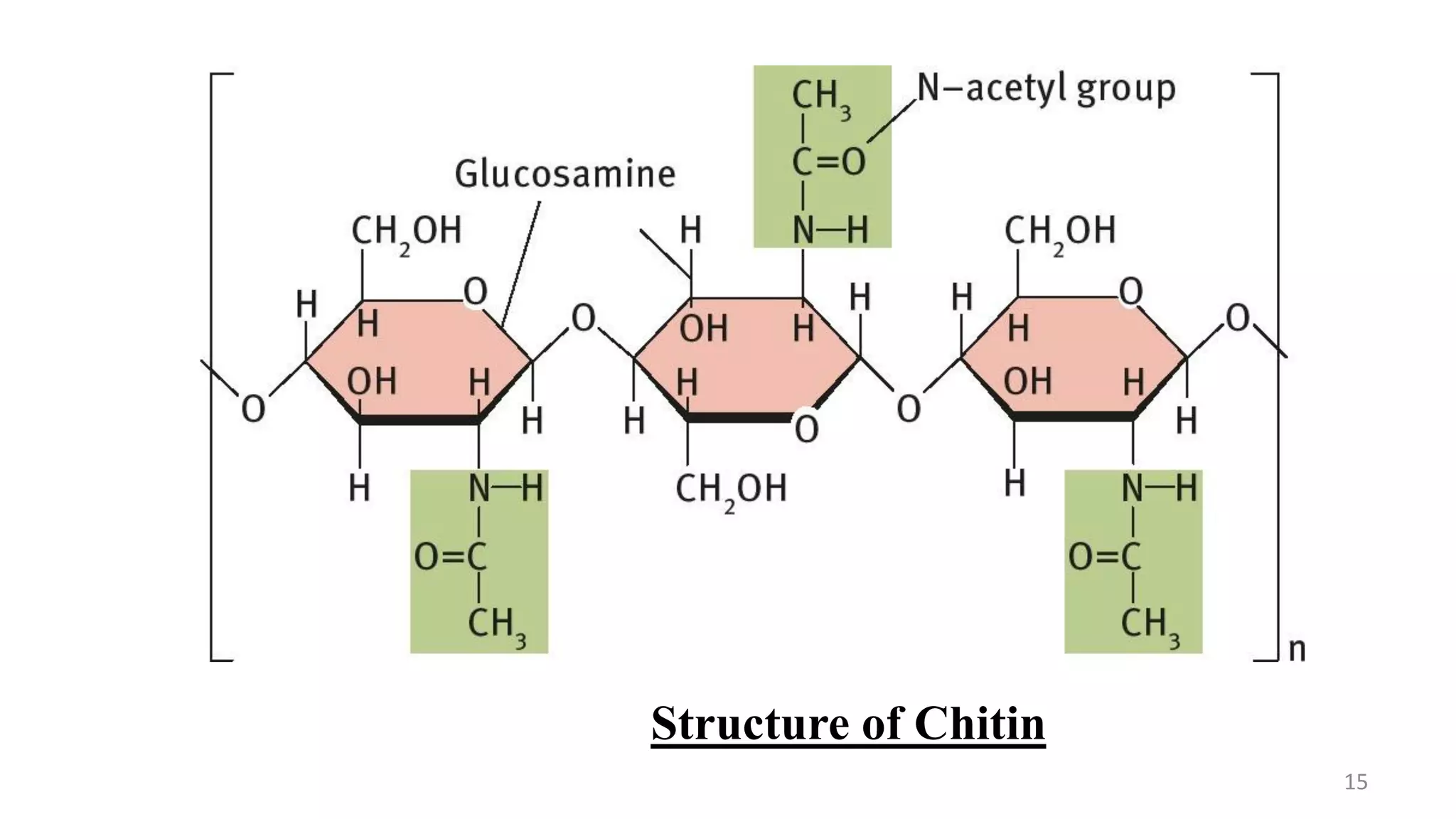
4. CHITIN
• It is a linear homopolysaccharide composed of N –
acetyl glucosamine in β – linkage.
• Only difference from cellulose is the replacement of the
hydroxyl group at C – 2 with an acetylated amino group.
• It is the principal component of hard exoskeleton of
arthopods and present in the cell wall of fungi.
• Second most abundant in nature
14
Structure of Chitin
15
DEXTRINS
• It is produced by the partial hydrolysis of starch
along with maltose and glucose.
• They are often referred to as either amylodextrins,
erythrodextrins or achrodextrins.
• They are used as mucilages (glues)
• They are used in infant formulas.
• Indigestible dextrin are developed as soluble fiber
supplements for food products.
• It is also used as thickening agents in food
processing.
16
DEXTRANS
• They are polymers of D – glucose
• They are synthesised by the action of Leuconostoc mesenteroides.
• They are exocellular enzyme produced by the organisms which
bring about polymerisation of glucose moiety of sucrose molecule
DEXTRANS.
• They differ from dextrins in structure.
• Contains α (1-4), α (1-6) and α (1-3) linkages.
• They are used as plasma expanders.
• They are also used as molecular sieves to separate proteins and other
large molecules
17
FRUCTOSANS
1. INULIN
• It is a heterogeneous polymer of D – fructose
• It has a low molecular weight than starch.
• It has got a linear chain with no branching.
• Occurs in the tubers of the Dehlia, in the roots of
Jerusalem artichoke, dandelion and in the bulbs of
onion and garlic.
• β(1-2) linked fructo furanoses
• Complete hydrolysis yields fructose
• Used for the evaluation of glomeular filtration rate.
• Used as a low glycemic index sweetner.
18
GALACTOSANS
AGAR
• It is a polymer of galactose units.
• It is obtained from the cell walls of some species of red
algae (Sphaerococcus Euchema) and species of Gelidium.
• When agar is dissolved in hot water and cooled, it becomes
gelatinous.
• Used in microbiology, to make salt bridges and gel plugs
for use in electrochemistry.
• Used as a laxative, a thickener for soups, jellies, ice cream.
• Used as a clarifying agent in brewing and for sizing fabrics.
19
Heteropolysaccharides
• They are high molecular weight carbohydrate polymers
containing more than one kind of monosaccharide.
• Chemically, they are formed mostly of repeated disaccharide
units that contains amino sugar and uronic acid.
• Some contain amino sugar and monosaccharide units without the
presence of uronic acid.
• Amino group is generally acetylated.
• Carbohydrate content more than 4% - mucoproteins.
• Carbohydrate content less than 4% - glycoproteins.
20
Classification of heteropolysaccharides
Mucopolysaccharides
Acidic
Sulphate free
Sulphate
containing
Neutral
21
Acidic Sulphate free mucopolysaccharides
• Acidic polysaccharides are polysaccharides that contain
carboxyl groups, phosphate groups and/or sulphuric ester
groups.
• Example for acidic sulphate free mucopolysaccharides are
– Hyaluronic acid
– Chondroitin
22
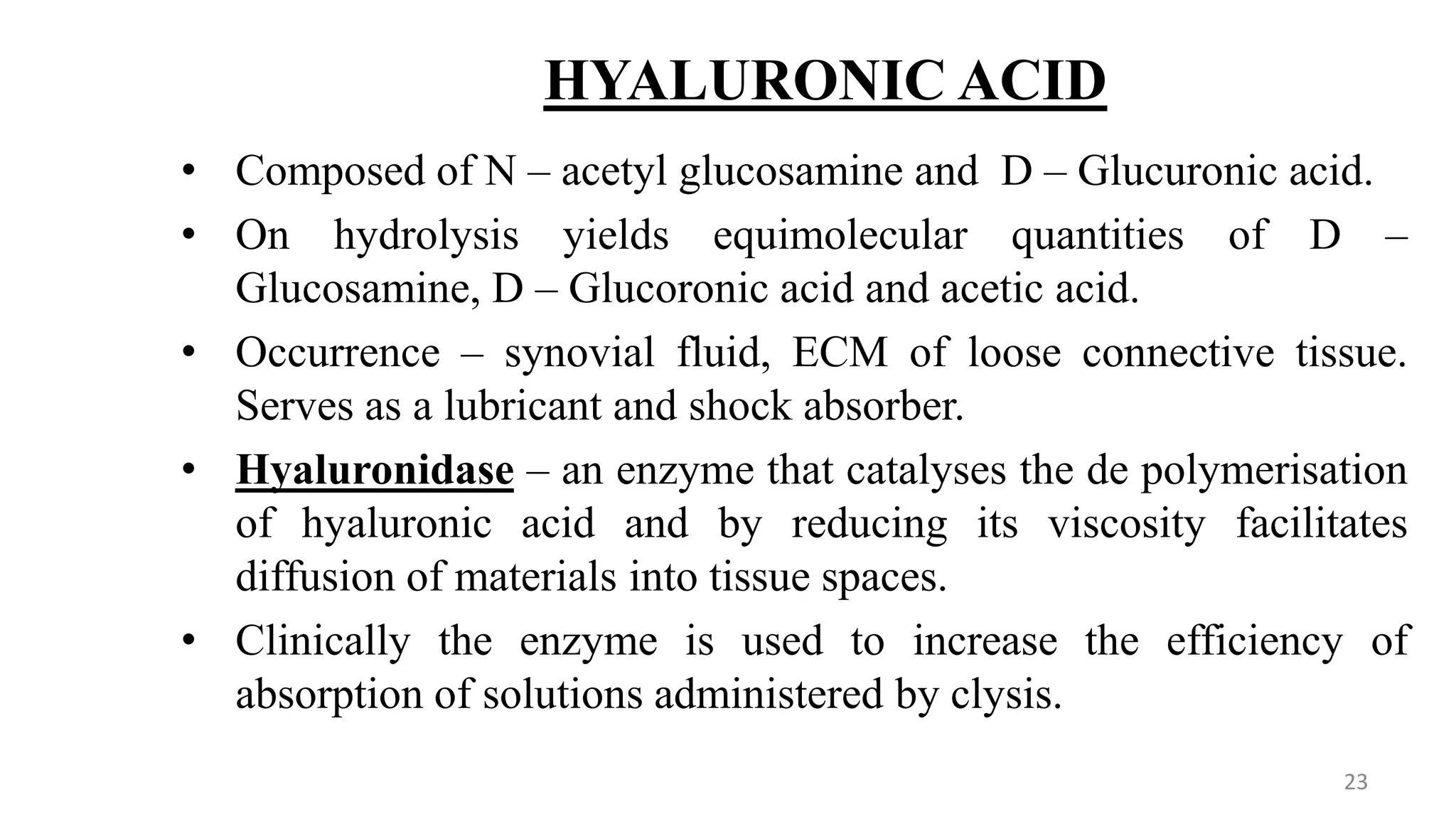
HYALURONIC ACID
• Composed of N – acetyl glucosamine and D – Glucuronic acid.
• On hydrolysis yields equimolecular quantities of D –
Glucosamine, D – Glucoronic acid and acetic acid.
• Occurrence – synovial fluid, ECM of loose connective tissue.
Serves as a lubricant and shock absorber.
• Hyaluronidase – an enzyme that catalyses the de polymerisation
of hyaluronic acid and by reducing its viscosity facilitates
diffusion of materials into tissue spaces.
• Clinically the enzyme is used to increase the efficiency of
absorption of solutions administered by clysis.
23
Structure of Hyaluronic acid
24
CHONDROITIN
• It is another sulphate free acidic mucopolysaccharide.
• It is found in cornea and also in cranial cartilages.
• Composed of N – acetyl galactosamine and D – Glucoronic
acid.
25
Acidic sulphate containing mucopolysaccharides
They are mainly of four types:
1) Chondroitin sulphate
2) Keratan sulphate
3) Heparin
4) Heparitin sulphate
26
CHONDROITIN SULPHATE
• It is a sulphated glycosaminoglycan composed of a chain of alternating
sugars (N –acetylgalactosamine and glucuronic acid). It is usually
found attached to protein as part of proteoglycan.
• It is a principle mucopolysaccharide in ground substance of
mammalian tissues and cartilages.
• Four chondroitin sulphate are isolated which are chondroitin sulphate
A, B, C and D.
• Chondroitin sulphate A
 Consists of repeating units of N – acetyl – D – galactosamine and D –
Glucuronic acid. N – acetylgalactosamine is esterified with sulphate in
position 4 of galactosamine.
 It is present in cartilages, bone and cornea.
27
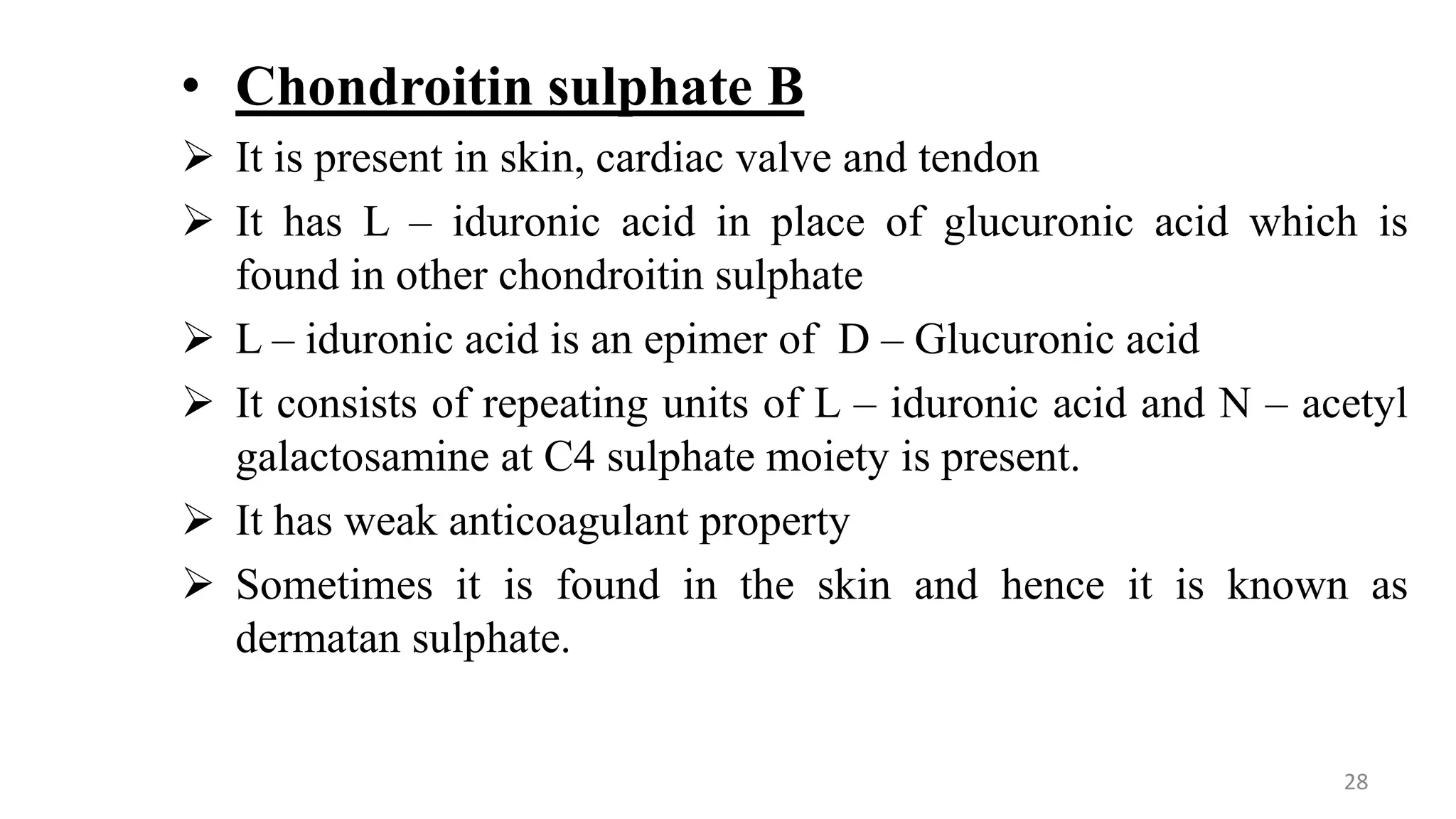
• Chondroitin sulphate B
 It is present in skin, cardiac valve and tendon
 It has L – iduronic acid in place of glucuronic acid which is
found in other chondroitin sulphate
 L – iduronic acid is an epimer of D – Glucuronic acid
 It consists of repeating units of L – iduronic acid and N – acetyl
galactosamine at C4 sulphate moiety is present.
 It has weak anticoagulant property
 Sometimes it is found in the skin and hence it is known as
dermatan sulphate.
28
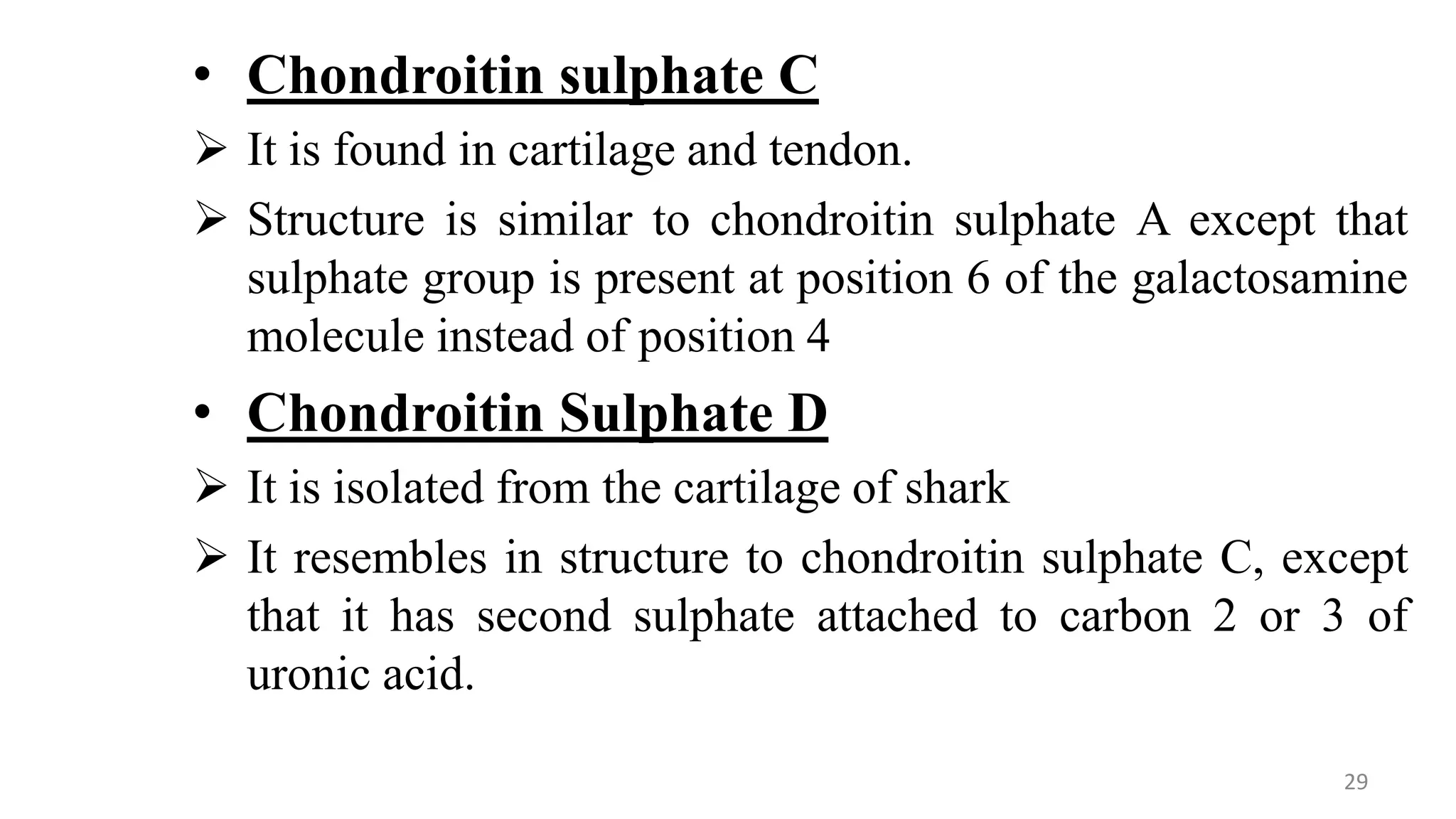
• Chondroitin sulphate C
 It is found in cartilage and tendon.
 Structure is similar to chondroitin sulphate A except that
sulphate group is present at position 6 of the galactosamine
molecule instead of position 4
• Chondroitin Sulphate D
 It is isolated from the cartilage of shark
 It resembles in structure to chondroitin sulphate C, except
that it has second sulphate attached to carbon 2 or 3 of
uronic acid.
29
30
KERATAN SULPHATE
• It is a sulphate containing acid mucopolysaccharide
• It is found in coastal cartilage, cornea, aorta, nucleous
pulposus.
• It consists of repeating disaccharide units of N – acetyl – D
– glucosamine 6 – sulphate and galactose.
• They are no uronic acids in this molecule.
31
32
HEPARIN
• It is an anticoagulant present in liver which is produced by the mast
cells present in liver.
• It is found in lungs, thymus, spleen, walls of large arteries, skin, blood
• It is a polymer of repeating disaccharide unit of D – Glucosamine and
either of the two uronic acid (D – Glucuronic acid and L – iduronic
acid)
• In fully formed heparin molecule 90% or more of uronic acid residues
are L – iduronic acid
33
34
NEUTRAL MUCOPOLYSACCHARIDES
• It is found in Pneumococci capsule.
• It acts as blood group substances. Four monosaccharides:
Galactose, Fucose, Galactosamine (acetylated) and
glucosamine (acetylated) are present in all types of blood
group substances.
• It is also found in egg protein known as ovalbumin.
35
GLYCOPROTEINS
• Glycoproteins are proteins that contain oligosaccharide chains or
glycans which are covalently attached to polypeptide side chains.
• Almost all the plasma proteins of humans with the exception of
albumin are glycoproteins.
• Glycosylation (enzymic attachment of sugars) is the most
frequent post – translational modification of proteins.
• Non – enzymic attachment of sugars to proteins can also occur
and it is referred to as glycation.
36
Difference between glycoproteins and proteoglycans
Features Glycoproteins Proteoglycans
Composition Carbohydrates less than protein (1
to 70%)
Carbohydrates more than
protein (95%)
Carbohydrate
chain length
Smaller (2 – 10 sugar residues) Very long
Serial
disaccharide
repeats
No (Very heterogeneous) Yes
Branching of
carbohydrate
chain
Yes No
37
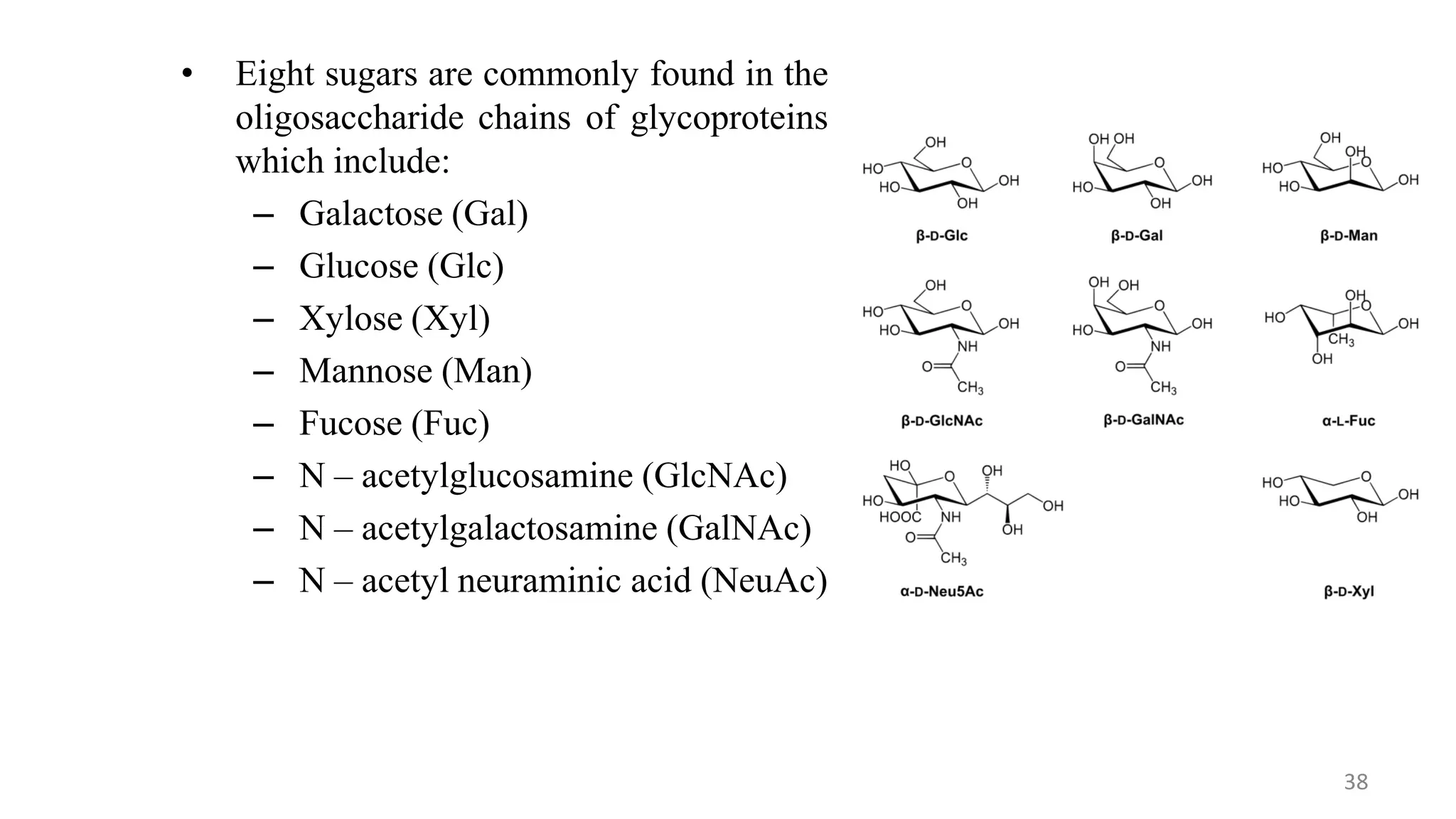
• Eight sugars are commonly found in the
oligosaccharide chains of glycoproteins
which include:
– Galactose (Gal)
– Glucose (Glc)
– Xylose (Xyl)
– Mannose (Man)
– Fucose (Fuc)
– N – acetylglucosamine (GlcNAc)
– N – acetylgalactosamine (GalNAc)
– N – acetyl neuraminic acid (NeuAc)
38
39
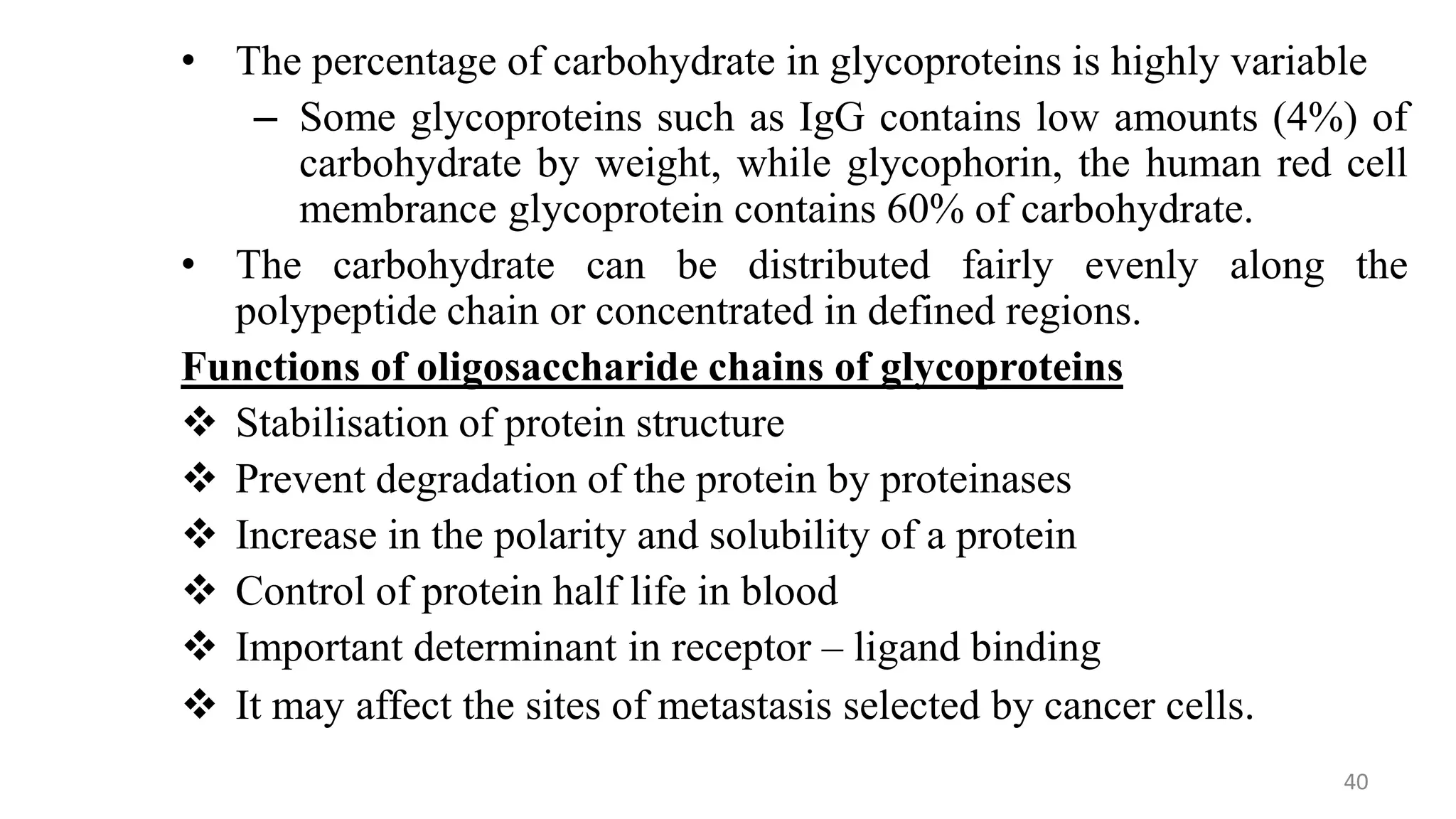
• The percentage of carbohydrate in glycoproteins is highly variable
– Some glycoproteins such as IgG contains low amounts (4%) of
carbohydrate by weight, while glycophorin, the human red cell
membrance glycoprotein contains 60% of carbohydrate.
• The carbohydrate can be distributed fairly evenly along the
polypeptide chain or concentrated in defined regions.
Functions of oligosaccharide chains of glycoproteins
 Stabilisation of protein structure
 Prevent degradation of the protein by proteinases
 Increase in the polarity and solubility of a protein
 Control of protein half life in blood
 Important determinant in receptor – ligand binding
 It may affect the sites of metastasis selected by cancer cells.
40
Functions of glycoproteins
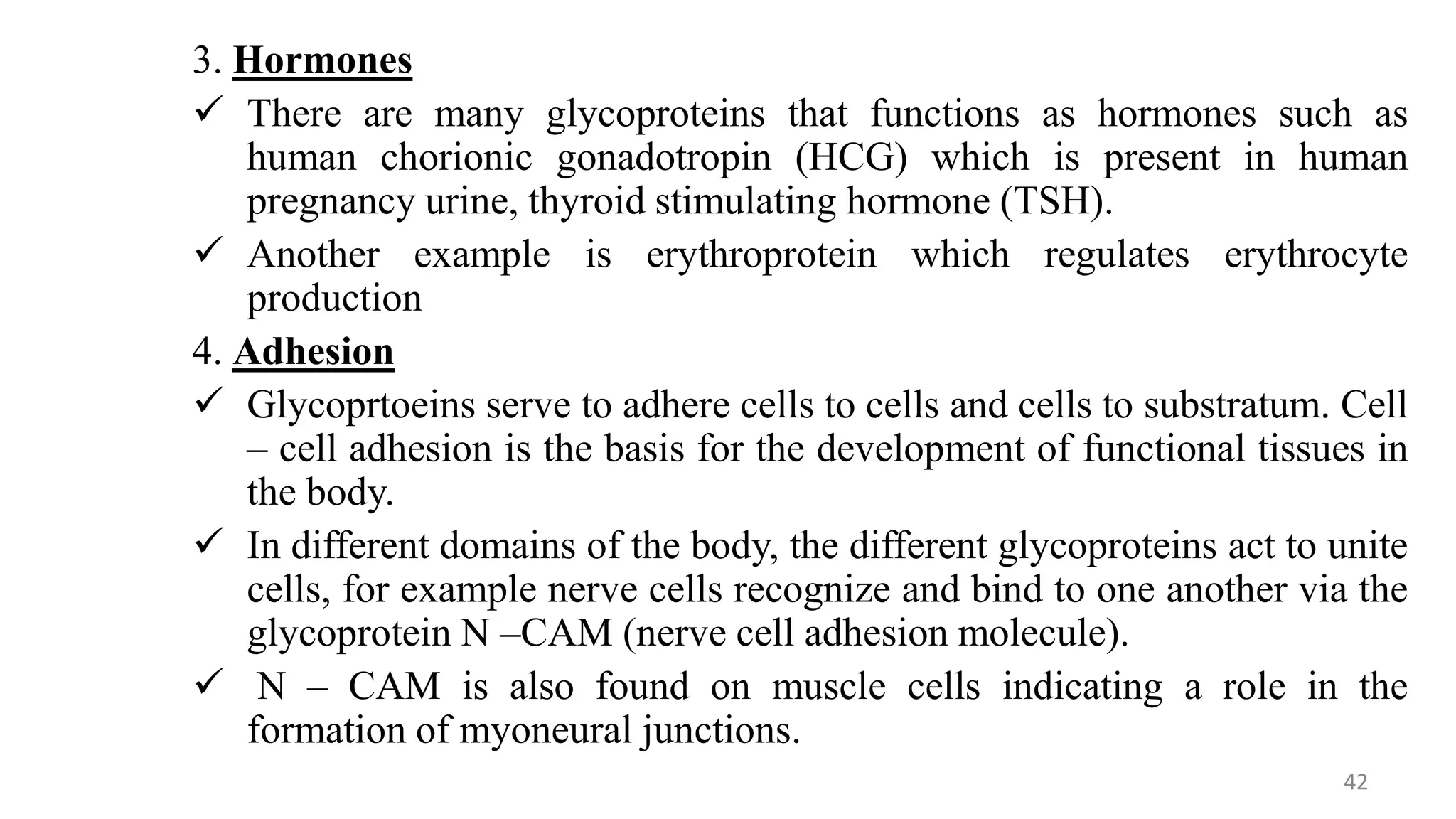
1. Structural
 They are found throughout matrices and act as receptors on cell
surfaces that bring other cells and proteins (collagen) together giving
strength and support to a matrix
 In certain bacteria, a slime layer that surrounds the outermost
components of cell walls are made up of glycoproteins of high
molecular weight.
 In nerve tissue, glycoproteins are abundant in grey matter and appear
to be associated with synaptosomes, axons and microsomes.
2. Enzymes
 Glycoprotein enzymes are of three types which include
oxidoreductases, transferases and hydrolases.
41
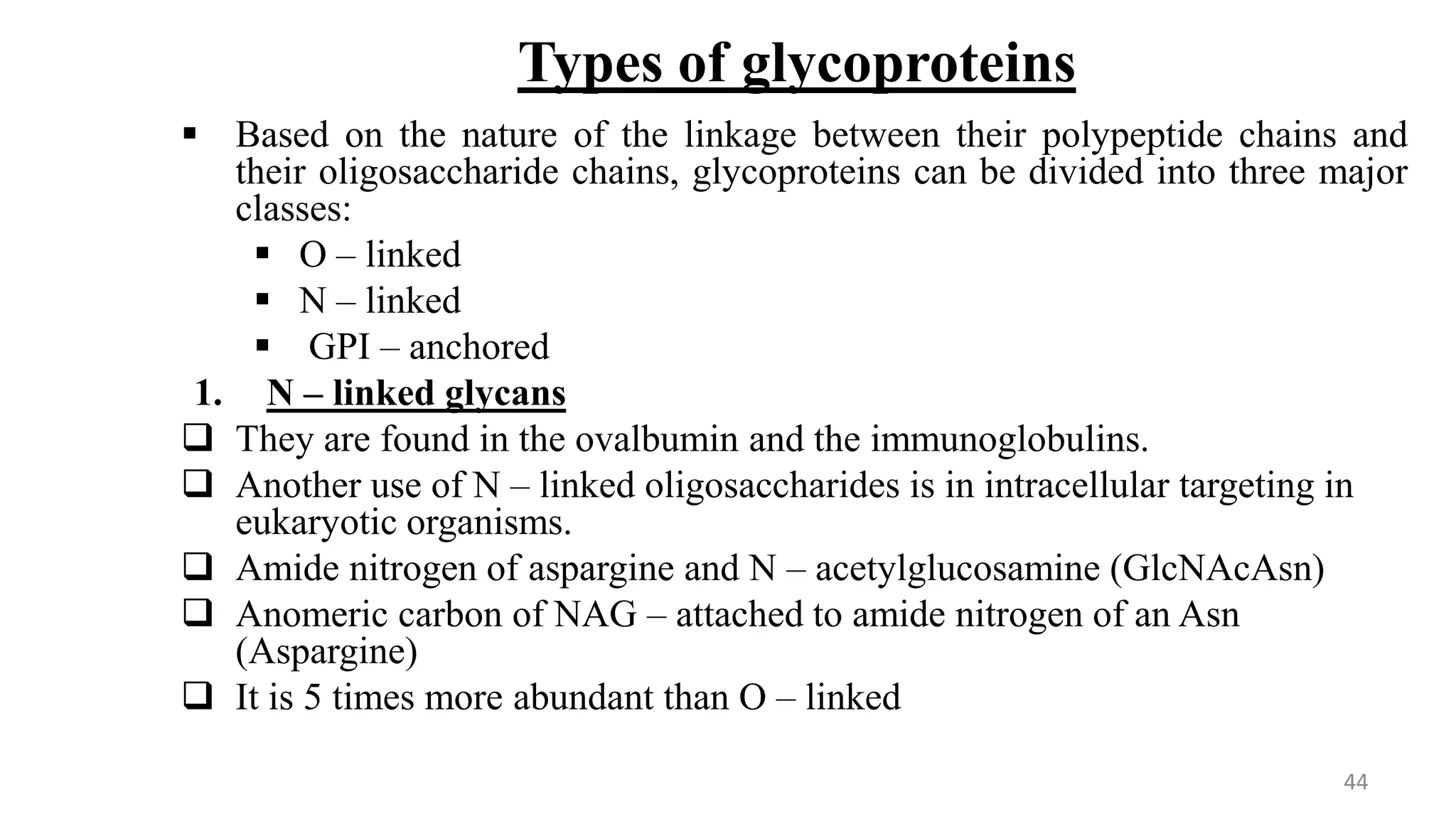
3. Hormones
 There are many glycoproteins that functions as hormones such as
human chorionic gonadotropin (HCG) which is present in human
pregnancy urine, thyroid stimulating hormone (TSH).
 Another example is erythroprotein which regulates erythrocyte
production
4. Adhesion
 Glycoprtoeins serve to adhere cells to cells and cells to substratum. Cell
– cell adhesion is the basis for the development of functional tissues in
the body.
 In different domains of the body, the different glycoproteins act to unite
cells, for example nerve cells recognize and bind to one another via the
glycoprotein N –CAM (nerve cell adhesion molecule).
 N – CAM is also found on muscle cells indicating a role in the
formation of myoneural junctions.
42
5. Reproduction
 Glycoproteins found on the surface of spermatozoa appear to increase a
sperm cell’s attraction for the egg by altering the electrophoretic mobility of
the plasma membrane.
 Hen ovalbumin is a glycoprotein found in egg white that serves as a food
storage unit for the embryo.
 The zona pellucida is an envelope made of glycoprotein that surrounds the
egg and prevents polyspermy from occuring after the first sperm cell has
penetrated the egg’s plasma membrane.
6. Protection
 Human sweat glands secrete glycoproteins which protect the skin from
other excretory products that could harm the skin.
 Mucins are also found on the outer body surfaces of fish to protect the skin.
Not only does mucin serve the function of protection, but it also acts as a
lubricant.
 Mucins form a highly viscous gel that protects epithelium from chemical,
physical and microbial disturbances. Examples of mucin sites are the human
digestive tract, urinary tract and respiratory tracts.
43
Types of glycoproteins
 Based on the nature of the linkage between their polypeptide chains and
their oligosaccharide chains, glycoproteins can be divided into three major
classes:
 O – linked
 N – linked
 GPI – anchored
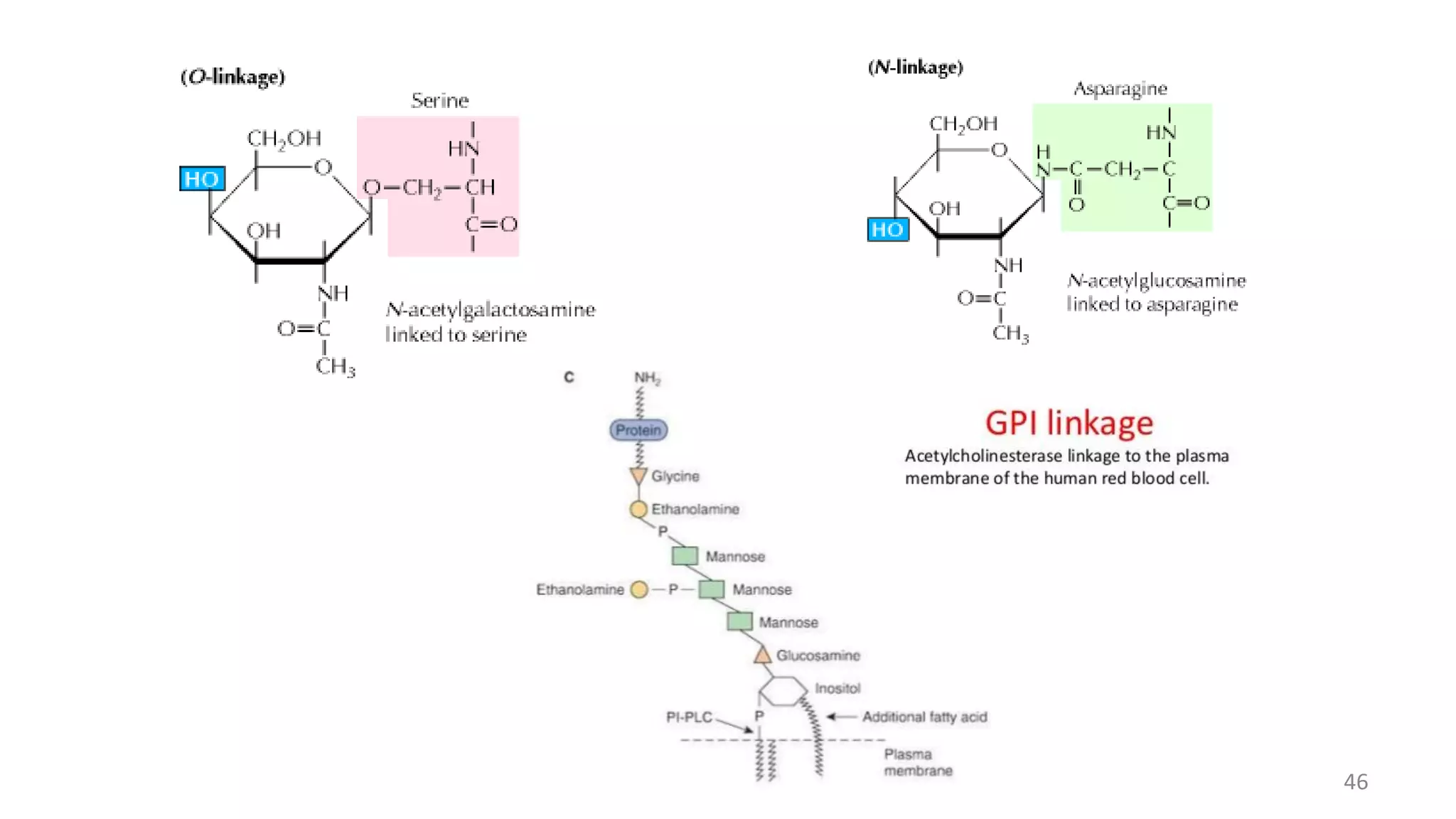
1. N – linked glycans
 They are found in the ovalbumin and the immunoglobulins.
 Another use of N – linked oligosaccharides is in intracellular targeting in
eukaryotic organisms.
 Amide nitrogen of aspargine and N – acetylglucosamine (GlcNAcAsn)
 Anomeric carbon of NAG – attached to amide nitrogen of an Asn
(Aspargine)
 It is 5 times more abundant than O – linked
44
2. O – linked glycans
 Hydroxyl side chain of serine or threonine and a sugar such as N –
acetylgalactosamine (GalNAc – Ser[Thr])
 Anomeric carbon of NAG – attached to O of serine or threonine.
 Mucins which are found extensively in salivary secretions, contain many
short O – linked glycans.
 Increase the viscosity of the fluids in which they are dissolved.
3. GPI – anchored or GPI – linked (Glycosylphosphatidylinositol –
anchored)
 Carboxyl terminal amino acid of a protein via a phosphoryl – ethanolamine
moiety joined to an oligosaccharide (glycan), which in turn is linked via
glucosamine to phosphatidylinositol.
 The GPI anchor may allow greatly enhanced mobility of a protein in the
plasma membrane.
 Some GPI anchors may connect with signal transduction pathways.
 Some examples include Acetylcholinesterase, Alkaline phosphatase
45
46

Polysaccharides - Biochemistry for Msc Students

  • 1.
    POLYSACCHARIDES Notes prepared by KevenLiam William 209701 1st Msc Zoology St. Albert’s College(Autonomous), Ernakulam1
  • 2.
    Introduction • They arerepeating units of monosaccharides or their derivatives held together by glycosidic bonds. • They are simply known as glycans. • They can be straight chain of monosaccharides known as linear polysaccharides or it can be branched known as branched polysaccharide. • They are not sweet in taste • They do not form crystals. • They are carbohydrates with high molecular weight. 2
  • 3.
  • 4.
  • 5.
    Homopolysaccharides • Polysaccharides thatcontains the same type of monosaccharide units are known as homopolysaccharides. • Glucans are polymers of glucose and fructosans are polymers of fructose. • Examples : – Glucosan – Starch, Glycogen, cellulose – Fructosan – Insulin – Galactosan - Agar 5
  • 6.
    GLUCOSANS/GLUCAN 1. STARCH • Itis a storage polysaccharide and the most common polysaccharide seen in plants • It is a homopolymer composed of D – glucose units held by alpha – glycosidic linkage. • Composed of 10 – 30% Amylose and 70 – 90% Amylopectin depending on the source. • They can be hydrolysed into simpler carbohydrates by acids, various enzymes or a combination of the two. The resulting fragments are known as dextrin. 6
  • 7.
    a) AMYLOSE • Itis a straight long unbranched chain polymer composed of 250 – 300 D – glucose units held by α (1-4) glycosidic linkage. • It is less soluble in water • Gives a dark blue/black colour when iodine solution is added 7
  • 8.
  • 9.
    • Amylopectin isa branched chain polymer of D – glucose units. • It is more soluble in water • Gives a reddish brown colour when iodine solution is added. • Branched chain with α (1-6) glycosidic bonds at the branching points and α (1-4) glycosidic bonds in the straight chain. • It contains few thousand glucose units looks like a branched tree (20-30) glucose units per branch. 9
  • 10.
    2. GLYCOGEN • Itis also known as animal starch. • It is stored in the muscles and liver. • It is present in plants with no chlorophyll (eg: yeast, fungi) • Structure of glycogen is similar to that of amylopectin with more number of branches. • Glucose is the repeating unit in glycogen joined together with by α (1-4) glycosidic bonds and α (1-6) glycosidic bonds at branching points • Present in cells as granules with high molecular weight. • Complete hydrolysis yields glucose 10
  • 11.
    • Glycogen servesas a buffer to maintain the blood glucose level. • The concentration of glycogen is higher in the liver than in muscle, but more glycogen is stored in the skeletal muscle overall because of its much greater mass. 11
  • 12.
    3. CELLULOSE • Polymerof β – D – Glucose linked by β (1-4) linkages. • Complete hydrolysis yields glucose and partial hydrolysis yields cellobiose. • Cellobiose is made up of two molecules of D – glucose linked by β – glucosidic linkages between C1 and C4 of adjacent glucose units. • It is the most abundant of all carbohydrates. • Gives no colour with iodine. • It is tasteless, odourless and insoluble in water and most organic solvents. 12
  • 13.
    • Herbivorous animalsutilise cellulose with the help of bacteria. • Human beings lack any enzyme that hydrolyzes the β (1-4) bonds and so cannot digest cellulose. It is an important source of “bulk” in the diet and the major component of dietary fiber stimulating peristalsis and elimination of indigestible food residues. 13
  • 14.
    4. CHITIN • Itis a linear homopolysaccharide composed of N – acetyl glucosamine in β – linkage. • Only difference from cellulose is the replacement of the hydroxyl group at C – 2 with an acetylated amino group. • It is the principal component of hard exoskeleton of arthopods and present in the cell wall of fungi. • Second most abundant in nature 14
  • 15.
  • 16.
    DEXTRINS • It isproduced by the partial hydrolysis of starch along with maltose and glucose. • They are often referred to as either amylodextrins, erythrodextrins or achrodextrins. • They are used as mucilages (glues) • They are used in infant formulas. • Indigestible dextrin are developed as soluble fiber supplements for food products. • It is also used as thickening agents in food processing. 16
  • 17.
    DEXTRANS • They arepolymers of D – glucose • They are synthesised by the action of Leuconostoc mesenteroides. • They are exocellular enzyme produced by the organisms which bring about polymerisation of glucose moiety of sucrose molecule DEXTRANS. • They differ from dextrins in structure. • Contains α (1-4), α (1-6) and α (1-3) linkages. • They are used as plasma expanders. • They are also used as molecular sieves to separate proteins and other large molecules 17
  • 18.
    FRUCTOSANS 1. INULIN • Itis a heterogeneous polymer of D – fructose • It has a low molecular weight than starch. • It has got a linear chain with no branching. • Occurs in the tubers of the Dehlia, in the roots of Jerusalem artichoke, dandelion and in the bulbs of onion and garlic. • β(1-2) linked fructo furanoses • Complete hydrolysis yields fructose • Used for the evaluation of glomeular filtration rate. • Used as a low glycemic index sweetner. 18
  • 19.
    GALACTOSANS AGAR • It isa polymer of galactose units. • It is obtained from the cell walls of some species of red algae (Sphaerococcus Euchema) and species of Gelidium. • When agar is dissolved in hot water and cooled, it becomes gelatinous. • Used in microbiology, to make salt bridges and gel plugs for use in electrochemistry. • Used as a laxative, a thickener for soups, jellies, ice cream. • Used as a clarifying agent in brewing and for sizing fabrics. 19
  • 20.
    Heteropolysaccharides • They arehigh molecular weight carbohydrate polymers containing more than one kind of monosaccharide. • Chemically, they are formed mostly of repeated disaccharide units that contains amino sugar and uronic acid. • Some contain amino sugar and monosaccharide units without the presence of uronic acid. • Amino group is generally acetylated. • Carbohydrate content more than 4% - mucoproteins. • Carbohydrate content less than 4% - glycoproteins. 20
  • 21.
  • 22.
    Acidic Sulphate freemucopolysaccharides • Acidic polysaccharides are polysaccharides that contain carboxyl groups, phosphate groups and/or sulphuric ester groups. • Example for acidic sulphate free mucopolysaccharides are – Hyaluronic acid – Chondroitin 22
  • 23.
    HYALURONIC ACID • Composedof N – acetyl glucosamine and D – Glucuronic acid. • On hydrolysis yields equimolecular quantities of D – Glucosamine, D – Glucoronic acid and acetic acid. • Occurrence – synovial fluid, ECM of loose connective tissue. Serves as a lubricant and shock absorber. • Hyaluronidase – an enzyme that catalyses the de polymerisation of hyaluronic acid and by reducing its viscosity facilitates diffusion of materials into tissue spaces. • Clinically the enzyme is used to increase the efficiency of absorption of solutions administered by clysis. 23
  • 24.
  • 25.
    CHONDROITIN • It isanother sulphate free acidic mucopolysaccharide. • It is found in cornea and also in cranial cartilages. • Composed of N – acetyl galactosamine and D – Glucoronic acid. 25
  • 26.
    Acidic sulphate containingmucopolysaccharides They are mainly of four types: 1) Chondroitin sulphate 2) Keratan sulphate 3) Heparin 4) Heparitin sulphate 26
  • 27.
    CHONDROITIN SULPHATE • Itis a sulphated glycosaminoglycan composed of a chain of alternating sugars (N –acetylgalactosamine and glucuronic acid). It is usually found attached to protein as part of proteoglycan. • It is a principle mucopolysaccharide in ground substance of mammalian tissues and cartilages. • Four chondroitin sulphate are isolated which are chondroitin sulphate A, B, C and D. • Chondroitin sulphate A  Consists of repeating units of N – acetyl – D – galactosamine and D – Glucuronic acid. N – acetylgalactosamine is esterified with sulphate in position 4 of galactosamine.  It is present in cartilages, bone and cornea. 27
  • 28.
    • Chondroitin sulphateB  It is present in skin, cardiac valve and tendon  It has L – iduronic acid in place of glucuronic acid which is found in other chondroitin sulphate  L – iduronic acid is an epimer of D – Glucuronic acid  It consists of repeating units of L – iduronic acid and N – acetyl galactosamine at C4 sulphate moiety is present.  It has weak anticoagulant property  Sometimes it is found in the skin and hence it is known as dermatan sulphate. 28
  • 29.
    • Chondroitin sulphateC  It is found in cartilage and tendon.  Structure is similar to chondroitin sulphate A except that sulphate group is present at position 6 of the galactosamine molecule instead of position 4 • Chondroitin Sulphate D  It is isolated from the cartilage of shark  It resembles in structure to chondroitin sulphate C, except that it has second sulphate attached to carbon 2 or 3 of uronic acid. 29
  • 30.
  • 31.
    KERATAN SULPHATE • Itis a sulphate containing acid mucopolysaccharide • It is found in coastal cartilage, cornea, aorta, nucleous pulposus. • It consists of repeating disaccharide units of N – acetyl – D – glucosamine 6 – sulphate and galactose. • They are no uronic acids in this molecule. 31
  • 32.
  • 33.
    HEPARIN • It isan anticoagulant present in liver which is produced by the mast cells present in liver. • It is found in lungs, thymus, spleen, walls of large arteries, skin, blood • It is a polymer of repeating disaccharide unit of D – Glucosamine and either of the two uronic acid (D – Glucuronic acid and L – iduronic acid) • In fully formed heparin molecule 90% or more of uronic acid residues are L – iduronic acid 33
  • 34.
  • 35.
    NEUTRAL MUCOPOLYSACCHARIDES • Itis found in Pneumococci capsule. • It acts as blood group substances. Four monosaccharides: Galactose, Fucose, Galactosamine (acetylated) and glucosamine (acetylated) are present in all types of blood group substances. • It is also found in egg protein known as ovalbumin. 35
  • 36.
    GLYCOPROTEINS • Glycoproteins areproteins that contain oligosaccharide chains or glycans which are covalently attached to polypeptide side chains. • Almost all the plasma proteins of humans with the exception of albumin are glycoproteins. • Glycosylation (enzymic attachment of sugars) is the most frequent post – translational modification of proteins. • Non – enzymic attachment of sugars to proteins can also occur and it is referred to as glycation. 36
  • 37.
    Difference between glycoproteinsand proteoglycans Features Glycoproteins Proteoglycans Composition Carbohydrates less than protein (1 to 70%) Carbohydrates more than protein (95%) Carbohydrate chain length Smaller (2 – 10 sugar residues) Very long Serial disaccharide repeats No (Very heterogeneous) Yes Branching of carbohydrate chain Yes No 37
  • 38.
    • Eight sugarsare commonly found in the oligosaccharide chains of glycoproteins which include: – Galactose (Gal) – Glucose (Glc) – Xylose (Xyl) – Mannose (Man) – Fucose (Fuc) – N – acetylglucosamine (GlcNAc) – N – acetylgalactosamine (GalNAc) – N – acetyl neuraminic acid (NeuAc) 38
  • 39.
  • 40.
    • The percentageof carbohydrate in glycoproteins is highly variable – Some glycoproteins such as IgG contains low amounts (4%) of carbohydrate by weight, while glycophorin, the human red cell membrance glycoprotein contains 60% of carbohydrate. • The carbohydrate can be distributed fairly evenly along the polypeptide chain or concentrated in defined regions. Functions of oligosaccharide chains of glycoproteins  Stabilisation of protein structure  Prevent degradation of the protein by proteinases  Increase in the polarity and solubility of a protein  Control of protein half life in blood  Important determinant in receptor – ligand binding  It may affect the sites of metastasis selected by cancer cells. 40
  • 41.
    Functions of glycoproteins 1.Structural  They are found throughout matrices and act as receptors on cell surfaces that bring other cells and proteins (collagen) together giving strength and support to a matrix  In certain bacteria, a slime layer that surrounds the outermost components of cell walls are made up of glycoproteins of high molecular weight.  In nerve tissue, glycoproteins are abundant in grey matter and appear to be associated with synaptosomes, axons and microsomes. 2. Enzymes  Glycoprotein enzymes are of three types which include oxidoreductases, transferases and hydrolases. 41
  • 42.
    3. Hormones  Thereare many glycoproteins that functions as hormones such as human chorionic gonadotropin (HCG) which is present in human pregnancy urine, thyroid stimulating hormone (TSH).  Another example is erythroprotein which regulates erythrocyte production 4. Adhesion  Glycoprtoeins serve to adhere cells to cells and cells to substratum. Cell – cell adhesion is the basis for the development of functional tissues in the body.  In different domains of the body, the different glycoproteins act to unite cells, for example nerve cells recognize and bind to one another via the glycoprotein N –CAM (nerve cell adhesion molecule).  N – CAM is also found on muscle cells indicating a role in the formation of myoneural junctions. 42
  • 43.
    5. Reproduction  Glycoproteinsfound on the surface of spermatozoa appear to increase a sperm cell’s attraction for the egg by altering the electrophoretic mobility of the plasma membrane.  Hen ovalbumin is a glycoprotein found in egg white that serves as a food storage unit for the embryo.  The zona pellucida is an envelope made of glycoprotein that surrounds the egg and prevents polyspermy from occuring after the first sperm cell has penetrated the egg’s plasma membrane. 6. Protection  Human sweat glands secrete glycoproteins which protect the skin from other excretory products that could harm the skin.  Mucins are also found on the outer body surfaces of fish to protect the skin. Not only does mucin serve the function of protection, but it also acts as a lubricant.  Mucins form a highly viscous gel that protects epithelium from chemical, physical and microbial disturbances. Examples of mucin sites are the human digestive tract, urinary tract and respiratory tracts. 43
  • 44.
    Types of glycoproteins Based on the nature of the linkage between their polypeptide chains and their oligosaccharide chains, glycoproteins can be divided into three major classes:  O – linked  N – linked  GPI – anchored 1. N – linked glycans  They are found in the ovalbumin and the immunoglobulins.  Another use of N – linked oligosaccharides is in intracellular targeting in eukaryotic organisms.  Amide nitrogen of aspargine and N – acetylglucosamine (GlcNAcAsn)  Anomeric carbon of NAG – attached to amide nitrogen of an Asn (Aspargine)  It is 5 times more abundant than O – linked 44
  • 45.
    2. O –linked glycans  Hydroxyl side chain of serine or threonine and a sugar such as N – acetylgalactosamine (GalNAc – Ser[Thr])  Anomeric carbon of NAG – attached to O of serine or threonine.  Mucins which are found extensively in salivary secretions, contain many short O – linked glycans.  Increase the viscosity of the fluids in which they are dissolved. 3. GPI – anchored or GPI – linked (Glycosylphosphatidylinositol – anchored)  Carboxyl terminal amino acid of a protein via a phosphoryl – ethanolamine moiety joined to an oligosaccharide (glycan), which in turn is linked via glucosamine to phosphatidylinositol.  The GPI anchor may allow greatly enhanced mobility of a protein in the plasma membrane.  Some GPI anchors may connect with signal transduction pathways.  Some examples include Acetylcholinesterase, Alkaline phosphatase 45
  • 46.