Downloaded 48 times

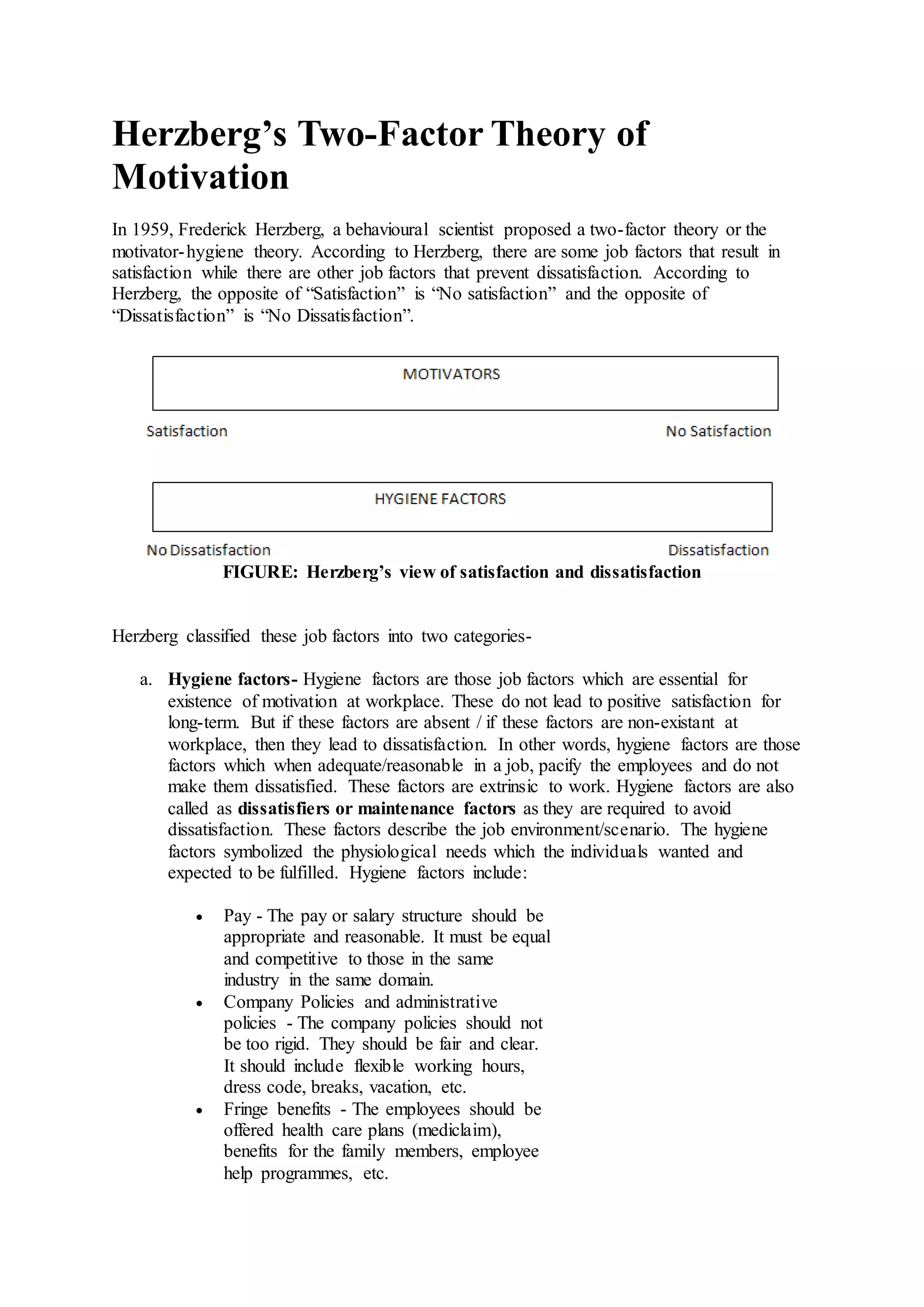

Frederick Herzberg proposed a two-factor theory of motivation in 1959, suggesting that job satisfaction and dissatisfaction are influenced by separate factors. He classified factors as either hygiene factors (extrinsic to the job) like salary and work conditions, which prevent dissatisfaction but do not motivate, or motivational factors (intrinsic to the job) like achievement and recognition, which generate satisfaction and motivate employees. The theory implies that managers should ensure adequate hygiene factors to avoid dissatisfaction and enrich jobs through motivational factors to improve performance and satisfaction.


