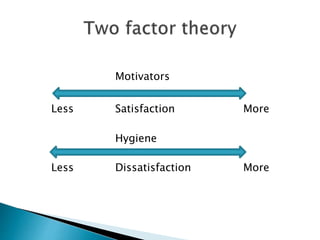
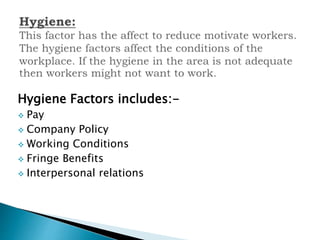
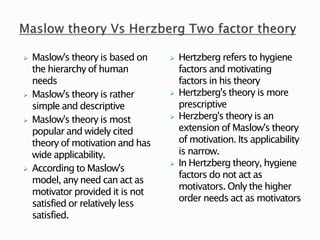
Frederick Herzberg proposed a two-factor theory of motivation in 1959, finding that certain job factors lead to satisfaction while separate factors prevent dissatisfaction. The theory is based on interviews with engineers and accountants about periods when they were happy or unhappy at work. Herzberg determined that motivational factors like achievement, recognition, and responsibility contribute to job satisfaction, while hygiene factors like company policies and pay only prevent dissatisfaction if absent. The two-factor theory suggests that satisfying higher-order needs through motivational job elements is important for motivation.