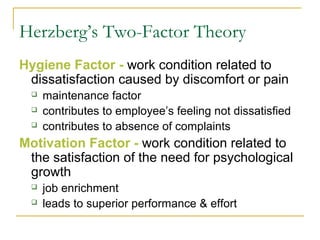
Fredrick Herzberg proposed the two-factor theory in 1959, which categorized job factors that influence employee satisfaction and dissatisfaction into two groups: motivators and hygiene factors. Motivators such as achievement and recognition can positively impact job satisfaction, while hygiene factors like company policies and supervision relate to employee dissatisfaction if absent but do not directly motivate. Herzberg suggested addressing both motivators and hygiene factors to improve employee satisfaction and performance. However, critics argue the theory has limitations such as potentially oversimplifying job satisfaction and not directly measuring productivity.