Spontaneous Bacterial peritonitis

Editor's Notes

  • #3 These are 06 learning objective in our todays discussion
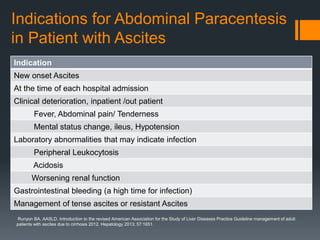
  • #5 When pt with ascites presents these are the indication of paracentesis.
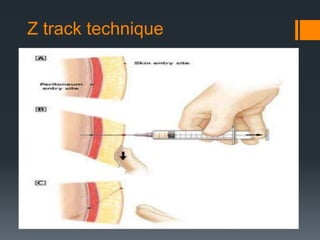
  • #6 This slide shows the technique of introducing the needle for ascites paracentesis.
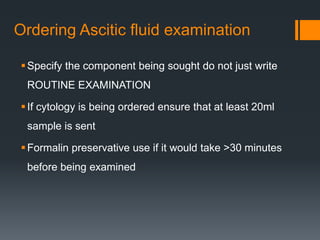
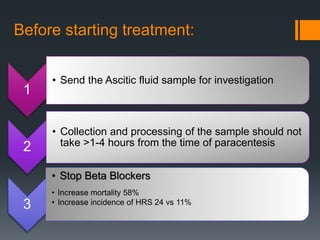
  • #7 Once the ascitic fluid is tapped. Don’t just write FLUID RE, specify like Protein/Albumin, Cell Count and Differential Count, Grams Staining, cytology
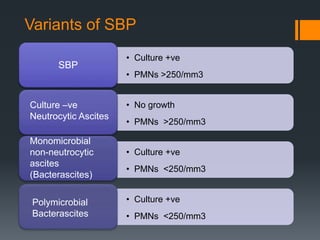
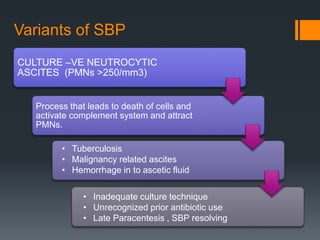
  • #9 Cell >100 in ascetic fluid are abnormal, however cut off of 250 has been established. For correction of traumatic tap 1 PMNs is subtracted for every 250 RBCs/mm3 Prior antibiotic is very important and turn ascites into culture neg in 6 hour in 85% of pts who were initialy culture +ve in one study Tb , CA generally have lymphocytic predominance Low risk pts comp to SBP, spontaneous resolution occur in majority.
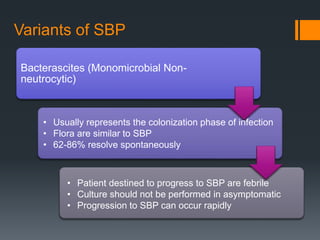
  • #10 Inc trend toward performing paracentesis has to inc recognition of this condition Progression can occur rapidly in one study 50-170 fold rise in PMNs occurred in 40-70 mins 62-86% resolve spontaneously
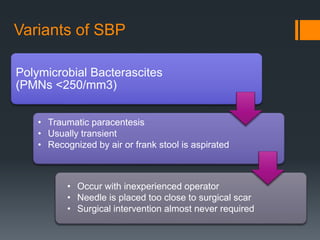
  • #11 Bacteria leak as a result of penetration of bowel
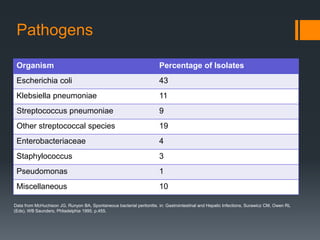
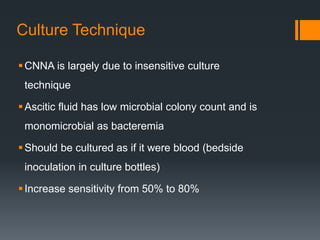
  • #13 Initially it was thought that ascitic fluid has high colony count polymicrobial infection as in surgical peritonitis but it has been recognized that it has low count as in bacteremia and in monomicrobial
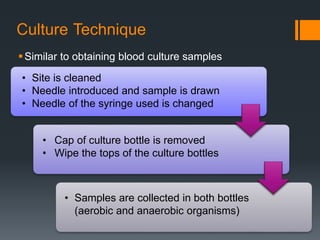
  • #14 This slide depicts the simple method of collecting the sample for culture similar to what we usually do for blood cultures
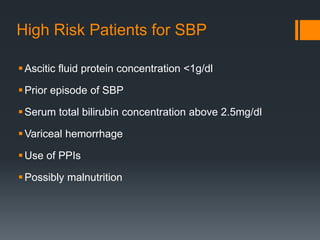
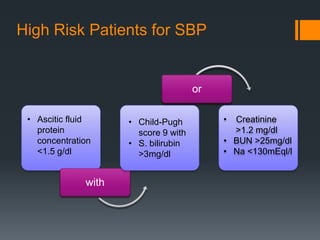
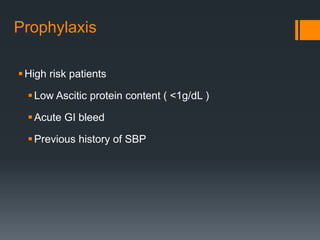
  • #17 Pts who develop SBP have usually advance cirrhosis of liver, there are certain indicator which warn treating physicians for Development of this potentially devastating condition.
  • #18 Different studies were carried out and they summarized the high risk markers to predict the SBP
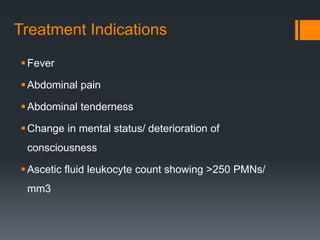
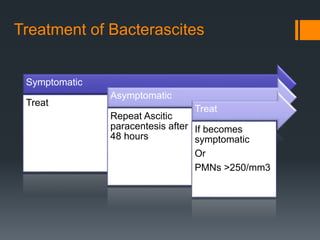
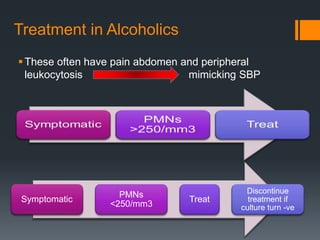
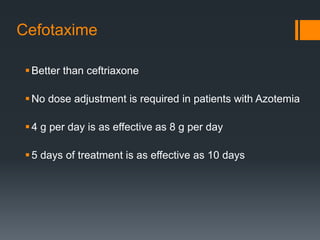
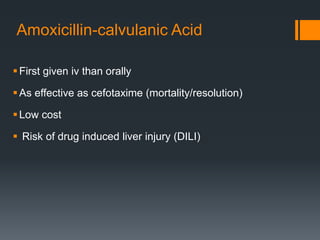
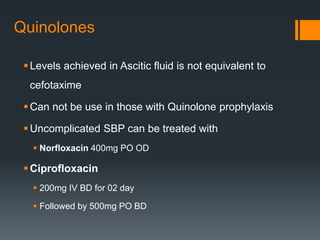
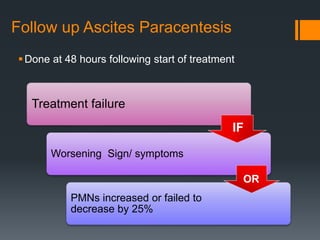
  • #19 Treatment of the SBP depends on the clinical as well as lab parameters ….. Once diagnostic abdominal paracentesis is done treatment will not be with hold pending the results of ascitic fluid examination if the pt is febrile or having s/s of peritonitis or deterioration conscious level.
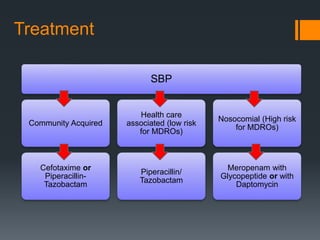
  • #24 MDROs are defined by acquired non-susceptibility to at least one agent in three or more anti-microbial categories. Glycopeptide antibiotic. ... Significant glycopeptide antibiotics include the anti-infective antibiotics vancomycin, teicoplanin, telavancin, ramoplanin and decaplanin, and the antitumor antibiotic bleomycin.
  • #27 Uncomplicated ascites is one with no enceph , renal impairment, shock, GI bleeding, Ileus.
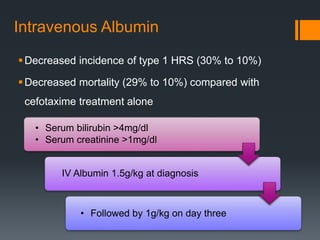
  • #29 Pts with SBP at risk of circulatory failure, hepatic enceph and type 1 HRS with 20% hospital mortality despite infection resolution. Its unclear weather pt not meeting the criteria should be given iv albumin or not.
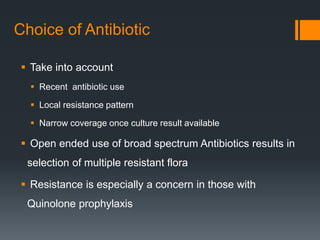
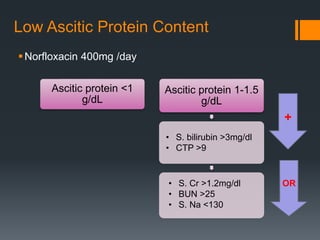
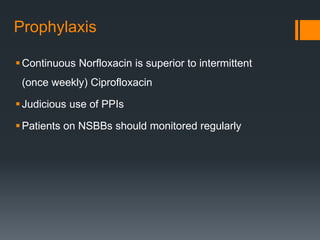
  • #30 Prophylaxis should strictly be restricted to high risk patients , and injudicious use of antibiotics may lead to selection of resistant organisms.
  • #32 Cumulative risk of SBP recurrence is 70% Probability of survival after 1 year is 30-50% and 25-30% at 2 years.
  • #33 Mortality is low if treated prior to development of shock or frank renal failure. Regardless of short term mortality long term mortality is as shown