Hemorrhoid
Mohammed AlHinai
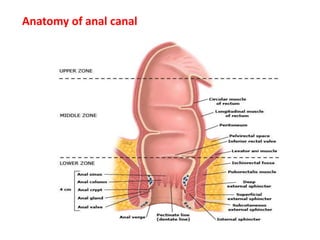
Anatomy of anal canal
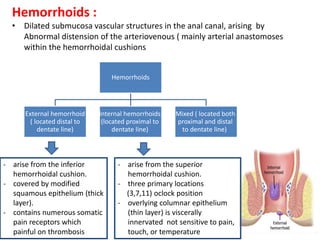
Hemorrhoids :
• Dilated submucosa vascular structures in the anal canal, arising by
Abnormal distension of the arteriovenous ( mainly arterial anastomoses
within the hemorrhoidal cushions
Hemorrhoids
External hemorrhoid
( located distal to
dentate line)
Internal hemorrhoids
(located proximal to
dentate line)
Mixed ( located both
proximal and distal
to dentate line)
- arise from the inferior
hemorrhoidal cushion.
- covered by modified
squamous epithelium (thick
layer).
- contains numerous somatic
pain receptors which
painful on thrombosis
- arise from the superior
hemorrhoidal cushion.
- three primary locations
(3,7,11) oclock position
- overlying columnar epithelium
(thin layer) is viscerally
innervated not sensitive to pain,
touch, or temperature
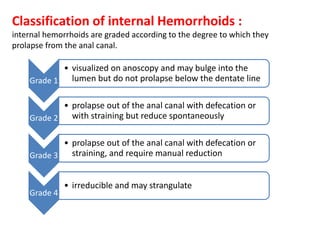
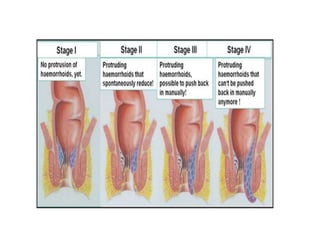
Classification of internal Hemorrhoids :
internal hemorrhoids are graded according to the degree to which they
prolapse from the anal canal.
Grade 1
• visualized on anoscopy and may bulge into the
lumen but do not prolapse below the dentate line
Grade 2
• prolapse out of the anal canal with defecation or
with straining but reduce spontaneously
Grade 3
• prolapse out of the anal canal with defecation or
straining, and require manual reduction
Grade 4
• irreducible and may strangulate
Risk factor:
• advancing age
• Diarrhea and chronic constipation.
• Pregnancy
• pelvic tumors
• prolonged sitting
• Straining
• patients on anticoagulation and antiplatelet therapy
Pathogenesis : multiple factor
• advancing age or aggravating conditions, the weakly anchored
hemorrhoids then gradually begin to bulge, and "slide" into the anal canal.
• by Hypertrophy or increased tone of the internal anal sphincter, the fecal
bolus forces the hemorrhoidal plexus against the internal sphincter during
defecation causes them to enlarge.
• Abnormal distension of the arteriovenous anastomoses within the
hemorrhoidal cushions
• Abnormal dilatation of the veins of the internal hemorrhoidal venous
plexus.
• Liver cirhosis not cause hemorrhoid but may associated with severe
bleeding through the hemorrhoid as coagulopathy.
• External hemorrhoid painful without bleeding as ( thick layer of muscosa )
and usually associated with thrombosis.
Clinical features:
History :
Age : occur any ages but uncommon below 20 years and extremely rare in
children.
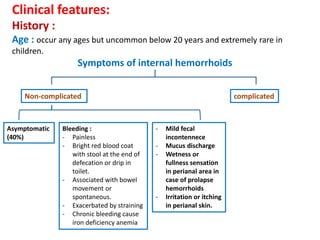
Symptoms of internal hemorrhoids
Non-complicated complicated
Asymptomatic
(40%)
Bleeding :
- Painless
- Bright red blood coat
with stool at the end of
defecation or drip in
toilet.
- Associated with bowel
movement or
spontaneous.
- Exacerbated by straining
- Chronic bleeding cause
iron deficiency anemia
- Mild fecal
incontennece
- Mucus discharge
- Wetness or
fullness sensation
in perianal area in
case of prolapse
hemorrhoids
- Irritation or itching
in perianal skin.
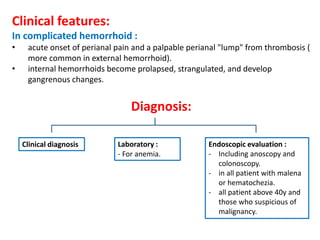
Clinical features:
In complicated hemorrhoid :
• acute onset of perianal pain and a palpable perianal "lump" from thrombosis (
more common in external hemorrhoid).
• internal hemorrhoids become prolapsed, strangulated, and develop
gangrenous changes.
Diagnosis:
Clinical diagnosis Laboratory :
- For anemia.
Endoscopic evaluation :
- Including anoscopy and
colonoscopy.
- in all patient with malena
or hematochezia.
- all patient above 40y and
those who suspicious of
malignancy.
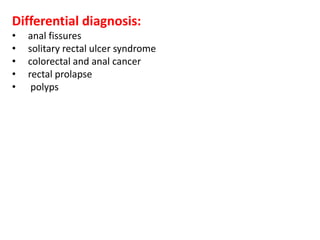
Differential diagnosis:
• anal fissures
• solitary rectal ulcer syndrome
• colorectal and anal cancer
• rectal prolapse
• polyps
Management: according to grade and complication
Hemorrhoids
- Internal hemorrhoid grade (1 – 2 )
- Internal hemorrhoid grade (3-4)
- external hemorrhoid
- Thrombosed inetrnal hemorrhoid
Conservative therapy Non surgical office-
based procedure (
rubber banding –
sclerotherapy ….)
No Definitive surgical
treatment
(hemorrhoidectomy)
No
Complication of banding :
commonly pain and infection
perianal skin irritation.
Bleeding less common
Complication: commonly
urinary retention
pain – infection - Bleeding
less common
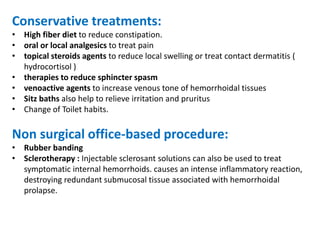
Conservative treatments:
• High fiber diet to reduce constipation.
• oral or local analgesics to treat pain
• topical steroids agents to reduce local swelling or treat contact dermatitis (
hydrocortisol )
• therapies to reduce sphincter spasm
• venoactive agents to increase venous tone of hemorrhoidal tissues
• Sitz baths also help to relieve irritation and pruritus
• Change of Toilet habits.
Non surgical office-based procedure:
• Rubber banding
• Sclerotherapy : Injectable sclerosant solutions can also be used to treat
symptomatic internal hemorrhoids. causes an intense inflammatory reaction,
destroying redundant submucosal tissue associated with hemorrhoidal
prolapse.

Hemorrhoid

  • 1.
  • 2.
  • 3.
    Hemorrhoids : • Dilatedsubmucosa vascular structures in the anal canal, arising by Abnormal distension of the arteriovenous ( mainly arterial anastomoses within the hemorrhoidal cushions Hemorrhoids External hemorrhoid ( located distal to dentate line) Internal hemorrhoids (located proximal to dentate line) Mixed ( located both proximal and distal to dentate line) - arise from the inferior hemorrhoidal cushion. - covered by modified squamous epithelium (thick layer). - contains numerous somatic pain receptors which painful on thrombosis - arise from the superior hemorrhoidal cushion. - three primary locations (3,7,11) oclock position - overlying columnar epithelium (thin layer) is viscerally innervated not sensitive to pain, touch, or temperature
  • 4.
    Classification of internalHemorrhoids : internal hemorrhoids are graded according to the degree to which they prolapse from the anal canal. Grade 1 • visualized on anoscopy and may bulge into the lumen but do not prolapse below the dentate line Grade 2 • prolapse out of the anal canal with defecation or with straining but reduce spontaneously Grade 3 • prolapse out of the anal canal with defecation or straining, and require manual reduction Grade 4 • irreducible and may strangulate
  • 6.
    Risk factor: • advancingage • Diarrhea and chronic constipation. • Pregnancy • pelvic tumors • prolonged sitting • Straining • patients on anticoagulation and antiplatelet therapy Pathogenesis : multiple factor • advancing age or aggravating conditions, the weakly anchored hemorrhoids then gradually begin to bulge, and "slide" into the anal canal. • by Hypertrophy or increased tone of the internal anal sphincter, the fecal bolus forces the hemorrhoidal plexus against the internal sphincter during defecation causes them to enlarge. • Abnormal distension of the arteriovenous anastomoses within the hemorrhoidal cushions • Abnormal dilatation of the veins of the internal hemorrhoidal venous plexus.
  • 7.
    • Liver cirhosisnot cause hemorrhoid but may associated with severe bleeding through the hemorrhoid as coagulopathy. • External hemorrhoid painful without bleeding as ( thick layer of muscosa ) and usually associated with thrombosis.
  • 8.
    Clinical features: History : Age: occur any ages but uncommon below 20 years and extremely rare in children. Symptoms of internal hemorrhoids Non-complicated complicated Asymptomatic (40%) Bleeding : - Painless - Bright red blood coat with stool at the end of defecation or drip in toilet. - Associated with bowel movement or spontaneous. - Exacerbated by straining - Chronic bleeding cause iron deficiency anemia - Mild fecal incontennece - Mucus discharge - Wetness or fullness sensation in perianal area in case of prolapse hemorrhoids - Irritation or itching in perianal skin.
  • 9.
    Clinical features: In complicatedhemorrhoid : • acute onset of perianal pain and a palpable perianal "lump" from thrombosis ( more common in external hemorrhoid). • internal hemorrhoids become prolapsed, strangulated, and develop gangrenous changes. Diagnosis: Clinical diagnosis Laboratory : - For anemia. Endoscopic evaluation : - Including anoscopy and colonoscopy. - in all patient with malena or hematochezia. - all patient above 40y and those who suspicious of malignancy.
  • 10.
    Differential diagnosis: • analfissures • solitary rectal ulcer syndrome • colorectal and anal cancer • rectal prolapse • polyps
  • 11.
    Management: according tograde and complication Hemorrhoids - Internal hemorrhoid grade (1 – 2 ) - Internal hemorrhoid grade (3-4) - external hemorrhoid - Thrombosed inetrnal hemorrhoid Conservative therapy Non surgical office- based procedure ( rubber banding – sclerotherapy ….) No Definitive surgical treatment (hemorrhoidectomy) No Complication of banding : commonly pain and infection perianal skin irritation. Bleeding less common Complication: commonly urinary retention pain – infection - Bleeding less common
  • 12.
    Conservative treatments: • Highfiber diet to reduce constipation. • oral or local analgesics to treat pain • topical steroids agents to reduce local swelling or treat contact dermatitis ( hydrocortisol ) • therapies to reduce sphincter spasm • venoactive agents to increase venous tone of hemorrhoidal tissues • Sitz baths also help to relieve irritation and pruritus • Change of Toilet habits. Non surgical office-based procedure: • Rubber banding • Sclerotherapy : Injectable sclerosant solutions can also be used to treat symptomatic internal hemorrhoids. causes an intense inflammatory reaction, destroying redundant submucosal tissue associated with hemorrhoidal prolapse.