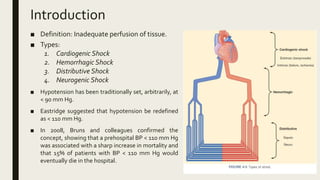
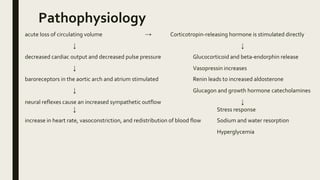
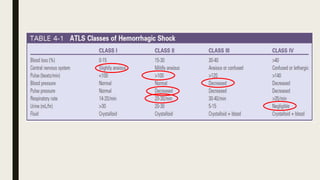
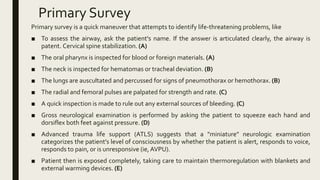
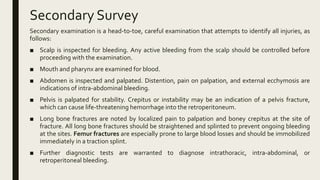
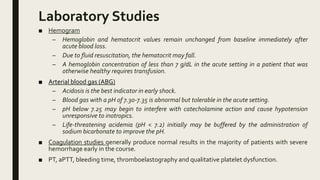
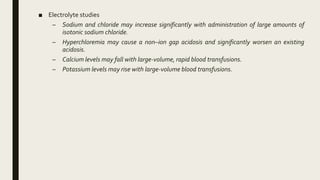
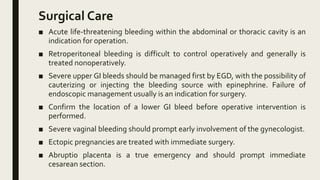

This document discusses hemorrhagic shock, which is a condition of reduced tissue perfusion caused by a loss of circulating blood volume from trauma or gastrointestinal bleeding. It outlines the pathophysiology, signs and symptoms, diagnostic evaluation including lab tests and imaging, and management with fluid resuscitation, blood transfusions, controlling the source of bleeding surgically if needed, and treating complications. The key points are that hemorrhagic shock results from acute blood loss, causes decreased cardiac output and blood pressure, and must be promptly diagnosed and treated by replacing fluid volume and identifying and stopping the source of bleeding.


