
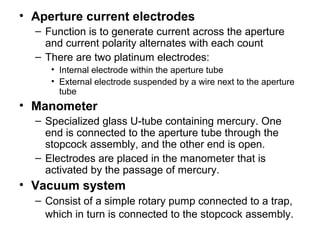
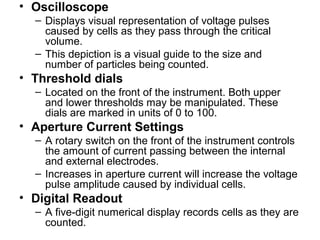
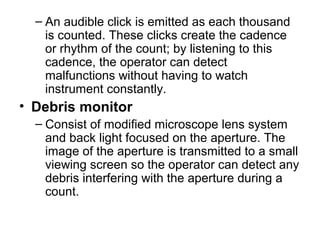
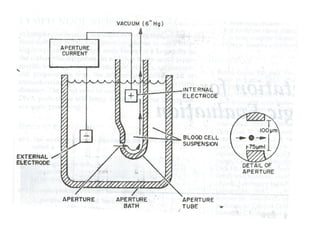
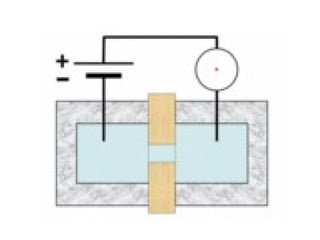
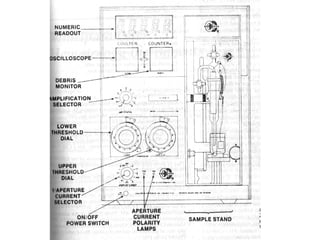
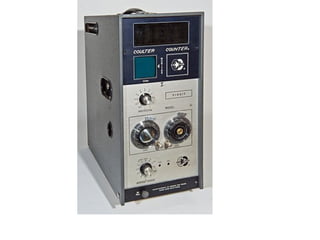
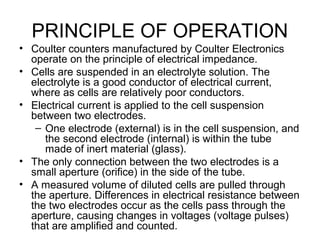
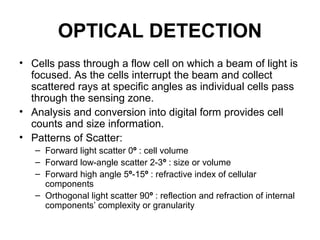
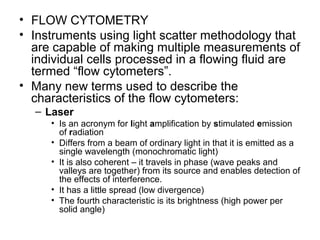
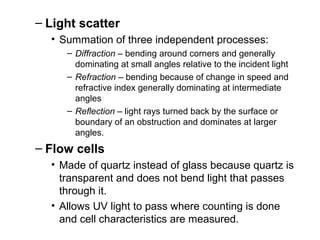
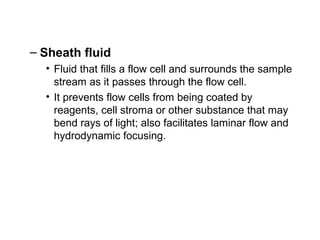

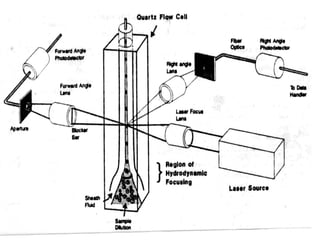

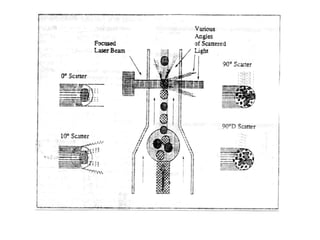
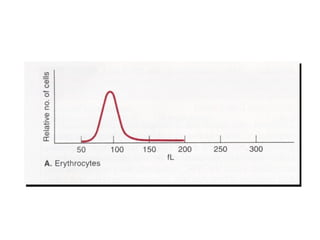
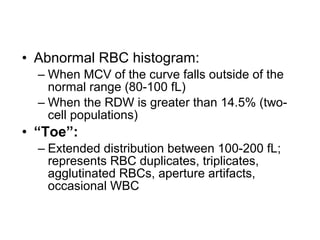
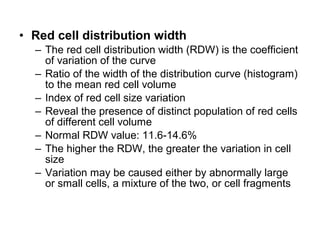
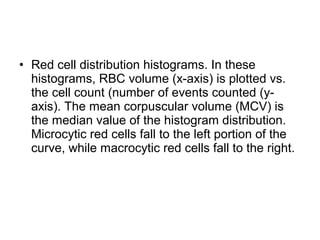
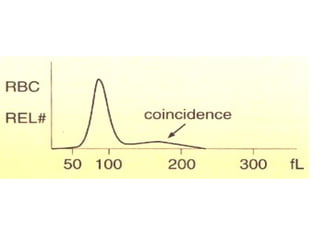
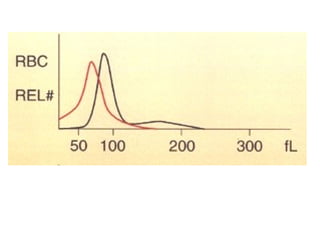
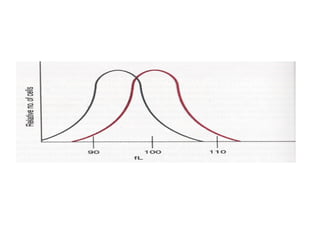

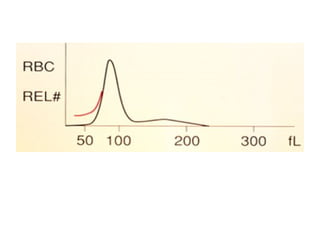

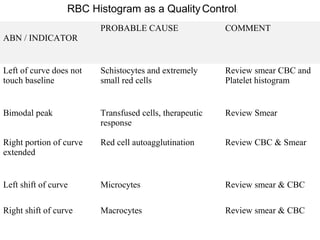
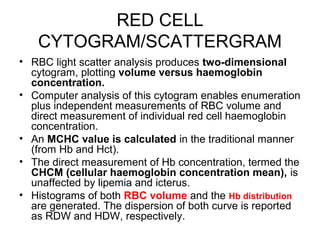
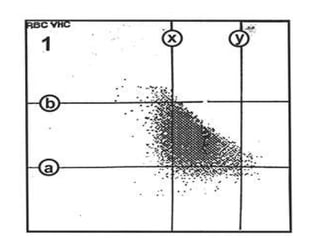
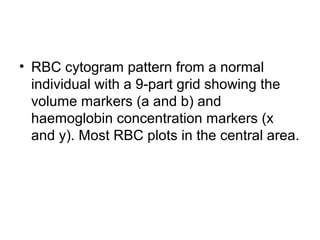
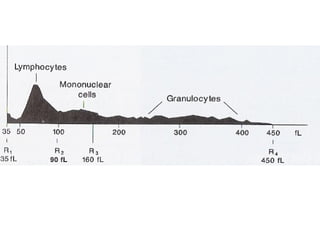
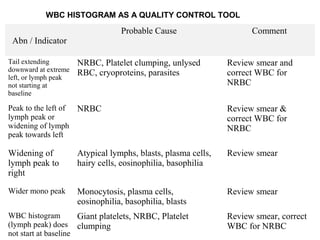

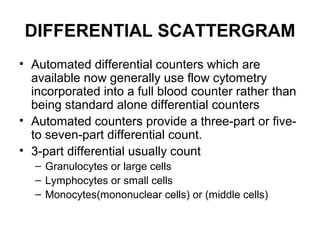
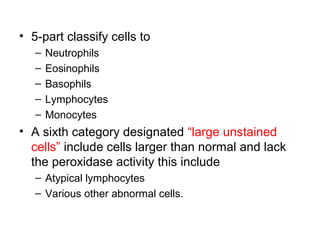
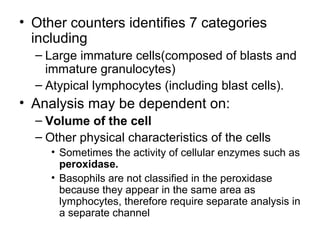
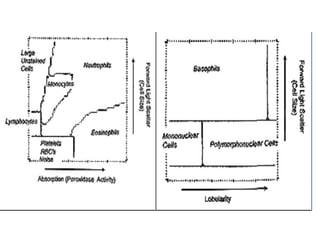
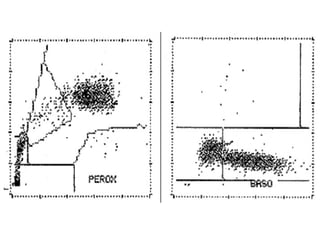





Hematology automation began in the 1930s with methods to automatically count blood cells passing through a capillary tube using optics. In the 1940s-1950s, two main instruments were introduced - one using darkfield optics and capillary counting, the other using electrical impedance counting. Modern hematology analyzers use electrical impedance or optical detection principles to count and size blood cells by measuring electrical resistance pulses or light scattering patterns produced as cells pass through apertures or laser beams. They provide automated complete blood cell counts, classifications, and associated parameters through calibration and computer analysis.


