Prof. U. C. SAMAL
MD, FICC, FACC, FIACM, FIAE, FISE, FISC, FAPVS
Ex- Prof. Cardiology & Ex-HOD Medicine
Patna Medical College, Patna, Bihar
Past President, Indian College of Cardiology
Permanent & Chief Trustee, ICC-Heart Failure Foundation
National Convener Heart Failure Sub Specialty, CSI
Executive Member (National), Cardiological Society of India
President, CSI Bihar / Vice President, API Bihar 1
HEART FAILURE
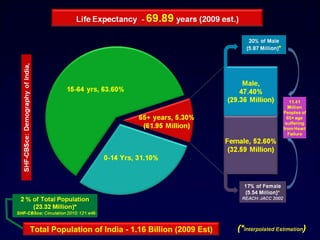
Total Population of India - 1.16 Billion (2009 Est)
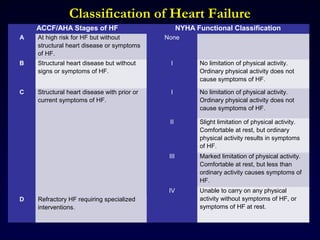
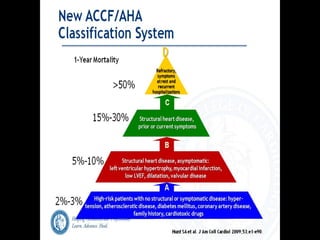
Classification of Heart Failure
ACCF/AHA Stages of HF NYHA Functional Classification
A At high risk for HF but without
structural heart disease or symptoms
of HF.
None
B Structural heart disease but without
signs or symptoms of HF.
I No limitation of physical activity.
Ordinary physical activity does not
cause symptoms of HF.
C Structural heart disease with prior or
current symptoms of HF.
I No limitation of physical activity.
Ordinary physical activity does not
cause symptoms of HF.
II Slight limitation of physical activity.
Comfortable at rest, but ordinary
physical activity results in symptoms
of HF.
III Marked limitation of physical activity.
Comfortable at rest, but less than
ordinary activity causes symptoms of
HF.
IV Unable to carry on any physical
activity without symptoms of HF, or
symptoms of HF at rest.
D Refractory HF requiring specialized
interventions.
Stages, Phenotypes and Treatment of HF
2013 ACCF/AHA Guideline for the Management of Heart Failure
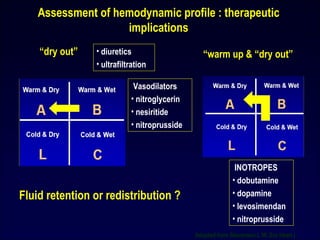
• diuretics
• ultrafiltration
Vasodilators
• nitroglycerin
• nesiritide
• nitroprusside
INOTROPES
• dobutamine
• dopamine
• levosimendan
• nitroprusside
Fluid retention or redistribution ?
“dry out” “warm up & “dry out”
Assessment of hemodynamic profile : therapeutic
implications
Adapted from Stevenson L W, Eur Heart j
7
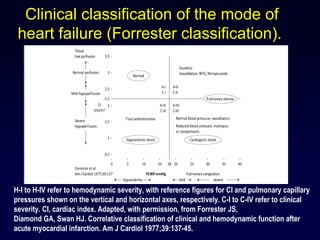
Clinical classification of the mode of
heart failure (Forrester classification).
8
H-I to H-IV refer to hemodynamic severity, with reference figures for CI and pulmonary capillary
pressures shown on the vertical and horizontal axes, respectively. C-I to C-IV refer to clinical
severity. CI, cardiac index. Adapted, with permission, from Forrester JS,
Diamond GA, Swan HJ. Correlative classification of clinical and hemodynamic function after
acute myocardial infarction. Am J Cardiol 1977;39:137-45.
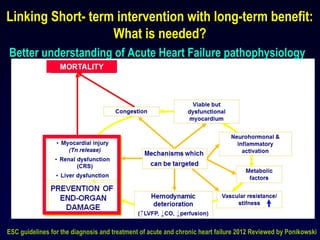
Linking Short- term intervention with long-term benefit:
What is needed?
Better understanding of Acute Heart Failure pathophysiology
ESC guidelines for the diagnosis and treatment of acute and chronic heart failure 2012 Reviewed by Ponikowski
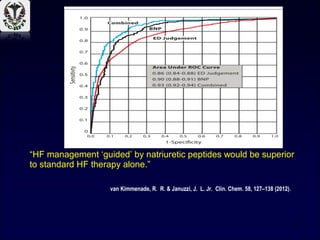
“HF management ‘guided’ by natriuretic peptides would be superior
to standard HF therapy alone.”
11
van Kimmenade, R. R. & Januzzi, J. L. Jr. Clin. Chem. 58, 127–138 (2012).
12
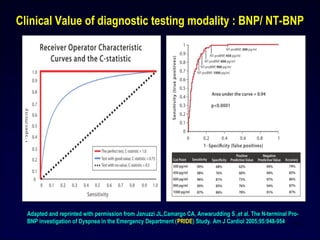
Clinical Value of diagnostic testing modality : BNP/ NT-BNP
Adapted and reprinted with permission from Januzzi JL,Camargo CA, Anwarudding S ,et al. The N-terminal Pro-
BNP investigation of Dyspnea in the Emergency Department (PRIDE) Study. Am J Cardiol 2005;95:948-954
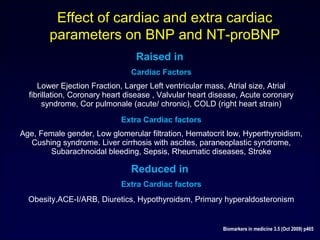
Effect of cardiac and extra cardiac
parameters on BNP and NT-proBNP
Raised in
Cardiac Factors
Lower Ejection Fraction, Larger Left ventricular mass, Atrial size, Atrial
fibrillation, Coronary heart disease , Valvular heart disease, Acute coronary
syndrome, Cor pulmonale (acute/ chronic), COLD (right heart strain)
Extra Cardiac factors
Age, Female gender, Low glomerular filtration, Hematocrit low, Hyperthyroidism,
Cushing syndrome. Liver cirrhosis with ascites, paraneoplastic syndrome,
Subarachnoidal bleeding, Sepsis, Rheumatic diseases, Stroke
Reduced in
Extra Cardiac factors
Obesity,ACE-I/ARB, Diuretics, Hypothyroidsm, Primary hyperaldosteronism
Biomarkers in medicine 3.5 (Oct 2009) p465
13
14
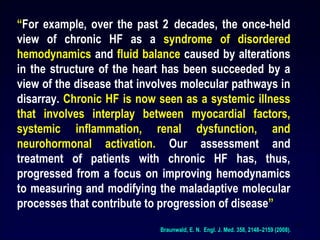
“For example, over the past 2 decades, the once-held
view of chronic HF as a syndrome of disordered
hemodynamics and fluid balance caused by alterations
in the structure of the heart has been succeeded by a
view of the disease that involves molecular pathways in
disarray. Chronic HF is now seen as a systemic illness
that involves interplay between myocardial factors,
systemic inflammation, renal dysfunction, and
neurohormonal activation. Our assessment and
treatment of patients with chronic HF has, thus,
progressed from a focus on improving hemodynamics
to measuring and modifying the maladaptive molecular
processes that contribute to progression of disease”
Braunwald, E. N. Engl. J. Med. 358, 2148–2159 (2008).
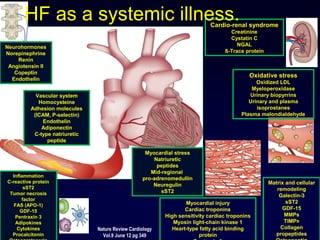
Neurohormones
Norepinephrine
Renin
Angiotensin II
Copeptin
Endothelin
Vascular system
Homocysteine
Adhesion molecules
(ICAM, P-selectin)
Endothelin
Adiponectin
C-type natriuretic
peptide
Inflammation
C-reactive protein
sST2
Tumor necrosis
factor
FAS (APO-1)
GDF-15
Pentraxin 3
Adipokines
Cytokines
Procalcitonin
Myocardial stress
Natriuretic
peptides
Mid-regional
pro-adrenomedullin
Neuregulin
sST2
Myocardial injury
Cardiac troponins
High sensitivity cardiac troponins
Myosin light-chain kinase 1
Heart-type fatty acid binding
protein
Matrix and cellular
remodeling
Galectin-3
sST2
GDF-15
MMPs
TIMPs
Collagen
propeptides
Cardio-renal syndrome
Creatinine
Cystatin C
NGAL
ß-Trace protein
Oxidative stress
Oxidized LDL
Myeloperoxidase
Urinary biopyrrins
Urinary and plasma
isoprostanes
Plasma malondialdehyde
HF as a systemic illness.
15
Nature Review Cardiology
Vol.9 June 12 pg 349
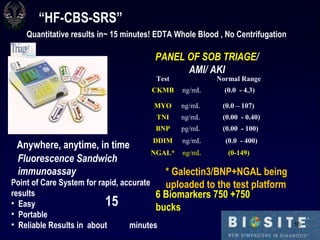
“HF-CBS-SRS”
Quantitative results in~ 15 minutes! EDTA Whole Blood , No Centrifugation
Anywhere, anytime, in time
Point of Care System for rapid, accurate
results
• Easy
• Portable
• Reliable Results in about minutes
Fluorescence Sandwich
immunoassay
Test Normal Range
CKMB ng/mL (0.0 - 4.3)
MYO ng/mL (0.0 – 107)
TNI ng/mL (0.00 - 0.40)
BNP pg/mL (0.00 - 100)
DDIM ng/mL (0.0 - 400)
NGAL* ng/mL (0-149)
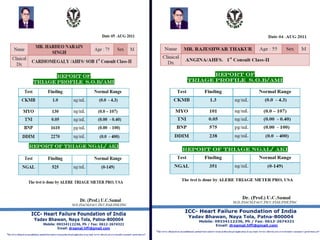
PANEL OF SOB TRIAGE/
AMI/ AKI
15
6 Biomarkers 750 +750
bucks
* Galectin3/BNP+NGAL being
uploaded to the test platform
16
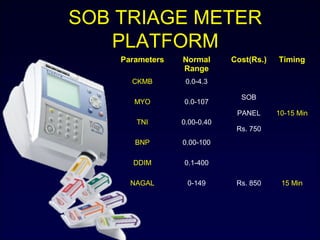
SOB TRIAGE METER
PLATFORM
Parameters Normal
Range
Cost(Rs.) Timing
CKMB 0.0-4.3
SOB
PANEL
Rs. 750
10-15 Min
MYO 0.0-107
TNI 0.00-0.40
BNP 0.00-100
DDIM 0.1-400
NAGAL 0-149 Rs. 850 15 Min
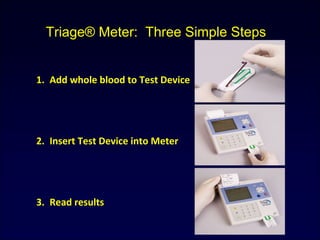
Triage® Meter: Three Simple Steps
1. Add whole blood to Test Device
2. Insert Test Device into Meter
3. Read results
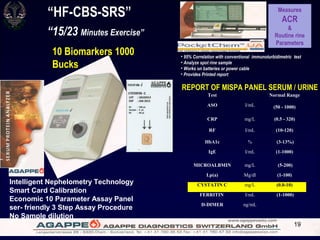
Intelligent Nephelometry Technology
Smart Card Calibration
Economic 10 Parameter Assay Panel
ser- friendly 3 Step Assay Procedure
No Sample dilution
Test Normal Range
ASO I/mL (50 - 1000)
CRP mg/L (0.5 - 320)
RF I/mL (10-120)
HbA1c % (3-13%)
IgE I/mL (1-1000)
MICROALBMIN mg/L (5-200)
Lp(a) Mg/dl (1-100)
CYSTATIN C mg/L (0.0-10)
FERRITIN I/mL (1-1000)
D-DIMER ng/mL
REPORT OF MISPA PANEL SERUM / URINE
“HF-CBS-SRS” Measures
ACR
&
Routine rine
Parameters
• 95% Correlation with conventional immunoturbidimetric test
• Analyze spot rine sample
• Works on batteries or power cable
• Provides Printed report
“15/23 Minutes Exercise”
10 Biomarkers 1000
Bucks
19
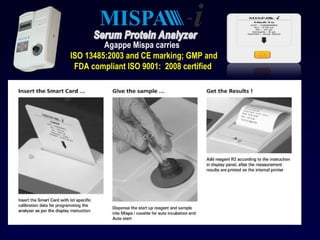
Agappe Mispa carries
ISO 13485:2003 and CE marking; GMP and
FDA compliant ISO 9001: 2008 certified
1st Ht Consult
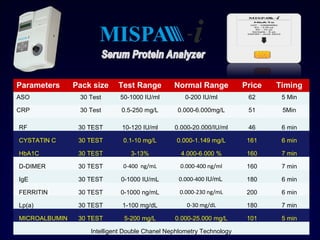
Parameters Pack size Test Range Normal Range Price Timing
ASO 30 Test 50-1000 IU/ml 0-200 IU/ml 62 5 Min
CRP 30 Test 0.5-250 mg/L 0.000-6.000mg/L 51 5Min
RF 30 TEST 10-120 IU/ml 0.000-20.000/IU/ml 46 6 min
CYSTATIN C 30 TEST 0.1-10 mg/L 0.000-1.149 mg/L 161 6 min
HbA1C 30 TEST 3-13% 4.000-6.000 % 160 7 min
D-DIMER 30 TEST 0-400 ng/mL 0.000-400 ng/ml 160 7 min
IgE 30 TEST 0-1000 IU/mL 0.000-400 IU/mL 180 6 min
FERRITIN 30 TEST 0-1000 ng/mL 0.000-230 ng/mL 200 6 min
Lp(a) 30 TEST 1-100 mg/dL 0-30 mg/dL 180 7 min
MICROALBUMIN 30 TEST 5-200 mg/L 0.000-25.000 mg/L 101 5 min
Intelligent Double Chanel Nephlometry Technology
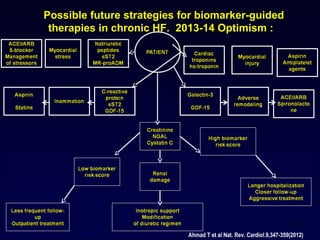
Possible future strategies for biomarker-guided
therapies in chronic HF. 2013-14 Optimism :
Ahmad T et al Nat. Rev. Cardiol.9,347-359(2012)
23
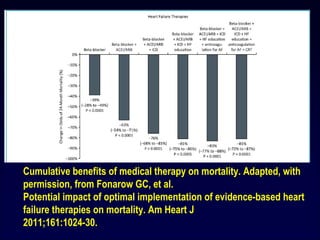
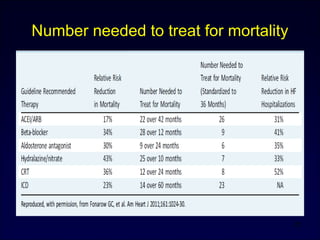
Cumulative benefits of medical therapy on mortality. Adapted, with
permission, from Fonarow GC, et al.
Potential impact of optimal implementation of evidence-based heart
failure therapies on mortality. Am Heart J
2011;161:1024-30.
Number needed to treat for mortality
25
HF----
We are all equals but some are better equals
Heart Failurists are less equal
28
29
Heart Failure

Heart Failure

  • 1.
    Prof. U. C.SAMAL MD, FICC, FACC, FIACM, FIAE, FISE, FISC, FAPVS Ex- Prof. Cardiology & Ex-HOD Medicine Patna Medical College, Patna, Bihar Past President, Indian College of Cardiology Permanent & Chief Trustee, ICC-Heart Failure Foundation National Convener Heart Failure Sub Specialty, CSI Executive Member (National), Cardiological Society of India President, CSI Bihar / Vice President, API Bihar 1 HEART FAILURE
  • 3.
    Total Population ofIndia - 1.16 Billion (2009 Est)
  • 4.
    Classification of HeartFailure ACCF/AHA Stages of HF NYHA Functional Classification A At high risk for HF but without structural heart disease or symptoms of HF. None B Structural heart disease but without signs or symptoms of HF. I No limitation of physical activity. Ordinary physical activity does not cause symptoms of HF. C Structural heart disease with prior or current symptoms of HF. I No limitation of physical activity. Ordinary physical activity does not cause symptoms of HF. II Slight limitation of physical activity. Comfortable at rest, but ordinary physical activity results in symptoms of HF. III Marked limitation of physical activity. Comfortable at rest, but less than ordinary activity causes symptoms of HF. IV Unable to carry on any physical activity without symptoms of HF, or symptoms of HF at rest. D Refractory HF requiring specialized interventions.
  • 5.
    Stages, Phenotypes andTreatment of HF 2013 ACCF/AHA Guideline for the Management of Heart Failure
  • 7.
    • diuretics • ultrafiltration Vasodilators •nitroglycerin • nesiritide • nitroprusside INOTROPES • dobutamine • dopamine • levosimendan • nitroprusside Fluid retention or redistribution ? “dry out” “warm up & “dry out” Assessment of hemodynamic profile : therapeutic implications Adapted from Stevenson L W, Eur Heart j 7
  • 8.
    Clinical classification ofthe mode of heart failure (Forrester classification). 8 H-I to H-IV refer to hemodynamic severity, with reference figures for CI and pulmonary capillary pressures shown on the vertical and horizontal axes, respectively. C-I to C-IV refer to clinical severity. CI, cardiac index. Adapted, with permission, from Forrester JS, Diamond GA, Swan HJ. Correlative classification of clinical and hemodynamic function after acute myocardial infarction. Am J Cardiol 1977;39:137-45.
  • 9.
    Linking Short- termintervention with long-term benefit: What is needed? Better understanding of Acute Heart Failure pathophysiology ESC guidelines for the diagnosis and treatment of acute and chronic heart failure 2012 Reviewed by Ponikowski
  • 11.
    “HF management ‘guided’by natriuretic peptides would be superior to standard HF therapy alone.” 11 van Kimmenade, R. R. & Januzzi, J. L. Jr. Clin. Chem. 58, 127–138 (2012).
  • 12.
    12 Clinical Value ofdiagnostic testing modality : BNP/ NT-BNP Adapted and reprinted with permission from Januzzi JL,Camargo CA, Anwarudding S ,et al. The N-terminal Pro- BNP investigation of Dyspnea in the Emergency Department (PRIDE) Study. Am J Cardiol 2005;95:948-954
  • 13.
    Effect of cardiacand extra cardiac parameters on BNP and NT-proBNP Raised in Cardiac Factors Lower Ejection Fraction, Larger Left ventricular mass, Atrial size, Atrial fibrillation, Coronary heart disease , Valvular heart disease, Acute coronary syndrome, Cor pulmonale (acute/ chronic), COLD (right heart strain) Extra Cardiac factors Age, Female gender, Low glomerular filtration, Hematocrit low, Hyperthyroidism, Cushing syndrome. Liver cirrhosis with ascites, paraneoplastic syndrome, Subarachnoidal bleeding, Sepsis, Rheumatic diseases, Stroke Reduced in Extra Cardiac factors Obesity,ACE-I/ARB, Diuretics, Hypothyroidsm, Primary hyperaldosteronism Biomarkers in medicine 3.5 (Oct 2009) p465 13
  • 14.
    14 “For example, overthe past 2 decades, the once-held view of chronic HF as a syndrome of disordered hemodynamics and fluid balance caused by alterations in the structure of the heart has been succeeded by a view of the disease that involves molecular pathways in disarray. Chronic HF is now seen as a systemic illness that involves interplay between myocardial factors, systemic inflammation, renal dysfunction, and neurohormonal activation. Our assessment and treatment of patients with chronic HF has, thus, progressed from a focus on improving hemodynamics to measuring and modifying the maladaptive molecular processes that contribute to progression of disease” Braunwald, E. N. Engl. J. Med. 358, 2148–2159 (2008).
  • 15.
    Neurohormones Norepinephrine Renin Angiotensin II Copeptin Endothelin Vascular system Homocysteine Adhesionmolecules (ICAM, P-selectin) Endothelin Adiponectin C-type natriuretic peptide Inflammation C-reactive protein sST2 Tumor necrosis factor FAS (APO-1) GDF-15 Pentraxin 3 Adipokines Cytokines Procalcitonin Myocardial stress Natriuretic peptides Mid-regional pro-adrenomedullin Neuregulin sST2 Myocardial injury Cardiac troponins High sensitivity cardiac troponins Myosin light-chain kinase 1 Heart-type fatty acid binding protein Matrix and cellular remodeling Galectin-3 sST2 GDF-15 MMPs TIMPs Collagen propeptides Cardio-renal syndrome Creatinine Cystatin C NGAL ß-Trace protein Oxidative stress Oxidized LDL Myeloperoxidase Urinary biopyrrins Urinary and plasma isoprostanes Plasma malondialdehyde HF as a systemic illness. 15 Nature Review Cardiology Vol.9 June 12 pg 349
  • 16.
    “HF-CBS-SRS” Quantitative results in~15 minutes! EDTA Whole Blood , No Centrifugation Anywhere, anytime, in time Point of Care System for rapid, accurate results • Easy • Portable • Reliable Results in about minutes Fluorescence Sandwich immunoassay Test Normal Range CKMB ng/mL (0.0 - 4.3) MYO ng/mL (0.0 – 107) TNI ng/mL (0.00 - 0.40) BNP pg/mL (0.00 - 100) DDIM ng/mL (0.0 - 400) NGAL* ng/mL (0-149) PANEL OF SOB TRIAGE/ AMI/ AKI 15 6 Biomarkers 750 +750 bucks * Galectin3/BNP+NGAL being uploaded to the test platform 16
  • 17.
    SOB TRIAGE METER PLATFORM ParametersNormal Range Cost(Rs.) Timing CKMB 0.0-4.3 SOB PANEL Rs. 750 10-15 Min MYO 0.0-107 TNI 0.00-0.40 BNP 0.00-100 DDIM 0.1-400 NAGAL 0-149 Rs. 850 15 Min
  • 18.
    Triage® Meter: ThreeSimple Steps 1. Add whole blood to Test Device 2. Insert Test Device into Meter 3. Read results
  • 19.
    Intelligent Nephelometry Technology SmartCard Calibration Economic 10 Parameter Assay Panel ser- friendly 3 Step Assay Procedure No Sample dilution Test Normal Range ASO I/mL (50 - 1000) CRP mg/L (0.5 - 320) RF I/mL (10-120) HbA1c % (3-13%) IgE I/mL (1-1000) MICROALBMIN mg/L (5-200) Lp(a) Mg/dl (1-100) CYSTATIN C mg/L (0.0-10) FERRITIN I/mL (1-1000) D-DIMER ng/mL REPORT OF MISPA PANEL SERUM / URINE “HF-CBS-SRS” Measures ACR & Routine rine Parameters • 95% Correlation with conventional immunoturbidimetric test • Analyze spot rine sample • Works on batteries or power cable • Provides Printed report “15/23 Minutes Exercise” 10 Biomarkers 1000 Bucks 19
  • 20.
    Agappe Mispa carries ISO13485:2003 and CE marking; GMP and FDA compliant ISO 9001: 2008 certified
  • 21.
  • 22.
    Parameters Pack sizeTest Range Normal Range Price Timing ASO 30 Test 50-1000 IU/ml 0-200 IU/ml 62 5 Min CRP 30 Test 0.5-250 mg/L 0.000-6.000mg/L 51 5Min RF 30 TEST 10-120 IU/ml 0.000-20.000/IU/ml 46 6 min CYSTATIN C 30 TEST 0.1-10 mg/L 0.000-1.149 mg/L 161 6 min HbA1C 30 TEST 3-13% 4.000-6.000 % 160 7 min D-DIMER 30 TEST 0-400 ng/mL 0.000-400 ng/ml 160 7 min IgE 30 TEST 0-1000 IU/mL 0.000-400 IU/mL 180 6 min FERRITIN 30 TEST 0-1000 ng/mL 0.000-230 ng/mL 200 6 min Lp(a) 30 TEST 1-100 mg/dL 0-30 mg/dL 180 7 min MICROALBUMIN 30 TEST 5-200 mg/L 0.000-25.000 mg/L 101 5 min Intelligent Double Chanel Nephlometry Technology
  • 23.
    Possible future strategiesfor biomarker-guided therapies in chronic HF. 2013-14 Optimism : Ahmad T et al Nat. Rev. Cardiol.9,347-359(2012) 23
  • 24.
    Cumulative benefits ofmedical therapy on mortality. Adapted, with permission, from Fonarow GC, et al. Potential impact of optimal implementation of evidence-based heart failure therapies on mortality. Am Heart J 2011;161:1024-30.
  • 25.
    Number needed totreat for mortality 25
  • 27.
    HF---- We are allequals but some are better equals Heart Failurists are less equal
  • 28.
  • 29.

Editor's Notes

  • #16 HF as a systemic illness. HF involves interplay between myocardial factors, systemic inflammation, renal dysfunction, and neurohormonal activation. Biomarkers can be classified according to broad categories of processes that are involved in the development and progression of chronic HF. Several biomarkers have been characterized for each of these processes; these vary greatly in their ease of measurement, cost, turnaround time, and evaluation in the clinical setting. Traditional biomarkers that have been studied fairly rigorously appear in italics. Abbreviations: APO, apoptosis antigen; GDF, growth-differentiation factor; HF, heart failure; ICAM, intercellular adhesion molecule; MMPs, matrix metalloproteinases; NGAL, neutrophil gelatinase-associated lipocalin; TIMPs, matrix metalloproteinase tissue inhibitors.