The European Heart Journal’s / European Journal
of Heart Failure’s year in cardiology
Piotr Ponikowski, MD, PhD, FESC
Medical University, Centre for Heart Disease
Clinical Military Hospital
Wroclaw, Poland
Acute and Advanced Heart Failure
Disclosure
Consultancy fees and speaker’s honoraria from:
Vifor Pharma Ltd, Amgen, Servier, Novartis, Bayer, Pfizer,
Johnson&Johnson, Abbott Vascular, Coridea, Respicardia
Research grant: Vifor Pharma Ltd, Respicardia
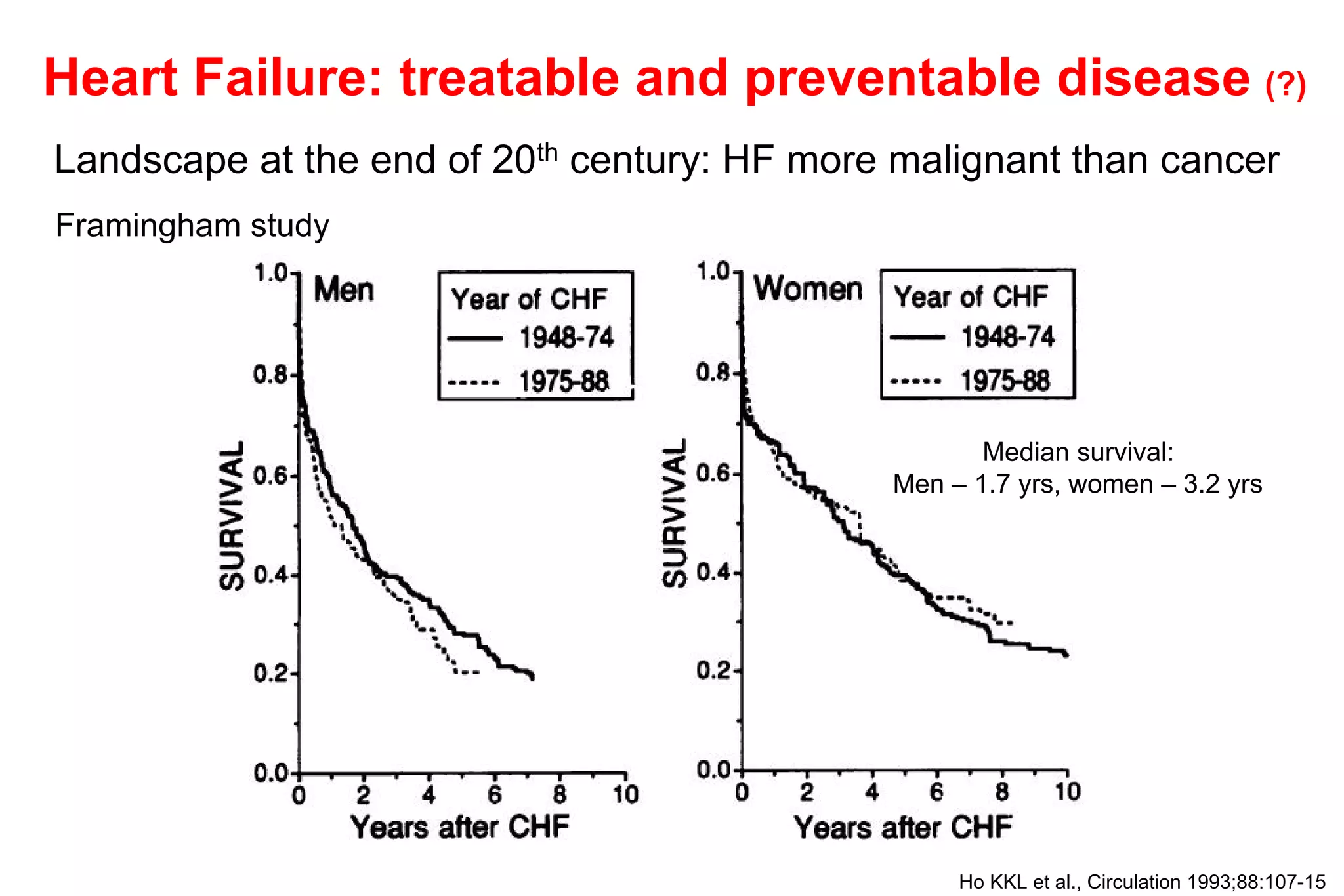
Heart Failure: treatable and preventable disease (?)
Landscape at the end of 20th century: HF more malignant than cancer
Framingham study
Median survival:
Men – 1.7 yrs, women – 3.2 yrs
Ho KKL et al., Circulation 1993;88:107-15
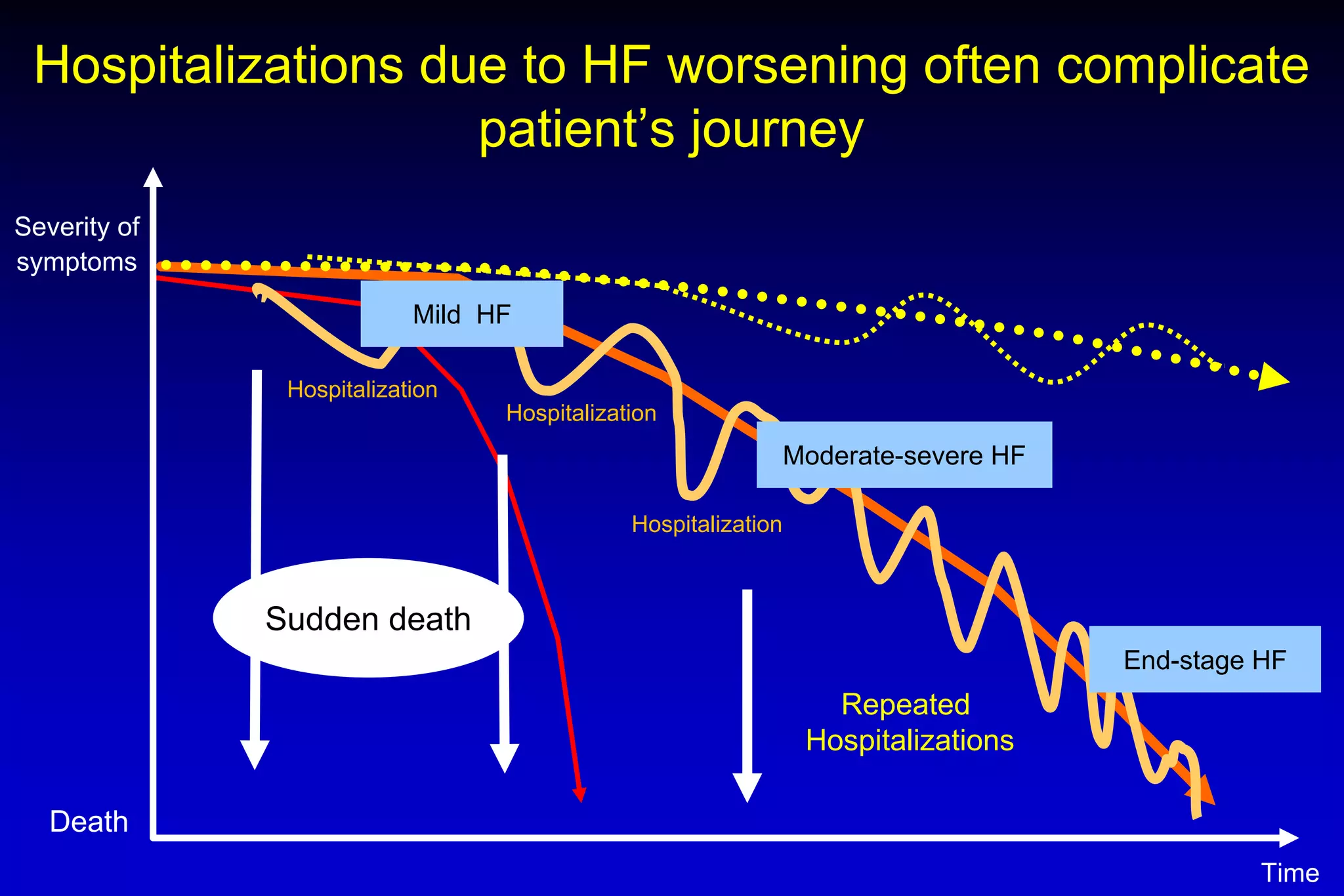
Hospitalizations due to HF worsening often complicate
patient’s journey
Severity of
symptoms
Death
Time
Sudden death
Hospitalization
Hospitalization
Hospitalization
Mild HF
Moderate-severe HF
End-stage HF
Repeated
Hospitalizations
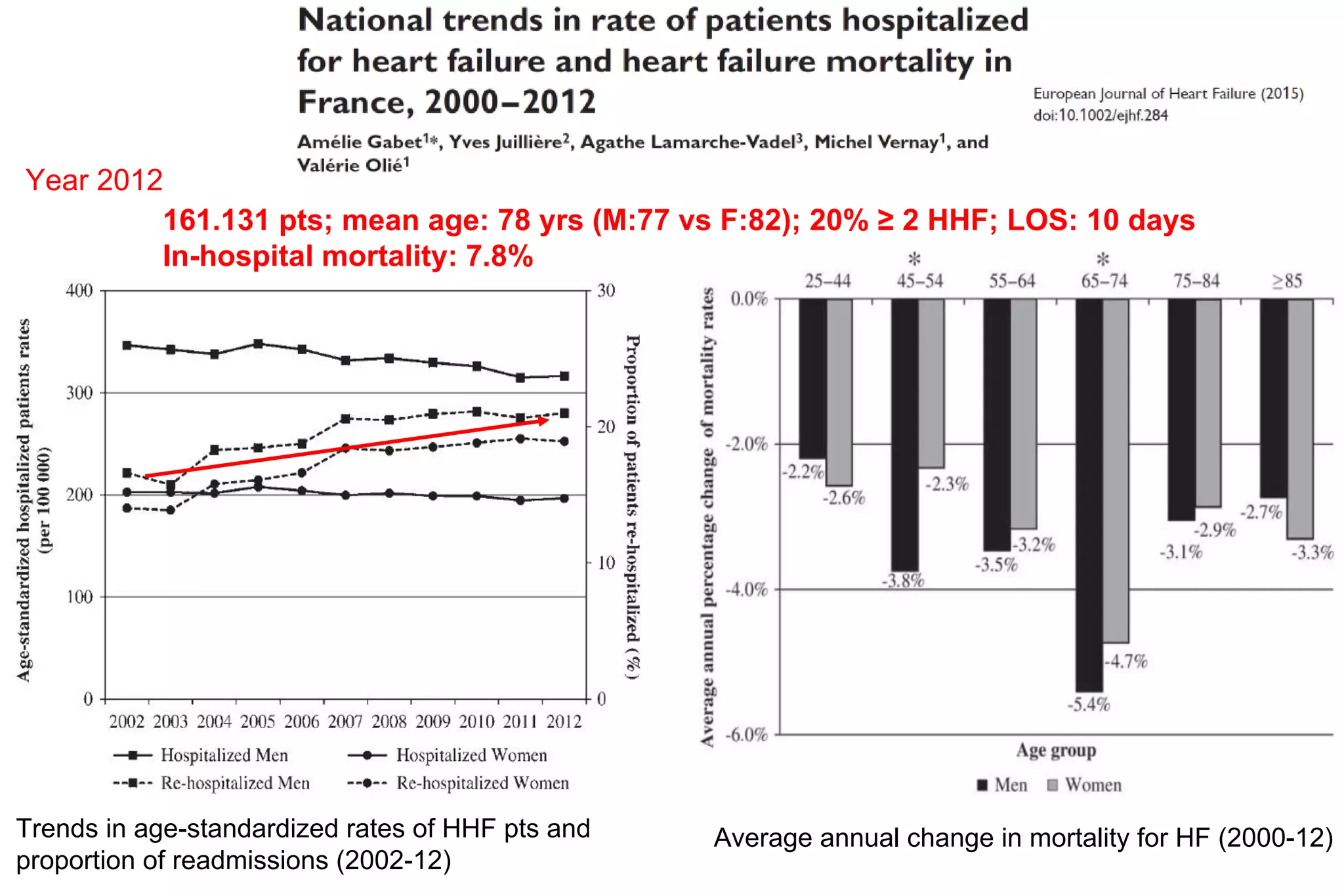
161.131 pts; mean age: 78 yrs (M:77 vs F:82); 20% ≥ 2 HHF; LOS: 10 days
In-hospital mortality: 7.8%
Average annual change in mortality for HF (2000-12)Trends in age-standardized rates of HHF pts and
proportion of readmissions (2002-12)
Year 2012
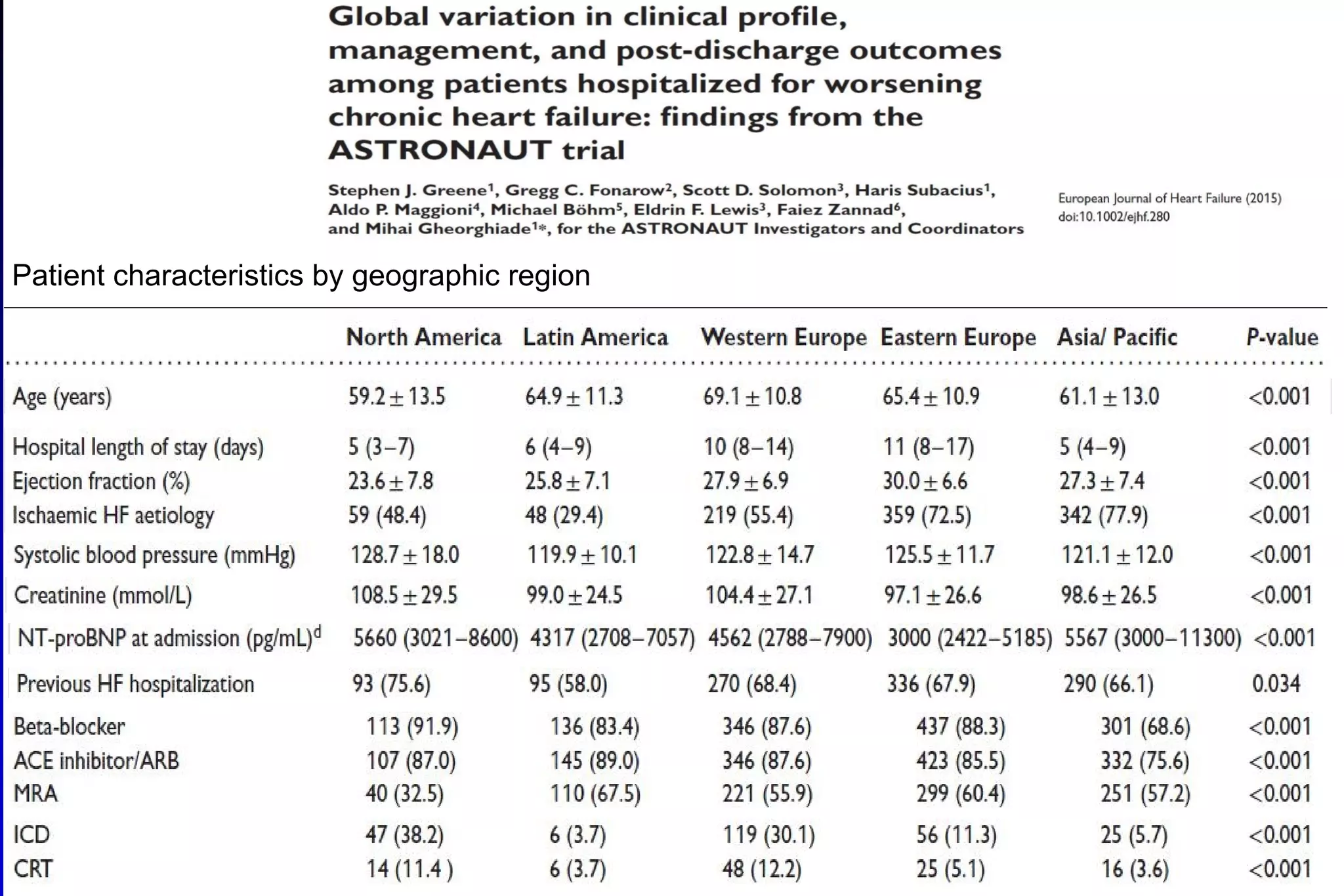
Patient characteristics by geographic region
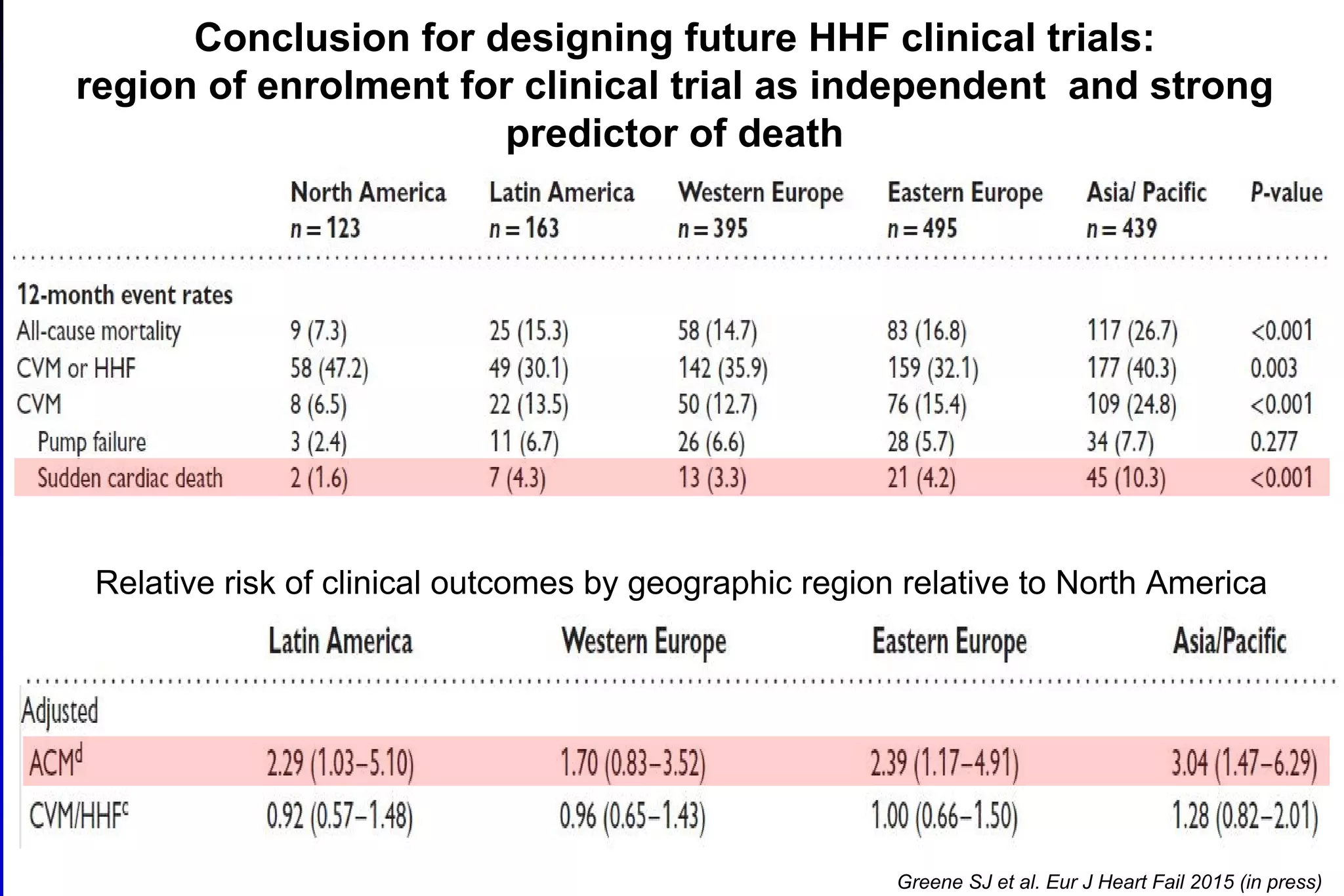
Conclusion for designing future HHF clinical trials:
region of enrolment for clinical trial as independent and strong
predictor of death
Relative risk of clinical outcomes by geographic region relative to North America
Greene SJ et al. Eur J Heart Fail 2015 (in press)
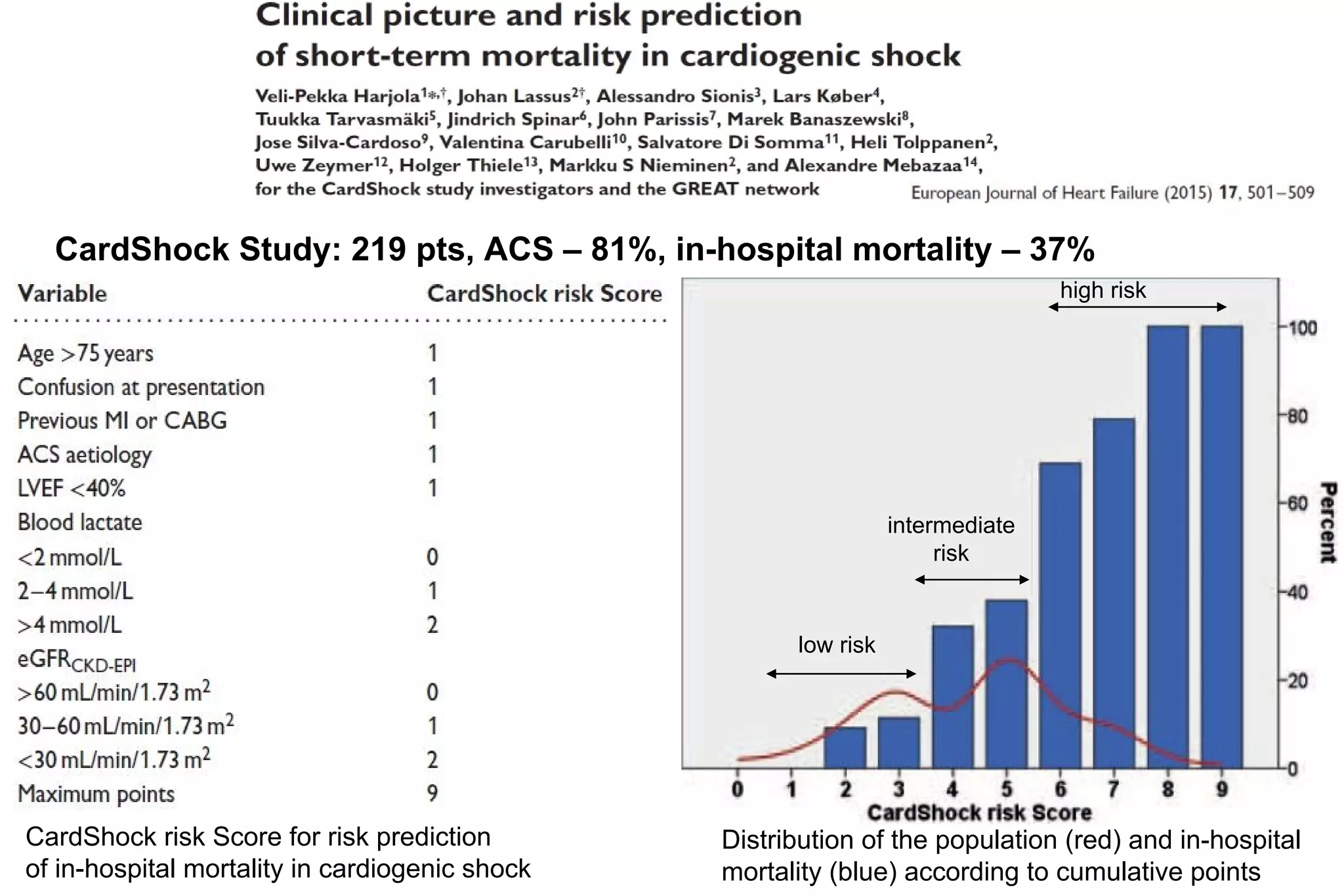
CardShock Study: 219 pts, ACS – 81%, in-hospital mortality – 37%
CardShock risk Score for risk prediction
of in-hospital mortality in cardiogenic shock
Distribution of the population (red) and in-hospital
mortality (blue) according to cumulative points
low risk
intermediate
risk
high risk
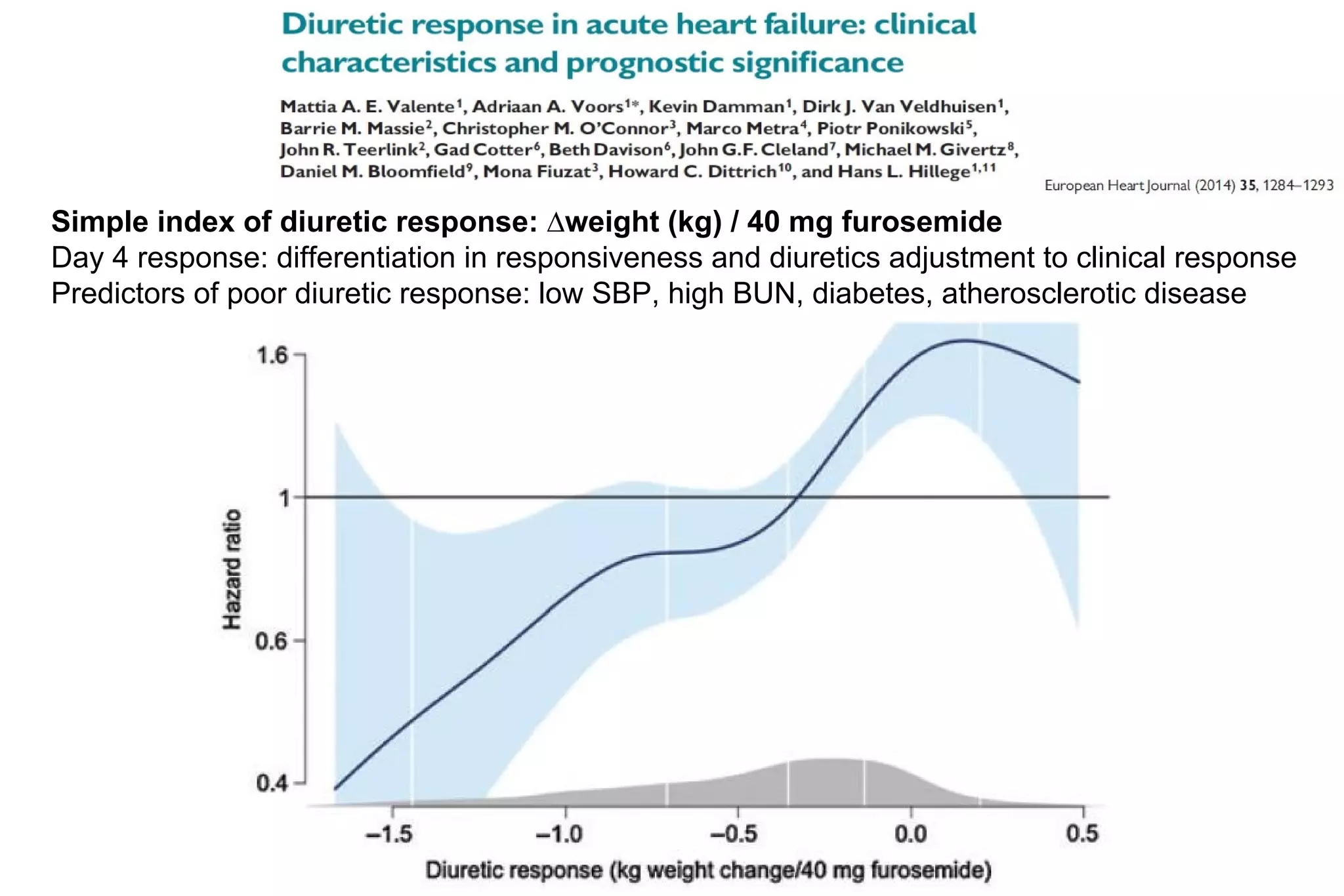
Simple index of diuretic response: ∆weight (kg) / 40 mg furosemide
Day 4 response: differentiation in responsiveness and diuretics adjustment to clinical response
Predictors of poor diuretic response: low SBP, high BUN, diabetes, atherosclerotic disease
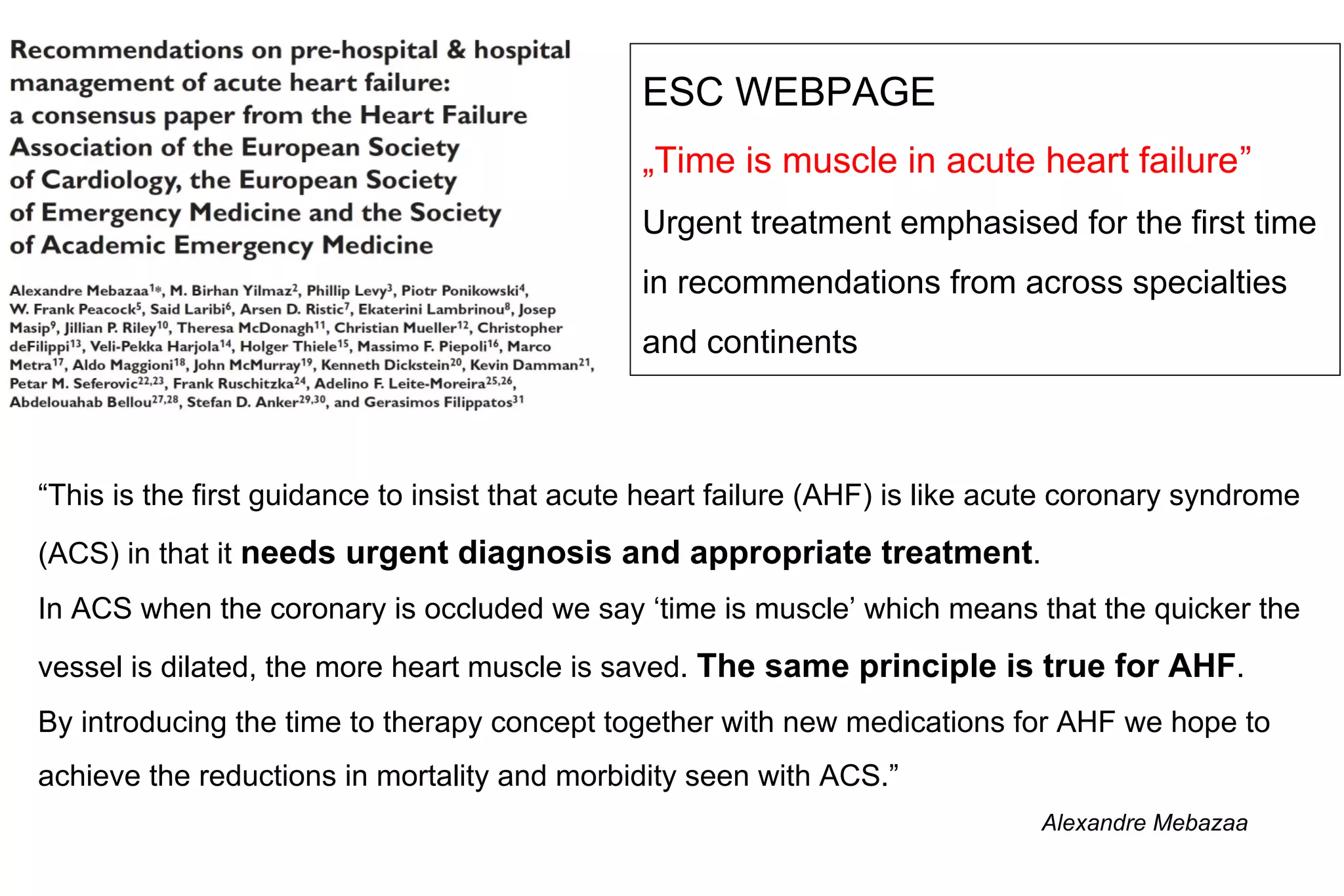
“This is the first guidance to insist that acute heart failure (AHF) is like acute coronary syndrome
(ACS) in that it needs urgent diagnosis and appropriate treatment.
In ACS when the coronary is occluded we say ‘time is muscle’ which means that the quicker the
vessel is dilated, the more heart muscle is saved. The same principle is true for AHF.
By introducing the time to therapy concept together with new medications for AHF we hope to
achieve the reductions in mortality and morbidity seen with ACS.”
ESC WEBPAGE
„Time is muscle in acute heart failure”
Urgent treatment emphasised for the first time
in recommendations from across specialties
and continents
Alexandre Mebazaa
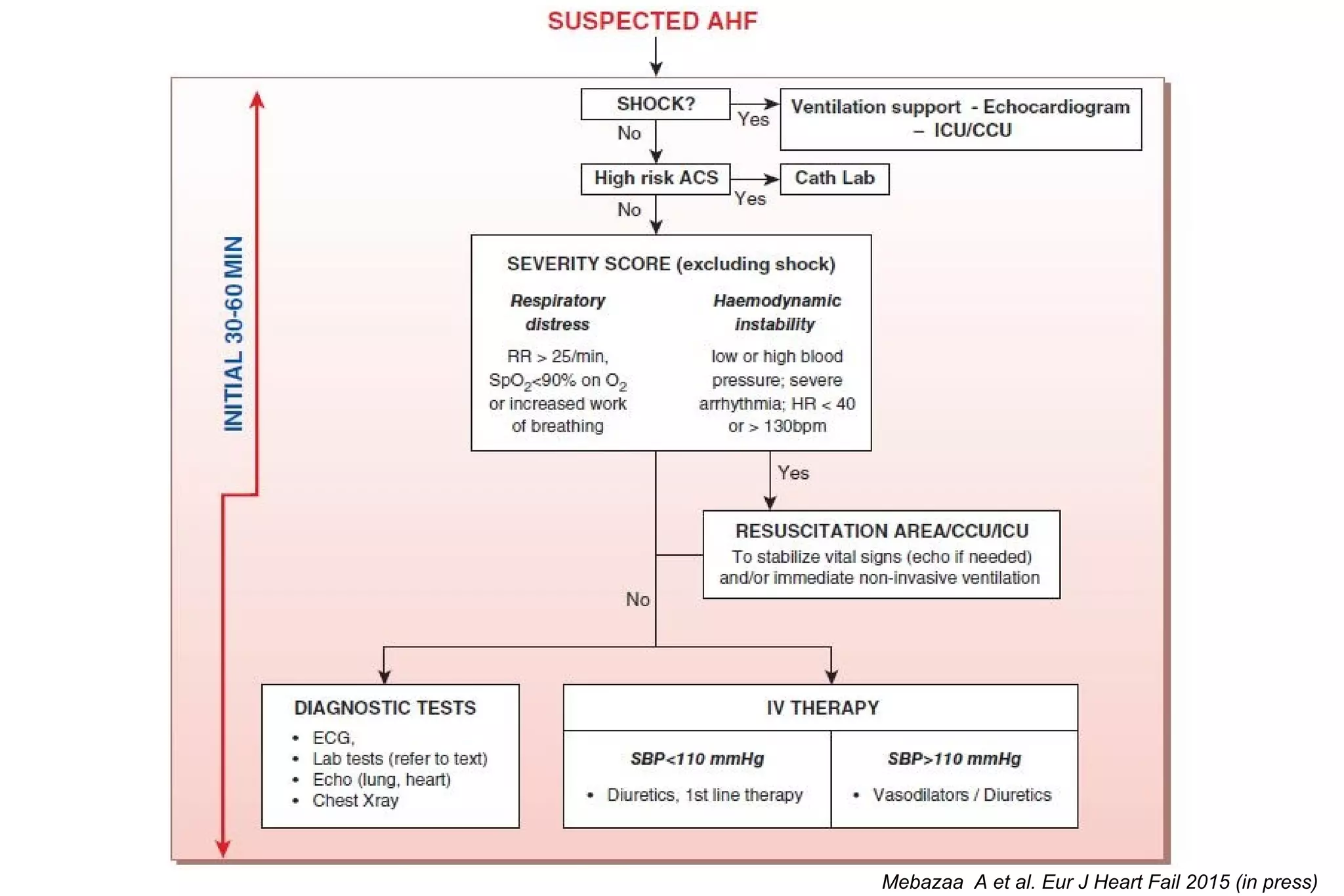
Mebazaa A et al. Eur J Heart Fail 2015 (in press)
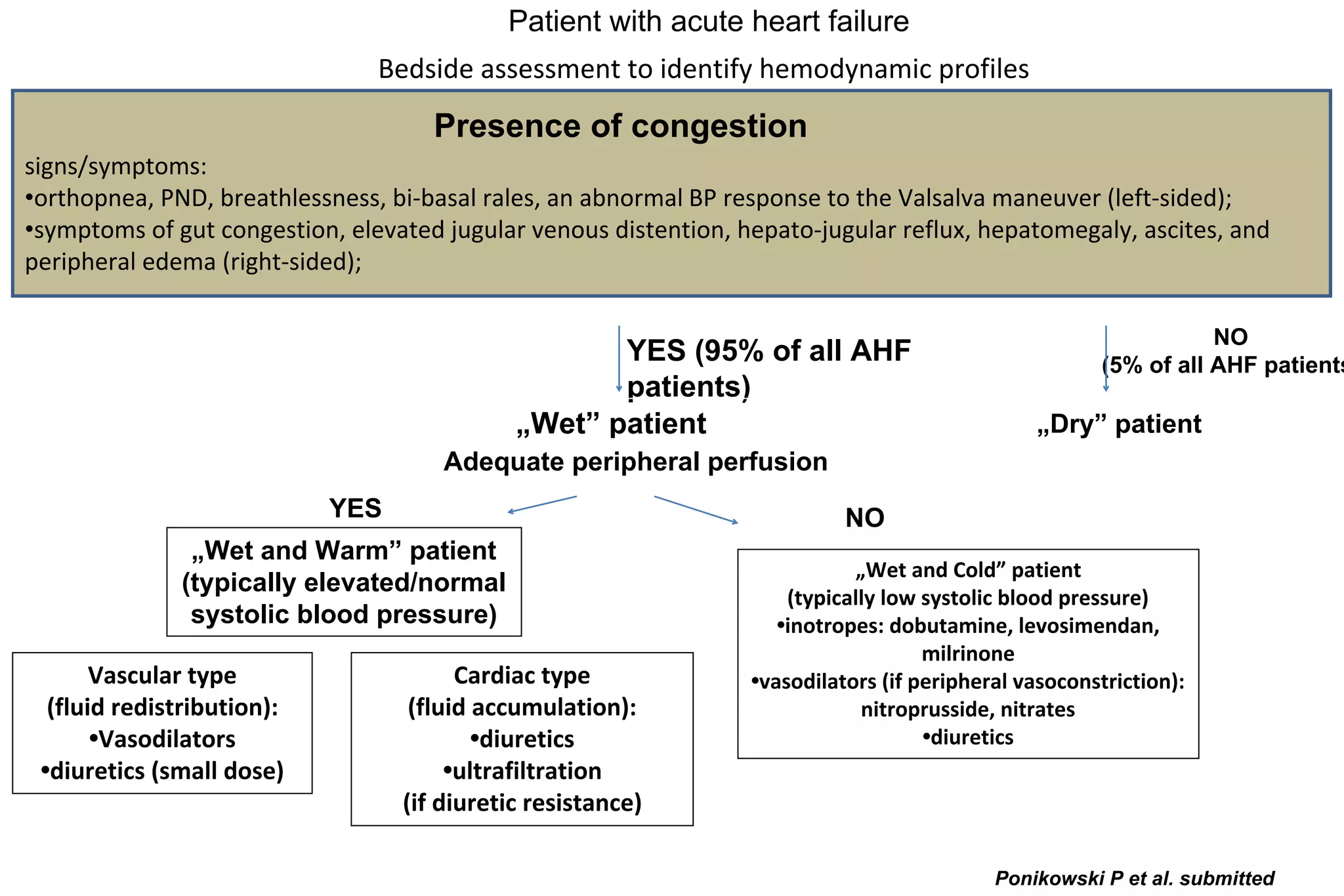
Bedside assessment to identify hemodynamic profiles
Patient with acute heart failure
signs/symptoms:
•orthopnea, PND, breathlessness, bi-basal rales, an abnormal BP response to the Valsalva maneuver (left-sided);
•symptoms of gut congestion, elevated jugular venous distention, hepato-jugular reflux, hepatomegaly, ascites, and
peripheral edema (right-sided);
Presence of congestion
YES (95% of all AHF
patients)
„Wet” patient
NO
(5% of all AHF patients
„Dry” patient
Adequate peripheral perfusion
YES
„Wet and Warm” patient
(typically elevated/normal
systolic blood pressure)
NO
„Wet and Cold” patient
(typically low systolic blood pressure)
•inotropes: dobutamine, levosimendan,
milrinone
•vasodilators (if peripheral vasoconstriction):
nitroprusside, nitrates
•diuretics
Vascular type
(fluid redistribution):
•Vasodilators
•diuretics (small dose)
Cardiac type
(fluid accumulation):
•diuretics
•ultrafiltration
(if diuretic resistance)
Ponikowski P et al. submitted
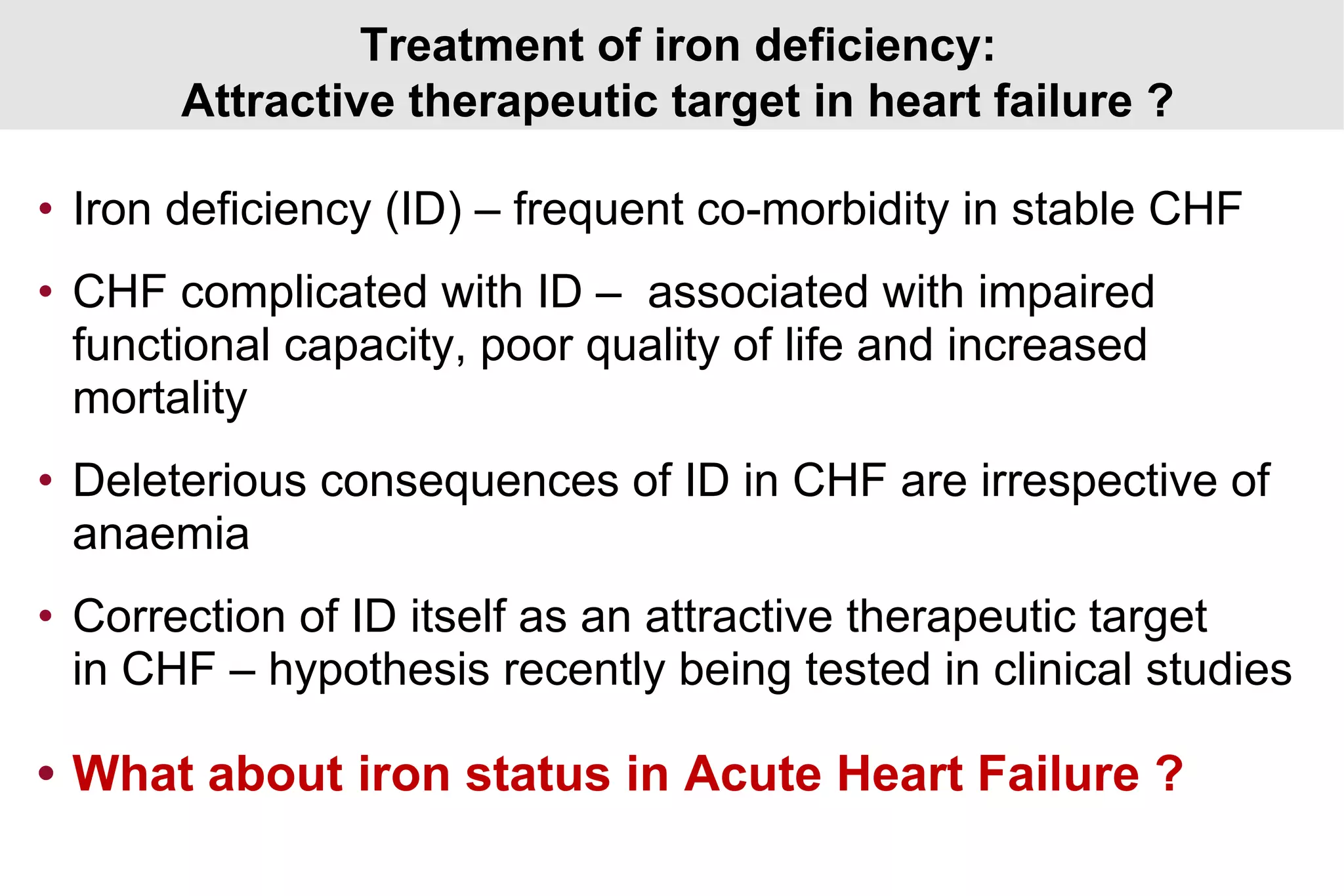
Treatment of iron deficiency:
Attractive therapeutic target in heart failure ?
• Iron deficiency (ID) – frequent co-morbidity in stable CHF
• CHF complicated with ID – associated with impaired
functional capacity, poor quality of life and increased
mortality
• Deleterious consequences of ID in CHF are irrespective of
anaemia
• Correction of ID itself as an attractive therapeutic target
in CHF – hypothesis recently being tested in clinical studies
• What about iron status in Acute Heart Failure ?
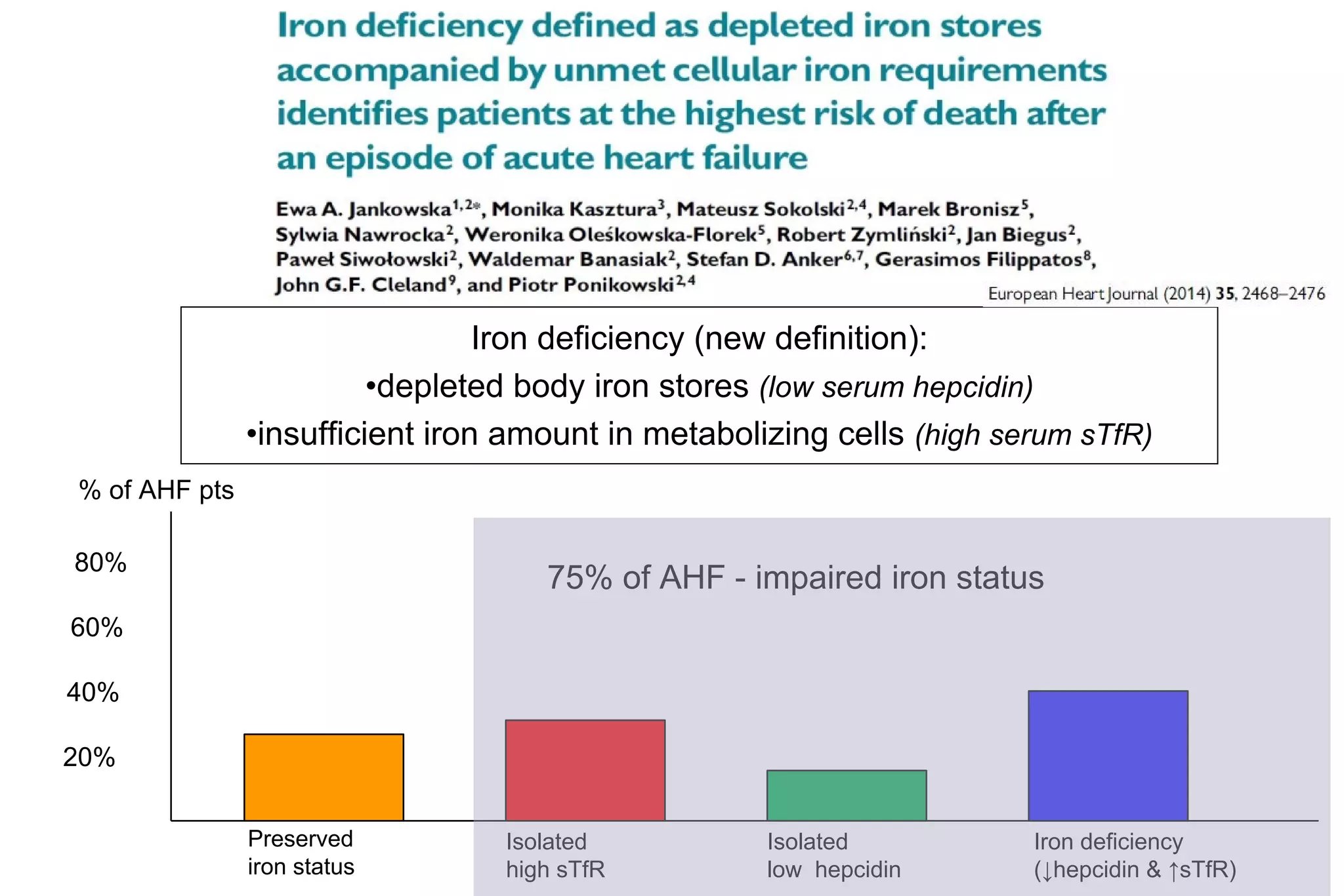
Iron deficiency (new definition):
•depleted body iron stores (low serum hepcidin)
•insufficient iron amount in metabolizing cells (high serum sTfR)
20%
40%
60%
80%
% of AHF pts
Preserved
iron status
Isolated
high sTfR
Isolated
low hepcidin
Iron deficiency
(↓hepcidin & ↑sTfR)
75% of AHF - impaired iron status
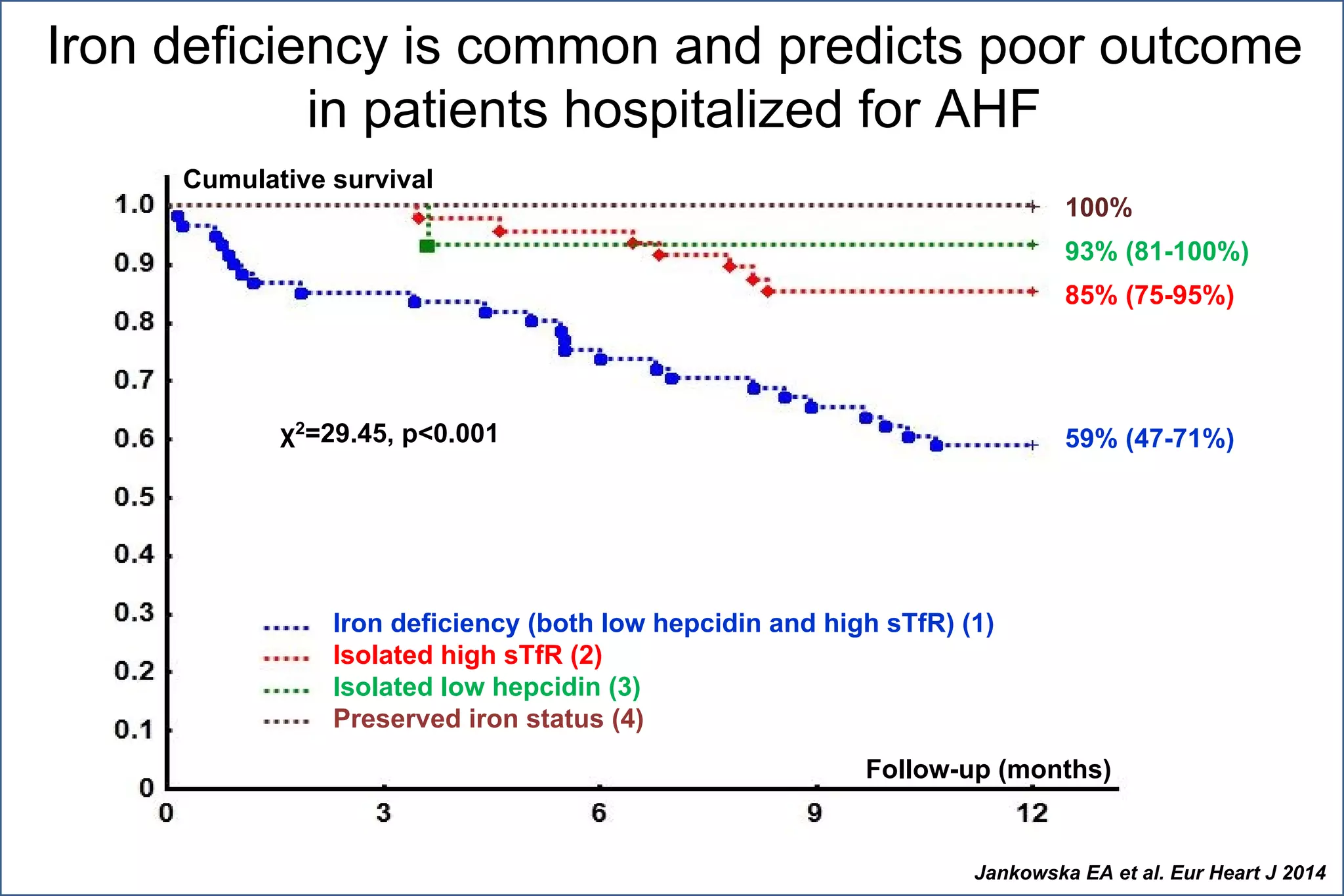
Iron deficiency is common and predicts poor outcome
in patients hospitalized for AHF
Cumulative survival
Follow-up (months)
χ2=29.45, p<0.001
100%
93% (81-100%)
85% (75-95%)
59% (47-71%)
Iron deficiency (both low hepcidin and high sTfR) (1)
Isolated high sTfR (2)
Isolated low hepcidin (3)
Preserved iron status (4)
Jankowska EA et al. Eur Heart J 2014
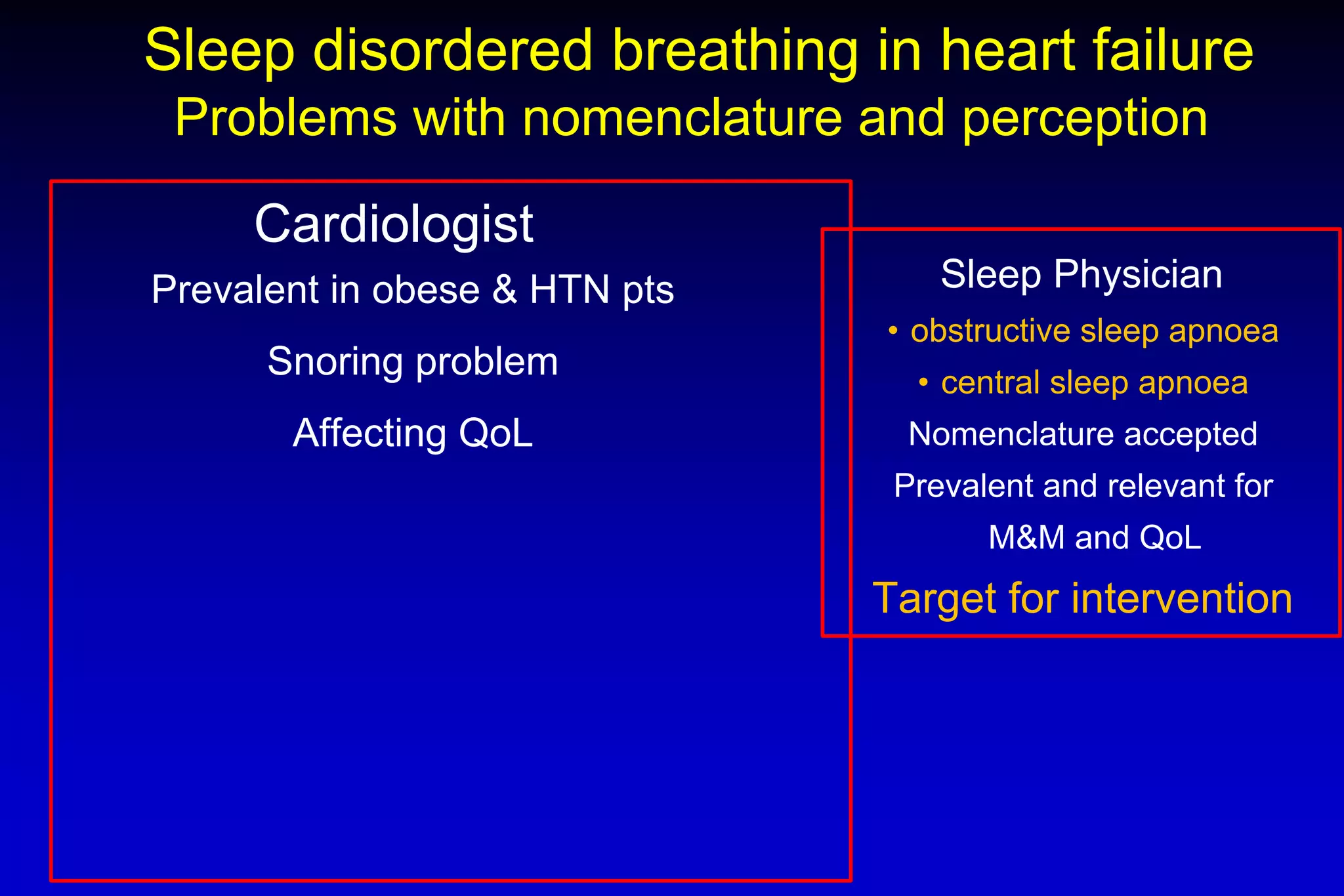
Sleep disordered breathing in heart failure
Problems with nomenclature and perception
Sleep Physician
• obstructive sleep apnoea
• central sleep apnoea
Nomenclature accepted
Prevalent and relevant for
M&M and QoL
Target for intervention
Prevalent in obese & HTN pts
Snoring problem
Affecting QoL
Cardiologist
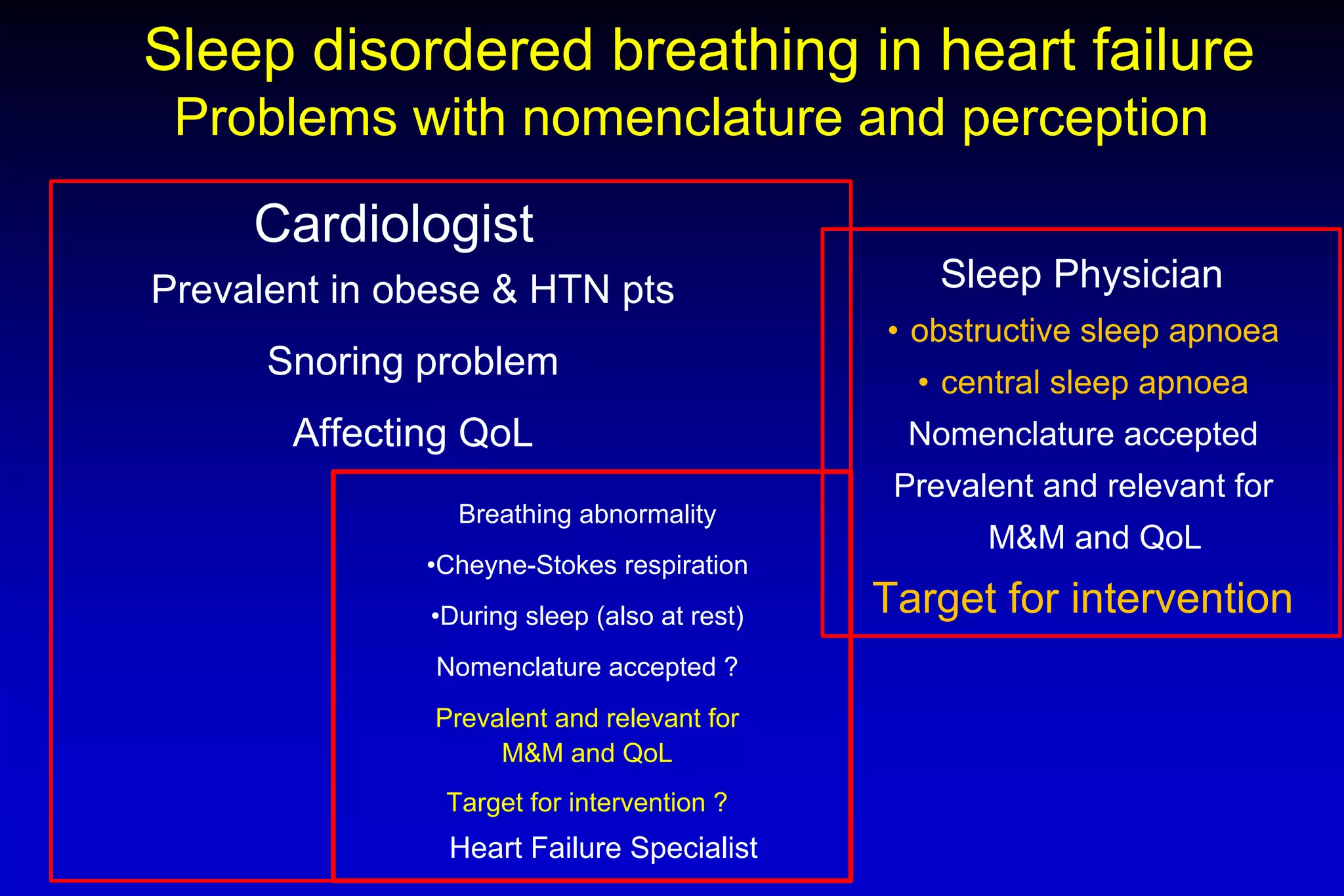
Sleep disordered breathing in heart failure
Problems with nomenclature and perception
Sleep Physician
• obstructive sleep apnoea
• central sleep apnoea
Nomenclature accepted
Prevalent and relevant for
M&M and QoL
Target for intervention
Heart Failure Specialist
Breathing abnormality
•Cheyne-Stokes respiration
•During sleep (also at rest)
Nomenclature accepted ?
Prevalent and relevant for
M&M and QoL
Target for intervention ?
Prevalent in obese & HTN pts
Snoring problem
Affecting QoL
Cardiologist
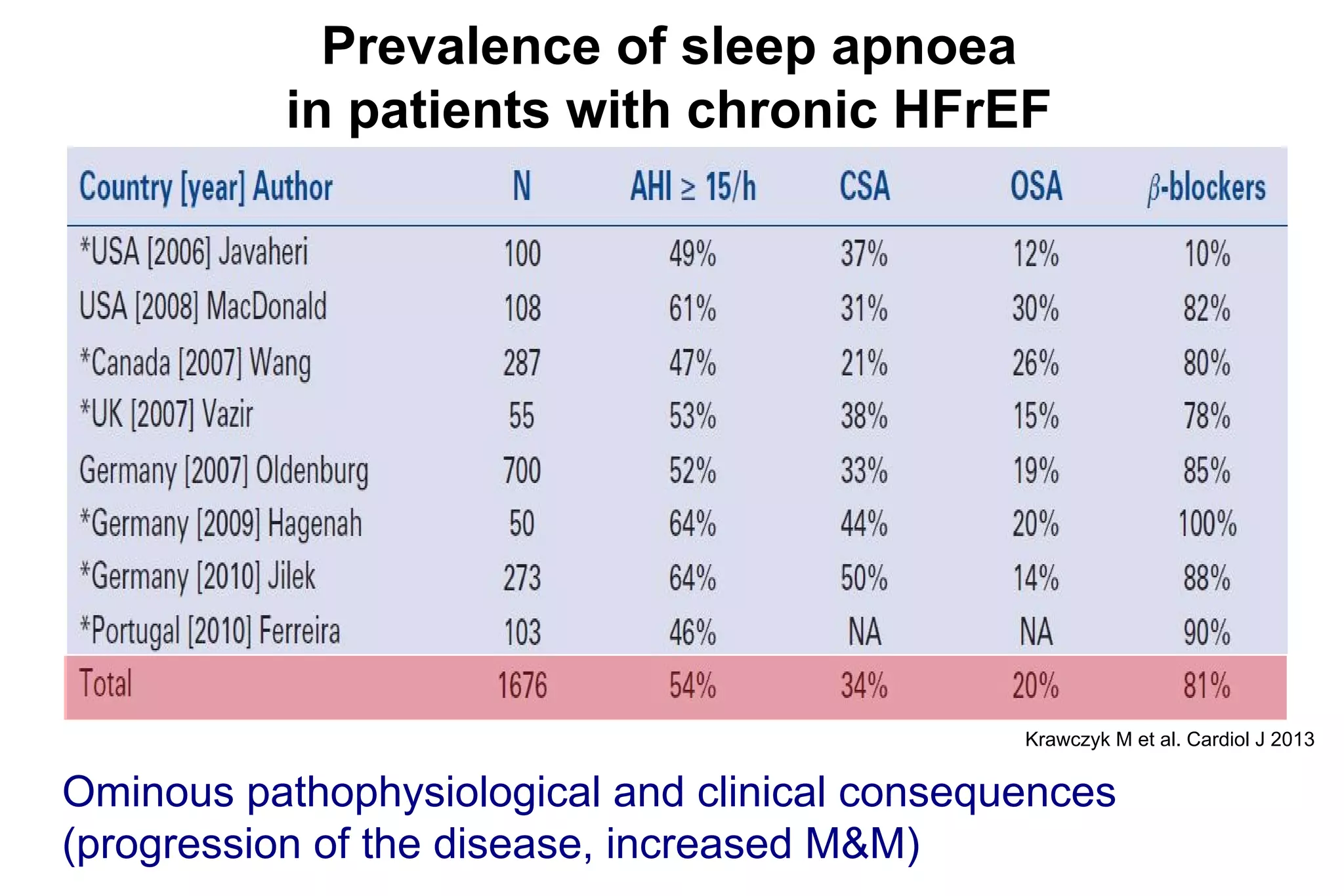
Prevalence of sleep apnoea
in patients with chronic HFrEF
Krawczyk M et al. Cardiol J 2013
Ominous pathophysiological and clinical consequences
(progression of the disease, increased M&M)
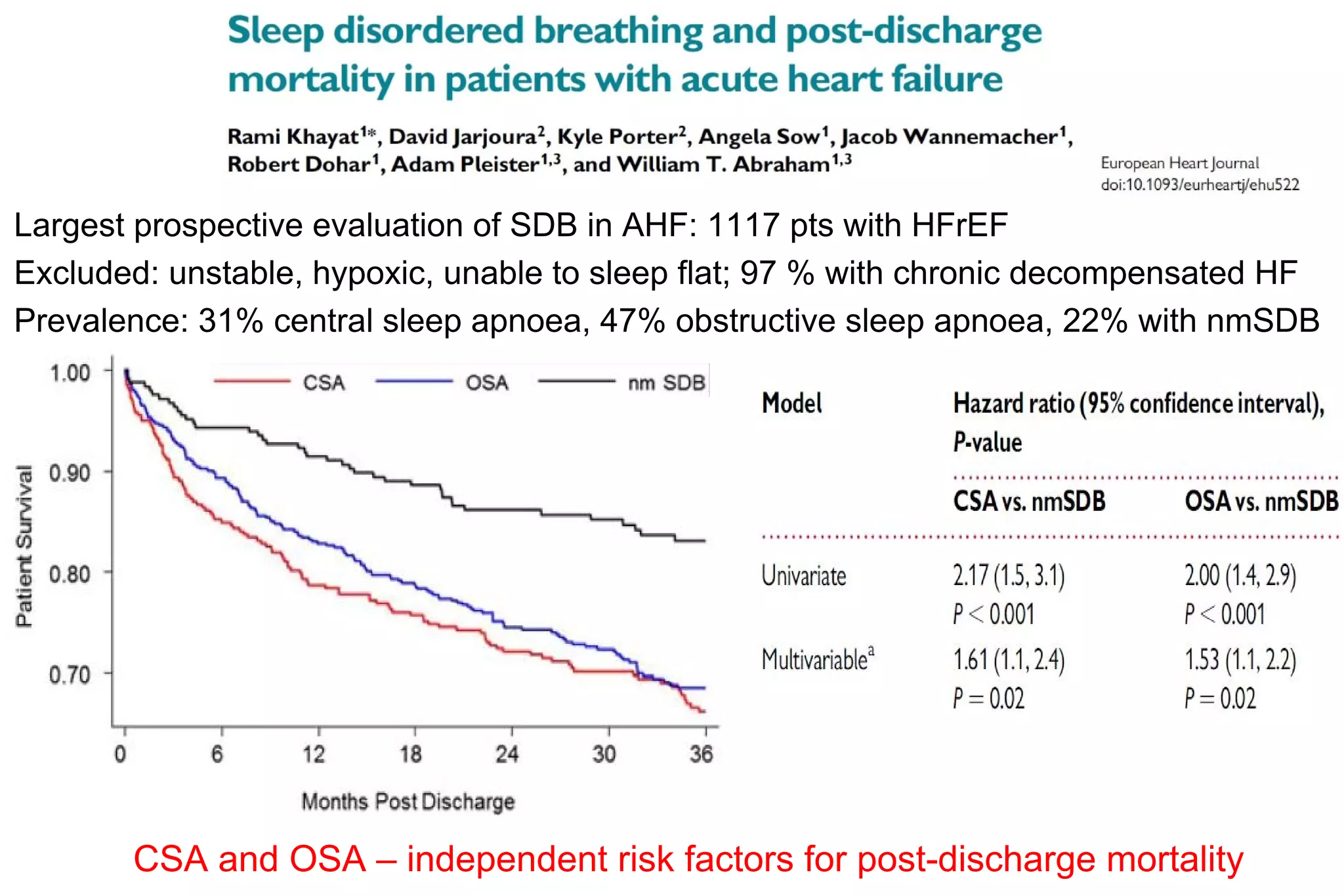
Largest prospective evaluation of SDB in AHF: 1117 pts with HFrEF
Excluded: unstable, hypoxic, unable to sleep flat; 97 % with chronic decompensated HF
Prevalence: 31% central sleep apnoea, 47% obstructive sleep apnoea, 22% with nmSDB
CSA and OSA – independent risk factors for post-discharge mortality
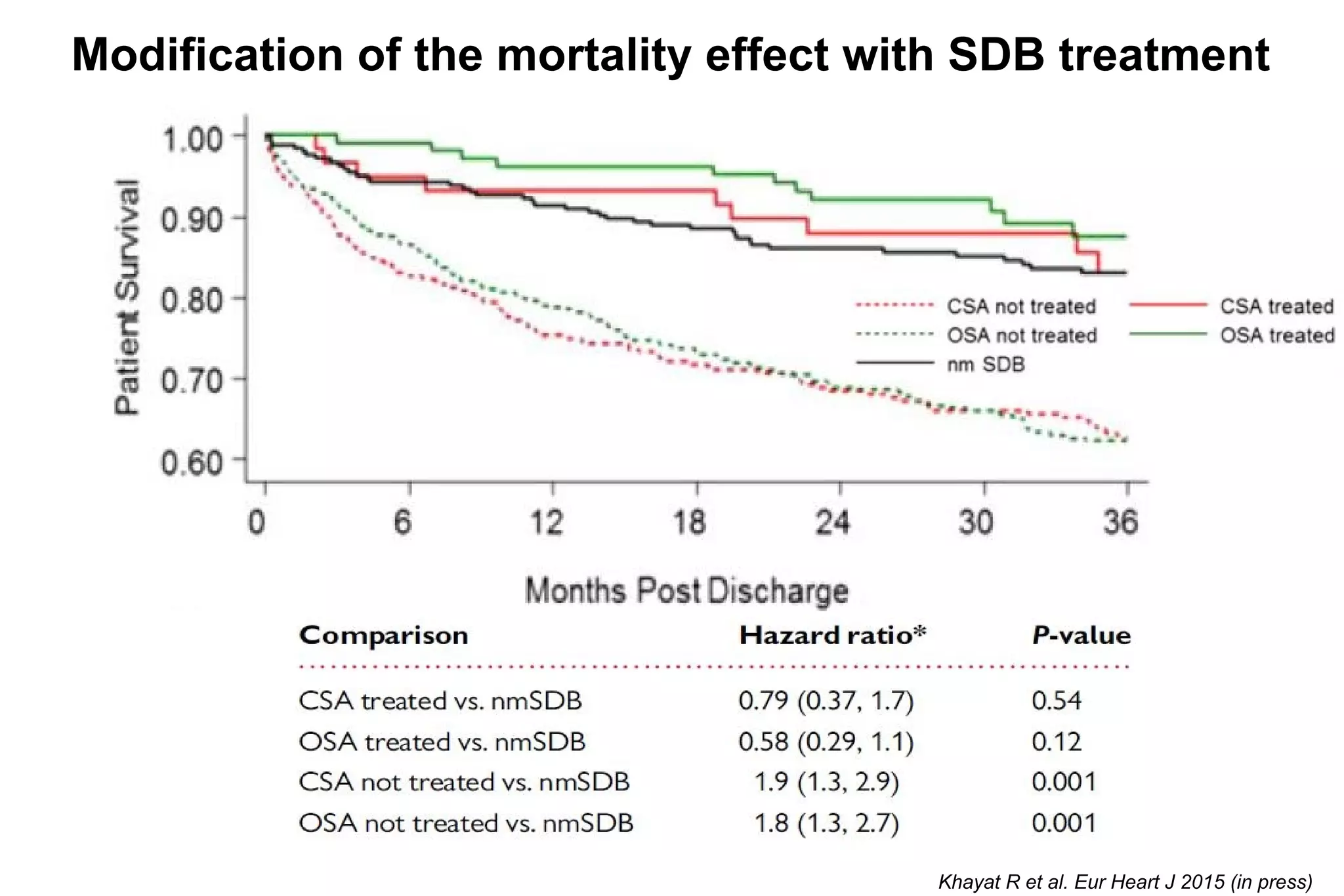
Modification of the mortality effect with SDB treatment
Khayat R et al. Eur Heart J 2015 (in press)
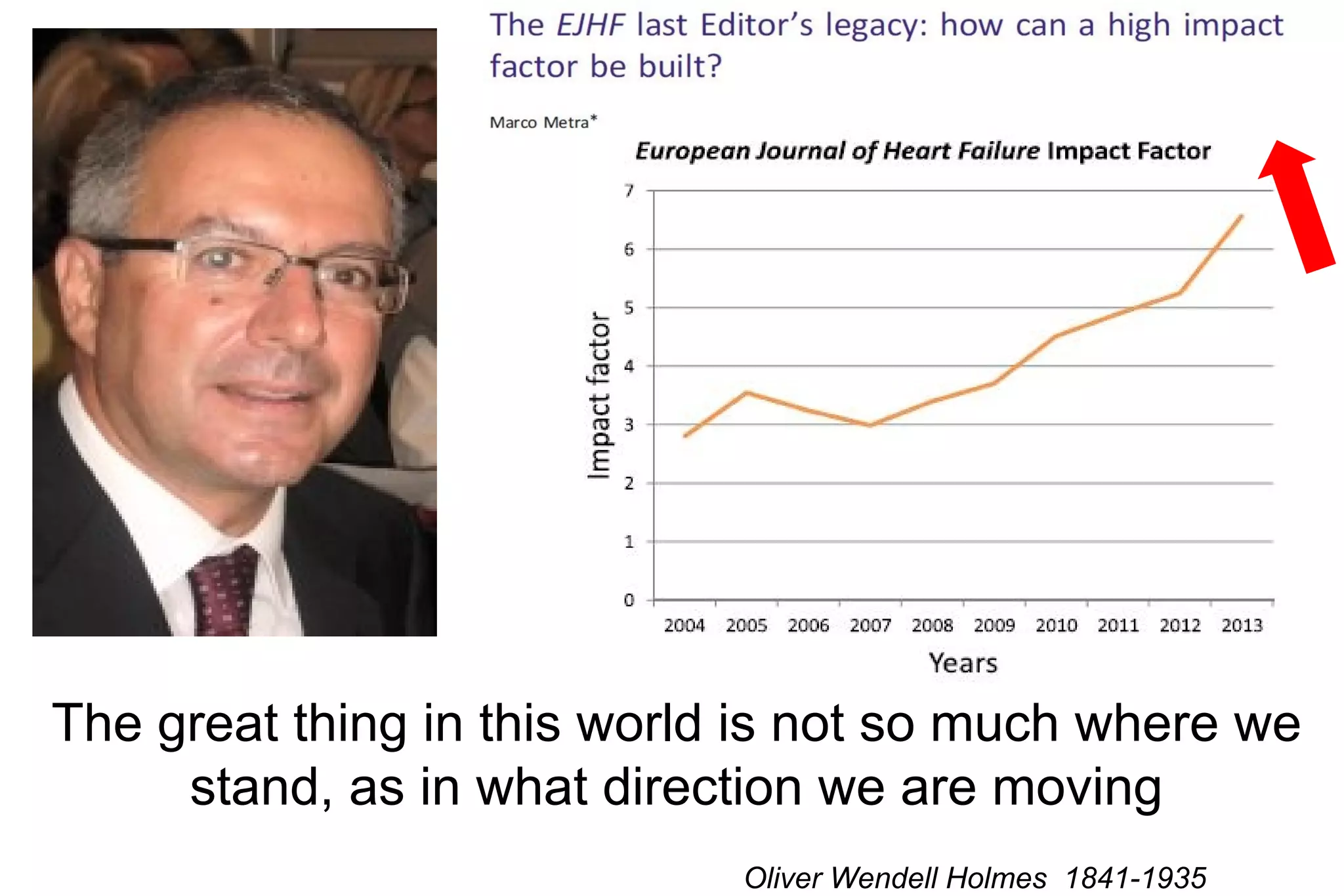
The great thing in this world is not so much where we
stand, as in what direction we are moving
Oliver Wendell Holmes 1841-1935

Acute and advanced heart failure.

  • 1.
    The European HeartJournal’s / European Journal of Heart Failure’s year in cardiology Piotr Ponikowski, MD, PhD, FESC Medical University, Centre for Heart Disease Clinical Military Hospital Wroclaw, Poland Acute and Advanced Heart Failure
  • 2.
    Disclosure Consultancy fees andspeaker’s honoraria from: Vifor Pharma Ltd, Amgen, Servier, Novartis, Bayer, Pfizer, Johnson&Johnson, Abbott Vascular, Coridea, Respicardia Research grant: Vifor Pharma Ltd, Respicardia
  • 3.
    Heart Failure: treatableand preventable disease (?) Landscape at the end of 20th century: HF more malignant than cancer Framingham study Median survival: Men – 1.7 yrs, women – 3.2 yrs Ho KKL et al., Circulation 1993;88:107-15
  • 4.
    Hospitalizations due toHF worsening often complicate patient’s journey Severity of symptoms Death Time Sudden death Hospitalization Hospitalization Hospitalization Mild HF Moderate-severe HF End-stage HF Repeated Hospitalizations
  • 5.
    161.131 pts; meanage: 78 yrs (M:77 vs F:82); 20% ≥ 2 HHF; LOS: 10 days In-hospital mortality: 7.8% Average annual change in mortality for HF (2000-12)Trends in age-standardized rates of HHF pts and proportion of readmissions (2002-12) Year 2012
  • 6.
    Patient characteristics bygeographic region
  • 7.
    Conclusion for designingfuture HHF clinical trials: region of enrolment for clinical trial as independent and strong predictor of death Relative risk of clinical outcomes by geographic region relative to North America Greene SJ et al. Eur J Heart Fail 2015 (in press)
  • 8.
    CardShock Study: 219pts, ACS – 81%, in-hospital mortality – 37% CardShock risk Score for risk prediction of in-hospital mortality in cardiogenic shock Distribution of the population (red) and in-hospital mortality (blue) according to cumulative points low risk intermediate risk high risk
  • 9.
    Simple index ofdiuretic response: ∆weight (kg) / 40 mg furosemide Day 4 response: differentiation in responsiveness and diuretics adjustment to clinical response Predictors of poor diuretic response: low SBP, high BUN, diabetes, atherosclerotic disease
  • 10.
    “This is thefirst guidance to insist that acute heart failure (AHF) is like acute coronary syndrome (ACS) in that it needs urgent diagnosis and appropriate treatment. In ACS when the coronary is occluded we say ‘time is muscle’ which means that the quicker the vessel is dilated, the more heart muscle is saved. The same principle is true for AHF. By introducing the time to therapy concept together with new medications for AHF we hope to achieve the reductions in mortality and morbidity seen with ACS.” ESC WEBPAGE „Time is muscle in acute heart failure” Urgent treatment emphasised for the first time in recommendations from across specialties and continents Alexandre Mebazaa
  • 11.
    Mebazaa A etal. Eur J Heart Fail 2015 (in press)
  • 12.
    Bedside assessment toidentify hemodynamic profiles Patient with acute heart failure signs/symptoms: •orthopnea, PND, breathlessness, bi-basal rales, an abnormal BP response to the Valsalva maneuver (left-sided); •symptoms of gut congestion, elevated jugular venous distention, hepato-jugular reflux, hepatomegaly, ascites, and peripheral edema (right-sided); Presence of congestion YES (95% of all AHF patients) „Wet” patient NO (5% of all AHF patients „Dry” patient Adequate peripheral perfusion YES „Wet and Warm” patient (typically elevated/normal systolic blood pressure) NO „Wet and Cold” patient (typically low systolic blood pressure) •inotropes: dobutamine, levosimendan, milrinone •vasodilators (if peripheral vasoconstriction): nitroprusside, nitrates •diuretics Vascular type (fluid redistribution): •Vasodilators •diuretics (small dose) Cardiac type (fluid accumulation): •diuretics •ultrafiltration (if diuretic resistance) Ponikowski P et al. submitted
  • 13.
    Treatment of irondeficiency: Attractive therapeutic target in heart failure ? • Iron deficiency (ID) – frequent co-morbidity in stable CHF • CHF complicated with ID – associated with impaired functional capacity, poor quality of life and increased mortality • Deleterious consequences of ID in CHF are irrespective of anaemia • Correction of ID itself as an attractive therapeutic target in CHF – hypothesis recently being tested in clinical studies • What about iron status in Acute Heart Failure ?
  • 14.
    Iron deficiency (newdefinition): •depleted body iron stores (low serum hepcidin) •insufficient iron amount in metabolizing cells (high serum sTfR) 20% 40% 60% 80% % of AHF pts Preserved iron status Isolated high sTfR Isolated low hepcidin Iron deficiency (↓hepcidin & ↑sTfR) 75% of AHF - impaired iron status
  • 15.
    Iron deficiency iscommon and predicts poor outcome in patients hospitalized for AHF Cumulative survival Follow-up (months) χ2=29.45, p<0.001 100% 93% (81-100%) 85% (75-95%) 59% (47-71%) Iron deficiency (both low hepcidin and high sTfR) (1) Isolated high sTfR (2) Isolated low hepcidin (3) Preserved iron status (4) Jankowska EA et al. Eur Heart J 2014
  • 16.
    Sleep disordered breathingin heart failure Problems with nomenclature and perception Sleep Physician • obstructive sleep apnoea • central sleep apnoea Nomenclature accepted Prevalent and relevant for M&M and QoL Target for intervention Prevalent in obese & HTN pts Snoring problem Affecting QoL Cardiologist
  • 17.
    Sleep disordered breathingin heart failure Problems with nomenclature and perception Sleep Physician • obstructive sleep apnoea • central sleep apnoea Nomenclature accepted Prevalent and relevant for M&M and QoL Target for intervention Heart Failure Specialist Breathing abnormality •Cheyne-Stokes respiration •During sleep (also at rest) Nomenclature accepted ? Prevalent and relevant for M&M and QoL Target for intervention ? Prevalent in obese & HTN pts Snoring problem Affecting QoL Cardiologist
  • 18.
    Prevalence of sleepapnoea in patients with chronic HFrEF Krawczyk M et al. Cardiol J 2013 Ominous pathophysiological and clinical consequences (progression of the disease, increased M&M)
  • 19.
    Largest prospective evaluationof SDB in AHF: 1117 pts with HFrEF Excluded: unstable, hypoxic, unable to sleep flat; 97 % with chronic decompensated HF Prevalence: 31% central sleep apnoea, 47% obstructive sleep apnoea, 22% with nmSDB CSA and OSA – independent risk factors for post-discharge mortality
  • 20.
    Modification of themortality effect with SDB treatment Khayat R et al. Eur Heart J 2015 (in press)
  • 21.
    The great thingin this world is not so much where we stand, as in what direction we are moving Oliver Wendell Holmes 1841-1935