Basic Education as a Human Right -
An Overview
Hafsah Jan
Rehana Rasool
Researcher Scholars
Department of Education
University of Kashmir
INTRODUCTION
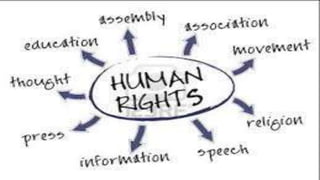
Human rights are inherent to all human beings, regardless of color,
status, language, religion, region, nationality so on.
Neither they can be given nor taken away.
These rights are base for freedom, justice as well as peace in the world.
In 1948 these were formally and universally recognized by UDHR.
Many treaties have been adopted by the states for legal guaranteeing of
these rights.
The state has the duty to protect, respect and to fulfill human rights.
INTRODUCTION Continue
 Human Rights Education is a means towards social change; a tool to transform the
theory and practical applications into everyday social practice.
 The Human Right to Education entitles every women, men, youth and child to free
and compulsory elementary education and readily available forms of secondary and
higher education.
 The Human Right to Freedom from discrimination in all areas and levels of
education and to equal access to continuing education and vocational training.
International Outlook Regarding
Right to Education
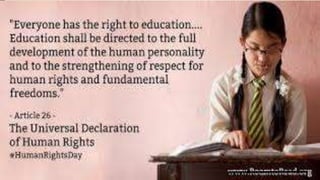
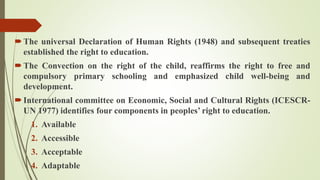
The universal Declaration of Human Rights (1948) and subsequent treaties
established the right to education.
The Convection on the right of the child, reaffirms the right to free and
compulsory primary schooling and emphasized child well-being and
development.
International committee on Economic, Social and Cultural Rights (ICESCR-
UN 1977) identifies four components in peoples’ right to education.
1. Available
2. Accessible
3. Acceptable
4. Adaptable
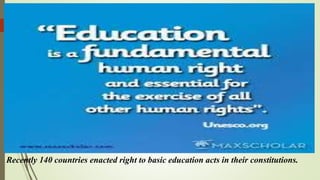
Recently 140 countries enacted right to basic education acts in their constitutions.
Indian Outlook Regarding
Right To Education
The importance and significance of right to education was
recognized by the fore fathers of the nation by making it a
constitutional goal and gave it space in Indian constitution.
Article 15 (3) special provisions made by states.
Article 21 A Right to Education.
Article 45 free and compulsory education to all till 14 years.
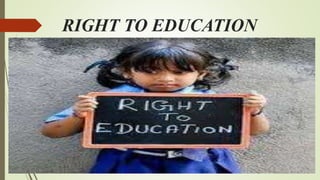
RIGHT TO EDUCATION
Education is considered as the bedrock of all socio-economic
developments of the nation.
To realize the democratization of education as a birth right to all,
GOI has made several attempts from time to time.
Some of the initiatives of GOI to increase the percentage of
elementary education:
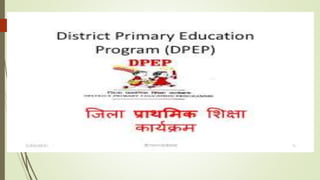
SSA, District Primary Education Program,
Operational Blackboard, Mid Day Meal etc
 It was formulated in1993, supported by UNICEF, funded by central government
and the states.
 It was an afford to decentralization of educational planning at district level.
 It was initially launched in 44 districts of 8 states later it covered 273 districts of 18
states.
 The objective of the scheme were:
1. To provide all children access to primary education
2. To reduce dropout rates to less than 10%
3. To reduce gender gaps and differences in Social group to less than 5%
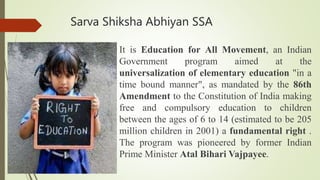
Sarva Shiksha Abhiyan SSA
It is Education for All Movement, an Indian
Government program aimed at the
universalization of elementary education "in a
time bound manner", as mandated by the 86th
Amendment to the Constitution of India making
free and compulsory education to children
between the ages of 6 to 14 (estimated to be 205
million children in 2001) a fundamental right .
The program was pioneered by former Indian
Prime Minister Atal Bihari Vajpayee.
AIMS of SSA
All children in school. Education Guarantee Centre, Alternate School,
‘Back-to-School’ camp by 2003.
All children complete five years of primary schooling by 2007.
All children complete of elementary schooling by 2010.
Focus on elementary education of satisfactory quality with emphasis
on education for life.
Bridge all gender and social category gaps at primary stage by 2007
and at elementary education level by 2010.
Universal retention by 2010.
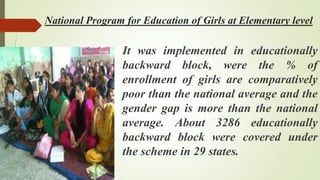
National Program for Education of Girls at Elementary level
It was implemented in educationally
backward block, were the % of
enrollment of girls are comparatively
poor than the national average and the
gender gap is more than the national
average. About 3286 educationally
backward block were covered under
the scheme in 29 states.
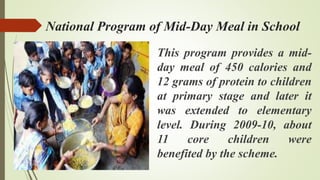
National Program of Mid-Day Meal in School
This program provides a mid-
day meal of 450 calories and
12 grams of protein to children
at primary stage and later it
was extended to elementary
level. During 2009-10, about
11 core children were
benefited by the scheme.
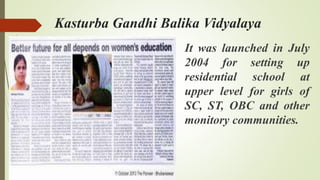
Kasturba Gandhi Balika Vidyalaya
It was launched in July
2004 for setting up
residential school at
upper level for girls of
SC, ST, OBC and other
monitory communities.
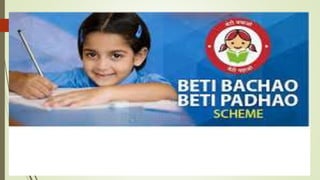
It was introduced in October, 2014 to address the issue of
declining child sex ratio.
The objectives of the scheme are:
Preventing sex selective abortion.
Ensuring survival and protection of girl child.
Ensuring education of girl child.
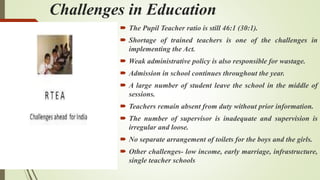
Challenges in Education
 The Pupil Teacher ratio is still 46:1 (30:1).
 Shortage of trained teachers is one of the challenges in
implementing the Act.
 Weak administrative policy is also responsible for wastage.
 Admission in school continues throughout the year.
 A large number of student leave the school in the middle of
sessions.
 Teachers remain absent from duty without prior information.
 The number of supervisor is inadequate and supervision is
irregular and loose.
 No separate arrangement of toilets for the boys and the girls.
 Other challenges- low income, early marriage, infrastructure,
single teacher schools
Conclusion
India has emerged as a strong nation and a global leader at the turn of
the century.
Education plays key role in providing basic Knowledge and skills for
sustained growth of the economy and to overall progress.
It is an important to claim Right to Education is a human right because
there is a responsibility to enable children to develop a set of
capabilities to lead their own lives in a meaningful and fulfilling way.
The implementation of the Right to Compulsory and Free Education
Act 2009 must be put into practice in letter and spirit to fulfill the
objectives.
The Right to Education does not say anything about millions of below
5 years aged children.
There should be penalty charges who rules out the norms.
 To make Right to Children to Free and Compulsory Education Act,
2009 a success in India, communities need to play a vital role.
As per the Act, within the 3 years of its enforcement, existing schools
were too required to make basic infrastructure available.
Unfortunately, 7 years have already passed after the enforcement of
RTE Act, still majority of schools are lacking basic infrastructure in
India.
The government need to take immediate action to ensure all the basic facilities in
the school. School must be provided proper teaching aids, apart from basic
facilities.
There should be penalty charges who rules out the norms.
 They must also be ensured co-curricular activities for proper personality
development of students.
This Right prohibits:
1. Physical punishments and mental harassment,
2. Capitation fee,
3. Screening procedures for admission,
4. Private tuition by teachers,
5. running unrecognized schools.
Children are the valuable human resource of nation.
“
”
Child shows the man as
morning shows the day.
So it is our duty to look after every child to
ensure his full personality development.
Milton
Thank you

Basic Education as a Human Right: An Overview

  • 1.
    Basic Education asa Human Right - An Overview Hafsah Jan Rehana Rasool Researcher Scholars Department of Education University of Kashmir
  • 2.
    INTRODUCTION Human rights areinherent to all human beings, regardless of color, status, language, religion, region, nationality so on. Neither they can be given nor taken away. These rights are base for freedom, justice as well as peace in the world. In 1948 these were formally and universally recognized by UDHR. Many treaties have been adopted by the states for legal guaranteeing of these rights. The state has the duty to protect, respect and to fulfill human rights.
  • 4.
    INTRODUCTION Continue  HumanRights Education is a means towards social change; a tool to transform the theory and practical applications into everyday social practice.  The Human Right to Education entitles every women, men, youth and child to free and compulsory elementary education and readily available forms of secondary and higher education.  The Human Right to Freedom from discrimination in all areas and levels of education and to equal access to continuing education and vocational training.
  • 5.
  • 7.
    The universal Declarationof Human Rights (1948) and subsequent treaties established the right to education. The Convection on the right of the child, reaffirms the right to free and compulsory primary schooling and emphasized child well-being and development. International committee on Economic, Social and Cultural Rights (ICESCR- UN 1977) identifies four components in peoples’ right to education. 1. Available 2. Accessible 3. Acceptable 4. Adaptable
  • 8.
    Recently 140 countriesenacted right to basic education acts in their constitutions.
  • 9.
  • 10.
    The importance andsignificance of right to education was recognized by the fore fathers of the nation by making it a constitutional goal and gave it space in Indian constitution. Article 15 (3) special provisions made by states. Article 21 A Right to Education. Article 45 free and compulsory education to all till 14 years.
  • 11.
  • 13.
    Education is consideredas the bedrock of all socio-economic developments of the nation. To realize the democratization of education as a birth right to all, GOI has made several attempts from time to time. Some of the initiatives of GOI to increase the percentage of elementary education: SSA, District Primary Education Program, Operational Blackboard, Mid Day Meal etc
  • 15.
     It wasformulated in1993, supported by UNICEF, funded by central government and the states.  It was an afford to decentralization of educational planning at district level.  It was initially launched in 44 districts of 8 states later it covered 273 districts of 18 states.  The objective of the scheme were: 1. To provide all children access to primary education 2. To reduce dropout rates to less than 10% 3. To reduce gender gaps and differences in Social group to less than 5%
  • 16.
    Sarva Shiksha AbhiyanSSA It is Education for All Movement, an Indian Government program aimed at the universalization of elementary education "in a time bound manner", as mandated by the 86th Amendment to the Constitution of India making free and compulsory education to children between the ages of 6 to 14 (estimated to be 205 million children in 2001) a fundamental right . The program was pioneered by former Indian Prime Minister Atal Bihari Vajpayee.
  • 17.
    AIMS of SSA Allchildren in school. Education Guarantee Centre, Alternate School, ‘Back-to-School’ camp by 2003. All children complete five years of primary schooling by 2007. All children complete of elementary schooling by 2010. Focus on elementary education of satisfactory quality with emphasis on education for life. Bridge all gender and social category gaps at primary stage by 2007 and at elementary education level by 2010. Universal retention by 2010.
  • 18.
    National Program forEducation of Girls at Elementary level It was implemented in educationally backward block, were the % of enrollment of girls are comparatively poor than the national average and the gender gap is more than the national average. About 3286 educationally backward block were covered under the scheme in 29 states.
  • 19.
    National Program ofMid-Day Meal in School This program provides a mid- day meal of 450 calories and 12 grams of protein to children at primary stage and later it was extended to elementary level. During 2009-10, about 11 core children were benefited by the scheme.
  • 20.
    Kasturba Gandhi BalikaVidyalaya It was launched in July 2004 for setting up residential school at upper level for girls of SC, ST, OBC and other monitory communities.
  • 23.
    It was introducedin October, 2014 to address the issue of declining child sex ratio. The objectives of the scheme are: Preventing sex selective abortion. Ensuring survival and protection of girl child. Ensuring education of girl child.
  • 24.
    Challenges in Education The Pupil Teacher ratio is still 46:1 (30:1).  Shortage of trained teachers is one of the challenges in implementing the Act.  Weak administrative policy is also responsible for wastage.  Admission in school continues throughout the year.  A large number of student leave the school in the middle of sessions.  Teachers remain absent from duty without prior information.  The number of supervisor is inadequate and supervision is irregular and loose.  No separate arrangement of toilets for the boys and the girls.  Other challenges- low income, early marriage, infrastructure, single teacher schools
  • 25.
  • 26.
    India has emergedas a strong nation and a global leader at the turn of the century. Education plays key role in providing basic Knowledge and skills for sustained growth of the economy and to overall progress. It is an important to claim Right to Education is a human right because there is a responsibility to enable children to develop a set of capabilities to lead their own lives in a meaningful and fulfilling way. The implementation of the Right to Compulsory and Free Education Act 2009 must be put into practice in letter and spirit to fulfill the objectives.
  • 27.
    The Right toEducation does not say anything about millions of below 5 years aged children. There should be penalty charges who rules out the norms.  To make Right to Children to Free and Compulsory Education Act, 2009 a success in India, communities need to play a vital role. As per the Act, within the 3 years of its enforcement, existing schools were too required to make basic infrastructure available. Unfortunately, 7 years have already passed after the enforcement of RTE Act, still majority of schools are lacking basic infrastructure in India.
  • 28.
    The government needto take immediate action to ensure all the basic facilities in the school. School must be provided proper teaching aids, apart from basic facilities. There should be penalty charges who rules out the norms.  They must also be ensured co-curricular activities for proper personality development of students. This Right prohibits: 1. Physical punishments and mental harassment, 2. Capitation fee, 3. Screening procedures for admission, 4. Private tuition by teachers, 5. running unrecognized schools.
  • 29.
    Children are thevaluable human resource of nation.
  • 30.
    “ ” Child shows theman as morning shows the day. So it is our duty to look after every child to ensure his full personality development. Milton
  • 31.