What is the
Convention on the
Rights of the
Child?
An international instrument of law that
defines the comprehensive sets of rights
that ALL children must enjoy. State parties
should ensure that all appropriate measures
are undertaken to ensure enjoyment of child
rights.


1990
The
Convention on
the
Rights of the
Child
According to UNICEF, 193 states
are party to the Convention,
almost all the members of the
United Nations.

         191 countries signed the
         CRC except for United
         State of America and
         Somalia
The Philippines ratified the
CRC in July 1990
•Best Interest of the Child
•Right to life, survival and
      development
   •Non-discrimination
  •Right to participation
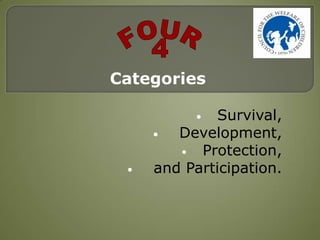
Categories

           •  Survival,
     •  Development,
        •  Protection,
 •   and Participation.
Every child has the inherent right
to life, and the State has an
obligation to ensure the child’s
survival and development. They
include rights to adequate food,
shelter, clean water, and primary
health care.
These are rights to the
resources, skills and
contributions necessary for the
full development of the child.
They include rights to formal
education, leisure and recreation,
cultural activities and
information.
These rights include protection
from all forms of child abuse,
neglect, exploitation and
cruelty, including the right to
special protection in times of
war and protection from abuse
in the criminal justice system.
Children are entitled to the
freedom to express opinions
and to have a say in matters
affecting their social, economic,
religious, cultural and political
life. Participation rights include
the right to express opinions
and be heard, the right to
information and freedom of
association.
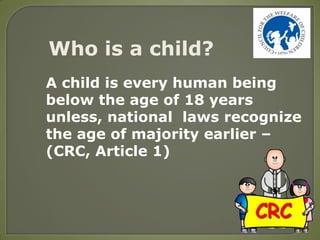
Who is a child?
A child is every human being
below the age of 18 years
unless, national laws recognize
the age of majority earlier –
(CRC, Article 1)
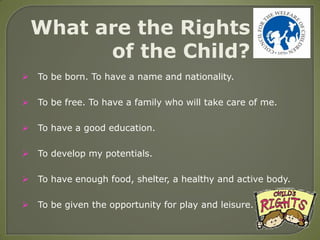
What are the Rights
          of the Child?
   To be born. To have a name and nationality.

   To be free. To have a family who will take care of me.

   To have a good education.

   To develop my potentials.

   To have enough food, shelter, a healthy and active body.

   To be given the opportunity for play and leisure.
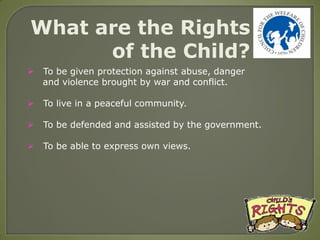
What are the Rights
      of the Child?
   To be given protection against abuse, danger
    and violence brought by war and conflict.

   To live in a peaceful community.

   To be defended and assisted by the government.

   To be able to express own views.
The child shall enjoy all the rights set
forth in this Declaration. Every child,
without any exception whatsoever,
shall be entitled to these rights,
without distinction or discrimination
on account of race, colour, sex,
language, religion, political or other
opinion, national or social origin,
property, birth or other status,
whether of himself or of his family.
UNCRC

UNCRC

  • 1.
    What is the Conventionon the Rights of the Child?
  • 2.
    An international instrumentof law that defines the comprehensive sets of rights that ALL children must enjoy. State parties should ensure that all appropriate measures are undertaken to ensure enjoyment of child rights. 1990 The Convention on the Rights of the Child
  • 3.
    According to UNICEF,193 states are party to the Convention, almost all the members of the United Nations. 191 countries signed the CRC except for United State of America and Somalia The Philippines ratified the CRC in July 1990
  • 4.
    •Best Interest ofthe Child •Right to life, survival and development •Non-discrimination •Right to participation
  • 5.
    Categories • Survival, • Development, • Protection, • and Participation.
  • 6.
    Every child hasthe inherent right to life, and the State has an obligation to ensure the child’s survival and development. They include rights to adequate food, shelter, clean water, and primary health care.
  • 7.
    These are rightsto the resources, skills and contributions necessary for the full development of the child. They include rights to formal education, leisure and recreation, cultural activities and information.
  • 8.
    These rights includeprotection from all forms of child abuse, neglect, exploitation and cruelty, including the right to special protection in times of war and protection from abuse in the criminal justice system.
  • 9.
    Children are entitledto the freedom to express opinions and to have a say in matters affecting their social, economic, religious, cultural and political life. Participation rights include the right to express opinions and be heard, the right to information and freedom of association.
  • 10.
    Who is achild? A child is every human being below the age of 18 years unless, national laws recognize the age of majority earlier – (CRC, Article 1)
  • 11.
    What are theRights of the Child?  To be born. To have a name and nationality.  To be free. To have a family who will take care of me.  To have a good education.  To develop my potentials.  To have enough food, shelter, a healthy and active body.  To be given the opportunity for play and leisure.
  • 12.
    What are theRights of the Child?  To be given protection against abuse, danger and violence brought by war and conflict.  To live in a peaceful community.  To be defended and assisted by the government.  To be able to express own views.
  • 13.
    The child shallenjoy all the rights set forth in this Declaration. Every child, without any exception whatsoever, shall be entitled to these rights, without distinction or discrimination on account of race, colour, sex, language, religion, political or other opinion, national or social origin, property, birth or other status, whether of himself or of his family.