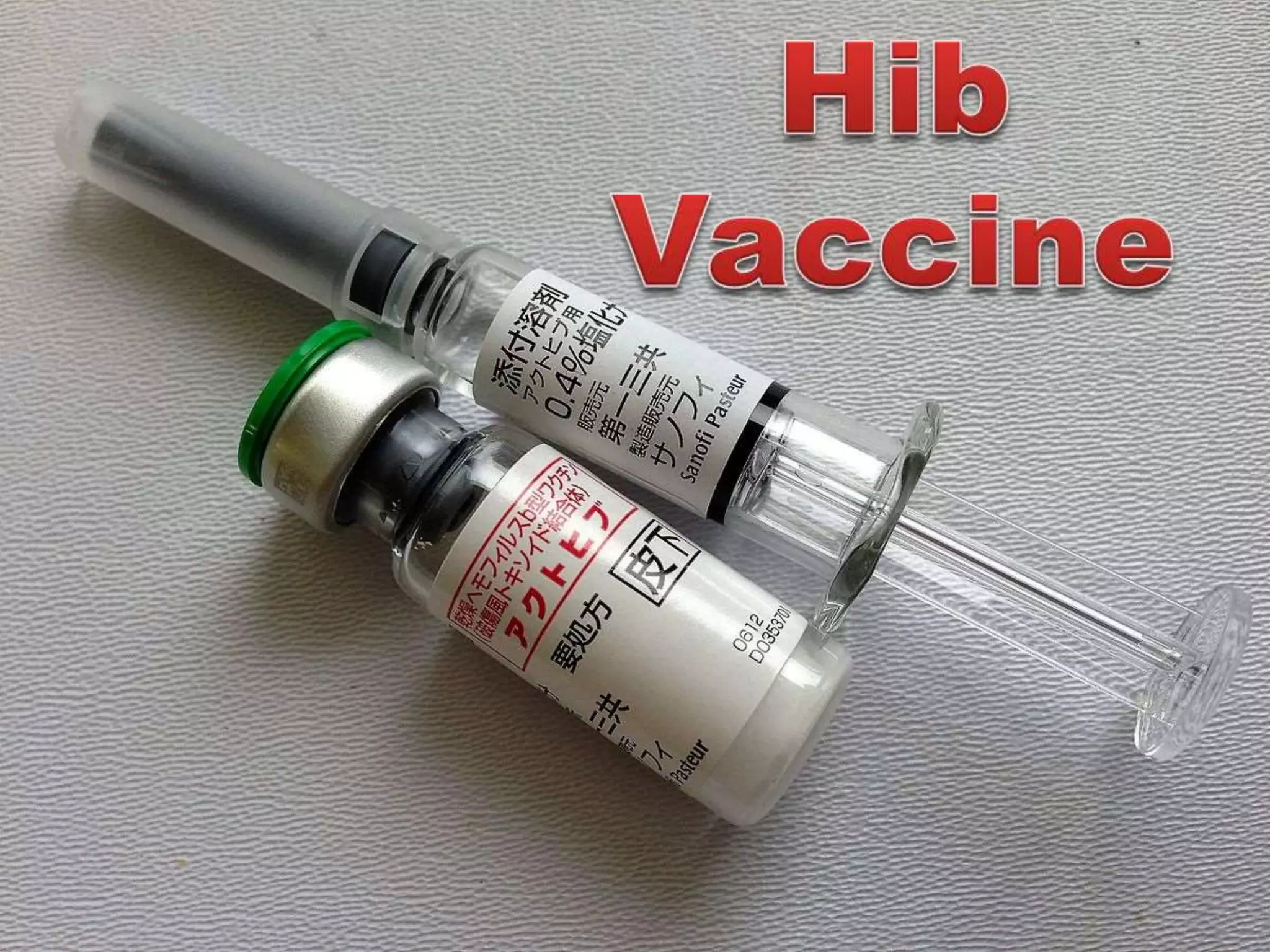
Haemophilus influenzae
Introduction
• Two major categories of H. influenzae were defined: the
unencapsulated strains and the encapsulated strains.
• Encapsulated H. influenzae: a, b, c, d, e, and f.
• Unencapsulated strains are termed nontypable (NTHi) because
they lack capsular serotypes.
• The capsule material is antiphagocytic, and it is ineffective in
inducing the alternative complement pathway, so that the
bacterium can invade the blood or cerebrospinal fluid without
attracting phagocytes or provoking an inflammatory response and
complement-mediated bacteriolysis.
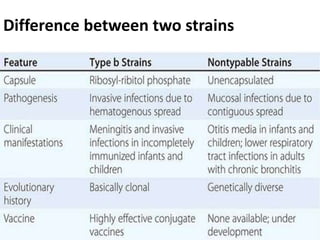
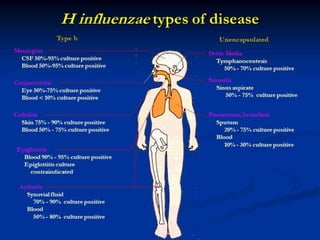
Difference between two strains
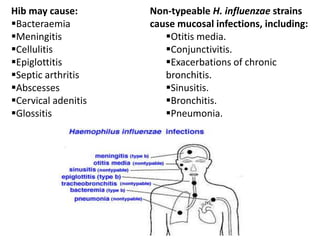
Hib may cause:
Bacteraemia
Meningitis
Cellulitis
Epiglottitis
Septic arthritis
Abscesses
Cervical adenitis
Glossitis
Non-typeable H. influenzae strains
cause mucosal infections, including:
Otitis media.
Conjunctivitis.
Exacerbations of chronic
bronchitis.
Sinusitis.
Bronchitis.
Pneumonia.
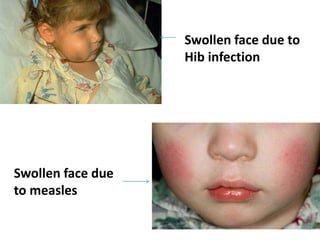
Swollen face due to
Hib infection
Swollen face due
to measles
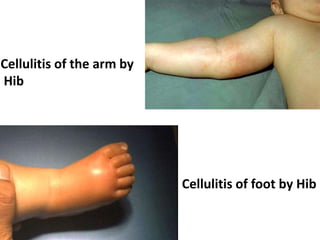
Cellulitis of the arm by
Hib
Cellulitis of foot by Hib
Hib Disease:
Hib disease is a serious illness caused by the bacteria
Haemophilus influenzae type b.
Babies and children younger than 5 years old are most at
risk for Hib disease.
 It can cause lifelong disability and can be deadly.
Hib disease was the leading cause of bacterial meningitis
in the United States.
Each year, about 12,000 children got meningitis as a result
of Hib, and about 1 in 20 died.
 Among those who survived, about 1 in 4 had permanent
brain damage.
Virulence factors or Immunogens for Hib:
Polyribosyl ribitol phosphate (PRP) capsule is known to be the major
factor in virulence.
 Encapsulated organisms can penetrate the epithelium of the
nasopharynx and invade the blood capillaries directly.
 Their capsule allows them to resist phagocytosis and complement-
mediated lysis in the nonimmune host.
 Bacterium's outer membrane lipooligosaccharide (LOS) is thought to
play a role in inflammation associated with otitis media.
 Outer membrane proteins designated as P1 and P2 plays a major
role in pathogenesis.
 Enters the body through respiratory tract or contact with mucus or
droplets from the nose and throat of an infected person
 In the body cause-
 Asymptomatic colonization
 Infections such as sinusitis, otitis media or pneumonia.
 Organism produces
 Neuraminidase
 IgA protease (which neutralizes respiratory mucosal IgA).
 It, then, enters the blood stream and cause bacteremia and
meningitis.
Hib pathogenesis
Treatment:
o H influenzae type b (Hib) infections are best treated with an
intravenous third-generation cephalosporin.
oAntibiotics therapy includes these antibiotics:
i. Ceftriaxone
ii. Ceftazidime
iii. Cefotaxime
iv. Ampicillin-sulbactam
v. Fluoroquinolones
vi. Azithromycin
vii. Cefotaxime and ceftriaxone are the initial drugs of choice for
suspected Hib meningitis & is given intravenously.
oCorticosteroids may help prevent brain damage.
o People with epiglottitis may need help breathing so an artificial
airway, such as a breathing tube, may be inserted and the procedure
called tracheostomy is done.
oThe cure of H. influenzae type b bacteremia and its complications
requires antimicrobial therapy that will penetrate the blood brain
barrier to achieve bactericidal concentrations.
Why there is a need of Vaccine?
The administration of antisera generated by intrathecal
inoculation of horses leads to immune consequences, including:
i. Serum sickness
ii. Conjunctival edema
iii. Anaphylaxis
Strains of Hib produce beta-lactamase and others are resistant
through reduced affinity for penicillin-binding proteins.
Resistance to Chloramphenicol is mediated through bacterial
elaboration of chloramphenicol acetyltransferase.
Toxic effects of chloramphenicol (eg, bone marrow suppression,
diminished myocardial contractility) render it less desirable for use
in children.
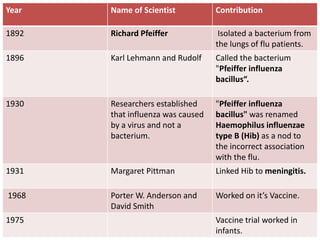
Year Name of Scientist Contribution
1892 Richard Pfeiffer Isolated a bacterium from
the lungs of flu patients.
1896 Karl Lehmann and Rudolf Called the bacterium
"Pfeiffer influenza
bacillus“.
1930 Researchers established
that influenza was caused
by a virus and not a
bacterium.
"Pfeiffer influenza
bacillus" was renamed
Haemophilus influenzae
type B (Hib) as a nod to
the incorrect association
with the flu.
1931 Margaret Pittman Linked Hib to meningitis.
1968 Porter W. Anderson and
David Smith
Worked on it’s Vaccine.
1975 Vaccine trial worked in
infants.
This HbPV polysaccharide vaccine was used until
1988.
 As of July 24, 2014, there are six Hib vaccines on
the market (three for Hib only; one Hib/Hep B
combination; one DTaP-IPV/Hib combination; and
one meningococcal vaccine).
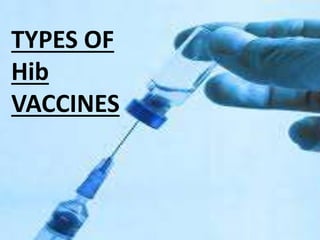
TYPES OF
Hib
VACCINES
1.Pure Polysaccharide Vaccine:
PRP (Polyribosylribitol phosphate polysaccharide) vaccine:
The characteristics of the Hib polysaccharide were similar to
other polysaccharide vaccines (e.g., pneumococcal,
meningococcal).
 It consist of aq soln. of native capsular polysaccharide PRPP
(extracted and purified from supernatant of broth culture).
PRPP vaccine induce production of IgG ,IgM & IgA Abs.
Limitations:
Dispropotionate amount of IgM is induced.
IgM is less active than IgG Ab,, IgM is of shorter persistence and
less avid.
All this suggest that PRPP vaccine induces a relatively immature
immune response which results in less protection.
The response to the vaccine was typical of a T-independent
antigen and poor immunogenicity in children 2 years of age and
younger.
In addition, no boost in antibody titer was observed with
repeated doses.
The antibody that was produced was relatively low-affinity IgM.
 Switching to IgG production was minimal.
2.Haemophilus influenzae type b
Polysaccharide- Protein Conjugate Vaccines
Stimulates T-dependent immunity
Enhanced antibody production, especially in
young children
Repeat doses elicit booster response
Carriers in conjugational vaccines
4 types of carriers can be used:
 Diphtheria toxoid (PRP-D).
 Tetanus toxoid (PRP-T).
 CRM197 (a non-toxic variant of diphtheria toxin
HbOC).
 The outer membrane protein complex of serogroup B
Neisseria meningitidis (PRP-OMP).
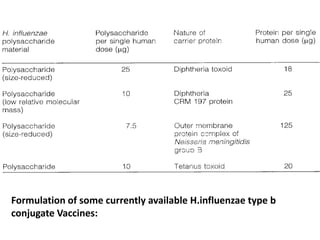
Formulation of some currently available H.influenzae type b
conjugate Vaccines:
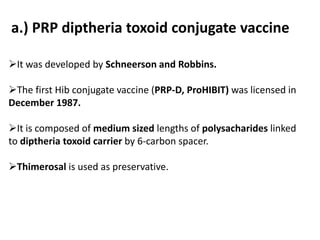
a.) PRP diptheria toxoid conjugate vaccine
It was developed by Schneerson and Robbins.
The first Hib conjugate vaccine (PRP-D, ProHIBIT) was licensed in
December 1987.
It is composed of medium sized lengths of polysacharides linked
to diptheria toxoid carrier by 6-carbon spacer.
Thimerosal is used as preservative.
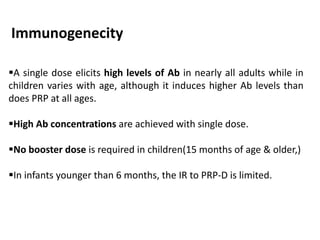
Immunogenecity
A single dose elicits high levels of Ab in nearly all adults while in
children varies with age, although it induces higher Ab levels than
does PRP at all ages.
High Ab concentrations are achieved with single dose.
No booster dose is required in children(15 months of age & older,)
In infants younger than 6 months, the IR to PRP-D is limited.
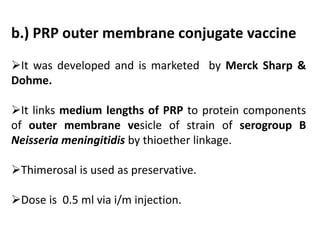
b.) PRP outer membrane conjugate vaccine
It was developed and is marketed by Merck Sharp &
Dohme.
It links medium lengths of PRP to protein components
of outer membrane vesicle of strain of serogroup B
Neisseria meningitidis by thioether linkage.
Thimerosal is used as preservative.
Dose is 0.5 ml via i/m injection.
PRP-OMP has ability to induce a strong antibody response in
young infants with the first dose.
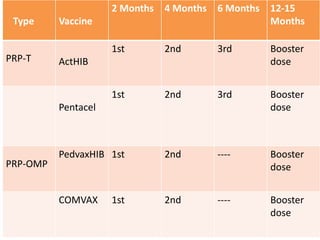
2 primary doses at 2 and 4 months of age.
A booster dose at 12 months of age.
Titer achieved after the two doses of PRP-omp is higher than
those achieved after two doses of other conjugational vaccines.
PRP-OMP gives a protective antibody response after the 1st dose
and requires only 2 doses to complete the primary course.
Immunogenecity:
Safety and efficacy
Rates of local and systemic reactions are 3 -15 %.
Earlier high rates of reactions were seen but their levels
were much reduced upon the use of Aluminium
phosphate adjuvant.
Efficacy is 95 %.
c.) PRP tetanus toxoid conjugate vaccine
PRP-T was among the PRP-protein conjugate vaccines developed at
National Institutes of Health by Schneerson and associates.
It is now manufactured by Pasteur Merieux Connaught & is
marketed by that organization and also by SmithKline Beecham.
Contains large polysaccharides polymers and linked to 6-C spacer
to tetanus toxoid carrier.
It is present in lyophillized form and reconstituted with buffer.
Dose is 0.5 ml via i/m injection.
A single dose of vaccine is highly immunogenic in adults and in older
children.
The schedule for PRP-T vaccines is 3 primary doses at 2, 4 and 6
months of age.
A booster dose at 12 months of age.
Ab’s induced are primarily IgG1.
PRP-T conjugates achieve protective antibody levels only after the
administration of the 2nd dose of the vaccine.
Immunogenecity:
Type Vaccine
2 Months 4 Months 6 Months 12-15
Months
PRP-T ActHIB
1st 2nd 3rd Booster
dose
Pentacel
1st 2nd 3rd Booster
dose
PRP-OMP
PedvaxHIB 1st 2nd ---- Booster
dose
COMVAX 1st 2nd ---- Booster
dose
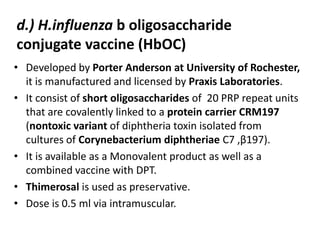
• Developed by Porter Anderson at University of Rochester,
it is manufactured and licensed by Praxis Laboratories.
• It consist of short oligosaccharides of 20 PRP repeat units
that are covalently linked to a protein carrier CRM197
(nontoxic variant of diphtheria toxin isolated from
cultures of Corynebacterium diphtheriae C7 ,β197).
• It is available as a Monovalent product as well as a
combined vaccine with DPT.
• Thimerosal is used as preservative.
• Dose is 0.5 ml via intramuscular.
d.) H.influenza b oligosaccharide
conjugate vaccine (HbOC)
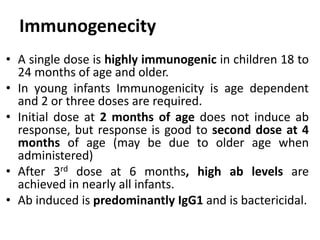
• A single dose is highly immunogenic in children 18 to
24 months of age and older.
• In young infants Immunogenicity is age dependent
and 2 or three doses are required.
• Initial dose at 2 months of age does not induce ab
response, but response is good to second dose at 4
months of age (may be due to older age when
administered)
• After 3rd dose at 6 months, high ab levels are
achieved in nearly all infants.
• Ab induced is predominantly IgG1 and is bactericidal.
Immunogenecity
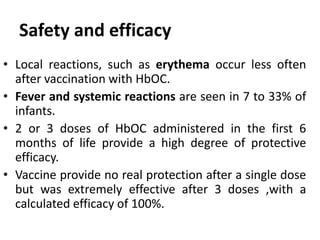
• Local reactions, such as erythema occur less often
after vaccination with HbOC.
• Fever and systemic reactions are seen in 7 to 33% of
infants.
• 2 or 3 doses of HbOC administered in the first 6
months of life provide a high degree of protective
efficacy.
• Vaccine provide no real protection after a single dose
but was extremely effective after 3 doses ,with a
calculated efficacy of 100%.
Safety and efficacy
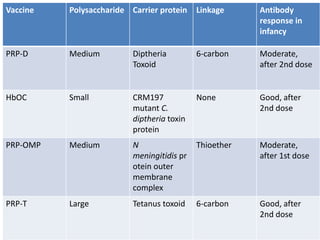
Vaccine Polysaccharide Carrier protein Linkage Antibody
response in
infancy
PRP-D Medium Diptheria
Toxoid
6-carbon Moderate,
after 2nd dose
HbOC Small CRM197
mutant C.
diptheria toxin
protein
None Good, after
2nd dose
PRP-OMP Medium N
meningitidis pr
otein outer
membrane
complex
Thioether Moderate,
after 1st dose
PRP-T Large Tetanus toxoid 6-carbon Good, after
2nd dose
3. Combination vaccines containing Hib
Fewer Shots—Same Protection
 Combination vaccines take two or more vaccines that
could be given individually and put them into one shot.
Children get the same protection as they do from
individual vaccines given separately—but with fewer shots.
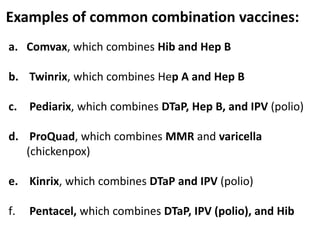
Examples of common combination vaccines:
a. Comvax, which combines Hib and Hep B
b. Twinrix, which combines Hep A and Hep B
c. Pediarix, which combines DTaP, Hep B, and IPV (polio)
d. ProQuad, which combines MMR and varicella
(chickenpox)
e. Kinrix, which combines DTaP and IPV (polio)
f. Pentacel, which combines DTaP, IPV (polio), and Hib
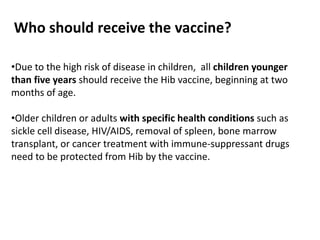
Who should receive the vaccine?
•Due to the high risk of disease in children, all children younger
than five years should receive the Hib vaccine, beginning at two
months of age.
•Older children or adults with specific health conditions such as
sickle cell disease, HIV/AIDS, removal of spleen, bone marrow
transplant, or cancer treatment with immune-suppressant drugs
need to be protected from Hib by the vaccine.
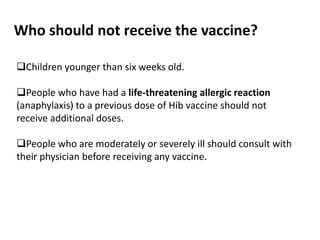
Who should not receive the vaccine?
Children younger than six weeks old.
People who have had a life-threatening allergic reaction
(anaphylaxis) to a previous dose of Hib vaccine should not
receive additional doses.
People who are moderately or severely ill should consult with
their physician before receiving any vaccine.
Adverse reactions following vaccine
Swelling, redness, or pain have been reported
in 5%–30% of recipients and usually resolve
within 12–24 hours.
 Systemic reactions such as fever and irritability
are infrequent.
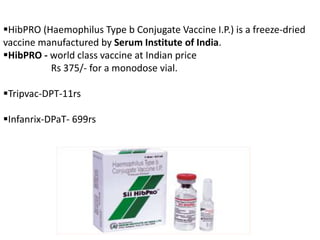
HibPRO (Haemophilus Type b Conjugate Vaccine I.P.) is a freeze-dried
vaccine manufactured by Serum Institute of India.
HibPRO - world class vaccine at Indian price
Rs 375/- for a monodose vial.
Tripvac-DPT-11rs
Infanrix-DPaT- 699rs
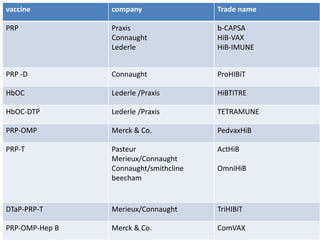
vaccine company Trade name
PRP Praxis
Connaught
Lederle
b-CAPSA
HiB-VAX
HiB-IMUNE
PRP -D Connaught ProHIBiT
HbOC Lederle /Praxis HiBTITRE
HbOC-DTP Lederle /Praxis TETRAMUNE
PRP-OMP Merck & Co. PedvaxHiB
PRP-T Pasteur
Merieux/Connaught
Connaught/smithcline
beecham
ActHiB
OmniHiB
DTaP-PRP-T Merieux/Connaught TriHIBiT
PRP-OMP-Hep B Merck & Co. ComVAX
Refrences:
www.ncbi.nlm.nih.gov
https://www.cdc.gov/vaccines/vpd/hib/index.html
https://www.cdc.gov/vaccines/hcp/vis/vis-statements/hib.html
http://www.immune.org.nz/diseases/haemophilius-influenzae-type-b
https://www.vaccines.gov/diseases/hib/
http://microbeonline.com/laboratory-diagnosis-of-haemophilus-
influenza/
http://emedicine.medscape.com/article/218271-treatment
http://textbookofbacteriology.net/haemophilus_2.html
http://vaccines.procon.org/view.additional-
resource.php?resourceID=005970
https://www.ncbi.nlm.nih.gov/pmc/articles/PMC1782565/
Haemophilus influenzae

Haemophilus influenzae

  • 2.
    Haemophilus influenzae Introduction • Twomajor categories of H. influenzae were defined: the unencapsulated strains and the encapsulated strains. • Encapsulated H. influenzae: a, b, c, d, e, and f. • Unencapsulated strains are termed nontypable (NTHi) because they lack capsular serotypes. • The capsule material is antiphagocytic, and it is ineffective in inducing the alternative complement pathway, so that the bacterium can invade the blood or cerebrospinal fluid without attracting phagocytes or provoking an inflammatory response and complement-mediated bacteriolysis.
  • 3.
  • 4.
    Hib may cause: Bacteraemia Meningitis Cellulitis Epiglottitis Septicarthritis Abscesses Cervical adenitis Glossitis Non-typeable H. influenzae strains cause mucosal infections, including: Otitis media. Conjunctivitis. Exacerbations of chronic bronchitis. Sinusitis. Bronchitis. Pneumonia.
  • 6.
    Swollen face dueto Hib infection Swollen face due to measles
  • 7.
    Cellulitis of thearm by Hib Cellulitis of foot by Hib
  • 8.
    Hib Disease: Hib diseaseis a serious illness caused by the bacteria Haemophilus influenzae type b. Babies and children younger than 5 years old are most at risk for Hib disease.  It can cause lifelong disability and can be deadly. Hib disease was the leading cause of bacterial meningitis in the United States. Each year, about 12,000 children got meningitis as a result of Hib, and about 1 in 20 died.  Among those who survived, about 1 in 4 had permanent brain damage.
  • 9.
    Virulence factors orImmunogens for Hib: Polyribosyl ribitol phosphate (PRP) capsule is known to be the major factor in virulence.  Encapsulated organisms can penetrate the epithelium of the nasopharynx and invade the blood capillaries directly.  Their capsule allows them to resist phagocytosis and complement- mediated lysis in the nonimmune host.  Bacterium's outer membrane lipooligosaccharide (LOS) is thought to play a role in inflammation associated with otitis media.  Outer membrane proteins designated as P1 and P2 plays a major role in pathogenesis.
  • 10.
     Enters thebody through respiratory tract or contact with mucus or droplets from the nose and throat of an infected person  In the body cause-  Asymptomatic colonization  Infections such as sinusitis, otitis media or pneumonia.  Organism produces  Neuraminidase  IgA protease (which neutralizes respiratory mucosal IgA).  It, then, enters the blood stream and cause bacteremia and meningitis. Hib pathogenesis
  • 11.
    Treatment: o H influenzaetype b (Hib) infections are best treated with an intravenous third-generation cephalosporin. oAntibiotics therapy includes these antibiotics: i. Ceftriaxone ii. Ceftazidime iii. Cefotaxime iv. Ampicillin-sulbactam v. Fluoroquinolones vi. Azithromycin vii. Cefotaxime and ceftriaxone are the initial drugs of choice for suspected Hib meningitis & is given intravenously. oCorticosteroids may help prevent brain damage.
  • 12.
    o People withepiglottitis may need help breathing so an artificial airway, such as a breathing tube, may be inserted and the procedure called tracheostomy is done. oThe cure of H. influenzae type b bacteremia and its complications requires antimicrobial therapy that will penetrate the blood brain barrier to achieve bactericidal concentrations.
  • 13.
    Why there isa need of Vaccine? The administration of antisera generated by intrathecal inoculation of horses leads to immune consequences, including: i. Serum sickness ii. Conjunctival edema iii. Anaphylaxis Strains of Hib produce beta-lactamase and others are resistant through reduced affinity for penicillin-binding proteins. Resistance to Chloramphenicol is mediated through bacterial elaboration of chloramphenicol acetyltransferase. Toxic effects of chloramphenicol (eg, bone marrow suppression, diminished myocardial contractility) render it less desirable for use in children.
  • 14.
    Year Name ofScientist Contribution 1892 Richard Pfeiffer Isolated a bacterium from the lungs of flu patients. 1896 Karl Lehmann and Rudolf Called the bacterium "Pfeiffer influenza bacillus“. 1930 Researchers established that influenza was caused by a virus and not a bacterium. "Pfeiffer influenza bacillus" was renamed Haemophilus influenzae type B (Hib) as a nod to the incorrect association with the flu. 1931 Margaret Pittman Linked Hib to meningitis. 1968 Porter W. Anderson and David Smith Worked on it’s Vaccine. 1975 Vaccine trial worked in infants.
  • 15.
    This HbPV polysaccharidevaccine was used until 1988.  As of July 24, 2014, there are six Hib vaccines on the market (three for Hib only; one Hib/Hep B combination; one DTaP-IPV/Hib combination; and one meningococcal vaccine).
  • 16.
  • 17.
    1.Pure Polysaccharide Vaccine: PRP(Polyribosylribitol phosphate polysaccharide) vaccine: The characteristics of the Hib polysaccharide were similar to other polysaccharide vaccines (e.g., pneumococcal, meningococcal).  It consist of aq soln. of native capsular polysaccharide PRPP (extracted and purified from supernatant of broth culture). PRPP vaccine induce production of IgG ,IgM & IgA Abs. Limitations: Dispropotionate amount of IgM is induced. IgM is less active than IgG Ab,, IgM is of shorter persistence and less avid. All this suggest that PRPP vaccine induces a relatively immature immune response which results in less protection.
  • 18.
    The response tothe vaccine was typical of a T-independent antigen and poor immunogenicity in children 2 years of age and younger. In addition, no boost in antibody titer was observed with repeated doses. The antibody that was produced was relatively low-affinity IgM.  Switching to IgG production was minimal.
  • 19.
    2.Haemophilus influenzae typeb Polysaccharide- Protein Conjugate Vaccines Stimulates T-dependent immunity Enhanced antibody production, especially in young children Repeat doses elicit booster response
  • 20.
    Carriers in conjugationalvaccines 4 types of carriers can be used:  Diphtheria toxoid (PRP-D).  Tetanus toxoid (PRP-T).  CRM197 (a non-toxic variant of diphtheria toxin HbOC).  The outer membrane protein complex of serogroup B Neisseria meningitidis (PRP-OMP).
  • 21.
    Formulation of somecurrently available H.influenzae type b conjugate Vaccines:
  • 22.
    a.) PRP diptheriatoxoid conjugate vaccine It was developed by Schneerson and Robbins. The first Hib conjugate vaccine (PRP-D, ProHIBIT) was licensed in December 1987. It is composed of medium sized lengths of polysacharides linked to diptheria toxoid carrier by 6-carbon spacer. Thimerosal is used as preservative.
  • 23.
    Immunogenecity A single doseelicits high levels of Ab in nearly all adults while in children varies with age, although it induces higher Ab levels than does PRP at all ages. High Ab concentrations are achieved with single dose. No booster dose is required in children(15 months of age & older,) In infants younger than 6 months, the IR to PRP-D is limited.
  • 24.
    b.) PRP outermembrane conjugate vaccine It was developed and is marketed by Merck Sharp & Dohme. It links medium lengths of PRP to protein components of outer membrane vesicle of strain of serogroup B Neisseria meningitidis by thioether linkage. Thimerosal is used as preservative. Dose is 0.5 ml via i/m injection.
  • 25.
    PRP-OMP has abilityto induce a strong antibody response in young infants with the first dose. 2 primary doses at 2 and 4 months of age. A booster dose at 12 months of age. Titer achieved after the two doses of PRP-omp is higher than those achieved after two doses of other conjugational vaccines. PRP-OMP gives a protective antibody response after the 1st dose and requires only 2 doses to complete the primary course. Immunogenecity:
  • 26.
    Safety and efficacy Ratesof local and systemic reactions are 3 -15 %. Earlier high rates of reactions were seen but their levels were much reduced upon the use of Aluminium phosphate adjuvant. Efficacy is 95 %.
  • 27.
    c.) PRP tetanustoxoid conjugate vaccine PRP-T was among the PRP-protein conjugate vaccines developed at National Institutes of Health by Schneerson and associates. It is now manufactured by Pasteur Merieux Connaught & is marketed by that organization and also by SmithKline Beecham. Contains large polysaccharides polymers and linked to 6-C spacer to tetanus toxoid carrier. It is present in lyophillized form and reconstituted with buffer. Dose is 0.5 ml via i/m injection.
  • 28.
    A single doseof vaccine is highly immunogenic in adults and in older children. The schedule for PRP-T vaccines is 3 primary doses at 2, 4 and 6 months of age. A booster dose at 12 months of age. Ab’s induced are primarily IgG1. PRP-T conjugates achieve protective antibody levels only after the administration of the 2nd dose of the vaccine. Immunogenecity:
  • 29.
    Type Vaccine 2 Months4 Months 6 Months 12-15 Months PRP-T ActHIB 1st 2nd 3rd Booster dose Pentacel 1st 2nd 3rd Booster dose PRP-OMP PedvaxHIB 1st 2nd ---- Booster dose COMVAX 1st 2nd ---- Booster dose
  • 30.
    • Developed byPorter Anderson at University of Rochester, it is manufactured and licensed by Praxis Laboratories. • It consist of short oligosaccharides of 20 PRP repeat units that are covalently linked to a protein carrier CRM197 (nontoxic variant of diphtheria toxin isolated from cultures of Corynebacterium diphtheriae C7 ,β197). • It is available as a Monovalent product as well as a combined vaccine with DPT. • Thimerosal is used as preservative. • Dose is 0.5 ml via intramuscular. d.) H.influenza b oligosaccharide conjugate vaccine (HbOC)
  • 31.
    • A singledose is highly immunogenic in children 18 to 24 months of age and older. • In young infants Immunogenicity is age dependent and 2 or three doses are required. • Initial dose at 2 months of age does not induce ab response, but response is good to second dose at 4 months of age (may be due to older age when administered) • After 3rd dose at 6 months, high ab levels are achieved in nearly all infants. • Ab induced is predominantly IgG1 and is bactericidal. Immunogenecity
  • 32.
    • Local reactions,such as erythema occur less often after vaccination with HbOC. • Fever and systemic reactions are seen in 7 to 33% of infants. • 2 or 3 doses of HbOC administered in the first 6 months of life provide a high degree of protective efficacy. • Vaccine provide no real protection after a single dose but was extremely effective after 3 doses ,with a calculated efficacy of 100%. Safety and efficacy
  • 33.
    Vaccine Polysaccharide Carrierprotein Linkage Antibody response in infancy PRP-D Medium Diptheria Toxoid 6-carbon Moderate, after 2nd dose HbOC Small CRM197 mutant C. diptheria toxin protein None Good, after 2nd dose PRP-OMP Medium N meningitidis pr otein outer membrane complex Thioether Moderate, after 1st dose PRP-T Large Tetanus toxoid 6-carbon Good, after 2nd dose
  • 34.
    3. Combination vaccinescontaining Hib Fewer Shots—Same Protection  Combination vaccines take two or more vaccines that could be given individually and put them into one shot. Children get the same protection as they do from individual vaccines given separately—but with fewer shots.
  • 35.
    Examples of commoncombination vaccines: a. Comvax, which combines Hib and Hep B b. Twinrix, which combines Hep A and Hep B c. Pediarix, which combines DTaP, Hep B, and IPV (polio) d. ProQuad, which combines MMR and varicella (chickenpox) e. Kinrix, which combines DTaP and IPV (polio) f. Pentacel, which combines DTaP, IPV (polio), and Hib
  • 36.
    Who should receivethe vaccine? •Due to the high risk of disease in children, all children younger than five years should receive the Hib vaccine, beginning at two months of age. •Older children or adults with specific health conditions such as sickle cell disease, HIV/AIDS, removal of spleen, bone marrow transplant, or cancer treatment with immune-suppressant drugs need to be protected from Hib by the vaccine.
  • 37.
    Who should notreceive the vaccine? Children younger than six weeks old. People who have had a life-threatening allergic reaction (anaphylaxis) to a previous dose of Hib vaccine should not receive additional doses. People who are moderately or severely ill should consult with their physician before receiving any vaccine.
  • 38.
    Adverse reactions followingvaccine Swelling, redness, or pain have been reported in 5%–30% of recipients and usually resolve within 12–24 hours.  Systemic reactions such as fever and irritability are infrequent.
  • 39.
    HibPRO (Haemophilus Typeb Conjugate Vaccine I.P.) is a freeze-dried vaccine manufactured by Serum Institute of India. HibPRO - world class vaccine at Indian price Rs 375/- for a monodose vial. Tripvac-DPT-11rs Infanrix-DPaT- 699rs
  • 40.
    vaccine company Tradename PRP Praxis Connaught Lederle b-CAPSA HiB-VAX HiB-IMUNE PRP -D Connaught ProHIBiT HbOC Lederle /Praxis HiBTITRE HbOC-DTP Lederle /Praxis TETRAMUNE PRP-OMP Merck & Co. PedvaxHiB PRP-T Pasteur Merieux/Connaught Connaught/smithcline beecham ActHiB OmniHiB DTaP-PRP-T Merieux/Connaught TriHIBiT PRP-OMP-Hep B Merck & Co. ComVAX
  • 41.