Heamophilus Vaccine
Presentation by
Shehryar Parvez Awan
(FA19-PHM-012)
Table of content:
 Introduction to disease
 Causative agent
 Vectors
 Heamophilus influenza vaccine
 Types of HIB vaccines
 Examples of HIB vaccines
 Side effects of these vaccines
 References
Introduction:
 It is an infectious disease that may cause many different types
of infections
 Hemophilus influenzae most often cause pneumonia, but can
also cause severe illnesses like meningitis and bloodstream
infections.
4
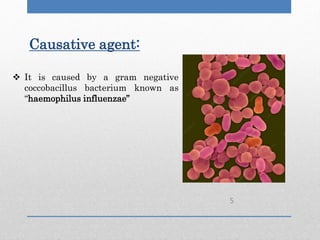
Causative agent:
 It is caused by a gram negative
coccobacillus bacterium known as
“haemophilus influenzae”
5
Vectors:
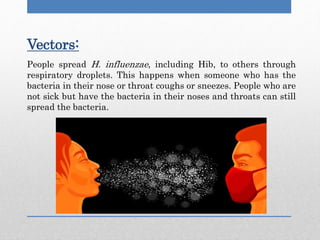
People spread H. influenzae, including Hib, to others through
respiratory droplets. This happens when someone who has the
bacteria in their nose or throat coughs or sneezes. People who are
not sick but have the bacteria in their noses and throats can still
spread the bacteria.
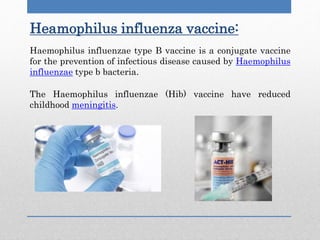
Haemophilus influenzae type B vaccine is a conjugate vaccine
for the prevention of infectious disease caused by Haemophilus
influenzae type b bacteria.
The Haemophilus influenzae (Hib) vaccine have reduced
childhood meningitis.
Heamophilus influenza vaccine:
There are three main types vaccines available for HIB
currently;
1. Pure polysaccharide vaccine
2. Polysaccharide- Protein conjugated vaccine
• PRP diptheria toxoid conjugate vaccine
• PRP outer membrane conjugate vaccine
• PRP tetanus toxoid conjugate vaccine
• H.influenza b oligosaccharide conjugate vaccine (HbOC)
3. Combination vaccines containing HIB
Types of HIB vaccine:
1.Pure Polysaccharide Vaccine:
PRP (Polyribosylribitol phosphate polysaccharide) vaccine:
The characteristics of the Hib polysaccharide were similar to
other polysaccharide vaccines
It consist of aq soln. of native capsular polysaccharide PRPP
(extracted and purified from supernatant of broth culture).
 PRPP vaccine induce production of IgG ,IgM & IgAAbs.
Limitations:
PRPP vaccine induces a relatively immature immune response which
results in less protection (because IgG production is minimal).
2. Polysaccharide- Protein Conjugate
Vaccines
 Stimulates T-dependent immunity
 Enhanced antibody production, especially in young children
 Repeat doses elicit booster response
4 types of carriers can be used:
 Diphtheria toxoid (PRP-D).
 Tetanus toxoid (PRP-T).
 CRM197 (a non-toxic variant of diphtheria toxin HbOC).
 The outer membrane protein complex of serogroup B Neisseria
meningitidis (PRP-OMP).
a.) PRP diptheria toxoid conjugate vaccine
 It was developed by Schneerson and Robbins.
 The first Hib conjugate vaccine (PRP-D, ProHIBIT) was licensed in
December 1987.
 It is composed of medium sized lengths of polysacharides linked
to diptheria toxoid carrier by 6-carbon spacer.
 Thimerosal (is a mercury-containing organic compound) is used as
preservative.
b.) PRP outer membrane conjugate vaccine:
It was developed and is marketed by Merck Sharp & Dohme.
It links medium lengths of PRP to protein components of outer
membrane vesicle of strain of serogroup B Neisseria meningitidis by
thioether linkage.
 Thimerosal is used as preservative.
c.) PRP tetanus toxoid conjugate
vaccine:
 PRP-T was among the PRP-protein conjugate vaccines developed at
National Institutes of Health by Schneerson and associates.
Contains large polysaccharides polymers and linked to 6-C spacer to
tetanus toxoid carrier.
 It is present in lyophilized form and reconstituted with buffer.
 Developed by Porter Anderson at University of Rochester,
it is manufactured and licensed by Praxis Laboratories.
 It consist of short oligosaccharides of 20 PRP repeat units
that are covalently linked to a protein carrier CRM197 (nontoxic
variant of diphtheria toxin isolated from cultures of
Corynebacterium diphtheriae).
 Thimerosal is used as preservative.
d.) H.influenza b oligosaccharide conjugate
vaccine (HbOC):
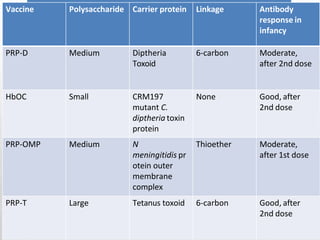
Vaccine Polysaccharide Carrier protein Linkage Antibody
response in
infancy
PRP-D Medium Diptheria
Toxoid
6-carbon Moderate,
after 2nd dose
HbOC Small CRM197
mutant C.
diptheria toxin
protein
None Good, after
2nd dose
PRP-OMP Medium N
meningitidis pr
otein outer
membrane
complex
Thioether Moderate,
after 1st dose
PRP-T Large Tetanus toxoid 6-carbon Good, after
2nd dose
3. Combination vaccines containing Hib:
 Combination vaccines take two or more vaccines that could be
given individually and put them into one shot.
 Children get the same protection as they do from individual vaccines
given separately—but with fewer shots.
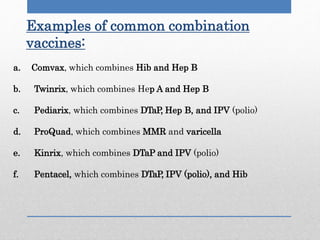
Examples of common combination
vaccines:
a. Comvax, which combines Hib and Hep B
b. Twinrix, which combines Hep A and Hep B
c. Pediarix, which combines DTaP, Hep B, and IPV (polio)
d. ProQuad, which combines MMR and varicella
e. Kinrix, which combines DTaP and IPV (polio)
f. Pentacel, which combines DTaP, IPV (polio), and Hib
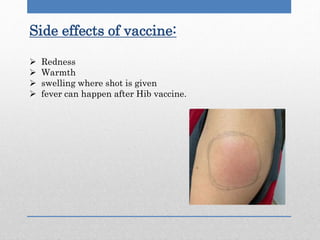
Side effects of vaccine:
 Redness
 Warmth
 swelling where shot is given
 fever can happen after Hib vaccine.
Refrences:
 https://www.cdc.gov/vaccines/vpd/hib/index.html
 http://www.immune.org.nz/diseases/haemophilius-influenzae-type-b
 https://www.vaccines.gov/diseases/hib/
 http://microbeonline.com/laboratory-diagnosis-of-haemophilus-
influenza/
 http://textbookofbacteriology.net/haemophilus_2.html
 https://www.ncbi.nlm.nih.gov/pmc/articles/PMC1782565/
Heamophilus vaccine presentation.pptx

Heamophilus vaccine presentation.pptx

  • 2.
  • 3.
    Table of content: Introduction to disease  Causative agent  Vectors  Heamophilus influenza vaccine  Types of HIB vaccines  Examples of HIB vaccines  Side effects of these vaccines  References
  • 4.
    Introduction:  It isan infectious disease that may cause many different types of infections  Hemophilus influenzae most often cause pneumonia, but can also cause severe illnesses like meningitis and bloodstream infections. 4
  • 5.
    Causative agent:  Itis caused by a gram negative coccobacillus bacterium known as “haemophilus influenzae” 5
  • 6.
    Vectors: People spread H.influenzae, including Hib, to others through respiratory droplets. This happens when someone who has the bacteria in their nose or throat coughs or sneezes. People who are not sick but have the bacteria in their noses and throats can still spread the bacteria.
  • 7.
    Haemophilus influenzae typeB vaccine is a conjugate vaccine for the prevention of infectious disease caused by Haemophilus influenzae type b bacteria. The Haemophilus influenzae (Hib) vaccine have reduced childhood meningitis. Heamophilus influenza vaccine:
  • 8.
    There are threemain types vaccines available for HIB currently; 1. Pure polysaccharide vaccine 2. Polysaccharide- Protein conjugated vaccine • PRP diptheria toxoid conjugate vaccine • PRP outer membrane conjugate vaccine • PRP tetanus toxoid conjugate vaccine • H.influenza b oligosaccharide conjugate vaccine (HbOC) 3. Combination vaccines containing HIB Types of HIB vaccine:
  • 9.
    1.Pure Polysaccharide Vaccine: PRP(Polyribosylribitol phosphate polysaccharide) vaccine: The characteristics of the Hib polysaccharide were similar to other polysaccharide vaccines It consist of aq soln. of native capsular polysaccharide PRPP (extracted and purified from supernatant of broth culture).  PRPP vaccine induce production of IgG ,IgM & IgAAbs. Limitations: PRPP vaccine induces a relatively immature immune response which results in less protection (because IgG production is minimal).
  • 10.
    2. Polysaccharide- ProteinConjugate Vaccines  Stimulates T-dependent immunity  Enhanced antibody production, especially in young children  Repeat doses elicit booster response 4 types of carriers can be used:  Diphtheria toxoid (PRP-D).  Tetanus toxoid (PRP-T).  CRM197 (a non-toxic variant of diphtheria toxin HbOC).  The outer membrane protein complex of serogroup B Neisseria meningitidis (PRP-OMP).
  • 11.
    a.) PRP diptheriatoxoid conjugate vaccine  It was developed by Schneerson and Robbins.  The first Hib conjugate vaccine (PRP-D, ProHIBIT) was licensed in December 1987.  It is composed of medium sized lengths of polysacharides linked to diptheria toxoid carrier by 6-carbon spacer.  Thimerosal (is a mercury-containing organic compound) is used as preservative.
  • 12.
    b.) PRP outermembrane conjugate vaccine: It was developed and is marketed by Merck Sharp & Dohme. It links medium lengths of PRP to protein components of outer membrane vesicle of strain of serogroup B Neisseria meningitidis by thioether linkage.  Thimerosal is used as preservative.
  • 13.
    c.) PRP tetanustoxoid conjugate vaccine:  PRP-T was among the PRP-protein conjugate vaccines developed at National Institutes of Health by Schneerson and associates. Contains large polysaccharides polymers and linked to 6-C spacer to tetanus toxoid carrier.  It is present in lyophilized form and reconstituted with buffer.
  • 14.
     Developed byPorter Anderson at University of Rochester, it is manufactured and licensed by Praxis Laboratories.  It consist of short oligosaccharides of 20 PRP repeat units that are covalently linked to a protein carrier CRM197 (nontoxic variant of diphtheria toxin isolated from cultures of Corynebacterium diphtheriae).  Thimerosal is used as preservative. d.) H.influenza b oligosaccharide conjugate vaccine (HbOC):
  • 15.
    Vaccine Polysaccharide Carrierprotein Linkage Antibody response in infancy PRP-D Medium Diptheria Toxoid 6-carbon Moderate, after 2nd dose HbOC Small CRM197 mutant C. diptheria toxin protein None Good, after 2nd dose PRP-OMP Medium N meningitidis pr otein outer membrane complex Thioether Moderate, after 1st dose PRP-T Large Tetanus toxoid 6-carbon Good, after 2nd dose
  • 16.
    3. Combination vaccinescontaining Hib:  Combination vaccines take two or more vaccines that could be given individually and put them into one shot.  Children get the same protection as they do from individual vaccines given separately—but with fewer shots.
  • 17.
    Examples of commoncombination vaccines: a. Comvax, which combines Hib and Hep B b. Twinrix, which combines Hep A and Hep B c. Pediarix, which combines DTaP, Hep B, and IPV (polio) d. ProQuad, which combines MMR and varicella e. Kinrix, which combines DTaP and IPV (polio) f. Pentacel, which combines DTaP, IPV (polio), and Hib
  • 18.
    Side effects ofvaccine:  Redness  Warmth  swelling where shot is given  fever can happen after Hib vaccine.
  • 19.
    Refrences:  https://www.cdc.gov/vaccines/vpd/hib/index.html  http://www.immune.org.nz/diseases/haemophilius-influenzae-type-b https://www.vaccines.gov/diseases/hib/  http://microbeonline.com/laboratory-diagnosis-of-haemophilus- influenza/  http://textbookofbacteriology.net/haemophilus_2.html  https://www.ncbi.nlm.nih.gov/pmc/articles/PMC1782565/