1 
Habit 3 Put First Things First 
Adapted from 
Stephen Covey “Seven Habits for 
Effective People” 
Habit 3
2 
Habit 3 Put First Things First 
In Habit 3 Covey highlights the 
importance of prioritising your 
tasks 
and provides a time 
management 
matrix to help you do this. 
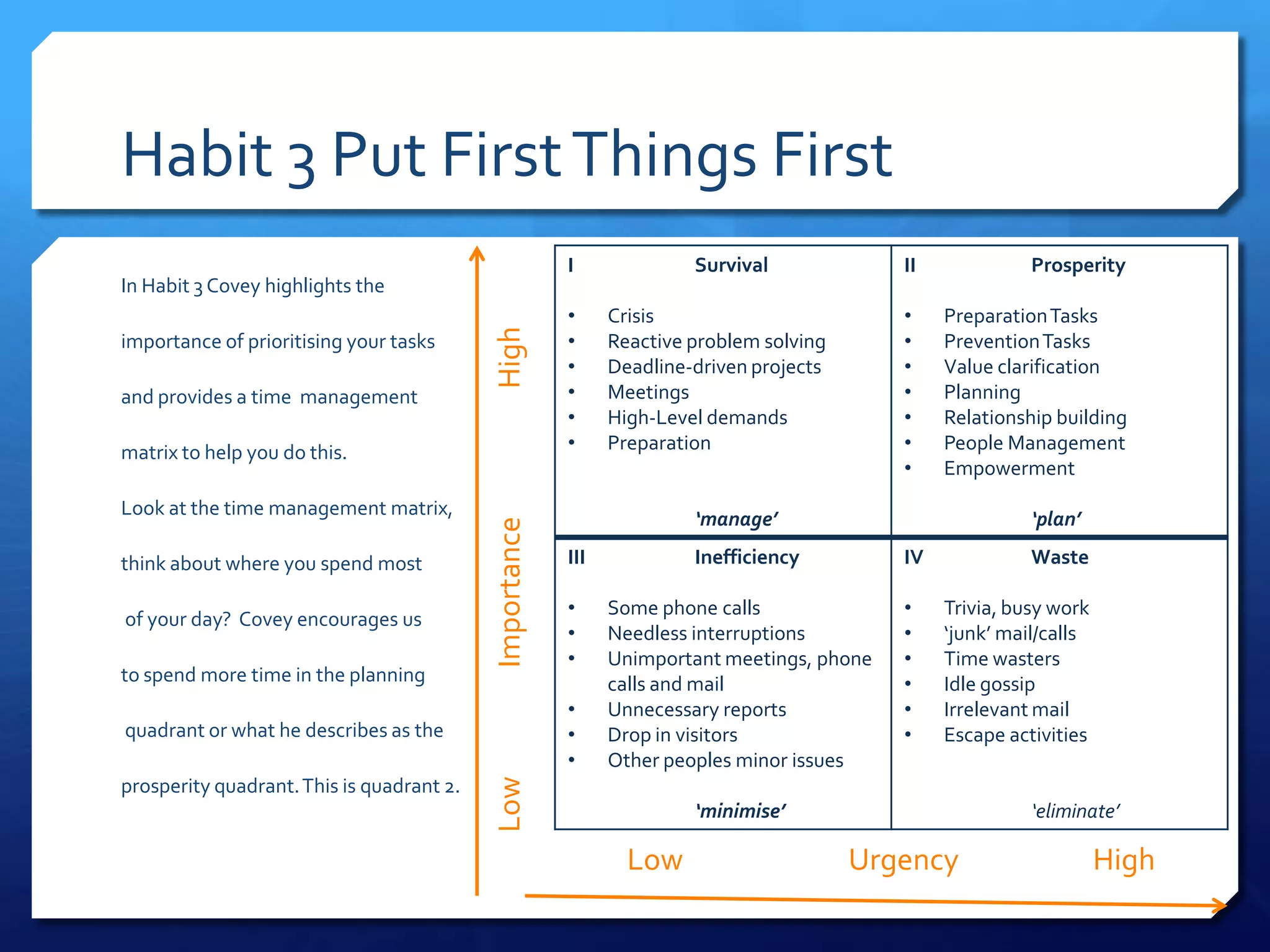
Look at the time management 
matrix, think about where 
you spend most of your day? 
Covey encourages us 
to spend more time in the 
planning 
quadrant or what he describes 
as 
the prosperity quadrant. 
This is quadrant 2. 
I Survival 
• Crisis 
• Reactive problem solving 
• Deadline-driven projects 
• Meetings 
• High-Level demands 
• Preparation 
‘manage’ 
II Prosperity 
• Preparation Tasks 
• Prevention Tasks 
• Value clarification 
• Planning 
• Relationship building 
• People Management 
• Empowerment 
‘plan’ 
III Inefficiency 
• Some phone calls 
• Needless interruptions 
• Unimportant meetings, 
phone calls and mail 
• Unnecessary reports 
• Drop in visitors 
• Other peoples minor issues 
‘minimise’ 
IV Waste 
• Trivia, busy work 
• ‘junk’ mail/calls 
• Time wasters 
• Idle gossip 
• Irrelevant mail 
• Escape activities 
‘eliminate’ 
Low Importance High 
High Urgency Low
3 
Habit 3 Put First Things First 
Consider what you can do to manage the 
day to day important survival tasks, 
minimise the tasks that are not important 
and therefore inefficient use of your 
valuable time, and then plan to eliminate 
the wasteful non important tasks facing 
you each day.

Habit 3 Put First things First

  • 1.
    1 Habit 3Put First Things First Adapted from Stephen Covey “Seven Habits for Effective People” Habit 3
  • 2.
    2 Habit 3Put First Things First In Habit 3 Covey highlights the importance of prioritising your tasks and provides a time management matrix to help you do this. Look at the time management matrix, think about where you spend most of your day? Covey encourages us to spend more time in the planning quadrant or what he describes as the prosperity quadrant. This is quadrant 2. I Survival • Crisis • Reactive problem solving • Deadline-driven projects • Meetings • High-Level demands • Preparation ‘manage’ II Prosperity • Preparation Tasks • Prevention Tasks • Value clarification • Planning • Relationship building • People Management • Empowerment ‘plan’ III Inefficiency • Some phone calls • Needless interruptions • Unimportant meetings, phone calls and mail • Unnecessary reports • Drop in visitors • Other peoples minor issues ‘minimise’ IV Waste • Trivia, busy work • ‘junk’ mail/calls • Time wasters • Idle gossip • Irrelevant mail • Escape activities ‘eliminate’ Low Importance High High Urgency Low
  • 3.
    3 Habit 3Put First Things First Consider what you can do to manage the day to day important survival tasks, minimise the tasks that are not important and therefore inefficient use of your valuable time, and then plan to eliminate the wasteful non important tasks facing you each day.