University of Santo Tomas
College of Education
Mini-Symposium Series
PerformanceTask in Principles ofTeaching with
the theme:
“Guiding Principles in the
Selection and Use of
Teaching Strategies”
September 07, 2012
8:00 – 9:00 a.m.
Room 321 Albertus Magnus Building
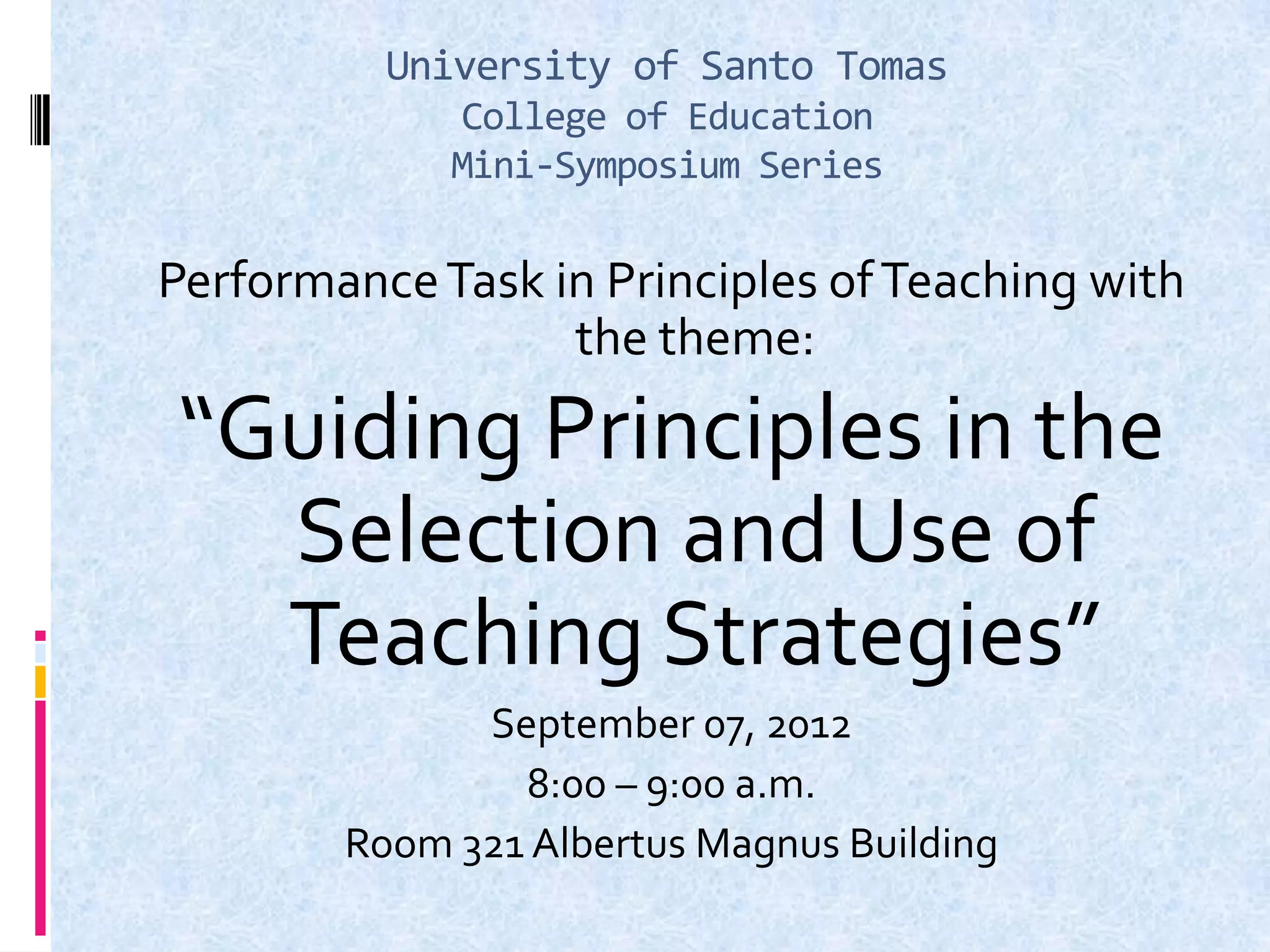
Guiding Principles:
 Learning is an active
process.
 The more senses that are
involved in learning, the
more and the better the
learning.
 A non-threatening
atmosphere enhances
learning.
Prepared by: Gonzales, Ma. Irene Gabriel
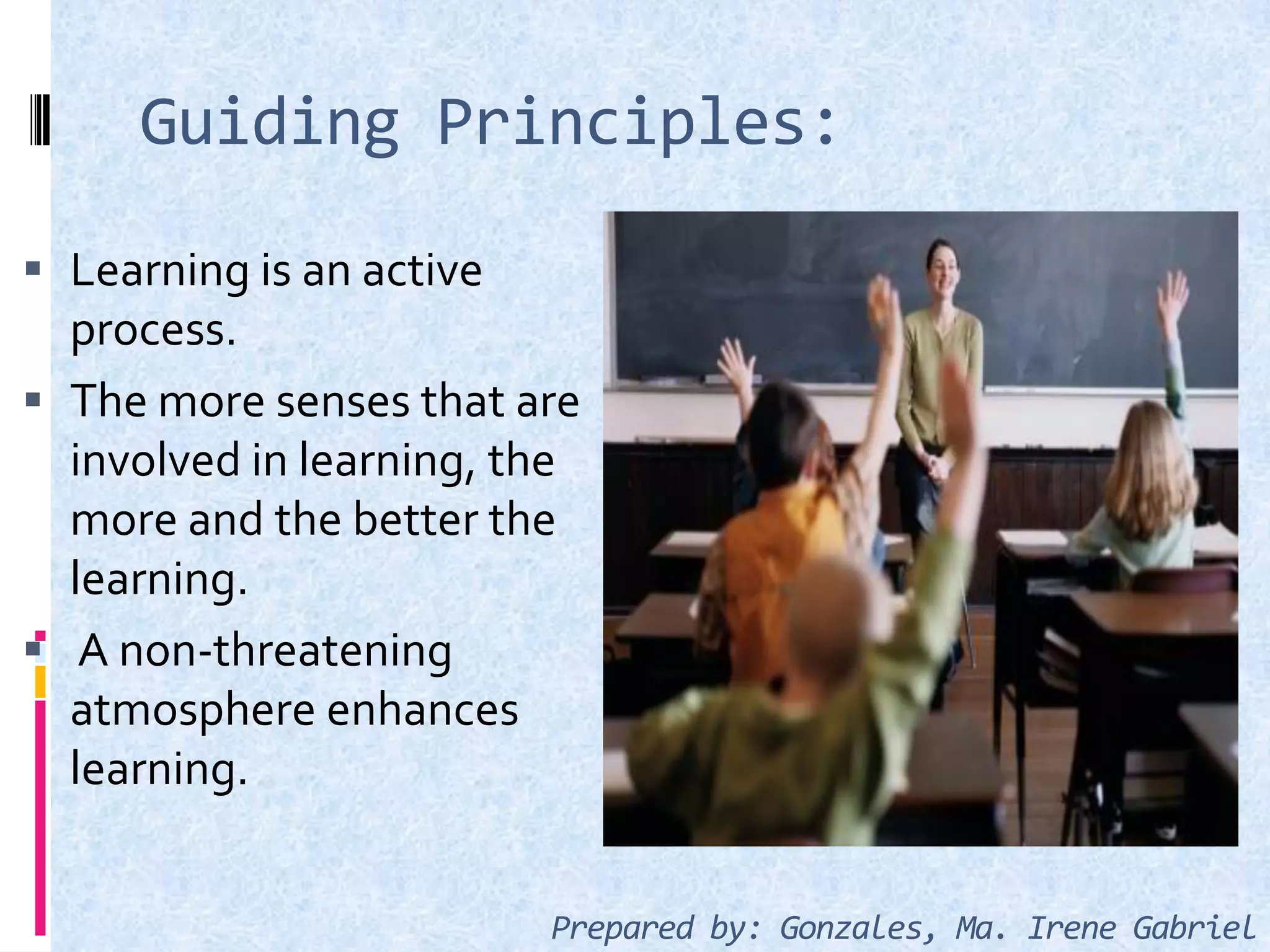
Learning is an active process.
 Be actively engaged in the learning process.
Prepared by: Gonzales, Ma. Irene Gabriel
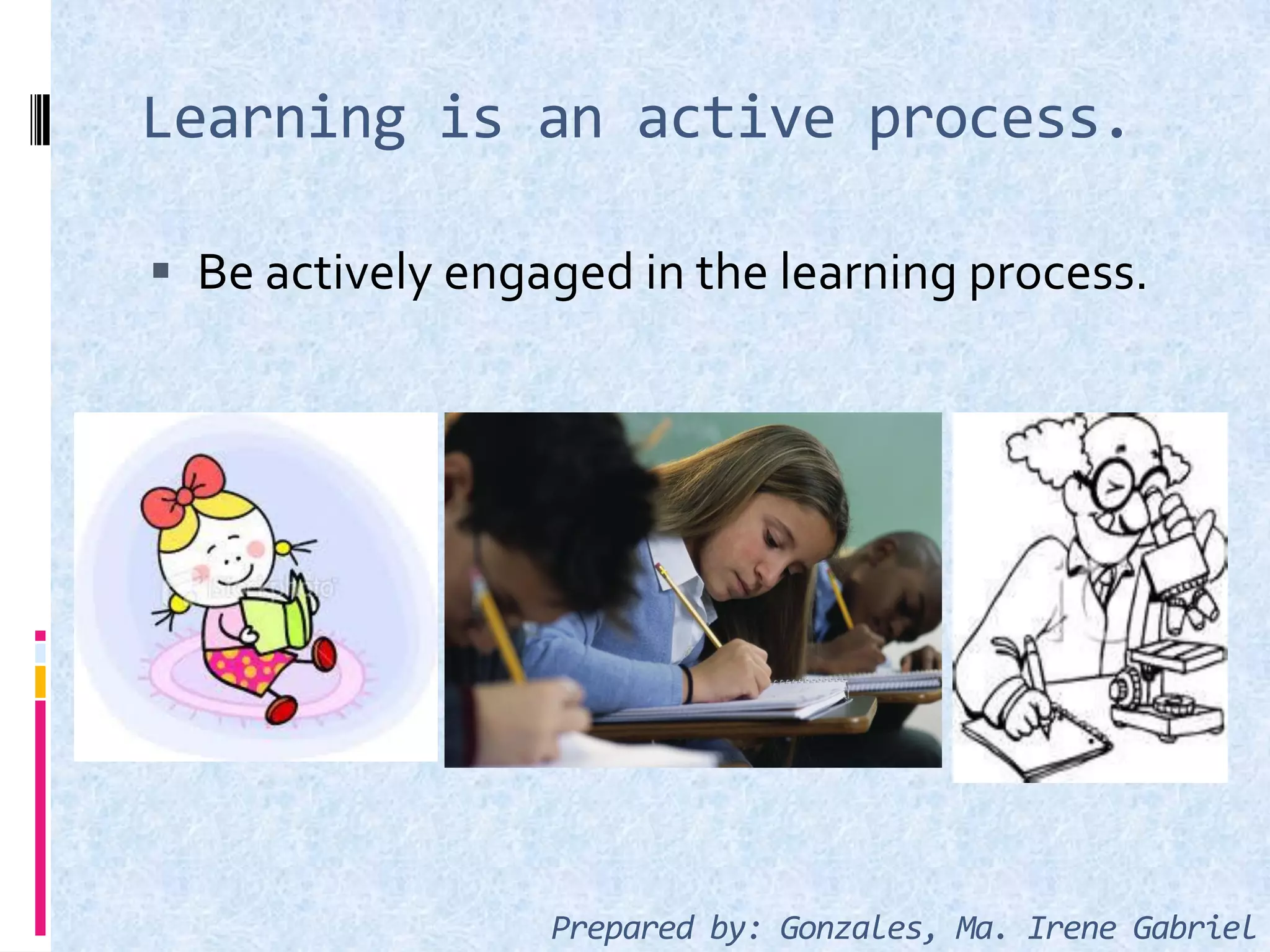
Learning as an active process.
 NOBODY can LEARN for us.
Prepared by: Gonzales, Ma. Irene Gabriel
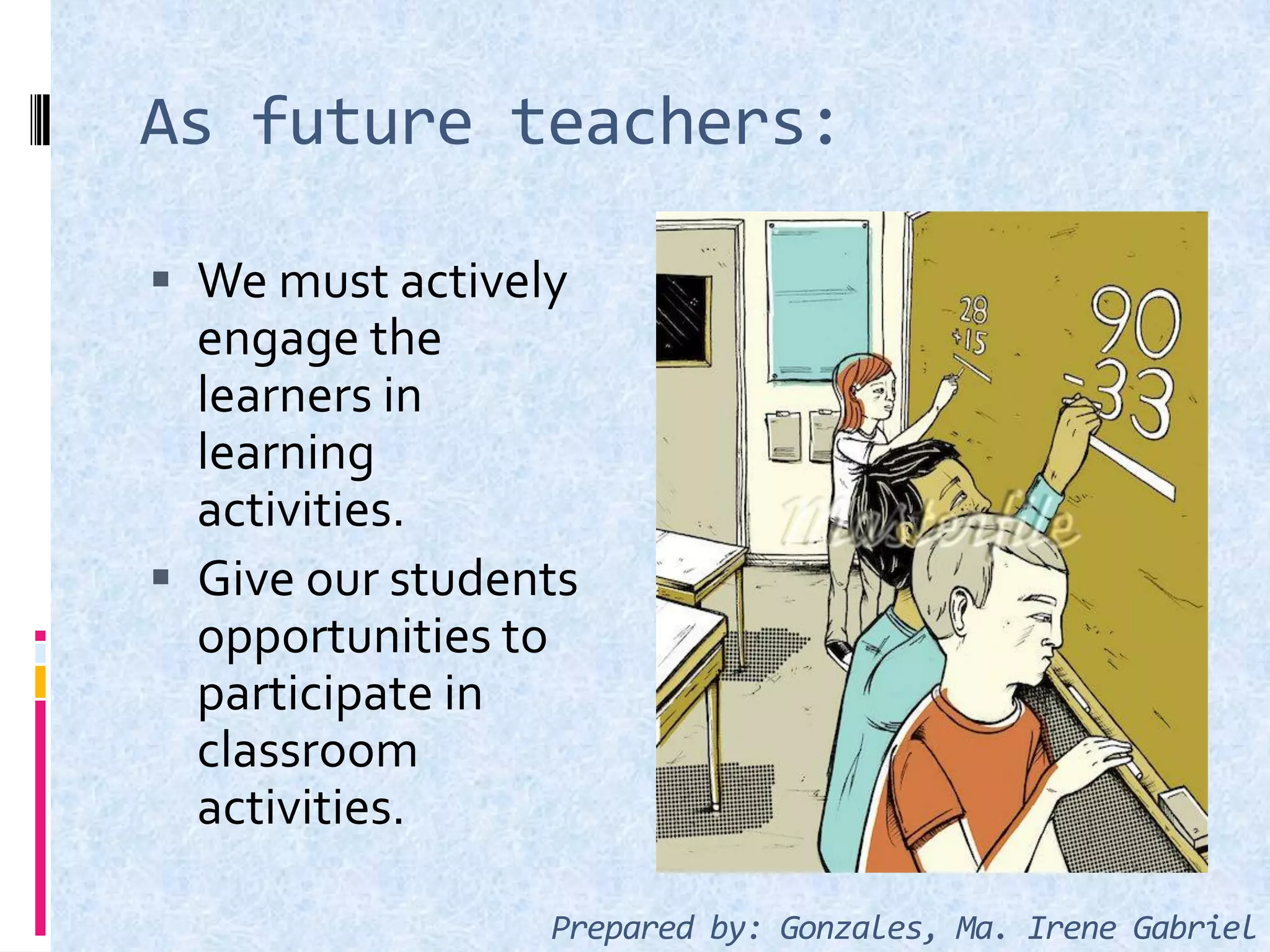
As future teachers:
 We must actively
engage the
learners in
learning
activities.
 Give our students
opportunities to
participate in
classroom
activities.
Prepared by: Gonzales, Ma. Irene Gabriel
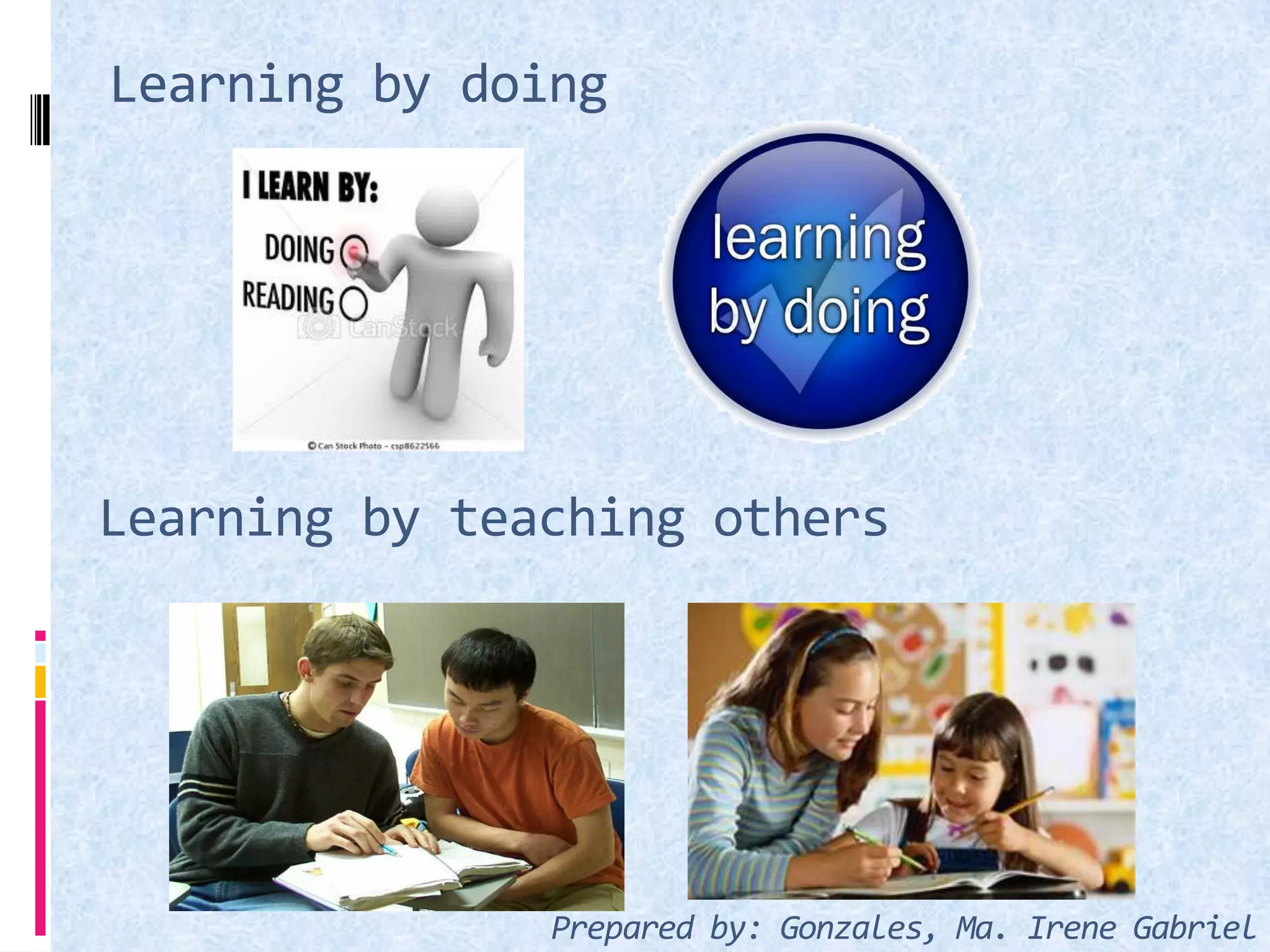
Learning by teaching others
Learning by doing
Prepared by: Gonzales, Ma. Irene Gabriel
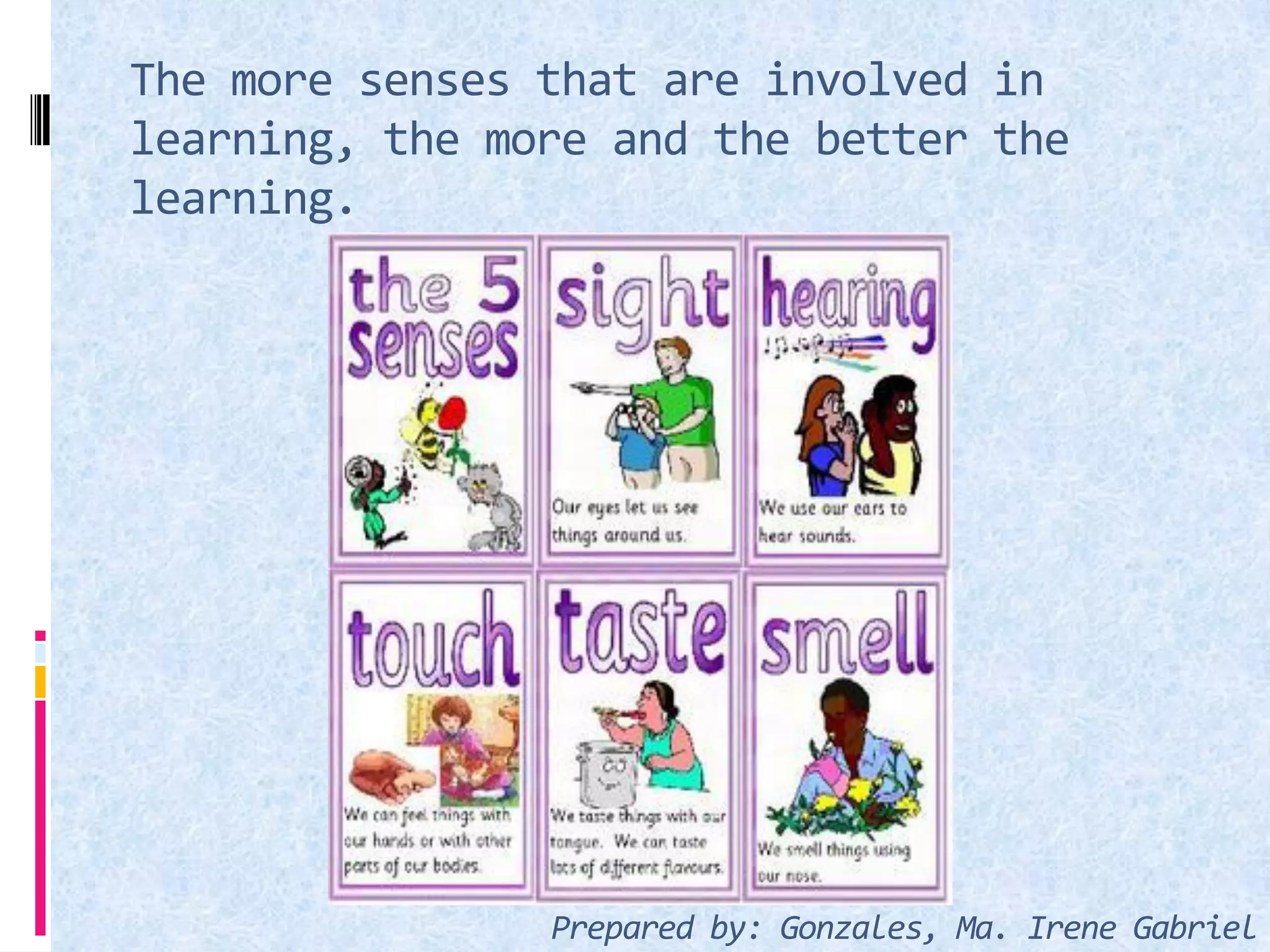
The more senses that are involved in
learning, the more and the better the
learning.
Prepared by: Gonzales, Ma. Irene Gabriel
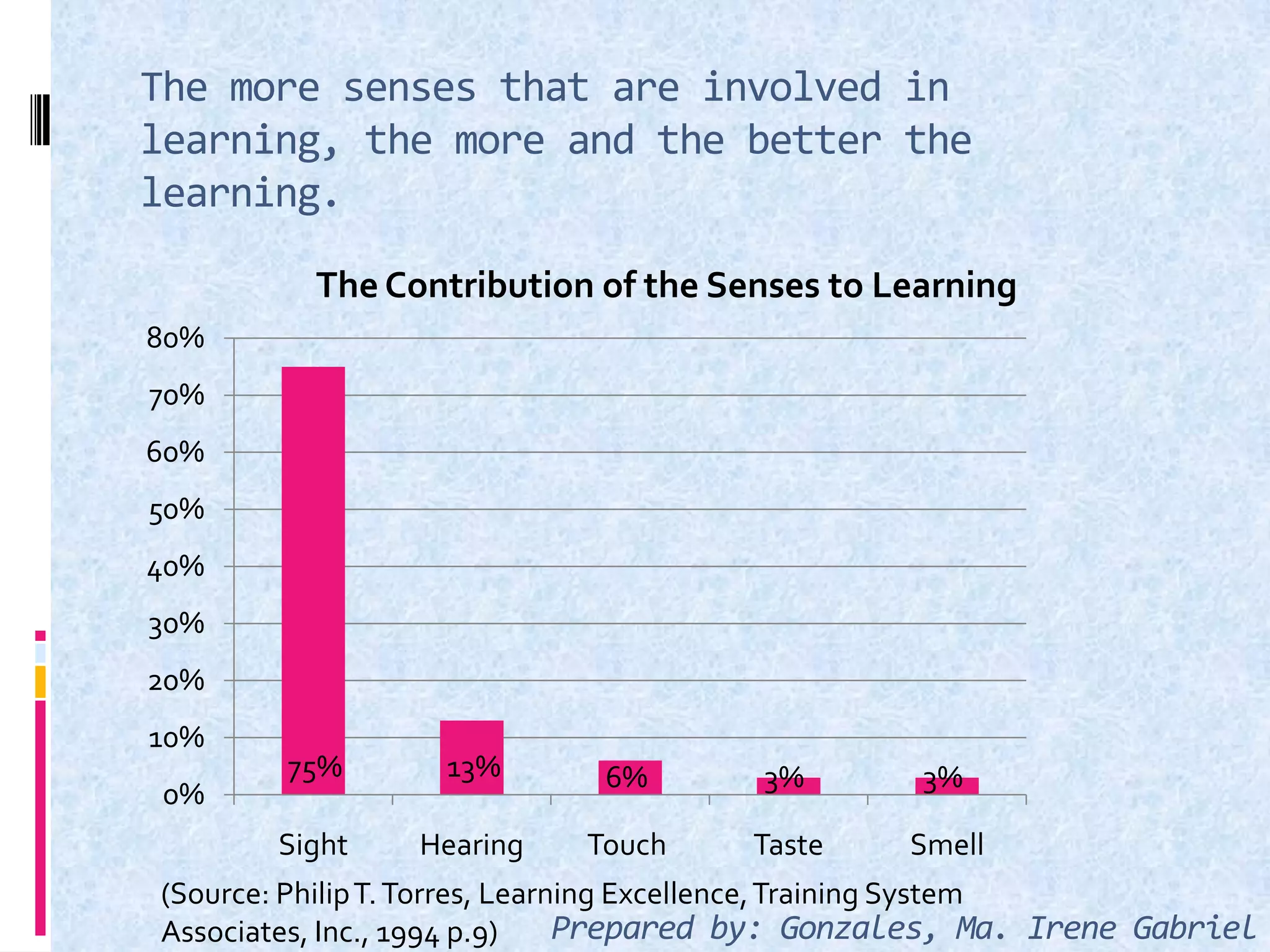
The more senses that are involved in
learning, the more and the better the
learning.
0%
10%
20%
30%
40%
50%
60%
70%
80%
Sight Hearing Touch Taste Smell
The Contribution of the Senses to Learning
75% 13% 6% 3% 3%
(Source: PhilipT.Torres, Learning Excellence,Training System
Associates, Inc., 1994 p.9) Prepared by: Gonzales, Ma. Irene Gabriel
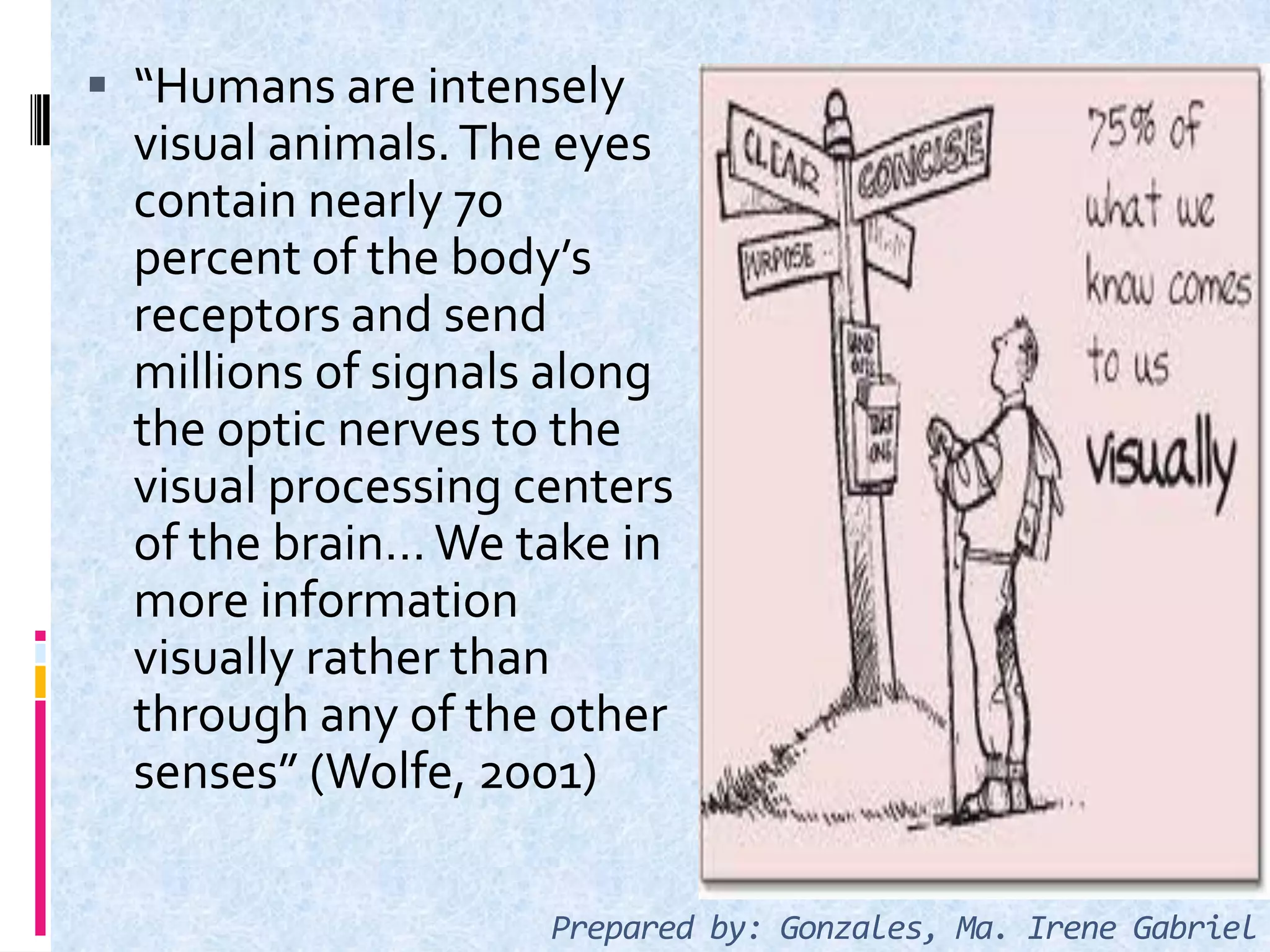
 “Humans are intensely
visual animals.The eyes
contain nearly 70
percent of the body’s
receptors and send
millions of signals along
the optic nerves to the
visual processing centers
of the brain… We take in
more information
visually rather than
through any of the other
senses” (Wolfe, 2001)
Prepared by: Gonzales, Ma. Irene Gabriel
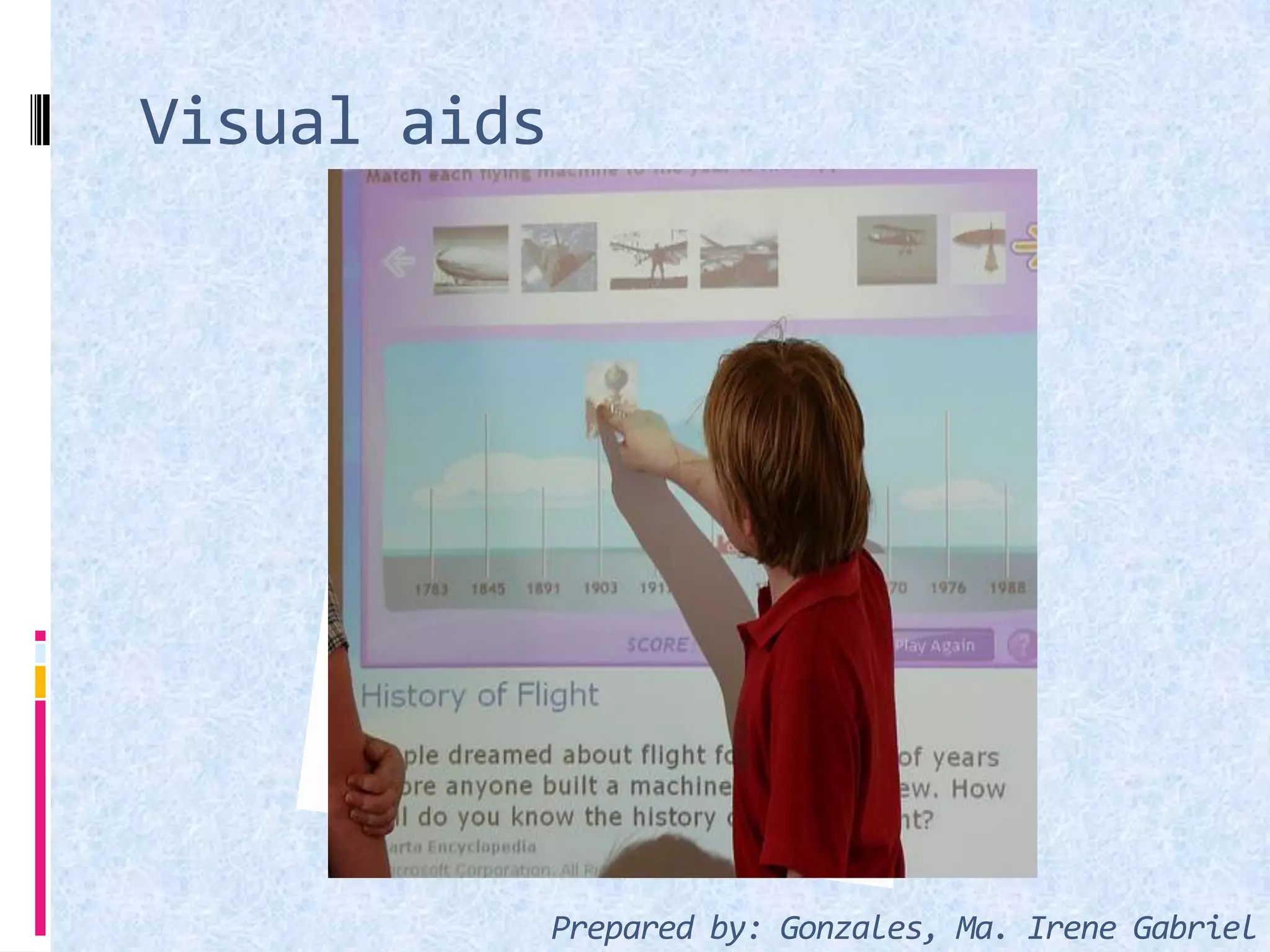
Visual aids
Prepared by: Gonzales, Ma. Irene Gabriel
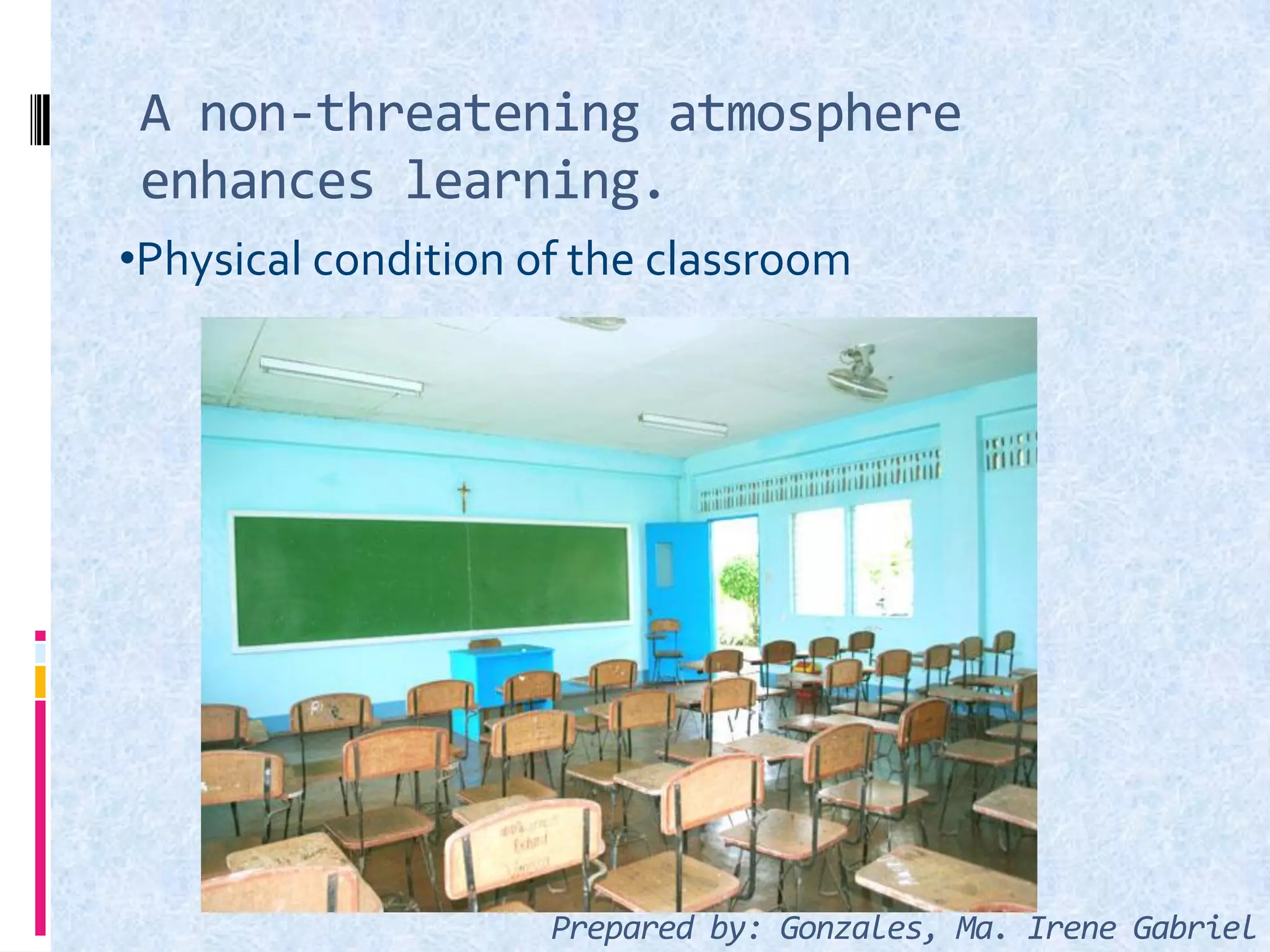
A non-threatening atmosphere
enhances learning.
•Physical condition of the classroom
Prepared by: Gonzales, Ma. Irene Gabriel
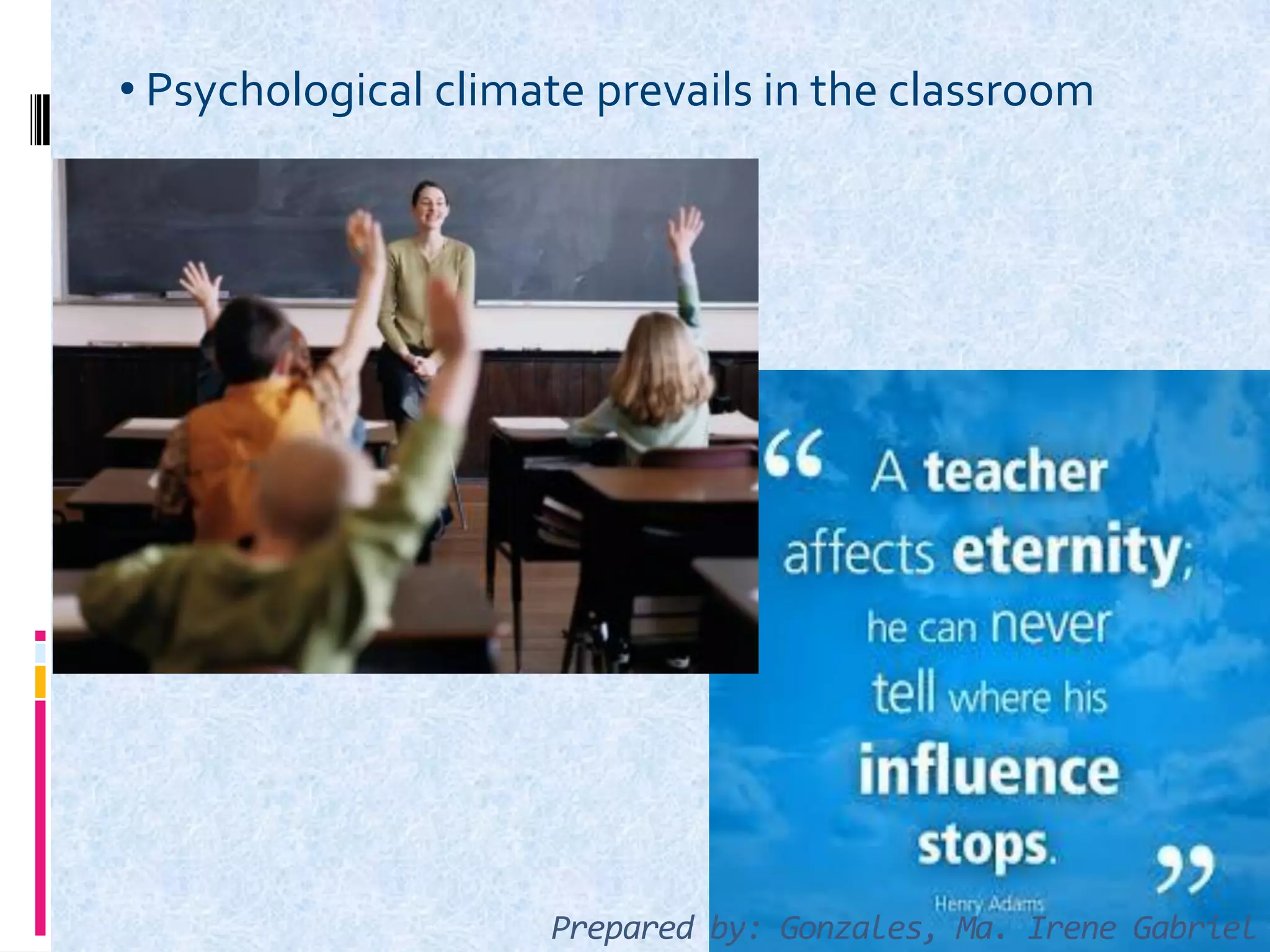
• Psychological climate prevails in the classroom
Prepared by: Gonzales, Ma. Irene Gabriel
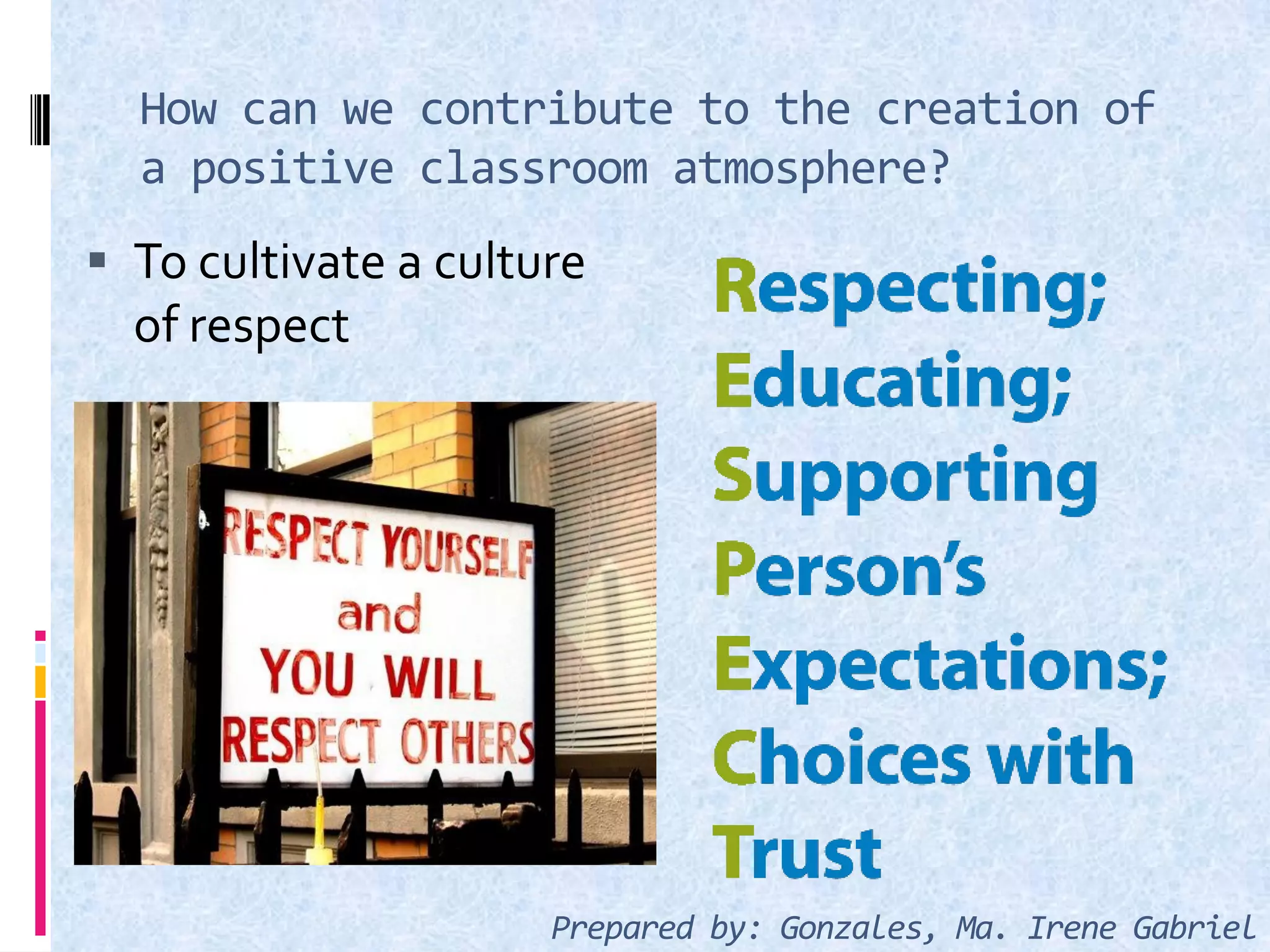
How can we contribute to the creation of
a positive classroom atmosphere?
 To cultivate a culture
of respect
Prepared by: Gonzales, Ma. Irene Gabriel
• Believe in our
student’s capacity
Prepared by: Gonzales, Ma. Irene Gabriel
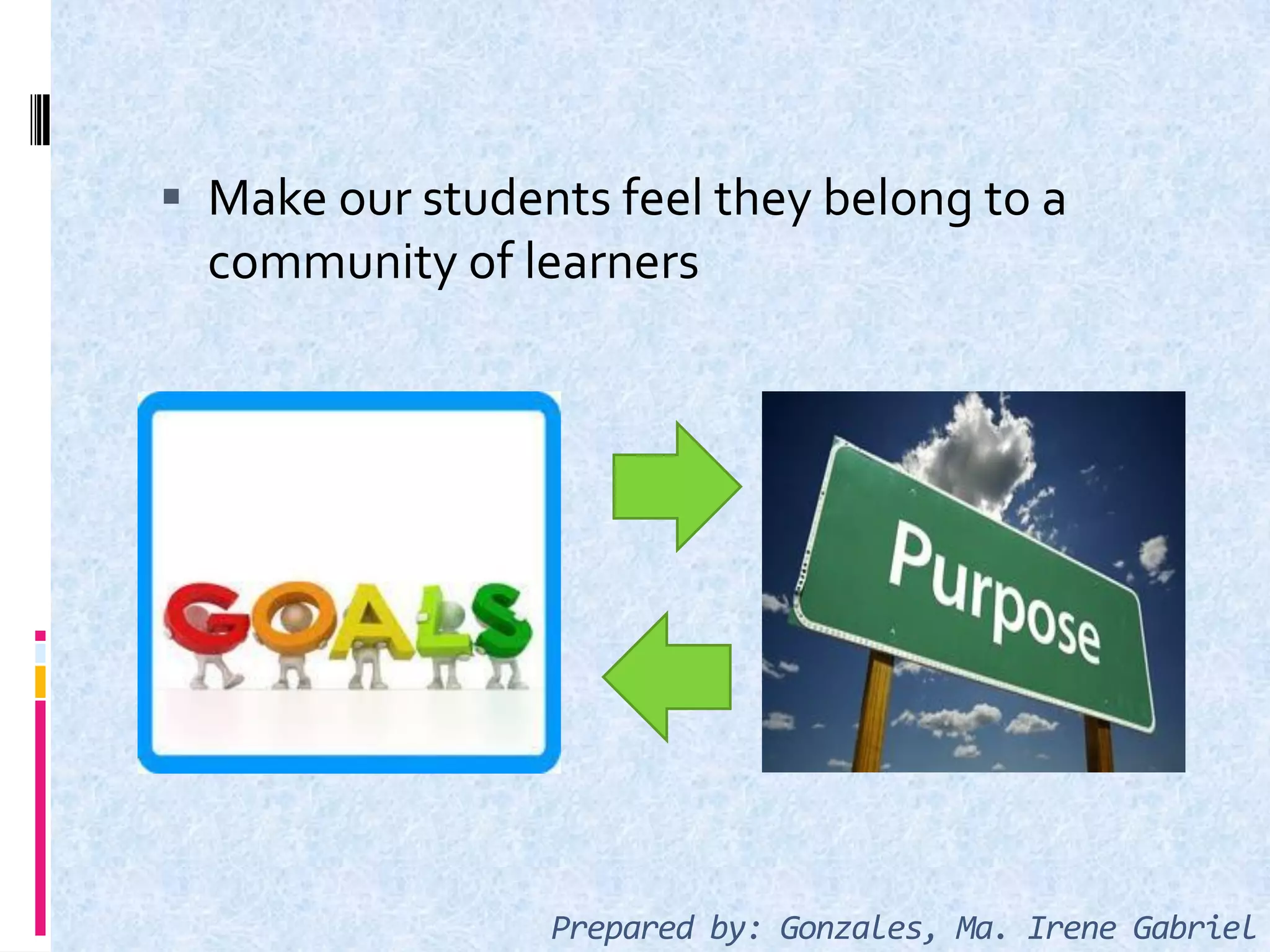
 Make our students feel they belong to a
community of learners
Prepared by: Gonzales, Ma. Irene Gabriel
 “Building comfort into learning is essential if
we expect students to respond positively and
constructively to their education.”
-Harvey F. Silver
Prepared by: Gonzales, Ma. Irene Gabriel
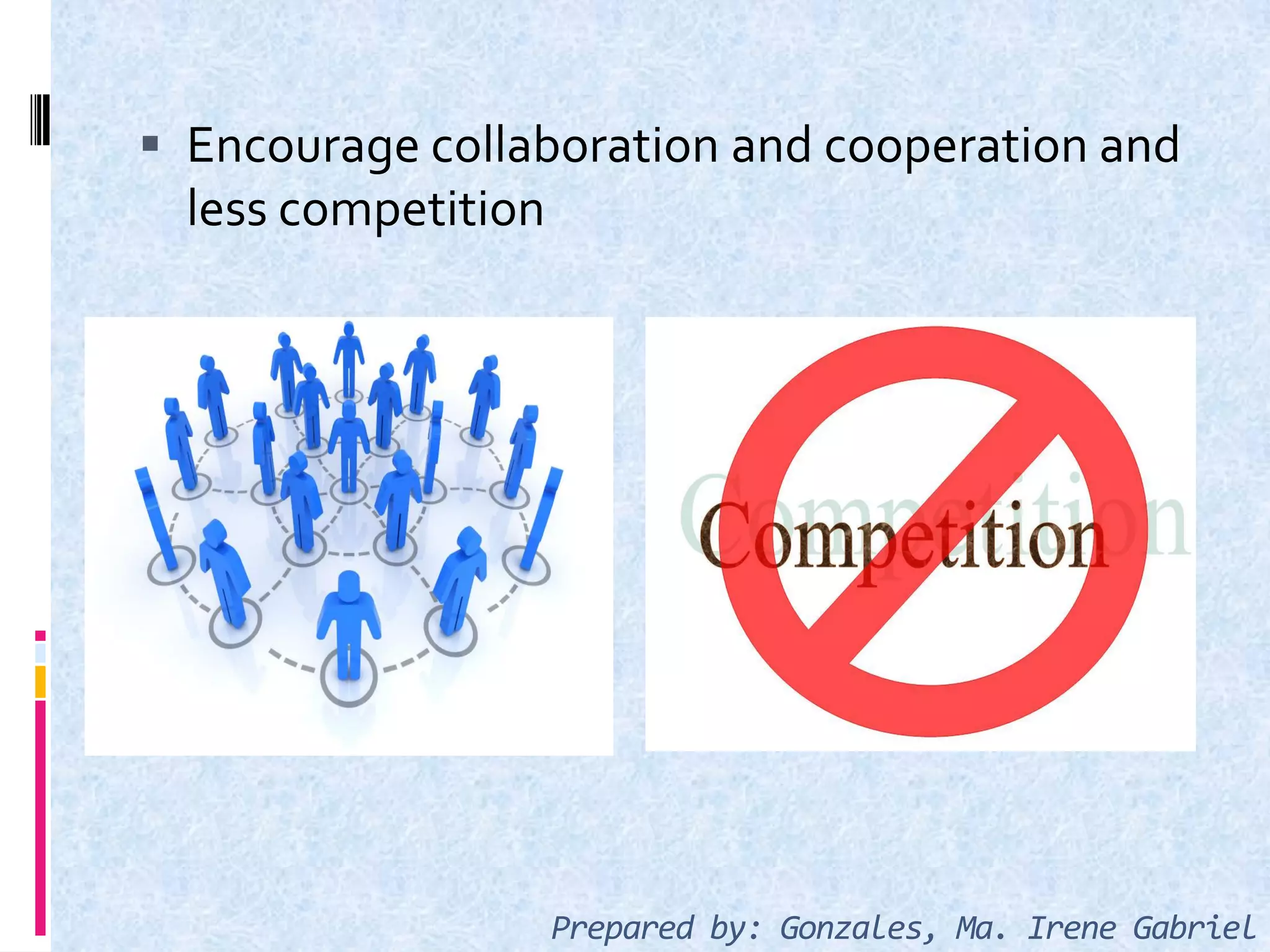
 Encourage collaboration and cooperation and
less competition
Prepared by: Gonzales, Ma. Irene Gabriel
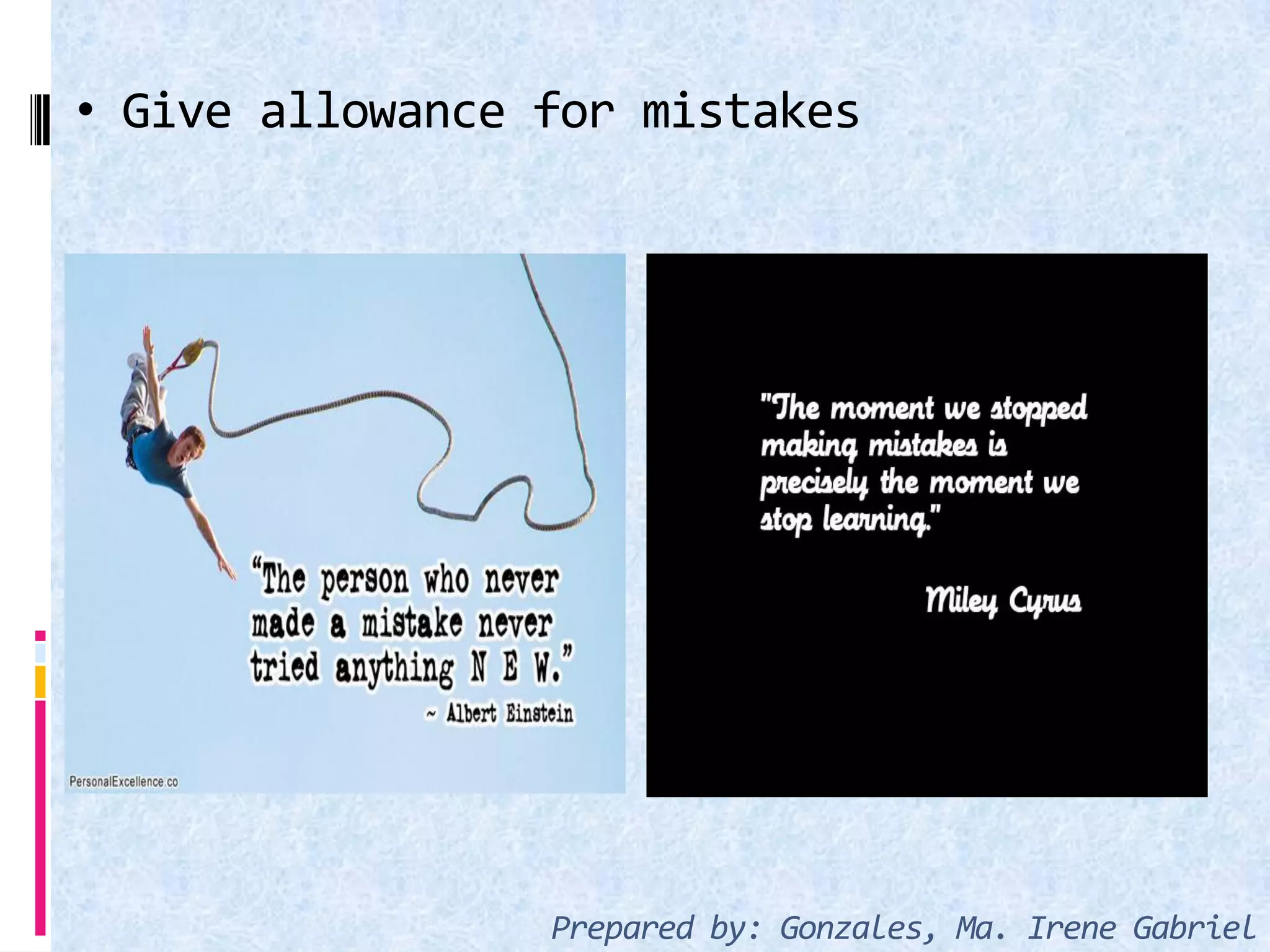
• Give allowance for mistakes
Prepared by: Gonzales, Ma. Irene Gabriel

Guiding Principles in the Selection and Use of Teaching Strategies

  • 1.
    University of SantoTomas College of Education Mini-Symposium Series PerformanceTask in Principles ofTeaching with the theme: “Guiding Principles in the Selection and Use of Teaching Strategies” September 07, 2012 8:00 – 9:00 a.m. Room 321 Albertus Magnus Building
  • 2.
    Guiding Principles:  Learningis an active process.  The more senses that are involved in learning, the more and the better the learning.  A non-threatening atmosphere enhances learning. Prepared by: Gonzales, Ma. Irene Gabriel
  • 3.
    Learning is anactive process.  Be actively engaged in the learning process. Prepared by: Gonzales, Ma. Irene Gabriel
  • 4.
    Learning as anactive process.  NOBODY can LEARN for us. Prepared by: Gonzales, Ma. Irene Gabriel
  • 5.
    As future teachers: We must actively engage the learners in learning activities.  Give our students opportunities to participate in classroom activities. Prepared by: Gonzales, Ma. Irene Gabriel
  • 6.
    Learning by teachingothers Learning by doing Prepared by: Gonzales, Ma. Irene Gabriel
  • 7.
    Prepared by: Gonzales,Ma. Irene Gabriel
  • 8.
    The more sensesthat are involved in learning, the more and the better the learning. Prepared by: Gonzales, Ma. Irene Gabriel
  • 9.
    The more sensesthat are involved in learning, the more and the better the learning. 0% 10% 20% 30% 40% 50% 60% 70% 80% Sight Hearing Touch Taste Smell The Contribution of the Senses to Learning 75% 13% 6% 3% 3% (Source: PhilipT.Torres, Learning Excellence,Training System Associates, Inc., 1994 p.9) Prepared by: Gonzales, Ma. Irene Gabriel
  • 10.
     “Humans areintensely visual animals.The eyes contain nearly 70 percent of the body’s receptors and send millions of signals along the optic nerves to the visual processing centers of the brain… We take in more information visually rather than through any of the other senses” (Wolfe, 2001) Prepared by: Gonzales, Ma. Irene Gabriel
  • 11.
    Visual aids Prepared by:Gonzales, Ma. Irene Gabriel
  • 12.
    A non-threatening atmosphere enhanceslearning. •Physical condition of the classroom Prepared by: Gonzales, Ma. Irene Gabriel
  • 13.
    • Psychological climateprevails in the classroom Prepared by: Gonzales, Ma. Irene Gabriel
  • 14.
    How can wecontribute to the creation of a positive classroom atmosphere?  To cultivate a culture of respect Prepared by: Gonzales, Ma. Irene Gabriel
  • 15.
    • Believe inour student’s capacity Prepared by: Gonzales, Ma. Irene Gabriel
  • 16.
     Make ourstudents feel they belong to a community of learners Prepared by: Gonzales, Ma. Irene Gabriel
  • 17.
     “Building comfortinto learning is essential if we expect students to respond positively and constructively to their education.” -Harvey F. Silver Prepared by: Gonzales, Ma. Irene Gabriel
  • 18.
     Encourage collaborationand cooperation and less competition Prepared by: Gonzales, Ma. Irene Gabriel
  • 19.
    Prepared by: Gonzales,Ma. Irene Gabriel
  • 20.
    • Give allowancefor mistakes Prepared by: Gonzales, Ma. Irene Gabriel
  • 21.
    Prepared by: Gonzales,Ma. Irene Gabriel