Engineered to Innovate®
GT-Styrene®
Technology Licensing
A Cost-Effective Process for Recovering Styrene
GT-Styrene®
TechnologyLicensing
Engineered to Innovate
GT-Styrene®: A Cost-Effective
Process for Recovering Styrene
In an effort to improve the production economics of
naphtha cracking plants, operators must consider the
recovery of valuable components from pyrolysis gasoline
(pygas) over blending into the gasoline. Styrene is one
such component that has far more value as a petrochemical
product than as a motor fuel blendstock. GTC
Technology’s GT-Styrene process uses extractive distillation
to directly recover styrene from pygas at 99.9 percent
purity, making it suitable for polymers production, and
at a very attractive cost compared to conventional styrene
production methods. The economics are attractive for
reasonable-sized crackers using liquid feedstock, producing
more than 600 KTA ethylene.
Process Overview (Conventional vs. GT-Styrene)
Conventional styrene production methods derive feedstock
by steam cracking naphtha. Benzene is recovered from
pygas through direct extraction. The C8
fraction, which
contains high levels of ethylbenzene (EB) content, may
be routed to a hydrodealkylation (HDA) unit to produce
benzene plus fuel gas. Benzene is then reacted with ethylene
to produce EB, which is dehydrogenated to produce
styrene. Attaining a product that already exists in the raw
feedstock is complex. In addition, production of styrene by
this route includes some drawbacks, such as:
•	 Fouling of the selective hydrogenation catalyst
•	 H2
consumption
•	 Reduction of gasoline quality
•	 Large capital required to achieve economic rates
GT-Styrene technology, however, uses extractive distillation
to enable the direct recovery of high-purity styrene from
the pygas. Because styrene is the only unsaturated aromatic
within a reasonably close boiling range, a solvent-based
system can extract and purify styrene from a heartcut of
the pygas. The highly selective co-solvent system alters
the boiling point of the styrene, compared to the other
species, allowing it to be separated in conventional
distillation equipment. Thus, GT-Styrene replaces several
operational steps, while producing the same end-product as
conventional methods.
Advantages
The primary advantage of GT-Styrene comes from using
a low-cost raw material. By recovering styrene, pygas
producers can generate income from petrochemicals,
instead of blending all components into motor fuel.
Ethylene plants cracking liquids feedstock can achieve a
favorable return on most world-scale units. The styrene
produced by extractive distillation will always have the
lowest feedstock cost, and therefore will have an advantage
over traditional units feeding benzene plus ethylene.
The benefits of using GT-Styrene’s extractive distillation
process as opposed to conventional methods of recovery
include:
•	 Upgrade of the styrene component from fuel to
petrochemical value
•	 Upgrade of xylenes from motor fuel to xylene isomer
quality feedstock value
•	 Reduction in overall hydrogen consumption
•	 Reduction in catalyst fouling and operating costs in the
selective hydrotreater unit
•	 Debottlenecking of the pygas hydrotreating area by
diversion of part of the feed
The following factors can enhance the project’s value:
•	 Proximity to an existing styrene producing unit or
styrene consumer to consolidate storage and reduce
shipping costs
•	 Integration with xylenes processor to gain full value of
EB-reduced xylenes
•	 Debottleneck of pygas hydrogenation unit, if there is a
constraint in this area
GTCTechnology 1001 S. Dairy Ashford, Suite 500 Houston,Texas 77077 USA Main +1-281-597-4800 Toll Free +1-877-693-4222
inquiry@gtctech.com | www.gtctech.com
Engineered to Innovate
To learn more about GTC Technology’s leading-edge
technology solutions and the many ways we can help
improve your operations and profitability, call us today
at +1-281-597-4800, e-mail us at inquiry@gtctech.com
or visit our Web site at http://www.gtctech.com.
GTCTechnology Engineered to Innovate
•	 Ability to reuse equipment in the pygas fractionation area
•	 Possibility of consolidating styrene fractions from nearby
producers to gain economy of scale
Economic Analysis
PA
Hydrogenation
ExtractiveDistillation
Column
SolventRecovery
Column
StyreneFinishing
Column
Moisture/Trace
Impurity Removal
Pygas
C8
Cut
Lean Solvent
99.9+ wt%
Styrene
Product
Heavies
C8
Aromatics
H2
GT-Styrene
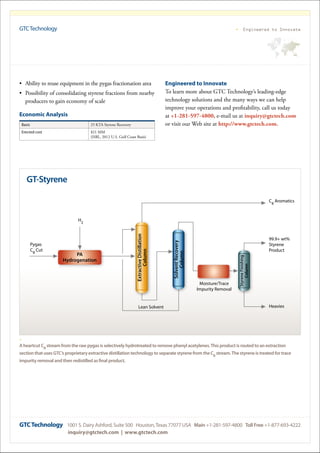
A heartcut C8
stream from the raw pygas is selectively hydrotreated to remove phenyl acetylenes.This product is routed to an extraction
section that uses GTC’s proprietary extractive distillation technology to separate styrene from the C8
stream.The styrene is treated for trace
impurity removal and then redistilled as final product.
Basis 25 KTA Styrene Recovery
Erected cost $21 MM
(ISBL, 2012 U.S. Gulf Coast Basis)
GTCTechnology 1001 S. Dairy Ashford, Suite 500 Houston,Texas 77077 USA Main +1-281-597-4800 Toll Free +1-877-693-4222
inquiry@gtctech.com | www.gtctech.com
+1-281-597-4800
inquiry@gtctech.com
www.gtctech.com
©2014 GTC Technology - All rights reserved.
Engineered to Innovate®
GTC Technology is a global licensor of process
technologies and mass transfer solutions with the
mission of creating value for our clients. Refining,
petrochemical and chemical companies around
the world rely on GTC’s advanced processes to
optimize production capacity and efficiency.
With insightful industry expertise, research
capabilities and innovative thinking, GTC solves
complex processing problems and has earned
a reputation of excellence in designing and
delivering high-quality, strategic solutions for
clients worldwide. We’re engineered to innovate.

GT-Styrene

  • 1.
    Engineered to Innovate® GT-Styrene® TechnologyLicensing A Cost-Effective Process for Recovering Styrene
  • 2.
    GT-Styrene® TechnologyLicensing Engineered to Innovate GT-Styrene®:A Cost-Effective Process for Recovering Styrene In an effort to improve the production economics of naphtha cracking plants, operators must consider the recovery of valuable components from pyrolysis gasoline (pygas) over blending into the gasoline. Styrene is one such component that has far more value as a petrochemical product than as a motor fuel blendstock. GTC Technology’s GT-Styrene process uses extractive distillation to directly recover styrene from pygas at 99.9 percent purity, making it suitable for polymers production, and at a very attractive cost compared to conventional styrene production methods. The economics are attractive for reasonable-sized crackers using liquid feedstock, producing more than 600 KTA ethylene. Process Overview (Conventional vs. GT-Styrene) Conventional styrene production methods derive feedstock by steam cracking naphtha. Benzene is recovered from pygas through direct extraction. The C8 fraction, which contains high levels of ethylbenzene (EB) content, may be routed to a hydrodealkylation (HDA) unit to produce benzene plus fuel gas. Benzene is then reacted with ethylene to produce EB, which is dehydrogenated to produce styrene. Attaining a product that already exists in the raw feedstock is complex. In addition, production of styrene by this route includes some drawbacks, such as: • Fouling of the selective hydrogenation catalyst • H2 consumption • Reduction of gasoline quality • Large capital required to achieve economic rates GT-Styrene technology, however, uses extractive distillation to enable the direct recovery of high-purity styrene from the pygas. Because styrene is the only unsaturated aromatic within a reasonably close boiling range, a solvent-based system can extract and purify styrene from a heartcut of the pygas. The highly selective co-solvent system alters the boiling point of the styrene, compared to the other species, allowing it to be separated in conventional distillation equipment. Thus, GT-Styrene replaces several operational steps, while producing the same end-product as conventional methods. Advantages The primary advantage of GT-Styrene comes from using a low-cost raw material. By recovering styrene, pygas producers can generate income from petrochemicals, instead of blending all components into motor fuel. Ethylene plants cracking liquids feedstock can achieve a favorable return on most world-scale units. The styrene produced by extractive distillation will always have the lowest feedstock cost, and therefore will have an advantage over traditional units feeding benzene plus ethylene. The benefits of using GT-Styrene’s extractive distillation process as opposed to conventional methods of recovery include: • Upgrade of the styrene component from fuel to petrochemical value • Upgrade of xylenes from motor fuel to xylene isomer quality feedstock value • Reduction in overall hydrogen consumption • Reduction in catalyst fouling and operating costs in the selective hydrotreater unit • Debottlenecking of the pygas hydrotreating area by diversion of part of the feed The following factors can enhance the project’s value: • Proximity to an existing styrene producing unit or styrene consumer to consolidate storage and reduce shipping costs • Integration with xylenes processor to gain full value of EB-reduced xylenes • Debottleneck of pygas hydrogenation unit, if there is a constraint in this area GTCTechnology 1001 S. Dairy Ashford, Suite 500 Houston,Texas 77077 USA Main +1-281-597-4800 Toll Free +1-877-693-4222 inquiry@gtctech.com | www.gtctech.com
  • 3.
    Engineered to Innovate Tolearn more about GTC Technology’s leading-edge technology solutions and the many ways we can help improve your operations and profitability, call us today at +1-281-597-4800, e-mail us at inquiry@gtctech.com or visit our Web site at http://www.gtctech.com. GTCTechnology Engineered to Innovate • Ability to reuse equipment in the pygas fractionation area • Possibility of consolidating styrene fractions from nearby producers to gain economy of scale Economic Analysis PA Hydrogenation ExtractiveDistillation Column SolventRecovery Column StyreneFinishing Column Moisture/Trace Impurity Removal Pygas C8 Cut Lean Solvent 99.9+ wt% Styrene Product Heavies C8 Aromatics H2 GT-Styrene A heartcut C8 stream from the raw pygas is selectively hydrotreated to remove phenyl acetylenes.This product is routed to an extraction section that uses GTC’s proprietary extractive distillation technology to separate styrene from the C8 stream.The styrene is treated for trace impurity removal and then redistilled as final product. Basis 25 KTA Styrene Recovery Erected cost $21 MM (ISBL, 2012 U.S. Gulf Coast Basis) GTCTechnology 1001 S. Dairy Ashford, Suite 500 Houston,Texas 77077 USA Main +1-281-597-4800 Toll Free +1-877-693-4222 inquiry@gtctech.com | www.gtctech.com
  • 4.
    +1-281-597-4800 inquiry@gtctech.com www.gtctech.com ©2014 GTC Technology- All rights reserved. Engineered to Innovate® GTC Technology is a global licensor of process technologies and mass transfer solutions with the mission of creating value for our clients. Refining, petrochemical and chemical companies around the world rely on GTC’s advanced processes to optimize production capacity and efficiency. With insightful industry expertise, research capabilities and innovative thinking, GTC solves complex processing problems and has earned a reputation of excellence in designing and delivering high-quality, strategic solutions for clients worldwide. We’re engineered to innovate.